
In short
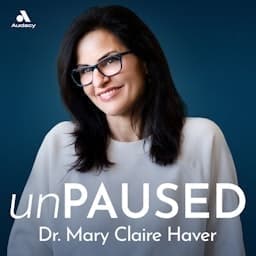
Podcast Summary: unPAUSED with Dr. Mary Claire Haver
Episode Title
Building a Menopause Brand: Naomi Watts on HRT, Hot Flashes & Hollywood
Podcast Description In this episode of *unPAUSED*, Dr. Mary Claire Haver interviews Naomi Watts, an Academy Award-nominated actress and entrepreneur, who shares her journey through early menopause and her advocacy for women's health. Watts discusses her experiences in Hollywood, her struggles with untreated menopause symptoms, and her efforts to start a menopause-focused brand, Stripes Beauty.
Key Themes and Discussions
Naomi Watts' Background
- Early Life and Career:
- Grew up in Shoreham, Kent, and moved to Australia at age 14.
- Initially wanted to be a doctor or teacher; discovered her passion for acting after watching her mother perform.
- Struggled in Hollywood for a decade before her breakout role in *Mulholland Drive*.
Menopause Advocacy
- Early Diagnosis:
- Diagnosed with early menopause at age 36, while struggling with fertility.
- Faced untreated symptoms like night sweats, migraines, and brain fog, which she attributed to stress or allergies.
- Becoming an Advocate:
- After years of silent struggle, Watts decided to advocate for women experiencing midlife transitions.
- Founded Stripes Beauty in 2021, focusing on skincare and wellness for menopausal women, emphasizing community and education over unrealistic beauty promises.
Personal Struggles and Insights
- Fertility Journey:
- Described her desperate attempts to conceive, including extreme diets and herbal treatments in China.
- Shared the emotional toll of infertility and the journey to motherhood.
- Menopause Symptoms:
- Discussed various symptoms she experienced, including severe night sweats and cognitive difficulties.
- Highlighted the stigma surrounding menopause and the importance of open conversations.
Building Stripes Beauty
- Brand Philosophy:
- Aimed to create a supportive community for women navigating menopause.
- Focus on educating women about their health without the promise of reversing aging.
- Emphasizes the importance of dignity and agency in this life phase.
- Challenges Faced:
- Initially met with skepticism and pushback from peers about her focus on menopause.
- Overcame fears of brand suicide in Hollywood by owning her narrative.
Collaboration and Future Vision
- Industry Changes:
- Discussed the evolving perception of women in Hollywood and the importance of female-driven stories.
- Notable figures like Reese Witherspoon and Ryan Murphy are changing the landscape for women in film and television.
- Future Projects:
- Plans to launch new products under Stripes Beauty and continue engaging with women about menopause.
- Expressed a desire to explore the topic of longevity and health in her next book, focusing on proactive health management.
Key Takeaways
- Normalize Conversations About Menopause:
- Open dialogue around menopause is crucial for reducing stigma and empowering women.
- Sharing personal experiences can foster community and support.
- Support for Women in Midlife:
- There is a need for products and resources that specifically cater to the unique health needs of menopausal women.
- Building a strong community can provide the support women need during this transition.
- Breaking the Taboo:
- The narrative around aging and menopause is shifting; women are challenging societal norms about what it means to age gracefully and healthily.
Resources Mentioned
- Books:
- “Dare I Say It: Everything I Wish I'd Known About Menopause” by Naomi Watts
- “Inconceivable, 20th Anniversary Edition: A Woman's Triumph over Despair and Statistics” by Julia Indichova
- “The New Perimenopause” by Dr. Mary Claire Haver
- Experts and Related Links:
- [Naomi Watts on Instagram](https://www.instagram.com/naomiwatts/)
- [Stripes Beauty](https://stripesbeauty.com)
- [Dr. Jen Gunter](https://www.instagram.com/drjengunter/)
Conclusion This episode of *unPAUSED* offers a deep dive into the challenges and triumphs of navigating menopause, highlighting Naomi Watts' journey and her commitment to advocating for women's health in the second half of life. The conversation emphasizes the importance of community, education, and open dialogue in supporting women through their midlife transitions.
Written by AI. May contain mistakes. Listen to the episode to check what was said.
Chapters
Tap a time to open that second in VOConception of a Menopause Brand
0:00 to 1:11
Naomi Watts discusses her journey in creating a menopause brand amidst skepticism.
“So you decide to do a brand around menopause.”
Introduction to Naomi Watts
1:11 to 2:58
Dr. Haver introduces Naomi Watts and her motivations for addressing menopause.
“are provided for informational and entertainment purposes only.”
Naomi's Early Life and Background
5:30 to 7:49
Naomi shares her childhood experiences and the impact of moving around frequently.
“I grew up in a small town called Shoreham in Kent, outside of London.”
Journey to Acting
7:49 to 10:14
Naomi recounts her path towards becoming an actress and the hurdles she faced.
“That's when we were like, let's choose a place and hunker down.”
Transition to the U.S. and Early Career
10:14 to 14:03
Naomi discusses her move to the U.S. and the initial challenges of starting anew.
“So did you, when did you realize this could be, you started getting paid?”
Naomi's Journey to America
14:03 to 16:22
Learn about Naomi Watts' early career struggles and her transition to Hollywood.
“You know, there was social connections, but that's definitely when the friendship was forged.”
Breakthrough Role in Mulholland Drive
16:23 to 17:10
Discover how Naomi's role in Mulholland Drive changed her career trajectory.
“Well, I guess you were 33 when the movie was released?”
Facing Fertility Challenges
17:11 to 19:05
Hear about the emotional challenges of fertility and the impact on Naomi's life.
“So anyway, this was your breakthrough role, really.”
Navigating Early Menopause
19:06 to 20:43
Naomi discusses her unexpected diagnosis and the misconceptions surrounding menopause.
“And my doctor, like you, very gentle, obviously was, had everything right to say, these are the solutions.”
Fertility Treatments and Desperation
20:44 to 22:21
Explore the lengths Naomi went to enhance her fertility amidst struggles.
“You've told me stories about being on location and overseas in Asia.”
Show all 28 chapters
Struggles with Egg Quality
22:22 to 23:38
Learn about the complexities of egg quality and Naomi's health journey.
“But just in the middle of labor and delivery in front of all of my, you know, co-workers who were all having all pregnant.”
The New Perimenopause Book
24:44 to 25:54
Dr. Haver introduces her new book about perimenopause and its symptoms.
“It is its own distinct biological phase.”
Life After Pregnancy and New Symptoms
27:10 to 28:04
Naomi shares her experiences with symptoms following her pregnancies.
“And you are very quickly getting close to empty nesting.”
Navigating Hormonal Changes and Menopause
28:04 to 29:15
Learn about the symptoms and challenges of hormonal changes and menopause.
“And I would chalk that up to an allergy, heavy PMS symptoms, stressful living, glass of wine too many.”
The Journey of Intimacy and Vulnerability
29:15 to 31:24
Explore the importance of openness about menopause in relationships.
“And then the frozen shoulder and then the UTIs.”
A Humorous Encounter with Menopause
31:24 to 33:46
Hear a funny and relatable story about dealing with menopause in personal situations.
“wasn't until after COVID that we've really got deeper into our relationship.”
The Realities of Hot Flashes and Hormone Therapy
33:46 to 36:42
Understand the impact of hot flashes and the role of hormone therapy in management.
“First of all, I'm so glad you're getting the right treatment.”
Changing Narratives for Women in Hollywood
36:42 to 37:58
Discover how the portrayal of women in Hollywood is evolving with age.
“I mean, and now I think the work that has been done by you guys, you doctors and us, other people, I think women can now in those moments say, give me a minute.”
The Importance of Representation and Storytelling
37:58 to 41:29
Learn about the significance of women's stories in film and media.
“No, I mean, this is the thing is that we're not done.”
Navigating Menopause Brand Development
45:03 to 46:56
Naomi Watts shares her journey of creating a menopause brand.
“Kind of, you know, I'm not willing to talk about it.”
Empowering Women Through Community
46:56 to 49:51
Discussion on community support and dignity for women in midlife.
“And, you know, I'm sure one of your quotes was on there, you know, and made this kind of pitch deck, which I'd never even done before.”
Breaking Taboos: Open Discussions
49:51 to 51:18
Naomi and the host discuss societal taboos around menopause topics.
“felt supported through her community and education was current.”
Writing About Menopause: Overcoming Fear
51:18 to 54:28
Naomi reflects on her fears of writing about menopause and its impact.
“I saw that this woman had been left out and not spoken to directly or honestly.”
Future Plans for the Menopause Brand
54:28 to 56:00
Naomi discusses upcoming products and initiatives for her brand Stripes.
“I like how you said, you know, you had books for infertility.”
Expanding Stripes and Upcoming Products
56:00 to 56:59
Learn about the latest developments and product launches from Naomi Watts's brand, Stripes.
“So, yeah, that's that's ultimately why I did it in the end.”
The Pursuit of Longevity and Health
57:00 to 59:15
Explore Naomi's thoughts on health, longevity, and overcoming family health challenges.
“I mean, and I'm already pregnant with the next book, you know, like I haven't even given birth.”
Empowering the Next Generation through Menopause
59:16 to 1:02:48
Discover Naomi's insights on how younger generations are approaching menopause with curiosity and confidence.
“So to your point, I want to take care of my health.”
Balancing Life Beyond Career
1:02:49 to 1:03:44
Hear Naomi discuss the importance of balancing personal life with career ambitions.
“okay, and go off in the corner and get the knitting needles and become more invisible.”
Transcript
Automatic transcript. May contain errors.0:00Dr. Mary Claire Haver:So you decide to do a brand around menopause. Yes. And that's where we met. Did you get pushback? I wasn't listening to the pushback. I was listening to myself. That was, you know, like, I'm sure you've had a moment, you know, you've had ideas that you've percolated for several months, possibly years, you know, and you play, you test the waters with your contemporaries. contemporaries, I'm sure that most people, when they come up with an idea, just like comedians go out and test their jokes. We think it through, we test through our friends. And I was getting met with, you know, like, no, no, no, no, you're not in menopause.
0:41You're far too young, you know, like, or don't be silly. You know, like if I would say, you know, oh, I'm having an estrogen dip, I would be getting plenty of messaging from those around me that this isn't a real thing. Don't go there. Kind of, you know, I'm not willing to talk about it. So why should you? So I definitely kept it tight for a long time.
1:10Dr. Mary Claire Haver:The views and opinions expressed on Unpause are those of the talent and guests alone and are provided for informational and entertainment purposes only. No part of this podcast or any related materials are intended to be a substitute for professional medical advice, diagnosis, or treatment. Three and a half years ago, I was invited to consult on a new brand that was being developed in the menopause space by my guest today, the Academy Award-nominated actress and now entrepreneur and author, Naomi Watts. She was building this brand after her own personal struggles with menopause. At the time, I was still a practicing OBGYN, running a very new small menopause clinic with just a modest social media following.
1:50Dr. Mary Claire Haver:I was flattered and curious. So I said yes and got on a plane to New York. When I got there, honestly, I was a little nervous. I walked into a room with 30 people, medical experts, advocates, and a group of people from brand development. And the middle of it all was Naomi. Not celebrity Naomi, but quiet, focused, intent Naomi. She didn't just want to sell products. She wanted to normalize the conversation around menopause, build community, and give women language and tools. I asked her point blank if it was scary as an actor to label herself as menopausal in an industry that punishes women for aging.
2:25Dr. Mary Claire Haver:She answered fully and honestly and something she has continued to do in the years since. Since that weekend, Naomi and I have shared the stage on panel discussions and at conferences. And when she asked me to write the forward for her book, Dare I Say It, now a New York Times bestseller, it was one of my greatest honors. And she is here today to talk more about all of this with her trademark honesty and desire to build a community of empowered women. I'm Dr. Mary Claire Haver, a board-certified obstetrician and gynecologist and certified menopause practitioner. I'm also an adjunct professor of obstetrics and gynecology at the University of Texas Medical Branch.
3:03Dr. Mary Claire Haver:Welcome to Unpaused, the podcast where we cut through the silence and talk about what it really takes for women to thrive in the second half of life. In business, there's no room for guesswork. Every shipment matters. Every deadline counts. When you're trying to keep operations running smoothly, the last thing you need is uncertainty. That's why reliability is at the core of USPS Ground Advantage. From the moment your package is first scanned in, it moves through a secure nationwide network, aiding in a timely and accurate delivery. You get near real-time tracking so you can keep up with your shipments.
3:44Dr. Mary Claire Haver:And with affordable upfront pricing, there are no hidden fees or surprise surcharges to throw off your cost sheets. It all adds up to predictable deliveries you can depend on. Because knowing your logistics are handled lets you focus on everything else. Your customers, your team, and the future you're building. Visit usps.com forward slash ground advantage to start shipping with confidence. USPS Ground Advantage. We mean business. Unpaused is supported by Claude from Anthropic. Midlife comes with questions that deserve more than surface level searching. Maybe you're trying to make sense of conflicting research on hormone therapy, or you've got a stack of lab results and want to understand what your numbers mean in context, not just whether they're in range, but what the patterns might suggest over time.
4:39Dr. Mary Claire Haver:Claude is an AI that thinks through those questions with you. It doesn't just hand back a summary. It helps you dig into the research, pushes back when the evidence is mixed, and cites its sources so you can see the receipts and where the info was pulled from. You can now even connect your Apple Health data to Claude, which means Claude can help you understand fitness patterns, track progress towards goals, and visualize trends with native charts. So when you're prepping for an appointment, or just trying to figure out why your sleep has been so off the past week, Claude has the full picture, not just the first Google result.
5:19Dr. Mary Claire Haver:Try Claude for free at claude.ai forward slash unpaused and see why problem solvers choose Claude as their thinking partner. Welcome to Unpaused. Thanks for having me. So excited. Tell me a little bit about baby Naomi. Where'd you grow up? Gosh, it's a long story. I'll try to keep it short. I grew up in a small town called Shoreham in Kent, outside of London. I lived there for the first eight years of my life. My father died very young. and I think after my father died, my mom was on the move a lot looking for the right place to live to set up her family. We stayed with my grandparents for quite a while while my mom tried to find her feet and I'm sure my grandmother's going to come up through the conversation because she holds a special place in my heart and has a big presence in my life that comes up over and over again.
6:17Yeah, we moved around the UK from school to school, county to county, you know, back and forth to my grandparents. And then, oh, and boarding school in there as well, in Suffolk. Eventually, at the age of 14, my family immigrated, my mom and my stepfather at the time, and my brother to Sydney, Australia. Wow. So I moved around a lot as a kid, which had its frustrations, but definitely played a part in me sort of, I suppose, being a good adjuster, very adaptive, someone who's willing to move in different circles, learn and reshape and mold. But then that said, identity is a big repetitive theme in my life.
7:05Dr. Mary Claire Haver:Your kids have pretty much been grew up in one location, right? You've had them in New York. Or were you like focused on that? I was definitely, it was a priority. Not to the point where it was like, this is how it has to be or broken. But yeah, it was definitely important to me and my ex. Absolutely. And really, we went back and forth from the West Coast to the East Coast a lot in the early days. And even did lots of trips on the road while they were little. And then came a point where it's like, you know, they want to be on a team. Right. Or have their friends. Yeah, exactly. Well, no, but well before teenagers, actually, even, you know, like second grade.
7:49Yeah. Second and third grade. That's when we were like, let's choose a place and hunker down. Did you always want to be an actor? No, no. Of course, at the early days, I wanted to be a doctor. I wanted to be a teacher. I wanted to be all those things that regular young girls. See, I wanted to be an actor. Did you really? That's so funny. I didn't know that acting was a job, but I did have a very interesting moment watching my mom on stage at four years old with my grandmother in the front row. And I kept waving to her like a little kid would, trying to join the story of what was happening. I knew she was like moving around the stage with this beautiful dress and talking in this funny voice and had a wig and, um, and I kept waving and she wasn't acknowledging me.
8:37And eventually after, you know, that many times of trying to connect with her, she gave me a little wink and a hand gesture. And it felt like I was transported in that moment into this world of make-believe, but I didn't know that that was a job or much less, you know, definitely not a career. I just thought, Ooh, I want to do that. Yeah. That's something.
8:59Dr. Mary Claire Haver:So did you do much in high school acting or did you drama club? Yes, I did. I mean, ever since that moment, I joined, because we were still living in the small town there, what was called the Shoreham Players. So every festive season, there were some skits or whole plays. And I would always be the first to sign up. And then that turned into when the move came up from ninth grade, so I was 14, to come to Australia, go to Australia, which I really didn't want to do because I was settled in my peer group. And I was like, what do you mean we're moving to Australia? That sounds like the worst idea.
9:39The proviso was, or the way that my mom, you know, calmed me down was like, OK, I promise I'll get you acting classes. which was never something we could afford at that point. But I thought, okay, all right, maybe I'll agree to this as if I had any choice anyway. But yeah, and we got there and sure enough, she delivered. And every weekend there was a class and it was like, be your favorite tree, your favorite season, your favorite animal. And it was a very sort of rudimentary beginning of a class. And then that led to another more serious class. And then eventually that was it. I knew this is what I wanted to do.
10:17Dr. Mary Claire Haver:So did you, when did you realize this could be, you started getting paid? You know, this was becoming a career. Oh yeah, still lots of detours because, you know, there's that funny old thing called fear and it drives hard at certain points in your life. I started, you know, doing commercials. I did embarrassing Tampax commercials or serial commercials, anything. I got to know casting directors. Then they started sort of inviting me into bit part, you know, TV walk on moments. And that took place. And, you know, it just wasn't enough that was making me feel like this is something I'm going to really be able to hang around in.
10:59And, you know, the rejection is personal and it's abundant. I kind of was a bit beaten down. Then I sort of stumbled into a fashion career. At the age of around 19, I started assisting my mom who was working on film and TV as a costume designer. And then that led to assisting other people. And then I got poached by this company called Grace Brothers. I had to sell apparel and create photo shoots. And it was quite a responsible job. And then I got taken from there to a magazine, which was like on par with Elle and Harper's Bazaar and Vogue and High Fashion. It was called Follow Me. And I lasted there for about a year until this very pivotal moment where an old actor friend said, I want you to come and join this class, this workshop for a weekend.
11:54And I said, no, no, I'm not acting anymore. And he said, oh, right. Yes, but you're really good. And please. And I said, no, you don't get it because I swore off it and it was horrible for me. And he said, well, could you think of it like this? Do me a favor. We're short on women and it's going to be amazing, but you know, you don't have to say this is for you anymore. Just do it for me. So I said, okay. So I went and did it. And then by Sunday afternoon, this very sort of small group of actors and the teacher said, this is who you are. And you realize you're denying your dream and you should, you know, start owning that and just, you know, just go for it.
12:39Dr. Mary Claire Haver:Yeah. Do you think it's because maybe you had nothing to lose that weekend that you were able to kind of just pour in and not worry about rejection? So Monday morning I went and, because I did feel like that. I did feel like I was having a moment of, you know, something huge. And I wasn't really in, I do love fashion to this day, but it wasn't really my calling. And so I went on Monday morning and sat in front of my boss and said, I'm going to quit. And I will train someone. I'll stick around for a month. And he said, why are you quitting? You have the world at your feet. You're just beginning at such a young age.
13:19You can take this to any place. And I said, it's just not who I am. And he was like, and you want to be an actor? Sure, do that on the weekends anytime. And I'm like, yeah, but I really have to put my mind to it. And anyhow, I did it. And then two weeks later, I got cast in this movie called Flirting, which was with my friend who I knew, but not super well, Nicole Kidman. Okay, that was the beginning of that relationship. Yes, it wasn't the beginning. The beginning started when we were very, very young. Her sister and I dated the same guy. And there was no overlap, but we were friends and we saw each other.
13:59We also, I worked in a deli on the weekends. She would come in. You know, there was social connections, but that's definitely when the friendship was forged. Yeah.
14:10Dr. Mary Claire Haver:And then when did you end up moving to the U.S.? And did you come for a part or job, a position? I moved in my early 20s and I did what many actors were doing, which was come take meetings. There was no part available or promised to me. I didn't even have a film that was launching me like certain people, like Nicole, like Judy Davis, like Hugh Jackman. So I was really starting again, basically, even though I had done some work in Australia. And it's a small industry over there. I definitely was known within the industry. It really was beginning all over again. And so you were working part-time?
14:52I was working. I waitressed here. I know I came with some savings, like a few thousand dollars and a couple of phone numbers. And I stayed with my mom's best friend, took a bunch of meetings. Everyone was very positive in the beginning. Oh, Australia, we love it. What is in? Is it in the water? You guys are amazing. And I thought, oh, wow, everything's going to go great for me. So I sort of went back to Australia, packed up my life, had my farewell party and said, things are going to go great in America. I'll see you later. Anyway, cut to went back and met with some of those people again. And they were like, oh, yeah, I remember you.
15:30Hmm. Let's see your. OK, well, good luck to you. And I was like, but I moved my life on the promise of, you know, like I took all of their positivity as literal and again, back to square one. And, um, and that really led to years and years of auditioning and coming close, but then, or getting a small part, just a little bit to keep me here. Very demoralizing time of my life, um, trying to prove myself. And you know me well enough. You've seen me in high pressured situations now. I'm not great when I'm feeling, nervous or tested in any way. I would have to prove myself. So auditions just would not go well for me.
16:16So it wasn't until I met David Lynch who had... So that's 10 years. It was 10 years.
16:23Dr. Mary Claire Haver:Well, I guess you were 33 when the movie was released? By the time it was released, yeah. But there was some hiccup stops and starts with that one as well. I think I met with David Lynch just before I turned 30 and then, or maybe it was 30, and then we did the pilot and then that got rejected by ABC. And then it sat on the shelf for like a year and a half. And then some French producers came and said, David, could you make that into a movie? Can you think of any ideas? And sure enough, he did. So it was like three Three years from the very beginning point to the launch moment. For our listeners, she is speaking of Mulholland Drive.
17:11Dr. Mary Claire Haver:So anyway, this was your breakthrough role, really. This was definitely a change your life role. It meant every director, every filmmaker saw this film alive today. I mean, David Lynch is, you know, it's so prolific. And it was also the role of the century. Like, you know, I played two different parts almost that were diametrically opposed. One of them was this happy-go-lucky, you know, Betty Elms. And then Diane Selwyn, who was miserable and the world was beating her down. And so I got to play these two parts. And so it was the most wonderful showcase in this film that worked and resonated with audiences and filmmakers and critics as well.
17:57Dr. Mary Claire Haver:So let's fast forward a little bit. So at 36-ish, you decide you're going to start. It's time to have a family. You met the person you want to have children. You're like, this is it. I'm 36. I know that clock a little bit was probably ticking in your head. Of course it was. And some of the hardest part of my job has always been giving tough news to patients. I bet. Even today, you know, I'll get labs. usually we, in my clinic, we run the labs before we see them for the most part. And so sometimes I'll get surprising news ahead of time. And immediately my mind goes to, how am I going to present this news in a way that is kind, but direct?
18:38Dr. Mary Claire Haver:And I'm going to have all of the resources available to help her. I mean, I've diagnosed lupus in the last year, you know, severe anemia, iron deficiency, lots of things. Fertility is tough. And, you know, I have my own fertility struggles. We have a lot, you know, invested in it as women. You're just going in, why am I not getting pregnant. Yeah. What happened? I got, I got, yeah, I shocked with the news, blindsided by the declaration of me being close to menopause. And my doctor, like you, very gentle, obviously was, had everything right to say, these are the solutions. These are the things that can take place.
19:19It's not the end. You know, he was very gentle. And anyway, fast forward, he delivered my first baby. Yeah, it was shocking. It was really a moment I was not prepared for. Though I had in the back of my head, my memory bank, that my mother had gone in to early menopause. She did tell me that. She said that she went in at 45. I was 36. I thought I was well ahead of the game. And she also didn't give me any detail around it, that there were a multitude of symptoms that could go for a lot of years or that there was any suffering or any of that. She never said that because, I mean, you've heard me say it.
19:59These were the stories I didn't share with you because my mother never shared them with me. Yeah. They were told to just sort of suck it up and zip bit and cope. And, um, so it was, it was very alarming to me and I thought, Oh God, this is the end. Um, and what have I done? What have I done to harm my body? That blame on yourself. Like I have lived too much of a stressful life. I've not nourished my body in the right way. Um, Yeah, all that self-loathing. We pile it on as women. We're the first ones to say it's all our fault. So it took a long time for me to move through that. I really was focused on just my fertility.
20:47How can I make Noah yes, basically?
20:50Dr. Mary Claire Haver:You've told me stories about being on location and overseas in Asia. Yes, in China. And coming home with baskets of herbs from the Chinese start. You were doing anything and everything you could to enhance your fertility. Yeah, I've said, I mean, and I don't know, you know, I know. What the magic was. I don't know what the magic was in the end because I did a whole lot of things. And I know there are many of them are not FDA approved. And so I wouldn't say recommend these to all other people by any means. But I felt desperate. I wasn't a candidate for IVF. And I just wanted to try and see, you know, if anything, you know, it was literally like throwing spaghetti at the wall.
21:36What's going to stick? Is this going to work? Or am I going to end up, you know, with an alternate road, which I was coming to peace with? You know, I looked into adoption. egg donors, you know, all of those things. The whole road.
21:50Dr. Mary Claire Haver:How was your partner through all of this? It's very stressful. I think I drove myself crazy. Definitely. Yeah. I was, you know, peeing on those sticks, getting those ovulation tests, those scans, all of that. So anyone around me would have also been rattled. I'm sure. He was pretty... It's the 27th. It's the 27th. I went through it too. Yeah. My oldest, Catherine, who's 25 now, was a straight up fertility baby. We had gotten pregnant with some help right before her. And I lost the baby at like week six, very, very early. But just in the middle of labor and delivery in front of all of my, you know, co-workers who were all having all pregnant.
22:31Dr. Mary Claire Haver:And I was the one like limping behind and then lost the baby. And then but did manage to get pregnant very soon after that. And that was Catherine. So but yeah, like obsessive about today's the day. We have to have sex today. It's there's no other option or being in that clinic room with my feet in stirrups while they're cooking up sperm or wherever they're doing and injecting where I'm hanging upside down, praying, praying. This will be the one. I mean, I think there was a book that I read called Inconceivable by Julia Indechova. I think I'm saying that right. And I was churning up wheatgrass and getting acupuncture and removing certain things from my diet.
23:10I saw a great practitioner who put me on this wheat-free, sugar-free, dairy-free diet. You know, I was checking my alkaline. I was doing all of that. But one thing that was showing, I mean, I don't know how far you want to go into the fertility thing, but my egg quality or amount was showing as good, but my FSH was always very high. Yeah, it's your brain was working really hard to get those eggs.
23:40Dr. Mary Claire Haver:Yeah, that last special batch.
23:47Dr. Mary Claire Haver:If you're looking for your next drama obsession, I've got one for you. From the producers of The Crown comes BritBox's brand new original series, The Lady, inspired by a true story of a royal scandal. It follows Jane Andrews, a working-class woman plucked from obscurity and appointed to the highly coveted role of royal dresser to the Duchess of York at Buckingham Palace. But after rising to the heights of British high society, everything starts to unravel, spiraling into obsession, suspicion, and murder. This is a story of class, ambition, and the allure of royalty. starring award-winning actress Natalie Dormer and Mia McKenna-Bruce.
24:33Dr. Mary Claire Haver:Don't miss The Lady, streaming March 18th, only on BritBox. Watch with a free trial at BritBox.com. Perimenopause is not early menopause. It is its own distinct biological phase. And it has been largely ignored. My new book, The New Perimenopause, is about the 7 to 10 years before your period stopped. A transition that is anything but gentle. Hormones fluctuate wildly. And for many women, this is when the anxiety, brain fog, sleep disruption, weight changes, mood shifts, joint pain, and that unsettling feeling of, I don't feel like myself anymore, begin. Long before anyone says the word menopause.
Read the full transcript
25:19Dr. Mary Claire Haver:Perimenopause often starts quietly. It shows up in the brain first, then the body, then everywhere else. And too often, women are told nothing is wrong. I wrote the new perimenopause because you deserve answers before things spiral. You deserve care before burnout. And you deserve a clear roadmap for a transition that medicine has ignored for far too long. The new perimenopause is now available for pre-order everywhere books are sold. Learn more and pre-order your copy at thepawselife.com. You know that feeling when a workout just clicks? Meet the new Peloton Cross Training Tread Plus. It's powered by Peloton IQ, your new strength coach.
26:03Dr. Mary Claire Haver:Peloton IQ takes the guesswork out of every move. It sets your goals and provides weight suggestions to ensure you're always making progress. With the new movement tracking camera, it actually counts your reps and corrects your form in real time. It's about making training safer, lifting smarter, and making every single rep count. When you're ready to switch gears, the swivel screen makes it seamless. Go for a 45-minute run on the Tread Plus, then in one smooth spin, transition to a 5-minute stretch on the floor. It offers endless ways to train for a well-rounded routine, no matter how busy your day gets.
26:37Dr. Mary Claire Haver:Best of all, Peloton IQ builds your personal workout roadmap. You get weekly recommended classes led by instructors who match your mood, your vibe, and your personality. With personalized plans and deeper insights, Peloton IQ helps you finally unlock those new breakthroughs. Let yourself run, lift, sculpt, push, and go. Explore the new Peloton Cross Training Tread Plus at OnePeloton.com.
27:08Dr. Mary Claire Haver:So you were able to get pregnant. Yeah. And you have two wonderful kids. Yes. And they are growing and flowing. And you are very quickly getting close to empty nesting. Very quickly. Very close. Yeah. One's already gone. And doing well. Doing well. A freshman. Yep. And very, very proud of him. Worked really, really hard to get in the exact place that he wanted to go. So good for him. Very proud of him. So you have your two kids. You're done with your family, I'm assuming at that point. You're happy. You're moving on. Then the symptoms come. Yeah. From the book, I remember. Yeah. I mean, some of the symptoms were there way before I even had that blood test.
27:50Yeah, of course. I think, you know, I didn't know at the time. Not until I started learning. And again, the internet was not active. So, yeah, I mean, in my late 20s, I would have night sweats. Okay. And I would chalk that up to an allergy, heavy PMS symptoms, stressful living, glass of wine too many. Yeah. You know. Yeah. All the things we blame ourselves for. Yeah. Yeah. And yeah, maybe it was hormonal and maybe it was just my, I was sensitive to hormonal changes. I wasn't tracking my hormones in my late 20s. Yeah. And migraines. That was the other thing. I was having migraines. Those two things were well before those blood tests, which we know now that I had looked.
28:38So then after my second baby, all of those things returned. Massive night sweats. I mean, I remember changing the clothes. and lying on towels and changing t-shirts all through the night. Then brain fog because of the disrupted sleep. But then lots of them came much later when I did learn enough, you know, things like, well, the skin, which led me to, and we'll get to that, but the brand, developing the brand, that was a crazy one. I had no idea that skin issues and dehydration from scalp to vag take place. And then the frozen shoulder and then the UTIs. I thought UTIs were for people in their 20s or, you know, honeymooners disease, we used to call it.
29:24Dr. Mary Claire Haver:Yeah. Honeymoon cystitis is what we called it in medicine. No, it is definitely a lack of estrogen, which we know, but I didn't know that either, you know, even in my training. And that is what's so fascinating that, you know, it had to be all of us come together, women to say, I can't handle this. I'm going to be brave enough to talk about my stories and my body letting me down and I don't want to suffer. And then the doctors have to listen and then go back, right? Right. And say, yeah, this is what we didn't learn. And this is what we now have to get up on, you know, get up to speed on. Yeah.
29:57Dr. Mary Claire Haver:So women don't suffer unnecessarily. So you met your husband, Billy Crudup. Yes. At work. You guys were doing a play? No, we were doing a TV show called Gypsy, which was definitely, it was interesting because It was probably the most sexual role of my career at that point in my late 40s. I remember I had my 47th birthday. I think it was 47th or 46th. God, I can't do the math. On the set. And yeah, I met him. I had only recently, Liev, my ex and I had been separated for a while, but we had recently declared that we were not together anymore. just before I started filming. And so my head was down.
30:41I was like, I just all about getting the work done and focusing on the kids. I was really not expecting to meet someone right away. Right. Did you, was it instant?
30:54Dr. Mary Claire Haver:You just knew? No, you know, it was, it was instant in that it was, you know, an immediate reaction and connection, but the brakes were on. I was, I was moving, letting them off slowly. I certainly didn't want anything to build too quickly. So a friendship was born most of all, a very strong bond, which was kind of key. And then bit by bit, it just grew. And, and, you know, it really wasn't until after COVID that we've really got deeper into our relationship. where did you spent covid in new york or um yes out out east i we were there was the very beginning it started in la um and then um and then came back to new york okay it was an interesting time for everyone we were all like separated and especially if you had you know he had his son kids yeah and you want to be with your kids yeah and you you know want to keep the lockdown tight be respectful and um a lot of texting yeah a lot of texting a lot of facetiming so you were there's a great story you shared on oprah when we were on oprah together about you were menopausal you were being appropriately treated you had your patch or something on and you didn't you hadn't really shared that with him yet no no it was um this shame plays such a big part of you know menopause or especially if you go in early.
32:26And I had recently got on the patch at my new endocrinologist's advice. And that moment came where we were going to get hot and heavy and I had to excuse myself and it was not to slip into something more comfortable. It was to scratch off that patch, which we know, ladies, I'm sure your listeners have tried the patch or some of them. It's got a massive adhesive and it leaves a nasty mess. and circle or square. And yeah, if you switch sides and there's one on the other side that hasn't yet come off either. And now you've got two sides like, oh, what do I do? So I was in the bathroom far too long.
33:06And Billy's like, is everything OK? Knock, knock. And then I came out flustered. And I was like, what am I going to do? I could either just excuse myself and be, you know, uncomfortable and weird to him, or I could just own this and say, this is what's going on with my body. And I did, I ended up, you know, through a flustered, you know, amount of words. I just said, I, well, there's this thing and I was trying to get it off and, you know, I'm, I'm in menopause and I don't know if you know much about that, but you have to wear a patch and that levels your estrogen. And oh my God, should I just leave?
33:43And he cracked up laughing and just said, Oh my God. First of all, I'm so glad you're getting the right treatment. And let's talk about this. How could I help? And that was just like the gateway to owning my story and intimacy, the gateway to intimacy. I felt like more supported, more seen. Yeah, it was just a loving moment.
34:06Dr. Mary Claire Haver:Amazing. And it kind of gave you power to say, you know what? I did the worst thing. I said the thing and it didn't spook him. Yeah, it didn't spook him. And it was a litmus test. Like, I'm going to stick around. So hot flashes was one of your main symptoms. I wouldn't say it was my main, but yeah, definitely. There? It was the most embarrassing. Okay, let me hear it. I was on a plane and I wouldn't actually, embarrassing is the wrong word, panic. Because you just want to take off everything, you know, get rid of the layers. And I was in a middle seat and I'd already gone to the bathroom too many times, much to the chagrin of the man on the aisle seat.
34:51And I, you know, if there was an eject button, I would have just pressed it. I was like, get me out of here. You just want it like the earth to swallow you up. And in this case, the skies. It just fills you with panic and dread. Like you just assume that everybody is looking at you and, you know, the blood pressure that is rising. There's a sense of impending doom.
35:10Dr. Mary Claire Haver:many, many women have right as the hot flash occurs. Yeah. And it was so early on that I definitely didn't have my stuff together. I didn't really know what was happening. I thought maybe it was a panic attack. But the hot flashes, I would say I got under control quickly because I went on HRT. And I have been successfully on HRT. I know it's not everyone's choice, but I have been on it since 2013. Yeah. I'm almost at 10 years. Right. So yeah, 48. Those hot flashes, and I know they hit some people in the most extraordinary of places that can be your undoing. And, you know, I have, there's some mentions of it in my book of other women as well, not just the story I just said.
36:02And mine was in the OR was the worst because
36:05Dr. Mary Claire Haver:you're draped in all these gowns and you've got your scrubs and the hat and the mask. And then my mask, you know, we had a protector. Yes. Because I wore glasses, so I couldn't wear the goggles. And you're steaming up? Steaming. Steaming. And they would have to come. Can't see and you're operating? They would have to come with a 4x4 little gauze, you know, dipped in water to clean the screen off so I could see to operate while I'm drenched underneath. It was very quickly after that I said, you know, I was still under the impression that HRT was dangerous. You only do it if it's the last course.
36:38Dr. Mary Claire Haver:And I said, I can't live like this. Right. I'll take the gamble. I went on HRT. I mean, and now I think the work that has been done by you guys, you doctors and us, other people, I think women can now in those moments say, give me a minute. Yeah. Can I just adjust the, who's got the remote control? Or let me just take off a layer or I'll be back in five, you know? And no shame, own that. and hold your head high. It's just biology, right? And not be so embarrassed and ashamed. I think good study out of the UK that one in five to one in 10 women will quit their jobs at the height of their career when they have the most to give, the most wisdom because of untreated menopause symptoms.
37:24Dr. Mary Claire Haver:And they just don't feel it. And a lot of that is the brain fog and the cognitive struggles that they're like, I can't remember the numbers or the names or the math. and, you know, people who rely on that recall. That's crazy. It's really tough. And we don't have to live like that. No, absolutely not. Okay, so here you are now on the other side, exploding career. I love, the algorithm happily shows me every new part, all of these incredible roles that you're just killing right now. And you're hydrated, you're lubricated, your symptoms are appropriately treated. You're on this path. What is going to stop you now?
37:59Dr. Mary Claire Haver:I'm tired. I'm definitely tired. You're working a lot. I need a few naps. No, I mean, this is the thing is that we're not done. And that was the message that we were fed. I remember your interview, the roundtable with Hollywood Reporter. Yep. And you so beautifully were talking about the work, work, work mantra. You know, once you hit, you know, once the big breakthrough role. And then it was like, do as much as you can. So like, talk about that. Yeah, because I came into Hollywood, you know, the launching of Mulholland Drive was, as you said, like 33-ish. And it was like, you got to work because it's all finished at 40.
38:34And I was like, well, why? What do you mean? And then, well, you know, it's like femme fatale roles are not going to be there for you anymore. And, you know, when you get to a certain age, you're...
38:46Dr. Mary Claire Haver:The grandma. Yeah. It feels like, at least not now, but back, you know, when I was in my 30s thinking of, there's like these ages in Hollywood of girlfriend, some kind of gritty character, you know, a lawyer or whatever, and then grandma. Yeah, exactly. And there's nothing in between. Nothing in between. Which is changing. Yeah. And I mean, just look last year, three women that I know, Pamela Anderson, Nicole Kidman, to me, more in sexually driven movies. And age appropriate. And age appropriate. It's fantastic that that means that the tide and the narrative is definitely changing. And I think we all have something to do with that.
39:26We want to be seen. We want our stories reflected. That's all people are looking for the whole time is to know that they're not alone. They're not outside of it.
39:36Dr. Mary Claire Haver:Do you think it's the Reese Witherspoons? And I think, I mean, everybody's getting into production now, but women are starting to drive these producing. And so, therefore, getting their mind open to this could be financially successful because you have to make money, right? Everything is. But they're proving that these are going to be good financially, and women will go and see them. Yes, yeah, definitely. Reese has been absolutely instrumental in driving female-driven stories and lots of other. I've been working with Ryan Murphy recently, and not only is he giving me roles at this age, but multiple women around my age.
40:22And it's heartening. It really is. Because like I said, we want to see ourselves celebrated, reflected at every point in life. And we're not unsexy.
40:34Dr. Mary Claire Haver:We're not unfuckable. we're not done you thought you stopped me in my tracks the first time and the backstory I talked about when we first met and I do I owe you a debt of gratitude because your team kind of plucked me out of obscurity to bring me up to this meeting and it just took me out of my little shell I had a modest social media following I wasn't but I was following you you were of course I was but you know what here's the thing I was still in secret menopause right yeah trying to I mean was this going to be career suicide at some point? Were you worried? Absolutely. Of course I was. I thought this would be a terrible idea, but I was trying to find resources myself through Instagram and I have a private account and I would follow you and a great number of others, the whole list of, of, of doctors.
41:22Um, and I really relied on, on these people because I needed, I needed to piecemeal the information.
41:29Dr. Mary Claire Haver:Cause you were young and you didn't have friends, I'm guessing that were, you know, they got there eventually, but you were kind of the first. Well, I mean, not in my 30s I wasn't doing that, but like in my 40s, yeah.
41:44Dr. Mary Claire Haver:When I talk about hair issues like dryness, breakage, and damage from heat or color, I want to be very clear. I am not interested in quick fixes or trendy promises. I want something that actually works at the root of the problem. I want real science. That's why I recommend K18. K18 is different because it is built on real hair biology. When researchers could not find a solution that truly repaired hair damage, they created one. Their patented K18 peptide is a breakthrough. It mimics the natural building blocks of hair and reconnects the broken structures from the inside out. This is not coating the hair.
42:21Dr. Mary Claire Haver:This is actual repair. And here's the part I love. It works in just four minutes. No complicated routines. No sitting around waiting. It goes deep into hair's innermost layers and starts reversing damage almost immediately. I have seen the results myself, and I've watched my daughter try it. She said the same thing I hear from everyone else. Her hair feels softer, healthier, and stronger, like hair before the damage ever happened. If you want real, science-backed results that actually work, K18 delivers. Once you try it, you'll understand why this is not just another hair mask. It's a true breakthrough in hair health.
42:56Dr. Mary Claire Haver:Shop at Sephora or get 10 % off your first purchase at k18hair.com with the code UNPAUSED. Did you know that hormones can affect your skin? They can affect collagen, hydration, elasticity, all of it. And that's why Alloy Health created M4, their prescription skincare line. M4 is made with estriol, the gold standard estrogen that your body naturally stops producing in midlife. I first heard about Alloy through a close friend who's a dermatologist. She kept mentioning how few products actually address hormonal skin changes. When she explained Alloy's approach, which is grounded in science and hormone physiology, I decided to try it myself.
43:37Dr. Mary Claire Haver:It completely changed how I think about skin care at this stage of my life. I started with the M4 face cream, and now Alloy has added two more products, the M4 face serum and the M4 eye cream. These are not over-the-counter beauty products. These are prescription strength formulas backed by clinical research and designed specifically for midlife skin. The results? Smoother skin, improved firmness, and a brighter, more even tone. Skin changes over time, and a skincare routine should change with it. Alloy makes that simple. No office visits, no pharmacy lines. Just expert care delivered straight to your door.
44:15Dr. Mary Claire Haver:Head to myalloy.com and use the code MCH20. That's MCH20 to get$20 off your first order. Ladies and gentlemen, welcome aboard this Air France message. From now on, enjoy complimentary high-speed Wi-Fi powered by Starlink, available in all our cabins. Stay connected to the people and things that matter most. Your emails, your music, your current favorite series, or even a live sporting event. With Air France high-speed Wi-Fi, bring your world on your journey. Elegance is a journey. Air France. Available on certain flights. Progressive rollout in 2026. Reserved for Flying Blue members. The free loyalty program.
45:02Dr. Mary Claire Haver:So you decide to do a brand around menopause. Yes. And that's where we met. Did you get pushback? I wasn't listening to the pushback. I was listening to myself. That was, you know, like I'm sure you've had a moment, you know you've had ideas that you've percolated for several months possibly years you know and you play you test the waters with your contemporaries I'm sure that most people when when they come up with an idea just like comedians go out and test their jokes yeah we think it through we test our through our friends we um and I was I was getting met with you know like no no no no you're not in menopause you're far too young you know like or don't be silly you You know, like if I would say, you know, oh, I'm having an estrogen dip, I would be getting plenty of messaging from those around me that this isn't a real thing.
45:58Don't go there. Kind of, you know, I'm not willing to talk about it. So why should you? So I definitely kept it tight for a long time. But I did have just enough people encouraging me. One friend who, this was back in my 40s, said, write the book because I said, you know, I wish there was a handbook. I wish there was something that gave me the courage that made me feel like this wasn't the end, that made me feel like I can still be sexy and funny and navigate this with some kind of ease. Not this horrible narrative that tells you you must go to the corner and pull out your frickin knitting needles.
46:35No, you know, we're living longer. We're half the population. Why is it so taboo? so um i definitely sat quietly with it for us for a very long time and it wasn't until covid and i'd already had that wonderful level of support from my boyfriend now husband and then i cold pitched the idea to amorous which was a biotech company um i literally just rang them up in covid out of the blue and said i have an idea um and i've been thinking about it and i I literally pulled off Instagram, you know, pictures and quotes. And, you know, I'm sure one of your quotes was on there, you know, and made this kind of pitch deck, which I'd never even done before.
47:25You know, and this is before ChatGPT, you know, to help you out. Absolutely. You can do it all on your own. And said, you know, and chatted with them for like 20 minutes. And before the call was over, they were like, this is this is great. we want to do it. Let's do this. So tell me about scalp to vag. Yeah. Well, first thing I want to talk about this woman. I wanted this woman to feel like she could have her dignity, that she could have agency over this time, that she was not lost. She was not done. Yeah. That her experiences amounted to something. She matters and that she should be able to hold her head high.
48:00And because of her wisdom and cumulative experiences. And it's a time for her to shine and be vibrant. She's earned her stripes. That title came to me when I was struggling to find it. And I was pitching the elevator pitch to a friend. And then I just thought, okay, stripes, that's what it is. It doesn't have to scream menopause, but this is what it is. So I thought, I want this woman to feel like she has education on her side. And I want her to have her community with her because we need our community at every point.
48:39Dr. Mary Claire Haver:So that is where I kind of walked out that weekend. Well, you know, I was invited to this kind of brand launch. Think tank. Think tank, you know, and I was a medical expert and there were multiple people there of different, you know, everyone. Expertise. Yeah. And so, but you were so focused on that woman sitting on the couch in Ohio. How can we serve her? Yeah. And sure, if she buys the products, great. That's great. But like you, I was just so impressed that you were so intent on building a community of making her feel special and welcome and not that this was the end of life for her. Yes. And or the beginning of the end.
49:13Yeah.
49:13Dr. Mary Claire Haver:You know, and I'll just, you know. It is different. It's different. And let's own that. That's okay. That's okay. And I, I mean, I had worked closely with lots of wonderful brands, but I felt like they were over promising. Beautiful ingredients, beautiful everything. you know this ideology that we can reverse time and you know or you can look 28 again yeah we don't want that actually anti-aging no um so yeah and and thank you for saying that it was absolutely crucial to me that this woman feels seen and um proud of everything that she's been through um and and yes hydrated very importantly with very targeted ingredients but also that she felt supported through her community and education was current.
50:05Dr. Mary Claire Haver:Did you ever think that you would say the word vagina so many times in public? And you remember this too, that I was like, the vagina stuff is off the table. I'm not going to say vagina. I'm not going to say dry vagina. I'm not going to do any of that. I was really nervous still, you know, but I guess you can't do things in half measures, can you? You've got to go there. Do your kids follow your accounts at all? Yes, they do. And they've been, they've had the ick with me. So many times. Mine too. Like they're super proud of me. And not now, of course, we've been doing this 10 years now. But in the beginning, like my mom's famous for talking about vaginas on social media, not in a way that is at all sexy, you know?
50:47Yeah. No, for sure. In the beginning, it was like, ew, mom, no way. And then, you know, saying, well, you'll never, you'll never get in Sephora. If you're talking about vibrators or lube or any of that, no way. And I said, well, I don't know, actually. And, you know, now we see vibrators being sold at Urban Outfitters and lube everywhere and Target, Sephora, Alter, you know, all of these places. But when you started, when you conceived this brand, you saw a gap in the market. Yeah, I did. I saw that this woman had been left out and not spoken to directly or honestly.
51:27Dr. Mary Claire Haver:People come up to you on the street because they saw you in a movie or a part or something, but that's changing. That wave is changing for you too. Thank you so much. You've really helped me. How does that feel? It feels so meaningful. Not that the other stuff isn't still meaningful, but I think as I've gotten older, I just have enjoyed that shift of being useful to other women. And yeah, I still think that being showing up in different characters and reflecting someone else's story that, you know, an audience member is going to connect with, that's also useful. But the newness of being stopped in the street and having a woman not ask for my picture but looking me in the eye, down the barrel and saying, thank you for giving me permission to open a dialogue with my partner, with my children, with my boss.
52:26You know, it's been really helpful. And, you know, that brings me a lot of joy, a lot of it makes me feel not just useful, but purposeful.
52:38Dr. Mary Claire Haver:So you were just, I think it just got released with Lena Dunham. you played was menopause written into the part yeah was that your idea and she no it wasn't she called me because she knew I was going to be okay with talking about menopause yeah and it's happened a few times now but that one was a direct uh hey Naomi um I've got this lady and she's wacky and she wants to talk about menopause now I actually haven't point blank asked her did she write it for me because or did did she think of me after she written it either way it has worked for me in my favor maybe it's you know hurt me in some ways too I don't know about those but women are really leaning in and they're loving it because it's so real and I think you were hot flashing you know on screen you know with the character all right let's talk about your book yes which was an honor to write the forward thank you so beautiful beautiful story but you this book has been in your mind for a long time.
53:37Yeah.
53:37Dr. Mary Claire Haver:Why didn't you write it when you first thought? I think the fear was just too great. I was, well, first of all, I'm not a writer. I, you know, that's my big fear. Then the big other big piece of fear is like, who wants to hear from you? And, um, also career suicide, like branding myself as the menopause lady. No way that that would just change everything. And I still hope to, you know, play leading lady roles. And so, yeah, but eventually carrying that fear, that secret for so long just gets exhausting. And yeah, then you meet certain people who give you enough encouragement along the way that help you out of that fear.
54:18Yeah. And then I realized, you know, okay, I'm past the average age of menopause, which is what? 50, 51. 50, 51. Yeah. So it's okay for you to be.
54:30Dr. Mary Claire Haver:Yeah. I'm allowed. Guess what? I like how you said, you know, you had books for infertility. You had books for puberty. You had, you know, books to help you with your kids going through different phases of life. What to expect when you're expecting and like what to expect when you're never going to expect again. Where's that book? No, it wasn't there. And you also brought in lots of experts, you know. Oh, yeah. No, no. I always knew that I can do only so much of this. And like with the brand, And, you know, I needed the backup and the endorsement from, you know, the people that have devoted their lives to taking care of people.
55:05And what kind of feedback have you gotten on the book? Well, it's a New York Times bestseller. Yes. Yes, that was wonderful. The feedback has been amazing. Again, those moments where people stop me on the street or in the airport or something, that's so meaningful. But I wanted this story to be not just useful, but like palatable, you know, expert driven through, you know, conversations with people like you and then other women sharing their stories and, you know, some things like how to's and but also hopefully levity, some humor. It was funny. I laughed out loud. There are moments that are truly undignified.
55:48But hey, it's just biology. You know, we feel less awful about it ourselves if we know that somebody else has had been down that road and coped and survived and found ways to walk through it. So, yeah, that's that's ultimately why I did it in the end.
56:07Dr. Mary Claire Haver:What do you think is next for you? What's your next big horizon? You've got the book. Check the brand. Check. It's growing. Yeah. What's new coming out for Stripes? Yeah, we're launching. a new product. I think, oh, the book is now in paperback. In February. In February. We're launching a new product of Body Butter. And that's exciting. We're always social listening, trying to understand what else this woman wants, you know, not just in hydration, what she needs. You know, we're finding that these in real, you know, IRL, I'm learning my acronyms, in real life, you know, like connectivity, you know, like these events are just, yeah, people love them.
56:52Pulling, pulling people together. Yeah. Lifting each other up, sharing their stories, more of that in terms of Stripes. I don't know about writing another book. I felt like that was a lot. I, you are very productive. Yeah, I know.
57:09Dr. Mary Claire Haver:I like the manuscript is in. I mean, and I'm already pregnant with the next book, you know, like I haven't even given birth. Oh, no, you are on number four. Oh, geez. I just I want to I want to I want to explore longevity. Yeah. You know, like menopause check, but menopause is one day medically. But how do we had this last 30 years? What is the blueprint? I think we're all invested in that and take the bro science out of it. Yeah. To be honest, you know, not all studies can be applied to women. and really lean in on what do we know about women, women living longer. Yeah. We are living longer, but when we look at the statistics, we live 20 % of our lives in poor health than our male counterparts.
57:52Dr. Mary Claire Haver:I'm seeing it in my parents' generation. I'm very focused because my mom, Alzheimer's, fractured hip, osteoporosis, my grandmother, exact same thing. And I am refusing for that to be my, you know, I'm doing everything I can, but I will not allow that to be my daughter's reality. Right. You know, they deserve to live long, healthy, happy, full lives. But they don't want to live to 120. Do you? No, definitely not. A nice ripe old age, but I want to be functional. That said, I want to be functional. I had two grandmothers, one that lived to 99, just past her birthday, and one to 101. Amazing. And all the marbles in place, mercifully.
58:33My grandmother, my mother's side, she was living at home right up until the end.
58:40Dr. Mary Claire Haver:I mean, that's all I want, you know, be independent. Yeah. And have a fulfilled life. So to answer your question, I still have lots of energy. I still want to innovate. But I don't want to miss, you know, a moment, which I have seen happen to many of my parents' generations, you know, where they get done with lots of things and then they want to have time for themselves to travel and do, you know, adventurous, brilliant things. And then suddenly their health gets in the way. So I don't want to lose too much time. So to your point, I want to take care of my health. I'll never be not a doer. I'm my grandmother's daughter.
59:25Her work ethic is in me, get off your butt and get it done. You know, she's muck out the goats, feed the chickens, you know, all of that. And so I'm a busy bee. Um, that said, um, I want, you know, I want my kids to be content and off out into the world and be compassionate, empathetic, curious human beings. and I want some time with my husband. I want to travel and loaf around a bit too.
59:57Dr. Mary Claire Haver:We are empty nesters, totally. Yes. And we went to Norway for two weeks and went hiking with our best friends. I saw that. That's so great. Incredible. You know, we are trying, you know, we spent the summer in the mountains pretty much and just kind of just the two of us and we're... Yeah, so it's the balance. It's like, I know you, you're still going to be wanting to do move mountains. And I will too. But, but yeah, creating the balance is what it's all about. Enjoying this relationship. Yeah. Yeah. Cause Billy and I came into it late. We've got time to make up for it. We want to put some time on the clock.
1:00:32Dr. Mary Claire Haver:So if you could sit down with, with a woman just entering perimenopause, you know, I'm sure you're, you're, you're different, you know, you always get to work with different people. And so are you now the menopause person, the queen, they come to you and they ask your advice? I mean, I definitely do find my inbox flooding with questions about menopause from my industry because they know and have heard me bang on about it enough now. And it is like a little club where I welcome them in and try and be in ear and shoulder. And I set them up with doctors. Some I've led your way just for that conversation, Just like, you know, it's okay.
1:01:15Don't worry. Yeah, it's... But for the younger ones who are just getting there, like, you know, putting a toe in the water, what's your advice? I think collectively, everyone has created enough of a good network for the next generation, the millennials, and definitely Gen Z, to feel not daunted by what's ahead.
1:01:37Dr. Mary Claire Haver:And that's what I see on my social, is the audience is skewing younger and younger, and especially the new perimenopause. Yeah, you see these 20, they're not scared. They're curious. Yeah. They want to get ahead of this. Yeah. They're willing to talk about it. They are willing to invest in their own healthcare. They're willing to set themselves up for success and not just wait for the tide to crash over them. It's great for them. And I'm happy that I had a little piece of something to do with that. You were the first. But in my mind. I think we were all there. And collectively, we knew it had to be done.
1:02:11We've always been fascinated with the older generation, you know, like in storytelling. I remember growing up on Thelma and Louise and going, badasses, those ladies, you know, they were, you know, kicking butt and living life for themselves. And I want, you know, so they've always wanted to learn from us, the next generation. So it's just menopause was never part of the conversation. Right. So hopefully, yes, we have been instrumental in shifting that narrative and bringing them in with less fear.
1:02:46Dr. Mary Claire Haver:Yeah. So menopause often feels like society wants us to hit pause, okay, and go off in the corner and get the knitting needles and become more invisible. And we're not doing that. This is our time to unpause. So what are you doing in your life besides writing books, starting companies, building brands, building communities. Yeah. I mean, I really just want to make sure that travel, I've always been someone who likes to travel. That's a big part of my picture. Getting my kids in a place. Well, I mean, it never ends. Your daughter's right outside. And the parenting is never done. And the worry is never, I'm sure, are going to go away.
1:03:31But I think just more of the same, but maybe not at such a speed. And I definitely have been guilty of that. I need to slow the pace a bit.
1:03:44Dr. Mary Claire Haver:So that's definitely a goal of mine. Well, I'm so happy to have talked to you today on Unpaused. And good luck with everything. I can't wait to see all your new projects come out. And everybody grab your paperback copy of Dare I Say it in February. Thank you so much for having me. Thank you. As a reminder to our audience, you can follow Naomi on Instagram at Naomi Watts or at Stripes Beauty or on their website at stripesbeauty.com. Naomi's book, Dare I Say It, is currently available in hardback and the paperback edition will be released in February. I'd love to hear from you about this topic or anything else that's on your mind.
1:04:25Dr. Mary Claire Haver:You can find me on Instagram at Dr. Mary Claire and get honest, accurate information on health, fitness, and navigating midlife at thepawslife.com. My new book, The New Perimenopause, is now available for pre-order on Amazon. If you're loving this podcast, be sure to click follow on your favorite podcast app so you never miss an episode. While you're there, leave us a review and be sure to share the show with the women you love. We would be so grateful. You can also find full episodes on YouTube at Dr. Mary Claire. Unpaused is presented by Odyssey in conjunction with Pod People. I'm your host, Dr.
1:04:59Dr. Mary Claire Haver:Mary Claire Haver. The views and opinions expressed on Unpaused are those of the talent and guests alone and are provided for informational and entertainment purposes only. No part of this podcast or any related materials are intended to be a substitute for professional medical advice, diagnosis, or treatment. At Blinds.com, it's not just about window treatments. It's about you, your style, your space, your way. Whether you DIY or want the pros to handle it all, you'll have the confidence of knowing it's done right. From free expert design help to our 100 % satisfaction guarantee, everything we do is made to fit your life and your windows.
1:05:36Because at Blinds.com, the only thing we treat better than windows is you.
1:05:40Dr. Mary Claire Haver:Visit Blinds.com now for up to 50 % off with minimum purchase plus a professional measure at no cost. Rules and restrictions apply.
From the publisher
This week on unPaused, Dr. Mary Claire Haver sits down with Naomi Watts, Academy Award nominated actress, entrepreneur, and New York Times bestselling author of Dare I Say It. Naomi's career spans decades in Hollywood, from her breakthrough role in David Lynch's Mulholland Drive to recent work with directors like Ryan Murphy and Lena Dunham. After receiving a shocking early menopause diagnosis at 36 while struggling with fertility, Naomi spent years navigating untreated symptoms in silence before becoming an unexpected advocate for millions of women facing midlife transitions. In 2021, she founded Stripes Beauty, a menopause focused skincare and wellness brand built on community, education, and celebrating womens earned wisdom rather than promising to reverse time.
In this conversation, Dr. Haver and Naomi explore the reality of growing up across continents after losing her father at eight years old, the decade long struggle to break into Hollywood, and the moment at 30 when her acting career finally launched. Naomi opens up about the devastating news from her doctor that she was approaching menopause at 36, the desperate fertility journey that followed including traveling to China for herbal remedies and extreme dietary changes, and the perimenopause symptoms she dismissed as allergies or stress in her late twenties including night sweats, migraines, brain fog, and sleep disruption.
Guest links:
Naomi Watts (Instagram)
Naomi Watts (IMDB)
Stripes Beauty
Other Resources
Davina McCall (Instagram)
Stacy London (Instagram)
Dr. Jen Gunter
Books
“Inconceivable, 20th Anniversary Edition: A Woman's Triumph over Despair and Statistics,” by Julia Indichova
“Dare I Say It: Everything I Wish I'd Known About Menopause,” by Naomi Watts“The New Perimenopause,” by Dr. Mary Claire Haver
To learn more about listener data and our privacy practices visit: https://www.audacyinc.com/privacy-policy
Learn more about your ad choices. Visit https://podcastchoices.com/adchoices


