
In short
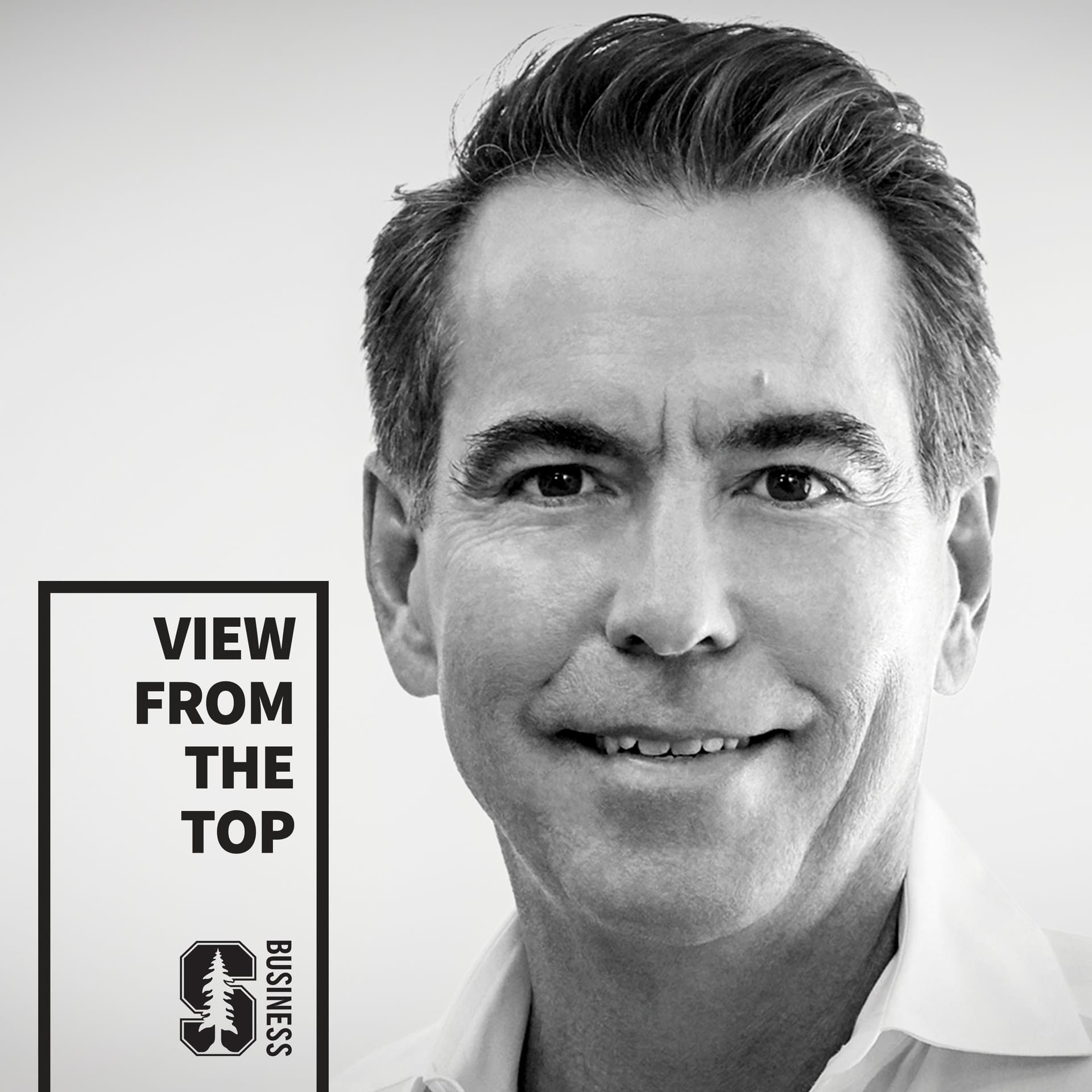
Podcast Summary: Stanford GSB: View From The Top - S8E11: Orlando Bravo on Doing the Work, One Deal at a Time
Episode Overview Host: Gintare Zukauskaite, MBA ’26 Guest: Orlando Bravo, JD/MBA '97, Founder and Managing Director of Thoma Bravo Date Recorded: October 21, 2025
This episode focuses on Orlando Bravo's journey in private equity, discussing his career trajectory, lessons learned, and insights on leadership and personal development. Bravo shares his experiences, from his early days in Puerto Rico to becoming a named partner at Thoma Bravo, one of the most successful private equity firms globally.
Key Themes and Takeaways
- Overcoming Early Challenges
- Bravo faced significant setbacks early in his career:
- Experienced a disastrous outcome with two out of three deals during the dot-com bubble burst.
- A mentor, Carl Thoma, played a crucial role in providing him another chance, which ultimately led to his success.
- Risk Management and Focus
- Bravo emphasizes the importance of identifying and managing risks:
- “Find the risks that are meant for you to take.”
- Encourages individuals to focus on personal strengths rather than comparing themselves to others.
- Importance of Mentorship
- Mentorship is highlighted as critical for success:
- Bravo credits mentors like Carl Thoma and Marcel Bernard for their guidance, stating that mentorship is essential for learning and growth.
- The Nonlinear Path to Success
- Bravo reflects on his career path:
- Success is not always linear; perseverance through failures and challenges is vital.
- Encourages listeners to stay positive and continue pursuing their goals despite setbacks.
- Private Equity Insights
- Discussed the evolving landscape of private equity:
- Bravo believes that the private equity sector is still ripe for innovation and growth despite claims of saturation.
- Stresses the importance of thorough due diligence and understanding the operational dynamics of businesses.
- The Role of Entrepreneurship
- Bravo draws connections between private equity and entrepreneurship:
- His firm’s approach focuses on enabling existing businesses to thrive by restructuring and improving operations.
- Highlights the need for innovation within established businesses, not just new startups.
- Giving Back and Community Impact
- Bravo shares his involvement in disaster relief efforts in Puerto Rico post-Hurricane Maria:
- Founded the Bravo Family Foundation to support entrepreneurship and community development in Puerto Rico, emphasizing long-term impact rather than short-term relief.
- Future Outlook and Advice
- Encourages the next generation of leaders and investors:
- Emphasizes the importance of doing one's own thing and focusing on personal business.
- Reminds listeners that their contributions can lead to greater opportunities and innovations in the future.
Closing Thoughts Orlando Bravo's story serves as an inspiration for aspiring leaders and entrepreneurs. His journey illustrates the importance of resilience, mentorship, and a focus on personal strengths in achieving success. The episode provides valuable insights into the world of private equity, the significance of community engagement, and the power of innovation in driving business growth.
Listening Recommendations For those interested in further exploring themes of leadership, personal development, and entrepreneurship, additional episodes of the "View From The Top" podcast can be found on the Stanford GSB website.
Written by AI. May contain mistakes. Listen to the episode to check what was said.
Transcript
Automatic transcript. May contain errors.0:09Welcome to View from the Top, the podcast. I'm Gintari Ožikoskaite, an MBA student of the class of 2026. And I'm Michael McDowell, a producer at Stanford Graduate School of Business. Gintari, could you set up today's conversation for us? Today, we hosted Orlando Bravo. He's a founder and managing director of one of the most successful private equity firms in the world called Toma Bravo. Orlando is a GSB alum. He also got his GD as well while he was here at Stanford. And in our conversation, he shared his story from leaving Puerto Rico to pursue tennis, to his early days on Wall Street, to Stanford, and eventually his nonlinear path into private equity.
0:59You asked him a couple questions that he said nobody had ever asked him before. How did you figure that out? A lot of hours researching, a lot of hours listening to other podcasts and picking up, I guess, a few clues that there was something there that he never really got asked to go deeper. And I didn't know where he's going to go with those answers, but I tried to set it up in an open matter where we would learn something more about him and something from the period of time that this audience here on this campus is living through at this moment. I noticed that it was a packed house. And I'm curious for you and for your peers, what's the appeal of private equity for class of 2026?
1:52I think a lot of my classmates come to GSB with an intention to get into private equity. Path is to go to investment banking, spend a couple of years on Wall Street, then come to GSB and do your best to hopefully get the summer internship at one of the private equity firms and then a return offer. And that was Orlando's story too. And I think the people who came, not everyone was from private equity. Right. Because here is the place where you discover things. We come to GSB to learn about things we have not got a chance to learn about. That's where my personal interest was to go and have this conversation with someone who's so different.
2:49Absolutely. Are you ready to play the tape? Let's go. Orlando, welcome back to GSB. Let's go. Let's go. Man, look at all you guys out there. This is great. It reminds me of many, many years ago when I was having so much fun here. Made my best friends. Just incredible to see all of you, really. It feels just like coming back home. And we're so lucky to have you here, who's been in our shoes, to come and join us here for the first View from the Top of the Year. We wanted to start by bringing some of the memories back from the time you were a student here back in 97. JJ, what did you do? Charlotte?
3:38Who knew this guy would go and build one of the most successful private equity firms in the world? Yeah, you know, this is funny. That guy right there, Mason, my best friend from business school, one time over in Vegas. And I do believe that my class started that Vegas tradition that has become now super fancy. We go in a small group. He was brushing his teeth in the morning and goes, do you think any of us would ever start a company or do something? And he told me the other day that we were one of them. So that's good. I'll take it. I'll take it. Well, I think a lot of students here today are going to relate to your story, maybe even in ways they don't expect.
4:20Here's something I relate to. At 15, I moved to the U.S. as an international student. At 15, you moved to Florida from a small coastal town in Puerto Rico. What was that like for you? Well, you're from Lithuania. We relate to that. It was scary. it's not only it's I'm not only from Puerto Rico but I'm from a small town on the west coast of Puerto Rico so if you want to do play tennis look for a better life you have to drive four hours just across the island to get to San Juan and then that's a that's a city and you get that opportunity but but it was scary my family we were all very very close but it also was really special I thought I was being handed like an opportunity of a lifetime I was just 15 playing tennis but it was very meaningful for me.
5:11And in Florida, you went to Nick Bollateri's Tennis Academy. It's known to be one of the most prestigious tennis academies in the world. What did tennis teach you about life? Humility. You talk about that tennis academy, and I found out pretty quickly that I wasn't that good. but I did private equity so that's okay I'll take it you know it's that's really important an important part of who I am how I think about business how I lead for example right in tennis when you get on the court with somebody it doesn't matter what your ranking is you could be ranked tired, you could be ranked lower. The other player may have more coaching, this or that, but you have to try to figure out how to win that match.
6:04And I had some of the most amazing experiences when I was a little kid being paid to go to Venezuela to play an international tournament in Latin America. And you notice that you're as equally nervous as your opponent. You notice that you may have the same style, that you kind of play in the same way. And that equalizer is so, so important. Like today we're pretty big in tech, but we still need to win that deal. Even if we're much bigger, even if we've had good returns in the past, even if we have a great team, and that other competitor is equal to us. And that's great. And also I mentioned, it's really humbling because there's always somebody better than you.
6:43And it's okay not to always be the best at everything and the best. You just try your hardest and you do your own thing. And that really has, those two things have really stuck with me. You left the tennis court and joined investment banking in the early 90s. What surprised you the most about your first few years on Wall Street? The opportunity. I was blown away, and I think many of you have done investment banking, you're going into entrepreneurship or private equity, but I was going to go to Stanford Law School. I was lucky to have gotten in because I really didn't know what I wanted to do after undergrad.
7:25And Morgan Stanley gave me a job. And Stanford was the only school that deferred me, which is just incredible. I remember calling Harvard because at the time, that was my first choice to go to law school. And they said, ah, you got to apply next year. You have to compare to the next class and all this serious stuff. And Stanford, when I called just admissions, thank you, they said, you're welcome to come come here anytime you want. I was like, wow, West Coast. That's so true, right? So chill. And I was like, that's where I want to go. But I wanted this opportunity. I get to work at Wall Street.
8:07It's unbelievable. Really early on, I noticed, and it was 1992, so it was really early for private equity, that they put me on a deal. And there was this group trying to buy this company that didn't own a company, that didn't have a big company in the space, they didn't have anything. They just had money. And I was incredibly impressed about the American opportunity that without anything, people will trust you, give you money, and with that you can buy a multinational corporation. I thought that was just the most ridiculous opportunity there was. And they seem to have a lot of money too. So I said, maybe I'll try that.
8:44Yeah. You come to Stanford after two years at Morgan Stanley but not only to do JD also MBA can you share more about what were your biggest takeaways from the time you spent on this campus well I was the luckiest I met Gabrielle and she and I had Charlotte who is here sorry embarrass you my oldest Charlotte's 23 she's a senior at Stanford so proud of you Charlotte and without me being at Stanford I wouldn't have met Gabrielle So we had Charlotte and Xander, and now have other wonderful kids. Met her, met my best friends, had time to really explore what I enjoyed and what I was really like. Was inspired by my classmates.
9:33Was really loved by my classmates. You know, you saw the picture. Those are my best friends. Still today, we kind of travel life together, kids, challenges, work, you name it, right? That's kind of my support group. I don't know, it's just, it was really what gave me the true opportunity to do what I do and explore the world in the way I do it now. And your journey in private equity also started here. You landed a summer internship at a private equity firm nearby here in Menlo Park. And for many of us here, when we go on our summer internships after the first year, we hope that two things will happen.
10:16First, we'll love our job. And second, we'll get the return offer to come back after graduation. What was that experience like for you? Wow. Nobody has asked me about that summer job and not getting the return offer. I thought you were going to jump to the goat of private equity Carl Toma, but we'll talk about that in a second. But that was a GSB alum, Alex Siever. actually a very, very good tennis player, an incredible investor. He was affiliated with TPG at the time, right? He lived here in Palo Alto. Now he lives in Connecticut. We kept in touch with him. And I didn't get a return offer. I don't know what I did.
10:59When you realized that. But you know what the truth is? Yeah. Is that then when Carl Thoma gave me an offer, he gave me an offer. Oh. And I didn't take it. But that time when you realized that the offer wasn't coming. What got you to the mindset to keep going, to not give up on private equity? And what would you say to someone in this room who might be facing that kind of rejection right now? You got to do your thing. I sent out 500 random resumes. And at the time, not a lot of people used the Internet. So you had to mail some of them because they weren't up to speed on this stuff. But I would send them to random firms.
11:41I would cold call. I would, and, you know, I think the lesson is you don't need many offers. You just need one. And it has to be the right one. And it wasn't until the end, I think I had two weeks left in graduation, that Carl Toma decided to open up an office in San Francisco. He was splitting from GTCR, the firm he founded, and he interviewed a few people and I got that job. I just would say keep going. Absolutely stay the course. It will come. It may not come at this time. It will come a little later. But it will absolutely be there. So let's go to that persistence. And you going to Chicago, meeting Carl and the team.
12:29And the job is almost there. But then comes San Francisco dinner that almost cost you that job offer. What happened? This is a, no wonder you're GSB, all the studios. Nobody has asked me that. So Carl, does anybody here know Carl Toma? Right, of course. My colleague, my partner, Toma Bravo, you know Carl. He kind of did the same thing to me that he did to you when he was interviewing you. but Carl is GSB, one of the greatest investors of all time, has the highest ethical principles, these old school values of who you partner with, who you work with in management. The best thing that happened to me is I was lucky that I had him as a mentor and I never created anything new.
13:31I just listened well. I give my credit for listening. That's the key. So Carl comes to San Francisco to close my offer. We're having this dinner. And I said, you know what? I'm going to ask him for a carry. You know, this offer just includes salary and bonus. I need some carried interest. Isn't that what private equity is about? Isn't there any carry here? So I asked him, hey, you know, how about a point of carry, have a point of carry? And he kind of listened. He didn't say much. And he called his colleague and said, withdraw that offer. I don't want to, I don't think, I don't think this is a good fit.
14:08You know, you got to earn your way through it. I said, no, no, I'll take it. And I had like three sleepless nights and, and he did not withdraw the offer. So that's what happened. Luckily, you started in their San Francisco office right after graduation, but in the middle of a dot-com Boom. Can you share more about how did that go? Not well. And there may be parallels now. You never know. Maybe 50-50 at best. But Carl gave me a lot of responsibility and authority early. That's the way he leads and that's the way he taught me how to lead. We do that with our colleagues now. I love an associate to call, meet a company, and try to see if she or he can buy it.
14:56I learned the business by, or mentored by doing the business and learning the business. And I started investing in IT service companies that were providing services to a lot of dot-com firms. That was the hot thing at the time, and I was in San Francisco. I did three deals, and when the dot-com bubble burst, two out of the three went to zero. We couldn't recover any money, and one, we got like 50 % of the money back. So it was an absolute disaster. And I thought, you know, I had to work so hard. You started when I was 15 in tennis, even before, right? Little by little, trying to do everything perfect in the school and the thing, just like all of you have done.
15:36And I'm like, now that I made it into private equity, I'm going to get fired. And he, in his 70th birthday, Carl said, you know, because I was there, it was a great event some years ago. And he said, remember, I was about to fire you. And I go, I know. I could sense it. I knew that something like that was coming. And what allowed me to relax a little bit is I had just had Charlotte. I spoke about that at commencement. And I was like, you know, in the grand scheme of things, nothing else matters. So relax, let's see what happens. And Carl gave me another chance. He sat me down and said, I'm going to give you one more chance.
16:14Just don't take those types of risks. Those are not the types of risks that are firm, as a private equity firm, as a buy-off firm takes. and you can make mistakes, but don't make similar mistakes. And he gave me a lot of rope to try again. And I knew that was going to be my last chance with him, but at least there was one. Well, most people who survived that afterwards and that feedback would have kept it safe, would not go and purchase something new. Instead, you go back to Carl and present him a new idea at that time, software buyouts. You were 30 years old. How did you have guts to do that?
16:56I had nothing else to do. No, I mean, nothing had worked. I had to try something. It was a super entrepreneurial firm. And I always, for some reason, wanted to always do something a little different. You know, one of the things about New York, it's my favorite city in the world. I love New York City. But one of the things about that job is leaving the job, I felt like I was walking with 100 ,000 other people that were doing the same thing day to day. Still now, I walk into a lot of those offices because we do business with many other groups. And I see these huge places with everybody dressed the same way and doing the same thing.
17:34So I always wanted to do something a little different. I wasn't creative enough to be like 180 degree different. But I thought, look, software at the time, our viewpoint was to Carl, you can buy it super cheap. He liked that. He's a value investor. You could buy recurring revenue in software less expensively than every other category GTCR had done and was successful at. Outdoor advertising, radio, media, a number of them. The challenge was that no company at the time really was making money in software. similar to now, there's been no improvement in the operating capability of those businesses.
18:16I'm here with all the GSB, with the best of the best in leadership and management, and in almost 30 years in the software space, now a$1.3 trillion economy in revenue, the average publicly traded software company loses money just like it did when we started in software. So we were very open with Carl that we have no expertise in running one of these companies. We'd never even done a deal, but he allowed us to take the risk to do the first one and try to see if we could restructure the business to make it a profitable buyout business. And he said, go do it. And it was only a$50 million deal, so you've got to start really small.
18:55It's not like we were trying to take the whole risk right there. And then I met my second mentor, operationally, Marcel Bernard, who's the best operator I'll ever meet in my whole life. He ran Motorola, different divisions of Motorola in the 70s, when that was an incredible school of management. And then he kind of taught us what to do, and we followed him at it. If that first deal wouldn't have worked, right, that would have been over. So a first deal allowed us to do a second and a third and a fourth and so on. You mentioned those two mentors, Carl and Marcel, having a big influence on how the story played out.
19:32For the people in the room who also want to attract that kind of mentorship, getting people to invest the time and energy in them and their success or to make people want to bet on their ideas. What do you think they should be doing? Mentors are all around you. And people that have had success, it's because somebody else taught them something. Marcel Bernard had this great quote, everybody needs somebody else to learn from. That's why our model in private equity was to work with existing management. Restructure the company, change the way it's being operated, but actually do it with the existing people of the business.
20:14So anybody that's self-aware knows that the reason they've had luck is because somebody brought them there. Somebody took them to a place they didn't know they could find or they could see. Now, you have to get that at the job day to day. Like I sometimes get calls from talented young adults and say, oh, can you mentor me on some things? Of course I will, but it's ad hoc. Once a month I get a call. I don't have enough context of what that individual really wants to do and the challenges day to day. You have them all at work, at your workplaces, unless you're starting a company from scratch, maybe a board member can be extremely helpful, engaging day to day.
20:58But those people are all over. the key is also finding somebody that shares your values. I always thought that among everybody in private equity, no, I want to listen to that guy. I looked up to Carl so much that it allowed me to absorb more what he was saying. And in 2005, at the age of 35, you became a name partner. That's not just the title. It's Carl saying, I trust you enough to share my name. What did that mean to you? Oh, it was incredible in a five-year turnaround from getting fired to getting, okay, now they cannot fire me. That was the key. That was really, you know, incredible. I don't think too much about the name of our firm.
21:49You know, it was just the legacy of how it was. You know, GTCR, they named it like that. They named Toma Cressy like that. They added me, et cetera. But I really, we as partners, I have many equal partners in the firm, and we run the business as a partnership and as a private partnership. And I don't think anybody's too worried about that now. But for me, it was great when it happened. And a few years later, the firm's name changed again and became what it is today, Tomah Bravo. At that time, you had around$1 billion in assets under management. and today it's closer to 200 million. That's 200x.
22:31Through that period of such extraordinary growth, through those 17 years, what changed the most for you personally? Not much. We do, you know, that example that I gave you, one deal at a time, our first deal was 50. Our second, we bought Vector SGI. That was 75 million. Our third deal, we bought Datatel for$250 million, a bit of a jump. That was a great deal. Then we bought SonicWall for$550 million, our first cybersecurity buy, and a company here in Silicon Valley, which we hadn't done before. So we were really afraid of turnover when we made these changes. That was a wonderful experience. Then we moved to buying companies for a billion.
23:13We bought three in a row, two of them here in Silicon Valley, and those worked. Then we bought CompuWare for 2.2. So it was this trajectory. we haven't changed that much. We still have to get the money, win the deal, and improve the deal. Just the numbers have gotten bigger, and since we've done okay, we have a bigger following of people that now allows us to buy the jewel. See, now we're in a place we've never been before. We can buy the number one software company in so many different areas, and the opportunity for that for the next generation of Toma Bravo is ridiculous. because before we had to buy an itchy player and try to make work of it.
23:57Now we can maybe drive these companies, we're close to it, to 50 % margin and 20 % growth and maybe create the next 50,$75 billion market caps. It's just amazing. But the tactics and the philosophy around it have remained the same and we have remained with our feet on the ground, not levitating. I am extremely hands-on like I was before. You talk about mentorship. I love to get a call from an associate to talk about something or a deal. And I reach out to them. They're probably going, what's this guy calling me all the time? Does he not have confidence? You know, all the people doing models at work, I kind of creep behind him.
24:38Like a super, you can see. And I'm legitimately interested in what they're looking at and how they're thinking about the business.
24:58Are you looking for fresh perspectives on how we live, work, and lead? If Then, a podcast from Stanford Graduate School of Business delivers research-based insights to help you navigate a rapidly changing world. Just as you would exercise, just as you would worry about your diet, you ought to worry about the place where you work. The trust ultimately has to be with the government, But the government then, on its part, has to create accountability for all people. These things have real consequences for the welfare of countries and the people that live in them. Join me, Kevin Kuhl, for If Then, a podcast from Stanford GSP, where we explore the forces transforming business and society today.
25:38Find If Then on Apple, Spotify, or wherever you get your podcasts.
26:00Personally, everything changed for you in September 2017 when you got a call from Puerto Rico. What happened? So I was traveling with Jennifer James. Remember, JJ? She's our chief operating officer. So we were coming back from Tokyo, and Hurricane Maria had hit Puerto Rico when we were leaving Tokyo. When we land, I tried to call family and friends, and I could reach no one. And it's like, this must be pretty bad. And my brother, who's very close to different communities in the island, a reporter called him and said, hey, there's a shelter next to my hometown with 35 people that have two-day supply of food and water.
26:47This is unbelievable.
26:52Sorry, I get super emotional because, as I said, if we don't do anything about it, that was the feeling. Nobody's going to do anything about it. So we said, hey, we'll go there and we'll work it out. We'll see you in a day. I told her, we will leave and we'll see you in a day. We'll land at this airport really close to the place and we will help you out. And we landed and the people were there. They had brought all these trucks. They got the food, the water, whatever they needed to hold them over for four or five more days until we figured things out. And that worked out. And then other communities would come and we would do the same.
27:31And then we started developing all these distribution systems in Fort Lauderdale, Florida, because it was manageable to do it from there. It was much closer than coming from San Francisco with a bunch of supplies. And we started this huge relief operation all over the island. And FEMA didn't get there until like two months until after we were there. It was incredible. And I always like thank the GSB for that risk taking and get out there and do something different. I didn't know anything about disaster relief or hurricane relief or anything like that. We just did it. And it works. The nice thing is I did have a background in entrepreneurship.
Read the full transcript
28:09You can be entrepreneurial. Let's solve the problem. Let's get it done. And I think in the process we were able to hold together there's some communities that otherwise would have been in trouble. But you didn't stop just at relief. And Charlotte went with me on that first trip. You remember that? That was crazy. You didn't stop just at the relief and help. You kept going. What was the intention behind the Brawa Family Foundation and to create the opportunity in the island for the long run? I was going to the island every weekend, every four or five days, whatever, working there with communities.
28:49And I met so many good people. Like, it reminded me of the site of Puerto Rico that is incredible. People that were educated, talented, salespeople, a lot of salespeople that couldn't work for months because they didn't have any electricity, right? You can't call customers. And they're all commission-based, 100%. So they didn't have any other income. And I said, that's isolating. That's totally unfair. So we started six years ago the permanent programs that we have in Puerto Rico. And the center of it is entrepreneurship. It's a rising entrepreneurs program. We now have launched over 100 companies in Puerto Rico.
29:27We have a bunch of people from Tomo Bravo involved in those companies and one-on-one mentorship. CEOs from our companies go there. We give them free capital, free education. We've taken all the playbook from our firm. and applied it to how you build the business because there they can't raise any outside money. So you've got to get profitable very quickly and do the kind of things that we try to do with bigger companies. Leadership and that program, I really, really believe it's setting up an ecosystem in Puerto Rico that will entirely change the outcome for so many young adults. We have paired up with a high school program that we have where we have now two-thirds of the municipalities in Puerto Rico.
30:06those kids from public schools participate in those programs. And the kind of hope that I see and the kind of way that we take those kids off the street, off of just playing video games, now true opportunity. They think about solving problems of today, problems of their communities. It's incredibly uplifting. And, you know, coming back, it's so tied to what we do at Toma Bravo. We try to help a really big company that's super innovative and not making any money become also a great business by doing it with the existing people. when you see, when you try to help these entrepreneurs that have very little resources, you know, if you can do that, you can certainly do it at a billion-dollar company in Silicon Valley.
30:46This stuff is easy. So it gives you also a lot of hope for your business. Well, it's undeniable the impact you had on people in Puerto Rico multiplied because of that long-term mindset. And I want to talk more about that, but in the context of private equity. I hear a lot of my classmates here at GSB say that today private equity is too crowded, that the golden era is over, and that it's almost impossible to build the next Toma Bravo or become the next Orlando Bravo. Where do you think the critics are right? What's generally harder today? This is much easier today. I completely I believe some of you in this room that will choose that industry as a career you stay with it you will build the firm much bigger than Tomo Bravo and better the next generation is always better some generations below me but it's always better than the prior it's not even close the industry is tiny we feel ourselves that we're just getting started.
31:58I feel that I've been training with my team of partners for 30 years to now get the opportunity that I just spoke about. This is new. This is tiny versus the public market and other forms of ownership. When I was interviewing for a job, one of those many 500 jobs that I did not get, I met the head of a private equity firm, very large at the time. And that person in that interview told me private equity is taken. And I've mentioned that before in some other conversations. Private equity is taken. There's not much for young people to do in the business. That was 1997. Come on. Now our firm is much bigger than that firm.
32:39I kind of look at that. It makes me feel pretty good when I'm down and we have a lot of portfolio problems. But it's going to be the same thing. There is no substitute for somebody being able to buy a corporation, having full control of it, partnering with great leaders, solving problems, as Marcel Bernard would say, every business problem can be solved, health is another matter, and creating an entity that people thought was impossible to create. That opportunity for creativity, value creation, only exists when you can buy the whole company. Not a piece of paper, not pieces of that company, not credit in that company, not public stocks, absolutely nothing else.
33:21So I'm a firm believer, It just requires people to stay humble, keep their feet on the ground, be practical, and focus on the business, not on anything else. We would not have gotten into software if we were listening to the word at the time. Venture capitalists would say, these companies that you're addressing are too old, and new VC companies will put them out of business for sure. That was a scary comment from people that have done really well in VC, really good VCs that I highly respect. The big buyout firms at the time were saying, you're crazy to get into tech and software because that is too risky.
33:58Both of those were extremely general comments. When we would go into a company and look at all their files one by one, customer one, customer two, customer three, when we would sit there in their support center listening to all the calls that were going, all their salespeople that were working on the system, we'd say, this is an incredible business. What am I missing? What are they talking about? Now, when you look at today with AI, some people are doubting software. Of course, you can read an article that says, well, maybe the stack will do this and that. Theoretically, that makes sense. But when you go to a corporate environment and know how people work, clearly, it is a huge tailwind, but you just have to do the work.
34:43You can't be scared of it. You can't fall with whatever else everybody's saying. It's a place where you can do your own thing. That's the key. Looking ahead, when you think about the next generation of investors, entrepreneurs, builders who are with us here today in this room, what's the one lesson you hope they take away from your journey? Can I give you two? Go ahead. Do your thing. Do your own thing. There's a lot of pressure, and we even face it now. We have all this capital. or why don't we just go off and build all these AI data centers and people are making money on that stuff or do this, do that.
35:25There's a lot of pressure to do things where others that you highly respect say, yeah, you're doing the right thing or the great job to get or the type of company to form now. Do the work, focus on your business, focus on you and do your thing. That will pay huge, huge dividends. We'll make everything very, very clear. And the second piece is, and you spoke about it with challenges of today. Look, it won't be linear. We just walked through my good luck and how it wasn't linear. It was terrible in some places. It won't be linear, but you have to stay positive. Because all of you, if you apply to it and if you want to do it, you will build things that were much bigger and better than what anybody else had done before.
36:10Just don't be intimidated by it. If you look at the end result, you might not want to focus on it. Just focus on step by step and stay super positive in your journey. Orlando, we have a few students who submitted a couple of questions. Let's turn to them. Orlando, thank you for being with us here today. My name is Abdullah Al-Mutlaq and I'm an MBA too. You were actually one of the reasons why I chose to come to the GSB and you even made an appearance in my Why Stanford essay based on a meeting we had in 21. My question is about fundraising. Despite a pretty challenging LP fundraising environment, Tomba Bravo has consistently exceeded its fundraise targets.
36:53In a world where every GB claims top-quantile performance and mark-to-market figures are difficult to trust, I'm curious if there are any lessons or qualities to take away from every time of the GSB that you bring to your LP conversations that help differentiate Tomba Bravo further. Wow. Well, congrats. I'm honored. you have the two people right here in front of me that can probably answer that question better Jennifer James leads our fundraising and Bert has helped me so much in communication I've had to work on that so Carl Toma when we were starting Toma Bravo 1 which we called Toma Bravo 9 because we tried to promote as much as we could that we have been around for a while I was doing all these presentations one PowerPoint after the other.
37:43We're going to position ourselves as this and this and that and that. And he said, Orlando, stop. He said, in private equity, the only thing that matters is returns. Investors have incredible choices of where to put their money. And I go, okay. And we were getting turned down a lot by LPs at the time. And they were giving us all kinds of different excuses. One, I was walking down the street in New York and I called and said, hey, what are you coming into the fund? I said, we're not going to be doing the fund. I said, how come? He goes, because your numbers are not good enough. Wow. What a, okay.
38:21Note to self, my numbers have to be good to get some money. And I promise you that that's why we're step by step and deal by deal right now. So we have had, you know, good enough numbers to have our base of customers stay with us and stay the course. So you have to have a certain level of performance. And there are other great performers out there. But then the second thing, and this is what Jennifer James does so well, is we really attend to the customer. We know in our partner what they like, what they don't like, how their family is, who makes the decision. How does that organization make the decision?
39:01You're going to try to sell something. One person that decides, two people? Is this a group decision? Who do we need to talk to here? And we know which customer. Do they buy from the top? Does private equity buy here? And I see my peers making a bunch of mistakes. Some people go straight to the top because they have that access. And then the person asks the head of private equity, what do you think of these guys? And they go, nah, I have somebody else. That's us. Or we try to do this. Like that, there is getting the money, that one third. I say in private equity, get the money, improve the deal, and sell the deal.
39:34But getting the money is a really, really important skill of attention, right? Right after this, I'm headed out to Hong Kong, seeing some of our customers there being very, very close, because there are other ways that you can add value to them. Co-invest. When they have an issue with AI, how quickly do you have their back in front of their boards? So many things. It's kind of a day-to-day thing. And finally, Bert, I have to give you a lot of credit. And please take us class. If you haven't done it, you know, communication. At first, as we were getting a little bigger,
40:08I was imitating the goats of private equity from the 70s and 80s. Oh, this is the way you talk, and that's the way I have to seem, and this is what I have to pretend to be. And Bert said, you're funny, you're Puerto Rican, you don't take yourself seriously, be yourself. And I think that allows me to connect pretty decently and Jennifer James with other people. One of the best hits of sales that we've had at one of our companies, at Dynatrace, he said, remember, people don't want to buy your product. People want to buy from you. And that was very consistent with what Byrd was trying to have me understand.
40:43Thank you.
40:47Hi, my name is Owen, class of 2027. Thank you for coming here. My question is, you guys have built Tomo Bravo on the thesis that enterprise software has durable notes. But my question is, as generative AI decreases the cost of software creation, and some say commoditizes it, how is that impacting your investment thesis moving forward? Yeah. The software having a great, that's a phenomenal question that we're deep in now. And we've always been. The fact that software has a moat in general is not really true. Never been true, especially in dynamic spaces like cyber, that's a third of our investment.
41:33Infrastructure software, that's almost another third. And all these horizontals. You face constant changes, competition. And if you're not growing bookings, even if you had a moat around your customer base, if you're not growing new bookings, nobody's going to buy your company and you cannot take it public. It might seem like a decent financial investment if you got lucky on the price or something else prior. So it's always been a fast evolving space. Now, when we were doing our early deals in software, we were buying what seemed to be some old software companies with legacy code, legacy architecture.
42:07That's where venture capitalists would say new companies are going to put you out of business. A great engineer at Stanford could have built a much better product, faster, better code with newer architecture than many of the companies that we have bought in the past. No offense to those development teams. But those companies are about understanding the customer's process and about servicing that customer. The developing of code is a very, very small subset of what that company does to deliver value to that customer, to give them that five to one ROI over a year or that payback period of nine months.
42:47You have to really understand the function or the vertical or the process or all of it and be able to provide a custom solution, not custom code. But you take this code that you have, and how do you figure out the problem that the customer has, let them know that they have a big problem, allow them to re-engineer their organization to absorb this better way of doing things. You take Salesforce now,$41 billion in revenues, and there's thought that, oh, they can get commoditized. Not at all. There's no way. Because if you're a salesperson, You work, the way you get trained and the way you work is in stage one, there's an account.
43:34Stage two, they have money. Stage three, they have a champion. Stage four, I met with them. And that is the process of getting somebody to close. Now, if we get to a world where there's no longer process, where there's no longer organizational traditional structures in a company. Oh, maybe, you know, maybe, maybe way back in the future, if somebody invents a new way that we all organize ourselves in a totally different way, that could be a risk, but not if we remain organized the way we are. And I don't see that in the next 10 years. I really don't. I don't even know how you train a new salesperson to do their job.
44:11Oh, right. AI can give you more context on what accounts to go sell than Salesforce can. Yeah, because it gets all this unstructured data. It reads all the emails. It looks at the customer buying activity. It looks at their speed. It looks at much more rich information and can give you a better sense of where to go. And Salesforce then just becomes one of those pieces of information in the system. But how do you train that person of where to go and what to do and how to move that account along? I don't think so. I think it's still going to be okay. Same thing happened with SaaS 10 years ago. Of course, every change is different.
44:50This could be more transformative. But I think we'll be okay. At least I hope so.
44:59Thank you. I'm Daisuke, class of 2027. I'm originally from the Japan private equity. My question is about global expansion and challenge. I think you built a strong franchise in terms of the UOS software investment with a repeatable playbook. But as you see in the global expansion next beyond to Europe, where do you think is most likely a good place to apply your playbook and why? And also I would like to ask what kind of leadership capability is essential or required to achieve those success in that challenge? Thank you. Where could our playbook be applied globally? What are the best places for that?
45:53Everywhere. Thank you. Look, it's more than a playbook, right? Of course we have by sales, support, customer success, professional services, product. We have an entire playbook that we've built over buying 600 companies. So we add to it from people that we learned and Marcel Bernard and everything else, right? We can tell you the number of reps per manager and why and how many underperforming reps can you have on quota and territory. We have all that, all those metrics on some of the best ways. Now, how do you apply so much to a company? They cannot absorb all that. You don't have time to do all that.
46:35As Marcel would say, if you try to do it all, you'll get to none. Come up with the three biggest areas that will completely change that business that are also the easiest to do and give you the most money. That kind of combination of all. That's tough to do. Then align yourselves with management so that they lead them, so that they truly believe that this can be done. And so the CEO of that company can manage and lead her or his direct reports to go into that. That is about 80 % of it. And that leadership place is the most difficult. Now, there are country differences, regional differences, and whatever differences around.
47:18But people are people. And if you have leaders that want to make money, that care about numbers, and that are open-minded enough, this works. This is business 101 by far. Now, we diligence that because we usually start the deal by cost reduction. Before, people didn't like that in Silicon Valley. Now, Elon Musk has made that super popular. So now we hear a bunch of people going, yeah, I cut cost and everything else. But we start the deal because they're usually not very profitable companies by cutting 15%, maybe 20%. Marcel would say, if you try to cut more than 20, you're going to have to change the way that company works.
47:58That's too risky. No matter how unprofitable it is, but no matter how profitable you are, you can always cut 10%. And now the time to do that is when you close the deal because people are expecting that change. Don't go bother all these great workers and employees and colleagues and executives two years into the mission because a board member decided that you could be more profitable. Do it now, and then the CEO as a leader can stand up and say, this won't happen again, but we needed to do it once. From here, we're going to grow and do acquisitions. All that stuff and all that model of turning a great innovator into a great business applies everywhere.
48:33You just have to adjust yourselves to the local culture and the local laws. In Europe, you can't do that immediately, right? You have to go through labor council and a long process. And I'm glad that you're from private equity from Japan. I'm headed there after Hong Kong, and Japan is an unbelievable market. Just an unbelievable private equity market right now. That's another thing of opportunity, right? That's an obvious one. In software, though, it's a bit small for us, so that may be a place we get to in three years. Thank you. Thank you to the students. And Orlando, before we wrap it up, we have to do our view from the top tradition, and a few rapid fire questions.
49:18What is this? Just don't think too much. Say the first thing that comes to your mind. Okay, really? Okay, now. Cut it. Are you ready? Yes. Okay, let's go. San Francisco or Miami? Miami.
49:40I have to have the backs of my team. Half of them moved there. I'm not going to tell them I'm moving back. Don't worry. I'm moving to Miami after GSB as well. Okay. Lithuania to Miami. We like that. V-neck or crew neck? What? V-neck. Oh, V. Yeah. V. Oh, not too deep, but V. It's like a Saturday Night Live skit. I should come back like that. Most overused word in private equity? Escape velocity. Gosh, I really don't like that word. Wimbledon or US Open? Wimbledon. And finally, the best business advice you've ever received? That's not a rapid fire question. That's why it's the final one. That's a really, really deep question.
50:33I was in a meeting once with Carl Thoma in Denver. and there was this partner that was arguing with him about a deal. And he said, well, if you want to make money, you have to take risk. And Carl said, yes, but not that kind. And it's what fits you. Like we take big risk in turning around these companies and what we buy. Sometimes we put these equity checks that represent almost 20 % of the fund. We have to syndicate it. Those are huge risks that others would perceive as enormous. for us is something that we can do. So find the ones that are meant for you to take, but not others. And Orlando, with that, thank you very much.
51:15Thank you.
51:21I want to ask you a question that you asked Orlando, Miami or San Francisco? Miami. Why? Why? Because it is a place that I found the energy I have not personally found anywhere else in the U.S. thus far. I see a lot of construction. I see a lot of growth. I see people coming in and it's buzzing. And it's buzzing in a very different way from the buzz here in the Bay Area. Miami feels like the future. I do think so. I love that. So let's get into some of the fascinating things Orlando shared with you and the rest of the audience. Find the risks that are meant for you to take, not others. It hit me hard.
52:13Yeah. I think underneath that is focus on learning more about yourself. Understand what you're good at, what you're not so good at. understand that you can have many things in life but you can't have everything in life and pick accordingly i think he picked right he didn't go on and continue trying to become a pro tennis player he said you know what i got the data i'm now gonna go try do something else i'll go try wall street and then oh i learned private equity is a thing okay let's go try that out. Oh, I got it and I tried it and I'm actually good at it. Let's go double down. I think especially when he reflected on his first two deals being disasters.
53:04Yeah. I got the impression that if the third one went wrong and if that idea of software buyouts didn't work out, he would probably have divoted. What do you think entrepreneurship means to Orlando Bravo? The first thing that comes to my mind is innovation and that his job is to enable innovators to perform at the next level. He focuses on enabling great CEOs, great entrepreneurs to do better. How do you make your operations run more smoothly? How do you become more profitable? So, yeah, I think innovation is the word. Innovation is the word. I think in some ways what you shared just now is aligned with something he said in a different way, which is, I never created anything new.
54:00I just listened well. Yeah. Yeah. And I think he mentioned that part, I listened well, that's a superpower. But when you listen well, even though you don't create yourself, if you empower others, that's innovation too. Innovation, I think, by the meaning is bringing something new to the world. And I think it's impossible to deny the impact Orlando had on the software industry. Did you make any connections between things you learned at the GSB during your time here and what he shared on stage? Yes. And I think the answer is the things you get exposed to here at GSB truly give you a big picture of what leadership is, how it looks like.
54:55I think that's what I personally got from his message. And that's what I'm seeing here happening to me every single day. Just pure exposure to different leaders, to different perspectives. Fundamentally, they all go back to the question or give you the data to answer the question. What does leadership look like for me? I think that's a great place to leave it. Gintari, thank you so much. Thank you. Thank you, Maiko.
55:23You've been listening to View from the Top, the podcast, a production of Stanford Graduate School of Business. This interview was conducted by me, Gintare Zhukovskite, of the MBA class of 2026. Michael McDowell is our managing producer and Michael O 'Reilly edited and mixed this episode. Special thanks to Liz Walker. View from the Top is the Dean's Premier Speaker Series. It was started in 1978 and is supported in part by the F. Kirk Brennan Speaker Series Fund. During interviews led by students, leaders from around the world share insights on effective leadership, core values, and lessons learned along the way.
56:08You can find more episodes of View From The Top on our website, gsb.stanford.edu slash business dash podcast. Don't forget to rate, subscribe, and follow us on social media at Stanford GSB. And see you next time. Unview from the top.
From the publisher
At 30, Orlando Bravo, JD/MBA '97, thought his private equity career might be over. “I did three deals and when the dot-com bubble burst two out of the three went to zero,” he tells Gintare Zukauskaite, MBA ’26. “It was an absolute disaster.”
Mentor and firm principal Carl Thoma, MBA ’73, gave him one more chance. Bravo pitched software buyouts, and five years later — “one deal at a time” — he’d become a named partner at the firm, Thoma Bravo, which today manages about $180 billion.
“Find the [risks] that are meant for you to take,” Bravo advises. “Do the work, focus on your business, focus on you, and do your thing. That will pay huge, huge dividends, and will make everything very, very clear.”
This conversation was recorded on October 21, 2025.
See Privacy Policy at https://art19.com/privacy and California Privacy Notice at https://art19.com/privacy#do-not-sell-my-info.


