Ask ChatGPT


 Volts
31 Jul 2026 · 46m · 24 chapters
The episode explains why silicon anodes could replace graphite anodes in lithium-ion batteries, boosting energy density and enabling much faster charging. It focuses on Group 14’s silicon-carbon composite (SCC-55) approach to manage silicon’s ~400% volume expansion, stabilize the solvent-electrolyte interface, and avoid cracking/irreversible lithium loss.
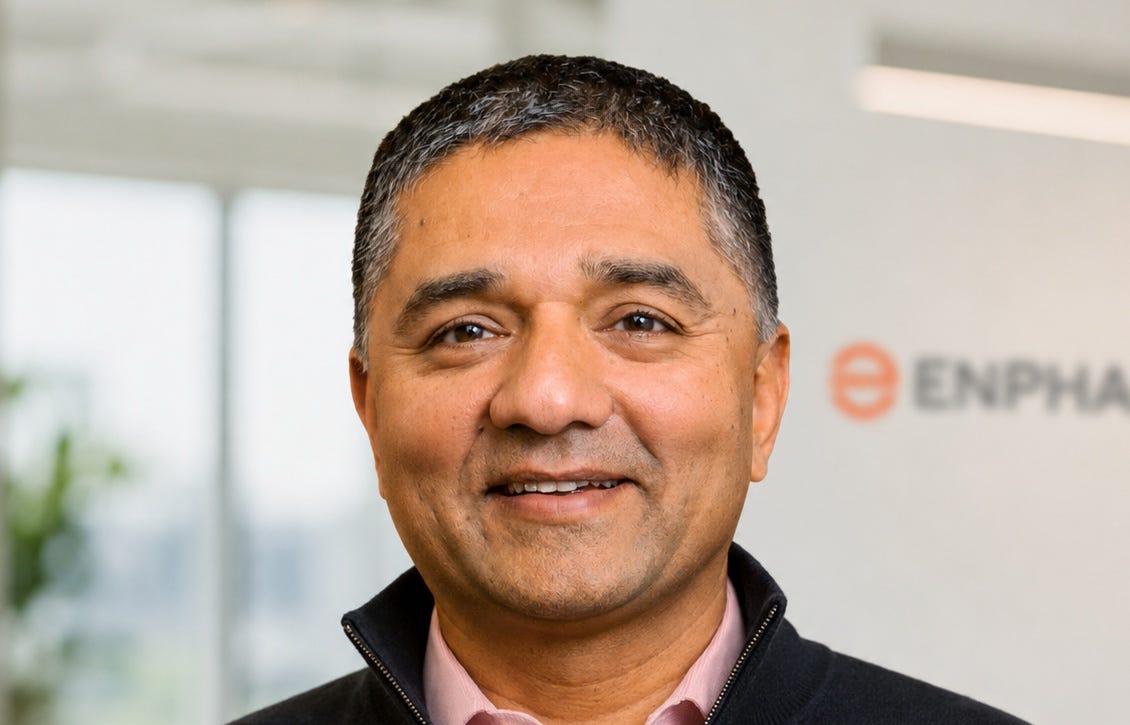
Rick Constantino is from Group 14. He describes himself as a chemical engineer who previously worked in pharma (Genentech) on biodegradable drug-delivery microspheres and freeze-drying; he later helped pivot those “dry” processing ideas into battery materials.
Silicon stores ~10x more lithium than graphite (mass basis). SCC-55 targets ~5x capacity vs graphite and faster charge (often <20 minutes, sometimes <10 minutes, and claims of “minutes” down to under a minute). It is designed as a “drop-in” black powder compatible with existing lithium-ion manufacturing.
SCC-55 is used by battery makers across ~150 customers; claims of 1,500–3,000 cycles in customer testing; phone batteries (Honor/Magic Phone) benefiting from rapid “frequency switching” for AI workloads; nail-test anecdote showing ~50% more energy and prompting electrolyte redesign.
Written by AI. May contain mistakes.
Discussion on the structure of batteries, focusing on anodes and cathodes.
“So I think the place to start is, I think most people know batteries these days.”
Exploration of the limitations of traditional graphite anodes and the potential of silicon.
“And yes, batteries are a lot of our joy and a lot of our frustrations and we're trying to improve them.”
A deep dive into the difficulties of using silicon in battery anodes and its historical context.
“There have been lots of attempts that have not really gone anywhere.”
Rick's personal background and his transition from pharmaceuticals to battery materials.
“And this, I think, gets interestingly to your origin story.”
Discussion about the innovative process and the creation of the carbon scaffold for silicon anodes.
“And we, you know, we were using hard carbon as a kind of an alternative for replacing graphite.”
Exploration of the flexibility in the silicon to carbon ratio in the new battery material.
“And so this material you've made, it's called SCC-55.”
Learn about the trade-offs and flexibility in the silicon to carbon ratio for battery anodes.
“I want to call it, do we go 55 BCD or do we do 56, 57?”
Discover the major advantages of silicon anodes over traditional graphite anodes.
“You know, the higher, if you want higher capacity, you have to have more silicon.”
Understand how the material produced impacts battery design and performance.
“So those are kind of the gains you can get.”
Learn about the challenges and solutions in scaling battery production with new materials.
“and no, it takes a lot to talk a battery maker into scrapping factories and building entirely new factories.”
Explore the diverse industries benefiting from silicon anodes in battery technology.
“Yeah, so I can't talk too much about specific customers, unfortunately.”
Analyze the cost implications of using silicon anodes compared to traditional graphite.
“And again, we're in batteries that we are.”
Understand how silicon anodes perform in terms of cycle life and durability.
“This is always a question that faces any new battery.”
Explore how silicon anodes can achieve cycle life comparable to graphite batteries.
“So how does this replacing graphite with this material affect cycle life?”
Learn about the effects of temperature on battery performance and safety in silicon anodes.
“It really helps to kind of speed the conversation.”
Understand the importance of calendar life in battery applications and its impact on commercialization.
“this has also been a problem for silicon traditionally?”
Delve into the supply chain for silicon anodes and the materials used in their production.
“Is not just theoretically, is using it as a kind of industrial tool, weapon, pressure, whatever, counter to tariffs, whatever you want to call.”
Examine the role of silicon anodes in solid state batteries and their compatibility with other chemistries.
“But we have the ability to actually produce our own plant from scratch and build in the silane plant in it.”
Discuss the potential of combining silicon anodes with LFP batteries for cost-effective solutions.
“You know, we there are solid state anode architectures that actually prefer to use silicon.”
Learn about the current relationship and funding from the Department of Energy for battery technology.
“Again, I can't talk to any specific customer.”
Explore how silicon anodes improve battery performance, especially in modern devices.
“putting in phones with this stuff, are the batteries lasting longer?”
Learn about the challenges and strategies in scaling silicon anode production.
“What else is going to bring down the cost of this material over time?”
Explore the ideal mixture of silicon and carbon in anodes and its effects.
“We certainly, I think, can improve that to maybe a 60-40, maybe 70-30 equation or something.”
Discuss the competitive landscape and future predictions for silicon anodes.
“companies trying to put silicon in a carbon lattice specifically?”

Get the gist, explore an idea or ask about something said.
 Claude
On Volts, what are the key points of this episode?
Searching your listeningAutomatic transcript. May contain errors.
0:00All right. Hello. First of all, Rick Constantino from Group 14. Welcome to Volts. Thank you so much for coming. Thank you very much. And thanks to all of you for coming. I'm excited for this. So if you listen to Volts at all, or if you follow Clean Energy at all, you probably know that batteries are everything. Everything is batteries. If you have a problem, throw a battery at it. That is practically the slogan of my podcast. And so we're going to talk about batteries today, a battery innovation, a very exciting battery innovation. So I think the place to start is, I think most people know batteries these days.
0:42Batteries typically are an anode and a cathode and an electrolyte in between them. They're sending ions back and forth. When you charge and discharge, you're sending ions back and forth from the anode to the cathode. and I've been following battery chemistry innovations for a while now. I've written about a bunch of them. I've done podcasts on a bunch of them. Maybe you've heard, you know, they started like Tesla's using nickel, magnesium, cobalt. There's lithium ion. There's lithium iron phosphate, a lot of different chemistries you may have heard about flying around. But what you may not know is that all of that innovation, all of those varieties are cathodes.
1:30Those are all cathode materials. The anode, basically since lithium ion batteries were invented back in the early 1990s, have been made of graphite. And that was true then. It's true today. Okay. So to start with, Rick, why don't you just tell us what is the role of the anode and why has it been so resistant to change and innovation? Okay, great. That's a great setup. And yes, batteries are a lot of our joy and a lot of our frustrations and we're trying to improve them. And so you said last 50 years, lithium ion batteries have really been using that same anode, that graphite anode. And the bottom line is that it works.
2:17It's what was started originally. It's a very biquous material and it works very, very reliably. And at the time, it seemed like a very logical choice to pair. And over the last about 50 years or so, there's been lots and lots of advancements in the battery except for that anode. We've been using that same graphite chemistry for this whole time. For this whole while, though, there's been an interest in developing new anode materials, and particularly silicon, which is basically the new material that Group 14 and other companies are developing as the anode. It's quite difficult. Those challenges have been met recently with technology.
2:50But until now, it really hasn't been possible to commercialize those types of batteries. Yeah, so silicon has been—people have been talking about silicon anodes for a decade now. I've followed on and off. There have been lots of attempts that have not really gone anywhere. Maybe start by talking about the challenges of making silicon work, why it's been so hard to make it work. Sure. One thing I should mention is that the cathode is what brings in your amount of energy, brings in lithium ions, right? And as you mentioned, you're sort of bringing the cathodes, bringing that lithium from the cathode to the anode back and forth again.
3:21And of course, electrons are going the other way. So your energy density of your battery depends on how much cathode you can bring and how much lithium in the cathode. And so the reason people are interested in silicon as a new anode material is because you can store a lot more of the cathode. So basically, you know, in your battery, your anode takes up a lot of the volume. So if you can have a more powerful anode that has a much higher capacity for absorbing, you know, the lithium atoms, you can shrink, you know, your anode. So imagine shrinking your anode. So now you can make your cathode bigger so you can bring in more lithium into the battery.
3:53So people are interested in silicon and other, you know, anodes that have a higher energy density that can actually store more lithium. than graphite can. 10 times, as I understand it. Graphite's made of carbon. I think it's like one atom of sodium can hold four lithium ions where it takes like six carbon atoms to hold a single lithium ion, something like that. You can hold a lot more lithium ions with a single atom of silicon. That's right. It's about 10 times the capacity on a mass basis. And the way that graphite works, if you kind of remember your old carbon structures, You know, graphite is carbon, and it's a particular form of carbon where it's in layers.
4:32And the way that graphite takes up lithium is that it can intercalate between those layers. But there's only so much lithium that you can store. It's a very reliable way to store it, but it's a very limited way that you can store it. But with silicon, it actually forms an alloy with the lithium. So not only does it store more, about 10 times on a gravimetric basis or also volumetric basis, but it also can absorb and give up that lithium much, much more rapidly. Now it's basically thermodynamic. It wants to exist in that alloy state. So it's not really a matter of kinetics and sort of pushing carbon layers out of the way.
5:04It's about forming an alloy that nature naturally wants to form. But when silicon absorbs lithium, it swells. This is, as I understand it, the big problem. And if you have an anode that's swelling, you're eventually cracking your battery. you're ruining your electrolyte, et cetera. This has been the challenge, right? That's right. That's been the key challenge for silicon for a long time. It does expand quite a bit, about 400, about four times its volume when it absorbs lithium because it forms this new phase. Lithium, it has to go somewhere. It has to form this form, this lithium silicon alloy.
5:41And so every time that it absorbs that lithium, it decreases the volume. The consequence of that is that it has a bigger interface. And so there's something around that material called the solvent electrolyte interface or SCI. And you want that to be very stable. And if that's constantly growing and shrinking, it can actually crack over time and it can form separate kind of particles. And that could absorb more and more lithium irreversibly that you can't exchange back and forth each time. And this can also cost shorts in your battery. So silicon has been a great material to charge and discharge once, but to have it in a recycled battery has been quite a challenge.
6:20So let's talk about it then. how you solved this problem. And this, I think, gets interestingly to your origin story. You're not an electrochemistry guy. You're not a battery guy originally. You have been thinking about how to deliver silicon in a completely different context. So talk about where you came from and sort of what transferred over. Yeah. So, you know, despite being C.C.O. and co-founder of a battery materials company, I am not a battery guy. So I hire really, really good electrochemists that teach me, you know, about batteries every day. And often I find that not knowing what's supposed to work or not work has been really, really helpful to invent new ways of looking at things.
6:55But as long as you're careful. So, you know, so my background as a chemical engineer, I actually worked in the pharma industry for more than a decade and, you know, work in the heyday. I worked for a company called Genentech, which was one of the first, you know, biotechs on the planet. And it was all exciting. And, and, but in 2009, I ended up doing some consulting work. My company at that time was, was doing drug delivery. And at that point, because we didn't own the actual active pharmaceutical ingredients, but a delivery technology. When all those companies downsized their departments, looking at sort of new ways to market their pharmaceuticals, they decided they didn't want our delivery technology anymore.
7:27So I ended up consulting. And when you say deliver, you mean like getting the drug to where it needs to be in the body? Yeah, actually, so the technology I invented was a biodegradable microspheres, where so instead of sort of injecting a solution of your, let's say, your peptide or protein once a day, you can inject it inside a microparticle, which, you know, in a way is not too dissimilar to think about an energy storage particle. And that particle in your body would degrade over, say, days or weeks or even months. So we, for example, had a growth hormone product that instead of injecting it once or multiple times per day, you could inject it once a week.
7:59Or for indications like schizophrenia, Risperdal, instead of injecting, you know, every day, you could inject once even a month. This is very, very important for some of these kind of disease states. So that was a very interesting technology. We also were developing vaccine technologies. And one of my expertise was freeze drying with the way to freeze and then remove that solvent by under vacuum. And it's a great way to take a pharmaceutical preparation and make it stable, like, for example, for third world storage and things like this. So that was my expertise. So I was consulting. And one day I got a call from Rick Luby, who was the CEO of a company called Energy 2 at the time.
8:32And he said, I heard that, you know, you're expert in freeze drying. I saw that you're consulting. I saw you wrote this book on freeze drying. I'd like to hire you, you know, for your help. And I said, oh, great. What pharmaceutical are you working on? He's like, oh, no, no, no. He's like, I'm working on a battery material. And I said, that's a really dumb idea. I'm like, freeze drying is really expensive and really energy intensive. It's got to be a better way to do what you're doing. So kind of long story short, you know, I helped them solve their freeze drying problem. But I sort of quickly realized that there was a much better way to engineer that battery material using some of those same kind of principles.
9:01and we kind of reinvented the way to make the carbon as a completely solvent-free kind of processing that we call dry roll assist. And it's actually the basis for making the carbon scaffold, the carbon backbone that we now make are silicon carbon composite material. So that's how I got into batteries. And so you have this scaffold, as you say, a scaffold made of carbon. And so the idea, as I understand it, this is I'm sure very simplified, is that you absorb, you put silicon inside the scaffold, and so that when it swells, when it absorbs the lithium ions, it does that inside the scaffold rather than bumping up against other stuff.
9:42Is that roughly correct? Yeah, that is correct. And so we, you know, at the time had this carbon technology, and we were developing this for a different kind of battery called an ultra capacitor. And so this is a very special batteries that are very important. They're niche batteries. At the time, we thought they're all going to make us rich and famous, but we were wrong. But they're very interesting technology where you have a lot of surface area, a lot of volume inside of that carb material. So it can absorb different ions in this mechanism. So these ultracapacitors have a very, very fast charge and discharge, but they can't hold very much energy.
10:16So they're used for things like regenerative breaking to kind of store energy in very, very short timeframes. So that was our technology. But we realized that that wasn't going to make us rich and famous. So we had to pivot to something else and we got very interested in lithium ion. And we, you know, we were using hard carbon as a kind of an alternative for replacing graphite. And of course, everybody wanted to, you know, work on silicon, like you said. And everybody had this challenge of this silicon expansion issue. And so at the time, there were many companies that were making different types of silicons and they came to us and said, hey, can you take your carbon and coat it like around our silicon material?
10:51That was kind of gen one idea was, okay, let's just protect the, you know, silicon with a coating of carbon, a magic shell, like the ice cream with the chocolate kind of coating. And that worked pretty well. It improved the silicon quite a bit. You know, it didn't really keep it from expanding completely, but it sort of helped, you know, keep it a little bit more stable. It improved a little bit, but it really didn't look like a game changer. And it really wasn't a great sort of business kind of opportunity for us, just, you know, improving other people's materials. So we pivoted to, okay, how could we make it, how can we make that material better to kind of still use this equation of silicon plus carbon?
11:24So kind of our Gen 2 approach, I'll get to the final Gen 3 in a second. The Gen 2 approach was we took an existing alloy of silicon aluminum alloy and etched away that aluminum to create a porous silicon. And then we put that inside a carbon. And that worked really, really well because now we had this sort of nano-sized kind of silicon features encased in carbon. And that worked pretty well. The problem was we created this enormous amount of byproduct, this aluminum alloy, aluminum salt. and we said we had to help create a whole nother business to sell that. We said, that doesn't make any sense either.
11:55So then we came up, we literally went through a period where we went kind of the drawing board and said, let's kind of rethink this whole thing. And it's kind of hard to convince your CEO to go in a new direction after you've invested all this time and money. But we had a new direction. And we thought the problem of a different angle and said, look, we know how to make carbon and engineer it. Instead of thinking about adding carbon to the silicon, let's figure out a way to make a silicon scaffold, the place to grow the silicon inside. And that was kind of our aha moment where we said, okay, let's create a porous carbon.
12:26So think of kind of a sponge of recreative carbon and we're growing the silicon inside of that, of that carbon material. So we have kind of a, think of a micron-sized, you know, porous carbon particle sponge. And inside of that, we're growing nano-sized amorphous domains of silicon. So now the silicon has the freedom of kind of being inside of that carbon scaffold. So you can think of the group 14 material, it's by weight, it's about half and half carbon in silicon, but by volume, it's about one third silicon carbon and one third void. So every time that particle kind of absorbs the lithium, you know, can sort of help, you know, maintain that expansion within the particle.
13:05So we can get the best of both worlds. We can get the high capacity of the silicon, but get the good stability and surface features of the carbon itself. And so this material you've made, it's called SCC-55. If you haven't thought to think of a cleverer name for your material. That's also kind of a funny story. When you're only five employees, you only have so many big marketing teams. So your marketing team came up and it's like, okay, we got to figure out what to call the material. And I said, well, I said, we call it SCC-55. That's Silicon Carbon Composite 55. And they're like, that's a great name.
13:40I'm going to use that one. I'm like, okay. But it does speak to kind of the simplicity and the novelty of it. It literally took us like 55 iterations. And some of our competitors, you advertise that have done thousands of combinatorial things. And while I think that's great, I'm also quite proud that we just - You don't want - It only took you 55. We got to figure out the next one. I want to call it, do we go 55 BCD or do we do 56, 57? So I got to figure out what the next generation is going to do. Again, as I understand it, it's not a set ratio of silicon to carbon. You can vary that ratio. You can use more silicon relative to carbon.
14:21And as I understand it, the more silicon you use relative to carbon, the better your energy density, etc. The more performance you get out of it. But presumably there are trade-offs. What's the trade-off when you increase the percentage of silicon relative to carbon? Great question. So the core technology is, as you said, it's flexible. So we can sort of modulate, for example, the ratio of silicon to carbon. We can modulate how much of the volume. We can modulate the particle size, to some extent the shape, etc. Now, we've sort of have one particular flagship product that seemed to work pretty well across, you know, for different customers.
14:59So we kind of fixed that one design. But our manufacturing platform is quite flexible. And we actually, we're already working on designing kind of multiple next, you know, iteration products out of our pilot plant in Woodville, Washington, which we've finally transitioned from, you know, commercial production back to what I wanted to use it for is our sandbox. So you can, you know, create different, you know, materials using the same core technology. And there will be trade-offs. You know, the higher, if you want higher capacity, you have to have more silicon. So there might, you know, it may be a bit, you know, more expensive to produce silicon versus the carbon, for example.
15:31And silicon, you know, has less conductivity generally than carbon because it's a semiconductor, whereas carbon is more conductive. But you can compensate for that with other, you know, kind of tricks on the particle design as well. So there are some trade-offs, but there's also ways to mitigate those trade-offs. But different customers want different things. So we'll, you know, we'll kind of tailor different products as kind of the market demands them. So let's get to the meat of the issue, which is if you replace a graphite anode with an anode made of SCC55, what do you gain and how much? Okay, you know, great, great question.
16:07And, you know, the key benefit that you get is the increase in energy density, you know, which is whatever it was in the holy grail for the silicon material. Now, we're not getting the 10 times the density because our material is half silicon, half carbon. So we're about five times of the capacity. So one way that my CEO likes to describe it is every five tons of Chinese graphite you import, you produce one ton of domestically group 14 material. So we're kind of that equation. Five times the capacity is not a small thing. Still pretty good. That was kind of the big benefit that you get is the energy density.
16:38But the other benefit that you get, and we didn't really fully honestly appreciate this as we were kind of forming the company and exploring the technology, was the increased rate capability that you get with silicon. And, you know, this was something where, again, because the way silicon interacts with the lithium ions fundamentally differently than how graphite interacts with the lithium ion, you can get much, much faster charge and discharge. So whereas your normal battery based on graphite might take tens of minutes or hours even to charge, you can charge in less than 20 minutes, less than 10 minutes.
17:09We've got customers that are creating batteries you can even charge in just a few minutes, even less than one minute, which is mind boggling. So once you can start charging that rapidly, then maybe this sort of range anxiety, certainly charge time anxiety goes away, maybe even range anxiety. You can truly go that fast. Now, to reap the benefit of that, you have to kind of rethink other parts of the battery because the batteries haven't been designed for 50 years to do that. So you're going to have to think about how to maintain, you know, how to generate a lot of heat when you charge and discharge that quickly, for example.
17:41But once you understand and that's what you want to do, we have customers who are making some pretty phenomenal batteries across different industries. So if I take a set battery with a set amount of cathode, the same sized anode, but made of SCCC55, I can store five times as much energy and I can charge in minutes rather than hours. Yes, exactly. And some of our customers are quite aggressive and want to completely dispense with graphite and use our material, you know, silicon-based energy instead. And for those customers, they're able to get maybe up to 40 or even 50 percent higher energy density for that same physical battery, that same dimension of battery.
18:23Or you can make your battery smaller for the same energy. Or you can make it lighter, depending on whether it's Evital or whatever. So those are kind of the gains you can get. Now, other customers are choosing, instead of going all the way into the silica material to start with, they decided they want to sort of have incremental improvements. So, for example, you see this more in the cell phone arena where there's been a series of cell phones, and we are now in over 20 million cell phones in Asia. And we actually made our plan in Woodinville, Washington, so it's kind of fun. And just to be clear, because I'm not sure we've actually said this out loud yet, but you're making the material, selling it to battery makers, and then the battery makers are designing batteries and building batteries around the material.
19:04You're just in the material business. That's right. So I like to use the analogy of we're the Intel inside. So we don't make the computer, you know, we make the chip. So we don't make the battery, we make the material to make all the batteries better. And we've early on, you know, decided that making batteries is really, really hard and lots of folks do really, really well. So I aspire, you know, let's make the world's best materials and let's let everyone else, you know, figure out how to make the best batteries out of it. And let those end users make the best devices, the better cell phones, the better cars, the better computers, the better drones, the better whatever.
19:32And this gets to the scaling issue, too, because one of the things that has brought down, I think, a lot of previous efforts to make silicon anodes is they often are entirely novel technologies that would require entirely novel factories. and no, it takes a lot to talk a battery maker into scrapping factories and building entirely new factories. Your material works in extant lithium ion manufacturing facilities. Is that categorically true? That is categorically true. So we designed the material as a drop-in. So it's a black powder. It looks kind of like graphite. It processes very similar to graphite.
20:17Now, if you're completely displacing your graphite With our black powder, you may have to do things a little bit differently, but you're using the same equipment. But you may have to change your recipe a little bit, your stir rate and so forth. This was the analogy I thought of. It's like a bakery. Like you don't need new machinery in your bakery, but you do have to tweak the recipe of your bread if you're using a new kind of flour, for instance. That's a good way to think about it. Yeah, exactly. And so when you're talking about scaling, currently you've got a factory. You've got this, your Woodinville factory is now returned to being your sandbox and your little innovation box.
20:55You've got a factory built now in South Korea, producing the material, selling into battery makers. It's going into batteries. The batteries are going into phones. Where else are the batteries going?
21:37share the stories of the real people on the ground doing the real work of transition and all the ingenuity and courage and public spirit they are bringing to it. People are hungry to hear these stories, to learn from and find inspiration in them. I've heard from people who change majors or careers after hearing episodes of Volts, people using it in classrooms and community groups, even state legislators who have passed bills inspired by specific episodes. Sharing these stories matters. It makes a difference. If you have found value in it and want to help me continue doing it, I hope you will join the community of paid subscribers at volts.wtf.
22:16It's about the cost of a cup of coffee a month. If you don't like subscriptions, you can make a one-time contribution, leave a review on Apple or Spotify, or just tell a friend about Volts. I am grateful for any and all support. If you're already a paid subscriber, thank you. And now, back to the show. Where else are the batteries going? Yeah, so I can't talk too much about specific customers, unfortunately. You know, but we've been engaged with most of the world's battery production. I think now we've got something like 150 customers, I think is the latest number. Battery makers. Battery makers.
22:53Want your material. Want the material. We're engaged with something like 95 % of the world's battery making capacity is looking at our material at some stage or another, either commercialized already or about to commercialize. And that was, you know, by our early design. So we took a very different strategy to commercializing our material. From our very start, we were very interested in commercial partnerships and supply chain partners. Our very first investors were VSF when we spun out of the Energy 2 company I mentioned. And, of course, the U.S. Department of Energy was one of our early investors, our first project.
23:25Our first Series B was with ATL and our first Series C is with SK Materials in Korea, which is a company we're now partnered in the plant. we mentioned. And so we've been always interested in partnering with either cathode makers or other carbon makers or electrolyte or other companies or folks that produce the silane gas that is also used to make our silicon material. So we've always wanted to be part of that supply chain to make sure that we knew what the market, how the material would use it and make sure that we were kind of in lockstep with where the industry is going. Because so many things have changed about our assumptions from we started producing this material, but we've been able to kind of stay ahead of the technology and stay with the market.
24:00And you have some kind of deal with Porsche. But as I understand it, there's not a car with a battery with this stuff in it that a customer can buy yet. Not yet. Yeah. Porsche was one of our investors. And we were going to say Porsche. It was reminding me to say that. Otherwise, I get trouble. We're in America here, right? Yeah, exactly. But yeah, so they're one of our investors and they've been with us. And, yeah, I can't comment on any specific timelines, but certainly, you know, they have a lot of long tradition and interest, you know, in high-performance vehicles. And, you know, they made the realization that, you know, electric is a pretty high-performing electric vehicle.
24:39So, but in theory, we are talking on sometime horizon about EV batteries that hold lots more energy, get lots more range, and charge lots faster. That's kind of the, that's the scale, that's the scale market, presumably. That's the, that's the big fish. I don't know what the analogy is. That's, that's the big market you're going to go after eventually, presumably. Yeah, that is the big market. And that was sort of our founding market, you know, for the company. Although I've heard some predictions that, you know, kind of either, you know, AI or other data storage could be a bigger market for silicon batteries.
25:14And again, and the performance, by the way, is so different from a lithium ion standard battery that people are not calling these batteries silicon batteries. And that terminology is really, really caught on. So the market could even be bigger. Non-AV applications could be bigger for silicon batteries. And are you in drones now? Oh, yes. Yeah, we're definitely in drones. And again, we're in batteries that we are. And, you know, if you think about your ability to carry payload and, you know, a lot of payload and to go long distances is very, very important for drone applications. So, yeah, so drones is a big application for silicon batteries.
25:48Well, let's talk about cost because I think that's what everybody's interested in. And I think, you know, one way to ask about cost is how much is a pound of your material versus a pound of graphite? And then another way of thinking about it is the per energy output cost. So talk about both those. Presumably the material itself on a volumetric basis is more expensive than graphite just because it's a custom manufactured as opposed to, and graphite has a very long history of scaling. Yeah, folks have been optimizing graphite for quite a long time. You'll definitely be spending more, but you're paying for a high performance material.
26:30And part of that, as you said, is the sort of, if you think about the cost and what do you charge per kilogram or per mass, right? But we keep trying to convince the procurement folks or customers, you should be thinking about how much you're paying per energy storage unit, right? So how much you're paying per milliamp hour, right? So when you're buying gas, you're not thinking about how much you're paying per gallon. Nowadays, it's so high, maybe we're all numb. But you think about you're going to pay more for higher octane gas, right? And you're going to get more miles for the dollar. So if you think about batteries on a sort of kilowatt hour per dollar basis, you can actually have less.
27:03You can actually have a savings. Even though you're paying more money per mass for the anode material, you can make batteries that have lower costs. And I can go through the spreadsheet. I can't do it in the room right now, but I can go in the spreadsheet. And we've spent many hours with the experiment with people. They understand it. And finally, they say, well, we still want you to charge us less money. So any new technology is going to have a premium. And then there will be a market for that. And so any companies that want to be at the forefront will pay that premium. And over time, as we get to larger scales and as our supply chain gets more, we're sure, those costs will come down.
27:30But right now, I think it's a pretty good kind of value proposition. And I think the really savvy players in the market are seeing that. And we're already seeing pretty good traction. What about cycle life? This is always a question that faces any new battery. There are lots of fancy new types of battery chemistries that I've read about over the years that sort of crash on the shore of you can only charge and discharge them a limited number of times before they burn out. And everybody wants resilience in their batteries. So how does this replacing graphite with this material affect cycle life?
28:07It's a very good question. And, you know, we've designed, you know, the material to keep that silicon in its best possible form that we can think of. Again, which is that nano-sized amorphous form. It's been academically studied that that's the best form of silicon. It's just really hard to create that commercializable form. And again, we do it by putting it inside the carbon scaffold. And so, you know, we have customers that can achieve the same cycle life as a graphite battery. And it may not be easy the first time. You can't expect to use exactly the same recipe just if you're changing your flour.
28:37You can't expect it. If you're going to use potato flour or whatever, instead of wheat-based flour, you're going to make a very different cake. So you've got to change your recipe accordingly. But you can get a really good result. We published a white paper fairly recently. If anyone's interested, I can come approach. I can give you the link to it. Where we had over 15 customers using our material across different chemistries, cathodes, and different chemistries. They were able to achieve 1 ,500, even 2 ,000, even 3 ,000 cycles. So we say that 1 ,500 cycles or 2 ,000 cycles is now the new normal versus 1 ,000 cycles.
29:08So you can get a good result, but you may have to work at it. And like I said, if you are using kind of small amounts of armature, you know, changing for graphite, it's easier to get a good result right away. But if you're more aggressive, it may take more work. And one of the things that we learned is that, you know, you have to also get, you know, pretty good at making batteries yourself to show your customers sometimes. And so we've developed in Woodinville, we have a pouch line to make pouch batteries, the same kind of batteries in your phone. And we could make those there. And we've gotten pretty good at it.
29:37It's taken us a while. But, you know, once you can make a battery that's pretty good and show your customer, I got a good result. You guys must be much better than we are at it. You've been doing it for this long time. So if you can show the material works firsthand and show that first data and then present them a data package, say, look, here's the recipe how we did it. You guys can certainly get a better result than we did. It really helps to kind of speed the conversation. I read that paper about cycle life and it says you can, some customers have matched lithium ion cycle life, but it doesn't say much about temperature or depth of discharge or the conditions in which that works.
30:10Is it more sensitive to heat or cold? Does the depth of discharge matter? Do any of those conditions under which it's cycling and recycling affect this material differently than graphite? Yeah, all those things can matter. And all those things were kind of different in the different studies. And in that example, it was whatever data we had to beg the customer to let us present anything. So we're, I think, on our own developing a more robust data set that when we kind of publish, get ready to publish our own white paper, we can go in more depth these things. But generally, you know, as you go to higher or lower temperatures, it gets more challenging for the battery.
30:44So higher temperatures, you have to worry a lot more about the kind of thermal runaway. And as you get to colder temperatures, you have to worry about the viscosity electrolyte. But that's any battery. Is it different for your material than graphite in this condition? In principle, no. But you do have to keep in mind that, you know, if you have more energy to deal with, I'll give you an anecdote. So the first time one of our customers came back to me, he went, oh, my God, we did our first nail test where they kind of literally shoot a nail through the battery. And he said, man, we shot this nail through and had this huge, you know, flame.
31:13And it's like, man, it released, you know, 50 percent more energy than we've ever seen before. And I'm like, well, how much more energy was in the battery, you know, before you shot the nail through? And he's like, oh, 50 percent. Well, what do you expect? You know, and the customer solved that issue. Right. So so now they've realized that they had to redesign the electrolyte. So safety and preventing thermal runaway will be a bigger deal if you've got more energy packed in it. Right. But yes, yes, exactly. What about calendar life briefly? Calendar life is the other. There's cycle life and then there's calendar life, which is just if you sit it on a shelf, how long does it take for it to sort of begin to degrade?
31:47this has also been a problem for silicon traditionally? That's a good question. So far, we haven't heard any sort of commercial barriers to commercialization regarding calendar life. So our customers don't necessarily tell us how they've solved the problem or whether they see it or not. And believe me, our customers, if they have a problem, they come to me as first person. And so that has not stopped them. And I suspect there may be more challenges there. Again, because you're storing more energy, it's a little different. I mean, recipe or chemistry may have to redesign things a little bit. But, you know, when you talk about, you know, this calendar life question, you know, if you think about buying a lead acid battery off the shelf of your car or whatever in the old days, you know, that thing might be on the shelf for five or 10 years.
32:25So is a lithium-ion battery going to really sit on the shelf for 10 years before somebody goes to grab and use it? It's going to be outdated by no one can even know how to plug it into their device anymore. So I don't know if the jury's out on how long do we really need a calendar life and how important it is. But I think in principle, you know, there's no reason why solar should be that different. So I think, again, so far has not been a barrier to commercialization. Let's talk about supply chain, which is a big advantage that you are promoting here. I don't know if we mentioned this earlier, but China produces, what is it, 90, 95 % of the world's graphite and has started putting export duties on it.
33:06Is not just theoretically, is using it as a kind of industrial tool, weapon, pressure, whatever, counter to tariffs, whatever you want to call. Well, so you, silicon is everywhere, pretty easy to get, but you are using a particular form of gas, selene gas, to create this material. So tell us a little bit about what that looks like and where you get the selene gas and who makes the selene gas. Tell us about the supply chain for that. Sure. And this sort of this general question of supply chain, even from our very first inventing this material, we were very keen on understanding the complexity of the supply chain.
33:48And we realized, you know, very early that U.S. energy dependence is not just about just this energy, you know, generation, but energy storage. And the vast majority of these animal materials, vast majority of battery production, et cetera, in China and Asia. And so building that infrastructure is really, really important. And this sort of the silicon kind of carbon revolution, you know, the kind of invention in the U.S. and protecting that has been very important. And so the, you know, So the material that we produce, we produce both the carbon and the silicon. And we produce the carbon itself, we produce from essentially commodity chemicals that you could really get anywhere in the world that are not very super exotic.
34:24And the precursor that we use for the silicon is silane gas, SIH4. It's kind of the most sort of elemental, kind of most simple form of that, of silane, of silicon in the form of a gas. And so there's not much production in the U.S. except for a company called REC Silicon that is now kind of owned by Hanmon. It's a long story. I don't even know what the latest in the soap opera is. But basically, we kind of realized early on that we were going to have to control our destiny. So we acquired a technology from a German company to create silent gas, which we think is the most efficient way to do it on the planet.
34:59And so we have that technology. We have a plan to do that in Germany. And so we're ready to deploy that technology anywhere in the world for future plants. So right now we're kind of sourcing silane that's already commercially made in the US, for example, out of Silicon and Duke, Montana, or in Korea through SK, which is our partner of the Korea company. But we have the ability to actually produce our own plant from scratch and build in the silane plant in it. And really the vision is not just building the silane, but putting the whole supply chain. So for example, our battery customer, it'd be great to be next door to them and maybe the automaker next door to them.
35:31So you have the whole supply chain kind of in the same geographical region. So we have a technology that we can meet the needs locally, whether we want to build just our standalone plant or whether we want to be part of a larger chain built just for that region. We're looking at both kind of options depending on where in the world. So just to clarify, the manufacturing of the silene gas is somewhat of a choke point currently that you're working on overcoming. But the materials, there are no materials choke points. You just got to build enough production capacity. So the material to make silane gas is metallurgical grade silicon, which is a commodity you can buy anywhere in the world.
36:08And that's made basically from quartz, from SiO2. So in theory, you just said this, but I want to run through it again. In theory, someone making EV batteries could, in the same compound, on the same site, manufacture the gas, make the anode, make the cathode, make the battery, vertically integrate the whole supply chain in a single location. Right. And certainly that vision makes a lot of sense for some areas. Yes, exactly. And another thing I forgot to mention earlier, which is one of the things that I thought was really exciting about this, and maybe people intuited this, but this anode works with any cathode, any lithium-based cathode chemistry, LFP, NMC, if everybody knows all the acronyms, and also solid state batteries.
37:03What's your relation to the solid state world right now? Good question. So I guess solid state as kind of the more formal definition of like, you know, not like being a solid. You know, we there are solid state anode architectures that actually prefer to use silicon. And some companies that have advertised silicon works really, really well with that. And we have some customers that are that have solid state architectures that look at our material as their anode active material. Now, some folks may call solid state as a kind of a pure metallic lithium anode. That's different. That's that's not really solid state.
37:34That's really a very, very different battery. But I guess solid state is defined as being a solid phase. You know, silicon or silicon carbon composite is a very suitable material for that kind of anode. And just I'll editorialize briefly here. Like if people are familiar with LFP batteries, lithium iron phosphate, they are cheaper to make and they use much more common materials. Tesla uses them in some of their cars overseas, but mostly they're used for grid scale storage because they're cheaper to make and the materials are cheaper, but they lack the energy density of your NMC batteries for your high-end performance.
38:13So if you could pair this anode, which increases energy density by five times, with the cheapness and materials advantages of LFP, that kind of seems like the magic battery right there. I want to take you when I talk to procurement guys or customers. It's the way you describe it. It makes sense to me. Yeah. And so, you know, LFP, you know, it's cheaper type of batteries, basically. And pairing it with a premium anode material makes a lot of sense. In terms of getting improvement per dollar, it can make a lot of sense. Is someone making LFP batteries with these anodes yet? Yes. Again, I can't talk to any specific customer.
38:56But if you look at our, for example, some of the papers, our white paper and some other things, We've presented some examples of LFP chemistry that works really, really well with SEC 55. You were getting a bunch of money from the DOE back when the DOE was different. Now it's different. Are you still getting that money from the DOE? What's your current relationship with Department of Energy? Good question. It's certainly been a pretty wild ride for us. You're not alone, my friend. But we've really weathered it all, right? So we've sort of ascended on kind of Trump one. We've raised a bunch of funds under Obama.
39:36And Trump two, we still have multiple awards. We have two big awards in Moses Lake, one for our commercial manufacturing plant, our 2 ,000 ton per year plant. We're building two of those modules in Moses Lake. And we'll have those by middle and actual, both of those running. The Moses Lake plant got moved back by a year or two. It's still on track? It's been delayed a little bit. We had to open up our Korea one first. And that's just for the material or for silane gas too? That's for making the material. We also have an award for silane gas production, and that one will be deployed after that.
40:08And you're still getting those awards. They are not... Again, we haven't talked specific timelines at this point, but those programs are so moving. They're just not... They're a little too late. Also, I forgot to ask, because everybody loves their phones, are the batteries that they're putting in phones with this stuff, are the batteries lasting longer? Are you getting substantial increases in battery performance in phones? Because everybody loves that. Yes. The main batteries that were in that had been advertised has been the Honor or the Magic Phone, which is basically, which is more the AI enablement.
40:38So it's not so much about higher energy density, but about higher sort of computational capability and about higher sort of charging and discharging rate capability, frequency switching for those batteries. And, you know, again, I don't really understand why frequency, and this is one of those things where like we had no idea how important. So, you know, you talk about rate capability, like being able to charge and discharge rapidly, but being able to change the rate at which you're charging and discharging very rapidly, it has been huge. And I don't understand why that's so important, but apparently it is.
41:07And I'll tell you another anecdote. One of our customers, he had a test where they were basically charging a battery, you know, discharging it. And every second, they were kind of stopping and waiting and then trying to charge again. And they couldn't do this with graphite at all, and they could do it with silicon. And then he said, wow, and I could do it at a millisecond. So I said, well, actually, why don't you try a microsecond? And he said, well, I can't do that. My equipment can't do that. I said, well, then change your equipment. And he eventually figured out how to do it, and then it worked at milliseconds.
41:35So now I've challenged him to do nanosecond, but he hasn't figured out how to get the equipment to do that yet. But apparently this is very, very important for AI, this frequency switching capability. And again, it's because it's an alloy, because it's a different mechanism. Okay, I'm running out of time. I've got two questions left. One is just about cost curves. I always ask of any technology, what pieces of this puzzle can you work on that will bring down costs over time? Presumably scaling up the manufacturing of siling gas will be a big piece. What else is going to bring down the cost of this material over time?
42:12Yeah, I think bringing down the, you know, getting the siling gas is going to be a key piece to it. And just getting at scale, right? So, of course, our first plant is the hardest one to get up and running. And I think as we get more of the plants, we'll get more of that economy of scale. So understanding how to get more efficient, understanding how to increase the throughput through the same equipment. And, you know, we're already working on designs to increase the throughput of our plant maybe another two or even tenfold more with the same kind of a technology. So we're constantly kind of challenging ourselves to get more efficient at how we can produce the material.
42:45So that's scale. That's mostly scale. The material itself, is the goal over time to increase the amount of silicon relative to carbon? Because that's kind of what you're getting your performance out of. Is the goal over time, is there such a thing as, in the future, a 100 % silicon anode? Or are you always going to need the carbon for the lattice? What's the theoretical maximum amount of silicon you could get in there? Yeah, it's a good question. So at some point, there'll be diminishing returns where your material inside the sponge is more than the sponge itself. Sort of a 50-50 mixture seems to be kind of a nice sweet spot.
43:27We certainly, I think, can improve that to maybe a 60-40, maybe 70-30 equation or something. Getting beyond that, I think you're going to lose this sort of nano-sized domain of the silicon, so it'll be a different challenge. There may be other ways to build or grow your silicon inside of the anode material, and we're looking at some other technologies as well. But this seems to right now be a nice sweet spot for the technology. And are you worried at all about competitors on your heels? Is anybody else doing this thing? And do you anticipate other people doing this thing? Do you anticipate the inevitability of China stealing this and doing this thing?
44:03How worried are you about competitors? We are very aggressive in defending our IP. You kind of mentioned China. That clearly is an issue. It's been quite in the news right now. One of our competitors has filed against a Chinese company, actually, and we've published our own opinion on that. And so I will let you guys read our opinion rather than me kind of espouse it here. But we feel quite strongly about our specific position. The strength of our position, we feel quite strongly about the U.S. needing to keep the dominance. Are there other U.S. companies trying to put silicon in a carbon lattice specifically?
44:40There are other distinct technologies where folks are looking at silicon anode materials. Okay. Really final question. Asking you to speculate. In five years, what percentage of lithium-ion batteries will have this material in their anode? I would say 80%, maybe 100%. All right. All right. Ambitious. Awesome. Well, Rick Constantino, thank you so much. It's absolutely fascinating. Thanks, everybody, for coming.
45:21Thanks, everybody. You've been listening to Volts, founded and hosted by me, David Roberts, produced by Nate Peavy, and supported entirely through the generosity of listeners like you. If you enjoyed this conversation, please consider telling a friend about Volts. That's how this show grows and survives, through word of mouth. See you next time.
Materials in lithium-ion battery cathodes have continuously evolved since the 1990s, but anodes have stubbornly remained graphite. Now, finally, there’s some innovation on that side: silicon anodes, which engineers have struggled to master for a decade, are finally coming into wide commercialization. They enable up to five times the energy density of graphite anodes, charge many times faster, and are poised to revolutionize the battery market. In this episode, I talk with Rick Costantino, co-founder and CTO of Group14, which is selling a silicon-carbon composite material for anodes. They’re already selling to dozens of large battery manufacturers and expect silicon anodes to completely take over the market by 2030.
Chapters:
00:00 – Introduction and the graphite anode problem
01:54 – Why silicon, and why it kept failing
06:26 – From pharma to batteries: Rick's path
09:24 – How SCC55 works: silicon in a carbon scaffold
14:38 – The payoff: energy density and charge speed
18:59 – A drop-in material, and scaling in South Korea
21:11 – Where the batteries go: phones, EVs, drones
24:29 – Cost versus graphite
26:20 – Cycle life, calendar life, and safety
31:26 – Supply chain and the silane bottleneck
36:26 – Pairing with LFP, DOE support, and phones
40:30 – Bringing the cost down, and competitors
43:27 – The five-year outlook