 Ask ChatGPT



A climate-focused critique of AI data centers, arguing they worsen emissions by accelerating fossil-fuel power generation and by forcing grids to add carbon-intensive capacity.
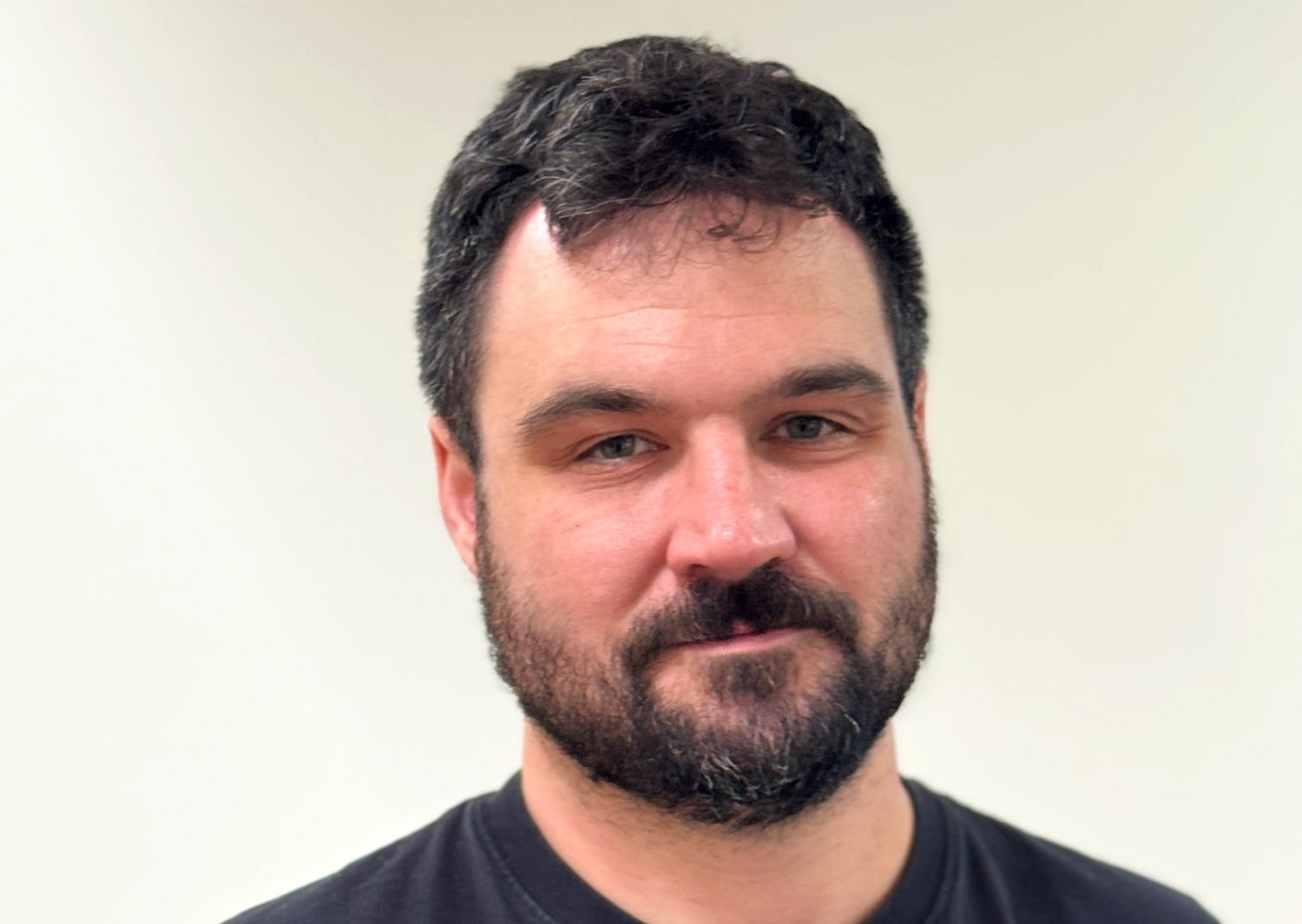
Ketan Joshi, former Australian wind-industry advocate; now a freelance writer/analyst specializing in big-tech climate accountability.
Data center growth is “served by” new fossil fuel plants and increases grid demand, slowing renewable progress when renewables don’t scale fast enough. Joshi argues public concern is mostly about local impacts, not global warming, so “carbon tunnel vision” is needed.
Australia—renewable growth slowdown with data centers “sitting on top”; Bloomberg New Energy Finance estimates US grid emissions could rise ~10% vs projections; Bloomberg scenario modeling adds ~3 gigatons CO2 over 10 years (about 3–4% of US total).
Written by AI. May contain mistakes.
Overview of the growing concern against data centers and introduction of guest Ketan Joshi.
“Three in four Americans now say they would oppose a data center near them.”
Ketan Joshi discusses his journey into corporate accountability and his views on data centers.
“With no further ado, Katan Joshi, welcome to Vaults.”
Joshi outlines the primary arguments against data centers in relation to fossil fuels and power grids.
“And to answer the other part of your question on, I guess, the overall, you know, short elevator pitch version of the case against data centers, it's really, really straightforward.”
Discussion on how data centers affect power sector emissions and their projections.
“So let's talk a little bit of numbers then.”
Exploration of the increasing demand for electricity and its implications for decarbonization.
“It's the thing that we've kind of all felt the best about, right?”

Get the gist, explore an idea or ask about something said.
 Claude
On Volts, what are the key points of this episode?
Searching your listeningAutomatic transcript. May contain errors.
0:06Hello, everyone. This is Volts for Friday, October 30, 2026. The climate case against AI data centers. I'm your host, David Roberts. Over the last year or two, I've had several people on Volts to talk about data centers directly or indirectly. Most of them have made some version of the case that data centers can be good for the grid and for the climate if they're done right. Some of you have interpreted this choice of guests as an unduly sympathetic attitude toward data centers and written with varying degrees of politeness to tell me so. Certainly, the U.S. public has no such sympathy. Three in four Americans now say they would oppose a data center near them.
0:59Something like$260 billion worth of projects have been canceled this year alone, mainly in the face of local backlash. So, in the name of this podcast's populist credibility, it's time to hear the case against data centers. As it happens, I know a guy. Ketan Joshi spent years in the Australian wind industry fending off bogus health scares about turbines. These days, he's a freelance writer and analyst, producing the most thorough critiques I've seen of big tech's climate claims, taking aim at everything from Google's exploding electricity use to NVIDIA's undisclosed emissions to the idea that AI will solve climate change.
1:47I'm excited to ask him whether data centers can ever be good grid citizens, why so much of climate tech has quietly dropped the climate part, when the rush to gas will end, and how big this bubble really is. So let's get into it. With no further ado, Katan Joshi, welcome to Vaults.
2:09Ketan Joshi: Thank you so much for coming. Hey, mate. Thank you for having me on. Very happy to be here. There is much to discuss today. As you well know, this has been your life for the last few years. So I'm going to start with a two-parter just quickly. One is, tell us briefly how you ended up here. How did you become the guy doing this? Why aren't there more of you? And then secondly, we're going to get into the details, but just secondly, maybe sum up what you've come to think of as the case against data centers. Give us the one to two minute elevator pitch, and then we'll get into it. Yeah, absolutely.
2:53Ketan Joshi: As you mentioned in your intro, I used to work in the renewable energy industry, and that was like eight years of just pure advocacy, right? Wind turbines are the best, right? I was just out there and I was brutal, you know, like I was at war with the anti-win groups and it was such a wild experience. And then when we moved to Norway, maybe six or seven years ago, for some reason, it kind of signified this flip for me where I switched to being a curmudgeon, right? Like I switched to being kind of against things, specifically against corporations, right? So I really started focusing on corporate accountability.
3:28Ketan Joshi: Of course, it started with the fossil fuel industry. But once you get the taste for being like a big old lazy critic, it kind of spreads into other things, right? So I started looking at corporations like Netflix and Shopify. And then I was working at a Brussels-based climate strategic communications organization for about two years. and there I kind of discovered this whole trend that was emerging in 2022 and 23 around big tech companies and the movement that we were seeing away from their climate pledges and the trajectory just seemed so clear to me at the time you could see a very structural systemic issue emerging in the way that they were kind of building their business that you could just project out and see okay, this isn't going in a great direction.
4:17Ketan Joshi: And I think when I left my job, I was like, I want to do more public advocacy on this. So it kind of relates, the way that I got into corporate accountability relates to the second part of your question, which is like, why are you so singularly obsessed with this thing in the public sphere? And the other thing that happened at the same time, that kind of explains a lot of this or explains me and my social media feeds right now is the fact that climate itself has ebbed away from public discourse. And so we look at public focus on AI and data centers, and it's a really interesting little experiment to see how many of those examples of public focus actually mention climate change.
5:01Ketan Joshi: So specifically greenhouse gas emissions, climate impacts, fossil fuels. It's actually not really a prominent part of public discourse on data center growth. And I don't mean that, you know, just from like mass media, right? Like you look at the concerns of a community that you mentioned before, like that level of public hate in America for data centers. I reckon if you went out and asked those people, is climate, and even in the top 10 reasons why you're worried about this, I don't think you'd get very much of a big response, right? Like, I don't think that communities are out there protesting data centers because they're worried about the heating of the atmosphere as a consequence.
5:39Ketan Joshi: of the data centers, or at least not indirectly for global warming. And so that is the other reason as to why I was like, okay, I think I really want to focus narrowly on this. People have derisively sort of called it carbon tunnel vision, but when no one else is really doing it, I was like, okay, well, I'm just going to have the tunnel vision because I think anyone else is doing it. Right. Somebody's got to do it. And to answer the other part of your question on, I guess, the overall, you know, short elevator pitch version of the case against data centers, it's really, really straightforward.
6:10Ketan Joshi: I think you can split it into two simple categories. The first is that we're seeing a lot of data center growth being served by new fossil fuel plants. Very easy to understand. You just have this new fossil fuel plant manifest next to a data center and it's just burning through fuels that wouldn't have been burned if that data center wasn't built at that size with that level of impatience. And then the second half on power grids, right? Like you have data centers that kind of pop up and then demand power from a grid. That grid has to change somehow in response to that data center's new existence.
6:43Ketan Joshi: It can change in a multitude of ways. The predominant way that we're seeing is from whatever's currently on the grid. And many grids are heavily served by coal and gas at the moment. And so you can kind of pin a number on, and this is, you know, comes back to my corporate accountability work. You can pin a number on that increase. And these are big numbers we can get into later on. But I think those two things. My primary concern with data centers, you can get into a lot of different other areas as well, like the supply chain, what the data centers are made from. You can also get into like things like e-waste and the actual services that get spat out of them.
7:17Ketan Joshi: You would have seen some research on AI itself, accelerating fossil fuel exploration and things like that. But my primary focus is basically just on this building full of computers and how unique and weird and fascinating this trend is this time that we're in now where they're becoming, I would argue, quite a material threat to climate. All right. So let's talk a little bit of numbers then. Let's try to give people a sense of kind of what data centers are doing to power sector emissions right now. Maybe like what they're doing to power sector emissions currently. And then this kind of like bewildering array of projections that make it very difficult to even have a shared reality about this because yeah you know i think there's just level of uncertainty about where this goes next is so wild that it's hard to pin anything down but tell us your best estimate based on the sources that you trust yeah what's happening to data center what's happening to power sector emissions right now?
8:21And what are the projections telling us? Yeah.
8:24Ketan Joshi: So we're seeing places where greenhouse gas emissions were falling, the rate at which it falls kind of decelerates a bit, right? Like it kind of puts a bit of a wedge in that lovely downwards trend, you know, that we were seeing in certain places. I've done a fair bit on Australia, for instance, where you have this really lovely excess of renewable resources like, you know, sun and wind, but there has been a slowdown in renewable growth and then data center growth kind of just sits on top of that and it accelerates these pre-existing things that were problems. And so to put it in some hard numbers, for instance, like Bloomberg New Energy Finance had an estimate, I think like a few weeks ago, a few months ago, where they estimated US power grid emissions could rise by 10 % from what they were projected to be, right?
9:11Ketan Joshi: If you sort of plug in data center emissions on grids. Bloomberg also did another estimate that was published, I think like a week ago, where they looked at the entire United States economy and they basically have like a no data center scenario and they had a with data center scenario. And I just couldn't believe these numbers. It was a measure of greenhouse gas emissions over the next 10 years. And the with data center scenario adds on a total of accumulatively three gigatons of greenhouse gas emissions, you know, which when you sort of plug it into the US total emissions, it's like a sort of three to 4 % rise, if I remember correctly.
9:50Ketan Joshi: And so what we kind of see in those scenarios, first of all, you can kind of look at different parts of the world, like Australia, like Norway, and see data center consumption, like measured electrical energy consumption, being higher than even the first set of projections that have been published in the past few years. So growth is already happening a little bit faster than anticipated. And then you have this other effect, like I just described with the US power sector emissions, where you have to plug increased power demand into the models. And then you kind of have to go look at the rest of your model and go, okay, well, where's this extra demand coming from?
10:27Ketan Joshi: And if there aren't policies in place to truly incentivize more renewables, then you kind of just have to solve your model using existing fossil fuels or new fossil fuels. And so that's why we see this trend, like I described in a Greenpeace report early this year, where the government climate change agency is seeing its own projections of greenhouse gas emissions ratchet slightly worse and slightly worse. And they just admitted in the report, they're just like, yeah, this is data center growth without associated renewable energy growth, resulting in a bad climate impact in the future. Things are worse than we anticipated.
11:04Ketan Joshi: And if you only look at that in isolation, you might kind of go, well, what's your problem? The line for emissions is going down, but the atmosphere responds to how much you pump into it. So if you lazily decrease your emissions more slowly over time, you just have a worse atmospheric outcome for us, like our own safety and our own experience. So that is the thrust of it. The power sector is kind of the good one. It's the thing that we've kind of all felt the best about, right? Like speaking as someone who spent a fair amount of time in the renewable sector, right? Like it was kind of felt like you're at the helm of the ship and it really kind of sucks to have this feeling of like a lot of effort and a lot of progress, not being undone, but I would say kind of slowed down or diverted somewhat in a way that I think we can avoid.
11:56I was going to get to this later, but might as well talk about it now. Like, I mean, I have such mixed feelings about this. On one hand, I do not want us to come out of all this thinking that increased demand for electricity is bad for reasons that I know you understand. We want increased demand for electricity. There is no road to decarbonization that does not involve radically increased demand for electricity because we're going to be switching everything over to electricity. So in some sense, when I see this drive and demand for electricity cast as a bad thing, I get very nervous. I get nervous about that.
12:42And the positive spin on this, and I think the spin you're getting from a lot of clean energy people is we're going to have to ramp up electricity demand. Regardless, we're going to have to transform the grid to accommodate this new demand. We're going to have to grow renewables really quickly to keep up with it. All this is showing us is that we're not ready yet and we need to get ready. We need to catch up. This is just forcing a lot of changes that we would have to do anyway because that electricity demand is coming regardless. Do you know what I mean? I'm sure you've heard varieties of this.
13:15I have. How do you think about that argument? And that's the end of the free preview. If you'd like to hear more, become a paid subscriber at volts.wtf. Thank you.
Volts guests have argued that data centers can be good for the grid if they’re built right. Here I hear the case against, from Ketan Joshi, a former wind-industry analyst who now tracks Big Tech’s climate claims. He sees data centers as the wrong kind of demand growth: lumpy, concentrated, unwanted by neighbors, and largely met with gas. Underneath it all is the worry that the backlash against data centers will become a backlash against electrification itself.
Chapters:
00:00 – Introduction
02:14 – How Ketan became a big tech critic
06:01 – The case against data centers
07:39 – What data centers add to emissions
11:57 – Isn’t more electricity demand good?
20:12 – Backlash and the NEXTDC power-pole protest
24:21 – AI claims 1: will AI help the climate?
27:53 – AI claims 2: machine learning vs. generative AI
33:47 – AI claims 3: inflated climate wins
36:51 – The gas rush: how much gets built?
44:49 – Would easier renewables fix it?
49:14 – Can data centers be flexible load?
55:41 – Do we actually want AI data centers?
59:39 – What should data centers do to plug in?
1:05:31 – Fake crackdowns and the risk to renewables
1:09:24 – What if AI is a bubble?