 Ask ChatGPT

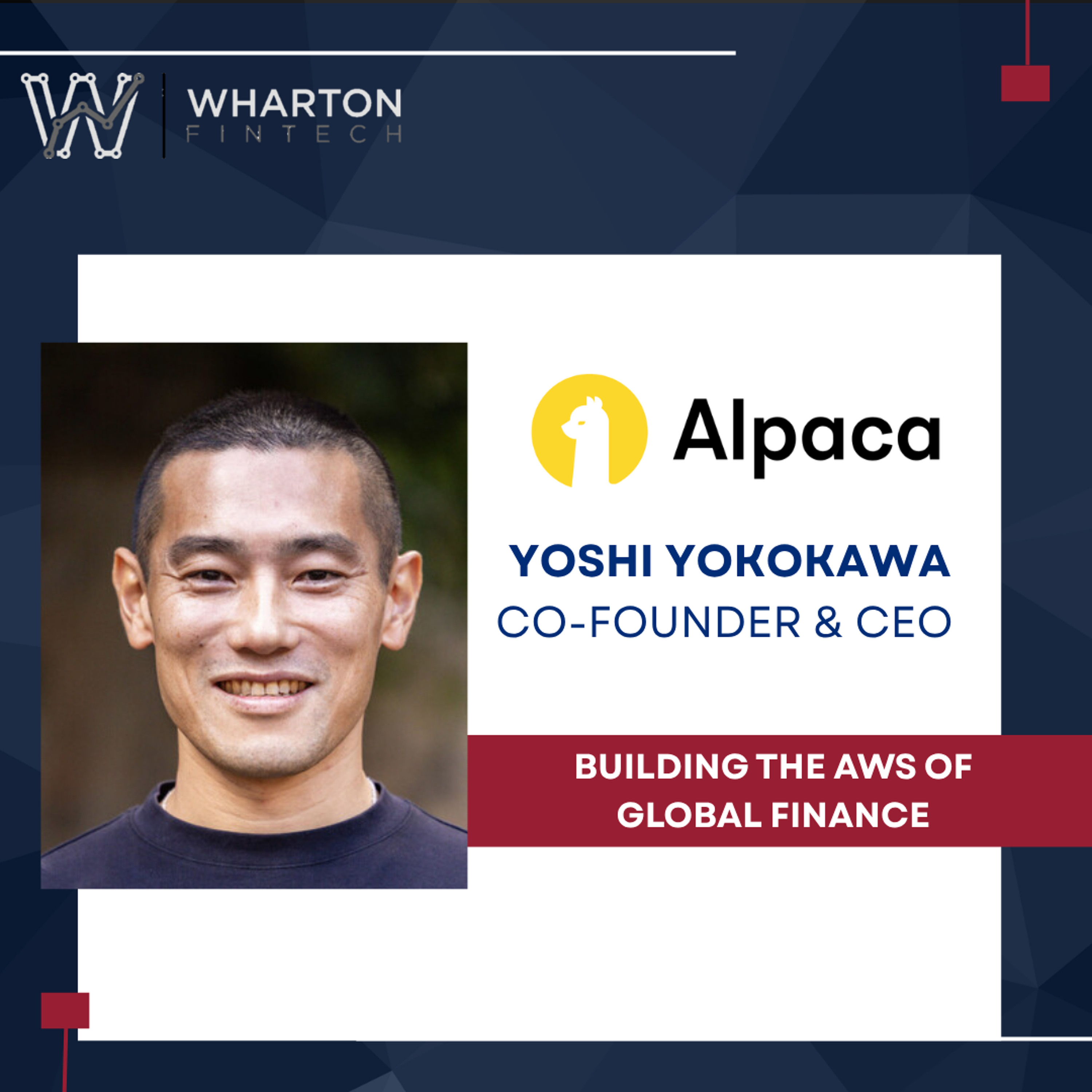
Yoshi Yokokawa (Alpaca) explains how Alpaca builds “modern brokerage and clearing infrastructure” via a single API, internalizes the regulatory stack, and enables tokenized securities, agentic trading, and programmable finance across asset classes.
Yoshi is co-founder and CEO of Alpaca. He started at Lehman Brothers, later co-founded Alpaca with Hitoshi Harada (Y Combinator; Japan’s first unicorn). He grew up between Japan and the U.S., attended high school in the U.S., and studied at Stanford.
Alpaca powers 15M+ brokerage accounts in 50+ countries and clears ~94% of tokenized U.S. securities. It is a self-clearing broker-dealer with memberships/approvals including DTCC, FICC, OCC, and NASDAQ. Tokenized securities are on-chain, enabling faster settlement and 24/7 trading. For agent-first trading, accountability still maps to humans via KYC/KYAs and guardrails.
Customers/partners include Kraken, Binance, Greenlight, Midas (Turkey), Ajayi (Indonesia), and Blumo (Japan). Alpaca is expanding into prediction markets (registered as a futures commission merchant; partnership with Kalshi).
Written by AI. May contain mistakes.
Discussion on what Alpaca does and its global partnerships.
“And thank you so much for joining the podcast.”
Yoshi shares his experiences at Lehman Brothers and their impact on Alpaca's mission.
“There's the biggest one called Greenlight or, you know, some of the biggest trading apps in emerging countries like Midas in Turkey, Ajayi in Indonesia, you know, Blumo in Japan.”
Exploration of Yoshi's cultural background and its influence on Alpaca's vision.
“And I know you and your co-founder, Hotoshi, bring a very rich global perspective.”
Discussion on the shifts in Alpaca's business model and product capabilities.
“so many different countries, and it really kind of forces us to go there too, because we need to learn about how they're thinking about to offer their products to their end customers.”
Challenges faced in developing Alpaca's platform and acquiring necessary licenses.
“So I think like, you know, that was good that we became honest about how we felt it is a problem instead of trying to find some other people's problem.”
Insights on global licensing challenges and Alpaca's approach to compliance.
“And I think just beyond the US, it's also global.”
Discussion on the importance of understanding regulations and their historical context.
“And I think the other interesting point also is sort of balancing like capital requirements, the regulatory frameworks on top of that being a very forward technology company.”
Explore how companies navigate regulatory landscapes while ensuring innovation.
“And in order to combat that, you had to come up with certain rules, right?”
Learn what tokenized securities are and the benefits they offer over traditional assets.
“You all process 94 % plus of all the tokenized securities.”
Discover how Alpaca has positioned itself in the market for tokenized securities.
“And I guess you all clear or custody the vast majority of these today.”
Understand the challenges and factors critical for the adoption of tokenized securities.
“how does that enable you to either move faster or be more secure or have greater trust versus a player without the infrastructure for the traditional financial securities?”
Explore how AI is shaping the future of trading and Alpaca's evolving role.
“and AI is such a buzzword these days, but I think especially in the aspect of trading, it has a lot of application use cases.”
Explore the importance of guardrails in agent-driven trading and the balance between safety and creativity.
“So those are the reason why that we decided to really pivot into not only the developer focus, but also agent focus, because certain features, certain way that things are built are needed to become agent first.”
Learn how programmability and agent-based interactions are reshaping financial services and their infrastructure.
“codes like trading and shooting the trade orders, you know, hundreds of the thousands of the times a day.”
Discover the rationale behind integrating prediction markets and the associated responsibilities.
“And I think it's very clear that tokenization and also agents has a lot of synergies together.”
Find out about Alpaca's expansion plans and focus on global access to financial services.
“like any asset classes come with the different types of the license stack that we have to acquire So that's the reason why we have to get this futures broker dealer as well.”
Gain insights into the challenges and motivations behind building a heavily regulated financial service.
“It became computerization last 50 years.”

Get the gist, explore an idea or ask about something said.
 Claude
On Wharton FinTech Podcast, what are the key points of this episode?
Searching your listeningAutomatic transcript. May contain errors.
0:10Hello, and welcome to another episode of the Wharton FinTech Podcast. I'm your host, Bobby Ma. And in today's episode, we are excited to welcome Yoshi Yokokawa, co-founder and CEO of Aupaka. Alpaca is a modern brokerage and clearing infrastructure that connects every asset class to the applications people actually use, all through a single API. It powers over 15 million brokerage accounts in more than 50 countries and is one of the few firms to have internalized the full regulatory stack as a self-clearing broker-dealer with DDCC, FICC, OCC, and NASDAQ memberships. That foundation makes Alpaca the clearing and cluster the layer beneath roughly 94 % of tokenized U.S.
0:54securities. Yoshi began his career at Lehman Brothers, which helped inspire him to start Alpaca following the Great Financial Crisis. He grew up between Japan and the United States, attended high school in the States, and later came to Selton Valley, where he and his university friend and co-founder Hitoshi Harada went through Y Combinator and built Alpaca into Japan's first unicorn after several pimpers along the way. We're thrilled to have Yoshi join today to speak about his path from the collapse of Lehmann to founding Alpaca and the unequal access to financial services he saw across countries, why Alpaca internalizes the entire regulatory staff and how that has unlocked building a real developer experience, tokenized securities explained simply, and why the deep anchor in traditional finance is necessary, the shift from developer-first to agent-first infrastructure, and how accountability works when an agent places the order, and finally connecting every asset class into one programmable platform.
1:45We hope you enjoy this episode.
1:50Hi, Yoshi. Good afternoon. And thank you so much for joining the podcast. Thank you for having me. So to begin, for listeners new to Opaka, what does the company do today and who are your customers that you serve? So what we do is we connect all the asset classes globally to a bunch of different applications indirectly to the end customers. So in a more technical world, We always talk about modern brokerage and clearing infrastructure. But what we do is we work with other broker dealers as a wholesaler and then offer the capability for them to offer investing services to their end customers. So that's really what we do.
2:30And we work with a lot of investing and trading apps globally in, you know, 50 plus different countries, including cryptocurrency firms such as Kraken, Binance, and then some of the digital banks like, you know, Forkits apps in the U.S. There's the biggest one called Greenlight or, you know, some of the biggest trading apps in emerging countries like Midas in Turkey, Ajayi in Indonesia, you know, Blumo in Japan. So we have like, you know, many companies like that who build on top of us. Thank you for the helpful overview. And I think your background into this space is also really interesting as well.
3:07You were at Lehman Brothers when the financial system really started to crumble and struggle. And what did you see firsthand and how has that shaped your experience in starting Alpaca? I think since Lehman was the first company that I worked for, obviously I didn't know anything about financial services. All I knew was that that was one of the biggest investment banks in the world. Seeing how it went bankrupt and disappeared really made me think that anything that people say it's big and stable can fail and then disappear. So I think that continues to be biggest learning and then common sense that I have now that forced me not to trust in anything.
3:50And I think besides your professional origins, and you mentioned the 50 different countries and counting, can you talk about your experience being a Japanese founder but went to high school in the US and then coming to Silicon Valley? And I know you and your co-founder, Hotoshi, bring a very rich global perspective. And how do you all meet? How has the partnership been? Yeah, I think growing up between Japan and the US, like one thing that really made me feel about is kind of difference that you see and you have in terms of the accessibility to any products, especially financial services. what i mean by financial services is that even of course like being able to access robin hood app or even you know having the credit card that has a billing address in the united states if you don't live in the united states you don't have accessibility to that and why those things matter is that for example if you want to use like some u.s i don't know services i don't know if it right now it's like that but like it used to be like spotify or apple music or netflix if you didn't have a credit card that had the billing address in the united States, you couldn't even register for it.
4:59So like a lot of things are like that actually, and many people don't know or don't talk about it because many people live in the one country, of course. So I think like, you know, that is the biggest discovery that I had, you know, being from Japan and going to high school in the US and then going back and forth. That really is the origin, like, you know, origin of how we want to solve this unfair access between the countries that you live in so that is really why what why we're doing what you know what we do at alpaca and also like a long time with hitoshi we went to the same university in japan like we did do a lot of backpacking um you know we use the word cool or the backpacking is basically like you're traveling by spending as least as possible like choosing and finding the cheapest buses and then cheapest not hotels the cheapest beds that you can find as much as possible so we went to so many different countries.
5:53But like, you know, I think that curiosity to new cultures and then actually enjoying things that we've never seen before and never experienced different languages, different cultures, different types of the people that always excites us. And then that continues to excite us. So like, you know, being able to work with so many different partners in so many different countries, and it really kind of forces us to go there too, because we need to learn about how they're thinking about to offer their products to their end customers. And that And that kind of leads us to what product features that we have to build as an infrastructure.
6:27So that has been an amazing experience. And we've been extremely fortunate. Yeah, that's awesome to hear. And I think not being from the U.S. myself, you really see like every country having their own unique flavor to their financial ecosystem. So it's awesome that you two have a really global perspective. And it sounds like those backpacking trips were super fruitful. and pivoting towards building the AWS of finance as you all brand yourself. I know Alpaca started as a deep learning AI product, became a developer focused trading API and then B2B infrastructure. What signals told you all to change direction each time and knowing that you don't get everything right the first time or you add new capabilities towards making a full comprehensive product?
7:10I think the first iteration when we're doing this like deep learning AI product, i don't like it's kind of very good question and at the same time it's very hard there are certain certain times that is very clear that okay this is not working is that you kind of get tired of it like you're trying trying so hard and you just feel like okay why am i trying you know like you have the passion to even trying to figure out that's a definitely clear sign that you know you don't want to be you should be working towards because that just forces you to mentally exhausted that creates a lot of unnecessary energy to be spent.
7:47So that's like a very clear signal, but like it doesn't happen too often. Like many times before pushing yourself into the territory, you kind of have to pivot by like, calmly understand, oh, maybe there's no problem that we're solving. Because usually like when before, like me going to like those Y Combinator and then really learning about how to build a product, we always thought about building the product is the first thing, building solution is the first thing. But the reality is that what is the problem that we're solving? And I think like, you know, this problem is most of the times gets underrated because like, you know, we often get excited about the things that we want to build instead of what problem that we're solving.
8:33So, so I think, I think calmly understanding that allows us to pivot into something else. Oh, actually, let's go back to the problem that we're solving or is this a problem really a problem or not so i think that really forced us to pivot multiple times and to figure out what we should be doing like we ended up to be building this api uh stock trading product but like it really came through uh like our own experience of not able to find good developer first apis in the market and i don't think we still do i don't think we still do like outside of alpaca like you know people say it's API. It's not really the API that we expect for any tech companies to offer APIs, right?
9:15Like API, we use the same API word, but it's not really API. So that's really the kind of our initial real problem that we even saw ourselves. So I think like, you know, that was good that we became honest about how we felt it is a problem instead of trying to find some other people's problem. Yeah, that's a great insight. And speaking of solving problems, talk through the most challenging parts of the process towards building the platform because you're, I think, to your point, are in a unique point in the market where you are offering a leading tech and seamless solution, but have the full self-clearing capabilities and also the approval from FICC, OCC, and NASDAQ.
9:55So talk to the process of really building this comprehensive platform. Yeah, it's been a pretty heavy journey needing to acquire a bunch of the approvals and licenses. I think it's also like, this is like after we started, we realized, but the problem, the reason why a lot of things are expensive and a lot of good services don't really come out quickly in this investing in financial services is that infrastructure layer of the financial services, like clearing bank or clearing broker, tend to not have the internalization of their system. So many cases, they outsource their systems to someone else, which means that you really don't have a control over how the developer experience should be.
10:41So like in order to do that, we really had to internalize all the licenses and the compliance approvals because that allow us to do certain things that becomes developer friendly. And if you're relying on someone else, you always get blocked. So that was a big, big point that we had to really focus on, okay, we have to internalize everything. Yeah, great. That's awesome to hear. And I think just beyond the US, it's also global. How is being the infrastructure for companies like anywhere central to Alpaca and walk through how global licensing is so hard and how a company like you all can help bridge the gap for people everywhere?
11:18Yeah, interesting thing is that each country has different perspective about what kind of licenses or what kind of approvals what players need to have. And learning that itself was a big jump for us because we, of course, had to go through a bunch of the license approvals and tests and examinations to get the U.S. approvals. But the reality sometimes is that some countries don't have similar requirements to certain license activities. And they may have the same type of the requirement, but the requirement amount may be much less or much more. So kind of understanding that there will be differences like that was a big learning for us.
12:04So that's the reason why we don't have 195 nations regularly approvals. So far, we have eight countries regularly approvals, but it also allows us to work with so many other different countries, you know, businesses as well. You know, some countries require the local businesses only to have certain approvals. And some countries require both local players and then infrastructure players like us to have approvals as well. So like knowing that one by one and then doing the right ROI analysis and then make a decision to get these licenses has been always, always a challenging and painful process. Yeah, I got it.
12:47So I guess it's, you have eight lives or you're pretty developed with eight countries today, but that enables you to serve 50 plus countries because the infrastructure player is not the one that is held to that standard in a lot of these countries. Exactly. In some countries we are. So those cases we have to be licensed as well. But, you know, some countries, you know, we don't have to be. And like even understanding and learning is a process. And I think the other interesting point also is sort of balancing like capital requirements, the regulatory frameworks on top of that being a very forward technology company.
13:25Like I guess where do you see yourself playing a role in advancing this just because a lot of the old guard of financial services are some of the slowest adopters of the cutting edge technology. But how do you balance like operating as a modern lines technology company with complying with traditional regulatory frameworks? I think in terms of the regulatory framework, it always has reasons why certain rules exist. To me, reading compliance books and those regulatory requirements is like reading history books. Because certain rules is created because certain things happened or some bad people did bad things.
14:07And in order to combat that, you had to come up with certain rules, right? So it's actually unwrapping what happened in the past. And then what was very funny was that during we were getting these licenses, the first crypto summer was happening and the first crypto winter was happening. And I was like, wow, like, you know, this is like jet coaster. And if you learn all those what happened in the Tradify space, I don't think you have done those things that you did during this crazy ICO and all those times. So that was really interesting to learn and understand. So that made me understand and learn about like what's behind the scene of what's written in the rules.
14:46Because as long as we understand the spirit of what's written in the rule, you start appreciating like what's written there. And you start thinking about even new asset classes or new phenomena, like even tokenization or all those things happen. you kind of understand where you need to be paying attention, even though compliance requirement may not exist yet. You kind of understand what will happen because you understand the underlying spirit of it. So I think that's how we always try to think about instead of just writing, like reading the rule books, but understanding why those rules were created anyway so that we can foresee the future.
15:26So to me, it's pretty interesting process, why people have written those rules. Got it. And I guess speaking of these new asset classes, how would you characterize and describe your relationship with the regulators? And I think one thing I appreciate is I think in the U.S. business environment, people are obviously welcoming of innovation and people generally want to safeguard consumers and businesses, but want to make sure that new technologies develop. So when you're at the forefront of the frontier, How do you all work with the regulators to ensure responsible but still quick-flowing development?
16:04I think that we just need to firstly try to be as transparent as possible. What's really happening and then how the things are happening and then why it may be outside of the rules that's already created. You know, that could be the advancement of certain technology. It could be advancement of, you know, certain new asset classes are introduced. Like there are a bunch of the reasons. But I think like, you know, what's important is that we need to be extremely diligent explaining clearly what's happening and what's behind the scene and how we are thinking about it. So it's like, you know, like interacting with the regulators is that we're trying to figure out together by like also sharing our thought process and then how we think the risk could be and how the things may be, may unfold in the future.
16:49So that also the regulators can learn and understand and study together. So that's how I think about it. And then sometimes regulations could be Clarity Act, you know, one of the, you know, like weapons or like one of the weapons that, you know, the political parties start using. I mean, that's a very different story, right? So, you know, we, of course, you know, stay completely away from that. But in terms of like, you know, what's happening in terms of regulatory requirements and like how the rules are created, we try to be as transparent, as open, as educating as possible. Awesome. And maybe now pivoting to Alpaca's bread and butter and where you are really taking the space.
17:30You all process 94 % plus of all the tokenized securities. So in the simplest terms, who are listeners, what are the tokenized securities? What problems do they solve? And especially for investors that are outside the US. So tokenized securities is something that is created. Basically, it's a financial assets or security that's created on the blockchain. instead of something that's created on the traditional finance, which is issued and registered as the traditional legal security. And of course, the tokenized security also can be considered and may be required to be registered as a traditional security as well in certain countries and based on certain rules.
18:12And this is a very tricky part because not everyone knows what is really the requirement and what should be the requirement because like we all of us are still trying to figure out how to monitor them, how to put the control over them, and then how to make the right registration. So that's the reason why everyone's SEC is putting certain letters in last couple of weeks and then all the players rumbling around and there's no clear answer or this is how it should be. But that's basically the tokenized security. Why it's beneficial is really comes down to a few things. But one thing is that it's issued on chain, which means that it's movable on chain.
18:49Why movable on chain makes a big difference is that because it can be settled and cleared. Basically, when you are exchanging the security with the cash or money, it happens right away. Whereas it's real traditional security or stock, it takes like one business day or based on the certain security, it takes more business days. So like it doesn't arrive right away. and that delta of the time creates another resources of money because if the money doesn't arrive someone has to be bridging that there's certain failure that happens so there's a lot of inconvenience that happens so tokenized securities which is token which is on-chain security creates that you know reduce the gap so that is a one clear benefits and that other benefits is that because it's moved and traded on chain which means that it's always available which means 24-7.
19:44Instead of certain exchanges or certain banks have to be open only during the weekdays, but you can move anytime 24-7 over the weekend. So those are probably the two biggest benefits why tokenized securities is important. Right. And I guess you all clear or custody the vast majority of these today. How did you all corner the market on this and figure out this is a problem space that you all want to solve and what sets you apart from a lot of the incumbent players that exist? I think that we always and we continue to believe that tokenization is the future. How I think about what happens or what will happen in the future, I think we are all aligned about the direction the things move.
20:29But I don't think anyone knows when or the timing. So I think many of us who continue to buy Bitcoin, I think we believe or we kind of know, I don't know, it takes one year or 10 years, 100 years, probably Bitcoin price is going to continue to rise, even though it's going to be volatile, right? You know, that's directional bet. That's how I think about tokenization as well. And then tokenization, there is a very logical reason why we think that way, because the tokenization has a clear benefits compared to what's happening in the system right now, which means that everyone benefits from it. So when that is the case, things will move towards that direction like water moves down to the gravity.
21:11But there's a lot of roadblocks, right? Because it can be a part of the political discussion. There's a lot of players who's already making a lot of money in the existing system. So there's no incentive to move over to the different new system, even though it benefits the society or like a lot of people. So we don't know the timing. However, it's a directional, directionally it's correct. So that's the reason why we've been always believing in that. And that's why we've been investing into the crypto and digital assets products for last several years. So that's one thing. And the second thing is that, you know, our primary business is also being a custody and clearing for the traditional securities.
21:50So we were fortunate to receive a bunch of the approvals and then the deepest layer of the membership, which is a DTCC membership as well. So that allowed us to be the deepest anchoring institution to be able to custody and clear traditional securities. And then all the tokenized securities right now are collateralized by the traditional securities. So having that very deepest layer of the stack on the traditional finance and then being able to operate in the crypto and digital assets at the same time is extremely rare stack and the internalization the company, one company can have. And I think that is a reason why we were fortunate to be able to work with so many players who's doing the tokenization of the stocks and securities.
22:36Great. And just to double click on that, how does that enable you to either move faster or be more secure or have greater trust versus a player without the infrastructure for the traditional financial securities? Yeah, so I think one thing is that you mean, you know, the specific comparing with the tokenized securities and the traditional securities? Yeah, because you all are able to be the custodian for the tokenized securities and have actual assets backing them. How does that allow you to set you apart from other players offering the tokenized security solution? I think having the heaviest anchor in the traditional finance system is also very much required to play in the tokenized securities.
23:20Because crypto has been growing, digital assets has been growing in a very independent way, away from traditional finance. And of course, traditional finance has been existing forever. But now, like the last few years, what's happening is it's kind of converging into one. crypto and digital assets are becoming a part of the broader world of the financial services if you go to the conference this year globally in crypto conferences you see so many people who's wearing suit which was never the case like last couple years like everyone's wearing you know t-shirts and being a crypto bras and crypto gals right so that whole situation kind of changed so so that really also displayed the the need of having the very strong anchor in the traditional finance now allows you to play a very important role of this, you know, the conversion of the crypto digital assets with the traditional finance.
24:16Got it. And what still needs to happen to drive adoption of tokenization besides having the strong traditional anchor? And how do you see Alpaca's role inside the industry developing over the next five to 10 years? I think there are probably a few things. One is, of course, regulatory progress. Regulation does have a lot of impact because that allows certain participating players like broker-dealers, the execution venues, clearing and custody, all those people. Players can do certain things and cannot do certain things based on the approvals. so like you know the when the regulations move uh with the much clarity then you know more players can actually handle the tokenized securities which is not really the case at least in the united states right now um but like it's becoming that way so i think like you know that will continue to push the adoption of the uh tokenized securities in general and the second thing is that definitely more education has to happen instead of that we're saying okay this way is better or this way is worse, I think we have to have a pretty clear understanding this is the pros and cons on this structure.
25:24And then each of them tries to solve certain different problems. So I think we have to be okay that multiple things exist because they're things, you know, different purposes are built. And the third thing is that we have to be okay with things not moving too fast. And then understanding that more of the macro way where things are moving and going. As long as we understand the total benefits of the whole tokenized securities in a bigger way, I think we know where things will move. So instead of understanding, executing very micro-immediate problems, like liquidity problem, those micro-problems, at the same time, we have to be always thinking longer term, this is the direction, this is going to solve the whole big financial services system problem.
26:10so that we are believing on this path. So I think those things are very important to make sure that tokenized security dates will be more popular. Great. And pivoting now to agentic trading and AI is such a buzzword these days, but I think especially in the aspect of trading, it has a lot of application use cases. And I think recently you've started, in addition to being called developer first, also calling yourselves agent first. How does that evolution fit together and how do you foresee Alpaca leveraging egenic trading going forward? I think the recent AI and LLM itself is just huge impact to so many things.
26:52There are certain things that will not change because of that, but there are so many things that will change. For example, I think when we're using the word developers, we just right away think about the people who can code. But now I feel like definition of the developers is completely different because you don't have to code. You don't have to be able to code to become a developer. And being a developer, you can create things. You can DIY things. So that is a huge differentiation that AI LLM changed, like, you know, how the participants of at least like API usage. That's the first thing. And then agent now creates like even more interesting situations because agent can be generated much faster than human beings are generated.
27:37Yeah. Because there are like 8.5 billion of the people on this planet Earth, but agents can be generated much more than that in a much faster way, which means that I think making sure that this infrastructure is usable and programmable and approachable for the agents as well, not only for those developers who are considered as humans only. So those are the reason why that we decided to really pivot into not only the developer focus, but also agent focus, because certain features, certain way that things are built are needed to become agent first. So having the understanding and making sure that those features are out has been very key components these days.
28:22Yeah, and I guess speaking on those key components, clearly more guardrails and smarter guardrails are relevant when an agent, not a human, is trading and placing order. Can you list some of the features that you are working on so Alpaca is the best and most effective steward for this new era of activity? Yeah, I think that the guardrails is very important. When thinking about guardrails, I think about what doesn't change because of this technology innovation. I think what doesn't change is that who can be liable, you know, who can go to jail. I don't think that will change as far as I know, because nobody can, nobody arrests agents because there's no incentive.
29:04Agents don't feel pain going to jail. So I don't think they will go to jail, which is that they cannot feel accountable. They cannot be accountable, right? Which means that creating the guardrail, it still comes down to human. and then all the agents most likely to connect to sharing human accounts because like you know the money currently belongs to the human so like you know making sure that right kyc like know your customer continues to be really really important even though like you know we do know your agents kya at the end of the day that will most likely connect to kyc so so like you know kind of understanding and thinking about what doesn't change allow us to create the right very efficient guardrail.
29:42But putting the too many guardrails also destroys creativity. So having a bunch of the monitoring and checks of the actual transactions, that's something that we have been doing very, very carefully because we always dealt with the non-agent algorithms for a long time, codes like trading and shooting the trade orders, you know, hundreds of the thousands of the times a day. We've been dealing with that for the last almost 10 years now. So we're very prepared and ready to be continue to monitor those bad transactions to make sure that there's a growth realm. Got it. And I guess, how does KYA and KYC really fit together and being able to trace like an agent to their human creator?
30:24To your point, we're not going to throw an agent in jails or even if there is an agent in jail, clearly the human is still liable and there must be a way to hold those folks accountable. Yeah. Yeah. Because I think at the end of the day someone created that agent and then the agents use some person's money that's you know some belongs to someone so like that connects to always the individual person or some business that has liable for that agents what the agents do so i think that's how we think about ky and kyc connection uh to make sure that those are all always connected and understanding who is the one who's actually can be liable.
31:07And how do you see the overall financial system evolving as more activity is driven by agents? I think the more financial services, it doesn't have to be this investing in securities broker dealer, including banks, including insurance companies, any financial services. I think it all becomes more like a infrastructure and platform because like we have to be ready again it's going to be more agents than numbers of the lives on the human on this planet earth which means that we need to make sure that interface of those financial systems and financial services has to be ready for that so so i think that all the financial services have to make sure that their interface is programmable which means like agents ready and then it doesn't have to rely on specific graphical user interface that how us as a human beings only interact so so So I think like we're going to continue to see more of the programmability of the financial systems.
32:03And that itself allows us to have even more flexible types of offerings instead of like, you know, siloed offerings. Because it can be extremely customizable, extremely DIYable in a very, very easy way. And I think like a lot of financial services core, which is like, you know, the regulated activities is going to be more like, you know, bare bone metal. It's getting closer to all of us as users. so i think it's going to be much more interesting in a way and then in addition to these agents we see tokenization tokenization what's cool about it is also putting all those asset classes programmable too as we see like you know stablecoin to be programmable dollar we're putting the securities to be programmable and even like real world assets rwa like real estate you know collectibles arts and everything's going to be programmable so so it is kind of like in a wave of this agent and tokenization is pushing whole financial services to be programmable even faster.
33:01Right. Yeah, that's great. That's super insightful. And I think it's very clear that tokenization and also agents has a lot of synergies together. One other thing that you are expanding into and just curious about your thought process is prediction markets. And I know very recently you're registered as a futures commissions merchant and also have a partnership with Kalshi. So what drove the decision to get into this as a natural next step? Yes. So our job is to build the infrastructure and API, you know, programmable layer to all asset classes as possible in this world. So that like, you know, the people or agents don't have to connect here and there and here and there.
33:40They don't have to waste time. So that's our job. So like we continue to expand to connect as many asset classes as possible. So we have like, of course, stocks and ETFs and options and futures and fixed incomes. And then, of course, prediction markets is one of the key asset classes because of the popularity. So we consider that as one of the asset classes we have to connect, but that's not very specific to that. And that's not end of that either. Our job as a company is to connect all the asset classes equally into the one infrastructure so that like all the companies, businesses, agents, or individual can connect to all those asset classes through one platform because it's convenient great and i know there's been a lot of talk about how to responsibility build prediction markets like what are your thoughts on the ongoing efforts and why was this the right time to start building the infrastructure around prediction markets well i wish that was much earlier for sure but like you know again like any asset classes come with the different types of the license stack that we have to acquire So that's the reason why we have to get this futures broker dealer as well.
34:49In terms of the responsibility, it's very difficult to say and comment because I think what's right, what's wrong, it depends on which governments or which side of the people will say or not. I think our job, that's the reason why we continue to focus on building the infrastructure to make it available so that the businesses or the persons decide to use it or not. And businesses still cannot use the products because it may not be allowed in those certain countries outside the United States or even certain states. So that's something that we're not special, professional of. But our job is to make sure that it is available if they want to or if they can.
35:29And if they cannot, they cannot use that. If they don't want to, they will not use that. But our job is to make sure that we collect all the asset classes into one platform so that they can turn it on or turn it off with their discretion. I got it. And what's next for Alpaca? And what's the focus for investment, especially as you all have raised a pair of 100 million plus funding rounds this year? well we continue to expand very much globally still world is very very big you know we have a very very long way to go to get to 8.5 billion people 100 coverage of the of the on the planet earth which is our really mission of the company like open financial services to everyone on the planet that's really our goal so 8.5 billion people so we continue to expand that we're still very early inning of the doing this business and this product.
36:22So, you know, we have to continue to work on more globalization. We have to add more different asset classes. Of course, Kaoshi prediction markets is one, but like there are many others that we have not included yet. So we have to keep adding those things. And then finally, you know, we continue to be living a lot into this, you know, macro shift in industry shift of the AI agents and then tokenization. Because I think this is one of the lifetime change of the financial system paradigm shift. You know, it used to be paper. It became computerization last 50 years. And hopefully a little bit shorter than 50 years this time, it's going to be computer to on-chain.
37:01So like, you know, being able to do this business in this paradigm shift transition period of the whole financial system and financial services is extremely exciting. So we continue to double down on the tokenization and AI agents as well. Great. Yeah. Well, I think we're well on our way there. And I think I saw some chart just broader technology that each new wave of adoption is happening exponentially faster. And so very exciting times ahead. And to just to close and pivoting back towards some advice for our founder audiences, what advice or what are some of your major learnings you've had building Alpaca over the last decade plus, especially in such a heavily regulated industry with a lot of players, partners?
37:46and also regulatory relationships? Yeah, it's like, as you mentioned, it's a lot of regulatory stuff and it's a lot of work. And then it's a lot of capital required to build a lot of infrastructure. So the biggest, most important thing that I learned through this process is to how we can, how I can maintain myself to be motivated and continue to feel curious about things. And if I don't feel the motivation, I don't think I can push through. and at the same time if i can find the fun out of it or you know feel this is funny or like you know something that's you know we can feel the energy i think we can continue to push on so i think the most important thing is that to be honest uh make sure that we i feel honest about my feeling about like what what i do every day and then like you know not not fake myself about that.
38:39I think that is the biggest key learning during the process of building this extremely heavy regulated capital intensive business. Well, it's fantastic that you've stayed grounded and it's clear you're very passionate about building Opaka and really appreciate you for joining us today, Yoshi. And I look forward to what is in store for you and the company going forward. It's a big undertaking, but clearly very exciting times ahead. Thank you very much for having me, Bobby.
39:15Thank you for listening to today's episode of the Wharton Fintech podcast. We hope you enjoyed and please leave a review and follow us on social media. Appreciate you tuning in and hope you will continue sharing the podcast with additional listeners. Until next time, this is your host, Bobby Ma.
In this episode of the Wharton FinTech Podcast, Bobby Ma sits down with Yoshi Yokokawa, Co-Founder & CEO of Alpaca.
Alpaca is the modern brokerage and clearing infrastructure that connects every asset class to the applications people use with DTCC, FICC, OCC, and Nasdaq memberships that powers over 15 million brokerage accounts through 300+ partners in more than 50 countries. The company clears or custodies roughly 94% of tokenized US securities. Yoshi shares his journey starting his career at Lehman Brothers to founding Alpaca with his university friend Hitoshi Harada and building it through Y Combinator into Japan's first unicorn.
We discuss: his journey growing up between US/Japan to Lehman to founding Alpaca; why Alpaca internalized the entire regulatory stack; tokenized securities and anchor in traditional finance; shift from a developer-first to agent-first infrastructure; and Alpaca’s role in connecting every asset class into one programmable platform.