Ask ChatGPT

 What Bitcoin Did
26 Jun 2025 · 1h 20m · 26 chapters
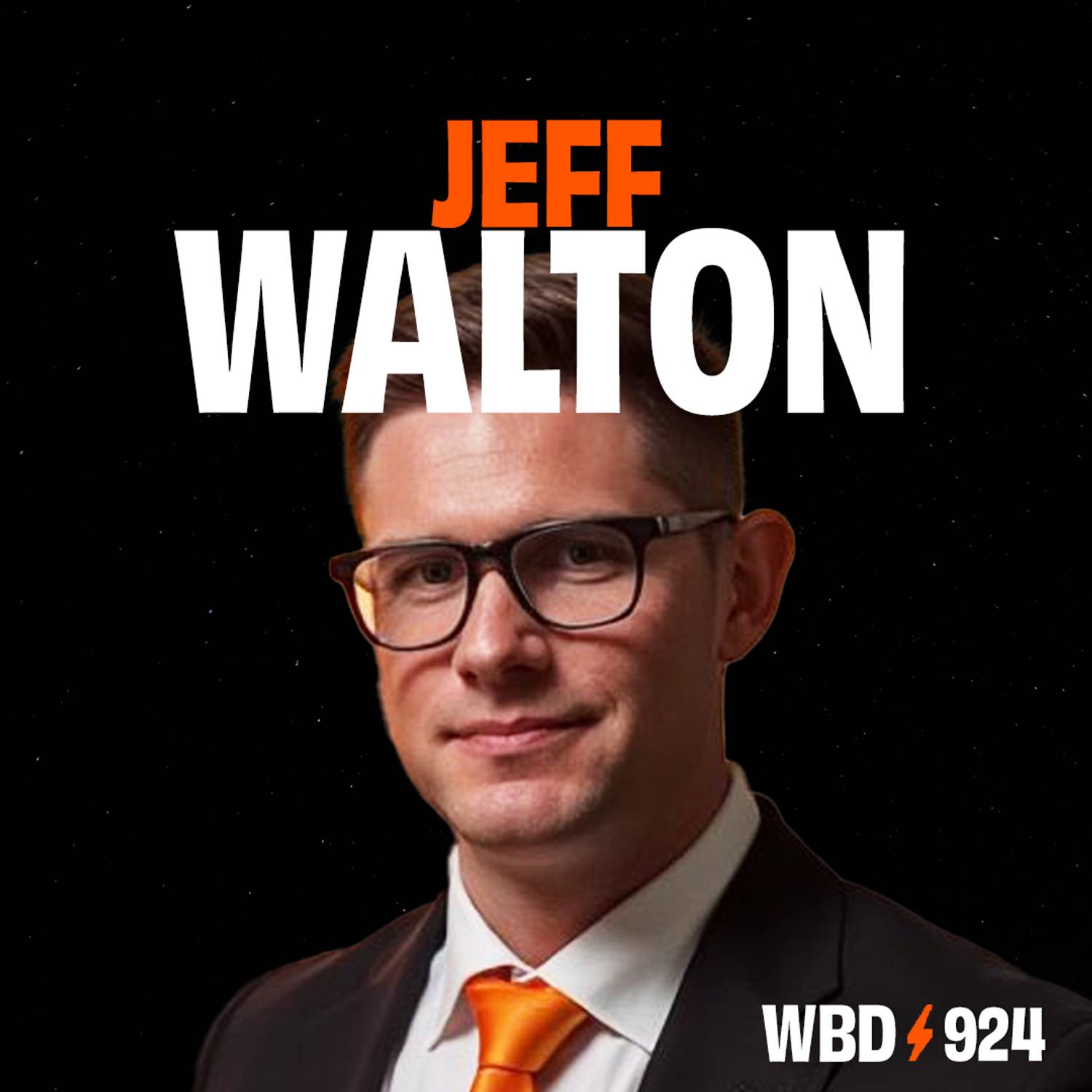
The episode explains MicroStrategy’s (Strategy) “Bitcoin treasury” strategy and its capital-raising products (convertible debt and three preferred equity instruments) that, the guest argues, can sustainably grow Bitcoin holdings and earnings while keeping downside risk low for senior instruments.
Jeff Walton, a Bitcoin investor and analyst who discusses fixed-income capital markets and has experience in reinsurance (12 years), using that as an analogy for how collateral can unlock large pools of capital.
Written by AI. May contain mistakes.
Exploring the unprecedented nature of Bitcoin as an energy storage medium.
“This is a phenomenon that's never existed in history before, right?”
Discussing Strategy's potential for unprecedented earnings and debt management.
“the largest single earnings period that strategy will ever have in company history.”
Differentiating Strategy from other treasury companies in the Bitcoin space.
“So strategy right now is holding 592 ,100 Bitcoin on their balance sheet.”
Analyzing Strategy's balance sheet and the sustainability of its debt.
“$13 ,000 and stay there for an extended period of time before a piece of debt came due without the ability to go raise additional capital.”
Explaining the unique financial products developed by Strategy using AI.
“Equity gets a little bit more complicated.”
Discussing the appeal of Strategy's preferred equity products to different investors.
“Let's just say it's a trillion dollar market.”
Discussion on counterparty risk in Bitcoin investments and strategies for mitigation.
“Because like, say, the or strategy, they're not holding the keys to their Bitcoin.”
Exploring the implications of rating unrated financial instruments in the market.
“It's going to be a huge vault of capital and keys spread all over the place.”
An in-depth look at new financial instruments like Strike and Strive and their market impact.
“And now they have it with every single one of these instruments that they've got.”
Learn about the intricacies of capital stack design and risk management in Bitcoin investments.
“So they're just less likely to get paid out on that stack.”
Explore how ATM shelf registrations enable innovative funding strategies for Bitcoin-related investments.
“And so how quickly do they want to get to like 20 billion on?”
Discuss the complexities and necessity of self-custody for Bitcoin investors.
“bring it into the balance sheet which provides value to mstr and if there is dilution if they have to sell MSTR shares to pay the dividend, that happens over time.”
Examine the distinctions among Bitcoin treasury companies and their market positions.
“kind of frustrating about the whole Bitcoin treasury thing is that I feel like it's, it's diluting the message of how important it is to hold self-custody Bitcoin for yourself.”
Analyze the competitive dynamics and risk profiles of various Bitcoin investment companies.
“Like people are buying this to try and get rich.”
Delve into the potential issues surrounding initial offerings in the Bitcoin market.
“And like, what kind of chance do you put on someone, let's maybe use like 21 as an example, because they're well-capitalized, they've got Tether, SoftBank, Cantor behind them.”
Learn about the implications of PIPE deals on Bitcoin prices and investor behavior.
“And then once the deal closes, you start to think about what are the incentives of the people that are in on the pipe deal, right?”
Explore how companies can leverage Bitcoin in various capital markets.
“Like strategies already laid the foundation and the playbook for these beta strategies, let's call them.”
Discuss the valuation of Bitcoin companies and the factors influencing their market performance.
“And you look at their website, strategy's got a website.”
Explore how Bitcoin generates cash flow and its comparison to traditional assets.
“I think he's missing just really kind of the whole picture is that it's really the monetization of the Bitcoin and generating earnings.”
Discuss the valuation of equities like Apple and Microsoft in comparison to Bitcoin.
“And what's the point of holding Apple or Microsoft if the dividend that they pay is 50 basis points?”
Consider the implications of a future where Bitcoin influences equity holdings.
“But that's also that is also going to exist in the equity market as well.”
Analyze the risks associated with Bitcoin treasury companies and their market impact.
“So you think about these new instruments that they've got on the horizon now, and the whole thing looks different, right?”
Examine the potential contagion risks within the Bitcoin market and its actors.
“but I think they're like hoovering up all these coins.”
Explore the dynamics of Bitcoin treasury companies and market risks.
“Maybe it's somebody trying to get into the space.”
Discuss the potential risks related to David Bailey's multiple ventures.
“all these Bitcoin treasury companies to identify unique pools of capital to go tackle.”
Examine predictions for Bitcoin's future and closing reflections from the guest.
“But I also see tremendous risk in the relative risk profile of each one of these.”

Get the gist, explore an idea or ask about something said.
 Claude
On What Bitcoin Did, what are the key points of this episode?
Searching your listeningAutomatic transcript. May contain errors.
0:02This is a phenomenon that's never existed in history before, right? This is storage of energy without decay. There could be a point in time in the future where strategy is sitting on$5 trillion of Bitcoin and has$500 billion of debt. Every investor is a different fish at a different depth in the ocean. So you've got to drop the hooks down to the depths that those people are at. You have to create a product that they can buy. That's how you bring that capital in the door. I think the vol is going to come back. I think it's going to come back in a big way. It's a tail risk. Like, I think the probability is probably incredibly low, but if it does happen, there could be some contagion amongst the whole thing.
0:51Jeff Walton: Mr. Jeff Walton. Yeah, I'm here. Okay, let's do this. Look at you, man, rolling with the camera crew. That's right. I got a whole camera crew. We're legit. What's going on? We're cooking. We've got a lot of things going on, paying attention to everything going on in the market right now and excited about the future of things. I think there's a lot of good energy on the horizon with Bitcoin treasury companies, a lot of companies buying a lot of Bitcoin here in the really near future. Some exciting things with strategy, potentially posting the biggest Q2 earnings gain by any Bitcoin treasury company.
1:29This is potentially the largest single earnings period that strategy will ever have in company history. They've never had a earnings report greater than$500 million. And it's looking like it's going to be greater than$5 or$6 billion as of today. So 10X-ing the historical largest earnings report they've ever had. So exciting times. Things are going good.
1:53Jeff Walton: Things are going good. I'm going to be the doomer in this conversation, I think. I love it. Honestly, I feel like I'm losing my fucking mind. I don't know what's going on. And that's a part of the problem. But I think there's almost a difference in these treasury companies of the strategy. And then I feel like there's still everything else. And maybe there's going to be some companies that come out that maybe don't compete with strategy in size, but we'll be like relatively close and that kind of like triple A grade. Yep. But then all these other ones that are coming out, like I can't, I can't understand it.
2:26Jeff Walton: So I'm hoping you can kind of put some of this to bed. Yeah. Okay. Um, but I don't spend too much time on this stuff. Yep. So let's start with strategy. Um, we did a show about this, I don't know, four or five months ago. Um, and like, that was probably the first time I'd done like a real deep dive into this. But I want to kind of start from the start. Like give me the lowdown on like where strategy are at the moment. What's going on? Yeah. Okay. Well, we'll jump right into it. So strategy right now is holding 592 ,100 Bitcoin on their balance sheet. As of today, I think it's about$62 billion worth of Bitcoin.
3:01They have $8.2 billion worth of debt and then a billion dollars worth or$3 billion worth of preferred equity outstanding. So they've got about 10 to$11 billion of debt per se. So you've got$62 billion of assets,$11 billion of debt. You're thinking a leverage ratio around 15, 17%, something like that. So you hear this narrative from traditional media sources, from a Wall Street Journal or anybody that doesn't really know what's going on here, that they say strategy is levered to the gills. They're taking on enormous debt to buy more Bitcoin. But you zoom out and you look at the numbers and the numbers actually look really healthy from a financial standpoint.
3:44You've got a lot of assets relative to your liabilities that you've got in the future.
3:48Jeff Walton: So they are taking out enormous debt, but you're just saying that they're doing that in a sort of sustainable way. Yeah. The relative scale of the assets that they have relative to liabilities are just healthy, very sustainable. In order for strategy to potentially be in a situation where they weren't able to pay the debt, the price of Bitcoin would have to fall down to $13 ,000 and stay there for an extended period of time before a piece of debt came due without the ability to go raise additional capital. Where this is important and what's valuable to understand here is even if the price of Bitcoin were to fall 50 % from today, let's say it goes from$100 ,000 down to$50 ,000, the amount of assets the strategy has on their balance sheet goes from$60 billion down to$30 billion.
4:40They still have$11 billion of debt or liabilities on the balance sheet. But if you just look at that relativity there, they're still incredibly strong and incredibly healthy compared to many other companies in the entire market. And as a capital provider, you'd look at that risk profile of having$30 billion of assets and$10 billion of debt, and you would underwrite that loan all day. I would take that risk as a capital provider all day. Yeah, sure, the terms might not be as good if the price of Bitcoin is falling, but they would have the ability to refinance that debt and push it out further into the future.
5:17Jeff Walton: And so can we get into like the, what they're doing? So they're both issuing debt and selling equity. Yep. But they've got these three products, strike, strive and strife. Yep. I don't understand them. So explain like what each of these different products are. Absolutely. We'll start, we'll start with the first one. So convertible debt, that's the debt that they've issued historically to buy Bitcoin. And that's debt that can transform into equity at a future point in time, but it's got a horizon on it. It expires at, you know, 2030 or 2032, something like that. They've got like a debt ladder with different expirations.
5:53So that's the debt side of things. Equity gets a little bit more complicated. So they've come up, they've created these new preferred equity instruments that are really fascinating. In fact, they're actually the first instruments, the securities that have ever been created using AI. So Sailor was pounding away on the AI, you know, just like using as much silicone as humanly possible. He was vibe financing.
6:19Jeff Walton: Yeah, exactly. Just, you know, getting the vibes right and then passing it over to their legal team and saying, hey, this has never been done before, but we're going to go do it. And the legal team has to take all this information and say, okay, well, it's never been done before, but get it done. So here's how these instruments work. So you've got STRF. We'll start with STRF, which is strife. It's called perpetual strife. This is a perpetual preferred equity product. Now the perpetual preferred equity product is paying$10 per share dividend per year into perpetuity forever. Okay. When these instruments were issued, they were priced around$80 a share.
6:59So they were about 12 % yield. Yep. STRF, the product itself is most senior in the capital stack. So it sits right behind the convertible debt. It sits strife, STRF. And this is important because in the event of a bankruptcy liquidation, all the debt holders and the preferred equity holders get paid out first and the common stock equity holders get paid out last. So common stock equity holders are closest to risk. Anybody higher up in the capital stack is further away from risk. So what they've done here by paying the$10 per share dividend in perpetuity, they're able to bring dollars in the door today and pay out that liability over time into the future.
7:47Okay. So they're just pulling capital forward. They're pulling capital forward. Now,
7:53Jeff Walton: the reason... Can I just ask a question on that? Sorry. Sorry to interrupt. But like, why issue a product that pays a dividend when he seems to have like basically unlimited potential to do it without offering any dividend? Because he's effectively attracting certain pools of capital. Oh, so the people buying this are not the same people buying the convertible notes. Correct. They're completely different. Okay. So let's think about pools of capital here, right? So you've got the convertible debt market is probably, I don't know, maybe it's a$1 trillion market. Let's just say it's a trillion dollar market.
8:24Now the broader fixed income market is a$300 trillion market. They can't go buy unrated convertible debt. It's not of interest to them at all. But they can buy preferred equity. Now, this preferred equity is also unrated, meaning that a credit rating agency hasn't come in and said this is A rating or B rating or C rating or whatever that is. So by those instruments not being rated, they still kind of limit the pool of capital that's able to buy these potential products. Now, one of the reasons this works is because with STRF, that perpetual strife, the most senior preferred equity product, they're giving up Bitcoin upside in exchange for downside protection and reduced volatility.
9:17So you're getting a relatively high yield, but you have no Bitcoin upside, right? It is completely disconnected from the price of Bitcoin. You just get the dividend. You just get the dividend. Yeah. Okay. Now, MSTR shareholders, the common stock shareholders, take the excess risk. So the common stock shareholders are taking the excess upside, and they're also taking the excess downside.
9:43Jeff Walton: So if you're buying Strife, from Saylor's perspective, the reason he would issue that is because he expects Bitcoin to go up more than 12 % a year which is the dividend he's paying out yeah so where this gets really interesting is that because this preferred equity product is fully liquid the market is determining what the yield is at any one given point in time okay so when it was first issued the yield was 12 since then the price of the underlying equity has gone up because people are starting to realize this is not a very risky product this is over collateralized by 6x there there's six times the amount of assets they have relative to the amount of preferred equity that they have.
10:23There's no other product like it in the market. There's no physical risk associated with this. If there's a hurricane or an earthquake, the Bitcoin's fine. The market is saying, oh, this is actually not very risky. The price has been going up. The relative yield has been coming down. It's helpful to think about the yield of these products relative to other risk assets in the market, other fixed income assets in the market, and put them next to each other, compare them, right? So the risk-free rate, US 10-year treasury is four and a half percent, and this is paying 10%. And the US government has got an 800 % leverage ratio.
11:02They're like incredibly over levered, right? And they could print money into infinity. And now you look at this other asset over here that's six times over collateralized with a 15 % leverage ratio with no physical risk, and it starts to look incredibly attractive. There are some other, just to put this into perspective, right? Boeing offers preferred stock to the market. The preferred stock that Boeing offers pays 6.5 % interest. They've got planes falling out of the sky, right? You know, like airplanes are exploding. Another one. Don't say that. I've got a flight this afternoon. And it's a Boeing.
11:39Yeah, it's probably a Boeing. Um, another, another comparison is there, there's this utility company in the state of California, it's called PG &E. Okay. They provide utility electricity for two thirds of the state of California. So in like enormous part of the population and the infrastructure that they have is a hundred years old. And just recently in 2018, they were responsible for a$20 billion wildfire. And so they were found liable for that huge wildfire loss in the state of California in 2018. And I think they ended up having to pay out like between$4 billion and$10 billion.
12:17Jeff Walton: That product is paying like 7 % interest yield. So what do you think then the yield will go down to on this, on strategies? Because presumably it's never going to go below the 4.5. Because even if like the US is like, I agree that fiat system is shit show, like it's still risk-free in the sense that they will always print to make you whole. So at least like denominated, you're going to get your money back. Yeah. Like surely it can't go below the risk-free rate or do you think it can? I think it can. Okay. Why explain that? So I think over time, the, as strategy becomes more powerful here, right?
12:53As the price of Bitcoin continues to rise into perpetuity, as they continue to put more Bitcoin on balance sheet based on these new products that they're offering to the market, they get more powerful. The amount of assets that they have on the balance sheet grows. This is a phenomenon that's never existed in history before. This is storage of energy without decay. And that storage of energy without decay can continue to grow and get very large. That asset base can get very, very, very large such that the liability base looks so small. There could be a point in time in the future where strategies sitting on$5 trillion of of Bitcoin and has$500 billion of debt.
13:37And that starts to look like, and strife might be the closest, you know what I mean? Like strife might be the furthest away from risk. And you start to look at that risk profile and it's just like there's 0 % chance that they're never going to be able to not pay this thing.
13:54Jeff Walton: This episode is brought to you by River, the best place for Bitcoiners and businesses to buy Bitcoin. With River you can set up zero fee recurring buys making stacking stats effortless and while you're waiting for the perfect buying opportunity River lets you earn daily interest on your cash balance paid in Bitcoin which outperforms most high yield savings accounts. But what really sets River apart is their dedication to security. You have peace of mind knowing that River has monthly proof of reserves and holds all Bitcoin in multi-sig cold storage. And with US-based phone support you'll always have someone on hand ready to help.
14:25Jeff Walton: To To find out more about River and to open an account, head over to river.com forward slash WBD and earn up to$100 in Bitcoin when you buy. That's river.com forward slash WBD. This episode is brought to you by Blockware. Would you rather have one Bitcoin today or two in a few years from now? Silly question. Well, Bitcoin mining is a tried and true method to accumulate more Bitcoin and over a few years it can even outperform a normal DCA. Blockware's mining as a service enables you to start mining Bitcoin without lifting a finger. Blockware handles everything from securing the miners to sourcing low-cost power and configuring the pool.
14:59Jeff Walton: They do it all. With multiple data centers across the US, Blockware is the most reliable mining partner in the industry. And mining is one of the most efficient ways to acquire Bitcoin. So click the link in the description to get started today. And if you tell them what Bitcoin did send you, you'll get one week of free hosting and free electricity for every hosted miner purchased. So click the link in the description or head over to blockwaresolutions.com. But how do you factor in things like counterparty risk in that product? Because like, say, the or strategy, they're not holding the keys to their Bitcoin.
15:29Jeff Walton: So there's also the third party risk of Coinbase or whoever they're using. 100%. Yeah. So you got to think about the relativity, the relative risk of the alternative products in the market. So you've got$300 trillion of capital sitting in the fixed income market. And I just gave you two examples of things they're paying 6.5 % interest rate risk with physical risk. Yeah. Not only do you have that, you also have, you know, litigation risk, you have population risk, you've got a change in habit risk, you've got, you know, ability to raise capital risk, competitor risk. You've got all of these risks of these traditional instruments that so much of this capital is parked in compared to like the primary risk that you identified as counterparty risk.
16:12Jeff Walton: Yeah. You're like, okay, well, you got counterparty risk. Oh, that's one risk. What are the other risks? I mean, volatility in Bitcoin would protect Volatility risk. Yeah. Okay. But in terms of like Bitcoin being a pristine asset, like I completely agree with that. Right. So you start to compare the relative risk profiles and these instruments look incredibly attractive just because I would take counterparty risk over physical risk any day of the week. And there's ways to mitigate the counterparty risk as well. It's not like Coinbase is the sole holder of strategies assets, right? They've got them diversified in multiple different custody bases.
16:48I know that's continuing to grow. They've got, you know, thousands of different wallets. As the amount of capital grows that they hold on balance sheet, the number of wallets is going to increase exponentially. So, yeah, is there risk associated with that? Absolutely. But that can be mitigated in various different ways.
17:05Jeff Walton: In terms of, like, the counterparty risk, do you think strategy can, will, should self-custody Bitcoin? That's a tough question. I don't, well, what does self-custody look like? For them? Maybe they use Anchor Watch. Maybe Anchor Watch, right. But even in that, that's self-custody, but with an institutional wrapper, right? Sure. It's better than Coinbase and these other custodians. Absolutely. I think there is a future where maybe they've got some technically self-custodied with a complex multi-sig, and they've just got a diversified landscape of wallets. Absolutely. I mean, if you're talking about holding$5 trillion of assets, you're going to have it split up in a ton of different ways, right?
17:50It's going to be a huge vault of capital and keys spread all over the place.
17:56Jeff Walton: Do you think that's something they can actually do? Like legally, can they do that? Can they hold their own Bitcoin? Yeah. You know, I haven't looked into that too much, but I don't see why not. I don't see why they couldn't. Okay. I think you would want just some really strict governance in place to make sure that no bad actor can move the move the Bitcoin without, you know, really, really, really strict governance. It would be interesting to see how the market then priced that risk compared to using someone like Coinbase and Neidig or whoever else they're using. Okay. So that product has gone from when it was first issued, it was 12 % dividend.
18:32Jeff Walton: You say it's down to about 10 now. About nine and a half. Yeah. Okay. So how quickly do you think that can get below these like Boeing things which i by the way i when you're talking about like are they mispriced like i could 100 % get on board with that yeah so i guess the real question is does so i my thesis is there's going to be a landslide of capital from all of these mispriced fixed income i give you two two uh examples there are thousands i'm sure there are thousands of examples where you can look and say well, this is mispriced. This is mispriced. Now the question then becomes, does the fixed income market get repriced or does that capital move?
19:12And that's kind of what this comes down to, in my opinion. Yeah. Does the fixed income get repriced or does that capital move to places where it's treated better? And another really interesting element here is the credit rating. So I mentioned this at the beginning. These instruments are currently not rated by any S &P, Moody's, Fitch, any of these companies. And I know Saylor and team are pushing to get these rated.
19:48Jeff Walton: And I think this is a really obvious question, but the benefit then is I assume there's people who will just not touch unrated products. And so as soon as they get rated, even if it's like a I don't know what rating it would get, like a B or I don't know, C? It's investment grade. So good question. I think there's probably 95 % of the fixed income market cannot touch unrated securities. So if they get these rated, the amount of capital that can go by these instruments increases dramatically. Yeah. Now, I know Saylor and team are also very picky, and they know that the risk of this instrument is investment grade.
20:30It's six times over collateralized. You look at it relative to any of these other instruments in the market.
20:35Jeff Walton: Just for the listeners, let's explain investment grade. So I believe I could get this wrong. You correct me. Anything rated A to AAA is investment grade. B is speculative and C is junk, essentially. Yeah, there are different rating tranches for each of the different companies. They structure them a little bit differently, but it really comes down to the risk profile. What's the probability that the payment or the debt gets paid out? What's the probability of failure? What's the probability that the issuer of this debt is unable to pay the liability? and you look at the collateralization of these of strf for example it's six times over collateralized you look at bitcoin's historical volatility you look at its historical compound annual growth rate you take the most conservative estimates on all of those and you look at you know what's the probability that they're not that the assets are going to be worth less than the debt and it's basically zero it's 0.00001 and so you look at that and you say well okay relative to the other instruments in the market, this is investment grade.
21:44Like this, this should be rated as an investment grade. And I suspect the strategy team rightfully so if any of these rating agencies came back and said, Hey, I want to, I want to rate this a C instrument.
21:58Jeff Walton: You'd say, you'd say, just don't rate it. Like that's not worth it to me. That's not, that's not a true representation of what the risk is. Like if you rate at C, how do I get it to be rated a? Yeah. Instead of potentially like bringing investors in it, I might actually scare investors off if it's rated. So like, right. But like, if you think like US treasuries, are they double A rated now? The US government's double A. I think they're still triple A rated. I think they were like triple A plus. I think they got downgraded. They did get downgraded. Okay. Yeah. But so like, if, if that is, let's just, I don't actually know, but let's say it's double A, triple A, whatever.
22:28Jeff Walton: Yeah. Like, what is the likelihood, even if we can agree that like, maybe it should be A rated, it's probably not going to be A rated. Yeah. And so like, If they got a rating in the Bs, do you think, is that good enough for them? Like what? Yeah, I don't know. It's a good question. I don't know if they, I don't think they need to take it. They can wait. Because there are people that are buying these instruments. And one of the really cool parts about these instruments is as the risk profile improves, as the price of Bitcoin goes up and the risk profile improves, they have a shelf registered ATM on these instruments so they can issue more shares of this as there's additional demand in the market.
23:09And they can bring in that capital and go buy more Bitcoin that day. And that improves the overall leverage ratio of these instruments into perpetuity. So it's a really powerful tool that they have at their disposal. And now they have it with every single one of these instruments that they've got.
23:29Jeff Walton: Okay, so let's go through the, I don't know, where do you want to go next? Strike or Strive? Let's do Strike. Okay, explain Strike to me. So Strike was the first product they came out with. This is the Perpetual Preferred Convertible Equity. I can't believe they stole Strike's name. Strike, I know. Yeah, I think Sailor was giving Jack some shit. You got to take Strike public. And I think he was like, okay, you're not going to do it, then I'll take the name. And he struck while the iron was hot. And now Jack's come back with 21. Right. And fuck you right back. Now there's more fights in the market.
24:03And we're going to do it better than Sailor. I guess we'll see how that plays out. But Strike is fascinating. And I think what they were trying to do when they designed this product was to create an instrument for the fixed income market that had Bitcoin-like returns with downside protection. Okay. Because all of this is a function of the underlying MSTR price. So how this instrument works is it pays$8 dividend per year per share into perpetuity. And 10 shares of Strike are convertible into one share of MSTR at a price of$1 ,000. Okay. So there's two elements. What does one share of Strike cost right now?
24:49$104. Okay. Okay. So it's about a 7.8 % yield, something like that is about what it's paying. Okay. So what makes this really fascinating is that that yield that it provides effectively gives the instrument downside protection. Yep. So if the price of MSTR falls, the price of strike will probably fall with it, but it will be mitigated because it's providing an 8 % yield. Right? So if the price of STRK falls below$100, let's say down into$90 or down into$80, that yield starts to go up to 9 % or 10%, and it starts to look incredibly attractive. So you have more capital that's on the sidelines, that's arbitraging fixed income markets and the risk return of all these different products, and you'll have capital coming in the door to buy strikes.
25:41So you kind of think of it as like a self-healing product because it's got this downside protection in the design of the instrument.
25:51Jeff Walton: So this one has the downside protection and then you get some of the gain from the upside. Yeah. It's effectively, you could think of it as you're getting$8 per share dividend per year into perpetuity for a infinite call option on MSTR. Like you get, like as the price of MSTR rises, the price of strike will rise as well with it and that will drop the relative yield of the instrument. So at a future point in time, the relative yield of STRK will be damn near zero and it will pretty much be tracking the price of MSTR. So this, the design of this instrument is very similar to, it's basically just taking the convertible bond and turning it into a preferred equity with no expiration.
26:45And that's the design of it. It's very similar. Is he kind of building out his own yield curve for MicroStripe? Absolutely. It's a Bitcoin yield curve. Like that's exactly what they're doing. So I think of STRF as the risk free rate. STRK is like a little bit further up the risk curve and STRD is the junk bond.
27:04Jeff Walton: Okay. So tell me about STRD. Yes. That's Stride. stride stride stride stride stride stride is the the most recent instrument that they just issued i think it was you know just a couple weeks ago and this is ten dollars per share into perpetuity but the dividends themselves are not cumulative okay so what what this means is if they were to not pay a dividend it doesn't accumulate into the next potential dividend payment and i think the probability that they don't pay the dividend on this instrument is incredibly low, like pretty much zero. But they had to design the product with a legal contract such that it was riskier than the other two instruments.
27:50So that's why this... Where is the additional risk with this one? The additional risk is it's closer to risk. So it's more junior to all the other instruments. You've got convertible debt is the most senior, STRF next senior, STRK, STRD, MSTR. Okay. So they're just less likely to get paid out on that stack. I mean, I know you're saying it's still near 0%, but it is further down the stack. It's further down. And you think about how they've designed this capital stack is really, really impressive actually as well. The planned ATM issuance for each one of these instruments is the tranches and the size of those ATMs are smaller.
28:33So STRF is$2.1 billion. So they want to issue$2.1 billion of their investment-grade fixed-income product. Yeah, I think they'll be able to do that. Of STRK, they want to issue$21 billion of STRK. And so you start to think about, okay, well, if STRD is junior to STRK and they want to issue$21 billion of that, it's like, okay, I'm actually going to be closer to risk.
28:59Jeff Walton: Because there's$23 billion above them or whatever it is. There's$23 billion above them plus whatever's in the convertible debt. So you might have$30 billion of risk above you that's going to get paid out first in the event of a full loss or whatever that might be. So you are technically closer to risk. That makes sense. And so how quickly do they want to get to like 20 billion on? I think as soon as humanly possible, right? How quickly can they do it then? Yeah, that's a really good question. It's growing very rapidly. So they have ATM shelf registrations on each one of these products, which is also unique.
29:38I don't think this has ever been done before. They've got an ATM shelf registration on a perpetual preferred equity. Just explain what that means to me.
29:46Jeff Walton: Sorry. Yeah. I know I'm getting... And it's basically they are able to issue shares to the market, new shares. Yeah. They're able to print new shares of these instruments to the market when there's additional demand. So they're able to take that capital in the door that day and buy Bitcoin with it. Yeah. So those ATMs of those additional, those new instruments allows them to take in capital today to pay a liability out in the future. So you dilute Everon and then buy Bitcoin. Yeah. Yeah, but what's unique about these products is that they provide a lot more torque, to use strategies term, they provide a lot more torque to the balance sheet compared to MSTR where historically the capital that they've raised in the last eight months has been primarily because of the ATM issuance on MSTR.
30:35And that ATM issuance on MSTR has monetized the premium and trading of the stock, so they're able to add all these assets to the balance sheet. and that issuance of mstr provides dilution on day one now the issuance of these other instruments there's no dilution on day one they're they're issuing these instruments there's dilution to strk strf and strd there's dilution to that market but they're able to monetize that capital and bring it into the balance sheet which provides value to mstr and if there is dilution if they have to sell MSTR shares to pay the dividend, that happens over time. So that's where it provides that additional - I see.
31:19That's where it provides that additional torque to the balance sheet. It's like you're getting capital today - And you diluting tomorrow. You're diluting down the road. In the future. Yeah, down the road. So it's an arbitrage on Bitcoin's compound annual growth rate and their ability to manage a leverage ratio. Okay.
31:36Jeff Walton: Can I ask you a personal question? Absolutely. Are you a Bitcoiner, Jeff? Yeah, absolutely. Do you have Bitcoin as well as all this other stuff? Yeah. I did that first. I did it first. And you don't have to tell me this, but percentage-wise, where are you in terms of strategy to actual Bitcoin? Enough of both. Okay. Because one of the things that I struggle with is I think a lot of the retail type investors are coming into this world now. They're not necessarily going to Bitcoin first. They're going to things like strategy and all these other things. And I don't know whether people understand like the importance of actually holding the underlying asset.
32:15Yeah. Well, if you think about it, right, holding the underlying asset, not everybody's going to get it. It's just a fact.
32:22Jeff Walton: Like it's complicated. Not everybody's going to figure out how to. I'm sorry, but it's not as complicated as this. You know, you know, what's not, you know, what's not complicated going into your brokerage account and saying, Hey, go buy strike, go get Bitcoin upside with downside protection. I agree. Maybe the actual process of buying it is more simple. But I don't think the product is more simple. Yeah, right. That's fair. A hundred percent. But like, even if you're going to go buy Bitcoin, you can tell somebody to go buy Bitcoin. They're like, all right, cool. I'll go to Coinbase or whatever, or, you know, Swan and go buy Bitcoin.
32:56But then what? You want them to self-custody it, right? Yep. And then you got to teach them, okay, how do you go self-custody? Well, it's like, well, you got to go move it from the exchange. and it's this big process and don't forget your keys and your keys are important and they're like well what are the keys and like well that's actually how you get your bitcoin and oh by the way if you have any significant amount of money you're probably going to want to split up those keys and you're like where do i split them up it's like well you should probably not keep it in your house to keep it on steel maybe geographically disperse it and then you go find all these other companies that are able to help you with multi-sig setups and you're like wow do i really want to you know, store$250 ,000 in this like sketchy cyberpunk way that I've never exist, that's never, I've never heard of before?
33:38And do I just want to trust somebody else to do it?
33:40Jeff Walton: And like, this is where education comes in. Cause I absolutely think people should be doing like$250 ,000. I agree. Yeah, I agree. And it's just one of the things that I find kind of frustrating about the whole Bitcoin treasury thing is that I feel like it's, it's diluting the message of how important it is to hold self-custody Bitcoin for yourself. Yeah, that's fair. That's a fair point. I mean, I think it's incredibly important for anybody to hold self-custody Bitcoin, but people are just lazy. Like humanity is lazy. And it's just like a brutal reality. Right? I mean, the first time I did a cold storage Bitcoin transaction, I walked around the block with my hardware wallet.
34:18I was like, holy shit, this is going to be, this is going to be the biggest asset on the planet. I was like, oh my God, this is like transformational. but i also i had to take you know six hours on a saturday to figure it out in the middle of winter and i was bored and it was covid lockdown you know that was the only reason i did it yeah go try to steal six hours from somebody with three kids and you know living paycheck to paycheck and i got a job that's like crushing their life and their soul and you know it's hard to do like it's hard to it's hard to convince people to take that time to learn something that's just completely foreign and different.
34:56Whereas buying, I used this analogy the other day and I think it's very helpful to kind of explain like what strategy is doing. I like to think of them as they're like a fisherman in the ocean. Okay. And every investor is a different fish at a different depth in the ocean. So you've got to drop the hooks down to the depths that those people are at. You've got to go to where they are. Like, I mean, ideally, right? Like, let's forget about retail for a moment. Ideally, the entire fixed income market should just buy Bitcoin. Like, Bitcoin's a way better proposition than buying Boeing or PG &E preferred stock.
35:42Right? I think you and I would both agree. Like, the upside is huge. The downside potential is zero. Okay. And you just got to hold it for more than four years. Like that should resonate with fixed income buyers, but they can't do that. And so you have to, you have to create a product that they can buy that's within their mandate of buying, that looks and feels like everything else that they're already used to. that's how you bring that capital in the door is via transformation of these other using the infrastructure that already exists. So it's basically like masking Bitcoin into a different format and providing it to those people.
36:25And that's where that's where that makes total sense to me.
36:29Jeff Walton: Like it is more the kind of retail thing that I just I hope people know what they're actually buying. And I mean, I think realistically, probably the main reason people are buying these things is not necessarily down to like whether you find self-costing Bitcoin complicated is because they think it's going to outperform Bitcoin. Like people are buying this to try and get rich. Like, let's be very honest about that. Yeah. Well, like Bitcoin treasury companies in general, do you want to like differentiate them? I think we should differentiate them because like I think strategy is like on its own at the moment.
37:01Jeff Walton: Like it is clearly like tier A. Yeah. So what's your take on that then? You tell me. Yeah, let's talk about the lay of the land and the playing field here, because I think strategy is on its own separate playing field. I mean, they've got 592 ,100 Bitcoin. The next closest, I think, is Mara with 49 ,000 Bitcoin. So you're talking an order of magnitude plus greater in terms of size and scale. You think about MSTR. MSTR has 50 times the amount of Bitcoin than the S &P 500 combined. So just sit with that for a second. You think about if everybody in the world is going to be storing their value and their energy in Bitcoin into the future, you've got a significant number of companies that have some catching up to do, and that's only going to make strategy even more powerful.
37:50Even companies that have been on an absolute tear and just adding a ton of Bitcoin to their balance sheet incredibly quickly, like MetaPlanet or even some of these other companies, MetaPlanet holds 10 ,000 Bitcoin.
38:00Jeff Walton: Yep. Right. So, I mean, I think their first buy was like 20 Bitcoin. So they've done incredible to get to where they are. They have. But they are a tiny fish. They've moved incredibly fast. Compared to microstructure. Yeah, they've moved incredibly fast. And I think they will continue to move incredibly fast. I think they'll get to 20 ,000. They'll get to 40 ,000. At some point, that scale starts to get difficult to grow that quickly. Very similar to what strategy's kind of up against right now. But the unique part about strategy is they have the tools and the instruments to be able to bring that$300 trillion into the Bitcoin network.
38:39They effectively have the funnel that can bring all of that capital in. Not to say those other companies can't start creating those other instruments to also bring that capital in the door. But if you're an institutional capital allocator and you got to think about the risk return profile of a fixed income instruments that you're buying, which instrument are you going to buy? Are you going to buy the instrument from strategy with$62 billion of assets or$620 billion of assets when Bitcoin 10Xs? Or are you going to buy the preferred equity of the smaller capital? Completely different risk return profile and strategy will have this ability to monetize that risk return profile at a different pace and a different scale than any of these smaller entities.
39:29Jeff Walton: Yeah. And like, what kind of chance do you put on someone, let's maybe use like 21 as an example, because they're well-capitalized, they've got Tether, SoftBank, Cantor behind them. Do you think they have any shot of ever getting anywhere near strategy? I don't think so. I really think the probability is incredibly small just because they've got to do it likely in a different way or a different format. And there's no pool of capital that's bigger than the fixed income market. Yeah. So when does this get so sort of competitive that terms have to get much worse for the other companies? In the sense of like, when are they going to have to issue debt with way less favorable terms than say they can issue debt?
40:13Yeah. Yeah, it's already happening in the market, right? So if you look at some of these new companies that have come out, like I think Nakamoto's got a$200 million convertible bond. I think that bond is 0 % interest for two years, and then 6 % interest after year two. Okay, whereas say it was getting... 0 % interest. Zero indefinitely. Forever. And the other unique component is the Nakamoto convertible bond is also secured by the Bitcoin. So that means in the event of bankruptcy or liquidation, the convertible bond holder gets the Bitcoin. Yeah. Whereas strategies is unencumbered. Okay. Fully unencumbered.
40:46There's, it's not securitized by the Bitcoin at all. There's no, like they can, if there's, if the price of Bitcoin falls to a certain level, like there's no margin call, there's no liquidation risk. So it just never gets liquidated at all, or does it turn into equity? It never gets liquidated at all. Okay.
41:03Jeff Walton: And so like with these other companies coming out, like my one, another one of my issues, I know I'm being like the skeptic. I'm probably mid-cut a lot of this, but like it seems very similar to like the ICO boom, which is when I like came into Bitcoin, um, that was happening obviously on all the shit coins. Um, like, is this just shit coining on Bitcoin? Have people just found a way to make themselves wealthy? There's like a lot of these private sales happening before these things actually go public. Like what's your read on all of that? Yeah. Look, there's fast money everywhere. There's fast money everywhere in the market.
41:37I I think incentives are not really aligned very well for these kind of Bitcoin treasury company initial offerings. So you look at the design of some of these initial offerings. They've got pipe deals, which are private investment and public equity. And you can kind of think of these as like a pre-mine of an ICO. You get to put in your capital at really lucrative terms, and then the stock already starts trading at a 10x. And then once the deal closes, you start to think about what are the incentives of the people that are in on the pipe deal, right? Like if I'm sitting on a 10X, maybe I sold some Bitcoin to invest in the pipe.
42:20And then the deal closes and I'm sitting on a 10X and Bitcoin's moved 5%. If I'm thinking about my own - If that's me, I'm dumping that as soon as I can. Right. If I'm thinking about my own Bitcoin yield, right? like i'm i'm gonna be dumping that and it's gonna cascade down right and there's gonna be 5x and you're like well 5x is still better than the five percent i would have had if i had just held my bitcoin it's gonna dump down to 2x and you're like this is still better and at some point there's this like equilibrium that may happen where you know the pipe investors are exhausted and retail is exhausted and then the then there's a new base that's set for yeah um the valuation of these companies moving forward now that's going to cause a ton of volatility like the next six months we're watching these deals close, that next 12 months, new deals coming into the market, watching the deals close and watching how they interact in the public space and watching the narrative that plays out in the market is going to be really interesting to watch.
43:10And I think there's going to be a lot of volatility in both directions, but - Because that is just like literally pure
43:15Jeff Walton: ICO shit coining. Just dumping on retail, because you got in early. Like, and that stuff just doesn't sit right with me. Yeah. It's approved by the SEC. Yeah, and somehow like by Bitcoiners, which I don't understand. Like this, if this was happening anywhere else, people would be totally against it, but somehow because it's like semi-related to Bitcoin, everyone's cool with it. And it doesn't make sense to me. Yeah. And you know, I think, I think some of the people that are investing in these pipes are actually going to hold onto the equity for a long time. Only if they're vested. Yeah. Right.
43:50So I think willingly, I don't think many people will. I don't think many people will because, right, like go do the next one. Yeah, exactly. And that's the incentive.
43:59Jeff Walton: Go to the next one. Go to the next deal. You're in this inside cabal. You get all the pipe deals and you just dump on. Yeah. Ultimately, that's probably bad for the market, but there's no other way around it. Right? Like if you want to just go raise a bunch of money to buy as much Bitcoin as possible, like how do you do it? Like what's the best way to do it? This is probably the best way to do it. Is it going to result in tears for a lot of people? Yeah, absolutely. It's going to be weird. Yeah. But I don't think there's a better way really to do it unless you just did everything. Yeah, like this is the best way to go raise a bunch of Bitcoin and put it on a corporate balance sheet and be able to start running a playbook and using it.
44:35Where I think some of these become incredibly appealing is if you have a really structured business plan of monetizing that Bitcoin in a unique way. Right? Like strategies already laid the foundation and the playbook for these beta strategies, let's call them. Right? So you've got an ATM, you're able to issue shares, you've got the ability to issue convertible debt, and you've got the ability to issue preferred equity. So those are kind of like strategies already done it. You can literally copycat it. And that's just good for everybody, assuming the economics work. Now there's also another side of this, which let's call it alpha strategies, where you can monetize the collateral in a unique way and to tap a different capital pool that's not currently being hit.
45:25So for example, you think about the preferred instruments, they're tapping the fixed income capital pool, say 300 trillion. Well, you can, and they're using their balance sheet as collateral. That's the whole reason this works, right? They're monetizing the position on the capital stack as collateral. They're using that as collateral for these instruments. Now, you could do that in different capital markets. With my background in reinsurance, the whole way the reinsurance market works is that you are parking dollars in a certain place on an insurance company's balance sheet to pay for a future liability.
46:06You basically borrow the tail of an insurance company's balance sheet and you park capital there. Historically, that's always been done with dollars. Technically, it could be done with Bitcoin. It could be done with real estate. It could be done with oil and gas. There's different types of collateral that are accepted in that marketplace. That's a$5 trillion market. It's completely untapped. That's just one example. I worked in the reinsurance market for 12 years, so that's what comes to my mind. But there are other little niche sectors of the market where all of these little companies can go tackle that marketplace and use that Bitcoin in a unique way that's never been done before.
46:51Jeff Walton: This episode is also brought to you by Iron, the largest NASDAQ listed Bitcoin miner using 100 % renewable energy. IREN are not just powering the Bitcoin network, they also provide cutting-edge computing resources for AI, all backed by renewable energy. We've been working with the founders, Dan and Will, for a long time now and have been really impressed with their values, especially when it comes to their commitment to local communities and sustainable computing power. So whether you're interested in mining Bitcoin or harnessing AI compute power, IREN is setting the standard. Visit iren.com to learn more, which is I-R-E-N.com.
47:23Jeff Walton: This episode is brought to you by AnchorWatch. Now one of the things that keeps us Bitcoiners up at night is an idea of a critical error in your Bitcoin cold storage. And this is where AnchorWatch comes in. With AnchorWatch you're protected by two things. You have their time-locked multi-sig vault and you have your own A-plus rated Lloyds of London backed insurance policy. So you get to hold your keys and AnchorWatch holds the risk. So whether you're worried about inheritance planning, wrench attacks, natural disasters or just your own silly mistakes, you're fully protected by AnchorWatch. Rates for fully insured custody start as low as 0.55 % and are available for individuals and commercial customers located in the US.
47:59Jeff Walton: Speak to Anchor Watch for a quote and for more details about your security options and coverage over at anchorwatch.com. That's anchorwatch.com. So that's where you see the advantage of maybe some of these smaller companies is that they can just tap into different pools rather than directly competing with strategy on the same playbook. Correct. Yeah, so really strategy is just amazing. there's this instead of competition, it's cooptition, right? Like everybody's kind of working on the same team and strategy plowing all this capital from the fixed income market into Bitcoin is like effectively just raising the floor.
48:33And it lifts all these other companies to have the ability to actually go tackle and monetize these different capital pools. So strategy is incredibly laser focused. They're not going to do anything different. like they might do a few more preferred equity instruments but this is the playbook and you have to be incredibly transparent right if you want to be successful in this marketplace and you want to if you want to bring three trillion dollars of capital in this market you can't be fucking around you can't be doing you know private placements that are opaque and have a bunch of weird terms and conditions that the market can't understand and you know that changes the risk profile of this stuff, it needs to be so incredibly transparent that everybody can know what the risk is at all times.
49:20And you look at their website, strategy's got a website. Now you can look at the collateralization of every single one of these instruments, 24 seven, 365, based on the price of Bitcoin and how it's moving and how much, you know, debt they have on their balance sheet. They just need to add proof of reserves to that. I had proof of reserves. Okay. Yeah. That's a, that's a topic. Yeah. Um, I mean, we don't need to get into that. I mean, I absolutely think they
49:41Jeff Walton: We'll see what Saylor actually does. It would be ideal, right? It would be ideal if they did add proof of reserves. Do they need to? I don't think so. I don't think they need to in order to monetize this enormous pool of capital. Unless there was a way to do it without like any additional risk. Think about the buyers here, right? What additional risk could it possibly add though? I don't think it's, it's not Bitcoin risk. It's social engineering risk. It's people risk, right? Like there's$62 billion sitting in wallets that are, you know, have some human element to it. Right. That's the risk. It has nothing to do with the risk of Bitcoin.
50:23Jeff Walton: I think I don't, I need to think about that. I think I'd agree with that if they were holding their own keys, but they're not. So like, I don't, I obviously like, because, because everyone knows Coinbase is sat on a fat stack. Like, so that risk is there anyway. Like by them adding proof reserves, I don't see how it increases that risk. Well, you just, you know, you have some element of knowing where it's at, right? Whereas if, but you know, there are these third party companies that have already potentially identified most of strategies, uh, while anyway, like I think there's Arkham is out there and I think they've identified like 92 % of strategies.
50:59So where this gets complicated right is like i think um you think about scale here and as the price of bitcoin grows uh the like strategy's got all this capital and let's just say it's a thousand different wallets and you know we're here at becca's place and talking about insurance right i think every one of these wallets is insured up to like a hundred million dollars so let's just say you've got 90 million dollars in a wallet and the price of bitcoin doubles now you got 180 million sitting in it, but you're only insured up to 100, now you've got to rebalance. And what if you need to rebalance your entire portfolio?
51:32Now you've got 1 ,000 wallets, you've got to move it to 2 ,000 wallets. And all of a sudden, Twitter just goes crazy because they're saying, strategy's selling their Bitcoin. Everybody goes nuts. But really, it's just a practice of rebalancing to manage their corporate governance and however that works. Yeah. And maybe that's why they say looking into like ZK proofs of doing it or something.
51:53Jeff Walton: But I mean, those kinds of things are easily dispelled by just messaging on Twitter. Like you can very easily put out a post being like moving money from here to here. But anyway, regardless of any of that, let's talk about Jim Chanos. Oh yeah. So I'd never heard of this guy before, but clearly he's been very successful. He's now shorting strategy, longing Bitcoin as like a hedge play. What is he missing in your opinion? Yeah. Well, just a little bit of background on him. And this is just on a little bit of research. he was really successful in calling out enron so like he called out enron i think he shorted enron it was like a monumental trade made his whole career uh and then started running a fund that was like shorting stocks consistently and i think uh and then also most recently had shorted tesla i think blew up the the fund that he was managing i think at one point was managing eight billion dollars and i think closed the fund around 200 million dollars oh shit so like just absolutely tattooed the fund and got kind of wrecked on that trade.
52:58And recently has come out against MicroStrategy saying that there shouldn't be a premium that exists on the underlying Bitcoin holdings relative to the market cap shouldn't trade at a premium to the underlying Bitcoin holdings.
53:12Jeff Walton: He doesn't think it should trade at a premium at all? No. Okay. In fact, I think he probably thinks it should trade at a discount, which is, that's been the big fight throughout the entire market for the last two years is talking about this premium, this premium to net asset value that does exist. And I think it's totally justified. If you take a step back, what I think, I don't know exactly what he's missing, but if you take a step back and you look at the entire broad equity market. Every single company in the entire market trades at a multiple to their net asset value. Why is that? They're all trading at a multiple to their net asset value because all equities are forward-looking.
54:01Jeff Walton: Is it not also because they have successful underlying businesses and strategy's business, its actual original business is kind of irrelevant now? Would that be a fair argument? Strategy made$12.7 billion last year. Yes, but my point is, it's not from their business intelligence software. Like it's all from Bitcoin. Well, it's from their operations. It's from their treasury operations. They made$12.7 billion last year. Yeah. I'm just trying to get to the bottom of, I totally understand what you're saying. I'm just trying to get to the bottom of what he's thinking. Is it because he thinks there is basically no underlying business?
54:38Jeff Walton: this? I think he's missing the component of the ability to generate a yield on the Bitcoin. I think he's missing the Bitcoin as collateral. And I think that's what a lot of people are missing. It's like, this is money. This is money good. The Bitcoin is money good. And it is collateral that can be pledged in different ways to generate a yield. And that excess, as we talked about earlier, that excess risk, the excess upside and the excess downside is passed over to the MSTR shareholder. So MSTR, so if you think about these, let's talk about this. I think this is helpful. If you think about the convertible debt, STRF, you're getting paid a fiat dividend in perpetuity.
55:20STRK, you get a fiat dividend and convertible into equity. STRD, you get paid a fiat dividend, not convertible into equity. It's the junk bond. MSTR, you're getting paid a Bitcoin dividend and it's reinvested into the stock. So it's an automatic dividend reinvestment program, but you're getting Bitcoin dividend and it's staying in the stock. So you're increasing your Bitcoin per share into perpetuity by leveraging the treasury operations and monetizing your Bitcoin as collateral in these unique ways. And I think he's missing that part. I think he's missing just really kind of the whole picture is that it's really the monetization of the Bitcoin and generating earnings.
56:12They're generating cash flow, but it skips the income statement and just goes directly to the balance sheet, which is non-traditional, right? It's like not typically what happens. But really they're operating very similarly to like a KKR, like a real estate investment trust or Apollo or Berkshire Hathaway. It's just incredibly simple. Like you're not doing it with real estate, you're doing it with Bitcoin. It's the same thing. Like real estate's collateral. Like you're getting rental income off the real estate. Well, you're getting rental income off of the Bitcoin, it's just in a different way.
56:52It's just packaged differently. It's a really simple idea as opposed to having 9 ,000 employees that are managing a real estate portfolio and just working incredibly hard to make things work. It almost seems too good to be true. Again, you take a step back and you look at how the entire equity market is priced. and like you look at a company like palantir right palantir is trading at something like some ungodly pe ratio like 557 pe ratio that's the benefit of basically being the cia that's fair yeah but then they've got like a 50x multiple on that asset value so so you you take a step back and you look at some of these equities you're like okay how forward looking is the market looking Is the market 10 years forward looking?
57:40And what's the point of holding Apple or Microsoft if the dividend that they pay is 50 basis points? What's the point? Why do you hold Apple or Microsoft? Well, you're holding them for capital appreciation into the future because of their ability to make money and retain that money and grow that money. Okay. So what's the point of holding micro strategy? It's their ability to generate earnings. And guess what? When Bitcoin increases in price, that's earnings. And they have the ability to retain that earnings. And they have the ability to grow that base of Bitcoin, which increases that earnings number into the future.
58:25They have Bitcoin income in fiat dollars.
58:27Jeff Walton: So if you went like look out 50 years into the future, do you think strategy will still be trading at like a premium to NAV? Yes. In a big way. Yeah. And I'll tell you why, because you think about, let's just brainstorm this, right? You've got a Bitcoin denominated future, right? What's the point of holding an equity? equity. What's the point of holding any equity? There's some use case in holding inequity. So if you've got a Bitcoin-denominated future, there's only 21 million Bitcoin, but there's going to be far more than 21 million Bitcoin worth of value in the world because not everything's for sale at the same time.
59:15So you're going to have a ton of capital parked in real estate. And even if it's priced in Bitcoin, you might have a hundred million dollars, a hundred million Bitcoin worth of value in the real estate market. Right. It's just going to break people's brains. It's not going to make sense. But that's also that is also going to exist in the equity market as well. There's going to be, you know, who knows, maybe 50 million worth of Bitcoin. In the in the equity market. And what's the value of an equity at a future point in time? everything's moving far more digital right if you're thinking about holding an equity today i can't slice off a piece of equity and go buy a coffee at you know starbucks right but in the future i could see where equity is holdable in a hardware wallet or on my phone and let's say you go pay for beers this afternoon and i wanted to pay you in mstr shares and you would accept mstr shares like that that could be the way this goes into the future and then there's utility increased utility of holding an equity instrument that doesn't exist today.
1:00:15I think that's possible, a possible future. Yeah, I just I think there's going to be more reasons for holding an equity into the future.
1:00:24Jeff Walton: So probably the only way that Jim will be right on this trade is if we've kind of topped on Bitcoin and we go into a bear market. The interesting part about Jim is he's not really long Bitcoin. It's funny, he says he's doing the same thing Sailor's doing by selling shares and buying Bitcoin. The funny part is he's not doing the same thing because Jim's going to exit that trade at some point. He's going to sell the Bitcoin and buy the MSDR back. Saylor's never doing that. You think he'll never sell Bitcoin? I don't think he'll have to. I mean, if there were ever a scenario where he needed to, sure.
1:00:57But there are 10 ,000 things you'd do before you do that. You'd issue stride until the cows come home, your junk bond, right? Like if, if the price of, if the price of MSTR fell and they're trading at a discount to the net asset value, you'd be issuing stride all day. You'd be issuing your junk bond and buying your stock back because you can, that's like the best, uh, allocation of capital or alternatively, you go to the, you go to the market and you see like, what kind of terms can I get on debt? What kind of terms can I get on a convertible debt or, or fixed debt, maybe unsecured or secured and you see what kind of capital is available in the market.
1:01:36There are 10 ,000 things you do before you sell the Bitcoin.
1:01:38Jeff Walton: But the reason I say that would be the only way that Jim would be right on this trade in the sense that if Bitcoin does go into a bear market today, presumably the strategy has just going to trade more volatile than Bitcoin. And so that premium is going to drop and he'll essentially, that would mean he makes money. I don't know how his trade is structured, but I assume that would mean he makes money. Yeah. If the premium erodes, Yes, if the relative premium relative to Bitcoin erodes. And I assume you think that happens in a bear market. Yeah, it may. I think it just kind of depends, right? So you think about these new instruments that they've got on the horizon now, and the whole thing looks different, right?
1:02:19The whole market looks different. So if there is a future bear market and whatever that looks like, I don't think we're going to see the 80 % drawdowns, even 75 % drawdowns that we've seen in the past. I think we will see bear markets. I think they will just be far less than in the past. I've heard that before. Well, each time it's kind of gotten a little bit less, right? It's been like 85 and then 80 and then 75. So I think there will be a little less volatility here in the future, primarily because these new instruments that are issued. So you think about when people freak out in a bear market, where are you going to go?
1:02:54Like you probably want to go to safety, right? Yeah. What's safe? I mean, in a bear market, cash performs better than Bitcoin does. What about strife? We've yet to see it. We'll find out. So I think that's what people will do. Strife is kind of like a stable coin. You can think of it that way. So let's just say if people start to think that there's a blow off top event, you're like, oh my God, I need to rotate to cash. Why on earth would you not roll to strife or stride for that matter, strife, get paid in the interim to still have like Bitcoin light exposure, right? Because it's a function of Bitcoin's risk, but still get paid 9 % dividend into perpetuity until you think that the market is bottomed.
1:03:40And then you could rotate back in. And I think we might see this kind of new rotation of people using the preferred instruments as their preferred safety, you can deleverage your balance sheet or deleverage your portfolio and roll into safety, which could be Strife or Stride or any of these more flat instruments.
1:04:04Jeff Walton: How much of an impact do you think these treasury companies buying Bitcoin is having on the Bitcoin price? I mean, there's a lot of capital out there, right? I mean, strategy definitely helps keep the price up. And there's some like reflexivity in that in this, like, it's basically just a loop, isn't it? Where like strategy buys Bitcoin, Bitcoin price goes up, Bitcoin price goes up, strategy can issue more debt or however they do it, buy more Bitcoin. And so like, that also works the other way when the price is going down. And so that's why I can't, like, I, Again, separating strategy from the rest of these Bitcoin treasury companies, I just see in a bear market, there's going to be a number of these companies that are just forced to sell a shit ton of Bitcoin.
1:04:49Jeff Walton: And what does that actually mean for the Bitcoin price? And I think that's, for a long time, I've been trying to think, what is the next kind of FTX block by Celsius doom scenario for Bitcoin price? And again, outright fraud is different to these Bitcoin treasury companies, 100%. but I think they're like hoovering up all these coins. And at some point in a bear market, again, strategy aside, I think they're going to have to end up spitting them back out. I have a scenario in my head, but I think it's like too politically. Fuck that. Say it.
1:05:26Okay. A lot of Bitcoin treasury companies, right? And you've got all of these different Bitcoin treasury companies in different jurisdictions, right? UTXO is a prime example of this. They've got all of these different companies in these different areas. UTXO looks like it's going to get rolled into Nakamoto. Nakamoto's got a$200 million convertible bond that they've got on their balance sheet. The terms are secured, as I mentioned a little bit earlier. So they kind of are secured to the Bitcoin. And I think this is a tail risk scenario. I don't think this is necessarily going to happen, but I think there's a low probability that there's a tail event.
1:06:04And so that's how I see the world. That's my background in reinsurance. I think about probability curves and what does the tail look like and how do you value the tail? So the concern being, and there's already been some communication to the market that in a bear market scenario when the company is trading at a multiple net asset value less than one, they can sell Bitcoin and buy shares back, do share buyback program. now a share buyback program that sounds great in theory but there's actually a bunch of rules around it it's not as simple as it as it seems like you can't just go buy as many shares back as you as you want um there are rules and regulations around it so basically you can you can only buy shares back uh during market trading hours you can't buy shares back in the first 30 minutes or the last 30 minutes of market uh market trading you can only buy up to 25 percent of the four-week average trading volume.
1:07:06So there's constraints, right? So now you think about incentives, right? What are the incentives of everybody in this trade? Now you look at the convertible bond holder and the convertible bond has got the capital secured by the Bitcoin. So theoretically, the convertible bond holder could go call up his buddies and say, hey, short this stock into oblivion such that the MNAV is so compressed, they can't sell enough Bitcoin to buy the stock back enough to push this back into over 1X MNAV. And at that point in time, the traditional financial markets are so big, they could just lay on the stock, right?
1:07:52They could just lay on the stock with money until they couldn't afford to pay back the convertible debt. At that point, the - The whole thing blows up. Well, the convertible bond holder goes in and tries to take the Bitcoin. There could be some sort of liquidation risk or UTXO may have to sell their holdings in any of these other Bitcoin treasury companies in different jurisdictions, probably when things are already depressed
1:08:20Jeff Walton: and that could cause this like kind of potential selling of four selling cascade of kind of everything. And that would kind of bleed into the contagion, right? It would kind of be like a contagion scenario, uh, where there would be incentive to offload that risk. At that point, you're probably looking to other stronger companies to buy the debt just so. So Mike's strategy ends up owning everything. I think strategy owns everything because strategy can buy any of these companies. And maybe it's not strategy, but maybe it's another company with a strong balance sheet where they can buy these distressed companies with equity if they're strong enough and they don't have the leverage.
1:09:06Jeff Walton: So to, again, not to draw comparisons to FTX, which was an outright fraud, but like when they were pretending they still had money and when everything was blowing up in like the crypto world and they were being the people that would step in and buy everything in a non-fraudulent environment, as someone like a strategy, maybe a 21 will have enough capital, I don't know. Like they could potentially buy up all these distressed assets at the same time. Yeah. And maybe it's, yeah, maybe it's not strategy. It kind of depends on who's got financial strength, right? And you think about that kind of scenario.
1:09:38It's like, okay, well, does strategy, is strategy trading at a discount? Like who's got capital? Who's got leverage? Maybe it's the company, maybe it's MetaPlanet, right? Maybe MetaPlanet's sitting on no leverage at that point. Yeah. And it's like, okay, well, now I can take on this leverage. Maybe I'll buy, you can basically get your Bitcoin at a discount by issuing ATM. Maybe you buy them for 80 cents on the dollar or 90 cents on the dollar. Or maybe it's like a JP Morgan. It could be. Maybe it's somebody trying to get into the space. Maybe it's a different, just completely, maybe it's Berkshire, maybe it's Tesla or somebody with just a ton of strength that is looking at this as a, as a good opportunity.
1:10:16At which point, I think there's going to be these types of opportunities in the future. I think you're absolutely right. I think there is going to be some, some companies that do not perform well in this Bitcoin treasury space. And primarily it's because there's copycat risk in the market. Like you can't just go into the market and issue stock and buy Bitcoin. Some companies are going to be successful doing that until all of their buddies look at this company that's made a ton of money in their marketplace and they drop everything that they're doing to go do the exact same thing. And so let's say you look at, let's just say you've got one company that's got 10 ,000 Bitcoin.
1:10:58They're doing incredibly well. They're making a ton of money, hand over fist. Well, you could have another player come to the scene, it's got a thousand Bitcoin doing the exact same thing. And all of a sudden that company now looks incredibly favorable because the yield opportunity is significantly higher. So you can see this capital kind of like rush and move to these different opportunities where there's different Bitcoin yield in different marketplaces.
1:11:25Jeff Walton: So it's going to get messy. It could. I mean, who knows? The crazy part about this whole thing is money just moves so fast these days. And what, 80 % of the market trading is algorithms. So how good are these algos? Are the algos plugging back and forth into all of these instruments? And are they doing it across jurisdictions in different trading environments? NIC, NASDAQ, OTC, Germany, UK. Are they bouncing around and arbing all of these markets? Maybe they are. Probably. Yeah. And in between Bitcoin too, and then shorting and longing Bitcoin along with it. So volatility has been flatlined for the last couple of weeks and people are concerned about it.
1:12:08But I think the vol is going to come back. I think it's going to come back in a big way. And there's going to be a lot of energy coming into the market, I think, in the next six months. Because you've got a lot of these capital providers coming in, buying a bunch of Bitcoin. right you've got nakamoto's gonna hit the ground running assets gonna hit the ground running 21 capital's gonna hit the ground running i think there's a couple other like you know pomps deal is gonna hit the ground running they're all trying to buy bitcoin and they all close in q3 yeah q4 so like you got a couple billion at least on the horizon taking out all of the companies that already exist right strategies what they bought 1.2 1.1 billion last week while they bought 1.1
1:12:50Jeff Walton: billion last week, you know, and it's not even news. It's just like, yeah, people are just like, oh, it's just another 10 ,000 Bitcoin. It's like, uh, it's crazy. Yeah. Um, so yeah, I mean, who knows, who knows exactly what this looks like, but, uh, it's an evolving landscape. It's the, it's the most interesting place to be right now. And these, these Bitcoin treasury companies are fascinating to try to value. And I think there's a real opportunity for differentiation amongst all these Bitcoin treasury companies to identify unique pools of capital to go tackle. Is there a David Bailey risk? And I say this, I like David Bailey.
1:13:26Jeff Walton: I'm not trying to have a pop at him here in the slightest, but he has his finger in so many different pies. I don't know exactly his involvement, but I think probably MetaPlanet, I think this new one in the UK, Nakamoto, and I'm sure there's others that are either in the pipeline or already happening. And at the same time now, he's got Nakamoto, which is buying up equity and all of these other different companies. Is this a weird insider circle? And does that pose any risk? Yeah. Look, I like David a lot. He's really smart. Me too. He's really smart. He's incredibly bright politically. I mean, he's got to the table sitting with Donald Trump.
1:14:07He's helped push the strategic Bitcoin reserve forward. I mean, it's like got Ross, you know, like done the Vegas conference. Everything they're doing is like, I mean, they're nailing it. And I mean, they're riding the high, right? And he's like speed running everything. Speed running.
1:14:21Jeff Walton: But I guess my question is, is the speed running potentially? They're trying to speed run a marathon. Yeah, possibly. And that's why I brought up like the, you know, the UTXO thing. It's a tail risk. Like I think the probability is probably incredibly low. but if it does happen, there could be some contagion amongst the whole thing. And I think that's kind of where it lies, right? And maybe it's, to your point, it's kind of like this speed running. Maybe it catches up because there's just a lot of moving pieces, right? And I mean, hell, I spend almost all of my time following strategy and what's going on with strategy, and there's enough to do yeah like every day there's enough to do enough to follow enough to like another thing to analyze or look a different perspective and now you got to think about okay well now i've got 12 different jurisdictions each one is incredibly unique right um the u.s market is different than the uk market it was different than the indian market which is different than the japanese market and they all have the different infrastructure they They've all got different rules, regulations, politics, and different competitors in the market.
1:15:35And it's a lot of information to consume in a really short time period. And if you have to make decisions, you'd venture to guess that decision-making is probably difficult with a lot of decisions faced. So, I mean, building a team is incredibly important. And I know they've got a whip-ass team, and they're building out a bigger team. and yeah, they've got a big task on their hands for sure. I have to go to the airport very soon.
1:16:03Jeff Walton: I mean, I could go for so much longer. We've got to do this again, Jeff. But like a couple of just like sort of quick questions to finish off is like, you obviously spend infinitely more time looking at these companies than I do. Like, how do you position yourself? Are you all in strategy as opposed to the other Bitcoin treasury companies or are you looking at these other ones as well? I look at the other ones. I mean, I'm significantly more weighted on strategy, like 95 % weighted on strategy. And then the other 5 % is these other Bitcoin treasury companies or other instruments. And that's just where I'm at right now in the time and the landscape.
1:16:38I think there are tremendous opportunities out there. But I also see tremendous risk in the relative risk profile of each one of these. And that's something I'm trying to build out personally is a new risk profile for these things. What are the risks? people are people are you know yell at me like well the sartino ratio or the sharp ratio is this and it's like well those are numbers like there's actually qualitative risk that we need to take into consideration it's like what is the liquidity right if you if you look at the you know any one of these instruments compared to strategy liquidity is significantly less in a smaller company than it is a larger company and if you have any size or scale like liquidity should be incredibly important.
1:17:17Then you think about all of these other different risk profiles within a company. I think they're far different with a smaller company than a bigger company like strategy, primarily the copycat risk. And it's like yield chasing risk, which does exist in every jurisdiction.
1:17:36Jeff Walton: And then lastly, I don't know what strategy is trading at right now. What is it roughly? I don't know, 370. Okay. What do you think the next year, 18 months could do? strategy yeah the price yeah uh it's so funny because i think it could be anywhere between a thousand dollars and four thousand dollars um probably somewhere in between i think that's my strike zone and it's the huge range right but you think about going from two thousand to four thousand it's just another hundred percent so like just it's just it's just another hundred percent um it just kind of depends on like how volatile bitcoin is uh how quickly these deals get up and running i mean if they get any of these instruments rated like that the flood of capital that could come in the door is just tremendous.
1:18:16Or if there's a big market event that happens that causes a flood of capital into these different instruments. I mean, S &P 500, this is huge, right? The strategy may potentially post a$12 billion gain in Q2. That's insane. It's enormous. It'll be up there with mag seven in terms of size and scale and on an earnings perspective and their PE ratio would be around seven. So in order for them to get like priced adequately relative to S &P 500 or the MAG7, they would need to be around a 25 PE ratio, which would be around$1 ,200,$1 ,500 per share at their current Bitcoin holdings and at that current earnings perspective.
1:18:58Jeff Walton: And if you think about the scale here, S &P 500 is 10 times larger than QQQ in terms of capital. So they can raise a significant amount of capital. If that capital is coming in the door and starts front running the S &P 500 inclusion, we could look at strategy potentially raising another$15 to$20 billion of capital in the next six months, which would go directly into Bitcoin. Damn. Fuck, you're bullish, man. I'm bullish. I'm super bullish right now. Don't forget to buy and hold self-custody Bitcoin people. Yeah, that's true. I do that as well. I do that as well. Every day I'm buying every day.
1:19:34Jeff Walton: Well, I massively, I honestly, I could have asked you so many more questions, but I've got to go to the airport. Um, we need to do it again. I really appreciate this. Um, thank you, Jeff. Yeah, absolutely. Thanks for having me. Appreciate it. Thank you.
1:20:01Thank you.
Jeff Walton is a financial analyst, a former reinsurance broker and the Founder of True North.
In this episode, we break down the rise of Bitcoin treasury companies, why Strategy is playing an entirely different game, and how Saylor’s new financial instruments are creating a Bitcoin-native yield curve. We also discuss how these instruments could absorb trillions from the fixed income market and what that means for Bitcoin’s long-term price floor.
We get into the risks of corporate treasury models, why some of the new entrants look like the 2017 ICO market, whether these structures could lead to reflexive crashes in a bear market and the future of equity in a Bitcoin-denominated world.
THANKS TO OUR SPONSORS: IREN: https://www.iren.com/ RIVER: https://river.com/wbd ANCHORWATCH: https://www.anchorwatch.com/ BLOCKWARE: https://mining.blockwaresolutions.com/wbd
Follow: Danny Knowles: https://x.com/_DannyKnowles or https://primal.net/danny Jeff Walton: https://x.com/PunterJeff/