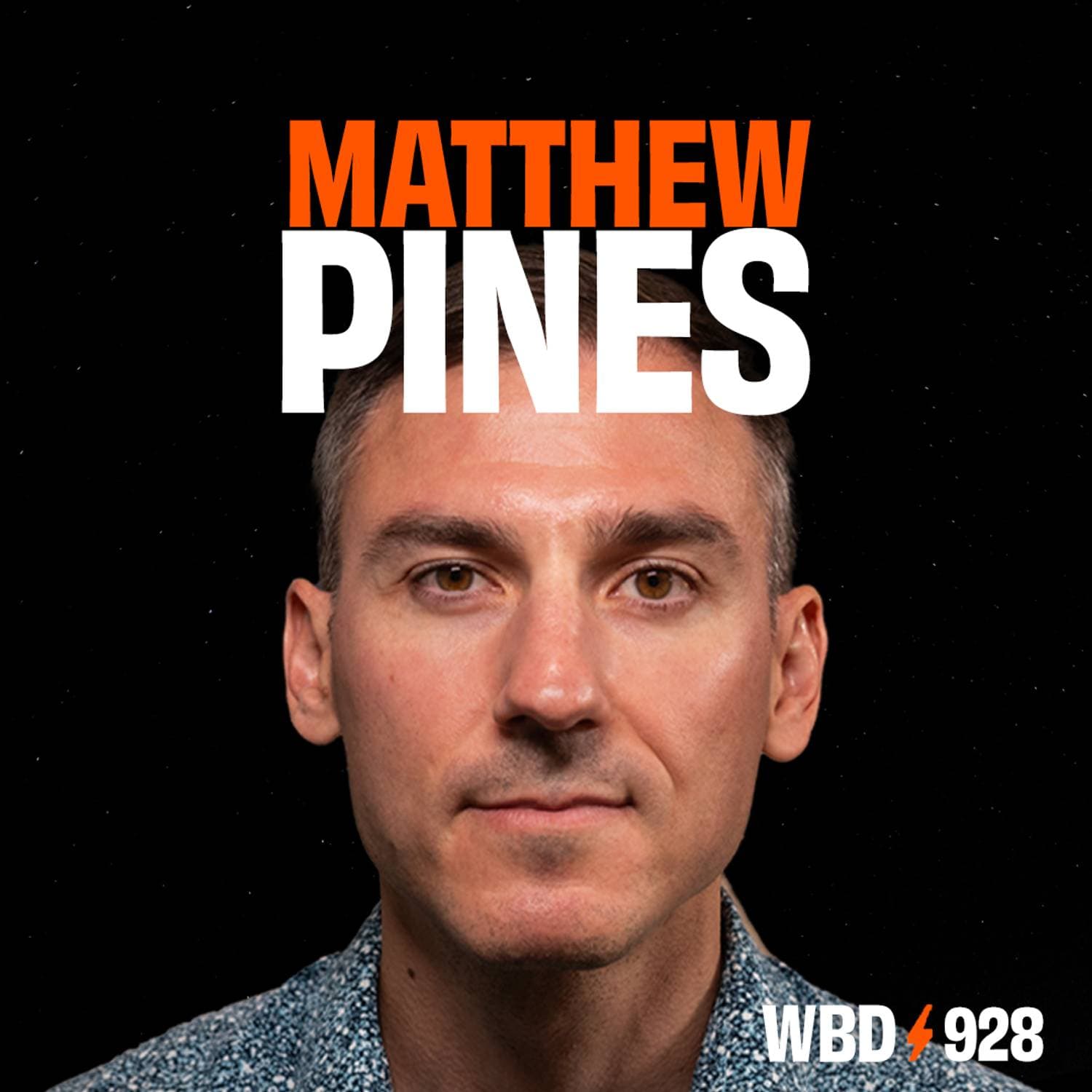

In short
The episode discusses UAP/UFO non-human intelligence claims, how the U.S. government may have run long-secret programs, and why disclosure and independent data collection matter. It also draws analogies to Bitcoin’s “off-ramp” problem—why most public content is either too niche or too stigmatized to help newcomers evaluate evidence. The guest argues the key issue is epistemic and constitutional accountability, not proving a final explanation.
Guest backgrounds
Matthew Pines is described as a long-time existentially driven researcher/consultant who has advised Skywatcher, works in Bitcoin, and has a background assessing long-range, low-probability/high-consequence scenarios. He references consulting for the government earlier in his career. He collaborates with Skywatcher personnel including Jake Barber (retrieval program whistleblower) and James Fowler (technical operations lead).
Key claims
The UAP Disclosure Act (passed out of the Senate after David Grusch’s era) would force review of UAP records and defines “non-human intelligence” and “technologies of unknown origin” with performance/observables beyond human manufacture. Pines suggests UAP programs may be funded via off-the-books private entities, not only taxpayer budgets. He emphasizes caution: whistleblower claims shouldn’t be taken as gospel; evidence should be modeled and tested.
Notable examples
New York Times 2017 UAP coverage; 2020–2021 NDAA amendments and a Defense/U.S. intelligence UAP task force; Grusch’s claims of craft in hangars and biologics; Skywatcher’s multi-sensor field approach (radar, multispectral IR, cameras) and a reported case where a ground team sees an object but a helicopter does not.
Written by AI. May contain mistakes. Listen to the episode to check what was said.
Chapters
Tap a time to open that second in VOPersonal Journey and Midlife Crisis
1:04 to 2:34
Matthew Pines discusses his career transitions and ongoing existential crises while exploring alien topics.
“You're now working in Bitcoin and consulting for Skywatcher.”
The Complexity of Understanding UAPs
2:34 to 4:50
A discussion on the challenges of educating the public about UAPs and their history.
“Or they have a crisis in their life which forces them to reappraise the value of money and the value of something like Bitcoin.”
Similarities Between Bitcoin and UAP Discourse
4:50 to 6:34
Matthew draws parallels between the societal skepticism of Bitcoin and UAPs, emphasizing the need for gradual understanding.
“It's in fact, it's, you know, it's been being talked about for generations, right?”
Understanding the Government's Role in UAPs
6:34 to 9:24
The conversation shifts to the government's involvement in UAP research and the implications of recent disclosures.
“If it's like you're open the door and then you're immediately falling down this like steep cliff into like reptilian skin suit wearing human, you know, Illuminati and, you know, uh, time travel from future AI.”
Legislative Action and the UAP Disclosure Act
9:24 to 11:55
Matthew discusses the UAP Disclosure Act and its significance in the evolving conversation about UAPs.
“what that means because of course it's a psyop.”
Key Testimonies and Evidence in UAP Research
11:55 to 14:00
An exploration of testimonies from government officials regarding non-human craft and their implications.
“that our elected officials are doing and writing in laws and passing in laws.”
UAP Task Force and Claims of Non-Human Craft
14:00 to 15:10
Learn about the UAP Task Force's findings and the credibility of eyewitness accounts of non-human craft.
Legislative Patterns and Accountability Issues
15:10 to 18:00
Explore the evolving legislative responses to UAP issues and the accountability concerns for elected officials.
Constitutional Crisis and Government Secrecy
18:00 to 21:50
Discuss the implications of government secrecy regarding UAPs and the constitutional crisis it creates.
“How else could they be funding themselves?”
UAP Disclosure Act and Its Provisions
21:50 to 24:15
Understand the key provisions of the UAP Disclosure Act and its implications for transparency.
“You already have the apparatus of secrecy.”
Show all 36 chapters
Public Perception vs. Political Reality
24:15 to 26:30
Analyze the disconnect between public perception of UAPs and their serious consideration in political circles.
Anticipating Change: UAPs and Bitcoin
26:30 to 28:00
Explore the potential for significant changes in geopolitical dynamics related to UAPs and Bitcoin.
The Shift in Perception
28:00 to 28:51
Explore the initial dismissal of UAPs and the gradual shift in societal perception.
“But it's a sign that a strategic sort of shift or a phase transition could be underway.”
Political Implications of UAPs
28:51 to 31:11
Discuss the need for broader acceptance of possibilities and the political implications of UAPs.
“I mean, individually, like what people do with that information.”
Government Disclosure and Public Data
31:11 to 32:16
Examine the challenges of obtaining data from the government regarding UAPs.
Government Disclosure and Public Data
32:17 to 34:33
Examine the challenges of obtaining data from the government regarding UAPs.
“So we did a prisoner swap with Russia late last year.”
Skywatcher: A New Approach
35:57 to 38:10
Discover how Skywatcher aims to capture and analyze UAP data scientifically.
“OK, let's talk about the disclosure process.”
Operational Techniques in UAP Research
38:10 to 42:00
Learn about the methods used to track and analyze unidentified aerial phenomena.
“Some look like sort of jellyfish, you know, kind of semi-organic structures.”
Tracking UAPs: Operational Insights and Challenges
42:00 to 46:06
Learn about the complexities of tracking unidentified aerial phenomena and the operational methods used.
“You want to get as many pixels on that object as possible.”
Scientific Methodology in Anomalous Observations
46:06 to 50:09
Explore how the scientific method applies to studying UFOs and the challenges of anomaly detection.
“And then we go out, we try to isolate the world and try to lock it down as many parts and pieces of it in order to test a particular implication of our theory.”
The Nature of Non-Human Intelligence
50:09 to 55:48
Dive into the possibilities of different types of non-human intelligence and their implications on our understanding.
“And then in this, you said there's nine different types of craft.”
Reconciling Science and Consciousness
55:48 to 56:00
Examine the philosophical implications of consciousness and material reality in scientific discourse.
“constructed a whole tower of explanations.”
Exploring the Limits of Scientific Knowledge
56:00 to 1:00:08
Discusses the limitations of current scientific paradigms and the need for a broader understanding of consciousness and reality.
“Like what is it like to be a thing, like a being that has experiential subjectivity and an awareness of consciousness from the world of material objects that we can mathematically describe?”
The Intersection of Physics and National Security
1:02:12 to 1:08:09
Explores the implications of advanced physics on military technology and national security concerns.
Geopolitical Tensions and Technological Advancements
1:08:09 to 1:10:06
Examines the race between nations in technology and the implications of secrecy in scientific advancements.
“I have not privy to any classified information on the subject.”
Geopolitical Competition and Technological Advancements
1:10:06 to 1:12:48
Learn about the competitive dynamics between the U.S. and China in various technological domains.
“Highly operationally effective military civil fusion system of research and development.”
The Interplay of Bitcoin, AGI, and UAPs
1:12:48 to 1:18:07
Explore how Bitcoin, artificial general intelligence, and UAPs are converging and their implications for society.
“statecraft just like all these it's like my sort of case is bitcoin is this like emerging you know a tool of statecraft.”
Consciousness and Its Connection to UAPs
1:18:07 to 1:24:00
Delve into the relationship between human consciousness and UAP phenomena, discussing various meditation practices.
“And then what does that mean for human society?”
Exploring Meditation and Brain Complexity
1:24:00 to 1:26:35
Discusses the intersection of meditation, neuropsychology, and consciousness.
“So there's like a rich complexity and potentially deep physical structures that the brain is organized and evolutionary designed to leverage.”
Telepathy and Scientific Inquiry
1:26:35 to 1:29:08
Examines the phenomenon of telepathy in children and the challenges of scientific validation.
“So just, you should probably explain that for anyone who isn't aware, but this was basically nonverbal autistic kids who can essentially read their parents' mind.”
Causation, Consciousness, and Reality
1:29:08 to 1:38:00
Delves into the metaphysics of causation and consciousness as fundamental features of reality.
“And what we experience that structure of constraint is what we call consciousness qualia.”
Psychedelics and Consciousness
1:38:00 to 1:38:31
Exploration of psychedelics' role in consciousness and personal experience.
Fringe Science and Spectacular Claims
1:38:31 to 1:39:29
Discussion on the intersection of fringe science and the need for formal research.
Taboos and Social Structures
1:39:29 to 1:41:35
Analysis of societal taboos surrounding psychedelics and government control.
“So it's obviously important to understand what's going on there.”
Cultural Shifts and Generational Conflicts
1:41:35 to 1:43:33
Examination of generational differences and societal changes in values.
“And like the tech elite are doing ketamine, like it's going out of style.”
Disruption and Future Trends
1:43:33 to 1:44:46
Insights on disruptions caused by AGI, Bitcoin, and other emerging trends.
“The institutions, everything, you're kind of like, you know, I like this.”
Transcript
Automatic transcript. May contain errors.0:02Oh, it's UFOs sitting in a bunker that we have provided. The U.S. government has provided for research and development purposes.
0:10Matthew Pines:Provided to who? We were lying to you the whole time. We've hidden this core secret about, you know, who we are and who else is here and what's going on. And, you know, we have maybe like a fundamental human right to like know reality. Maybe this is the test. is like you get access to certain knowledge and do you weaponize it or do you use it to uplift your civilization use it to allow your species to reach for the stars and to develop themselves as conscious beings in a much more fulsome manner are we going to pass the test i don't know
0:50Matthew Pines:i'm the guy that whenever we're in the same place i know you i corner you for like three hours and just ask you all the maddest things I can possibly think of. And I'm so excited for this conversation. Well, let's go. So you were consulting for the government. You're now a very straight-laced job. You're now working in Bitcoin and consulting for Skywatcher. Is this a midlife crisis, man? It's been a continuous midlife crisis since maybe I was 12. Just rolling from one variation of of existential crisis to another uh just finding you know partial resolution and then you know new vistas of uncertainty to explore um but i've become sort of
1:38resilient to the to my fate at this point because this is just what i meant to do apparently and
1:43Matthew Pines:i'm just going to roll with it let's go um so we've spoken about aliens loads in the past i think it's one of the most interesting conversation you can possibly have i listened to you on jesse michael's podcast um you've been on a couple of times and then since then i've been listening to that podcast quite a lot i think it's great but there's a lot of assumed knowledge in it um he talks about different people that i've never heard of different events i've never heard of and um it can be a bit of a kind of deep dive and i want to try and get to the bottom of a load of the questions that i have around the whole uap ufo non-human intelligence thing but for me like the time that the thing that really opened my eyes up to this was probably the new york times article in 2017 um but maybe i'll let you kind of set it up and be like where if people are interested in this like what do they need to know today yes and you're putting your finger on the problem which is it's just like with bitcoin um uh it's evolved to the point where there aren't that many like easy on-ramp podcasts or kind of uh clear um educational materials that are going to meet people where they are that already haven't gone down the rabbit hole and then aren't wanting to you know you know autistically obsessed about every little new development uh in either bitcoin or in this case uaps and so the podcasting kind of ecosystem is is really speaking to the choir right and it's not really doing a whole lot to kind of um provide an off-ramp or a bridge to folks that are maybe curious maybe skeptical suspect something weird is happening um and they want to kind of find some anchor points that are high signal high trust that they can um understand or at least approach uh and then sort of build their knowledge build their level of familiarity and kind of you know walk themselves at their own pace right into a territory that might seem unfamiliar maybe um jarring in various ways it's sort of a similar epistemic journey with bitcoin right it's this prima facie absurd thing to a lot of folks it's this magic internet money started by this anonymous you know cyperpunk coder uh it's like uses cryptography and they the people that are religious uh sort of adherence to it believe that it will change the world um and so it's just kind of a you know for the average person that's like presented with that it's just this well no like that's crazy like that's not going to work like they'll just immediately reject it right most people will until they actually until something happens, either they're a close confident of their, someone who they respect, you know, is like, no, I have a lot of Bitcoin.
4:17Or they have a crisis in their life which forces them to reappraise the value of money and the value of something like Bitcoin. Or they're technical and they kind of decide, oh, actually there's a design principle here that actually is really, really smart and actually works and solves a problem. But you have to kind of have that hook. You have to have this sort of reason or social proof. And so absent that, I think it's just like a, it's uh it just bounces off of most people um and it's similar i think uh process and difficulty with the uap subject um although i think it's layered in with a whole bunch of other frictions which is it's um inherent uh amorphousness like well what do you mean what do you mean are you talking about aliens and so the popular tropes that we have that have been sort of implanted in our collective imaginations are the stories in hollywood and tv shows and so we have decades and decades.
5:09It's not like this is a new subject. It's in fact, it's, you know, it's been being talked about for generations, right? And we can go back to the 30s and 40s and 50s and 60s. And, you know, similar sorts of questions and debates are happening about, is this a psychological operation? Is there a deception going on? Is it actually little green men from, you know, from Mars or whatever? And here we are in, you know, 2025. And it's, you know, maybe we haven't gone that much further in terms of, you know, broadening the social conversation and seriousness with which this should be taken. And so you do need to have this kind of, okay, how do you step back and bring people into this subject?
5:47But I also think there's a sense which I'm not trying to, and I don't really think I can, convince anybody of anything with words. It's ultimately going to require people having curiosity, just like with Bitcoin. I can spend two hours just explaining Bitcoin and the technical elegance, the geopolitical rationale, the individual liberty um you know sort of rights argument the ethical argument about human rights etc etc etc and for some people that'll stick parts of it will stick you know but it's just words ultimately people have to like care enough and want to question their assumptions about whatever it is money or in this case you know the received wisdom and social taboo and stigma around this this subject to kind of at least open the door and then they have to have to be able to find like, um, you know, there has to be an easy, like gradient to sort of go down.
6:36If it's like you're open the door and then you're immediately falling down this like steep cliff into like reptilian skin suit wearing human, you know, Illuminati and, you know, uh, time travel from future AI. It's like, that is not like a gradient that will bring people to, you know, any sort of rational appraisal of the subject. And so, uh, it is a gap right in the, in the media environment. and I don't think I can, you know, one weird trick my way into it. So there's like a lot of throat clearing, right, of like why this is hard, but also kind of the sociological and epistemic analogies to something like Bitcoin, which I know this audience, you know, maybe have personal experience with, like rewinding the clock and imagining, you know, yourself five, ten, you know, two years ago where you dismissed Bitcoin or you thought it was a scam or it wasn't a serious thing.
7:22And maybe some of you have, you know, an unhealthy or an uncomfortable amount of your net worth tied up in Bitcoin. um uh and uh you know it's like well what was that journey like right you're now um you've made certain decisions you've uh reassessed certain things um and now your view of a very important aspect of your model of the world is very different than it was two years ago um and everyone kind of goes on their own journey right their own process uh and so i have had um my own right and so it's very hard for me to kind of like uh replicate right how i've updated my own you know beliefs on the subject um which has been uh many many years in the making and you know thousands of hours of conversation and reading and conversation and then also um you know engagement with some the the contours of these of these uh bureaucratic structures that we call legacy program um and realizing that there's a there's a there there right and that's once you like encounter uh you know a material constraint in reality you know you can you can pretend that didn't happen you can you could ignore it but it's just like ignoring like the irs like you can pretend but like they're still there right reality is gonna ultimately creep up on you um and uh you know it just it just so happens that a small subset of people find find find uh themselves experiencing that structure of material constraint the existence proof of of these of these programs and the related people that uh have access to this knowledge and that's that's ultimately like what is driving this, right?
8:54So the conversation that started in 2017 was sort of individuals coming out from the government saying that they have collected data on these anomalous objects. And that was kind of this, whoa, like maybe it isn't just a total whiff of imagination or stories that we're telling. There's serious people from the government. They got some ambiguous videos. It's New York Times, so it must be serious, et cetera. And of course, there's always people that come out and be like, well, is this just a psyop? And I was, I really don't really understand what that means because of course it's a psyop. Like it's all psyops all the way down.
9:29And then the question is, well, is it a psyop to convince people it's not real or is a psyop to convince people it is real? And maybe both. And maybe both are being run by separate, you know, maybe sometimes competing factions. Like social engineering at scale is a well-honed practice of governments and has been, you know, finely tuned by elements of the U.S. government for many decades. And so people have rightful reason to be suspicious when the government's coming out with something or the government, meaning like some people from the government, or there's some ambiguity about whether this is a formal activity of the government, whether this is just true righteous whistleblowers that are saying this is wrong or we need to tell somebody or somewhere in between.
10:13And I think it is all the above right and so i think you should be extremely cautious not just taking any particular whistleblower's claim or youtube channel or twitter person's uh views as like gospel truth um but like i've you know my background is like assessing you know long range scenarios that could be extremely consequential but low probability and there you're sort of operating in an environment where you don't have a whole lot of hard data you've got maybe certain elements, a certain scatter plot type things, and you have to kind of stitch it together. You have to make sure that you're not introducing extra noise or bias, but the degree of importance of at least trying motivates a lot of effort to model out the what if.
11:05What if it was true? What would be the implications? And then using that to acquire better data, right? And so this is not about reaching a final answer or conclusion, but recognizing there's something really weird happening here, whether it's a complete SIOP all the way down or whether this is essentially the, this is what you would expect when you have a legacy bureaucracy that is decaying. And then there's this new set of political forces that drive a very different type of conversation
11:37Matthew Pines:in the public imagination now on UAPs. And this is this kind of awkward, ambiguous, like transitional phase we're going through right now. But, you know, if you wanted to start, right, you have this 2017 stuff. I've always anchored people to the things that our elected officials are doing and writing in laws and passing in laws. It's not dispositive proof of anything, but it's the clearest sign of like with Bitcoin, Like we get really excited when a US senator introduces a bill to buy Bitcoin. And it becomes the focus of a lot of conversation. Like, whoa, why did she do that? Like, will it happen?
12:18Like, how could it be done? And we have podcasts about it. And even though it's only got, you know, five or six co-sponsors, it's a thing that we pay close attention to, right? Well, there is another bill that was introduced and was passed actually out of the Senate. uh it was unanimously passed out of the senate select me on intelligence and it had eight co-sponsors including the majority leader of the senate bipartisan basis the ranking member of um senator rounds uh gillibrand so it was schumer rubio rounds todd young martin heinrich gillibrand maybe i'm forgetting one more um and it's called the uap disclosure act and it's 64 pages of well-constructed dense legislative text and when did this first appear was this before after david grush's this was after david grush so yeah so we had the new york times videos 2017 in 2020 2021 and this is when i started picking up on this very seriously is when i started noticing amendments to the national defense authorization act which is sort of the annual big defense bill and there were these amendments pretty tight well constructed but pretty small that were all about mandating the reporting of any unreported uap related programs in the government and restricting funding to anything that was related to a special access program that hadn't been reported properly and so somebody in the congress was being told there's a bunch of unreported special access programs related to uaps like that you're not being told about and you should write and pass a law that they did pass that became a law that forces the government the entire executive branch to disclose any information on these alleged legacy unreported uap programs and that started 2020 2021 they had this uap task force that was stood up inside the defense department and the u.s intelligence community and they staffed it like a bureaucracy they had senior people running it like the equivalent of like uh one-star admirals and people from the cia and national reconnaissance office and from a defense and there was like you know we know the people running it jay stratton was running it like he's now talked about he's written a book about it the guy running that task force has now unambiguously claimed he has physically seen non-human craft and non-human
14:33Matthew Pines:biologics so the same kind of thing that um grush said yes so the guy running that task force that correct grush was on has now validated exactly what david brush said and his book's gonna be coming out soon okay interesting and in david grush's testimony he basically said that he knows there's craft in hangers somewhere he can almost point you to where they are he did and he also said that they had recovered biologics but i don't think he said he had seen them had did he uh he uh when he was asked that question in um in public uh hearings he said he would have to answer that question in closed in a closed session okay so we don't know the truth behind that i i cannot describe what he might have said in a closed session yeah um but his boss has now said he personally saw craft like not like on a video not like on some sort of blurry gun camera footage like walked into a hangar and there it is so i want to ask you about the craft because there's lots of different types um but should we carry on this thread first before we get to them yeah so just like the people you can read lots of books you can read lots of podcasts and that's all going to be interpret like an interpretation narrative there's some good good books out there if folks want to read it it's just like getting different different perspectives nobody i think has you know the one this is the encyclopedia source of truth that everyone should anchor on um there's some good journalism by ross colp are in plain sight was sort of a book that was sort of uh very ahead of its time in 2021 i think to kind of do the traditional investigative journalism and develop sources and like take a skeptical eye at some of these things and tell a narrative that's a great book um but these these pieces of legislation that started to accrete over time uh got more and more like there was a pattern if you actually just read the different series of bills from 2020 to 2024 there's a vector of like seriousness intent more nuance and complexity that there's like a an indication that whoever is paying close attention to the subject staffers on ssci are learning new things and then they're adapting their next set of legislative language to try to you know get their arms around something and they're clearly not like letting it go it's not like oh they did it they did this sort of one-off you know reporting requirement and then somebody comes to them and go yeah there's nothing here don't worry about it's just all just a made up like you know this there's nothing here that didn't happen it was the exact opposite they were like, oh shit, there's something here.
17:06And then we got to like double down and double down and then talk about it publicly. But behind the scenes, there was dozens of whistleblowers coming to these committees and these staffers. Uh, I know one of them is now public, Jake Barber, um, who, you know, was on one of these retrieval programs and physically retrieved, you know, exotic craft, you know, and, um, he went to, you know, the Senate and he was explaining what he knows. And so that all culminated in, okay, well, they have to do something about this because there's two critical problems that now elected officials in and out of the executive and the legislative branch are aware of, which is that these activities have been going on for a long period of time and elected officials have not been properly briefed on it per our constitution.
17:55So there's an accountability question, it's a constitutional crisis. In fact, the lead Senate investigator on the subject, that's how he's described it in public, is as a constitutional crisis. Like, how can you have activities on such a sensitive and strategic subject be conducted that are using large amounts of taxpayer funds and maybe doing other things to finance themselves, maybe not so legally, that are not being reported to the elected representatives of a democracy?
18:26Matthew Pines:How else could they be funding themselves? Oh, well, that's a whole separate side. We can come back to that. You know, that is a very important question. But yeah, so he is saying, like, this is a constitutional crisis of accountability. So we need to reestablish, you know, mechanisms of accountability and transparency, at least to the elected officials we have. Because this is probably the biggest question in the world. Are we here on our own? And I don't feel like the government should be withholding that information from the people. I would tend to agree with you. Yes. And that's a moral sort of stain, right, that is difficult to, you know, wash out, right?
19:02But the government, I think, is some parts of the government realize this is potentially a crisis of political delegitimization, right? If it comes out and it realizes, oh, we were lying to you the whole time. We've hidden this core secret about, you know, who we are and who else is here and what's going on. And, you know, we have maybe like a fundamental human right to like know reality, right? The existence of the moon can't be classified. And so there's this push for just disclosure on the basis that we need to reestablish constitutional authority over some of these activities and maintain the integrity of our democracy.
19:39And that's procedural. That's like standing up new committees. For example, the UAP Disclosure Act explicitly defines a new UAP kind of review group that would be comprised of nine very senior officials that can't have any connection with these legacy programs. National security official, foreign affairs, economist, folks from civil society, etc. And their official mandate, if this bill were to pass, would be to take possession and review all UAP-related records and materials in the possession, not only of the federal government, but of any entity in the United States jurisdiction. So are the private entities doing this as well?
20:21well i mean this is this is the rub right like this is why um when we say it's the government program well it's think it's a very complicated um archipelago right and in normal government um you know weapons development and intelligence activities there is a kind of a sliding scale of things that are done by official government employees or military personnel and what are done by contractors. And sometimes it's in sort of a gray area, right? And there's a huge, you know, ecosystem and contracting economy to support government activities, right? And so, like, I was a government contractor for 10 years.
21:01This is just like the structure of the whole machine. And so, yes, it's very clear to me that there are aspects of these programs that are being done and managed and maybe even controlled by private aerospace, right? Entirely, like there's maybe a dotted line from some of those activities to somebody in the government, maybe some, you know, mid-level guy in the agency or the Air Force. But exactly like what's the structure of authority? You know, is there a government program that says this is our UAP reverse engineering line item? No, right? Because that's the whole point. And so there's a series of these unacknowledged way special access programs or formal programs in the government.
21:41And then there's just completely off the books programs. They're not official government programs. They're just, you know, being run by private aerospace. And that was, I think, the mechanism that was transitioned to in the 70s. They started off being very, you know, well-maintained, well-managed government-controlled biocracies under the Atomic Energy Commission, post-Manhattan project kind of apparatus, which is what you would have because you have all the best and brightest. You already have the apparatus of secrecy. And you just create a new compartment under that. And then you can classify all your activities under the Atomic Energy Act, which gives you a lot more blanket, you know, kind of a much heavier blanket of secrecy.
22:15Because if it relates to nuclear weapons design information or transclassified foreign nuclear information, it's a very, you know, that's an extra difficult step for anyone to try to, you know, get into. too uh so yeah so the ufp disclosure act is a critical thing and it lays out these procedural mechanisms it uses the term non-human intelligence like 20 plus times it references biological materials it even gives a definition of technologies of unknown origin and explicitly separates that from like prosaic temporarily unattributed objects which would be maybe some tech that china has made that we don't understand exactly yes that are of you know that are literally is like beyond the known means of human manufacture so these are things like breaking physics essentially well their definitions which i would you know people writing laws had to be pretty precise yeah so i would look at those definitions and they use very specific language like um you know no means of human like beyond no means of human manufacture and exhibiting performance characteristics that are beyond you know our current capability set uh you know non-inertial movement uh lift without an apparent like aerodynamics sort of surface uh control system you know pointing at like the apparent observables that we have on uap objects uh and then trying to specify that and making a clear delineation between temporary non-attributed objects right that are just oh this looks weird but actually it's a drone or it's a balloon or a flock of birds or glinting of starlink or or a conventional capability of a known adversary right um from these technologies of unknown origin right they're unknown origin but they are technologies they are craft we know that they are material objects that uh exhibit performance characteristics and means of material composition that are beyond known means of human manufacture so that is like like people have attention spans that are pretty limited but like you can just read things on piece of paper and form an opinion about it right don't just take my words for it but just like okay well why is the u.s senate passing this bill like okay they've got lots of things going on why is senator schumer and senator rounds bipartisan very senior senators with a lot of responsibility and public reputation line why do they go to the senate floor and give like an eight minute colloquy like you know strongly uh strongly endorsing the need for uap transparency and disclosure i mean yeah all it's a psyop i'm like okay but like at a certain
24:45Matthew Pines:point you start to well then what's the psyop right like what's this going like that's an even more jarring thing to me if it's like there's none of this and they're just building all this uh sort of infrastructure of bullshit um it's not clear they get much out of it right everyone's like oh they're gonna pump the defense budget it's like well they're doing that already they don't they don't have to use uaps to like you know justify another hundred billion dollars in defense budget it's just iran china like uaps is like not an not like the the easiest way to try to argue for another 100 billion dollars of defense appropriation so i just the whole thing doesn't make sense um uh like the story of a psyop is like okay well this is the worst psyop right it's like the most long-running most expensive you know and it's not clear it's gotten them anything right um and so uh but there clearly are attempts to try to shape public opinion here right and try to frame the narrative in a way that's conducive to certain um you know interests right we have factions we have you know competing structures of power and the subject is you know among the most uh you know information uh asymmetry it gives the most information asymmetry to a subset of folks that could exploit that information asymmetry right and so it's like a self-keeping secret in that way right like most people like would tell somebody but then what are you going to do with it it's okay well are you in position to actually leverage that information there's a a very small number of people that would be.
26:10It's going to be intelligence systems. It's going to be, you know, large pools of capital. It's going to be, you know, the structure that we know dominates the evolution of our political system. And those people know this exists. So I don't know what to tell you. I mean, this is a thing. I mean, I was talking to, you know, large Western sovereign wealth funds about China, AI, Bitcoin, and UAPs. and i know that other sovereign wealth funds and large pools of capital are paying close attention to this i know that the you know household names and ai very much closely tracking the subject you know the white house is closely tracking this subject it's a subject of international discussion so it's like there's a massive mismatch between i say the uh salience and seriousness of the subject among the average person who watches mainstream media or scrolls twitter and then like what's actually happening it's like with bitcoin it's like we're at this point now all of a sudden bitcoin has actually a geopolitically relevant asset yep so central banks are asking questions heads of social banks are asking questions presidents and vice presidents are taking this very seriously secretaries and deputy secretaries of treasury of departments of defense like those are conversations happening and those aren't public conversations but they're a sign that the power structure is reassessing something right and that's subject of a lot of our you know work at bpi um and then you talk to the normal person on the street and it's the
27:36Matthew Pines:man that's crazy you catch the game last night yeah and it's like well i don't know what to tell you like i mean i have maybe the psychological compulsion to be prepared for change yeah and so that has you know motivated me to be you know very autistic and looking at what are these parts of the distribution that are outside like on the tail but are exhibiting some some direction of travel even if it's barely perceptible. But it's a sign that a strategic sort of shift or a phase transition could be underway. And it looks, doesn't look like that when it's just starting. It looks, it's easy to dismiss.
28:12It's sort of the signal to noise is not great. And so you could wait for the signal to noise to be obvious, buy Bitcoin a million dollars. You get it at the price you deserve, right? It's like with UAPs, like you can sort of wait for you know it to become an object of massive political salience and then decide oh okay now i'll treat it as real or serious and then i'll enter the public conversation or then i'll start my reading and analysis and and cogitation on it and that's fine you'll get you'll get that truth at the price you deserve right and so everyone will make their own decisions about whether they care enough whether it strikes their priors sufficiently um and like personally like i have no objective to like convince anyone like you know i really don't like talking about like i will i will talk because i'll talk but like you know i'm not asking danny to get me on a podcast to talk about uaps to know i'm asking you yeah um and i go to these events and then people ask me these questions and i'll answer them because it's like it seems disingenuous for me to withhold or to kind of be like you know cagey or whatever it's like well i will answer questions asked of me And I'll try to be as clear and cogent about why I think what I think and how I got there.
29:25But I have no, I really don't care. I mean, individually, like what people do with that information. I do think as a society, though, like if I just sort of step back and I go, well, we need to be, you know, broadening our aperture, right? In terms of what we might consider to be possible. And there's going to be political implications of this, just like there's political implications of Bitcoin. and uh i want to make sure that we are holding our you know government to account for certain things um so i sort i kind of have a like at least nascent political objective in general but i'm not an activist on this subject um i think there's nuance there's complexity um i do think though that there are certain communities of practice in academia professional um circles that you know are responsible for national security and sort of thinking around around corners folks in capital markets that are making allocations, even of public funds, like pension funds on a certain assumption about the future.
30:20And so they're taking collective risks on our behalf. And if they are not making those decisions with a full view of the possibility set, then there's a blind spot right there. And it's not just like a blind spot of like, oh, there's something about reality that I miss. It's like, oh, there could be a strategic shock, a technological surprise, social disruption, cultural disruption, economic disruption, financial markets disruption, depending on how and when this information diffuses and what exactly comes with that and how it's internalized and digested. And I live in a society and I don't want our public funds to be, you know, vaporized because we misallocated capital.
31:01We didn't think about the possibility set here. And so I do think there's like a public good to like talk about this and generally speaking and like foam the runway. and so that's a process that's been playing out I want that to continue but yeah so start with the UAP Disclosure Act and form your own opinions of what you think that implies take the statements of senior government officials that have been in positions to know don't take them at face value but like know that they said them you need to collect at least a certain degree of surface information about the political side of this and then there's the like well if it's real we should just try to get better data on it and so then you're ultimately you know you have two main options here you could just ask nicely or force the government to disclose information that you suspect it has and that's a process that's you know been difficult but it's moving right through a disclosure act is an example of that whistleblowers etc and then there's just well go and collect your own data and so that's why you know i've been excited to advise skywatcher which is a group that's trying to do that it's just like let's go out and try to get some data and try to analyze it that's really hard it's really expensive it's time consuming it's ambiguous but it's like this is the necessary step to turn it from
32:21Matthew Pines:speculation to science okay so i definitely want to talk about skywatcher but just quickly before we do i asked you before how these programs may fund themselves outside of taxpayer dollars i'm just curious how that can actually happen um do you remember uh elon went on rogan not too long go talking about doge and he said you know you know he can only go so far or else they'll kill me right you think he was joking about that so but but how like what yeah because there's obviously there's like the stories that have now come out about like drug trafficking from central south america um like funding cia programs way back in the day like is it things like that um so the a A few interesting examples, right?
33:06So we did a prisoner swap with Russia late last year. And there was a gentleman that we had arrested and imprisoned who was engaged in stock manipulation insider trading. And his normal job was as a fund. He wasn't like a big guy. He was like a hundred million dollars, you know, we're talking scale. but he was basically charged with collaborating with Russian intelligence officers as part of this insider trading scheme where they would hack, get insider information give that to him he would trade on it and then he would share the majority of the profits back with the intelligence officers so you can see that's a basic prototype of if you're an intelligence service and you want to fund something there's two main options you go to your government, your public budget and even a secret public budget It's still taxpayer money or borrowed money that's in the public balance sheet.
34:00And you go, we want to do some secret shit. Like, give us, this is our budget for it. You know, give it to our operational accounts and we go and we spend it. That's one option. The other option is off the books money. It's not public money. It's money you have made by conducting some other activity in the private sector. Right? And you have obscured that being a thing that you're engaged in. And it's some other nominally private entity, hedge fund, that is engaging in very profitable trades or investments. And a subset of those profits are redirected to support these activities.
34:33Matthew Pines:This episode is brought to you by Ledin, the global leader in Bitcoin-backed loans. Since 2018, Ledin have issued over$9 billion in loans and were the first lending platform to do proof of reserves. with leaden you get full custody loans with no credit checks no monthly repayments just easy access to dollars without selling a single sat and as of july 1st leaden is now bitcoin only which means they exclusively offer bitcoin-backed loans all collateral is held by leaden directly or with their funding partners and your bitcoin is never lent out to generate interest i recently took out a loan with leaden the whole process was super easy it took me less than 15 minutes to apply and I had the dollars in my account in just a couple of hours.
35:12Matthew Pines:It was super smooth. So if you need cash, but you don't want to sell your Bitcoin, head over to leden.io, which is L-E-D-N dot I-O. This episode is brought to you by River. In every bull market, there's always a bunch of new investors and with it, a flood of new companies and products and promises. But if you've been around long enough, you've seen how this story ends for a lot of them. Some cut corners, take risks with your money or just disappear. That's why when it comes to exchanges, I only recommend River. They deeply care about doing things right for their clients and they're built to last with security and transparency at their core.
35:46Matthew Pines:River is also the only Bitcoin only exchange in the US with proof of reserves. So to open an account, go to river.com forward slash WBD and earn up to$100 in Bitcoin when you buy. That's river.com forward slash WBD. OK, let's talk about the disclosure process. So this stuff is going through like traditional government rails. but at skywatcher you're kind of going outside the band of that and doing it as a private company you're trying to go out and see what's there and then what happens next do you then disclose that disclose that to the public how does that work i'm an advisor so i'm not like making management decisions at skywatcher and i don't um i'm not like defining what i think they should or will do like i'm maybe it's worth explaining what they are doing right now yeah so i'm like a sounding board for for them because you know i don't know i have ideas and i you know i'll give them my ideas but i'll have operational control over over the entity um but i reason why i associate with them is because i met the individuals involved i think they're operating with high integrity and good faith and they're willing to like do the work right and not just talk and doing work is hard it's expensive it comes at an enormous risk right um it might not work right so like it's an early stage venture right you could say um but it's a uh its objective is to achieve something so ambitious that it's worth giving it the old college try, right?
37:10And so they've assembled a team of folks, Jake Barber, James Fowler, and a number of other really, really high-skilled, great, great, great folks that want to try to get good data on this, right? And go out into the field and try to capture multispectral imagery, radar, multiple bands of infrared, multiple human observations to try to identify and classify different apparent anomalous objects in in the sky and so they're developing a technological suite and then an analytics capability to try to do that right which is you know hard but uh if if we can kind of keep uh keep iterative development here i think it's going to be quite successful um and uh yeah so that's the basic process right is just going out into the field every once in a while and uh trying to capture you know as much data as you can and then analyzing that and then bringing it to the public right and this is the process of okay trying to you know filter out what what is what's the highest signal information it's a lot to do the sort of multi-sensor confusion to try to paint a picture of an anomalous object and try to you know give a um a coherent account of you know what is doing right like in three-dimensional space is it an anomalous trajectory is it displaying anomalous performance characteristics what is its surface characteristics in terms of its reflectivity of optical light infrared radar um what uh like what's what's the pattern uh that we've seen for a similar class of object over many periods of time it's purely what you might call like phenomenological right there's no at this stage reaching for an underlying explanation is it a structured craft is it engineered by china or some alien civilization it's not those are not the hypotheses that we're testing right now it's just are there different apparent morphologies some look like orbs some look like balls of plasma light some are you know metallic kind of nantaray type shapes.
Read the full transcript
39:23Some look like sort of jellyfish, you know, kind of semi-organic structures. Some are like crystalline, you know, geometric patterns. So just a lot of weird things, right? Okay. It's like Darwin going off into the island and just like cataloging the different, you know, weird species and being just writing them down. And you need to kind of do that first before you come up with the theory of evolution that accounts for all this variety and diversity and somewhat confusing phenomenon. And so that's kind of what the process is now.
39:55Matthew Pines:But how do they actually do that? Because I know this won't be as simple as go to a field in Montana and point a camera at the sky. How do you know where these things are going to be? Well, so that's the other kind of trick that they have that they're testing out, which is this kind of electromechanical signaling, right, that is apparently successful at attracting some UAP to the site of that emission. Exactly. Why it works or how it works beyond me. It's like, we've done this a few times, a number of times, and it seems to generate a phenomenon that's not there when it's not on. Let's just keep doing that and see what shows up.
40:48And so that's basically like the basic heuristic, right? You sort of turn on the electromechanical signaling apparatus and you put that energy and that signal out into the environment and you wait.
41:01Matthew Pines:And where do they come from? Do they just appear? Do they come from the sky, the ocean? Like where are they coming from? Well, I'll also I'll refer to James Fowler's interview with Jesse Michaels, where he describes in much more kind of technical detail because he's a technical expert and he's the technical operations lead. And he's setting all this. He's developing the technology, running these operations in the field. So he's the guy like, you know, the subject matter expert. And so he can go, you know, go chapter and verse. But, you know, we're limited by where we set up. Right. We're not near the ocean.
41:31and so uh you know they might be coming out of the ocean at some point but where we are we can't discern that um you know we're in large uh open air uh ranges where you've got clear line of sight um over the horizon and you can you know you've got a certain um area where your radar can extend and so you pick up objects that come into your bubble you don't know where they came from outside that bubble but all of a sudden they're in they're in your bubble now but they're not just materializing um that's interesting question uh it's materializing is like a it's a word that implies certain things like they're kind of coming in from you know looking at the dimensions right yeah whereas you could just see oh well that you have a certain bubble right a certain volume that you're monitoring and you have you know it's complex you know set set up so you have a radar
42:23Matthew Pines:that has you know a certain field of view right and then you've got cameras that are pointed right And you're trying to do this sort of cue and slew where, say, you pick something up on the radar and then you're trying to direct, you know, you're much more targeted. You want to get as many pixels on that object as possible. So you want to get your high zoom, you know, really advanced optics, multiple bands of infrared to then go to the location that the radar ping has directed you to and try to then capture as much information about it. And if it's there, if it lingers for a while, maybe you deploy a helicopter up there to go see if they can see it.
42:54Right. So you're just this is the basic operational tempo. uh and so it's harder than answer the question well where did it come from because it could it could have just one it could be a it could be more stealthy or your radar it might have just been a blind spot on your radar or the radar just you know for whatever reason like didn't um fully discern it as a track until it got a certain distance into its bubble this is why it gets very technical right and so you can't really answer the question did a poppin existence where did it come from but you're trying to track these objects at different altitudes and speeds and And that's the data that we're kind of collating now, right?
43:27Which types of objects are coming in? How often are they coming in? Are they coming in in sort of singletons? Are they coming in in sort of flocks or fleets?
43:35Matthew Pines:And have they managed to actually pick anything up on radar so far? Oh, yes. Yes, yes. In fact, we've released kind of our high-level taxonomy of kind of the different classes of UAP that we've discerned, nine classes, and kind of give sort of canonical imagery of each of them. and yeah the radar is an important you know piece of data but it's extremely difficult to analyze radar image like like radar data right you've got when it's just an enormous amount of data right so it's not like a picture you can isolate it's like you've got a whole track a track file and it's got a lot of data in it and there's often noise in the environment you've got to clean out so it's a it's a complex data like data analytics question right so the u.s government has spent billions of dollars on advanced radars we've got they've got entire teams of people sitting in you know special facilities and this is their sole expertise is just doing radar um analysis and we've got like you know two guys in a truck right so this is like a prototype to build the capability to then uh to then refine the technical collection method out you know methodologies and then just you know rinse and repeat but this is like empirical data that anyone who's there sees there's not something that you can have multiple people in a field and some will see this thing and some wound well it's interesting um this is something that's the team has observed and they've talked about which is there's been cases where they get it on radar they pull the camera up they get it on camera then they deploy the helicopter and they sort of vector the helicopter into that location and you know this kind of merge plot right where it's like the helicopter's coming in the object is here yep go you know 500 meters to the right northeast you know it should be right in front of you and the guys in helicopter go there's nothing here and they're like well we see it what so there's so on the ground they can see a helicopter and whatever this craft is but the helicopter can't see the craft yes so there's something we are going on there uh hard to explain right that's i think happened maybe at least once it might have happened more more than that but i know once so is that just a weird one-off optical effect or who knows right but it What it shows is that you're running kind of this field experiment and you're trying to conduct a scientific activity, but where the, you know, you're trying to control as many of the independent variables as possible, make them dependent variables.
45:59Right. And so you're trying to tighten as much of the environment as possible. And they're trying to isolate this anomalous phenomenon and then try to collect as much, you know, high fidelity data on it. um but we're in this weird environment we're like well by by stipulation if you think this is uh advanced non-human intelligence of some kind or even just an advanced uh craft operating from you know say uh some subset of human society right in china u.s whatever um well there's like an intentionality there's an intelligence and it might be reacting to your activity it might be trying to hide from you it might be trying to collect information on you it might be trying to disrupt your your uh activities like you're doing an experiment and you've got the creature on the dish and it's just like smacks your smacks your you know microscope away right it's like well that's gonna make it hard to like you know get the get the cell on the on the on the on the um
46:51Matthew Pines:on the on the tray um and it's not hard to think like if these craft are so advanced that they will be able to have some kind of cloaking mechanism that mean you can't see them but the question is like why would you be able to see them on the ground but not in the helicopter it's a good question i mean this is what we're at the point of just trying to um identify these types of anomalies not jump to conclusions not jump to explanations this is the process of science you just need to accumulate anomalous uh information this is the process of i did physics and philosophy as undergrads like lots of philosophy of science and some people don't really understand the scientific method and how kind of fraught like kind of the what we think of as science and kind of how we accumulate knowledge and what we what we mean when we say that something is a fact right and how do we interpret you know facts in the light of our models of reality And the way human beings have done this in the last few hundred years, we construct systems of knowledge, explanations, and then we design experiments where we have predictions from the theory.
47:44And then we go out, we try to isolate the world and try to lock it down as many parts and pieces of it in order to test a particular implication of our theory. And we collect data and we get generally more confident if the experiments go the way we predicted. But often that means you're constructing theories that tell a consistent story about reality. And then reality, though, is, as we've seen, a lot more complicated than the theories that we've been able to develop thus far. We had Newtonian mechanics. It was great. It worked really well. It explained lots of things. Then we started noticing anomalies, right?
48:20And those anomalies start to pile up. And then ultimately you get to a crisis where the paradigm that you have, this is Thomas Kuhn's structure of scientific revolutions. and there's a variation on that, a slightly different take. Paul Feyerabend, it's a bit more anarchistic method of science. Karl Popper has his version more like about falsifiability and kind of, you know, leading to kind of a process of kind of like elimination, essentially. But ultimately you have this dominant paradigm and then anomalies start to accumulate and you realize that your paradigm can't easily accommodate those anomalies.
48:59And so then a great genius comes out and says, well, actually, I have a fundamentally different paradigm, a different view of reality, say Einstein. It's like, space-time isn't this background fixed structure that has mechanical objects in it that obey these dynamical laws, like Newton. It is a dynamical fabric that is itself, you know, the substrate for matter. and it you know stress energy tensor is is the critical object right that you know mediates between you know the matter stuff of the world and then the space like stuff of the world and the you know space time is a dynamical um uh entity uh in our models and that was a radically new thing like a fundamentally new way of conceiving of existence and we had to mathematically define it and then it turned out oh well it could protect you know the uh the perihelion of of of mercury uh and and these uh anomalies in astronomical um uh you know observation and we go oh actually now we now we know okay einsteinian pictures is a better one so this is all about like accumulating accumulating those anomalies right and it's not just on the you know okay there's anomalies in potentially in the air that we're detecting there's also anomalies say in aspects of human capacities and human cognition right and there's anomalies in you know maybe what we think of as uh the frontiers of theoretical physics right we know there's got to be some you know next next framework that we have to move towards that goes beyond quantum mechanics and relativity because these craft move in a way that we can't understand um well apparently yes so let
50:33Matthew Pines:me ask you about that because this is one of the really hard things is like what and i know you you can't answer this but like what are aliens like are these little green men from another planet another solar system are they kind of interdimensional beings are they time travelers Like there's so much to it that I don't think anyone has a very good understanding of. And then in this, you said there's nine different types of craft. And are they different types of craft by one species, for lack of a better word, of alien? Or are these all different things? I have no idea, is the honest answer. So maybe I can maybe reparametize the question, which is there's how you might go from characterizing observed phenomena, like these nine classes, which could you know ultimately be uh variations of you know a much more limited set of actual craft that you're just manifesting to us visually in different ways um or there could be dozens hundreds of different variations and we're just sort of having to pick up these nine so i'm saying like there are nine and that means there's nine species where like those that's a false inference um but then you have to see there's like the uh when you're when you're operating the frontiers of science, you have to operate both like from an empirical dimension, you know, direction and a theoretical direction.
51:47You want to ultimately kind of, it's a game of kind of a dance between theory and experiment, you know, observation and then hypothesis generation. So you do some observations and you try to generate some novel hypothesis and where we are in the OEP subject or even just, you know, say anomalous cognition subject. There's an enormous white space in between what limited experiments have been done, good science have been done and what serious sort of model building and theoretical hypothesis generation have been done. Like there's been some good work, but it is not what you would call like a mature science, right?
52:19It's just frontier science, very speculative, lots of ideas. And, you know, because it's been subject to such taboo, like not a lot of actual effort going into it. And the institutions that we normally look to to kind of lead the frontiers of research have been either misdirected or because of social stigma and professional incentives have not seriously directed attention at it. So the main objective is just to actually change that, like shift the academic and professional taboo so that you can actually dedicate serious scientific research to this. So you can actually, you know, be much more precise and much more productive in how you actually develop theories and test them.
52:51And then you can ultimately try to get at some of these answers. Like you can, you know, from a just a priori basis, be like, well, there's maybe four canonical classes of non-human intelligence that you could kind of stipulate um uh at a very high level this is how i think about it it's alternative ways of slicing essentially traditional extraterrestrial uh extra tempestrial meaning from a different time whatever we think of as time in your model of physics um crypto terrestrial which means they're from earth meaning the earth is the home planet origin so they're not extraterrestrial they come from a different planet they're from earth maybe just like long predated human civilization um or ultra dimensional or you know essentially from a different degree of freedom you know another another plane of existence uh uh another uh you know bubble universe so like you can construct all sorts of different variations on that theme and then you would have to specify okay well what does that imply about the observed phenomena like if they were from another time what could we then we construct the model of what that what would have to be true for that to be true what sorts of characteristics would we expect to see in the observed UAP if they were time-traveling AIs, as an example?
54:04Does that model fit some subset of the data that we can collect about these objects, right? And I think we are in a point where the data does not sort of pick out or falsify any of those hypotheses. There's some data that, you know, leads people to certain of those hypotheses. is there's some data that points in another direction, right? You know, there's some of these objects people have characteristic experience with that are almost just like balls of plasma light energy. And you might say, oh, well, where's that from? But it's not like a structured craft. And there's some, you know, high signal, you know, we have craft sitting places.
54:47They're structured material. They're not just like balls of light energy, you know, with some sort of interdimensional wobble. They're like a thing. It's heavy. It sits there. You can knock on it, right? Somebody made it. And then we find biological occupants, right? We don't know if those are the progenitor species that created the object or whether they themselves were creations of some other. Some drone-like thing. Yeah, they're like a synthetic robot, right? That's designed to perform a certain function. These sound like outlandish hypotheses, but like not to some of these people that when you have the stuff well okay i didn't think this was true but i guess what now i got a freaking you know little gray thing sitting on my table get over yourself like figure it out um and and so yeah we're we're in this uh mode now we have to like radically expand the aperture of possibility for our our explanation seeking and not jump to conclusions right uh that's the most important thing like we as human beings have constructed a whole tower of explanations.
55:50Ever since we kind of got smart at the scientific method, you know, Descartes was the first person to kind of really help do the philosophical work to kind of separate out the world of mind, the world of matter. And that was very useful for enlightenment rationality to be like, oh, okay, we can kind of partition a lot of spiritual and metaphysical conversation about the soul and the spirit and the mind and God that can kind of keep keep developing in this track and then we can look at the world of objects material you know things and we can try to model what are the patterns of reality that's what that became physics um and that worked really well as a scientific sort of metaphysical paradigm um my sort of gut is like that's that's sort of running out of steam and we're kind of having to sort of reconverge back to like you know it is a book called uh did descartes error error which was basically pointing out like this separation was necessary for its time, but it kind of fundamentally diverged, you know, these critical aspects of reality, right?
56:52Like what is it like to be a thing, like a being that has experiential subjectivity and an awareness of consciousness from the world of material objects that we can mathematically describe? We developed a whole system of knowledge and explanations. It's worked really well. It gives us models of space time and causation and time itself. Um, and we keep, you know, building on top of those, of those, of those systems and we develop new vocabularies, right. That we can translate into those models. And by assumption, these advanced civilizations have been doing that just much longer than us. And there's no shortcut, I think, right.
57:29Um, you have to actually like iteratively build a stack of knowledge. That's a stack of conception of, uh, of concepts that we can encode in language, in our minds and in our mathematical symbols. and you can't just you know it's like translation it's like a future science 100 years from today will be utterly alien to us unrecognizable you have to actually like build the translation layer from here to there um and it turns out like this is where ai is going to be very important because ai is like the one thing ai lms in particular are like that's what they are is essentially maps between vector spaces of like co-similar concepts.
58:09And if you're trying to translate between, you know, very divergent sort of webs of meaning, AIs are really good at that. Like we're now pretty close to, say, translating whale song, right? It's because we capture lots of data on whales and we can say, okay, well, what's the characteristic network of apparent relations between these different vocalizations? how does that you know what's the set of isomorphisms we can go between whale song like conceptual web of of meaning to human webs of meaning our webs of meaning are much more complicated but can you do a can you do a an encoding and a compression and a mapping and that's that's feasible right but that's the process you would need to be like okay well there's aliens intelligences they have their own webs of meaning that they've then used those webs of meaning to be able to engineer objects.
58:58They've created structures of understanding that allow them to create structures in reality. That's what we do, right? We figured out a structure of understanding about nucleus, and we developed a structure in reality called a nuclear bomb. And so these are not like ineffable abstractions. Like that is the work of human civilization. It's also the risk in human civilization is we can figure things out and then develop quite destructive capabilities. And that's what you would expect, you know, any arbitrary civilization to be doing the same thing. And so trying to understand who they are, and what they're able to do, and what they're building, what these objects are, requires that we kind of try to stretch our conceptual understanding to that level.
59:39And if I'm the US government, maybe one of the reasons why it's so secret is that they understand that rapid progression in conceptual understanding, which we call science, is also the basic predicate for radical transformation of weapons technology. And you would, you know, learn that lesson very acutely in 1945, and you would never forget it. So physics would be the most important thing that a civilization does. And therefore, you would maybe not let real physics happen.
1:00:08Matthew Pines:This episode is brought to you by Anchor Watch. Now, one of the things that keeps us Bitcoiners up at night is an idea of a critical error in your Bitcoin cold storage. And this is where Anchor Watch comes in. With Anchor Watch you're protected by two things. You have their time-locked multi-sig vault and you have your own A-plus rated Lloyds of London backed insurance policy. So you get to hold your keys and Anchor Watch holds the risk. So whether you're worried about inheritance planning, wrench attacks, natural disasters or just your own silly mistakes you're fully protected by Anchor Watch.
1:00:37Matthew Pines:Rates for fully insured custody start as low as 0.55 % and are available for individuals and commercial customers located in the US. Speak to Anchor Watch for a quote and for more details about your security options and coverage over at anchorwatch.com. That's anchorwatch.com. This episode is brought to you by Blockware. Would you rather have one Bitcoin today or two in a few years from now? Silly question. Well, Bitcoin mining is a tried and true method to accumulate more Bitcoin and over a few years it can even outperform a normal DCA. Blockware's mining as a service enables you to start mining Bitcoin without lifting a finger.
1:01:10Matthew Pines:Blockware handles everything from securing the miners to sourcing low-cost power and configuring the pool. they do it all. With multiple data centers across the US, Blockware is the most reliable mining partner in the industry, and mining is one of the most efficient ways to acquire Bitcoin. So click the link in the description to get started today, and if you tell them what Bitcoin did send you, you'll get one week of free hosting and free electricity for every hosted miner purchased. So click the link in the description or head over to blockwaresolutions.com. This episode is also brought to you by IRON, the largest NASDAQ listed Bitcoin miner using 100 % renewable energy.
1:01:43Matthew Pines:IREN are not just powering the Bitcoin network, they also provide cutting-edge computing resources for AI, all backed by renewable energy. We've been working with the founders Dan and Will for a long time now and have been really impressed with their values, especially when it comes to their commitment to local communities and sustainable computing power. So whether you're interested in mining Bitcoin or harnessing AI compute power, IREN is setting the standard. Visit iren.com to learn more, which is I-R-E-N dot com. So that again, like in this kind of UFO, UAP world is obviously a huge talking point of whether like physics has been purposefully stalled since the, basically after the second world war.
1:02:22Matthew Pines:Do you think that's likely? well i was going to do a phd in physics and my like whole intellectual you know obsession from when i was a teenager was like trying to do you know quantum gravity theoretical physics and i went to undergrad at hopkins and took you know quantum mechanics and was talking to my professor and quantum mechanics of course is a core core theory in in modern physics and it's also the subject of like extreme metaphysical um angst like what does it mean you have the superposition of states and then you have a measurement and you get you know one one eigenstate out of this superposition was i mean we have a like a multi-verse like a many worlds interpretation is consciousness actually like collapsing the wave function into a single output um has been you know this has been the churn of metaphysics and philosophy for a long time and i was asking the professor like you know what's your you know preferred interpretation of quantum mechanics he was like don't don't trouble yourself with those things like these are not going to be questions that will help you get jobs like find a narrow you know just shut up calculate find a research project that you can engage in that will contribute to the literature and get tenure basically there was immense you know stigma uh around you know exploring deeper questions it was like nope this is the canonical paradigm this is what you need to do to get a job and that selects out i think people that would want to like break the paradigm i want to like you know well i'll take the right and there's been some people that have been doing that but they're few and far between they take immense personal cost so the institution of physics as a whole has kind of been you know this is like eric weinstein's bit right and he's not wrong that we have kind of um stalled in physics uh now how much of that is like master plan manipulation behind the scenes how much is just like the sclerosis of a decaying institution and you know incentives of publication i think it's both um but i also strongly suspect that you know We have an entire architecture of secret physics.
1:04:21We call it Department of Energy National Lab Infrastructure.
1:04:23Matthew Pines:And that would be from reverse engineering these craft that the U.S. government likely have? Well, it exists. You know, we know, I mean, it's a real thing. Like you can go to Department of Energy and like the national labs and they do physics research. They got particle accelerator. So like that's not like the secret piece. Right. But that creates the infrastructure where if you wanted to have certain physics, that's what you would do. You could put it in a black box. And then, you know, maybe I've sort of, this is definitely not a factual allegation. It's just a speculative hypothesis. But I find it very interesting that Jim Simons' hedge fund, Renaissance Technologies, which is the most successful hedge fund in human history, as far as we're aware of, which is just a black box that prints money.
1:05:06uh also his his private foundation is one of the largest uh funders of breakthrough research in physics computer science math synthetic biology uh and he engineered a partnership between stony brook university where he sort of does the recruitment of the best and brightest physicists and mathematicians to his hedge fund um engineered a partnership between them and brookhaven national lab which is department of energy national lab that has a particle accelerator and it's a large piece of infrastructure. And they're all near each other in Long Island. And the head of the Simons Foundation, a gentleman named Dr.
1:05:39Spurgle, was the chair of the NASA UAP working group. And he's the go-to advisor to many mainstream media institutions that have questions about UAPs. They call him up and they go, what do you think is going on? Is this real? And of course his response is, oh, it's temperature inversions. It's balloons. Don't trouble yourself here. This is all just a mistaken identity.
1:06:00Matthew Pines:you know quite convenient i would say um what would be the benefit of them holding back this information though is this kind of ace in the whole technology in case the u.s goes to war like why why would they not uh well yes so this is where it's quite complicated here and this is i think part of the conversation in the negotiations now are you know if if we do have uh breakthroughs in physics that lead to breakthroughs in engineering and say capabilities for aerospace propulsion or or new materials that provide really enhanced cloaking or signal generation. There's all those sorts of, you know, pretty important applications you can imagine for military intelligence advantage.
1:06:42And you would not want to compromise if I'm a senior U.S. senator or national security official, and I realize there's a there there, and there's an important existential question that needs to be resolved for the public. I would have this tension between disclosure and national security, between broadening the aperture and bringing some of this information into public view, but without revealing our most critical advanced capabilities or technical breakthroughs or giving China any hints that would allow them to potentially catch up or accelerate their own developments. and this is the all too human you know maybe this is the test is like you get access to certain knowledge and do you weaponize it for like terrestrial you know zero-sum war or do you use it to uplift your civilization use it to allow your species to reach for the stars and to develop themselves as conscious beings in a much more fulsome manner like this is this might be like which way western man which way this is the turing test this is our this is our test right like are we going to pass the test i don't know but uh this is you know this is a challenge for our biocracies because you know the job of the department of defense isn't like human enlightenment job of the department of defense is like making sure they maintain a tactical and strategic
1:08:03Matthew Pines:advantage over u.s adversaries but you have to assume that if the u.s do have these craft and of reverse engineered them maybe had breakthroughs in physics that probably china are doing the same thing yes and yeah and like every large nation state everyone that knows this exists is like oh shit i need to get as i need to get up the curve as quickly as possible yeah do you have any kind of feeling on whether the u.s are the furthest ahead with this um it's i haven't been read into any of these programs i have no i've not signed any non-disclosure agreements. I have not privy to any classified information on the subject.
1:08:41So it's all just, you know, informed speculation. One piece of text that I always point to, that I come back to, is something that was written in one of those, you know, National Defense Authorization Act amendments, which basically said, in order to mitigate the possibility of foreign technology surprise, the federal government must broaden awareness of historic exotic technology antecedents previously provided by the federal government for research and development purposes. So like you can unpack that, like in order to mitigate the possibility of foreign technology surprise, technology, you know, China getting the jump on us.
1:09:24The federal government must broaden awareness of historic exotic technology antecedents. historic exotic technology antecedents historic exotic technology antecedents oh it's ufo sitting in a bunker um that we have provided the u.s government has provided for research and development purposes provided to who the u.s government has given has provided those historic exotic technology antecedents to some group or company to do research and development and what it's basically saying is that you're that f that activity is uh too slow and we're worried china's catching up and so we need to broaden awareness that's it that's the whole like that's the it's all in one sentence basically now you could say well that's just a bunch of words it is but words might have meaning somebody wrote them for a reason and passed it in a piece of legislation um so your question is oh yeah they're probably worried about china i i would be right china's probably got 10 times the amount of STEM talent as we do.
1:10:28Highly operationally effective military civil fusion system of research and development. They're developing lethal weapons like this. They're dramatically expanding their space activities to develop retrievals from the dark side of the moon, established station keeping in the Lagrange points in the cislunar competitive environment. they are rapidly advancing in quantum information systems uh quantum computing even in ai um they're catching up uh their developments in synthetic biology and genetic research is probably among the leading in the world now um so you look at all these competitive domains in the frontiers of science and technology they are peers in almost every single one and you can make the case that And some, they exceed U.S.
1:11:19capabilities. Now, does that mean that we have certain exquisite special things that they don't have? Plausible. But things change pretty quickly. And their industrial system is rapidly expanding. And I think this is a subject of competition between different power structures. Because it's not just U.S. versus China, right, at this point. You have to imagine the U.S. is a, when you say the U.S., you think about it, you have to model it as like, well, there's a political layer that is competitive. Democrats, Republicans, different factions within the Democrats and Republican factions that point to elite elite factions in Wall Street, in financial capitals, folks in tech circles now that are climbing the ladder and into the military industrial complex.
1:12:02So you've got that dynamic, the Palantirs, the Andurils, et cetera. There's huge amounts of money on the lot. Like Golden Dome is a$500 billion project. And China has their own internal ecosystem between the rocket forces, the strategic support force, the CCP apparatus, the Shanghai clique that wants to open up and be much more international and reform-minded, and then the kind of hardliners that want to potentially go to war. right so this is why i think it's so important when i talk to these institutions several funds etc is this isn't like this esoteric subject to like park in the corner and be like oh i need to make sure i'm smart on the uap stuff like it is it is in the backdrop of a lot of the geopolitical decision making happening right now and it's depending on how it's leveraged as a tool of statecraft just like all these it's like my sort of case is bitcoin is this like emerging you know a tool of statecraft.
1:12:57It's a tool in our toolkit now that didn't exist before. If we wield it properly, we can, you know, maybe gain a strategic advantage or provide strategic resilience to our economy and to our people and to our values. I think this is the same topic of like, you could, you know, try to use the UAP subject and maybe the knowledge you've gained for narrow, you know, military advantage, but also might be like a opportunity to, you know, i wouldn't say world peace but to like help squash the beef right like if it turns out that the exo politics is a thing if there are non-human intelligence or non-human intelligences interacting with humanity and you know maybe with different degrees of intentions um the things we're fighting about become a little bit silly yeah it's just something that you know i mean gorbachev and reagan like they kind of famously had this like if you were attacked by you know aliens would you help us and they're like yeah of course man yeah you know squat up right uh so i mean that's kind of a bit of a trope but it's not entirely wrong um so yeah i think this is why it's like i have to think in terms of scenarios and looking next two three four five ten years and we're we're facing a series of these accelerations now where subjects that were you know dismissed as taboo are now increasingly of strategic importance.
1:14:22And the three major ones that I'm focused on are Bitcoin, AGI, and UAPs. And they all have very similar characteristics in this respect. Like, you know, AGI as a subject was like on less wrong blog posts. Eliza Yukowski and Nicholas Bostrom. And I wrote a fiction novel like 10 years ago about quantum super intelligence emerging from an NSA spooky lab. And, you know, I was just sort of spewing. But I was reading, you know, Bostrom superintelligence and it was like a niche, somewhat fringe subject. Like one of these days, you know, we're going to create a computing system that can rewrite its own code.
1:15:00And now it's basically bootstrapping itself and we can't control that process. And do you get runaway, you know, superintelligence and what's that mean for humanity? That went from being like a fringe blog post, speculative sci-fi to now like driving our geopolitical deals. It's Riyadh, the Riyadh series of tech deals with the Emirates and hundreds of billions of dollars of investment to try to get access to these frontier A models. It's premised on the idea that we're probably going to get a drop in white collar workers in two to three years. AGI and whatever it's ineffable definition but there's gonna be something like you know a period where we reach almost every task that can be done on the computer will be done by an AI like an AI system within the next within the political horizon of current of current leadership yeah right so you know when if you're a vice president now you might be running for president 2027 to 2028 this is no longer like a hypothetical question for you so AGI went from like less wrong tiny like some people were perceiving it like the like the curve was um it was an exponential curve but it was a very early part of the exponential curve and now that's like a strategic question for policymakers bitcoiners again like a bunch of autistic nerds getting obsessed with an exponential process and they just see that that little like pick off off the off the slope very early and some got very very rich because of that right because then they saw that takeoff and we're just still on that takeoff moment and now bitcoin is maybe you know in that process of becoming like a geopolitically relevant asset as it as as i think it is um and i think uaps are on the same sort of trajectory where like i'm just autistic and i see this like slight deviation from the from the slope uh and because it's dressed in a lot of taboo like with bitcoin like you have to take a bit of a risk to talk about it and analyze it seriously um i don't know like that's the benefit of being a bit autistic is you don't give a shit and and you know i think it's important to then think about, okay, you have these three curves, maybe they're going to lag, but they're all going to be in this sort of exponential phase, whether it's, you know, exponential in terms of
1:17:02Matthew Pines:capability on AI, exponential in terms of price and, you know, changes to the global system with Bitcoin. And of course, even the more, you know, all encompassing sort of exponential impact from UAP disclosure, which is going to touch everything, right? And I think I'm sort of increasingly of the view that I think all three of these are going to start to converge and the dynamics between them is going to be very important to understand. And that's kind of what I'm focused on now is like the practical implications of taking seriously a set of scenarios the next two to three to five, 10 years where, you know, with the what if Bitcoin becomes global gold or more, what if we do go through, you know, a post-AGI disruption to our economy and we have a whole new set of economic actors, AI agents, and then what transformations that does for human productivity and society.
1:17:53And then you layer in these disclosure questions, you know, other breakthroughs in physics, knowledge about human capacities, human consciousness, and then the presence of non-human intelligences, you know, where we're not at the top of the hierarchy of being. Right. And then what does that mean for human society? And what sources of new how do we create new institutions? Right. That will help us navigate this disruption. Right. Because we're in new institutions. So I talked to folks at the Atlanta Council and RAND. And, you know, these are systems we've created that are designed to help us think about the future and prepare for strategic surprises and to translate these into documents and formal bureaucratic procedures for the government.
1:18:31And they're totally cooked. They are talking about the subject, but it's like whispers and the internal taboo and preference falsification is extreme. And so they're not going to be the institutions we can rely on to like steer society and like, you know, help hopefully take most advantage of these changes. So like my sort of schizo view is like Bitcoiners, I think, are the most psychologically open to like they inherently distrust authority.
1:18:59Matthew Pines:We're seeing behind the veil already. Yeah. And they're cognitively, they've been willing to sort of take the slings and arrows, like to go out on a limb and be like, almost somebody telling them it's a stupid scam, you're wasting your money is like, only makes them want to double down on it more. Right. And so as a personality type, they've kind of been hardened. And they're, I think, more cognitively open than most. so if i look at the next few years and okay well if bitcoin does what i think it's going to do there's going to be a new class of maybe more post-economic individuals that uh okay you you you won right you achieved success here like your bitcoin thesis paid off now what right well most of them what are you going to do right like uh probably most rich people right that became rich through this process of social cultural um acculturation you know you went to harvard you know went to business school this is a whole different beast hedge fund you know senior director at morgan stanley or goldman sachs and then you become a senior executive or your dad that gives you money a certain set of rich people and they do rich people things they endow libraries at the university so their kids can go there they buy yachts they invest in prestige art and they just sort of you know become donor class people right but bitcoiners are investing in things like psychedelic research yeah yeah it's like okay like if if time travel is possible it's probably going to get invented by a big corner right it's like if if if human consciousness is a much more funnal um variation of a of a core metaphysical theme in reality and we can uh expand it maybe engineer it um use it to expand human flourishing and capacities i think people that are willing to do that are going to deport people that don't just accept received wisdom right and i think bitcoiners are like a canonical example of that and so yeah it's like it sounds like a real schizo story i was telling it's like okay phase one you know get america to buy bitcoin and that provides seed capital for a whole new cohort of sort of uh aligned individuals that are are orthogonal to the existing institutional framework of think tanks and venture funding and scientific research and just like the process of institutional reform and decay you have to kind of do both the renovation and sort of try to salvage the existing institutions so that they can still withstand these disruptions but you also need to create new institutions that are sort of fit for for the purposes that we're going to require and so yeah my my whole i don't know like david bailey is going to be the first time traveler it's like if it would be it It would be like kind of a funny story to tell.
1:21:40Like, okay, if we're on this timeline where Bitcoin becomes global money and then Bitcoiners are the ones that actually get alien pilled and then they fund breakthrough physics research and they invent these radical technologies, they're going to send them back in time to ensure like Trump narrowly avoids the bullet. and and the bailey bit pays off and so he can invent the time traveling ai probes that keep us in this closed time like loop that we're in uh yeah that's pretty skizo yeah it's pretty funny
1:22:11Matthew Pines:um but like what are the chances that we live in this like wildest most interesting time it's a it's a simulation man but i do want to talk about the consciousness piece because this is something that again like the ufo people are really sort of honed in on and it's really hard for me as someone who like i i find this stuff fascinating but i'm not like in this world to know what is nonsense and what's real and there's people like is it stephen greer who goes out and meditates and summons craft have i got his name right yeah stephen greer he's known for a certain sort of modality called ce5 that he's popularized yeah what i don't know is if that's just nonsense or if that's a real thing and like what is the consciousness link to uaps uh yeah so the first answer is it there's been um lots of versions of that in modern history right some are more associated with government programs and remote viewing the monroe institute uh sort of neuromeditative practices um stephen greer's version of it has you know been i think the most you know penetrated some of the ufo culture a bit more i've never been around one of those things i'm not an expert in ce5 as like a particular methodology i'm not an expert any of that so i I know people have accused him of certain poor practices and sort of fraudulent activities, but I haven't resolved.
1:23:32I don't know the details of that, so remain agnostic with respect to him personally. But there's been a number of these sorts of apparent consciousness techniques, which if you actually just zoom out for human culture are like not new. Right. Like all the major faith religious traditions have something like aesthetic meditation, practice, prayer, right. Certain ways of entering into a state of consciousness, mental orientation. meditation that's like you know whether it's buddhist meditation uh you know tantra um and catholic traditions it's like everyone has a version of you know incantations or chants um there's lots of serious like actual um uh like neuropsychological research putting people in mris and you know the brain is like the most interesting object that like we know in the universe and it's like creates me it's pretty crazy man uh that's a wild thing right i'm just this fucking stuff between my ears right like that's a wild um what's going on there right um and you know there's a huge amount of complexity going on in the cortical structures and you know all the way down if you look inside a neuron you've got microtubules and you've got the whole stuart hammeroff orc or maybe you can get these tubulin dimers that can you know enter into like quantum superposition.
1:24:54So there's like a rich complexity and potentially deep physical structures that the brain is organized and evolutionary designed to leverage. And so you have that kind of serious scientific research where maybe, you know, we engage in meditation as a certain entrainment that occurs. And if the brain is in a certain set of default mode
1:25:19states that you can shift, like you can imagine the brain is like this a whole bunch of series of layered vibrations that you can sort of parameterize in kind of a phase space. And like normal waking consciousness is a certain state where it's vertical, it's filtering out some information, it's designed to help you navigate reality and engage in conversation and do sort of ratio of senation as like a higher order cognitive functions. But then, okay, can you entrain a certain set of states that move the sort of whole system to a different part of the phase space? where different filters are being applied, different information is allowed to be synthesized and aggregated.
1:25:59And what does that mean for different, you know, we sort of interpolate that as different states of consciousness. So meditative practices have different, you know, oh, these are the jhanas or whatever, right? So this is like a real, you know, it's this mix of spirituality and science, right? Because we kind of are leveraging a lot of like historical traditions where we've layered in a lot of received wisdom and then we're trying to do serious science on them. But it's become clear to me that it's like a, just like there are anomalies in the sky, there are anomalies in human cognition in our normal frame, meaning telepathy, meaning remote viewing.
1:26:33Matthew Pines:The telepathy tapes were wild. Yes. So just, you should probably explain that for anyone who isn't aware, but this was basically nonverbal autistic kids who can essentially read their parents' mind. Yes, which I remember, I think I was listening to that. I was there listening to it before it was cool, Danny. Of course you were. It talks about it on Jesse's podcast. I was on the hype train when I was talking about it. And I was like, oh, this is weird. Like, this is interesting. And it's something I had never encountered before. But I've, you know, come to know a lot more about that whole domain.
1:27:08And I think it's not condensed, you know, to a certain degree of scientific rigor that it's 100 % real. But there's something very weird happening.
1:27:19Matthew Pines:Well, that was the criticism it got, that it wasn't properly scientifically tested. Yes. And so you need to do the scientific analysis. Right. And that's challenging when you have, you know, children. Right. You have to get the institutional review board approvals. And they're not like it's not like they're human beings. Right. And you have to do the control test. But you can imagine an experimental setup where, you know, you isolate them. so you try to minimize as much as possible the possibility of a covert signaling maybe even unintentional signaling between the mother and the daughter or vice versa and then you want to basically randomize exposure of say a certain word uh so you roll some dice you look up the word and uh just it's like almost like you know generating a seed phrase yeah right and then the mother puts that word in her head and then you have the child or the teenager whoever it is like try to you know say that word right well what what word is your mother thinking right and if they keep getting it right and you've got and you've got videos and you're like well you know unless there's something like crazy happening with like some subtle tapping or some like you know sub vocalization that nobody can hear like you can try to construct all sorts of like ways of getting right but like prima facie when you've seen that you're like yeah the daughter just read the mother's mind okay like that's not a thing i thought was possible but okay if it's anomaly i gotta explain it somehow um you just gotta keep doing those controlled experiments and try to you know get the statistical significance to say oh yeah we try to rule out any potential um you know conventional explanation and now we have to just consider the possibility this is this is a real phenomenon and then it's back back to the uap side it's like you try to rule it out as a conventional balloon or whatever and there's like a weird thing doing something weird okay how do we explain it and then you gotta broach this other much more difficult territory which is we have to construct new models of reality right that are not just uh advances in our understanding of theoretical physics theoretical physics but understandings of human consciousness like what is human consciousness what is consciousness you know in general as a function of you know the structure of reality what's your answer to that well this is another three-hour podcast i think i've talked about this a bit on on number of podcasts and kind of my metaphysics and my physics i mean i'd say my um top level view of metaphysics is that causation is the most important thing to try to model metaphysically meaning there's a structure of constraint in the world um it isn't just a bunch of random stuff that happens right there is like like events constrain other events so there's a structure of constraint that we call causation and my top level view is that that structure of constraint is what we call from the outside physics.
1:30:03And what we experience that structure of constraint is what we call consciousness qualia. So there's two sides of causation. There's the extrinsic aspect of causation that we model through physics. And there's the intrinsic aspect of causation is what, you know, qualitative first person subductive experiences. And so that is essentially implies a form of panpsychism, right? But not like a panpsychism where there's like a substance dualism you know there's qualia like stuff and physics like stuff and they sort of relate to each other in some you know weird way there's nomological regularities that connect uh changes in the physical facts to changes in the qualitative facts that's like david chalmers view my view is much more structural right there's a metaphysics of causation that requires that there are two essential aspects of reality that are inextricably like inextricably connected.
1:30:55And you have to have both for you to have anything like causation, to have a world that is anything like our world. And that requires an inner aspect and an outer aspect, right? Just like the rules of chess can be written down formally and can constrain, you know, how pieces move in a game of chess. But the rules of chess are substrate agnostic. Like they apply equally to glass pieces or wood pieces. The rules of chess you write down don't tell you what the pieces are made of what they are, right? So the rules of physics are like that. They tell us the constraints that the stuff of the world has to obey mathematically, right?
1:31:30And so we reify those when we write down these equations, then we put these pictures in textbooks with an electron. It's like a little ball, right? And we color it in and we go. And so then we form an image of our mind of an electron or a particle or a wave as like a thing. But it's just a mathematical structure. That's all that physics really tells us, right? Everything else is just imagery and metaphor. Um, so physics doesn't tell us what the stuff of reality is. It doesn't say what an electron is or what a wave function is or what the stress energy tension is. It's just, this is mathematical symbols.
1:32:01So the stuff of reality, there has to be a carrier for the, um, uh, for the structure. That has to be like a, uh, you call it an essence, right? Um, inner aspect, outer aspect, like a door, like logically cannot have one side right so it might be like causation cannot have a physics only side like that's like a logical contradiction um so causation requires consciousness and so you have a problem of causation you have a problem of consciousness those are two sort of separate metaphysical problems and i think by solving a problem of causation this way you solve the problem of consciousness because that puts consciousness sort of at the floor of reality and then you build up right a whole structure a whole series of structures and we're you know not the bottom so you know we we have to kind of build these abstractions to try to touch what we think is at the bottom uh so yeah i think consciousness is a fundamental feature of reality and i think it's deeply connected to the structure of physics because they're again they're like this two sides of the same underlying process that's playing out so connecting that metaphysics which is kind of the david rosenberg slash philip goff slash whitehead um slash bertrand russell kind of school of philosophy of consciousness and philosophy of physics and then there's a fundamental science approach which i like the wolf and garrar model we've talked about before won't give the whole recapitulation of that but essentially thinking of the universe uh developing models of the universe as sort of multi-way computations so there's a branching and merging process playing out um and then you can provide uh an interpretation of that branching and merging a hypergraph structure in such a way that you can recover general relativity and quantum mechanics and then gesture at kind of what would be the models that you would need to um you know go beyond that right and then the critical sort of next phase for those things but unfortunately because falling outs between garage and wolfram a lot of that research is stalled but it's like what does it mean for the observer right the observer is slicing this multi-way system you know that's branching and merging and we're a certain you know type of of of observer and so this question of nhi is like okay we're we're navigating this uh this this uh higher dimensional space but we have certain constraints filters on right and so when we relax these filters when we take psychedelics, for example, or we enter into a certain neuromeditative state, that sort of way of slicing this, you know, very complicated structure changes.
1:34:21And the way we normally slice it as an observer, because we're competitionally bounded and we have a linear sense of time and history that's encoded in our present state, you know, we see a world that looks like space-time, normal space-time, a three plus one manifold. And when we do experiments kind of at the smallest scales that we can kind of interrogate and do the core screening on, which is what all observations and measurement are, just core screening, right? We're sort of trying to core screen a certain subset of a system that's outside of our system. And we're trying to do essentially a translation and like represent that system in our internal model.
1:34:55And we do that at a certain set of core screenings. We see, you know, the laws of thermodynamics, the error of time, quantum mechanics. And then when we do the inverse of that cosmological large scale models, we get generativity, right? We get sort of a smooth manifold. So the basement of the reality we can experience, we see a discrete algebra. At the top, we see a continuous geometry. And those are just features of us. And so our physics is downstream of us as a certain type of observer that is slicing this much more complicated structure. So if you were a different type of observer, would you see a different type of physics?
1:35:28And could you almost like not do space-time engineering, but in sort of this verbiage would be branchial engineering? I mean, if the universe is a sort of branching emerging structure, there's a higher level sort of representation of the causal graph that you can interpret as a branchial graph, which is how you recover quantum mechanics. Essentially what you think of as like the different paths in history. There aren't like, you know, separate threads, but they're kind of this constant branching and merging and observers are sort of slicing one path through that branch. If you relax your bounded constraints as an observer, can you sort of bias your future paths, right?
1:36:06systematically that's in my view of the branchial engineering right you call that time travel ish maybe it's timeline engineering right so if you could do that well that would be a new kind of thing we don't have a model for like what we don't have a sci-fi for that really right because it's based off of the sort of metaphysics and this physics that is a different view of what's going on than just like oh a wormhole through space time i think that's not likely what we're gonna figure out uaps are doing i think we're gonna find out uaps are doing is they're able to traverse slash manipulate this much more higher level structure that we're kind of a we're looking at through a soda straw right and and so they're able to kind of so what that's why they appear to us very mysteriously in various guises right they almost seem like interdimensional objects that can kind of blink in and out of existence but at the same time they're material structures and so you can riff back and forth with ChachiPT and come up with all sorts of schizophrenic delusions that reinforce your priors here I'm not saying I've done that which is the danger mode with these LLMs because they're so good at basically linking all these different potential threads together they can paint a very compelling picture and then you can believe your own bullshit so constantly try to resist that but you also have to, you know, leverage these tools.
1:37:27So it's important to kind of push the boundaries of understanding as much as you can. And so, yeah, this idea of branchial engineering and this is kind of be connecting how to, the frontiers of UAPs, the frontiers of consciousness, frontiers of physics. I don't know exactly where it's going to go, but I think this is the direction you have to go, right? Because if you're stuck on, you know, just, ah, it's a PSY app, fine. Guess what? you're going to get you're going to get that the price you deserve right you're going to push the frontiers of knowledge to be like we need to entertain these possibilities so i don't know
1:38:01Matthew Pines:i think it's fun i mean you definitely lost me in part of that but i enjoy i'm sure it was genius you you uh you asked for it you know do you think that psychedelics could play a really important role in this kind of like consciousness revolution i do i do uh and i've done it once uh i'm no expert uh but uh so i did psilocybin once um it's great and it was a very interesting experience right i think uh it was not like a recreational like oh let's have fun it was i viewed it i viewed it as a scientific research like phenomenological research right where you kind of um are experiencing in real time kind of your generative world model flickering right which i think is this characteristic feature of at least psilocybin i don't know the phenomenology of other hallucinogens i think they're they're different and there's a gentleman named um andrew gallimore he's a neuroscientist who's written um two books on kind of taking very seriously kind of the metaphysics of different um states of experience associated with uh uh you know you know hallucinogens and trying to map out like what does that mean how do we interpret the structures of reality there's a lot of like kind of pop culture youtube-y sorts of stuff like you take dmt you look at the laser and you can see the machine code i don't know like i'm not gonna rule anything out right but like we exist in this world where there's lots of fringe frontier experimental kind of speculation that's compelling and makes for good youtube content but there's not necessarily hard science not to like you know talk shit about those people i think it's really encouraging to have people kind of put out put out interesting ideas um and generate conversations that wouldn't otherwise happen just like with like the telepathy tapes but then you need to build on that to like turn it into formal science and professionalize it and make it like a real thing if we want to advance human understanding and not just be this game of youtube content and reply guys on reddit or whatever um and so i do think that uh pharmaceuticals have been um neurochemicals some are pharmaceuticals some are natural compounds um have had like a co-evolution with human history there's been some books and research on just how you know maybe this was critical to human social development it's like the stoned Um, and I do think like, you know, you look at those, the effects of say DMT or Sola's having on, uh, the default mode network, uh, you know, cortical, um, activation patterns, um, where you get just a very different, um, structure of consciousness that has a neuro, a neurobiological correlate.
1:40:33So it's obviously important to understand what's going on there. Right. It's not just like, like, again, it's the whole taboo. It's like, it's fascinating to see how the parallel, like the parallels, like all came at the same time, like in the sixties, you know, when you had this countercultural movement was basically driven by a bunch of people taking lsd and psilocybin and they were they were looking at reality now in a fully different way and they're like well the structures of power maybe aren't as legitimate as i've been told since i was a kid and the government's like can't have that right so we need to make sure that we implant the taboo massive social stigma you know lsd psilocybin these things will fry your brain melt your else your brain ufos total fiction taboo only weird schizos and tinfoil hat wearing people think ufos are real isn't quite quite a convenient social type when all the taboos are designed to kind of reinforce a certain power structure to partition human knowledge uh especially human knowledge that might otherwise be destabilizing for a structure of power and and the social order you know sus you should probably pay attention you should probably pay attention you should be like well question why why do i think that's a stigma right like why do i believe that like oh it was because of the process of acculturation the media i consume the the reinforcing um narratives that uh have been designed you know very consciously around these things and i do think we're entering an era where all of those are kind of collapsing in real time they're not fully collapsed but you know like the elite consensus over psychedelics is like you know suburban moms or like micro dosing, taking the kids to soccer practice.
1:42:07And like the tech elite are doing ketamine, like it's going out of style. And, you know, everyone is on something, you know, there's maybe pathologies associated with that. I'm not saying we're going through some sort of spiritual enlightenment, but there's a clear shift in the norms that are filtering in from certain elite subsets of society. And it's also, you know, there's a, it's all this like cocktail of say, knowing that lots of things are changing and preparing for massive disruptions there's folks that are obsessed with the emergence of agi and super intelligence and that's almost like their spiritual religion now there's folks that in that subset they're also clued into what's happening on the uap side there's like the adjacency to bitcoin and there's the adjacency to psychedelics and it's this you know dynamic chaotic you know evolution of our society and our norms i don't know where it's going to go but it's it i see this there's a direction travel here right um and there's i think a correlation between the types of people that would you know recognize maybe participate in many or all of those sorts of trends and i think there's like the legacy you know it's like there's like the boomers versus the bitcoiners it's like the boomers you know they just collected w's decade after decade right like the system was just like you're just going to keep winning, right?
1:43:26And so they didn't, when you grew up in that world, like everything worked for you. The system was engineered. You engineered the system, right? So that kind of works. The institutions, everything, you're kind of like, you know, I like this. Like I grew up with this. This made me rich and happy and powerful and privileged and on the top of the status. And our society's, you know, those institutions worked. So the kind of forth-turning story is also the subset here is like a challenge to that infrastructure, to that institutional consensus is what's underlying all of this. It's like the disruptions from AGI are like, oh, a handful of like revanchist tech elites are potentially going to upset the political economic order.
1:44:06A handful of Bitcoiners, right? With this megalomaniac, you know, eschatology that we're going to like turn Bitcoin into global money are now upsetting the political economic order. You've got, you know, this UAP thing and there's activists and groups and now investors that are like, you know, very serious about pushing the envelope here. and trying to bring some of this information out into the public. And that's disrupting the legacy apparatus of secrecy and the government control and kind of the monopoly on this information. And so there's like, these are not, I'm not saying this is going to be an easy transition here.
1:44:38But if you want to try to prepare for the next few years, it's going to be important to monitor and try to understand what's going on.
1:44:45Matthew Pines:Matt, you're amazing. I could literally talk to you all day, but I am going to miss my flight if we don't wrap it up there. there was so much stuff that i wanted to talk to you about that we didn't get to so we'll have to do it again but i appreciate you man thank you for this i don't know uh if i helped or heard or confused or enlightened but it was fun well we could do another three hour schizo podcast just on the stuff we didn't talk about so yeah another time another time thanks for having me thank you
1:45:24Thank you.
From the publisher
Matthew Pines is a the Executive Director at Bitcoin Policy Institute and an advisor to Skywatcher.
In this episode, we explore the evolving landscape of UAPs, why the U.S. government may be sitting on legacy programs involving non-human intelligence, and how the 2017 New York Times article triggered a wave of official investigations and whistleblower disclosures.
We also get into the parallels between Bitcoin and UAPs as epistemic journeys, the UAP Disclosure Act, and why some believe we’re facing a constitutional crisis over secret government programs. Finally, we discuss Skywatcher's effort to gather empirical UAP data, why new physics might be locked behind closed doors, and how the next scientific paradigm shift could reshape our understanding of reality.
THANKS TO OUR SPONSORS: IREN: https://www.iren.com/ RIVER: https://river.com/wbd ANCHORWATCH: https://www.anchorwatch.com/ BLOCKWARE: https://mining.blockwaresolutions.com/wbd LEDN: https://www.ledn.io/
Follow: Danny Knowles: https://x.com/_DannyKnowles or https://primal.net/danny Matthew Pines: https://x.com/matthew_pines


