Ask ChatGPT

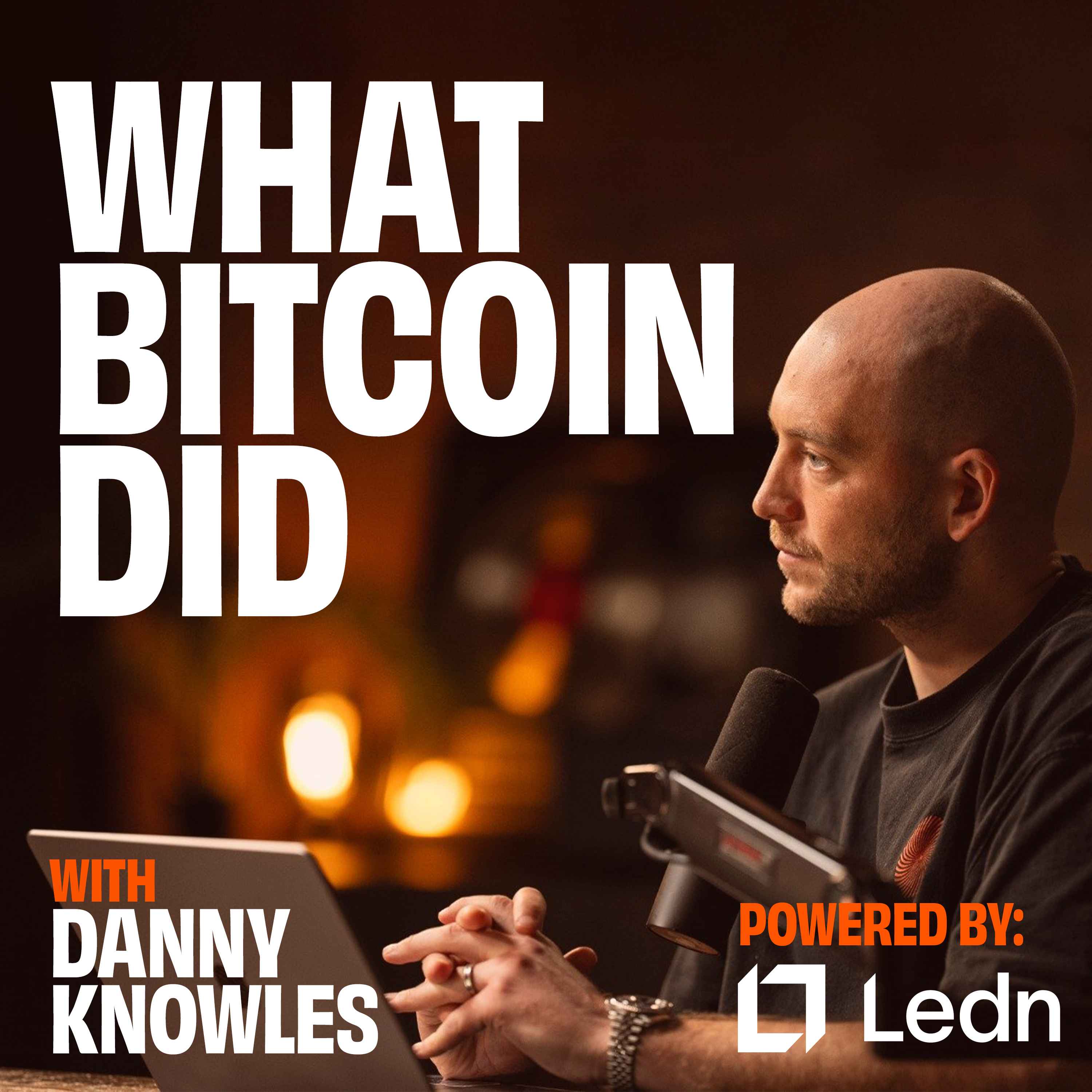
 What Bitcoin Did
17 Jun 2025 · 1h 12m · 22 chapters
Sam Wouters argues the U.S. is “winning the Bitcoin race” because Americans are more financially literate and product-ready, and because U.S. adoption is accelerating via mainstream financial channels and better custody options (e.g., proof of reserves, insured custody, inheritance features). He also challenges headline estimates of Bitcoin ownership (e.g., “50 million Americans own Bitcoin”) and explains why exchange proof-of-reserves is still not universal.
Sam Wouters is a European Bitcoin entrepreneur associated with River (a Bitcoin-focused platform). He discusses River’s multi-sig cold storage, monthly proof of reserves, and public financial disclosures. The hosts are also described as Europeans.
“Owning Bitcoin” is often confused with “owning crypto labeled as Bitcoin.” Ownership estimates vary widely; on-chain interaction suggests ~30–35M (possibly ~40M) globally, while survey-based estimates range ~80–130M. Most people hold on exchanges, so exchange risk matters even for self-custody users. Proof of reserves is hard to fake without risking privacy and operational integrity.
JD Vance citing “50 million” U.S. owners; Michael Saylor criticizing proof of reserves; River moving a cold-storage wallet (over $2B) for upgrades; Kraken shifting proof-of-reserves frequency; ETFs and Bitwise using proof-of-reserves; Anchor Watch and River interest-on-cash as alternatives to direct self-custody.
Written by AI. May contain mistakes.
Exploration of the complexities around Bitcoin ownership and statistics.
“So it was just a good time with the team.”
Discussion on public perception of Bitcoin versus other cryptocurrencies.
“So this is people who own it, either have it on an exchange or self-custody Bitcoin.”
Debate on the importance of self-custody versus using exchanges for Bitcoin.
“They love the appreciation, but they're hesitant about the actual value of Bitcoin.”
Strategies for companies to reassure Bitcoin holders about security.
“Yeah, it's a super interesting question because it's also it's very sensitive in the sense that like, should you convince them?”
Discussing the implications of proof of reserves and Michael Saylor's comments.
“But what you've done is just like take careful steps all along the way to make sure you don't end up in an FTX type situation.”
Exploring why many exchanges do not adopt proof of reserves despite its importance.
“But a lot of the bigger exchanges aren't doing this.”
Analyzing why America holds a significant advantage in Bitcoin adoption.
“Yeah, they go HRF, OpenSats and Brink maybe, which is very cool.”
Discussing potential centralization risks in Bitcoin ownership and market dynamics.
“So in terms of if they have 40%, is there any concerns there in terms of centralization risks from your perspective?”
Explore the differences in Bitcoin product availability and regulatory environments between the US and Europe.
“And there's almost like a chicken and egg problem with that.”
Discuss the current state of Bitcoin adoption and the challenges faced by new entrants in the market.
“Even I had Matt Corralo in here yesterday.”
Understand the psychological barriers that prevent new investors from engaging with Bitcoin.
“if we're a Bitcoin-only company, we have to make it work with Bitcoin.”
Discusses the difficulties Bitcoiners face in explaining Bitcoin to newcomers.
“I'm great you bring this up Because for me, this is one of the biggest factors as well in why are we not seeing more adoption?”
Explores why fewer new, interesting voices are entering the Bitcoin space recently.
“You convinced me to go back to those frustrating conversations.”
Analyzes the implications of retail investors focusing on leverage and altcoins instead of Bitcoin.
“It's kind of like what you see on Twitter as well.”
Advocates for a cautious approach amidst the evolving dynamics of the Bitcoin and investment landscape.
“but will the 23 others or like the 330 others at that point or whatever the number ends up being.”
Exploring the potential for a boom and bust cycle in public equity akin to the dot-com era.
“But there's going to be like a long tail of people on this trend who are going to hoover up a bunch of coins and then spit them straight out again when this goes wrong.”
Discussion on the implications of countries holding Bitcoin reserves and the political motivations behind it.
“It's like Sam the Bitcoiner thinks like, these are politicians shouting things that get votes, that get them votes.”
Examining the evolving demographics of Bitcoin users and the challenges of broadening its appeal.
“That is going to be an issue that we have to change.”
How leading by example can shape Bitcoin adoption and the importance of understanding diverse user perspectives.
“A lot of them aren't even going to own Bitcoin directly, unfortunately, but that is a reality.”
Discussing the potential risks involved in cryptocurrency lending and the responsibility of exchanges.
“And what actually happened was my mom came to me.”
Learn about the nuanced approach companies must take when presenting new products in the crypto space.
“And a great product, I think, for, again, as an option.”
Hear the closing thoughts and an invitation to check out an upcoming conference.
“It must have been a few years since you've been on the show.”

Get the gist, explore an idea or ask about something said.
 Claude
On What Bitcoin Did, what are the key points of this episode?
Searching your listeningAutomatic transcript. May contain errors.
0:02You have two choices. Either you accept that Bitcoin adoption is going to take decades by very gradually getting more people through the door that will have the patience to learn about these things, to go through all of the literature, or you actively go out and do things. You discovered an asset that returns 60 % plus per year on average for the past 10 years, and that's not enough for you. That is a very big part of the problem. All these people that you know that you're getting into Bitcoin and that holds some Bitcoin and exchanges, they could get rugged and hurt. Vegas is getting the better of me, Sam.
0:40It was a very late night last night. Yeah, I can imagine. What did you end up doing? We just went for dinner with the team because it's nice to hang out in person, especially for me as well, working remotely. Yeah, totally. So it was just a good time with the team. That's all. Didn't make it too late. I had an important podcast episode to record this morning. I clearly didn't show you the same respect you showed me. We went to the PubKey variety show. Nice. It was a lot of fun. I love that stuff, like creeping into Bitcoin culture. It's just like a bit silly, fun, like it's not all super serious.
1:11Yeah. It was a lot of fun. But we are here as two Europeans to talk about America being the Bitcoin superpower. Yeah, it's pretty funny. So I read the report. I was actually just before we started recording, I was listening to JD Vance. And I'm curious if he read the report because there was a couple of things he said, both in calling it the America, the Bitcoin superpower. I don't know if Trump said that last year. He may have done. But also he quoted a couple of numbers that stood out from your report. He said that 50 million people in the US own Bitcoin. And I don't think that's true. Yeah, I think it's an interesting thing to challenge because I partially get where that's coming from.
1:53so this number actually and we mentioned this in the report as well it comes from the Nakamoto project from Troy Cross and they did a survey of statistically significant very wide representation my general concern with this comes from just talking to regular people and getting a sense for when you say Bitcoin do they actually think about Bitcoin or are they thinking about crypto being Bitcoin I think the vast majority of people probably are thinking about crypto And I think it's a lot of that because sometimes you say to people like, have you ever had Bitcoin or something or done something with Bitcoin?
2:26They're like, yeah, I've done stuff. And then when you keep asking, it's like it kind of comes out that there's like there's other tokens or currencies or things they've kind of dabbled in at some point and probably still have sitting in some old wallet on Coinbase or whatever. Yeah. And never actually touched anymore. But in their head, it's like I've got that Bitcoin thing, even though it's not Bitcoin. Totally. And I was in a cab two days ago and the cab driver, like we were talking about Bitcoin. He was asking if we were there for the conference. And he was like, which one is Bitcoin again?
2:53Exactly. It's Bitcoin. It's the one. So I think there's loads of confusion around that. But then also, I would genuinely be surprised if 50 million people in the world own Bitcoin. I think the number is probably far lower. But I guess it also depends on how you define what owning Bitcoin is. So when you did the report, would someone who owned MicroStrategy technically own Bitcoin? No. Okay. No. So this is people who own it, either have it on an exchange or self-custody Bitcoin. Pretty much, yeah. Well, like in a lot of cases, even self-custody will be like there's custodial wallets, but at least like it's not on, or at least like it's just not on an exchange, but it's in a custodial wallet.
3:32I think the 50 million number, I'm sort of like at a global scale, the one you were questioning there as well. I would definitely say we're well over that. How do you think? Yeah, for sure. I mean, we did some analysis two years ago or so, or like I think it's like one and a half years ago. And back then the estimated range I came up with was between 80 and 130 million people globally. And it's a pretty wide range. But the reason why those numbers is, and now it's been refined to roughly 50 million by estimation in the US, which is really hard to verify because you can't really correct for that.
4:06People that think they know what Bitcoin is, but they don't actually know. That's just impossible to take out. So you have to take the surveys that are out there at face value. and there have been a couple more other than Troy's research there as well that come up with similar numbers. So there's some kind of bias in there for sure. But on the 80 to 130, what you can already tell is on-chain, there have historically been, just through analysis that's been done, there have been roughly 30 to 35 million-ish. By the last time I checked, it might be 40 at this point, but different entities that have interacted with the blockchain.
4:41And there will be some overlap there. but generally that's like a decent number to start with. That's just on-chain activity. And if you know based on a bunch of other statistics like River is a Bitcoin exchange or many other Bitcoin exchanges that sometimes publish some numbers, the vast majority of people actually hold their Bitcoin on an exchange. They hold the minority of the Bitcoin owned by individuals but they do hold on an exchange. So using those, you can do a variety of extrapolations. You can kind of look at the user accounts that some of the larger exchanges have like active user accounts and you know like okay roughly 60 70 percent of those have ever done anything with bitcoin even if it's just like buying ten dollars worth and if you run all those numbers and you kind of crunch it and go through it then you do tend to arrive at such a range of like 80 to 130 but what does ownership mean then it's like okay yeah if you have ten dollars worth of bitcoin do you like is that like owning or investing in bitcoin or are you just like kind of playing around and seeing what it is and then forgetting about it yeah and it's hard to like there's no way you can draw a line on that.
5:42With River, like what percentage of people who use River self-custody Bitcoin? So like it fluctuates a bit over time. I don't like, I don't actively watch that. But from my, like from my last check, it's like, it's got like the vast majority, like either hold some on River or they split. So they'll hold some in self-custody, but they also kind of feel like, well, like what if anything happens to me? We have this, like we have an inheritance feature where if anything, where I think you talked to Alex about it at some point uh where if anything were to happen to you then like we can like make sure that it gets to your loved ones that you've assigned it to and for a lot of people that's actually a pretty big appeal uh because their self-custody wall doesn't have anything like that they have to come up with their treasure map as you sometimes say on the show um and a lot of people get pretty nervous about that so i'd say like my guess would be the bulk actually splits but there's also a decent amount that just like trusts us and there's then also it raises the question like okay do you then actually own bitcoin because you don't have your own keys and uh i find i always find it as an interesting discussion point because a lot of people say like if you don't have your own keys you don't have your bitcoin which i like i generally agree with at the same time it's like well people say like i own property and it's like yeah but if the state decides that you no longer own property then in some countries in the world like stuff can also happen yeah so it's kind of like it's not so black and white of you have it or you don't uh it's much more about like understanding like what are the risks that you're taking um and we can like as river we fully subscribe to like we encourage people to self-custody we're like you know like three monthly withdrawals auto withdrawals all of that stuff but we just find that there's a lot of people that actually don't want to do that they're not ready for the i have to take full ownership of my bitcoin here there's nobody i can fall back on and if i mess up it's still just scary to a lot of people yeah uh and the technology around it is getting better and everything but i think like the vast majority of people out there and i think like maybe vegas is not the greatest representation out there but but if you like if you just because it's a city full of degenerates yeah more or less but if you like it's kind of like if you if you go to any city in the world or any place and you just talk to people around you the vast majority of them are just nowhere near the mind space of like i i would like to have full ownership of my money yeah they're like i want an asset that's gonna do well and i mean we're seeing this a lot today where people like They buy shares in companies instead of buying Bitcoin.
8:04They buy ETFs instead of Bitcoin. They love the appreciation, but they're hesitant about the actual value of Bitcoin. So they want a bird in a cage that's going to do awesome tricks in that cage, but not like I want the free bird that I can do anything with and that's kind of like fully mine. Yeah. I mean, totally. Not everyone is going to be using cold card and multisig. That can be a North Star for everyone. People should do that. But in reality, it's just not going to happen. And that's been one of the cool things, not to just keep shilling sponsors. I've got River on the show and I'm about to talk about Anchor Watch.
8:36But that's one of the cool things about this maturation of products that are coming to the market. Things like Anchor Watch are going to give people another option where they do take much more control over their Bitcoin and they have it in an insured way with inheritance. These things are amazing that it's happening. I think it's so fantastic. Just the optionality of it is great. And this is what we need, I think. And for us, not to shale our stuff too much either, but I'm thinking like a lot of people don't understand Bitcoin interest on cash, a product that we have because they're like, why wouldn't you just buy Bitcoin?
9:04And it's like, it's not for you if that's how you think. It's fine to think that. It's totally fine, but it's like there are people out there who just feel hesitant about how high the price is because when you zoom out and you look at how much the prices run up, you're like, am I buying at the top? If you don't understand, you don't talk to Bitcoiners around you. You're like, am I just buying their bag? Like, did I get convinced into buying that stuff? And if it's like, well, you don't have to take any risk. You can literally just earn it with cash. Then all of a sudden for a lot of people that we talk to, it's just like, oh, that's actually really chill.
9:33My mom would do that. Currently she's got her cash sitting in a bank account, just losing value over time. And if it's still like an FDIC insured bank account essentially and then earning Bitcoin, it's like, oh, that's okay. So it's another option for people that are just hesitant about self-custody for a person like that. It's like on a whole other level. They're not even there. They're still at the point where I don't know if I want to buy Bitcoin or not. I don't know how much I want to buy. I don't know if it's smart to buy now or if I should wait half a year. And what Bitcoiners tend to do is surround themselves with other Bitcoiners.
10:06I mean, we're here with 35 ,000 other Bitcoiners right now. A whole variety of reasons, pretty much. But sometimes you get into groupthink and you don't realize how the average person on the street is just thinking about this stuff. They're just in a very different range. And that's where Alex has recently, I don't know, a few months ago, was saying some pretty controversial stuff for a Bitcoiner to say. and saying that maybe everyone shouldn't serve custody. And the hard thing is when Bitcoin's history is full of rug pulls and hacks, River are obviously a very credible business, but getting people convinced that that's a safe place to sell their Bitcoin.
10:40I was actually talking about this on the show a couple of days ago. My concern with something like River or Strike or these companies that I see as good Bitcoin companies that I have a lot of faith in, it's less than 1 % that you are going to do anything bad. The risk is hack. Yeah. And so how do you like try and convince people that it's a safe place to keep Bitcoin if they're not ready for self custody? Yeah, it's a super interesting question because it's also it's very sensitive in the sense that like, should you convince them? Yeah. Yeah. That might be the wrong word. Yeah. Yeah. Which is fair.
11:13I think like we don't try to market it as like encouraging people to actively come and store their Bitcoin. It's more something we've realized that there is a lot of demand for and we're trying to do everything we can to do that. Right. and just like the proof of reserve side of things is a really big item there that gives people a lot of reassurance. And it's been pretty surprising to see that that hasn't been more widely adopted in recent years. I have a lot of thoughts around that as well, but it's trying to open up more because the interesting thing you see as well is even when you do proof of reserves, people go like, yeah, but it doesn't cover all the liabilities, so it's pointless.
11:51It's just like a charade to try to dupe people into thinking they're safe. It's like, don't let good be the enemy of... Exactly. And when you actually, like, we did a lot of thinking about this. When you actually think about how hard it is to gain proof of reserves on-chain, when people, like, know, like, here's the address. This is all the Bitcoin sitting in it. It's like, if you were to take, like, loans to try to cover stuff up, like, even, like, the on-chain activity would get sketchy, or you're literally trusting the entire reputation and survivability of your company to some third party that might leak the information at any point and just tank your entire business.
12:25It's like when you start thinking it through, it's not that it's impossible, but it's a lot harder than a lot of people think to fake that stuff. But even despite that, we're like, okay, what more can we do to kind of open up and make people feel reassured? So a couple months ago, we made our financials public as a private company. Normally seen, you don't really do that as a private company, but we figured like, well, if some people are hesitant and about the liability side of things, like here it is, right? Like this is our information, like everything you need to see right here. And that also helps people to sort of feel reassured.
12:59Like, okay, you're running a financially healthy business that's conservative about your runway and things and the risk that you take on. So that gives people a lot of reassurance as well. This episode is brought to you by Anchor Watch. Now, one of the things that keeps us Bitcoiners up at night is an idea of a critical error in your Bitcoin cold storage. And this is where Anchor Watch comes in. With Anchor Watch you're protected by two things. You have their time-locked multi-sig vault and you have your own A-plus rated Lloyds of London backed insurance policy. So you get to hold your keys and Anchor Watch holds the risk.
13:31So whether you're worried about inheritance planning, wrench attacks, natural disasters or just your own silly mistakes, you're fully protected by Anchor Watch. Rates for fully insured custody start as low as 0.55 % and are available for individuals and commercial customers located in the US. Speak to Anchor Watch for a quote and for more details about your security options and coverage over at anchorwatch.com. That's anchorwatch.com. This episode is brought to you by Blockware. Would you rather have one Bitcoin today or two in a few years from now? Silly question. Well, Bitcoin mining is a tried and true method to accumulate more Bitcoin and over a few years it can even outperform a normal DCA.
14:07Blockware's mining as a service enables you to start mining Bitcoin without lifting a finger. Blockware handles everything from securing the miners to sourcing low-cost power and configuring the pool, they do it all. With multiple data centers across the US, Blockware is the most reliable mining partner in the industry, and mining is one of the most efficient ways to acquire Bitcoin. So click the link in the description to get started today, and if you tell them what Bitcoin did send you, you'll get one week of free hosting and free electricity for every hosted miner purchased. So click the link in the description or head over to blockwaresolutions.com.
14:38This episode is brought to you by River, the best place for Bitcoiners and businesses to buy Bitcoin. With River, you can set up zero-fee recurring buys, making stacking stats effortless. And while you're waiting for the perfect buying opportunity, River lets you earn daily interest on your cash balance paid in Bitcoin, which outperforms most high-yield savings accounts. But what really sets River apart is their dedication to security. You have peace of mind knowing that River has monthly proof of reserves and holds all Bitcoin in multi-sig cold storage. And with US-based phone support, you'll always have someone on hand ready to help.
15:09To find out more about River and to open an account, head over to river.com forward slash WBD and earn to$100 in Bitcoin when you buy. That's river.com forward slash WBD. I think conservative is a perfect word for River because like you guys haven't been the fastest iterator throughout like the last, I don't know how long it's been running, seven, eight years or whatever. Six years. Six years. But what you've done is just like take careful steps all along the way to make sure you don't end up in an FTX type situation. Which is very cool. But so when on the proof of reserves, a couple of weeks ago, you moved the, like you moved the wallet.
15:46Yeah. Was it like 20 ,000 Bitcoin, something like that? So over$2 billion. Why did you move it? So we did like, we like sort of like routinely do upgrades to the cold storage infrastructure when it's like, you know, it can be things like, oh, it's like a key rotation or something, or there's like new technology that we kind of feel like, okay, it makes sense for us to be doing something with. That's more like historically. Recently, I don't think there have been significant breakthroughs other than we're now starting to see a lot of stuff with Miniscript and whatnot. For example, if we were to ever do something with that, that would also warrant like, okay, we're going to migrate again because you need to have more multi-sig levels to fall back on then.
16:28So that's just like a random example. And then, I'm sure you've seen this. I'm sure, River, you've been talking about this. Michael Saylor's comments the other day. Right, yeah. So he came out and said that it was a security risk to do proof of reserves. What's your take on that?
16:44It was a bit unfortunate how all of that played out a little bit. Like, you know, like a lot of drama comes out with the whole video and everything. Personally, I got the impression that, like, based on the way he was saying it, I was like, it sounded a bit like, oh, you're going to publish, like, a full list of all of the people holding Bitcoin and whatnot. And it's like, like, you can, you can obfuscate that stuff. Do you think he misunderstood what proof of reserves actually is? That's kind of what I'm, not that he misunderstood what it is, but like how you can implement it. That you can implement it in such a way where nobody's like as an individual client's privacy is put at risk in any way.
17:18While still making it verifiable. Because in River's case as well, people go like, oh, how do I know? Like if I hold one Bitcoin on River, like how do I know that you're not just like telling me the same one Bitcoin that you're also showing to 10 other people? We just use a unique identifier that you can check against and all the rows in the file have a different unique identifier. So there's ways to work around that without giving away the client's information. So that was the part where I wasn't really sure. Does he fully understand how it can be done? I think part of me also wonders, to what extent is he able to do it, working with the custodians that he's working with?
17:57and a part of me wonders are they just comfortable with the audits and things that are doing, the financial audits? Is that just in his eyes enough? Can't speak for him, but there's things that come to mind for me. From our perspective, we don't have issues with doing proof of reserves. We do it every month, we've been doing it since September last year and we'll continue to do it. I look forward to posting about the September 2050 proof of reserves. We're going to do this stuff. it's going to be more than 2 billion it's a feature who knows well with inflation regardless yeah but uh like it's just a feature of the blockchain and if people like if they know how much bitcoin you already own like you've already like ruined your opsec in a way as a big company or exchange etc then like what does it matter and i think for for a lot of exchanges those haven't really been the reasons actually why they haven't done it it's not so why do you think they haven't because that's something that surprised me um because obviously you guys were amongst the first doing it.
18:49I think Kraken did proof of reserve. Yeah. But a lot of the bigger exchanges aren't doing this. Why do you think that is? Yeah, there's a variety of reasons. I think from my perspective, the biggest reason is just like lack of clear vocal demand from clients. A lot of people have historically been super trusting of exchanges and continue to be like that. Out of that 50 million people in America, you can imagine like the vast majority is on something like Coinbase and just like has a little bit of Bitcoin and genuinely doesn't care or doesn't even know that this is possible. Doesn't know is probably a thing, yeah.
19:21It's a big thing. And it's kind of like, there's a split. So you have like the people who in theory should care most about this, kind of like the hardcore Bitcoiners, they actually often self-custody. Yeah, so it doesn't really matter. And well, they think it doesn't matter, but actually it matters a ton. And that's kind of where the issue comes in because they're like, you know, like I've got my Bitcoin in cold storage. Like, what do I care if these exchanges are running a fractional reserve or something? It's like, well, you should care because like, how are you onboarding your mom or your friends into Bitcoin that don't want to self-custody yet.
19:50Or maybe you've explained them how to do it, but they're still hesitant to do it. They're like, I'll do it next week and they don't end up doing it. All of these people that you know that you're getting into Bitcoin and that hold some Bitcoin on exchanges, they could get rugged and hurt. And if big exchanges blow up again, we could still get over-regulation and stuff. So it's actually going to end up harming a lot of people even if your personal stash doesn't get affected. So actually the hardcore Bitcoiners or those who self-custody, they should care a lot. But they're just like, kind of like why would I bother to go fight with some exchange that I'm like not really interacting with a whole lot and my stash feels pretty safe.
20:28But we should be advocating for it much more loudly than we are. And that's what I think a lot of people miss. Yeah, I think I would probably be in that camp though where I've thought it doesn't really matter to me because I'm buying Bitcoin and taking it off the exchange straight away. But yeah, that's interesting. So do you think also we need to see these, this like whole public company raising loads of issuing loads of debt and buying bitcoin do you think they need to start doing proof of reserves um i mean that's a bit harder i guess because they're costing at coinbase or whatever yeah it is harder and thus they're dependent on it like in a case like coinbase it's just like part of the reason is obviously like technical complexity of why they don't do it and people kind of start asking questions like okay how like i want it for this token i want it for that token like do it for everything it's kind of what you see with kraken they used to do monthly proof of reserves and then they switched to yearly because they realized if you have to do this for all these tokens, it gets really complicated and intense.
21:19And they felt like if you do it once a year, that's probably sufficient. So partially it's like technical complexity and all of their clients and things that they have, like they need to sort out their full infrastructure on the backend to have everything properly segregated to be able to service clients like that in such a way. But it's like, it's all possible. Technology exists. We open sourced our solution as well so that our exchanges can adopt it. So it's possible, but very often it's like stack ranked and everything else that they could possibly be doing. They're like, yeah, you know, all this other stuff makes us money.
21:52And proof of reserves from their perspective, like it's not as needed because people like they're just seeing like people are storing billions of dollars worth of tokens on our exchange and cash probably. And it's like, why would they put it so high up in the list when the vast majority of people don't ask and don't know about it? Well, that's again like down to the incentives of running a Bitcoin-only exchange like River. Like their priority is getting the latest meme coin on their platform. Pretty much, yeah. Yeah, which is like fucking silly. Yeah. Yeah, no, on those like public company side of things, it's like their investors will probably increasingly start asking these questions because they're all like they're all racing with each other, trying to accumulate as much Bitcoin as possible.
22:33and at some point i think especially if the returns aren't there for a while people start getting nervous about things like also from the perspective of those companies they want to keep impressing their investors and kind of showing like we're doing the next thing or we're like giving you more like what is the metric that they're using like uh bitcoin yields like whatever yeah per share i think it's something like that it's like they want to keep making that number look better so then people are going to start getting nervous increasingly about like what are you doing with that bitcoin and like what am i still investing in so i think they automatically kind of get pushed in that direction and then what you see is with the etfs for example it's like i think it's bitwise does proof of reserves they're like they just realize like okay there's going to be a differentiator versus the rest totally they did a lot of things that were smart there because like when they came in they knew they weren't going to be able to compete with blackrock and sure scale so they implemented so like they do that and then they share profits with um developers developers.
23:27Yeah, they go HRF, OpenSats and Brink maybe, which is very cool. But again, this is all just Bitcoin maturing. And just to bring it back to the report, Bitcoin is maturing in America far quicker than anywhere else. And as two salty Europeans, we can talk about this. In terms of scale of Bitcoin held in America, where are we at? What percentage is held in America versus the rest of the world? So by estimation, this is obviously really hard to tell because the blockchain doesn't tell you who's the owner and where they're located uh generally but by estimation it's like roughly 40 percent of all the bitcoin in the world is likely owned by people in america and companies um i would say like i'm not necessarily a salty european in the sense that like i mean i wish europe would be way better about this stuff it's a disaster but at the same time i'm like kind of like the the the angle of the report was like in america there's a clear advantage here let's just and bitcoin is ultimately for everyone but let's use that and capitalize on that and create momentum there that kind of like pushes other countries to follow in its footsteps and start doing more things that are pro bitcoin in a variety of ways because it's kind of like some people will push back and be like yeah but you know bitcoin needs to remain decentralized and there's all these other countries and people in the world that would greatly benefit from it but if we're kind of like we're not going to push it in america too much because we need everyone else to catch up like that doesn't work it's just like let's push ahead and that'll motivate a lot of people to start doing more totally and it's not like um america are just capitalizing on something that's there like and there's other countries that have done this like el salvador obviously had like first mover advantage bhutan have done amazing with their bitcoin mining like the gulf states are starting to like pay attention to this so it's really just like the lack of i don't know forward thinking people in like the european nations in australia like they're just I don't know why it is, but hopefully, like you say, this all happening in America will push this.
25:22So in terms of if they have 40%, is there any concerns there in terms of centralization risks from your perspective? I think the risks are not necessarily geographically. They're much more like where's the Bitcoin concentrated and what's the quality of those parties where it is concentrated. today fortunately we also published some other statistics around it's like roughly like 68 % of all the Bitcoin in the world is by estimation again is owned by individuals and part of that could still be like a chunk of that is actually businesses but they just haven't disclosed it. There's a good portion of that too obviously but for the most part it's kind of in that range but then the number of individuals within that that own a large chunk of that You can all see that when you look at the UTXO set, it's like how much Bitcoin is held on addresses that are kind of like unidentified, not an exchange, not a business.
26:17And that does tell you like there's a certain concentration just like there is with a dollar or any currency in like the hands of a smaller group than the total big group. And I guess like it's much more about like who are those holders of vast amounts of Bitcoin and what are their intentions and what are their goals and kinds of things. Like I think much more in that kind of sphere or on what exchanges is a whole bunch of the Bitcoin stored and how secure are those, than it is geographically any kind of concern. And why is it that you think America is winning so hard at this right now? Because just earlier you were saying if you walk down the street and you ask people if they care about essentially being self-sovereign, I agree that it's not many, but I also think in America that's probably a higher percentage than anywhere else in the world that I've been to at least.
27:03Yeah, and we think about this a lot. I think a really big factor is how financialized the U.S. is. It's actually one of the things, like when I visit, it's one of the things that kind of reminds me, like I don't necessarily want to live in a society, like I don't live in the U.S., live in a society where everything is so financialized, it gets a bit exhausting at times, I think. But that is also its strength. People are, in general, more financially literate than they are in Europe, for example, or in other parts of the world. and that just makes more people investment savvy, makes more people want to build things up.
27:38And that is the spirit of the country as well. It's the innovation, the progressiveness to building a better society. That's just always been rooted in the way the US has been built up. And I think that's a really big driving force behind so many people getting into Bitcoin. And there's, of course, the general drive to create things is so super strong here. Yeah, 100%. And there's almost like a chicken and egg problem with that. Whereas like there's so many products in America that if I lived here, like Bitcoin products, I would definitely use. And I just don't have access to them in like Australia or in the UK.
28:14And like I don't know what it takes to unlock those sort of products elsewhere. And maybe that's down to policy. I'm not really sure. And that's a fantastic question, I think, really. Because Europeans also in general look at this stuff and go like, how can we get the question to like, when are you guys moving to Europe? Like how do we get that stuff here? and very often the answer is like it's partially it's regulatory it's partially businesses need to make investments to operate in those countries it comes with a lot of upfront costs and very often there's like there's like a local bitcoin brokerage in one way or another already and it's like are you going to compete with those without competing with them and only offering other products like it's a little bit tricky so you need to get like start fighting them basically for market share and a lot of the products because of the way it works in the u.s like people go like oh, why don't we have Bitcoin interest on cash in the UK?
29:05It's like, yeah, because the UK, kind of like the capital markets are very different. The treasury and all, the way people invest in treasuries in the US versus in the UK is totally different. So you'd get the same product, but you wouldn't get anywhere near the rates that get you as excited. And you would get an experience where, because of UK law, for example, you have to fill out a survey to be an accredited investor. there's just so many things that get involved there that for a lot of companies it's just like there's still so much market share to get in the US and that's how River thinks let's just focus here, do things really well here and maybe that starts showing a lot of the world that actually we're going to have to change our rules and laws locally the issue then comes back to especially in Europe the average person is so far removed from the politicians like the European Parliament, European Union that are making decisions that influence them and it's just like, people don't even know where to start.
30:03They don't think about it. They don't talk about it too much like some people obviously do. But they just don't get like, how do we navigate this? How do we get this to the level where we start making meaningful change so that we can start getting these kinds of companies and products and solutions here? And the question is also like, who's going to fight that fight? Who wants to spend their career or their influence or capital to try to build something like that up in Europe? And that's not really something we're seeing at scale anywhere so far. 100%. And in the UK, there is a policy group there with Freddie New and Susie.
30:39And they're trying, but it's an uphill battle. And don't get me wrong. I know when BPI started, they also had a period where they really struggled. They had to grind for a long time. But they're seeing incredible results now. And I don't know if that pathway is as clear outside of the US. Totally. Even I had Matt Corralo in here yesterday. And he's like pushing this Save Our Wallets campaign, which is like making sure that we're able to continue to self-custody Bitcoin. And like he was saying people need to call their congressman. I was like, I don't even know if you can do that in England. Like, I don't know if that exists.
31:09And I could be wrong. But like that as a concept, just like getting on the phone to your local politician. You're absolutely not speaking to them. They're so connected here, which is amazing. And so like during the Biden admin, the US still continued to like dominate Bitcoin, really, even despite having that Biden administration. Now Trump's in and obviously all the changes that he's put in place. Do you think that's just going to get supercharged? So do you think this is actually going to grow? I think it's possible, but I'm not sure. I mean, like, you know, it's obviously it's most likely going to go up.
31:41and that's generally how I look at Bitcoin because mostly people who get into Bitcoin, they don't really leave. No one leaves. It's Hotel California. You keep stacking and that's just a general trend that you see. So it's going to grow. The question is mostly how fast is it going to accelerate? And that's kind of where everyone seems to be wondering today. Where's retail at? We're at all-time highs. The media isn't really talking about Bitcoin that much. The average person hasn't really picked up on it too much either or even if they have, they're like, I thought about that years ago. I feel like I missed the boat.
32:16I'm not going to bother with it too much. And that's a really big question for a lot of Bitcoiners at the moment. Me too, me included. So normally during bull runs, the amount of new listeners to the show increases like crazy. And you see it in things like Google Trends and obviously you see it in the price. That's where these euphoria things have always come in. And also just speaking to friends, the people that are the no-coiners amongst your friend group will always be asking questions. None of that's happened really. Like there's definitely been a small influx of new listeners to the podcast.
32:47It's hard to know whether that's because it's like the relaunch of what Bitcoin did or if it's just genuinely new listeners. But like, why is that? Like a river, are you not really seeing the same thing? So we are seeing great growth, but for different reasons. It's more like the way we operate a lot today is you see people who initially interface with a big exchange of some kind, and then they've tried a couple of exchanges and then they get frustrated about things and they start asking like, what's a better place? Because I'm getting frustrated here. And then we find that a lot of people end up at River.
33:18So for now, for us, there's like a lot of room for growth for people burning out. I feel like that's almost like solidifying this argument because that's like mature Bitcoiners learning the products and moving to something that's better, not new people coming in. But we do think about this a lot, like super actively. We just like met with the marketing team before the conference this week because we were very actively thinking about what more can we do to grow the pond? Because ultimately, River primarily serves individuals. We also have over 2 ,000 businesses at this point. That segment has actually been growing more rapidly, I would say.
33:52But individuals, if we just sit around and we're going to grow at the rate of the market, there should be more that we're able to do. But what's the issue there? Why aren't people getting in? And we think about this a lot because it's like, if we're a Bitcoin-only company, we have to make it work with Bitcoin. we can't like the other exchanges kind of jump on trends of like oh this token's uh going crazy right now let's get everyone trading that uh and make a whole bunch of revenue there or let's do like a variety of risky products that just allow us to make a whole bunch of money river doesn't do that so for us it's so super critical to deeply understand like what the hell is happening like why isn't retail around more and i thought about this a lot i think there's a couple of of big reasons that are happening i'd say like one is um people realizing that they kind of feel like oh i missed the boat at some point that's like the really obvious one bias yeah i didn't well that that's another one actually that's a secondary one that's really interesting but but just feeling like i missed the boat because i should have bought so many years ago and we all know these stories of like the friend you spoke to when it was like ten thousand dollars or something and they're like i'm gonna wait until it's 5 000 and i never went back down to five it's like that over and over and at some point they just get a bit disillusioned and go like whatever like this wasn't meant to be for me kind of thing or they just like moved on with their life and to your point like now nobody's talking about it uh for individuals either i think a second part is also that within bitcoin bitcoin is believe very strongly that bitcoin is like money for the people if you look from the outside perspective you go talk to any like any random person in the world that has heard of bitcoin at some point, they probably won't tell you that they feel like it's money for the people in the way that a Bitcoiner would describe it.
35:34They look at it very differently. They look at it as like, you know, this was like some crypto thing that made a whole bunch of crypto bros very rich. And many of them won't even realize that like, oh, BlackRock's buying it. And all of these treasury companies are hoarding as much as possible. Does that also work the other way where they're seeing like BlackRock and Michael Saylor and all these people and being like, oh, this is a Wall Street asset now, not money, like not something that I have an opportunity. maybe for some of them i think the vast majority like isn't there like they don't realize that black cork instead of our buying and even if they hear about it for them it's like okay but i still feel like it's gone up too much um and they're just like hesitant about it in one way or another um it's also the i i think like for a lot of these people it's just so tricky to get to the point where they make that decision of i maybe i was wrong in the past they don't really want to admit that and you see this you see this in all these like comical examples like the financial times journalist recently that went super viral it's like there's a very large group of people that also just refuse to accept the possibility that bitcoin might be money that is here to stay that it might be better money than what they're used to and then what kind of like what the government's been telling them and what banks and institutions have been telling them that all of that is wrong because it's a very uncomfortable feeling for them that their worldview might actually not be the best view.
36:55Or that they've been doing too much what they're told. And there's probably no one more entrenched in that view than a journalist at the Financial Times. It changes everything. It's like a meme where it comes out, but underneath that, there is just such a vast array of people that look at this thing and they don't see it the way Bitcoiners do. But because Bitcoiners, we really stick together more and more over the years and you just hang out with more and more Bitcoiners, less of the others because you get frustrated if they don't get convinced to potentially do something with it. you isolate yourself from that in a lot of cases not everyone does that plenty of people have like no coiner friends etc or just like friends that just you know for a variety of reasons don't have any um but but that's how a lot of people think ultimately that's a really big blocker for adoption they don't look at this as we could build a really beautiful world if we use if we all use this asset if we all use this currency if we started using it for payments they think of it as like, you know, like maybe this will go up more, but it's too risky for me.
37:55Like what if it plummets halfway back down? What if it's kind of ran its course and like how much more upside is there possibly? It's funny though, because I agree with you that all these are like valid arguments that people have. Well, not valid arguments, but they're arguments that people coming into this will have. But I had them when I got into Bitcoin. These are all things I thought. And at some point you've just got to bite the bullet and do it. I fully agree, but I would like, not that we're special, but we are different people. There was some interesting analysis done at some point across personality types, and people have their opinions about personality types, whether that's mega accurate or not.
38:29But there was a very clear bias towards certain personality types to be far more statistically likely to get into Bitcoin. And what were those personality types? I think it was like the Myers-Briggs types, which, again, a lot of people challenge, but more introverted, more... I think it's like IN, it's like the more technically inclined people. I think if you look up the visual, there's like an overview of like breakdown by the 16 personality types and it was very heavily concentrated. And was one of them being like leaning towards being confrontational as well? Could be, I think so. Like it's more like the kind of like the...
39:10Or disagreeable. Yeah, disagreeableness plays into this kind of stuff as well. Like just general skepticism towards the government. And my kind of theory here is that a lot of the people that were going to get Bitcoin, they're already in. Or through whatever direction they converged on Bitcoin, and there are so many, a lot of these people have made it in there. And then everyone else who's not in there, it takes more to convince them. They're not going to go through that journey themselves because they don't have the same intrinsic motivators. They don't have the same interests, the same backgrounds.
39:41They get very easily distracted by everything else that's happening in the world. that's like oh look there's like a scandal over here or a thing over there that's so much cooler and they're much more focused on like how do i look well like how do other people look at me do i have fancy clothes do i like drive a nice car they're like they're thinking from that perspective and they don't have like the long-term planning mindset of like what do i want to build out of my life they're just living much more day-to-day yeah and much more like kind of like image related visual related that's also why like platforms like instagram and tiktok are so large because it's all like it's visual, visual, visual.
40:15And Bitcoin is so technical, so abstract. It's actually a tip I could give people. One thing that I do, because so many people are visual learners, is I have a folder on my phone with a variety of like graphs and visuals that I think are very nice to explain Bitcoin to people in accessible ways. Because when you have a conversation with someone, you're just sitting around there like waving your hands and explaining the blockchain and stuff. They're like, this is all so abstract and I can't touch it. And it's not like cash in my wallet. And even though for a lot of people, like all their money is already digital.
40:45Yeah. But for a lot of people, that's a big hurdle. And the moment you make it super tangible and you just like show someone like, oh, you're still thinking about crypto, et cetera. Here's a graph of the market caps of Bitcoin versus all of cryptocurrencies and how they're diverging. And then they're suddenly like, oh, holy shit. It's like, it's really changed. Maybe there is no alt season and I should actually be paying attention to Bitcoin. This episode is also brought to you by Iron. the largest Nasdaq listed Bitcoin miner using 100 % renewable energy. IRON are not just powering the Bitcoin network, they also provide cutting edge computing resources for AI, all backed by renewable energy.
41:21We've been working with the founders Dan and Will for a long time now and have been really impressed with their values, especially when it comes to their commitment to local communities and sustainable computing power. So whether you're interested in mining Bitcoin or harnessing AI compute power, IRON is setting the standard. Visit IRON.com to learn more, which is IRON.com. This episode is brought to you by CoinKite. CoinKite make the best, the most secure Bitcoin hardware wallets that you can possibly buy. So they have this one right here, which is the Coldcard Mark IV. They're Bitcoin only. They have two secure elements, verifiable source code, completely air-gapped by design.
41:57They really are the best hardware wallet that you can buy. And they've also just come out with the Coldcard Q, which is this one here. It has all the same security features as the Mark IV, but it has a few new features. So it has a full QWERTY keyboard. If you're listening, this thing looks like an old school BlackBerry. A much bigger screen, which makes it way easier to use. It has an NFC reader, a QR code scanner, and even has a secure password manager built in, which I really love. Yeah, if you don't have a cold card, you're doing it wrong. Not only that, people keep asking me about this behind me.
42:29This is the block clock. Right now it's telling me it's$105 ,000 Bitcoin. that's also made by CoinKite so head over to CoinKite.com if you use code WBD you get 5 % off store wide so go to CoinKite.com and use code WBD. It's funny because apart from doing this podcast I very rarely talk to people who don't like Bitcoin outside of this because I just can't be bothered when people come and start saying yeah but what about Shiba Inu or whatever I'm just like okay cool I'm great you bring this up Because for me, this is one of the biggest factors as well in why are we not seeing more adoption? It's because a lot of my kind of point of the people who are going to get it, they're already in.
43:11It's like everyone else is going to take more convincing. And what we very often do as Bitcoiners is outsource that education to a book, a video, a podcast with some very articulate, charismatic speaker that knows a lot about interesting analogies to get you into Bitcoin. But the average Bitcoiner, I don't think is necessarily great at explaining Bitcoin to other people in very accessible ways. And for very valid reasons, it is incredibly hard. Like everyone looking back at like Andreas Antonopoulos back in the day, so articulate, so good at breaking these things down. I think more recently, like Joe, what's the problem?
43:49That's where I send people now. If anyone asks me, instead of me trying to like explain to them, I just go, just watch this video. And that's how it goes. And it's totally fine to do that, I think. but what a lot of people do is like again they outsource that education part but there's a ton of people that would much rather learn from you danny in person if they're like a friend of mine they trust me like yeah or like if if you're able to approach it from the right angle but what a lot of bitcoiners will like frustratingly do is like kind of like push it on to them like look for that first opportunity to talk about bitcoin yeah to kind of be like oh you're you're frustrated about this thing in your life like bitcoin fixes that kind of like knee-jerk reaction and uh most people will never be trained in how do you approach it?
44:27How do you break that down and approach it from the right angle? That's a skill of its own that's very difficult to learn. So it's natural that people outsource it. But if you outsource it, if you tell someone you want to understand nuclear physics or something, I'm a nuclear physicist but I'm not going to explain the basics to you. Just go read this book. Your hit rate is going to be ridiculously low. It just doesn't work. As Bitcoin, it's kind of like you have two choices. Either you accept that Bitcoin adoption is going to take decades by very gradually getting more people through the door that will have the patience to learn about these things, to go through all of the literature and video material, et cetera.
45:05Or you actively go out and do things and you try to like, it can even be like revisiting someone you talked to in the past about Bitcoin. And kind of going, I've tried this before, like go at it from an angle of like, I've made the mistake in the past of just pushing it too much. going at them like hey i know i was a bit too pushy about bitcoin in the past but know that i did that because i care about you and i want something good for you and it's been benefiting me a lot of my life and like the people that i hang out with and the the way i look at the future of the world now whereas in the past i looked at it much more kind of like most of our generation does like pretty gloomy and depressed like where is this going but i have hope for the future now and it's like if you approach it in that kind of like humanized the way a lot of these people will be like oh like you do it because you care about me not because you think it's fun to like gamble on on degenerate stuff together or something and for some people that angle will work for others it obviously doesn't but it's like finding with the people that you care about like what's a way to just like revisit that conversation in an open and honest way without pushing it on to them yeah it's being like hey you know why i spend so much time on this stuff like i don't and i just actively saying i don't want to push it on to you but i think it's worth having this conversation because i'm gonna regret for the rest of my life not like more deeply explaining to you why this stuff matters so much and when you talk to people at that level it's like it's totally different from like oh have you heard about the bitcoin price recently like it's gone up like another 15 percent in the past month or something like don't you have any yet for them it's like it immediately tugs at that like frustration that they have internally of like i should have bought some back then and i didn't do it and now i'm like you know they immediately go on the defensive like oh I made a mistake.
46:46You're confronting me with that. Is he gloating? So you have to think through this stuff very carefully. And most people just don't think at that level. All right. You convinced me to go back to those frustrating conversations. It's funny that you say, when you're talking about people coming to Bitcoin and the people who this maybe appealed to the most are already here. I see that with the podcast. I'm always trying to find new, interesting people to speak to on the podcast. And in previous cycles, like every time Bitcoin has like been running up, new, interesting, like intellectually curious people are coming out in the space and being like turning into really big guests.
47:20Like one, like in the life of the podcast has been tons. But even people like Lynn Alden, like when we started the podcast, she wasn't talking about Bitcoin really, apart from maybe like occasionally mentioning on the newsletter. And now she's one of the biggest people in Bitcoin. And I feel like in the last few years, we've had less people like that coming through. Do you think that is down to the fact that if you are smart and intellectually curious, you may be already here? That could be part of the reason. I think another part is also like, what are we attracting now in this part of the cycle?
47:49Like there's very clearly a lot of attention around companies getting involved, governments getting involved and whatnot. And that's like a certain angle of people who are, they tend to have more baggage behind it. Like they really need to think about like, how am I representing this entity? You need to watch their words more. Often it gets a bit duller, it gets a bit more financial, and you don't have people like, I don't know, like American Hodel who just like throws out of there what he's thinking and how he feels about stuff. Like you get a lot less of that, which a lot of people emotionally connect with a lot more.
48:18So I think that's part of the reason. Another part can also be, I think it's like a lot of stuff has been said in a way. Yep. And kind of like finding a different way to rehash something that's already been done. It's more tricky. So it takes a bit more creativity as well to think about, but is there an angle to approach Bitcoin from that other people haven't done it through yet that actually resonates with a really interesting audience? I think Joe that we were touching on earlier with the what's the problem video, people see that and go like, oh, he's taking a different angle here. That's really interesting.
48:50Let me throw that at people that I know and see if that resonates with them. So they kind of hop around thing after thing after thing to see if it works and then get frustrated when it doesn't. They're like, see, they're the problem. They're not going to do anything with it. And they're hopeless. I'm just going to give up and hang out with Bitcoiners. And that journey that a lot of people go through. Well, I really enjoyed, a few years ago, there was all these esoteric articles and things coming out about Bitcoin. Brandon Quinton did Mycelium of Money. I can't remember what the exact title that was.
49:21And recently, Jesse Myers came out with a piece talking about, I don't know if you saw this, money potentially being one of the things that allowed us to out-compete. I listened to the episode. I love that stuff. And that seems to be happening less and less. I want more of that creativity coming back. because again it's just interesting conversation that maybe has a broader reach than just talking about the technicals of Bitcoin and for us actually it's a big factor in being a sponsor for what Bitcoin did as well in that what you pursue I think is the intellectual curiosity that a subset of the Bitcoiners have to keep exploring new topics that are related and keep advancing your understanding of Bitcoin in the world in a variety of ways whereas there's a lot of shows and things out there that focus much more on the narrow scope of number go up, like how high can this thing go.
50:13It's kind of like what you see on Twitter as well. It's like shout the things that get the most likes. And I feel like if we don't continue doing that, if we don't continue to figure out the intellectual culture around Bitcoin, then that would be a really big pity and shame if we're not thinking at that level anymore. or if it's all just like number go up and whenever number goes down, everyone's depressed because there's nothing to learn or nothing to do and people start fighting each other about silly things, that would be a true shame. So I think the show is a really nice, I've listened to almost every single episode from way back in the day.
50:48It just has a great range of topics. And even when you feel like, oh, I don't know this person, they're not a Lynn Alden or a sailor or someone that I've looked up to or that has a really big reach, let me just go ahead and click on that episode and maybe I'm going to learn something really interesting. And very often it surprises and impresses you of like, oh, that's actually awesome. I think partially for you, and I mentioned this to you the other day, I think it's like also just like putting that word out there of like, hey, I'm looking for more interesting people that might have some kind of angle or something that they're doing in their lives that could be really cool.
51:21And we're starting to dive into this with River a lot ourselves too because we're seeing really rapid growth with business clients. And it's just like, it's from the craziest industries where you're just like, wait, there's like a, okay, this week we got like a dermatologist, fertility clinic, like a construction company, a lawyer firm. It's just like every week, you get like a range of like 15, 20, 30 different companies from totally different industries. Well, Tahini's was like a perfect classic example, like just a kebab shop that did this. That's where I think it's really, like the business adoption of Bitcoin is really exciting because that's just normal, like family or small businesses doing it.
52:02Totally. And actually back to the retail thing, I think this might be where we're losing retail is two things like micro strategy. Like I think a lot of people who are coming into like broadly, roughly Bitcoin, I think they're seeing micro strategy and MSTY and MetaPlanet and all these things and being like, this is how I catch up. Like HODL brought this up on the show, but it's like people see leverage as like a pathway to becoming an OG. Absolutely, 100%. And so I think we're losing a lot of the retail people to that. And what I don't know is like as this, whether we're in a cycle or a super cycle, who knows?
52:36Like at some point, I wonder if those people migrate to actually Bitcoin. Like if they start to understand the underlying and move to Bitcoin away from these derivative products. I think as long as nothing kind of like blows up there and people keep the narrative going around how potentially lucrative it is. A lot of these people hang in there. What is interesting, though, is what we've seen with the trend of the first altcoins back in 2013, 2014, this started becoming more and more of a thing. To ICOs 2017, to NFTs and all this DeFi stuff 2021, to now 2025 with treasury companies and all of this kind of stuff.
53:16You see an evolution, but it's getting closer and closer to bitcoin itself totally and at some point yeah that does pull in a lot of the people but what's wild now is what you're saying with the leverage is like wait you discovered an asset that returns 60 plus per year on average for the past 10 years and that's not enough for you like you're you're gonna gamble here on some kind of other path because you feel like otherwise you won't catch up or you won't be as rich as you'd like to be that is a very big part of the problem yeah like also like when when you hear a lot of people that invest in all these other things talk about bitcoin it's like yeah but what are the alts that bitcoin's going to 10x like that's not going to bail me out now like 31 year old dude who has like 10 grand or something because he gambled everything else away and like doesn't really own much stuff it's like they're thinking from a perspective of even if i return 60 per year that's not good enough for me yeah i've got to like take on the risk and try to catch up somehow and this seems like a cool smart group of people who's like doing all kinds of innovative things so they feel like they're part of a group there that's being more intellectual than just the boring holding Bitcoin and gradually not getting poor.
54:24And don't get me wrong, if there's anyone listening to this who owns these things, I hope you make fuck loads of money. But I got into Bitcoin in 2016, 2017. I did all the ICO stuff back then. I was shitcoining. I get a lot of similar vibes with what's going on now but in a Bitcoin context. It's the pre-sales, the things that are happening behind the scenes before these things even list. Like it's shit coining on Bitcoin. I don't think there's any other way of saying it. Yeah, I worry about it. Just like, you know, like I and similarly, like I don't wish these people any ill personally. I just find it like there's so many red flags, so many things that directionally like it doesn't feel right, that I'm just hesitant.
55:06Like I would never recommend anyone to invest in those things. And it's not to say like, oh, we sell Bitcoin, so we only want people in Bitcoin. it's just like from a risk-averse perspective like Bitcoin itself is like historically it's already been risky enough it's like let's go play around in this playground with like sure if it's money you can afford to lose totally fine and again it's people's choice but it is yeah something's going to give at some point even if it's not the biggest ones it can be the other ones like I think you discussed this maybe in one episode with people it's like okay maybe Sailor's got a great plan in case we have like a massive bear market or whatever but will the 23 others or like the 330 others at that point or whatever the number ends up being.
55:47And I'm like above 95 % confident that they're not all going to hold their Bitcoin through the bear market. They just can't. Like I think Saylor will and I think like Jack Maher's new company probably will. Like the ones that understand this, they'll manage to hold on and they'll I'm sure do really well. But there's going to be like a long tail of people on this trend who are going to hoover up a bunch of coins and then spit them straight out again when this goes wrong. And again, who knows if this has 12 months or five years to play out. But I think there's a real possibility we have a dot-com style boom and bust cycle in this public equity world.
56:21Totally. It's crazy that we're at a point where it's like people are getting hyped up about buying stocks. We're all stonks maxis now. Yeah, it's funny. And then this morning, I think the GameStop announcement happened. I saw that. So we're going to get a whole wave of people with that mindset in too, I think. But it's going to be interesting. I mean, I think it's easy to criticize all of these things. For me, I'm all about the optionality. I'm glad for people that adoption exists. I'm just personally cautious about it. That's the thing. It's not that I don't want these things to exist. People can do what they want with their money, but I just hope people are being cautious enough and will take some of that money out and put it into Bitcoin when they made some.
57:05But the last thing I want to talk to you about before we go down to the conference, and this is kind of back to your piece on American superpower, is the strategic Bitcoin reserve. And I kind of want your take as like Sam the analyst and Sam the Bitcoiner. And like, what do you think about what the US are doing?
57:24It's like Sam the Bitcoiner thinks like, these are politicians shouting things that get votes, that get them votes. And let's see to what extent they're actually going to follow up on the words. I think the level of how advanced the discourse is in the US now, it feels likely. Not going through in one way or another at this point, that feels very unlikely, I would say, at this point. That's maybe the analyst speaking from a what-are-the-alls-here perspective. I think from an analytical perspective, it's really interesting to see how much appetite there is to do this in budget-neutral ways. that I'm actually very I think like most Bitcoiners will be very open to that idea and I think one part of Troy's survey that he did this year as well was like asking people across that survey like if you had to invest part of the gold treasury into Bitcoin what percentage would that be from like zero to a hundred and then the average range was somewhere I think it was somewhere around like 10 or so which is like okay it's not zero like people would put in a there was very few people that said zero yeah yeah exactly and that's that's where it gets really interesting from like the the kind of like the analytical perspective of okay clearly there is an appetite here and hopefully kind of like the right people will see those numbers and start thinking about it because from my perspective it's like there is absolutely no reason whatsoever why a country shouldn't have a bitcoin reserve they also have gold reserves or other kinds of reserves it's just another thing personally i'm not like for empowering the state with bitcoin and like like getting them involved in the like the whole like like do we want to upgrade bitcoin or not that side of things or like over regulation all these things but it's also like it's not up to me i mean it's you know this is going to happen one way or another probably and in some countries it will in some countries it won't um and i think like back to the big corner i am definitely apprehensive about like how much how much are they going to be watching things related to development i am certainly not in the ossify bitcoin camp uh i think it's very um like it's it's too we're speaking a bit too early here yeah like we haven't there's a bunch of things we haven't figured out yet and there's just like generally like things will have to upgrade regardless like we will actually i believe there's like i don't know if the technical solution has been found but i believe there's some kind of overflow bug or something that will need to be solved at some point and there's the timestamp bug that like yeah or that one it just definitely needs to be solved yeah sorry not it's not over It's a timestamp.
59:55Yeah, exactly. And there's no debate about that. That is going to be an issue that we have to change. And what happens? And I think that's the only sort of, maybe not the only, that's the most realistic concern, I think, about the strategic Bitcoin reserve, is that if upgrades become a national security issue, which they will if they own a load of Bitcoin, what does that do to development? I'm with you. I think that is the only concern. On Troy's surveys, I know surveys aren't perfect, but it was super interesting to see the results from that because if you had have asked me just to guess what the results would have been I'd have got basically all of them wrong apart from the age oh that's interesting, that's great in terms of when it comes to Bitcoiners across the political aisle I'd have definitely got that wrong so what was interesting is the demographics that I always assume are Bitcoiners are the Bitcoiners that listen to the podcast and they were pretty wildly different to Troy's results which is really interesting because I think that again is one of the biggest challenges in terms of getting more and more people into Bitcoin is getting more and more different people into Bitcoin because like all of us nut jobs are already here.
1:00:59We need normal people now. And I think that's going to be like, again, I think this kind of comes down to who's out there talking about Bitcoin and who do they appeal to. And I was at the, I'm going on a bit of a rant here. That's fine. But I was at the PubKey thing last night and they did a variety show and don't get me wrong, It was full of like the most lunatic Bitcoiners in Vegas. But like it was cool to see just something different. Like it was a comedy show. They had people singing. Like they had someone doing like shanties, like pirate shanties. Like I just like seeing us push that kind of culture further and further out and do different stuff.
1:01:36Totally. I mean, there's a lot of Bitcoiners who think from the perspective of Bitcoin is only going to succeed if all the other people think like me. If all of them think that we need to hold Bitcoin in self-custody, that we're going to use it for payments at some point, like screw the state, all of these kind of things. And unless they think like me, it's failed in one way or another. And I'm much more of the perspective of a lot of people are going to use it in very different ways than you would like to see. A lot of them aren't even going to own Bitcoin directly, unfortunately, but that is a reality.
1:02:06and you can keep fighting against that and getting frustrated about it or trying to turn other people's worldview the way you look at it. But that's not the purpose of Bitcoin. Sometimes I think, are you going to live a happy life? It's kind of like insisting that everyone else who gets into this is going to adopt the same worldviews as you. That's not a recipe for success. That's a losing battle. Yeah, I think so. I'd say people should be a bit more open-minded in that sense. is like as long as someone is from one way or another interest from one like angle or another interested in bitcoin you probably already have a ton of things in common even if you don't look at the world the same way uh and i'm like personally i'm totally happy to have friends on like either side of the spectrum uh political spectrum and like interests and all these kinds of things it's it it is actually what makes it enriching to like understand their line of thinking and i'm i'm very obsessed in general with like like kind of like where's the like what is the adoption trajectory look like how do all these different people look at bitcoin and it's just like avoiding having that confirmation bias is always stuck into the same group of people who are like nodding like yeah you know we got to get everyone to hold bitcoin in self-custody and do no kyc and just all this kind of stuff yeah hopefully like i look at it as a funnel as a like marketer you look at it as a funnel as like the more people we can get at like solid uh over at solid companies, solid hardware wallet companies, solid exchanges that don't rug pull them in one way or another, that are trying to do things right, the more of them will gradually adopt the features and things that you would love to see.
1:03:43The more of them will use Bitcoin for payments, the more of them will save in Bitcoin, the more of them will start getting other people interested in one way or another. But if you start with the insanely impossible high bar of you either need to fit this super specific niche that I believe in, then we're not going to get there, guys. Totally. And at the same time, I agree with you 100%. But I think it's very important that we do have people holding those very key aspects of Bitcoin. 100%. And as long as we have that, I think you can get through all the other stuff. And eventually people will move down the funnel and get to the point where they have their Bitcoin on a cold card.
1:04:20But you can't start there. That's the thing. And there's this amazing, it's kind of like a gravitational pull towards the group of Bitcoiners that believe that, that operate that way. they tend to be the most influential, most sort of like intellectual speakers about it. And people just gravitate towards that. So even if it takes five, 10, 20 years for people to eventually make the step like, hey, maybe I'm going to self-custody. That's totally fine. Like it doesn't need to happen within a week from now. What's most important is that they don't end up in a place where that's like enticing them to go gamble half of their stack on some other token that was just launched.
1:04:55That is the real big issue. And you see a lot of Bitcoiners that are like, they don't think from that perspective of what if I would have gotten into Bitcoin today? I didn't understand all of these things. You need to be able to look at Bitcoin through that kind of lens of just like a, like either it's a less smart person, a less technical person. You need to be able to switch between those things very quickly and understand like, who is it that I'm talking to? Because if you don't do that, then you're just like, you're trying to see like, how can I like mold this clay to be like, here we have another hardcore Bitcoiner is going to go in our direction.
1:05:25Like that's a journey. That's going to take a lot of time. And people often say like, you're like the kind of like the sum of the people that you hang out with the most like the five ten people or so uh and it's kind of like in that way like you can gradually influence someone's preferences and behavior over time not in a like a manipulative way but more like leading by example leading by example exactly and that's what people should be thinking more about it so instead of cutting those like no corners out of your life it's like lead by example and show how your life is getting better without gloating about it or stuffing it in their face it's like it like for a people creates a lot of trust it's like wow look at look at danny since he's been doing this podcast like a totally different guy from what i remember like that's interesting what's behind that totally that's how you want to influence people with it and not so much like my life is great now because i bought bitcoin and uh it's the best formal money ever my parents are like the perfect example of this because like they i convinced them to buy some bitcoin and this was a i did convince i basically made them um a little while ago and like at first they just had it on the exchange I was trying to figure out what the best thing to do was.
1:06:27And what actually happened was my mom came to me. She came to Bedford when we did one of the conferences. Oh, amazing. And afterwards, she was like, I don't want to have my Bitcoin in exchange. And so to be fair, I hold their Bitcoin for them because I'm not willing to take that step yet. But it was her coming to me asking to do this, not the other way around. Because I was like, I don't want to put the pressure on them of if they fuck up, they lose their Bitcoin. But it was very cool to have it go the other way. And instead, her come to me and be like, I need to do this. 100%. But in order for us to have that path, and that's where I think the, I keep using the word hardcore Bitcoiners, but that mindset, it is critical that we keep pushing exchanges to do things right then.
1:07:07Because if the vast majority of people are going to hold their Bitcoin on an exchange, then we need to make sure that the exchanges don't mess up. Absolutely. And that they are properly transparent about what they do, that they don't take on insane risks and stuff. And we get a lot of questions from people as well about like, oh, when are you guys going to start doing lending and stuff? But there's a lot of risk involved in that. And the last thing we want is that like, oh, we make a whole bunch of money off of this, but actually there was a bear market and tons of clients got wrecked because they started taking on leverage that they didn't really understand how to use.
1:07:35So if we build it, we want to build it right in a way where the client wins rather than like, oh, great, we diversified our revenue stream, made a bunch of money, but actually we hurt a lot of people in the process. Yeah, that's the hard thing about a lending product. And again, I spoke to Jack about this recently. It's like you build this product. I think this product has every right to exist. I think it's a product that I would use. I think it's great. But how you talk to your client base is super important in terms of how they actually think about this and understand the risk that they are taking.
1:08:06Because while it can be an amazing product, yeah, exactly. You can't control how everyone uses it, and some people are going to use it in a stupid way. And the vast majority of people, I would imagine, will buy more Bitcoin with it. Yeah. A ton of people. Which, depending on position size, might be a great decision. Yeah, totally. also someone's going to do it in the wrong way. Yeah, and people start just listening to friends who are saying like, I've got this great strategy. I'm doing this thing or I'm like earning yield off of this and that. And they just get like, yeah, maybe I should do that too.
1:08:33Like indeed, then I can earn Bitcoin faster. And that's just again, where a lot of people hit their head. The messaging around it is super important. Yeah, 100%. But again, like totally like valid products who exist. It's just a lot of people aren't necessarily certain what they're taking on there when they get into it. Yeah, because when you think about who Bitcoiners are, as a perfect example like me I had no clue about any of this stuff I'm not a finance bro knowing how to take leverage takes time you need to understand the risks controlling might be the wrong word influencing your customer base to do the right thing is very hard and people are going to fuck it up at the end of the day that's not your fault it's not your fault but at the same time it does reflect on a lot of people will feel like Like that was the, like, there's this kind of like saying of like, people don't remember what exactly you said or what you did.
1:09:26They remember how you made them feel. And they also feel that way towards an exchange. It's like, yeah, they didn't make me buy that, but they offered me this shiny thing. And that's the place where I lost a lot of money was that exchange when they offered this. And they could take sort of like responsibility and be like, yeah, but I was the one who pulled the trigger and used that product. I didn't need to. But if the marketing is in such a way that it's like, oh, this is like such a great thing to do. or the brand itself like boosts people who are talking about this like the smartest strategy ever and then a lot of other people get on board then you do kind of feel to them like you guys also didn't say that you know there was that much risk involved or that these strategies that your clients are shouting about that like guys take it easy like there is some risk involved here because it's also like it's not very sexy to do it as a company to be like guys we got a product but you know like be very careful be nice with it yeah that doesn't happen so I think like we agree here it's much more nuanced than a lot of people realize.
1:10:21Just give me the product. I'm smart enough. I know how to do these things. I just want to do it at your place. Super valid request, I think. And a great product, I think, for, again, as an option. We talked about having optionality. I think it's great that it exists. And hopefully people will gradually learn how do I use that in a non-crazy way. And that's why I think it's awesome that it's there now. We can start learning from that and people will get a first taste of it. Yeah. Well, Sam, I've really enjoyed this. Thank you for coming back on the show. It's been a little while. Yeah. It must have been a few years since you've been on the show.
1:10:56Yeah, it was. In Nashville. Like the one Zeta hash report. We're actually almost there now, I think. I know. Do you know what? I had a bet with Pete. You did actually, right? I think it ended at the end of last year. He bet that it would hit a Zeta hash before the end of 24. And I obviously took the under on that. And it was much closer than I thought it was going to be. Nice. Yeah, we're nearly there. But thank you for coming on the show. Should we go and check out this conference? Yeah, let's do it. Let's do it. All right. Thank you, Sam. Thank you.
Sam Wouters is the Director of Marketing at River.
In this episode, we discuss why the U.S. is emerging as the dominant force in Bitcoin adoption, how proof-of-reserves has evolved in a post-FTX world, and why retail interest in Bitcoin remains muted despite all-time highs. We also discuss how institutional involvement might be both a blessing and a curse, the psychological barriers stopping new retail entrants, the moral responsibility of Bitcoiners to re-engage no-coiners, and what the next phase of Bitcoin might look like.
THANKS TO OUR SPONSORS: IREN: https://www.iren.com/ RIVER: https://river.com/wbd ANCHORWATCH: https://www.anchorwatch.com/ COINKITE: https://store.coinkite.com/promo/WBD BLOCKWARE: https://mining.blockwaresolutions.com/wbd
Follow: Danny Knowles: https://x.com/_DannyKnowles or https://primal.net/danny Sam Wouters: https://x.com/SDWouters