 Ask ChatGPT
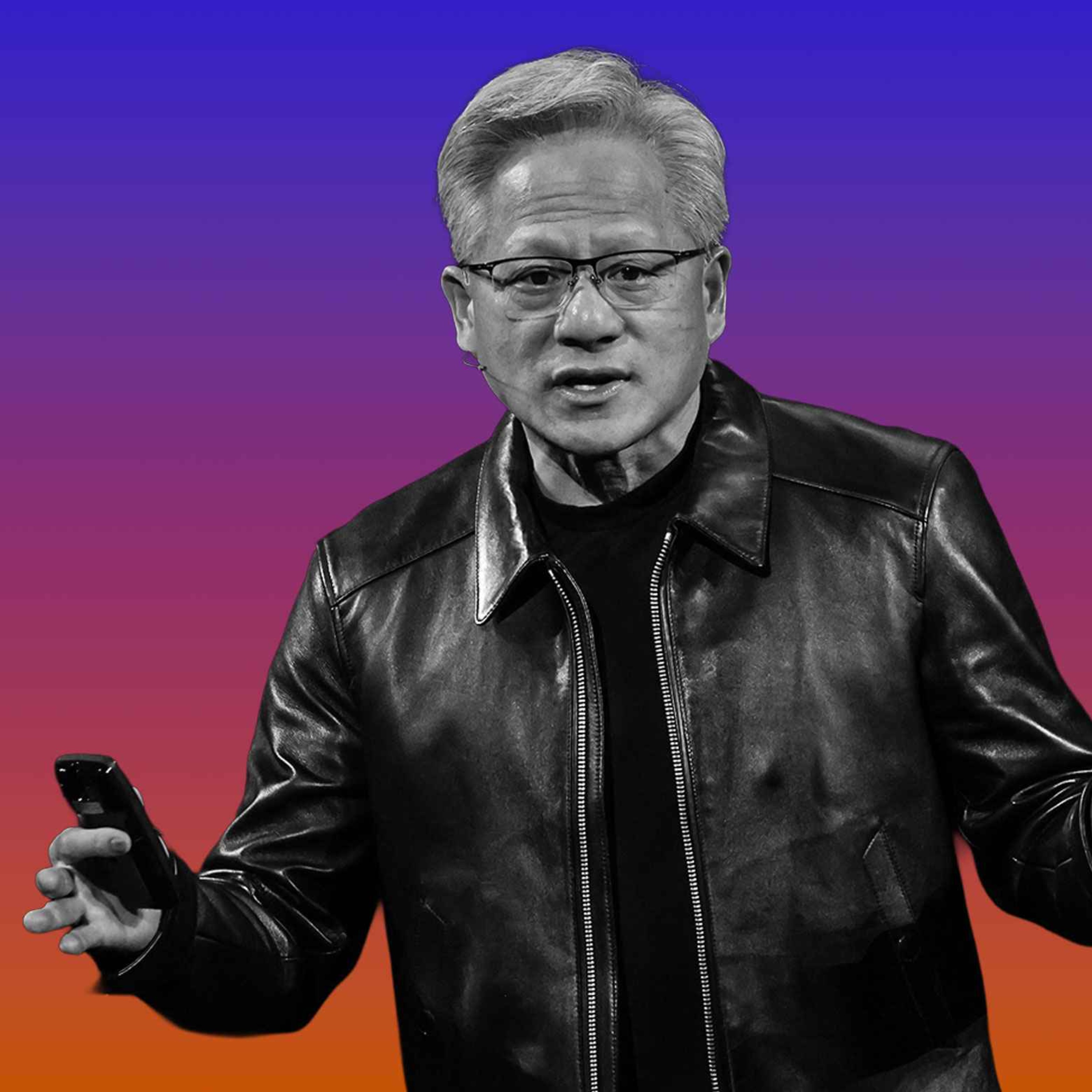

The episode examines whether NVIDIA CEO Jensen Huang’s personal life and alleged affair could be tied to national-security risks, and what that might mean for the AI economy. It also argues NVIDIA is deeply embedded in AI infrastructure through “neo-cloud” customers, so any scandal could ripple widely.
Liz Lopato, senior writer at The Verge. She has covered Jensen Huang and NVIDIA extensively.
Huang’s alleged affair with Alice Swang (an executive at Megaspeed, a Singapore-based neo-cloud) raises espionage concerns; the U.S. Commerce Department investigated Megaspeed’s suspicious chip-routing model. NVIDIA’s board launched an independent investigation, but Lopato doubts it will lead to meaningful action due to weak board controls and Huang’s dominance. She also argues Huang’s close ties to Donald Trump and the AI U.S.-China “race” create incentives to keep selling chips to China.
Megaspeed’s “secondhand chips” model; photos/videos suggesting Huang’s relationship was widely known; Trump dialing into an NVIDIA all-staff meeting; NVIDIA supporting CoreWeave and other neo-clouds (including CoreWeave’s IPO revealing NVIDIA as a major investor).
Written by AI. May contain mistakes.
Setting the stage for a deeper discussion on NVIDIA's challenges.
A detailed look at Jensen Huang's background and NVIDIA's evolution.
“For those who don't know, can you just give me some brief background on who Jensen Quang is, other than being just the tech guy who wears the leather jacket?”
Explore NVIDIA's deep entrenchment in the AI infrastructure and its implications.
“We're going somewhere that we don't want to go.”
Discuss the potential motivations behind China's interest in Jensen Huang.
“Like if we accept the narrative that is developing that he was having a relationship with a potential spy.”
Discusses the importance of understanding NVIDIA's chip design for geopolitical strategy.
“I'm getting like spy movies in my head, people putting like discs into computers, copying stuff.”
Explores the implications of corporate relationships on national security, particularly regarding Jensen Huang.
“And then from a geopolitical perspective, this is somebody who's very close to Donald Trump.”
Analyzes Donald Trump's relationship with Jensen Huang and its impact on national security concerns.
“company meetings, he just decides, I'm not going to act on this information, not going to give this guy a heads up, not going to do anything?”
Skepticism surrounding NVIDIA's internal investigation into potential conflicts of interest.
“that's right why because nvidia has already come out and said don't worry about this it that's what that's what a company would say right they would say nothing to see here nothing to see here.”
Discussion on the risks associated with CEO personal relationships and their potential consequences.
“I just don't understand how it is difficult to not sleep with people when you are intrinsically important to the economy or at least to find somebody to sleep with who is not a Chinese spy.”
Examines the public support for Jensen Huang and the implications for accountability in tech leadership.
“you know, I don't think you just need an outside investigation.”
Speculation on Jensen Huang's ability to handle pressure amid scrutiny and challenges.
“And so one of the things that I have been thinking about a lot is like the people who are circling the wagons are like the AI guys.”

Get the gist, explore an idea or ask about something said.
 Claude
On What Next | Daily News and Analysis, what are the key points of this episode?
Searching your listeningAutomatic transcript. May contain errors.
0:00With the Spark Cash Plus card from Capital One, you earn unlimited 2 % cash back on every purchase. And you get big purchasing power, so your business can spend more and earn more. Stephen, Brandon, and Bruno, the business owners of SandCloud, reinvested their 2 % cash back to help build the company's retail presence. Capital One, what's in your wallet? Find out more at CapitalOne.com slash Spark Cash Plus. Terms apply.
0:29This episode is brought to you by HomeServe. If there's such a thing as an opportune moment for your water heater to go kaput, it's not when it's going to go down. It'll be when you are mid-shower with a face full of shampoo and a meeting you are running late for. Oh, and that repair, it's going to cost you a lot. Emergency home repairs add insult to injury to expense. Having a home protection plan from HomeServe can help you get ahead of the inconvenience and avoid getting underwater on that water heater replacement. or some other plumbing problem, HVAC issue or electrical issue outage. Regular homeowner's insurance does not cover a lot of the day-to-day wear and tear.
1:02Plumbing failures, HVAC breakdowns, electrical issues, you're often on your own for those, which is where HomeServe comes in. It's like a subscription for your home. For as little as$4.99 a month, they've got your back. Repairs hit fast and hard, and you could be searching for a contractor in something of a panic. Or you could already be on the phone with HomeServe's 24-7 hotline to schedule a repair. It's super simple. Choose a plan for your needs and budget. And when something on your plan goes wrong, just call their 24-7 hotline to start the repair process. They've helped homeowners like you for over 20 years with a trusted national network of 2 ,600 local contractors.
1:38With nearly 4.5 million customers, a 4.8 out of five post-repair rating, and an A-plus Better Business Bureau rating, they are the real deal. Personally, I hate it when there's a broken light switch or a broken dishwasher or a broken washer dryer. And then all of a sudden I'm stuck wondering who's going to fix this thing. So I see the whole reason why HomeServe exists. Join the millions of customers who trust HomeServe for 50 % less your first year. Go to homeserve.com slash whatnext. That is homeserve.com slash whatnext for 50 % off. Savings are compared to renewal price voiding California and Florida.
2:23Elizabeth Lopatto: Liz, can I ask you a hypothetical question? Yes, ask me a hypothetical question. If you had an affair and wanted to apologize for it, can you picture the letter you might write? Well, I mean, I feel like my first impulse would be to, like, vanish entirely.
2:48Liz Lopato is a senior writer over at The Verge. You're saying you want to vanish entirely. Could you imagine writing a letter that would then be an all-staff email? No, I cannot. No, I cannot imagine doing that. I called Liz up because she's covered the CEO of chip manufacturer NVIDIA for a while now. His name is Jensen Huang. And since allegations surfaced that Huang was caught up in an affair with an alleged Chinese spy, Huang is all anyone wants to talk about. Listen, I understand where we're going with this. And one of the reasons why Jensen Huang's letter was so incredible to me is that he writes an all staff email and then includes to my wife and family in the all staff email.
3:38Elizabeth Lopatto: Yeah, I mean, to my wife and family, it reads, I love you. I know an apology cannot undo what I've done. Dot, dot, dot. Regarding the national security concerns raised in news reports, NVIDIA's board of directors has initiated an independent investigation. There's just a lot to consider here. I might consider multiple letters like a private letter. You don't need to do it in one.
4:14To be honest, there was a kind of efficiency in doing the public and private communications all at once. Because NVIDIA is a family business. Jensen Huang's children both work for him. His daughter's husband does too. So this guy's affair is an office drama and a family drama, plus maybe an international spy drama. And then there's the whole American economy side of things.
4:41Elizabeth Lopatto: So you alluded to the fact that NVIDIA is a family business, essentially. Sure is. This is a family concern that is driving how much of the economy right now? Directly or indirectly, an awful lot of it, I feel. I mean, you recently wrote something in The Verge and the title was The Future of AI Hinges on Jensen Huang's Sex Life? Question mark. But I don't know. Is that a question mark? Well, that was more of an incredulous question than an actual question. But do we need to worry about this affair and its impact on the broader economy? Yes. Yes. Obviously, yes. Obviously, yes. So I just want to I want to like I don't know how much she got access to.
5:31Elizabeth Lopatto: We don't even know that she's actually officially a spy, just that the signals are strong. Listen, I don't know if you've been like looking into Megaspeed. That's her company that she was theoretically CEO of. It sure is. One of the things that I thought was really interesting was I was poking around at Singaporean newspapers to see if they have been looking into this company because theoretically they have an office there. And it kind of seems like this company doesn't totally exist per se. I mean, when the New York Times visited it, they said there were like two people there and they were like, hmm.
6:17Yeah. So I have been thinking of it as a P.O. box where you send the chips. Who knows where the chips are going?
6:31but that's that's that's not the first time that nvidia has been caught sending chips to companies that maybe don't totally exist it's just the first time that that has happened um with the possibility of also there being a spy who was sleeping with the CEO involved. So problematic company, you're saying? Yeah, I would call it problematic. Problematic feels like a good description. Today on the show, the latest revelation about Jensen Huang's affair is neither the beginning nor the end of NVIDIA's troubles. So what does that mean for the rest of us? I'm Mary Harris. You're listening to What Next.
7:17Stick around.
7:26Today's show is brought to you by Vanguard. To all the financial advisors listening, let's talk bonds for a minute. Capturing value in fixed income is not easy. Bond markets are massive, murky, and let's be real, lots of firms throw a couple of flashy funds your way and call it a day. But not Vanguard. Vanguard bonds are institutional quality. Institutional quality is not a tagline. It's a commitment to your clients. It means top-grade products across the board. The lineup includes over 80 bond funds. They are actively managed by a 200-person global squad of sector specialists, analysts, and traders.
8:00Lots of firms love to highlight their star portfolio managers, like it's all about that one brilliant mind making the magic happen. Vanguard's philosophy is a little different. They believe the best active strategies should not be locked away with one person. They should be shared across the team. That way, every client benefits from the collective brainpower. not just one individual's take. So if you're looking to give your clients consistent results year in and year out, go see the record for yourself over at vanguard.com slash audio. That's vanguard.com slash audio. All investing is subject to risk.
8:35Vanguard Marketing Corporation Distributor. Verizon knows that holiday math can be complicated. Okay, let's see. We got the four kids, four gifts each, six teacher gifts. Wait, oh, what did we get in? Sandy. And the dogs. Oh, I can't forget the dogs. Know what doesn't need math? Simplicity Plan from Verizon. One plan, one price. Just$30 a line per month for you or the whole family. The holidays are complicated. Shopping our best deals and switching to Verizon is simple. For new customers,$30 per line includes auto pay and switch discount. Additional taxes fees and terms apply. Hey, we're Nick and Jack, hosts of The Best One Yet.
9:12Behind every episode, there's research, email, spreadsheets, and our shared Google Doc, The Headline Hammer. With Google Workspace with Gemini, Google's AI is built right into the premium versions of tools we already use, like Gmail, Docs, and Sheets. No new tools or extra logins, just personalized AI for the way we work. That means less time on the work around the work and more time finding the stories worth talking about. Get AI tools for work. Upgrade to Google Workspace with Gemini at goo.gle slash workspace with Gemini. That's goo.gle slash workspace with Gemini.
9:47Elizabeth Lopatto: I want to back up a little bit. For those who don't know, can you just give me some brief background on who Jensen Quang is, other than being just the tech guy who wears the leather jacket? Yeah. So he is the CEO of NVIDIA. He has a wild backstory. He married his wife. I think they met in college. He might have been 17. Yeah. Because he went to college early. His parents sent he and his brother to the United States from Taiwan, like his unaccompanied minors. And they went to a weird boarding school and like ended up at Oregon State. Right. And she was his lab partner. And he like went out of his way to impress her by like being I'm very smart, because apparently that works on some people.
10:31And so they got married and they were I think both like chip designers and then she quit her job to support him and raise their kids while he ended up building Nvidia and he was like I'm going to be a CEO by 30 and then he was.
10:51Elizabeth Lopatto: I mean Nvidia has a whole like founding story like you know Apple you talk about the garage Nvidia talks about the Denny's Diner where they like were founded because Jensen had like worked at a Denny's earlier in life and like liked the hustle and bustle that was there? It's a good shtick. I like it. I don't take it that seriously, but all right. Yes, they founded it in a Denny's. Sure. But it wasn't originally doing AI. It was doing chips for gamers, right? That needed like a whole lot of processing power to process visuals. I think that's really important for people to understand because in Silicon Valley, there are like AI guys.
11:29Elizabeth Lopatto: And then there's like Jensen Huang, who's like making the AI guys dreams come true by creating these chips that allow the AI to happen. Is that fair? Yeah. So the GPU, the G stands for graphic. The P is processing, the U is unit. The GPU were originally, they were originally made for gaming. And what ended up happening was Bitcoin. And so the Bitcoin miners discovered that GPUs were really good for mining Bitcoin. And NVIDIA did not like this. Even though it was like their sales were going up, they were like, this kind of sucks. We don't want to be associated with that. No, thank you. And right around the time that there was one of the periodic crises in Bitcoin and like a crash in the market, a lot of these miners were going belly up.
12:20The AI bubble started to inflate. This was like 2023-ish. and a lot of the bitcoin miners pivoted from bitcoin to being places that sold compute for ai the most famous of which is core weave um and so these are just like places they're called neoclouds that have like warehouses full of you know these chips that are arranged in a way that are useful for AI. And then they sell the compute to places like Google and OpenAI and Anthropic and whoever else. And NVIDIA really likes those. And the reason that NVIDIA really likes those is because it helps them diversify their customer base away from the big boys.
13:12So like, if your main buyers are like uh meta and uh google and microsoft and amazon like there's just there's not that many of them you know which means that they can exert some pricing pressure um you know they can demand deals because they are your only customers like your your big customers so what What NVIDIA did was it supported CoreWeave and these other NeoClouds. They basically supported competitors so that they could charge people more? They supported competitors basically so that they could have more control over their own pricing. Kind of smart, actually. It's not a bad idea. It's just not.
14:03We're going somewhere that we don't want to go. We're being taken on a dirty we did not intend to make here. And we're on Jensen Wang's train. We sure are. Yeah. So all of these companies, these NeoClouds are supported by NVIDIA. CoreWeave in particular is the case, the poster child, because they went public last year. And in their IPO, we found out that NVIDIA is one of their major investors. It's their second biggest customer.
14:30Elizabeth Lopatto: What you're getting into now is like how baked in NVIDIA is with Silicon Valley, AI, the infrastructure. Like, it's not like it's a separate thing that you can pluck off. It's got its tentacles and so many things at this point that it's like it's embedded. Is that a fair way to put it? Economically. Yeah. It's economically embedded in basically everything. And, like, you know, the people who are least hurt by NVIDIA, like, getting into trouble are, like, your Googles and your Amazons and whatever else because, like, they're big enough that they have other lines of business besides AI. And also, like, they're working on other chips.
15:16Like, those guys are going to be fine. I'm a little worried about everybody else. Like SpaceX has an enormous investment from NVIDIA, for instance.
15:27Elizabeth Lopatto: Yeah. And when you read about what it's like to work at NVIDIA, it kind of sounds like it's a whole vibe. Like, OK, I'm going to read you a quote that was in The New Yorker a couple of years back. Jensen is not an easy person to get along with all the time, this colleague said. I've been afraid of Jensen sometimes, but I also know that he loves me. Wow. That sounds cultish. It sounds like it's an intense place to be. I was going to say it sounds abusive. It sounds like an abusive family. Like, that's what that sounds like to me. Yeah, it seems like a place that is intense. And that has like a real sort of, you know, push pull in terms of love and fear.
16:15Elizabeth Lopatto: And some might argue like, I don't know, this is how you get good work out of people. Like Jensen Wang's been known to be into public shaming. like he has this belief that failure must be shared so like at some point a faulty graphics card got shipped out with like a loud fan in it and he like made the people who made it defend it publicly like sent sent like a card to people with like a leaf blower like as a joke like ha ha ha like we did this thing but like you had to get up and like explain every decision you made to get to the thing going wrong, which is so interesting to think about in this moment, right?
16:52Elizabeth Lopatto: Like, the company's facing a crisis. Jensen Huang seems to be all about, like, getting up publicly and saying something about how you got here. You got to wonder how he's going to, like, circle the square himself. Well, I mean, I think it's going to be the thing that you expect, which is its accountability for thee, but not for me. Because, like, I don't know if you've been paying attention, But there are more and more photos of him with this woman that have been popping up. They keep coming up and there's like videos and photographers saying like, oh, I was photographing this woman and she was like, hey, I can get Jensen to come.
17:26Elizabeth Lopatto: But you wanted me to do that? And like she would. And then he would be there and they'd be like toasting. So it seems like a lot of people kind of knew about this relationship. It seems it seems like this was not really much of a secret. I feel like the last thing you have to know to understand Jensen Huang and his power and why this is getting so much attention right now is how close he is to Donald Trump, which is very close. They had some kind of all staff meeting at NVIDIA and Donald Trump dialed into it and they put him on speakerphone. This is not planned, but we know who it is. Oh, no. No.
18:02Mr. President. Oh, yes, sir. I got to tell you something. If it wasn't because of you calling, I'm on stage with the besties. I'm on stage with the besties.
18:18Elizabeth Lopatto: How'd that relationship happen? Or why did it happen? Was it just strictly like, I need to be close to this guy because he's president? And so that was like a strategic decision by Jensen Wang? I think it was a strategic decision. So one of the things here is that Silicon Valley generally really tied itself to Trump in his second term. And that started very early on in the campaign. And a big part of it, I think, was that they didn't like the way that Joe Biden was handling AI policy. We were talking about regulation, right? Right. And they don't want any of that. So then they were like, all right, Donald Trump's our man because we can buy him and then we won't have any regulation and that will be great.
18:59And so, you know, you see all of these tech CEOs at his inauguration. You see like Marc Andreessen talking about how amazing Donald Trump is going to be for AI. And so like, yeah, I think that that is a big part of it. And then like on top of that, there has been this sort of background narrative that has served the AI industry really well, which is that, you know, we have to remain competitive with Chinese AI. Like we have to we're racing. We can't let China have the best technology. And so that also, you know, ties this industry in very closely with defense concerns and, you know, a number of other things that really put them in touch with the national security apparatus.
19:46Yeah.
19:46Elizabeth Lopatto: And then at the same time, Jensen Huang seemed to be arguing like, I need to be able to sell chips to China, even though many people in the United States were like, hold it, that's a bad idea. Why are we giving China this technology? Jensen Huang's argument being, well, we'll make them reliant on us and they won't build good chips of their own. And it seemed like the Trump administration took that seriously. Like there are all sorts of women, like there are rules about getting chips into China. But this was this ongoing conversation about like how many chips get into China, what kind of chips get into China.
20:18Elizabeth Lopatto: And Huang seemed really good at pressing his case. Well, you know, I again, I noticed that if you donate enough money to the Trump administration, people tend to take you seriously. The other thing that I will say here is that it is an economic incentive for NVIDIA to sell chips to China again because it broadens their customer base. It reduces the power of, you know, the hyperscalers. And also, frankly, it's just more money. And like, who doesn't love more money? A CEO loves more money. So I think that that's like that's a big part of it. And to me, it also highlights how much of a contrivance the sort of AI race between the U.S.
21:05and China really is. Because if you really are concerned about Chinese AI, then yeah, like, don't give them the good technology. That seems like make them build their own, make it costly, make it harder. You know, that seems like a no brainer for everybody except for our boy Jensen, who's like, I don't know, seems fine to me.
21:27Elizabeth Lopatto: So let's talk about the affair. The woman he's accused of having an affair with, Alice Swang. She's an executive at this company, Megaspeed, which operates in Singapore. And its job was essentially to provide secondhand chips to China. Is that right? Like provide a way for folks to use the chips, but not actually inside China itself. Is that right? It is another NeoCloud. And its specific business model is it buys the NVIDIA chips you can't import to China. And then, at least in theory, it sets up data centers and then places like Alibaba rent compute from those data centers because those data centers are fine because they're not in China.
22:13Elizabeth Lopatto: This was suspect enough that the Department of Commerce sent an inspector to look into it and went and was like, huh, it seems like all these chips are still wrapped up here. Potentially they would be being sent somewhere, like China, which was kind of interesting. One of the things that I have really focused on in this is, again, NVIDIA's role in propping up NeoClouds. Because if Megaspeed was what it was supposed to be, then it is in NVIDIA's interest to keep it alive, to make sure that it's doing okay. Which might explain a close relationship between the CEO, the CEOs, the executives. Yeah.
23:00And like, but the thing is, if you're having a close relationship with this executive. At some point, don't you notice that the company doesn't exist? Am I crazy? You think? Am I crazy? But I think at some point you like might notice that like she doesn't seem like super concerned about building more data centers or financing or whatever. you know the concerns that occupy um the executive suite of let's say again core weave um you know are because like they do have very real concerns around financing they do have very real concerns about like are our construction timelines like real because there's only there's a limited period of time where those chips like are useful and you want to get the most life out of those chips as you
23:49You know, that's money out of your pocket.
23:51Elizabeth Lopatto: Yeah, this is another thing about Jensen Huang's business strategy, which is to keep making better chips. So you're constantly refreshing your customer base. You're like making them buy again and buy again and buy again. That's right. All those sorts of things. That's right. So, which is, again, a problem for the neoclads because then they have to like, they're on a treadmill they can never get off of. They have to keep building forever to keep up with the pace of chips that are being released by NVIDIA.
24:24We'll be right back after a quick break.
24:38This episode is brought to you by Article. Article is an online furniture store with great quality pieces, pieces they were so confident in, they offered to send them to me so I could tell you what I thought. They sent a couple chairs, a planter for out front, a coffee table, stuff I live with day in and day out. So I can attest it looks great and honestly exceeded my expectations. If you are looking to put together a home that's stylish, but you want an upgrade from the stuff you might slap together with an Allen wrench, I'd urge you to check Article out. Because they truly sell everything in a range of styles, mid-century, coastal, Scandi-inspired stuff.
25:16In other words, furniture that's going to fit your home no matter how you live. Article offers fast, affordable shipping across the U.S. and Canada with options for professional assembly if you prefer that. If you've got questions, they've got customer service available seven days a week and they offer knowledgeable support, even free interior design services. And with Article's 30-day satisfaction guarantee, you can shop with confidence knowing if you're not completely in love with your new furniture, you can just return it. This peace of mind means you can invest in your home without hesitation.
25:49Article is offering our listeners 50 bucks off your first purchase of$100 or more. To claim, visit article.com slash next, and the discount will be automatically applied at checkout. That's article.com slash next for$50 off your first purchase of$100 or more. This episode is brought to you by Monarch. Like a lot of folks, my biggest debt is probably my home. It's an investment I love, but also one where you gotta wonder, is this thing ever gonna be paid down? What if you had a way to watch your debt dwindle bit by bit? A visualizer that helped you track your progress and even showed you how you could get out from under debt faster by paying more or differently.
26:39Monarch's Debt Paydown Simulator, it is that tool. You plug in whatever you're trying to pay off, credit card debt, student loans, it'll give you an exact debt-free date. You can watch your timeline as it moves for a little motivation, and you can play out different payment scenarios. Pick the one that works best for you. Our producer Evan loves Monarch. He says it is his go-to finance app. He's used it for like a year now. It helps him track his finances. It gives him weekly recaps of his spending so he can see where the money's going and make different decisions if he wants. Monarch can help you break the debt cycle, turning the unknown into a plan with an end date.
27:20It also takes the burden of tracking your debt off your plate. With quick check-ins on your laptop or your phone, you'll always know exactly where your money is with Monarch. Write your own money story with Monarch. Use code WHATNEXT at Monarch.com to get your first year of Monarch Corps half off at just 50 bucks. That's 50 % off your first year at Monarch.com with code WHATNEXT.
27:49Elizabeth Lopatto: So to ask a potentially dense question, like why would China want to spy on Jensen Huang? Like if we accept the narrative that is developing that he was having a relationship with a potential spy. if you're china and you want to build chips that are as good as nvidia it is helpful to know as much as you possibly can about those nvidia chips and like i i recognize that like not everything is like captured by chip design you know there's like stuff that you need to figure out in terms of fabrication like you actually you have to like actually make them but um you know all the information that you can get around how that happens, especially if you're, you know, NVIDIA is emailing with chip fabricators and they're talking about this stuff.
28:35That's pretty helpful, I find.
28:39Elizabeth Lopatto: I'm getting like spy movies in my head, people putting like discs into computers, copying stuff. Yeah, this is like farcical John Le Carré, right? So that's the corporate espionage piece of it. And then from a geopolitical perspective, this is somebody who's very close to Donald Trump. So somebody who's like read in on his thinking on China in particular because this guy wants to sell his chips there and maybe read in on into his thinking in other ways as well, like somebody who may have access to a lot of, you know, what the U.S. is doing with AI, how we're thinking about national security around AI.
29:18Like all of these things seem like they could be potentially quite useful.
29:24Elizabeth Lopatto: And this is where we should get into the timeline of like, who knew what, when, because it seems like the U.S. government has had suspicions about this woman for a long time, for at least a year. yeah and then in the spring of this year secretary of state marco rubio oversees the drafting of this memo that he sends around to folks saying hey we should be concerned about jensen's involvement with a possible chinese spy the reporting is that donald trump was told about this and then does not do anything even though he knows jensen huang well enough to like dial into his company meetings, he just decides, I'm not going to act on this information, not going to give this guy a heads up, not going to do anything?
30:14I think that Donald Trump views the presidency as being, you know, for the greater glorification of Donald Trump and not for the like any, you know, purpose of any of the rest of us here in America. and so for this reason because jensen is his friend um he's not going to hurt jensen's feelings um and who cares about national security i want to interrupt you and push back on what you're
30:41Elizabeth Lopatto: saying but then you have the story of like donald trump takes his trip to china jensen huang is like left off of the list of people who are going and then at the last minute is invited to join it seems by Donald Trump himself. So, I mean, the evidence is kind of pointing to what you're saying. Unfortunately, the stupidest thing in this case is usually true. So, yeah, it seems like this is like Donald Trump's buddy. He's like really like inserted himself into this administration. And, you know, that is now sort of politically something of a problem for him. yeah which hymn both hymns maybe both hymns nvidia itself has said it's doing an internal investigation you've said you have no faith that that is going to result in any action that's right why because nvidia has already come out and said don't worry about this it that's what that's what a company would say right they would say nothing to see here nothing to see here.
31:47Elizabeth Lopatto: And then boom, you like bring down the hammer. Well, here's the thing is like, who is hiring this outside investigator? The board of NVIDIA? Who's on the board? Do we have any CEOs on the board? Is this a powerful board? You tell me. The answer to that question is no, it is not. This is this is not a board that I feel like has strong corporate controls. This has been an ongoing problem in the tech industry for quite some time. So the board is hiring this outside company to take a look at their indispensable CEO who they cannot lose, who is dialed into every single part of the company, who has 60 direct reports, whose children are at the company.
32:37I feel like we're not going to get anything useful out of this investigation. I just that is a vibe I am getting. I would love to be wrong. I would love to be wrong. But I don't this is not an investigation I am terribly inclined to take seriously. How bad would it be if NVIDIA imploded? Oh, I think that that that screws up the entire AI ecosystem. Like, I think that's that that's possibly a recession. Like that is it's bad.
33:07Elizabeth Lopatto: It's bad. This one guy's mistake. Recession. Yeah. Wow. Yeah. I mean, like, here's the thing. Like, I. I just don't understand how it is difficult to not sleep with people when you are intrinsically important to the economy or at least to find somebody to sleep with who is not a Chinese spy. Yeah, CEOs don't take a vow of celibacy, but, you know, maybe a vow of celibacy about Chinese spies. I don't know. I like I just I'm saying like just even like as a like a matter of like just practicality like whoever you're intimate with. Let's say like let's say it's an open marriage. I don't know. But whoever you're intimate with has a lot of access to you has a lot of access to your moods what you're going on and to your schedule because you have to schedule time with them and you're likely to say oh I can't because I'm going to be at Mar-a-Lago or whatever.
34:11Right. so you need to be pretty careful about who those who's coming into the circle yeah am i right and like i just again this woman has been around since 2024 and she's like they're all there are all of these photographs there are more photographs every day and so people knew that she was around and that she was like taking couples photos with jensen wang there's like one of them where it looks like they like went on a vacation to like wine country um some of them are coming from her wechat account where again they look like a couple like this is publicly posted um so you know you start to wonder who at nvidia was doing anything about this and the answer might be no one because jensen wang is scary and he's very much in charge of nvidia and he is the king.
35:04And if that's what the king wants to do, you just say, OK. But at that point, you know, I don't think you just need an outside investigation. I think you need a pretty thorough cybersecurity sweep of literally everything, because, you know, all he has to do is, like, leave a device in the room with her while he takes a shower. And that is potentially something that, like, you know, you now have compromised.
35:30Elizabeth Lopatto: I guess I don't have a lot of hope for accountability, but maybe maybe you'll give me some like we see Donald Trump coming out to defend Jensen Huang. And we see a bunch of AI company heads tweeting out their support for him like Bill Ackman. We should all support him and his family onward. Oh, onward. On right word. You have Sean McGuire, a partner at the VC firm Sequoia tweeting, I believe Jensen is irreplaceable. For America's AI leadership, Elon Musk saying he agrees with that assessment. So people are really like circling the wagons here, which is weird to me. Because even if you believe that is true, that like, well, he's irreplaceable, you know, this guy has all this power.
36:18That doesn't mean we then need to keep him there.
36:22Elizabeth Lopatto: Do you know what I mean? it maybe means like, huh, maybe that's a security fail that this one person has all of this power and like is now compromised. You know what I mean? Like this should be ringing alarm bells. Yeah. The other thing that I'll say is that if you're the king, when people aren't happy with you, they tend to chop your head off. And so one of the things that I have been thinking about a lot is like the people who are circling the wagons are like the AI guys. Yeah. They're not popular. Like, again, there is one extremely major bipartisan issue with American voters, and it's we hate data centers.
37:01And also, we don't like AI. And I see a lot of young, ambitious politicians newly on the scene who are promising things like data center bans and slowdowns. And I'm noticing, again, Elizabeth Warren seems mad. And so I suspect there's going to be at least one person and probably many people who are going to want public accountability, testimony in front of the Senate or the House, ideally both. The government is a slow apparatus. It takes a while to move. For those of you who remember the Theranos scandal. I think that initial article that John Kerry rewrote in the Wall Street Journal that was published in 2015.
37:52And the Elizabeth Holmes's trial happened in 2021. Wow. It takes years. You're saying you're saying settle in. Settle in because we're not done and we're not done for a while. And like I think this is going to go faster than Theranos because this is a more important failure than Theranos. Again, for national security reasons, if nothing else. But I'm just saying we're about to see Democrats controlling the Senate and the House. There is a presidential election happening in two years. People are going to want to grandstand. They're going to want to say, hey, I'm tough. I believe in accountability.
38:32We've had enough of Donald Trump and his cronies ruining this country. And let me show you how sick of it I am by crucifying somebody publicly.
38:40Elizabeth Lopatto: But in the meantime, Jensen Huang is still running NVIDIA and he's still a billionaire. Yep. Can I share some Jensen Huang wisdom before I go? Please. I would love to know. Because I've been really struck the more that I read about him. Like he has all these things he says, like, I do everything I can not to go out of business. I do everything I can not to fail. I'm like, huh, how's that going to work out in the next few weeks, months, years? He apparently used to open all of his staff presentations with the words, our company is 30 days from going out of business. And it's still apparently the unofficial corporate motto.
39:23Elizabeth Lopatto: The idea is always feel the wind at your back or someone biting your tail or whatever. I mean, someone's biting his tail right now, you know? Yeah, I'm really interested to see how much he is, how able he is to withstand this kind of pressure because it is going to be continual pressure. It's not going away. It may increase. He says, I think I'm at my best under adversity. My heart rate actually goes down. I think he doesn't know what adversity is yet, but he's sure going to find out.
40:00Elizabeth Lopatto: Liz, I'm really grateful for your time. Thanks for coming on the show. It was a lot of fun. Liz Lopato is a senior writer at The Verge. And that's our show. What Next is produced by Evan Campbell, Madeline Thames-Ducharm, and Patrick Fort. Paige Osborne is the senior supervising producer of What Next and What Next TBD. Mia LaBelle is the executive producer of podcasts here at Slate. Ben Richmond is our senior director of podcast operations. And I'm Mary Harris. Go track me down on Blue Sky. I'm at Mary Harris. Thanks for listening. Catch you back here next time.
40:44This episode is brought to you by Okta, helping you secure and govern AI identity by bringing agents out of the shadows. There's no denying that AI agents are completely transforming how we work right now. But when they operate unseen in the dark, they quietly create massive security blind spots. The good news? You don't have to hit the brakes on your AI goals to stay safe. Okta gives you total visibility and identity governance by helping you answer four simple questions. Where are my agents? What can they do? What are they doing? And how do I respond if they go rogue? It gives you full control, letting you manage task-scoped permissions, trace behavior with a full audit trail, and even flip an instant kill switch if an agent ever goes rogue.
41:25That way you can shine a light on agents operating across your organization. Bring AI agents out of the shadows. Okta secures AI. Learn more at Okta.com. That's Okta.com.
41:44Verizon knows that holiday math can be complicated. Okay, let's see. We got the four kids. Four gifts each. Six teacher gifts? Wait, oh, what did we get in? Sandy. and the dogs. Oh, I can't forget the dogs. Know what doesn't need math? Simplicity Plan from Verizon. One plan, one price. Just$30 a line per month for you or the whole family. The holidays are complicated. Shopping our best deals and switching to Verizon is simple. For new customers,$30 per line includes auto pay and switch discount. Additional taxes, fees, and terms apply.
As Nvidia CEO, Jensen Huang is one of the most important people in the A.I. boom and, therefore, of the economy as a whole. So when he has an extramarital affair with someone U.S. intelligence suspects of being a Chinese operative, it’s not exactly a “My family and I appreciate privacy at this time,” sort of situation.
Guest: Elizabeth Lopatto, senior writer at The Verge.
Want more What Next? Subscribe to Slate Plus to access ad-free listening to the whole What Next family and across all your favorite Slate podcasts. Subscribe today on Apple Podcasts by clicking “Try Free” at the top of our show page. Sign up now at slate.com/whatnextplus to get access wherever you listen.
Podcast production by Evan Campbell, Madeline Thames-Ducharme and Patrick Fort.
Paige Osburn is the senior supervising producer of What Next and What Next TBD.
Hosted on Acast. See acast.com/privacy for more information.