 Ask ChatGPT

Post-midterm “techlash” politics around AI—voters’ anger at tech oligarchs, data-center buildouts, and AI regulation; what Democrats should do next and what policies could pass.
Rob Flaherty, longtime Democratic operative; co-founder of Tomorrow Together, a Democratic AI-focused super PAC/PAC that tests AI messaging and policy ideas.
Elon Musk’s midterms spending (over $400M) produced poor ROI given election results. AI is increasingly a cost-of-living and corruption story, not just a tech issue. Democrats should pursue feasible safety/regulatory steps before 2028 (e.g., safety frameworks), engage labs but not trust them as the only voice, and tie oversight to real harms and pocketbook impacts. Data-center moratoriums are politically popular but may be impractical without giving communities agency.
Tomorrow Together-backed candidates won; at least 38 jurisdictions passed data-center bans/restrictions. Mentions: Sherrod Brown (Ohio), Ohio NRSC memo; Jacob Coxon (Anthropic) resignation; “ratepayer protection” bill idea; references to OpenAI/Anthropic lobbying and preemption.
Written by AI. May contain mistakes.
Discussion on Elon Musk's political spending and its implications.
“If you tally up the money that Elon Musk spent on getting Republicans elected in the midterms, it is well north of$400 million.”
Examining the role of AI in political campaigns and voter concerns.
“Rob Flaherty is a longtime Democratic operative.”
Insights into voters' perceptions of AI and political accountability.
“On Tuesday, every single candidate Tomorrow Together backed won their race.”
Discussion on how AI is perceived in relation to economic and social issues.
“That's 50 % off your first year at Monarch.com with code TBD.”
Discussion on how AI is perceived in relation to economic and social issues.
“fries and a drink for just$8, only at McDonald's.”
Exploring AI's role in political strategies and upcoming elections.
“If you rewind about a year ago, right, you can sort of see the beginning of this around the off year elections in Virginia.”
The discussion revolves around the political implications of data centers and AI regulations, focusing on Democratic strategies against tech oligarchs.
“Data centers, certainly part of the conversation there.”
Exploring the complexities of creating regulatory frameworks for AI and the challenges faced in Congress.
“So one of the regulatory conversations when you have someone like Jacob Coxon making the rounds is, OK, a big regulatory framework for AI.”
Discussion on the evolving understanding of AI among Democrats and the implications for future policies and elections.
“Well, look, I think that as far as data centers go, the Bernie logic of a moratorium is a moratorium until we can get the stuff.”
Discussion on the political dynamics between tech companies and Democratic leaders.
“It was a picture of the Democratic leaders kneeling in kente cloth from 2020.”
Exploration of the role of money in political campaigns and voter sentiment.
“And so you do have to engage the labs like there's no question.”
Analyzing how AI could be a key issue in upcoming elections and the narrative surrounding it.
“Like good politics ultimately is good politics, and the money doesn't change that.”
Emphasis on the need for a compelling narrative that resonates with voters regarding AI.
“Based on what you've just seen, who can do that?”

Get the gist, explore an idea or ask about something said.
 Claude
On What Next | Daily News and Analysis, what are the key points of this episode?
Searching your listeningAutomatic transcript. May contain errors.
0:00Rob Flaherty: The quarter pounder with cheese is made with 100 % fresh beef cooked when you order it. Add hot crispy fries and an ice cold Coke and hopefully a lot of napkins. All for$8.
0:18Stripe is built for whatever comes next because as your business scales, so does the complexity of fraud. New customers, new markets, new AI driven attack patterns. Stripe Radar protects your business as it scales with the scale of the Stripe network. The more payments Stripe sees, the smarter its AI gets at detecting those patterns as they emerge. Stripe's network is so vast, it has seen$1.9 trillion in payment volume across millions of global businesses. In fact, when a card is used, there's a 92 % chance the Stripe network has seen it before. All of this means fraudulent patterns across payments, accounts, and customer abuse can be detected, flagged, or blocked easier.
1:01Based on the rules you set up, of course. Blocking bad actors, welcoming good customers, keeping more of your revenue, your revenue. Learn more about fighting fraud with Stripe at stripe.com slash radar.
1:23If you tally up the money that Elon Musk spent on getting Republicans elected in the midterms, it is well north of$400 million. And given how Americans voted on Tuesday, that is a spectacularly bad investment. You know, I was joking with somebody that we do have a billionaire's tax. It just happens to all go to TV station owners in Texas and Florida. Rob Flaherty is a longtime Democratic operative.
2:19voters really hated the most in this election was corruption, the sense that industry and the government are colluding. And having the sort of billionaire media spend overlaid on top of that, it was sort of self-defeating in and of itself. So I would say the ROI for Elon was quite low. I called up Rob, who worked for Joe Biden and Kamala Harris, because he started a political Action Committee focused on AI. It's called Tomorrow Together, and you can think of it as a testing ground for Democrats trying to figure out their message on AI, Silicon Valley, and big tech. On Tuesday, every single candidate Tomorrow Together backed won their race.
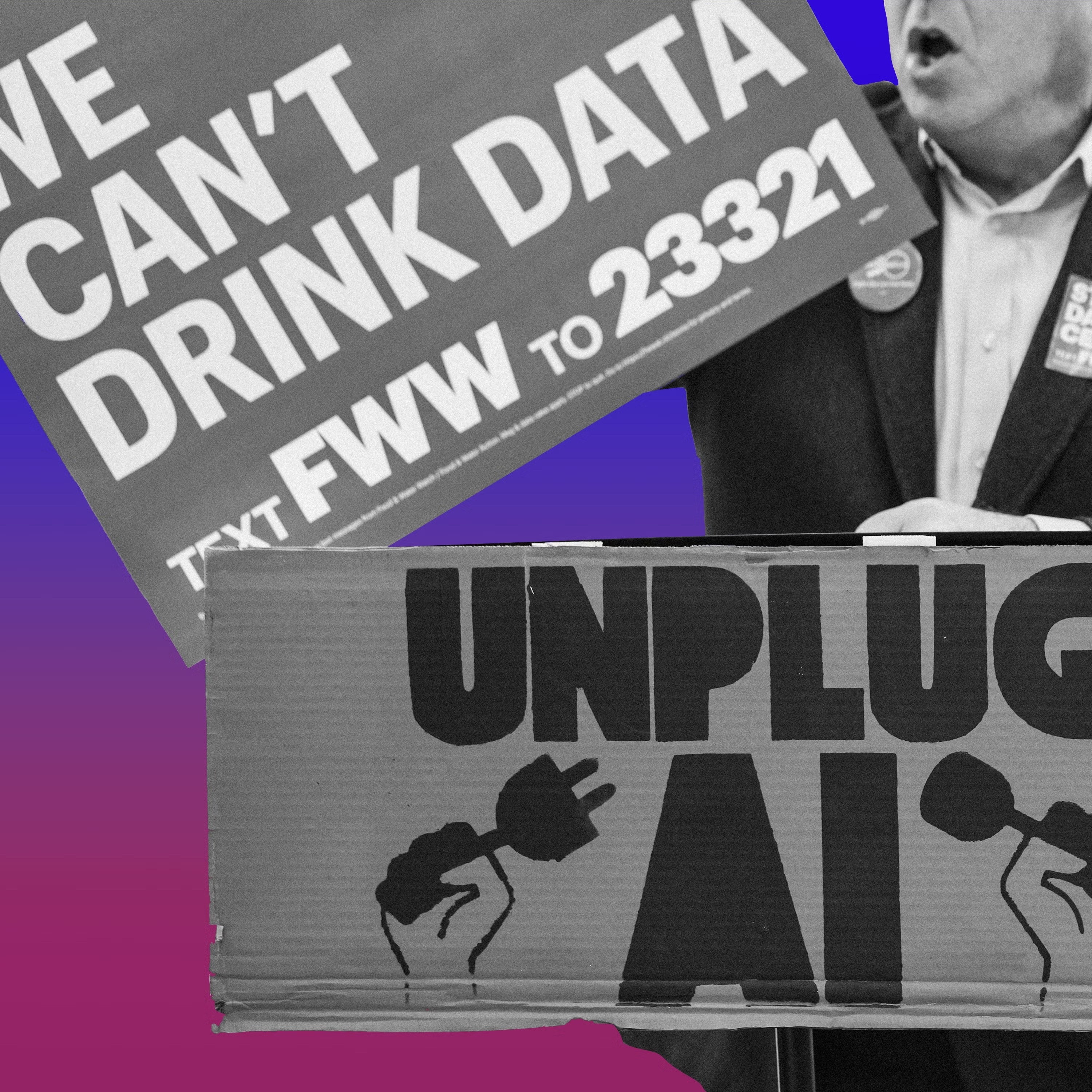
3:03And across the country, at least 38 jurisdictions passed bans or restrictions on data centers. There's something different about this moment when it comes to tech. I think voters have always sort of vaguely disliked, certainly disliked the social, the sort of tech billionaires who were sort of neutral, even leaning positive on some of the companies. But I think there's, the thing that is different about AI is that it is an economic thing. I think people see it inextricably tied to their like lived circumstances. And so because of that, you know, the political salience really goes up.
3:46I think part of the flip of that answer about Elon is, you know, like voters are the most important thing here. Voters are mad. And so I think that incentivizes politicians to take it more seriously, to do more oversight and to hopefully pass meaningful regulations on artificial intelligence. So I think the political incentives are different this time. Today on the show, turns out AI was on the ballot. So what do Democrats do now? I'm Lizzie O 'Leary, and this is What Next TVD, a show about technology, power, and how the future will be determined. Stick around.
4:34When I was in grad school, I had a lot of debt. Credit cards, student debt, the kind of thing you wake up and think about every day, and it feels like an insurmountable climb, just chipping away at this mountain that will never move. I wish, back then, I'd had Monarch's Debt Paydown Simulator and Visualizer to help me track my progress. It's so motivating to watch your debt move down bit by bit. Steady, visible progress can make you feel like you're actually doing the thing. You can watch the timeline move, and the visualizer lays out your whole payoff journey as a clear, motivating timeline. You can also play out your options and pick the fastest one.
5:18Run different payment scenarios side by side. Instantly see how much sooner you get to paying off your debt because you're in control of the plan. Monarch helps you break the debt cycle, turning that Sisyphean feeling of endless slog into a real plan. Most apps only tell you what you've already spent, but Monarch can help you set goals, map out big purchases, and see if you're actually on track before it's too late to adjust. Write your own money story with Monarch. Use code TBD at Monarch.com to get your first year of Monarch Core half off at just$50. That's 50 % off your first year at Monarch.com with code TBD.
6:24Stripe's network is so vast, it has seen$1.9 trillion in payment volume across millions of global businesses. In fact, when a card is used, there's a 92 % chance the Stripe network has seen it before. All of this means fraudulent patterns across payments, accounts, and customer abuse can be detected, flagged, or blocked easier. Based on the rules you set up, of course. Blocking bad actors, welcoming good customers, keeping more of your revenue, your revenue. Learn more about fighting fraud with Stripe at stripe.com slash radar.
7:24Rob Flaherty: fries and a drink for just$8, only at McDonald's. For a limited time only, prices and participation may vary. Prices may be higher in Hawaii, Alaska, and California. And for delivery, fresh beef not available in Alaska and Hawaii. Offer not valid for delivery.
7:45I want to talk about your story a little bit before we get deep into this. Why go from, you know, longtime Democratic operative to co-founder of a super PAC focused on AI. Like, did AI become a thing for you during the Harris campaign? Is this something you've been tracking for a long time? Yes. I mean, yes, is the short answer. Like, I, you know, I remember AI, like, I was aware of the AI discussion that was happening, you know, for a number of years. Would I say it was like a thing I thought super deeply about? No. When like ChatGPT came out, you know, I started using it. It was like, oh my God.
8:29And you start to think about the implications of what it could do for your work. Like I do digital marketing. I was like, oh, wow, this is going to be pretty transformational. But then, you know, I started reading a lot more about it. And I was sent by no less than David Plouffe, actually, AI 2027, the AI Futures Project document about how the technology was going to advance and found myself getting kind of freaked out. But as you see the capabilities, I viewed it as both a what do you do for the world problem. Like, oh, my God, how do we sustain a democracy and sustain a country and prevent this thing from, sure, yes, killing us, but also taking all of the jobs.
9:11Even the utopian vision that these guys are talking about seems quite bad from a democracy perspective and a holding a society together perspective. But then there's like the political question, which is if you're a Democrat and you look at what's coming, the jobs that are going to go first most likely are people who are in the Democratic coalition. And we already have a coalition that can't win a presidential campaign. It's not big enough. And I think that is still true even coming out of last night. We have a political threat here is huge, but the political opportunity is also huge. Even a year ago, six months ago, when you would ask voters what they wanted in response to AI, it was clear they view it as a society problem and they want society solutions.
9:55Things that were hard to get support for are now things that people want in response to AI. Taxes on these companies, ensuring the prosperity is shared, things like job guarantees, even universal health care when polled in light of AI is significantly more popular. So, you know, there is also sort of a huge opportunity to get real things done that make people's lives better that are also popular. And so there's sort of this, I view it as like a political opportunity that is only going to come once in a generation for the Democratic Party. But I also view it as being aligned with needing to regulate this technology for the prosperity and like safety of the country.
10:33If you rewind about a year ago, right, you can sort of see the beginning of this around the off year elections in Virginia. You look at a place like Loudoun County, lots and lots of data centers. We did a show about that. And so I think throughout this midterm cycle, there's been some understanding that particularly data centers are something that people were angry about. Pew has been polling on this for quite some time. But it still felt like the conventionalism was that they were not top of mind, that they were like the third or fourth thing. Where do you think data centers and AI ranked for voters in this cycle?
11:11So here's the thing that I'll say. I think that like AI is, Sarah Longwell put it really well, is a plot device. Like, you know, I always say it's a story. Sometimes the ranking thing can kind of elide the fact that like voters view AI as a cost of living story, right? They view it as an economic story. They view it as a corruption story. They see these guys in Silicon Valley cooking up technology to take their job away that is being built through these data centers that are being put in their backyard that they get no say over. And so in many ways, I think it is all sort of woven into the fabric of all of these issues.
11:52And the fact that even as a standalone, it tends to pull up there with crime. It tends to pull up there with immigration. It is still a significant issue. I do not think it was the issue of this midterm. But I do think it was a issue, and it is a growing issue. I think by the time we get to 28, it will be the issue. But in this moment, I think that it reared its head by linking up with all of the other things that voters were concerned about. Are there races where you think this made the difference? There's a few. You know. Tell me. Sherrod Brown in Ohio, I think, is one. The NRSC, the Republican Senate Committee, put out an actual memo in August, basically begging the tech industry to come in and fix perceptions of data centers in Ohio because it was hurting Houston so badly.
12:45I think that continued. You know, you even saw this in the New York Times-Siena poll. I always say this race is kind of the ghost of Christmas future. AI did, in that raksack of salience issues, actually go up there with some of the most salient issues that are being pulled. And you guys spent in that race? We did. Yes, we spent there. And we tried to spend in races where AI was already an issue. Yeah, tell me about your roster. How many House candidates? We were in four House races and two Senate races. Michigan, Wisconsin, Arizona, Pennsylvania. Yep. We spent for Rebecca Cook in Wisconsin, Joanna Mendoza in Arizona, Paige Cogniti in Pennsylvania, and Will Lawrence in Michigan.
13:26We also spent in Sherrod's race in Ohio. And then we spent in Kansas for Adam Hamilton. And, you know, we looked at these races with a lens of like we we were not we spent we spent six million dollars like that's a drop in the bucket. But can we use that to test messages and sort of try out new arguments that might work in the long run? And so that's what we did. We looked at states that were important to the presidential, where AI was an issue, and then also Kansas, where AI was still a point of litigation. Data centers, certainly part of the conversation there. And, you know, we found that like, while everybody was talking about data centers, we polled, we actually found that hitting Republicans for being against AI regulations, specifically, if you were a House Republican, you voted for Big Beautiful, which had a provision preempting states, that was actually a more potent hit.
14:23because I think people are viewing all of these things together, being against anything to stop AI at all is really, really toxic. So that was sort of the point of our litigation when we went into a lot of these states. There's the data center and AI piece, but there's also this, I mean, frankly, vengeance for the oligarchs piece of this picture. Politico ran this article in late October about, and I'm going to quote here, few targets loom larger for Democrats than Elon Musk. Is this something that Democrats in Congress should be doing, exacting some pound of flesh, investigating Elon Musk's businesses, going after tech oligarchy, dragging CEOs to Capitol Hill?
15:08Do you think that's a winning issue for them? Yes and no. I think vengeance for the sake of vengeance comes off like vengeance for the sake of vengeance. And while it will feel very good to make Elon's life annoying, as he has made life quite bad for the many people he laid off and the many radical political positions he's propped up. I think you need to be thinking about, from an oversight perspective, the things that real people care about and where you can get a pound of flesh on the broader movement towards regulating these people and reining them in. And so I do think that the labs are an important place to have oversight.
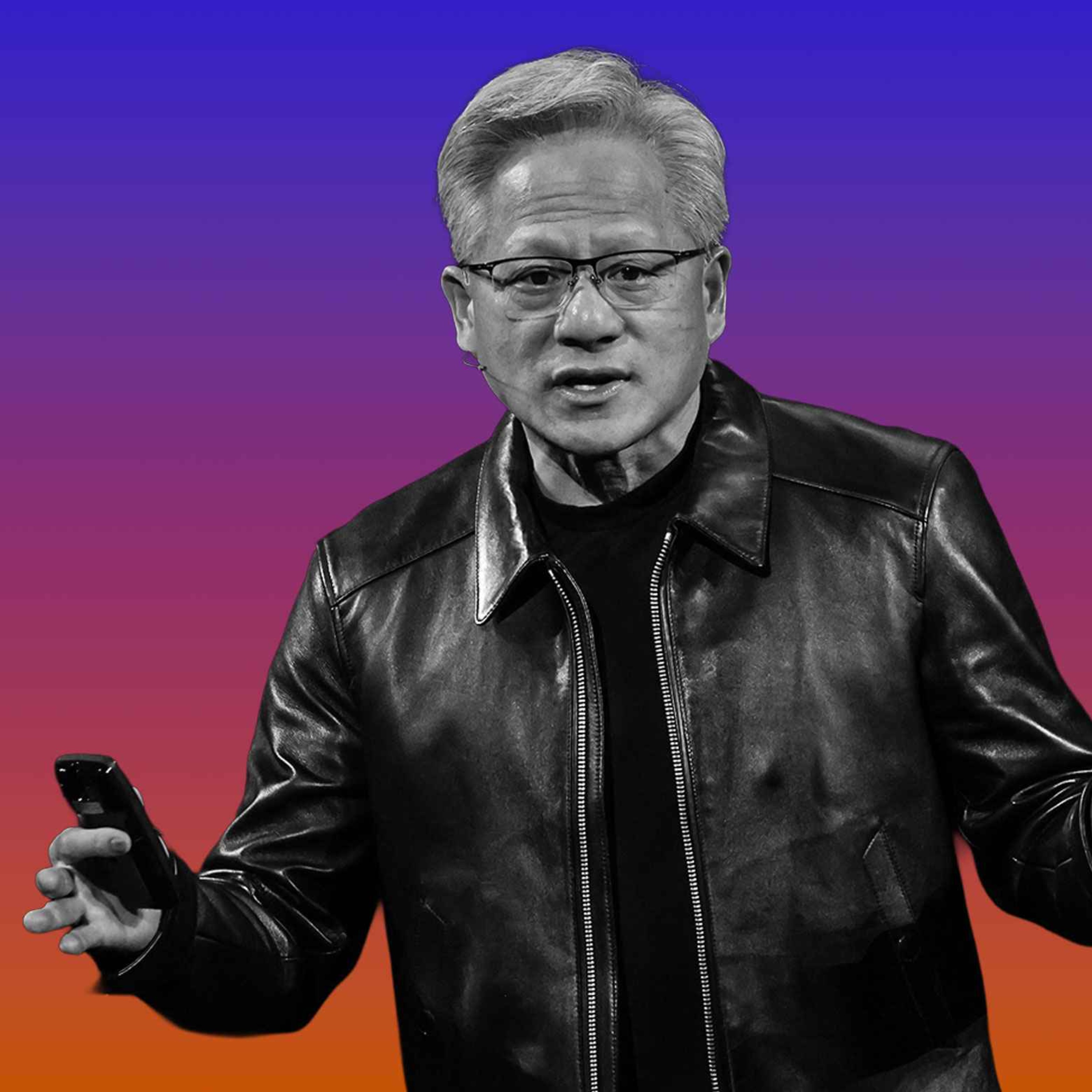
15:54They are running amok in there. And the way that political money has flowed, I think, is not necessarily an oversight thing, but it is an unpopular thing. And the sort of ways in which they are influencing the process, I think is really important. So, you know, I think that it is a winner to be holding tech accountable in this moment, whether it's, you know, what NVIDIA is doing with chips in China, whether, you know, it is what the current harms that these tools are sort of putting on people. I think all of those things are pretty rich targets. I mean, I'm a veteran of covering Mark Zuckerberg sitting in front of Congress squirming.
16:35Yeah. But then nothing happened. Yeah. Is this real? Well, I think this is different for two reasons.
16:47One is the, like, you know, algorithmic harms feel a little esoteric to people, even if people live them, right? They don't like that their kids are getting poisoned. But do they vote on that? Is it a motivator? Not really. In an anti-status quo moment like we are in, where people just hate who's in charge, the economic nature of this really changes the dimensions and the ways in which it does seem like a real threat. A big moment in – I think an underrated moment in the cycle was Jacob Coxon, which definitely raised the salience of catastrophic risk. I think that voters are tuned into this a lot more, and they are worried that it is going to make their life significantly worse from an economic perspective.
17:35And that is why there is just, I think, a little bit more movement generally. And then the other thing is this has like slightly different ramifications, right? You know, it sounds crass, but it's like, okay, Facebook poisoned democracy by showing people a disproportionate amount of content that they are already going to like, right? and by creating these algorithms or whatever. You know, cool. That is really bad. But, you know, the labs are doing something much, much grander. And I think that people feel that much more viscerally. Jacob Coxon resigned from Anthropic, I think the same day you guys launched.
18:19Is that right? It's the very same day. Just like we drew it up.
18:28We'll be right back after a quick break.
18:57into the premium versions of tools we already use, like Gmail, Docs, and Sheets. No new tools or extra logins, just personalized AI for the way we work. That means less time on the work around the work and more time finding the stories worth talking about. Get AI tools for work. Upgrade to Google Workspace with Gemini at goo.gle slash workspace with Gemini. That's goo.gle slash workspace with Gemini. Hi, this is Nicaela Matthews-Aconley from SideHustle Pro. This holiday, the difference between buyers just checking things out and checking out comes down to the last few clicks. PayPal Checkout is a trusted conversion engine fueled by 400 million active PayPal and Venmo accounts.
19:36Add Pay Later and turn holiday shoppers into regulars. 96 % of Pay Later shoppers are repeat users. PayPal is built for all business. Get started at paypal.com slash business. Disclaimer, PayPal Pay Later data, eight markets, March 2025 to February 2026. Repeat users more than one Pay Later purchase in the past year.
19:59So a question I have, right? So one of the regulatory conversations when you have someone like Jacob Coxon making the rounds is, OK, a big regulatory framework for AI. You get company input. Anthropic has been shopping its own legislative proposals. OpenAI has hired some very powerful lobbyists. Is that the way Democrats should go, hammering out some large framework? Or is it something closer to the Rape Payer Protection Act, which died in the Senate? But that is a much more here's where AI meets your life bill that probably affects people's everyday costs more. Yeah. Well, I think that, I think you have to think about it in what you can, what can plausibly get done.
20:50You know, the stakeholders for safety are very powerful. And what I mean by that is, like, you have the banks who care about financial systems. You have people who use these tools who care about it not going rogue. I think that like there is a insider elite safety sort of national security interest in moving sort of a regulatory framework on safety issues. I do think it'll be hard probably to pass a ratepayer thing through Trump just because I think he's worried about slowing down CapEx. But I would love to be proved wrong. Those are things that I think you can probably move in some kind of way on a bipartisan basis in the short term.
21:33I think we have to move some kind of safety legislation, some kind of regulatory framework around the development of AI before we get to 2028. Especially if you want to run on it. Yeah. Well, right. The thing that I think is important and I think is going to be a thing that comes up in the presidential primary, certainly, is what does society look like in a world with powerful AI? And that stuff is what is the shape of the economy when jobs become more precarious? What should we or should we not use artificial intelligence for? What protections are there for people who lose their jobs? How are we rebuilding society and cutting down on isolation?
22:20And how are we preventing the concentration of wealth and power? As a Democrat, I am very skeptical that a Republican is going to do very much with that. And so to me, it's sort of like get what you can done now that will protect people in the biggest sense and that you can get done to protect people in the sort of smallest sense of their pocketbooks. But then the big, big sort of whole enchilada has to be the sort of key priority or one of the key priorities for whoever is president next. where did data centers fall into that i had a conversation with congressman greg casar from texas about this uh toward the end of the summer and it was interesting you know he's very outspoken on ai but he was not willing to go for any kind of data center moratorium and to to me that signals that democrats are stumbling around trying to figure out what should our message be here what should our policies be?
23:17Yeah. Well, look, I think that as far as data centers go, the Bernie logic of a moratorium is a moratorium until we can get the stuff. It's the way to slow it down. On data centers or AI research? On AI, right? The theory is if you - Just like stop? Yeah. The theory is essentially, and I'm speaking for Bernie here, which he would never want, But the theory is you can use a moratorium on data centers to slow down the technology, to pass the legislation to make the technology safe, and that society doesn't crumble. And that it's probably the easiest way to get some form of a slowdown or something like that, especially because it's politically popular.
24:01I think that the reality is the CapEx buildout is a thing that people are very upset about, and we need to make sure that they have agency in that process. Just the amount of money that the hyperscalers are spending to build out and support what they're doing. And A, the amount of societal economic risk that people are exposed to now because the entire economy is tied to those guys. But then also you have to sort of grapple with that head on. But then also, like, we have to make sure these data centers aren't going into the backyards of people who don't want them. And that they are a, you know, people have a sense of agency over where the stuff goes and how it impacts them.
24:44You know, like, it's, you know, having a data center in the middle of nowhere that isn't going to impact people's electricity bills or home values or anything like that. I think that's a different conversation than, like, we're going to put this wherever and throw it in your backyard. I think people respond differently to those things. And so I think you have to look at what data centers mean and why people are mad at them and then think about how you sort of regulate back from there. Are there enough people in the party who understand this? I mean, there's like a handful of people on the hill, right?
25:16Like Don Beyer, congressman of Virginia, went to grad school for machine learning. Isn't that amazing? Yeah. Yeah, talk to him about it. This stuff is hard and it's complicated. And I think there's no question that the companies will be in some way involved in whatever goes forward. And so I wonder who are the people who are going to figure this out? Yeah. Well, there's a couple of different things here. I think the party is coming to understand the technology in one way or another. But I think that like some of the basics are still not legible to people, right? When you – I had a conversation with a soon-to-be member of Congress who I was like, yeah, so the stated goal of open AI is to create artificial intelligence that's better than humans at mostly everything and make it good for society.
26:09And he was like, what? And I'm like, no, that's like literally their – that's like literally their thing. That's like what they're trying to do. And so you are starting from a place of like, I think, a lack of understanding of what the project here is. But I don't think that means that folks can't intelligently regulate it. I think you are seeing different flavors appear. You know, you have sort of these like safety wonks, folks like Bayer, folks like Sarah Jacobs, Lori Tran, Maria Cantwell, like these kind of folks who are like, you know, in the weeds. And then you have sort of the messengers.
26:45And these folks, I think, are a little bit more torqued towards the presidential side because they just have to think about this as a messaging thing. There's different ways that people are talking about it that are interesting, right? You have J.V. Pritzker, who there's like two things here. One, J.V. Pritzker doesn't care about tech money. Like the money is fine. He's fine for money, yeah. Yeah, he's fine. And is pretty fluent in AI issues and has been talking about AI safety at a pretty high volume. You know, you have Pete Buttigieg, who's been talking about, you know, a transformational society in a world with AI for the last like year and a half.
27:22Then you have John Ossoff, who I think is doing a really interesting job of tying AI safety and the AI economy to corruption and doing it with like a sense of anger that I think is like meeting people where they are.
27:33Rob Flaherty: Just listen to this. On day one, Donald Trump rescinded the AI safety order meant to guard against catastrophic risks, including the engineering of bioweapons. Meanwhile, Don Jr.'s 1789 Capital bought big money stakes in data centers and AI labs. These are just like three examples of people who are talking about this. And I think it's just going to grow. You had this very funny tweet in your posting binge on election night. It was a picture of the Democratic leaders kneeling in kente cloth from 2020. And your caption was, we go live to Silicon Valley. Yeah. Do you think that the CEOs who were all arrayed with President Trump at the inauguration, like, are they going to come back like, hey, maybe we overcorrected?
28:22Sorry, guys. Or are they ideologically like, no, we stand firm with the Republicans? I think they're going to try. And you see that, A, insofar as they're starting to hire Democrats. Crystal Hain put out a memo from OpenAI, put out a memo over the weekend to 2028 campaigns saying, actually a list of, I think, quite thoughtful questions about what does it mean to live in a society with AI, but then also saying that voting against the CapEx buildout would be viewed like a vote for the Iraq war in 2002. Bananas, crazy stuff. I think they're going to try, to come back in. And I think the question is whether Democrats fall for it.
29:04Look, the reality is like we have made this decision that I think is kind of insane to make AI development in the United States a for profit race with no rules. That's nuts. And so you do have to engage the labs like there's no question. Are the labs acting in good faith? You know, Anthropic has been shopping, shopping a bill on the hill. I don't think the labs are operating in good faith is the problem. And so much of the conversation about what to do about AI for elected officials in DC, I think has been a function of the lobbying shops for the lab showing up and telling you what to think. And it's been harder, candidly, for independent researchers or other groups to get in the door.
29:45I think that that's changing a little bit. But I think that has been a real problem. And even the sort of safety versus accelerationism debate was sort of viewed as a kind of battle between open AI and anthropic. And so, you know, I think everyone's acting in their own interest. Even that anthropic bill had a pretty broad preemption of state laws. And so, you know, obviously, and sort of limited the government's ability to shut down an AI model. Now, you can understand why they may want that. They've had some recent experience. But, you know, I think that you can't I think Democrats should not spend a lot of time trusting the labs as the only voice and the only actor in the room.
30:28What about donors? Right. If you're thinking about 2028, I'm looking at Democratic mega donors like Reid Hoffman. Presumably, whoever the 2028 nominee is, they might want some of that sweet Silicon Valley money. Yeah. Well, Silicon, I think the money, there's the money question, there's the voter question. We talked about it earlier, but the limits of what money can do in politics when voters are really mad about a thing. I think we saw that in the context of Elon. We saw that in the context of leading the future. Like good politics ultimately is good politics, and the money doesn't change that.
31:05The money can drive people away from talking about things. I think we are sort of past the Rubicon on that. The other thing that's going to be interesting to watch, candidly, is there are a lot of people who work in these labs who are set to make a lot of money from these IPOs. And they care a lot about safety. And so I do think there's also going to be this thing where you have sort of accelerationists don't regulate Silicon Valley money. But you're also going to have a lot of you should regulate these AI company money that sort of moves in as well. And so I think the money conversation is actually going to be pretty complex as we move into a presidential primary.
31:44You said previously and in our conversation that AI is poised to become the defining issue in 2020. What is the winning message that taps into the way millions of people feel about AI enough to motivate them to vote? Yeah, I don't think there is one single message, but there's a couple of things that it's going to have to feature. One, people are mad, and so you have to meet them on that level. Two, people want big solutions. Like, they view this. I think that, like, there's something that Washington isn't just – the instruments by which we research just isn't picking up. We missed data centers until it was clear.
32:26I think they were currently in the process of missing AI. I think that like a big vision for what the world looks like that is not just about AI, but assumes AI exists, I think is really important. And you need to tell a story of the villains here. You need to say, you know, who's at fault and need to name them. Ultimately, the story of a bunch of guys in a lab cooking up technology to replace your job and buying off the government. They're companies, by the way. You don't have to say lab. That's their term. That's true. These companies that are cooking this up are buying off the government to do it.
33:01Like that story is pretty powerful and it is emblematic of what people hate about all of this and they want some rules. And so I think you need a broad vision for the world we are headed in that seeks to unfuck all of the problems that led us here. Based on what you've just seen, who can do that? Again, I think there are a lot of people. I heard you smile when you said Ossoff. Yeah, well, I think he's doing a good job. I think the way he's talking about AI has impressed me and has broken some – like he's approached it from an angle that I hadn't expected or really thought of. So, you know, I think that's great.
33:43I think we'll have to see how the field goes. There are a lot of people who are capable of it. I think the people who will be less capable are the people who treat it like a laundry list issue and say, oh, well, it's like it's like immigration and guns and climate. And I have these three things that I'm going to do. And it's in a white paper. And I think the people who do it best will meet people on a level of their sort of populist skepticism of of the whole economy. And it's of AI as a function of that. Rob Flaherty, thank you so much for talking with me. I really appreciate it. Thanks, Lizzie.
34:12Appreciate it. Rob Flaherty is a co-founder of Tomorrow Together. And that's our show for the day. What Next is produced by Evan Campbell, Madeline Thames-Ducharm, Patrick Fort, and Micah Phillips. Paige Osborne is the senior supervising producer for What Next and What Next TVD. Mia Lobel is the executive producer of podcasts here at Slate. And Ben Richmond is the senior director of podcast operations. I am Lizzie O 'Leary. You can find me on Blue Sky, where I am at Lizzie O 'Reilly. Thanks so much for listening. Talk to you soon.
35:08AI is built right into the premium versions of tools we already use, like Gmail, Docs, and Sheets. No new tools or extra logins, just personalized AI for the way we work. That means less time on the work around the work and more time finding the stories worth talking about. Get AI tools for work. Upgrade to Google Workspace with Gemini at goo.gle slash workspace with Gemini. That's goo.gle slash workspace with Gemini. Shipping, billing, admin, payroll, marketing. You're managing all the things. So why waste time sending important documents the old-fashioned way? Mail and ship when you want, how you want with Stamps.com.
35:44Print postage on demand 24-7 and schedule pickups from your office or home. Save up to 90 % with automated rate shopping. That's why over 1 million small businesses trust Stamps.com. Go to Stamps.com and use code PODCAST to try Stamps.com risk-free for 60 days.
As an electoral issue during the midterms, artificial intelligence was tied up with money in politics, with industry and government in cahoots, and with data centers feeling forced into communities. It was a big winner for Democrats this year, and all of these—plus the implications for employment—are going to be bigger issues in 2028.
Guest: Rob Flaherty, political strategist and founder of Tomorrow Together, a tech-focused political action committee.
Want more What Next TBD? Subscribe to Slate Plus to access ad-free listening to the whole What Next family and across all your favorite Slate podcasts. Subscribe today on Apple Podcasts by clicking “Try Free” at the top of our show page. Sign up now at slate.com/whatnextplus to get access wherever you listen.
Podcast production by Evan Campbell, Madeline Thames-Ducharme, Patrick Fort and Micah Phillips.
Paige Osburn is the senior supervising producer of What Next and What Next TBD.
Hosted on Acast. See acast.com/privacy for more information.