Ask ChatGPT

 What's Cooking? | A Podcast from Nory
2 Sep 2026 · 13m · 6 chapters

Post-COVID restaurant rebuilding at Emmy Squared Pizza, focusing on operational discipline, slim margins, real-time data accountability, staffing “bench” development, and cleanliness/pride standards.
No guest names are provided in the transcript; it appears to be a single operator/leader speaking (likely an Emmy Squared executive overseeing the Northeast).
Post-COVID, there’s little room for trial-and-error because wasted dollars can’t be afforded. Successful operators streamline P&L line items and align labor to revenue. Fine dining needs a “bench” because payroll can’t always support non-revenue roles. Emotional intelligence and “restaurant eye” improve GM effectiveness.
Linen vs paper napkin cost/brand perception; updating a monthly staffing matrix; bench like baseball AAA/AA affiliates; setting a new cleanliness standard; using year-over-year comp as the morning benchmark.
Written by AI. May contain mistakes.
Discussion on the role of people and community in the hospitality industry.
“It's they have to be able to walk in and and lead and guide their teams.”
Exploration of the operational changes and challenges faced by restaurants after COVID-19.
“And kind of figuring out the operations and what we felt like was a part of the brand and wasn't.”
Insights on the need for financial discipline and operational focus in restaurants.
“Mom and pop restaurants are looking at their operating expenses.”
Discussing team dynamics and the importance of developing potential leaders in restaurants.
“categories, because they found that like, okay, we're going to streamline our operations, we're going to cut away all of the fat, and we're going to just focus on the things that make us successful.”
How pride in the workplace and cleanliness affect restaurant culture and operations.
“because they want to grow faster than we can offer them opportunity or maybe it is performance-based or whatever it is.”
Understanding the unique challenges faced daily in the hospitality sector compared to other industries.
“least, we had a lot of opportunities in creating a restaurant that you walked in.”

Get the gist, explore an idea or ask about something said.
 Claude
On What's Cooking? | A Podcast from Nory, what are the key points of this episode?
Searching your listeningAutomatic transcript. May contain errors.
0:07I love sharing stories with other individuals, whether they're friends or strangers, and I love getting to know other individuals and kind of listening to their hopes, their dreams, their goals, their aspirations, and helping them along that path to help them achieve where they want to go. You know, the hospitality industry is obviously about people. It's about serving your community. But, you know, from an operator's perspective, it's about teaching your team how to be passionate every day, even if they don't feel that that specific day. It's they have to be able to walk in and and lead and guide their teams.
0:52And so to me, it's always been about the people.
1:02I would say pre-COVID models, they weren't necessarily as defined. Pre-COVID models were I had a great idea for a recipe, or I've always wanted to try to open my own restaurant, or yes, I want to go after that Michelin star, or yes, I want to be that counter service concept, But there was much more trial and ever. There was much more organic movement through who you were and what you were offering to the community. And you could play in a lot of different sandboxes. You could be that little mom and pop restaurant that also had really nice stemware and, you know, nice linens and, you know, a type of linen like seafold napkin in your bathroom that made you feel like you were in, you know, in Paris kind of walking out of the bathroom, you know.
1:59So there was a lot of, hey, what's frivolous, what's not frivolous, but it wasn't like something that we had to make a decision on. It was like kind of who are we today? Who are we tomorrow? Who are we next year? And kind of figuring out the operations and what we felt like was a part of the brand and wasn't. So post-COVID, the margins obviously are even slimmer than they were. And that's saying something because the margins were slim pre-COVID as well. But I think people coming into this industry post-COVID have realized that there needs to be such a discipline and deliberateness to every choice made about your operations from the beginning.
2:47There can be very little trial and error because every dollar wasted on something that doesn't necessarily support the core essence of the brand is a dollar that you can't afford to lose. And so I used the example of a linen rollout. Mom and pop restaurants are looking at their operating expenses. They obviously have their prime cost. And they're like, OK, we know that, you know, if we could be 22 percent or under in our OPEX, we would make a little bit of money at the end of the day. And now, right, like you can't be 22 percent that, you know, you're underwater. Right. And so it's how are you looking at every aspect, every line item of your P &L and truly understanding like, hey, is the difference between a paper napkin and a linen napkin truly worth the brand kind of perception?
3:49And if so, right, how are we making up that revenue to allow us to actually generate that 5 % to 7 %? You know, and the restaurants that are successful are profiting at a really high level in certain categories because the restaurants that are profitable are profiting at much higher numbers than they used to be, I would say, in the fast casual categories, because they found that like, okay, we're going to streamline our operations, we're going to cut away all of the fat, and we're going to just focus on the things that make us successful. And then they're able to leverage, obviously, their buying power and things like that.
4:34And the other side of that, the true fine dining, kind of Michelin star,$80 a head, $150 a head,$400 a head restaurant.
4:47The word bench is the key, right? Like, can your payroll afford an individual that is potentially, like, kind of waiting in the wings, that's not directly supporting generating revenue currently? And I know a lot of models right now, a lot of business models that can't afford that, you know? And so, you know, that means that you have to look to your hourly, you have to look to your team to be, you know, kind of brand ambassadors and are constantly on the lookout for that one or two individuals that they think could potentially three months from now, six months from now, you know, grow into somebody that could really create value for your company.
5:37and so one it's about again sharing data in real time and and holding yourself and your team accountable to that data right we have a staffing matrix right that we update on a monthly basis that goes location by location and kind of grades the the current leadership team not just on their performance but also on their uh you know the fact that they may be a flight risk because they want to grow faster than we can offer them opportunity or maybe it is performance-based or whatever it is. And then as part of that leadership matrix or labor matrix, we're also starting. It is a bench, so to speak, but it is a list of individuals that are the potential up and coming.
6:29And just like you're building a baseball team, you have your AAA and your AA affiliates that are kind of bubbling up their next shortstop to the major league team. Here's someone who wants to be an operations manager for a larger company like a Cobb or something like that. And they spend, you know, every day of their year building the next menu and the next kind of rollout and really optimizing that, right? There's a lot of value to be gained at an Emmy squared of us going in there and saying, okay, six months, you know, if we want to launch a menu in six months, what are we doing today? What are we doing at the five month mark, four month, three months, so on and so forth?
7:07And then what are these KPIs that we need to check off in order to get to that day before launch? And we feel really confident that 26 restaurants are going to go out there and execute a menu that not only is it to spec, but it actually gets people really excited. Right. And so you can find ways to include people and build up their their strengths and get them more involved without having to constantly do a carrot and stick kind of analogy. you.
7:41Right or wrong, and this might just be my OCD speaking, but I equate cleanliness with respect and honor and energy. And so when I took over ME Squared, specifically the Northeast, least, we had a lot of opportunities in creating a restaurant that you walked in. The word I was looking for was pride, pride, right? That you walked in as a dishwasher, server, expo, blind cook, and you felt proud to be working for this brand. Now, you know, obviously pride can manifest with, you know, its cultural relevancy, you You know, it's, you know, cutting edge approach to X, Y, and Z. You know, the amount of celebrities that walk through the door, right?
8:39Pride can come from a lot of different places. But honestly, to me, pride comes from we respect this industry. And to respect the industry means you walk into a clean restaurant. And so the first thing we did was we set a new standard for what a clean restaurant is. Like when I walk through a restaurant, right? And I think operators, you know, we talk about it as having a restaurant eye, right? What is your, how is your restaurant eye? Has it been sharpened? Are you seeing what I'm seeing, right? Are we aligned on the current state of affairs? Because if I walk in and you walk in and we just see the restaurant completely differently, the reality is the reality.
9:21Um, and so that was first and foremost was I would walk restaurants with my current GMs and say, are you seeing what I'm seeing? Right. Is, is this, you know, whatever this is, right. The way it's supposed to be. And if they said, yes, I said, okay. Right. Like explain that to me. Cause I, I, I don't understand yet. Right. And I don't want to get too, too far into the weeds of that. But I found very quickly.
9:56Conor Sheridan: What's the first number that you look at in the morning? Year over year comp. Okay. And why is that? To me, it's the benchmark for understanding, you know, are we making strides towards building back our top line? Every year, we need to be doing better sales than the year before because the reverse of that formula means that we're going to go out of business. If you could hand every GM one skill overnight, what would it be? Emotional intelligence. Knowing what needs to be bubbled up to me and what are things that they can immediately act on. Knowing the difference between what requires a little oversight or a little bit of a brainstorming session and what are things that just need to be solved and they have to solve it as best as they can based on their experience, that to me is the effectiveness of if I've been able to do my job well, right?
10:58Of them knowing the difference.
11:03The industry needs to stop pretending like it's any other industry. The hospitality industry is a truly unique industry with truly unique pinch points and business models. You know, a banker doesn't show up to work that day because they're sick. And rightfully so, they are staying home for the public good, for themselves, for, you know, the sake of their family, whatever it is, right? That bank doesn't suffer, right? a line cook on a Friday afternoon doesn't show up to work and you only schedule one line cook on a Friday afternoon because that's what your labor model is telling you to do, right?
11:49That's, you know, that's going to be the next six hours of hell in your life, right? Like as the GM, you are now calling every single person that you've ever known to come in and try to, you know, work a shift usually an hour before you open or you personally are having to cook and potentially have to dust off your recipes in your brain of like, am I making this to spec? The rest of your team suffers because you've subtracted a disproportionate amount of value in your operations and the level of anxiety and stress is through the roof, right? And that is every day in this industry. So there's a lot of positives to this industry, but it is absolutely unique and can't be treated like any other industry, nor can any model be kind of forced upon it that would not reflect the true kind of idiosyncrasies of what befalls a general manager every day.
12:59telescope here.
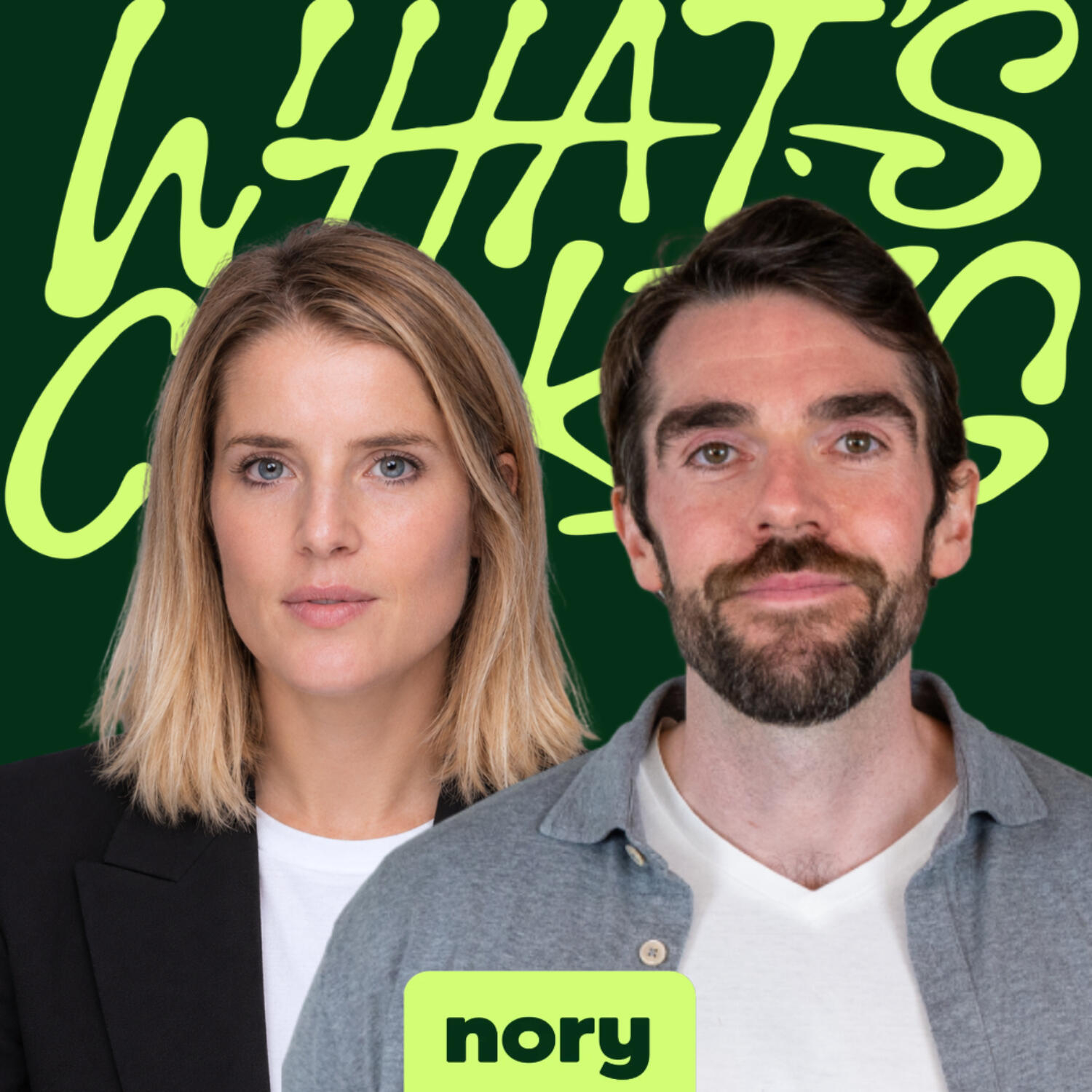
Missed the full episode with Topher Bertone-Ledford, VP of Operations at Emmy Squared Pizza? Here's the bite-size cut.
Keep an eye out for our next episode of What's Cooking, hosted by Conor Sheridan, CEO of Nory, the AI operating system for hospitality.
LISTEN TO THE FULL EPISODE
Apple Podcasts: https://podcasts.apple.com/be/podcast/how-to-rebuild-a-struggling-restaurant-region-with/id1825066598?i=1000784508559&l=nl
Spotify: https://open.spotify.com/episode/18MabMxvjNe0CS2lkLkyV1
YouTube: https://www.youtube.com/watch?v=tYcdNaALdhg
CONNECT
Topher Bertone-Ledford on LinkedIn: https://www.linkedin.com/in/topherbertoneledford
Conor Sheridan on LinkedIn: https://www.linkedin.com/in/sheridanconor/
Nory: https://www.nory.ai/
All What's Cooking episodes: https://www.nory.ai/podcasts