 Wild Ideas Worth Living
3 Nov 2026 · 31m

 Add vo to ChatGPT or Claude to ask about everything you hear
vo listened to this episode to put together the overview and transcript, so there may be the odd mistake.
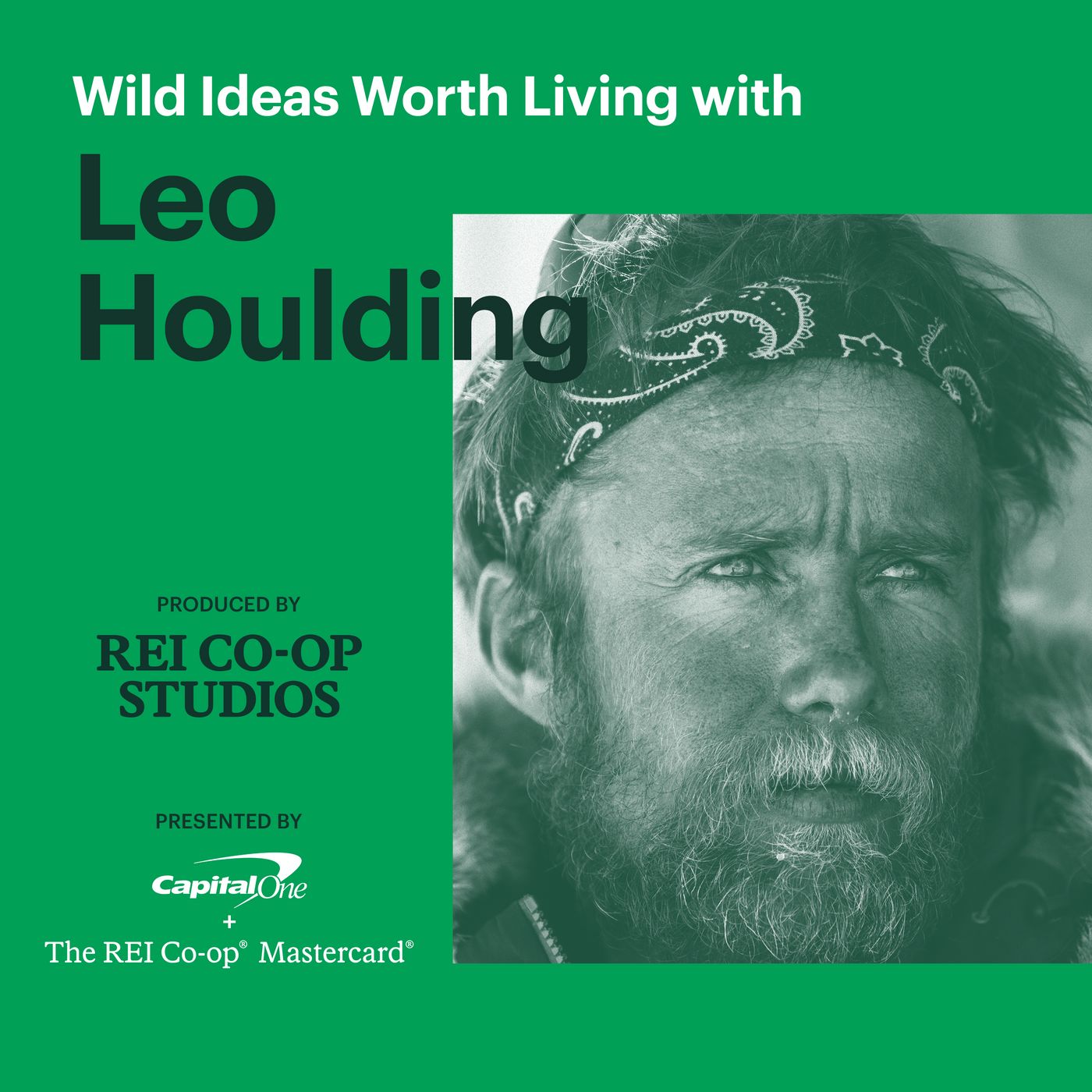
Adventure as a way to build resilience and challenge comfort, featuring Leo Houlding’s climbing and expedition career and how he now includes his wife and kids in extreme travel (including a year-long family trip and a week on El Capitan).
Leo Houlding is a British explorer and professional climber with 30+ years in adventure sports. At 18, he became the youngest person to free climb El Capitan (1998). He’s appeared in British TV and adventure films, and has led remote expeditions including Antarctica.
People need “uncomfortable” experiences (even hours/days) to realize humans are resilient. Real adventure requires genuine risk, uncertainty, and challenge—he criticizes “adventure TV” for lacking these. Kids are more capable than parents assume, and early exposure to manageable fear helps.
Old Man of Hoy (vomiting fulmars); 2009 Baffin Island skydive/airdrop for first free climb attempt of Mount Asgard; 2017 kite-ski expedition to Antarctica’s Spectre (2,000-mile wind-supported trip); 2024–25 family year traveling (Norway, Nepal, Papua New Guinea, Kyrgyzstan) and a seven-night El Capitan portaledge climb with kids Jackson (8) and Freya (11).
0:02Simone L. Smith: I firmly believe everybody needs a little bit more adventure in their lives. Everyone, whatever walk of life you're from, whoever you are, it's good for you, you know, and we've become extremely dependent on comfort. But it's really good to put yourself into uncomfortable situations. It doesn't have to be for weeks on end. It can just be for a day or even hours. But, you know, you don't need that comfy sofa. You don't need that warm jacket or that air conditioning. You can survive. Humans are much more resilient as a species than we give ourselves credit for.
0:39Leo Houlding: Explorer Leo Holding is like the Indiana Jones of adventure sports. For more than 30 years, he's been a professional climber and appeared in British TV shows and adventure films. In 1998, at just 18 years old, Leo became the youngest person to free climb El Capitan and Yosemite. Since then, he's established new climbing routes on remote rock faces around the world, explored the Amazon rainforest, and led an ambitious expedition across Antarctica using kites to ski thousands of miles across the ice before scaling a remote granite peak called the Spectre. While Leo is still chasing big adventures, these days he's bringing his wife and two kids along for the ride too.
1:21Leo Houlding: Recently, he and his family spent an entire year traveling the world together, hiking, climbing, camping, and exploring some pretty wild places. I'm Shelby Stanger, and this is Wild Ideas Worth Living, an REI Co-op Studios production presented by Capital One and the REI Co-op MasterCard. Leo Holding, great name for a climber. Welcome to Wild Ideas Worth Living.
1:48Simone L. Smith: Thanks for having me.
1:49Leo Houlding: Explain to me how you became an adventure. Where did you grow up? What did your parents do? How did you get into this?
1:56Simone L. Smith: I grew up in a place called the Lake District in the northwest of England, right by Scotland, about an hour and a half north of Manchester. Yeah, it's a pretty, it's like a little bit of Scotland in England. It's a national park. National parks in the UK are really different to here, right? They're not wilderness areas. People live there. But it's sparsely populated and there's lots of forests and small mountains and rock faces and lakes. And my dad was kind of a keen, he was a keen fell walker, like a hiker. And a friend of his was a rock climber. And it was him, a guy called Malcolm Cundy, that got me into rock climbing.
2:30Simone L. Smith: as a child when I was about nine. And that was the conduit into all this other stuff. The reason I fell in love with rock climbing is because it gives you this real fast track to adventure. You know, you don't have to kite and scree across Antarctica or skydive into the Arctic or hack through the Amazon rainforest. You just have to go 20 feet up and all of a sudden you have all the elements of adventure, you know, the risk, the challenge, the kind of, the sense of purpose that you get from going on big adventures. And I really loved that about climbing. And that's been the kind of guiding light to most of my life and most of the adventures.
3:06Simone L. Smith: And, you know, I never knew when I was a kid that I would turn it into a profession that would last, you know, three decades. I've been doing it virtually full time.
3:15Leo Houlding: Do you remember that first time rock climbing?
3:17Simone L. Smith: I actually do. I remember it very clearly because it was, you know, an absolute sort of revelatory moment when very, very early on, I just, I fell in love with it. straight away it was really we tend to like things that we're good at and uh um and I was quite a late developer so I was a really small child I was one of the smallest kids in my year group um and so I never really enjoyed school sports but and you don't have to be tall to be a good climber you know there's there's a lot of technique involved and then the really really formative experience was um about six months after I started we did this thing called the old man of hoy in Scotland It's a tower.
3:58Simone L. Smith: They're a bit like the desert towers that you see out in Utah. It's sandstone, 450 feet tall, sticks up out of the sea in a place called the Orkney Islands. It's offshore in the north of Scotland. And it's a wild place. Just getting to the base of it is a wild adventure. You get these giant seabirds called fulmars, which can projectile vomit if you disturb them with surprising accuracy. And it's always windy and waves. Wait, what?
4:21Leo Houlding: There are these birds that can puke at you? Yeah. That are like pterodactyl looking probably?
4:26Simone L. Smith: They're massive. The wingspan's about three feet, and they can projectile vomit about 12 feet with this horrible fish bile stuff. Oh, that's amazing. With remarkable accuracy.
4:37Leo Houlding: What a cool, like, superpower.
4:40Simone L. Smith: Yeah, and they nest on the old man of Hoy. It's a full-on adventure. It's a real inaccessible summit. There's nowhere to get there unless you climb. And I remember coming face-to-face with one of these seagulls and getting vommed on and then getting to the top of this thing and in the wind and then having to get back down and you have to rappel down. There's a big free-hanging rappel, you know, where you're just dangling in space for the last 200 feet. And when I got down, I just thought that was the most amazing thing ever. This is what I want to do with my life. And not just the experience, but the people that we were with, these kind of, you know, full generation older, but they were all lifers, you know, they were people who'd committed their life to climbing.
5:19Simone L. Smith: You know, this life less ordinary, very much on the path of what we're talking about here, that, you know, to live a life full of adventure, to go to these wild places and do wild things with wild people.
5:30Leo Houlding: Wow, that sounds amazing. So 10 year old Leo was just hooked. Then you became some sort of a little sensation, though, in your area. Is that correct? Like right away, were you getting picked up by magazines? How early did you turn pro?
5:43Simone L. Smith: I mean, so that ascent, I was the youngest kid to have done it at that time. So it got some publicity. And then I did the competitions as a junior so the national climbing competitions I was a national junior champion in like 96 I think it was and did reasonably well in some of the international comps and then in the UK you finish high school at 16 and you're supposed to go into two years of further education and then you go on to university and I started what we call our A-levels when I was 16 having just had the most amazing summer in a place called North Wales, which is one of the real kind of heart and soul of British rock climbing and stuck about two months in college as a 16 year old.
6:28Simone L. Smith: And then with the full blessing of my parents, my parents said, okay, you want to be a professional rock climber. That does not sound like a brilliant career choice, but we'll pay your rent, which was 25 pounds, you know, 30 bucks a week. But that's it. So you'll have a place to live, but you have to make it work. You have to be able to support yourself and we'll give you a year. And if it doesn't work out, then we'd like you to go back into education.
6:56Leo Houlding: Leo took his parents up on the deal and managed to make it work. But those early days as a professional adventure were not luxurious. Leo lived cheaply, did a lot of hitchhiking and pieced together just enough money to keep going. Then when he was just 17, Leo landed a sponsorship contract with the outdoor brand Berghaus. While getting a sponsorship was a big deal, it didn't mean Leo was guaranteed enough money to live on. So he started giving talks about going on outdoor adventures and took whatever opportunities he could to fund the next climb. A few years later, the BBC did a documentary about Leo called My Right Foot, which followed the story of an injury that Leo sustained while climbing.
7:42Leo Houlding: That film led to more mainstream TV work. He once raced British TV host Jeremy Clarkson to the top of a 1 ,300-foot cliff in France. He also joined an Everest expedition with Conrad Anker that became the film The Wildest Dream. And eventually, Leo hosted his own British series called Take Me to the Edge, where he brought other people along on wild adventures around the world.
8:12Leo Houlding: On your adventurous path in life, you've had, you know, you've done these expeditions, they've become movies, they've led to tours, but you've also done some TV shows. How do those come about?
8:24Simone L. Smith: I haven't done a lot of TV in recent years. In my mid to late 20s, I did a lot and I did all kinds of different things. adventure-based documentary stuff um and i made a lot of money that was kind of a life changer because i think i made more money in sort of five years of tv than i did in certainly 15 years of of climbing uh so that was good and i managed not to waste it all on on fast cars but in the end i sort of walked away from tv somewhat intentionally because it's not real you know it really isn't The whole point of adventure, in my opinion, there's three key elements. There has to be an element of genuine risk.
9:06Simone L. Smith: There has to be an element of uncertainty. You know, you do not know what's going to happen. When you set out on that adventure, it's not a foregone conclusion. And there has to be an element of challenge. And in television, you know, you really don't have that because there's no genuine risk. They don't really put people in danger. You can't for legal reasons. And there's no uncertainty. It's basically a foregone conclusion. and there's a narrative arc which is pretty much predisposed because they're not going to give you a million bucks to go off on some uncertain adventure and not get to the top.
9:37Simone L. Smith: That's not how it works. So I kind of ended up with quite a lot of contempt for what is so-called adventure TV. And I was finding it really difficult to put this presenter face on and kind of, you know, pretend that something was really extreme and really dangerous, whilst at the same time having a much bigger part of my identity invested in real adventure, where the uncertainty is real and the risk is real.
10:08Leo Houlding: In 2009, Leo organized what he considers his first true big-time expedition. He assembled a team of seven people and headed to Baffin Island, a remote island off the coast of northern Canada, a few hundred miles west of Greenland. Their goal was to complete the first free climb of the north face of Mount Asgard, a mountain with two massive flat-topped granite towers rising out of the Arctic tundra. The sheer rock walls stretch thousands of feet into the sky, but even getting to the mountain would be an adventure of its own. Leo's plan was to skydive into the wilderness near its base.
10:51Simone L. Smith: I somehow managed to get a permit from the national park. somehow managed to get the green light from the aircraft owner to skydive in and airdrop all our stuff. But we needed the blessing of the pilot. They're in charge. They're the captain. So this Indiana Jones plane shows up. The door swings open, and this Canadian guy steps out with his cowboy boots on. OK, this is a good start. And his name was Rob, and I remember asking him. I was like, oh, Rob, yeah. He goes, are you the crazy fools that want to do the airdrop? And I said, yes, yes, we are. and do you think it'd be possible to jump out of the aircraft as well, you know, to skydive in?
11:26Simone L. Smith: And he said, you guys want to skydive in? We said, yeah, would that be okay? And he was like, hell yeah! And then we did and we flew off into this place that looks like something out of Middle Earth. It's unreal, these, you know, mass, some of the tallest cliffs in the world. And then we pulled around the corner and Mount Asgard is this incredible El Capitan-sized double-barrelled citadel. It's this huge castle. It is absolutely spectacular. And then we, you know, one by one threw all these barrels of equipment out with these little parachutes, which I got off eBay from a military surplus place for 20 bucks each that said, do not use for aerial delivery.
12:05Simone L. Smith: But we modified them with the help of a rigger, a parachute rigger. And we threw all this stuff out. And then we jumped out this plane and it was sick. We had no communications. We had no sat phone. We had no. This is 2009. How did you find each other?
12:19Leo Houlding: And you're like.
12:19Simone L. Smith: We all landed right next to each other. The plane did one more pass. We got a broken communication. Okay, we're all good. And then there we were on this glacier underneath the massive northwest face Mount Asgard, unable to see any of our stuff. And I just remember thinking immediately, oh, man, we should have put more stuff in our pockets. Because anyway, we managed to find most of our stuff. And then we had the most incredible month, five weeks in the Arctic, including climbing the northwest face of this really difficult wall and then jumping off the top of it with wingsuits to get back down.
12:56Simone L. Smith: And it was utterly mind blowing.
13:06Leo Houlding: After Baffin Island, Leo's adventures only grew bigger. In 2010, he successfully climbed the first ascent of the Prophet, which is a notoriously difficult route on El Capitan that he'd been working on for years. Then in 2012, he headed deep into the Venezuelan Amazon to attempt a first ascent on a quartzite tower in the middle of the jungle. In 2017, Leo headed to Antarctica for an expedition to a mountain called the Spectre, which is considered to be one of the most remote mountains on Earth. Logistic expenses are so high that no independent expeditions have ever climbed in the region. Leo's plan was to kite ski there, using the wind to pull him and his gear across thousands of miles of Antarctic ice.
14:01Simone L. Smith: And I thought, wouldn't it be cool, instead of using a plane, you know get onto the continent and then be completely self-supported using the wind and that's where the spectra expedition came from we did you know 2 000 mile wind supported trip we had the start weight of the sledges was 215 kilos that's about 450 pounds that's massive you know you couldn't move that without a kite but it's sick it's not like the surface is like powder
14:29Leo Houlding: or straight so like how does your ski not catch edges and then you go on ice and how do you not
14:37Simone L. Smith: eat it like 24 7 you do but you try not to um and you know there's a certain amount of skill it's a very skill based thing it's quite a high skill level it's a lot harder than it looks especially in in rough conditions the closest place which is 500 miles is the south pole yeah it's fair to say it's the most remote mountain in the world it's a thousand miles from anywhere but it's just beautiful it's almost like a crystal of granite that sticks up out of this otherwise quite unattractive range um but it's prohibitively expensive to get there you could fly in and fly out but the costs become exponential so to fly in and fly out you'd be looking at the best part of a million dollars for an expedition like that um so what we did is we just took one flight which was the point of no return which was really close to the south pole We could have gone to the South Pole, but we chose not to because you often get a circle around the South Pole for the last degree or so where it's often there's no wind.
15:34Simone L. Smith: So we decided to start just outside the wind shadow. And then, yeah, we went on this harebrained adventure. We had food for 80 days. And in the end, we finished in like 60 days because you never know how long it's going to take with wind. but you know he didn't quite go according to plan to to put it bluntly the first good day of kiting that we had was day 42 of the expedition it was brutal you'd do like 30 kilometers across this terrible sastrugi terrain minus 40 we spent the first four days in the tent we didn't even get out the tent for the first four days we had a full-on blizzard early season the middle of November, it was brutal.
16:17Simone L. Smith: But yeah, and then but then it came good. We didn't actually do what we wanted to do. We wanted to climb the south spur of the specter, which I'm loathe to tell your listeners about because it's probably the best unclimbed line on the planet through my eyes.
16:31Leo Houlding: Once they reached the base of the mountain, the team realized that they didn't really have the right equipment to climb the route as planned. So they had to choose a different route altogether. other. Even with those unexpected challenges, the expedition was a remarkable feat. It made headlines around the world and became a documentary called Spectre Expedition to the end of the earth. These days, after decades of pushing the limits on expeditions, Leo has been embracing a different kind of adventure, traveling the world with his family.
17:12Leo Houlding: For years, Leo Holding would spend months at a time in some of the most isolated corners of the world. But about 13 years ago, once he became a father, Leo's priorities started to shift. He was still a committed adventurer, but he was also a devoted father who wanted to spend as much time with his family as possible. In 2024, Leo and his wife made a bold decision. They decided to take their kids, who were 8 and 11 at the time, out of school for an entire year to travel the world.
17:46Simone L. Smith: We did a back-to-back year around the world of various stuff. We started off in northern Norway, which is one of our favorite places, and then we spent the second half of the year in Nepal, in Papua New Guinea, in Kyrgyzstan, going on legit expeditions that most adults would be way out of the depth on. And it was absolutely insane. You know, we climbed El Capitan during that year. We spent a week on the wall with the kids.
18:13Leo Houlding: Let's talk about that. So you spent a week on the wall with the kids. That doesn't mean you were like going and staying in a tent at Camp 4 or you were at that hotel, the Awani or the Hotel Majestic. You were not staying even in, what is it called, the village?
18:32Simone L. Smith: I mean, we were there for a month, right? and so we were staying in the campgrounds.
18:37Leo Houlding: You were, but for a few days.
18:38Simone L. Smith: Seven nights.
18:40Leo Houlding: Seven nights you were on a port ledge, right? So you were in a tent on the side of the actual mountain, thousands of feet in the air. Yeah. How old were your kids?
18:51Simone L. Smith: Jackson just turned eight by a few weeks and Freya was 11.
18:57Leo Houlding: So you're eight, 11 year old and your wife and you.
19:00Simone L. Smith: yeah and then two of my buddies one of my main climbing partners uh a guy called wilson cutbath and another friend called zander biatchi um and so the three of us did most of the the climbing and logistics and and jess looked after the kids and the kids climbed the ropes um so we did it day on day off we would climb for a day and fix ropes and then the next day we would move the kids and all the equipment up and have a camp. And then the next day we would climb, fix the ropes. And so, you know, that's how we did it.
19:33Leo Houlding: And so talk to me about just the basics, like eating, sleeping, going to the bathroom and how your kids adjusted.
19:40Simone L. Smith: I mean, they loved it. We do a lot of backcountry camping anyway. So they're quite au fait with living in a small tent. I taught them how to jumar in the tree in my garden.
19:50Leo Houlding: What's jumar?
19:51Simone L. Smith: Jumaring is climbing ropes. The Jumar are the rope clamps. They're called Jumars. And Jumaring is how you ascend ropes. And the kids, that's what they did the whole time. Climbing El Cap, the rock, it's really hard. So they had Jumar'd the whole thing. But they did it under their own steam the whole way. But you do get used to it. It is a confined space, right? Clearly, there's a really funny scene in the film we made of Freya talking us through, here's the bathroom, and here's the kitchen, and here's the dining room, and here's the bedroom all in the same you know six foot by three foot space of the portal edge um but they aced it you know they loved it they uh they they didn't get scared they we've built up to this i wouldn't recommend that you take your children up our cap unless you've done a lot of other stuff and you're pretty competent yourself uh but i mean we even had we had a full-on winter storm it was early november so we had a full-on uh winter storm on day six when we were high on the wall it snowed six inches and they were so excited jackson was so excited making snowballs and having an interportal edge snowball fight but it was uh you know it's a powerful bonding experience as well another part of the reason we decided to take the kids out of school for a year is because once they start school you barely see them you know they're they're in uh they're in class from 9 a.m till 4 p.m and then they have after sport after school sports clubs and you hardly have any time you have the holidays and we've done all this amazing stuff in the school holidays but a lot of these adventures you can't choose when to do them.
21:32Simone L. Smith: For example, climbing in Antarctica, you can only do that in December and January. In Baffin Island, in the Arctic, you can only do that in July depending on what you're doing. So you can't do it in the August summer holiday.
21:49Leo Houlding: Leo and his family spent the winter of 2024 to 2025 skiing in Japan. They attempted a 17 ,000-foot peak in Nepal in the spring and traveled on horseback into the mountains of Kyrgyzstan in the summer. Between expeditions, they even spent a couple of weeks kayaking between tropical islands and Oceania.
22:12Simone L. Smith: the wildest thing we did by miles was we went to this incredible corner of earth which is called the calvados islands which is an archipelago of tropical islands in the south pacific and there's a coral reef around this whole archipelago that kind of protects it from the big ocean swells but then there's this chain of islands that runs for a hundred miles none of them are more than about five miles apart um and so you can kayak between them and uh and that's what we did we we flew out there with inflatable sea kayaks and and inflatable stand-up paddle boards we chartered a ship that took us 200 miles from the the tip of Papua New Guinea out to this island and then we paddled between these tropical islands half of which are uninhabited and the other half are inhabited by basically tribal people that live in this other world they don't have money they it's a it's a non-monetary society they they trade there's no shops there's nothing to buy so they don't use money and they speak english because over the decades and centuries the missionaries have been out there and and they've done a lot of work in in Papua New Guinea so they all speak english so you'd rock up in an inflatable sea kayak on this beach and everyone in the village would come out and then we brought loads of fishing gear fishing hooks and fishing line and snorkeling gear masks and snorkels um and swimming goggles stuff that we could fit in our kayaks that we would trade with these islanders for um mostly for fish or crayfish you know lobsters and uh and we also brought loads of reading glasses which was an absolute winner because they have no health care out there and we spent two weeks um the four the family and two friends and then two other guys so there was eight of us and we paddled across these islands and just had this wild experience and then the boat picked us up at the other end and it was it was just another world you know it's tropical paradise on the one hand it looks like the seychelles but on the other hand there's no infrastructure whatsoever there's no showers there's hardly any fresh water there's you know you're eating basically fish stew with a few vegetables every night um cooking on a fire and it was just it was a really powerful experience to be out there with these people in
24:34Leo Houlding: that environment how did the locals like your kids they loved them particularly jackson my son
24:40Simone L. Smith: is really good at making friends there was this awesome it was on that island where we spent a couple of days there was this one kid they travel around in dugout canoes and he was surfing it he was fully catching waves on this little point break and he took jackson out and you know and they're fully catching waves kayak style you know get going paddle really hard get on it dig the ring go across staying on the face of the wave the whole way and that was why we went on this year of adventure to try and nurture experiences like that
25:15Leo Houlding: what advice do you have for parents who want to raise adventurous kids i kind of liked your advice of just forcing them to do it.
25:24Simone L. Smith: Yeah, I mean, it definitely takes encouragement. But, you know, again, everyone benefits from a little bit more adventure in their lives. Everyone. And it is difficult. Certainly the first part is the most difficult. Getting going is the hardest part. But once you get going, you know, keep going. And children are so much more capable than most parents give them credit for. Jackson did a 14-mile hike with a 13 ,000-foot pass, 3 ,500 feet of elevation in the Wind River Range when he was four. He was four years old. And Jess was holding his hand, and she wasn't carrying a load because she thought she might have to carry him, but we thought we'll see how far he can go, and he did it.
26:07Simone L. Smith: I had no idea that a four-year-old child could do a day. It's a big day. Any of us would find that a challenging day. And he was four years old, and, yeah, he was knackered at the end of it. but you pulled it off. They are so much tougher and more resilient and capable. And as parents, your primary task is to make sure they make it to adulthood, right? You have to keep them safe physically. And we're good at that. But a lot of the buffering that we do puts them in a dangerous place psychologically. So learning how to manage fear, being exposed to manage fear to dangerous situations within reason early in life, I think is really, really important.
26:50Simone L. Smith: And my advice to people would be, obviously, you've got to start within your capacity. If you're doing stuff, especially with young children, you have to be within your own comfort zone. You can't be operating at your own max with a young family in tow. But adventure is very much a relative thing. It doesn't have to be this crazy stuff I'm talking about right here. It's, you know, go backcountry camping. even if it's just for one night. But it has to be backcountry. Car camping's cool, but...
27:19Leo Houlding: I would argue that for some people, car camping is like a huge adventure.
27:25Simone L. Smith: You're right. It can be. And the car camping in the Western States is off the hook. But it is different when you get away from roads. Roads are infrastructure. Roads are quick access for rescue, quick access for help. once you get an hour or two away from a road there's a much more sense of independence and commitment um and yeah just to engage with it and to start low and and build up um and then there's a couple of practical tricks which number one is hiking is quite boring and one of the things that we found doing all these big missions with little kids is they get bored but we do a lot of hiking because that's how you get into the backcountry.
28:11Simone L. Smith: That's how you get to the climbs. So there's a few tricks. One, especially when the kids were really little, we play games constantly, 20 questions. And then our absolute secret weapon is we listen to stories, audio stories. And I have a little speaker that I have clipped in my bag. And we've listened to the whole Harry Potter sequence. Harry Potter, Stephen Fry accompanied us all the way up El Cap. And we've been on many backcountry adventures. is and i have the speaker on my pack so if the kids want to hear the story they have to keep up and it just makes it a bit less boring they get lost in the story and they wander and you know it really works it's a trick that keeps them going you have to keep them fueled as well we try to avoid the the sugary snacks thing but the odd bribe it does work too but you have to keep them fueled up you know the we did a 15 hour day um last week with with with a nine-year-old and a 13-year-old which that's a big day i think i'm gonna have to start listening to some audio
29:14Leo Houlding: stories because that 15 day would be huge for me yeah no it is it is it was it was a long old push
29:20Simone L. Smith: um but it helps because it and then you know keep them fueled keep them moving um and it's really cool now because they're really starting to engage with it on their own terms. It's part of their own identity. We tend to do it together, but they don't need so much force or encouragement anymore. They're stoked. They're ready to go.
29:46Leo Houlding: Along with his family's adventures, Leo is still doing big time expeditions and is even coming out with a few new adventure films this year. His three-part family series, Big Adventures, Small People, is now live on his YouTube channel along with Spectre Expedition. We'll link to his YouTube channel in the show notes. Leo has also written two books, Closer to the Edge and Exposed, that you can find wherever you buy books. To see what he's up to now, follow Leo on Instagram at leoholding. That's L-E-O-H-O-U-L-D-I-N-G. Shout out to Shane Wallace at Berghaus for recommending Leo for the show. We ran into Shane at Outside Fest in Denver, which was an awesome event.
30:33Leo Houlding: Hope to see some of you there next year. Wild Ideas Worth Living is part of the REI Podcast Network. It was created by and is hosted by me, Shelby Stanger, produced by Annie Fassler, Sylvia Thomas, and Sam Pierce Knitsberg of Puddle Creative. our senior producer is Jenny Barber our executive producers are Paolo Motula and Joe Crosby thanks again to our partner Capital One and the REI Co-op MasterCard as always we love it when you follow the show take time to rate it and write a review wherever you listen and remember some of the best adventures happen when you follow your wildest ideas
31:18Thank you.
Explorer and professional climber Leo Houlding has spent more than 30 years pushing into some of the world’s most remote places. One of his most ambitious expeditions took him across Antarctica by kite ski to climb The Spectre. These days, Leo is taking on a different kind of adventure, bringing his wife and two kids along to climb, hike, camp, and explore the world together.
Connect with Leo:
Explore upcoming REI x Intrepid Travel trips!
Thank you to our sponsors:
Hosted by Simplecast, an AdsWizz company. See pcm.adswizz.com for information about our collection and use of personal data for advertising.
Scan the code with your iPhone camera
Listen in the app.