In short
Wish I Knew Podcast: Episode Summary
Episode Title
From PR Intern to CMO | Naomi Walkland on Leadership, Ambition & The Power of Quitting
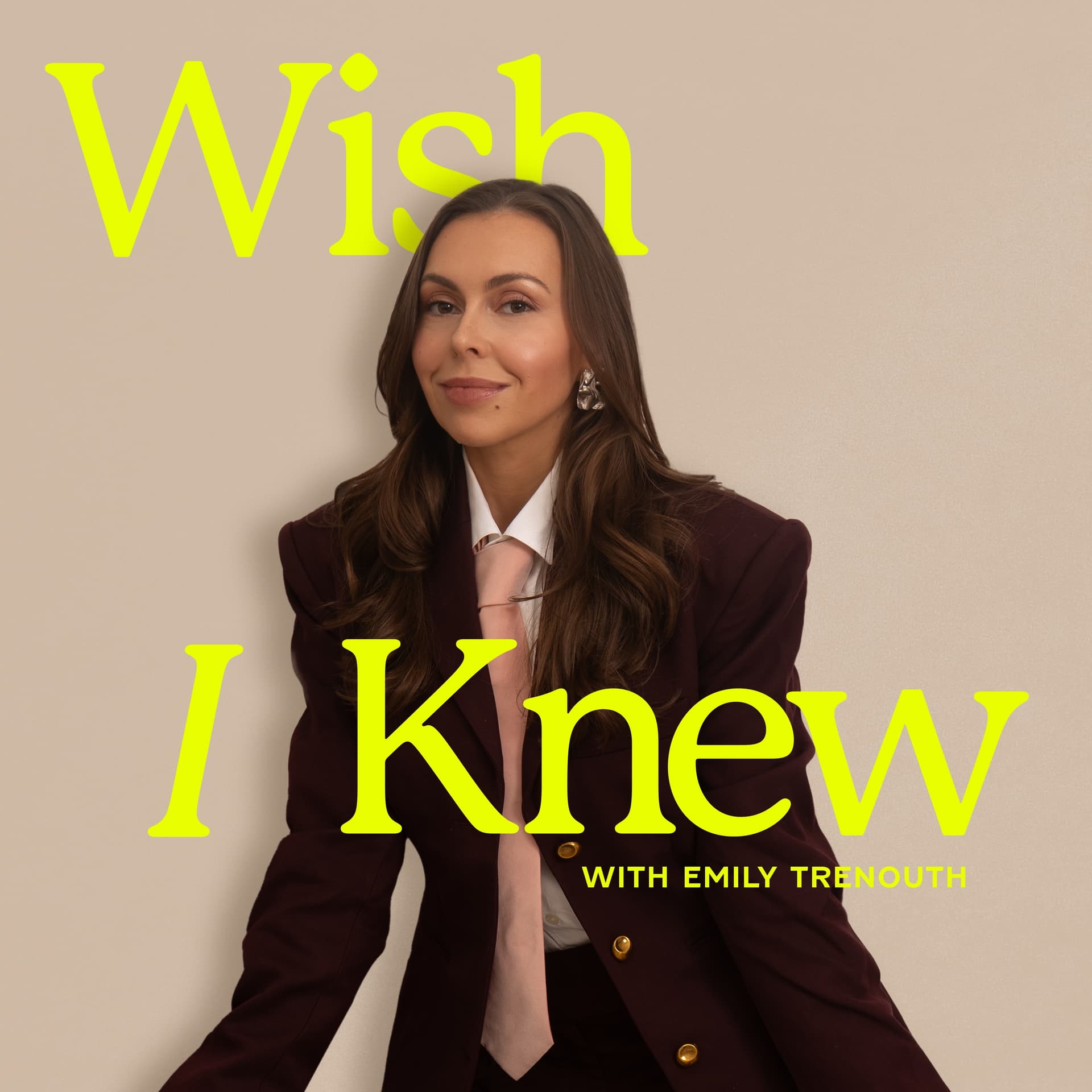
Podcast Overview Host: Emily Trenouth Description: *Wish I Knew* features candid conversations with influential figures in business and culture, focusing on the lessons learned throughout their careers. This episode features Naomi Walkland, who shares her journey from a PR intern to the Chief Marketing Officer (CMO) at Motorway.
---
Key Themes and Takeaways
Naomi Walkland's Career Journey
- Background:
- Started in PR and quickly realized her passion for marketing.
- Served as Vice President of International Marketing at Bumble, contributing to its IPO in 2021.
- Career Transition:
- Made the bold decision to quit her job without a clear plan, which ultimately led her to start her consultancy.
- Highlighted the importance of taking risks and trusting instincts in career decisions.
Defining Success
- Walkland defines success through impact rather than just job titles or financial gain.
- Emphasizes the value of mentorship and visibility in advancing one’s career.
Lessons Learned
- Relationships Matter:
- Building relationships with peers and mentors is crucial for career growth.
- Work-Life Balance:
- Emphasizes the importance of being present, especially as a mother.
- Acknowledges the role of family support in achieving career ambitions.
The Power of Quitting
- Walkland discusses her initiative, *The Power of Quitting*, which aims to reshape the narrative around quitting in a professional context.
- Encourages others to view quitting as a strategic move rather than a failure.
Leadership Insights
- Walkland’s approach to leadership focuses on creating environments where team members can thrive.
- She emphasizes the importance of caring for her team and fostering a collaborative culture.
Advocacy for Diversity and Inclusion
- Actively promotes mentorship and opportunities for women in the industry.
- Acknowledges the need for visible representation in leadership roles, particularly for women of color.
---
Practical Advice for Listeners
- Finding Mentors:
- Proactively reach out to potential mentors and be clear about what you hope to gain from the relationship.
- Salary Negotiation:
- Be informed about salary bands and articulate your value based on impact.
- Understand that negotiation is an ongoing conversation, not a one-time event.
- Personal Board of Advisors:
- Create a network of diverse individuals who can provide support, challenge your thinking, and advocate for you.
---
Notable Quotes
- “Being so good that your talent can’t be dismissed” - A guiding principle for Walkland.
- “Success is defined by impact, not just titles.” - Walkland on her evolving perspective of success.
---
Conclusion In this episode, Naomi Walkland shares invaluable insights on her journey through various stages of her career, the importance of mentorship, and how to redefine the concept of quitting. Her candid reflections and actionable advice serve as a powerful reminder of the role of ambition and impact in shaping a fulfilling career.
For anyone looking to navigate their professional journey, this conversation is a treasure trove of wisdom, offering lessons that listeners may wish they had learned sooner.
Written by AI. May contain mistakes. Listen to the episode to check what was said.
Chapters
Tap a time to open that second in VONaomi's Journey to CMO
1:24 to 3:06
Naomi shares her career journey from PR intern to CMO, reflecting on her ambitions.
“You have had such an incredible career journey, from starting in PR to becoming a Global VP at Bumble to now a CMO at Motorway, all whilst using your own platform to really lead with purpose and with integrity.”
Influence of Family
3:06 to 4:48
Discussion on the influence of Naomi's mother on her career and personal life.
“of a dreamer and having those big plans.”
Motherhood and Career Balance
4:48 to 6:55
Naomi discusses how being a mother has influenced her career drive and work ethic.
“Wow that's I never knew that about you that's so nice.”
Career Lessons from PR
6:55 to 10:38
Naomi shares lessons learned early in her PR career about relationships and impact.
The Leap to Entrepreneurship
10:38 to 12:35
Naomi explains her transition from working in PR to launching her own consultancy.
“So you launched your own consultancy after working in PR.”
Empowerment Through Quitting
12:35 to 14:00
Exploration of the fears and empowerment associated with quitting a job to pursue personal projects.
“even the thought of quitting could be so scary.”
The Challenge of Quitting
14:00 to 15:00
Exploring the internal challenges and rewards of quitting a corporate job.
“After leaving corporate to set up my business last year, I realized if I wanted to stay focused and make good decisions consistently, I needed to simplify wherever I could, especially when it came to my health.”
Launching the Power of Quitting
16:06 to 18:20
Discussing the motivation behind starting the content series on quitting.
“and you can use the code WISHINew20 for 20 % off in your first month.”
Reframing the Narrative Around Quitting
18:20 to 20:39
How quitting is often misunderstood and reframing it as a positive action.
Advice for Quitting with Purpose
20:39 to 22:16
Offering practical advice for making a successful transition when quitting.
Show all 27 chapters
Leadership Insights from Experience
22:16 to 24:59
Naomi shares her leadership philosophy and the importance of team support.
The Role of Coaching in Leadership
24:59 to 28:00
The significance of coaching and mentorship in personal and professional development.
“before you stepped into a leadership role that it is incredibly lonely I think that is one thing and I think it's really important to have a support system.”
The Value of Mentorship
28:00 to 30:12
Discover the importance of mentorship in career development and how to effectively seek a mentor.
Bumble's Impactful Branding
30:28 to 32:55
Insights into Bumble's branding strategies and the significance of their campaigns.
The 'My Love is Black Love' Campaign
32:56 to 35:50
Exploring the defining moments of the 'My Love is Black Love' campaign and its cultural significance.
Transition to CMO Role
35:51 to 38:28
Understanding the transition from a senior leadership role to a CMO position and its challenges.
Balancing Career and Personal Life
38:29 to 42:00
Strategies for balancing work commitments with personal life, including prioritization.
The Importance of Visibility in Career Growth
42:00 to 46:11
Learn how visibility and self-promotion can influence career advancement.
Balancing Work and Life as a Working Parent
46:11 to 48:41
Discover strategies for maintaining work-life balance while raising children.
“I started my podcast here at Cube in The Frame, their flagship podcast studio, and it changed the game for me.”
Defining Success Through Impact
48:41 to 51:43
Understand how the definition of success evolves from titles to impact.
Negotiating Salaries with Confidence
51:43 to 55:05
Gain insights into effective salary negotiation practices and overcoming discomfort.
Advice on Building Networks and Taking Others on the Journey
55:05 to 56:05
Learn the value of having a personal board of advisors and collaboration in leadership.
“But the reality is you can set that number for yourself.”
The Importance of a Personal Board of Advisors
56:05 to 57:03
Learn how to build a personal board of advisors to enhance your career.
Embracing Setbacks for Growth
57:03 to 58:05
Understand how setbacks can lead to unexpected blessings in your career.
Recommended Reads for Empowerment
58:05 to 58:54
Discover a powerful book that inspires reclaiming your voice in leadership.
“And with you on that, a book or podcast you always recommend?”
Inspiring Leaders and Authenticity
58:54 to 59:51
Explore the qualities of leaders who inspire authenticity and impact.
Quotes to Live By
59:51 to 1:00:32
Reflect on powerful quotes that motivate ambition and big thinking.
Transcript
Automatic transcript. May contain errors.0:00Naomi Walkland:Welcome to Wish I Knew. I'm Emily Trinnell and this is the podcast where we dive into the lessons, pivots and defining moments that shape our lives and careers. Today's guest is someone who has built one of the most impressive and intentional careers in marketing, Naomi Walkland. Naomi is the Chief Marketing Officer at Motorway, the UK's fastest growing car marketplace, where she leads brand, creative growth and communications. Before that, she was vice president of international marketing at Bumble, helping take the company public in 2021 and expanding its brand into more than 15 markets across EMEA and APAC.
0:35Naomi Walkland:Beyond her day to day, Naomi sits on the Marketing Society's global board, is part of Spotify's CMO Growth Council and serves as a trustee for Mothers to Mothers, an organization supporting women and families across Africa. She's also an angel investor and a passionate advocate for mentorship, diversity and inclusion in the creative industries. In this episode, we talk about building a career with purpose, from starting out in PR and launching her series, The Power of Quitting, to leading global teams and redefining what leadership looks like today. Naomi's story is thoughtful, grounded and full of lessons on confidence, empathy and paying it forward.
1:14Naomi Walkland:So with that, let's get into it.
1:24Naomi Walkland:Naomi Walkland, welcome to Wish I Knew. Thank you so much for having me, Emily. Thank you for being here. You have had such an incredible career journey, from starting in PR to becoming a Global VP at Bumble to now a CMO at Motorway, all whilst using your own platform to really lead with purpose and with integrity. So what do you think your younger self would say if she could see where you are now? I think what my younger self say I think she'll be relieved and I say that because I've always been such a big dreamer and a planner and I've always had such big ambitions for myself and so I say relief but I think it would be a sense of okay what you wanted to achieve you've achieved but also a sense of pride so you know I've worked incredibly hard to get to the positions that I've been in and I think my younger self would be proud I do think proud but with sense of belief like it's all worked out yeah it's all worked out and do you think you always had those big ambitions of for example becoming a chief marketing officer I probably not the as specific as the titles but I've always had big ambitions and I remember when I was little at school my mum has her own business and she was a management consultant and you know started her own business and I remember at school I would say I want to be in business and I want to be the boss and I didn't know what it meant but I think that's probably me just wanting to be a bit of a leader so I've always had big ambitions I've always been motivated by having big ambitions and driving that impact so I think it's something which is always inherent in me of being a bit of a dreamer and having those big plans.
3:10Naomi Walkland:I love that and so you started your career in PR right What drew you to the industry, I guess, from saying I want to be in business to PR? Yeah. So I went to a university where the majority of people either went into finance and banking or law or consulting. And I remember doing all the applications and doing the spring weeks and internships for those types of roles. And I didn't really feel like it was for me. And my mum said, you know, you seem to like communications. you want to you know that seems really interesting I remember her explaining the concept of communications to me and I then started looking into it and I actually started when I was in my second year of university doing an internship in political communication so I actually wanted to go down the political route for a while um communications not running for government um but then it opened my mind into PR and communications and what that could do and I just I started by working in a luxury PR I had a graduate scheme to work for a luxury PR company and I loved that I made some incredible friends learned so much but PR was such a good foundation it was such a good stepping stone to get into marketing it was fun I mean when you're 21 and you're going to these events and you're speaking to journalists there's something really fun about it but also the heart of PR is storytelling it's communications it's people and that's all the things that I love so it was a really good foundation plus it was extremely fun and I also met some lifelong friends as well yeah how incredible and your mum sounds like unreal what a great like influence to have in your life to sit you down and explain how things work and different industries do you think that she was a real or is a real like force in your life absolutely um my mum is a single mother and she raised me up independently and she's always told me I can achieve everything if I work hard and always encouraged me um and always thought you know you can do what you want to do if you put your mind to it and so every single kind of major a stepping stone she's been there supporting me also providing advice and you know seeing her and watching her grow up she worked so hard and I have a lot more empathy now being a mother of how much she sacrificed as well but she worked really hard and she was always driven by making an impact and so she said be whatever you want to do but just make sure you're leaving an impact to help others so I think that's just part of me and as a result that's that's why I'm so motivated by you know helping others as best as I can as well.
5:48Wow that's I never knew that about you that's so nice.
5:53Naomi Walkland:Love your mum I want to meet her and do you think you mentioned that that's kind of I guess influenced how you approach motherhood now now that you're a mum as well. Do you think that that's had a big sort of influence on how you are with your son? Yeah I've always been driven but having my son made me even more driven and also I had a bit more of an understanding particularly my mum around the sacrifices it makes when you're working you're missing certain things and I'm so you know my son will proudly say like mummy's going to work or mummy works in marketing for cars and he's so proud or and you know we have our big tv campaigns we do and he just sings the jingle along at home but I think there's something really important around showing work ethic and determination and also being a woman to show that's something that I really value and I'm really proud of and so I'm even more driven because I really want to make sure that he has the best life and the best opportunities so I'd say my drives even intensified but also in a way that I can be a good role model for him yeah and I guess that by bringing him into that world of understanding what you do I mean to say that you work in marketing for cars it's so sweet he's three and it's so sweet I know he was doing um he had a kind of school visit because he's going to school next year and afterwards the teacher was like do you work in marketing for cars and does your husband work in finance because your son was talking
7:22Naomi Walkland:little genius child he's in wow that's incredible but I think that you're right in the sense of bringing them in to understand exactly what you do and like the understanding of it all is really important as well and just appreciation that you know we I want like hard work and determination support it like nothing comes easy so I just want him to see that and he's got really good role models in my husband other people around him around that so hopefully as he gets older that's something he wants to champion as well and so going back to your earlier stages of your career when you worked in PR besides the fun parties and events what are some of the things that you wish you knew at that point in your career perhaps if you didn't have the knowledge that you have now or the network and the mentors and role models yeah what do I wish that I knew I think one is that relationships really matter and I don't think you really appreciate that until you start getting more experience in your careers but the importance of those good relationships and and not just those who are more senior to you but your peers because as you grow and you get into new positions so do your peers I think so often when you're early in your career you focus so much looking up and it's so important to look at the side I always say there's so much value in peer-to-peer mentorship as well and so I think that's one thing that I say is really important I think the second thing is just you don't need to rush I was constantly I remember it would get to mid-year or end-of-year cycles and I was like gunning for that promotion which you know still important to have that drive but there's also something about enjoying the journey as well which I don't think I always did so early on in my career I was always looking for the next thing which you know is part of my inherent drive but I think there's something about just enjoying that moment too and I guess looking back it's so much more meaningful when you can look at those moments and really cherish them and know that you really enjoyed them because I I relate to that a lot of feeling like I was in a rush all the time and I look back at you know I was in I actually started in finance at 18 and I was going in and working on Sundays and the weekends and now I'm like why did I do that I didn't know you started in finance yeah learning something about each other fun fact um yeah and sometimes I think oh my god why did I you know obviously like you say it's it's important to have a good work ethic and I guess in those stages of your career that can be the kind of thing that would set you apart but it's perhaps not healthy yeah in a way and it's also just it's not just around hard work and work ethic and working crazy hours it's about impact and when I mentor a lot of young women now and they're looking to get promotion cases make say they might be a manager trying to get to see a manager one of the things I say is don't just have a laundry list of all your accomplishments it's around impact so what did you do as a result of that campaign what did that do to help the business and I think when you're younger there's a perception of just work all hours list that that's enough but you have to think about the impact that you're actually creating in the business as well absolutely so it's meaningful work versus just ticking off yeah just staying around in the office for the sake of it and so So you launched your own consultancy after working in PR.
10:41Naomi Walkland:What inspired you to do that? So what inspired me is I joined a PR agency and I thought this was it. This is the company that's going to be there forever. I would become a director. And when I got to the company, I just realised this wasn't for me and my gut was off. And I stayed there for a few months. And it was becoming apparent it just wasn't the right fit. and I quit and it was the first time I'd ever quit anything without a real plan and for type a person like me this was quite terrifying it felt like I'd failed and I ran into a bit of an existential crisis and my husband kind of you know at the time he wasn't just um we weren't married there but he really got me to be like this is actually a really good opportunity like this is a good thing and I've had quite a few people over the years ask me oh do you do some consulting could you help me with this?
11:36And I couldn't because I was working full time. So after quitting that role I then started working for a few brands and businesses either helping them scale in the UK or also helping them launch a new product and I loved it and having my own business was incredible. I think I learned so much. You are your CEO, you're your CFO, you're everything and the business grew and I started hiring a different number of freelancers and a few people working for me on the team to deliver some really impactful projects and it was a fantastic time I absolutely loved it and one of my clients was actually Bumble and they were launching in the UK and that's actually what led to me joining Bumble but if it wasn't that I think I'd probably still maybe be doing my own thing I absolutely loved it but it started at a point of quitting and and taking a bet on myself and taking a risk.
12:31And it paid off, so that was great.
12:35Naomi Walkland:That's so powerful and I can see how even the thought of quitting could be so scary. Oh yeah. Yeah. It's so scary and also it's just the what is, what am I going to do? You know, so often, particularly now, it's like, how do I introduce myself? Who am I? And one of the things that I thought is that, what can I say if I'm not working for this company and so part of it was getting confident saying I'm working for myself or I'm doing my own thing but a lot of it was societal expectations things in my head a bit of imposter syndrome but once you get over that it's so empowering I know it's a scary thing having going from Naomi from x big company to Naomi working for herself and I definitely relate to that from leaving Amazon and I was always oh I'm Emily from Amazon and then I started going to events when I started working for myself and I was like oh who am I I'm Emily it is strange though because we attach so much to our job titles and the company and there is so much more to us but it is that feeling I remember going to a couple events and like normally it'd be like Naomi and the brand and I was just Naomi and you know it was just it was just those subtle things but once you get comfortable with that it's amazing and then you start talking about your business and so forth and I think that the reality is people don't people who know you and know your work don't think about that as much as you do no so it's definitely more of an internal yeah in your mind yeah external because you worked with incredible brands and had incredible clients and campaigns and got you know so much amazing recognition off the back of it so I think it's definitely one of those things where taking a leap to stand on your own two feet and not have a company supporting you is such a scary thing yes definitely but actually the rewards on the other side could be huge yeah definitely one thing I didn't fully appreciate before running my own business was just how much mental energy everyday decisions take when you're spinning a lot of different plates and always thinking a few steps ahead even the small things can start to feel surprisingly draining.
14:48Naomi Walkland:After leaving corporate to set up my business last year, I realized if I wanted to stay focused and make good decisions consistently, I needed to simplify wherever I could, especially when it came to my health. When it comes to supplements though, I've always really struggled with consistency, mostly because I felt so overwhelmed by having to take so many different ones. That's why I've been using Heights Vitals as part of my new daily routine. I wake up, get ready, take two capsules, and that's literally it. Vitals combines 20 essential vitamins, nutrients and minerals, which would normally mean taking around 14 different supplements.
15:22Naomi Walkland:But it's all in one simple formula, supporting both your brain and your body health. For me, it's helped me to stay focused on long days, keep my energy nice and steady throughout the week. And it's massively improved my sleep, which makes a real difference to how I think and show up every day. I also really value how flexible it is. You can take it with or without food and at any time of day, which really matters when your routine isn't always predictable. Even if I forget it in the morning, I know I can still take it later and stay consistent. And you don't just have to take my word for it. Vitals is backed by hundreds of scientific studies and has been developed alongside leading experts.
15:57Naomi Walkland:So if you're looking for a simple way to support your focus, energy and overall health as you work towards your own goals, you can check out Heights in the link below in the show notes and you can use the code WISHINew20 for 20 % off in your first month. that's wishinew20 for 20 % off your first month I hope you love it just as much as I do and so you then launched a content series platform yeah the power of quitting I actually remember seeing this this before I knew you but I remember seeing it and being like I want to go oh that's so funny um yeah that it seems like such a long time ago and um I launched it at at the time of me quitting there were a number of women that I looked up to in the industry or I knew who were quitting and one of them was the first ever executive creative director in advertising in the UK and she wrote this article and I can vividly remember it as an L I've still got the copy called the joy of quitting where she articulated quitting this role what it allowed her to do the empowerment reclaiming her identity all of these things that you and I spoken about and I thought wow that is summarized exactly how I feel and if I'm feeling like this after quitting there must be so many women who have felt like this or have got something they want to quit or they want to change and so selfishly I actually started it because I wanted to know all the secrets and what was going on behind these women so I had the idea I partnered with Ace hotels who were so great at supporting me at the time and launched the series and I thought I would have my husband and like my family friends who I invited but it sold out in minutes and it kept on growing because people wanted to have that conversation people wanted to reclaim the narrative around quitting so it started there and then um so her house were incredible and actually decided to support me so I ended up hosting events in London in New York in Berlin and so it started to become international and we were starting to build such a great community in the thousands and the events would sell out like that and we would just have brilliant women talking around what quitting had allowed them to do would it allowed them to reclaim and it wasn't just quitting to start your own thing it could be quitting a role and then starting a new role or it could be quitting a situation there was so many different things but i think we really reframed it and i think back on that article around the joy of quitting and that's what that was the key takeaway from those sessions and you know there was one person who came to my event and I remember her coming we met and you know it's been a long time like 10 years since I had those events and I remember she had this amazing idea and every time she'd come to an event saying she's developing it working on it then a few years ago she launched it and it was amazing to see that but she felt so empowered around doing that and so it's just so amazing to see some of the stories and the community and I still speak to a number of those members in the community as well and maybe need to do something with that community bring it back I know I'm like can you revive it even just for one event I will be there in front row yeah it's just so needed and I think that like quitting people see quitting as like a not a dirty word but you know a word that they're afraid of or you know I can't quit I can't give up but actually the power of knowing when to quit is such a important skill for people to build so what advice would you give someone today 10 years on um for everything you've learned about if they're looking to quit what should they do think or feel I think it's important and I say this of hindsight have a bit of a plan so what are you looking to do what why do you want to quit and doing a bit of reflection and being clear on that plan is so is it that you are not happy in your role and you want to go to another company is that you want to start your own thing but have a bit of a plan I think it's really important to also think wisely around it so you know I think about some brilliant women that I know who've got their incredible businesses but they were doing their business on the side to make some money before launching it so I think financially make sure that you're set up because I think you know it's a luxury for people to sometimes quit without you know having to think about that but I think have a plan understand why you're doing it and then start working through on that yeah absolutely it's all about having you've got an idea what you're doing yeah you can't just quit aimlessly I think you can't make decisions aimlessly as well but yeah I think quitting in particular have a plan because also that plan is going to carry you when you are having tough times when you're thinking why am I doing this why did I quit so if you can continue to hold on to that I think that's a really good anchor for you as well did you also speak to people before you quit and launched your own consultancy to kind of assess is there a market fit here as well yeah I did get a bit gauged I spoke to a few people I looked up to as mentors the people in the industry and you know had a few people who were saying you know if you did quit I would want you to work on this project so I worked in a couple of launches so I did have a bit of that um but still when you say I quit it's still a bit of a heavy whoa moment isn't it yeah and I think that that market research and feedback from people just a sense check yeah it's also a confidence boost but I can appreciate I mean when I quit um my role in corporate to go solo a lot of people said to me oh you just have to have one client but contractually I couldn't have one client before quitting uh and I was also afraid to tell people because I didn't want people to know so there is a bit of a chicken and egg situation depending on where you work and what your role is but um I think you're right in that like soft just soft teasing getting a bit of a sense check um hypothetically if I were to quit would you would you be my first client um but I see that a lot also now like when agencies are starting up and you know I'll have a breakfast or coffee and somebody will say I'm not you know I'm not I can't announce yet but hypothetically speaking this is what I'm thinking so I think there's ways of getting a bit of a sense check to see if you you know you can pick up some clients and get that one client because you're right getting that one client makes such a difference and it's just a bit of a sort of snowball effect from there isn't it and so I think you are such a great example of this new generation of leadership I mean to achieve to get to a C suite role is just such an incredible achievement and I'm sure there's been so many learnings um and lessons that you've learned since since starting a role on motorway as well I'd love to unpack but what would you describe your approach to leadership being like today yeah so I think my approach I am a very I want to create environments so my team can thrive and so for me that's really important to create the conditions to do so as a leader I am very results orientated I'm very visionary in the sense I want my team to like feel motivated about a clear vision and have clarity around those goals and how they can make that impact but I care about my team and I think when I was younger I felt leadership was just results I thought you know you can't also care about your team because that's too emotive but I do care about my team and I think it's important to care about your team because I want them to do the best work of their careers I say that and I want motorway to be whether it's you know chapter or the you know the end destination I want it to be a place where you do great work and so for me it's around creating those conditions to thrive but also inspiring the team that they can think like that and success for me is my team like flying about me like I think that is the ultimate success and when I left Bumble like my team were in a good spot like they were great you know and I think it was part-time to pass the baton on so for me I do care about my team I'm unapologetic about caring about my team does it cloud my judgment no like it makes me a better leader but I'm people first leader and I see that as a strength of mine as well and that's something that I'm always going to be and I'm always going to continue in the champion but I think for a while I thought you couldn't be that I thought that you had to just be the results you know mix things you have to keep things really separate but I do I you know I have I have my teams back yeah and I think that um media has probably encouraged that perception of like you have to be results results results and maybe block out the emotional side but you also can't get the get to those results if your team are not on the journey yes so you need your team to be motivated engaged you need to understand what motivates them and encourage them to do their best work so you can achieve those results like you can't get that without people and I think we are in a people business at the end of the day as well yeah exactly and what's something that you wish you perhaps knew before you stepped into a leadership role that it is incredibly lonely I think that is one thing and I think it's really important to have a support system.
25:18And that can be for me, that's my coach. That is my kind of personal board of advisors. In organizations, I've had some peers because it's all on you a lot of the time. And so sometimes you need to have an outlet or conversations and that supports your working through things. And it's not appropriate when you're a leader. It's not appropriate to speak to your team about it by no means. also things change with your peers and so forth so I think it's really important to have that support system whatever that looks like for you um for me it's my coach it's you know it's um it's some friends who've been previous colleagues we're in similar level roles I'm also in networks with execs and um black women networks senior execs there's a lot of community that you have to talk about the realities of leadership because it's not easy um and I think that's one thing where you know when you're younger you're like i want to get to this title i want to manage people that's your currency and you know it's tiring yeah a lot so that support system i'd say is key
26:20Naomi Walkland:and i think as well um when people say i want to manage people you get to that level but there's no handbook no there's no rule book where people like right okay if this happens this is what you do and i guess like you said earlier from dealing and working with people there are so many situations that can crop up that you probably would never imagine ever coming your way everyone is so different everyone is motivated so differently so how I lead one person may be different to another thing because their motivation is so different and I think that is one learning that you think that as a leader you've just got to be fixed but as a leader you've got to be flexible you've got so many different people it's how you flex and adapt to those situations in your team as well I love that and you mentioned coaching I know that you are a big advocate for coaching can you tell us a little bit more about my coach is amazing I've I'm such a big believer in coaching and one it's just been such a good support to work through a lot of things in my career two to get that perspective from somebody outside of the company and and three just really have that sounding board has been really really impactful for me so I've had a coach for over 10 years I worked with a brilliant coach for about the majority of that time and recently moved to another coach last year just because I was at a bit of a different stage it was moving into my first c-suite role and she's been fantastic in terms of pushing me I would say since working of her and she's made me see things one she's made me understand my blind spots more clearly she's helped me see my strengths more clearly and really articulated what is my authentic self as a leader and I'd say in the last two years in particular it's really helped me grow as a leader so I'm a big believer in coaching but also when I started my kid there's no way I can afford a coach so it could be informal things it could be a mentor it could be somebody you look into because I think when people are starting out you know the reality is coaching can be it's costly it's an investment in yourself sometimes businesses don't always pay but I think there's different ways there's lots of different schemes there's mentorship um there's different ways where you can start to get a bit of an outside perspective and get that advice in your career that is so true and you do so much mentorship as well and then you have done throughout your career what um how does that sort of shape I mean it's it's time consuming as well on a mentor side do you still mentor now I still mentor I still mentor I'm so passionate about it and um but I do give onus like it's up to the mentee to drive it as well because you know they're there and I'm there to support but they've got to drive it and it's really interesting to see the ones who are like here's the agenda I've booked out all our meetings rest of the year um but I've got a group of young women who I who I mentor and I absolutely love it but also I learned so much from them as well sometimes like in my mentor sessions I'll ask them for questions like what you know if I've got something I'm working through and they provide such a good outlet but yeah it's brilliant seeing some of them grow and some of them are absolute shooting stars particularly in marketing yeah and so what advice would you give to someone who's perhaps looking for a mentor but doesn't know where to start yes I think um don't be afraid to just message that person you'll be surprised at how many people say yes but also be clear on why do you want that person to mentor you as well a lot of my mentees have been really clear so they've said you know I'm looking to get into marketing this is what I'm trying to work for this is I want your advice on these three things and it's really clear to me where I can add value so I think go for it but be really clear on what your expectations are and also drive that as well it's up to you to drive that relationship absolutely don't ask don't get exactly that hi my loves just a quick pause to say if you're enjoying wish i knew please please please hit the subscribe button and leave a quick rating or review it really makes such a difference to the show and helps us to keep bringing you amazing guests and stories now let's get back to the episode so going back a bit to bumble i mean bumble were and are such an iconic brand i remember coming to one of your events actually again this is before i knew you i don't even know how I came to your event it was one with Dr Barbara Stern oh yeah that is a real flashback the goodie bag was amazing I think that's like up there with one of my favorite goodie bags um and it was actually a panel with Whitney yeah wow that is a real OG one wow yeah I think I was doing some work with the company I was working at the time we were doing some influencer work I think that must have been I was thinking it's one of your old agencies yeah um and the team very kindly asked me to come along but I remember going and just being like wow everything's incredible the venue you had like a beehive yeah pop-up somewhere in central London you had like the merch like I remember that campaign that was be the CEO parents always wanted you to marry yeah and then find someone you actually like um what was it like working there at that time because you were there right the way until IPO right it was incredible and I like even you just speaking about that reminds me of such the fond times of it it was incredible it was such an incredible journey I still love the mission and the brand and I joined it you know I actually did meet my husband on Bumble so to caveat that um so I knew that it was a brilliant product but the mission the values um the founder story, it was all incredible.
31:59And it was an exciting time. And there was a revolutionary aspect at that time, because we were changing something and flipping something on its narrative, like, we were encouraging women to make the first move, there was something, you know, isn't that post me to era, it was just, there was something, you know, revolutionary, what we were changing, we all valued around this mission. And so I absolutely enjoyed it. It was a massive catalyst in my career um we did incredible work incredible people and honestly it was like nearly
32:27Naomi Walkland:seven years of working for a rocket ship wow and it sounds as you were speaking just then it made me think of like that sort of perfect storm like right product right mission right time right time because it was that era of you know female empowerment yeah and we're still in it now but but i think that it was different yeah it was in the zeitgeist it was just we were living and breathing it yeah and so you you accelerated to VP within like two years right yeah a couple of years I think it was like three years or so maybe uh three or four yeah three years two three years I think what do you think drove that growth so I think there are a couple of things one is and I always say to this I just worked hard and delivered results and I became trusted and respected for consistently delivering results I had a deep understanding of international marketing what it took to scale we had some successful launches I had a track record and we delivered some of the best campaigns which even got rolled out globally but there was no secret sauce but delivering great work and consistently doing it and it's important to have to know that because I think sometimes we always look for this magical thing and it's like no it was just hard work and delivering good results being a great leader and helping bumble reach new highs as well but also it was a it was a very low ego environment everyone kind of just got stuck in as well and so I think that mentality but also just the results really allowed me to propel um and grow and then reach a senior leadership position in there really quickly and are there any like standout moments or campaigns or launches that you can think of that just like I don't know was such a key defining moment for you I think one of them which is still key defining was um our my love is black love campaign that was just incredible and it came from a time of it was 2020 there was so much civil unrest George Floyd was murdered there was so much conversation which around race which hadn't been discussed in the UK and we launched a campaign which was really around giving a platform to the black community and it was based around this insight that and not even insight just the reality that black love is not celebrated in mainstream spaces so for the whole of Black History Month we had different talent we had different our community we had celebrities all talking around what my love um black love meant to them and that was still one of my proudest campaigns i still get asked about it so many people in the black community like this touched me this is the first time i'd seen you know black campaign to that scale and what was impressive around it was not just the breadth of content and us just giving a platform we stuck to it so even still they still do work to celebrate my love is black luck every year this wasn't a one and done and so many businesses did that they kind of did it for one year and then forgot about it but also just the fact that I worked for a company where we actually could place a bet in doing that and supporting that and really truly helping our community so that to me was career defining work yeah I've seen that also referenced everywhere today even where people are referencing that campaign is a real standout campaign in the industries it's such incredible work and I think that like you say to have a platform that stands the kind of test of time and is continuous each year because it is a really evergreen platform as well it's such a smart yeah I love it the team all of us who worked in it one of our best um and so now at motorway your cmo thank you you probably can't hear my claps um i'm sure that didn't happen by accident you know you've said at the beginning that you're you've always been someone that's really ambitious and driven and i think that to step into a role like that was such a big incredible move to see um and I don't doubt that there is every single person in the industry believing that that was really well deserved um so I it was such a nice moment to see that being announced how do you feel stepping into a c-suite role versus a leadership role granted you're a senior leader but how have you found that transition it's different and I think one thing is you as you get more senior in your career you do less of your craft and your expertise which I think you'll know as well but particularly now being on the executive team first and forefront it's around the business and I think that's such a shift because when you're a senior leader you're just thinking at your function it's just your function and the role you're in your world of just marketing whereas now really I'm a business leader who leads a function in marketing so there's a distinction and you're dealing and discussing so many different things and I think when you are as senior leaders you think all teams and execs and boards are just talking about your work when actually it's just a small segment of the business and it plays an incredible part so I think that's been a shift which you know I you know I had a lot lot of exposure to as well but really it's kind of catapulted me really to being more of that business leader that commercial leader which I've you know always been to date but it's been a shift but it's been one which I was ready for I enjoyed and I love as well do you sometimes miss being away from the work a little bit and the intricacies a little bit but I love what I'm doing which is around how ultimately how can we grow the business and build a sustainable business and how do we use marketing and other functions to do that it's incredible and i love seeing um your ads everywhere i know add a bit of magic yeah there's a bit of emotion to a really functional category as well which is great i always find that like the not very sexy products or brands are actually the best ones to work yeah it's been a bit of a shift and i you know i was thinking i was like i get so artists like Bumble it's so cultural and this and it's there is so much we can do and particularly cards is the second biggest asset that people own so there's there's there's a sense that we could be a bit more motive so I'm glad our relaunch is able to do that as well and you have had so many awards and accolades 100 % deserved but as I was actually I mean I knew you prior but it's so impressive oh thank you you made the top is it power 100 for campaign twice twice or three times three times four times three times four times quite a few times yeah um you are on so many different advisory boards spotify's advisory council how do you i guess how do you fit all of that in because I think that is also a big part of your role in being visible and showing up and having conversations like we do today and you're a mother and you know you you're excelling in your role how do you find the balance of all of that yeah it's always a bit of a juggle but I am I'm pretty intentional about what I do so it's also about saying no to things as well which are not relevant um because when I do something I stick to it I'm very committed to doing so as well it is a juggle sometimes but I think it's prioritization to the reality is I've got a really incredible supportive husband I couldn't do what I do about him that's just that's just you I need that so I've got a good support system and it really comes down to prioritization really I know it's a basic thing but that's how I think about things where where is it worth me investing in anything and um it's I can't remember who says it but it's like if it's a maybe it's a no and so my EA is so good when something comes through she's like it's a maybe it's a no it's like it's just those little things which is like is this are this is this going to help me and my career is this something that I can add value on is this a business or brand that I want to support and that's how I think through that lens and that does also mean saying no to a few things as well and it's like the power of knowing when to say no I love that if it's a maybe it's a no it just makes it so it's so good and sometimes you know my EA will sometimes be like you've been just going back and forth so maybe it's no I'm saying decline sometimes you just need that person yeah um no it's incredible and I think that being visible is also so important to the younger generation to see leaders like you showing up getting the you know the credit that you deserve but also someone that can you know look like you you're beautiful smart you know and not in the sense of we can have it all but I think it's really important to show diversity and representation in the leadership examples that we see and there's just there are very few black women in senior executive positions as well so you know I I actually don't like posting about all of those things like honestly sometimes I'm like oh I don't really want to but I want to celebrate the team and all of their work and I would rather be a little bit behind the scenes but I know how important it is for other generations to see that and to know that it's possible so I always think for that lens around this would be so motivating to me if I was younger and also just to get a bit more comfortable owning that and owning your wins um but yet I still sometimes think like oh gosh like this is a bit too much but I know how important it is um and also for yourself to put yourself out there I think it's important people don't know about it like it's important to people to like know about the great work that your team are doing or the business is doing and so forth yes and I really believe that visibility internally and externally is so key um what do you think about like showing up and being being visible in the sense of maybe the younger generation who was starting out do you think that's something that's really important I think it is important because you've got to have a bit of visibility in the work that you do it's not like unfortunately people are so busy so they don't know unless you bring it forward and it's a hard reality that sometimes you think hard work hard work is not enough you've got to bring that to people and service that because the reality is we're all busy even now in my role every Friday without fail unless I'm out of office I will send an update to our exec team saying what we've done this week what's coming up what's great to kind of celebrate every week because even though everyone knows marketing is doing a great job it's just that visibility of the work so I think it's so important you've got to champion it and sometimes I say to my team and my leads I'm like this is great but no one knows about it you know you've got it you've got to keep doing that and building your work for it or some people say you know I'm not getting as much recognition but people don't know so you've got to bring that to the forefront so I think visibility is key I think visibility like showing up to events and putting yourself out there is really important to go to network but ultimately people need to see you and see your work and do you think that the onus of that should be on the person themselves yeah I think it is I think it's important you've got to own your career and um I've sometimes been guilty in the past of one feeling that it's my manager responsibility but also being junior and thinking my manager needs to do this it's for you to own your career and so what's your approach to like goal setting do you believe in vision boards and all of that kind of stuff because you're so driven and you've achieved so much and I have no doubt that every move that you've made has been very intentional and strategic in the best way of the sense of you've probably said no to 10 times more roles than you've accepted intentionally so how do you go about setting your own goals and driving your own career forward so every year gets around Christmas time reflection and then I will set my goals I'll look back on actually I'll look back on last year reflect on them what did I achieve what did I not achieve and then I'll set my 2020 well this year will be 2026 goals and I'll also kind of vision board a little bit around that what does that look like and also it's just good to kind of you know you start seeing seeing what you believe as well and then I'll work through with my husband to kind of it's anything that you want to challenge me on or are there things that I'm missing as well and then I'll work through with my coach as well but I like that cycle of yearly of just looking back um and reflecting on those goals and I come back to them like every month or so and be like how am I doing against them and and then sometimes during that time I'll have a bit of a wider like where do I want to get to the next few years as well and do you think when you look back have there been any moments where you're like oh wow that came to light and I never thought it would yeah when I became VP as I had that on the goal you know you set these time frames of when it'll happen and I was so happy that day of getting it because it was on my board and I looked back on it and I was like wow this is you know this is what I you know dreamed manifested or so forth and that was a real turning point for me but I think it's important I think it's nice it's also a good moment to have a reflection to look back on where you've been and where you want to go to as well.
46:12Naomi Walkland:I started my podcast here at Cube in The Frame, their flagship podcast studio, and it changed the game for me. With my membership, I work alongside a professional production team, so it looks polished and sounds incredible as soon as the cameras start rolling. They also have smaller self-service podcast studios with different set options, so you can choose the vibe that fits you. Membership here starts from£145 a month. If you've been thinking about launching a podcast, visit thecube.com or click the link in the show notes below and how important do you think it is to have the right partner as you grow on your journey yeah there's somebody said and i don't know who said the best career decision you can make is your partners and i think that's so true maybe it was cheryl sandbag i want to say it was something but it's so true because i couldn't of achieved what I've achieved about having that partner who supports me who is there he also challenges me we he's basically my rock and so I think your partner is so important because you can see when you don't have a partner who's great how much that can impact your career as well so I've got a very supportive he's my biggest biggest cheerleader like number one on the likes on linkedin i love that which is great number one he's always there likes and reposts it doesn't post about his work it's just his feed it's just my face no me's fangirl i love it so it's so important i think it's so good yeah and i think that you're right in the sense of the the right partner versus the wrong partner can make such a difference yeah not supporting your career making it challenging so important but um I think a key partner is absolutely critical and then now you've got your lovely son yes um how do you approach work-life balance do you believe it's a thing how do I approach work-life balance I I'm really clear my time so when I'm picking my son up like it's no phones no distractions do I do that all the time no I'm not going to lie about that there's sometimes when I pick my son up and I'm like mommy used to do a quick call you just be quiet and then we'll go from there or so I do juggle like there's not always perfect times but I when I'm with my son I'm as intentional as I can be um and really make sure I'm dedicated to him I love bedtime that it's like sacred time for me being around for him um and I'm clear on like what I can do so some things is that I'm really clear to my team I'm like hey team I'm logging off I've got bedtime or you know I've got to get George or George's preschool's got staff training so he's in the background on the course I don't hide that you know that the messiness of motherhood and working but as a result my team also do that as well so we're very open around that as well which I think is important but it is a juggle you don't get it perfect all the time and how are there any sort of rituals or practices that you've got with your husband where you kind of balance it because he's got a successful career too as well so we are I think this is where the goal setting really hurt we do actually we think about our careers and I think that when I started at motorway we kind of decided at the moment I needed to lean in and so that meant he needed to support me to lean into a new role you know you are proving yourself and I think that sometimes happens in relationships where you have moments where somebody really needs to lean in and for us we're just really clear around like what are our goals for that year what does that mean and how do we think about our life as a result of that and so last weekend for example I had to do a bit of work and he's like no all good George and I going to do this and we'll take that and so you've got a bit of time to do a couple of things so we work through it um but you know there's sometimes when we're both competing where it's like oh no you know we've both got an important thing we need to do how do we balance that and that's where I'm really thankful I do have a bit of family support neighbor support as and when we need that it takes a village it takes a village it really takes and I wish we had family closer which we don't but as and when they can support it they're always here yeah and like you say it's it's coming together yes with a mutual understanding of your collective position and what needs to be and our goals as a couple you know we have shared goals I've got my own goals we've also got shared goals for our family oh I love that and so that's really important to like talk about it as a unit like we're both doing it for each other in the life that we want to have and so when we think about like success how do you think you define success today versus maybe earlier in your career definitely when I think about success early in my career I was chasing titles brands finance but like you know financial salaries I do think salaries are still important I don't I'm not saying women should not talk about salaries and so forth, I think it's important.
51:09But I was just motivated by the external part of it. Whereas really success for me now is around impact. I just come back to that word so much. It's impact on our customers and my role in marketing. It's impact on the business. It's impact on how I can help others. It's impact on my family. And so that's something which has shifted. Whereas before it was like, you know, I remember when I was PR, I was like how can I get to senior exec how can I you know all these titles you're kind of just on the race and the ladder but for me now it's just around like impact and the impact and
51:43Naomi Walkland:contribution that I can make incredible and I suppose if you can deliver impact in any shape or form you can do anything yes definitely um if you can understand it and then take it through to execution yeah that's a really really nice way to look at it I haven't heard that before because I love that you mentioned something really interesting so you mentioned about salaries and I think as women in particular we don't talk about salaries enough and I've been asked sometimes by mentees things like you know how to negotiate a salary or best practice I'd love to hear your thoughts like what do you think should be best practice when you're looking to negotiate your salary yeah it's always tough when you're starting out I think getting clarity on the bandings is really important and I think you know when I was starting my career I don't think like bandings properly existed I didn't think there was like a formalization around that but I think getting clarity around like what are the bands where do you sit in the band and also being really clear around when you are asking for that pay rise why you're asking for it what are you um what is the impact that you've driven where do you sit on that you know a lot of companies have career progression frameworks but where do you sit what does that mean um so I think getting a lot of an understanding around that and then building your case um is one key thing as well but just don't be afraid to say that number because I think sometimes it's really you feel that sick and you'll feel really nervous around asking because money is such an uncomfortable and still quite taboo like topic so I think that's a sense of ownership but I think really educate yourself because you know there's nothing worse and you know by somebody saying I want a x percent increase and that's so far from the banding you know it's just not even possible as well so I think making sure you really understand and so you can be really really clear around that um and then bring that up have that conversation as well I love what you say about um it being really uncomfortable yeah because it is such an uncomfortable topic so uncomfortable and I see it when I've got people on my team asking me if they feel so uncomfortable and I'm like just own it yeah just like really own this and explain why bring that conviction and courage and what's the worst that someone can say right yeah exactly either no or not right now um i had an amazing piece of advice when i went into consulting and someone said to me uh how much are you going to charge a day and i said well this number and she said my advice to you would be take a number that feels uncomfortable and then travel it yes and see what people say because i think the reality is people especially experienced people in business know how to negotiate really well and I think that for myself in earlier stages of my career I didn't appreciate the fact that there is an art to negotiation and you do almost need to go into conversations expecting that yes and also we undersell ourselves sometimes as well and I think your point on negotiation is so key that it's not there's a conversation it doesn't just end with we can't do that there's always going to be a bit of a conversation about that sometimes the answer may be we can't do that but the reality is particularly when people you're having salary discussions or offers like people don't expect you to take the first answer there's a that's the discussion point so i think understanding that is so key i love that about like just travel it and make you feel uncomfortable yeah i did take that advice and i was like oh yeah it still wins yeah and you're probably like waiting after you send an email around that's my day right being like is this okay then you get but the message being like, fine.
55:16And you're like, oh, yeah. And then I'm like, oh, okay.
55:18Naomi Walkland:Yeah, because it's so funny. We attach so much worth to that number. Oh, massively, massively. But the reality is you can set that number for yourself. Yes. And it's almost like the price of like, you know, when you look at like artwork and things like that, you know, you set that price yourself and it is necessarily, it's the value against that in your experience and your knowledge and your credibility, accolades, things like that, that all total up to what people will pay 100 % I totally agree okay moving into quickfire best piece of advice you've ever received best piece of advice best piece of advice I've ever received is okay I've got two ones okay I've got two I know it's not quickfire one is around the importance of having a personal board of advisors having a network of people who challenge support and you know advocate for you so I've always had that the second is the importance someone gave me some feedback around the importance of taking people on the journey and it didn't really land me in that moment well in fact it didn't land me until I reflected on it um but it was just the importance of like in order to achieve things you need to have alignment is so important you need to take people on the journey and build that and particularly to get more senior because when you start in your career you're just so focused on my task and you forget there's other people involved so I think it was just importance of like taking people on the journey particularly if you're advocating for something or you're trying to implement something new the importance of really understanding people's view and perception of that and taking people on the journey is just key I really love that what advice this isn't in the quick fire but what advice would you give someone that's looking for a personal board of advisors like how do you go about sort of cherry picking who those people might be I think there's some of those just happen naturally where you've had maybe managers or people in your career who are really just interested in supporting you which does happen naturally um some have just been um I've reached out or I've met them and I've been like I would really love to follow up and get a bit of advice on that as well but I'm always looking for people who can challenge me um provide a new perspective but also I can learn from and so that's that's kind of the rough lens to which I think about that that's a good way to look at it um what's a no that turned out to be a blessing probably there are a couple of roles which I didn't get in my career a few actually and they've been the best best blessing because they wouldn't have allowed me to do the things that I've done now so I always think those no's there they feel like setbacks the moment but they've actually propelled me to greater things do you believe that everything happens for a reason 100 100 100 100%.
58:06And with you on that, a book or podcast you always recommend? A book that I recommend is called Take Back Your Power by Deborah Liu. And she was the really senior VP at Meta, former CEO of Ancestry. And it's all around reclaiming your voice, your authority, particularly being a woman in leadership roles. And I read that when I was on maternity leave. And it just kind of lit like a bit of a fire in me around reclaiming my voice. and some of the situations she spoke around around being a lead I really related to I actually then messaged her on LinkedIn and was like your book has been amazing I tell everyone to listen to and
58:44Naomi Walkland:she replied back which was great so that was something which um has been really impactful I want to go read that yeah you would really really really love that I need it um a leader or brand you admire a leader I admire I i know this i really admire michelle barma i just think there's i keep talking about it but i'm so motivated by impact and she is somebody her life has been committed to driving impact i think she just leads with integrity authenticity there's a bit of a vulnerability around her um i just think she's a fantastic leader around you know how she what she what she's done through her career how she's been a wife what she's done with her own societal work I just think she's just fantastic really I love how open they are as well yeah authenticity like just vulnerability there's just something around just a lot of things that I aspire or hope that I am I think she really champions I love that um a quote or lesson that you live by again I'm sorry this is not quick by this too one is a quote by Oprah and I always get this wrong but it's around being so skilled being so fantastic at your role that your talent can't be dismissed and that's just been a big quote for me it's really motivated me to just like be brilliant and like your talent cannot be dismissed the second is a Michelangelo quote which is saying again I'm paraphrasing but the biggest danger to life is not that you aim too high and you fail it's that you aim too low and you achieve it and I think that's just so powerful around the importance of having big goals and thinking big as well I love that that's such a perfect way to finish our conversation that went so quickly that's what's so quickly I learned so much about you doing it as well likewise thank you so much for coming on the show no it was so good and congratulations on everything you're doing.
1:00:44I'm so excited and I'm glad to be part of this. Thank you.
From the publisher
WISH I KNEW × Naomi Walkland
From starting her career in PR to becoming Chief Marketing Officer at Motorway, Naomi Walkland has built one of the most intentional and impressive careers in marketing today.
Before joining Motorway, Naomi was Vice President of International Marketing at Bumble, helping scale the brand across more than 15 markets and leading up to the company’s IPO in 2021.
But her journey hasn’t been linear.
At one point in her career, Naomi quit a job without a real plan — a decision that felt terrifying at the time but ultimately led her to launch her own consultancy and eventually join Bumble, where her career accelerated rapidly.
In this episode, Naomi shares the lessons she’s learned along the way — from ambition and leadership to mentorship, visibility and owning your career.
We talk about:
- Going from PR intern to CMO
- Taking risks and quitting without a clear plan
- Why “being so good your talent can’t be dismissed” became a career philosophy
- The realities of leadership — and why it can sometimes feel lonely
- Why hard work alone isn’t enough without visibility
- How Naomi now defines success through impact, not titles
Naomi also shares practical advice for anyone building their career — including how to find mentors, negotiate your salary, and create a personal board of advisors.
If you’re early in your career, stepping into leadership, or thinking about your next big move, this conversation is full of lessons that might just be the things you wish you knew sooner.
Podcast Partner: Heights
I’ve been taking Heights Vitals to support focus, clarity and long-term brain health — especially when juggling work, life and everything in between.
Get 20% off your first month using code WISHIKNEW20 at:
www.heights.com/wishiknew
This episode was recorded at The Qube.
Explore membership options at:
www.theqube.com/membership/podcasters
#CareerGrowth
#Leadership #WomenInBusiness #CMO #MarketingLeadership


