Ask ChatGPT


 Y Combinator Startup Podcast
18 Nov 2026 · 54m · 25 chapters
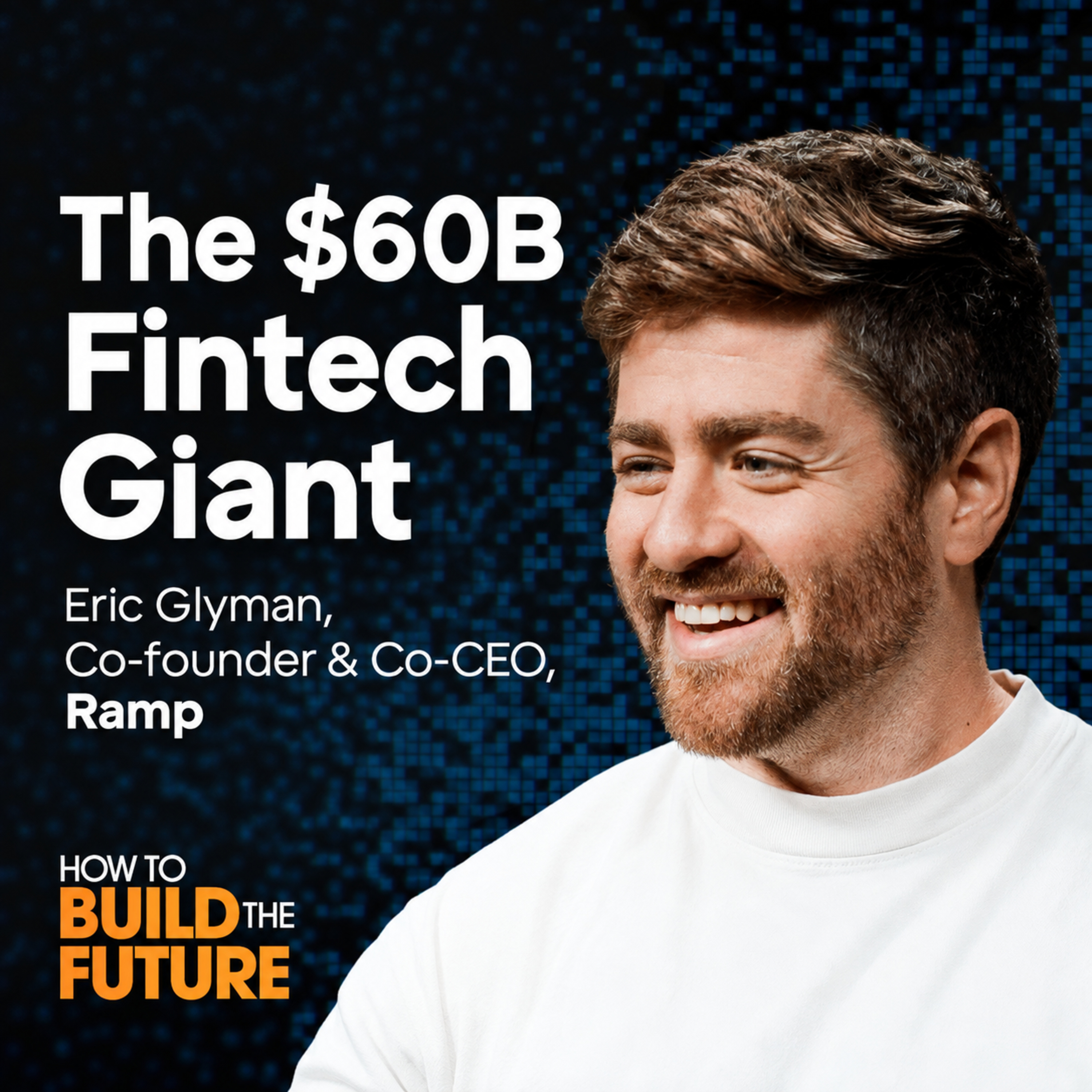
How Ramp (co-founded by Eric Glyman) is reshaping corporate finance by using AI agents to reduce waste, automate financial operations, and redesign organizations for faster decision-making and growth.
Eric Glyman is co-founder/CEO of Ramp. He previously co-founded Paribus (YC Summer 2015), which automatically sought online purchase price refunds by scanning receipts in email/Gmail/Yahoo, then requesting refunds. Paribus was acquired by Capital One after rapid user growth.
Written by AI. May contain mistakes.
Eric discusses his entrepreneurial journey from Paribus to Ramp.
“You and your co-founder, Kareem, you built Paribus and we got to work together YC Summer 15, actually.”
Exploration of the initial ideas behind Paribus and its challenges.
“came because it set us off on a completely different trajectory.”
Eric shares how personal experiences led to the creation of Paribus.
“Or was it sort of like, this is what we wanted, this is what we wanted for ourselves, and then people wanted it?”
Discussion on the unconventional methods used to gain initial users.
“And like, you know, we had taken, I'd taken enough computer science to know like, oh, if you give a computer or website to go check, you can go scrape and check the price.”
Eric explains how they addressed user skepticism about their service.
“We didn't have too many friends, so we ran out of them very quickly.”
Exploration of Ramp's business model and its advantages over traditional banks.
“People want to use those types of products.”
Discussion on Ramp's future and its role in the startup ecosystem.
“in actually making their customers' businesses better.”
Learn why targeting startups can be more beneficial than larger enterprises initially.
“You know, Paul Graham talks about this a lot.”
Understand the contrast between building for future needs versus managing existing systems.
“I can talk about from a product level and how we operate.”
Explore the rapid advancements in AI and the importance of adapting organizational structures accordingly.
“Glass and Inspect and some of our new AI tools are actually expressly designed to make every member of teams more productive.”
Examine the difficulties organizations face in integrating AI into workflows.
“And, you know, the next nine to 24 months are going to be pretty astonishing moment where like model capabilities just, you know, are taking off.”
Learn how Ramp has structured its teams to leverage AI for productivity gains.
“And then Glass is sort of your knowledge and shared workflow system.”
Discuss the productivity gaps between teams utilizing AI and those that do not.
“Did you have to do that like at the team level?”
Understand how Ramp uses AI to streamline operations and improve efficiencies.
“You don't encounter these problems as much in small startups where you're just getting going and your whole environment maybe is on your local device.”
Learn about the importance of measuring AI investment returns rather than just costs.
“Like, there's an incredible culture of experimentation.”
Learn how Ramp measures spending to connect expenditures with outcomes.
“we're gonna spend only$1 ,000 or only$100 or whatever the number is, and that's it.”
Discover how Glass integrates various company systems for improved operations.
“I was looking here last 24 hours, 1 ,925 used it.”
Explore how Glass aids in standardizing and improving decision-making processes.
“So even if someone great does great work and leaves, it's in the skill files.”
Understand the impact of AI on organizational structures and decision-making.
“to do this company brain model because it's very open like before it was silos and you know a VP or an executive might be able to like have very tight control over what information goes.”
Learn about Jevin's Paradox and its implications for the adoption of AI technologies.
“because like the size of a firm is defined by the friction of like the different parts of the firm.”
Understanding how the cost of intelligence affects its uptake in society.
“And what I would say really directly that no one has talked about this, but it's very clear in the data, which is over the last two months, Jevin's paradox broke.”
Exploring how faster execution of tasks enhances productivity in software development.
“Like, like the interesting question is now, let's say that the cost of intelligence and it should very clearly continue to drop.”
Discussing how Ramp's approach leads to significant cost savings and improved growth.
“were way better cars and they didn't break down all the time.”
Effective strategies for hiring talented individuals based on their past accomplishments.
“if you believe that there are 100X engineers and 10X engineers, how could you not try to make everyone 100X engineers?”
The importance of seeking assistance and being vulnerable as a leader.
“So, you know, sometimes you just have to look and see what they are.”

Get the gist, explore an idea or ask about something said.
 Claude
On Y Combinator Startup Podcast, what are the key points of this episode?
Searching your listeningAutomatic transcript. May contain errors.
0:00Today on How to Build the Future, I'm sitting down with Eric Glyman, co-founder and CEO of Ramp. Ramp started seven years ago as a corporate card with one promise, save companies time and money. Today, it's a$60 billion platform that runs the financial operations of tens of thousands of businesses. And increasingly, it does all of that work using agents. We're sort of at a pace that I think most people would look at and go, this is kind of remarkable. This is the story of how Ramp is reshaping the way companies are built from the ground up.
0:42Thanks for being here, Eric. Honestly, Gary, it's great to be back. Thanks for having me. Welcome back. You and your co-founder, Kareem, you built Paribus and we got to work together YC Summer 15, actually. You sold it to Capital One and then you went on to start Ramp. Walk us through that journey. What was that like, you know, deciding to apply to YC, coming and doing it, and then how'd you get, you know, to your next thing? A decade ago, we had a pretty simple idea, which is what if every time that you bought something online and it dropped in price, you could get that money back automatically.
1:14And so we built Peribus, which was back then a savings app, but I really think was one of the prehistoric AI agents that did that for you. It would link up with your Gmail or Yaku account. It would scan your inbox for receipts, structure the data, go check the price. And if you were eligible for a refund, it just emailed from your account asking for a refund of the difference and worked really well. We launched a month later, we were here at YC. We actually applied twice. And so for anyone thinking about it, if you don't get in on the first time, try again. And we're very happy. We came because it set us off on a completely different trajectory.
1:49Within a year of graduating from YC, we had almost a million users every day and we had a legioning offer from Capital One to buy the company. And so, you know, we ended up spending the next two and a half years just over that at Capital One. And we got to see how in many ways a world-class organization operated, how it used information to revolutionize its industry of credit cards and learned a lot of incredible things. Also learned some anti-lessons, you know, seeing an organization that had so many good processes that often killed great ideas, saw how incentives sometimes that are not always aligned with customers led to outcomes that could be much better.
2:31And ultimately, the years of being there led us to question, what if your financial products were not designed just to go and make the company more money, but were actually designed to help individuals spend less? You could compete on value, not on the basis of price, and you could build a very different kind of company. That's fascinating. What was the zero to one like on the first startup idea? How did you come up with it? Did you need to pivot? Or was it sort of like, this is what we wanted, this is what we wanted for ourselves, and then people wanted it? When I graduated, it seemed like the only two jobs were banker or consultant.
3:05And so I worked at a bank and Kareem was a consultant because it helped with his visa. And we liked her jobs, didn't love it. And we were always kind of dreaming. We would read some of the essays that Paul would put out and watch some of the early startup school videos. And what stuck with us was, you know, don't just try to come up with ideas in the abstract. But I remember the essay of like how to get ideas, how to get startup ideas. And the conclusion that I took from it was you should just notice problems in your regular life. And after a year of working in an office and not leaving until it was dark outside, finally a group of friends got exhausted enough that we booked a flight.
3:43We thought we were smart. We used incognito mode. So we'd get a non-personalized price. And the next day, another friend wanted to join. And I looked at the flight to send her the details. And I was like, this is weird. The flight is$100 less. Is this right? And it turned out it was. And I got really frustrated. In my job, I would read credit documents and indentures. And so I just read the policy. It turned out the airline would give you a refund if you let them know within 24 hours. And so I called. It was done within an hour. You know, my friends and I had almost$1 ,000 back. And I just sat there.
4:18I'm like, this could be happening all the time. This could be happening all the time. And like, you know, we had taken, I'd taken enough computer science to know like, oh, if you give a computer or website to go check, you can go scrape and check the price. And policies are relatively structurable. Like what can we do about it? And so it led to a year of kind of tinkering and trying to figure out what's the right form factor. Could you pull the data from credit cards? Not enough information there. It doesn't have the itemized receipt. You could use email. There was these productivity apps to help you organize your inbox or write faster, but no one had ever used email as a way to collect information and then send, you know, to go and build refund requests.
4:54And so we just started buying some things. It turns out they were dropping in price a lot more often than we thought. We tried building these triggers. Initially it was built in VBA as a script. That was what we knew. And we started getting refunds. We asked our friends, hey, I know we're your friends. It's a little weird, but can we get your email login and try to save you some money? And just we kept pulling. And so that was how we got there. And I think when we had met, it was such that for one in 20 people within minutes of you signing up for Paribus, you would save money. Amazing. And we're like, either we believe in this or we don't.
5:32Let's try this. What was it like to get first users? And what did you have to do to get your first thousand or 10 ,000 users? We did everything. We carried signs around New York. We talked to friends. We didn't have too many friends, so we ran out of them very quickly. Hilariously, where we got a lot of our first users for Peribus was on Reddit. There was a subreddit called Beer Money, where it was people who wanted$5 to buy a beer on the weekend. And so Kareem just ripped it and just wrote a post of, hey, we have this app that saves you money. You can connect your email. And we woke up and we had a few hundred users and it was kind of off to the races.
6:10But, you know, it was everything was hard fought. I think the advice around just try to constrain all the complexity to one metric. For us, it was users. We wanted to grow that 10 plus percent per week and we made various tradeoffs. We learned a lot about how to simplify the story just of stores owe you money. We're going to get it for you. The big problem that we had with that business was it seemed too good to be true. And so what would help you overcome something that seemed like, wait a minute, you're doing you're saving money you only charge if you save me money but you want access like what's the what's the catch when we talk to customers you know we tried to listen to them explaining it to friends like we used to do the craigslist uh test where we'd pretend to be market research people uh doing research for our own company and be like yeah we don't know what this app does or whatever and you'd ask people like what do they think of it they'd go through they'd explain what they like we'd see them later and we explained actually where the founders and And, you know, did you ever tell other people about it just to pitch it?
7:10And they would go and say, you know, there's this app called Paribus. It's really great. It saves people money whenever you buy things and it goes on sale. You should know, though, it keeps 25 % of what it saves you. So that thing. People naturally, when they're telling their friends about things, they want to show you the positives and the negatives. You want to look out for that. It's real. It's real. That is real. And we listened to enough of these conversations. were like, huh, could we give people something that would make it easier to overcome the negative? And we realized actually we should put in like a two-sided referral deal that would motivate people to tell more friends.
7:42And every time you refer someone, Paribus will keep less. And so instead of charging 25%, my rate will be 20%, your rate will be 20%. And we saw referrals explode. We figured out ways to get the news to talk about it. And as we got that going on very quickly, the growth rate just continued to grow exponentially. That's amazing. I mean, it's cool because when you set out to do ramp yeah uh it sounds like that was sort of the same vibe when you came out you said you know save time and money how do you do that again maybe we've only ever had one idea i mean sometimes uh if it's a good one that's all you need i think it's just like a deeply human desire to get more for for less you know and maybe rich or poor everyone likes a good deal yeah we had had that insight of if you had a very simple value proposition, you can communicate it very clearly.
8:33People want to use those types of products. And when we were at Capital One, we learned about financial institutions, how they work. These were incredible business models that were incredibly profitable. It wasn't that any individual person was bad, but just organizationally, the incentives were such that people were designing products that made their customers just a little bit worse off to make the company better off. And we thought it could be so powerful if we actually wanted the same thing. Did you start there? What were some examples that seemed particularly surprising? When you have a hammer, every problem looks like a nail.
9:10So one, there's very few new competitors in making new bank accounts or perhaps in making new credit cards. I mean, these are all regulatory sort of captured things at some level. We think so. I mean, most of our competitors then, their founders were top hats, not because they're eccentric. They just were born in the 1800s. It's just like not a lot of new competition, right? And the tools that most people had conventionally were you could have cards with cash back or with points. And to kind of break down the logic tree, the job of companies, people know, is make more profit each quarter, grow quickly, and eventually the long term, the profit dollars become really great.
9:50So every quarter, your team is on this rat race in the car business to grow purchase volume, to get people to spend more money and drive more purchases, which drives more top line revenue. And then you want to keep a higher net margin. One of the largest costs for credit card companies was the cots of those points and reward schemes. And so the incentive institutionally became, well, if you could convince people that the points are worth a lot, they're going to go spend more. And get them to not use them. That's right. Or devalue them or do these kinds of things. And they were in different departments.
10:24Everyone was optimizing different things, but somehow it wasn't aligned. And we were product people inside of this group, inside of the car division. And we used to do all kinds of user research. And you could boil some of these exercises down to asking customers, what would get you to use our products more? Do you want a pointer or cashback program? And if you ask people and you really listen to what they said, not just was it A or B, but what they were telling back to you, they would say something on long lines of, I actually just want more in my bank account, which if you pull on that and you're like, huh, well, maybe if you don't spend a hundred dollars on that subscription that you're paying for, that you've forgotten about, and you cancel that at the end of the month, you might have $99 more in your bank account than if you just got 1 % back?
11:14Why isn't there a card or software that does that? And if you could do that well, you could have a, not a 10X, but an almost 100X better value proposition for customers. The other large problem in that business was people were terrified that it was a race to the bottom, that if you're just slicing up a small margin, well, it's, you know, this gets boiled away. And if you could actually compete on the basis when I say value of actually more dollars in your account, but you do this through technology, you do this actually not by saying, I'm just going to give a larger rebate, you can have more dollars to invest in new things.
11:52And so in some ways that the early insight was not even yet a technological insight, but a business model insight of if you could take these profit pools of sometimes financial products and use them to invest in great software led to some of our early products like the card that not only wants you to spend less but does your expense reports it led us to be able to invest in great bill payment software where we had a lot more dollars actually than businesses just doing that type of software and now you see this platform where not only are we seeking and pursuing to be aligned with our end customers and so we measure how many fewer dollars and hours they actually spend.
12:32But because you've sort of thought about the model more holistically, we have more dollars than many of our competitors who are just under-investing in actually making their customers' businesses better. So the zero to one for ramp really was that, you know, how do you actually go in? And similar to Paribus, you're spending all this money on subscriptions. Are you using them or not? Let's make it easy to unsubscribe. Was that sort of like the initial zero to one that worked? It's perfectly said. And there's one extra twist, which is important, I think, for people thinking about building agentic businesses, which is the ability to act or do something.
13:06One of the challenges that we felt at Paribus was we could see and were authorized on behalf of customers to look at hundreds of millions of emails per day. A small amount of them were online retail purchases or flight or hotel bookings. but there was we believe billions of dollars we could be going in savings but our only mechanism to ask was email customer service and hope they give a refund to the end customers we were fascinated with the idea of could you actually embed this into the movement of money could you be close enough to the metal that maybe to put it directly it's one thing to see that you are wasting money it's another thing to be able to stop the purchase and actually prevent dollars going out of subscriptions that you don't want to go leave.
13:52And so that was declined. Exactly. Right. We're taking it down further. So that's what part of pulled pulled it from just building the intelligence to actually could you be at the operational layer? That makes sense. You know, Paul Graham talks about this a lot. It's like, you know, when you're going zero to one, it's actually a feature to go sell to startups as opposed to like the biggest enterprises, like you'll get the biggest enterprises later. Like, was that true for you? It was. And there's, I mean, just extraordinary companies that years ago were small startups and now they're huge companies and we've grown with them.
14:27I think about Cursor and Cognition, both organizations we serve and they were just a handful of people to they built extraordinary companies. And so that's absolutely right. I think if you can build for the future, build for the past and you had to pick one, I'd pick the future every day. Well, fast forward a little bit. Ramp has just reached$60 billion valuation. Congratulations. Thank you. And you called this the end of the beginning. What does that mean? And, you know, if you had to say like, okay, well, that's the first chapter, you know, what was that? And then, of course, what's the next?
15:01I can talk about from a product level and how we operate. We were really thinking about both when we wrote that post. One, if you've operated inside of a company, you have, right? Like on one side, you have kind of your payroll system, who reports to whom, apartment locations, a lot of hierarchies there. On the other side, you have your ERP, your system of records where you store. Here's what we spent this month. Here's what happened. Here's all the money we received. And in between is like a total cluster for the finance team. Classically, because the banks could move money and the software people could build weird aftermarket software.
15:34where if you looked at companies and their realities, I mean, it's still true for most companies today, but for non-RAMP customers, it's you have one system for credit cards, another for expenses, another for bills, another for procurement, another for travel, another for, you can go on and on and on. It's really kludgy. And so if you actually want to go and, you know, even just educate, oh, if you're an employee and you want to buy software, you might have to teach them to use multiple systems. You have an incomplete view and you end up with waste, wasted time, wasted money, all that. And so part of the first chapter was building kind of the complete mesh layer, almost pack manning up all of the different types of tools.
16:13So you could actually use one very simple and streamlined box to make sure there's fewer dollars leaving your organization. And today the median company uses ramp, saves seven and a half percent per year on their expenses, which is multiples times what interchange even could be and is helping them grow a lot faster. We did very little from a product perspective trying to be disciplined on if our goal was to help people cut costs, we did less in our software of how do you help grow revenue faster. And so part of this chapter two is not just how do you go and help make sure there's fewer dollars leaving organizations, but actually for the dollars you are trying to spend, how do we make them have a higher multiplier?
16:57How can you collect revenue. And so we've launched accounts receivable recently. Glass and Inspect and some of our new AI tools are actually expressly designed to make every member of teams more productive. And so from a product lens, it's really about not just less waste, but it's more about faster growth, time and money going further. From a company perspective, roughly a little less than four years ago, ChatGPT launched. This is GPT 3.5. It was the most advanced model in the world. And you and I both remember it couldn't really do arithmetic. Two plus four equals who knows. Basic things can do it.
17:35Yeah. I mean, it was a cool toy. It was amazing. You know, sometimes you'd have paragraphs that made sense. You'd go back and forth. And that was when it was a stochastic parrot still, but it evolved quickly. And it's evolved to this place where, you know, it solved Navier Stokes, a problem that mathematicians, the best in the world for the past 200 years could not solve. And then I think three weeks later on a random Thursday night, it dropped proofs to several hundred more problems. I think most people still haven't internalized just the pace of progress and what it means. And while most people still haven't yet adopted AI in their own workflows, I think even fewer organizations have sought to ask, in a world in which this kind of intelligence exists, have I designed my organization in the right way.
18:16And so part of chapter two is about, I think, this continued reimagination of what an organization of the future can look like and how we build the tools to power that. Yeah, it seems like, I mean, sitting where we're at now, like, you know, recursive self-improvement is happening inside the labs, at least reportedly. And, you know, the next nine to 24 months are going to be pretty astonishing moment where like model capabilities just, you know, are taking off. And then simultaneous to that, you have this, you release this crazy stat about the top 1 % of spenders spend 80 % of the spend on AI tokens right now.
18:58That's right. Is that right? That is exactly right. And so it seems like simultaneous to this crazy thing that's happening, the actual ability for, you know, sort of even startups to like radically change the way they do things is flat. I mean, it's the people who were going to adopt it, at least in this like 24 month time frame, seemingly have embraced it and they're doing it. But, you know, there's this large like 99 percent that currently says, actually, like we have no it's like like some kind of skill issue or something. It's very wild, actually. This is not like a fringe thing is actually like kind of a societal like GDP affecting sort of mission.
19:40It is, I think, going to be the most transformative, bizarre years I've lived through in my life and maybe all of us listening and thinking about this. But the future is here. It is not evenly distributed. That is for sure. So, I mean, internal to RAMP, like that's what you've been doing. You have a number of internal tools. You have Inspect, a coding agent. You've got Research, which is your internal AI analyst. And then Glass is sort of your knowledge and shared workflow system. Yeah. What have those things done for you? And or like, how did they even come about? Like, how did you structure the team?
20:15Like, you know, you're one of the 1 % yourself. So for the people who are part of the 99, like, tell us the story of like your own transformation so far. Change is very hard for people. Like, and maybe to give an example, we've spent so much time in the finance world. So sometimes we'll hire people outside of like an investment bank or a private equity firm and they'll show up at a company. And one of the ways that finance teams, maybe your finance team, if you're listening to this will go haze those people is they probably have become just like really good at Excel on Windows and they know all the hotkeys and they're great at it.
20:47And then you haze them by getting them like a Mac and you give them Excel. And they're like, I don't know how to use this. Like, it's too complicated. And in some sense, it's funny, but it sort of exhibits this basic truth of like even learning how to use the tool that you've maybe used for multiple years in like a slightly different operating system can be like hard for people to make that change. And that's why many finance orgs still, they're like the only team still operating on like a Windows machine inside of a startup. And so in some sense to go to any member of your team or life, family and say like, hey, I know you've been doing work this way for 20 years.
21:28You should just use AI now. Yeah. It's like a really big ask. It's like a lot bigger than just same program, different OS. It is really hard. And so in some sense, like actually thinking through and giving some people the grace to figure out, like, how do you actually relearn everything that you kind of know? Did you have to do that like at the team level? We did. Okay, we're going to start with, I mean, engineering is an obvious place to start. You've always had like incredible, you know, IMO gold, like, you know, the best of the best engineers. They were like, hey, actually, we're just going to start doing this probably.
22:04What happened inside of the company is what is happening in the world, where 1 % of the people were using 80 % of the tokens who were also becoming the most extraordinarily productive people. You'd have, not exaggerating, 100x engineers, people who were just so radically productive and they were being faster, and others who were behind, and some functions moving fast. And it would start breaking parts of the organization. For example, you'd have engineers who maybe were 10 or 100x as productive. You have designers who are 2x as productive, product people who maybe got with the program and they were 5x as productive.
22:39And companies traditionally have these ratios, right? Like six to eight engineers to one product manager to one designer. And it's a big problem if the productivity of one function or another doesn't get there. And so you'd start having like all these pain points where engineers were outrunning other parts of the company. Fascinating. You'd have people who suddenly were growing faster. and for capacity models, like we had to go hire all these people. And you'd get these hiring requests where there was this inverse correlation. The more AI you used, often you were radically more efficient, so you didn't need as many people.
23:15And if you weren't using it at all, maybe you would say the juke, right? Yeah. And you would request a lot of people. And so it got to this point where earlier this year, we just said like, and by the way, this business is growing more than 100 % per year. we said we're not hiring for a whole quarter and part of why we we did that is first of all hiring is takes a lot of work to find people interview people onboard people you get less productive before you get more productive but two like i didn't want learning ai to be like a in five percent of your time like it needs to be like your core competency and the cool question was how do you get people to this aha moment where finally you see it and you understand it and you never want to go back and so part of it was how do we create the conditions to do that another side of it is actually just IT.
23:58You don't encounter these problems as much in small startups where you're just getting going and your whole environment maybe is on your local device. But inside of large organizations, what happens is you say, go use cloud code. Then someone from your sales team says, fine, I'll do it. And then they download it. And then they have to open terminal. And they're like, what's terminal? And I have to install these packages. And they finally get it done. And then they have to ask IT or someone of, can I connect it to Databricks or Snowflake or Google or Slack or Stripe and you can't do anything. It's like, I think most people's experience with AI is it's this unbelievable alien intelligence and there's a wall and like a little slip and you can write a note, chat, and you can pass a note to it and then it can pass a note back to you, which is so far from when you looked at how these unbelievable engineers who were getting 100x productivity gains where, you know, I think about inspect, what makes it so useful and it's 85 % plus of how of all the pull requests that we have at RAMP, the number of pull requests for engineers still growing like 40 % every month, roughly.
25:05And so it's a radical velocity improvement. It can see all the data that the engineer can see. It has access to the code. It has its own virtual machines, its browser, it's everything. It's not just a great intelligence, it's it's merged with your team i always remember that scene in matrix where you know uh keanu wakes up and he's like i know kung fu or if you've watched like avatar uh you know the whole premise was like the main character knows all the things that like his ancestors uh know uh and so it has this almost like super vision this super insight there was almost this desire to say actually how do we make it easy for everyone to do these things to know all the things that the company knows um And when you get a complaint from a customer about a bug, you know, Inspect can go and read that email.
25:57It knows all of the recent code changes. It can locate it. It can go write the change and it can email the customer back. And so instead of back to where we started of like these capacity models, you have to go hire, you know, 30 other people, you can just fix it in 15 minutes and all these compounding advantages just go. And so it sounds like building your own harnesses around these things. It's not just the harness. It's also the integrations, like the authentication is built in and then standardization across the whole company. Like, oh, yeah, we just use inspect. Like, you know, have some people over here using this thing and some other people using this other thing.
26:35And I don't mandate any tools for people. You can use whatever you want. And we do. Like, there's an incredible culture of experimentation. There was a great post from Anthropic about the early days of Cloud Code. and Ramp was, I believe, the first alpha customer in trying to tinker with him. Cognition, we were the first customer of Devin. Cursor, we're one of the first things. People have access to great tools and we let people choose what, in their own opinion, is the best for them and that's the goal. So what would you recommend? I mean, as people, there are people out here watching who actually probably run thousand-person organizations but they're telling their engineers, you can have two Claude max accounts and that's it.
27:21Like, what's your policy? What would you recommend? Like how does the 99 % become the 1 %? Not that the way that we do things is right for everyone, but this is why we've released Inspect in Glass. I believe really strongly if other organizations are able to be more productive, the world will be better. And so some folks just welcome to see if what we built internally is great for you. But more than that, and I think like the question behind the question you're getting at is like, I actually think like the ROI era of like AI is here, right, in some sense, where when you put like a flat budget or something and you just say, we're gonna spend only$1 ,000 or only$100 or whatever the number is, and that's it.
28:05It's sort of, in my opinion, like a bit of a silly way of doing things. Like I put it this way, there are some people where I'm thrilled if they're spending$1 ,000, other where I couldn't be more angry. If someone spends$1 ,000 to make$10 ,000, I'm trying to throw money at them. If someone's spending$1 ,000 to do their weekly prep for no value, I don't know. Maybe we shouldn't do that. And so it is a completely incomplete way of looking at the world of just asking how much did we spend. And this is where this is now the obsession of RAMP of how can you actually go measure even semantically, not just like who spent and show this in one place across all of your tools, but understand, okay, we spent$5 on a new landing page.
28:52That new landing page picked up, you know, converts 3 % better, which generates$5 ,000 more per month or whatever it is. And so part of where we build in maybe a different way than others is we don't sell tokens, we buy them. We seek to measure them and we help companies connect back what they're spending to the outcomes. YC's next batch is now taking applications. Got a startup in you? Apply at ycombinator.com slash apply. It's never too early and filling out the app will level up your idea. Okay, back to the video. I guess so Glass specifically, it sounds like it's kind of your other people might just throw people at Codex or Cloud Code.
29:33with and it's like you figure out how to hook up the systems whereas glass is your company brain like it you know you can use a frontier model with it but it's got all the integrations and then is it like all info about the company like uh analytics like finance you know customer support like all the things about um running ramp are like all in there and then who gets access and How does it work? We're 1 ,930 people. I was looking here last 24 hours, 1 ,925 used it. So people use it to do their work. Do their whole work. And to know what's going on. Exactly. And there's a lot of design decisions that went into this.
30:17First of all, to your point, it connects automatically to all of the core systems that a company uses. So whether it's your data warehouses, your analytics suites, maybe using Zendesk for customer support, all that data is getting pulled into it. And so at a company level, there is much more of a complete view of what actually is occurring and you can make connections between data sets. But for an individual, you have the access permissions that you should have, and that can vary by company. There are shared skills. So if someone from the sales team figures out like a better way to do research and a scene conversion, it shows up and pops up becomes the default for others.
30:55There's model selection. So if an open model series is better or, you know, Claude or OpenAI, you can use anyone that you want. There's smarter defaults. You know, I would venture to say that maybe the majority of spend on frontier models could be done by, you know, a simpler model. There's smart trade-offs built into it. For example, our background coding agent, sometimes we are happy to have the process and reasoning take 10 % longer for a 50 % cut in price, and so there's better defaults. I think when you start to get all this data, not only are you paying, you're not paying 10 times for everyone to keep relearning the same lesson, but you're actually able to develop and start to see at the organizational level, what is the decision-making?
31:45What is the reasoning that makes this company different? Not just what is an individual person doing, but like what is the unique viewpoint and way that Ramp operates? And functionally, you're teaching your system to do that. So even if someone great does great work and leaves, it's in the skill files. It's there. I guess some of this is it's not just for everyone to be able to do their work better. It's actually really useful for you and Kareem as co-CEOs. you're able to actually dive in and see like, well, what is that process? Is there something in glass that says like, okay, well, there's one process for, you know, refunding a customer for this or whatever workflow when you have, you know, people just cobbling things together, like you might not get that visibility.
32:29And there might be like five different ways to do something. Yeah, that is exactly right. I mean, you functionally are able to understand like, what are the standard operating procedures? What are the reasons of how something is able to get done. But you're also can start to see like there are discrepancies, you know, maybe to speak to how Glass helped us develop a great product that has come to life, maybe on the finance side of the house. I'll give you an example. So every company, Ramp does, YC, unfortunately needs to have expense policies. It kind of falls out of Sarbanes-Oxley and audit requirements and all kinds of things.
33:06But it functionally means that every time that someone makes a purchase, someone is supposed to review it. That's not you. And this culminates in large organizations where you have highly paid people just reviewing the expenses for everybody. And it kind of makes no sense. And these people aren't thinking about expenses or what the policy says or where it's incomplete or wrong and are actually wrong quite often. Either they'll just submit and approve everything or waste their time doing it. And we had built a similar product for the policy agent where functionally it knows your full expense policy.
33:38It's able to at 99 % accuracy, um, go and, you know, either approve it, decline it, or say like policy is incomplete. And every time that things are approved or change or overridden, uh, it learns. And if things are in conflict or things incomplete, it writes and adjust the policy as the company changes. And so to your point, companies are not discrete rule engines like they evolve the style of thinking and their reasoning can evolve but you can trace the lineage and understand the decision making in a way where sometimes large companies are bureaucratic inscute like inscrutable organizations yeah I guess this is a very interesting moment for transparency inside all organizations that choose to do this company brain model because it's very open like before it was silos and you know a VP or an executive might be able to like have very tight control over what information goes.
34:33And, you know, it usually is probably one of those things you might've seen at a financial institution that doesn't quite serve its users well. Right. Absolutely. And some of these are like fundamental questions of like, what mode is an organization in? Are you seeking to create value? Like, I think as a company is just getting started, there's no revenue. There is no asset. There is no code. There is no IP. And so everything is oriented on like we must go create, we must go do stuff. And I think these organizations tend to be very open by default. You hire smart people, you pay them for the - Startups are great.
35:08That's why startups are great. That's why there's creative destruction. I think so. I think it's better. Well, I mean, the processes end up ossifying companies because they have something to protect. That's right. And then they're also, interestingly, a 20th century sort of phenomenon in that - This is right. Human beings only have their 40 hours a week and, you know, we can keep, you know, seven plus or minus two things in our brain at any given moment. And then, I mean, the models today, even the cheaper ones can do a million tokens. That's like three Harry Potter books. Yeah, no problem. That's like superhuman even in a pure like rifle shot memory case.
35:48So, you know, of course the organizations are going to change and they're not going to be these sort of siloed, you know, sort of protected information silos that like roll up to a single person who's then like accumulating. You know, I started my career at Microsoft. So that was my experience with large organizations was like you had these fiefdoms that had like a locus of control. And, you know, there's long books written about like how ossified and terrible Microsoft of that era was. that can end now. I mean, even in large organizations, do you think that the 99, at least some percentage of the 99 % that refuses to do it, do you think that those are actually a victim of like this, these fiefdoms and sort of like the information, like it requires a top-down cultural change that, you know, either the CEO is not willing to take, the board is not willing to support the CEO or the executives en masse are like at war with one another.
36:46And so they, you know, just won't do it. I think that is exactly right. And I do think it is this interesting question of if you look at who survives and how do businesses go on and transform, the history is very clear of like the odds are not good for companies. By default, over a long enough time horizon, you will go bankrupt. Right. Over a long enough time horizon, if you don't innovate, you will die. And it's interesting to question like what businesses continue to survive and why. And I do think the primary cause of death of these organizations is some kind of indigestion. The coordination costs get too high.
37:28Information is overly siloed. They don't make the hard calls. And you're right. I actually think with AI, there are heavyweight companies that could start moving like lightweights again. And you're starting to see signs of that where large companies are suddenly growing faster, which functionally defied gravity. The larger you'd get, the slower you would get. And you're seeing these inflection of companies. And that's part of what happened at Ramp, where now we do over 2 billion a year in revenue and we're growing significantly faster, more than 25 % faster now than we were a year ago. Thank you.
38:04But I think a lot of other organizations can do this. And I also think a lot of organizations get stuck in the form factor of what do they sell and how do they organize around that. Sometimes Ramp is compared to American Express because we started by issuing cards. And I find the history of that company very fascinating. It started in 1850 and their first product was basically like the Pony Express. You could put stuff in the back of a wagon and they'd get it to Ohio or whatever. What in the heck does that have to do with a global financial conglomerate of the 21st century. And in some sense, I think that they, unlike the other companies that we don't remember, sort of understood that what they actually were doing was selling trust, that if you gave them gold or some bank note, it would get to where it needed to be.
38:52And so of course, it's logical that as the world became bigger, they should go into the traveler's checks industry so they have cards so that if you go to a merchant and you're out of cash, no problem, they'll take care of you. And a lot of great companies understand like what their mission is, what are they in the pursuit of. Ultimately, every company is trying beyond their missions, trying to convert one dollar into more. And they're open to the details as to how they're going to get there. And I think this is a period that requires enormous reimagination of like, why do we work this way? The AI argument is so interesting right now because there's really you could make basically two arguments and both of them are very extreme.
39:31because like the size of a firm is defined by the friction of like the different parts of the firm. I think it's like this professor Coase has like a Coase's theorem. The theorem, yeah. Right. And then basically it could go one of two ways. I mean, it could go both ways in different industries. I'm not really sure. Like one view with the fast takeoff and sort of the Doomer AI angle is like it's inevitable that like one of the labs will run away with it and then they will capture a light cone of all future value, right? And so that's the argument that like actually the ideal number of firms is one and it'll serve like all the needs of humanity or something like that.
40:11And then way on the other end is like there could be hyper-specialization and, you know, the world is often like a monopoly or duopoly because people are sort of beholden to brands and seven plus or minus two things you can keep in your head. But agents actually sort of can bring about like hyper specialization. So there's no reason why there can't be thousands or tens of thousands of firms each making a billion or billions of dollars, like hyper specializing in providing like exactly what is right for like a particular set of people or companies. And, you know, that's sort of the white pill version of this that like YC is hoping for.
40:50I want to talk about this because I actually think like the last two months have been incredibly fascinating if you look at what's occurred in the data. And I actually believe support worldview number two very strongly. Me too. I mean, we're betting on it, but, you know, we got to fight for it too. We have to fight for it. And look, I think that so much of people's priors and ideas about what the labs are going to turn into, we're based in a time period where GPT-3, 3.5, I don't know. It's hard to translate its intelligence directly to IQ, but certainly far below the average human to maybe the four series started to get to a little bit below or around average human.
41:34Five, six have surpassed it. It's insane. And if you have a job that requires 120 IQ and every time that you go from 70 to 90 to 115, the returns to that are going to be incredible. But there's this question of what happens when you go from like 120 to 150 for tasks that don't require it. Like put differently, you know, it might be that accounting is solvable with 120 IQ model. Like we're good. We're good on accounting. I have friends who, you know, fired their CPA and, you know, Claude does their taxes now. and CPA, Clyde. And what I would say really directly that no one has talked about this, but it's very clear in the data, which is over the last two months, Jevin's paradox broke.
42:15Fascinating. Like it used to be for that period of time, these are made up numbers. Let's say you discount the price of intelligence by 10%. It becomes 10 % more affordable. You would see the increase in consumption of quantity of intelligence used more than offset. Like railroads came down in price and they spiked up the usage of railroads. This is it. And, you know, I imagine railroad, telecom, like, you know, it's a repeating effect for anything that, like, networks and brings people together. And AI was that until recently. Until recently. And who knows, like, maybe new model families can go and break that again.
42:52It may not be permanent. Maybe we're at, like, a local maxima for now. And there's ways to go and drive adoption. I mean, I would argue it's probably related to what we just talked about. It's like, you know, RSI is here. They model capabilities are going like this. And then suddenly, like the capability of society to absorb that is more or less. Hit a limit. Like all the, you know, all the people who were going to become AI psychosis doubt have done it. And they're going to benefit from this. Yes. But then, you know, what about the 99 % is a little bit captured by like internal politics or, you know, not invented here.
43:27Or like lots of, you know, just like we're too comfortable right now. We don't want to deal with it. Yeah. Something's going to change. Something's going to change. And it gives me hope for, I mean, the world, but also especially for startups, right? Like, like the interesting question is now, let's say that the cost of intelligence and it should very clearly continue to drop. Maybe intelligence will be almost free, you know, in the future. What is possible to build? What kind of businesses, what kind of problems can be solved that once you've crossed this threshold of cost, you can go from impossible to possible.
44:00Can you go from zero to one and suddenly new innovative businesses go and can't exist? Classically, I think the story of capitalism is the value to the ecosystems of inventions are much larger than the value captured by the creator of these inventions. And so I think it's going to be just a completely wonderful and fascinating decade ahead. I want to get back to what you were saying about glass because you're, you know, I think we were talking about glass, like you changed the way everything works. It popped your growth by 25%, like in excess of what, you know, the previous rate, which is pretty significant at large scale.
44:40How much of that, like making glass and these internal tools has actually changed the core product for people who use RAMP. Significantly. In the second quarter, there were 7 ,000 pull requests that were created by non-engineers. It was great, right? And the interesting part is, like, probably two years ago, the number of pull requests created by non-engineers was functionally zero. Yeah, you just can't. I mean, you're going to, like, get git, and who's going to let you commit? Yeah, exactly. Who's going to let you, who's going to approve, like, this person's code? The majority of those are coming from the customer experience team.
45:17Yeah. And this happens in companies all the time. Someone reports a bug. What do you do? Maybe send them a response. Hope it works. You get 10 of these things. Someone's writing a user story. You go in a classic organization. Maybe they're still on like agile or some horrible methodology. And they write up a ticket. They go try to convince, you know, product manager it's worth it. They prioritize it. They give it to a designer. Maybe it makes it to an engineer. and two months later you have this thing. Yeah. Or more often, like it goes into a bug database and gets marked P3, won't fix, like goodbye.
45:51It'll never get fixed. Goes somewhere to die. There are whole things in schwab.com that like will always be like that. It's like unbelievable, you know? What is interesting is in a world where the cost of doing something goes from three months down to minutes, things start getting better all the time. You start moving quickly. Like the software starts getting more intuitive to use. People can actually feel a lot more agency. You're not just move the cheese from here to there, but actually you can go build it. Kind of sounds like Toyota in the 80s. Yeah. Remember like suddenly these Japanese cars started flooding the American market and they were way better cars and they didn't break down all the time.
46:34And it all came from like a process innovation. Six Sigma, yeah. you know and kaizen like just this idea that uh the person on the factory line can change their process on the fly that's the same as like letting you know your customer support person who's like talking to someone experiencing a real pain yeah go in and press a button and then actually oh that thing's done now like literally like that same day and the implications are profound one people's expectations of each other go up you know saying no or we're gonna do this you know on monday instead of today, like becomes, why would you do that?
47:09You can go do this today. And so everyone like their game is raised and you start seeing, like, I think about the last five months, every single month we've had a major product release. It used to be at ramp and we move very fast. We count the days of how old we've been. You would have one or two major releases a year if you were lucky. And you see this expressed in faster growth rates. You see this expressed in terms of for salespeople, their quotas go up. So don't feel bad for them. They're making more. um and so when you get these things right um you know i don't think this is a phenomenon unique to ramp but like i just think company not just makes more money but uh you deliver faster products more people and people's businesses get better and i i like the stat which i'm more proud of is not just the 25 growth rate um it's that the median customer on ramp a year ago is able to cut their expenses by about five percent per year it's seven and a half percent and what does it mean If you can waste 50 % fewer dollars, by the way, the average company in the U.S.
48:09has a 8 % profit margin. Can you actually accelerate the growth of not just the companies you're serving, but hopefully the whole world? Yeah. You know, I tweeted something that like was a little controversial at the time. It's like either you die a system of record company or you live long enough to become an AI harness. Does that resonate with you? like are you guys releasing AI harness like things for your customers yet? Do you think that that tweet is correct or false? I think it is correct, actually. I'm going to agree with it. We are strange in our industry of like sometimes people think of Ramp as a fintech and like that's just not us.
48:47We're more of a productivity company. It's like how do you waste fewer dollars? How do you make your dollars and hours go further? And if you believe that AI is this radical tool for productivity, if you believe that there are 100X engineers and 10X engineers, how could you not try to make everyone 100X engineers? You must start thinking about AI harnesses. Glass is an AI harness. But customers can't use their own glass yet inside the ramp.com interface, or can they? So there's pieces of ramp where like if you want to interact agentically, if you want to go and adjust policies, if you want to go and do custom research.
49:22It's like an MCP, I'm sure. Exactly. And by the way, MCP usage is growing about 10 % per week right now. We've had it for two years. It is exploding in terms of usage. And I think we'll become a dominant way that Ramp is used in the not-too-distant future. But you can actually use, as of this week, we're onboarding customers onto Glass for their own companies. Oh, that's cool. Yeah, so it's happening. It's happening. Let's talk about hiring a little bit. You said, you know, hiring people because they built businesses on Minecraft as teenagers is, you know, one of the good ways. What are some of the other ways that you've been able to sort of hire the best and the brightest?
49:59Have you ever heard the story of Sutton's Law? So there was a bank robber. It must have been in like the 30s or 40s. And the story goes, you know, he would go rob banks and go to jail. He robbed banks again and go to jail. And one day a reporter, you know, catches him. He's outside of the courthouse and they're like, why'd you do it? Why did you rob this bank? And he looks back at the reporter and he says, because that's where the money is, which is sort of funny. It's like, you know, where else were you going to rob? Good demand function as any. And if you want to find people who are good at building stuff, you go to places that demonstrate that they like building things.
50:37Minecraft is a great example. If you are building a business as a 14 year old in private servers that other people will use and pay money for, it is a clear sign that you can make things that people want. If you want to find people who are good at solving algorithmic problems, well, go look and see who at the age of 16 is winning at, you know, math counts or the IMO or the IOI. I mean, name the function. Like it's a little bit of people just get stuck at looking at resumes and how people present stuff. And I'm just not as interested in that as I am of, is there any proof that someone has done great work in the past on their own?
51:16And look, I think there are people who haven't pushed themselves to do it and you still can find people through more standard mechanisms. But in some sense, Sutton's Law is sort of brilliant and under, you know, study. It's the same thing for hiring, you know. Yeah. YC often, I think, you know, we have to make choices in 10 minutes or so. And then the funny realization at some point was like, people are just broadcasting who they are at all times. And they're like, notice me, notice me. So, you know, sometimes you just have to look and see what they are. You'll see what they're about. You're looking back on all the success and all the things, you know, all the adversity you've gone through, like building this, you know, multiple great businesses.
51:58you know what's one thing that if you could send a time machine back or just one you know message to the 18 or 20 year old version of yourself um you know what would you send you know i remember in this part of why yc was so transformative for us i had never started a startup i didn't really understand what they were how they operated it seemed so foreign and whether you're someone who's just waiting to get started or you're a founder and you're on your journey you're going to encounter, you know, obstacles and impasses all the time. I think that in life, whether that's because the grades you get at school or when you open up Instagram, people are trying to show that they they're cool.
52:40They know what they're doing. You know, everyone's trying to look like they've got it all together and it leads you to not ask for help. And I think one of the things that, I mean, the most powerful piece of advice I've gotten through Paribus, through Ramp, through just trying to change my life and other people's is, I think one of the most powerful words you can say as a founder, CEO, or just person is, is actually like, I need your help. I'm trying to figure this out. Here's the problem I have. And it's so rare, I think, for founders to go and say, like, I actually have this problem. I need this advice.
53:19And I think it was one of the things that I remember just vividly of like when I think about what office hours were and are for me of like, you know, it's really just three questions. How much did you grow this week? What's your biggest problem and what are you going to do about it? I think is actually trying to pull people into mode of thinking of like, where do I need help? Show your reasoning, but ask for it. feel comfortable actually just like working through that. And if you get used to doing that early in your life or at any age, you can solve things by confronting it. And so I think I spent a lot of time waiting to ask for help and it's gone a long way.
54:06Eric, thanks so much for joining us. Thanks, Gary.
Ramp started with a simple promise: help companies save time and money. Seven years later, it’s a $60 billion platform running the financial operations of tens of thousands of businesses, with more than $2 billion in annual revenue.Now, Ramp is using AI not just inside its products, but to rethink how the company itself works.On this episode of How to Build the Future, Ramp co-founder and CEO Eric Glyman joins Garry Tan to talk about the company’s journey from its earliest days and how AI has made some people at Ramp radically more productive. That shift led Ramp to rethink how work gets done across the organization, and Eric believes it could eventually let even large companies move with the speed of startups again.