Ask ChatGPT

 Y Combinator Startup Podcast
30 Oct 2026 · 49m · 23 chapters
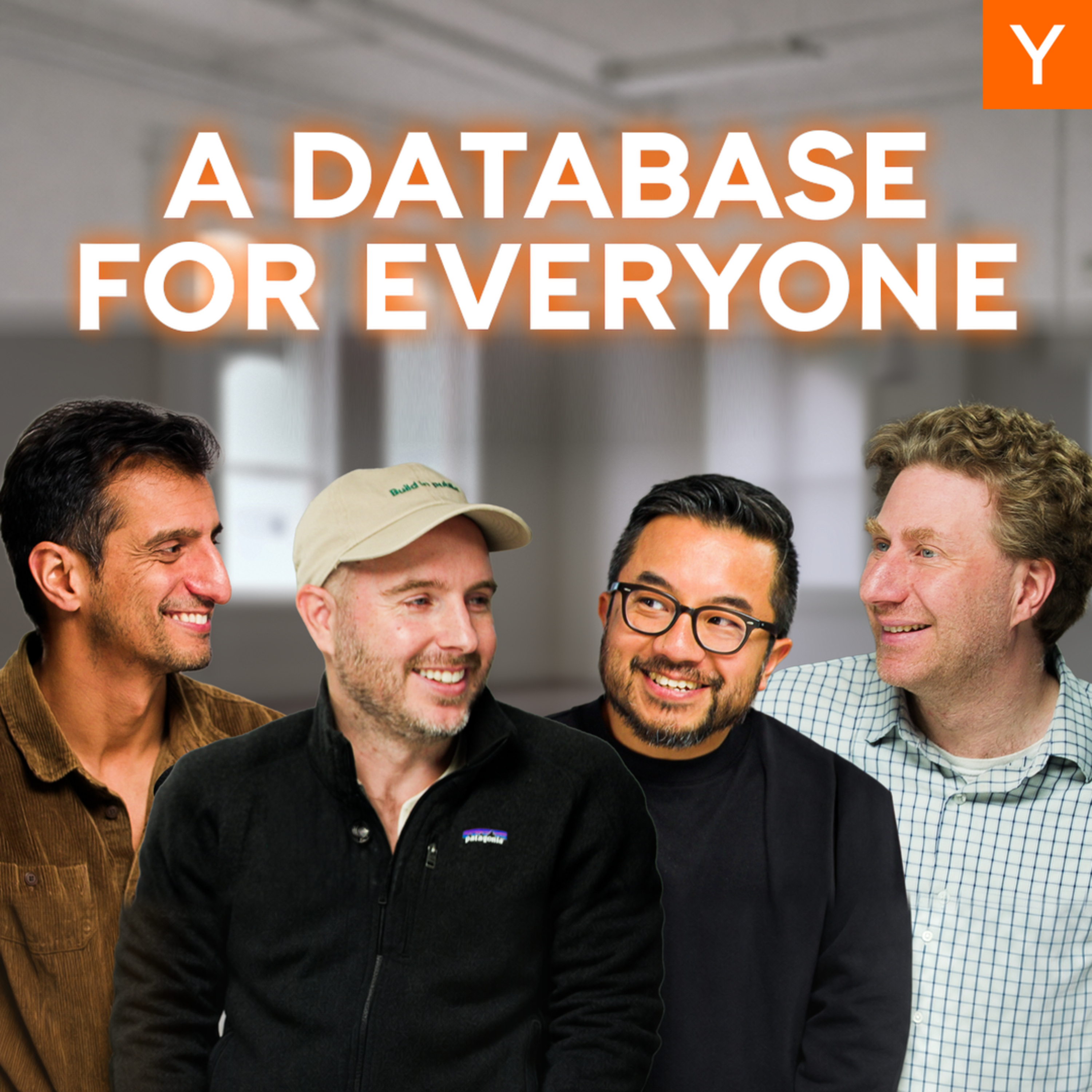
How Supabase (open-source Postgres backend) is enabling “everyone can build software” via AI coding agents, shifting from dashboards/APIs to code-first tooling, and scaling to massive numbers of new databases and personal-agent use cases.
Paul Copplestone, co-founder and CEO of Supabase. Background: leads Supabase’s evolution from a YC dashboard product to an API company, now a code-first platform; focuses on open-source Postgres infrastructure and agent-friendly developer experience.
Agent-driven activity is ~70% of new activity; Supabase grew from ~3M signups to ~13M, with over a million databases created per week (databases under management rising from ~8M to ~50M). Open source is “critical” for adoption and enterprise security inspection. Builders (not just software engineers) are the fastest-growing segment; “day one” now means supporting everyone as builders. Supabase will scale from prototyping to petabytes (Superbase Spark/Terso).
a Brazilian taxi driver built a mini-Uber from his phone; Paul’s personal “control tower” app for email triage, finances, health, and file ingestion; Gbrain built with hosted Postgres/PGVector for RAG + graph retrieval.
Written by AI. May contain mistakes.
Welcoming Paul Copplestone and discussing Supabase's growth.
“Today we're joined by Paul Copplestone, co-founder and CEO of Supabase, the open source Postgres backend that's become the default database inside tools like CloudCode and Codex.”
Exploring the shift from traditional users to agents and builders.
“So what was traditionally someone with a software engineering background is now becoming possible for non-engineers to actually build things on top of Superbase.”
Discussing the importance of being open source for Supabase’s success.
“What have you guys actually done to facilitate or encourage this shift from, you know, obviously software engineers are going to keep choosing Superbase, but how do you get the agents to come over in the first place?”
How non-engineers are now able to build thanks to Supabase.
“And then you don't know what's going on and you can't fix it.”
Sharing stories of builders using Supabase for unique projects.
“That was like a mega idea that really came to the fore at YC during that time period.”
Discussing personal applications and the value of maintaining a personal database.
Speculating on the future role of Supabase in building personal databases.
“And it almost like didn't make sense at the time why so many people would want to do that.”
Exploring the concept of personal databases for everyone.
“because it wouldn't have made any sense.”
Discussing the challenges and strategies for scaling database architectures.
“Now, as more builders come online, we know that we need to service them, which is actually a whole different problem to solve, but kind of an exciting one.”
The impact of AI tools on software engineering productivity and testing.
The evolution and trends in software engineering practices and tools.
“where people went from 10 % of your engineers were writing 80 % of their code with the coding agents.”
Reflecting on Superbase's evolution through different phases and strategies.
“You've seen Superbase like through three eras.”
The importance of personal agents and adapting products for their needs.
“Yeah, Parse is sort of forgotten now, but it was actually a really well-built product.”
How the market and user needs for databases are evolving.
“It's kind of a different customer segment.”
The hosts discuss the impressive capabilities of AI and its rapid development over time.
“If you had shown someone this six months ago, they would have just thought it was impossible.”
Conversation on improving error messages to assist AI agents in self-remediation.
The importance of testing AI products with agents and refining their use cases.
“So a lot of it is just picking your use case and just trying to do these loops on improving your own error messages so that you can one-shot basically anything that you want.”
Kerry shares his journey of building Gbrain on top of Superbase and its functionalities.
“decide to build it on top of Superbase, well, how was it like for you to be a user?”
A discussion on the future of coding and the evolving role of developers in AI.
“And so I haven't done all the classic stuff that I'd have to do.”
Discussion on the potential for increased entrepreneurship driven by new technologies.
“And so it's like unstoppable force meets immovable object right now.”
Examination of the current difficulties vertical SaaS founders face in raising funds.
“That's like a guaranteed Series A even like nine or 12 months ago.”
Insights on the importance of choosing durable categories and adapting to change.
“One thing that helps me sleep well at night is that it's kind of the Lindy effect.”
Discussion on the value of dogfooding and partnerships in product development.
“So we try to partner with the key players in the space.”

Get the gist, explore an idea or ask about something said.
 Claude
On Y Combinator Startup Podcast, what are the key points of this episode?
Searching your listeningAutomatic transcript. May contain errors.
0:00I'm genuinely excited about what the future could be for a lot of people. The thing that I really love about Superbase is that I see a lot of entrepreneurship because of the platform. I certainly think that it'll be the case that everyone in the world with access to AI will become a builder of some sort. You can build anything, you can customize it, you want to make tweaks to some app, some UI, then you don't have to be beholden to someone. I'm pretty pumped about 2027 actually.
0:36Harj Taggar: Welcome back to another episode of The Light Cone. Today we're joined by Paul Copplestone, co-founder and CEO of Supabase, the open source Postgres backend that's become the default database inside tools like CloudCode and Codex. Supabase now has 13 million users and it's spinning up over a million databases a week. Paul, welcome to The Light Cone. Thanks for having me. So to start off, famously YC gives you a t-shirt on the first day of YC that says make something people want. But increasingly, all of us are realizing it's make something agents want. And your company really exemplifies that. Something like 70 % of the new activity is from agents.
1:17Harj Taggar: Isn't that crazy? Yeah, it's wild. It's wild. I think like this year, especially what we've seen in terms of the numbers, the inflection is just a huge shift.
1:28Jared Friedman: towards agents just so we can understand just how much you guys have grown because it's kind of mind-moggling um yeah like what are the numbers you care about and where were you like this time last year and where are you now i think this time last year so yeah we're 13 million signups now probably 12 months back we would have been around three perhaps um this year like revenue will grow forex um we've got trying to think you've got like a million databases is being created per week at the moment over a million yeah yeah yeah what was it this time last year i think actually if um databases under management now are approaching 50 million and this time last year it was 8 million so it's just a huge huge inflection what's been driving that first people are building with abandoned software engineers second i think that there are a lot more builders coming online.
2:23So what was traditionally someone with a software engineering background is now becoming possible for non-engineers to actually build things on top of Superbase.
2:34Harj Taggar: So this is a really big shift. What have you guys actually done to facilitate or encourage this shift from, you know, obviously software engineers are going to keep choosing Superbase, but how do you get the agents to come over in the first place? yeah we largely have seen like three chapters in superbase we started as a dashboard company then we went to an api company and now we're very much a code first company so we try to have the modalities that the agents really want to build with which is code first they really want to use clis most of the time the other thing is just being chosen as a default uh in the llms which i I think we were a huge beneficiary of the timing of which we started to become a default choice for databases.
3:24How much do you think being open source played a role in it too? Because the agents love open source things. You know, it's hard to know the counterfactual, but I think it was critical. I mean, everything that we do is open source and it seems to have been a huge benefit to us. And we do it in a very open source-y way. Like we try to support existing tools. It's not just super-based tools. We support like Postgres as a very famous tool for the Postgres ecosystem. And we help to maintain that. So we kind of got sprawl across many communities.
3:57Harj Taggar: I would guess that the agents actually really like open source because when something goes wrong, it can just look at the source. Yeah. Yeah. I mean, I noticed the agents really like feeling powerful and they love data. And there's nothing more frustrating than hitting a brick wall. And then you don't know what's going on and you can't fix it. I think it's going to be increasingly important as well because now with security being so important, I think a lot of the enterprises are going to want to inspect the source code to know that it's secure. And if you've got closed source code, then you probably won't want to adopt them as a vendor.
4:34Harj Taggar: Is developer even still sort of the core user that you're going after? Or how do you think about it now in 2026? yeah i think that the world where we're moving and at least what we're seeing this year is like kind of builders builders are coming online and it's like a crazy amount of people coming online the crazy thing about this year is usually when you're like our top of funnel our signups are accelerating and usually when this happens you see a lot of the other numbers start to decline activation conversion but actually this year all of them are kind of going up into the right which is a bit insane just because the models are getting so good at building and we're starting to see people who traditionally wouldn't have a software engineering background able to come and and build things that's the distinction is like builder as in they might not be actually software engineers they might just be someone who needs to build a thing and they're just you know popping open cloud code and then it turns out files only get you so far yeah and in some ways like this category of people have all these pent-up ideas that they could never convince a software engineer to like help them build and now they don't have to convince anyone they've got all these ideas that they're churning out software engineers still make up a huge portion but the rate of the growth of the builder segment is is pretty pretty big also like i don't know where the ceiling is on this one like i i remember our early investors were saying ah plg product like growth it's going to tap out at this revenue and you'll have to start moving into this segment of the market and there just appears to be no ceiling so far and i i can't see where it stops i mean that was basically true like two years ago or one year ago but definitely not true this year yeah i was just
6:29Jared Friedman: talking to someone actually this last weekend he fits the builder category it's like a fintech founder just exited his company of like over a billion dollars and um he's always been sort of product adjacent like studying math that like as an undergrad and sort of like kind of could pull together some ruby scripts but like always need an engineer to like build the software and now it's side projects he's just building his own stuff and he has all the knowledge from how to build a fintech company so he can actually build pretty sophisticated just like for his own personal finances like balance sheets and tracking software and knows how to like integrate in with banks and he's writing all the integrations from scratch and it's just like the kind of software that would never have been built um even two years ago these are the perfect type of builder as well because like developers like me i have very like developer focused ideas and things that i want to build but then you've got all these domain experts and they know exactly the niches of oh this is an unsolved problem in my niche and so they're actually able now to like dig right into those niches without having to convince someone else to join them i think you guys were talking about this when you and nyc like the profile shifting even from from who you're
7:37Harj Taggar: bringing into the cohort i think that if you look at the sort of era of what 2022 2025 there's sort of this real shift thinking like, well, AI is coming and suddenly having software engineering as a core, you need a technical co-founder no matter what. That was like a mega idea that really came to the fore at YC during that time period. It was always sort of true, but like sort of doubled down on that. And then really in the last year, we sort of said, actually, yeah, builders, like we're starting to see people who are able to like, I mean, the much harder thing to do is to know what to build.
8:18Harj Taggar: You know, being able to build is something that anyone can sort of have on tap now. And that's actually a really cool thing. Like, can you imagine all the things that never would have built exactly for what you said? It's like, oh, we know that people would buy this. We know that there's a problem here, but at the margins, those people couldn't convince an engineer to work on it do you have some examples fall of like apps that people have built on super base maybe just for themselves that are the kinds of things that would have never been built before well one kind of cool example was at our conference we had the conference here and afterwards this guy from brazil came up to me and he's built an entire taxi app from his phone and it's um kind of like a little mini uber for his local market and i just thought he's a taxi driver himself i don't actually know why he built it but the fact that he could build it and he came up extremely grateful and that he could do this and also like with the type of energy he's he was like 50 years old or something like that but he had the energy of a like teenager building suddenly which I think is kind of cool because now it's kind of getting to that stage where I think it's a little bit there's so much uncertainty around like what is the future of work going to look like but in this category of builders there's that excitement of the future and that's really what I love about Superbase it's like something that people can come in and those who are uncertain now are discovering this skill set and these opportunities where previously they were just blue-collar workers these type of profile hard you've been building some of your own personal software recently yeah talk about what you've been cooking it's just
10:04Jared Friedman: grown yeah it's sort of like the end of one stuff but it's just grown out of um getting really addicted to open claw actually like maybe six months ago now embarrassed i said it i said like there was going to be no uis and it was all just going to be like chat through my open claw but turns out actually and i also was really determined not to use a database for a long time i just wanted everything to be in markdown um but yeah it turns out actually you hit a point where like a database is useful and you do need ui and so i've just been building that over the last couple of weeks in particular and so it's like um i mean i call it control tower but it's just like sort of every section of my life i know like i have like a ui to like triage all my email so i don't need to read my inbox um finances tracking like spending health like both like tracks my weights and my workouts and everything is all in like one place but i like the magic of it is sometimes it's a mind-boggling thought actually is like i think about like the finance section of like my one app for myself is better i think is at least feature parity to mint or monarch or all of these things but in some ways actually better because you can start doing really personalized context like it can figure out what a transaction is by looking up in my the name in my g-brain to figure out who that person is oh like that you know that's like and and categorize it correctly and that was like a whole company like several startups just doing personal finance and now you just like build it for yourself and i don't need it to work for anyone else or like have anyone else's opinion on it it's just like kind of like my thing is like it's kind of awesome we see a lot of that one like where it's finance and health uh basically the two like ones where you want your own data so we see a lot of people doing that and syncing all the devices to to a single database is kind of a magic skill then you can like prompt it to like build these correlations across the correlations are really bad like again like if you just take the health example it's like yeah all of that data is in like my toothpaste database but then it also has access to my calendar so it knows things like it's like oh like your weight i know your weight went up recently but like you were traveling so that's okay like you can just like get back on track um next week and it just has like this context that's really valuable i also found that as i started to use the personal agents like i'm getting a little bit paranoid that i'm putting all of like all of the um like routines and everything and the crm is becoming like boxed into one agent and so now i'm slowly extracting it out into one so that if i want to attach different agents on top then i know that like i can use any any agent so the crm is another really critical one yeah that's why you guys are so valuable is like actually like it's the it's sort of like the store of record what's the the the database is actually the thing that's valuable like you don't you want to own your own database and then build all the applications or agents on top of it versus having that all in like someone else's database which is a totally wild idea like if you just think about the history of databases used to be the case that like the world had only a relatively small number of very large databases run by like large companies and i remember like when Superbase got started, you kind of had this idea that it should be like really easy for everyone to like make a database.
13:12And it almost like didn't make sense at the time why so many people would want to do that. Because unless you can write code, what can you do with a database? And there's just not that many people who can actually like write code and build a personal CRM like that. Like it's just like too much work for most people pre-AI.
13:28Jared Friedman: Like another example actually like where Superbase is really valuable for me is like the other section I have is just like a file upload it sounds very simple but like any file i can sort of forward via email or just like dump it in this ui and then like my agent like figures out what that is and how it's relevant to my life and like what to do with it um but that's all being stored on superbase and so yeah in general it's just like superbase is actually going to end up having like all of the like data about my life in a single place and like i'm i wouldn't yeah i would never have thought about wanting a personal database a year ago because it wouldn't have made any sense.
14:02Jared Friedman: But now I'd like, that's actually the most valuable thing.
14:05Harj Taggar: Yeah, you have like an S3 compatible Superbase files thing. And all my stuff is in that. Oh, really? Nice. Yeah, yeah, yeah. It's default in Gbrain. Great. Thank you. Do you think this is the future, Paul, where like basically everyone in the world, not every developer, every person will have a Superbase database that has stuff about their life in it, their health, their finances, the relationships yeah we'd love that i mean i i certainly think that it'll be the case that everyone in the world with access to ai will become a builder of some sort like you can build anything you can customize it you want to make tweaks to some app some ui then you don't have to be beholden to to someone of course like we think of ourselves as an index company we when we came into yc we just focused on yc companies we wanted to win all yc customers and like now Now, that was because we knew that we had to be there on day one when businesses were getting started.
15:03The mission didn't change. Just the aperture has increased significantly. Now, as more builders come online, we know that we need to service them, which is actually a whole different problem to solve, but kind of an exciting one. Significantly meaning like 10 million X. Yeah. So what? We launch now a million databases every single week. But I mean, if you do some basic arithmetic, let's say with ChatGPT, I think they said they've got 1.2 billion weekly active users. And let's say all of them want to launch something every month. That's 1.2 billion databases a month. And so that's like the scale that we're moving towards architectures that we need to have so that we can actually cater for that scale, which is something that has never had to happen before on the database realm.
15:56Can you even do that with Postgres or are you going to have to build your own database engine to scale to 1 billion new databases per week? I think, yeah. Well, if we could negotiate better with AWS, then maybe we could. But it turns out that everyone wants computers at the moment. And actually, I don't know if you need such a Ferrari for a lot of these workloads. We made an acquisition recently, Terso. they've got a architecture that's compatible with Postgres and actually it's compatible with SQLite as well I think SQLite's a phenomenal database and so we'll provide this tier which we call Superbase Spark which is basically for for these getting started workloads the idea will be the same you get started with the same experience you can scale up to petabytes so now taglines kind of prototype to petabytes and we as a company need to make sure that we can provide for everyone and if they do scale up and their business keeps growing, then we make sure that they have a great time.
16:59Yeah, that's something I was curious
17:00Jared Friedman: about how you think about this actually is like the classic sort of software company you start with, you know, maybe early stage startups like, you know, YC batch and then you sort of have one eye towards the enterprise. And I feel like, especially if you're a database company, like pre-AI, the conventional wisdom as well, like you want to be Oracle, so you got to get to the enterprise as quickly as you can because that's where all the money is. and so you start building out like enterprise features you sort of leaning into sqlite is sort of going the opposite direction like how do you how do you think about it like are you sort of looking both ways yeah yeah we're having to do both which is like incredibly difficult um basically we've got two products that cater on the two ends so multigressor scale up to petabytes and then terso scale down to like these prototyping and sqlite type workloads so trying to do this uh at the rate of growth with having to employ more people, it's just even with AI is becoming or has been a real challenge, but a fun one.
17:58Harj Taggar: So you ran a poll recently where people went from 10 % of your engineers were writing 80 % of their code with the coding agents. And then that number recently got up to 60 % in a matter of six months. Like, how did that happen? What's happening? like you know where is this going from here so we don't have an ai policy internally we just let people do whatever they whatever they want and we give them access to to whatever tools they they want to use and i think now it's just that they're convinced that the models can do so much better better work and so much more so the adoption has been crazy and yeah the the things that they're building internally are not just vibe coded type stuff they're pretty intense um and as we're like shifting into this uh like ai coded realm like just the amount of testing that we're doing and the tools that we're adopting for testing has been pretty useful to make sure that they actually know that the end result is going to be good yeah we're seeing that across yc the yc startups like uh blacksmith depot ubi cloud like they're all vertical because everyone's doing ci and the number of tests that you have for just like through the roof.
19:16Harj Taggar: Like reptile for a review. So that's pretty wild, honestly, to see. Was it like a particular, like it's just the models are good enough now and like people spend enough time where they're like, oh, actually this is quite good. And people need to be convinced, especially engineers. Like, I mean, they might not, at the start of the year, I've thought that it was very good and the models have gotten better, but also they're starting to see, oh, actually you can achieve some great things with these models. And all the stuff with Navier Stokes and all these stuff, like convincing the market that actually, yeah, we can break new ground here.
19:52So I think that's the world that we're moving towards. And now people are convinced that this is the way that it's going to be.
19:58Harj Taggar: You've seen Superbase like through three eras. First, kind of like a dashboard company built in 100 days during YC, then the API company. And then now it's, you know, sort of this agent, you know, make something agents want sort of moment. Was there like one or two things like in each era that really jumped out at you? It's like, oh, that was the thing that made us in that moment. I think like those shifts happened. So the first one, actually, yeah, I think you're saying like, why would a database company exist when we came into YC? It seemed like such a contrarian idea at the time, actually. Yeah, yeah, yeah.
20:36I think like we saw how hard it was to use a database even for developers and so that dashboard first was like oh let's build a UI that looks like Airtable on top of Postgres because I actually loved Airtable as well I was like wouldn't it be cool if that was just a Postgres database on the back end so that one was just seeing that even software engineers struggled and then like when we moved to ai i think we talked about this on the other podcast the ai api um shift was because we had someone integrating with us and they were like oh we want to launch lots of databases we need an api to do all of this and that was like 2021 maybe and it turns out that was exactly the right move for 2024 when the likes of bolt and lovable and all of these people started building on top of us then this year i just saw that actually no one's coming to the dashboard like no one no one visits dashboards anymore so um how are agents going to build in this one i just kind of put out a product memo to the team that said it has to be code first get native super base just has to shift to code first so if it exists on the dashboard it basically has to work in lockstep in code infrastructure as code essentially and we re-architected a lot of the cli and everything to work in sandboxes in code were you guys maybe too far back but were you ever inspired by pass another white yeah company yeah yeah yeah pass and firebase i i liked both of those companies and it's funny these waves right because they did the back end and firebase acquired by google and pass by meta but in some ways i think they like blazed the trail for us to come along and actually have a legitimate database business because in 2014 it would have been ridiculous not to use rds for your for your database then they came along mongo came along mongo started moving to atlas and a lot of these database companies kind of showed that you don't need to just use one of the three hyperscalers you can actually have a legitimate database company.
22:51And so that timing was crucial for us.
22:55Jared Friedman: Yeah, Parse is sort of forgotten now, but it was actually a really well-built product. They launched just when I was building iPhone apps for the first time, and it was quite nice to switch to a nice, restful API that I was trying to deal with. These shifts always happen with inflection points, right? So at that point, there were two things that happened in the market. somehow mongodb convinced everyone that no sequel was supposed to be like an amazing way to store your data and um the second was mobile and so you know we're fortunate that we had a couple of these waves as well and now we're right in the thick of it and yeah i mean this is what i was asking about sort of like how you think about the enterprise early because i think i mean if you go even further back this is like heroku was the first where it's like hey like just start with like the best developer experience and then scale up but it is actually can be quite hard to like scale up with people and i think like you know heroku to i don't think could quite bridge that gap um to how do you keep people on you like as the apps get bigger and and need to be more performant etc etc but like historically every company's had to figure that out and like i know you guys are looking that way but you might not have to like honestly if the the market for just owning like i know call it zero to ten whatever like keeps expanding at this rate it's going to be huge yeah well we want it all yeah so uh we might not have to but um we'll definitely do it and like kudos to heroku i think they popularized postgres but at the time postgres was pretty uh it was still pretty nascent and it still got some scaling um limitations and so yeah we've had to wrap postgres and some tooling that will allow it to scale indefinitely but i mean i guess a better analogy for you guys is more like aws was able to actually like get people early and like scale yeah and so do you yeah like what are the lessons maybe like how do you think about making sure you can scale infinitely the lesson i think that they i heard a stat and was telling me oh i might get it wrong so fact check me but something like 40 of aws's revenue comes from like startups that started on them and then scaled up and like that's the category that we want you know like we know that to convince people to migrate to from one database provider to another is near impossible and so we just want to be there on day one make sure that they have a great time and then make sure that they actually don't want to leave the same business model to strive i mean it's like basically the best business model on earth if you can get it but you get them on day one and then as I scale with like the fastest growing companies in the world yeah definitely and you just do that for a generation and you become a generational business that's pretty much it yeah it's hard for us because what does day one look like that's rapidly changing so in the past day one for me was always like YC customers and now day one is becoming like okay everyone's a builder what are they going to use what are the modalities what how are they going to choose their databases?
25:57These are tricky questions.
25:59Harj Taggar: YC's next batch is now taking applications. Got a startup in you? Apply at ycombinator.com slash apply. It's never too early and filling out the app will level up your idea. Okay, back to the video. It's kind of a different customer segment. Like initially when you started, like there was not an individual market for databases. Like the idea of a database company being a direct to consumer business would have just like sounded like a syntax error yes um but now you actually have two segments you have the like early stage companies that that that has this powerful straight business model but you're also like selling directly to consumers or to their agents perhaps yes yes yes and those use cases presumably will not scale the way startups will but they might just like continue to use you for like for the rest of their lives because you're powering the app that like runs their personal finance software or your taxi cab company or something like that yeah and as their lives grow and they accumulate information that is basically an index of our our own growth you know so they just store more people are collecting more data this kind of prosumer market is essentially a good growth vector for us i guess do you think about the personal agent world in that
27:12Jared Friedman: through that perspective then if sort of coding agents want super based it's very clear like do you think about the next phase as being assuming we all have personal databases like do you need to do anything to make sure that it's easy for personal agents to talk to you is that any different or is it basically the same thing yeah i'm very bullish now on personal agents after a week of my ea being away and uh me learning exactly what they can do and now i'm just kind of obsessed with the idea of building for personal agents and it's true that i i said to our company like we're code first like we're building for humans that are doing code first but actually we're doing it for agents those humans pretty soon won't actually be interacting so like the way i've been building is i'm using dots um i just sit on a phone call with it all the time and i'm chatting to it and saying oh can you make these changes and my my kind of heuristic to make sure i'm building or dog fooding correctly is that i just don't look at the code and i don't allow myself ever to check the architecture except when i want to check that it's actually building things correctly but when i'm making these changes i just want to talk to it and see what it can change so one of us yeah it's crazy as well like it's doing some phenomenal stuff that i just it feels like something out of a sci-fi movie from like two years ago but now like i'm having so many of these moments that I'm just mind-blowing.
28:43If you had shown someone this six months ago, they would have just thought it was impossible. Yeah, I was at your Superbase Select conference a couple of weeks ago, which is an awesome conference, by the way. And I had this kind of crazy thought. I was sitting there and you were talking about all these awesome new features that Superbase was putting out. And I was like, you know, if I was building an app on Superbase, maybe I wouldn't even care to understand all these awesome features myself. up i want to like send my agent to super base select to like listen to all the awesome new features and figure out how to integrate them into my code base oh that's wild a truly virtual conference we should do that a conference just for agents yeah a conference for agents they'll turn up live live they can like talk to each other exchange tips i'm like you know live wow
29:31Jared Friedman: you can bridge it you can sort of airdrop and like the markdown files for everyone but you have
29:35Harj Taggar: to be there in like the the audience to get it we'll call it the artifactory oh man i quite like that we talked about before this like there's just a bunch of things that you've been doing that like really make agents like you better like error messages you know you know what was that key insight and like are there a bunch of other things that you're doing that kind of obvious on the one hand on the other hand like nobody's doing yet yeah so like the error messages yeah i was at a devtong center last night and i'm surprised that this wasn't so obvious but we really dug into our error messages so that you can take a use case like oh i want to build an application and generally like developer tung error messages at like 500 um something basic and you just know there's a problem but now you actually want the agents to like remedy themselves so inside the error messages You are literally telling them how to fix this error or to go and read some docs to fix the error.
30:35So a lot of it is just picking your use case and just trying to do these loops on improving your own error messages so that you can one-shot basically anything that you want.
30:45Harj Taggar: Yeah, that makes sense. Basically, if you're being used by an agent, the agent will encounter an error message. In the past, a human would have to go Google that and do a bunch of stuff. but here you can just say oh like you're just you know out of i nodes so you should probably go do this yeah because there's like two stages to winning the agents the first is being picked by the model and then the second is like if they get stuck you don't want them to switch away so guaranteed they'll get stuck at some point you just want to give them the tools to to remedy so it's not actually that complicated they're smart enough now that they can figure out a lot of stuff but you do have to re-engineer a lot of what previously was just for humans and developers for agents do you test your project your product for agents like do you have agents like try to use super base and then like report all the places where they had trouble yeah yeah yeah all the different models we've got an evals um website where we see which models are building the best and we've got our own eval um suite internally we eval as well which ones are best just with Postgres so that's interesting for the industry and build skills around it so that they can adopt them and actually develop with Postgres so yeah it's a lot of testing and in fact pretty much now a lot of our engineering effort is going into like testing specific use cases rather than the building we want to think through how people are building and build suites around that.
32:16Kerry when you built Gbrain you built it on top of Superbase can you talk about like how did you decide to build it on top of Superbase, well, how was it like for you to be a user?
32:25Harj Taggar: Yeah, I guess, I mean, G-Brain was like a distillation of a bunch of stuff I wrote. I first worked on Gary's List, which was like agentic, it was like an agentic newsroom. And I had to build up basically a research system for RAG and for policy and papers. And it would read every newspaper article about a given topic and then try to synthesize. and then I took that and then distilled it into open source retrieval for OpenClaw because the idea was like okay I had it in Rails and that was kind of like a Foxconn factory for agents it's like I treated every LLM call as very expensive and incredibly dangerous and then when I saw OpenClaw it was this you know it's kind of like Esalen it was just like a very different way for you know you to work with AI because then it's like, oh, the AI is smart.
33:19Harj Taggar: It's not trying to hurt you. And then you should just let it like do stuff and you should just give it data and capabilities. And so I recognized a million tokens is actually an incredible working memory. Like most human beings only have like seven plus or minus two things that they can keep in their head. Whereas like a million tokens is like basically like three Harry Potter books. But then even that is like a little bit limiting for the agents, like keeping the correct three Harry Potter books in your context in a given time is a real challenge. So it felt like there was this thing in between for a company brain or like my personal stuff.
33:58Harj Taggar: It's like I have half a million markdown files on like every communication I've ever had. And so this thing really does have context on me and everything that I care about. But then at any given moment, like the agent, it might need like two pages or something. It's a retrieval problem. And so at that point, you know, at many, I think it's like 30, 40 gigabytes, you need PG vector, you need Postgres, you know, you can do graph databases very easily in SQL. and so that's what gbrain is it's like you know rag retrieval plus like a graph database that creates like structure out of unstructured data and so it's like dynamic schemas like a little bit like what i remember palantir was back in the day yeah and then you know the entire idea is that agents are much more powerful when um there's sort of this intermediate thing where the agent can just say like this is what I'm looking for and it'll traverse the graph it'll do all of the uh you know uh vector search and it'll come back and say like here here's a report and like load this into context and so that's what gbrain is and then super base was just like very straightforward it's like I need I need hosted postgres and I need it to be able to support like a 50 or 100 gig or 300 gigabyte you know database uh corpus really fast and uh it's been great like you know the auto scaling works really really well and now the funniest thing is like with browser use like i use a side browser now for browser use and it's like oh yeah like open clock can go into super base and you know use the database or the new apis you made and it just like managed it itself it can like self-manage were you having to prompt it to like figure out the data structures like graphs or like rag or anything like that or i mean what's funny is like i remember going into cloud code and just saying like use exa and download every download and diarize uh every paper you can find in ai research um today i could use like alpha signal or something but it's like go and find every piece of research about rag and graph databases and like you know text retrieval and then summarize it for like my use case which is like how do i help an agent get access to this stuff and then after it did that it's like oh okay well here's here's how we're gonna do it yeah i was at a dinner the other night on like the future of databases and one idea was like databases essentially are like a retrieval mechanism for data and you know you can put indexes so that they'll search across the data in certain formats so a graph or or rag and then one of them which was super interesting was just like putting an agent on a loop to create the perfect data structure for the search like if you're searching this data set this many times and it's taking 10 seconds then why don't you just put an agent on a loop to create a new type of index or like find the best index for returning that in less than a second i mean dynamic retrieval is pretty clearly going to happen the second you have really really smart code gen yeah so i mean for now i mean i use it for open clause so then uh i use my production instance and then the traces from that, I extracted out like a eval data set.
37:16Harj Taggar: And then I have a separate repo called Gbrain evals. And it's got 40 different categories of like specific types of retrieval, retrieval efficiency, like cost efficiency, latency. And then the cool thing about evals is then you can just tell the agent like loop, you know, just auto research and loop. And anything that improves your stats on this eval, like ship it into master on by default. And anything that you tried that didn't work, write a markdown file that explains why you think it didn't work and then file it away in Gbrain evals. I use Cappy. Cappy has this concept of captains, which is kind of like similar to GrokBots bots.
37:56Harj Taggar: And so you can just give it a context. And so I have one that is always going, that's like come up with new categories. And I have another captain that's always going that's like go through all the categories in evals and auto research and every single day try to find a way to improve our scores on our own internal evals and that's just going all the time it's a very very primitive version of RSI for like a particular use case but I guess if you like go up one level of abstraction you know you could do that you're not for my use case, which is from for OpenClaw or something like it could just be for generically, like anyone's retrieval use case.
38:36Harj Taggar: Like the only thing that changes is like the use case and the traces and the data set. You obviously know about evals and you can improve your software because you have like wrapping this framework around it. Like, do you think that in the future builders will have to actually know about these type of things? Maybe not. I mean, honestly, I feel like we're so early that, you know, I'm just messing around. And, you know, I like doing it in open source and someone else, you know, I hope someone looks at that and says like, oh, I can apply that. You know, like we're I think we're literally coming up with the primitives on how to use this stuff right now.
39:10Harj Taggar: Yeah. I mean, I remember earlier in the year, you know, reading about Steve Yeggie's software factories and things like that and then not being able to totally figure it out. And it's like, oh, no, no, I feel like now I've cobbled together something that works for me, at least. Yeah. Yeah, when we had Boris Turney here, his vision of the future of coding was more like, you just talk to Claude like a friend, and you don't have to know about evals and all this stuff. And Claude just figures out how to build the thing that you have in your mind. I've got this domain name, openusd.dev. and it's because there's actually a file format called open usd and i collect domain names and then suddenly stripe and visa and everyone announced open usd and i was like oh i better put this domain to use now but i never had time to use it so i was chatting to the dot and it's like developed this like developer site with the ecosystem and everything and i was just chatting to it on my computer and then like as i was winding down my day i called it on my phone like as i'm getting to bed which sounds sus but i'm i promise i'm just checking in just coding with it and i was like saying i don't like the information architecture of how like the ecosystem links to the use cases can you make some suggestions and it did and i said okay yeah implement them and then 20 seconds later it said oh yeah okay i've done it do you want to refresh and I refreshed the site and it was really well written and everything was linking together and it's hooked up the SEO type stuff.
40:43And so I haven't done all the classic stuff that I'd have to do. Traditionally, I've just been chatting to it and it really felt like one of those moments where I sort of saw a glimpse of the future.
40:56Harj Taggar: I mean, you can do that because you know what you want to build. That's the thing, yeah. So like I obviously have a background in engineering. So I kind of know how to prompt it, but I'm trying to not say anything. I'm trying not to like point it towards GitHub or anything like that. And I'm trying to code like a normie or someone will do next year so that I know it's basically so I can dog food Superbase and know that, oh, is it going to have a good time with Superbase in one year's time? Yeah, it's funny for Boris to say like, oh, I just wanted to do it automatically. And like certainly once it's into distribution, like literally the model has it, you know, in its weights, it can do it.
41:39Harj Taggar: But until then, it needs like some markdown or something. You just like a lit, like not even a lot of prompting, like very small amounts of prompting. It can just do it. We're entering this very strange moment in society. I think we're like, it sounds like RSI really is here. And it's like going from like the 20 % to 80 % moment of like AI research is just happening in sort of these inside these loops inside, you know, cloud code or codex or wherever it is. And then simultaneous to that, like, society doesn't really have enough people like you, Paul, who like know what to build and how to ask it.
42:18Harj Taggar: And so it's like unstoppable force meets immovable object right now. Like the capabilities of the models are like going parabolic. And then the number of people who know how to actually have an impact on society with it is like more or less constant. Yeah, and want to be kind of excited by it. I think that's the other thing. I think a lot of people are getting paranoid. but i'm genuinely excited about what the future could be for a lot of people a lot of my previous startups were focused on like blue-collar workers and like people who i was wrapping tech around a lot of people who just had to work a lot of their life you know and i the thing that i really love about super base is that it's um like i see a lot of entrepreneurship um because of the platform And so I can see this future where actually there is going to be so much more entrepreneurship and it's actually quite a fulfilling lifestyle for a lot of people.
43:20So I'm pretty pumped about 2027, actually, as long as we can keep this cadence up and avoid a few crazy events, then it should be a fun ride for a lot of people.
43:31Harj Taggar: We're seeing this moment where vertical SaaS founders actually are kind of struggling with raising Series A's, you know, when you're subscale at like, you know, five to 10 mil ARR even, which like historically is a lot of ARR. That's like a guaranteed Series A even like nine or 12 months ago. And today it's like, I don't know, people are kind of like not really into it. For vertical, like horizontal and AI investments, like seems like it's totally green light. But like vertical SaaS people are really struggling. But it's also sort of happening right at the moment where you can get to 10 to 15 mil, often 25, 30 mil, 50 mil with like 10 or 15 people.
44:14Harj Taggar: and so at that point like you're very profitable at that point yeah yeah yeah it was like if you got 15 people 2 million ar up ahead and with 50 margins you're all making a million million a year i mean that's an amazing outcome for for a lot of people yeah and simultaneous to that we just do a lot of office hours with people who do like they got the brass ring and then they're bummed out that they can't raise the series a and so you know many of my office hours there are just like you're probably going to look back on this as a blessing because you don't need the money like time was you had to raise like a hundred million dollars to get to like 30 million a year in revenue because you just had to hire all these people and now you don't have to do that yeah yeah there's a real thing in startups like the badge i mean it was the same for me like to get funding at the start like feel felt like you know i was achieving something great but actually you know to actually not fundraise now would in my mind be like oh that's achieving something great so like i'm a little bit envious of these companies that that are getting to that point yeah so i don't know i mean it's a super changing world but um your super base of all the companies has really been able to ride high through every single wave um do you have any thoughts for people as they try to emulate what you've done?
45:34One thing that helps me sleep well at night is that it's kind of the Lindy effect. Databases have been around for 50 years. I think they'll be around for another 50 years. And this is one that at the end of AI, no matter what, I'm pretty certain there'll be databases. So pass from that, whatever you will. Like you've got to choose categories that are very durable. And if you're going to bet your entire life, which is basically what I'm doing, you choose the category that you feel is worth investing in. I think the other one is like things are changing so far. So we don't try to have all the answers as super base, but we just try to make sure that we're always adapting the fastest.
46:18And, you know, for me, I've evaluated or like watched a lot of my favorite dev tools. um they kind of start with the developer focus and then they always move up and they become very corporate and they kind of stagnate a lot and they lose that that love and from our point of view at least from my point of view companies like stripe for example they have this real like someone like a founder who just cares about like almost focusing on what the new ways of building are and so if you're like building for this next wave you just always need to be one eye on the future of what is next which is a very short timeline now things are moving so fast but um being super adaptable um and making sure you've got capacity within your team to shift very fast that's the thing that we're that we're focusing on for the next year i think that you've like
47:16Jared Friedman: maybe any specific things you've learned there like because you've had you know maybe you had initial vibe coding inflection point and then the opus 4.8 inflection point and just code gen like when the next sort of wave hopefully next like many inflection point hit for you but like are there things that you'll you'll do differently to be better prepared for it well first of all like dogfooding is one of the most important things at least from our perspective so i'm always trying these tools with ours to know where are the gaps there's no better feedback than you getting stuck on your own tooling.
47:49And then having capacity. So we try to partner with the key players in the space. And this ecosystem player has been really helpful because they give us feedback on what they're building. And we try to leave some capacity within the team, which is also very difficult. So that when they have ideas, we can give it a shot. And not a lot of the bets actually win, even when they seem like we're partnering together to do some new cool thing. We actually don't know. They might sound cool and we try them out and they kind of flop. But the ones that do work then end up meaning that we ride this awesome wave together.
48:28Harj Taggar: That's a great note to end on. Paul, thanks so much, man. We'll see you guys next time.
48:45Thank you.
Supabase has become one of the default backends for the AI coding era. The open source Postgres platform now has 13 million users, spins up more than a million databases every week, and roughly 70% of its new activity is coming from agents.As coding shifts from developers writing software by hand to agents building on their behalf, Supabase has been rebuilding itself around that new user.Supabase co-founder and CEO Paul Copplestone joins Garry, Harj, and Jared on the Lightcone to talk about what happens when everyone can become a builder. They dive into why personal software may become as common as personal documents, how to design products that agents actually want to use, and why knowing what to build may matter more than knowing how to build it.