
In short
Y Combinator Startup Podcast: Episode Summary
Episode Title
How To Design Products That Truly Stand Out
Host
Aaron Epstein
Guest
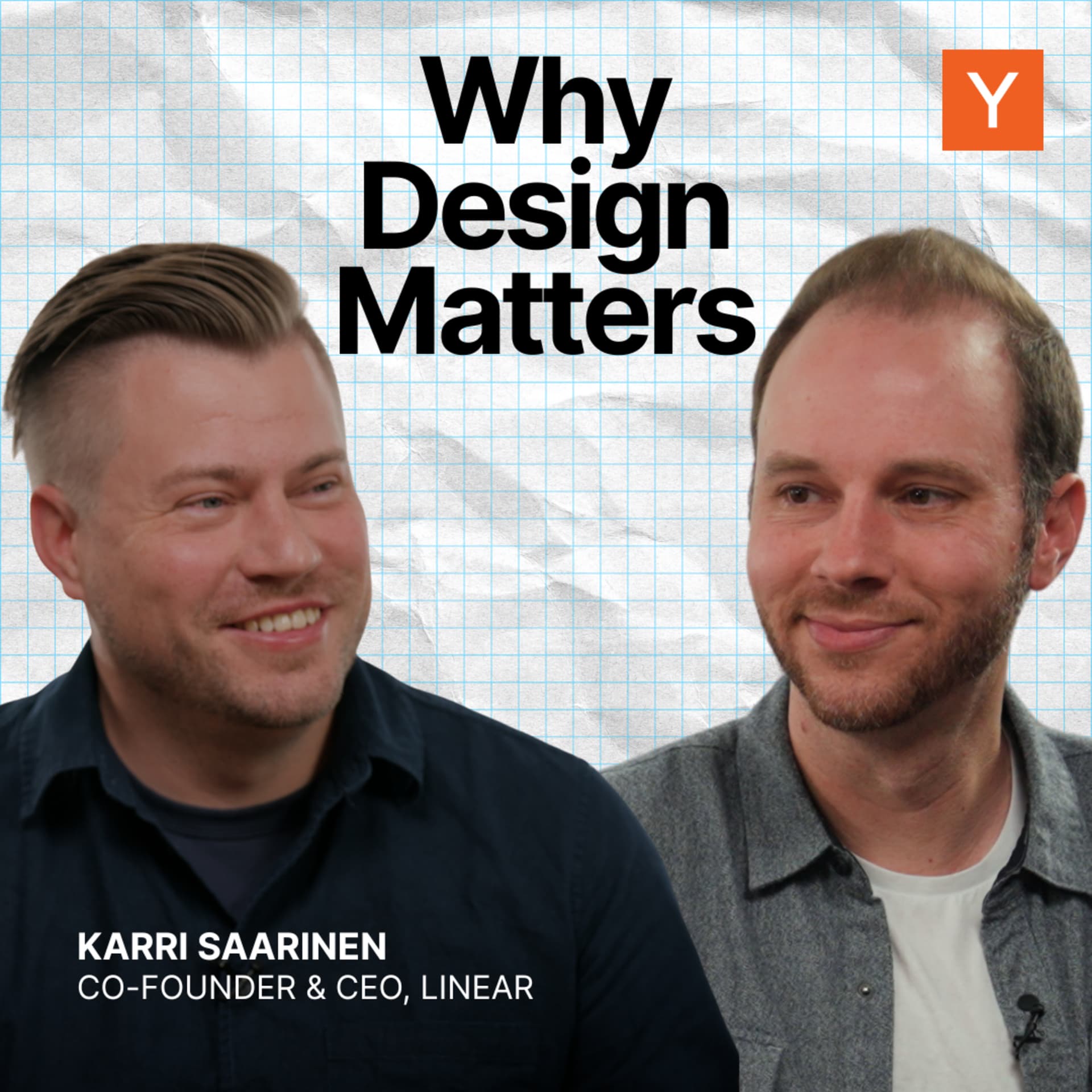
Karri Saarinen, Co-Founder and CEO of Linear
Episode Overview In this episode, Karri Saarinen shares insights from his extensive design experience at notable tech companies like Coinbase and Airbnb, and discusses how these experiences shaped the design philosophy at Linear, a leading issue tracking tool for high-growth companies. The conversation revolves around the importance of quality design, the role of AI in product development, and essential hiring practices for startups.
---
Key Concepts and Insights
- Importance of Design in Product Development
- Quality and Craft from Day One: Emphasizes that great design can significantly impact product success and should be prioritized early in the startup journey.
- Design as a Differentiator: Companies should strive to be known for something specific and exceptional, setting them apart from competitors.
- Lessons from Career Experiences
- Y Combinator (YC): Key takeaway is the importance of building something users want by simplifying processes and focusing on user feedback.
- Coinbase: Learned the necessity of establishing trust through design, especially when the market is new and unfamiliar.
- Example: Simplifying branding and visuals to enhance trustworthiness.
- Airbnb: Observed the significant role of branding and how the CEO’s focus on brand values can lead to consistent company actions, building customer trust over time.
- Designing with Quality in Mind
- Creating a Quality Culture: At Linear, there's a commitment to quality not just in the product but also in customer interactions, emphasizing the need for a quality experience throughout the user journey.
- Hiring for Quality: Importance of hiring team members who not only possess technical skills but also have a strong judgment and taste for quality.
- The Impact of AI on Design and Product Development
- AI as a Tool: AI can lower the barriers to entry for design but can also lead to complacency if over-relied upon. It raises concerns about losing touch with the core purpose of design.
- Future of Work: The integration of AI may streamline processes but requires ongoing human oversight to maintain quality and creativity.
- Hiring Practices for Startups
- What to Look For: Candidates should demonstrate ownership and problem-solving capabilities, not just technical proficiency. Experience in building complete products is a plus.
- Evaluating Candidates: Interview strategies should focus on candidates' past projects and their thought processes behind decisions rather than just their technical abilities.
- Advice for Designers Transitioning to Founders
- Broaden Horizons: Designers should understand business problems beyond design tasks, learning how their work contributes to overall company goals.
- Importance of Understanding Stakeholder Perspectives: Engaging with different roles in the organization can provide valuable insights into customer needs and business strategies.
---
Key Takeaways
- Embrace Design Early: Founders should recognize the value of high-quality design from the very beginning, as it compounds positively over time.
- Cultivate a Culture of Quality: A strong emphasis on quality in both product and internal processes leads to a better customer experience and company reputation.
- Adapt and Evolve with Technology: Founders should leverage AI thoughtfully while ensuring that the human element remains central to product development.
---
Conclusion Karri Saarinen provides a wealth of knowledge on product design and development, particularly regarding the significance of quality, brand, and the integration of AI in modern startups. His experiences underscore the necessity for founders to engage deeply with design principles and user needs, shaping successful products that resonate in the market.
Written by AI. May contain mistakes. Listen to the episode to check what was said.
Transcript
Automatic transcript. May contain errors.0:00Great design can make or break your product. So to learn more about how to prioritize high quality design in the earliest stages of your startup, we're sitting down with Kari Saarinen, the co-founder and CEO of Linear. Kari worked at Coinbase, Airbnb, and built one of the best issue tracking tools on the market in Linear. And today, he's going to share some of his advice for how you can design a product that truly stands out. Welcome to another episode of Design Review.
0:35Kari, thank you so much for joining us. Well, it's awesome to be here. Maybe just to kind of give people a sense of where Linear is at today, maybe you can just kind of give us a high level of any interesting stats or facts and maybe a quick description of what Linear is. The idea with Linear is that we want to be this purpose-built platform for building products and or planning and building products. It's not a suite of tools, but it's more like an integrated workflow. it's a tool that engineers might use every day so I think its design is especially important and speed is very important because if any kind of paper cut or bad experience it will multiply a lot of times where we are now like fast forward today we we have about 15 ,000 companies as customers and then we have growth companies like Mercury, Ramp, Retool, Prex and a lot of like growth companies, as well as larger companies like OpenAI and Block, which is a financial company.
1:33We wanted to build, focus on the quality and keep the focus really tight to build the best product we can for these customers. So that's why we've done some of the things differently. You're also a YC founder. And I'm curious, kind of at all the stops of your career from founding your first company, going to Coinbase as the first designer there, lead designer at Airbnb, and then starting your own company again at Linear. What's one lesson that you took away from each of those stops that's kind of made Linear what it is today? I think Linear is very much built with the advice we got from YC and just make something people want and talk to the users and simplifying the startup building process or clarifying it that like not a lot of these things matter that you see out there and a lot of things can wait.
2:23What really matters is like you find those someone you can build something for and you can build it in a good way. So I think YC really helped me to understand that building companies it doesn't have to be especially in the beginning it doesn't have to be that complicated. You almost just need the singular focus of making progress building something for the customers and then all the other stuff can kind of come automatically or later or something, or it can wait. I think OYC also helped me with the ambition that you could see like, hey you can make a lot of progress in a very fast time and also eventually that progress will lead to massive companies or massive growth.
3:03So I think it was really important for me. Coinbase was actually in the same batch that I was in, which was 2012 summer. Maybe what I learned there was that you kind of have to really clarify with the company, but also like especially I think as a designer what is the one or a couple problems we're truly trying to solve with the design or with the company itself and for me that at coinbase thinking about back crypto back in 2014 it was a very different time like there's a very little trust in the market and also just because it's a new thing you don't have that trust built in so like what i saw that my job as a designer I have to change this company to look more trustworthy and more professional because they want to go mainstream, but we also need to simplify this.
3:53We have to make the design really simple and explain it in a simple way so we can break out of this crypto niche group. I kind of looked around the website, the product, the brand, and I basically just made a list of these things need to be fixed. So it's like the logo was this stack of coins, like a little bit like kind of like a, you know, like Donald Duck or Uncle Scrooge. Yeah, it's like the coins on the table. One of them is like tipping over. It's like, why is it tipping over? It's like, that's not, that doesn't feel good. It should feel like staple or something. I did have some trouble convincing them to like pick up a new logo mark.
4:34And eventually, yeah, we didn't do it until the IPO. they finally picked one which is like a kind of like a circle that looks like a C. There's like a thing going into it so it looks like a C. And then on the website like what it looked like was so Brian and the team had basically built it over the past two years. I think they had like quite a lot of users already. They had a lot of money in the background like in the in the platform. But everything was built with Twitter Bootstrap. I think that the product itself worked quite nicely it was quite simple the problem was that that the visuals using this kind of standard library made it look like a hack project so like someone coming to a website thinking oh should i buy some bitcoin and like should i store my money in this bitcoin bank it's kind of like makes it a little bit uneasy it's like can i trust these people like is this a real company is this some like side project this is the hack project so the second thing is like well we need to fix the website like we need to make some kind of visuals to it and then the third thing is that the product itself that it also looks like that it's used a bit twitter bootstrap like i didn't change the layout the kind of structure of the product but i just changed the visuals and that that way like fairly quickly we could get got to a state that it's like from the outside this company looks more trustworthy and more real or like more like a real company and then the third thing like later on the brand I was using a lot of photos because I think that photos of people photos of the earth like mountains forest something I found out that the crypto and the space is so abstract and ambiguous that like it doesn't feel like grounding you're like what is this like there's this magic internet money it doesn't exist you know like kind of like it's weird so I think like some those kind of things like those kind of touches I don't know how much it actually impacted anyone.
6:32I don't know if anyone picked on it, but that was the thinking in the back end. And then lastly, I think with Airbnb, I joined there much later. They were already a huge company. They weren't public yet, but there were a couple thousand people at least. What I learned from Brian Chesky there was that the brand, and I think Silicon Valley still, startups don't quite understand brand or design. there's I think they logically try to understand it that yeah okay design is important we see that it makes sense and brand is important makes sense but what what is it like they don't have a maybe the language or the experience to think about it or maybe they just don't want to think about it it was interesting to see with Airbnb is like how much the CEO is actually focused on the brand and seeing that certain kind of advantage which turns out it is an advantage brand is really like the story you tell like what is this company about like what do we care about both internally and externally and then you try to follow those values or those actions like those that thinking as much as you can and not kind of like sacrifice on it so that from the external i could see like Like Airbnb is for, like, this is the Airbnb, like, brand and their actions are following that.
7:51And then over time, I can trust them that they're, like, predictable. Then one day it's like, Airbnb is great and they're doing everything right. The next year, everything's bad. And, like, I don't trust that kind of, there's too much volatility in it. So I think that that was interesting to see, like, how much he cared about it. Yeah, that's really interesting. So it sounds like at those stops, Coinbase and Airbnb, I think a brand is always helpful for building trust. But it seems like the design and the brand, especially for those two businesses where somebody is going to come stay in your home or you're going to stay in somebody else's home, it seems like that was incredibly important.
8:24And now at Linear, it seems like your brand, at least as an outsider, it seems a lot is about craft and quality and just like a high quality professional product. and I'm curious, what are the things that you do on a daily basis to try to create that brand and how intentional is it for you? It was something that we worked in these companies and we're working in this industry a while. So sometimes you kind of get tired of the things that exist and you kind of try to think, would there be some other way of doing this thing or other way of thinking about it? And that's like a good starting point.
8:58You start thinking like, what do you personally really care about as a founder? And then you start going into that, what should the company then care about? Those things should be aligned. Otherwise, why do you work? Why do you fund this company? From there, we saw that there's a lot of competition. It's not super easy to differentiate with the features, I think, because I think people just look at, oh, it's dust project management, whatever. These other tools do it too. But what we see is that none of these companies in this market actually had any kind of brand. You can't really say what they're about.
9:31You could know that they exist, but you can't really tell what they're about. So for us, it was really that, can we be really authentic and kind of direct or honest and also like show that we have this like care or values for certain things and quality being one of them. Like we are helping companies to build software. And for us personally, we find it annoying when things don't work that well. And we don't want that to have, like our customers to have that feeling. So we try to like tell everyone internally and when we do this work that like we need to strive for the quality. Quality doesn't mean perfection that you can't have anything rough or anything.
10:12You need to polish everything to like for years. It just means that like you have this direction or idea in mind that we are about quality. We want the user to like the customers to have a great experience. And that's like the most important thing. And yeah, sometimes you might have to launch something to get feedback. and that's okay, but you should then remember to come back and say, find ways to improve it or fix it if it's rough in some ways. You are building this culture around something internally. So that's part of my job, that sales is part of the experience of Linear. I want it to be a quality experience.
10:49But we really want to find people that can do a quality experience. And what I think in this kind of market, it is that these buyers are quite sophisticated it and they already have maybe a product they use. So they do want to understand like how can they, how can Linear do it better or differently. And so those people have, like the salespeople we hire, they have to be, they don't have to be engineers or like super technical people, but they have to have at least the capacity or curiosity to understand the product really well and the customers well. And I think it's been working and we've been able to hire people, But I think founders or startups, they just decide, well, we hire a sales team.
11:31And then, or someone like the investor sells, like you need to hire sales. They're like, okay, we'll go hire sales. But they don't ask questions like what kind of sales. It feels interchangeable, right? All sales parts are, you swap them in now. But like companies are very different. So yeah, you might be an enterprise company. You need someone who can do that, like navigate that market really like kind of, it's a complicated process. So you need someone to navigate that or something. Like maybe if you're like a medical product, maybe you need to have someone who has worked in the medical field.
12:02So there's like attributes that you can think like how, even in sales, that could be, how could you like really signal what your company is about, like what you do well. It's interesting to me. I think a lot of times founders think about brand is like the logo, the colors I put on the website, you know, like those types of things. but it sounds like the argument you're trying to make is that actually the brand is like every touch point and it's interesting that you're like down to the sales people like they're the first contact with a lot of your potential customers and making sure that that is the brand experience that you want them to have with your company is incredibly important and would often be overlooked by a lot of people I think yeah and I think like I like to think it's all kind of follows from the same tree that you have this some kind of brand thinking or it's more like the company values like what are we about?
12:55And then you try to visualize that or make it happen in different aspects. So visualizing means that you make your logo and you make the website and you are signaling like, we are very like professional or we are trustworthy or something with that design. I would say like the brand is often like, what does the person feel the experience is? I think a lot of times people think about, you know, craft and high quality and the things that you talk about. And like you said, they think of perfection and waiting a really long time to ship something. But talk about how you operate to achieve that high level of quality while still shipping very frequently and getting things in the hands of real users before they're fully baked in your own head.
13:36Yeah. One of the lessons I learned in some of these other companies was that having more people working on things doesn't necessarily make it better. It often can make it worse. You start to lose the thread of what is this feature even about? Because everyone has a bit different opinions and you start into this bike shedding or like a design bike committee that we try to like kind of get everything in there but then it's now the feature is not really for anything because it's too broad or it's like it doesn't really quite work for anything from the beginning we wanted that the people work in small teams and like these are often like two three people uh it's like engineer maybe a couple engineers one designer and we for a long time we don't have any product managers and today we have about two and they are more like the product manager job in linear is more like they're looking across things not like necessarily specific product project all the time or specific feature all the time and they're kind of like trying to keep the overall thread going like well what is happening and like who is saying what and like where are we at things and then then like the we want the engineers and the designers to actually run the project it's hard to spec quality or the right solution like you can maybe spec the solution to some degree but you can't really spec the quality execution of it and i think that's where i think if someone is driving the project and building it they have a lot of opportunities to like tweak it to make it better like what i think what i saw sometimes happening in other companies is that we had this like nice design or or or some or some kind of spec and then someone starts building it and then they realize that oh this design doesn't quite work in practice but now no one wants to go back to change it because the design was already green-lighted in this meeting like with the ceo a long time ago so now we have would have to go all the way back and then like change the design and we have to like approve it again which will add timeline and then now no one's happy because the timelines got out of whack people are just not taking enough ownership or cannot use their own agency to fix things.
15:42And so with the features, we try to have the engineer and designer to drive it. This is scoping it, trying to figure out whether the first version, talking to customers, talking to users, looking at the user research. How we manage the quality and speed is that we generally just, you can do whatever, we use feature flags a lot. So you can put anything in the app in the internal use. Once you have the idea, almost like you can put it in the app and we can try it out it doesn't have to be good it doesn't have to be like that polished or anything so internally we're very okay like iterating to stuff and then we also have beta programs where we invite specific companies like hey do you want to try this out it's a little rough but like you can try it out and see if it's like useful but then once we get to the final like general availability release we try to like look through the executions like is there any all the animations correct like are the things like Are the details correct?
16:36Does it feel good? Are we missing something? So there's a last check, but we don't try to polish it all the time. But we're trying to push the team, like, okay, make progress as fast as you can. But at the very last step, we should just make a check that everything is reasonably in a good shape. Because we want people to lead these projects, we also need to hire people who can do that. So we can't hire engineers that only want to code and never think about anything else. So I just want to look at the editor and like press the buttons or something. But we are always looking for people who have opinions or they have like some kind of product sensibilities or some kind of product taste.
17:14This is like explicit, some kind of curiosity. It's like I think there's a good way of doing things and there's a bad way of doing this. This feature doesn't feel good. This feature does feel good. So we're just looking for those people that can think and use their own judgment. I'm sure a lot of people are out there wondering, what should I be looking for if I'm trying to hire somebody? Like, that model sounds great. I need the right people. How do I find the right people? And what questions should I be asking to figure out if they're going to be good at that? Yeah, I think from the resume experience level, experience, you should be looking for something.
17:47Has this person built anything on their own? Or had they built anything large, like a complete product? like they were like maybe like a first engineer somewhere or they they built their own open source project or a side hobby or something because i think like that forces you to think about these things like should i do it this way or that way but i would say like a flag is someone who has worked at google for 10 years and i can like see like well they're probably fairly like boxed in in the specific area and they probably didn't have to like think about other things and when i interview them i i like to ask them about the projects they're working on like or something like they're really proud of like what is the project they're proud of and then I just keep asking questions like why are you proud of it like why did you do it this way and sometimes they say well someone told me to do it well it's like well did you agree it that way or did you have a different opinion about it and like you're just trying to see like did they pay attention like did they feel something like this is right or is this is wrong in their opinion maybe their opinion is wrong anyway but I think what we're really assessing is like do they even want to think about this thing or do they naturally think about these things i don't think there's like a super surefire way to to evaluate that but i think it's more the more questions you ask about the projects they worked on and the more specific they can be in it is usually like a good sign if they just say well it's like it's just did this and i work on the tech and like whatever but if they start going like yeah i did build this thing but the hard part was these customers were saying this and like whatever.
19:19So you can see that like they were paying attention to the business problems too and the user problems, not just the technical problems. I am passionate about encouraging more designers to become founders. And I think you were just, you know, one of the top examples of somebody that was a designer and, you know, I guess you were a founder and then designer and then founder again. I'm curious, like what skills or like superpowers or unfair advantages do you think you have as a founder based on your design background design thinking maybe even the way you grew up i like to think like design is is finding things that fit and kind of feel good and i think that in a way when you're building products or companies that's kind of like what you're doing ideally like yeah sometimes companies get built or products get built really like randomly but i like to find that like what is the kind of like common ideas or the threats like what are we trying to communicate or what are we trying to solve and I think as a designer it's not always easy to articulate that but I can somehow like sense or feel it that this is the way to do it I can see that this will work and with designs or or other things I can visualize how they will look or how they will work or like or maybe like even like how the users might react to it and then I can try to think like what are the inputs to that output like what is what kind of people we need or what kind of what the brand should be like or what the product should look like so I would say like as a design founder I think that the superpower could be that you are more maybe have like a broader view of things I don't know exactly what how like technical founders think about it but I think they they are really like tech focused and it's like everything is outside of that it's kind of like maybe not in their focus whereas I think like a designer can maybe be a little bit more broader.
21:10What advice would you have for designers that are thinking about making the leap and starting a company or maybe they're nervous about it? I'm curious what you would tell them. You should try to like broaden your horizons as much as you can. So what I mean by that is often I've seen in companies, like designers working in companies, they get quite narrow focus on the design problems. Like I was given this task or this project, so now I'm gonna do it. I'm gonna design it. I'm gonna open Figma and then I'm gonna design it." And then when they go to reviews even about those features, like maybe the CEO is reviewing it, maybe someone else is reviewing, and you get this feedback and people are not always happy with the results.
21:49You kind of get into this mode like, oh I'm not a good designer, I'm doing something wrong. But the problem is really like you're kind of overlooking what the other people are looking for like what is their problems like usually internally the ceo or the other people in in the organization they have their goals or like strategies or initiatives or or some something they want from this when you get design feedback it's not always about the design it's about the that this is actually not like kind of solving their problem then it's not solving the business problem and sometimes it's just like they don't even know what the problem maybe people maybe the CEO and some like product manager there maybe like even have a different problem in mind like the problem isn't clear to people it's not people are not aligned on it even if you don't become a design founder I think it's useful to start to like expand your mindset like your job is not to sit there and like put some stuff in Figma but your job is to kind of solve the company's problems often that means that you are solving them through design but if you don't understand what the problems are like you're not gonna like be able to solve them so the more you can like kind of learn from the people out around you so if you work in a b2b company like well talk to the sales people like they talk to customers all the time they're a good resource for understanding like the customers and and then as well as like a company leadership try to ask them like what they looking for like try to understand their problems and when you do that you start learning like oh this is how businesses operate or this is this is how people think this is what the different roles to this is maybe the purpose of this function.
23:25I'm curious, like, why do you think founders should care about design? And especially from the earliest days of their company, what differences have you seen between companies that do care about it versus ones that don't? So you have to think, like, what is actually the value of the design that brings to your specific company in this specific market? And then I think that a lot of times people just don't think through that. So they either copy what other companies are doing or they just don't do it at all. Like this is like, well, we don't know how to do design, so we'll just not even think about it.
23:57But I do think like the best companies do care about design. You can crawl to a big company being without too much design. I think it's possible if you just have like a very good technology. But I do think like it's it can design can accelerate the company and how people think about you. Like it can even help with investors. investors are people too so if they think something is cool or there's a there's a strong brand they're more likely to to pay more like they want it more than it's emotional right yeah so so i think that kind of maybe the design is partly it's making things easier for users but i think it's partly it's also like touching this like emotional needs of people and then i think it can amplify everything you do so that's why I always think like even a very early stage companies maybe you have like five people or something or three people maybe you should hire a designer even if it's not that needed right now but I think they can have at that point they can have like very big leverage because the the work if everything is a little bit nicer everything is a little bit better it will compound over time and like the users will see it and and you don't have to do this big redesign like years down the line because you kind of ended up in this like horrible place and now you have to like hire more people and like fix everything and then the customers are complaining because things are changing so yeah I think it's just like a smart thing to do you wrote a really incredible post around 10 tips for creating products that stand out I'm curious like what are the two or three that you think are most important that you know you think all founders should be aware of or think about or consider as they're building their products?
25:41I think the whole definition of being differentiated or being an outlier company or a breakout company is like you really need to show you are better at something like much more than anyone else like you have to be known for it so then I think that that starts with that like you have to decide that maybe the one thing you want to be really known of or the best like it can't the same thing everyone else is doing because then like you're you're not differentiated so i would start with that like figuring out that like differentiator or like what you really want to be known of i think my second thing is like it's it's maybe weird but i would say like the people you hire is probably like especially in the product organization if you're trying to build like really good product the people you hire has the most impact on the product i feel like we operate quite casually we don't have a lot of processes we have yeah we have this feature flags and some kind of testing, but we don't have a lot of rules or processes because we want to hire people we can trust their judgment and taste.
26:45Early on, I think with the founders, we kind of played this mind game of, well, if we just disappear, would these people know what to do? I think we've done our job well and hired the right people if we think they would survive and they would actually make progress. The second thing is I think you need to give them some space to do it. Like if you're like constantly hounding them, it's like, where is it? Like do it now. Then obviously they don't have the space to do their work well. So there's some like balance there. It's like that you can't be like constantly like micromanaging them or hounding them.
27:17Yeah. How do you balance that? I mean, I know it's important to you to like give space for people to work and in a perfect world, I think everybody would want that. And then that's balanced with trying to ship quickly. We try to set some kind of timeline pressure that we would like to see something at this time and this date. and we think that's reasonable. And then I think what we hope the team will do is that they will think about that timeline and then they start scoping down the project and they start thinking, well, what can we actually achieve? And maybe we need to really prioritize the things we can do, which I think in the end is even useful because then you start focusing on the right things anyway.
27:53So there's this little bit of timeline pressure. Then we keep track of the progress. If the progress is good and things are moving, I'm not going to get sad if the timeline is not hit exactly. I might ask, well, what is the new timeline? Or where do you think is now? And how far is it from something? So there's a little bit of pressure. It's like, where is it? Or how far along it is? But it's not daily. So there's some level of pressure. But it's like we're not super timeline, date driven. Shifting gears to AI a little bit. It seems like now it's easier than ever to get design work. created by AI or to ship product that AI generates, is that a good thing?
28:35And what are the considerations that people should be thinking about in a world where it's so easy to just generate new designs and ship new product and new features that maybe people aren't thinking about yet? Yeah, I often think with technology, I don't think you should necessarily think, is it a good thing or a bad thing? Because usually technology will happen regardless. I think we can't go back not having AI anymore. It's not going to disappear from the world. So now the next question is, well, what should I think about it? Or how should I use it? Or how should people use it? And I think it will lower the floor on things like design, for example.
29:12So companies that maybe before couldn't hire designers or they didn't have time for it or something, I think the AI can kind of help prop them a little bit that they can now do decently good design. designers themselves like if they might always not have skills for everything and sometimes they run out of ideas i think i can help help with that too i do think that that the top the ceiling it will just keep getting higher and so if you really want to be the best design company or the best company you have to still keep pushing the boundaries and you can't just expect that the ai will solve it for you like basically ai you can get to the average level maybe but like going beyond that you still need all the work you've done in the past you should understand the danger is that when something is easy to do you stop paying attention to it so if it's easy to generate designs and ship them you maybe didn't think about it this feature at all like I think some sometimes when something is really hard you're constantly thinking about it like is this worth it do I still want to do this like should we just stop doing this like I don't this is so hard um so I I think that the suffering helps to maybe clarify the design.
30:24Maybe sometimes it tells you that it's not the right thing. Maybe it shouldn't be that hard. Maybe you're approaching it wrong. So I think you should just understand that the danger is that when you outsource the output too much, you might stop losing control or even understanding of your company or what the product does. Are you worried that AI is going to make designers obsolete? I don't think so. So similar with engineers or designers, I think there can be some shifts happening. Like even today, like I think it's easy to generate websites. So maybe the market for website designers will go down.
31:00Like I do think people will still have some designers working on websites. And I think like in my mind, like the real problem with websites is not the design. It's like the actual, the narrative or the storytelling or the explanation of things. and I don't think the AI can really solve that for you. You really have to understand that. I mean, the AI can help with that too but I think you still really have to understand what is this website for? Who is it for? They can have maybe the AI agents or something can do work for them in the background and your role might be shifts more towards being more like an IC lead or like a manager a little bit that you are not only doing your own output as an individual contributor, but you're also responsible for some kind of AI's output.
31:53And I think your job should be still like, is this good? Is this fitting? Does this work? And that kind of thing. We don't know what's going to happen, but my feeling is also that if AI makes, for example, building software really easy and cheap, I think we'll just build more software. I think the industry will grow, and you will need more designers. You can't just have AI. At this point, we don't have companies that are purely run by AI. So I think until that happens, I think we'll still live in a world where you might have quite a lot of people in a company, humans doing things, and then you have AI also doing things.
32:29And I think because the AI can make things more cost effective, I think the companies will just decide to do more. That's my, I think, at least optimistic take that what will happen with the AI. And then you kind of have a front row seat to this with a lot of the best product teams using Linear. Where do you think things are going in terms of how product and design teams will operate in the future? Yeah, so like with Linear, it's very focused on the execution or tracking work or to like solving problems. and what we are for example working on now is like building this agents platform that you could bring agents into linear and they could work for you, you could delegate work for them so there's a bug report comes in into the triage, the agent can like take a look at it and say hey I'm pretty sure I can like solve this for you and then you're just like okay and then it goes to work and then you review the code so I think there's a lot of things I think we can able to streamline and what do we see from the customers and market, there's a lot of interest for this.
33:32And all the CTOs basically are saying that AI is their number one priority. And the CEOs are writing these memos about AI. And I think it's clear that on the leadership level, they understand that AI is useful. I find that the whole industry, so there's this big launches of very broad AI tools. Like there's the AI, every company, very big company, they have the chat bot and they have all the different like tool AI kind of set of tools that can do anything for anyone but I think like what is missing there is like the people who are building it from like more like a crown's up like well what is the problem someone has today like for example like triaging issues like a company they don't always know where the issue should go where should this bug go so you could have like a manual process someone looking at it you could have some kind of automation or you could have an AI to look at it like hey like with the AI could go look at your workspace and code base and like understand like it looks like you have this kind of product areas it looks like these kind of teams or you like people are working on those product areas and it looks like generally when these kind of issues come in that these go into these kind of teams or this kind of person so like our approach with linear is like we are now like thinking more it's like what are the specific problems we could directly solve with the AI and it could be like a better, like more quicker value to the customer than having this like very broad spectrum like ask anything or create anything or something that kind of like approach.
35:09So that's like what we are excited about. Well Kari, thank you so much for joining. So much great advice and insight here for everybody who's watching at home. So So really appreciate you taking the time and sharing all of your lessons and unique things, counterintuitive things that you all do at Linear. And hopefully a lot of those can propagate out through other startups as well. So really appreciate you joining. Yeah, thanks for having me. And great to be back at the YCA office. Awesome. That does it for this episode of Design Review. And we'll see you on the next one.
From the publisher
Karri Saarinen is the co-founder and CEO of Linear, the issue tracking tool used by thousands of high-growth companies. Before Linear, he was the first designer at Coinbase and later a lead designer at Airbnb.On Design Review with YC's Aaron Epstein, Karri shares how his design background shaped Linear’s product philosophy, why quality and craft matter from day one, what founders should look for when hiring, and how AI is changing the way teams build. It’s a deep dive into building products that truly stand out.


