
In short
Y Combinator Startup Podcast: Episode Summary
Episode Title
How To Get Your First Customers
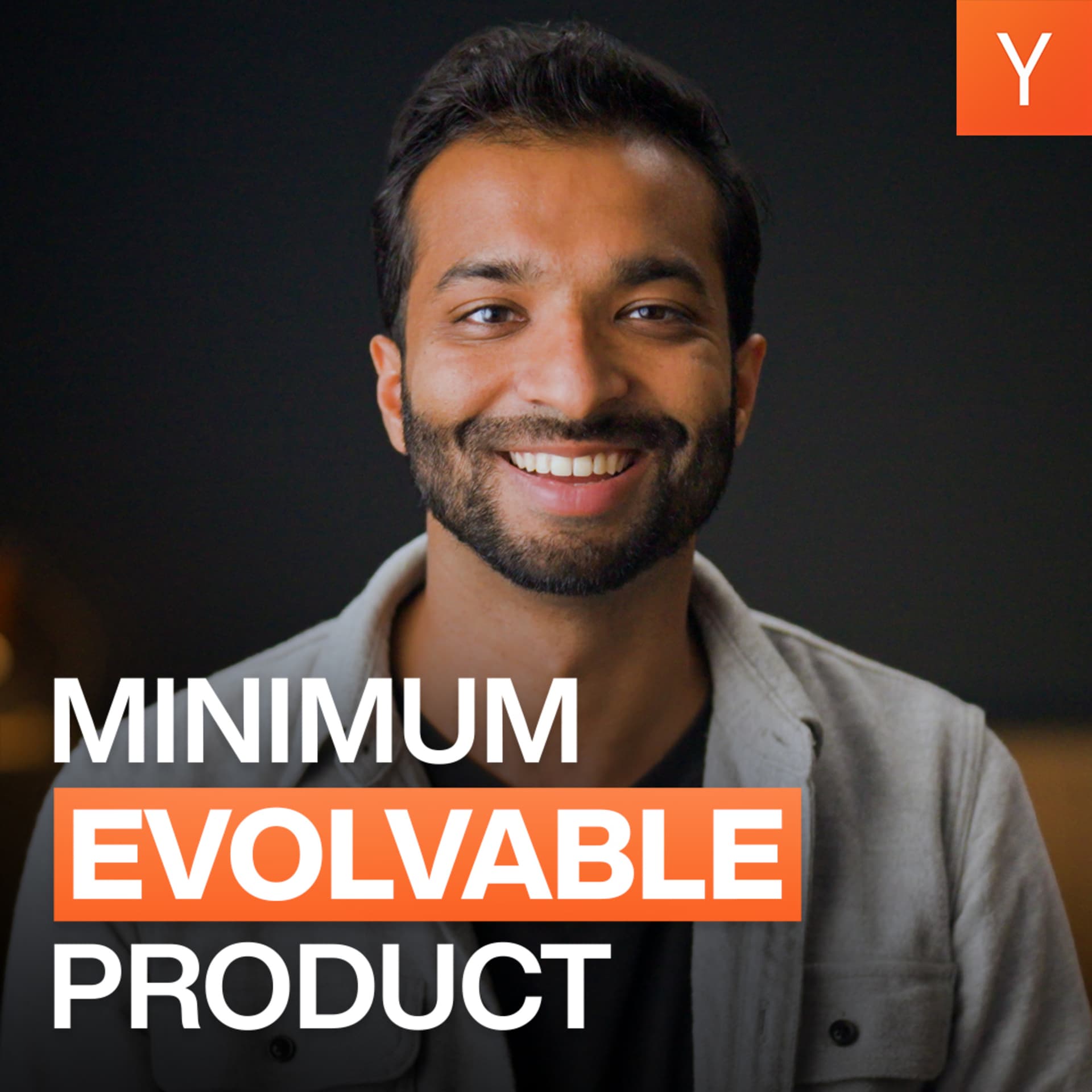
Episode Description In this episode, YC General Partner Ankit Gupta discusses the importance of creating not just a minimum viable product (MVP) but a minimum evolvable product (MEP) that can adapt to the needs of early customers. Gupta provides insights on strategies for attracting first customers, the significance of adaptability, and how early user feedback shapes the future of a product and company.
Key Concepts
- Minimum Evolvable Product (MEP):
- An upgraded concept from MVP focused on adaptability.
- Designed to survive initial interactions with a small group of users.
- Finding First Users:
- Early adopters are not common; most people are not keen to be the first users.
- Identify individuals with a pressing need who can benefit from your solution.
Strategies for Acquiring First Customers
- Charge Real Money Early:
- Early adopters with urgent problems prioritize feedback over price.
- Paying customers provide sharper, more valuable feedback.
- Targeted and Personal Outreach:
- Traditional marketing strategies may not work; opt for personal connections (e.g., cold emails).
- Launch Early:
- Don't wait for perfection; launch to a broader audience to discover your users.
- Study Early Users:
- Analyze their behavior and decision-making processes as if you were an anthropologist.
- Understand their needs and motivations for using your product.
- Experiment Fast and Embrace Churn:
- Run experiments on various aspects (pricing, features) without fearing user loss.
- Maintain a personal relationship with users to address issues that may arise.
The Importance of Early User Feedback
- Early users guide the product's evolution, influencing features and direction based on their needs and preferences.
- Gupta compares startups to a phylogenetic tree, where early products (amoebas) evolve based on external pressures and user feedback into more complex offerings (like human beings).
Case Study
Tesla
- The Tesla Roadster served as an example of seeking early adopters willing to invest in a high-cost, unconventional product.
- Early user preferences influenced significant design choices in future models, demonstrating that the evolution of a product is heavily dependent on initial users.
Conclusion
- Founders should embrace the concept of a minimum evolvable product that is flexible and able to adapt based on user feedback.
- Understanding early customer needs and engaging them actively is crucial for the long-term success and evolution of the product.
Key Takeaways
- Focus on adaptability and early user feedback instead of perfecting the initial product.
- Early customers can significantly shape how a product is developed and marketed.
- The journey of a startup is akin to evolutionary biology, where early interactions lay the groundwork for future growth and success.
Written by AI. May contain mistakes. Listen to the episode to check what was said.
Chapters
Tap a time to open that second in VOUnderstanding Early Adopters and Their Needs
0:46 to 1:49
Discover who early adopters are and how their needs can shape your product.
“Before you get discouraged, there are people who love being early adopters.”
Strategies for Engaging Early Users
1:49 to 2:55
Explore effective methods to engage and learn from your first users.
“The ways you find these people probably don't look like how you find normal people.”
The Evolution of Product Development
2:55 to 4:38
Understand how early users influence product evolution and design decisions.
“For example, mine's about$150 a month total.”
Creating a Minimum Evolvable Product
4:38 to 5:40
Learn the importance of building a product that can adapt based on user feedback.
“Why does the Tesla Model Y, a mass-market vehicle, have a faster 0-60 than a Lamborghini, and better tech than a BMW, but worse suspension and comfort than a Toyota.”
Transcript
Automatic transcript. May contain errors.0:00How do you get a new product off the ground? And when you're just starting out, where do those first real users actually come from? You see, most people aren't early adopters. Ask yourself, how many products do you use today that you are among the first 10 users of? For most people, the answer is zero. Almost no one wants to be a startup's first paying customer, yet every great product still manages to find a few people willing to take that leap. The earliest version of your product only needs to do one thing, survive contact with a tiny group of people who might actually try it. You're not building the final form.
0:32You're building something that can evolve. When you're starting out, you don't just need a minimum viable product. You need a minimum evolvable product. And I'm going to show you how to find one.
0:46Before you get discouraged, there are people who love being early adopters. One of my colleagues, Gustav, worked at Airbnb for years and enjoyed trying out products from startups and bringing them into the company. Others have such a burning issue that they're willing to give any new product a shot if it looks like it can make their life easier. For example, when my team needed to ship our first inference API, we wanted to ship it fast and didn't want to deal with figuring out billing or public endpoint. Within three days, I found and paid a startup whose product solved that issue for us. I was their first customer.
1:13Their size or reputation didn't matter. Our problem did, so we took a chance on them and they delivered. The lesson is simple. Finding your first users is more of a search problem than a persuasion problem. You're looking for the Gustafs and Ankits of the world, the ones who try new things or have a burning need that you can solve. This has a few counterintuitive implications that you're going to want to pay attention to. Charge real money early. Early adopters and people with a burning problem are rarely price sensitive. The goal here isn't revenue, it's feedback. And paying customers gives sharper feedback than free users ever will.
1:44You're more likely to get feedback from an angry customer paying a lot of money than a nobody who isn't willing to pay. Use targeted, personal outreach. The ways you find these people probably don't look like how you find normal people. A billboard is way less likely to reach them, versus something like a targeted cold email or a knob on their door. Launch early. This is something YC has preached from the beginning. In the early days, you don't know much about who these early users are, and you want to engineer a wide surface area for them to find you. Study your early users closely. You should be like an anthropologist that's discovered a hidden civilization.
2:16How do they make decisions? Why would they make the strange choice to trust you? You want to understand how they think and what they want. Experiment fast and don't fear churn. You should be running constant experiments. Pricing, landing pages, onboarding, features, everything. At the same time, talk to your early users and try to make them love the product. But don't stress if you lose one of them. If you annoy someone, you can usually fix it because the relationship is personal. And if they churn, that's fine too. There are plenty of others who haven't even heard of you yet. This is one of the advantages startups have over big companies.
2:45When you run a bad experiment, no one writes about it. You're fighting irrelevance, not headlines. All of this may shape who you're even building for in the beginning. Most people don't pay for a bunch of consumer apps. The average personal software spend is pretty tiny. For example, mine's about$150 a month total. Meanwhile, my corporate card has multiple tools that each cost more than that alone. In the AI era, that gap matters. Consumer apps can struggle because ads often don't cover AI costs, and subscriptions have to squeeze into an already small personal budget. Of course, many consumer companies will still be made.
3:14But this is why many AI founders choose to start by selling to prosumers or businesses. or targeting users like doctors that have high advertising value. This leads us to an even bigger point. Your early users don't just give you feedback. They end up steering how your product evolves over time. Here's an analogy I use to help founders think about their first users. Think of a startup as a phylogenetic tree. Okay, bear with me. The root nodes in amoeba and the leaf nodes are complex multicellular organisms like humans or dogs. Almost every product you buy on the market has run this evolutionary process and morph from an amoeba to the maturity of a human or a dog.
3:50Millions of users, a refined sales pitch, and clear value. Early startups are more like amoebas. They have just the very basic functions needed to get exposed to external pressures. But from there, the founders run an evolutionary search through the tree of potential future directions. Consider Tesla as a case study. Specifically, their amoeba, the Tesla Roadster. The lore about the Roadster is that Tesla needed a high-margin product to fund their CapEx investment, to make the Model S and eventually the Model 3 and Y. That's probably true, but there's a second interpretation. Tesla was searching for early adopters.
4:22They wanted to find the people crazy enough to buy an impractical$150 ,000 car that didn't go very far, didn't fit much in it, couldn't publicly charge anywhere, and looked strange. Tesla's story reveals another reality, that product evolution is path-dependent on what the early adopters wanted. Why does the Tesla Model Y, a mass-market vehicle, have a faster 0-60 than a Lamborghini, and better tech than a BMW, but worse suspension and comfort than a Toyota. It turns out that early adopters cared much more about tech and acceleration than comfort. Would a mass-market vehicle designed in a vacuum have a 0-60 of under 3 seconds?
4:56Probably not. But it's an outcome of the search algorithm that Tesla ran. If early adopters were willing to pay$150 ,000 for a slow, plush vehicle, I bet Tesla's cars would look very different today. This is the algorithm we helped founders run at YC, and it's why your first version shouldn't just be a minimum viable product, it should be a minimum evolvable product. Something simple that can respond to market pressures and evolve into a much more mature product. Something that will survive contact with early users and adapt fast based on what they push it toward. It's freeing to know that the product will change a lot, so it doesn't have to be perfect from the start.
5:29Ultimately, what it becomes will depend on where you begin and who you begin it with.
5:39you
From the publisher
When you're starting out, it isn’t enough to just build a minimum viable product. You also need a minimum evolvable product - one that can adapt to the needs of those critical early customers. In this episode of Main Function, YC General Partner Ankit Gupta offers an update to the classic MVP playbook. He’ll outline strategies for getting your first customers, the power of adaptability and how feedback from early users will ultimately shape the future of your product and your company.
Apply to Y Combinator: https://www.ycombinator.com/apply
Work at a startup: https://www.ycombinator.com/jobs
Chapters:
00:00 – The Minimum Evolvable Product
00:46 – Finding the First Believers
01:29 – Counterintuitive Rules To Get Early Users
02:10 – Learn Fast, Don’t Fear Churn
02:52 – How Early Users Shape the Market You Enter
04:22 – Tesla Case Study
05:14 – How To Build To Evolve


