
In short
Y Combinator Startup Podcast: Episode Summary
Episode Title
The World's First Commercial Mobile Carbon Capture Device
Episode Description In this episode, Paul Gross, founder and CEO of Remora, discusses his innovative approach to tackling one of the largest climate challenges: carbon emissions from transportation. Through the development of mobile carbon capture devices for commercial trucks and trains, Remora aims to capture CO2 emissions and convert them into viable products, thereby transforming the transportation industry.
---
Key Participants
- Paul Gross: Founder and CEO of Remora
- Gustaf Alströmer: Host and member of Y Combinator
---
Major Themes and Discussions
- Innovative Carbon Capture Technology
- First of Its Kind: Remora is developing the first mobile carbon capture systems specifically designed for commercial trucks and trains.
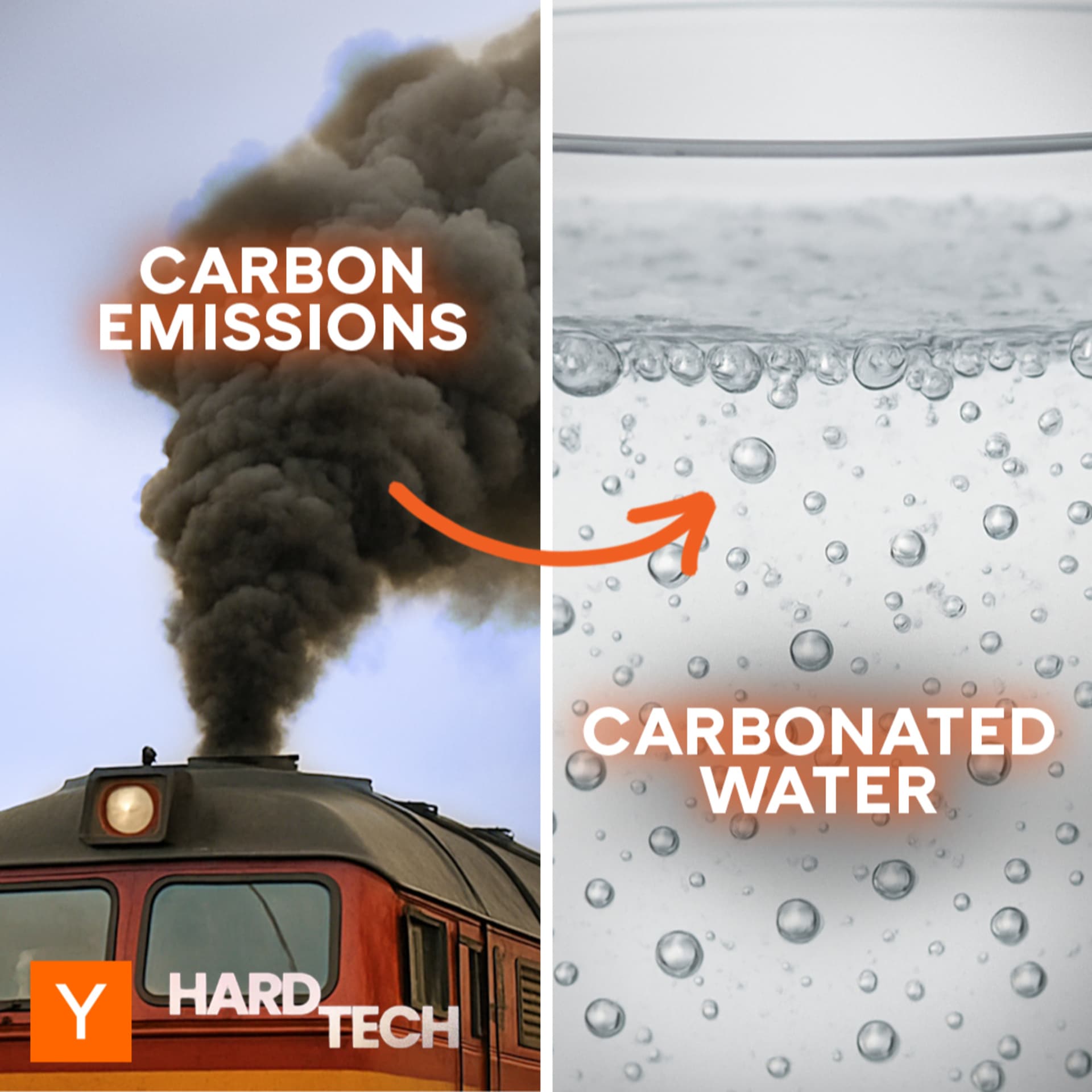
- Functionality: The device captures CO2 from vehicle exhaust, purifying it for commercial use (e.g., carbonating beverages).
- Revenue Model: Captured CO2 is sold to industries that require it, thus creating a revenue stream while reducing emissions.
- The Transportation Emission Challenge
- Significant Contributor: The transportation sector accounts for 29% of all emissions in the U.S.
- Targeting Hard-to-Electrify Areas: Focus on long-haul trucking and freight trains, which are difficult to electrify.
- Founding Journey
- Lack of Technical Background: Paul Gross entered a scientifically demanding field without a formal engineering background, illustrating that passion and drive can lead to success.
- Collaboration: He partnered with Christina Reynolds, who has a PhD in the relevant field, to build a knowledgeable team.
- Advice for Aspiring Founders
- Learning and Team Building: Encourage founders to learn independently and assemble a diverse team of experts rather than waiting to become an expert themselves.
- Ambitious Goals: Founders should aim for high-impact, ambitious projects to attract top talent and resources.
- Technology Overview
- Point Source Capture vs. Direct Air Capture:
- Direct Air Capture: Pulls CO2 from the atmosphere, which is less efficient due to its low concentration.
- Point Source Capture: Captures CO2 directly from high-emission sources like truck and train exhaust, proving more efficient.
- Company Development through Y Combinator
- Accelerated Growth: Remora applied to Y Combinator with just an idea and gained momentum from the program's rigorous environment.
- Location Strategy: Chose to build the company near Detroit for its talent in mechanical and electrical engineering, rather than Silicon Valley.
- Manufacturing and Testing
- In-House Manufacturing: Aim to manufacture components in-house for rapid iteration and development.
- Testing Facility: Created a simulator with a real truck engine to test various device configurations and performance under different conditions.
- Future Aspirations
- Scaling Potential: Remora aims to scale its technology to capture billions of tons of CO2 annually.
- Wider Applications: Potential to expand to other sectors, including oil and gas, shipping, and manufacturing.
---
Key Takeaways
- Environmental Impact: Remora's technology has the potential to significantly reduce carbon emissions in the transportation sector.
- Innovation in Entrepreneurship: The episode emphasizes the importance of ambition, collaboration, and adaptability in startups.
- Vision for the Future: The long-term goal is to establish scalable carbon capture solutions across various industries, showcasing the broad applicability of their technology.
---
Conclusion This episode highlights the pioneering work of Remora in mobile carbon capture technology, underlining the importance of innovative solutions in addressing climate change. Paul Gross's journey reflects the challenges and rewards of building a technology-driven startup in a critical sector.
Written by AI. May contain mistakes. Listen to the episode to check what was said.
Transcript
Automatic transcript. May contain errors.0:00This is the first carbon capture system on a commercial truck or on a commercial train ever. This is Paul Gross, the founder and CEO of Remora. We take that captured CO2 and we transport it to an end user who can recycle it in an incredibly new way. This is CO2 that we captured today from a diesel truck engine. And then we've got this nice tap water here that we're going to carbonate with some of the captured CO2. He and his team are trying to fundamentally change the way we approach one of our biggest climate problems. Transportation is the largest sector of emissions in the U.S. 29 % of all emissions come from transport.
0:37So the goal for the team at Remora is to reduce the emissions dramatically by going after the parts of the industry that will be the most difficult to electrify, like long-haul trucking and freight trains. People told me that what we were doing was impossible, but that's exactly the type of startup I want to work on. I wanted to create something where I could say, if I don't build this, it might not happen.
1:05I worked with Paul and his startup Remora closely since they went through YC a few years ago. This summer, he invited us out to his headquarters outside of Detroit to get a behind-the-scenes look at their operations. So this was our V1 truck system. Once the cylinder fills up on one side, we vacuum the CO2 out and then capture on the other side. We're storing the captured CO2 in those three black pressure vessels. I wanted to learn more about how he and his team built their hardware and what lessons he has for other aspiring hard tech founders. Remora is building carbon capture technology for vehicles.
1:39And we're particularly focused on semi-trucks and locomotives. We're retrofitting these vehicles with technology that extracts and purifies the CO2 from their exhaust. And we're actually able to produce beverage-grade CO2 from these vehicles. Here's how their device works. We take the exhaust coming out of the tailpipe and flow it through a cylinder filled with these little pellets the size of peas. The CO2 molecules in the exhaust get stuck in the microscopic pores in the pellets, but all the other clean gases flow right past and out into the air. We offload the captured CO2 as a liquid into a big tank and then our distributor customers come by and pick up the CO2 in their tanker trucks and transport it to end users like food and beverage companies, greenhouses, and water treatment.
2:26So the system reduces emissions and generates new revenue for these operators. How did you get started with all of this? The insight was we have a CO2 shortage in the U.S. And I learned about this in college. I started with this question of why is there a CO2 shortage? Why aren't breweries able to get enough CO2? And yet we're emitting 375 million tons a year from trucks and trains. So I started thinking about, well, what if we retrofitted those vehicles with carbon capture? Why don't we extract and purify some of the CO2 from these industrial processes and sell it to the end users that need CO2?
3:05And I wanted to understand, would this be possible? So I built my own model to understand how this would work. And I started reading articles, science papers, and reaching out to experts. One of the experts that I reached out to was Christina Reynolds, who had just finished a PhD at the University of Michigan on this very topic. And she and I talked and we really hit it off. So we ended up deciding to start the company together. And that was how the original kind of founding team got together. You didn't have a science background, did not study mechanical engineering or chemical engineering. Decided to start a very science heavy company.
3:42What would be your advice to another founder today who want to start a similar company faced with this situation? Like don't have the domain expertise or the science expertise, but want to solve a very hard problem. My advice would be just start working on it and try to learn as much as possible yourself. I think expertise can be really valuable and we have a lot of people with a lot of experience on the team. But also, if you're a founder, you don't have to be the expert. You have to create a team of experts. and it's much faster instead of going out and getting a PhD to just start learning and start working with people who are experts.
4:19While this is a novel approach, this isn't a new idea. Carbon capture technology has been around for over 100 years and there are several different ways it's applied. One way is to pull CO2 straight from the atmosphere. That's called direct air capture. But that has real limitations. The challenge is that the air is extremely dilute. there's only 0.04 % CO2 molecules in the air. The problem with processing air is that you have to use a lot more energy to pull CO2 out. So it ends up being far more expensive and creating more emissions as well. Then there's point source capture, which is what Paul and his team are doing.
4:57We think it's a more efficient place to start. If you have a bunch of CO2 molecules, why not capture them at the source rather than scattering them out into the atmosphere and then trying to filter them back. So within point source carbon capture, no one has ever done carbon capture on a commercial truck, commercial train. Our systems will be the first in the world. But people have been working on point source carbon capture for a long time. Traditionally, they've used this liquid solvent technology that can capture CO2, but has all these downsides. It's corrosive, it's volatile, it can degrade and actually add carcinogens to the exhaust.
5:31So that's a big reason it hasn't scaled. We're building a device that can reduce a vehicle's emissions by at least 80%. You did YCOM there in the winter of 21, right in the middle of COVID. What did the company have when you applied to YC? We had nothing. We had no system. We hadn't even incorporated. We just had an idea that we told you about in the interview. I think that was the right time for us to apply to YC because the way I think about YC is it's like going to the gym with Olympians. You're on a treadmill next to people that are running really fast. And so what it did is YC set the pace for us right at the beginning.
6:05So we knew that, okay, this is what world-class looks like. You have to move at this speed and take risks that maybe others wouldn't. And I think if we had done YC later in the process, we would have already baked in a slower speed, and it would have been harder to change at that point. Though remorse started gaining momentum in the Bay Area at YC, Paul and his colleagues are now building the product thousands of miles away. So we are in Wixom, 30 minutes outside of Detroit, and we built the company here because this is where the talent is. I think you have to think about, if you're starting a company, where's the talent density for the talent that matters for your problem?
6:43In many cases, that's Silicon Valley. But for us, we are looking for mechanical engineers, electrical engineers. We're looking for people with experience packaging things, experience with things getting vibrated and shocked. That's Detroit. And that's been the best decision that we made. You have an incredible team here. It's not that big. How many people work here? 43 people. What you're doing here has not really been done in this form anywhere else. There's no other company you can hire from. How do you compose or put together a team to do this at the speed that you're doing right now? If you're doing something that's really interesting and hard, and if you're successful, you can make a big impact on the planet, that's where you can get the absolute best engineers involved.
7:23And so I would encourage other founders to expand their ambitions. I think a lot of times people start the company that seems doable, seems easy. But that's going to be hard, too. If you're going to spend 10 years of your life on this, you might as well just do the thing that's hardest, that's most interesting, because you'll get to work with the best team. You'll get to work with the best advisors, the best investors. It's just so much more fun. And ironically, it may end up being easier and it may be a bigger outcome as well. YC's next batch is now taking applications. Got a startup in you? Apply at YCombinator.com slash apply.
8:00It's never too early and filling out the app will level up your idea. Okay, back to the video. One of the most ambitious challenges Remora has taken on is fully manufacturing their device in-house. This is the manufacturing space. So we have kind of fabrication over here. We've got a laser cutter. We've got the welding, our electronics area in the back. This is kind of standard machining tools. And the reason we have this is to be able to, again, iterate more quickly. We have a super talented hourly team that does all of the production of our components here that we possibly can, so that we can then put them on the truck, put them on the train as quickly as possible.
8:41They're able to remove up to 90 % of the CO2 from the exhaust of semi-trucks. And recently they announced they're building a new version of their device for freight trains. So on a truck, we're putting a box on the back of the semi-truck. And on a train, we're actually building an entire separate rail car that attaches to the exhaust stack of the locomotive and then processes the exhaust onboard that car. They even bought a 4 ,400 horsepower General Electric locomotive to use as their test pilot and is parked right behind their headquarters. So this is a 5 ,000 gallon fuel tank. It stretches underneath the entire locomotive.
9:18Wow. And this is the capacity that we're building our CO2 tank to. For now, they're still in the testing phase. But when deployed at scale, they can have a major impact on overall emissions from the transportation industry. There are far fewer trains and trucks than there are passenger cars, but they are used so intensely. These locomotives use billions of gallons of diesel every year in the U.S. And that's why we're focused there, because that's the biggest source of CO2 and the biggest source of emissions. What do you think will be the challenges as you scale up production? The biggest challenge is building a product that truly is modular.
9:56Because if you have to change the product every single time for different customers, you are not going to get there. So what we focused on is how can we build kits that fit on different locomotives or different trucks that work with our same modular car. I think the other big challenge is how do we bring as much of this in-house as possible? We want to be completely vertically integrated on this production process because it will allow us to move much more quickly, learn from our production process, and then create a faster iteration loop with the engineering team to make the system more manufacturable.
10:29So I think those are the biggest challenges for us is getting the engineering team on top of the production process and then creating that tight iteration loop. Testing out on the open road presents obvious challenges. So in order to rapidly test different versions of the device, Remora built a simulator in his warehouse featuring a real truck engine held in a shipping container. This is a semi-truck engine that we took out of a truck and put in a shipping container. This allows them to model the device performance in different road conditions. It's attached to what's called a dynamometer, which allows us to run the engine at different loads.
11:04So this could be an engine that's cruising down the highway with a full load. It could be going up a hill or going down a hill. And that allows us to test with different exhausts, temperatures, compositions. It sounds like building this diesel engine in the loop and doing a lot of combination of virtual simulation and physical simulation was the thing that kind of increased the iteration cycle. Absolutely. We went from building a specific system with all of the design parameters baked into it to building a flexible system that could be changed very easily. And that has allowed us to dramatically improve the energy efficiency of the process, the size of the system.
11:42We've been able to substantially improve capture efficiency and purity as well. So far, Remora has raised$117 million in venture backing and signed evaluation agreements with major freight companies like Rider and Union Pacific. What does success look like? What do you think you can achieve? I think we can make a really meaningful dent in the entire country's carbon emissions. This technology can scale up to capture not just a million tons or 10 million tons. We want to capture a billion tons a year. And I think we can get there. This technology can be applied in many different sectors. We could retrofit onto generators in oil and gas production.
12:20We could also put this on a container ship or even put this in larger applications like a cement plant or a refinery or a natural gas turbine. So this is huge potential and we're building it to be scalable so that we can get to that target. There are so many applications for this. We're just getting started.
12:44Thank you.
From the publisher
Paul Gross and his team at Remora are trying to do something that’s never been done before.
They're building mobile carbon capture devices for commercial trucks and trains—capturing CO2 from moving vehicles before it enters the atmosphere, then turning those emissions into revenue by selling it to customers that can turn the liquified CO2 into new products.
In this episode of Hard Tech, YC's Gustaf Alströmer visits Remora's headquarters outside Detroit to see how a recent college grad with no engineering background is helping transform the $2 trillion transportation industry.


