Ask ChatGPT

 Y Combinator Startup Podcast
23 Oct 2026 · 47m · 29 chapters
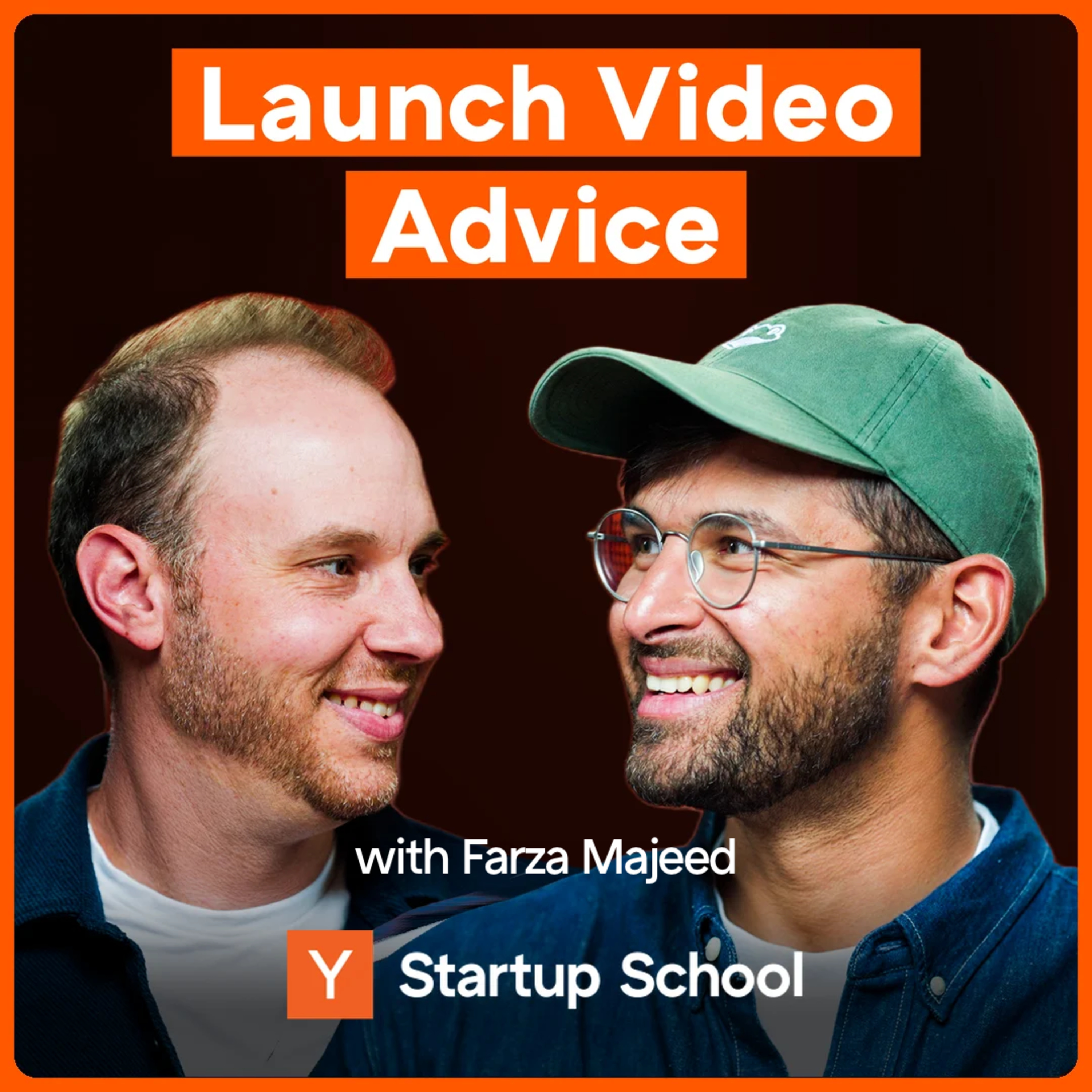
How to make launch videos that convert in 2026 by treating them as constant “mini launches/demos,” optimizing for hooks and retention, and shipping frequently on algorithmic platforms (especially Instagram).
Farza Majeed is the founder of HeyClicky (an AI interface for a user’s cursor). He previously co-founded Buildspace (YC 2020; online school for building ideas) and started his first company at 13 selling on eBay. He’s made videos for 10+ years and regularly gets millions of views.
Fancy $20k launch videos and old-media press are less important than phone/laptop demos. Write simple scripts, but sound natural; plan the first 10 seconds and first frame. “Show your work” daily; don’t refresh for engagement. Track conversions by channel (e.g., link-in-bio routing).
HeyClicky “Clicky” launch video (~3M views; ~7,000 downloads; ~100 retained 5 days). “No hands” Spotify control demo (~2.9M views Twitter; ~4.6M Instagram). “Everything we built this week” process videos (~1M Instagram views). Zip School class launch videos (even 23 likes counted as a “launch”).
Written by AI. May contain mistakes.
Farza shares his journey from early entrepreneurship to leveraging video for launches.
“Before we jump into some of your advice, why don't you tell us a little bit about your background and how you got to this point?”
Discussion on how the approach to launch videos has evolved over the years.
“And I just love shipping just demos constantly.”
Farza explains why authenticity in videos can outperform high-budget productions.
“And here I am working on it six months later as a real company.”
Farza analyzes his own launch video for HeyClicky, discussing its impact and user engagement.
“of videos I've made that nobody has cared about.”
Insights into how to write scripts for videos that resonate with audiences without feeling scripted.
“I'm talking to that like one other person in that world that may think this is cool.”
Learn how scripting and visualization impact video quality.
“First of all, this whole video scripted.”
Discover how audience perceptions can differ from creators' expectations.
“I'm constantly forcing myself to put it out.”
Understand the concept of demo-driven development in product launches.
“where it's like, this is like something I'm really proud of.”
Explore the value of sharing content frequently, regardless of its quality.
“be the mentality everybody has uh working on their company launching in 2026 like you can't be thinking about it.”
Compare early launch experiences and lessons learned over time.
“And I wanted to show off the new classes that we were launching for our users.”
Learn how consistent practice leads to improvement in video creation skills.
“This is like an everyday thing at my company because we had new classes dropping every day almost.”
Discover strategies for making engaging and effective videos.
“Clearly, your advice is just put it out there.”
Understand the significance of having a strong hook in your videos.
“It could just be an iPhone video and it'll still do really well.”
Learn how storytelling can enhance the impact of your videos.
“It's a little AI buddy that lives next to your computer cursor and teaches you anything in real time for free.”
Explore how presenting as a character can engage audiences better.
“It's page to block my long distance girlfriend and post my weight loss journey.”
Discover the benefits of sharing the behind-the-scenes of your work.
“And this guy's like, ah, broke up with my ex-girlfriend.”
Understand the challenges faced by founders and how they can be communicated.
“Now Clicky has a new brain and it will feel way more smooth to spawn the agents, to control them, to pause them.”
Learn how to convey positivity and joy in your video content.
“uh like i'm not trying to like tell you about my life and tell you about like my my that stuff i'm I'm trying to show you what I'm doing and why in new ways.”
Explore strategies to overcome the fear of sharing content publicly.
“And I think people see that in your personality And I think they see that in the music that you choose.”
Learn why sharing your work daily can help overcome self-doubt and build an audience.
“And all these thoughts, I think, go through people's heads and they're afraid of.”
Discover how using platforms like TikTok and Instagram can attract potential customers.
“A lot of people think, well, I'm not targeting Gen Z or whoever stereotypically TikTok users, Instagram users.”
Understand the differences in conversion rates across various social media platforms.
“I would literally say, hey, are you a design agency?”
Learn about creating platform-specific content and its impact on audience engagement.
“the best performing channel in terms of conversion.”
Explore techniques for making videos that capture attention and hold viewers' interest.
“And you're basically using the same content for every channel.”
Learn the importance of hiring skilled individuals to enhance video quality and storytelling.
“Yeah, either I have good taste or I just put out so much stuff and some of them just hit.”
Discover the tools and equipment that can improve your video production quality.
“with my company was to kind of observe what we were doing and help us launch and constantly make it their mission to make us look good when we launch as well and make us come off properly.”
Learn why quality audio trumps video aesthetics and the essentials for effective video production.
“is crisp and what he's working on is actually genuinely interesting so i stick around and so So I don't care about the rest of it.”
Discover the significance of writing and planning before video production to enhance the final output.
“And the more you keep doing it every day, the more natural to become.”
Engage in a 30-day challenge to create daily videos and improve your communication skills.
“I think you have a challenge for everybody who's watching for something they can do today to get started, right?”

Get the gist, explore an idea or ask about something said.
 Claude
On Y Combinator Startup Podcast, what are the key points of this episode?
Searching your listeningAutomatic transcript. May contain errors.
0:00These days, too many founders think launching is all about spending a ton of time and money to produce a slick video and hoping it hits. But my guest today, Farza Majeed, has a totally different approach to launching and going viral. All right, this is everything we ship this week. Well, shipping, right? Are we shipping? Yeah, we're shipping. He's the founder of HeyClicky, where his posts regularly get millions of views. My formula is always the same. Yeah. This is who I am. This is what's going on. This is what I'm working on. Let me show you. Everyone wants a story. And so how can a demo just be a mini story?
0:31And today, he's going to share his playbook for how to create videos that actually convert.
0:44Barza, thanks for being here. No problem. Before we jump into some of your advice, why don't you tell us a little bit about your background and how you got to this point? Yeah, I started my first company when I was 13, selling stuff on eBay. 10 years later, started getting into software and built an online school for kids, which I did YC for in 2020 with you. That turned into a company called Buildspace, which became one of the largest schools for people who wanted to work on their own ideas and now working on HeyClicky, a new interface for AI. Doing videos has always been kind of a core strategy for you for how to reach out to people, and especially with Buildspace and now with HeyClicky, it's how you've gotten a lot of attention for your products and your businesses.
1:22How have you thought about that And talk about your progression from when you got started with video up until now. Yeah, I mean, to this day, I just love making videos, making online videos for people. These days, I'm working on my own company. And so the story that's in front of me is actually my company story. And so it's been really fun to just tell that online. And it just so happens that making videos in 2026 is really good for business, too. So, yeah. Yeah. Tell us about that. So you've been making videos for over a decade, publishing them online. Talk about what's changed. Like what is different now in making launch videos and getting attention for your product in 2026 that's different from how it was over the last decade?
1:58Yeah. I mean, you know, we mean you were in YC together in 2020, you know, you as my partner. I mean, yeah, back then, you know, you were doing we had to do stuff like post a hacker news, post a product hunt, go to Reddit, like find the right subreddit, you know, like that. Those types of launches and things have changed so much now. There are so many new channels now where our users are living across all products. It doesn't matter what you're working on. It could be drones or AI or like whatever, a dating app. Your users are on many new platforms, mostly algorithmic platforms like X, LinkedIn, Twitter, YouTube.
2:28The biggest change is you're not really making posts anymore. You're actually just constantly launching all the time on these algorithmic platforms. Yeah, we see that a lot with founders in the YC batch where they think a lot about they have to put in all this time and energy and money to make some big fancy launch video and coordinate this big coordinated launch in the hopes that that's going to be their big moment and everything's going to take off. But you don't think about it like that. Like, I think your perspective is very interesting. Yeah, there was a time where that was the meta, you know, like you got to do like a fancy thing and make it a big deal because you got one shot.
3:01You get that TechCrunch article or you get like that the press in the New York Times or something like that. You needed something kind of nice to go with it. But now all the old media is kind of just gone. And so now what's working is like a video where I put I say hi and I talk about my product. is probably going to perform way better than like a$20 ,000 produced video by the New York, that I posted with the New York Times, uh, in terms of actual engagement and traffic and like other things. And so it's a crazy world now. Um, you don't need any of old media stuff anymore. And if you have a phone and a laptop, you're so much more powerful.
3:31And so yeah, the, I think that now, um, we keep calling these launches and I think that that is what these are. These are mini launches all the time, but in my mind, I never consider it. I do consider it a launch, but not in the sense of like, this is a big launch. It's a big thing. It's not we're launching a rocket. You know, it's funny. I rather call these demos instead of launches. And I just love shipping just demos constantly. And the more demos we can put as a company, the better. At my company, I'm always like, well, what are we launching this week? That's more of the question. And we work backwards always from the launch of whatever we're working on.
4:02So for example, I'll give you a small example. If we have a feature we're working on, well, we talk about, sure, we talk about the feature, how it feels, et cetera. But then I ask, well what's the copy on the Instagram caption? What's the first, what's the hook if we make this a video about this? And not that like it needs to have a good, needs to go viral, but we should talk about it because how we communicate to other people is just as important as what we're building. And so it's at every part of the process. It's not like we make it and then magically I make a hit video or something. That's never how it works.
4:28It's always like we kind of know it's a hit before we even start like working on it because it just sounds good on paper. And so I can show some examples of that. I think a lot of people see videos that you publish that go viral and get a ton of attention. And they almost think that it happens by accident because you just seem, you know, so comfortable and natural and off the cuff. But that's not how you do it at all because you're trying to figure out the hook before you even do the video. So maybe it'd be interesting if you could pull up a video, walk us through it, and then maybe walk us through the process of how you created that video.
4:58What goes into it before you've even actually started shooting anything? Totally, totally. My philosophy on a lot of the launch stuff now is just how can we just show like almost like the process of what I'm doing versus show the ending of what I'm doing. I think there's a lot of value to being like, hey, I'm this founder person and I just got this much money and this is my product and this is my fancy DSLR and these are my good, my wonderfully edited video, you know, with me in front of a nice office, you know, but I'm sure we've all seen those. You see those every day. I saw like five today for sure.
5:31And those have a purpose. But to me, that becoming like, the kind of like thing that people are reaching towards is really annoying. And so I try to always do the opposite and just do what I think is right. Because again, that's a one-time thing. You want a channel, because why are we even launching, Aaron? Why are we launching? What's the reason? We're launching to get users. Exactly. We're not launching to like get a bunch of clout on the internet and make people think that we're smart. We're trying to actually get people to use our thing. And that means having a channel that we can keep on repeating and find users from.
6:01And so, yeah, I'll show you one example here. This one's a perfect example. This is like the launch of HeyClicky. So this is Clicky. Clicky is this little blue guy that follows your cursor on as you use your computer. And it's basically an AI teacher that can teach you anything. Honestly, I thought the demo was not that good. I remember I showed it to you in office hours and you're like, oh, you should post this. Like, it's actually kind of cool. And I think one day you asked me again about it. And I ended up saying, OK, I'll post this. Because even for me, I've been doing this for years, like 10 plus years.
6:35And even I sometimes I'm like, oh, I don't want to post it. It's not good enough. But it was so wrong. It's so wrong of me to even think that. And so I record this video in the office five minutes before dinner. And I post it. And after dinner, it's just doing numbers. And now this is my company. Isn't that? It's a crazy thing. Yeah. It was just a random side project that I then even just open source because I thought no one would even care about it. And here I am working on it six months later as a real company. Right. And so this was nearly three million views. How important was this video and actually even giving you the confidence that you should keep working on this?
7:05I do not care about the traffic at all. The views looks really wonderful and people will say congratulations, but what are the actual numbers? And so I actually don't care about this number at all. I was like, how many people downloaded it? And so after this video, I think 7 ,000 people downloaded it. And then I looked at who's like retained four days later. And if you ask me why I'm working on the product today, it's not because it went viral. It's because 7 ,000 people downloaded it and about a hundred people of the 7 ,000 kept on using it every day for five days straight. That got me so inspired.
7:34I reached out to those hundred people. I talked to each of them and I was like, oh my God, people are using this for things I would have never imagined. And the users are what inspired me to keep going forward. Of course, there's so many little things I could talk about, things I'm doing just subconsciously at this point. Maybe you could help me think through it, but even just the headline, just like, it's just casual. I built this thing. It's an AI teacher. What does it do? Why is it important? It's like, that's how my brain thinks I've been writing for like a decade plus. And so to me, it sounds dumb to call it tweet poetry, but like I care about how long things are.
8:08I care about the different parts of the story that I'm telling here. And I remember this even back to your Buildspace days when you would send your regular marketing emails to the community. I would get those and that's how you wrote too. It didn't feel like the typical marketing email that somebody would expect to get. It felt like Farza was writing to me, even when it wasn't Like you directly sitting down and doing the thing it felt like that totally one thing I do a lot is it depends on the platform This is Twitter. I'll just kind of go. I don't know if some random person's tweet here. Maybe like this one And I'll literally change this text to my tweets text hmm, and I'll just do this I'll be like did my I stop I'll just ask myself did I myself stop on what this is saying and if I stop That's like step one for me on testing if I myself would kind of check this out And so that's kind of my number one rule, regardless of Twitter, Instagram, YouTube, anything.
9:04Am I going to stop on this? Am I even going to read the first sentence? Because if I don't read the first sentence, there's no way I'm going into this. Also, like, look at the first frame of the video. It's very purposely Xcode. Why? Because I know that initially curious developers are probably going to be interested by this. Not like actual video editors, right? So it's purposely Xcode. I purposely zoom in right here to this part to show because the product is so small. The park is like this little triangle that kind of helps you out. Most people, when they're scrolling, see the first three seconds.
9:34Hey, everyone. So this is... Zoom. And now you're like, oh, what is that? You know, at least while you're scrolling. And you're moving it around so people can see that there's something moving there. I think that you can go into details all day. But the reason I got this, I know this stuff now is because there's hundreds and thousands of videos I've made that nobody has cared about. Yeah. I think that's the biggest thing. Like, yeah, I don't want people to watch this video and think, oh, I got to make this hook and do this and this. And so this was this first one off the cuff. This was almost entirely unplanned.
10:02Yeah. And so a lot of this was just you and instinct and how you put this together based on things you've learned. Walk us through another video that maybe you planned out a little bit more in advance. Because one thing that's surprising to me, you actually write a script for all of your videos. And I think anybody that's seen one of your videos would be surprised by that because you seem like you're just talking off the cuff. How do you do that? Like you're very prepared, but it doesn't seem formal and stuffy and like you're reading. Totally. How can you teach somebody else to do that? If I like reading it, then that means it'll probably sound good if I say it out loud as well.
10:35Not always, but sometimes. And so this is one example of a script I wrote for a video that I did yesterday. And again, it's just super simple. Like, do I enjoy reading this? Like, would I read this if I just someone texted this to me? Yeah, what's going through your head? Are you imagining the audience listening to this? Or how do you evaluate if something is actually good and interesting? For me, it's always I'm the audience. like would I be interested in what what the script is saying and so honestly this script is actually not that strong um but I still recorded the video because you gotta be launching in the first kind of little bit am I getting across what I'm doing um why is it important like you can get across so much in just 10 seconds what you're doing why it's important let's get into it you know that's what the first 10 seconds of any kind of video should be about because both these videos are one minute long right it's kind of like a movie you know a movie is an hour and a half two hours and the first 20 minutes is just a setup.
11:26It's a two hour thing. And so for a video that's one minute long, you need a setup, but it should only be like 10, 20%. So I write this down. And so this case I said, hi, I want to share a new demo of our new agent interface when talking to our users, blah, blah, blah. And then getting into the demo. And so for me, this is kind of, this is kind of how I think through it, you know, before I get in front of the camera. The worst part is when you're in front of the camera and you're like, what am I saying? You know, like you have, You have nothing to ground yourself. It's good to ground yourself.
11:56You start with the script and then you move on to some of the visuals. How do you think about what that first shot should be? It's so important, right? It's the first thing people see when they're scrolling. I'll show you a quick example of one of our videos. So this video actually is really good on YouTube. This is like a brand new, fresh YouTube channel. Like we literally made it and then posted this video three days later. And this is one of our highest converting videos, despite being 19 ,000 views. Yeah, this video, I think it did like 3 million views on Twitter, 20 ,000 on YouTube, and like some crazy amount on Instagram as well, the same video.
12:26So it kind of did, we post it just everywhere just to see what happens. But yeah, I mean, the way I like to do my videos is who is the person making this thing? You know, like just show yourself, show your face very clearly. This is you, this is your personality. Just be proud of who you are and confidently tell the camera what you're working on. Because if you think it's cool, then I think you'll find at least, my thought is always at least one other person would think this is cool. And that's who I'm talking to. I'm talking to that like one other person in that world that may think this is cool.
12:56And so yeah, I always start with a very clear Hi, this is what I'm working on. All you got to do is press and hold control Start talking and whatever you're saying will stream in as text into whatever text box your cursor is on. For example If I'm on Apple notes, I can just say great. That's how it works. Can you give me an example? Today I have to ship three things first skills second memory and third this bug that this one user gave about dictation Okay, that's pretty cool, but this is like every other part I've ever seen. There's nothing special about this. So that's pretty cool and honestly many products already do this exact thing today.
13:29But here's the thing when I'm writing I often don't really know what I even want to say. So check this out. We're shipping. So then like I bring the problem for myself. I'm not saying Everyone has this problem where they don't know what to write. I'm not involving everybody. I'm only talking about myself And because these are my problems because I'm always putting stuff for myself. Screen aware dictation. It's pretty cool. I've never seen anything like it before and I want to show you. Let's say I want to write again. That's just me being myself, which is like, hey, I want to show you. You come across very natural here.
13:59Was that easy for you to do? No, no. First of all, this whole video scripted. Every every line that I'm saying I wrote like three days before and I said it and I will say it in my head like over and over and over again in the shower, going to work, and I'm always like, how should I say that line? And by the time I'm in front of the camera, I've already visualized it like ten times. It's so funny. After this video, we were finished it. I told Vikrant, the person who I make videos with, and I'm like, this is the worst video we've ever done. It's not even worth editing it. And he's like, no, bro, be quiet.
14:30Shut up. I'm going to make it and then we're going to post it. And so again, it's good to have the team also be really like, hey, we made this. Like, we're going to put it out. It doesn't matter how cringe we think it is. We'll let the audience decide. This video did 3 million views on Twitter. And people went crazy over it. And it's so funny. I thought it was horrible. I just felt like this is so bad. So this is one of those situations where I was wrong. And I think founders, I mean, me especially, think something we made is bad or I made is bad. And then I don't want to put it out because it's going to make, I don't like how it sounds or feels.
15:01I'm constantly forcing myself to put it out. It's not natural for me to click post. But sometimes it is, sometimes it's not. And so this is one example where I was like so surprised that people even cared to begin with. Because I thought it was just a pretty simple thing. It's interesting. I've heard you talk about this almost like demo-driven development where everything that you're working on, you're almost working backwards from a demo that you want at the end of it. And that's kind of the proof that the thing is ready to go. It lets you test it out. And then you get to the end of it and you're like, let's just publish the demo.
15:31The most important thing in my company that I try to always, and every company I've ever run, is, you know that feeling when you're working with someone, often on a team or a co-founder, and you're like, yo, check this out. That, you have to be so aware of that, because that is the thing that you could probably talk about online. That check this out is exactly like that raw check this out is exactly how you should be kind of presenting yourself on the internet. In this case, you know, sometimes I go a little bit more fancy if I want to, but sometimes I'm also just a guy in a simple video in the YC office.
15:59And then sometimes maybe once a quarter, we'll do a polished launch where it's like, this is like something I'm really proud of. I want to make sure it's talked about properly. But generally we're launching like demos every single day almost. It's interesting now that everybody can put out videos and do launches every single day. How do you stand out in that world? It seems like people that are spending lots of money and trying to do fancy produced videos. That's an effort to try to get more attention and stand out and seem, you know, polished and further along than you are. But you take the opposite approach.
16:34And so in a world where there's just so much content and so many videos that are out there every single day. how do you think about how you try to stand out and how others can too i never think about like that i always just think about like i'm i want to talk about something i think it's interesting and there's got to be one of the person out there that's that thinks it's interesting and when i click post in my brain i'm always i'm always like if this gets zero attention zero views i'm still happy i posted it you know because i'm glad i got something out there i think that should be the mentality everybody has uh working on their company launching in 2026 like you can't be thinking about it.
17:09By the time I hit post, I've already forgotten it. I'm looking at it maybe a week later to see how it did. How do you do that? I feel like most people, when they post something, they're, you know, incessantly just refreshing and trying to see other people liking it, who liked it. But you launch and you walk away. Yeah. How did you get to that point? I mean, you just put so much garbage out there. I put so much garbage out in the world at this point. Not like bad stuff, but just like stuff that I wasn't like this. I didn't think that I didn't think was good. Yeah. And people forget the next day.
17:36I can make something right now and post it and people are going to forget the next day. That's just how attention in 2026 kind of works, you know? And so this is like a perfect example. This is 2021. It's a year after YC. I'm like, I'm a solo founder. I've been a solo founder at Zip School and a solo founder at Buildspace, solo founder now. It's not like I'm that, yes, I know how to put a camera in front of me and edit it, but I'm not a fantastic editor. And so this is back when I was working on Zip School, which is an online elementary school. And I wanted to show off the new classes that we were launching for our users.
18:05And this is the launch video. Hey there, Zip Schoolers. Farza from Zip School here again to show off four new classes that we just added yesterday to Zip School that we are very excited about. The first one is called Mars Preseverance Rover Landing aimed at kids ages 7 to 12. And this class covers the Mars landing that actually... Honestly, I'm already checked out watching this video. What would you do differently? What are the mistakes that you're making in this video? I think that's the important part. It's not about that. It's about the fact that I posted it and then it got 23 likes, which by the way is more than zero.
18:35It got more than zero views. It got more than zero comments. It got one comment from a guy. You got a bookmark. I got a bookmark. So like I launched. This to me is a launch. And I know that sounds dumb to maybe some, but to me, this is exactly what launching means. We did something new at the company. We talk about it into the world. And it doesn't matter if we got 23 views. If there's a chance that we get more than one view, we should talk about it. And so this is a super small thing. This is like an everyday thing at my company because we had new classes dropping every day almost. And so I'd just make it, I'd be like, yeah, let's talk about it.
19:09Maybe one day I'll talk about it and one of the classes will be really interesting and get picked up and go super viral, which never happened. But the fact is I made the videos and over time I got so much better at just knowing like, how should I talk about products? Because think about it, I'm good at making videos in general and writing stories, but talking about products is hard. How do you come off without sounding shilly? How do you come off without sounding fool of yourself? And it's hard. This is funny. This is a launch. This was the first day I worked in my company, December 1st, 2020.
19:38And I shipped a landing page. Aaron, there is no copy. There's just a link. And there is some weird video I made in Canva. And I posted it. And that's a launch. To me, I launched a landing page, right? In my eyes. And by the way, in this sense, I had like maybe 80 followers or something. so no one was watching what I was doing and this just continues what is this I'm pretty excited for the next four years for the USA for zip school for the world it's going to be great and so again I've just been posting these for just years and so over time you build up it's like basketball you just keep on going oh man this one's getting closer and you internally are a human being you're smart and you'll slowly get better But if you don't take a thousand shots, you're not going to make the five thousandth shot, you know.
20:30Clearly, your advice is just put it out there. Don't worry about it. Just put it out there. You need to get the reps. What are the things that you've learned in the five years since then? So much. The tips that you could give people now in order to improve their videos and start from a better starting point than you did when you were first doing this. Totally. I want to be really clear. All my videos are like look very produced, but that's because it comes very naturally to me. To make a produced video for me will take like an hour, but for other people it may take longer. So while I'm showing this, I want to be clear, you don't have to produce your videos.
21:02It could just be an iPhone video and it'll still do really well. So this is one of those videos where I just knew, even when I wrote the script, that it was going to go big. It does not have 21 million views on Instagram. And believe it or not, this one video is still driving a lot of our traffic. So that's how these algorithms work. They'll keep serving the content to more people that want to see it. Also, I've made this video an ad now. So I'm running Facebook ads now on a video. So yeah, there's a lot of benefit to making videos for your company. Last week, I went super viral for an idea that I built that I thought was actually kind of terrible.
21:32And this week, I'm somehow in Y Combinator. Let me show you. Okay, so just that hook. Yeah. Like, what did I say? Last week, I went super viral for something I built that I thought was kind of ridiculous or whatever bad. Cool. Like, that's interesting. And now he's in this thing called Y Combinator. I've heard of Y Combinator. So I was kind of targeting that niche. And then a very simple, let me show you what I'm working on. My formula is always the same. This is who I am. This is what's going on. This is what I'm working on. Let me show you. Show you what I'm building. It's called Clicky. It's a little AI buddy that lives next to your computer cursor and teaches you anything in real time for free.
22:06Let's say I'm learning how to color grade in DaVinci Resolve. Instead of going to a YouTube video, I just got to ask out loud and Clicky will literally tell me exactly how to get there and even point at it for me. So again, a little pretty produced. But again, this took us like four to six hours to make because we've done this. but again even if this was a simple video where i'm like hi this is what i'm working on check this out and then i turn the camera to literally show my computer i think the effect may not have been as big but again you just start and you make like 10 of those then you get really good at talking about stuff but again like that video super clear hook a very clear like why you should why you should care right now while you're on your scroll and so a big thing that i always do when i watch videos uh on the internet regardless if they're mine or not is i ask myself am i bouncing when am I bouncing?
22:51And so if I go to Instagram Reels anytime, and this is what I do a lot, actually, I watch a lot of content, not for entertainment, just to kind of study. And so I can go to Instagram Reels. It's page to block my long distance girlfriend and post my weight loss journey. First of all, this is a random video we just stumbled upon, right? There's so much to learn. Dark background, light on his face, kind of a cool little caption at the bottom where it starts with two months ago. You kind of want to know two months ago, what? And you're just curious. And so So I'll mentally take that as a note and be like, oh, cool.
23:22Like maybe we can make a video that uses this as like a template. Maybe it's like two months ago I was working on something and I didn't really know what it was and then tell the story. And so again, I'll just keep doing this. I keep like... Okay, so this song just hit 2 million streams. You wanted to know where I've been. Welcome back to features we should have released six months ago, but we're unreleasing them. This is cool. This is what startups should be doing. Yeah. Yeah, so I'm seeing a lot of this now, but mostly like younger founders, which is cool. There's almost something like self-deprecating about it.
23:55You know, yours is like, ah, I have this thing that I thought was terrible. And they're, ah, this is the stuff we should have launched six months ago. And this guy's like, ah, broke up with my ex-girlfriend. Everyone wants a story. And so how can a demo just be a mini story or what you're saying be a mini story? Yeah. And I've heard you talk about this where it's not actually you in the video. It's the character Farza. and and it's almost like all these people they're a character that the audience can identify with and uh ultimately root for potentially yeah yeah i mean i think that like when a founder talks to the camera like you come off as a certain type of way and so um totally sometimes i'm like yeah like i am not playing a character but like i'm a character to the people right like when someone watches me on their little tiktok feed or their twitter feed like i'm just a random character in their eyes i'm not like a real i'm a person but i'm kind of a character i'll show you guys this too, which is just something we've been doing that our users have been loving.
24:47It's not going viral, but our users have been loving it. And there's just these little, actually some of them have been going viral, which is pretty cool. This is everything we built this week. So Clicky had been, had some problems about like the integration and orchestration of the agents. Now Clicky has a new brain and it will feel way more smooth to spawn the agents, to control them, to pause them. And you're going to see a lot of improvements overall. A lot of people complaining about like clickies keep following them so i made a fix for them so there's no there's no hook there's no attention there's no story it's just we're a group of people and we want to tell you what we're doing this almost has a million views on instagram why do you think these are so popular i think that this is the most important thing i think about like companies making content what we are doing on a day-to-day basis at our companies is so far-fetched from what most people think is actually happening at a company and uh to just give them an inside look of what's actually going on in your process is so cool and it gets them excited it gets them interested in what you're doing what i'm so against and so anti is talking about my life as a founder on the internet you'll never catch me making those videos about this is a this is my day as a yc founder never uh like i'm not trying to like tell you about my life and tell you about like my my that stuff i'm I'm trying to show you what I'm doing and why in new ways.
26:11And I think that most companies just never show their process. For most companies, big companies, Apple, Meta, you just see Mark Zuckerberg on the stage and he's showing you his Meta glasses. But a lot of people, especially early adopters of products that I'm sure many YC founders are working on, are interested in just like, what are these random group of four guys and girls that are making this AI product? And how are they doing it? And just telling, we make these videos in 10 minutes. and it's just, hey, just get up. What are you doing today? And yeah, it's interesting. It's funny when we started making these, we just made them just to stay accountable because it was good to kind of tell the people what we kind of like stand up, but in front of the world.
26:52And so that was kind of the idea. And now we do these every two weeks and it's been really fun. Yeah, that's really cool. I think another thing that comes across here is not even just the words that you're saying, but like the joy that is in the videos. And I think people see that in your personality And I think they see that in the music that you choose. And everybody's kind of like clapping and supporting each other as they're giving their update. And it's just like positive vibes are coming through the video. And how do you capture that? See, this is so weird because this is where you just have to be yourself.
27:22I keep saying that people always say, how do I start making videos about my company or videos about what I'm working on or have some presence? And it's always the same feedback. Make, take out your iPhone, click record, go, go, go, uh, selfie mode. and talk about what you're doing for 30 seconds and post that to your Instagram. Post that to your TikTok and then post it to Reddit and Instagram or Reddit and YouTube or wherever. And you know how many people take me up on that? Almost like maybe 1%, 2 % of the time people will actually do it. Why though? If I told you right now, I mean, maybe you're different.
27:53I don't know. You're probably different. You're Aaron Epstein. But if I tell you to pull out your phone and record a video, how does that make you feel? And then post it to your personal Instagram. Oh, yeah. You get nervous about it. Like, what am I going to say? Yeah. How am I going to look? What if people think it's stupid? And all these thoughts, I think, go through people's heads and they're afraid of. My high school friend follows me. He doesn't care about this, what I'm working on. Nobody cares. But see, that's the thing. There's so much value to... You got to be cringe for a little while, actually, to learn how to not be cringe.
28:24And so a lot of people will post their first video and be like, this is horrible. I've not been posting this. But I think the important part is to continue doing it. And so again, every day as a founder, founders watching on YouTube at YC, you're spending eight hours on your laptop, making magic, smiling, seeing things that you find are interesting. If you just spend even 10 minutes to step back and ask yourself, what's something I did today that made me smile or was interesting or felt new and just talk about it and then show it and then click post and then close it back to work. That's all you have to do.
28:57That's what it means to be launching, I think, in 2026, just to show your work. Because that is what launching is, right? When you launch on TechCrunch or New York Times, like you're showing your work. But in 2026, you can show your work every day. And you can actually get an audience just by showing your work every day. A lot of people think, well, I'm not targeting Gen Z or whoever stereotypically TikTok users, Instagram users. Therefore, I should not use that as a channel to try to acquire my business customers or I sell to procurement or whatever. But it sounds like your argument is like, that's not true.
29:28There's all kinds of people using these platforms that are real humans that happen to work at companies where they could be your customer and be interested in seeing your product, right? Yes. Everybody in the world is on, not everybody in the world, but a large majority of the world is browsing through these platforms. Billions. Yes. We found that design agencies really loved our product. Like three of them that found us naturally. So the question became, how do we get more design agencies? Now, I'm curious, what would you do if you take yourself back to founder mode, Aaron? Oh, I don't know. Probably the default for a lot of people is like, go look on LinkedIn and try to find people that list the place they work as a design agency or go to communities that they hang out in or like specialized design websites or something.
30:15And those are all actually really good. You should do those things. But at the same time, do you think a design agency founder is on TikTok or Instagram or YouTube? Do you think they're on these platforms? the answer is probably yes. It's probably a lot of them. And so we started making TikToks. I remember, I don't have the account pulled up here that was just targeting design agencies. I would literally say, hey, are you a design agency? Or hey, are you the founder of a design agency? Stop right there. Let me show you something really cool. And then that's how we found like 50 design agency leads just through TikTok.
30:45And these videos didn't go viral. They each on average had like 4 ,000 views. But it was probably 4 ,000 targeted views. 4 ,000 targeted views. So the goal of Michael is never to go viral. It's just, I want to talk about what I'm working on. And I want to make sure it's listened to by an audience that would be interested in, actually interested in what I'm doing. How do you think about the different channels? Every channel is different. I'll say off the bat, Twitter is our worst, is in historic, I've been making stuff on Twitter for like 10 years. The worst conversion of any channel. Like this video, the original Clicky video got 7 ,000 downloads on 3 million views.
31:19If you do the math there, it's like less than 1 % or some crazy low. Much less. It's very low. Screen aware dictation, this video, right? 2.9 million views on Twitter. But the conversion rate onto those people actually making accounts was horrendously low. This YouTube video has 20 ,000 views. But do you know what the conversion rate on this video is? It's like 20 % to them actually downloading the app. Wow. So the chances of you watching this video and downloading my app was 20%. Do you think that's something specific to the channel or is it something... Yeah, you know, every channel is different.
31:49Think about it. I'm on Twitter. I'm just like doom scrolling, basically. Not really doom scrolling. I'm just scrolling through random stuff all the time. And so for YouTube, it was so surprising. And so historically, actually, YouTube is, for most companies, the best performing channel in terms of conversion. But look, our numbers are very low. 872 subscribers, 20K views. Like, I'm not Mr. Beast, you know? But again, if you do the math, this leads to a very real number of signups. And this video will keep on performing. That's the most important part. this YouTube is a library that will last for decades Twitter you got your moment once and you're gone Instagram is another one that's so important all of our traffic I think 70 % of our traffic is Instagram this is where you got to be smart you're like I'm not trying to go viral I'm trying to make tell people what I'm doing but I'm again like down the funnel how many people actually converted it's worth checking out and so that's what I think people should always make their video and then make the first couple of videos but then start to ask themselves maybe I should make my, for example, our link in bio is slash IG.
32:50Why? Because then I can track like, wait a second, what was the conversion rate of people who hit slash IG and downloaded my app? Or if it landed on their phone, we have a little button that lets them send it to themselves over email. How many of them click that? What's the conversion rate? And so by posting on all these channels, you start to see not only where I'm performing views wise, but actually just like, where is my best channel right now in terms of the audience I'm looking for. And again, for us, it is by far Instagram. And it's not even close. And you're basically using the same content for every channel.
33:24Yes. I do make videos for specific platforms. So most of our videos we make for Instagram, but then we post to Twitter, whereas some videos we make for Twitter and then post to Instagram. What is the difference between one that targets one versus the other? So simple. I mean, Twitter generally doesn't like vertical videos. It's like 16.9. So then this, for example, we have this drawing video. So we've got a system that can draw directly on your screen. It can draw polygons, arrows. This is super optimized for Twitter. Because just look, let's just watch it muted. And imagine I'm scrolling my feed, ready?
33:56Okay, guy in front of Blackboard, AI, draw screen, I'll watch. It's like, it's that quick. It's like AI, draw screen, Blackboard, he's drawing things, Clawed Opus, demo, click. You know, like my brain thinks like that. What are the quick, because nobody's reading this entire damn thing. and so this is optimized for twitter this video is optimized for twitter but what was surprising is we posted the exact same thing to uh my instagram and it performed even better and you would think that like this type of video wouldn't perform that good but it has like millions of views and it's a vertical video because on their phone it looks even worse it looks like this well one thing that i maybe a couple things that i know about you are you have a very high bar for yourself and the things that you put out there.
34:41And while at the same time, almost ironically, you're very comfortable putting a lot of things out there. Yeah. And so you, I hate to use the word taste, but like you've been doing this so long that you have a high bar and a good sense of what you would be excited to watch. And you just naturally have a very short attention span. You get bored and you like want the next thing. And if you're not getting that, then you move on. And I think that serves you very well with the videos that you're creating here. Yeah, either I have good taste or I just put out so much stuff and some of them just hit.
35:13That's how you get it, I think, is you put out a lot of things and you continue to improve and that levels up your work. Totally. I think I have more of the latter where I just put out so much stuff and some of it works. And again, we're looking at the stuff that's working, but so much hasn't worked. Right. Like my old Zip School videos, like nobody cared. Yeah. But this is a perfect example. This was a super simple video. Basically, just a quick story here. I found out that with GPT real-time, you could generate shell commands and control your computer in real-time. And so we can watch it real quick.
35:42All right, check this out. No hands. Ready? Hey, Clicky, can you please open up Spotify and play ACDC for me? Maybe Back in Black. I love that song.
35:54Rock on. It's playing Back in Black now. Amazing, amazing. Clicky, hey, Clicky, it's a little bit loud. Could you turn it down in Spotify 50 %? It's so loud. Got it. Lowering Spotify to 50 % so it's less intense. Okay, thank you. Hey, Clicky, can you open up my Stripe? So now I'm going to keep going. And this is actually a fun one. Stripe dashboard for me in my browser. Let's see if we made any money today. Opening your Stripe dashboard now. Oh man,$140 in a day is not... And so to me, that was just one little moment in the day where I was like, oh my God, this AI model could do this. I didn't check if anybody did it before.
36:31I was just like, I'm going to make a video. Turns out I did something very novel. and again the examples I used playing a song on Spotify and lowering the volume that's exactly the first use case that I had as a user myself and so again always building for like the version of myself that's kind of watching out there because if I think that's cool I think someone else would too and hey look 3.8 million views on Twitter really good but again then Instagram 4.6 million you know people always say like you got to be super like your brain has to be rotten when you're scrolling Instagram and you got to have a lot of quick edits and blah, blah, blah.
37:04Like there's not a single cut in this video. Yeah, there's no cuts in the video, but there are beats in the video. Yeah. That you do a very good job with. You know, we see you first. You say, hey, no hands. So right off the bat, I'm like, oh, no hands. He's just talking to this thing. Yeah. Which is the hook that I think gets people to watch. Oh, of course. That's all purposeful. Yeah. Then you play the song. Then you lower the music so that you can continue to talk over it. And it responds to that as well. Then you pull up the Stripe dashboard and somebody goes, I wonder how much money they made today.
37:33There's always, yeah, I'm always just trying to keep the story moving. I'm not trying to keep your attention. That's actually the wrong way to look at it. I'm always trying to, I'm always like, all right, where is this going? Come on. You know, you're like, come on, keep going. When you hear someone talking, like, let's get to the end of the story. Okay. You went to the movies and, and so you just keep doing that endlessly. And so, um, I love that you said the word beats. Some of my videos are purposely made to just kind of like appeal to like the audience that just has no attention span. You know, for example, like this one.
38:03It has been nine weeks since I built and launched my idea. It's an AI that can draw directly on your screen and guide you through any. So that's one example of like a quick, very quick. I'll show you this example here, which is talking about the beats just for once. Two weeks ago, I was in my apartment trying to figure out a cool idea to work on. Two weeks later, I built this thing that's now being used by thousands of people every single day. And the crazy part is. So again, I literally think about it like this. Am I here? Yeah. Am I still watching? I think as you make these videos again and again, it becomes a lot more obvious to you as you do it.
38:36We have this one guy at our office right now. He is 19 and he has this built into his head, the same beat system. And it's funny, like most people who work on videos a lot have this little beat system in their head. I think another thing that's unique is you actually invest a lot in your early team, which is small, but a large portion of it is actually built to help you create and produce and get these videos out the door on a regular basis. Yeah, I mean, I always say like, I'm okay at videos. There are people out there who are way better at me. My first two hires were, I knew from the beginning, even before I started my company, it's going to be number one, a filmmaker, and number two, an engineer.
39:16And it's number one is filmmaker for me. That is the first one. Or whatever order they can come in. Why was that so important to you? I don't want to put a ton of attention every day on making videos. I mean, any founder watching, any founder YC, nobody wants to do that every day. At some level, you do have to in the beginning, in the early days. And yeah, I mean, look at my clicky videos. I'm forcing myself to just make videos and make stuff every day. At one point, you're like, well, this would be really great if someone's full-time job with my company was to kind of observe what we were doing and help us launch and constantly make it their mission to make us look good when we launch as well and make us come off properly.
39:52And so that's why a filmmaker was one of the first hires. I made at this company. And my last company, our film team was two people. We were only like a seven person team. Yeah. So even at this company, at one point, hey, Clicky, we had three people making videos and one engineer. Because it's so funny now, it's so easy to pump out more code and more software, but it's harder than ever to actually talk about what you are doing in a coherent way in front of an audience. Because now, Aaron, you know, someone can clone my product in like two minutes at this point. But again, what's really hard to clone is the audience and the community that I've built around what I'm doing and the energy around it.
40:29If you had an audience around your company of, say, 100 ,000 people that was really into what you were doing, maybe enterprise AI, maybe something around photography or whatever, whatever your niche is, that'd be useful. Because that's why I can make a video now about a new feature and thousands of people flood my app. That's awesome. That's like every founder's dream, right? Tell us more about the gear that you're using today to produce these videos. Yeah, so for demos on my computer, which is just like what I'm hacking on that day I always use this thing called screen studio. I think it's like made by some indie hacker.
41:00It's just really good It's a record your screen record your local audio makes your cursor look good and I think cost like 30 bucks That's like one level then the next level is like well videos that more include me in a more kind of like Kind of native way and for that I just pull my iPhone literally just a selfie camera and just record myself talking post or edit on my phone even um i use uh on my phone uh it's uh instagram's editing too it's called edits a lot so when i i do edit on my phone a good amount so that's the iphone uh nothing that's required but then there's like the next level where it's like you feel like you want to do something a little bit more kind of like thought through cinematic uh and that's where i use my sony fx3 and sony fx30 or sony fx3 the cheaper one along with a dgi mic it's actually funny the most important this is actually so important i can't believe i missed this the most important thing in any video you make it doesn't matter if it's a shitty loom or a shitty like little video or your iphone is audio quality if your audio is bad i'm bouncing i've watched some demos that are like 720p and just like the guy's in like a weird room in a basement but his audio is crisp and what he's working on is actually genuinely interesting so i stick around and so So I don't care about the rest of it.
42:13I don't care what he looks like, anything. I'm like, I can hear him and I can see what he's doing. That's it. And so I think if every finder could just invest in one of those super cheap DJI mics, find them used online, or just any mic that's not your MacBook mic, or your AirPod mics, those don't count. That would be really good. And then for editing on my actual laptop, I use DaVinci. Yeah. And maybe the most important part of my stack, he's not here right now, but Vikrant. Vikrant has made all the Hicklicky videos and without that guy making me look good and making us look good None of this would happen.
42:47And so I don't want to sit here and be like I made all these videos and did all this stuff Every video we just looked at apart from the bad zip school ones Which were made by me are made by Vikrant And so having a person that is actually talented at filmmaking storytelling writing next to you is like the biggest Bonus a founder could have today. So a big part of how I work with Vikrant who's the person who ups me with all these videos is we just brainstorm. We're like, hey, we made this feature. How should we make the video now? What are we thinking? Where should we do it? And so Vikrant is actually the main guy that's like, hmm, I had this shot idea.
43:22Or hmm, I had this hook idea. Or hey, I had this other idea. And often I'm the guy that's bringing the script and the song and the vibe that I'm going for. Because as the founder, I think you'll slowly find what are the things that you're good at in video making. There's some aspect to it. So for me, I find I'm really good at writing and I'm really good at the music. And then Vikrant is good at literally everything else from shooting to picking the set to editing after to, you know, all the little motion graphics he does. Just so talented. And then as the founder of me, as far as I can go back to focusing on growth, hiring, making the product.
43:57I don't want to spend all my time making videos. You know, I don't think any founder watching this wants to do that. And look, I think a lot of people watching probably can't afford to hire a filmmaker or like an actual person on their team. They're maybe just solo with a co-founder. And what I'll say is, hey, go back to my old Zip School videos. Go back to just scroll through any of my social media and look at all my old shitty videos and just start somewhere. That's the most important thing about making launch videos and launching today is you got to start. And the more you keep doing it every day, the more natural to become.
44:30And slowly, hopefully more people check out your product. hopefully you can then hire someone that does it even better than you so for example i'm not the engineer at my company anymore i'm not the core engineer i have someone that's a lot better than me yeah and same with filmmaking same with design same with every aspect of my company but the early days as a founder doing everything you're doing taxes you're doing design you're filmmaking and so you got to do everything you can't be a little baby about it you got to take out your camera and start posting some cringe stuff because in order to not be cringe you must first be cringe.
44:58So yeah. And then yeah, for all of my writing, I always use this thing called free write. It's free to download free write.io. It's my app. I built it actually just for this purpose. Yeah. Free open source. You can check it out. Maybe this is one thing I didn't mention at all before is writing is so important. So spend as much time possible before the video writing it. So before you get in front of the camera and maybe record it, if you've never made a video, don't worry about this. But if you're like on your 15th, 20th, 30th video, try writing, Try writing for just 10 minutes about what it should be and then record it.
45:31You'll find that the more you think through it before you get to the video, the better it can possibly get. Because then you can catch a bad idea before it gets here. And that's it. That's my stack. I think you have a challenge for everybody who's watching for something they can do today to get started, right? My challenge to everyone watching this is if you've never really made videos or if you have never really talked about your work online, but you've been hacking, you've been tinkering, you've been working on something. Super simple. Every day, just spend 10 minutes, take your phone out, iPhone or Android.
46:03It's okay. And then just record yourself talking about what you were doing, what you did that day, and then post it to your social media of choice, Instagram, TikTok. You know what? Make a new Instagram account so your existing followers don't even know. Just post it somewhere and do that for 30 days straight. and I promise you within those 30 days, one of those videos will surpass probably a thousand views. And then you can look back and ask yourself, that one did a thousand views. Maybe the next one, and you can learn from that and you can make the next one based off the one that got a thousand views and you can slowly get better and better and better.
46:38That's the challenge, yeah. 30 days straight, every day, one video, send it to me. I'll be one of your likes if you're doing this challenge and yeah, go for it. And it's never been easier to do this, right? to get that message out. It's never been easier. It's never been easier. Farza, thank you so much for being here. It's incredible advice. Thanks, Ahmed.
There’s a misconception that a successful launch video needs to cost tens of thousands of dollars and feel like a high-production commercial. But Farza Majeed has a different approach.
Farza is the founder of Clicky and previously built Buildspace, one of the largest online schools for people working on their own ideas. He’s been making videos for over a decade, and today his posts regularly get millions of views. Rather than treating launches as rare, high-stakes moments, he’s made them part of the everyday process of building a company.
Farza sat down with YC’s Aaron Epstein to share his playbook for turning demos into stories people actually want to watch. He breaks down how he scripts videos that still feel off the cuff, why founders should launch constantly, and how to figure out which channels actually convert.