
In short
Y Combinator Startup Podcast: Episode Summary
Episode Title
Twitter vs. X: Product Lessons For Startup Founders | The Breakdown
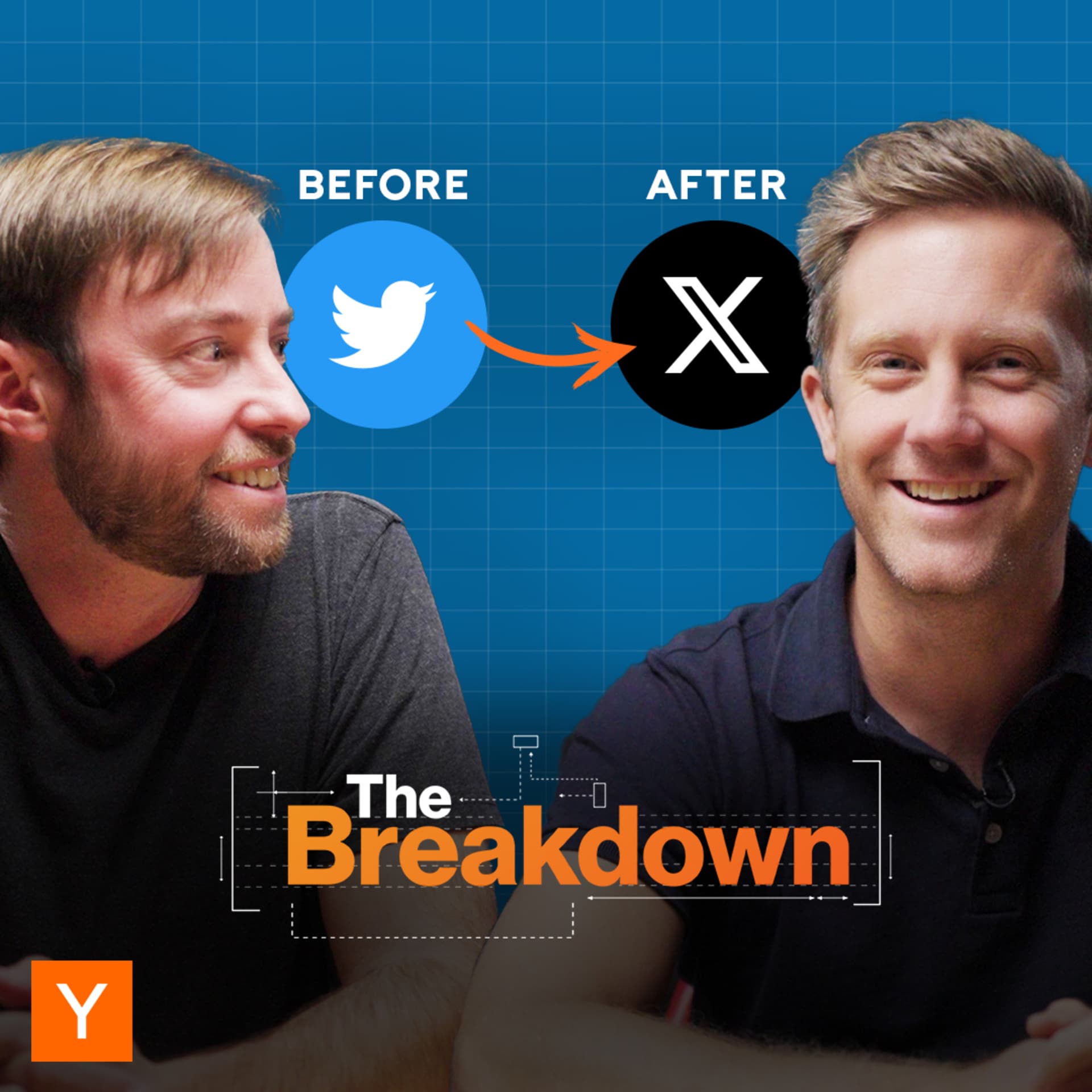
Episode Description This episode discusses the rebranding of Twitter to X, exploring the changes in user experience (UX) and algorithm (algo) that have occurred since the transition. Hosts Tom Blomfield (co-founder of Monzo) and David Lieb (creator of Google Photos) analyze what startup founders can learn about product design from X's evolution.
---
Key Themes and Discussions
- Understanding User Value
- Key Question: How to determine if users are genuinely receiving value from the product?
- Critical Point: Merely increasing content consumption (e.g., watching videos) does not equate to user satisfaction or value. Example given about watching undesirable content (e.g., fistfights).
- The Shift in User Experience
- From Chronological to Algorithmic Feed:
- The transition to a feed that emphasizes engagement over chronological order has significantly changed user experience.
- Content has become more polarized (e.g., users receiving more extreme political content).
- Engagement vs. Quality
- Risk of Single Metric Optimization:
- Product teams may overly optimize for metrics like dwell time or engagement, leading to a decline in content quality.
- Long-term retention could suffer if users feel dissatisfied with the content quality.
- The Role of Product Design
- Explicit User Feedback:
- Users should be given clear and effective tools to curate their experience.
- Discussion on the effectiveness of features like "not interested" buttons and their visibility in the user interface.
- Historical Context of Social Networks
- Evolution of Platforms:
- Comparison of changes in Facebook, Instagram, and TikTok, noting that each platform eventually dilutes user experience as they grow and incorporate more content types.
- TikTok's approach skips the gradual dilution and offers users a more broad range of content from the start.
- Product Purpose and Community
- Importance of Defining the Problem:
- Founders should clarify what problem their product is solving and how it fosters real human connections.
- The notion of Dunbar's number suggests that social networks should aim for smaller, more qualitative interactions rather than broad engagement.
- Branding and Naming Challenges
- Impact of Rebranding:
- Discussion on the implications of changing Twitter to X, emphasizing the significance of brand recognition and user familiarity.
- The name change's disconnect from user expectations and previous branding.
- Financial Implications
- Revenue Impact:
- Discussion on how shifts in content strategy may lead to downturns in ad revenue while engagement metrics might show growth.
- The importance of balancing user experience with monetization strategies.
---
Key Takeaways for Founders
- Articulate Product Purpose: Clearly define what your product is intended to do and who it is for.
- Balance Metrics: Avoid optimizing solely for engagement; consider other qualitative aspects of user experience.
- Encourage User Feedback: Create straightforward mechanisms for users to provide feedback on their experiences.
- Consider Brand and Identity: Be mindful of how branding changes can affect user perception and trust.
- Learn from the Past: Reflect on the histories of other social networks to inform your strategy and design decisions.
---
Conclusion This episode serves as a critical examination of how product changes impact user experience, engagement, and overall value. Founders are encouraged to keep user satisfaction at the forefront of product development, rather than solely focusing on quantitative metrics. The insights from the discussion about X provide a framework for understanding the complexities of product design and brand management in the tech landscape.
For future episodes, listeners are invited to suggest other products for deep dives.
Written by AI. May contain mistakes. Listen to the episode to check what was said.
Transcript
Automatic transcript. May contain errors.0:00How do you know if your users are getting value from your product? It might be really easy just to say, well, if they're watching more content on Twitter, that must be good. But yeah, me watching a bunch of fistfight videos is not what I actually want. If you're optimizing for a single metric to the exclusion of all other factors, you're probably going to lead yourself down one of these rabbit holes. This is where I think founder CEOs do have an advantage. They have the kind of moral authority of like, I started this company and this is what I believe and this is where we're going.
0:32Welcome to a new series we're doing here at YC, looking at some of the most popular consumer products from across the internet and giving you our unvarnished thoughts. Tom and I both have a bunch of experience building products that a lot of consumers have used. And we thought it'd be interesting to just kind of like dive in and take apart some of the most popular products that you all probably use. So to start with, we're going to explore Twitter or what is it now called? X. X. Yeah, Twitter versus X and what has happened over the last year or two under new ownership, let's euphemistically call it.
1:12So where should we start? I think there's a ton of things we could talk about, obviously, here. And the timing is right. This is like a very perfect moment to talk about Twitter. I'm sure a lot of people are using Twitter these days. By far the biggest change that I have seen in Twitter over the last year or so is this shift from a chronological-ish feed of topics that you have expressed that you want to follow to now kind of like more of a TikTok feed of stuff that you might be engaging with. Yeah. And really explicitly, I used to see, like Twitter used to feel like a left-leaning, I mean, I'm a moderate to left-leaning person.
1:51The content was sort of left-leaning politics. and now I just seem to get like MAGA rally after MAGA rally. Same. Which is sort of, you know, fine. That content, I presumed it always existed, but I just never saw it and I don't think I've engaged with it. In a sense, it's sort of imperceptible. You know, it's not like a button has changed or the color scheme has changed, but just somehow the content has quietly morphed in a way that is becoming more and more evident. Yeah, on that topic in particular, to be fair, I think Elon explicitly said, when you're using Twitter, you should feel equally bad if you're on the far left or on the far right.
2:24And perhaps he has achieved that. I don't know. But at least in my own usage of the product, I'm sure that my engagement is up and my happiness when I go and resume my life is lower. Totally. Totally. Do you feel the same way? I absolutely agree. Now I see way more videos of like some random fight in Mexico City or someone get smacked in the face by something or like random cat videos. Stuff is like, you know, it gets the dopamine hit going or something, but I don't feel like I've learned anything or like engaged with someone who's taught me something. So why does this happen? Why are they doing this?
3:01Well, it's tricky. When a team and a product manager has a number to work towards, and in this case, like dwell time or engagement or number of minutes each user uses a service, like a well-meaning product team, in my experience, like tends to optimize and optimize and optimize for that single number, almost without regard for, you know, harder to measure stuff like taste or like quality or educational content, or I don't know. What do you think? Yeah, you bring up, I think, the critical point, which is how do you know if your users are getting value from your product? Yeah. It might be really easy just to say, well, if they're watching more content on Twitter, that must be good.
3:44They're choosing to do it. So of course it's good. But yeah, me watching a bunch of fistfight videos is not what I actually want. Even though rooted in my lizard brain somewhere, I'm going to keep watching them. Totally. And when your business model is predicated on advertisers and selling like seconds of video roll, sure, the more hours your users spend on the site, theoretically, you should be getting higher ad spend. Whereas there are business models like Google famously who aim to get you off the site as quickly as possible. You're getting value if you did a search and the first search was so good you click the first link and you disappear.
4:18The counter argument that I would make to that is if I am highly engaged in content that ultimately I really don't like, long-term retention will be poorer. And so eventually, even if your business model is ads and you're getting me to spend a bunch of time on the site, I'm going to eventually stop using it or I'll switch to something else. Over time, the quality of the service and the desirability goes and your best users churn and go somewhere else. So let's talk about if you're going to go down a path like Twitter has gone down, or I should say X has gone down, where you move to this algorithmic feed and it just figures things out.
4:54Sometimes you'll get users that are in a bad state, like I was a few weeks ago, where I just felt like every time I used Twitter, it was bad. And yet I kept using it. So I tweeted about it and everybody said, oh, you're doing it wrong. You need to go and click the little dot, dot, dot button and say not interested in this post, which I did. And it was very effective. But like, should the product designers make that more explicit? Yeah. Now is probably a good time to actually dive into the Twitter feed and take a look at it. This is my Twitter feed. I hope there's nothing too embarrassing. The first the first item is this tweet from a guy called Massimo.
5:28I actually do follow him. His tweets are generally pretty good, but this is a sandcastle maker, I guess. And if we scroll down, what do we got? Some political stuff. We've got some random soup. What is this? The thing I really notice is like a bunch of just like political videos, I'm just not really interested in. What is this? 7 %? Why am I seeing this? So what you're saying is I have to go to these three little buttons. Yes, and if you click not interested in this post, it will, I believe, eventually have you stop seeing stuff like this. Okay, so I don't need to mute or block. I'm just like, no.
6:12But here's a great product design question. They've now given you many tools to potentially solve your problem. Yeah, and I just don't know what I'm... Okay, not interested, fine. In fact, we can maybe pull up the screenshot I found here. I was trying to figure out what do I do? And I came upon this Reddit thread. How do I stop Twitter from showing me random bullshit in my feed? But yeah, this is basically like the instructions off product on how to use the product. Yeah. When people need to record long videos telling other people how to use your product, you've probably done something wrong. The question is, again, how did we get here?
6:49Why were these changes made? I suspect a lot of it is top down trying to drive more engagement. The question is, where does it go and have they thought through that? And so it's perhaps useful to look at history and see the kind of the history of social networks and how this has played out for each of them. And so if we start with like Facebook, let's say. When Facebook started, there was no newsfeed. It was your personal wall. You could post content there. We're aging ourselves now. Probably the single biggest change that Facebook, the product, ever made for the better was moving to this news feed where basically anytime someone would modulate their wall, it would show you the content that you had chosen to see.
7:30Yeah. So instead of having to go and creep on each individual person. Just put it all there. And it was content that you had already expressed that you wanted to see. And they just brought it to you. Right. So that made a lot of sense. There was a huge uproar at the time, though, if you remember. Yes, there were protests outside the Facebook office, but every single metric was way up. Yeah, and that's probably indicative of any consumer product change. You change something that people are used to, you're going to get millions and millions of people screaming about it, whether it's good or bad.
7:58So anyway, Facebook made this change. But then what happened? Then Facebook got really popular and my mom joined and my sister joined and all these people that I don't really want to keep in touch with joined. And so the Facebook news feed got a little diluted for me. And then what happened? Instagram came along and it was a new network. It was a different type of content. But I think the biggest difference is the network was different. And that was great. It was the people I wanted to follow. Yeah, it was the early adopters again, rather than this broader expanded social group. But then what happened?
8:31Everybody else joined. I started following brands. It was interesting for a while. But then in the drive for engagement, they just started putting more stuff in my feed that I didn't really want to watch. And now I open Instagram and it's like approximately zero photos of my friends and just kind of random clickbait. Yeah, totally. So it goes from sort of this tight knit social community, people you're seeing every day, you're engaging with their photos. And then it sort of broadens out. How did we get from a small social network of my friends to this like just engagement? things. And TikTok, the most recent one, I think just skipped straight to the end game.
9:06Total speed around that. Which is like, let's just show all the possible content in the world and let the algorithms figure out what the human brain wants to see. Yeah. And it feels like a deeply unsatisfying experience. You're just empty calories, perhaps. So yeah. What can people learn from this? I would say what I would try to encourage product builders to think about is like, what problem are you really trying to solve in the world. If it's boring, like being bored, then TikTok maybe is an awesome product to solve that. If the product you're trying to build is like connection between real people, then probably you need to very explicitly like fight against this urge to just drive more engagement.
9:43Totally. And it's sort of understanding that human communities are based around Dunbar's number. You know, you can only really know 150 people. And so a social network that kind of constrained itself to that smaller group might be really interesting. But then you have to find a different way to monetize because you're not getting as many eyeballs, as many hours of viewership. Therefore, your ad revenue goes down and shell. The pressure ultimately pushes you towards this algorithmic feed. All right. So you're Elon. What should you do? I don't know. I don't know if you bought it as a commercial concern, really, or for political influence or on a whim as a joke.
10:20I don't really know. Yeah, I think if I were in charge, the number one thing I would do is I think the idea of an algorithmic feed where it tries to sort the content, the universe of content that you might want to see, sort it per your interest. I think that makes a ton of sense. The introduction of a lot of entropy content is what I would call it. Content that like maybe I want to see, but very likely I don't want to see like the fistfights and the car crashes. I think that needs to be done much more judiciously and much clearer ways for users to give feedback about what they want and don't want.
10:51Yeah, because as you said earlier, there are these ways to curate Twitter. And actually, it does seem to be pretty effective. You spend five or 10 minutes telling it what you like and you don't like, and your feed gets better. Another way I tried was these kind of curated lists up top. So you've got obviously your following tab, which is some people like it, some people don't. There are these lists, kind of pre-made lists. So when the Ukraine war first broke out, I followed a set of people who seemed to be very well informed. And this is advertising free. There's no random Mexican fistfights. It was a pretty high quality way to learn about what was going on.
11:27The same with UK politics. So we've just had an election in the UK. So just zooming out, what you're basically doing is you're inheriting the credibility of work other people have done that you trust. That's exactly what I'm doing. But it's so hard to find these lists. I had to Google around. It's insane. And these are so, so powerful. And the thing that I find Twitter is still, for all of the junk on it, the garbage, the clickbait, the thing that I found the most valuable is when there truly is a breaking news event, you know, the attempted assassination of Trump. It's still the first place you go.
12:01It's unbelievable. Like the Ukraine war, UK politics, in those moments, it shines. But when there's nothing happening, it's just feeding you this like constant drip feed of junk. Why is it so good at those things? I think it is that it is so easy for first party information owners to put content onto the platform. Yeah. So like we saw like during the assassination attempt, we saw a bunch of firsthand videos that the normal media organization would not have produced for us so quickly. And that's the magic. It is. And I feel like community notes have done a relatively good job of calling out the stuff that's fake news versus real news, actually.
12:41So in one sense, I think that's been a really positive change. Maybe let's touch on some of the other changes we've seen over the last 12 months or so. The blue tick, that was a big status symbol originally, wasn't it? Yes. Did you get your blue tick? I emailed the person I knew on Twitter to get it. I got a blue tick. And yeah, the blue checkmark was a signal of credibility, I think, so that other people who saw posts that had that, they knew like, okay, this is at least somehow legit. It's not just a random bot. Yeah. And now you can pay what, like seven bucks or nine bucks a month or something.
13:13And you, you might have Donald Trump's parody account, but parody account always gets truncated. And then you see the blue ticks. It's like Donald Trump blue tick. This must be real. Yeah. So I think they overloaded this idea where they wanted to filter out bots. And the only way to do it was to get them to pay money. That makes sense. And if they connect that to the blue check, though they now overload this term and now I don't know if it's just a 12 year on his basement paying for Twitter premium or an actual legit person that I should pay attention to. I mean people talked about editing tweets for like the longest time as if it was going to destroy the world or something and it's just really it's been fine right?
13:48It's fine it works. You should be able to edit stuff. So that's a kind of big non-event. If we just look at the sidebar here on the screen of Twitter, what are all those icons on the left? Oh my god yeah. You know, I don't think I've clicked more than two or three of those. I recently clicked on the Grok one, which might be that one. Is that one? Okay, Grok. What happens? This is a perfect example of a product expanding beyond what I think the users think of it as. Totally. So this is basically chat GPT inside of Twitter, which to me doesn't make a whole lot of sense. And I'm sure to any normal person makes zero sense.
14:25I think this is a great example of probably the job of a founder or product leader, which is to clearly articulate to the entire team and to the world what this product is for and how you're supposed to use it. And I feel like this is an example of it deviating from that. And I just worry there's just not a lot of great consumer product sense coming out of that. I mean, I think I admire him in many, many ways. I mean, if you saw the recent SpaceX landings catching the booster in the chopsticks, absolutely incredible. But when it comes to mass market consumer product, this does not seem super well thought out.
15:03Yeah, Jeff Bezos once said that taste is not transferable across domains. And to me, this is a great example of that. I would say, Elon, if I drive a Tesla, I think it's the best car that I've ever sat in. but the taste and the decisions they made on that do not match what I see on Twitter and X these days. Another topic, what's with the name? Why did we change the name to X? I don't think I've unironically called it X ever and I do not intend to change that. It's just astonishing because Twitter like got the verb you know like to tweet when your product gets the verb you've won. Yeah. Like I Googled it or with Bump, I don't know if anyone said, I'll bump you.
15:50With Monzo in the UK, people said like, I'll Monzo you money, Monzo me the money. Like we got the verb, right? Yeah. Bump has been shut down for now a decade and Apple just copied it. So 14 years later, now you can hold your two iPhones together and people literally call it bumping. We should bump. And I hear that. I'm like, yeah, that's a good name. So how did we come up with our product names? For me with bump, we built the product and I showed it to some friends and I said, what did you just do? And they said, we bumped our phones together. And I said, that's the name. That's it. Well, that's one of the beauties of starting a consumer internet company relatively towards the start of the internet.
16:32These names are available. Exactly. The domains. We could get monzo.com. Actually, we were first called mondo.com. It had these connotations of world in a lot of European languages. Mond or mundo means world. And it's surfer slang for awesome. Someone told me, but we kind of just liked it. We could get the.com. And then we got sued. This German company had a conflicting trademark. And so we had to change the name and we went to our user and asked them like, hey, what we want? We like the M. We've got a new M logo. What should our new name be? And like 14000 people suggested different names. And so Monzo was one of them.
17:07And it's stuck ever since. But I think when you get something short and catchy and you have the verb, just like total insanity to change. I agree. Especially for something as meaningless as X. Right. Like that the whole basis of that seems to be Elon Musk is obsessed with the letter X. Yes. And perhaps the most favorable view of it would be he has in his mind this grand plan of a future product that is not Twitter. Twitter maybe is some tiny piece of it, but he's putting that on the world ahead of saying what that product is. And I think it makes no sense. Yeah. I mean, it started out pre-PayPal.
17:41It was going to be an all-encompassing online bank. And it sort of merged and there was a big fight over what name they chose. And there have been talks, mostly by Elon, it seems like, that Twitter is going to become a payments platform. So that's the view of this like Twitter becomes the everything app. Yeah, I would much prefer if they showed where it's going and then have the name match what people perceive when they see that product. Yeah. Versus what seems like the opposite. So if you're thinking about changing your name, how do you go about it as a founder? Yeah. Number one, if you think you need to, the best time to do it is now rather than later, because there's less awareness in the world about your product.
18:19And I think that my advice is just try to pick something that people can easily say. And when I say it to you, you can type it into Google and spell it right. Yeah, you don't have to ask, how is that spelt? Correct. Yeah, never. And ideally, if you can pull it off, it has something to do with what your product does. And I think ultimately, the best companies bring meaning to the name often, rather than the other way around. Monzo doesn't mean anything. Google didn't mean anything other than some nerdy thing. Yeah. Amazon's a big river in South America. You bring meaning to it as long as you can say it and spell it.
18:54And I think that's all that matters. How do you think all of these changes have impacted the revenue commercials at Twitter? Right. Well, I don't have any inside information, but from what I've read, a bunch of advertisers don't love the type of content that their ads might appear next to. And so they've pulled out. So I think ad revenue is down significantly. I don't know how the subscription revenue is doing. I'm sure it's OK, but probably not taking over. So probably the revenue metrics aren't great, but I bet the engagement metrics are off the chart. Yeah. And that's sort of the problem, right?
19:29When you give a team, especially as a product manager, this singular number to optimize for, just everything else goes out the window. And you just, it's like the infamous sort of AI that's tasked with making paperclips. You just end up with the whole world enslaved for this enormous paperclip machine. Doing my job, boss. Yeah. And so I do think that a lot of top-down ownership is really important in things like this. When I worked on Google Photos, I was kind of the user that we were designing the product for. And of course, there will be critics of that. I was designing the product for how I wanted to use it.
20:02And there are people who wanted to use it in a different way. But at least it had a consistent worldview of what this product is for, how you should use it. And it feels like maybe we're getting that from Elon here. And what he wants Twitter to be is just, we're not ready for it. I don't know. To wrap this all up, to kind of summarize what we've talked about, what advice would you give to a product founder who's starting out, maybe they're hiring their first or second product manager, kind of scaling? I think the number one thing is trying to articulate what is your product for and who is supposed to use it and what are the good states that a user might get into and what are the states that maybe look good but are actually bad.
20:45Yeah. And can you wrap that up into a metric? like is there always a metric you're optimizing for? I'm not sure there is to be honest thinking about my example on Twitter I'm sure my time spent is up I'm sure every engagement metric number of likes number of whatever's is all up but if you asked me after I close the app how do you feel Dave I would probably say that was a waste of my time yeah I wish I'd been playing with my kids instead and this is kind of heresy right to tell um consumer product founders that they just we're saying they shouldn't have metrics. Sure, metrics should be part of your toolkit.
21:17But if you're mindlessly optimizing for a single metric to the exclusion of all other factors, you're probably going to lead yourself down one of these rabbit holes where you end up with with an engagement farm. Yeah, I think this is where the role of the product leader is really important because you can just say, we're building it this way. I might not be picking the optimal way to grow this product, but at least it's going to be consistent and have a clear purpose. And having that kind of clear vision for what you want your product to be over time and having the authority as a founder to kind of enforce that, right?
21:51This is where I think founder CEOs do have an advantage. They have the kind of moral authority of like, I started this company and this is what I believe and this is where we're going. Yeah, when you're saying that, I'm thinking of Steve Jobs in building the iPhone and making decisions on what they were going to do in the iPhone and what things they were explicitly not going to do. Some of those decisions in hindsight, I think they changed and they were probably the wrong decisions. But he was the owner of that. And so there was really no debate, I think, inside of Apple about what things they would do or what things they wouldn't do.
22:19It was just baked into the culture. Everyone knew, like, we're going to do it this way. And so I want to thank you all for listening to our first in hopefully a long series of product deep dives. If you have a product that you would like us to dissect, let us know in the comments. Yeah. Thanks for watching.
22:37Thank you.
From the publisher
Since Twitter rebranded to X, the platform has added new features and implemented a few major updates to both its UX and algo. So what can founders interested in product design learn from all this? In the first episode of our new series, The Breakdown, YC’s Tom Blomfield (co-founder of Monzo) and David Lieb (creator of Google Photos) take a closer look at X to find what lessons there are for founders building consumer products.


