
In short
Y Combinator Startup Podcast Episode Notes
Episode Title
YC Partners Answer Your Questions | Office Hours
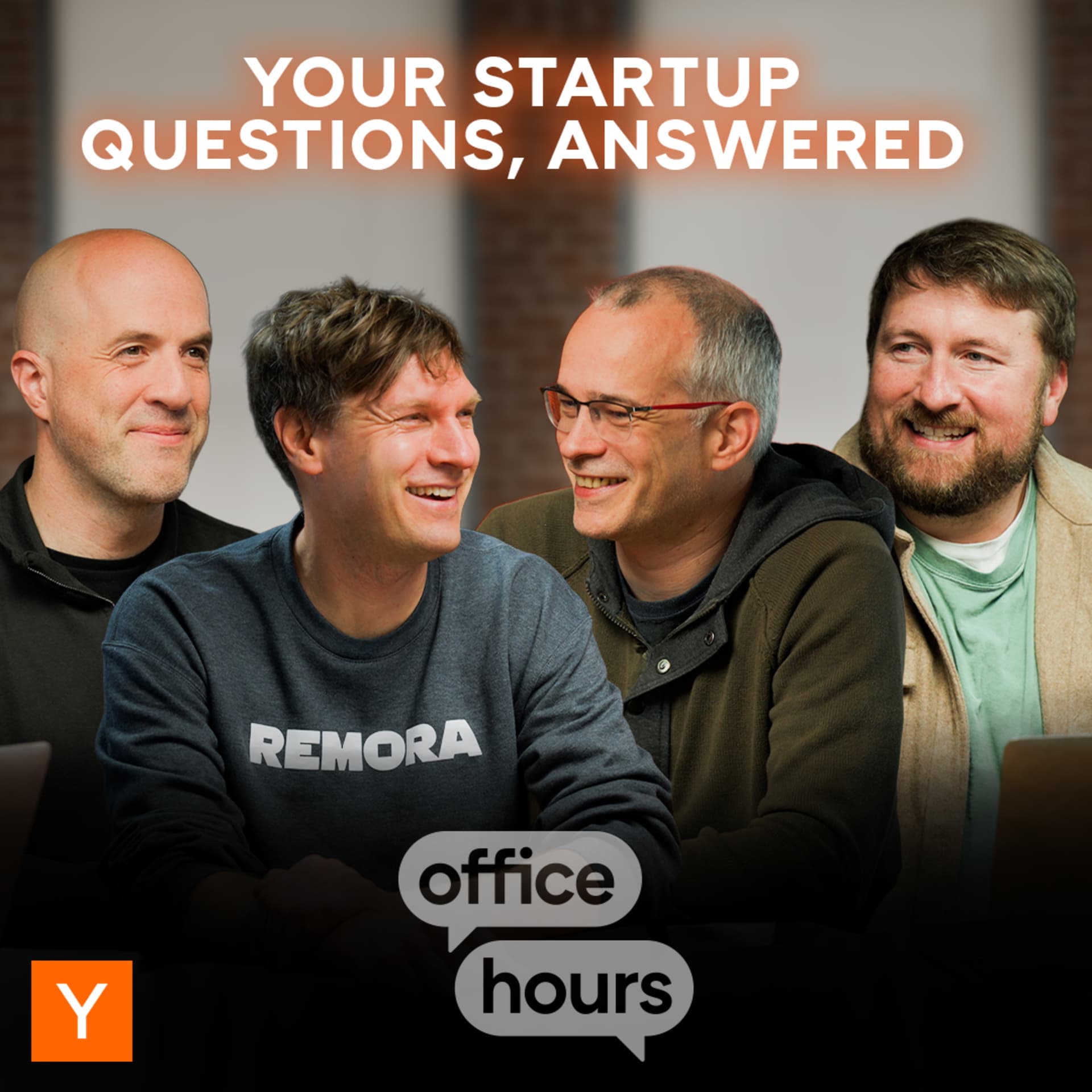
Episode Description In this episode, YC partners Pete Koomen, Brad Flora, Nicolas Dessaigne, and Gustaf Alströmer respond to real questions from founders. They provide insights on key startup challenges, such as market entry for AI products, when to pivot, and hiring strategies. The discussion revolves around how successful teams build conviction, learn rapidly, and make informed decisions as they grow.
---
Key Takeaways
Opening Remarks
- Founders often face two critical questions:
- Who am I selling to?
- How do I get their attention?
- Founders should seek clarity on these questions early in their journey.
Going to Market with AI in Legacy Industries
- Three Approaches for AI Companies:
- Build AI software for existing professionals (e.g., accountants).
- Start a full-service AI-enabled firm.
- Acquire an existing firm and integrate AI solutions.
- Pros and Cons:
- The first approach is most common among YC startups and often the most feasible.
- The second requires significant operational capabilities and potentially manual work.
- The third involves cultural challenges and integration risks.
Metrics for Automation & Growth
- Companies should track the percentage of work that can be automated over time. Focus on increasing this metric rather than rushing to scale revenue prematurely.
- Founders should balance hiring with ensuring enough technical talent is present in the company to facilitate automation and product development.
Early Customer Engagement
- Engaging with early adopters who are passionate about new technology is crucial.
- Pre-qualifying potential customers can save time and facilitate smoother enterprise sales.
Mid-Market vs. Enterprise Sales
- Startups should prioritize learning and rapid iteration over chasing large enterprise contracts initially.
- Successful companies often begin with smaller clients and gradually scale up as they refine their offerings.
Hiring Strategies
- The right time to hire is when founders are overwhelmed and can no longer manage all aspects of the business.
- Avoid hiring for the sake of growth—focus on finding the right talent who can contribute significantly to the team.
Navigating Technical Challenges
- Difficult technical problems can indicate a unique market opportunity that competitors may shy away from.
- Founders should consider breaking down complex tasks into manageable components while still engaging with potential customers for feedback.
Pivoting Decisions
- Founders with traction but slow growth should remain open to pivoting if they observe a lack of market demand for their current product.
- Maintaining conviction and energy is crucial when considering a pivot; founders should be prepared for a challenging transition.
The Concept of a "Great Startup Idea"
- Distinguishing between "good" and "great" ideas often requires substantial customer feedback and validation.
- Founders should continuously test their ideas for signs of greatness rather than simply relying on initial enthusiasm.
Open Source as a Strategy
- Open-sourcing enterprise products can build trust with customers and shorten sales cycles, especially when dealing with sensitive data.
- While not a primary go-to-market strategy, it can be beneficial in niches requiring transparency and compliance.
---
Conclusion The episode provides valuable insights for founders, emphasizing the importance of understanding the market, maintaining flexibility, and engaging closely with customers. Founders are encouraged to be proactive in learning from their experiences and iterating their products based on real feedback.
For deeper engagement, founders are invited to submit questions for future episodes, promoting a continuous dialogue within the startup community.
Next Steps
- Interested founders should consider applying for YC’s next batch through [ycombinator.com/apply](https://www.ycombinator.com/apply).
---
These notes encapsulate the core discussions and insights shared by the YC partners during the episode, serving as a resource for entrepreneurs navigating the complexities of building and scaling a startup.
Written by AI. May contain mistakes. Listen to the episode to check what was said.
Transcript
Automatic transcript. May contain errors.0:00Two of the really hard questions you have to answer as a founder when you're getting started are who am I selling to and how do I get their attention? And those are like the two big magic tricks that every founder has to pull off. When I came to YC, I think I had to untrain myself for a couple of years of like all the learnings I had and how they were not applicable to startups. If you have a lot of time to think about this question, it's probably too early.
0:27Welcome to another episode of Office Hours. Today, we're gonna respond to questions from the YC community, starting with several about AI go-to-market advice. Here's the first question we're going to take a look at. If you're building an AI company in a legacy industry with a long-term vision of fully automating everything using agents or LLMs, but you can't deliver that on day one, what's the best way for you to go to market as a startup? I think that there are three types of companies if you're going to bring AI to your legacy industries. Let's take, for example, the accounting industry. So there are three ways you can do it.
1:00You can either build an AI software company that you sell to accountants. The second one is you can start your own accounting firm and it's sort of full stack or does everything. Or third, you can try to buy an existing accounting firm. There are pros and cons to all three of them. The most common one is the first one. This is how most YC companies do it. They will try to understand the world of accounting. They would try to figure out what are the areas within accounting that are most valuable to go after when you're building AI software. that is also reasonable to build in the first, I don't know, couple months or first six months of the time of your company.
1:36And then they try to sell that service to the accountants and they are not supporting all the other features and all the other things that accounting firms are doing, but they're doing that thing really well. And that tends to work pretty well as long as the thing you're doing is valuable enough for them to buy. The second option is to start a new accounting firm. There are a bunch of ways to do that too. The biggest challenge is the lot you have to do as a company to do that. You have to probably do taxes and closing the books and doing a bunch of less common things, but you still have to do if you want to take on that role.
2:08The challenge here is you probably have to have an accountant on staff or maybe several to be able to do all this stuff. And you'll have a lot of manual work. So if you do it this way, the thing that you would track is the percent of the work that's automated. You want that percent to go up over time. The third way is to buy an accounting firm and then try to ingest AI there. The good news is you get customers to already exist. The difficult thing is you're changing the culture of an existing company. If the bigger that company is, the harder that will be. I'm not sure I've seen a lot of ice companies try the third thing.
2:42The most common one has been the first one and the second one is like a closed second. With the second one, you mentioned tracking how much of the work is being automated. Do you have any thoughts on what they should aim for or how they can force themselves to do it? Because what I've seen is when companies have tried this, they get so bogged down in just the execution of all the work that comes in and being a successful accounting firm in this example, that they never get around to shipping the automation or becomes the second thing that they have to think about every day. I would say this is where software founders sort of like are the most powerful because they can see at all, look at all the works that you do and they can try to figure out what of this work is going to be easiest to be automated like right away.
3:26versus someone who, say, is an accountant funder who's not a software funder might not see that in the same way. So it helps to be a software funder in that category. The second thing I would say is you just have to find a metric. And the failure mode I've seen here is basically it works and you try to scale up revenue too early. So let's say you automate 20 % of the work and 80 % is still manual, and then you're trying to scale up the company. and you're hiring like 20 accountants and then 30, and then you're actually manning an accounting firm with some software. That's just not recommended.
3:58And it's going to be difficult many, many times. And the more, like at Airbnb, we had this metric, which was percent of technical people that work at the company. And the reason we had the metric is at some point you have too many non-technical people. All they do is request things from the technical people and then you can't get anything done. So you need a certain, I think, I forgot the percentage, 30 % or something like that was counted as technical. It's a framework that I find helpful. because then you could make sure that the number of technical people in the company is always enough. You can continue working on automation while you're also trying to do the other stuff.
4:28How about creating a forcing function? You have one accountant and you cannot hire more. Yeah. Then you get more business and you have to figure out how to scale with AI. I think your point about having a number, I don't know how they did exactly at Airbnb, but that's apparent and visible to people, maybe that helps kind of put a foundation on the culture of the business of like, this is really important to us. All of us are looking at this. We want this number to go up. And if I was to say a CRSA investor, and that would mean one of these companies, I actually care more about the trajectory of the automation rate than the overall revenue.
5:00Because like, yeah, there's many accounting firms out there. If you start an accounting firm, you make a lot of revenue. Like, does that mean you can raise a CRSA by a software investor? It's like, not really. That's not exactly the thing you're proving. You're proving that you can actually write software to automate a bunch of the tasks. So I'd rather have a slower growing firm or company where there is just more automation and there's a clear track record of them doing more automation or using more software every month. I worked with a company in the previous batch, the Spring Batch, which was just now wrapping up, called Vessence that are building software for lawyers.
5:32And neither of the founders has a legal background. And so the way that they got started before YC was they found a large law firm in Stockholm that was so excited about the idea of using AI software that they let the founders work out of their office for several months. And that's how they built their MVP, which seems like a really great path for founders that are excited to work in a legacy industry, but don't have as much personal exposure to it. Yeah. I think also if you're in the first category, when you sell to, you sell to, say, an accounting firm or a law firm, you want to find law firms and accounting firms that are with a founder or decision makers really, really bought into helping you and getting things done.
6:12and sort of like they themselves are empowered and incentivized to increase the use of software in their companies. And it's hard. Like that's not easy to do for your first customer. It's like the stage even before the early adopters in the crossing the chasm model. It's like the ones who will adopt it before it even exists. Yeah. I think a common thing here is just doing really good. So like as you're reaching out to customers, have like a lot of pre-qualification or qualifying questions to sort of qualify someone in or out from being that person. Like, do you know how someone who's going to be highly incentivized, kind of excited about doing new software, an early adopter, can you figure out how the pattern of those people look like early on?
6:51I think that's pretty important because otherwise you can drag into enterprise sales. So drag into sales, they'll take forever. And you actually don't know if these people are going to be adequate or not. All right. Let's take a look at another question. Enterprise AI plays like Viva or Palantir can take time. There's not that many buyers. The sales cycles can be really long. Adoption of new products can take a great deal of time in those markets. Meanwhile, investors are impatient for growth. They want to invest in companies that are growing very quickly. In today's AI gold rush market, should companies start out in the mid-market?
7:25Should they think about that being the initial place to go where maybe the TAM can be a little bit larger, maybe where the sales cycles can be faster? How should they be thinking about time to grow versus long-term defensibility? I'll take a swing at this one. So I think early on, and this is assuming that the company asking this question is like fairly early on, the most important thing is the pace of learning. How quickly you're learning what the customer wants, what the user needs, what their problems are, what the really pointed pain is versus the more dull pain that they're just kind of tolerating.
7:58And so oftentimes when I meet with a company that may want to go super enterprise from the get-go, which these enterprise software companies are not so different from like the moonshot space things we fund sometimes, where, you know, putting a satellite in orbit is not so different from landing like a half million dollar ARR contract with a big company. And so if you kind of think about it that way, the advice to the space companies is always, well, let's find something smaller that we can wrap our hands around and be really successful with. It's the same for a software company because it'll help them learn a lot faster, get better feedback, and also put themselves in a better posture as a startup to make changes, iterate, ship product, talk to users, and so forth.
8:40Whereas if you go straight after the big guys, unless you have some special in from the get-go that'll help you short circuit that sales cycle, you're just not going to learn as quickly as the other companies that are interested in that industry. I would put maybe a caveat here. I think there are two categories of companies. There are the companies like even my company, Algolia, that kind of like that kind of co-host over time, starting with the long tail of customers. And then as you, the product matchers, as you can address more use cases, you go up market. And you end up with these multi-million dollar deals.
9:09But on the other hand, sometimes you have a company whose the problems they are trying to solve is only an enterprise problem. And if they are trying to sell to their batchmates or small startups, I mean, they don't have the problem. So they don't have a choice. They have to go to start high. Now there is like difference between mid-market and enterprise. That's very fair. And probably you want to go after the smallest company that has the problem you try to solve. Or sometimes it's reducing the scope dramatically. Maybe you can land with like one or two users that work at the enterprise and get something that's useful.
9:41It's just a much more narrow product maybe is the way to get in and have a shorter sales cycle. I would say in addition to picking the right segment, which sounds like mid-market is probably the better one or more promising one, is to qualify the people you're selling to really well. A lot of part of industries are trying to buy ASR for now. Enterprise, mid-market, small companies, everybody is interested in this. But you still have to qualify the individual. selling to a person or a team. You have to know that they are empowered to make the decision, that they have incentives to make these decisions and the consequences of buying the software.
10:14And you have to be able to meet them and kind of talk to them and make sure you have an actual interaction with them. A lot of founders should think of segment before qualification. And I think sometimes just the right person is more important as long as they are empowered. I've seen buyers at mid-sized companies move really fast if you find the right person. But enterprise, the challenge, like you said, is like feedback cycle is slow. They make slow decisions. And then founders can get bogged down in like a multi-month sales cycle. And you actually don't know in the end if it's working or not.
10:45Thank you so much for that question. For our next question, the founder actually submitted this over video. So let's take a listen to that. Hey, should I hire a growth hacker, a communicator, a sales, an SDR, etc.? How should I try to replicate those employee by AI employee? I know there's a lot of solutions, but I'm still not sure what's the best approach here. All right. What do we think about that question? So I'm pretty bullish on AI sales software, but I will say that AI SDRs tend to work well when they're plugged into a sales process that's already working well. And where I haven't seen them work well is when founders sort of turn to an AISDR as the solution of last resort, where they're just totally unable to sell their product.
11:35And they think maybe AI can solve this problem for me. And I haven't seen that work. I think the hard work of figuring out how to sell the product is still very much on the founder. When I came to YC eight years ago now, I spent the last five years working on growth at a consumer company. and I think I had to untrain myself for a couple of years of like all the learnings I had and how they were not applicable to startups. And I think a lot of the tools people are building, they fit great into like bigger companies since things are working. And most of the growth advice is the same for consumer companies and they don't really apply to startups.
12:12So if you haven't figured out things are working, if you don't have hundreds of customers, like it's unclear if it will work. And if it's working, it might be working in the wrong direction, sort of like it's sort of like You do a bunch of progress that actually doesn't teach you anything. Two of the really hard questions you have to answer as a founder when you're getting started are, who am I selling to and how do I get their attention? And those are like the two big magic tricks that every founder has to pull off in sales. And once you know the answers, it's a lot easier to point an AISDR or an agent to help with that, right?
12:46There's a lot of schlep work once you've figured those things out to find these people and to get their attention. But actually figuring out how to do those things the AI has not actually been that helpful with yet. The fun thing is that you can actually adapt that advice for the AI, SDR companies. In the sense that if they go after the people who are not able to sell their own product, there is a little chance that they can do better. And these customers are going to churn. A lot of revenue fast, but mostly churn. And I think that has been the learnings, actually. The ones that I know, that we fund to some of these people, is that they will probably tell you that when we sold to startups, trips, they were churned.
13:22It's a real learning that they have. For them, the goal is to find the people who have a good product, who can sell it - Who figured out the magic trick. Exactly. And then they can scale that with AI. It's funny. It's not so different from the advice I think we've been giving founders forever about hiring the first salesperson, which is it's almost always too early to hire them unless the founder has already figured all this stuff out, how to get attention, what are the objections we're going to get. And so the same advice of like, you want to hire a salesperson when it's an execution focused experience and they're just kind of running the playbook that you've already put together.
13:54It's probably that times 10 with these new AISDRs and some of these new roles. And I think that founders should be curious enough to learn all of these jobs before they scale up or really try to hire these teams because VP marketing is like notoriously high churn job. It's not because the VP marketing folks aren't good. It's because the founders have the wrong expectations of what those people do. And they haven't been curious enough to learn about that job. And it's like, well, harder to measure than engineering or something else. So I'm a huge fan of like founders being curious and really trying to learn the job first before they hire a bunch of people.
14:29That's a great question. Thanks for asking that. Okay. Here's our next question. Should we startup founders spend money aggressively now to gain a temporary edge or wait for the next model leap and try to make what we're doing free and more accessible? That's a good question. I think there's maybe two aspects to the questions I'd like to address. The first one is these founders, they should ask themselves, am I doing something, building something that's going to be irrelevant once GPT-5 is released? Or am I doing something that's going to become much better once I can leverage the new AI models?
15:06And so of course if you are just building something that's solving for the pains that GP5 is not yet solving, it's probably a bad idea. Now let's say you are in that second category and the improvement of models are just going to make your own product better, should you wait or should you invest and work on it? I would argue that if you do invest on it, you are going to learn a lot from the process and once the models are going to be ready, you plug them and your product is going much better day one. So indeed you have maybe wasted, I don't think that's the right word, but maybe overspent a little, but the learnings are worth it.
15:42That's why you do it. We had these experiences this year with Cloud Sonnet, right? When that model came out, a lot of companies that were building say internal tools were like suddenly working and they weren't really working before. So we've already seen this before. CodeGen is a great example. Like all these CodeGen tools, like they were barely working and with the new models. Magic. All right. Thanks for that question. All right. For our next questions, we're going to talk a bit about pivoting. We got several questions from founders about that. First up, when should you consider pivoting if you've got some traction?
16:14A lot of times when we think about traction, it's, oh, things aren't working. You're stuck. We need to pivot. But what if you have some traction, but it's not strong enough and you wonder about that? When should you consider pivoting in that situation? Probably the most difficult situation you can be in right if it's working it's working easy not working obviously you have to change something i can see of one of my companies who went through that exact journey uh fire call so fire call is a way for companies to uh simple open source product that can help a lot of companies to extract data to extract information from any website super successful right now a lot of ai agent customers and so on but before that they were working on another product called mandable And I think that when they actually pivoted, they already had hundreds of thousands of dollars of AR.
17:01So significant traction. Not like just 200 bucks. Actually real customers. And big logos too. At that time, they were doing some Q &A on top of documentations. And I think in their case, what they saw is that their growth was relatively slow. They were seeing all of this need. from the market on the side and what happened is that as part of building Mendeable they ended up working on the crawler because they couldn't find any tool out there that could solve their own problem. So they built it for themselves and as they were chatting with other founders they realized that everyone, every AI agency company needed that crawling function and they ended up realizing that their product, the niche thing inside the bigger Mandable thing, was actually way more valuable than Mandable was.
17:58And so they experimented a little. It's not like they moved from idea A to idea B overnight. They experimented with that component and it took off and rapidly they decided, okay, that's the company. Big leap of faith, like hundreds of thousands of revenue, then you start from scratch. but it worked out so well for them. Was there like a moment or an observation that they had that led them to observe that this is the subset of our product that we should bring to the fore? I don't think it's a formula. I don't think there is an algorithm. If A and B then do that. I think it's more like a deep conviction you build for yourself coming from a lot of conversations you are going to have.
18:42I mean, in a way that happened to us at Algolia when we started our very first product was an SDK that people could embed directly in their mobile app on device. And we got some revenue, nothing compared to Mandable, but like a few thousand dollars a month. And we kind of like get that feeling that it was very hard sales, like things were slow, people were not really valuing the product. And at some point we realized, okay, we could build a lifestyle company, but that's not what we want to do here. Let's change something. That was easier for us because lower revenue, But for Mandable, I think it's more like it's a company, it's founders that are very well connected with a lot of peers.
19:21And I think that's what gives them that internal conviction to actually change something. I love something that you said, the question of like, are people really valuing the product? I think that times when I've been in office hours and maybe sometimes we fund people and they already have a little bit of traction and they come in. And as we talk to them and kind of learn about how they talk to their users, we find out that they're not talking to their users or they don't really know much about them. And so there's kind of a gentle urging the founders, maybe not so gentle sometimes, to go and find out how much they value the product.
19:52And oftentimes, they don't value the product very much. And so that's great fuel to encourage people to dig deeper and find a better version. An example that I worked with was Greptile from the Winter 24 batch. When we funded them, they had a few thousand dollars of MRR, and they were feeling awesome about this, right? They went from zero. They had dozens of customers paying them. The numbers were going up all the time. And I just kept urging them to go talk to the users and try to find out which ones really valued the product, like you said. And I remember they asked straight up in an office hour, shouldn't we just grow this number?
20:27Like, let's just make number go up. Why do we need to do all these interviews? And after they talked to enough folks, they realized, oh, like, no one person is saying the same thing about our product. It's just kind of a disorganized relationship between what we're making and how people are interacting with it. And we need to get it more organized and really focus on one or two of these. And they've been able to do that and grow, but it's about, are they valuing the product? One more thing I think about pivoting is that it's a very vulnerable step in a company. It's one of those moments where companies fold and they just give up.
21:01They're like, we've tried two or three things. We're just going to give up. Nothing is working. and when you are asking yourself the question should we pivot you have to also be pretty certain that you have the energy to do the pivot because the pivot is a hard one because you have some existing stuff that you built to pour your months or years into something it's not working and now you have to do something else so you have to first be like okay I have the energy to keep going and trying to do this and it'll be an uncertain time for a while so you have to build a conviction you have to have the energy and I think there's frameworks that we can help with on how to do it.
21:33But at the end of the day, it's sort of like, it's easy to give advice in the pivot, but you're literally starting from scratch. And it's very hard for us. A lot of founders come to us and be like, is this a better idea or this is a better idea? And I'm like, yeah, if you give me seven ideas, I will give you my subjective opinion of which one is better. But I don't know. I'm not the customer of any of them. And you should go and validate the ones that you think are the best ones. The harder one with pivoting on the framework side is to be like, here is a new idea and they come with one idea. And if I say, no, I think here are all the reasons why it's a bad idea, then founders get demoralized and be like, well, they don't want to work on anything because the one idea we had wasn't good.
22:08You don't think it's good. Our user Gustav doesn't think it's good. Yeah. Or just like the feedback we got from people is that this isn't good. So it's much better when you're pivoting to have a range of different ideas exploring. So you can find conviction around something and be fine with throwing out a few of them. So that's one framework It relates to sort of like finding a better idea. It also relates to sort of like finding the motivation. I worked with a company in the fall batch that spent the entire batch sort of wondering, should we pivot or should we not? And they had a few thousand dollars in MRR and they've been working super hard on sales and it just wasn't turning into anything real.
22:42And they ended up pivoting right after the batch ended to a like open source billing framework called Autumn. And they have far less traction now than they did in terms of dollars. But what they do have now is conviction and you can just hear it in their voice. And that's like, it feels like the higher order bit where the actual leading indicator that maybe you should pivot is you just stop believing that what you're working on is gonna work out. All right, thank you so much for that question. YC's next batch is now taking applications. Got a startup in you? Apply at ycombinator.com slash apply.
23:14It's never too early and filling out the app will level up your idea. Okay, back to the video. Okay, for our next question, a founder asked, when should you kill a good startup idea to find a great one? And furthermore, like what is a great startup idea anyways? It's a hard question to answer because you don't actually know that whether it's good or great in that moment, usually. Like you don't know if a great startup idea is great until you've truly gotten people to give you the feedback to say that it's great. So it's just hard to know that. And I think it's more like a hypothetical question, assuming you have all the answers at the time.
Read the full transcript
23:49And to me, pivoting is a process. It's like frameworks and process and you do work, it's not like knowing all the answers in the moment of asking the question. It comes back to what we're saying about conviction. I think the good idea may be the one where you have a little bit of revenue, but maybe that's nice to have. And the great idea is the ones that you're so convinced because you get these customers who need you every day to solve a real pain. In my early days of tinkering with startup ideas, I had many great ideas, but they weren't so great after all because I wasn't actually building anything or weren't showing it to any customers.
24:20So in the end, they weren't great. I kind of wonder if there is such a thing as a good startup idea. Like I feel sometimes like they fall into two buckets. There's great ideas and then everything else, which like isn't going to yield a huge company, which so technically they're bad startup ideas. Anything that's not a great startup idea is the opposite, which would be bad. And so I think, you know, if you're like, oh, this is a good startup idea, you need to really be like pushing on it for signs of greatness. You know, like you find a rock and you're like scrubbing it to see if there's a diamond in there.
24:52And if you're just like, look at my rock, look at my rock all the time, it's not enough. You need to really like put it through its paces. And that's like being aggressive on like sales. It's being aggressive on what's the wackiest version of this we can build in a couple of weeks and see how people react to it. And just always testing for signs of greatness. And be honest with yourself. It's easy to believe something is great, but actually you believe so much it's great without any confirmation. You don't want to listen to anyone who is going to tell you anything else. Yeah. I think this is a really important question.
25:21I was asked this morning, I did a phone call to make an offer to do the summer batch with a founder and it was great. All those calls are always really fun. And they asked me afterwards, what is the difference between like the tip top best performing founders during the batch and the others? I thought about it for a second. And the thing that came to mind was the really great people are obsessed and really focused on finding a great startup idea and making sure that they're on that path and working on something that could get really big. And they probably don't think it's great. They don't say that for a long time.
25:52Like, I have a great idea is not something that founders would have great ideas say, generally. Right? The canonical Steve Jobs thing is like, here's a dopey idea, right? He would say that, even though maybe he thought it was great. But yeah, they don't talk about it that way. All right. Thanks for that question. For our next question, we're going to talk about technical challenge. So is it ever wise to pivot away from an idea because it's proving too technically difficult to build? For example, maybe the idea is validated from talking with potential buyers and you think the product would sell really well if you can just build it and it works well, but you can't seem to get it to that threshold just yet.
26:27How should founders think about that situation? Well, actually it's the opposite. Like if something is really hard on the technical side, I mean, I think that's an even better idea. Like nobody else is going to try, right? If it's hard, like the bar is so high, nobody tries and nobody does it. If you have the courage, the courage to actually do it, if you have the skills to do it, I mean, that's the best idea for you ever. So definitely go after it. I had this experience, this badge, that was, I mean, crazy enlightening for me. It's a team that was building some software for science things. that was kind of working but not exciting that much, like the market was not taking.
27:08And then they pivoted to a company called Bramante Biologics and they are building micro factories to manufacture drugs in small volume. And the more we discussed about it, you could see their eyes light up. You could see how convinced they were that it was the right thing to build. And each time we were discussing about it, we were seeing all the challenges one after the other, on the tech side, on the regulatory side, like so many things to overcome. And you could see like, yes, let's do this. Like the world's needed. We should definitely do it. I mean, I love that energy. And that idea is probably one of the most difficult I've seen a company try to tackle.
27:52But if it works, it's going to change the world. What if it's a software difficult idea? Like it's like it would take, you know for a fact, It'll take you and your co-founder six months to build it. How would you push that? I think sometimes when you run into that, you can think about ways to reduce the scope a little bit. With my own company, Perfect Audience, from years ago, we knew that we needed to build our own real-time bidding platform that was connected to all the ad exchanges and all these integrations. It was very overwhelming. We didn't even have any idea how to build it. So first, we found another company that had one of those products and an API.
28:26And we built a great front end for it, like the best front end for controlling these types of things that anyone had made and took that to market. We built like a custom billing system and that got us a bunch of users and helped us like get going and get in motion. And eventually we had the understanding and the wherewithal and the connections to then go hire the people to do the really hard technical stuff. So we kind of, you know, we're able to chop it out into pieces that we could tackle that way. You have to be careful. like that's a question that is a little dangerous because some people could use that as an excuse to just work on their idea for six months and stay kind of like in their garage or somewhere.
29:03It kind of happened to us at Algolia. I mean took us six months to get the product in a good shape because it was like a low-level search engine actually pretty difficult technically to build and we I would argue we were lucky that actually ended up working really well. But if I were to go back, I would spend so much more time with customers. Even if the product is not ready, you can learn so much from learning about their problem, like living their life. And so I would do that much better now. So yeah, as long as you don't use that as an excuse to not speak with your customers. Optimizely, the hardest part of building our first product was building this website editor that would work with any other website and would allow a non-technical person to go in and build an A-B test without writing code.
29:51And that ended up taking us at least six months, I think, to build. But the way that we cut the problem down into something smaller was we built the first version for ourselves. So my co-founder Dan and I started with the simplest thing, which was a little bookmarklet, actually, that would pop open a little text field on any website that either he or I could use to just write JavaScript manually that would get run on the website. And that was just enough for us to go in and get some consulting contracts to build A-B tests for other companies. And so that was how we ended up talking to customers, was we just built the jankiest possible version for us before building the public version.
30:33At least you knew what you were building and why. Yeah, it turned us into our own users. I mean, it was super useful. All right, thank you for that question. All right. So for our next question, a founder asks, what are some guidelines or metrics to know whether to start hiring for your startup? And I assume this means like hiring people beyond the founders, early employees. When's the right time to do that? And how do you know? And how do you tell? if you have a lot of time to think about this question it's probably too early if this is something that comes to mind every day for you it's probably too early because it's the right time to hire when like things are so busy that you can't even find a slot in your calendar to do an interview with a candidate so when things are coming at you because things are starting to work you're so like at the breaking point things are breaking like you have to work way out of like normal schedule or your employees have to work way out of your normal schedule to even accomplish the things you're currently doing then it's the right time to have started now the question is like how easy it because it takes a while right so um that's probably too late in a sense um because you have probably three months before that person is starting and then things are going to break even further so like what do you guys think it's like an it's an early indicator of that moment is that there's a specific thing in the company that's breaking or about to break it's either engineering or sales or onboarding.
31:55It's like specific things are breaking and if you have early indicators that they're breaking and you have to be honest with yourself, are these early indicators? Are they just my hopes that they're going to be early indicators? You have to be honest with yourself that this is actually going to happen. That sounds like the right time to start interviewing at least or putting out job racks. The hardest thing about startups is that it is really hard to hire. You're not particularly competitive as a startup that just have like two founders and a few customers. So it's not going to happen right away.
32:23You're going to start with your personal network. And often the first couple of hires are people that you, they already know your thing. You can only kind of convince them to come in and meet with you. You think you can convince them to join you because they really trust you. So a lot of these early hires aren't people that hire cold anyway. They're people that sort of like already know it, which actually I think if I think about the question of early indicators, maybe it's less of an issue because they're more standing by than you might believe than like a later hire and you have to hire cold from some other way.
32:52I'm trying to remember my experience at Algolia. It was kind of like the different phase of the company. Initially we hired just a few people, like the right thing to do as you're looking for product market fit and then we got product market fit and then we never hired fast enough. And then we were way larger and then we were like oh we have hired too many people. These three phases, like the pre-product market fit, okay, let's only a few people and then we waited too long to actually hire and we ended up like we were in like nine people, 1.2 million a hour before AI. And our life was a nightmare.
33:28But when I remember that time, I remember about it like very fondly. It was probably the best time with the company still, even if it was so hard. It seems like hiring is one of those things that you can grab onto and be like, my company is successful because I've hired people. And it's a dangerous thing to start thinking about hiring as a success metric. Hiring is not a success metric at all. It's sort of like a way to not go under or have a functioning company fail. I think that's changed now. We see so many companies being proud to reach some kind of revenue with people as possible. It's cool.
34:00That was not the case 10 years ago. It's a meme now. It wasn't a meme. 10 years ago, it was like the number of employees was the metric people were. We have multiple Weiss of Companies have said we want to be a billion dollar, 10 person company and we have six slots left. We're far from the days of I need to hire enough engineers that I can flip this to Facebook for a certain amount of money. That's gone. When I have founders that are working in the batch who ask if they should hire, almost always the answer is no. Founders will make the mistake of thinking it will speed them up, but in reality it ends up doing the opposite.
34:31it. But the exception of that rule, I call these opportunistic hires where it's your smartest friend happens to have graduated last month, right? Or left his or her job or whatever. And you know that they, you know, they're going to work well with the team. You know that they're incredibly good and you bring them on because it happens to be the right moment. Yeah. And I would just qualify and say that those opportunistic hires are great when there's a superlative involved, like smartest friend, best, greatest, when it's worked at big company X that is impressive or something like that. Those are not opportunistic hires.
35:08Those are bad hires. If you think they were great, but you're not super sure, that's a little dangerous. Yes, probably not. All right. Thank you for that question. All right. Here's one last question. When is it a good idea to open source an enterprise SaaS product? What are some advantages and drawbacks of open source? I think that's an interesting question. We've worked with a lot of open source companies at YC, but most of them are dev tools because that's very common go-to-market when you're selling to developers who really care about their products being open source. You can look at the codes, they trust them.
35:40And it's easier also when you're yourself a developer because your customers are kind of like the same people, the same persona as you are. I do think, however, that it's sometimes is useful for enterprise, have that company in mind, Matt Blum, who is building an open-source EHR. And I think for them, being open-source was not about the go-to-market in the sense of selling to developers. It was really about creating the trust at their customers, in these enterprises, and shortening the sales cycle by maybe a year for such a kind of product because it was open-source, because these enterprises could trust them.
36:17So even beyond the DevTool approach, being open source was super useful to them. They were not chasing stars or chasing a huge community, just using it as an aspect of their sales cycle. 20 is another one where they are doing an open source CRM. So same thing in a way. CRM is pure SaaS product, not targeting developers at all. And still some Some people may want to use that product because they can expand it, because they can trust it, because they can dig in the code if necessary. They'll never do that. But just a level of trust that it generates. Knowing that they can is enough. Knowing that they can is enough.
36:52And also it helps with some silly things like compliance stuff. If you're open source, you can sell a host. So no question about sending your data to some random startup on the cloud. So all of these reasons are good reasons for SaaS product to open source. I don't think that it's going to become kind of like the main go-to-market for SaaS products, but I think it makes sense for some difficult sales where there's a lot of concerns about privacy and sensitive data. Self-hosting in the world of AI seems more common than maybe in the world of SaaS. Yeah, it's all about like, are you okay to share your private data with a third party?
37:29And if people don't share, like don't trust open AI, they're not going to trust the small startups you're starting. Yeah, that is interesting. I feel like years ago, pre everyone working with different AI products and building AI products, the request from a customer to self-host the product or it was treated as like, oh no, that's impossible. Like what a crazy ask. We can't do this. Whereas now we have a lot of small startups that find ways to do it quickly and efficiently. It doesn't even come up in office hours sometimes. They say, oh, they asked for this. So we built it. And now Now they're running it locally and it's great.
38:06Yeah. I think that's progress. I mean, there's some drawbacks too. Like the self-hosting comes at the cost. That's right. Clear cost. You have to charge a very high price for it. That's right. Absolutely. Thank you so much for your questions. If you'd like to have one of your questions addressed in a future episode of Office Hours, leave it in the comments. Thanks. We'll see you on the next episode.
From the publisher
Every founder faces moments where they’re not sure what to do next — such as how to go to market with AI products, when to pivot, and who/when to hire.
In this episode of Office Hours, YC partners Pete Koomen, Brad Flora, Nicolas Dessaigne, and Gustaf Alströmer answer real questions from founders and share stories about how great teams build conviction, learn faster, and make better decisions as they grow.


