

 Young and Profiting (YAP) with Hala Taha: Entrepreneurship and Self-Improvement Podcast
11 Nov 2026 · 49m

 Add vo to ChatGPT or Claude to ask about everything you hear
vo listened to this episode to put together the overview and transcript, so there may be the odd mistake.
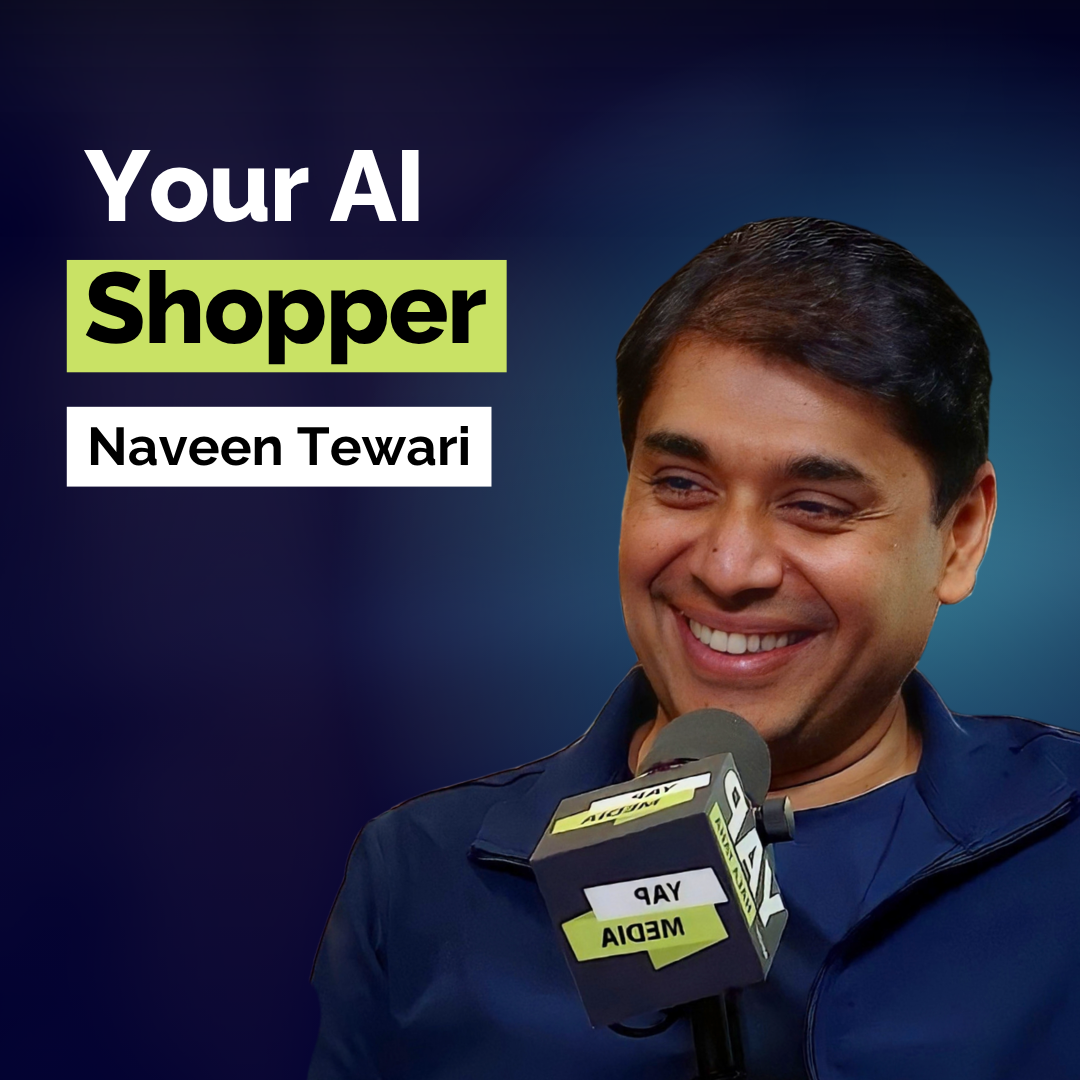
Agentic commerce—how AI shopping agents will replace parts of traditional e-commerce by acting on a user’s behalf, using personal context, and optimizing for better decisions and savings. Naveen argues brands must do “agent engine optimization” so agents can understand inventory, brand ethos, and how to present products.
Naveen Tewari is founder/CEO of InMobi and Glance (both described as unicorn companies built in India). InMobi is an early mobile advertising layer; Glance AI is an AI-native “personal shopper” app.
E-commerce will be replaced by agentic commerce; agents will support humans in buying (not fully take over); marketing must target both agents and humans; incentives must be transparent to avoid loss of trust; privacy is central to agentic solutions.
Glance uses “digital body language” (face/hair/body structure) to find trending products that fit; it can save money via cards/loyalty; it can extract products from a TV scene; Apple/Siri integration enables shopping via voice; Alice + Olivia is an “agentic brand” with virtual try-on and agent-driven product selection.
0:00Hala Taha: Today's episode is sponsored in part by HeyGen, Shopify, Indeed, and Northwest Registered Agent. HeyGen helps you create AI avatar videos without being constantly behind the camera. Get your first three videos for free at heygen.com slash profiting. Shopify is the global commerce platform that helps you grow your business. Start your$1 per month trial at shopify.com slash profiting. Indeed helps you attract, interview, and hire all in one place. Get a$75 sponsored job credit to boost your job's visibility at indeed.com slash podcast. Northwest Registered Agent gives you the tools and guidance to build a complete business identity.
0:39Hala Taha: Start using free resources at northwestregisteredagent.com slash yapfree. As always, you can find all of our incredible deals in the show notes or at youngandprofiting.com slash deals. Because there is such a big change in the world on technology, you know, you had this massive shift of AI coming in. everything in the world is going to change. Our belief is that e-commerce will now be replaced with agentic commerce. Naveen is a technology pioneer who believes AI is about to reshape how consumers discover products, make decisions, and interact with brands. Today, he's helping define an emerging category called agentic commerce.
1:17They kind of analyze your face, analyze your hair, analyze your body structure, and then basically go search the products that are trending out there, and then search for the products that fit best for you.
1:28Hala Taha: Couldn't there be some incentives that might be unaligned in terms of the brands like working with the agents and being like, hey, like I'll give you 10 % commission if you push my product. Those are things that are going to happen in the world. No business can run, no technology, no platform can run if it doesn't make money. But the very important criteria here is how is the internet and shopping going to change when people need to market to agents? That's a whole new phenomena because agents will be supporting humans in their buying process. Just like many years ago, everybody had to do search engine optimization.
2:02Every brand and every retailer has to do agent engine optimization. The more you train the agent, the better it is for the brand because...
2:10Hala Taha: What's up, young and profiters? In this episode, we're exploring the next major evolution of the internet and consumer technology. Joining us is Naveen Tawari, founder and CEO of Inmobi and Glance, two unicorn companies built in India for the world. Naveen's latest company is Glance AI, which is an AI-native platform exploring a new way for consumers to discover and engage with products through agentic commerce. In today's conversation, Naveen shares how he stays ahead of disruption, what he's learned from building through failure, and how entrepreneurs can prepare for the next era of AI and commerce.
2:50Hala Taha: Naveen, welcome to Young and Profiting Podcast. I'm so excited to be here, Hala. I am so happy that you're here. I feel like we're going to learn so much from you. I love talking about AI. I feel like all the things you're doing with AI is just so interesting. So we're going to dig into that. But before we do that, I really want to understand your journey as a founder. You actually have two unicorn companies. You were one of the first unicorns coming out of India. And you basically build companies for the world from India, which is just so cool and unique. And you started with InMobi. That was your first unicorn.
3:26Hala Taha: I want the listeners to understand, like, what does InMobi do? And I really want to hear the story about how you pivoted when you first started, because when you first started, you were focused on SMS. Yeah. You saw the future of mobile. You did a lot of research. I did lots of research. Tell me about it. Well, you know, when we started, the mobile internet was just taking off. So we weren't sure whether to bet on it or not. Like this is like 2007, 2008, iPhone had just come out. And, you know, we were trying to place the bet on mobile internet, would it take off or not take off? very soon to realize, wait a minute, there is a huge thing coming our way, and that's mobile internet.
4:06And so as with any economy, if you want a medium to reach everybody in the world, if you want the medium to be popular with the whole population, then you need something to make it free. And that's where advertising platforms come in. And so therefore, we decided that, hey, let's support building and supporting the mobile ecosystem. And we built in Mobi as one of the earliest players in the world on mobile advertising. And we are one of the largest players today across the world. And you're right. We build our companies from India to the world. We like to use the expertise that is based out of the country.
4:50But we believe that, you know, technology has no boundaries and therefore they should be all pervasive. And, you know, today, you know, U.S. is our largest market. Oh, wow. We did not really know, by the way, Hala, that, you know, we would become a unicorn. We didn't really know what it meant, to be honest. It happened too quickly. And when it happened, we clearly did not know that we are the first unicorn.
5:16Hala Taha: Oh, really? You didn't know? Yes, we did not know. Like when you start, like you're like, OK, let it be a little, you know, we'll do well. That's it. Right. Who like you're just trying to survive. Yeah. You're not really trying to figure out, oh, I have this big, massive vision. And, you know, you're just trying to survive and, you know, do a few things. And they happen, you know, they go well and then say, hey, wait a minute, let me do a little bit more. Let me do a little bit more. And so, you know, you kind of expand the, let me say, the audacity of what you can dream of. Yeah. With time. And that's pretty much what happened.
5:49And soon enough, you know.
5:50Hala Taha: And now you're expanding into AI from the mobile Internet, which is like the next big shift. And so just to be clear, you basically subsidize the mobile Internet with advertising and you are a layer and you work with other companies that distribute it for you. And I love that part of your model that like you actually you're not in the business of distribution. You are the layer. Talk to us about why you did it that way. Well, so on the advertising side, what we do is we partner with developers first. And we go to the developers and say, hey, do you want to create a great application? And as InMobi, we'll support it as a layer so that you can make money out of it.
6:35And you can support it and you can create better products for consumers. And so that's what InMobi does. Now, when we moved to AI, as in Mobi, we thought about the world to say, hey, wait a minute. There's this whole massive world of AI kicking in. And, you know, advertising still has to support this world of AI.
6:55Hala Taha: And now your business model has changed a bit because before you were business to business and now you're catering to consumers. So what are the things that you're thinking about now that you are catering to consumers with clients? So now, as we did this, we also thought about, you're right, we also thought about, hey, wait a minute, because there is such a big change in the world on technology, like, you know, you had this massive shift of AI coming in. So we said, look, we have a very good understanding of, you know, what could change. And we kind of looked very deeply and we thought, you know, the way people shop should change.
7:35and so we went very deep into reimagining the world of shopping and we created a new platform called glance and that's doing phenomenally well because it's a personal shopper and so we launched a personal shopper our belief is that e-commerce yep which has been phenomenal over the last 25 years or so, will now be replaced with agentic commerce.
8:03Hala Taha: Yeah. Where an agent on behalf of Yuhala would actually assist you in shopping. So help me understand, how big is Glance? Like Glance is something that everybody can go download on their phones right now, right? Yes. So we launched about a year ago. We have had massive success in the United States. Roughly today, roughly about 10 million users use Glance and are using it for shopping. They're using it for like making very intelligent decisions. They're using it for discovering great products. We've just been amazed by the usage of it across the U.S. We almost have people do about 120, like call them prompts or call them searches every month on the platform.
8:48So it's just been mind blowing.
8:51Hala Taha: And people are actually purchasing, right? I think I read like 15 % of those users actually go and purchase something, which is so cool. That intent. Yes. And that's what we wanted to see that like, are people going to use this to just like know something or are they really going to convert that into buying? And so, yes, we are seeing people convert that into actual buying. And so that's been really exciting. I want to spend the whole second half of the conversation just really understanding Agentex shopping, how Glance works, how you envision the future. But first, I want to just understand. I'm excited about telling you that.
9:24Hala Taha: Yeah, I'm really excited about that, too. But I really love all your principles as a leader. And I really want to dig deep on that for the entrepreneurs listening in.
9:36Hala Taha: What's up, Yap gang? So I recently caught a really bad summer cold at the worst possible time. It was right before my interview with Gary V. Everything turned out okay, thankfully. But it did remind me how quickly getting sick can throw off your plans, especially when you're running a business. So I've been taking my health routine way more seriously. And one habit that I'm sticking with, it's AG1. It's a daily nutritional drink with 75 plus ingredients, including vitamins, minerals, adaptogens, pre and probiotics, and superfoods, all in one scoop. I just mix it in with cold water every single morning.
10:08Hala Taha: Plus, AG1 Next Gen is backed by four separate gold standard clinical trials with key nutrient levels, improving within three months of consistent use. There's also AG1 Pro, designed to support performance and recovery. It includes five grams of creatine for muscle strength, CAH and B for muscle protection and zinc carnosine for gut health. I can't control when a cold hits, but I can keep my morning routine consistent. For a limited time, visit drinkag1.com slash profiting and get a free immune support bundle including omega-3 fish oil and vitamin D3K2 with your first subscription of AG1 Next Gen or AG1 Pro.
10:43Hala Taha: That's drinkag1.com slash profiting. Hello, young and profiterers. Black Friday is almost here and customers are ready to buy. The only thing standing between them and your business are all those steps you keep overthinking before your launch. And I get it. When I launched the App Academy, I was thinking about everything. How should the website look? How are people going to pay? How is it supposed to build all that? I'm not a web developer. I don't know how to build websites. So I built my storefront on Shopify. Their ready-made themes helped me get up in just a few days without needing to be an e-commerce expert or a web developer.
11:18Hala Taha: and the Shopify checkout made it really easy for people to pay. And with the holidays coming up, Shopify even has an AI assistant called Sidekick that can help you plan promotions and get ready for the rush. So if that business idea is still sitting in your notes app, maybe it's time to give it a storefront. If you're ready to launch your business before Black Friday, go to shopify.com slash profiting to start your free trial. That's shopify.com slash profiting. Go to shopify.com slash profiting today and hear your first.
11:49Hala Taha: Yeah, gang, hiring can be such a catfish. You read somebody's resume and think they're perfect. And then 12 minutes into the interview, you realize, well, maybe not. And that's where Indeed Sponsored Jobs can help. It boosts your posts in the search results and connects you with candidates based on skills, certifications, or location. And the best part is you only pay for results. Sponsored jobs posted directly on Indeed are 95 % more likely to report a hire than non-sponsored jobs. Spend less time searching and more time actually interviewing candidates who check all of your boxes. Less stress, less time, more results.
12:24Hala Taha: When you need the right person to cut through the chaos, this is a job for Indeed Sponsored Jobs. And listeners of this show will get a$75 sponsored job credit to help give your job the premium status it deserves at Indeed.com slash podcast. Just go to Indeed.com slash podcast right now and support our show by saying you heard about Indeed on this podcast. Indeed.com slash podcast. Terms and conditions apply. Hiring now, this is a job for Indeed sponsored jobs. So you created Glance basically as like a project within InMobi and then you spun it out as a company. And you are really adamant about having like a day one energy at your company.
13:05Hala Taha: Tell us about why that's so important to you and how that kind of mentality actually led to the creation of Glance. You know, if you go back like 20, 30 years, companies used to get created and people would sit on those companies and they would continue for like decades. And the reason why that would happen is because the world did not really change. We are now living in a world where the pace of change is faster and faster and faster. So as companies, your time to get disrupted is far shorter. It's not going to be a few decades. It's going to be a few years. So the way we think about this is we like to believe we are a startup.
13:49Doesn't matter how large we are or not. Startup to be is a state of mind. And in that state of mind, and some of the best companies on the planet, technology companies, are always a startup. What does that mean? It means that we always think about the most cutting edge of technology. And we always think about how can consumers gain from it? And can we go and create that for consumers and give it to them? So, yes, we are a very innovative company. We are a chaotic company because we are always on the cutting edge of this, like, things that are happening. And so we get few things right. We get many things wrong.
14:25And that's why it's chaotic because, you know, somebody could sit there and ask questions to me as a CEO and a founder to say, hey, Naveen, what's your five-year vision? I may have one, but it'll change. and when people hear that some are discomforted by it because you know people don't like chaos some love chaos so we have a set of people in the company almost think of them as like being self-selected who love this chaos who love to think about that oh there is this massive change in technology that has just changed that has made the world a level playing field so let's go let's go really fast and build something phenomenal and change the lives of consumers.
15:09Hala Taha: Yeah. And make it even bigger. I love that mentality. And give us some actionable advice. How do you ensure that it's passion leading the way and not process? Oh, my God. Oh, that is such an important thing because I think companies, especially in today's world, if they're process first, I tell you, they're gone. Now, it's easier said than done because, you know, the world has all the books teach you to like have a very solid process to everything. Yeah. I think it has to be led by the founder, by the senior people in the company to enable a thinking of like, hey, what can you do different? What can you change?
15:55Can you be disruptive in this? Like, why should this be done this way? Why are you telling me what you're telling me that has been done before? And what that entails is an ability to fail. So at our company, we don't reprimand anybody for failure. You know, nobody gets crucified for failure at all. Yeah, we love people who succeed, but that requires people to continuously fail.
16:21Hala Taha: One more founder principle that I want to cover before we go into agentic shopping. And we were just kind of talking about it, which is your decision making. I read something. I'm not sure if you made it up or not, but I thought it was really helpful where basically you look at decision making as you've got haircut decisions and you've got tattoo decisions. And I love that because I'm making decisions. All of us are making decisions all the time. And it's such a great framework. Tell us about that. So I stole that from somebody. I heard it somewhere. I really loved it myself. But now I've completely absorbed it.
16:54Hala Taha: Yeah, absolutely. And so I think we all fret too much about the decisions we make. every small decision and you know you're making decisions and everybody's making decisions and so one of the things you realize that if you want to move really fast and one of the things I realized that we were not doing really well a few years ago was we were not making fast decisions you know we would get into a long debate and a lot of conversations and you know people would not make decisions because you were turning corporate yeah can you imagine oh my god oh god yes you're Right. And it was just like, it was painful to see, because for every decision, if there is data to back a decision, that's not called a decision.
17:36That's just like obvious. But the decision is when you, when there is no clear answer. When there is no clear answer for any path you take, there will be pros and cons. And, you know, we are really smart people who tell me the pros and cons for everything, but they would never make decisions. We changed.
17:53Hala Taha: We changed. We realized that there is no decision that's really hard. We don't make as many decisions that are, most of my decisions that everybody was fretting on was a haircut decision. And I can live with a bad haircut. Your hair goes back, right? Exactly. I think I live with a bad haircut anyway, but nonetheless, you know, and then there are a few which are like the tattoos. Few decisions that are very hard, they're not reversible. Those are the ones you can deliberate a little bit longer on. So today I have a thesis at the company that no decision should take more than five minutes. And I know I say that figuratively, But it should be like, make rapid decisions, be wrong, but move, move, move.
18:33Very rarely on very few decisions, we take a pause. And that's really helped the company move really fast, right? So, you know, we would have somebody come to me and say, oh, you made this decision three months ago and it's wrong. So, okay, what's the new decision? Like this, okay, let's go. because all we did, we probably lost like, you know, a couple of months here and there, but we are now on the right path, but we're always moving. And, you know, we're not as bad in like, people don't get bad haircuts all the time.
19:06Hala Taha: You get it a few times, right? So therefore, this thing is only happening a few times. But imagine 99 % of my decisions are being made like in five minutes, typically that day. And so we moved really fast. And therefore, I love that thesis. I love it. And I made sure that everybody in my leadership walks in. I, by the way, you know, if you want a decision-making meeting with me, I have a sofa set outside of conference room. I do that there so that we just like sit there for five minutes and, you know, say bye to each other because the decision, if you want me to make a decision, I'll make that in five minutes.
19:41Hala Taha: So cool. I love that. I'm going to use that in my business. Like, is this a haircut or is this a tattoo? And try to be quicker about it. It works. I tell you, it works. Yeah. It simplifies life. Yeah. And nobody is like too bothered. So we've got commerce, e-commerce, and now we have agentic commerce. That's right. That's the future. Yeah. And really, my first question about this is how, like, talk to us about the difference between predictability and discoverability versus intent. And how AI, agentic shopping, is going to actually transform the way that we shop into intent rather than just like discoverability.
20:22Hala Taha: Yap fam, these days it feels like I'm starting a new LLC every month. In fact, I recently bought a commercial property that has tenants and I wanted to keep that venture separate from Yap Media and my personal assets, which means another LLC. So of course I turned to Northwest Registered Agent. That is my go-to for business formation and registered agent services. I can get an LLC application started online in less than 10 minutes and their filings have been super quick. Northwest also helps you build your complete business identity. They give you a business address, operating agreement, website, professional email, phone number, and built-in privacy.
20:57Hala Taha: And when I missed a step, a real person from Northwest actually texted me to help. Starting another business should feel exciting and not like another full-time job. And Northwest has a lot of free resources that you can leverage for starting your business. Don't pay hundreds or thousands of dollars for what you can get for free from Northwest. Visit northwestregisteredagent.com slash yapfree and start using free resources to build something amazing. Get more with Northwest Registered Agent at northwestregisteredagent.com slash yapfree.
21:28Hala Taha: Yap gang, hiring can be such a catfish. You read somebody's resume and think they're perfect. And then 12 minutes into the interview, you realize, well, maybe not. And that's where Indeed Sponsored Jobs can help. It boosts your posts in the search results and connects you with candidates based on skills, certifications, or location. And the best part is you only pay for results. Sponsored jobs posted directly on Indeed are 95 % more likely to report a higher than non-sponsored jobs. Spend less time searching and more time actually interviewing candidates who check all of your boxes. Less stress, less time, more results.
22:03Hala Taha: When you need the right person to cut through the chaos, this is a job for Indeed sponsored jobs. And listeners of this show will get a$75 sponsored job credit to help give your job the premium status it deserves at Indeed.com slash podcast. Just go to Indeed.com slash podcast right now and support our show by saying you heard about Indeed on this podcast. Indeed.com slash podcast. Terms and conditions apply. Hiring now. This is a job for Indeed sponsored jobs.
22:31Hala Taha: Hey, Yap fam. Whether you're scaling a side hustle or running a full-time business, every single marketing dollar has to pull its weight. That's why successful businesses use CallRail. You can't afford to throw cash at ads and just hope the phone rings. You need to know exactly what is working. CallRail captures every call, text, and form fill and connects each lead back to the specific ad, campaign, or keyword that drove it. Then it goes a step further, sending you summaries, next steps, and automated follow-ups, So you aren't just getting more leads, you're converting them. Better than your competition.
23:07Hala Taha: Over 225 ,000 businesses already use CallRail to capture leads 24-7, qualify every conversation, and turn more calls into conversions. Connect the dots between your campaigns, conversations, and revenue with CallRail. Start your free trial today at callrail.com slash profit. So think of it this way. Let me define how I think about agentic, how I imagine the future. Okay. Okay. Today, the way we make decisions is we do discovery ourselves. We kind of go online, search different places. We read different content. We go, you know, we look at the influencers and the creators we like, and we kind of like zip through a lot of this information.
23:48And then we say, okay, here is what I think I want. Then we kind of sit on that decision because we're not really sure when we kind of like, oh my God. Then when we make that decision, we go like to figure out where can I save some money on it? Can I get some discounts? Can I get this and that? And all of these three steps takes a lot of time for people. So we believe that AI should give a lot of time back to people and AI should save people a lot of money and AI should ensure that, you know, people buy better.
24:21Hala Taha: Okay. So the way this works now is everybody should have their own agent, right? A personal assistant who can assist you in shopping. So the way it works is the first part of this is, hey, let me, if you want something, tell me about it. Tell the agent about it or your personal shopper about it. And the shopper goes out and, you know, explores all the different brands that it can understand. It knows, like you and I probably know a hundred brands. Maybe you know 200, I know a hundred and whatever, something like that, right? Some fees will be a small number. the agent actually knows like hundreds and thousands of brands so then when you say hey i'm looking for this it goes and searches through all of those different and discovers the products from all of those different brands pulls out the right one for you and the way it does that is because the the agent and the the personal shopper actually knows you a lot because you know you kind of talk about why you want something, what is the occasion.
25:23So you'll say, hey, I'm going to go to Greece for my vacation and I'm looking to buy some stuff for it. And now it knows, oh, oh, I'm going to go there in June. And therefore, you know, and kind of looks at, oh, you're going to go to Greece. So you must be looking for these kind of things. Oh, you're going in June. So it's clearly very hot out there. And, you know, and these are the things you want to do. So therefore, it knows the context in which you're asking that question and therefore knows who you are, how you look, you know, what you really like to do in the, you know, what kind of, you know, stuff you like to buy.
25:55So it makes a great decision for you and then selects a few products for you. And when it selects a few products, it basically then puts them on you so that you can visualize them then and there. So this process just takes like a few seconds now. Now when you've seen a few products and you kind of say, oh, I like this. Then it runs around and goes and finds out how can it get you that product in the least possible, it gives you the most amount of saving. So then it goes out and says, oh, you have these credit cards, you have these loyalty programs, let me go save you a lot of money. So in this process, you discovered all these small little brands that you may not have ever heard of, but they're best for you.
26:37It presents the product in you in a way that you have a choice that you can make with a lot of certainty. It tells you why it looks good on you. And then it says, buy it from this retailer or this place and use this credit card and whatnot so that you save money. And all of this thing is done like seconds. And therefore, as you keep on going and as you keep on shopping using your personal agent and personal shopper, it learns. It continuously learns. And therefore, you know, it can tell you, oh, you know, this favorite brand of yours, let's say Alice and Olivia, it just dropped a latest line of products.
27:21You might not even remember that it just dropped its latest line of products. And it'll say, hey, do you want to just see three of those products that they dropped that I think are best for you out of the many that they've dropped and then show it to you then and there. So a lot of these are ways in which the agent shopping will come in because, you know, my view is we are fundamentally adding intelligence into the way people shop and that should change the way the world shops.
27:46Hala Taha: Yeah. And it's going to happen so quickly. And when I was learning about it, the key difference that I see with it is the context, right? So before when we'd go shopping, I might go on to either like a marketplace like Revolve or Google and I'll just be like, I need black shoes, 5.5 size or whatever. But with Glantz platform, you guys actually have like five different agents that are working. And like you're saying like, what location is she is? What's the weather like? Is it raining? Is it not raining? What are people wearing locally? Which is like so interesting. And then you're also even looking at like digital body behavior, like body language.
28:29Hala Taha: Tell us about digital body language. I think that's so interesting. Think of it this way, right? So every one of us, when we think about, you know, shopping and buying products, we like to see, you know, there are different agents, as you rightly said, you know, they kind of analyze your face, analyze your hair, analyze your body structure. And then basically go search the products that are trending out there and then search for the products that fit best for you. And, you know, there is enough and more data in the last 25 years of, let's call it fashion, that it tells you what would look good on a certain body structure.
29:08Hala Taha: Whether you're petite or wide or whatever. Yeah. And by the way, it's not always true that you would like exactly what the world has liked. So then it tries to tweak it around by learning from you. And if you say, hey, no, no, no, I like this, even though the world and it learns that quickly. So in that example that you gave me, you said, hey, 5.5, your shoe size, it'll know that now. You don't have to repeat that ever again. And it will say like, OK, this one runs small. This one runs big. Exactly. And it will also say, wait a minute. I know you bought this shoe like seven months ago. Do you really want to buy this one?
29:41Instead, you should buy this because then you have like two different choices. And it can do so many things for you that it's like you're literally talking to it all the time.
29:50Hala Taha: Yeah. And it's like any other algorithm. And basically, like, let's say I see a dress from Alice and Olivia, we were just talking about this brand, and I'm always spending more time looking at that dress. It's going to account for, OK, well, Hala spends more time or swipes really fast. So we're not going to show her that, which I just think is so cool. And shopping is just going to evolve in that way where it's just going to study your little behaviors to know what is your taste so that you actually get something you like. What it could also do is to say, oh, you really like Alice and Olivia? Let me tell you five other brands that you've never heard of, based out of New Zealand, based out of Spain, based out of Germany, that create very similar products.
30:28So suddenly it expands your discovery horizon and shows you products from other brands that are of similar quality that you may like to consider. And you could say yes or no to that and it'll take that input and then kind of figure things out. But it takes what you're really trying to do and help you. Just like a personal shopper would. And it's always listening to you and you buy better products. You select them so that you don't have to return them and you pay less.
30:59Hala Taha: Yeah. Now, do you feel like shopping is always going to happen on the screen? How do you think that's going to evolve? Do you think that we're always going to be on mobile? We're always going to be on our computer? Or how do you think that shopping will be integrated into our daily life outside of the screen? It's a great question. The way we think about this is you can use your personal shopper when you have an intent. But what if I placed your personal shopper wherever you go? Okay. So, for example, in the digital world, let's say you in the screen world, let's say you're watching a TV show.
31:36Let's say you're watching Emily in Paris. And let's say, you know, in a certain scene, you really liked the products that appear in the scene. And today you can't do anything about it. Tomorrow you could actually activate your agent, which is already placed on the TV, to say, hey, in the last 10 seconds, that's the scene. I really love it. Can I go buy it?
31:59Hala Taha: Yeah. And it'll tell you, extract the products out of that scene, show them how they would look on you and then go find which retailer you can go buy that product from. So that's just a point where the inspiration didn't happen on your mobile phone or tablet, but happened on TV. And that's a great example on how the personal shopper that we build, which is Glance, actually goes sits on different screens where if they belong to you, you can activate them there and it's all interconnected with each other. And so you can download Glance on your phone. You can use it on your smart TV. And now you can basically ask Siri if you want help with shopping.
32:39Hala Taha: Tell us about your new Apple integration. Yeah, we're very excited about that. Glance was recently featured a couple of days ago in the biggest tech event of Apple as one of the few apps that have actually integrated very deeply with Siri. So therefore, on your iPhone, the latest iPhone, what you could do is just like use Siri to activate Glance and then use Siri to essentially buy directly using Siri. And that's just like, think about all the places and different ways in which the whole ecosystem is coming together to essentially leverage the intelligence of glance and the intelligence of Apple to make sure that your buying process is smarter, better and faster.
33:30Hala Taha: Hey, AppFam. Whether you're scaling a side hustle or running a full-time business, every single marketing dollar has to pull its weight. That's why successful businesses use CallRail. You can't afford to throw cash at ads and just hope the phone rings. You need to know exactly what is working. CallRail captures every call, text, and form fill and connects each lead back to the specific ad, campaign, or keyword that drove it. Then it goes a step further, sending you summaries, next steps, and automated follow-ups. So you aren't just getting more leads, you're converting them, better than your competition.
34:06Hala Taha: Over 225 ,000 businesses already use CallRail to capture leads 24-7, qualify every conversation, and turn more calls into conversions. Connect the dots between your campaigns, conversations, and revenue with CallRail. Start your free trial today at callrail.com slash profit. Gap gang, hiring can be such a catfish. You read somebody's resume and think they're perfect. And then 12 minutes into the interview, you realize, well, maybe not. And that's where Indeed Sponsored Jobs can help. It boosts your posts in the search results and connects you with candidates based on skills, certifications, or location.
34:45Hala Taha: And the best part is you only pay for results. Sponsored jobs posted directly on Indeed are 95 % more likely to report a hire than non-sponsored jobs. Spend less time searching and more time actually interviewing candidates who check all of your boxes. Less stress, less time, more results. When you need the right person to cut through the chaos, this is a job for Indeed sponsored jobs. And listeners of this show will get a$75 sponsored job credit to help give your job the premium status it deserves at Indeed.com slash podcast. Just go to Indeed.com slash podcast right now and support our show by saying you heard about Indeed on this podcast.
35:21Hala Taha: Indeed.com slash podcast. Terms and conditions apply. Hiring now. This is a job for Indeed sponsored jobs. So I'm wearing Alice and Olivia, and I know you actually just had an event with them at Fashion Week. So talk to me, like, if I saw this dress on somebody else at a party, how would I buy that dress? So, yes, we did a big partnership with Alice and Olivia. They are now an agentic brand and probably one of the first. And it's an amazing brand, by the way, one of the first brands that actually has gone agentic. So therefore, what happens is if you were to see, let's say a latest, if you see somebody else wearing Alice and Olivia, or if you just, you know, if you're interested in Alice and Olivia, their latest product, our model is trained on it.
36:09Which means that if you show your interest in Alice and Olivia, either because you saw it somewhere or you're just keen, you would actually be able to see yourself in Alice and Olivia's latest product. and then you can, you know, just like your, you know, as I can see right now, you can see the same image get generated and then you can just buy it from there.
36:29Hala Taha: So basically, like if I'm online and I'm on Alice and Olivia, I can see myself as the model in all the dresses. And if I am at the store, could I use my glance app and then see myself in all the dresses? I'm so cool. Absolutely. All of those things you could do because you could go to the store, you could use the app and you can basically see, oh, this is how I would look in the same dress that you're looking at right now. And so your buying process is far better. Wherever you are going to go, Hala, it is going to support you in your buying decision. And that's how we built it. So for example, I'll give you one more example.
37:04So let's say you go, give me one of your favorite brands.
37:08Hala Taha: Love and Lemons. Oh, Love and Lemons, right? Let's say you go on the website. So today when you go on the website, you see a bunch of products. Tomorrow, if they were to integrate glance in it and make themselves agentic, when you go there, the website would look very different because the website would actually have all the products, few of the products that your personal shopper believes is right for you shown up front. And they would show those products on you. So cool. So you're the model now on the website. You are the model. Exactly. And now you can see those products on you. So therefore, you know, the website goes from being personalized to being personal.
37:53The website goes from being non-agentic to being agentic. And that's the power of this.
37:58Hala Taha: So we still might have the visual layer for humans because we enjoy shopping. We enjoy looking at ourselves. But how is the Internet and shopping going to change when people need to market to agents? Yeah, that's a whole new phenomenon. First, everybody has to believe that agents would be part of this new, you know, we've been marketing to humans. You have to market to agents, right? Because agents would be supporting humans in their buying process. I am not of the belief that agents would take over the buying. Agents would support humans and assist humans in their buying, just like our personal shopper does.
38:36And so therefore, as you think about this example that you just referred to, the marketers and CMOs basically have to make sure that whatever their brand is can be understood by the agents.
38:50Hala Taha: Yeah. So just like many years ago, everybody had to do search engine optimization. Every brand and every retailer has to do agent engine optimization. so that agents are well-trained on what is part of their inventory, what is part of their store, what the brand stands for. How would they want the products of their brands to be showcased by AI, by the agent, right? Because it's very important. Every brand has a very deep ethos on what they stand for. And, you know, they should actually, the more you train the agent, the better it is for the brand because agent is not doing anything else except for assisting the user in making a better decision.
39:32And so the more you train the agent and you partner with the agent, it'll actually help them.
39:37Hala Taha: Couldn't there be some incentives that might be unaligned in terms of the brands like working with the agents and being like, hey, like I'll give you 10 % commission if you push my product. How do you see that playing out? Oh, absolutely. Look, those are things that are going to happen in the world. But the reality is at that point of time, humans will not trust that agent. And so therefore, it happens in the digital world too. And then you stop trusting that those advice. So therefore, for example, at glance, we are very clear that it only works for the user. It has to support the user. And if there is an economic incentive, we will be transparent with the user to say, hey, this decision, if you were to make, I have an economic incentive.
40:21Please make your decision knowing that I have an economic incentive here. But because I think humans know and people know that, look, no business can run, no technology, no platform can run if it doesn't make money. So as long as you're transparent about the fact that, look, I have an economic incentive here, people will take that into account and assist and make the decision. But the very important criteria here is don't ever make a decision that is not for the user.
40:50Hala Taha: Yeah. And how do you think branding will change? Do you feel like it will be like a really big moat if like you've already built a brand with like lots of reviews? Or do you actually feel like it's going to be better for the smaller new brands? That's a great question. I think, let's talk about the smaller one first. The smaller brands have a new, have an advantage that they could actually be agent first, agent first brands. Okay, so they, what they could do is they, because they have no history, they have no, they could like jump on this new era of agents supporting humans and be really cutting edge on that.
41:31Hala Taha: Yeah, like ranking at the top of Google when SEO first came out, something like that. Exactly, right. So what they should do is to really help train the agent as much as they can. And that would, because agents care only about one metric. At least glance agent cares only about one thing. Am I making the right decision? Am I supporting Hala in making the right decision? And if that's the case, then that's what the agent would do. And so therefore, if the brands are well trained, then that's great for the agent. So that's why the small brands gain. the other thing is because the agent does not really care about like like is your brand a big brand or a small brand if it's going to suggest your product it could go on brands which are lesser known but the right better product for you to pull them up for you yeah uh and that's why it's great for you uh so therefore small brands must like you know kind of yeah yeah if they figure out how to like hack the agents kind of and make sure that their stuff gets listed or if they just have like a really premium product.
42:31Yes.
42:31Hala Taha: That surfaces or something unique, it could be an advantage. Yeah. And it's kind of a little hard to hack the agent because the whole concept is intelligence. So agents are smart enough to know that you're trying to hack it. What every brand should do is to train enough. So that's one. The second is the bigger brands, they already have an advantage because they have more content and more reviews. And so agents would know this anyway. Yeah. And so what the bigger brand should do is to kind of leverage their position and ensure that they jump on the bandwagon of, you know, working with the agents and marketing to the agents along with the consumer.
43:11Because remember, at the end of the day, it is a human assisted, you know, workflow. It's not just that the agent is going to go by on their own. They are going to showcase something to the user and the user is going to make the final decision. So therefore, you now have to market to both the agent and the humans.
43:32Hala Taha: So fascinating. How do you think about privacy with all of this? If, you know, AI is kind of capturing even like how long we're looking at something. How do you think about privacy since you're collecting so much data from people? And look, the privacy is like the core of what every agentic solution is all about, right? So the idea that the agentic platforms would function on and keeping your data just to itself is very important because the model that is getting trained in the moment is just on you. And, you know, it will do what you need it to do. So therefore, privacy is the core of it. As long as you can trust the agent to say it's not going to release my data elsewhere, it should be fine.
44:18And, you know, most high quality agents would be very, very careful about how they're treating privacy because, again, trust is very, very central to all of this.
44:29Hala Taha: Yeah. Well, it's so exciting to see agentic commerce, ambient commerce. And I'm excited to see how Glance really transforms this whole industry. You guys are obviously the leaders. Now, you guys actually just got a strategic investor, El Caterin. Is that how you say it? El Caterin, yes. Yeah. Tell us about that. How did you decide that they were the right partner for you? They have built some of the most iconic brands in the world and are part of the process of building these brands for so many years. So we partnered with them because, you know, we've been raising capital from a lot of tech investors.
45:08We're excited about raising capital from a consumer investor. because at the end of the day, what we're building is at the intersection of consumer retail and technology. And we felt that they bring in a unique insight into how brands think and how, you know, what is the future of commerce. And we had a huge alignment in the way both parties think about the future of where the shopping is headed. And they are betting massively on agentic commerce as being the future. and we kind of just felt at home with them. And so therefore, yeah, we're very excited with the partnership.
45:45Hala Taha: Yeah. Well, I know that we don't have that much time left, but I want to leave our listeners with one more founder principle since we have some time. Go for it. So I know that trust is really big for you. Yeah. Help us understand why trust is so important to you and how trust compounds to help scale your business. It's such an important topic. And, you know, I can speak for hours on this because it's like at the core of how we've tried to build the company. I am a trust first person. Like, you know, if I meet somebody, if somebody's in my team, I trust them a lot. Because I genuinely believe that, you know, every person has an interest in making something great with their life.
46:26And they are very capable and they want to do something big. And, you know, if you're, and then if they see that I'm trusting them, they give it back. And therefore, what happens when trust compounds and, you know, they make bigger and bolder decisions. They take more risk. They tell you when things go wrong because they can trust you. They give you all the confidence because they know you have, you know, we have their back.
46:56Hala Taha: I have their back. And that compounding is one of the things why we feel at the company. We continue to scale. One of the outcomes of this is, you know, we started, as I said, 2007, 2008, almost 18 years. And one of the things we see is a lot of our people have stayed with us because they love this relationship that we have with each other, which is very deeply rooted in trust. And so therefore, it gives us not just me, but the whole set of company ability to make big decisions and bold decisions. It's like you've got really strong security. Yes. And therefore, what you realize is you're asking people to make big, bold decisions.
47:42They're not going to make it because bold decisions don't come from here. They come from the heart. And the only way they'll feel confident about it is when they feel that they have safety. They have psychological safety. They know that they will not be let down. And so therefore, that's been one of the biggest, you know, blessings of what I have around my team. And I couldn't have asked for something more. Like, I trust them blindly.
48:13Hala Taha: And you're loyal. I mean, you kept all your co-founders and even after becoming a unicorn. It's amazing. Yeah. Well, I end my show with two questions that I ask all of my guests. This has been an incredible conversation. The first one is, what is one actionable thing our young and profiters can do today to become more profitable tomorrow? If you think about the, this is relatively easy, but if you think about technology today, you have such amazing technologies available to us that we got to just think very differently about the world. If you are thinking incrementally about the world, you're actually creating a company that will not exist more than a few years later.
48:54And so therefore, you have to think disruptively about the company. And my view is that companies in the next few years that will get created will not be small or mid-sized. They'll be really large.
49:08Hala Taha: Oh, really? It is impossible. It's like if you get the technology or you'll shut down, right? So actually the next few years is all about creating really large companies, which basically means that you've created something that's just changing some aspect of the world, impacting users in a very, very significant way. So therefore, I know it's not the exact answer to the question you're asking. No, it's okay. But to me, this whole technology bend, this new trend of AI, you just have to go crazy. And you just cannot hold yourself back. So think bigger. Go for it. Step back and figure out like, how am I going to get disrupted?
49:46Hala Taha: And what can I do to solve big problems? Yes. And you're going to just see the adoption and you're going to see the scale really quickly. And what would you say your secret to profiting in life is? I am all about living my life with very high level of passion. I think of it as, you know, one life. And I feel very blessed. and I think about it as saying like I love what I do I love being an entrepreneur I love creating you know innovating and creating technologies and I feel that there is just one life and you have to live it very passionately and if you live your life very passionately you'll see success you'll see failures but you'll be happy and you know we've gone through our ups and downs and ups and downs and there is no dearth of it but I've enjoyed every bit of it and I would not trade it for anything and I love the fact that you know my passion is something I can also follow and and continue to work on it and so therefore I just feel blessed to be able to do what I passionately love and also see success in it.
51:03Because the reality is, if you see success in your passion, you do more of it. So that's the compounding I'm in. And I'm just obsessed with being passionate and just doing what we're doing.
51:18Hala Taha: I love it. Well, Naveen, this has been an incredible conversation. Thank you for joining us on Young and Profiting Podcast. Thank you, Jala, thank you for inviting me. Yeah, Pam, I really learned a lot from Naveen today. Most people react to major technology shifts once the market has already started to change. But Naveen thinks differently. He tries to understand where human behavior and technology are heading early enough to build for what's coming next. You can see that clearly in Glantz.ai and how he thinks about agentic commerce. For the last 25 years, e-commerce has really put most of the work on us when it comes to shopping.
51:54Hala Taha: We search marketplaces, compare products and prices. We're second-guessing our choices and we're making a lot of returns. Naveen believes that AI agents could take much more of that work off our plate by understanding intent, preferences, and context. And therein, helping us make better buying decisions. And for business owners, that could change everything we know about marketing. We spent years learning search engine optimization, or SEO. Now, Naveen believes brands may also need to think about agent engine optimization, making sure AI agents understand the brand's products, what they stand for, their values, and who they're best suited for.
52:32Hala Taha: But staying ahead of change is not just about seeing what's coming. You also have to move fast enough to act on it. I just loved Naveen's haircut versus tattoo framework for decision making. Most business decisions are really just haircuts. If you get it wrong, your hair grows back and you keep it moving. Tattoos are those rare decisions that are much harder to reverse and deserve deeper deliberation. When you stop treating every decision like a tattoo, you give yourself and your team permission to move faster, learn, and course correct. And sometimes moving fast means getting things wrong in public.
53:08Hala Taha: That may be one of the biggest takeaways from this conversation. Innovation requires more than just big ideas. It requires the ability to keep moving through uncertainty, make decisions without perfect information, and come back after failure with enough courage to try again. A huge thank you to Naveen for stopping by the studio and a special thanks to our partners at Glance AI for sponsoring today's episode. Since Naveen and I recorded this in person together, you can watch the full video conversation on YouTube or Spotify video. And if this episode changed the way that you think about AI innovation or decision making, share it with an entrepreneur who needs to hear it.
53:47Hala Taha: Make sure you subscribe to the show, drop us a five-star review wherever you listen, and connect with me on Instagram or TikTok at yapwithhala or LinkedIn. Just search my name. It's Hala Taha. This is your host, Hala Taha, aka the Podcast Princess, signing off.
54:06Hala Taha: Hey, Yap fam. Sam, if you're growing an audience on social media but struggling to turn those followers into actual customers, I've got a podcast recommendation for you. It's called Build Your Tribe, hosted by social media expert and entrepreneur Brock Johnson, right here on the App Media Podcast Network. Brock shares practical strategies to help entrepreneurs and creators grow their online presence and turn engagement into revenue. Whether you're trying to create content that gets noticed, grow your email list, launch a digital product, or figure out how to monetize your audience, Brock breaks it all down into simple, actionable steps you can start using right away.
54:41Hala Taha: Because growing a following is one thing, building a profitable business around it, that's a whole different game. If you're ready to grow your audience and turn that attention into something bigger, check out Build Your Tribe. Subscribe today on Apple Podcasts, Spotify, YouTube, or wherever you listen or watch podcasts.
AI is changing how consumers discover and buy products, and Naveen Tewari believes traditional e-commerce is entering a new era. Years after betting early on the mobile internet and building InMobi, he launched Glance, an agentic commerce platform designed to help consumers shop with AI. Despite early resistance, he turned Glance into a standalone company, raised close to $1 billion, and became a two-time unicorn founder. In this episode, Naveen shares how AI agents will reshape buying decisions for consumers, how brands will need to adapt, and how entrepreneurs can position themselves early for this shift into the agentic commerce era.
In this episode, Hala and Naveen will discuss:
(00:00) Introduction
(00:00) Building Two Unicorn Companies
(03:23) Pivoting to AI and Agentic Commerce
(08:15) Naveen’s Leadership Principles and Mindset
(18:56) The Haircut vs. Tattoo Decision-Making Model
(22:40) How Agentic Commerce Changes Shopping
(32:56) Integrating Glance With Siri and Brands
(36:29) Marketing to AI Agents
(38:21) How AI Agents Will Change Branding
(42:27) Privacy and Trust in AI
(43:36) Choosing the Right Strategic Investor
(44:55) Founder Principles: Trust, Passion, and Growth
Naveen Tewari is the founder and CEO of InMobi and Glance. He founded InMobi in 2007, which became India's first unicorn in 2011, and later built Glance, making him the first Indian entrepreneur to create two unicorns. Today, he leads both companies, with InMobi operating in digital advertising and Glance developing agentic commerce technology. Naveen is an alumnus of the Indian Institute of Technology Kanpur and Harvard Business School.
Sponsored By:
Glance: An agentic commerce platform designed to help consumers shop with AI. Visit glance.com/row to get started.
Resources Mentioned:
Naveen’s Platform, Glance: glance.com/row
Naveen’s LinkedIn: linkedin.com/in/naveentewari
Naveen’s Instagram: instagram.com/ntewari14
Active Deals - youngandprofiting.com/deals
Key YAP Links
Reviews - ratethispodcast.com/yap
YouTube - youtube.com/c/YoungandProfiting
Newsletter - youngandprofiting.co/newsletter
LinkedIn - linkedin.com/in/htaha
Instagram - instagram.com/yapwithhala
Social + Podcast Services: yapmedia.com
Transcripts - youngandprofiting.com/episodes-new
LinkedIn Creator Club - Skool.com/linkedin-creator-club
Disclaimer: This episode is a paid partnership with Glance. Sponsored content helps support our podcast and continue bringing valuable insights to our audience.
Entrepreneurship, Entrepreneurship Podcast, Business, Business Podcast, Self Improvement, Self-Improvement, Personal Development, Starting a Business, Strategy, Investing, Sales, Selling, Psychology, Productivity, Entrepreneurs, AI, Artificial Intelligence, Technology, Marketing, Negotiation, Money, Finance, Side Hustle, Startup, Mental Health, Career, Leadership, Mindset, Health, Growth Mindset, ChatGPT, AI Marketing, Prompt, AI in Action, AI in Business, Generative AI, AI for Entrepreneurs, Future of Work, AI Podcast
Scan the code with your iPhone camera
Listen in the app.