

 Young and Profiting (YAP) with Hala Taha: Entrepreneurship and Self-Improvement Podcast
18 Nov 2026 · 1h 5m

 Add vo to ChatGPT or Claude to ask about everything you hear
vo listened to this episode to put together the overview and transcript, so there may be the odd mistake.
Entrepreneurship and plastic-waste recycling economics. The host argues only ~9% of blue-bin material is actually recycled; DeNovia claims to turn hard-to-recycle PET/polyester into “virgin state” plastic via advanced molecular recycling, diverting waste from incineration/landfill and selling outputs for about $1,000/ton.
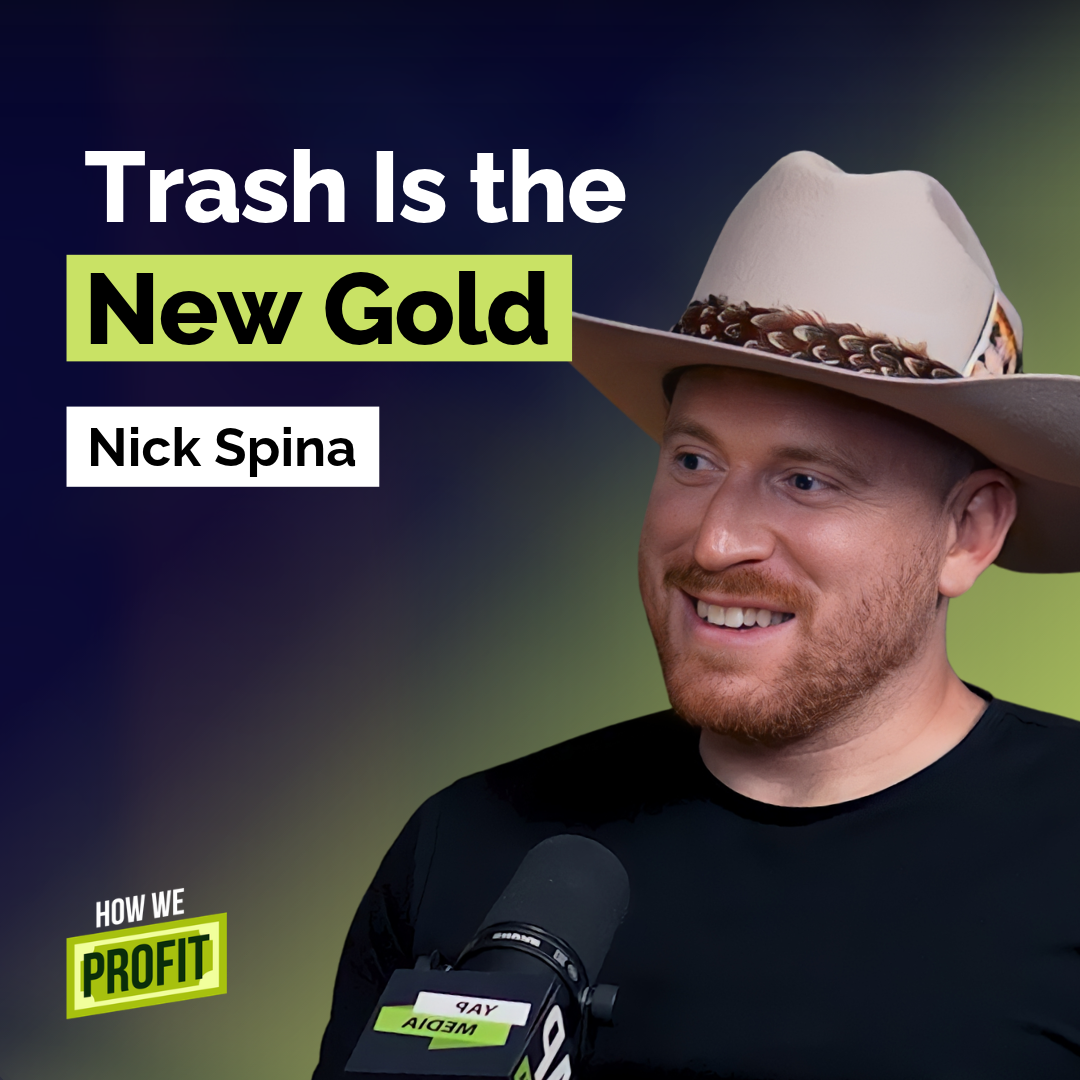
Nick Spina, founder of DeNovia. He previously built a Canadian meal-prep business (started with ~60 meals/week, scaled to 50,000+ meals/week), later expanded into manufacturing facilities (up to ~7 across Canada) and acquired multiple companies. He also worked on sustainable packaging (e.g., sugarcane-based plastic tray) and food-waste initiatives (worm farming).
DeNovia licenses technology (not machines) to waste management companies; it takes 25% of revenue per facility. Traditional mechanical recycling can only recycle plastic ~5–10 times before brittleness; DeNovia breaks plastic into monomers, purifies them, and repolymerizes repeatedly. Partners pay most capex; DeNovia expects revenue within ~12 months.
Germany-based company using purified plastic chemicals (verified 99.5%+ purity) for high-quality adhesives used in ~60% of phones; Vancouver testing with ship waste (e.g., cruise lines and Canadian Royal Navy) and a facility taking ~100% of waste from ships in a BC port.
0:00Hala Taha: Today's episode is sponsored in part by Pernuvo, AG1, Whatnot, and Mod. Pernuvo offers radiation-free whole-body MRI screening to give you a detailed look at your health. Get$300 off your whole-body MRI at Pernuvo.com slash Hala with code HALA. That's H-A-L-A. Terms and conditions apply. AG1 is a daily nutritional drink with 75-plus ingredients in one scoop. For a limited time, get a free immune support bundle with your first AG1 next-gen or pro subscription at drinkag1.com slash profiting. WhatNot is a live shopping app where you can sell everything from fashion to collectibles and connect with buyers in real time.
0:38Hala Taha: Search WhatNot, W-H-A-T-N-O-T in the app store. Download and start selling right away. Mod connects qualifying patients with licensed medical providers who may prescribe a Motofenil drink to keep you energized, focused, and alert throughout the day. Visit mod.com, M-O-D.com for a free consultation, 10 % off your first order and free shipping with promo code PROFITING. See their website for important safety information. As always, you can find all of our incredible deals in the show notes or at youngandprofiting.com slash deals. We do have the solution to the world's plastic waste problem. Only about 9 % of your blue bin is actually recycled.
1:17It costs the more waste management companies about$200 to$400 a ton to incinerate waste. We break it down, we rebirth it, resell it for about$1 ,000 a ton. Now these businesses are able to make money on something that was currently a loss.
1:32Hala Taha: So it's the old saying, one man's trash is another one's treasure. So you're turning that trash into treasure. Hell yeah. Today's guest is Nick Spina, founder of Denovia, which is a company developing technology that turns plastic waste into valuable materials. Today we'll break down how Denovia's business model works and what it takes to turn a groundbreaking technology into a scalable business. Essentially, there's billions of pounds of waste that are waiting to go into our process, and buyers want to buy billions of pounds of the outputs that we have. We can turn that into about$1 ,000 a ton.
2:07We're not in the machine business, we're in the licensing business. So how we make money is we take a percentage of the revenue that you generate per facility. We'll take 25 % of that. We want to remain the tech company, essentially the DeNovia shovel, for waste management companies around the world to be able to dig for their own gold. It works actually very similar to how McDonald's will work.
2:26Hala Taha: If you are hiring an expensive executive now, what are you putting in place? Those people need to be heavily, heavily compensated based on... Hey, Yap Gang. Welcome back to another episode of How We Profit. If you're new here, this is a Young and Profiting series where we break down how entrepreneurs build their businesses and make their money. Today's guest is Nick Spina, founder of DeNovia. Nick, welcome to How We Profit. Thank you for having me. I'm excited to really dive into everything you got going on because you have a very interesting yet complex business. And I think people are going to learn a lot from what you're doing.
3:04Hala Taha: So for those young and profiterers who don't know what DeNovia is, talk to us about what your business is and what problem are you solving? So DeNovia in a nutshell. So what we've been able to figure out is we've been able to recycle hard to recycle plastic waste or all plastic waste, actually, really, but specifically focusing on PET and polyester is our core. So, you know, your Nestle plastic water bottles and textiles and all that kind of fun stuff. So it's called advanced molecular recycling. And what we believe is the fastest of its kind in the world of what we do and the most sustainable as well.
3:42And we've successfully commercialized it. Plastic is made of core chemicals or chemical monomers. And so at the molecular level, we're able to break apart those monomers or those chemicals of plastic waste, we purify them, and then we put it back together again into new virgin state plastic, which we can sell over into the market again, over and over and over again until the end of time.
4:05Hala Taha: Interesting. And so who do you exactly sell to? Because from my understanding, it's not like you have like plants. You basically are licensing the technology to other companies that are then able to break down plastic and use it in a new way. Is that right? That's exactly it. Yeah. So our business model is complete licensing. So we want to remain the tech company. And then we give essentially the DeNovia shovel for waste management companies around the world to be able to dig for their own gold. You know, you can imagine like waste management, waste connections, you know, the largest waste management companies on the planet.
4:41So they're currently collecting the majority of the waste out there. And believe it or not, only about 9 % of your blue bin is actually recycled. So with DeNovia technology, we're actually able to recycle nearly 100 % of that now if the contents are plastic. So the beautiful thing about that is that the waste is currently collected by these waste management companies, but unfortunately they're incinerating it or landfilling it or worse, ends up in the ocean or whatnot. But we're able to now divert that from going into incineration directly into a new product.
5:16Hala Taha: Oh, wow. So it's actually a much better version of recycling because you can actually get the product reused. So give us an example. Like if somebody is breaking down a water bottle, what can they make out of the plastic if it gets recycled? Well, I mean, like just from like a basic level, you can make it back into another water bottle. But more ideally, we want to make it into a more high quality product. For example, we work with one of the largest companies on the planet out of Germany, and they make adhesives specifically for 60 % of phones on the planet. So these high quality adhesives, we can actually use one of the chemicals in plastic, purify that into 99.5 % or more purity, which we've actually been successfully verified that we're able to do.
5:59And then that can be put into something that can be a longer lasting type of plastic product with a higher margin as well, which is beautiful. So from a business standpoint, why DeNovia is driving so much, you know, traction towards it from large businesses is not only because we're sustainable, but we're taking something. For example, it costs the waste management companies about$200 to$400 a ton to incinerate waste. And what we do is now we can actually divert it, put it through DeNovia's technology so it's not being lit on fire anymore. It's going through our process. We break it down, we rebirth it, resell it for about$1 ,000 a ton.
6:40So, you know, now these businesses are able to make money on something that was currently a loss and not a sustainable route for them.
6:48Hala Taha: So it's the old saying is, you know, one man's trash is another one's treasure. So you're turning that trash into treasure. Hell yeah. Okay. So before we get into all these questions that I have about DeNovia in terms of like how you actually make money, how you market and get contact with these waste management companies. I really want to understand your journey and why you were the guy that started DeNovia. So first off, like really succinctly, what is your mission with DeNovia right now? So our mission with DeNovia is to be able to completely change the world, how we think about plastic waste and what we actually do with it.
7:25So we do have the solution to the world's plastic waste problem. And it's the difference between us, between today and where we're going, is simply scaling it up to make the biggest impact that we possibly can.
7:38Hala Taha: And like, what's your goal? Is it to make sure that like every plastic that's out there is more sustainably recycled with your technology? Correct. And I think we can definitely become a status quo recycling method on the planet when it becomes a plastic. Okay. And just to be clear, what's the difference between what you do and what traditional recycling does? So the difference between what DeNovia's technology and mechanical recycling does. So mechanical recycling, you're essentially taking a piece of plastic and you heat and mold it into different shapes. And you can only do that, you know, five or ten times before the plastic becomes brittle.
8:13Hala Taha: Okay. And it ends up in a landfill or an incinerator anyways. Okay. So with DeNovia, we're able to actually technically rebirth plastic because we break it down on the molecular level, purify those molecules and we put it back together again, making virgin state plastic products. Well, that's incredible. Like that's such a big problem that you're solving. You actually started like one of your first big companies was actually a meal prep company in Canada. I actually started something before that. Okay. Yeah. So I mean, I've been entrepreneurial since as a kid. Like I was shoveling neighbor's driveways, collecting 20 bucks a driveway type of thing.
8:47Hala Taha: Serial entrepreneur. Yeah, I just had fun with it. And then, but you know, my first like really serious business is when I went in on my own and opened up a venue that held 2 ,500 people every night as a bar. Oh, cool. Yeah, when I was 23. So that was your first foray into entrepreneurship and hospitality. Yeah, running my own business, my own balance sheet, all that kind of stuff. And then, yes, I had the idea of delivering fully cooked meals directly to people's doorsteps in 2015. And then that started obviously really small, as most businesses do start. You We started with like 60 meals a week or something like that.
9:22And then it just kept on doubling sales and kept snowballing.
9:25Hala Taha: Yeah, you got to like 50 ,000 meals a week at one point. I think it was more than that at one point. We delivered directly, you know, across Canada. We even have like a geomap where basically it would show all of our deliveries. And it was like every single building in Toronto had multiple every week or something like that at one point. It's pretty neat. Let's stay on this business just for a couple of minutes. Talk to us about some initial strategies you did to get to your first 100 customers. And then also like maybe like midpoint in your journey, like what you did to really scale up the business to those like 50 ,000 plus per week meals.
9:59For sure. Well, I think the base of every business is relationships. And so we reached out to people that we knew at first and people, you know, were like, yes, I would love, you know, this idea. I don't want to cook any more of my own food at home. So they ordered from us and we would supply them with a week's worth of meals. they would tell their friends, their family. They'd bring more and more people on board. Word of mouth was extremely important. And, you know, that kept marketing costs down in the start of it. But then as we started scaling, we put a lot of money into Facebook, Instagram, social media marketing.
10:32And then we figured out, well, okay, well, how much does it cost to gain a customer? How much are they spending over, you know, 12 months? And then we figured out that the LTV of the customer is like very strong and it was a scalable business. And then we started spending, you know, we put all the profit of that business back into marketing. And then we grew, you know, we were spending, I think at one point, like, you know, half a million dollars a month on marketing or more.
10:55Hala Taha: Wow. And just paid ads or paid ads mostly. Yeah. And then we did a lot of referral type of stuff for like we would put like referral cards inside each box that they can bring three friends on board, loyalty programs and all that kind of stuff. And you kind of have to layer it to be able to, you know, because each, you know, referral brings another 10%, you know, paid ads, it's top of funnel. And then you have other different forms of marketing in between that. So you stack it all in loyalty so you can increase LTV. It's just a numbers game, really. That's awesome.
11:29Hala Taha: Yep, fam, we've all had mornings when we'd give anything for another hour of sleep. And that's what caught my attention about Mod. Mod is a telemedicine service that connects qualifying patients with licensed medical providers who can evaluate their symptoms and determine whether to prescribe a once or twice daily Modafinil drink. Now, you may not have heard of Modafinil, but it works differently from caffeine. While caffeine temporarily blocks adenosine, a chemical that makes you feel sleepy, Modafinil engages multiple pathways in the brain to promote wakefulness and alertness for 10 to 12 hours.
12:01Hala Taha: And importantly, Modafinil isn't a substitute for sleep or a solution for everyday tiredness. It's a prescription option for qualifying patients following a medical evaluation. Visit mod.com, that's M-O-D dot com, for a free consultation and get 10 % off your first order plus free shipping with promo code PROFITING. That's promo code PROFITING at mod.com. Mod.com. See their website for important safety information. And we thank Mod for sponsoring the pod. Yeah, gang, hiring can be such a catfish. You read somebody's resume and think they're perfect. And then 12 minutes into the interview, you realize, well, maybe not.
12:40Hala Taha: And that's where Indeed Sponsored Jobs can help. It boosts your posts in the search results and connects you with candidates based on skills, certifications, or location. And the best part is you only pay for results. Sponsored jobs posted directly on Indeed are 95 % more likely to report a hire than non-sponsored jobs. Spend less time searching and more time actually interviewing candidates who check all of your boxes. Less stress, less time, more results. When you need the right person to cut through the chaos, this is a job for Indeed Sponsored Jobs. And listeners of this show will get a$75 sponsored job credit to help give your job the premium status it deserves at Indeed.com slash podcast.
13:18Hala Taha: Just go to Indeed.com slash podcast right now and support our show by saying you heard about Indeed on this podcast. Indeed.com slash podcast. Terms and conditions apply. Hiring now, this is a job for Indeed Sponsored Jobs.
13:34Hala Taha: Yeah, fam, I have an expensive confession. I need an outfit for practically every interview. And I love designer clothes, so you can imagine what that does to my budget. And after talking to Haley Sachs, who's a financial expert, I was unfortunately reminded that I can't just assume that every outfit is a business expense. You guys know that I love hosting live streams and webinars, and I love selling. So I'm planning on opening up a pre-owned designer shop on Whatnot. Whatnot is a live shopping app where you can show off products, interact with buyers in real time, and turn shopping into a fun, interactive experience.
14:06Hala Taha: And you absolutely do not need designer clothes to get started. People sell everything from sneakers and beauty products to sports cards, Pokemon cards, and collectibles. All you need are your products and your phone. Whatnot handles payments and provides shipping labels. So I recommend you take a shopping trip through a few live shows, See how it works. And maybe you'll be inspired to start selling too. Search Whatnot, W-H-A-T-N-O-T in the app store. Download and start selling right away. And manufacturing, did you outsource your manufacturing or did you start your own manufacturing facility for your mail prep?
14:40When we first started, so I was so dedicated to this business that I actually started, our model at first was kind of like Uber. So we figured out, well, most restaurants are closed at night or in the very early morning. And then they would open up maybe for dinner and start cooking, you know, their own food around like four o 'clock. So we actually would go in there at like 11 p.m. on Saturday night. And then we would actually stay awake the entire night until 4 p.m. the next day.
15:07Hala Taha: Oh, my gosh. And then so I did that for about a year and we had multiple locations that we scaled into. But then logistics was really tough between all of them to deliver food to them and all that kind of fun stuff. So then we decided to open up our own facilities. Nice. So then the first facility we opened up was like a 1950s Italian bakery. Oh, cool. Yeah, it was super neat. But we had, you know, the cobwebs everywhere. It was a tiny space, but it had this gigantic oven that you could fit 24 trays of like whatever you were baking into it at one time. So I just looked at the production capabilities of it.
15:42And that was a fantastic launchpad for us. And then, yeah, we grew into, you know, 60 ,000 square feet eventually. Nice. And then we ended up buying a number of different companies. And I think we bought five or six different companies. And then we scaled. We had seven facilities across Canada.
15:57Hala Taha: Wow. Or something like that with, you know, hundreds of people, if not thousands, actually involved with like including like directed door delivery and logistics businesses and all that kind of fun stuff. So basically you got your foot into manufacturing. You started to scale the manufacturing. And because you had those back end capabilities, it was so you start to acquire businesses or did people start to like rent out those facilities from you as well? No, we bought them. OK, so you started buying brands and then you would create the product in your facilities. Correct. Yeah. Yeah. And then so what we decided to do was, well, why would we try to start something from zero when something is already successfully operating?
16:37Or sometimes these brands wouldn't be hyper profitable or at all. And they just needed help with, you know, their own, you know, manufacturing or, you know, something along those lines where there's, you know, a benefit to be able to acquire them and then cut costs or whatever. And some, some, our thesis on that worked. And then it didn't for some of the brands because some of the brands might have been too small or for whatever reason. But in the middle of this is kind of like when we also discovered the DeNovia technology.
17:07Hala Taha: Yeah. And that technology, the way it started has rapidly changed as we've gone along here. But, you know, the base or the first kind of spark to it was back in those days. Yeah. And from my research, what I saw is that first you were trying to tackle like food waste and then you turned your attention to like food packaging. So talk to us first about like food waste, what you discovered, some of the things that you did. And then also with the food packaging, you know, what were you working on that led you to Denovia? Yeah. So with the food waste specifically, but the worm farm. So that was, you know, a really big part of it at first, all the food scraps to go to feed these worms.
17:45And then the worms would, you know, turn it into worm castings versus worm poop. And then that would be used as high quality soil that got delivered back out to the farms.
17:55Hala Taha: Oh, really cool. Yeah. So that was, you know, I never thought I'd be in the worm poop business, but I was. And then the other side of things, we actually hired on a group of engineers and scientists to be able to essentially because we wanted to get away from 100, like all of our plastic. So the last remaining piece of plastic in our business was a plastic food tray and nothing could replace it that could be made out of, you know, a sustainable material. Oh, wow. Yeah. So we actually made one at a sugar cane bulb and with this group of engineers and it could do everything that plastic could do.
18:31It could be heated. It could be frozen. It could hold liquid, all that kind of fun stuff. And then but with that same group is when we kind of initially discovered the early stages of DeNovi's technology.
18:41Hala Taha: That's so cool. And when you were trying to make things more sustainable for your meal prep businesses and your different brands, was that actually caught like helped you reduce costs or did that actually cost you money to do? Like, how did you as an entrepreneur justify the investment to like research that or whatever? Or did it actually help drive sales because it was like the sustainability aspect of it? Yeah, it would have helped. Usually the beginning phases of things are usually a little bit of an upfront cost. But with a lot of it, we were fortunate enough to have the Canadian government come in and actually help fund some of it.
19:18Oh, cool. Which is kind of nice. So it's definitely from a consumer standpoint that a lot of people care about, hey, well, I would like to buy a product that does good for the earth rather than bad.
19:27Hala Taha: Yeah. I'd love to tap into that a little bit. How did you get the attention of the Canadian government and get them to help you fund some of this? Yeah, well, through the universities that we worked with. Okay. Yeah, yeah. So they came in and, you know, there's different funding programs and whatnot that help. Like we would come in with a check and they would come in with a check as well. And yeah, and then we just kept, you know, our foot on the gas and just kept going. Fast forward, we work with a number of different universities and colleges and whatnot. And we've got a number of people on, you know, who are on our research and development team.
19:59And we still use some of those same funding sources.
20:02Hala Taha: Really cool. So basically, you've discovered the technology to break down this plastic to a molecular level with the help of colleges. So who owns the IP for this? The IP has changed a lot since day one because what we had to do is we also had to commercialize it. So an important thing behind that, well, you know, what happens when you have an IP that could potentially change the world? Well, you're going to have a lot of groups around the world that want that. Right. And, you know, there's some countries on the planet or, you know, or businesses in these countries that would love to steal it.
20:37Hala Taha: Yeah. And so on. So our biggest defense on IP is actually not because when you patent something, then that gets launched out into the open of how it's patented or the actual process or whatnot. So we've actually decided for the time being to hold that IP close to our chest, like the KFC recipe, and not tell anybody. Not even patent it. So you're saying it's too risky. It's too risky to patent it. We've already had groups that have like, you know, done patent search that have been open with us, patent searches on us and said, hey, well, you know, how does your process work? We can't find your patents.
21:13We did an extensive search on you. And I'm kind of like, you know, well, you're never going to know.
21:18Hala Taha: Wow. So you actually feel like it's more secure to not have a patent. For the time being. You know, we would definitely patent it at some point, but, you know, you're going to want to patent 100 different types of patents and, you know, to create kind of a moat around your IP and so on. But for where we're at right now in our journey, it's so important just to keep that close to your chest and, you know, not release that to the world. So you obviously were not the expert in recycling and waste management. So how has that really impacted you as an entrepreneur and the CEO of this group? What did you need to learn?
21:52Hala Taha: How did you get confidence? Who did you need to hire? Well, I've got a thesis on these things. I think like, you know, as I've gone along in my journey, it's really important, I think, for the entrepreneur, the founder to understand how nearly 100 % of the business works. So I took it upon myself to actually learn how the technology worked. And then I've actually done direct, you know, hands-on with, like I have like a little lab in my place. And like I would actually do like live depolarizations in my head. Oh, wow. So you were like, I need to get hands on. Hands on. Yeah. There's photos of me like with like a lab suit on or whatever.
22:27Yeah. So that my fiance took of me and all that kind of stuff. So it's comical. But I understand it to a very deep level of how this works and also how to modify the technology to do even better. But you're right. Like, you know, now we have a lot of PhDs or, you know, actually former deans of engineering that are on board with us and work on this full time, actually. So just continuously optimizing the technology to do better. But I think something really important about it is like, one, is having a technology that works. But number two is how do you make money with it? And that's the important part.
23:02Hala Taha: And that's where you come in. Yeah. So that's exactly it. So it's like, okay, well, you know, how do we actually monetize this and make money with this business? Well, and that's how you grab the attention of the big companies because they usually want to drive a profit. Yeah. They want to do good, you know, and talking about it. These are words of Steve Ackerman on our board, and he used to run the largest hedge funds in the world. And he says, you know, Wall Street wants to do good for the earth, but they're not willing to lose a ton of money doing it. So if you can have a business that can make money and be good for the earth, you're going to get a flow of people coming into it that are very interested in writing checks and adopting the technology.
23:42Hala Taha: I love that. Yep, fam, we've all had mornings when we'd give anything for another hour of sleep. And that's what caught my attention about Mod. Mod is a telemedicine service that connects qualifying patients with licensed medical providers who can evaluate their symptoms and determine whether to prescribe a once or twice daily Motifinil drink. Now, you may not have heard of Motifinil, but it works differently from caffeine. While caffeine temporarily blocks adenosine, a chemical that makes you feel sleepy, Modafinil engages multiple pathways in the brain to promote wakefulness and alertness for 10 to 12 hours.
24:18Hala Taha: And importantly, Modafinil isn't a substitute for sleep or a solution for everyday tiredness. It's a prescription option for qualifying patients following a medical evaluation. Visit mod.com, that's M-O-D dot com, for a free consultation and get 10 % off your first order plus free shipping with promo code profiting. That's promo code profiting at mod.com. mod.com. See their website for important safety information. And we thank Mod for sponsoring the pod. Yap gang, hiring can be such a catfish. You read somebody's resume and think they're perfect. And then 12 minutes into the interview, you realize, well, maybe not.
24:57Hala Taha: And that's where Indeed Sponsored Jobs can help. It boosts your posts in the search results and connects you with candidates based on skills, certifications, or location. And the best part is you only pay for results. Sponsored jobs posted directly on Indeed are 95 % more likely to report a higher than non-sponsored jobs. Spend less time searching and more time actually interviewing candidates who check all of your boxes. Less stress, less time, more results. When you need the right person to cut through the chaos, this is a job for Indeed sponsored jobs. And listeners of this show will get a$75 sponsored job credit to help give your job the premium status it deserves at Indeed.com slash podcast.
25:35Hala Taha: Just go to Indeed.com slash podcast right now and support our show by saying you heard about Indeed on this podcast. Indeed.com slash podcast. Terms and conditions apply. Hiring now. This is a job for Indeed sponsored jobs.
25:51Hala Taha: Yeah, fam, I have an expensive confession. I need an outfit for practically every interview. And I love designer clothes, so you can imagine what that does to my budget. And after talking to Haley Sachs, who's a financial expert, I was unfortunately reminded that I can't just assume that every outfit is a business expense. You guys know that I love hosting live streams and webinars, and I love selling. So I'm planning on opening up a pre-owned designer shop on Whatnot. Whatnot is a live shopping app where you can show off products, interact with buyers in real time, and turn shopping into a fun, interactive experience.
26:23Hala Taha: And you absolutely do not need designer clothes to get started. People sell everything from sneakers and beauty products to sports cards, Pokemon cards, and collectibles. All you need are your products and your phone. Whatnot handles payments and provides shipping labels. So I recommend you take a shopping trip through a few live shows, see how it works, and maybe you'll be inspired to start selling too. Search Whatnot, W-H-A-T-N-O-T in the app store, download and start selling right away. So I actually had Naveen Jain on the show. He's the founder of Viome. And he always talks about... I use the products.
26:56Hala Taha: Oh, yeah. He's amazing. He's like a billionaire. He's so successful. and he talks about this idea of moonshot ideas where basically you've got a big enough mission that really changes the world. And with AI and everything, he's really trying to get entrepreneurs to really think about like, what can you do for a company that's not just like something generic, like selling like what I do, social and podcast services or, you know, how are you actually gonna change the world? And you obviously have like a moonshot idea and he's got this framework called, why this, why now, why me? And I'd love you to kind of answer those questions.
27:32Hala Taha: So like, why this? Like, how bad is this plastics problem for those of us who don't know? You know, why you? Why do you feel like you're the right person to tackle this problem? And why now? Why this is because, you know, there's literally floating piles of trash in the ocean that are as big as the state of Texas. Whoa. And they're clogging up, you know, so many different things beyond that. but also the environmental effects that it has on wildlife to the climate. And now it's coming to a point where, like, we even have a group in California where they've got 55 million pounds of water bottles that, you know, the government has come in and said, hey, you know, you're going to get charged or a fine story for having these water bottles here.
28:18You need to do something with them. So they truck it over state border. It becomes a problem in their state. Oh, my gosh. So any of this. So why is that? Something has to be done with it. But there hasn't been a solution until DeNovia's technology has come along for this waste.
28:32Hala Taha: Which is crazy. It's bananas. And it's the weirdest thing. But, like, I get it because now that I know how I understand the technology, it's incredibly complex. And, like, if one thing is off, it won't work. Got it. You know, so, like, and we just happened to, you know, the stars aligned. We found the right people. And they already had the beginning spark of this technology that allowed us to innovate and take it and commercialize it. So very fortunate, you know, timing on that side. And so there's an understanding of why the problem has built up. But, you know, I guess why from a business standpoint, well, you know, now we can literally take trash and turn it into gold.
29:16Hala Taha: Yeah. You know, almost literally. Yeah. So why now is you found the technology? We found the technology. Yeah. And then why me? well because I'm the crazy entrepreneur that I don't sleep until I get the job done and you know I simply just am so infatuated with this and see you know there's there's a one there's two sides of me there's the one side that you know is resilient and just I'll just keep going at it until I figure it out but then number two is the is the logical you know businessman side of me that looks at the data and the opportunity and you know the world needs this and all the indicators are pointing in the right direction.
29:54So it's fascinating.
29:55Hala Taha: Yeah. And Naveen always says that these moonshot companies can actually be easier to scale than more simple companies because people are so attracted to the mission. So you might like attract really great talent or people will work for less because you're solving like a big world problem or governments will help you, right? Because you're solving a big problem. Maybe more investors are interested because it helps them with their conscious, not only their wallet, right? So talk to us about how this mission has attracted, or maybe that's not true at all. You know, maybe you haven't seen that, but has it attracted opportunities?
30:33A hundred percent. I mean, a lot of people involved are very familiar names in the business. So like, yeah, either, you know, from a government side or, you know, from, you know, a finance side to even people you've had on this very show.
30:49Hala Taha: Oh, yeah? Yeah, that are involved in the business. Is Gary Vee involved? Because I know he's involved in one of your companies. He's a partner. Oh, he is? Yeah. Cool. Yeah, he's a partner in DeNovia. Wow. So, but if you're talking about this through like a financial perspective, usually it is referred to as TAM, Total Addressable Market, you know, and people can imagine the plastic waste problem is just gigantic. Yeah. Right? Like there could be a hundred different DeNovias around the world that all have similar technologies that could all become gigantic companies. Yeah. Like that's how big the waste problem is.
31:20In fact, actually, one of our groups that we just that we're working with and working towards deploying a license with has two nearly two billion pounds of waste that they want to convert over into sustainable sustainable material. That's one company. And that's not the biggest, you know, so two billion pounds.
31:38Hala Taha: Wow. Is insanity. Wow. Yeah. I might want a piece of the note. I'm just kidding. I know a guy. Yeah. Okay, so let's go back to business. Help us understand, like, what is somebody actually buying from you? Like, are they buying software, tech? Is it know-how? Like, what are they buying from you? Yeah, so there's different sides to this of how you can have a relationship with DeNovia. But from a licensing perspective, we take our technology or know-how. And then, for example, waste management company 123, they might have 50 facilities. and they might have billions of pounds of waste that they collect.
32:16And then so what we do specifically is we'll go to them and we say, hey, well, we have the DeNovia shovel. Do you want it? They usually need it. They don't just want it.
32:24Hala Taha: DeNovia shovel. What is that? So to dig your own gold with. That's the technology, including the equipment. Yes. Okay. And you ship the equipment to them or like they have to buy the equipment? We've got manufacturing partners all around the world. Okay. And then so how it works is we come to an agreement. We say, okay, well, you know, you have this much waste, this many facilities. you need X amount of DeNovia technology per facility or machinery. And then what we do is we say, okay, well, now they usually pay up front for the total capex cost of that equipment. It usually pays off in under two years.
32:59Hala Taha: Okay. So they're paying outright for the equipment. Are you making any margin on that? Of course you are. A little bit. But we're not in the machine business. We're in the licensing business. So how we make money is we actually take a percentage of the revenue that you generate per facility. Got it. So, and then that's how we'll grow. And we want to be able to have this machinery working for 30 years or more. And then, so they'll be operating this, you know, driving. And I mentioned earlier, it's about$1 ,000 a ton. So we'll take 25 % of that. And then we give, you know, corporate DeNovia support on how to operate it.
33:34It works actually very similar to how McDonald's will work. You know, you pay X amount of million for McDonald's. McDonald's corporate will come and help build it with you. and then they'll have staff on site for about six months helping hire people, train them up and then we'll hand the keys over. We monitor from afar and then we support and that's how that works.
33:53Hala Taha: Are you also helping them sell the gold that you're creating from this plastic to other companies? Well, the beautiful thing about this is that it's a commodity. So a lot of, you know, for example, like terephthalic acid, ethyl glycol, like you can sell those individually. there's also a byproduct called K2SO4, which is like a potassium sulfate. You can actually make it into a fertilizer. You can sell it for like$700 a ton. So is it totally predictable then? For the most part. You have X ton of waste, and that equals X amount of profit. And then we split it. It's a rev share. For the most part, yeah.
34:31And then so we have partners all around the world that need the product really badly, actually. And I'll get into that in a second of why it's important for them too are the demands there. But so we essentially will sell it to these Fortune 500s that are making, you know, vast amounts of products all around the world. It could go into car parts. It can even go into medical equipment. It can go into, you know, smartphones and the iPad that you're holding right there.
34:55Hala Taha: So are you doing the selling on them? We have the partner that comes in does the buying. Okay. But for some of the groups, though, they actually make their own products out of it. So it might be a little bit different from partner to partner, but typically we'll come in with the partner to buy it. And then, so the rev share, does that happen at the raw material level then? Not necessarily if they create a new product. Do you get a rev share on the new product, or is it just the raw material you're getting a rev share on? It depends on the partner again, but if it goes back into a polymer or you re-polymerize it back into something, then that could be the end product that we're actually selling.
35:35Or, you know, right now, one of the businesses actually just needs the just the monomers and then they actually make it into things themselves. So it really it's business to business scenarios.
35:47Hala Taha: In terms of the machinery, you said basically you're you're staffing it initially and then like training their team to take it over. Typically. Yeah. So as you can imagine, you know, we're in the like we're building up and scaling up Vancouver right now. and um you know so we still have to like we understand from like an engineering standpoint operational standpoint how to run these things but also it's like well running them 24 hours a day you know we can do so much only so much predictability on one like something might have wear and tear so kind of like a car part like an alternator in your car might go after 100 000 kilometers so to prepare to switch that out at certain times so there's still some things that we have to learn on that side.
36:30But not a lot like typical scaling problems of a technology like this that really hasn't been done before, right? So a little bit of a slight learning curve. But then after that, we're going to be able to deploy 50 locations simultaneously type of thing.
36:45Hala Taha: All right. So let's talk numbers. How big is your company? How much revenue are you generating? So we don't have revenue right now. So we are, you know, completely all focused on driving the technology forward and being the best of its kind in the world. And we continuously just keep putting money into optimization of our technology and also into engineering. So now, first things first is to scale up Vancouver. We've got a plant there with an arc unit that's actually about a 1 ,000 liter unit. We've successfully de-polymerized in about 30 seconds there. but now we're going to scale it up even more and we'll be de-polymerizing millions of pounds of waste there.
37:25And then we do have a lot of different licensing partnerships all around the world in different countries as well. You know, from the UAE to Dominican Republic to the Philippines. And also, of course, you know, we work in the U S and Canada ourselves and basically control those regions, but essentially there's billions of pounds of waste that are waiting to go into our process and buyers want to buy billions of pounds of the outputs that we have. So now we're focusing on, well, let's engineer this thing very well because we don't want to deploy 50 units around the world and then them have issues.
37:59And then, you know, we're having to go fix them and that can really hurt our brand. And, you know, if the technology isn't sustainable from like an operational standpoint, you know, it can't run 24 hours a day without having issues, then, And, you know, we don't want that. So we've invested heavily into the engineering side. We brought on a director of engineering as well.
38:19Hala Taha: Yeah, but you have no, nobody, none of these companies are paying you yet? No, we've got, I mean, like we could flip on the revenue switch pretty quickly here. And, you know, but that's, you know, not the core. We will be in the next 12 months driving some pretty significant revenue. When do you think that like first initial, I guess, like end to end process is going to happen where you're successfully turning plastic into new material and selling it and making revenue. Like millions of pounds. Yeah. I would give us like 12 months. Got it. Yeah. Give or take. So, I mean. That's exciting. Very exciting.
38:53Yeah. So, it's one of those things where, you know, am I hungry for revenue? Of course. Yeah. You know, but am I hungry for sustainable revenue without issues? Even more. So, it's exciting.
39:06Hala Taha: Yep, fam, we've all had mornings when we'd give anything for another hour of sleep. And that's what caught my attention about Maud. Maud is a telemedicine service that connects qualifying patients with licensed medical providers who can evaluate their symptoms and determine whether to prescribe a once or twice daily Motifinil drink. Now, you may not have heard of Motifinil, but it works differently from caffeine. While caffeine temporarily blocks adenosine, a chemical that makes you feel sleepy, Modafinil engages multiple pathways in the brain to promote wakefulness and alertness for 10 to 12 hours.
39:38Hala Taha: And importantly, Modafinil isn't a substitute for sleep or a solution for everyday tiredness. It's a prescription option for qualifying patients following a medical evaluation. Visit mod.com, that's M-O-D dot com, for a free consultation and get 10 % off your first order plus free shipping with promo code profiting. That's promo code profiting at mod.com. Mod.com. See their website for important safety information. And we thank Mod for sponsoring the pod. Yap, gang. Hiring can be such a catfish. You read somebody's resume and think they're perfect. And then 12 minutes into the interview, you realize, well, maybe not.
40:18Hala Taha: And that's where Indeed Sponsored Jobs can help. It boosts your posts in the search results and connects you with candidates based on skills, certifications, or location. And the best part is you only pay for results. Sponsored jobs posted directly on Indeed are 95 % more likely to report a higher than non-sponsored jobs. Spend less time searching and more time actually interviewing candidates who check all of your boxes. Less stress, less time, more results. When you need the right person to cut through the chaos, this is a job for Indeed sponsored jobs. And listeners of this show will get a$75 sponsored job credit to help give your job the premium status it deserves at Indeed.com slash podcast.
40:56Hala Taha: Just go to Indeed.com slash podcast right now and support our show by saying you heard about Indeed on this podcast. Indeed.com slash podcast. Terms and conditions apply. Hiring now. This is a job for Indeed sponsored jobs. You were teasing that you wanted to tell me more about the market demand. When you look into, you know, why different groups really need this, you know, not from just a technology standpoint or the use of technology to transform their business, but from, you know, the output. But for example, when oil starts getting above$100 a barrel, it starts becoming very, not really from an economic standpoint, unsustainable for groups to buy virgin state plastic.
41:37So specifically in Germany or Europe, actually, there's a regulation that has come out that says all plastic manufacturers need to use 25 % recycled plastic in their products. That's across the board. But the problem is that with mechanical recycled plastic, typically they only have a certain quantum that is high quality. And then the rest of it is not high quality. So groups looking for high quality recycled plastic is limited. And the supply from a chemical recycled side is not consistent. So now with DeNovia technology, we can supply a recycled product that is the same quality as virgin state.
42:20So it checks all the boxes on that side, too. So that's why these groups, you know, there's one of our partners that has 60 billion euros in revenue. 30 billion is in, you know, they actually use pterothelic acid as one of the chemicals in their process or the product. So this is why they need it so badly from us.
42:41Hala Taha: Well, how much money have you raised? We've raised into the small millions. We only raise what we need. So, you know, if we raise more, it's more dilutive or whatever. And the beautiful thing is that we don't really need too much financing after this point because the partners pay for nearly 100 % of the capex. Really smart. It's so interesting to me because people don't often think there's so much money in waste management. But it's really these like unsexy businesses, these boring businesses that really can be cash cows. They can be. And I mean, I think it's a sexy business, but it's a messy business, literally.
43:20But it's beautiful because there's always going to be waste and there's tons of it. Now, specifically talking about one of our partnerships in the Port of Vancouver. So we have our technology inside Timex facility. And TAMAC actually takes off nearly 100 % of the waste off of every single ship in a British Columbia port. So the Marist of the World, Norwegian Cruise Lines, Canadian Royal Navy, you name it. So with DeNovia's site in Vancouver, we've actually been testing that exact waste that has come off of those ships with DeNovia's technology, and it's been fantastic. So now with scaling up Vancouver, we have partners that also want to deliver more waste into that site, but also for those current partnerships or Timex partnerships with the cruise lines and whatnot, were able to put a big dent into that ocean waste as well.
44:10Hala Taha: Yeah, it makes sense that you're going to need to like test it at scale before you can go out and actually sell something. So basically you're using these cruise lines to test it at scale. Right, exactly. Okay. Now talk to me about like some of the costs that might not be so obvious. Like what are some of the hidden costs in creating a company like this? I think like you definitely had to put a lot of money into the research and development of it. You know, so what does that mean? Okay, well, you're going to have to have really smart people on board that you're going to have to pay to work for you.
44:40So that there's also, you know, staffing costs of like management and that kind of stuff. But also, you know, on the legal side, like you're negotiating a lot of contracts and so on, you know, on the IP front. So how do you handle that properly? um and then beyond that is also you know how do you how do you finance uh you know the capex and whatnot of like the research and development side and you know the chemicals and all that kind of fun stuff that goes into the process to develop it so um i would say those are probably the majority of the bulk of things um but then um you know there's other things too which is like you know social media and like all that kind of fun stuff but you know it's typically a smaller line item.
45:23Hala Taha: And how long did you take to really like laser in on your business model? Because I think the way that you set up your business model is super smart that you're actually not the one buying the equipment. And you've done it in a smart way where you don't have to raise a ton and a ton of capital. How did you think through like exactly how you were going to set it up? Well, I mean, this isn't my first time around the sun. So like I've been down that road and I've raised a bunch of capital for a number of different businesses. And you kind of just get a little bit better as you go along. You take that wisdom with you forward and you figure out how to do a little bit better.
45:54So with this time around the sun, you only raise as much money as you need, you know, because if you raise more than that, then you're going to be more dilutive and it's not beneficial to your current shareholder base. But also too, I think like something that's really important this time around is that we have, you know, a core of partners in the business that are typically almost all hands-on. So, you know, that is able to reduce management costs in terms of like, you know, salaries of people that you typically in a status quo company paying them, you know, 150 a year or whatever the number is.
46:26And then a lot of them are equity incentivized. So you have to align your agreements with the people in your business where you both win together and you both lose together. So then you have the, you know, the, the, the, you have the same interests. Yeah.
46:40Hala Taha: Give me an example of like what you're offering some of your like executives. Well, like maybe I'll talk about like our advisory board. Yeah. So like our board, you know, heavily equity incentivized and they're also investors in the business. OK. So, you know, they've got some money at stake here. If it doesn't work out, then they lose a bit of money, you know, and then and then that's typically how it works. So they don't care about just showing up, but they care about actually, you know, being productive and providing good advice. And for example, I didn't come up with the idea of licensing, actually.
47:12I was actually thinking about building our own facilities. And we initially set out to actually raise about$40 million.
47:18Hala Taha: Oh, wow. And then which we had pretty much all committed. And we were getting term sheets in and all that kind of fun stuff. And then Steve Ackerman on our board. So Steve Ackerman ran the largest hedge funds in the world. Yeah, I think I'm familiar with him. Yeah, and then Andy Smith is also, he's a former COO of FedEx Global. He's on our board as well. And we got together and Steve said, hey, well, you know, I think we should license this because we can raise a lot less dough. It's a lot less, you know, capital intensive and it's going to be an easier path for me to Z. And I looked at him and I said, you son of a bitch.
47:50I'm going to have to change my whole model and say no to the people that want to put the$40 million in.
47:54Hala Taha: But it's such a better idea. It's so much better, right? So kudos to him, you know. So I can't take credit on that side. But yeah, it's, but that's how you have to line up everybody internally. So everyone wins together and everyone loses together. Yeah, the other thing that's really fascinating to me is all the partnerships that you've had to create, the fact that you needed to find a manufacturing company that could build the technology, all the different colleges that you work with for research, finding the right investors that are going to give you actually strategic advice and not just money.
48:25Hala Taha: And then even the waste management companies, like this whole new world of like, you probably didn't even know any waste management companies before you started and you had to figure out like, who are all the big players and who's my audience, right? Talk to me about how you navigated all the different people that you needed to find out about and businesses. Yeah, it's an interesting point that you mentioned there. So, you know, we brought on somebody that was like an ultimate, like, you know, if you don't have these current relationships, you're going to have to reach out to them. Well, I also, too, how do you get to the top of these executives and how do you get them to listen?
48:57Right. Well, you have to have, you know, you can't really just have like a cold lead. And but sometimes that actually works. Right. So sometimes cold leads or cold outreach actually does get a reply.
49:07Hala Taha: And you're doing something so different. You don't really have competitors. So if like this is a big, somebody sitting on a billion pounds of plastic waste and you're like, hey, I could turn this into gold. Well, at some point, I think, so there's a certain point, and I think it's called a Rogers adaptive curve, but you get to a certain point where, you know, you're trying to reach out to people and then you drive enough momentum and excitement behind your business and your vision that it starts to go the other way and people start reaching out to you. And then that's what we're probably, we don't really reach out to anyone anymore.
49:37It's pretty much all inbound. And like, that's how this two billion pound company got in touch with us. They heard about us in articles and all that kind of fun stuff. And so like, primarily things are like all inbound now and including for investors.
49:51Hala Taha: Okay, I'm going to talk about the how that happened. But first, like what in the beginning, what did you do? Did you have to hire somebody who already knew the right people? It was my own relationships at the start. Like, for example, I knew the CEO of Goodwill, and they're a partner of ours. And so I just had a coffee with them. And then I just, you know, we were just kind of casually talking and catching up on some things. And then it came about, you know, hey, Nick, what are you working on? Okay, well, let's - What does a partner mean though, pre-revenue? So someone that is committed to working with you, you know, now and in the future.
50:23Hala Taha: Okay. Yeah. So for example, Goodwill has millions and millions of pounds of hospital gowns that we've actually successfully depolymerized. So we're planning on depolymerizing like I think 50 million pounds to start of hospital gowns with them. Wow. Yeah. So what I mean by partner, I mean, a partner can be also like a partner investor in the business and whatnot, but they're specifically a feedstock partner. Got it. Okay. Let's talk marketing. What are you doing to get all these inbound leads? I see you're doing a lot of PR, right? I just like working on the business and then capturing the real behind the scenes as we go along.
50:57And I just post about it.
50:58Hala Taha: Oh, so you've got a big social following. I do. Yeah. And then also, too, a lot of people involved do. And then also, you know, we've had a really big help from different partners of ours that have kind of gone out and shouted us out as well. And then that at some point, you know, people hear the story and just want to get involved and or they might have something a use for this technology and they want to partner with us on that. So, yeah, a lot of it is, hey, I heard that you're working on this and I want to get involved. So what platforms are you actually focused on right now in terms of it?
51:32Hala Taha: That's where a lot of your inbound is coming from. You're saying it's from like your posts. Any social platform you can imagine. Instagram, TikTok. Instagram. I don't really know TikTok too much. LinkedIn. Yeah, LinkedIn's good. A lot of reach, you know, lesser engagement, but a lot of reach on LinkedIn, I've noticed. Yeah, so Instagram, you know, is pretty good. but they all have different, you know, types of groups of people on them and whatnot. But yeah, I just post your story about what's going on. And, you know, people just follow along and, you know, usually want to get involved at some point.
52:05Hala Taha: People love behind the scenes. People love just like understanding your journey, what you're working on. So give me like your, for somebody out there that's an entrepreneur that's working on an unsexy business, what's your best piece of advice for them to grow on social? You know, I think in our journey as entrepreneurs, I think like, you know, it really depends on what you want out of it. Once upon a time, there was clothing brands. And then, you know, people just buy a sweater because they liked it. But then the branding and the mission behind that clothing brand started to become more apparent and important for the consumer.
52:35So we started something called Saltwater Collective. And that was we gave a percentage of our profits towards cleaning up the ocean. So it had a mission behind it.
52:46Hala Taha: Yeah. Right. You know, I think, you know, if you can't really build on the product side of your business, you can really focus on the brand side of it and grow the story behind your brand. If you want to make an impact or, you know, sustainability wise, you can kind of get it involved into a segment of sustainability if you want to. OK, I want to play a game with you. It's called Founder Failure File. OK, so I'm just going to ask you some questions and you're a serial entrepreneur. So you've had lots of businesses. So you can pull from whatever business you want. Tell us some stories. We learn from mistakes, right?
53:21Hala Taha: We don't only learn from the highlight reel. So I want to understand what is the biggest business investment you made that didn't deliver the return that you expected? You're like, how much time do we have? Yeah. I mean, you know, as long as you have more wins and losses, then I think you're going to do pretty well. but um that that's just a natural uh you know part of being an entrepreneur is that not everything is going to be a win and you know i've made investments in things or bought companies that you know didn't work out and we spent a lot of money on them um you know like the legal bill for one company was almost half a million dollars right and cash and like and then the business just didn't really work out that well and like yeah i that was something you know should i have not done it will it added benefits to the business but it also caused more problems in the end i've spent a lot of money on things that have worked out i've spent a lot of money on things that haven't worked out uh more things worked out not which is good um but uh yeah the the really unique thing though about denovia is that the equity value of the company you know to put this in perspective of groups that are driving little to no value publicly traded actually you know i think was recently one company was was that next to no revenue their technology took hours and hours to work not able to be profitable in my opinion and uh they were losing about 150 million dollars a year or more and they're trading at a two billion dollar market cap so like and then for from our perspective you know we have uh a technology that works that we have you know revenue that is papered that we could flip the switch on and start deploying these facilities.
55:06And, you know, so that's where the real driver is. So anyways, when you're looking at like business 1.0, it's like typically an entrepreneur will look through, well, how much can this business profit? But then you start really focusing on equity values. You start driving forward into like the bigger type of businesses and ventures. And that's how you, you know, can make the real money.
55:26Hala Taha: Yeah. Do you think you're going to be a billionaire? one day i feel like you are with this business model i feel i feel like it's as long as i mean what what is your biggest threat i guess somebody taking the same technology and doing it better right i mean like you could argue that like you know i think like billionaire status is also like irrelevant also if it's just in stock value you know you could argue that denovia's worth a lot of money today you could also argue that well we don't have revenue today so it's not so that's why you know, it's important that, well, there's stages in business where you get these things valued at.
56:00So we're really focused right now on, well, getting to our series A and, um, and then at that point we'll put a firm valuation on the business, but drive revenue at that point and sustainable profitable revenue, which could put us into the multi-billions of value. Um, so you could argue today we're worth that much, but you know, I'm not in, and I think, uh, in fact, it's almost irrelevant because I just focus on getting us to that next step. And then, but, you know, billionaire status, I also, I don't care about.
56:32Hala Taha: That's not what drives you. No, it's not what drives me. And in fact, I think making an impact here and I view, you know, money as something that is, you know, kind of like fuel in a car, right? The more fuel you have, the farther you can go. All right. One story that I thought was really interesting is earlier in your career or entrepreneurial journey, you had a major investment that didn't arrive fully and you were left needing$200 ,000 for payroll in two days. That was a fucked up experience. Do you want to tell that story? Yeah. How did you find that? I don't know. I guess somebody found it on my team.
57:10Hala Taha: That's amazing. Yeah. And oddly, I've had similar things happen a few times, but like this specific one, I did a deal with this group and they were going to put a couple million dollars in the business. And it was specifically into one of our food companies. And then so what we did is we took that money and it was something along the lines that we were getting$500 ,000 a month. And that was to be spent on marketing. So what we did is we spent all the money we had thinking that this money was all going to come in. Right. And it was contractually. It was there. Right. So some of contract we got the first tranche of money and then literally two days so they were gonna send 500 500 500 500 and then whatever then then we would slowly pay them back or something like that but then what happened is we did the first 500 or we did the first 528 days go by or something silly like that and i reached out to them i said hey just get ready to send us the next 500 and they said sorry nick we're out of money oh my god and i was like i have payroll like in two days or something like that.
58:15Hala Taha: They're like, well, we didn't expect you to be out of money. Yeah, it was, it was wild. And then, you know, so I'm trying to find payroll and whatever. And within like two days, you know, I was able to pull together and all that kind of stuff. But it's like, these moments in business were like, well, what did you do though? What did you do to get 200k in two days? Well, I would have reached around to people I knew. Like investors. Yeah, investors and all that kind of stuff. And just like pulled together the cash, which was completely great and fine. And, and you, and I think it's in these moments that you really learn like, and are tested, like, well, you know, what happens when you need to lean on people and certain people, are they going to be there for you?
58:51Or are they not going to be right? And those are the core partners I'm talking about that you need to bring along with you to the moon. And that's so, you know, important to your business is how close and how reliable people are in your business when you need them.
59:05Hala Taha: Yeah. And then those are the people that deserve to make the big bucks when, you know, you really hit that moonshot. Yeah. Right. So anyways, but that was a very, you know, made me sick to my stomach type of moment, having to pull that together last minute, you know, and none of the money was, you know, guaranteed to come in, not from that party, but from investors and whatnot. Right. So anyways, fun experience of learning. When you get a document signed, it doesn't mean that the deal is done until the full money is in the bank. So true. People pay late. Yeah. What is like the biggest leadership lesson that you've ever had personally that you feel like really taught you something that made you the leader who you are today at DeNovia?
59:47I think like, you know, there's a couple of things that get answered that. But like a lot of people think that there's like a recipe for, you know, how to do X, Y and Z. But really, it's like there isn't, you know, there's there's certain framework that you can deal with it. But at the end of the day, people are human. And I think like, you know, if, if you have, if you're just human with people and understand people's emotions and, you know, that goes into these things, because 90 % of the time people are acting emotionally and, and, and certain situations, especially work or when it comes to people's jobs, or, you know, you could, you're come, you're maybe making a decision to fire them.
1:00:23Like people are thinking emotionally rather than logically in those decisions. So, um, when you know that you can speak to them in a little bit of a different way to try to manage different situations properly.
1:00:34Hala Taha: Yeah. Um, and I think that's like so important is to understand that, you know, people make decisions primarily emotionally rather than logically. Um, and anyways, um, and also just having a certain leg level of integrity where you, if you say you're going to do something, you do it and then building that trust of people. And then if you can't do something, you say it. Because if you're lingering and it lingers on, that can also cause other problems and it will cause people to distrust you. So I think that's really important is like, you know, being very clear. Yeah, and honest, it sounds like.
1:01:10Hala Taha: And honest. And I think that also is very good because it drives natural momentum for the company. But, you know, things in business is like this. Yeah. All the time, right? But the beautiful thing is there's also, you know, from a level like DeNovia is that it is something that doesn't exist and there's such need for it. So there's a business need for it. So, you know, it's different than, you know, maybe being in an industry that's losing momentum. Yeah. Or doesn't have a need for it. Yeah, you guys don't really have that many probably ups and downs at DeNovia because there's just so much need for it.
1:01:44Hala Taha: So it just keeps propelling forward and you're still on the cutting edge of it. Right. Like there's challenges for sure. But it's not like, oh, like it's a rocket ship. Yeah. Like everyone's excited to fix, you know, like tweak things or upgrade it or whatever, because it's just like, you know, you're getting a little bit closer to the moon by fixing it. What was your most expensive or worst hiring mistake? One. No, I made a, you know, at one point, you know, I've been down the road of hiring the gray haired executives that knew everything. And typically with these people, they're really good at sales.
1:02:22You know, they can sell you on it. But then the thing is, is that if you don't have a win-win, lose-lose contract with them, they're not motivated based on what you want. You know, so if you're paying them a big fat salary, they're motivated to collect that salary and also to do as little work as possible, right? Because people are naturally lazy, especially if they're not motivated.
1:02:44Hala Taha: Yeah. So a lot of these people, I call them salary suckers. and they just sit there and they kind of salary suck you like it's crazy and then by the end of the you know then you have to fire them and then these people you know cause issues and all that kind of stuff they already made 300k or 400k they're at the door and they're happy there's no risk to them you know they just lost their income but they'll go get another job what does a win-win lose-lose situation look like like how are you like if you are hiring an expensive executive now what are you putting in place you know it depends on the level of executive but But if you're talking about someone who should be running the company beside you, those people need to be heavily, heavily compensated based on equity in the company.
1:03:27So therefore, if the company doesn't work out, it doesn't work out for both of you.
1:03:31Hala Taha: Yeah. But if it works out, it works out for both of you. So therefore, they're thinking the same way that you think. And they're not thinking, hey, I just need to show up and collect my paycheck and say yes all the time. You know, you want people to actually get in, get their hands dirty with you and make the company succeed. So that's a big thing. And I don't really even typically like saying executives anymore. It's more so big partners, like people who work beside you. But it depends. Like every business is different and every business has different needs. And you will have to hire executives to run certain segments of your company.
1:04:04But I still truly believe in a lower salary and a higher equity kind of, you know, LTIP plan for them. So then they can get the upside win for you, but also cover their bills.
1:04:18Hala Taha: That makes sense. Is there any other mistake that when I brought this up, you're like, I got to share this story? So many. What's the first that comes to mind? One last failure. Big mistake you did. A big mistake, like I've hired, you know, a whole team of executives and they produce no work or, you know, they didn't make the company grow. And I think like another thing, too, is like listening to people that you trust internally without like there's a saying like trust but verify. And I think like, you know, looking back and maybe some of my ventures is like verifying that the things that they're saying is like, you know, I don't think it's truthful.
1:04:57but a lot of people like to deliver good news and not bad news. Yeah. So, and bad news is what you need to fix, like in the company to make it go in the right direction. So, you know, for example, like someone might have spent a million dollars of your marketing budget and only drove$300 ,000 in sales back. So you would have lost the rest of it. Yeah. Right. But like they might come to you and say -
1:05:18Hala Taha: They would just tell you they made 300K in sales. Yeah. Not being very clear of like how much money they spent to get it. Right. So it's like, that's a very like simple, you know, explanation, but things along that line. Yeah. Those lines. And, you know, I think internally in a business, you need to keep your finger on the pulse of everything that's moving. Yeah. And monitoring on a regular cadence and not just trusting people, but like looking into the numbers because the numbers is what drives the business. Yeah. Well, I can see that you're so excited about DeNovia. Like what kind of energy is deriven from creating like a moonshot company for you?
1:05:54I think like for many people on the team, it's like hard to sleep. I think like a lot of people are just naturally really excited about it. Um, and to be a part of something that can actually change the world. And it's, it's crazy because it's, it's, you know, something that like seems like, well, you know, how are we the ones, right. But, but the, the only answer to that is just because we are, you know, like we were able to come across a technology that actually works. And I think like, you know, anyone who's also seeing the technology work in front of their eyes. Like it gives them this, like, you know, they jump up and down naturally, like, holy.
1:06:33Hala Taha: I just got goosebumps. It's crazy, you know, to watch plastic actually separate in front of your eyes at the molecular level. And it just like kind of evaporates and turns entire glass into like a, like kind of looks like a glass of milk. Like I wouldn't drink it, but it, it, uh, and then it settles and that's like, you know, of the terephthalic acid separating from methylene glycol. And then, yeah, you're able to make that into new products all over and over again. So the question is less of why we got here. We're here and we have this technology and it works. And then now we have some of the smartest people, in my opinion, in the world working on this with us to be able to scale it up to the next level to put a ding in the universe.
1:07:12Yeah.
1:07:13Hala Taha: So for the young and profiterers tuning in right now who are inspired to think of their own moonshot company to help solve one of the world's biggest problems. What do you want to say to them? I think just, you know, focus on keep moving forward and don't get discouraged by when things don't work. Because if you continuously keep trying, you're going to figure out a way to keep moving forward. And when it comes to, you know, whether it's this venture, your next venture, like this venture may or may not be the one, but it might be that venture where you're learning a lot of your experience at and you're able to take that experience and those relationships forward to your next venture.
1:07:54So I think sometimes it's a lot harder said than done because when you're in the middle of all of it, you might truly believe that this is the venture that is going to be the one. But it might actually not be.
1:08:06Hala Taha: Yeah, it could just be your way to learn what you need to learn to do what you're truly meant to do. A hundred percent. And it could be a stepping stone into something much, much bigger. And that goes to it's also like think about some of us have companies already. And is this really what you're meant to do forever? Yeah. You know, 100 percent. Yeah. And that's another thing, too, is like some people might be working in companies and, you know, they might be doing it for five or 10 years and like they might be making money, but they might just be tired of it. Yeah. Right. And that's like another thing which causes a lot of unhappiness.
1:08:37And, you know, people, you know, might want to might be a good idea to get out of that business while it's doing well and sell it and, you know, get cashed up and then go and start something else. Go and change the world. Go and change the world.
1:08:50Hala Taha: Like Nick. Hell yeah. Yeah. Well, this was such an incredible conversation. Thank you so much for joining us on How We Profit. Thank you for having me. And that, Yap Fam, is how Nick and DeNovia profit. Today's big lesson, you don't always have to own the infrastructure to build a scalable business. By licensing its technology, DeNovia can let other companies cover the cost of recycling facilities while earning their share of revenue. So sometimes the smartest way you grow is to let your partners handle the heavy lifting. Thanks for listening to How We Profit, the Young and Profiting series where real entrepreneurs share the real numbers behind their businesses.
1:09:27Hala Taha: This is your host, Halataha, signing off. Thank you.
Nick Spina's meal-prep business led him to an unexpected opportunity. While developing sustainable packaging, he discovered technology that could turn plastic waste into valuable raw materials. But scaling his recycling startup, Denovia, would require raising around $40 million to build its own facilities. Instead, an advisor suggested licensing the technology to waste management companies that would fund and operate the facilities, while Denovia would earn 25% of their revenue. In this episode, Nick breaks down Denovia's business model, the partnerships helping it scale, and how entrepreneurs can spot overlooked opportunities and build businesses that tackle global problems.
In this episode, Hala and Nick will discuss:
(00:00) Introduction
(00:00) How Denovia Turns Plastic Waste Into Profit
(05:47) Scaling a Meal-Prep Business Nationwide
(11:30) How Sustainable Packaging Led to Denovia
(12:53) Funding and Protecting Denovia's Technology
(15:55) Making Recycling Technology Commercially Viable
(17:56) Building a Moonshot Recycling Startup
(22:54) How Denovia's Licensing Model Works
(28:00) Denovia's Revenue, Costs, and Funding Strategy
(37:21) Building Partnerships Through Personal Branding
(42:18) Founder Failure File: Costly Business Lessons
(55:08) Building Moonshots and Finding Your Purpose
Nick Spina is an entrepreneur and the founder and CEO of Denovia, a company developing advanced recycling technology that breaks plastic waste down into reusable chemical building blocks. Before founding Denovia, he launched LiveFit Foods, a chef-prepared meal delivery company that grew to delivering more than 50,000 meals per week across Canada. His entrepreneurial experience spans food manufacturing, logistics, business acquisitions, and sustainable packaging innovation. Today, he works with researchers, universities, and industry partners to advance Denovia's recycling technology and prepare it for commercial expansion.
Sponsored By:
Indeed - Get a $75 sponsored job credit to boost your job's visibility at Indeed.com/profiting
Shopify - Start your $1/month trial at Shopify.com/profiting.
Northwest Registered Agent - Get a complete business identity with Northwest. Visit northwestregisteredagent.com/YAPFree and start using free resources to build something amazing.
HeyGen - Create AI avatar videos without constantly being behind the camera. Get your first three videos free at HeyGen.com/profiting.
AG1 Next Gen - Support your nutritional foundation with vitamins, minerals, prebiotics, probiotics, and superfoods. Get a free Immune Support Bundle with your first subscription order at DrinkAG1.com/PROFITING.
Whatnot - Grow your business through live shopping, community, and real-time connections with buyers. Search Whatnot, W H A T N O T, in the App Store and start selling today.
MOD - Connect with licensed medical providers for modafinil to support sustained energy, focus, and alertness. Visit MOD.com for a free consultation and get 10% off your first order plus free shipping with code PROFITING. See the website for important safety information.
Prenuvo - Get a radiation-free whole-body MRI in about an hour, with no contrast dye or needles. To learn more about Prenuvo and get $300 off your scan, visit Prenuvo.com/hala. Terms and conditions apply.
CallRail - Track which marketing campaigns drive calls, texts, and leads, and use AI to turn more leads into customers. Start your free trial at CallRail.com/profiting.
Resources Mentioned
Nick’s Company, Denovia: denovialabs.com
Nick’s LinkedIn: linkedin.com/in/nick-spina
Nick’s Instagram: instagram.com/niickspina
Active Deals - youngandprofiting.com/deals
Key YAP Links
Reviews - ratethispodcast.com/yap
YouTube - youtube.com/c/YoungandProfiting
Newsletter - youngandprofiting.co/newsletter
LinkedIn - linkedin.com/in/htaha
Instagram - instagram.com/yapwithhala
Social + Podcast Services: yapmedia.com
Transcripts - youngandprofiting.com/episodes-new
LinkedIn Creator Club - Skool.com/linkedin-creator-club
Entrepreneurship, Entrepreneurship Podcast, Business, Business Podcast, Self Improvement, Self-Improvement, Personal Development, Starting a Business, Strategy, Investing, Sales, Selling, Psychology, Productivity, Entrepreneurs, AI, Artificial Intelligence, Technology, Marketing, Negotiation, Money, Finance, Side Hustle, Startup, Mental Health, Career, Leadership, Mindset, Health, Growth Mindset, Passive Income, Online Business, Solopreneur, Networking

Scan the code with your iPhone camera
Listen in the app.