

 Young and Profiting (YAP) with Hala Taha: Entrepreneurship and Self-Improvement Podcast
9 Nov 2026 · 1h 23m

 Add vo to ChatGPT or Claude to ask about everything you hear
vo listened to this episode to put together the overview and transcript, so there may be the odd mistake.
Building a profitable product business by focusing on a bestseller/hero product, pricing correctly, avoiding profit leaks, and using “other people’s audiences” (wholesale, marketplaces, podcasts, partnerships) instead of relying on ads too early. She argues profitability is harder now due to higher costs (minimum wage, import/duty taxes) and a customer mindset toward cheaper goods, while AI tools still cost money.
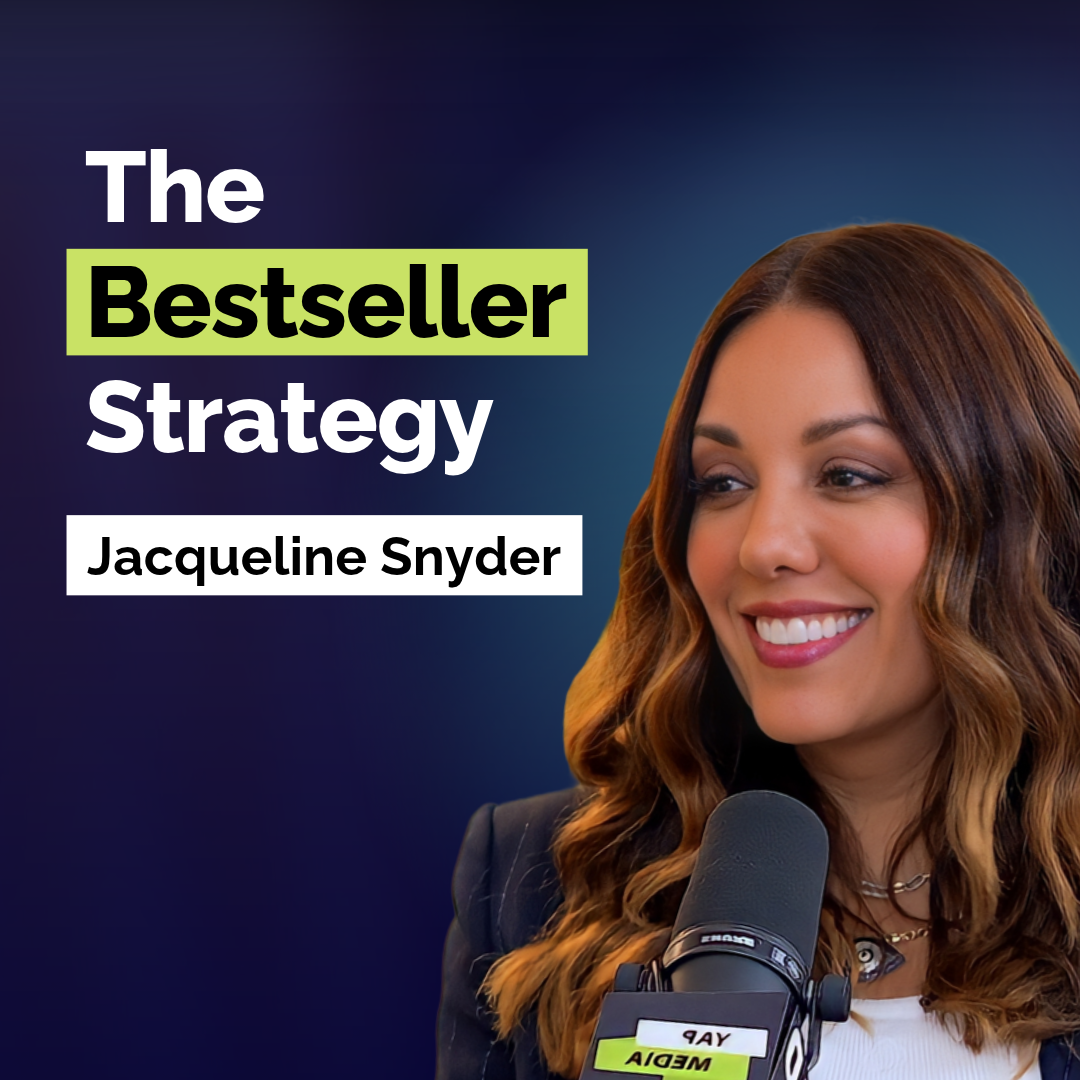
Jacqueline Snyder, founder and CEO of The Product Boss. She has worked behind the scenes with 100,000+ product businesses and teaches creative entrepreneurs how to build profitable product brands.
Every product business needs a bestseller (hero product/core collection). Use the 80/20 (Prado) idea: 80% of revenue comes from 20% of products. Raise prices based on what the market will bear; don’t undercut retailers. Wholesale pricing framework: cost of goods x2 for wholesale, then wholesale x2 for retail (sometimes up to x4 depending on category). Profit leaks include wrong markups, marketing/marketplace fees, and products with high breakage/returns that drain resources. Ads require a converting website and enough margin; start with organic/partnership first.
Her “Cuffs Couture” wrist wallet launched to “crickets” online, then succeeded via wholesale/in-person markets; celebrities (Carrie Underwood, Kim Kardashian) discovered it through retail shelves. Brands cited: Juicy Couture tracksuits (many variations), Lululemon (stayed too long on old styles), Aloe (stayed trendy), Timu (race-to-the-bottom knockoffs), and Nespresso (started exclusive, created a “vibe”).
0:00Hala Taha: Today's episode is sponsored in part by Pernuvo, AG1, Whatnot, and Mod. Pernuvo offers radiation-free whole-body MRI screening to give you a detailed look at your health. Get$300 off your whole-body MRI at Pernuvo.com slash Hala with code HALA. That's H-A-L-A. Terms and conditions apply. AG1 is a daily nutritional drink with 75-plus ingredients in one scoop. For a limited time, get a free immune support bundle with your first AG1 next-gen or pro subscription at drinkag1.com slash profiting. AG1 is a daily nutritional drink with 75 plus ingredients in one scoop. For a limited time, save 25 % off your first AG1 next-gen or pro subscription at drinkag1.com slash profiting.
0:45Hala Taha: WhatNot is a live shopping app where you can sell everything from fashion to collectibles and connect with buyers in real time. Search WhatNot, W-H-A-T-N-O-T in the app store. Download and start selling right away. Mod connects qualifying patients with licensed medical providers who may prescribe a Moda Fennel drink to keep you energized, focused, and alert throughout the day. Visit mod.com, M-O-D.com for a free consultation, 10 % off your first order and free shipping with promo code PROFITING. See their website for important safety information. As always, you can find all of our incredible deals in the show notes or at youngandprofiting.com slash deals.
1:23If you build a brand and people are attached to the brand, that's what they're going to pay for. And so I really talk to my clients about not just being a commodity, but being a brand that has some sort of connection to the customer.
1:36Hala Taha: My guest today, Jacqueline Snyder, has been behind the scenes of more than 100 ,000 product businesses. Now she's the founder and CEO of The Product Boss, a multi-million dollar company helping creative entrepreneurs build profitable product businesses. My life coach says math, not drama. So let's take the drama out of it and the emotion out of it and look at your numbers and ask yourself your costs versus what you're selling for. Where are the money leaks? And that would be the first thing. Don't avoid it. If somebody has like a lot of different products that they sell, what is like the telltale sign that they have a bestseller?
2:08Because you say every business should really have a bestseller. People think that they need more to sell more. But if people can't refer you to something or refer somebody to you for something, it starts to...
2:19Hala Taha: You had mentioned your best seller, you always recommend it increase the price by like 15%. Why do you think that that's a good thing to do? Again, you look at what the market will bear. Love it and they want it. They're going to buy it. And how do you raise your prices without pissing off your customers? You don't tell them. You just do it. You have to do it because they're not paying attention. Now listen. Jacqueline, welcome to Young and Profiting Podcast. Thank you for having me. I'm so excited to be here. Yeah, thank you so much for flying out here. We were talking offline and I was saying like, I've seen your podcast.
2:49Hala Taha: all over, like we're in the same space. And I feel like your information and your expertise is going to be so valuable for our audience. So thank you for flying out here. Of course. So my first question to you is that it seems easier than ever to launch a business with AI, with all the stuff that we have on the internet, with Shopify. It's just so easy to actually get a business off the ground. But it's actually harder to be a profitable business in 2026 than it was five or 10 years ago. Talk to us about why. Yeah. So I think especially in like the product space, I keep seeing all the AI things online where it's like, you could do this and start, you know, your Shopify store and all these quick ways that people want to say it.
3:29But the thing about product is that it takes money to start it. It takes money to build it. You know, like starting a podcast, starting an online education company or something like that. It doesn't take as much resources. I think profitability has really dropped because one, minimum wage has gone up. import fees. There's been all of the duty taxes and things like that. It's much more competitive, but I just think things are costing more. And there's this mindset that comes out where people want things cheaper, but the cost of goods is everything. And I live in LA. And so I always joke about how my organic free range eggs are$14.
4:03And then people online are like, can get chickens. And I was like, great. I live in LA. I can't get chickens, but everything costs more now. And what happens, I think sometimes is that the customer doesn't necessarily come up with the cost of goods coming up. And so there's more to it than just, you know, saying like, I get to be profitable.
4:22Hala Taha: I totally agree. And the other thing is that even though you can use AI, for example, to launch your business, it's actually very expensive to use AI, right? It costs money. Everything costs money, even though it seems like so easy to do. So you've got all these different systems, right? You are the owner and the inventor of Product Boss, and you basically teach people how to have successful businesses. And you've got five different systems that you talk about. Can you walk us through at a high level these systems and which ones tend to be the weakest usually for entrepreneurs? So entrepreneurs are squirrely and they love all, they have so many ideas and they love every idea that they have.
4:59And so I would say that one of the very first things that I do with clients is really talk about focusing and leaning into their bestseller. And so bestseller is the number one system that we've basically, I think one of the biggest differentiators for us at the product boss, people think that they need more to sell more. And a lot of times, the first analysis I have with people, when I talk about their product, where they're at is like, what's your bestseller? Cause you get to double down on what the bestseller is. Um, what people want is easier to sell than the thing that people don't want. So I'd say that was probably one of the biggest ones.
5:27The other thing that people miss is like, we talked about profitability. There is cost of goods to product. I think that there's this misnomer. Everyone's like, well, I don't want to be in debt. I'm like, there's not debt. It's your leveraging cash, especially with product. Because sometimes like I come out of the fashion industry, it might take us an entire year to design, develop, produce, get it shipped in, then get paid by the stores. And when I worked at big stores or for big stores, they pay 90 days later. So cashflow is a huge issue. And so profitability is the place that keeps the company going.
5:57Hala Taha: Yeah. And we're going to get into all the different profit leaks you talk about, and we'll really dig into the bestseller stuff. But first, I want to hear about your story, because it actually revolves around kind of having a bestseller. You invented something called a couture cuff. Tell us about that and how you first launched and got your first customers. Yeah. So it's Cuffs Couture and it was from my partying days back in Hollywood. Like I was in my 20s and didn't want to carry a purse. I had a best friend who like had the Mary Poppins purse that had all the stuff in it. And for me, I was like, I literally just need my lip gloss, my credit card, my keys, and I'm good.
6:32And so I invented this wearable wrist wallet, but it was more like an accessory where it looked like a bracelet or something cool that a cool girl would wanna wear when she went out partying. And what I did is what I teach so many clients is I launched a website. I invested in a website, an e-commerce platform. This is pre-social media really being what it is now. We're so lucky now with social. Launch a website to crickets. Like nobody bought, nobody knew I existed. I always joke and I'm like, nobody's typing in wearable wrist wallets to wear out with your friends. So I had to really pivot and I wasn't running ads.
7:04I didn't have the cash for that at that point. I pivoted and I got wholesale. So I got onto other people's shelves in front of other people's audiences and then also in-person markets where, you know, I'm in LA. So I could do where the cool girls go and shop, get right in front of them and get feedback and get them to sell. And so I really did that. And then we were on shelves in LA and Carrie Underwood discovered my products. Kim Kardashian wore my stuff. So I have like huge names that were discovering it because it was on shelves in front of other people's audiences versus me having to pay to get their attention.
7:36Hala Taha: So she just said something called other people's audiences. We've all heard of OPM, other people's money. Talk to us about what OPA is. Yeah, I call it my OPA method. I'm like, OPA. So one of the hardest things to do, especially for e-com brands, is to run ads to your website to strangers and have them convert on your website. And I'll say this is particularly for a lot of people who are bootstrapped that are figuring it out on their own. And I did it. It went to crickets. Again, no one's Googling and there's no way to do that. I think we're in an AI moment right now where there is, we're teaching our clients how to be searchable and found on AI, but let's go back to Google.
8:13And so really the idea here is how do people discover you? And I'm like, the places I've always taught is multiple sales channels, multiple distribution points in stores. You discover stuff in stores that, you You know, you don't have to know the brand. A lot of times you're not like, let me look them up on social and see if they're on social too. If you like it and you're there, you buy it in person markets. Amazon, last I checked, it was like one in four households had an Amazon Prime. So they trust the platform, their credit card's already in it. And so they discover your product there, they do that or marketplaces like Etsy.
8:44So I usually teach my clients, how do you go where your customer is where you don't have to pay for the traffic immediately? The traffic is there, you get to present in front of it. And then we get to work on driving traffic to your website.
8:56Hala Taha: Yeah. And for so long, the focus was online. But now in-person events are becoming popular again, especially with younger audiences, right? Oh, it's insane. So what's kind of crazy is in 2026, it's still five out of six dollars are spent in person. Oh, whoa. Yeah. I don't know how much of that is grocery, but the consensus is five out of six dollars are still in person. And Gen Z is bringing back them all, which makes my like 80s and 90s self so excited. My kids like to go to the mall again. And so if you actually look at malls, you can see that a lot of the stores happening in the malls are for younger kids.
9:30Like they're kind of like those teenage stores. And then, you know, the Create Cultivate had like this incredible women's festival. And I had multiple clients that had booths there. I have like goosebumps telling you that because I'm just so proud of my clients. And so people are wanting in the age of AI, well, at one point we're analog and we're like, let's go digital. Now in the age of AI and everything being digital, and I think coming, you know, the last six years of being in our houses, or working from home. People really want to experience people again. I just believe that people are always going to be where people are.
10:00And I just want everyone to think about what they've discovered in real life. I actually want to say the home goods stores and like TJ Maxx stores. So home goods, if you think about home goods, you go in there and there's only ever like two to four things of like a vase. Not, you know, there's like you're in discovery. People love to discover. They feel like they're at a market and they're discovering something new. And they know if I don't buy that one vase, I won't be able to get it later. Like there's not so many of those spaces at HomeGoods. And so they have to buy it in the moment. So, you know, they feel like excited.
10:30What am I going to discover? They go, they explore sort of like a marketplace. HomeGoods is just, I think they just opened up 800 new doors. Wow. Which shows the idea of in-person and discovery and what people are craving. I love that. That's so like insightful. Like I didn't even realize that that was going on.
10:47Hala Taha: So let's talk about your bestseller strategy. If somebody has like a lot of different products that they sell, what is like the telltale sign that they have a bestseller or like what should they be thinking about? Because you say every business should really have a bestseller. Yeah, I call it your hero product or your core collection. So if we think back to shoe companies, for example, like Tom's Shoes, when Tom's Shoes came out, or Javiana's, right? It was one shoe and multiple variations. They didn't think that they were gonna have high heels and sneakers. And it was like one shoe variations.
11:17collections um or there's a core collection so if you think about like a cosmetic brand or skincare they're creating a regimen so it's like a few different things that they're going to put on I come out of fashion so we had collections when I used to design swimwear I knew we were an Italian lingerie company and people loved the skimpy stuff so if I was designing the collection for swimwear I had lots of tie side bikinis tight tie tops like tiny little bathing suits and then maybe I'd have one piece because you've got to look at what the customer wants. So when we think about bestsellers, a lot of times I tell people the Prado principle is 80-20 rule.
11:53And when they really look at their numbers, they realize that 80 % of their revenue was driven by 20 % of their products. What happens, I think, is people think that they need more to sell more. If I had more things to sell people, more people would buy from me. But if people can't refer you to something or refer somebody to you for something, it starts to, it starts to get messy. So candle companies can have lots of variations of scents. Jewelry, you might be like, okay, I do really well with my necklaces and my thin chain necklaces. So maybe you're not going to make chunky necklaces and you're not going to put all your money into bracelets or earrings if they're not there.
12:29So I think it's really looking at what the customer wants and what you're best at and to put more of your focus there because the revenue is going to be driven from it.
12:39Hala Taha: What's up, Yap gang? So I recently caught a really bad summer cold at the worst possible time. It was right before my interview with Gary Vee. Everything turned out okay, thankfully, but it did remind me how quickly getting sick can throw off your plans, especially when you're running a business. So I've been taking my health routine way more seriously. And one habit that I'm sticking with, it's AG1. It's a daily nutritional drink with 75 plus ingredients, including vitamins, minerals, adaptogens, pre and probiotics, and superfoods, all in one scoop. I just mix it in with cold water every single morning.
13:11Hala Taha: Plus, AG1 Next Gen is backed by four separate gold standard clinical trials with key nutrient levels, improving within three months of consistent use. There's also AG1 Pro, designed to support performance and recovery. It includes five grams of creatine for muscle strength, CAHMB for muscle protection, and zinc carnosine for gut health. I can't control when a cold hits, but I can keep my morning routine consistent. For a limited time, visit drinkag1.com slash profiting and get a free immune support bundle, including omega-3 fish oil and vitamin D3K2 with your first subscription of AG1 Next Gen or AG1 Pro.
13:46Hala Taha: That's drinkag1.com slash profiting. Yeah, fam, I have an expensive confession. I need an outfit for practically every interview, and I love designer clothes, so you can imagine what that does to my budget. And after talking to Haley Sachs, who's a financial expert, I was unfortunately reminded that I can't just assume that every outfit is a business expense. You guys know that I love hosting live streams and webinars and I love selling. So I'm planning on opening up a pre-owned designer shop on Whatnot. Whatnot is a live shopping app where you can show off products, interact with buyers in real time, and turn shopping into a fun, interactive experience.
14:24Hala Taha: And you absolutely do not need designer clothes to get started. People sell everything from sneakers and beauty products to sports cards, Pokemon cards, and collectibles. All you need are your products and your phone. Whatnot handles payments and provides shipping labels. So I recommend you take a shopping trip through a few live shows, see how it works, and maybe you'll be inspired to start selling too. Search Whatnot, W-H-A-T-N-O-T in the App Store, download, and start selling right away.
14:53Hala Taha: Gap Gang, hiring can be such a catfish. You read somebody's resume and think they're perfect. And then 12 minutes into the interview, you realize, well, maybe not. And that's where Indeed Sponsored Jobs can help. It boosts your posts in the search results and connects you with candidates based on skills, certifications, or location. And the best part is you only pay for results. Sponsored jobs posted directly on Indeed are 95 % more likely to report a hire than non-sponsored jobs. Spend less time searching and more time actually interviewing candidates who check all of your boxes. Less stress, less time, more results.
15:27Hala Taha: When you need the right person to cut through the chaos, this is a job for Indeed Sponsored Jobs. And listeners of this show will get a$75 sponsored job credit to help give your job the premium status it deserves at Indeed.com slash podcast. Just go to Indeed.com slash podcast right now and support our show by saying you heard about Indeed on this podcast. Indeed.com slash podcast. Terms and conditions apply. Hiring now, this is a job for Indeed Sponsored Jobs. Yeah. And you always say to not reinvent the wheel, like just iterate on your current product for like a slightly different audience or tell us more about that.
16:02Yeah. So I say you can't reinvent the wheel, but you can redesign it. I always go back to Juicy. So I'm just gonna like fully date myself on this podcast. And so Juicy Couture, if you think about them, I actually bought way back in like 97 denim from Juicy. And this is prior to them ever coming out with the tracksuits. And once they hit on the tracksuit, they made every single variation of it. Like every color they made shorts. They had ones with puff sleeves. They had all these different variations. And I bring that up a lot because I'm like, you think those women wanted to keep making every, like they were probably, please don't show me another piece of velour fabric to look at a color.
16:36But the money, the money was there. And so what I do with my clients is really just thinking through like, well, where's the money? And you want to run it long enough that it still generates, but not too long that it tanks the company. And Lululemon's doing that right now. Lululemon like went off the cliff because they didn't, they didn't change fast enough. So you're saying Lululemon took it too far. Lululemon did not update their styles for too long. So if we think about Aloe and Lululemon, like Aloe stayed really trendy and sexy. Lululemon was like, nope, we're going to stay with the same styles, the same basics, but the customer started to shift.
17:10And so they've just, I think they've just gone down about 20 % in their, you know, revenue because they just did not update the bestseller or update the bestseller to the time. So if it was still leggings, let's keep leggings going, but they missed actually, women aren't wearing leggings as much. They're wearing more of like the track seats and sweatpants. And so they didn't shift fast enough into that.
17:31Hala Taha: So aside from sales, like obviously with your bestseller, you can see like this one generates the most revenue, but what other KPIs should we be looking at for our bestsellers? Yeah, well, I think one of the things to talk about is the more you make of something, the cheaper it is per unit. So when you're making something and you're able to get multiples of the jars, the raw goods, and you're getting, the more you get of that, the lower you can bring the cost down to make the product and labor changes and everything. So really with your bestseller, I think it's also profitable. I talk about a client oftentimes that when I did look at her bestseller, it ended up being a product that front end was bestseller, back end was so problematic.
18:11It had breakage, customers were returning it a ton. It was taking up so many resources from a financial standpoint and team standpoint. So we actually had to do, you know, these authors say, kill your darlings. And we had to kill the darling and say, okay, well, what's your second bestseller? Which was another product that was actually a much better product. She shifted to that, created all these variations of it. She did so well, she stopped selling wholesale because she was selling out every week and was able to sell direct to consumer. So I think we have to look at the profitability behind the product, the complexity of it.
18:43And then where there is always the pain, it's, here's the deal, entrepreneurs get bored and may move on before the customer is ready to move on. So true. So you've got to keep, it's like, like I said about the Juicy Couture tracksuits, it's like, it might make you crazy, but I'm like, would you rather make money or be creative? I'm like, let's make money.
19:00Hala Taha: But to your point, like, you can't do the same thing forever. At some point it gets stale. So like, what are the signs to know, all right, it's time to pivot or how do you pay attention to better? One of the things as a fashion designer, my whole entire job was to pay attention to culture and to travel and see what's going on. It's kind of a superpower that I have that I can be out and just see, oh, I see this thing coming. And being on the back end of, you know, I've been on the back end of like 100 ,000 plus businesses. So I think what you have to look at is, are the numbers dropping and why?
19:33Like what's happening and why? Sometimes there's something broken in the business, but if the trends are moving on, then you might want to shift it. So I'll go back to candles. Let's say candles, people were doing it and they were doing it with synthetic scents and synthetic wax. And then there was a major shift towards health and a conversation about what you're burning in your house. If your clients care about it, you either need to adjust to what your clients care about, or you keep being, you know, there's other brands that still exist because people don't care. They just want the cheaper product.
20:02So then you have to just pay attention to culturally and then match it back to your customer and say, is it time? Is my customer asking for something else or is something broken on the back end?
20:11Hala Taha: Let's talk about pricing because you just talked about the cheapest price. With platforms out there like Timu and things like that, what's the problem with wanting to be the cheapest out there? Yeah, it's really hard to race to the bottom. And whenever I always tell my clients, I'm like, you're not competing with Target. Like Target is literally not your competition or Walmart. We've got to compete with small brands and sell to people who have money. As a small business, the privilege to be able to sell to people with money is great. And I think a lot of my clients might start locally and their environment does not match necessarily the product.
20:45So it's kind of thinking bigger and thinking on a national scale or an international scale. The problem with racing to the bottom is there's no margins. If you're coming out with a product that is specifically margin-oriented, cheap, you want to sell lots and lots of units and you're able to scale, great. Most people aren't necessarily there yet. And so Timu has knocked off several of my clients. Really? So I'm very anti-Timu. They'll actually like use their physical pictures and put it on there. I even had a client knock herself off so she can compete with Timu.
21:15Hala Taha: Oh my God. Yeah. And there's some changes right now happening with imports and that's gonna help maybe even the playing field with them. But the thing is, is if you build a brand, going back to Aloe and Lululemon, we can go on Timu and get knockoffs of all of that right now. But if you build a brand and people are attached to the brand, that's what they're going to pay for. And so I really talk to my clients about not just being a commodity, but being a brand that has some sort of connection to the customer. And yeah, we'll lose a percentage of clients to cheaper stuff. But if you want your business to thrive, we've got to sell to the right customer and match them.
21:51Actually, I tell a lot of people to raise their prices because a lot of times when you raise your price, you actually start to attract a better customer. They might not even be buying because they might think it's cheap. What's wrong with it?
22:00Hala Taha: I totally agree. Can you give us an example of a type of product that makes sense to try to be the cheapest versus a product that doesn't make sense? Yeah. So I work with a coloring book company. She's actually based out here in Austin. She has coloring books for adults. And it makes sense to be cheaper. What's funny is she started at$5. She's gone up to$8. She's selling at Whole Foods, Target, like all these huge places. But as a coloring book, we've got to think, well, what's the value behind it? And will customers reach that? plus she can sell tons of those units. So I would say products like that on the cheaper side.
22:36When I'll go to like pricing higher, I joke about oil of Olay, like the product. So if you go to a CVS or you go to a grocery store and you're trying to buy skincare, but then La Mer is 200 or$300 for two ounces. I asked clients, like if you looked at them, which face cream do you think would be the thing that would do good to your face? And they always got the more expensive one. And so we've got to think again to the customer, what they want, what the end result is. Because even if you're, you know, I've got my pricing margins and markups, but sometimes we could mark up more and more and more because the customer will pay it.
23:11It's better for you to have a bigger margin and it actually equates value for them.
23:17Hala Taha: Now, how about something like a candle? Like you can have a candle that's 30 bucks and you can have a candle that's 300 bucks. If it's the same type of candle, what's the difference there in terms of being able to charge higher. Yeah, it's the brand. And I think that's where people get lost. And I've seen this happen for people on Amazon and Etsy where they're making a product and when customers come find it, they're looking product to product. Where's the cheapest mama necklace I can get? On Etsy or the best reviews, but they may be looking price to price or on Amazon towel to towel. With thinking about the candle business, I mean, I actually did just burn a$300 candle that I didn't realize.
23:55Hala Taha: So my sister-in-law gifted me this candle. It was good. It was so good. And I found out, she gifted it to me. She is very wealthy. Like she wears Chanel. Like that's her clothing, everything, not just a bag, but like what she wears. So her price point at that$300 candle was a giftable product the same way that a$30 candle would be giftable by someone else to someone. So I think we're attracting the right customers. This is what I was saying about the markup. They could literally be the same price for the jar and the wax and the wick and the fragrance. All of that can be the same, but it's the brand that you've established.
24:28I joke about Chanel bags, actually. Like you can knock off a Chanel bag, but they're buying the brand name to it and what's associated with it. And so I think that's the difference between it is the brand is the thing that's going to elevate it. Yeah. Or disqualify it for some people.
24:44Hala Taha: And I also feel like having such a high price point makes it exclusive by default. So these people are like, well, only like, you know, the richest people can buy this$300 candle. Therefore, it is more valuable because so few people can actually buy this and gift this. Yeah. I mean, that's a play even with like Hermes and Kelly bags, right? Like you have to spend a certain amount at Hermes to even be able to have them position and sell you one of these bags. And so that exclusivity attracts a very specific customer. Nespresso did this back in the day. we lived in New York City and there was an espresso cafe and it was before everyone had them.
25:23And so we felt so bougie. They gave us this little leather key fob. We'd go in, we'd scan it. They'd be like, oh, nice to meet you, Mrs. Snyder. And like, this is, these are the coffees that you buy. And they had it all on the register and they'd pour me an espresso. And it was so up-leveled. Obviously the brand has grown and it's been more to the masses, but they were on Fifth Avenue with the people that lived in New York City and they were creating a vibe so that then eventually it could, let's say, I wouldn't say dilute, but then be more mass market. Yeah, it like started off really, really exclusive.
25:55And I remember like Nespresso used to be like very expensive.
26:01Hala Taha: What's up, Yap gang? So I recently caught a really bad summer cold at the worst possible time. It was right before my interview with Gary V. Everything turned out okay, thankfully, but it did remind me how quickly getting sick can throw off your plans, especially when you're running a business. So I've been taking my health routine way more seriously. And one habit that I'm sticking with, it's AG1. It's a daily nutritional drink with 75 plus ingredients, including vitamins, minerals, adaptogens, pre and probiotics, and superfoods, all in one scoop. I just mix it in with cold water every single morning.
26:32Hala Taha: Plus, AG1 Next Gen is backed by four separate gold standard clinical trials with key nutrient levels improving within three months of consistent use. There's also AG1 Pro, designed to support performance and recovery. It includes 5 grams of creatine for muscle strength, CAHMB for muscle protection, and zinc carnosine for gut health. I can't control when a cold hits, but I can keep my morning routine consistent. For a limited time, visit drinkag1.com slash profiting and get a free immune support bundle including omega-3 fish oil and vitamin D3K2 with your first subscription of AG1 Next Gen or AG1 Pro.
27:07Hala Taha: That's drinkag1.com slash profiting.
27:13Hala Taha: Yap fam, these days it feels like I'm starting a new LLC every month. In fact, I recently bought a commercial property that has tenants and I wanted to keep that venture separate from Yap Media and my personal assets, which means another LLC. So of course I turned to Northwest Registered Agent. That is my go-to for business formation and registered agent services. I can get an LLC application started online in less than 10 minutes and their filings have been super quick. Northwest also helps you build your complete business identity. They give you a business address, operating agreement, website, professional email, phone number, and built-in privacy.
27:48Hala Taha: And when I missed a step, a real person from Northwest actually texted me to help. Starting another business should feel exciting and not like another full-time job. And Northwest has a lot of free resources that you can leverage for starting your business. Don't pay hundreds or thousands of dollars for what you can get for free from Northwest. Visit northwestregisteredagent.com slash yapfree and start using free resources to build something amazing. Get more with Northwest Registered Agent at northwestregisteredagent.com slash yapfree. What's up, Yap fam? If you're building a personal brand, you already know how hard it is to stay consistent with content when you're also trying to actually run your business.
28:25Hala Taha: I love creating content, but realistically, I'm not trying to sit in front of the camera every single day. I need time to work on my business. But the problem is consistency matters. The more people see your face and hear your voice, the more familiar you become. That's why Heyjen has been such a great tool for me. You can record just 15 seconds of footage, create an AI avatar of yourself and use it to make videos on demand. So instead of constantly filming from scratch, you can create more content, stay visible and keep showing up without making your entire life be about generating content. And you guys know I'm always looking for tools that give entrepreneurs more leverage.
29:03Hala Taha: HeyGen is definitely one of those tools. 30 million people already use it, from solo founders to 85 % of the Fortune 100. Your first three videos are free at heygen.com slash profiting. That's H-E-Y-G-E-N dot com slash P-R-O-F-I-T-I-N-G. Heygen.com slash profiting. Okay, you actually have a really cool formula for pricing for like most products. You say, basically, you double for wholesale and then you double that for retail. Help us understand that framework. Yeah. So that's a super simple, simple, like just, you know, if we were to work together, we'd really get into the nitty gritty. But it's cost of goods times two at least.
29:45And then that's your wholesale price. And then your wholesale price times two at least for your retail price. Retailers typically, at least in the fashion world, will actually mark up from wholesale to retail about 2.2 to 2.3%. but that's like the most basic because so many times I see people from cost of goods, they're not including the right labor. They're not including all the pieces that need to go into costing of the product. And then some people are like, well, I'll never sell wholesale. So they wanna skip over that middle part. And it's just not gonna work because in this moment, if you make that decision, fine.
30:15But I'd rather you guys make as much profit as possible and as much margin because that allows for the business to grow. That allows you to pay yourself, build a team. And so, yeah, it's a two X times two X. and then depending on the business, if it's again, like skincare or if it's jewelry or if it's fashion, we could go up to like, you know, cost of goods times four times four. It just really depends on the category you're in.
30:37Hala Taha: Yeah, this might be a really dumb question, but for people who are not in product, like what is exactly wholesale? Is that just like direct to consumer? Or is that like what is, yeah. Yeah, so wholesale is what we sell it to the stores for before they sell it to the customer. Got it, okay. So if I was making a product, like my cuffs, They were$5 to make. I sold them$11 wholesale. And so let's say Boutique A bought it for 11 bucks and then they sold it to the customer for$25. That means because we're in partnership with our retailers. So it allows profit and margin for us from cost of goods to wholesale and then wholesale to retail prices, what the store will make.
31:14Obviously, if you sell direct to consumer, there's a way better margin. But then, you know, you're dealing with your own marketing and all the other bits that come in.
31:22Hala Taha: And you don't want to be significantly cheaper, I guess, than what they sell in the stores. So then you'll end up making a lot more money online then because you'll be at that higher retail price without the middleman. Yeah, I always tell people, don't ever undercut your retailers. They're your partners. And so when I sold to Macy's or bigger brands like that, there is MSRP, the Manufactured Suggested Retail Price. You'll see that on a barcode. That's because when you're selling to bigger stores, you can't undercut like the Macy's or Whole Foods, right? So when we start to expand into these bigger retailers, there's more rules at play.
31:54But listen, you guys, like if they're in a shop, we want them to buy from the shop. They're your partners. We don't want them to jump on your website and like look at your website and it's undercutting them or go to Amazon. In fact, a lot of my clients price higher on Amazon because the shipping and the two day is included. So yeah, so it's really the amount that you sell it for. But then if you're selling direct to consumer, the margin's there for you. And so that's why this mix of sales channels and distribution channels, that means we've got little pieces of the pie everywhere. And so if one faucet turns off, you've got another one you can turn on.
32:23Yeah.
32:24Hala Taha: And for my listeners out there who have agencies, I have a podcast network and an agency. And I also do a similar formula for whatever service that I offer, whether it's running people's LinkedIn or Instagram, we usually just double how much it costs to actually do that service in terms of pricing it. because that way like we can incorporate our tools like executive leadership, whatever. And then we always end up at like a 30 % profit margin because there are other things that cost money that you like don't really realize when you're like pricing it out. So talk to us about some of these profit leaks in product businesses.
33:00Hala Taha: Yeah, so one of the things that people don't think about is just marketing expenses. So if you're selling on a channel, like if you're selling on Amazon, on. There are massive amounts of fees for the seller that come out. If you're selling on Etsy, there's a percentage they take out. People sometimes are like, well, I don't want to do that. I don't want to get on it because, um, you know, it's going to cost me money. But when I was running my company, I didn't have access to all these tools. I had to do it all myself. So I'm like, it's the cost of doing business. Yeah. And so a big profit leak tends to be that I would say other ones is they're not doing the right margin or markup.
33:33They don't renegotiate for their, their raw goods. So there's so many times that we can go back in and save money versus make more money. So how are you going back in and asking for the votives, like the candle vases to be less, or you're buying more in bulk for wax so you can get that lesser. There's a few levers that I have them pull when it comes to that, but really it's this idea of like, how do you save money without affecting the quality of it? And then also that's why pricing is so important is that you have the space for these margins for any of these deductions. You know, listen, I sold to like revolve.com at one point, and we had to give an 18 % off discount for marketing and for selling to them.
34:14So like, they will take discounts as well. So we just if you have the right margin, you've got the room to move things around.
34:21Hala Taha: And one of the ways that you can save on marketing is actually back to OPA other people's audiences, like podcasts, like you're on, I'm sure I'm going to be generating sales for you. What are some other audiences where you can just like collab and not necessarily have to pay for traffic like paid ads? Yeah. So I call it pop marketing, which is paid organic and partnership. Paid is what we're talking about. And, you know, there's the thing with product is if you pay for ads, it's like cost of acquisition plus your production. So it's very fine margins there. So organic is social. Organic is getting on the podcasts.
34:56Organic is whenever you can get in front of them or traditional word of mouth. Like we discover, like if I was like, oh my God, your lashes are so cute. What's your mascara?
35:03Hala Taha: You'd be like, this is what it is. And I'd go buy it. So that's the thing. I think it's the organic part of it. And we're so lucky in this day and age to have access to humans around the world. I would have had to, you know, I had a buying group in Japan that I had to work with to get to Japan. Organics is just whenever you can get in front of people. I'll go back to partnership. So So partnership is with creators. Partnership is collaboration. So, you know, if you're a baby brand and you sell pacifiers and this person sells baby pajamas, can you collab together and get in front of each other's audiences?
35:35It's what we do here on podcast, right? And so partnership is anything with creators, anything with collaborations and brands, pop-ups, anytime that you can just be in partnership with people. And so it, marketing really crosses over with sales. But I really dig into people doing organic and partnership before they ever pay for ads.
35:55Hala Taha: Yeah. At what point do you feel like somebody is ready for paid ads or is it a strategy that you never really recommend? No, I do. I do recommend ads. I think the difference is it just depends on their sophistication in their business. And do they have the money to run it? Because you're going to pay an agency. Don't recommend you guys run your own ads if you don't know what you're doing. Yeah. You'll just waste a lot of money. Trust me. And it's needing a lot of content from us. So like you really need to do that right. The problem with paid ads, if your website doesn't convert, you're driving traffic to something that's broken.
36:25And you have three seconds. I call it the grandma test. If my grandma were to land on your website, would she know what you make and sell? And would she know where to go? Well, the user experience is. So if we're going to run traffic there and it's going to break, then what's the point?
36:37Hala Taha: Yeah. So there's two issues usually. It's traffic and then conversion. And then when we're converting, are you making enough money again that it pays back for the ad, that it pays for the product, that it pays for shipping? And then when we do, we have a formula where you've acquired the customer, then it's the lifetime value. How quickly can we get them to come back in and buy again once you've paid to acquire them? So I think some clients, 100%, we've done it in their first year because they're like, yes, I want this. Yes, I'll pay to get a site that converts really well. I'll pay for my user experience and for ads.
37:06And then other people are like, well, I'll never tell you to waste your money ever.
37:10Hala Taha: So let's say you're a founder who doesn't have a lot of resources, but you've got access to Instagram and TikTok and LinkedIn, you say there's really a difference between posting and promoting. And a lot of people kind of mess that up. They think, well, I'm posting all the time, but I'm not generating sales. So what are like the red flags of a creator that might be posting a lot, but not generating sales? Yeah, so you have to really think about why someone's following you. I think social has been taking a bit of a turn. I mean, if you guys follow brands, you may not be buying off that brand page, right?
37:42Like I follow Nike. I don't, Nike doesn't pop up in my algorithm and that's when I purchase. But maybe I see someone I love, like a creator wearing it. I'm like, oh, I like those. And I see them at a store and I'll buy them. Promoting really what people miss is the idea of promotion. So what are we focusing on every single week of your business? If you are a bigger brand, you might be sending five emails a week. I want everyone to send at least one email a week. And so if it's like, okay, I'm dropping my fall collection, here's the fall collection. And then on social, we want to really highlight the fall collection, why it makes sense to the client in the season.
38:16They can see it being worn or used in the environment. So they're starting to imagine themselves using it. Then the next week might still be the fall collection, but the bestseller in the fall collection. And now we're like highlighting the bestseller. And I think that, you know, I see so many people post like, I'm at this market this week. Okay. That's turning it into like an informational page versus how do we engage with it? I used to, there was this brand a long time ago that was a pajama brand. And as they were coming up, they had all their beautiful like model photos. They're gorgeous. But the things that went the most viral were pictures of baby animals sleeping.
38:50Hala Taha: So think about it. It's a pajama company. It's associated with sleep. And they were going viral with the baby animal sleeping, like a little duck falling asleep or a bunny. And so while it didn't sell the product, if social media is social to be engaged with and to share and to comment and to like save, then we've got to create moments like that where they associate it with the brand and they follow and they engage. So they'll see the models, but they're also enjoying the content you're putting out there. Yeah, and then they're basically raising their hand and saying, hey, you can DM me and it will be receptive because it's like, hey, I noticed you engaged on this content.
39:22Hala Taha: Here's my link to XYZ product or whatever. So it shows some sort of connection to it. And I think just to add in, one thing that people really love is behind the scenes. So anytime you can show how it's made, like manufacturing of it, if you're hand doing it, like anything from behind the scenes, they love it. People love to close a loop. They love to watch something happen. So in a time of your small business and it's you as the face, take them along on the journey because that's why they're following. They're not following to be sold to it. What's up, Yap gang? So I recently caught a really bad summer cold at the worst possible time.
39:59Hala Taha: It was right before my interview with Gary Vee. Everything turned out okay, thankfully, but it did remind me how quickly getting sick can throw off your plans, especially when you're running a business. So I've been taking my health routine way more seriously. And one habit that I'm sticking with, it's AG1. It's a daily nutritional drink with 75 plus ingredients, including vitamins, minerals, adaptogens, pre and probiotics, and superfoods all in one scoop. I just mix it in with cold water every single morning. Plus, AG1 NextGen is backed by four separate gold standard clinical trials with key nutrient levels, improving within three months of consistent use.
40:32Hala Taha: There's also AG1 Pro designed to support performance and recovery. It includes five grams of creatine for muscle strength, CAHMB for muscle protection, and zinc carnosine for gut health. I can't control when a cold hits, but I can keep my morning routine consistent. For a limited time, visit drinkag1.com slash profiting and get a free immune support bundle including omega-3 fish oil and vitamin D3K2 with your first subscription of AG1 Next Gen or AG1 Pro. That's drinkag1.com slash profiting.
41:05Hala Taha: Gap gang, hiring can be such a catfish. You read somebody's resume and think they're perfect. And then 12 minutes into the interview, you realize, well, maybe not. And that's where Indeed Sponsored Jobs can help. It boosts your posts in the search results and connects you with candidates based on skills, certifications, or location. And the best part is you only pay for results. Sponsored jobs posted directly on Indeed are 95 % more likely to report a higher than non-sponsored jobs. Spend less time searching and more time actually interviewing candidates who check all of your boxes. Less stress, less time, more results.
41:40Hala Taha: When you need the right person to cut through the chaos, this is a job for Indeed sponsored jobs. And listeners of this show will get a$75 sponsored job credit to help give your job the premium status it deserves at Indeed.com slash podcast. Just go to Indeed.com slash podcast right now and support our show by saying you heard about Indeed on this podcast. Indeed.com slash podcast. Terms and conditions apply. Hiring now. This is a job for Indeed sponsored jobs. Now, what if you think you have a boring product? How can you take them behind the scenes? I mean, I think we think it's boring because we're so in it.
42:13Hala Taha: Yeah, because people would say even if it's like making toilet paper, if you go to the factory of how you make the toilet paper, it's interesting. Yeah. Show me how the paper is compressed. I think, you know, whether you're packing boxes and showing yourself busy, I've seen reels go viral where somebody's just printing out all their labels and people watch it. Because like you asked me what wholesale was, people who aren't in product, they don't even realize, oh, those labels have to be printed and there's a machine for that. So I just think that there's so many different ideas. I've had people do packing boxes like, oh, this client ordered this and this and they put it in.
42:44TikTok did so well. I got so sucked into this a few years back where it was interactive because live selling is doing really well too right now. And I was watching these women with like crystal shops that had these huge vats of crystals. And then you would actually like comment, it was very live. And you're like, you comment, I want a five pound bag. And then they'd be like, Oh, Hey, Jacqueline. And they'd be scooping up the crystals and be like, you got this one and this one. And it was interactive. And so you just really have to think like, we've got moments, how do we engage with them and keep them on the channel and keep it fun.
43:14Hala Taha: Yeah. What do you think about platforms like Whatnot? Yeah. So it is not aligned probably most likely right now in its current state for people with brands. It's a lot of people doing off price things or discovering, you know, here's a Louis Vuitton wallet or cheap, cheap, cheap stuff. The struggle that my clients have had is that they want it to be so cheap, like it starts at a dollar. So Whatnot like has this way, if you haven't been on it yet, it's live selling. And then it has this way of, oh, here's this vase again. And it's like starting at a dollar. And then it's like you keep putting it's like an auction.
43:48Got it.
43:48Hala Taha: So it's good for like, if you're like trying to get rid of like your designer bags or something like that. Okay. It's just not yet built for a brand. I'm sure some companies, people might message me and be like, no, I'm doing it. Great. Yeah. But where this started actually is I used to work with one of the top 10, like top 10 sellers of Lula Rowe. Did you ever know that brand? Um, it kind of sounds familiar. It was like an MLM direct sales. There's a whole documentary on it. And I used to work with these people that were making a million dollars a month from their, their barn selling on camera in this kind of auction style.
44:19And so these direct sellers, um, were doing this behind the scenes. They were making a million dollars in apparel sales from a barn. And it also had like a downline and all this. And so live selling works, especially if they're in, it goes back to the home goods situation where it's in discovery. So LuLaRoe worked really well because it was like, I have one lipstick legging in this size. And people are like, I want it. And I've got this one t-shirt. And I think that works better than... That makes a lot of sense.
44:46Hala Taha: I have a whole inventory of this one bag. So is TikTok shop better than for live... Like what is good for live selling for brands? Or is there not yet a platform you think is good for that? If you... This is what I tell people about social media. If you're going to do social media, get good at it. Stop half like doing it and being like, why doesn't it work for me? It's like, if you want to do TikTok, I work with one of the top, top, top TikTok shops. TikTok flies her around and like to present on different things. And she's really good at it. So yes, TikTok shop works and it's up to certain price points.
45:15There are, it is a cheaper price point to sell on there. So yeah, it's a great platform. I think Instagram never really fully caught up with it, but TikTok's there. And if you're going to learn it and do it, great, let's go.
45:27Hala Taha: Yeah. I mean, I interviewed Gary Vee like a month ago and he's like all he's like get into live selling. If there's one piece of advice for young entrepreneurs, it was live selling for him. He really believes in it. I think he's always been super behind that. And yeah, I agree to a point and then we just have the, you need a customer to catch up with it. Yeah. So it's like, where are you capturing there? I'm not going to argue with Gary Vee, right? But like, is your customer watching it? And QVC and HSN just like filed for bankruptcy. Actually, I was just talking to one of their top, top, top sellers.
45:57And I think she might've actually been on this podcast, but I was talking to her about it and she's - Forbes Riley. Yes. I was just looking at her like two nights ago. And we're talking about it and it's like, she's so good at selling. She can sell anything. And I had like the secret dream that one day I would be a QVC seller because I love selling and I love interacting. Well, now you can just do it on TikTok shop. I know. I can do it myself. Exactly. So I think, yes. And, you know, I think we're QVC and HSN kind of, you know, they didn't move where the customer was. If they moved to TikTok shops, if they moved to like where the customer was, because who watches TV at midnight anymore?
46:30Right. And so it's just really knowing where your customer is and matching them.
46:34Hala Taha: I can't wait until one day I have the time to open up some sort of live selling. I feel like I'll be so good at it. Whatnot is actually one of my new sponsors. So I'm like, I think I'm going to do like, because I've got lots of like designer bags and you just gave me a great idea that I can basically just like sell a lot of my designer stuff in my closet. And to your point, it's like that home goods model where it's like, this is like size 5.5 shoes, ladies, like anybody who's that size, like, you know, come watch my live show. I think when you have an audience, especially, I mean, there are people growing on there without it and you're an early adopter, you can get in really fast.
47:11But when you have an audience, for sure, I think Joy Cho, she's amazing. She's always had this like design brand. She would have closet sales and people in LA would like come and she'd have all of her stuff out and people would come by from her. And I thought that was so cool. So she probably is someone who's like could also do it and create it. I mean, whatnot's amazing. It just hasn't yet worked yet for my clients, I think.
47:30Hala Taha: Yeah, I think it's really cool. And it's such a new, it's such a new thing. So I feel like it will just like keep evolving. I wish it would take off for us though, because it would be amazing. Yeah, great platform. Okay, so how about like what kind of content we should create? Sometimes it's not really about being like overly edited or overly fancy. Like what has actually worked for you? You know, it's actually funny because I actually will put a stake in the sand and say you don't need social media. So I actually do push back sometimes on social because there's so many brands. I had a client with a$25 million company that she's joined my program for social.
47:59I was like, girl, you got a$25 million company. You don't need this, right? But if you're going to participate in social, you've got to know the platform you're on, who's watching, what the customers are wanting. TikTok and Instagram, like I work with one of the top TikTok shops, her Instagram is smaller than her TikTok because it kind of converts in a different way. They love to see loops closed. So if you're using the product, if you're dressing somebody with the product, how can they experience it? Or how do you associate another feeling to it? So Nike with Air, like if you've ever watched the movie Air, it was really about how Nike got into the basketball game, Michael Jordan, when he was young and sponsored him.
48:41And so it was like, how did Nike get into the athletic shoe? They found really an influencer, back then and then started having the top, top, top basketball player wearing the product, which validated it. People wanted it. They thought if they wore it, they could be like him. And then it eventually trickled out into the streetwear and what it means. Because Nike really wants to be presented as it's high performing for an athlete, but anyone could wear it. So I think this is something that we would work on, you know, within your brand and figuring out what it is. If it's cosmetics, is it before and after?
49:10Is it people using lash stuff? You know, Kylie Jenner, when she launched hers, it was she had her lips and she did her lips all the time and people were obsessed with her lips and how she did them. So it made so much sense to come out with a product and then continue to show how to use it. So I think it depends on the product.
49:25Hala Taha: And I know you also do courses. So is there a difference in terms of how you promote courses on social media? Yeah. So courses for me have sort of started to shift away from where we used to be with it because now I think people just need more support. Because I come out of one-on-one consulting and that's what I did for 15 years. And they just are like, but what about me? What do I need to do? What I think though, from like, if you're an online educator or a service business, one, it's why are they going to, we're in a trust recession. I'm sure everyone's talking about this trust recession. And I think it'd be with product and with people.
49:59And so it's like, why are they going to trust you? Like, what about you is attractive to them? What's going to make them stick around? So there's this idea of the kind of content that they're going to be like, yeah, you get me. And I do really well with quotes, like quotes on product, actually like I'll mock up like a hat that says, you know, things about entrepreneurship and people love those quote ones because like, oh, you see me and it stops the scroll. Then I think once we get them into our world, then it's like showing them we know what we're talking about. One thing I actually stole from Hermosi was speaking from stage and then recording myself coaching because I've been a coach.
50:36I've been, I'm not even a coach. I'm an advisor and a strategist. Coaching is like a newer thing in the term. I've been a business strategist for 20 years. And so showing me in action, you can't fake that. It can't be an AI carousel of whatever. It's like, this is me in action. So I think the more you can show the differentiator personality values, value alignment, like I'm a mom with two kids. So this is what it's like. Plus, this is how I run a multi-million dollar business. Yeah.
51:03Hala Taha: So you're actually taking clips of you coaching your clients and you're posting that online. And from stage. So not even Zoom anymore. Like, nobody wants to watch a screen. Nobody wants to watch a talking head. So you're saying Q &A on stage. That's brilliant. Yeah. I started doing more in-person events because I do think just like we talked about with product in the beginning, it's just getting people together. That's what's sticky. Like the emotional connections, the real people, the fact that like people become friends and family through all this. And so, yeah, I just did an event a few weeks ago where I was on stage coaching with my mic and clients were able to ask hot seats.
51:38And then it's just the back and forth between it. And it's crushing. Yeah. How has the actual offer of your courses changed? Yeah, that's been the last year and change of my business. Last year, things got really dicey. In the first half of the year, it's like, why is nothing working? Part of it in the beginning of 2025, this is when the whole tariffs conversation came up with products. So product people were already really scared. And then I think coming out of the pandemic, nobody wanted to sit like, it's like the last thing we want to do is sit on a screen and watch something and consume it by ourselves in our houses.
52:13People want that experience of life. So what I ended up doing was thinking about what have I been best, best in the world at? And back in 2007, I started, which was my original company, Designer Consulting Co-op. That's where I literally was like the designer. I say it was like an architect and a contractor. People come into me with ideas and ideate. I'd make the product. we'd go through the whole process and help them grow the company. This is pre-product boss. And so I was like, what did they need? They needed human brains. They needed experts talking about all the different things that they needed.
52:43So what I did is I took all my courses and put it into a program called The Collective, which, cause I really believe, especially as women, as a collective, we rise, not by stepping on each other, not by being in competition, but literally like together, we all got to rise together. And so, and that now has live feedback. Like you can get asynchronous coaching. There's my education. so you can watch specific learning moments. There's AI, there's live sessions every single week. We've got coworking sessions and live events. And so that's really the community that I wanna create. And it's almost like the third school.
53:16So it's not design school. It's not business school. It's for the creative entrepreneur that's like, okay, how do I build this thing? And when I have a question, I actually can ask somebody. Yeah, and how do you deal with like not,
53:28Hala Taha: Like, for example, now everybody wants like one-on-one, right? But you're running so many things. Like it can't possibly be you on every single meeting, every single Zoom call. What do you do to kind of scale yourself when people probably want to talk to you? Oh, 100%. And they can, but just, you know, it's, I could take less of those people and it's a much higher investment. So that's what I did in the collective. I built a board of advisors and I'm continuously like building to it. So I have advisors that are experts at, you know, social media or Pinterest or SEO, paid ads, leadership and personal development, you know, so AI team.
54:05So I've actually built in a board of advisors where I believe that clients can come and then they can get the advice that they need. So I'm like, we're paying for the experts that you need in your company. And so in this program, we do have this because I need to figure out how do you scale one on one? Yeah. Right. And so we created this way with our advisors. There's a team of them that my clients can submit a question for feedback every single week. They don't need all the questions. If they're working on their website, then we've got to like get feedback on the homepage and then adjust that.
54:33So that's how they're getting this like asynchronous. And then I have advisors that pick up the question and might send a video back, a voice note, an email, something that helps move them through the process. So I think that's the way I've been able to scale it. I do have a mastermind that has, my advisors are also in that. So they do get access to me, but I'm starting to outsource. I know a lot about a lot of things. I've been doing this for a really long time, but I don't have to know everything anymore. Like I got to really be in leadership and now just hire really amazing, incredible advisors that can do better than I can because they're experts at what they do.
55:08Hala Taha: And so do you hire them full time? No, no. A lot of them are running their own companies. I have some that are clients of mine that want to come back in and advise. There's people with agencies. So right now it's really at this level, it's not yet. Is it like a rev share? Like how are you compensating them? They get paid per thing that they do. So depending on if it's like feedback or there's a flat fee per month, like it depends on what they're doing. If they're answering questions in the community is different than if they're taking on personal things. Some of them actually, I have two higher levels where those clients get one-on-one calls once a month.
55:40And so it's more of an investment for the client, but then I'm paying the expert for their hour.
55:46Hala Taha: Yeah. I've personally seen like how all this course stuff has changed. I feel like AI has completely just transformed the way that you have to sell courses because to your point, people want live, people want accountability. They want something that AI can't do for them. Right. So I actually had like a LinkedIn course and now we just just launched on school. Have you heard of school, Alex from Mosey's platform? I am. Yeah, but you've got something on school too? I had submitted for the, not yet. Because I was like, I think I might be doing too many things, but I had submitted to be a part of his like creator program.
56:15Yeah, that's what I'm in, right? So we're in there. We can talk about that offline. Yeah, I'm happy to get you in it.
56:20Hala Taha: So that's what I'm in. I'm doing like my big launch, actually. Like, I think like two days I'm doing a webinar and I'm pushing people to school. And we're going to have like accountability sessions where it's like I give them prompts for the week and we work together in a session. And I'm going to have other LinkedIn influencers help me because I can't certainly do like to have that much meetings and stuff. It's just not possible with my schedule. So it's like I need to have other people, people on my team because I have an agency. So I was asking you all those questions because it's like I'm actively trying to work through like, how do I like, you know, provide value but not necessarily have to be the one that shows up every single day?
56:58And I think I think that's also the big shift. It's like I'm not planning on selling my company, but I think the idea of when you're the face of your brand, is it, you know, a lifestyle brand? Is it something to sell? And what I really believe in, and my core tenant goes back to my mom and she was a creative, but she really fully believed she didn't know enough about business. And she was a mom and she was an artist and designer. And she even at one point went back to art school, but then just didn't believe in herself enough. And I went to design school. I have a bachelor's in fine arts as one of the top three schools in the country for fashion.
57:29They gave us a quarter of entrepreneurship because they were training us to go work for other people. So I think what we miss a lot of times is like, how do we help creatives build thriving companies, especially when we're creating physical products? And there are tons of people out there that teach like kind of, you know, if you want to source this product and get the million dollar, you know, whatever launch. And for me, I really align it with people's lifestyles and what do they want? And especially when it comes to women and they're holding so many different things. Yeah. And so I think that thinking about scaling this company, it's great that we have access to all these advisors.
58:02There's what I want to say is if people, if more information was the thing, we'd all be good. Yeah. Guidillionaires, right? Podcasts, YouTube, AI. We've got plenty of info. Yeah. We all have so much information. So it's like, what applies to you? When do you implement it? And in what order?
58:15Hala Taha: So I want to play a game with you before we go called Fix My Product Business. So I'm going to give you a scenario and then you'll tell me how would you fix this business? What would you do? What would be like your next steps? Sound good? I love this. Let's go. So scenario one, the candle business making sales but no money. A woman owns a candle business doing$500 ,000 a year. Her best-selling candles sell for$40, but after materials, packaging, shipping, advertising, she only keeps$3 per order. She's thinking about launching five new cents to drive more sales. How would you fix this business, Jacqueline?
58:53$3 is insane.
58:55Hala Taha: You're like, shut it down. Shut it down. We got to raise your prices or find better videos. Take it behind the barn. If she's only making$3, like, so the fix it for me would be like, let's fix why you're only taking home that margin. And so it might be that cost are too high. It might be that the labor is, you know, so we would look at the tinkering behind the scenes because to me, that's a backend problem. I'd look at the cost of goods. I'd look at the labor. I try and really understand the numbers to know why are you only taking home three? Because at a$50 product, you know, it's wholesales at 25.
59:28let's say then again, 11 bucks should be what she's selling it for. So there's got to be more margin there. So there's something broken in the margin that we dig into first.
59:37Hala Taha: In terms of somebody looking at a product, like what as like a leader of your company, like what numbers should you absolutely know, like on the top of your head? Yeah. So one cost of goods, like what it costs you to make each individual unit, average order value. That's a huge thing I ask my clients, like what's your average order value? And that's like the easiest tweak sometimes we could make and make so much more money in the company by just raising that up a bit. Yeah. So average order value, I would say lifetime value or how often the customer comes back. So the repeatability of the customer and cost of goods, your wholesale price and your retail price.
1:00:11Hala Taha: Something that I didn't get to ask you before that you just reminded me of is you had mentioned like your best seller. You always recommend, I think you like increase the price by like 15 % or something like that. Why do you think that that's a good thing to do off the bat? So I had a client do breadboards. Like she had these like custom engraved breadboards and she could not stop selling them. And she's like, they just keep buying them. And so I'm like, then raise your price and see if it'll slow down the amount of inventory that goes out. And so she raised her price and it kept selling. And she raised her price again.
1:00:40And a lot of people will use that methodology to like raise the price because they want to slow down sales. And listen, if you're selling and you're making more per unit, amazing. So it's not always 15 % more per product, but again, you look at what the market will bear And if they love it and they want it, they're going to buy it. We just have to make sure there's a psychological thing to pricing as well. And how do you raise your prices without pissing off your customers? You don't tell them.
1:01:04Hala Taha: You just do it. You have to do it. So you don't like tweak something or like make it seem like something changed, changed the branding. You don't just change it. You know, I'm wearing bangles from a client of mine that they're gold bangles. And when gold went up, because gold keeps going up in price, and silver. So gold and silver keep going up in price. and if you tell them we're raising the price because gold has gone up, when the price comes down, they're like, price is down or you're dropping your prices again. And they don't understand the cost of doing business. If you're selling wholesale to retailers, you may give them a warning.
1:01:34This is our prices are going up in 2027 or whatever the next year is. We're raising our prices are in the season. This is our last time to get it, get your orders in because again, we're in partnership. If you tell your customers, I mean, people will tear you down for anything. Most of the time they don't notice. And this is the biggest fear jump that I see my clients do. I just got a message from a client. She was at a market a couple of weeks ago. She's like, Jacqueline, I raised my prices. I was freaking out and nobody blinked an eye. And I was like, yeah, because they're not paying attention.
1:02:03Now, listen, if you go from like a$25 product and you raise it to$65, we're moving customers. The market is different. So we've got to shift it. But if we're going up a few dollars, just raise the prices and deal with each individual.
1:02:16Hala Taha: And I feel like if it's a habit product or something that's part of like your ritual or routine, that might be harder to change the price versus something that you buy once or like once a year or something because people won't remember exactly what they paid. Is that right? Yeah. And though, like, think about it, like maybe like our face creams or I think about Sephora shelves. Like, I don't know that I would know if I went in and said, oh, I spent$34 or$36. Yeah, we didn't know. I don't know that I would actually pay attention. Now, if it went from a$30 price point to$48, closer to$50, now we've left categories.
1:02:47So I think it's a yes. And you're going to have the people who are very aware, but way less than you think.
1:02:54Hala Taha: Yeah. So it's like you don't, back to this example, she doesn't need to launch five new cents. She needs to get more profitable and figure out where the profit leaks. Yeah. Why is it, why does she get nothing at the end of it? And she can also try to raise her prices. Yeah. If it needs a raise, 100%. And, you know, I worked with a client that was a million dollar jewelry business with a 10 % profit margin, wasn't paying herself. I'm like, why? Why do you have a million dollar headache? So I was like, I'd rather you have a half million dollar company with a stronger profit margin to pay yourself and all the things.
1:03:23And so, again, with product, if you expand, why I would say don't do the five cents is because you're just going to leak money across the board and keep taking, unless you're selling at volume, fine,$3 at volume is great. But half a million dollar company is still a very small company. When you could get to a million dollars just by, if she got slightly more profitable, we'd be making the money easy.
1:03:46Hala Taha: Yeah. Scenario two, the dream retail deal. A skincare founder makes$300 ,000 a year selling online. A major retailer offers her$100 ,000 wholesale order. She'd need to use all of her savings to manufacture the products and she wouldn't get paid after delivery. Should she take that deal or walk away? I've been on multiple sides of this kind of deal. So it goes into a deeper conversation. I had a client turn down Bloomingdale's once because she's like, I'd have to mortgage my house. This is why I think leveraging money is so important for product people. Nobody's sitting on tons and tons of cash.
1:04:24So always having lines of credit, there's SBA loans, there's credit cards for short-term paying out. Well, when we'd look at the margin, so if she's getting a$100 ,000 order though, what is the margin? What will it do? Will it break the business? I have a client right now that's dealing with a really, really, really big brand. And they're not paying her for 90 days every time she ships. So she had to actually let go of team because she can't actually afford to run her business because she's making all this product and not getting paid for a long time. So we really got to consider if it's going, if you have the savings, but you're also generating money, then we can have a conversation.
1:04:58But if it's everything you have, it's not worth it. We just turned down, one of my clients just turned down the Today Show because they wanted her to make 10 ,000 units of something and it would have broken the internal part of the business and they wanted a discount. So if instead of like, great, how can we make that same amount of money, not break the business, sell more profitably? So I would say if it's going to break the business, we turn them down. If you're like, I've got the 100 ,000 saved and I'm generating, so profit's still coming in, I'd say, let's go.
1:05:25Hala Taha: There's companies out there that will basically like pay for your, in advertising, it's called like your IOs. Like, for example, if I get, I get sponsorships for people. So if I'm like, I have a million dollars in IOs, but they're paying me in 90 days, there's companies that will pay us. Is that a thing in the product world? In fashion, there's factors. And so you'd have to have a certain amount of sales generated. But when I used to do this in fashion, they would front us the money. So they'd get the purchase orders from the retailers. They'd front us the money to go into production because a lot of times you have to go into production before you're going to get paid.
1:05:53So they'd front us the money. They'd take 5%. And then they'd make sure that the retailer qualified. kind of like a business check. Yeah. And then so they'd front the money, they'd take 5%, you'd ship on time, it'd all be great. So for sure in fashion, there's that. And I think that's why it's really important to work with your banks, have like the right financing. And depending on the category, or you're working on a deal with your, if you have someone manufacturing for you, you also can extend terms with them. So I can have them manufacture, I have a 90 day term with them. I have 90 days with like who I'm shipping to and then the money all kind of comes at the same time.
1:06:28Oh, that's really smart. I didn't think about that. I just actually talked to someone who was working for like a billion dollar brand. She was on my podcast and she was saying even internally on a billion dollar brand, they would try and get the payments they had to make. Like because this cash flow thing is always an issue, they would try and push out the payments as far as they could. Can we get that for like after this month, after whatever, because they needed the cash in the bank before they had to pay out. So we're always just kind of in this game of moving money around. Yeah. How about taking investor money to front some sort of deal like this?
1:07:00Yeah. I'm actually an investor in a fully female funded brand. And I think there's a difference between if you want to do invest, if you want investor money and how you're going to set up your business for it. Or there's things like Kickstarter. Like I've had, like I have a client that was on Shark Tank that really went from Etsy to where we got them to a million dollars in their first year by doing a Kickstarter campaign. So there, I think it depends on if you, what kind of business you want to have? Do you want to do self-funding? Do you want to ask friends and family for a raise? Or do you really want to grow this into something where you're taking on capital?
1:07:32Hala Taha: Okay, next scenario, the skincare brand nobody buys twice, which I'm glad we're doing this because we didn't get into this. A skincare business generates half a million dollars a year. Customers love the product, but only 15 % come back for a second purchase. The founder wants to double her advertising budget to acquire more customers. Jacqueline, how would you get these customers instead. Like immediately? No, we're not doubling because we're something broken. So, you know, the thing about skincare is it's a consumable. And so the question would be, if I lifted it, would be, are they using it?
1:08:09Are they moving through the product? Is it too big of a product, right? Like sometimes people are trying to sell like bulk stuff and it takes a whole year to go through something versus something that's smaller and they use it. So I'd first probably identify why are they not coming back? Is it not having the effects that they want? Is it having some sort of adverse reaction? We'd probably know that data from returns and customer service emails. So more ads to a singular product, especially consumable. I work with clients that have stuff that maybe people would only buy a couple of, but at consumable, there's something wrong in the result of it.
1:08:40And so we'd really want to fix what that is or understand it. Another thing is people don't always know how to use the product. And so maybe it's this idea of like, again, a skincare regimen or how you use it. Or I, there's this one brand I follow and they're like results after second month. And then they say the skincare is a monthly amount. So, so basically it's like, this is a 30 day supply. And so they sell you three at a time. Cause they're like, results are after the second month and the best deal is getting all three. So now they've sold three to them. That's really smart. But they may not get that customer back for, you know, Three months.
1:09:14Three months, three to five months, depending. Yeah.
1:09:16Hala Taha: But at least they sold three because not guaranteed to sell three. Which is raising the average order value. You actually talk about four repeat purchase triggers, replenishment, ritual, gifting, and upgrade. Do you want to tell us about any of those? Yeah. So replenishing for sure. I think what we're saying here too, and that's something I would fix on that skincare brand, would be like, are we reminding them to come back and buy? They're just as busy. They might be sitting with that jar empty on their counter being like, I have to order it, but they haven't had the ability to do it. Yep. 1-800-GOT-CONTACTS does that so well.
1:09:45Hala Taha: I wear contacts and I was like, are you? I'm like, yeah, I am running out of contacts. You'll leave a message and say like, your prescription's about to expire. You should get it in. Same, I buy from them too. So exactly that. It's like that reminder where you know you need it, but you just need someone to encourage you to it. So I say that's the replenishment. The other thing is just this idea of giftable. You know, if they've bought for themselves, how do they then think about it for somebody else? So you just always have to have your marketing mind on and thinking about like, how do I just remind them that this stuff exists?
1:10:18And then how do I make it make sense to them in this moment to buy from me again?
1:10:22Hala Taha: And in terms of gifting, since it's Q4, a lot of people are scrambling right now or trying to think of like, what can they do to drive sales for Q4? What would you say? I've just done like, this is like, this is our season. This is like Superbowl season. People have their wallets out, they're gonna buy. It's such a good season because if we think about fall, it's a transition of flavors. It's a transition of how we decorate our homes. It's a transition of what we wear. The weather changes. We've got holidays to plan for, gifts to have. So many things are happening more than just gifting. I recommend that people participate in Black Friday or some version of that.
1:10:58I hear a lot of times people saying, well, if I do that, I'll train my customers to expect discounts. Yeah. They're not gonna buy from you that weekend if you're full price. So if you wanna participate in it, let's go. If you don't, then you get to opt out. And I have clients that have chosen their sale dates at other times. We just got done with the beginning of October. Target and Amazon did their holiday like prime earlier, even earlier, like in the beginning of October, because we're also all competing for dollars. So if you could create opportunities to buy a discount or promotion, so it's like gifts under 50, gifts under 100, gifts for her, gifts for him, gifts for your dog, because it doesn't always have to be the discount, but it has to be something good and special in this moment for it to make sense for them to buy.
1:11:43Hala Taha: What's your like thoughts around discounts? Like, do you, I know you just sort of mentioned that sometimes you train the customer. I'll give an example. Alice and Olivia, very expensive clothing brand. I love them. And when I first started shopping there, I bought everything full price. And then, you know, I realized that they, every season, they have like a massive sale. And I'm like, Oh, God, like I just like wasted all the stuff that I bought is half price now. And it really pissed me off. And I was like, well, I'm not never doing that again. So talk to us about like, when is it the right time or the wrong time or the right product or the wrong product to discount?
1:12:19The suit I'm wearing actually was full price, but then like went on sale like a week later. And this company was like, we don't we don't price match our own sales. I was like, well, that sucks. So I agreed with you on that one. There's a couple of things with product and e-com. There's usually that, have you ever opted in? There's like the opt-in, give us your email address and you'll get 15 % off your first order. So that's this idea of like giving them a little, like you dangle a carrot for them to buy and 10 to 15 % is not significant. There's play on like whether these are working or not. It's kind of like when you go to Costco and they have the samples around, it's like, I'm going to try the
1:12:51Hala Taha: thing before I have it. Bigger brands like Alice and Olivia and things like that, they do have to go on sale because they have to liquidate inventory. We want to turn your inventory back into cash. Black Friday is named Black Friday because it was getting companies back in the black. They were in the red and it was turning towards the end of the year and they needed to turn their money back. Fun fact. I never knew that. Yeah. So it's like they had to get back in the black and that's why they would turn product back into cash. We just, because otherwise your inventory is money on the shelves and what's, it's no use to us.
1:13:19So that's the origination of Black Friday, turning it back into cash. So it's the same thing with product. We have seasons that we run it. And then if it's a seasonal product, and I teach this to my clients where Halloween, we're going to put stuff on Halloween sale after Halloween, or even leading up close to it when you're trying to move that or early Halloween sales. So I saw Halloween in the stores in like July. And it's right. And so they put it on sale. You're like, oh, I'll buy now because they made a certain amount of inventory and they want to move through the inventory and turn it back into cash.
1:13:48So there's always gonna be seasonal, especially with fashion in particular to move it out. Unless you're luxury good, we're never gonna get sales at Louis Vuitton, right? Like that's not gonna happen. So certain designer brands will not do that, but then things that have to move inventory. I think that don't be afraid of sales, but don't use it to generate sales. And if we think about the clothes that you bought, it was seasonal, so you're okay. And especially because we both live in warm weather environments, Like we can probably wear summer stuff longer in the year. You also can train your clients or your customers into scarcity.
1:14:22So it's sold out, get it before it's gone. Like you make a certain amount of quantity. So then if they do wait, they just may never get their size once it does go on sale. Yeah, that makes a lot of sense. So I think it's like a, it's the whole point of sales and promotions is not to drive sales unless you're kicking off an early season. It's to move product to turn it back into cash.
1:14:38Hala Taha: Same thing also, just to like bring it up. Same thing can happen with shipping. Like if you offer free shipping, it's pretty similar to discounts. It's like you train people that they always want free shipping. Is that right? Yeah, I really, truthfully, we don't want to pay for shipping. Yeah. Ultimately, humans don't, humans, people, customers. Yeah. No human. Amazon trained us. Yeah. And, you know, I've even added stuff to cart. So what I train people in is like how you raise your average order value is put a free shipping threshold that's slightly higher. So if your average order value is$50, can we make your free shipping$75?
1:15:11So they add one thing to cart extra. So smart. They'd rather get the thing that they didn't know that they wanted or needed than pay you for shipping. And then that automatically just raises everything.
1:15:21Hala Taha: All right. This is the perfect scenario to go to our last segment of the show. So a business coach makes a million dollars annually selling online courses. But most of her revenue comes from two exhausting live launches. She works 70 hours a week. She personally runs every webinar and feels like she just can't even take a vacation. How would you redesign her business so she could generate more profit while working less? Sounds like me in 2024. That's what we're gonna get into. So we used to launch with challenges, which were five-day challenges. We'd have like 15 ,000 people in it, a lot of community in a short amount of time to hold.
1:16:01And then to do these challenges, like the whole lead up and all that. So funny enough, I actually do run webinars and I run weekly webinars, but I like, I love selling. Like I go back to QVC. I love teaching. I love talking to people. I love selling. Because selling is just matching. So it gives you energy. Like you like it. I'm an extrovert. I'm like, take me to New York City. I'm so filled up. Yeah. Let's go do podcasts after, you know? So I think it's looking at what the systems are and like the two launches in this world, it feels very hard now to be super reliant on two launches. There's some stories of people right now doing it.
1:16:35They're newer to the industry. They're doing these launches. It's new to the product. I think that it's consistency. We did just switch to an evergreen. We took the thing that worked. I've done webinars every week and we did the thing that worked and we started to run an evergreen daily because people are gonna opt in more often. Tell me what that means.
1:16:52Hala Taha: Like for people who are like, don't know that. So basically like when you say you run an evergreen, is it a prerecorded? Yeah, so I basically do it twice a week live. And then we took my best recording from a few weeks ago and took that on a replay. So it still looks live. And I actually have my team in there live because people, again, are not just watching and being like, oh, I'm just watching this recorded thing. And then they're leaving. So we're still making the experience live because there's people in the chat. There's people in the chat. And my team, I was in the chat this whole weekend.
1:17:20I was like, I'm going to be in here and like chat with people and see how it goes. Because we take people to sales calls now. We're no longer click a link and buy a product because the collective is a higher ticket program. and it requires a higher ticket or a higher touch, right? For that ticket. Here's actually what I would say. Take the thing that works and repeat it, which is the best seller. What works? How do you repeat it? And how do you make it easier to do? I'm going back to live. I'm going back to my live webinars. I feel like there's just a few things that we still want to work on. And then I'll get it to Evergreen.
1:17:51But if I get it to Evergreen, then there's still more that I'm going to do live that's really specific to what's needed. So maybe it's content. Maybe it's doing more podcasts and speaking on stages. So I think what I would say is you want to find out what works and then repeat it versus the two launches. I also don't know why if you're doing two launches, why you're working 70 hours a week. So it's really identifying like what it is that you're working on. And then do you have the right team to support you in it? Or are you just doing too much?
1:18:17Hala Taha: So speaking of that, you have like three phases of leadership, essentially. And a lot of the people tuning in are CEOs. We are entrepreneurs. We're building companies. Take us through like the doer. I think a lot of us are doer and like you could be a multi-million dollar business and still be the doer of a lot of things. And so the doer is a person kind of either has like such a tight grip and like no one else can do it the way I do it. And it's gotta be my way or no way. Or they're just someone who in their mind thinks if I just do it all, I'll save money and be more profitable. But at some point you become your own bottleneck and you can't expand past that.
1:18:53This happens for product people, especially my makers where I'm like, we want to get to a million dollar business. like I could not possibly make a million candles, let's say. Like, well, you wouldn't be the one making the candles at that size business, but they can't get over it yet. So the doer is the person who's still in it all or answering emails on weekends when you have a team member that can do it or micromanaging, or you're just still a solopreneur and there might be things you could start to release. And I say you can either, you could, some of these things you just stop doing. Just stop.
1:19:20I actually stopped Instagram for a hot sec when we were recalibrating, when I was at burnt out 70 hour a week person, I was like, social in this moment is not driving my business forward. I can not feel so, like I don't have to do it as much because what is actually driving my business and refocus. Then we get to owner, which is really ownership. Who's in ownership of outcomes in the company? This is where we start to professionalize and hire people that are experts at something, experts at ads, experts at marketing, your emails, your podcast production, whatever it is. Because there's KPIs, which are key performance indicators that are attached to that.
1:19:56and that they're holding it, like I did with my board of advisors, they're better at it than I am. Like they're the Amazon expert, go to the Amazon expert. So who's in ownership? And then for me too, or you as the owner, what are you in ownership of? So for me at the product boss, I'm in ownership of right now still curriculum and what they're taught and front facing. So speaking opportunities, podcasting, everything that's like getting the brand out there, that's what I'm in ownership of. Those are my KPIs. and then boss, I say boss because we're the product boss, but ultimately it's CEO. And boss is where you allow the company to run without you.
1:20:32And I do this thing where I'm like, if I said you could go on vacation, no laptop, no phone for two weeks, would your company thrive, you know, survive or collapse? And it's like, mine thrives. My team is like, bye, go, go, go back to Costa Rica. You know, we've got it. And, and so it's this idea of like having systems built into the company, having repeatable things, having team members that are in ownership and knowing what I'm good at and what I don't need to be doing.
1:21:00Hala Taha: Yeah. I love that. And I feel the same with my business. Like, I feel like I've really done a good job of hiring incredible people where like I can just work on the business and not necessarily in the business. But to your point, there's certain things that I'm still in that owner box that I'm still like, it's maybe newer parts of the business or something new that I launched that I'm like more involved in. Right. So but then the goal is to get really good people to then run it without you once you've got it off the ground. Yeah. And I think we get to be dangerous at everything. Like as entrepreneurs, we've got to know a little bit about a lot of things.
1:21:32And so, yeah, if I try something new, I try it and then I can teach the system, make it repeatable and then hire someone or hire someone that's better than me. I just hired an operator who worked for 10 years at this massive company. And I'm like, take it. Yeah. Take me to the next level. You know more than me. Yeah.
1:21:47Hala Taha: So you You actually had this goal, I guess it was in 2024, where you were like, I want 30 % more profit with 30 % less personal involvement. What was the biggest change that you made? Like, what did you actually do? Yeah. So that was actually the year. It was actually last year. I was 25. And it was when my mom passed away because my mom battled cancer for five years. Sorry. Thanks. And so it was crazy as I had said that as my goal, I wanted 30 % less doing of things and 30 % more profit. And then I literally was halted. Like I remember sitting in the hospital being like, everything has to change.
1:22:19And what a blessing it was to you in this idea that I, not that I called that in, but like I called in this idea of I actually physically can't work in this moment at my capacity. So what's going to happen? And that's what I teach in my program. We do these 10-week game changer sprints, not even quarterly. I call it game changers. So in 10 weeks, we could be really focused on something like me. I was 30 % more profit, 30 % less work. then my brain and my plan had to be, how do I get there? That was my overarching. So that in 10 weeks I could look back and say, I did it. I did it in 60 days, even in grief where, um, you know, by the end of the, it was June, then July, I was like, Oh my God, we hit it.
1:23:00We hit the 30 % profit. And I physically, my team sometimes is like, do we have to lock you out of stuff? Cause like, I'll try and like get back in. But I physically at that moment couldn't do it, but I was so focused. I was like, this is what works. I go back to the bestseller. This is what works. This is a repeatable process. This is a system. Let's just keep it going. And we did it.
1:23:19Hala Taha: It reminds me of, we were talking about Boss Babe before, Natalie Ellis. I think when she was like pregnant, she basically had to do the same thing. Like she was like, well, I'm going to be pregnant and having a kid. So I got to get out of the business. And she's so prepared. So she was like prepping all the way before it. But I think that's, and that's what Natalie is so good at too, is like rhythms and systems built in the business. And how do you get your business to function in a rhythm? And so she was the master of that. and then was able to take that time off. Yeah. Well, Jacqueline, what an incredible interview.
1:23:46Hala Taha: Like we went through so much. I feel like all of my young and profiter has learned so much from you. So I end my show with two questions. I ask all of my guests. For all the listeners tuning in, what is one actionable thing they can do today to be more profitable tomorrow? Look at your numbers. My life coach says math, not drama. So let's take the drama out of it and the emotion out of it and look at your numbers and ask yourself, I would say like your costs versus what you're selling for profitable, where the money leaks. And that would be the first thing, don't avoid it. Yeah, you definitely inspired me where I was like, I need to call my business partner and be like, we need to know every profit margin of every single thing that we sell.
1:24:23Hala Taha: Yeah. And we've done that before, but it's like, sometimes you need to do it like you haven't done it in a year or two, right? And new things have happened. So it's like, let's reevaluate what is our most profitable product. Yeah, let's go to the data. Yeah. And then data will tell us what to do next. Yeah. And what is your secret to profiting in life? I know that money is a replenishable resource. It will always come in. It will always go out. It's like the ocean, right? High tide, low tide. Time is not replenishable. So what I had learned years ago from one of my first coaches was pay for all the help that you can afford.
1:24:53And that's what I do now. And so I'm able to profit at life because I'm able to actually like have the time and pay for that so that I can be with people I love because life is short and that's what we're here for. I love that. where can everybody learn more about you and everything that you do? Thanks. So anywhere you listen to podcasts, it's The Product Boss. So just click on over and subscribe or on YouTube. It's The Product Boss Podcast. On Instagram, The Product Boss. And then if you ever want to attend one of those workshops that I do, and it'll most likely be live at this point, or maybe it'll be evergreen and you can ask in the chat, it's theproductbossworkshops.com.
1:25:30Hala Taha: Amazing. Well, thank you so much for joining us on Young and Profiting Podcast. Thank you. Young and Profiters, I love a good home goods run. there's nothing like spotting the perfect bays and knowing that if I don't grab it right now, it might be gone forever. But after talking to Jacqueline, I realized that feeling isn't an accident. In the age of AI, most shopping still happens in person because people love to discover. And that brings me to the main concept from today's conversation, Jacqueline's five systems for building profitable product businesses. I want to quickly break them down for you guys, because whether you sell candles or coaching, there's something here for everyone.
1:26:07Hala Taha: First, we have the best seller. Most of your revenue comes from just one or two products. So stop chasing every new idea and double down on what your customers already love and buy. Don't just get so comfortable that you stop evolving though, like Lululemon did when Aloe kept up with the trends, but they didn't. Then we've got pricing. A good starting point is to at least double your cost of goods to get to your wholesale price. And then you can double that for retail and make sure you're counting your labor. Charging more often doesn't scare off the right customers. So don't be afraid to do that because it can often attract better ones.
1:26:41Hala Taha: Next is OPA or other people's audiences. The worst thing a brand can do is pay for ads to a broken funnel. So go where the traffic already lives, like marketplaces, retailers, pop-ups, and partnerships. You've got to move to where your customers actually are hanging out. Then there's marketing. We're in a trust recession, so show people who you are and how your product is made. Go behind the scenes. You can't fake that. And finally, there's the owner. And this is the one I think is especially important for all my listeners. So many founders are running million dollar businesses and still acting like the doer, holding on to every single task because nobody else can do it right.
1:27:18Hala Taha: At some point, you become the bottleneck. Find what works and repeat it. Build systems and give your team real ownership of the outcomes. So yeah, fam, here's my challenge to you today. With Q4 here, look at your own business. Do you know your cost of goods and how often your customers come back? Are you reminding your customers to replenish? Is your free shipping set just above your average order value? And what is one task you're holding onto that somebody else could own? Because the key to living a profitable life isn't doing more. It's building a business that pays you and gives you the freedom that you deserve.
1:27:53Hala Taha: As Jacqueline put it, aim for 30 % more profit with 30 % less involvement. And pay for all the help you can afford so you can profit at life. And yeah, Bam, if you want to take this even further, check out the Product Boss podcast. Jacqueline goes even deeper on pricing, marketing, and scaling a product business with less burnout. Thank you so much to Jacqueline Snyder for joining us today and sharing her wisdom. If you listened, learned, and profited from this conversation, please share this episode and drop a comment and drop us a review. And if you prefer to watch your podcasts on video. You can find us on YouTube, Spotify video, and Apple video.
1:28:29Hala Taha: You can also connect with me on Instagram, TikTok, and X at Yap with Hala, or find me on LinkedIn under Hala Taha. A huge thank you, as always, to my fabulous Yap team. You guys are absolutely rock stars, the hardest working team in the business, and I appreciate every single one of you. This is your host, Hala Taha, aka the Podcast Princess, signing off.
1:28:52Hala Taha: Hey, App Fam. If you're growing an audience on social media but struggling to turn those followers into actual customers, I've got a podcast recommendation for you. It's called Build Your Tribe, hosted by social media expert and entrepreneur Brock Johnson, right here on the App Media Podcast Network. Brock shares practical strategies to help entrepreneurs and creators grow their online presence and turn engagement into revenue. Whether you're trying to create content that gets noticed, grow your email list, launch a digital product, or figure out how to monetize your audience, Brock breaks it all down into simple, actionable steps you can start using right away.
1:29:27Hala Taha: Because growing a following is one thing, building a profitable business around it, that's a whole different game. If you're ready to grow your audience and turn that attention into something bigger, check out Build Your Tribe. Subscribe today on Apple Podcasts, Spotify, YouTube, or wherever you listen or watch podcasts.
Starting a business has never been easier, so why do so many entrepreneurs struggle to turn a profit? Jacqueline Snyder, founder of the multimillion-dollar business The Product Boss, believes that profitable growth isn't just about selling more products or working longer hours, but making smarter business decisions. After years of working 70-hour weeks, she restructured her business and achieved 30% more profit with 30% less personal involvement in just 60 days. In this episode, Jacqueline shares how entrepreneurs can identify profitable bestsellers, fix hidden profit leaks, and make more sales without working themselves into the ground.
In this episode, Hala and Jacqueline will discuss:
(00:00) Introduction
(01:36) Why Modern Businesses Struggle With Profit
(04:33) Jacqueline's Early Entrepreneurship Journey
(09:24) How to Identify and Grow Bestsellers
(15:31) How to Price Products for Higher Profit Margins
(24:14) Hidden Profit Leaks That Drain Revenue
(26:13) How to Grow Sales Without Relying on Paid Ads
(29:09) Social Media Strategies for Product Businesses
(39:00) Building Trust and Community Beyond Online Courses
(47:50) Fix My Product Business With Jacqueline
(1:07:52) The Three Stages of Entrepreneurial Leadership
(1:11:23) Hitting 30% More Profit With Less Work
Jacqueline Snyder is an entrepreneur, product business expert, and the founder and CEO of The Product Boss, where she helps creative entrepreneurs build and scale profitable businesses. With decades of experience in fashion, product design, and business strategy, she has advised more than 100,000 businesses on profitability, distribution, and operations. She previously founded Designer Consulting Co-Op and created Cuffs Couture, an accessories brand worn by celebrities including Kim Kardashian and Carrie Underwood.
Sponsored By:
Indeed - Get a $75 sponsored job credit to boost your job's visibility at Indeed.com/profiting
Shopify - Start your $1/month trial at Shopify.com/profiting.
Northwest Registered Agent - Get a complete business identity with Northwest. Visit northwestregisteredagent.com/YAPFree and start using free resources to build something amazing.
HeyGen - Create AI avatar videos without constantly being behind the camera. Get your first three videos free at HeyGen.com/profiting.
Life at the Speed of Play - Learn how to test ideas quickly and identify the ones worth pursuing with Mark Pincus’s book. Get two books for the price of one at getmarksbook.com/yap.
Whatnot - Grow your business through live shopping, community, and real-time connections with buyers. Search Whatnot, W H A T N O T, in the App Store and start selling today.
MOD - Connect with licensed medical providers for modafinil to support sustained energy, focus, and alertness. Visit MOD.com for a free consultation and get 10% off your first order plus free shipping with code PROFITING. See the website for important safety information.
AG1 Next Gen - Support your nutritional foundation with vitamins, minerals, prebiotics, probiotics, and superfoods. Get a free Immune Support Bundle with your first subscription order at DrinkAG1.com/PROFITING.
Resources Mentioned:
Jacqueline’s Website: theproductboss.com
Jacqueline’s Instagram: instagram.com/theproductboss
Jacqueline’s YouTube: youtube.com/channel
Jacqueline’s Workshops: theproductbossworkshops.com
Jacqueline’s Podcast, The Product Boss Podcast: bit.ly/TPB-apple
Active Deals - youngandprofiting.com/deals
Key YAP Links
Reviews - ratethispodcast.com/yap
YouTube - youtube.com/c/YoungandProfiting
Newsletter - youngandprofiting.co/newsletter
LinkedIn - linkedin.com/in/htaha
Instagram - instagram.com/yapwithhala
Social + Podcast Services: yapmedia.com
Transcripts - youngandprofiting.com/episodes-new
LinkedIn Creator Club - Skool.com/linkedin-creator-club
Entrepreneurship, Entrepreneurship Podcast, Business, Business Podcast, Self Improvement, Self-Improvement, Personal Development, Starting a Business, Strategy, Investing, Sales, Selling, Psychology, Productivity, Entrepreneurs, AI, Artificial Intelligence, Technology, Marketing, Negotiation, Money, Finance, Side Hustle, Startup, Mental Health, Career, Leadership, Mindset, Health, Growth Mindset, Passive Income, Online Business, Solopreneur, Founder, Networking
Scan the code with your iPhone camera
Listen in the app.