

 Young and Profiting (YAP) with Hala Taha: Entrepreneurship and Self-Improvement Podcast
2 Nov 2026 · 1h 21m

 Add vo to ChatGPT or Claude to ask about everything you hear
vo listened to this episode to put together the overview and transcript, so there may be the odd mistake.
How introverted entrepreneurs can command attention in public speaking by prioritizing connection over performance, managing nerves, and using practical preparation methods (explaining slides to others, “skeleton notes,” audience scanning, body-language and pacing tips).
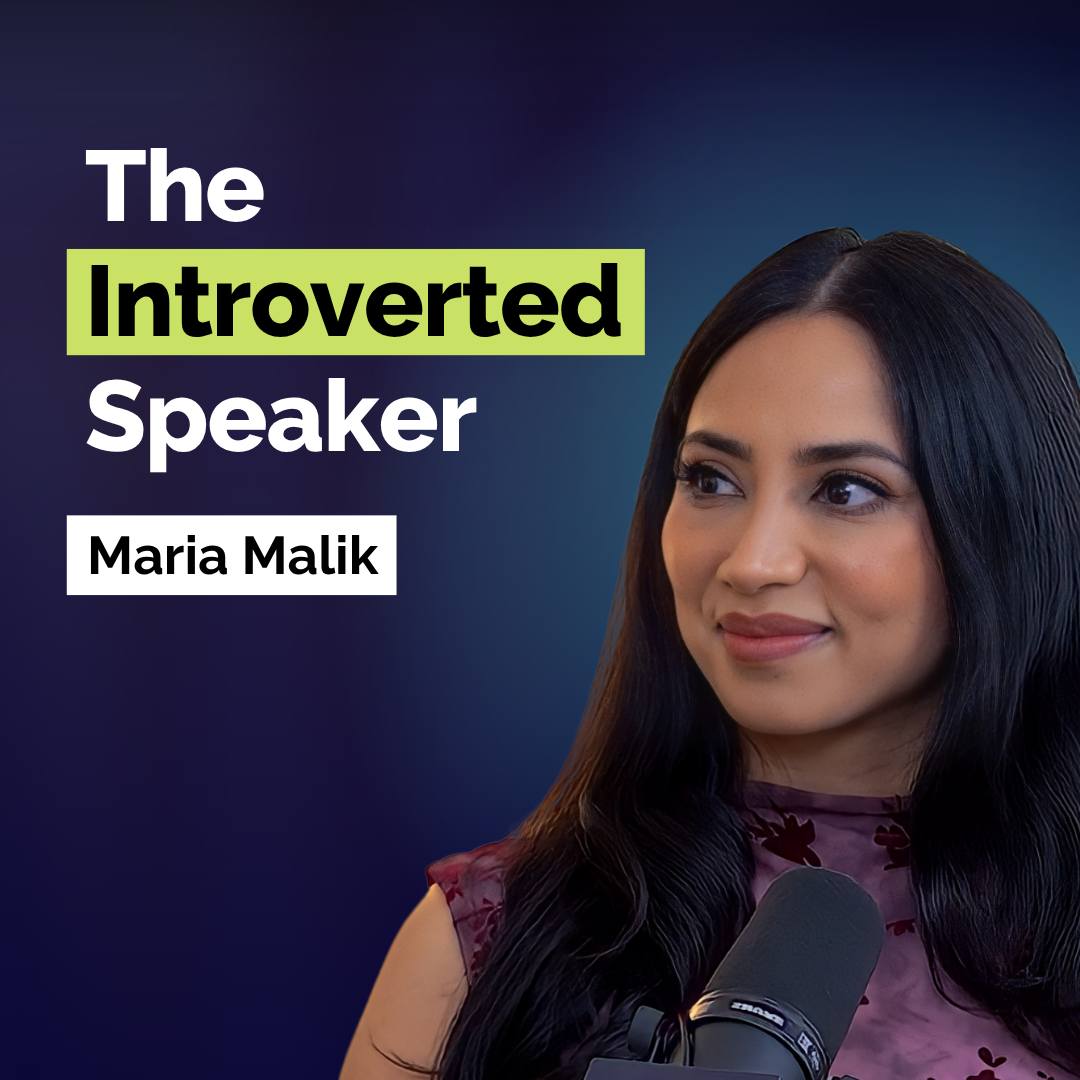
Maria Malik, executive speaking coach and founder of The Introverted Speaker. Born in Pakistan, moved to Canada at age four; eldest daughter of immigrant, religiously conservative parents who discouraged speaking loudly. She struggled in school (grade 11 first presentation: froze and read from paper) and later in corporate life, including a defining moment where she called in sick after over-prepping a Stanford job presentation.
Communication determines whether expertise becomes perceived authority; poor communication creates an “invisible tax” (lost promotions, invitations, opportunities, sales/investor trust). Nerves are useful (similar to excitement). Don’t memorize; embed content by explaining it to someone or using skeleton notes. Focus on audience signals and engagement (questions, quick exercises), not self-monitoring.
Starting the “clock early” via a panel before a 400-person Toronto speech; avoiding the “worst” habit of re-reading notes right before; using a Z-pattern for eye contact; coaching the host on pausing, eye contact, ending with conviction, and removing softening language.
0:00Most people, they're so worried about the self. What am I doing? Do I look good? Am I okay? Am I going to be judged? Am I going to remember my script or my presentation that you forget, hey, there's a whole audience in front of you. Focus on connection a lot more than performance. I think that's the most important thing when it comes to public speaking.
0:14Hala Taha: You can be brilliant at what you do, but if you can't communicate that brilliance, people may never see you as an authority. The good news? You don't have to be an extrovert or the loudest person in the room to command attention. And that's something my guest and close friend knows firsthand. Maria Malik is an executive speaking coach and the founder of The Introverted Speaker. I think as introverts, we prep so much because we want to be so perfect. We put in all this extra effort, all this preparation, and then sometimes that becomes cognitive overload and you don't do so well. Worst thing is looking through your notes again, right before.
0:48How would you recommend an introverted speaker or any speaker prepare for a speech? Call up a friend and say, hey, can I explain my presentation to you? When you explain things to people, it gets embedded in your head much better. So then now when you actually get up, you'll remember what you have to say. You won't have to memorize. Let's say sometimes you just absolutely don't have the time and you cannot explain something to someone. I like to create something I call skeleton notes. What you could do is... What is like your favorite thing to do 60 seconds before you go on stage? It's all about like starting your clock early.
1:18One of the reasons people are afraid is because as soon as they get up, that's when the first 10 minutes you're the most nervous. You're more likely to go blank. You're more likely to mess up. If you can't do that, one of the easiest things that you could do is... Maria, welcome to Young and Profiting Podcast.
1:32Hala Taha: Hi, Hala. So excited to be here. Thank you for having me. Of course. It's so fun to have my friends on the podcast. We've been hanging out basically all year since you moved to Austin. We first met on LinkedIn. We were just like LinkedIn friends. And now you moved to Austin. We've been hanging out all the time. And I was like, I got to have you on the podcast. We got to talk. Fun fact. I moved here because of you, Hala, because you told me how great it was. and I was like, I was ready for a new place. So when you told me Austin's amazing, I totally believed you and you've been right. It's been so much fun.
2:01I'm loving it here. Well, you had a built-in friend right when you got here. I did, yeah.
2:05Hala Taha: But today we're gonna focus on communication because you are a communication expert. That's what you've been teaching for so many years. And first I wanna talk about the stakes because the stakes with communication are really high. Like it's really important, especially for entrepreneurs to be a great communicator. So let's talk about the stakes. You can be great, but not necessarily recognized as being great. Talk to us about that. Great topic, first of all, to start with, because I've been working now with so many different types of people. And the majority of what I'm seeing is people coming to me.
2:40They're so smart, first of all. They're so brilliant. But then you put them on a stage in front of people and they sound like they have no idea what they're talking about because they get nervous or they just don't know how to communicate their expertise. So to answer your question, you know, what is at stake? It's your entire brand is at stake. Your entire company, your entire business, your entire, the revenue, like everything at that point is at stake. Because if you can't communicate your value, if you can't talk about what's in here, people don't understand you then. And if they don't understand you, a confused mind, you know how they say never buys.
3:11So if you're not able to portray everything that's in here, then people will just not look at you as an authority or an expertise at something.
3:18Hala Taha: You can basically be an expert, but not necessarily an authority. So talk to us about the difference between expertise and authority. Exactly. So when it comes to expertise, I know there are so many brilliant entrepreneurs, business owners, you've probably crafted and, you know, perfected your craft. But the problem is when somebody asks you about it, you don't know how to talk about it. So the difference is that expertise is you being great at something and authority is how people perceive you. So do people perceive you as somebody that's also great at something or not? Because those are two very different things.
3:52Could be so smart, but how are people going to know unless if you can talk about it and you can demonstrate it?
3:57Hala Taha: Yeah. And sometimes it's the person who's not so brilliant, not so smart, who's just like the loudest person in the room who's perceived as the authority. Exactly. And I think some of us know this type of person. You're like, how did you move up before me when I do all this hard work? I'm so great at what I do, but people respect you and look at you as an authority figure. And it's kind of annoying, to be honest. Yeah. Well, you talk about this in your new book, The Inverted Speaker, this invisible tax that you pay when you're a communicator that isn't so great at communicating. Tell us about that.
4:28Yeah. So The Introverted Speaker, when I wrote that book, I was thinking about, OK, what are we losing out on? And I use myself as a prime example. So for me, I was so quiet. And the things that I was losing out was, number one, on jobs that I wanted. I was losing out on the promotions that I wanted. I wanted to get invited to events at work. I was losing out on that. So I wasn't able to network as well. When I started my business, I was losing out on opportunities because I was so afraid of public speaking and getting up in front of people. So the list kind of keeps going because if you can't get up in front of an audience and speak, then how are people going to know about you?
5:02If there's no visibility, how will people want to work with you? If they don't understand you, why would they invest in you? So it's just, the list just goes on and on.
5:10Hala Taha: Yeah. So when I think about invisible tax for entrepreneurs, I think about the fact that when you're an entrepreneur, it's not school. No one's giving you feedback, right? It's not like you're presenting in front of a teacher and then they're going to tell you, you did this wrong, you did this wrong. When you're doing a sales pitch or an investor pitch, people are just not going to buy from you. They're not going to invest in you. They're not going to tell you you didn't communicate effectively or you sounded unconfident. They might not even know why they said no. That's so true. So there's an invisible tax in being a poor communicator because people don't trust you enough to buy from you or invest in you.
5:46Hala Taha: Exactly. And that's why when people call communication a soft skill, I'm like, are you serious? How is that a soft skill when if you don't have the communication, how will people know about you? Why would they even want to work with you? So for me, it's definitely a hard skill. And I'm honestly so surprised that we don't get taught this in school. Yeah. Well, you actually have a really interesting backstory. story and you didn't grow up as this like really we're actually very different. We were just talking offline. We look like sisters, but our personalities are actually very different. Like I grew up wanting to perform in front of everyone, sing in front of everyone, be on stage.
6:21Hala Taha: I get energy from being on stage. I'm a real extrovert. I've always been my whole life. I love to like walk up to people, start conversations. I love social gatherings. And you were quite different. We both grew up with immigrant parents, but we just ended up being very, very different. So talk to us about being an immigrant or your parents being an immigrant. You were actually born in Pakistan, right? So tell us about your upbringing and how that made you introverted. Of course. And I think so many people can relate to this. So first of all, I'm the eldest daughter of immigrant parents. I was born in Pakistan.
6:53I was about four years old when we moved to Canada. And my parents were so afraid of this new world because it was completely unknown to them. And I think they installed that fear in me as well. They're like, hey, Maria, don't go out there. You know, don't be too loud. Like they just wanted to fit in, just work hard, you know, build their lives. And that was it. And that was what was taught to me as well.
7:13Hala Taha: And really religious too, right? So even just like women are more conservative. You grew up Muslim, right? So more conservative, more like don't speak up, that kind of stuff. Exactly. I was always told that, you know, a woman's voice should not be heard, that you should just be there. You should be useful. You should be helpful, but stay quiet, Maria, don't speak too loud. So naturally, I became very introverted. And naturally, I just became so afraid of the world, to be honest. And I think that's why I became an introvert. And it was fine for a while, like I was getting by. But then, you know, after school, after university, and then now in the corporate world, I was really struggling.
7:47And I was like, something needs to change. Like, this is not okay. So yeah, being an introvert was something I had to really, really, like, I feel like I had to just work extra hard to do everything that would come naturally to extroverts.
7:59Hala Taha: Yeah. Tell me about a time when you were a kid where you had to do something that was like communication related. And like, what happened? Like, how can somebody tell if they're like naturally an introverted speaker? Great question. So I remember this one time I was in grade 11 and I had to give my very first presentation. And I really looked up to my teacher because he had so much faith in me and it was just like such a good environment. So he, we had to do our first presentation and the night before, like I was completely ready. I was like, oh, I can't wait to do this. I put in so much work, so much effort into my presentation.
8:35The next day when it was time for me to get up in front of people, by the way, it's my first time ever in like grade 11, I freaked out and all I could do was read. So I literally had a paper in front of me and I did not look up once. I was just reading, I was reading and I was like, okay, whatever. I got it done with. But then my teacher came up to me and he's like, what was that? He literally said, what was that? Because he saw me in other areas and he knew that I was so much more than that. So I was like, I don't know. I was just so scared. And he's like, Maria, that was like, he pretty much said that was horrible without saying it was horrible.
9:07And that's when I'm like, okay, what is he talking about? Like, wait, was it really that bad? And that disappointment that I heard from him like really stuck with me. And I think at that point I knew, wait, something's not right. Because after everyone else that went, like people were so energetic and they were just, they were commanding the room. And I kind of wondered, wait, why can't I do that? Why was it so difficult for me? So I think that was a time that really kind of shifted things for me.
9:31Hala Taha: What is the difference between how an introverted person shows up before speech who isn't trained or coached versus an extroverted person? Great question. I think as introverts, we prep so much because we want to be so perfect. We want to make sure that we connect with the audience. We do all of that. And because we're so introspective, we think too much. And the way that we show up, like we have to almost like prepare everything. I think what extroverts do is they naturally rely on the audience and their energy to give them more energy to keep going. So I do think extroverts need less preparation.
10:06Introverts, because we overthink everything. And I do think more introverts are perfectionists. The way that we show up is we put in all this extra effort, all this preparation, and then sometimes that becomes cognitive overload and you don't do so well. So that's why I started this, the whole introverted speaker thing, because I felt like nobody was teaching it from our perspective.
10:26Hala Taha: Yeah. I'm going to ask you so many questions about how to prepare and everything like that. But I first want to ask you, for all these years, you've been teaching communication for a handful of years now. Do you still get nervous before you go on stage? Absolutely. And I think nerves are good. They're not really bad. I think we've given such a negative connotation to nerves. I think nerves just means you're taking this seriously. And I would want to be a little bit nervous because it does make me prep a little bit better. It does make me think a bit harder. And nerves at the end of the day, they just tell you that, yeah, like I take this seriously.
11:00So I do think they are important. And absolutely, yeah, I still get nervous, but I've learned to manage it so well. And I think that's what people like to learn from me. Like, how do I manage this enough that I want to keep doing it over and over again instead of, okay, that was terrible. Never doing that again.
11:15Hala Taha: For me, when I think of nervousness, nervousness is actually a very similar emotion to excitement. It's just, it's like anxious and excitement. So I try to tell myself, okay, like I'm anxiously excited. Let me take out the anxious, you know, I prepared and I tend to tell myself like affirmations, like you prepared, you're super smart, you deserve to be here. And I love to tell myself affirmations before I go on stage, just like bigging myself up because I know I did the work and I'm ready for that moment. And that really helps me. What is like your favorite thing to do 60 seconds before you go on stage?
11:54Hala Taha: Yeah. First of all, what you said, affirmations are great. I think that's so powerful. So for me, 60 seconds, and this is something I love telling everyone, it's all about like starting your clock early, right? So one of the reasons people are afraid is because as soon as they get up, that's when the first 10 minutes and based off of studies too, you're the most nervous. You're more likely to go blank. You're more likely to mess up. You're more likely to feel like, oh, I never want to do this again. You're basically warming up in front of your audience. Exactly. So with those 60 seconds, it depends on what environment you're in.
12:23Let's say, I'll give you an example. I was doing a big speech in front of about 400 people in Toronto, and it had been a while since I did that. So I knew I was going to be nervous. So what I asked the organizers of the event, I was like, hey, instead of just putting me on directly, can we do a panel before? So that helped me start the clock early. So we had a panel, I was sitting down, people asked me questions. And then after that, it was my segment. Now, of course, not everyone can do that. So if you can't do that, what I would say is start that 60 second clock early, go up to people and say, hey, I'm Maria, you know, so excited to meet you.
12:56Was there something specific that you wanted me to talk about when I present? Start that clock early. Once you start talking early, it just becomes easier because now that one minute before you're a bit more relaxed. You've already started speaking and you now know somebody in the audience too. Yeah. So it takes away from that pressure a little bit.
13:12Hala Taha: And you don't necessarily even need to do it. Like that's something that you could go like half an hour before and go like, basically you're saying like, go sit in the crowd, go engage with people, be on before you actually have to be on so that you're already warmed up before you get on stage. Exactly. It makes a big difference. What's the worst thing you could do before going on stage? The worst thing is looking through your notes again. Oh. Right before. Yeah. And I know a lot of people do that. What I say is even just 24 hours or, you know, the night before, just stop looking at your notes.
13:44You're not going to be able to retain that information. If anything, you're going to put more pressure on yourself at that point. Yeah. So don't try to look at those notes again. Whatever you do, do it the night before. Sleep on it the next morning. Get ready. Dress up. Have a nice meal. Take that pressure off of yourself.
13:58Hala Taha: Yeah. I'm like psychotic when it comes to preparing for presentations. So typically what I do is I create my slides. Okay. I create an entire script. Okay. Word for word script. Oh, do you memorize it? Sometimes. Okay. And I will, yeah, I do memorize it. Okay. And I will record it. And then I listen to that recording over and over again. Usually I'm like a procrastinator. So it's like not done until like one or two, if it's two days before, like I did an excellent job. But usually it's like the day before I finish it. And then for like 24 hours, I'm just listening it to over and over. And I basically like crash memorize.
14:39Hala Taha: That's actually how I study for my podcast too. Like I crash memorize for 24 hours what I need to memorize. And then it kind of goes away after the moment goes away, you know? Because a lot of my presentations are actually timed where I have like 15 minutes or 30 minutes and I can't go over. And as you know, it's easier to talk longer than shorter, right? So I try to like be concise. But there's been moments where that has worked against me. where I'll get on stage and like I'll miss a word and then it will like screw me up. Right. Exactly. Yeah. So it's like I know it's not perfect, but for the most part, that's kind of the process that works for me that at least keeps me to time.
15:16Hala Taha: OK. And the more that I have it memorized, the more that I feel comfortable to actually go off script. Right. And like and like wing it. How would you recommend an introverted speaker or any speaker prepare for a speech? Absolutely. So I'll tell you, me personally, I hate memorizing things because I feel like my My memory is not that great. So I know if I forget one word, like you said, then it messes with my head and then I'm going to forget something else and my energy will be off. And most of my clients that I work with, they tell me the same thing. I don't love to memorize. So what I like to do and what I have my clients do is, so let's say you've prepared your slides.
15:48Okay, get your slides done. Call up a friend and say, hey, can I explain my presentation to you? So as you're going through each slide, explain to them what you want the audience to get from here. for example, let's say I have my first slide open and I'm talking about a presentation that I missed. So I'll be like, hola, okay, so this is what I want to do here. I want people to understand that this one time I had a presentation and I was so sick to my stomach that I stayed up until 3am. And because of that, the next morning, I felt like crap. I had no sleep. I was so nervous and I ended up calling in sick.
16:19So yeah, when you explain things to people, it gets embedded in your head much better. So then now when you actually get up, you'll be, you'll remember what you have to say. You won't have to memorize and you'll go through the entire thing without forgetting what you need to say. So explain things to people. That is the number one thing. Another thing, let's say sometimes you just absolutely don't have the time and you cannot explain something to someone. I like to create something I call skeleton notes. And I have so many examples of my clients that have done this and they've seen some great stuff happen.
16:49So skeleton notes, what you could do is think of it like a brain dump. So everything that's on your mind. And by the way, one of the reasons why we're so nervous about public speaking is because we're getting that cognitive overload. So if you feel like you put too much pressure on yourself, you don't want to memorize, take everything out of your head, put it onto paper and organize it in a way that's easy to understand. Again, not memorize, to understand. So you're going to make a bullet point. Point one, I'm going to talk about presentations and have your bullet points there. Write down two or three things you want people to remember and you want to talk about during that time.
17:22So again, it's just words, a couple of words. You're not writing down the whole sentence. So skeleton notes are, they're such a great way for you to, again, release that cognitive overload for you to release that pressure, but still be able to have a structure while you're speaking.
17:36Hala Taha: Yeah. So basically like a couple words that will just like help you remember what you're supposed to say. So it's like cliff notes. Yeah. Kind of like a prompt. Yeah. It'll remind you, oh yeah, this is what I'm supposed to talk about. Yeah. This is the next thing that I need to talk about. I also find that like when you're the actual one who made the presentation and like put the thoughts together, that it's way easier than presenting something that somebody else did. Like my team will always try to like make presentations for me and like I'll get it and I'll be like, I'll have to redo it all so that I feel like it's mine and then I can actually present it.
18:08Hala Taha: Yeah, absolutely. Definitely make your own presentation. Yeah. Okay. So what is something. So you said, don't look at your notes before you get started. What do you do in terms of like customization or audience preparation? Does that matter at all to you when in terms of like connecting with the audience? Absolutely. I think the biggest problem right now is also people present because they think that I have to perform and I have to be so great. And they forget that your audience is there, right? 50 % of public speaking and a presentation is your audience. So be open to improvising if you need to.
18:47And here's the thing. Look at your audience. Most people, they're so worried about the self. What am I doing? Do I look good? Am I okay? Am I going to be judged? Am I going to remember my script or my presentation that you forget, hey, there's a whole audience in front of you? Instead, look at your audience. They're going to tell you how you're doing. So if you see them on their phones, if you see them yawning, if you see them laying back a little bit, okay, that means they're getting relaxed. if they're talking to the person next to you, that means you're actually doing something wrong. It is our job as speakers to keep them engaged.
19:15So of course, ask questions. And if you've been speaking for, let's say 20 minutes and you can see people are getting tired, stop, maybe do a quick exercise. So engage with your audience, focus on connection a lot more than performance. I think that's the most important thing when it comes to public speaking.
19:31Hala Taha: Tell me more about that, connection more than performance. When you're saying performance, like what do you mean exactly? Yeah. So I'll give you an example. I have all these clients that I work with when I'm like, okay, I'll get to know them a little bit. We'll be talking. I had this one client, Shalini. She was so bubbly, so friendly. She's like, hi, I'm here. I'm so excited to be here. And then I'll be like, okay, Shalini, can you talk about X, Y, and Z as an exercise? And she'll be like, okay. And then it's almost like she had like this reporter voice. She'd be like, hi, my name is Shalini.
19:57And today I'm going to talk about this. So it's like a whole different person. And I can tell, I'm like, Shalini, that's not you. When I talk to you, you're just like bubbly. You have much more relaxed body language. You're so much more fun to listen to. So that's the performance of what we think a great speaker should sound like. We try to become that person. And then, of course, it's no fun anymore because you're like, it's almost like icky. It's like, that's not me. Versus imagine you get up there and you could be yourself. You can have fun. You could talk to people. You're exchanging really good energy.
20:26I do think public speaking is an exchange of energy.
20:29Hala Taha: So imagine doing it that way. And then you walk off and you're like, wow, that was so much fun. I want to do it again. I find that when I am speaking in front of like 50 people, it's a lot harder than speaking in front of like 7000 people like I did at Funnel Hacking Live, because when you're on a stage with thousands of people, you can't really see anyone. It's just like lights. And so you just kind of like look around and like you can't really see anyone. But when there's 50 people, sometimes I find myself like looking at one person and I think that person eventually gets like uncomfortable, right?
21:02Hala Taha: Yeah. You talk about this Z pattern that you use so that you can look at all different. And I love this. Tell us about that. Sure. So one of the hardest things for people to do when it comes to public speaking is figure out where do I look? Because especially if there's a lot of people and it's scary when there's 50 pairs of eyeballs looking at you. So if you are in front of your audience, one of the easiest things that you could do is form a Z pattern. So pick four people in your audience, find one person on the top left, one person on the top right, one person at the bottom left, one person at the bottom right.
21:32And as you're going through this, look at those four people. Only look at those four people. And you see how when you're making that Z pattern to the audience, it looks like you're scanning everyone and you're looking at everyone. But really, you're just focusing on four people. I don't know about you, but I think it's much easier focusing on four people than 50.
21:49Hala Taha: Yeah. And then it just looks like you're just scanning all areas and you probably look more confident because you're not just looking at one place or at the slides or something like that. How about body language? Something that I loved learning from you is that like the smaller the opportunity, the smaller your hand gestures, the bigger the stage, the bigger your hand gesture. So how big or small, like in this podcast interview, like am I doing too much right now? You're actually doing really good. Okay. Yeah. So I'll tell you how to kind of figure out what to do with your body language. First of all, use your body language.
22:23Most people don't. When they're speaking, they're just like, they're so, you could tell they're nervous. They're like holding themselves. Their shoulders kind of go up. They're so constricted. So first of all, relax your body because people can tell. People pick up body language very, very quickly. It's almost like when you meet someone and you're like, hmm, I really like this person. And then versus when you meet someone, you're like, I don't like this person. It's because of the cues they're giving you with their body language. So in order to answer your question, Hala, how big should your body language be, almost imagine like you're holding your audience in your hands, right?
22:55So if like, right, if there's like 50 people, I should be able to hold them in my hands like this. That's how big it should be. If there's a thousand people, okay, now we're here. See how I can picture everyone in my hands here. More than that, then you can get bigger. So that's how you decide how big your body language should be. But for the most part, not all of us go and speak in from 50 ,000 people, right? For the most part, you shouldn't be crossing your hands from here, your eyes and your belly button. That's where you're really going to be working. So it's this little space right here. Okay.
23:25And of course, the other thing with body languages,
23:28Hala Taha: especially your hands, show your palms. The more you show your palms. That means like open friendly, right? Think of it when you're like, when you're lying, when you're lying, you're like, no, it wasn't me. Versus, yeah, it was me. She's like crossing her arms for everybody listening on audio. But I thought that when you don't show your palms, it's like actually more authoritative. Like if I'm like trying to tell my team something really serious or if I'm like running for some sort of like politics thing, like, you know, a politician, you want to actually not show your palms, right? So that you look more of like a leader.
23:59I think you should still show your palms. It's how you do it. So when you're explaining something, that's when your hands should be open. That's when they should be moving like this. But I like what you did there. When you're trying to show people, hey, this, I mean business, you're still showing your hands, right? But again, there's a lot of movement. So when I say don't, when I say show your hands, I mean, avoid putting your hands in your pocket, avoid putting them behind you, avoid crossing your arms. Now you're barely seeing my palms, right? Here, you're still somewhat seeing the palms. So this is still okay.
24:27Hala Taha: Yeah. So for the most part, keep your hands open. But when it comes to showing more authority, you just have a bit more stern body language. Like this was stern versus guys, I need you to do this versus I need this done. Yeah. See how it's two very different messaging to your body. What do we do with our feet? Great question. Depends on if you're sitting or standing. So if you're standing, work with the room that you have. Don't just plant your feet in one area. So move back and forth, go left and right. But it should be very subtle movements, nothing too fast. Because once you start moving fast, then it's like, oh, you start looking like you're fidgeting and you're nervous.
25:02So have nice fluid movements. Avoid being diagonal. I see some people go diagonal and that's confusing to your audience. So one step to the left. but for the most part, make sure your chest is facing them and you never turn your back towards them. Come back to the middle, go back to the other side. You can move back. When you're saying something important, lean in, take a step forward. So I wish we were standing. I could show you
25:23Hala Taha: better. But the point is have movement. Don't just stay put the whole time. But when you're saying something very important that you want them to remember, that's when you should stand still and change everything up and say what you need to say. Yeah. And speaking of wanting importance around what you're saying, taking a big pause before or like slowing down also helps as well, right? Absolutely. Think about your favorite speaker. Do you ever see that speaker rushing through everything? No. They're almost like so present in the moment. And they pause because they want to show you that they're comfortable around you.
25:58There's no rush. And also, you have to understand nowadays too, audiences, they have such short attention spans. I blame TikTok, honestly. I blame TikTok because people just want the next thing like, okay, keep it moving. So when you pause, you let people absorb that information, retain it, and then they don't feel like it's too much. Because when people feel like it's too much, then they don't want to listen anymore. You've lost your audience. It's like information overload.
26:22Hala Taha: So it's like slow, don't say too, too much. That makes a lot of sense. Okay, let's go back to preparation because something I didn't ask you about, my team makes me presentations, but now AI is making people their speeches and their presentations. What do people have to watch out for with that? You have to remember that, first of all, I love AI. I will say this and I use AI for a lot of things, but AI will never think the way that you think. So yes, you can use AI, like jump your ideas in there. Say, hey, AI, this is what I want to talk about. I do this all the times, even with my trainings. I'll be like, hey, this is what I want to teach.
26:58These are my ideas. what do you think? And then it's going to give me a list of things. Let's say it gives you a list of 10 things. Do this. Talk about this. Out of those 10 things, there's going to be maybe three that you should actually take away. So yeah, definitely use AI, but don't let it replace your mind. Because trust me, I have tried this. I've created content sometimes using AI. And I'm like, oh, this looks great. And then it just doesn't resonate with people. Versus when I take my ideas and then throw it into AI and say, hey, let's work with this. Then we come up with
27:27Hala Taha: something great. I think the moral of the story is do the first draft. Do the first draft yourself. Use AI as a sparring partner, not to like create it for you. Absolutely. Does doing more reps actually help you become a better speaker by default? No. Why? So you could keep doing the same thing over and over again and be doing it wrong. So yes, reps help if you're going to go back and watch it, point out what you did well, point out what you did wrong. So or if you get feedback from somebody, from a coach, from a friend, then yes, you get better. Because like I said, you could keep doing the same thing over and over again the wrong way.
28:05And you're never going to know until you look back and watch it.
28:07Hala Taha: Yeah. Did you ever have a client that did a lot of reps, but wasn't necessarily a good speaker? All the time. And this is the thing, Hala, also, I think most people don't realize that they're bad speakers. They think, oh, just because I can go up there and I feel fine. This is great. Let me keep doing it. But then when we go back and watch it, we're like, hey, did you notice you did this with your body language? Hey, why did you scratch your neck? What signal are you giving people here? Or look, you repeated this twice and you didn't really need to do that. So when we go back and watch it and we fix those things and then people do it again, each time they get better and better.
28:40And those reps are the ones that actually count, I think, at the end of the day.
28:44Hala Taha: Well, this is a great segue into a coaching session I thought that we could do where you could actually be my coach. And guys, I had not had time to prep for this. So I had AI write me the questions and I don't know them. And I'm going to give Maria my iPad. Okay. And you are going to, you've got some prompts. You don't have to say them all. Okay. Basically, I want you to judge me. I'm on the spot. I don't know what you're going to ask me. Okay. I'm going to just say it from my heart, how I would say it in real life. I might mess up and you're going to tell me what I messed up and how I can improve it.
29:16Hala Taha: Okay. Okay. Absolutely. All right. Welcome, Hala. Thank you. Today, we are going to talk about a couple of things. I have a few questions for you. Are you ready? Yes. Okay, Hala. So there are thousands of business podcasts out there. Why does the world need Young and Profiting? Well, Young and Profiting podcast is all about no fluff and actionable advice. I think what separates me from other podcasters is I really do my research. I study my guests. I read their books. And I try to make sure in that hour, hour and 15 minutes that we're together, that it's nothing but advice that can help entrepreneurs succeed.
29:56Hala Taha: Great. Okay. So should I tell you first? Yeah, why not? Okay. So let's talk about the stuff that you do that you do well, and then we'll talk about what you can improve. Sure. Okay. So something you do well, you have great body language. So you said the one, two, and three. And you're pointing at me and you're looking right at me. So you do have that. You do have great body language. What I do recommend when it comes to your eye contact, you do tend to look up a lot. So whenever you start, you look up. And you know why we look up? We look up because our eyes are literally looking into our brain like, wait, what was that thing?
30:23What was that thing? What was it? Like you're like looking for the answer. Yeah. So you don't want your audience to think, hey, you have to think so much about the answer. So when you start, look right at the person and answer. Okay. The other thing you could do better is pause a little bit at the beginning. I was like, boom, boom, boom. Yeah. You're like, oh, yeah, let's go. When we're doing that, that's almost like telling the person, hey, I just want to get it over with. I just want to get into it. But an authority figure, they stop. They look like they're thinking about it and they say, hey, that's a great question.
30:49And then they get into it. Also, before you answer the question, comment on the question. That's always a great thing to do. Oh, wow, Maria, I'm so glad you asked me that question.
30:58Hala Taha: Or, you know, I was just talking about this the other day with Hala. I actually like don't like it when my guests, when I ask them a question and they're like, great question. To me, I feel like they're buying time. and it's like obvious that they're buying time. Sometimes it's good to buy time. You don't have to do it every time. But you could also say, it doesn't always have to be that's a great question. I feel like you got to switch it up. Yes. Yeah. Don't keep it so basic. If you just say that's a great question, that's just like, okay, it gets repetitive. I was thinking about that the other day or I was just talking to my friend about that.
31:28Hala Taha: Exactly. And then it just sounds like, oh, now it's more of a conversation, right? And then it becomes a little bit more genuine. So one more thing I did notice, Of course, you're like me, Hala. You're like a perfectionist. You need everything to be so great. I suffer from that too. The problem with that is sometimes it comes off as like rehearsed and it comes off as, wait, people don't like perfectionism as much as they used to. Sorry, guys. So it's okay to let us see a little bit more of who Hala is. Yeah. Okay. So let's do that for the next one. Okay. So just relax a little bit. I'll try. Keep it easy.
32:03Okay. So Hala, another question for you. A potential client says Yap Media is too expensive. How do you respond? I'm going to try to look at you.
32:14Hala Taha: I did it again. I started looking in the wind. I'm sorry that you feel that Yap Media is too expensive. However, I feel like our price reflects the amount of work and effort it takes to run social media and podcast accounts. We don't cut corners. I stand up an A player team for all of my clients. And we do an exceptional job. We're an award-winning social media and podcast agency. And also, I'm really picky with my clients. We've got a wait list of clients pretty much at all times. And so if it's not for you, I'm about to be like, I'll just work with somebody else. Get out of here. There's the door.
32:57Hala Taha: That is not very good. Okay. So this time, first of all, body language is great. So you fixed what we talked about. What I was focusing on more this time was your actual content. I know. I was saying, I'm sorry. That's not. Yeah. So take out that softening language. I'm sorry. I don't really own it. Yeah. I guess maybe it's not for you then. Right. So you want to speak with a bit more conviction. I feel like what you're doing almost you're convincing me. Yeah. Hey, it's not like, hey, no, but it is, you know. So try not to convince me. And you're going to do that by not by taking away that softening language.
33:28The other thing I noticed was your structure. You start off great. So you're like, well, this and this and you go on, but you don't know how to end it. You're like, how do I wrap this up? I can see you getting nervous, right? So a lot of people struggle with this. The outro, I like to call it. How do you wrap it up, right? So what's the last thing you say? The last thing you say is just as important as the first thing you say. So we could talk about a couple of things you could have said here. You could have said, yeah, unfortunately, if it's not for you, then maybe another time. Does that sound good to you?
33:54Hala Taha: Yeah, or like, you know, let me know. So maybe now is not a great time for you financially, but if it ever becomes an opportunity, we're always here. Exactly. We're here when you need us. That's an ending. Yeah. So that's the only thing I would change. Should we do one more? Should I try? Yeah, let's do one more. Okay. Let's do one more. This is great. Good. You're doing really good though, Hala. You're really good. Okay. I like this one. Okay. So Hala, what's the single most important lesson you've learned about entrepreneurship? Oh, that's a good one. I told you guys I didn't prep, so I didn't think about this.
34:28Hala Taha: The single most important lesson that I've learned about entrepreneurship is that there's always going to be ups and downs and you can't get too high on the highs and you can't get too low on the lows. And in my opinion, the best place to be is like an even keel. Things are going great. They're going great. I'm positive. I'm happy. but also I'm not overdoing it in terms of my excitement because I know the lows are gonna come. And when the lows come, I try not to think about it as the end of the world. And I try to separate my identity from whether my business is doing good or bad. And also my mood from whether my business is doing good or bad.
35:08Hala Taha: Awesome. Okay, a few things I loved. Your pacing was much better this time. You weren't rushing. You weren't like leaning in trying to kind of convince me of anything. You were taking your time. That sounded more like an authority figure. You were taking your time. Your pace was good. There were some times you did increase your speed, which is good. Yeah. Here's the thing. With public speaking, the more variety you have in what you're doing and saying and how you say it, the better. Yeah. The more it keeps the audience engaged. So you do that really well. You did that really well. With this one, again, I think the ending, it was like, how do I wrap up?
35:39Hala Taha: I repeated it too much. Yeah, yeah. Yeah. So don't be afraid of ending with conviction. Say what you need to say and say, yeah. One thing you could do is repeat the question again. So you could say, yeah. So that is the most important lesson that I've learned about entrepreneurship. Anything else, Maria? Right. I love that. Yeah. You can end it that way. Your start was really good. I like that you were so honest about, wow, I told you guys I didn't prepare for this. Now we started to see Hala, the real Hala. And it looked less performative. Let's do more because I feel like we're getting really great like advice from this that I wasn't planning on asking you.
36:08Hala Taha: So I feel like just like ask me one, at least one more. For sure. Well, OK, this is a good one. And something I'm going to do here, Hala, is I'm going to interrupt you as well. I want to see how you bounce back from that. OK. So tell me about a recent business decision that you got wrong. Oh, that I got wrong. I guess the only thing that I can think of is, so I launched a new series called How We Profit. When was this, Hala? This was like three months ago. And a lot of my listeners probably have heard this series. I basically interview upcoming entrepreneurs. And the reason why I started this new series is because I have so many sponsors.
36:47Hala Taha: and I wanted to spread out all my sponsorships across more episodes. I didn't want so many commercials on every episode because we have so many sponsorship opportunities and I wanted to take them all and not say no. However, this has increased my recording cadence to two or three times a week when it used to be one or two times a week. It sounds like you don't like that. I don't. Why is that? Because it doesn't enable me to work on my business. And then I feel like I'm always scrambling. I'm always MIA. I'm always studying. and then I get like resentful, like my bookings team will do such a great job and I'll be like, why do I have so many interviews?
37:22Hala Taha: Or like, because you need them because it's on the schedule. You know what I mean? Because we've got sponsors. So I think I made a mistake by putting too much on my plate. Okay, I love that. So a few things you did here, that was really good. You were starting to veer off into the rambling category because you were like going here and there, but I liked how you brought it back. So that last sentence, you tied it all together. Great job with that. I really like that. Again, we're seeing more of you now, Hala. It's less performative. I also like that when I interrupted you, you didn't let that deter you from answering the question.
37:54You always brought it back. Great job with that. Your body language, it's looking a little bit better as well. It seems like you're opening up slightly more, which is great. I know right now sometimes like, you know, I do this too. I feel like I have to sit so perfectly. You were relaxing a little, but then you were bringing it back. So I really liked that too. One thing I would say when somebody asks you a question, so I interrupted you almost three times. So sometimes when we get interrupted, you could see it in people's face. You're like, well, why did you stop me? So I could almost see it in your face.
38:22You're like, oh. So instead of that, just be like, oh, yeah, actually, you know, almost like lean into it. Almost let the other person feel like, I'm glad you interrupted me and you stopped me. I'm going to keep going from here. That, again, shows confidence. It shows that you don't mind being interrupted. It's not like you're following a script. You can veer off to other things. So that makes you look a lot more like an authority figure as well. But yeah, good job.
38:43Hala Taha: Thank you for being my coach. How much do I owe you? It was great. How much do I owe you? I'll buy you a coffee. You're funny. Yes, I'll take a coffee. So Maria, back when you were growing up, when did you like decide like, it sounded like it was 11th grade where you were like, I need to turn this around. So I think 11th grade was the first time it came to me, but I still kind of brushed it off and I thought it was fine. I am going to tell you about a time where I was like, okay, enough is enough. Something needs to be done. And so when I was in, I got my dream job at Stanford University and I was so excited for it.
39:18I got the job and I started, you know, doing the job. Everything was going great until one day, my supervisor, she was like my manager. She's like, hey, Maria, you're going to have to do a presentation.
39:28Hala Taha: And I was like, oh, yikes. Okay. So I'm like, okay, I'm going to get over this fear. I had a fear of public speaking. I'm like, this is going to be the best presentation ever. So I start prepping two weeks before. The night before, guess what? I'm still prepping. I'm still memorizing. I'm still trying to get it perfect that it's 3 a.m. now. And the presentation was at 9 the next day. So I wake up at 8 and I felt sick to my stomach. And I literally, holla, I called in sick. Oh my God. I still, till this day, I'm like, wow, how did I do that? Like, I disappointed myself. I disappointed my manager.
40:03I disappointed everyone else that was going to attend. And so that was the defining moment for me. I was like, I can't continue like this because I was so ambitious. There was so much I wanted to do. And I'm like, if I can't get up and speak in front of people, then how am I ever going to make it? Yeah. How are you going to move up the ladder? That was that defining moment for me. I'm like letting people down, not just myself, but other people. I was like, yeah, this needs to change.
40:25Hala Taha: Who did you learn from? What did you do in those like early days? Yeah. So as an introvert, I did what everyone else thinks we should do. I started watching YouTube videos. I started reading books. I start practicing in front of the mirror. But I think it wasn't until I hired my first coach and I started to get feedback that it really pushed me to do better. So I tried everything under the sun, everything. And I think that's why my programs now were so great, because I know, especially from an introvert's perspective, what works and what doesn't. Yeah. So that was it was a mix of everything. What are some of the first things that you tell like if you had me as a client, what would you make me do?
41:02Yeah. So it would depend on where you are, because sometimes I have clients that are coming in that have a severe case of they're so afraid of public speaking. So if it was someone like that that came to me, the first thing I would do is work on their mindset and figure out where is this fear coming from. So there's actually seven different types of fears when it comes to public speaking. Think of it this way. When we say I'm afraid of public speaking, nobody talks about what does that mean? What does that mean? When you're afraid of public speaking, the most common ones are number one, you have a fear of failure.
41:30Number two, you have a fear of embarrassment. Or number three, you have a fear of judgment. So are you looking at people and thinking they're going to judge me for what I say? If it's that, we approach it very differently. Because if you feel like people are going to judge you, then you want to build a better relationship with people. If you have a fear of failure, okay, where is that coming from? And when I work with my clients with this, it's honestly, it sometimes turns into a therapy session.
41:54Hala Taha: I was going to say, it sounds like therapy. We go back to like, okay, and a lot of the times with fear of failure, what I see is that these are kids that are usually the eldest child. They are kids who have parents that push them and want them to just be so perfect. So they're afraid of disappointing their parents. They're afraid of disappointing their teachers, their managers. That was me, right? I had a huge fear of failure. So it really depends on where you come from. That's number one. Sometimes people will come to me and they've been speaking for years. They're like, yeah, you know, I'm not bad.
42:25I just want to get better. And then with them, what they just really need is the fine tuning and structure. So there's a lot of people, especially extroverts, that when they come in and because they're experts, people ask them questions and they ramble. They'll talk about this topic, that topic, this, this. And then I did this and then this. And your audience is just like, when is this person going to stop? Right. So with them, I focus more on things like structure. OK, how do you begin? What do you say in the middle? How do you end? How long should it be?
42:52Hala Taha: I'll wrap it up. Yeah, you guys, it's much more impactful if you speak for two minutes, give people the point, start with the conclusion, give people what they want, land that plane. And then if they have questions, let them ask for it. Don't just assume people would want to know everything. Because that's again, it's too much information overload and you lose your audience. I remember when I worked in corporate, I was a rock star. I used to get promoted all the time, but I would get two pieces of feedback. You're always late. And I talk too much. Really? I remember my man and I really hurt my feelings.
43:23Hala Taha: I remember my manager sat me down and he was like, Holly, you're wonderful. You talk too much in meetings. Oh, my gosh. Really? I made a career out of it, luckily. But what do you say to an extrovert in terms of like not, I guess, being too loud? I guess I was too loud. Yeah. So great question. What I want to say here is, so I teach a lot of different types of structures. And one of the most common ones is called PRI. So if you get put on the spot, use PRI. What is PRI? P stands for point. Get to the point. Start with the point. Tell people what the point is. R is the reason. What is the reasoning behind it?
44:01It should not be more than one or two sentences. And then the I, the impact. What impact does this have in terms of everything? Because a lot of times we'll talk about something and then we'll give the reason. And that's That's it. But we don't conclude it with that impact. Why does this matter? So if you follow a structure like that, P-R-I, again, it's going to make sure you're not veering off into different areas. You're only speaking for enough time and it's going to be a lot more impactful.
44:25Hala Taha: So two minutes tops, even a minute and a half should not be more than that. To be honest, when I reflect back at that moment, I feel like if I was a man that I would have never gotten that feedback. So I don't take it personally. To me, I'm just like, I'm going to keep being loud and contributing. Absolutely. And like you said, you made a career out of it, which is great. But I'm sure you've probably interviewed so many people, too. And sometimes you're like, did you you're not getting to the point? Like I asked you a question to get to the point. Exactly. Right. And it's great because things sometimes are recorded and you can cut them out, but you can't do that in person.
44:56You can't do that on stage. Right. So that's your point. You
45:00Hala Taha: like kind of lose your authority because you seem less intelligent when you can't just get to the point and you're just rambling or like, you know, bouncing from story to story. It just feels like you are not clear yourself. And most experts do that. It's the expert trap where you have so much knowledge about a certain topic. You want to, and it comes from a good place. You want to give everyone as much information, as much context, but you have to remember, again, short attention spans and people just want to know the answer. So start with the answer, get to the point, and then see if people have questions.
45:31Take it from there.
45:32Hala Taha: Maria, I want to talk about some of your client examples because you are such a phenomenal coach. You actually have a new book out called The Introverted Speaker, and you've been coaching for many years. So you've got so many great examples that I want to talk about. One of them was about a client that hated public speaking and then like entered some sort of a competition and ended up winning after he got coached by you. Tell us about that. Yes, I will never forget this client because he was a type be personality. So his name is Ethan. And he told me, Maria, please tell my story anytime. So his name was Ethan.
46:05And he would show up late to every call. He would be all scattered. You'd see his kids running around in the back. It was crazy. But he wanted to get better at public speaking because he was a business owner, a CEO of his company. So this one time, you know, after coaching him for a little while, he went on to this conference and he didn't even know he was supposed to do a speech. So he freaked out, but he basically sat down and he took about 10 minutes and he wrote down his skeleton notes. So again, that brain dump of like, what do I want to talk about? And he pretty much took everything out, wrote it on paper.
46:37He did the speech. There were 20 people and it was actually a competition as well. So he did the speech and in the end he won the best speech award. And the first thing he did was take a picture. It was a small little trophy and he sent it to me. And I was like, Ethan, what is this? He's like, oh my God, Maria, I just used your skeleton notes to create my speech in 10 minutes. And I won best speech award that night. Wow. And I was like, great. So what happened then? And he told me he had so many people come up to me, congratulate me, added me on LinkedIn. He got a whole bunch of leads. And he was like, it was so simple and easy for people to understand.
47:10He's like, this is going to get me more clients. So he's like, I'm so excited. This was like such a good feeling. So that was something that I was like, yeah, see, it's sometimes the simplest things. And you don't need to prepare for five, six days. You can literally in 10 minutes write down what you need to say. But if you know how to say it, it'll have such a good impact on people.
47:28Hala Taha: How about the entrepreneurs that are scared of being the face of their company? Have you ever experienced a client that doesn't want to be the face of their company when that's so important these days? All the time. I had this client. He basically created an AI LinkedIn tool and it was taking off. It was doing so well. He was getting all these podcast invites. He was being asked to get on all of these stages and he just kind of kept pushing them off, pushing them off. So we started working together and we worked on his delivery. We worked on his stage presence, his executive presence, because he was in a lot of meetings as well.
48:06And after that, he finally started taking on these opportunities. He's doing amazing now. Actually, I think he grew his LinkedIn following to like 50K or something. Oh, wow. Just based off of showing up and using a lot of that content. So his story is a great lesson for entrepreneurs because you as an entrepreneur, you as a business owner, people look at you as the face of the company. So if you don't know how to communicate, if you don't know how to speak, if you don't know how to tell people about your business, then again, you're losing business. You're you're harming yourself so badly. Right.
48:37And especially in today's world, Hala, everything is online. Yeah. Your face needs to be everywhere. It is. You do have to be the face of the company. So you have to learn how to communicate. If you don't, it's going to harm you and your business.
48:50Hala Taha: How did you like baby step him into being comfortable if he was so uncomfortable to be public facing? So we did a lot of different things. So one exercise I love telling people to do, and if you're listening to this, do this right now. Put up a camera in front of you, your iPhone, ask ChatGPT for a question. And this is a great exercise. Do this every single day. Ask ChatGPT for a question. Let's say, you know, what is the best thing you like about your business? Look at the camera and answer it. So like a mock interview. Exactly. Because you do have to build a relationship with a camera too. It's very different online versus on camera.
49:26and then you'll be surprised at what you see. You're going to notice maybe you're using filler words. Maybe you are showing fidgeting behaviors. You know, when you're nervous, you're like scratch the back of your neck. Women, we play with our jewelry when we're nervous. These are signs your audience are picking up on. So look back and watch and see what you're doing. So I had him do those, a whole bunch of those, submit them to me and I watched it with him. So we both watched. He's like, oh, I had no idea I said that. Oh, I say, you know, a lot. Oh, I look up a lot. Oh, I'm constantly like scratching my head.
49:56So once you see yourself, you see yourself through the lens of your audience. So however you're feeling in that moment, they're feeling the same thing in that moment too. If you're getting, you're feeling cringed, your audience is probably like, what's he saying? So that's a great exercise to do. Record yourself, watch it back, get feedback.
50:12Hala Taha: And like we were just talking about, being a poor communicator has an invisible tax as an entrepreneur. Again, like you lose sales opportunities, you lose investor opportunities, even like your team doesn't respect you or doesn't know the direction you want to take the company in because you can't clearly communicate or they don't respect your authority, right? Absolutely. So there's so many reasons why you should get better at this. Absolutely. Now, you actually had a client that did a TED Talk eventually. Yes, yes. I'll never forget her because she was that same client that I told you about earlier, you know, super bubbly, very friendly.
50:48And she actually came to me because she had to do so many presentations at work. and she was writing a script and memorizing it. And she used to tell me, Maria, every time I have a presentation, I'm dreading it because I know I'm gonna repeat that same script and I know it's just gonna be so uncomfortable. So just within six months, not only did she get off of the scripts and she started to enjoy those presentations, she also got promoted. And then after she got promoted, I got a message from her once and she said, Maria, you know what? I think I wanna do a TED Talk. And this was someone that was afraid of public speaking.
51:19And I was like, okay, let's do it. Let's get ready. I got her ready. And by the end of the year, she did her first TED Talk. And now if you ever go to her LinkedIn, it's like plastered everywhere. And she's like, it's the most credible thing I've ever done. And she's like, that was something. And it's not just about credibility. It's also for yourself. She's like, I kind of made like that girl in me happy, that little shy girl in me. And that's just such a great feeling, right? So even, yes, great for business, but for yourself, doing something like that, it's memorable. and it makes you so much more confident in everything else that you do in your life.
51:54Yeah. What made you want to write this new book? I wanted to write this book because I've now been working with especially introverts and entrepreneurs, executives for six years. And I felt like I had such a wealth of knowledge and from a different lens. It's called The Introverted Speaker because we do operate and perform and do our presentations and everything very different than extroverts. So I wanted people to, first of all, understand that there's nothing wrong with you. And I think that's something a lot of introverts think. Like, what is wrong with me? Why can't I do it? So I wanted a book for introverts that they can read, that they can see themselves in, that they can learn, and they could kind of get started in that process.
52:35Hala Taha: Because, yeah, there are a lot of books out there, but I don't ever see it from a perspective of how the introvert thinks. So that's why I created this book. A couple more hacks before we go. I want to talk about tonality. I've noticed that I've got some star employees that they end every sentence with uptalk. And then I feel like it's hard for people to pay attention to them. They don't sound as smart or authoritative, especially in front of clients. Yeah. How can somebody improve uptalk or know that they do it? And what are your suggestions in terms of like tonality? Yeah. First of all, tonality is so important.
53:10People don't realize this. Can I give an example for this? So when I was in university, I had two classes at 8 a.m., one on Monday, one on Tuesday. So one of them was about world politics and one of them was about English. So I went to both of these classes and I was so excited for the world politics because I was like, you know, it's like it's more interesting. Yeah. Both classes started off with completely full seats. And as the semester went by, the world politics class was completely empty by the end of it. And the other class, you would actually see people like extra students show up and sit on the seat.
53:42Hala Taha: Oh, my God. And we're just talking about like English literature. So the biggest difference that I saw between both professors was their delivery and their tonality. The world politics professor would be like, good morning, everyone. Today we're going to talk about. So people were falling asleep because he had that monotone. The other professor would make everything sound so interesting and his volume would go up and he would really exaggerate words and he would end sentences on a downward trajectory. So it felt more heavy. So that's what I mean when it comes to like how important tonality is.
54:13It makes a difference between people actually stay interested and listen to you versus zone out and fall asleep. So a couple of things you could do. I know it took me a while to get to the answer, but a couple of things you could do. Number one, increase your volume when you first start speaking. Bring it down as you're finishing your sentence, then bring it up again. So change up your volume. That's number one. Number two, exaggerate some words. Some things do carry more weight in that sentence. So figure out what that is. It could be, and we did this, or communication is so important. You see how instead of me just saying communication is so important, communication is so important.
54:49That so carries so much weight. Yeah. And then lastly, your pace.
54:54Hala Taha: Sometimes when you're saying something important, you really slow it down. Sometimes, let's speed this up a little bit so we can get through it, you know? So change up your pace as well. These are the three most important things when it comes to tonality. that's going to make you sound less monotone and more interesting. Now, something that I know that you always talk about is you don't want to change people's personalities. You're not like, hey, you're introverted. We need to make you extroverted now. How do you deal with like people who don't have a lot of charisma naturally or are just boring to listen to?
55:25Hala Taha: Just boring to listen to. So, okay, I'm so glad you brought this up. We were talking about this yesterday. There are speaker archetypes out there. So that means you don't have to be like every other speaker. I'll give you some examples of a very popular speaker, Tony Robbins. Everyone knows Tony Robbins. He is the archetype I like to call the energizer. He's got full energy. His body language is great. He motivates people. That's his strength. Not all of us can be that way, especially introverts because we have lower energy. So I, for example, I am the archetype, the teacher. I'm great at taking complex ideas, simplifying them so that people really understand them and retain that information.
56:02So I lean into that more. I'm not trying to be like Tony Robbins. I'm the thinker. And someone that's a think, sorry, the teacher is Marie Forleo. She's great. Yeah. So I lean more towards the type of things that she does.
56:15Hala Taha: Okay. And then with you, Hala, can I tell you what I think you are? Yeah, what do you think I am? Okay. You are something I like to call the archetype, the commander. Okay. An example of that is Mel Robbins. She is a commander, direct, to the point, very kind of polished. and your strengths are that you can really show people that you know what you're talking about without overpowering them. So you're the commander and you're leaning into that more and more, which is great. And this is the difference between when you get up there and you see like someone speaking and you tell them, you think, wow, this was a great speaker.
56:46It's because they're leaning into their archetype.
56:48Hala Taha: Yeah. So there's eight different archetypes. Figure out which one yours is, lean into that. That's what's gonna make you look so much more genuine and not like everybody else out there. Yeah. Well, I'm sure everybody tuning in wants to learn more from you. So where should they go? I would definitely say start with my book, The Introverted Speaker. You can get it at www.theintrovertedspeaker.com and start reading the book because I talk about fears in there. We talk about all this stuff in there. And of course, if you figure out what your archetype is, send me a message. Let me know what it is.
57:19I'd love to know on Instagram, on LinkedIn. I'm trying to be everywhere.
57:22Hala Taha: Yeah. Speaking of LinkedIn, this is where I wanted to go next. So we actually started becoming friends online first. So we're both LinkedIn influencers. I think, how many followers do you have now? Like 253 ,000. I got you by like 55 ,000 or something. I'm at like 300 something thousand. Awesome. LinkedIn changed my life. And I think LinkedIn changed your life too. Oh yeah. What kind of opportunities arose from starting your personal brand on LinkedIn for you? Yeah, wow, that's a big question. And I want to answer that before that. I do want to say that, Hala, remember I was telling you this? When I joined LinkedIn, I would see you and I would be like, I want to be like, Hala, one day.
58:04Hala Taha: I was literally like, because I had zero followers at this time. And I was like, who the hell is this new girl on LinkedIn? You know what I loved about you, Hala? I loved that you were like such a powerful woman, but you were still so feminine. You used to dress up and you were still like, hey, guys, like it was still you. I loved that. And you were still such a powerhouse. So you were literally my inspiration when I started LinkedIn. And the fact that I'm sitting here with you today, like blows my mind, blows my mind. But LinkedIn has completely changed my life. First of all, I left corporate and I started to market on LinkedIn.
58:37So I didn't have to get a job again. I became my own boss. I get opportunities till this day. As I was coming here, I was getting a podcast opportunity. Hey, Maria, we'd love to have you on my on our podcast. Would you be interested? It's opened up doors for me that I never even thought was possible. So when I say it's changed my life, like, like, I can't even explain how it did it because it's taken me from working in corporate to starting my own business, to now being on the most amazing stages, to meeting the most amazing people, to working with people that I want to work with, making my own schedule.
59:10And it's so rewarding at the end of the day. It is.
59:13Hala Taha: LinkedIn did similar things for me. Like it enabled me to be an entrepreneur, to grow my podcast, to have like career insurance. Even if I decide to shut down Yap Media today, I could get a job in two seconds because I have so much social proof on my LinkedIn. Over 300 ,000 followers, known as a marketing and podcast and social media. I feel like I could get a job tomorrow at like Spotify if I really wanted to, you know? And you've created your own brand, Hala. Nobody can take that from you. And I can this brand. Yeah. Something I like about LinkedIn is that it really evens the playing field. Like I have as just as much reach as Alex Trimosey and Mel Robbins and Gary Vee.
59:57Hala Taha: Same thing with you, Maria. We have just as much reach as these mega business influencers on LinkedIn. And we compete with those big dogs, even though on Instagram and TikTok, we're still growing. But there's just like less competition because people are sleeping on LinkedIn. Exactly. I will also say this, Hala, me being good at communication skills is what helped like push me to that level too. Because communication skills also show up, of course, like on camera, on video, in your writing. Yep. So I blew up the time that I blew up. I was writing a lot of my posts. And you went from like 2 ,000 to like 50 ,000 or something in like five months or something, right?
1:00:35Hala Taha: Or 100 ,000. I went to 100 ,000 in 5.5 months. I'll never forget that. So you went from 2 ,000 to 100 ,000 in like five months. Five months. Wow. It was mind blowing. It was mind blowing. And it's all because I knew how to write. I knew how to connect with my audience. I was using my communication skills in writing. It's so true. It's like because when you are actually writing yourself, back then we had no AI. Yeah, exactly. So we were writing it ourselves. We weren't using like all these tools to like fake it. Yeah. We were writing it ourselves. And there was like lots of emotion attached to it.
1:01:07Hala Taha: and LinkedIn really was like more of a writing platform. But me and you also were doing lives a lot. I used to do so many Q &A lives and that really helped me like think on my feet and like get those reps in like we were talking about before were those live sessions. And I know you did that a lot too. I did. I was doing them every week. It perfected my craft. It helped me reach a larger audience. Again, someone that was afraid of public speaking is now doing these things. And I knew I had to get better at public speaking communication in order to make it in life. And I know if somebody ever asked me now, Maria, what's that one skill that everyone should get better at?
1:01:41I will always hands down say communication.
1:01:44Hala Taha: Well, I've got something special to announce to everybody. I actually just launched a program on school called the LinkedIn Creator Club. Amazing. And basically, I am teaching people how to grow on LinkedIn because just like it changed my life, it changed your life. I want to help change lives and help people grow on LinkedIn. So you can find it on school. Just look it up, LinkedIn Creator Club, or look up my name, Hala Taha. And it's just$97 a month, which is way more affordable. My other class used to be like$2 ,000 for two days. I would hop on that right away because Hala knows what she's talking about.
1:02:20Hala Taha: I'm trying to get like volume this time, you know, like let's get hundreds of students. Let's make this accessible. I'm going to show up and do webinars all the time, teach people. I'm going to bring my friends. Yeah, I'm going to bring my friends like Maria. So while we're on it, like, what would you say was the number one reason why you were able to grow from 2 ,000 followers to 100 ,000 followers in less than six months? So storytelling. Yeah. Yeah, definitely. And as a communicator, you have to be able to tell stories. As a business owner, you have to tell stories. As an executive, you should be able to tell stories.
1:02:51And I'll tell you this, Hala, I do have a powerful story, but I also see a lot of powerful stories on LinkedIn. Like people are talking about them and they're not getting any views. They're not getting likes. It's because you have to know how to put it all together and really connect it to your audience and to your message. So it was definitely storytelling and being able to say, like articulate my thoughts, what's in here onto paper and for other people to understand.
1:03:17Hala Taha: Once you could do that, game over. Yeah. Game over. Something advice that I give my students is I have them create a story journal. You should do this with your clients if you don't. Okay. Where basically it's like, okay, we've got childhood, even like family, like generational history, right? Like I talk about like being Palestinian or whatever. Family, childhood, high school, college, jobs. Like, have you ever gotten fired? Did you ever get divorced? Were you fat and you lost weight? Like, what are all the challenges you've been through, all the failures? Write them down because it's so easy to forget all.
1:03:52Hala Taha: When somebody like wants to invite me on a podcast, my first thought is like, well, I don't have anything to say. And then I'm like, wait a second. Like, let me go look at my story journal. I've got a million stories, you know. You really want to think about your stories. And it's really easy to think that you have no stories. But people relate in the most simple things. Like, you want to be relatable. And a lot of the stories that happen to you probably happen to other people, like getting fired or whatever it is. Yeah. And I think sometimes, OK, I had this one person. I was on stage the other day and she was like, Maria, I feel so uncomfortable sharing my story.
1:04:23and I was like, you know, the more vulnerable you are, the more people connect with you. And I'm like, why wouldn't you want to find your tribe? So the more you talk about your stories, the more the right people will find you. Yeah. So it's okay to be vulnerable. I told the most personal story on LinkedIn and look at where it got me.
1:04:39Hala Taha: Yeah. Should we talk about it? We can. Sure. So you actually were, had an arranged marriage when you were 17. I did. Yeah. When I was 17 years old, My parents took me back to Pakistan and got me to marry to a man I didn't know. Wow. 17. I didn't even finish high school at this time. And I know for a fact that that is something that created this fire in me to be successful, to be all that. So the story was just, yeah, they took me back. I was in this arranged marriage. It was forced. I had no, I couldn't say no. Even when I tried to say no, my father was like, well, if you don't marry him, then I'm not your father anymore.
1:05:17Hala Taha: Imagine at 17 in Pakistan, a new world for me. So I really struggled. I was left there. I had to figure out. Your parents moved back to Canada. Yeah, I was there by myself. And while I was there, you know, I was struggling. Like I didn't speak the language that well. I didn't connect with the culture because I grew up in Canada. And I wanted nothing more but to come back. What's interesting is how while I was there, I found this author, Sidney Sheldon. And I started reading his books. It was the only English books that I found. and every single one of his books was about a woman going through some type of struggle.
1:05:52Hala Taha: And then somehow in the end, she becomes this big entrepreneur or a lawyer or something. And I feel like that really embedded in me somehow. So I was like, I need to get back, get back to Canada. So I found my way back in the way like I was visiting at one point. And when I came back, I was like, I'm not going back to Pakistan ever again, because not to get into the details, but there was a lot of stuff happening there. I just wasn't where I was supposed to be. I was miserable. So when I came back, I really fought to go to high school and finish high school. Then I really fought my culture, the Pakistani community to go to university.
1:06:27And I had to fight so hard to get a divorce because back then it was so taboo. It was just like, nope, you're not getting a divorce. He could hit you. He could cheat on you. It doesn't matter what he's doing. You cannot get a divorce. So I was here breaking all cultural norms, all cultural boundaries. You're the first woman in your family to go to college. and first woman to go to college. I was the first woman to get a job. I was the first woman to travel the world. I'm the first woman right now who's living on my own. First woman in my family to do everything, start a business. I'm hoping to become the first millionaire woman in my family.
1:07:00And honestly, it was tough. But the lesson here is like, if I can do it, because I was just a girl growing up in Scarborough, Toronto. If I could get this far, then anyone can, right? You just really have to want it for yourself and believe in yourself.
1:07:14Hala Taha: And it's funny, like the thing that really scarred you when you were younger helped propel your personal brand. It was that telling of that story on LinkedIn and it kind of went viral. I had 20 million views. Wow. And I was like, oh my God, I was like, great. It was probably really scary because you probably were thinking like, my family is going to disown me for sharing this publicly. Yeah. Was that hard? It was. I remember when I started to go viral, it was like a million views, two million views. I'm like, oh, should I delete this? I was literally like, should I delete this? I literally remember I just turned my laptop off.
1:07:53I went into bed and I'm like in my blanket. I'm like, great. What have I done? And the next day I got a call from my mom. She's like, oh, her friend called her and said she saw your post. And, you know, by then my family, because I had gone through so much with them already, they had accepted it. They're like, Mariette, go ahead. Tell your story. It's fine. So by then we had built such a good relationship that they were accepting of it. And I think that's why we're at such a good place now. But I got, for the most part, a lot of support for it. There was some like, hey, why are you making the Pakistani community look back?
1:08:27Or this isn't about religion. This is this. Like just so much back and forth. But you know what? It liberated me, Hala. Because this is something I was carrying with me as like guilt somehow, like it was my fault that I went through that. Yeah. It really liberated me. And after that, I felt like I could do anything.
1:08:43Hala Taha: I love that. I can do anything now if I've been able to overcome this. Yeah. So it was the most powerful thing I did for myself. And I feel like it's a good learning lesson for anybody out there who's just went through something really difficult. If you feel comfortable enough, sharing your story could really help propel your personal brand on whatever social platform you want to get started on. Like I remember I actually had a client, Stephanie Malik, who I grew her LinkedIn super huge. and she was homeless and she was afraid to tell the story. She was homeless when she was younger and now she's like this like super successful lady.
1:09:17Hala Taha: I know her. Oh, you know Stephanie? Yeah. Yeah. So she went viral so many times from telling that story. And when it comes to your personal brand, something you have to remember is you want to tell those stories over and over again. You don't share it once. You basically are rinsing and repeating 40 stories a thousand times each over and over again in different ways. Here's a fun fact. Okay. So I told my story the first time in January and it got one or two million views. And then my coach told me, tell it again, Maria, say it again. I'm like, no, no, no, no. The one, two million was fine. I think back then my family didn't hear about it.
1:09:49The second time I told it, the exact same story I posted, the second time it got 20 million views. And that's when I started giving the phone calls. That's when I had Toronto Life Magazine reach out to me and say, hey, we want to write a memoir about your life. That's when it really exploded.
1:10:03Hala Taha: So like you said, yes, telling it over and over again because sometimes it doesn't reach the right people. And to your point, it's like once something gets traction, you know that it hit a button, you know that it resonated. So it's like, how do you change the hook? How do you change the format? How do you just keep repeating the thing that got people excited and commenting and having a conversation so that you can keep going viral over and over again? It's like the trial reel strategy nowadays, right? Rinse and repeat. Yeah. And it's fun. I feel like everyone should experience going viral once because the stuff that happens behind the scenes that people don't see, like the messages that you get from people.
1:10:37I got so many messages, Hala, from men and women saying, thank you so much for talking about this because my sister's going through this or I went through this and I was so ashamed and I felt like my life was over. And you talking about it is making me realize, wait a second, there's still so much more out there for me. So it does, it touches a lot of people.
1:10:56Hala Taha: Now me and you kind of have like a moat on LinkedIn. We're kind of like spoiled where I feel like we don't, we want to grow on LinkedIn, but now me and you are both like, how do we grow? Yeah, we're comfortable because we have like a, it's very unusual to have like almost 300 ,000 followers on LinkedIn. There's really not that much competition. So me and you are kind of continuing to grow LinkedIn, but we're really focused on Instagram these days. Do you know how humbling it was coming from LinkedIn to like Instagram where I'm like with my two followers? Exactly. Well, you have 20 ,000 now, so good for you.
1:11:30Hala Taha: Yeah, I'm getting there. But you see how like learning everything on LinkedIn is helping me grow on Instagram because I've developed that skill. It's all about skills. So I would say start with one social media platform first. I know some people say go in all. I did the same thing. I focused on LinkedIn first. And it helped us. It gave us leverage. We were able to like quit our jobs, start a business, gain an audience. Hire people to help you. Create courses, like whatever we needed to do to make money. And then now we can like invest in growing on the other platforms, which we are slowly but surely Instagram, YouTube and all the other platforms.
1:12:07Hala Taha: But yeah, I love it. I'm I loved that humbleness that I had to like adapt to because I'm like, OK, Maria, how do we do this all over again? Because it's fun. Every time you go viral, it's like it's fun. Yeah, it's like new excitement. Well, Maria, this was such an awesome conversation. I feel like we touched so many different topics. I really appreciate you coming on. So where can everybody learn more about you and everything that you do? Sure. I mean, I would love for them to connect with me on LinkedIn, Maria Malik. On Instagram, Maria Malik Speaks. Of course, check out my book also, theintrovertedspeaker.com.
1:12:38I'm like, when I say Hala, I love this work I do. Like I found my thing and I feel so blessed to have been able to do that. Like I genuinely enjoy doing this work. So if you want to tell me about your stories, please send them to me. I love hearing about them. And yeah, just connect with me. There's so much I post out there. And I genuinely, at the end of the day, do want to help people, especially introverts.
1:13:00Hala Taha: Yeah. So yeah, definitely connect with me. If you're an introverted communicator, that's your girl, Maria Malik. Yes, exactly. Thank you so much for joining us on Young and Profiting Podcast. Thank you so much for having me, Hala. This was so much fun. I loved it. Young and Profiters, most people think communication is a soft skill. But after this conversation with Maria, I think we all don't see it that way anymore. because you can be incredible at what you do. You can be so super talented. But if you can't clearly communicate your value, people may never recognize your expertise. Maria calls out the invisible tax of poor communication.
1:13:35Hala Taha: Nobody's going to tell you that you lost the sale, the investment or the job opportunity because you sounded insecure, unsure, or you couldn't get to the point. They'll probably just move on without giving you any feedback. And what I loved about Maria's approach is that becoming a stronger communicator doesn't mean you have to change. You don't have to become an extrovert. You don't have to become a different person or performative. In fact, sometimes trying too hard, trying to sound too perfect or somebody that you're not can work against you. So instead of memorizing every word, try to understand your message deeply.
1:14:07Hala Taha: Like Maria suggested, you can talk through your presentation with a close friend or use skeleton notes to just keep yourself on track and talk naturally. You still prepare, but you leave enough room to actually connect with the people listening so you can pay attention. to their body language and adjust your presentation accordingly. And I actually experienced some of this firsthand with the live coaching. As soon as I stopped trying to make everything perfect and I gave myself to be natural, to talk authentically, to speak from my heart, Maria actually said I was more authoritative. And this was so interesting to me because confidence is not really about being perfect.
1:14:43Hala Taha: It's just about being comfortable enough to pause, to say exactly what you mean, and to actually know when you're done and to tie up with a really solid close. And that can be easier said than done, especially for those of us that know a lot about certain topics. That's Maria's expert trap, like she likes to call it. The more you know about something, the more tempted you are to give people every single detail and piece of context. But that knowledge can actually make you harder to follow and less engaging. And Maria's PRI framework helps us improve that point, reason, an impact. Give people the answer first, explain the reasoning behind it, then tell them why it matters.
1:15:22Hala Taha: Simple. And if you want to improve, don't just keep doing more speaking engagements. Don't just assume repetition is going to make you better. Maria says the reps that count are the ones that you review. I love that advice. So watch yourself, get your feedback, and then make an adjustment before your next rep. So yeah, fam, whether you're pitching a meeting or stepping on stage, focus on making your expertise easy for other people to recognize with all the tips that you learned from Maria. Young and Profiters, thank you so much for joining us today. And if somebody came to mind who knows their stuff but struggles to communicate it, make sure you send them this episode.
1:15:57Hala Taha: Maria also coached me in real time during this interview. So if you want to watch it, you definitely can. And exciting news, Yap is now streaming on video on Apple Podcasts, Spotify, and YouTube. You can also come say hi to me on Yap with Hala on Instagram, X or TikTok. That's at Yap with Hala. And I'm also on LinkedIn. Just search my name. It's Hala Taha. Before I go, a huge thank you to our amazing listeners. You guys support us so much. In fact, we just won another award in the podcast industry, the W3 Awards. So keep liking, sharing, commenting and reviewing and I'll keep bringing you conversations that help you learn and profit in every area of your life.
1:16:38Until next time, this is your host, Halataha,
1:16:41Hala Taha: aka the Podcast Princess, signing off.
Maria Malik's perfectionist mindset once made public speaking feel impossible. After landing her dream job at Stanford University, she spent two weeks preparing for a presentation, stayed up until 3 a.m. rehearsing, and still called in sick rather than face the audience. Realizing that her fear of public speaking could cost her valuable opportunities, she worked to overcome it and eventually founded The Introverted Speaker. In this episode, Maria shares communication habits that help entrepreneurs overcome public speaking anxiety, speak confidently without being extroverts, and unlock career and business opportunities.
In this episode, Hala and Maria will discuss:
(00:00) Introduction
(00:00) Why Poor Communication Can Cost You Opportunities
(04:37) Growing Up With a Fear of Public Speaking
(08:08) How Introverts Should Prepare for Speeches
(09:04) How to Manage Public Speaking Nerves
(17:04) The Secret to Connecting with Your Audience
(27:42) Live Coaching: Hala’s Public Speaking Habits
(38:15) Overcoming Speaking Anxiety and Communicating Clearly
(45:02) How Speaking Confidence Opens Business Doors
(52:18) Mastering Vocal Tone and Speaking Style
(57:04) Growing a Personal Brand on LinkedIn
Maria Malik is an executive speaking coach and founder of The Introverted Speaker, where she helps introverted entrepreneurs and executives communicate with confidence and authority. Before launching her coaching business, she worked as a research administrator at Stanford University. In her book, The Introverted Speaker, she shares strategies for overcoming public speaking anxiety and developing an authentic speaking style without pretending to be extroverted.
Sponsored By:
Indeed - Get a $75 sponsored job credit to boost your job's visibility at Indeed.com/profiting
Shopify - Start your $1/month trial at Shopify.com/profiting.
Northwest Registered Agent - Get a complete business identity with Northwest. Visit northwestregisteredagent.com/YAPFree and start using free resources to build something amazing.
HeyGen - Create AI avatar videos without constantly being behind the camera. Get your first three videos free at HeyGen.com/profiting.
AG1 Next Gen - Support your nutritional foundation with vitamins, minerals, prebiotics, probiotics, and superfoods. Get a free Immune Support Bundle with your first subscription order at DrinkAG1.com/PROFITING.
Whatnot - Grow your business through live shopping, community, and real-time connections with buyers. Search Whatnot, W H A T N O T, in the App Store and start selling today.
MOD - Connect with licensed medical providers for modafinil to support sustained energy, focus, and alertness. Visit MOD.com for a free consultation and get 10% off your first order plus free shipping with code PROFITING. See the website for important safety information.
Prenuvo - Get a radiation-free whole-body MRI in about an hour, with no contrast dye or needles. To learn more about Prenuvo and get $300 off your scan, visit Prenuvo.com/hala. Terms and conditions apply.
Resources Mentioned:
Maria’s Book, The Introverted Speaker: theintrovertedspeaker.com
Maria’s LinkedIn: linkedin.com/in/mariamalikspeaks
Maria’s Instagram: instagram.com/mariamalikspeaks
LinkedIn Creator Club by Hala Taha (Skool): skool.com/linkedin-creator-club
Active Deals - youngandprofiting.com/deals
Key YAP Links
Reviews - ratethispodcast.com/yap
YouTube - youtube.com/c/YoungandProfiting
Newsletter - youngandprofiting.co/newsletter
LinkedIn - linkedin.com/in/htaha
Instagram - instagram.com/yapwithhala
Social + Podcast Services: yapmedia.com
Transcripts - youngandprofiting.com/episodes-new
LinkedIn Creator Club - Skool.com/linkedin-creator-club
Entrepreneurship, Entrepreneurship Podcast, Business, Business Podcast, Self Improvement, Self-Improvement, Personal Development, Starting a Business, Strategy, Investing, Sales, Selling, Psychology, Productivity, Entrepreneurs, AI, Artificial Intelligence, Technology, Marketing, Negotiation, Money, Finance, Side Hustle, Startup, Mental Health, Career, Leadership, Mindset, Health, Growth Mindset, Positivity, Self-Improvement, Personal Development, Human Nature, Human Psychology, Critical Thinking, Robert Greene, Chris Voss, Robert Cialdini

Scan the code with your iPhone camera
Listen in the app.