 You're Dead to Me
13 Nov 2026 · 28m

 Add vo to ChatGPT or Claude to ask about everything you hear
vo listened to this episode to put together the overview and transcript, so there may be the odd mistake.
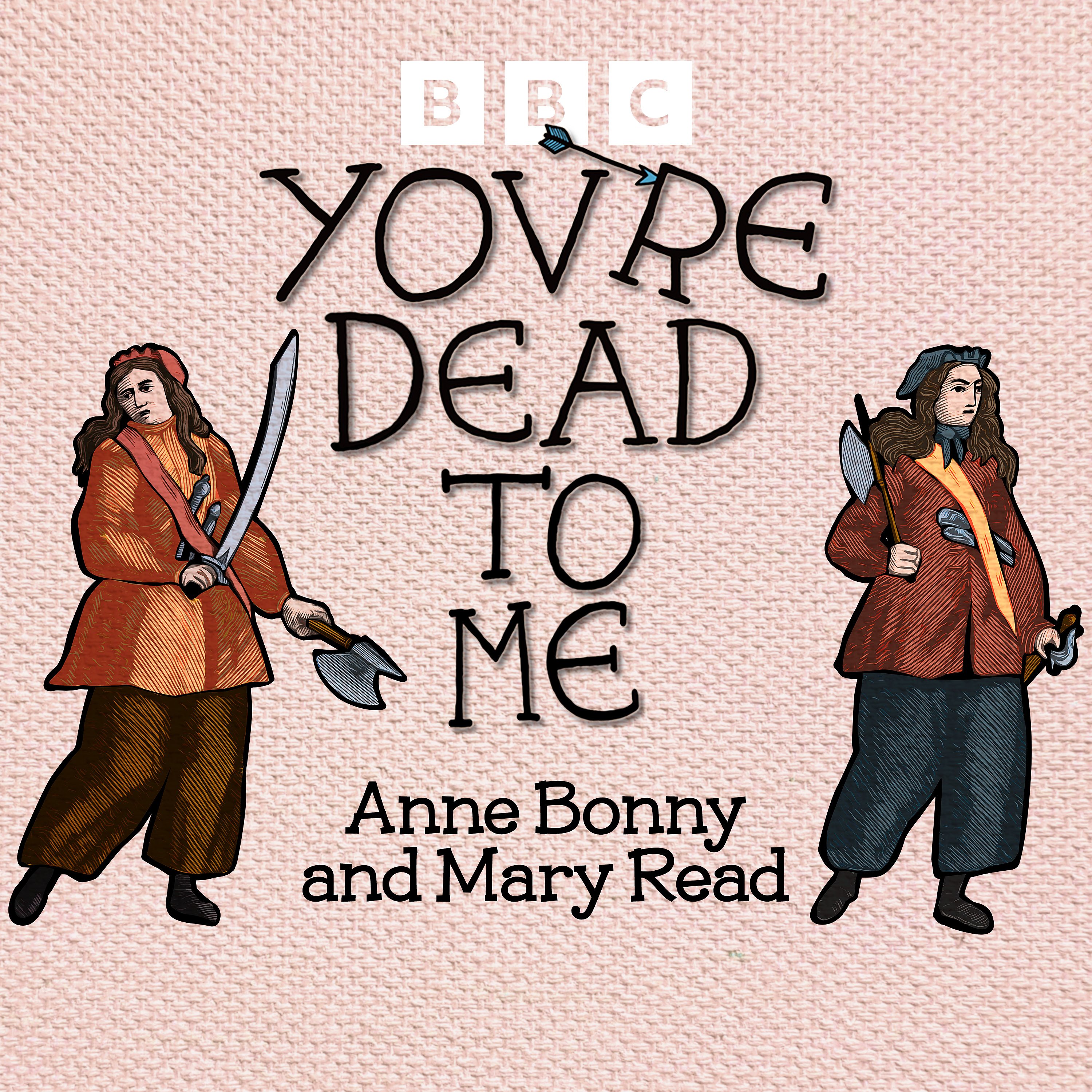
The 18th-century lives of pirates Anne Bonny and Mary Read, how they ended up on ships in the Caribbean, their relationship and disguises, and their capture and deaths after the 1720 raid led by pirate-hunter Captain Jonathan Barnett.
Hannah Cusworth (curator of the Atlantic, National Maritime Museum; PhD researcher at UCL; Atlantic world and black studies). Kima Bob (comedian, writer, producer; TV host including It’s a Sin After Hours; Icebergs podcast host).
Much of what’s known comes from Captain Charles Johnson’s 1724 General History of Pirates, so details need “sea salt.” Women in places like South Carolina and Jamaica could be wealthier and more agentic than in England, but Caribbean opportunity rested on dispossession and plantation slavery. Pirates operated under a pirate code and could be more egalitarian than naval life.
Anne’s alleged childhood “dressed as a boy” by her father; Mary’s disguise as “Mark Reed” and later soldiering in the War of Spanish Succession; their meeting aboard Calico Jack’s ship; Barnett’s night capture; Mary dying in Jamaica jail (fever/possible childbirth complications); Anne’s fate unknown (possible release and later marriage).
0:00This BBC podcast is supported by ads outside the UK. Host Thanksgiving with industry-leading quality standards from Whole Foods Market. There are no antibiotics in their meat department, ever, so carve up turkey and spiral-cut ham with peace of mind. Shop organic sides like stuffing mix and cranberry sauce from 365 brand. And guess what? All their delectable pies are made with no high-fructose corn syrup. Gourmet Thanksgiving flavors with the quality you want Only at Whole Foods Market Sometimes we all need an extra helping hand Especially with a tricky business problem you've been putting off Claude is the AI for just that It's the collaborator that understands your entire workflow And thinks with you, not for you And Claude isn't just for quick questions Hand it a whole task Like turning a folder of scattered notes into a report And it does the work and hands back something finished that you can open and edit.
1:00Claude can now draft a dock or deck right in front of you, and Claude Design now lives right inside Claude. Describe the website or prototype you're picturing, attach your design system, and it comes back in your own design language, ready to edit right on the canvas. It works with your files and the tools you already use, like Gmail and Slack. And whether you're debugging code at midnight, building a financial model, or strategizing your next business move, Claude extends your thinking to tackle the problems that matter. For problems worth solving, get started with Claude at claude.ai.solve. That's claude.ai.solve.
1:37And check out Claude Pro, which includes access to all of the features mentioned in today's episode. Claude.ai.solve.
1:49Hello and welcome to You're Dead to Me, the BBC Radio 4 comedy podcast that takes history seriously. My name's Greg Jenner. I am a public historian, author and broadcaster. And today we are swashing our buckles, splicing the main braces and sailing back to the 18th century, to the Caribbean, to learn all about the piratical pair, Anne Bonny and Mary Read. And to help us, we have two very special crewmates. In History Corner, she's curator of the Atlantic at the National Maritime Museum and is doing a PhD at University College London. Her research interests bring together the histories of the Atlantic world and black studies.
2:20and you might recognise her name from her time as a researcher on this very programme. It's Hannah Cusworth. Ahoy me matey. Welcome back to the show. You're the first ever research intern to come back as an expert on the show. Thank you so much for having me back. Delighted. I feel very proud. Like a proud dad. Like a little graduate. Yeah. It's wonderful. And in Comedy Corner, she's a fantastic comedian, writer and producer. You'll have seen her on the TV as the host of It's a Sin After Hours, on Richard Osman's House of Games, on QI, or maybe starring alongside Steve Coogan in Chivalry. Maybe you've seen her sellout tour shows, seen her at the Edinburgh Fringe.
2:53You go every year. She's also the host of the Icebergs podcast. You're very busy. But of course, most importantly, you'll remember her from our episodes, our raucous episodes indeed, on Prohibition in the USA and Pharaoh Hatshepsut. It's Kima Bob. Welcome back, Kima. Hey, glad to be here. Can't wait to laugh and learn. We're doing Pirates of the Caribbean today. Love that. Not the movies. Yeah. Genuine, real Pirates of the Caribbean. So what do you know? I love the fashion. Okay. I love the fashion of pirates. I love what they're doing. Sometimes pirates are bad, but sometimes pirates are good.
3:28And so I'm curious. I'm like, what are these pirates going to be? Am I on the side of the pirates? And I tell you what, as a very Robin Hood leaning person, I think I'm going to be. I mean, these are some very famous pirates who do, I think, border the edges of both bad and good occasionally. Nice, spicy, complex characters. We'll see what we get with them. So, what do you know?
3:56This is the So What Do You Know. This is where I have a go at guessing what you, our lovely listener, might know about today's subject. And I reckon you might know a bit. They are two of the most famous women of the golden age of piracy. They popped up in the hilarious 2023 sitcom Our Flag Means Death, very funny show. They're in the video game Assassin's Creed 4, Black Flag. Perhaps you've stumbled across the statue of them at Execution Docks in London. Maybe a bit of a spoiler there, sorry. Maybe you've just tumbled down a Reddit thread on their relationship. But how did two women from Ireland and England end up becoming pirates of the Caribbean?
4:29Why did they disguise themselves as men? And do you really need to take to the high seas to find yourself a girlfriend? Let's find out. Right then, Hannah. Bonnie and Reid, they're a double act. We often assume they spend their whole life together, but they don't, right? They grow up completely separately. They do. Nothing in common. So can we start with Anne Bonny's early life? Where was she born? What was her family situation? Of course. So for both women, details of their childhood and actually kind of lives are unclear. Our main source is a 1724 book called A General History of Pirates by one Captain Charles Johnson.
5:05We're not 100 % sure if that's his real name, if that's like a stage name. Right. But it was written very close to the time that Anne Bonny and Mary Read were doing their thing. So he probably spoke to actually quite a lot of people. people sailors maybe people who knew them and the book is a wild ride like he is telling wanting to tell a really entertaining story and it really captivated people at the time it was a bestseller it went through numerous editions it was translated into different languages but it also is still pretty hilarious today so excited to get into it okay so we should take it with a pinch of sea salt right some of these some of these facts okay all right a bucket a bucket of sea salt all right so So Anne Bonny is often said to have been born Anne Cormac in Cork, Ireland.
5:49Right. And then we think she was born in sort of the late 17th, early 18th century and an illegitimate daughter, or so the story goes in the general life of pirates, an illegitimate daughter of a married lawyer, a guy with quite a lot of status and a maid. Kima, do you want to guess how Anne's father tried to hide his illegitimate daughter that he wasn't meant to have? In a closet. Physically hide her. Just Harry Potter style. Yeah. I mean, not quite in a closet, but metaphorically? Metaphorically, he dressed her as a boy. So wouldn't people be like, where did this boy come from? Right. So the story is that he was like, oh, this is a male relative of mine that I'm like training up to be like someone, basically a paralegal in my law firm.
6:35Right, okay. And apparently people bought it. Okay. Wow. Also, I love like she's doing drag from a young age. That is a consistent theme. Unfortunately, people found out and they decided to find a new life in the new world. So they traveled to the Carolinas. And this bit we think is probably based in historical fact. And at this time, South Carolina was a real kind of hub for the trade of enslaved people. And so a lot of enslaved people who were brought into the US were brought to South Carolina at this time. Figures are about roughly kind of 40 percent. And her father, it said, kind of left law and fell into merchandise, which as a historian of this period is often like, oh, what are you selling, cakes?
7:20And the answer is no enslaved people. So we think that's probably what he did as his job. And apparently he made so much money from that that he was able to purchase a considerable plantation. She's living, living high on the hog with money that comes from evil. Oh, no, maybe I'm not. Maybe I'm not on her side. Okay. Oh, man. We've had our first moral quandary. Can you tell us more about Anne's teenage years, you know, growing up? According to Johnson, Anne's mother died relatively soon after they arrived in the Carolinas and therefore kind of Anne became the lady of the house. She might have been managing enslaved people.
7:59She might have been responsible for kind of running the plantation, the finances of it. Anne, what the hell? Yeah. She's not a hero yet, is she? No. No. Oh, man. So Anne married a poor sailor, James Bonney, hence becoming Anne Bonney. And her father was livid and threw her out. And then according to one story, she was kind of so furious that she burned down the plantation on her way out. Wow. Okay, and I'm back in. Let's check in with our other leading lady then. So Hannah, how does Mary read? If it is Mary read at this point, how does she start her life? Is she similarly wealthy? Is her dad also a lawyer?
8:40You know, is it comfortable beginnings? Not so comfortable beginnings for Mary Read from what we can tell. Again, having to take this with a bit of a, with a large pinch of salt. Mary Read's mother apparently had an affair while her sailor husband was away. Okay. And then to disguise her infidelity from the husband's family, she dresses Mary as her former child, male child, who had sadly passed away. Oh. So that she can continue getting the allowance from her family. These people are obsessed with drag. At the time, these kind of mistaken identities or gender swapping, dressing, this was quite a common theme in this kind of literature at this point.
9:19So we're not sure if this is just like a good tale or if there is some basis in fact for Mary Reid. Right. Can you guess what Mary's new name was when she was dressing as a man? Mario.
9:34Not a plumber, sadly. Not Mario. You weren't far off Mark. Is that the English Mario? Classic. Classic name for a person. It's more chartered accountant than pirates, isn't it? And actually, Mark Reed stays this person's name for a while, right? They're living their life as Mark Reed, but they're also dressing as their dead brother. Yeah. And there's a sense that we get that Mary dressed as Mark or dressed as a man, even when the situation perhaps didn't really explicitly require it. so I'm not sure if you could sort of say that maybe she had more of a kind of attachment to this gender identity or whether it was a situation where dressing as a man or as a boy enabled more opportunities and was potentially kind of safer in in some way so she finds work as a sailor dressed as dressed as a man and then she becomes a soldier she's fighting in Flanders as part of the war of Spanish succession Mary meets another soldier apparently they're kind of sharing a tent together and she really falls in love with him.
10:35And Mary and her husband open a pub that's called the Three Horseshoes. Sadly, it didn't work out that way for them and the husband died quite soon after. And so Mary, after kind of getting maybe her happy ending, is in quite a difficult situation. The war is over. There's not that much work for a soldier anymore. And so she decides to try her luck by going on a ship to the Americas. Okay. So Hannah, can you tell us about the 18th century Caribbean world that Mary was sailing towards and was already there. The Caribbean at this time really is defined by empire and enslavement by many ways and historians have kind of called it like the birthplace of modernity for lots of these things that we're more familiar with today.
11:15The sugar plantation became incredibly kind of mechanised, highly organised. By the time Mary and Anne get to the Caribbean, this kind of imperial system had been going on for about 200 years. And can I say, that's too long. Way too long. And so it wasn't something that was brand new, although we do kind of get the sense that English are like slightly more latecomers to it rather than the Spanish. But you've got the English, the Spanish, the French, the Dutch, all kind of competing for supremacy over these different islands, all there really to make money. And Port Royal is kind of known as this like den of iniquity, this kind of pirate haven, as is what is now the Bahamas.
12:00And so you've kind of got these places of, I suppose you could argue lawlessness, but there's also really tight control, right? The colonists have to have incredibly tight control so they can run this kind of violent plantation system. Enslavement underpins all of it. Yeah. Okay. Perhaps surprisingly, or perhaps not, right? Considering this is where Anne and Mary go to. Women in the Caribbean, we're talking white women here. we're talking free women of color, had a lot more freedom and actually were a lot wealthier than their counterparts in Europe. They were also doing things like running taverns, running boarding houses, smuggling, piracy.
12:35That was like actually a thing that women in Jamaica did. There was a really big trade to be made in like smuggling and contraband. Ooh, question. Yeah. What are we smuggling? What's contraband? Ribbons. It was quite a big... Wow. No, so you've got... Ribbons was like a huge thing in sort of 17th century Jamaica. People are smuggling food, they're smuggling gold, they're smuggling wealth, wine. Rum, presumably rum. Rum, yeah. There's a big variety. But mainly ribbons. Just sort of opening up a trench going, do you want any ribbons? Would you like any? I've got the latest one from Europe for you.
13:12Yeah, would you like to adorn yourself? But we should talk about piracy, because we're here for pirates, right? We're here for pirates. That's why people have tuned in. They want pirates. So what are we talking about in terms of what the pirates are stealing? Do we know? The Caribbean is this real centre of, I suppose, like wealth extraction. And that is why it's so incredible to be a pirate in these waters, because you've got so many ships that are moving from South America. There's kind of Spanish silver ships that are going over. And you've also got then rum, sugar. it's not talked about a huge amount in the kind of literature on pirates, but a number of these ships would also have held enslaved people.
13:52And so the pirates were taking whatever they found on the ship and sometimes those were goods and sometimes it was people. So the obvious question, Kima, how do Mary Read and Anne Bonny get into piracy? What do you think their route is? Maybe they just want more ribbons. You know? They're like, I don't have enough ribbons. They're just addicted to ribbons. I've got to have more. How do I get these ribbons? I know. So sail the high seas. Women love ribbons. They do. Women be jobbing and women be wearing ribbons. From what we know from Johnson, so again, this kind of big caveat, but let's run with it for a little moment.
14:29She's on her way to the Caribbean and her ship actually gets stopped and attacked by pirates. Oh, okay. All right. And then they're like, oh, we're English pirates. And she's like, oh, hey, I'm English. And so then I think she kind of joins the ship. And so Mary, we think, perhaps became pirate by choice. And we get more of a sense of she was into the life. And so she's there with his husband, James Bonney, and quickly it seems kind of becomes bored of him. Decides to go for this much more dashing or exciting guy called Jack Rackham, who some of the listeners will know as Calico Jack. Yeah, that's his pirate name, isn't it?
15:07Calico Jack. Calico is a type of fabric, right? Exactly. And so apparently I think it comes from the trousers that he was wearing. So when Kima said earlier that she liked the outfits, I think those big trousers were quite big in the pirate world. Clearly Anne fancied the trousers too. Yeah. Okay, so Anne sort of dumps her husband for Calico Jack. But of course, at this point, they're not female pirates because they are dressing as men again. Kima, what do you imagine life was like on the ship for Anne and Mary slash Mark and Andy, whatever they're going by? Yeah. What do you think their daily life is like?
15:38On the deck, tanning, having little drinks. they invent the pina colada. They're having a lovely time and they're giving orders while they sunbathe. The pirate life was pretty hard, but it wasn't as hard as the naval life. If you were in the British Navy, that was a really tough life. So piracy was a bit more, slightly more glamorous. So if you were a pirate, your average life expectancy was two years. Whoa. Sorry. Sorry, yeah, maybe I should have tried to land that with a little bit better. I'm going to say it. It probably sounds crazy, but that's too short. I mean, that's like the life cycle of a butterfly or something.
16:19It's that they were very likely already at sea. And what would happen is like a pirate ship would come across another vessel, sometimes a Royal Navy vessel or a merchant kind of shipping vessel. And they would try and work out like who were the good sailors on it and would be like, hey, do you want to come and be a pirate? And would get them to sign up to some sort of like pirate code. And so there's an element here of, I suppose, like a different social structure outside the quite like rigid. And often if you're thinking about like naval discipline, very harsh life, it's a little bit more perhaps democratic.
16:54You're signing up to this kind of charter, but you're also then getting, I suppose, some rights in return so that it was much more egalitarian on a pirate ship than on a Navy ship. Yeah, I mean, it is, the code's interesting, right? The fact that they kind of sign up to a contract. I mean, you said at the start of the show that you were hoping for kind of Robin Hood vibes. Yeah, well, I love that. It's like, maybe there is honour amongst thieves. There's another thing we should talk about. Another sort of novel social institution aboard a pirate ship, which I think taps into what you were saying about social contracts and pirate code.
17:27It's a thing called, well, it's a French word, so mat-a-let-age. Do you know what that would have been? Mat-a-let-age. The mat-a-let-age sounds like it's below the decolletage. What is it? I mean, how do we describe it? I suppose it's an economic arrangement between two crewmates, and they split spoils equally. If one of them died, then you would get your kind of mate's riches, which is sweet, right? Okay. And some people, some historians have likened this to an early form of gay marriage. I was like, that sounds gay as hell. Which I think some people have said it's a stretch. Sometimes it was much more between either two men or between like an adult man and a much younger, what we would now consider to be like a boy.
18:16Our episode is about Anne, Bonnie and Mary Reid. How did they first meet each other? Were they both dressed as men at the time? Did they both think the other was a man at the time? Because that's obviously, that's an exciting, interesting question for us. According to Johnson, Bonnie took a special liking to Reid, but thinking that she was, she was at this point dressed as a man. and lured Mark to the cabin that she shared with Rackham. And then Anne revealed herself. I don't know why I'm doing that. I mean, I know why I'm doing that, right? So Anne revealed herself as a woman to persuade Reed to sleep with her.
18:49But apparently to her great disappointment, Mary let her know that she was a woman also. And then apparently Rackham burst into the cabin and found both women undressed. And then Rackham allowed Mary to carry on living kind of in secret. so to the rest of the crew she was um dressed as a man but she and anne apparently kind of became just friends historians have questions whether the women were really unaware of each other's identity which kind of suggests these possibilities for same-sex desire um i think it's going to be one of those ones i'm going to be like the boring historian here and being like we will never really know it's true we won't know that's true frankly girls who dress like boys are hot I'll say it Preach Yeah, I'm like do it Let me see those cargo packs I guess we need to talk about the end of the story Because if they had a two year life expectancy And all that, you know, obviously The authorities caught up with them pretty quickly Do you know what befell our pirate pair?
19:44So Anne, Bonnie, Mary, Reed, Mark and maybe Andy Do you know what happened to them? Well You said something about Execution Bay I did, I did, yeah, execution doc Get murdered peer. So I'm guessing it has something to do with that. It does. It does. I mean, this is their last stand. Is it the British authorities? Yeah, so there's a manhunt launched for Rackham's crew and it's led by this experienced pirate hunter called Captain Jonathan Barnett and he's employed by the British Crown. That's it. Yes, I was trying to remember his name, Barnett. And so he sort of hunts them down and he gets them at night?
20:24He gets them at night. Now, they were there on the ship getting drunk on, I think, this kind of Madeira wine, when suddenly it was panic stations and they were being captured by Barnet. Boo. The story goes that all the men were drunk and hid. That's all right. But the women, Mary and Anne, they fought pretty much to the death. They were like, you're not taking this ship. So they're captured. They were tried for piracy and death was, yeah, was going to be the likely outcome. And so on the 20th of November, 1720, all of the people in the kind of, all of the pirates, except for Bonnie and Reed, were found guilty and they were sentenced to death by hanging.
21:08Yeah. And their corpses, that took place and their corpses, the men's corpses were kind of displayed as a warning. But why weren't Bonnie and Reed sentenced to death? Because they were cute. I mean, go further than cute? Because they were very hot. Maybe they were like, can women commit crime? I mean, that's an interesting question. Was it sexism? Sexism was a really big part of it. It's kind of patriarchal system that they were all operating in. I think we're not, I think, 100 % sure exactly why the sentencing, their sentencing or trial was delayed, but it was likely because they didn't really know, the court didn't really know what to do with two women and were kind of debating what their sentence might be or what their trial might look like.
21:55And then, of course, when they were eventually sentenced to death, then it was delayed again, this time, because they both claimed to be pregnant. The sense that we get is that they were both pregnant. Okay, right. So we think with Anne, it was Jack's child. Mary, I think, had like a lover on board. But there was no love lost between Anne and Jack. And when she saw Rackham for one last time, she apparently told him if he had fought like a man, then there was no need for him to have been hanged like a dog. Ooh, spicy. Yeah. It's giving real housewives. Real housewives of the pirate jail. Yeah. I mean, that's a good final line.
22:37So Jack Rackham was hanged. Yep. Calico Jack. Calico no more. What happened to the women? So the women were found to be pregnant, about four months pregnant. and so they were in they were kept in jail and it's a pretty tragic end for Mary Reed and she died of a fever while in jail in Jamaica and we think that because of the date there's actually a burial record for her so there's a burial record for her which would have been if she was four months pregnant it would have been when around the time she was due to give birth so historians think perhaps she died of a fever during childbirth or of complications due to childbirth.
23:15And so we kind of know the end of Mary Read's life. That's very sad. Very sad. For Anne Bonny, it's a bit more of a mystery. There is no record of either of them being executed. And the kind of colonial authorities were pretty on it with their record keeping when it came to this kind of thing. So it might have been that she got out of jail, maybe she had her child, and she was buried in Jamaica. There are other stories. There's So one particular historian who claims to have, like, spoken to her descendants, which is that her father, like, bust her out of jail with his, like, connections from South Carolina.
23:48The lawyer. So he kind of, like, apparently bust her out of jail, took her back to South Carolina, and she got married to another guy and had, like, eight kids or something. And they're descendants, apparently, in South Carolina. If you are a descendant of Anne Bonny, please let me know. Yeah, get in touch. Get in touch. And so we're not really sure what happened to Anne. Do we like that ending for her? yeah I love the mystery of it go off Anne so final thoughts Kima on Mary Reid and Anne Bonny what have you learned what have you enjoyed I love this like middle like the pirate ship as this kind of third space where people can exist more how they want to like it's still difficult but also like you know we're having this like diversity people are being freed sometimes I think it's cool to have this kind of like unsafe safe haven Yeah Like it just sounds quite fun Probably one of the funnest places to be at that time Yes, but you would eventually get killed by the government So there we go Yeah Live fast, die out Well, don't we all in some way or another?
24:55The nuance window
25:00Okay, well it's time now for the nuance window This is where Kimo and I settle down to swig some rum and polish our cutlasses for two minutes, while Hannah stands on deck to tell us something we need to know about Anne Bonny and Mary Reid. My stopwatch is ready. Take it away, Hannah. Anne Bonny and Mary Reid have become icons of female rebellion, of queer identity, of living outside the rules. But what fascinates me is this paradox. The Caribbean is central to their story, but as a backdrop, and the realities of 18th century Caribbean life are very often absent. According to Johnson, both women travel to the Americas because it's seen as a place of opportunity, whether that is making their fortune or in terms of living a less constricted life.
25:44While lots of Johnson's account, as we've said, needs to be taken with a large pinch of sea salt, archival records do consistently show that women in American colonies like South Carolina or Jamaica were much wealthier than their English counterparts and in many ways had greater agency. In 1721 a white woman in Jamaica named Alice Slaughter left two boats, her great tankard, feather bed, pillows, gold shoe buckles and a great cedar chest in her will She also transferred the ownership of the enslaved people that rowed those boats and over 20 other enslaved people to her godson and to her friends This level of wealth and ownership of enslaved people was much more common for white women But some free women of colour were economically powerful and slave owners themselves What enabled the opportunities of women like Alice, Anne and Mary was the violent dispossession of indigenous people, the destruction of ecosystems to make way for monocrop agriculture on plantations, which by the 1720s were overwhelmingly worked by enslaved Africans.
26:45Part of what made Caribbean waters such a good place for pirates was the wealth that was being transported across them. Many of the ships that pirates captured were full of people, as well as sugar and rum. We don't know what Mary and Anne thought of the violence that underpinned much of the life in America's in the 18th century. We might even wonder if Anne left the Carolinas partly to escape her own entanglement with plantation slavery. Yet to celebrate or romanticize these women as queer icons or as proto-feminists while skating over or deliberately ignoring their context that their piracy took place in is a very particular choice, given what we know about the Caribbean in the early 18th century.
27:26Amazing. Yeah, thousand percent. I always find that like really interesting when people like talk about this era as if it was like a magical time. I'm like, it was extremely hard for some people. Yeah. Thank you, Listener of Course, of course, for joining us. If you want more from Kima, you can check out her episodes on American Prohibition. A very funny one, that one. And also, and the ancient Egyptian pharaoh Hatshepsut, who ruled ancient Egypt thousands of years ago. I always have fun here. Yeah. We've got episodes on Blackbeard, very famous pirate. We've got episodes on Gronje O'Malley, the Irish pirate queen.
28:00We've got Chung-Ee-Sao, the Chinese pirate queen, most successful pirate of all time. And we have Julie Dobigny, the French opera singer, bisexual, just sort of sword fighter. Very good fun that too. If you've enjoyed the podcast, please subscribe to You're Dead to Me on BBC Sounds to hear the show 28 days earlier than anywhere else. And if you're outside the UK, you can listen at bbc.com or wherever you get your podcasts. I'd just like to say a huge thank you to our fantastic guests. In History Corner, we had the incredible Hannah Cussworth from the National Maritime Museum. Thank you, Hannah.
28:30Thank you so much. Great sailing with you. It was good sailing. It was a short life, only two years, but you know, worth it. It's all you need. Yeah, we made it. And in Comedy Corner, we had the always brilliant Kima Bob. Thank you, Kima. Yeah, thanks for having me. It was a pleasure. And to you, lovely listener, join me next time as we pick up our nautical telescope and bring another obscure historical figure into focus. But for now, I'm off to go and steal a ship and make my name as Captain Velour Greg Jenner, named after my favourite fabric. Bye!
29:13Why do some brilliant business ideas come a cropper? I'm Sean Farrington, and in a new series of Toast. I'll be looking at five more brands, businesses and wonder products which offered a lot but didn't stick around. Including a budget cinema selling tickets for 20 pence. And the toilet paper we knew from school. I remember worrying about getting paper cuts in an area that you wouldn't wish to be guessing a paper cut. Finding out what we can learn from their disappearance. Toast from BBC Radio 4. Listen first on BBC Sounds.
29:52Sometimes we all need an extra help in hand, especially with a tricky business problem you've been putting off. Claude is an AI for just that. It's the collaborator that understands your entire workflow and thinks with you, not for you. And Claude isn't just for quick questions. Handed a whole task like turning a folder or scattered notes into a report and it does the work and hands back something finished that you can open and edit. Claude can now draft a doc or deck right in front of you and Claude Design now lives right inside Claude. Describe the website or prototype you're picturing, attach your design system and it comes back in your own design language ready to edit right on the canvas.
30:31It works with your files and the tools you already use like Gmail and Slack and whether you're debugging code at midnight, building a financial model or strategizing your next business move, Claude extends your thinking to tackle the problems that matter. For problems worth solving, get started with Claude at claude.ai slash solve. That's claude.ai slash solve. And check out Claude Pro, which includes access to all of the features mentioned in today's episode. claude.ai slash solve. From the vanilla in your latte to the pineapple on your pizza, from the Odyssey to the Gilded Age, your passions have a past.
31:11History Extras podcast serve up the stories behind everything from the food in your kitchen to the rise and fall of nations, not just what you remember from the classroom. Search History Extra to listen now and get closer to the past.
Greg Jenner is joined in the 18th-century Caribbean by historian and curator Hannah Cusworth and comedian Kemah Bob to learn about the swashbuckling lives of pirates Anne Bonny and Mary Read. These women and their adventures on the high seas have become the stuff of legend, helped along by the sensational account of their lives written shortly after their capture.
Though they are famous for the short period they spent together on a pirate ship, dressed as men to hide their true identities, the two had very different backgrounds. Anne was the well-off and rebellious daughter of a merchant and plantation owner in Carolina, while the working-class Mary already had experience dressing in men’s clothing and working as a sailor and soldier.
This episode traces their biographies, exploring their upbringings, romantic entanglements (with men and each other), and time aboard the pirate ship captained by the infamous Captain 'Calico Jack' Rackham, as well as their ultimate fate. And it looks at the wider context of the Caribbean, the transatlantic trade in enslaved Africans and the Golden Age of piracy which shaped their lives and choices, and asks what place they have in queer and trans histories of the period.
This is a radio edit of the original podcast episode. For the full-length version, please look further back in the feed.
Hosted by: Greg Jenner Research by: Naomi Weaver Written by: Naomi Weaver, Dr Emmie Rose Price-Goodfellow, Dr Emma Nagouse, and Greg Jenner Produced by: Dr Emmie Rose Price-Goodfellow and Greg Jenner Audio Producer: Steve Hankey Production Coordinator: Gill Huggett Senior Producer: Dr Emma Nagouse Executive Editor: Philip Sellars
Scan the code with your iPhone camera
Listen in the app.