 Ask ChatGPT

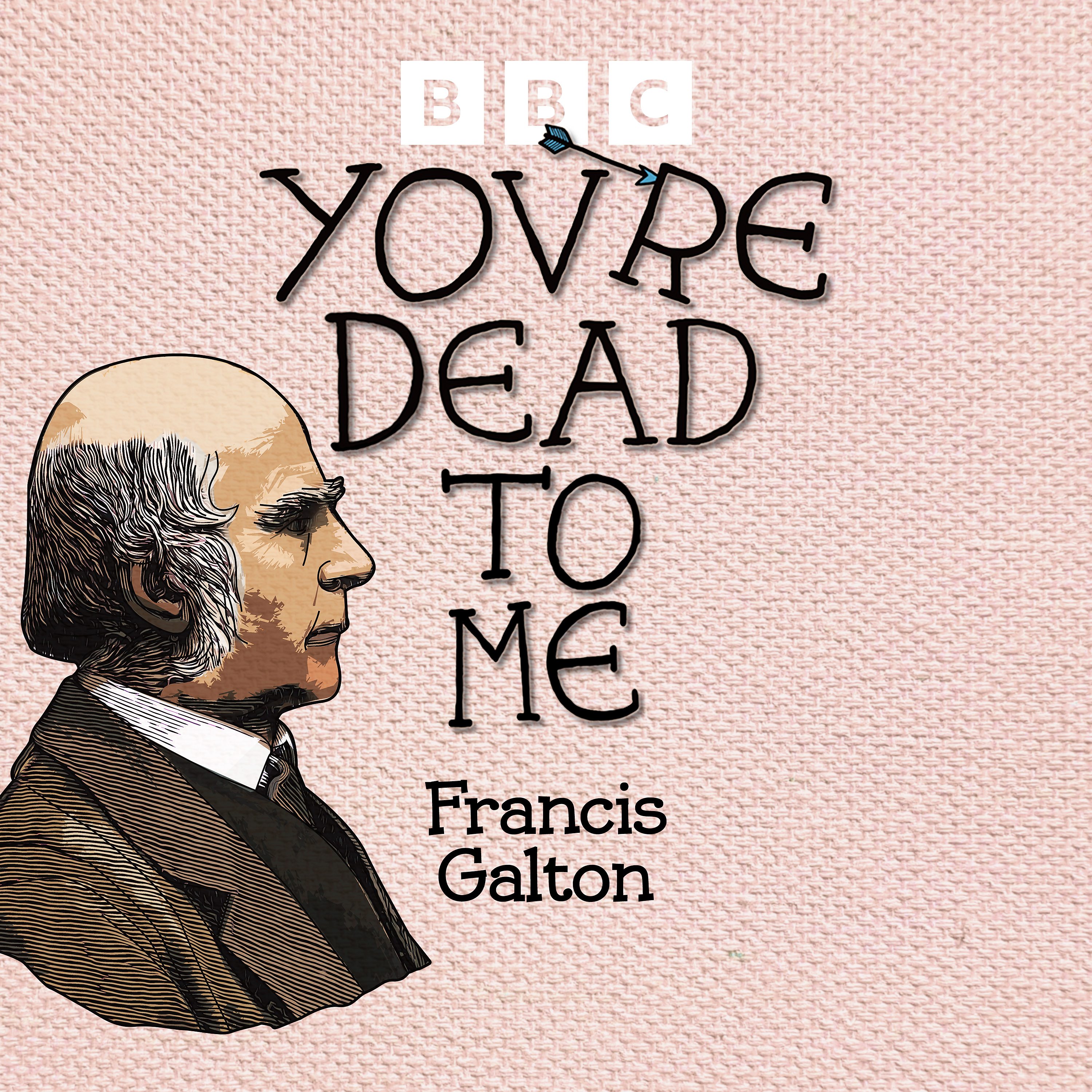
Francis Galton, Darwin’s cousin, and how his “race science” and eugenics shaped early 20th-century thinking—plus his other scientific contributions (meteorology, statistics, and early psychology questionnaires). The episode also covers his family wealth tied to ironmongery linked to chains/shackles/muzzles and indirect slave-trade profits, his globe-trotting “explorer” career, and his “beauty map of Britain” using modified gloves to rate women’s attractiveness for eugenic purposes.
Galton reinterpreted Darwin to justify breeding “better” humans; his work helped institutionalize eugenics at UCL (Galton Laboratory for National Eugenics) and influenced later atrocities.
the glove pinprick rating method; the Life History Album; his “weaker elements” comment to the Jewish Chronicle about Jews in Russia.
Sabhadra Das (historian/writer/curator; UCL science collection curator; specialist in scientific racism/eugenics); Desiree Birch (comedian/actor/writer; previously discussed Galton’s IQ/eugenics links on the show).
Written by AI. May contain mistakes.
Discuss Galton's legacy and the troubling aspects of his work on eugenics.
“And in Comedy Corner, she needs no introduction, but I contractually have to do one.”
Explore Galton's family history and connections to the Darwin family.
“Gordon's life is sort of fascinating and deeply problematic, but there will be some funny bits, hopefully.”
Delve into Galton's education, early interests, and initial explorations.
“So now that when they're in banking, of course, they're making money indirectly from the trade that they made money from directly.”
Discuss Galton's travels and the awards he received for his mapping efforts.
“And he gets a lovely medal from the Royal Geographic Society.”
Examine Galton's marriage, his wife's role, and their lack of children.
“So Louisa Jane Butler, his wife, when he writes his memoir, Desiree, how many times is Louisa mentioned in his entire memoir?”
The discussion delves into Galton's lack of children and the implications of his personal choices.
“oh, like you'd think he'd be like, let me have 10 of my own specimens.”
The hosts discuss Galton's bizarre method of measuring women's attractiveness through a covert counting device.
“for his eugenic program, because what he did was something that probably we might want to think about doing now, which is that he didn't discount women on the basis of their attractiveness.”
The segment covers Galton's influence on various fields including psychology and his promotion of eugenics.
“and see that eugenics is being taught in the biology department for a good 40, 50 years.”
Discussion on the historical impact of Galton's eugenics and its lasting effects on society.
“On that note, time now for The Nuance Window.”
The hosts talk about Galton's later life, his knighthood, and his substantial financial contribution to eugenics.
“when we put him back together again, we give ourselves the key to finding the other people we lost on his account.”
Hosts express gratitude to guests and summarize the episode's themes.
“we've done an episode on the Kellogg brothers, which is really good fun.”

Get the gist, explore an idea or ask about something said.
 Claude
On You're Dead to Me, what are the key points of this episode?
Searching your listeningAutomatic transcript. May contain errors.
0:00This BBC podcast is supported by ads outside the UK.
0:30Save through November 3rd at Whole Foods Market. Sometimes we all need an extra help in hand, especially with a tricky business problem you've been putting off. Claude is an AI for just that. It's the collaborator that understands your entire workflow and thinks with you, not for you. And Claude isn't just for quick questions. Handed a whole task like turning a folder of scattered notes into a report and it does the work and hands back something finished that you can open and edit. Claude can now draft a dock or deck right in front of you and Claude Design now lives right inside Claude. Describe the website or prototype you're picturing, attach your design system and it comes back in your own design language ready to edit right on the canvas.
1:13It works with your files and the tools you already use like Gmail and Slack and whether you're debugging code at midnight, building a financial model or strategizing your next business move, Claude extends your thinking to tackle the problems that matter For problems worth solving, get started with Claude at claude.ai.solve. That's claude.ai.solve. And check out Claude Pro, which includes access to all of the features mentioned in today's episode. claude.ai.solve.
1:47Hello and welcome to You're Dead to Me. We are the BBC Radio 4 comedy podcast that takes history seriously. My name's Greg Jenner. I'm a public historian, author and broadcaster. And today we are growing out our sideburns, gathering some problematic data as we head back to Victorian Britain to learn all about the scientist Francis Galton. And to help us in our study, I have two very special lab partners. In History Corner, she's a historian, writer and curator and a specialist in the history and philosophy of science, particularly the scientific racism and eugenics movement. Sorry about that. You might have read her excellent book, Uncivilised, Ten Lies That Made the West.
2:25And luckily for us, she spent nine years as the curator of the science collection at University College London, where a lot of the Galton material is held. It's Sabadra Das. Welcome, Sabadra. Hello. Lovely to be here. Thank you for coming in. And in Comedy Corner, she needs no introduction, but I contractually have to do one. She's a comedian, an actor, a writer. You've seen her on all the telly on Taskmaster, Frankie Bullas' New World Order, QI, Too Hot to Handle. Maybe you've seen her live on tour, a brilliant stand-up comedian. But of course, most importantly, you'll know her from so many of our episodes.
2:58Timekeeping, History of Broadway Musicals, Lena Horne. We had to have her back for Series 12. It's Desiree Birch. How did we not get sideburns for this? It's a visual medium now. Surely we should have all been doing this. Desiree, I mean, you've been on the show loads of times. I think we've skirted around the edge of eugenics sometimes. But what do you know about Francis Galton? So I actually in a show that I did, one of my tour shows Desiree's Coming Early, we talked about Francis Galton because he sort of pioneered the eugenics that went into this sort of IQ test. because I talked a lot about that and having grown up and sort of like gifted and talented education in California and how that was sort of predicated on an IQ test that both like limited the opportunities for a lot of black people in California at certain periods, but also allowed me to get into the kind of education that would get me into higher and higher places.
3:52So, and also apparently was the only reason we figured out that lead was making people like dumber in America because there was lead and all the gas and everything. And it was only the IQ test that was like, oh, lead go up, IQ go down. And like, then they got rid of lead and everybody was like, oh, finally I can like remember anything or function. So that was like the one good thing. Apparently, the IQ test did. Yeah, that might be the only good thing about IQ testing. But yeah, it did like, you know, whatever Europe did with eugenics, America was like, oh, right. And they just like blew it up to 10 ,000 and it was perfectly horrible.
4:24That's a pretty good summary. Except for the lead bit. Except for the lead. Except for the lead bit. I mean, there's actually a lot more to talk about. Gordon's life is sort of fascinating and deeply problematic, but there will be some funny bits, hopefully. You know, we are a comedy show. There are faces. But we are going to be crashing into eugenics at some point. So let's, you know, so klaxon warning there. But so let's crack on. So, what do you know?
4:50This is the So What Do You Know. This is where I have a go at guessing what you, our lovely listener, might know about today's not-so-lovely subject. Francis Galton, Sir Francis Galton, is sometimes called the most influential British scientist you've never heard of. If you've heard of him, like Desiree, you might know he was the originator of the science or pseudoscience of eugenics, the belief that society can be improved. So he's like the dark money of like, so, you know, it's like you've never heard of him, but his work is in everything. So, you know, eugenics is the idea that you can improve the human race by selecting who can and cannot reproduce.
5:28You may know him as a major figure in early criminology. If you know your Charles Darwin, you may know that he was Darwin's famous cousin. But were Goulton's actual inventions and discoveries, are they, you know, important to the history of science? Why did he take Darwin's ideas to such a dark place? Because he was the cousin who wasn't as cool as Darwin and Darwin came up and he was like, well, I could do that and I could do like 10 times more and made it way worse. It's like he's in the room. Final question. When do a pair of gloves deserve to be cancelled? So, Subhadra, he's born in 1822, which makes him kind of Regency era.
6:07He's going to crash into Victorian era later. Where is he born in the country? And, you know, does the family have money? Is he posh? They are new money. The Galtons made their money three generations earlier. So Samuel Galton makes his money as an ironmongerer. Okay. Which sounds fairly innocuous. Yeah, it does. Until you start to remember that ironmongery means making things like chains and shackles and muzzles. Ka-ching! He's one of the gajillions cashing in on human trafficking. Totally, directly making money from the slave trade. But they're clever as well, so they pivot. Because they know that the trade in enslaved Africans is going to be made illegal, they swap to a different technology in terms to be able to benefit from this indirectly.
6:51Right. they swapped to gun manufacturing. Great. Because that way... The ethical choice. And they're Quakers as well. So this is kind of like an interesting thing. By the time we get to our Galton, they've converted to Anglicanism, but the family starts out as a Quaker family. So yeah. And then they move to the much cleaner industry of banking, which I mean, it's like, let's put them all together. I mean, as a trio, it's a fairly evil selection, isn't it? It is the full trifecta of duchery. Yeah, entirely. Okay. So now that when they're in banking, of course, they're making money indirectly from the trade that they made money from directly.
7:26Okay, fine. Okay, so that was the first Samuel Galton. And the Samuel Galton, who is the father of our little Francis Galton, is the third Samuel Galton. He is. He's Samuel Tertius Galton. Tertius Galton. Yes, that's what I wondered because I was like, Tertius, like tertiary, the third. He's the third guy. They didn't want to call him Trip. They didn't call him Trip. That's it, yeah. Trip Galton. All the lax bros in school. Jesus. Okay, so tell us about the family connection because little Francis Galton is connected to the Darwins. He is. So how does that work on a family tree? So he was the son of Samuel Tertius Galton and also of Violetta Darwin, who was the daughter of a famous doctor called Erasmus Darwin.
8:04And this is how we get that Charles Darwin connection is because they share that grandfather. And he's a brilliant mind as a kid, right? So at one, he's reading? Not quite. 18 months, he knows the alphabet. Okay. Yeah, age two, he can read. Age three, he can write. And age five, he's onto epic poetry. sure yeah why not so so you know age six he's reciting the iliad they didn't have facebook back in the day my daughter's six and she's she's smart but she's not doing the iliad or you know anything like that you're just not working hard enough yeah it's my fault it's clearly me she's like oh but there's sunlight outside so so far little frank is giving off young sheldon vibes but i mean you say brilliant and accomplished he doesn't love school francis galton he's not he doesn't excel emotionally at school no possibly because there isn't someone just holding his hand than telling him how brilliant he is the whole time.
8:51He apparently hated school. He said it was hateful in many ways and lovable in none. But that also might be part of his, like, looking back and mythologising. It's like, no, school wasn't responsible for making me clever. I was born clever. Fair enough. So after dropping out of medical school and not getting his maths degree, or his honours degree, at least, Galton got a huge windfall of cash when his father died. So, Desiree, what would you do with a massive windfall? You're young, you're 23, millionaire. I'd go back and do better at school. Ah. But no, I mean, Goulton does the opposite thing.
9:22He does the sort of classic post-university holiday, but it's not lads, lads, lads, magalouf drinking. He's not even doing the kind of grand tour you do of Greece and Italy. He's like, I'm going to go to Antarctica. He goes to Sudan and Syria. Oh, okay. Well, actually, he was originally off to Egypt. So this is where we can get a bit magalouf kind of situation, which is like that you could go under the Habia, which is a boat that will take you on a cruise, on a Nile cruise. Sure. But the thing that is exceptional is that he does go then further. So normally people stop at the second cataract, but he goes on further to Khartoum.
9:53Okay. And then he works his way back, yeah, via modern-day Syria as well. He goes to Damascus. Extraordinary. And he gets a lovely medal from the Royal Geographic Society. For going on holiday? No, not quite. No, this is... Congratulations, young white explorer. You have done the correct thing. Here's your reward. What? No, no, no. So this is where the ambition starts to come in. And so like his 20s, he's basically like having a great time, mostly drunk, mostly shooting things. Correct, always. What else are you going to do? Yeah. And by the time he's 30, he does that thing that I think all of us do when we're 30, which is like, what am I doing with my life?
10:30Actually here for. Yeah. And he's got this cousin who went on a trip around the world. David Livingston has just discovered Nate Kongami. Okay. So he's like, Southwest Africa. I'm going to go to Southwest Africa and I'm going to be an explorer. And that is like in cahoots with the Royal Geographical Society. And his expedition there was so successful because he's so good at making maps of that area. And of course, we know that the British Empire runs on maps. We love a map. And because his maps were so accurate, this wins him the gold medal from the Royal Geographical Society. And when he's in South Africa, Galton meets a beautiful woman.
11:03And normally that story ends in a fairly conventional way. But not this one. Does he need to study her or something? Yeah. Yeah. And you will be my queen muse project. Yeah, no, he describes her as having a beautiful outline, which is a weird chat outline. Wait, he's met her where now again? South Africa. This is South Africa. Oh, she's got an interesting outline. And he's going to get her measurements. She's from the indigenous Khoi Khoi people. Yeah, we don't know her name. All that we know about her is that she was married to an interpreter, a Nama interpreter who had learned Damra, which is the language that was useful in that area.
11:42And he was working for Reverend Hugo Hahn who had his missionary out in Barman. Okay. I'm throwing lots of detail in there because we have so little about her. And what he's about to do is dehumanizing. Of course. There's like no two ways about it. I mean, he measures her with a sextant as if she's, I mean, it's a navigational aid. Okay. So he's just like, how much, how many hectares are you or something? Well, yeah, this is the big rise. But I mean, is this the beginning of like phrenology and other like measuring things as well? This isn't the beginning. So he's well embedded. And there was a little bit of phrenology in those years in the 20s as well, where everyone measures his head and tells him how clever he is.
12:19Okay. He gets back from Africa. He's measured African women. And now he needs to marry a British woman. That is his custom. And he finds one. And she's called Louisa. That's right. Louisa Butler. And quite the whirlwind romance. So without wanting to sound like Craig David, he met her in January nice proposed in April and they were married in August okay so yeah no hanging about no do you think he'd already pre-measured her and figured out that she was well he is very I mean she's the daughter of one of the ex-headmasters of Harrow so like her pedigree does count for a lot okay so he's measured the family tree and gone approved yeah I think she was a good option I mean but we've also got like letters back and forth between the family saying we think the African explorer is smitten.
13:07Yeah. Yes. So Louisa Jane Butler, his wife, when he writes his memoir, Desiree, how many times is Louisa mentioned in his entire memoir? I mean, the way you've set that up, like zero to one times. It's two times. Okay. Oh, wow. Double my expectations. She's in the index twice, which is brutal. How does he refer to her those two times? It's four pages worth of pedigree. And she's a supportive wife as well. Like she's interested in his work. She's happy to support him in the things that he's doing. So he's probably under some kind of apprehension that she's cool with this. She'll be interested. Okay, but also it's kind of like what else would she expect except for me to say how great she is because of her lineage.
13:49Yeah. Right? Like that's the best compliment you could give. And they never have kids. They never have kids. And lots of people have speculated. There's a sort of litany of reasons given. So, I mean. Especially since he's super into like, oh, like you'd think he'd be like, let me have 10 of my own specimens. Right, yeah. Yeah, you'd think eugenicists would be like, we need more of me. Yes, exactly. But other way, right? Unless there was some reason they couldn't. Yeah, very much the other way. So, yeah, we don't know whether this is deliberate child freeness or whether this is a personal tragedy that's happening between these two people.
14:17And it's the nature of history that we're never going to know. Sure. We need to get to the gloves because we promised you gloves. Yes, exactly. So let's get to the Golden Gloves. He's going out measuring the statistical hotness of women around the UK in terms of their distribution in different cities. Wait, he's trying to figure out where the hottest women are. Literally that. He's literally trying to figure out. But I mean, temperature hot, not like that's a fitting. No, he's literally, so he's like the early Mark Zuckerberg. He literally is. He's like, is the hotter not? That's the next joke in my script.
14:45He is literally Zuckerberg-ing his way around the UK going, who's the hottest? Where's the hottest city? Can't see how this would go wrong. Can you talk us through it, Sabadra? Like what? And shape society. How do the gloves work? Because you had to care for the gloves in the collection. I did. And it is a thrill to be able to have to describe these physical objects to you in a sound-based medium. If you imagine a pair of gloves, if you imagine me wearing a pair, right-hand glove, nothing doing, don't worry about it, completely normal glove. Don't worry about the right-hand glove. Everything fine.
15:10Left-hand glove has been modified. It's got a felt pocket across the four fingers and out of the thumb is the sharp end of a pin. Okay. So into the felt pocket, what you can do is you can put a piece of paper. Now, I am Indian, so I can count to 20 on one hand. Ah. Because what we do is we count through the segments. Yeah. Thank you. This is our gift to you. We've given other things too. How do you reckon Galton was counting with a pinprick? I don't know. Just how many times a woman would scream every time he would touch them inappropriately with a pinprick. Thankfully, the pin never went near the woman.
15:49Okay. What he would do was he would stand on street corners in various metropolitan centers around the UK. What a sentence. Stand on street corners measuring women. With his hands in his pockets. So this is a covert counting device. Oh, this is gross. because he's like... So he's stabbing himself to count? He's stabbing himself, not himself. That's why you've got the felt pocket. The felt pocket stops him stabbing himself. He's stabbing the piece of paper and it's a scale of one to three. The scale is attractive at one and repellent at the other, indifferent in the middle. Hot, not, kind of okay.
16:17Six out of 10, whatever the hell. Yeah, brown bag. Yeah, yeah. Beer goggles, three pints, six pints. Oh, I like them boobies. Oh my word. So he's standing on street corners around the cities of the UK. Yeah. creepily staring at women, but this is fine. Yeah, he's in his 60s at this point, just to paint you a second ago. And he's what? He's building a beauty map of Britain? This is what he, he called it his beauty map of Britain. And it is important for his eugenic program, because what he did was something that probably we might want to think about doing now, which is that he didn't discount women on the basis of their attractiveness.
16:50He thought the more attractive they are, the better incubators they are. He correlates attractiveness and athleticism with intelligence, jock and geek. Right. Okay. So nowadays, I feel like we kind of do the opposite. Yeah. How does he control for the, like, okay, so. But that's an ancient Greek idea. Oh, it's so funny you should ask that. So he says, because he's the only one measuring, he is the control. Before we get to eugenics proper, I mean, we've done some, we've done a little bit of eugenics, haven't we? But before we get to like proper, like what he means by it, there are other very sort of important contributions that Francis Galton made to science.
17:25What sciences do you think they might be, Desiree? Well, I don't know how much he did with his medicine, but I assume that he's a social scientist statistician. So that's where all of his contributions are going to go. I mean, that's not a bad guess. I mean, I think the ones we'd probably, the ones we'd shout out, I think, would be meteorology. He's a weatherman. Okay. Statistically mentioned already. Because of stats. Stats. And then I think the one that's really crucial would be psychology. He's the first person to develop a questionnaire, which is a fundamental tool in psychology. and he was looking at it to look at people's temperaments or their character.
18:00And so he's describing them there as mild, docile, fretful, violent and masterful. I think we need to get on to his proper eugenicist thinking. There's a huge response to his cousin's famous book of 1859, his cousin being Charles Darwin. And that book, do you know what the book's called? The Origin of Species? Yeah, The Origin of Species. There's probably a longer subtitle. By Means of Natural Selection. There you go, that's why, yeah. And so Charles Darwin sort of puts into the world this sort of extraordinary, groundbreaking, brilliant, brilliant book that still to this day is still, you know, one of the foundational texts of modern biology.
18:30But how does Galton take to it? Oh, he loves it. Okay. He thinks it's the best thing anyone ever wrote. Did you guys see what my cousin did? I know. Cousin Charlie. I've got to start using this voice now. But to his cousin's genius idea, he has his own genius idea. So Darwin, especially in the first bit of Origin, talks about animal domestication. And by the end of Origin, what Darwin has demonstrated is that all human life on Earth has a common ancestor. What Darwin was trying to do was to say, hey, we're all connected. Maybe we shouldn't be enslaving people. Whereas what Galton sees in Darwin's work is humans are animals like any other.
19:11And as such, we should breed them better. And this is the tragic thing is he wasn't the only one. So I think a lot of people know the expression survival of the fittest, which was coined by the economist Herbert Spencer in reaction to what Darwin was talking about. The thing is you can read that sentence two ways. The way Darwin meant it was those who are the best fit for the environment in which they live. Whereas what Spencer and then Galton and then these other social Darwinists go is actually just who is fittest altogether. And we get to say who that is. Yes. Should we understand him as a data gatherer and then other people put in place policies?
19:45Or should we understand him as an advocate for eugenics in actual policy governments? I'm going to plump for the latter because I have here a long list of his publications and all the time that he's publishing in scientific journals, he's giving papers at the Royal Society, he's also writing articles in Macmillan's magazine and Fort Niley Review. So this was very much a Brian Cox level of public understanding of science, making sure that his ideas were out there for people to get. Sure, just, you know, as the BBC, Professor Brian Cox, not eugenicist, a brilliant scientist, a much beloved. But I mean, he's in terms of like, he is a scientist, but he's also his own hype man really well.
20:18He understands that this is going to be like a national project. He's going to have hearts and minds. You've got to get the people involved. So he's doing public engagement. Yeah, public engagement of science. Okay, and he founds the laboratory in 1907, which is called the, I mean, it's at University College London. It is. And it's called the National Eugenics. It was originally founded in 1904. My colleagues at UCL have done a lot of work into the intricacies of this. But the long and the short of it is, is that by 1907, there is at UCL, the Galton Laboratory for National Eugenics. Okay. So it's a laboratory, so they're gathering data.
20:52So again, more pedigree stuff, more biometry stuff. After Galton dies and leaves money to the university for the chair of eugenics, it's being taught as well. So you can go back to the UCL calendars and the syllabus and see that eugenics is being taught in the biology department for a good 40, 50 years. That's how eugenics becomes the kind of dominant way of understanding the world through the sort of early 20th century, which then leads to Hitler. Yeah. I mean - Via the US. Yeah, I was going to say, which leads to America. Which is amazing when you find out. He's like, oh, I learned from the best.
21:24How we've ever posed ourselves as a moral authority on anything. Like, were they? I mean, it's just interesting to be like, oh, is this the point at which we started putting like baby's footprints on a like birth certificate or something? Do you know what I mean? All of these things that we record about people automatically only came in after Galton was like, hey, you need this information on people. if you want to surveil them for the rest of their natural lives. Yeah, he worked with a doctor called Frederick Muhammad, who is actually a descendant of Sheikh Dean Muhammad. Oh, really? Of this parish.
21:54Oh, we did an episode about him, but that's... So they worked together to develop this thing called the Life History Album, which was supposed to be sent out to every citizen. It's like a baby book, but really detailed and for the rest of your life. Let's get to the end of his life. In 1909, Francis Galton is knighted for his contribution to science, race science, but also a lot of the science that's still with us now, post-eugenics. However you want to make that distinction. But he was poorly his whole life. This is a man who has many medical conditions, who has his own mental health crises over and over.
22:24He died in 1911. He left£45 ,000 to the UCL National Laboratory for Eugenicist Science. Galton Laboratory for National Eugenics. Thank you. I'll stop just branding them. It's a lot of money. He left an awful lot of money for his project. In today's money, because I figured you might ask this, probably in the region of three and a half to four million pounds. I would say, it's usually about 10, sort of 10 ratio, isn't it? A small endowment. Just a little, it's also the residue of his wealth. So after his endowment's bequest to people in his life, all of the rest of the money, the ironmongering slave banking money goes to this.
22:59That didn't go into everyone else's estates. I mean, is Louisa finally like, great, took him long enough rolling in it. I was going to say she pre-deceased him by a little. Oh, sad face. Sad face. and he didn't have any kids. So I guess the money went to his pet project. Yeah. Racism. Eugenics was his baby. Great. The Nuance Window.
23:25On that note, time now for The Nuance Window. This is the part of the show where Desiree and I silently measure the studio for two minutes. Data is important. While Savadra takes centre stage to tell us something we need to know about Sir Francis Galton. My stopwatch is ready. One second, I'll get it out. Take it away, Sabadra. When I was curator of the Galton collection, I had a recurring nightmare. On a normal day, working behind the scenes in a storeroom, a glass lantern slide, a photograph of Francis Galton slips from my hand and smashes to pieces on the cold, tiled floor. This was by no means an irrational concern.
23:58It is a well-known fact that the people most likely to damage museum objects are the people who work in museums. And Galton is already fragmented anyway. When I say that Francis Galton is the most important scientist most people have never heard of, it speaks to my experience as a history buff who never learned about him in history class. But of course, many people have heard of him, depending on who you ask. Weather forecasters, crime scientists, sociologists, psychology graduates, geneticists, and statisticians all recognize the name of the man who made foundational contributions to their disciplines.
24:30Even if you're not a scientist, he often features in trivia and fun facts. He's on QI all the time. but the Galton most people have heard of is in pieces. When eugenics was discredited after the Second World War and continues to be disproved through advances in genetics, his reputation was severely compromised and it seems as though he disappeared into the footnotes. In this way, the wider absence of Galton's story is a story in itself. It's a story about the things we find easy to talk about and the things we don't. With his ideas about eugenics, Galton rebranded race science for the 20th century.
25:04Eugenics made race into a broad church, expanding notions about racial fitness to include disability, class, gender and sexuality, and also body size. People don't marginalise themselves, and whether we know it or not, this discredited science still has the power to shape how we talk about and how we see each other. To be critical of eugenics, then, isn't to be anti-science or the pursuit of knowledge as a whole. It just reminds us how the pursuit of an objective truth actually objectified people. The way Galton and his fellow eugenicists viewed the world, the ways in which they chose who to value in society, leaves a lot of people out.
25:39When we write Galton back in, when we put him back together again, we give ourselves the key to finding the other people we lost on his account. Amazing. Thank you so much. Yeah. And very punctual too. Thank you. Extraordinarily safe time this out. When you were talking about all this, I was like, I'm surprised he didn't invent the BMI as well. Close. He came pretty close. Yeah, I was going to say somebody must have used that. I mean, did he like, was he just sort of like chuffed his chips about his own work? Or did he start to see things happen and go like, oh, wait a second, not exactly that.
26:13Or was he just like, keep using it. This is all great. Yeah. So the smoking gun on this one is he gave an interview to a journalist from a Jewish newspaper, the Jewish Chronicle. And the journalist was asking and saying, you know, we've been hearing about the persecution of Jewish people in Russia. What do you feel about this? and his reply is, do brace yourself, his reply is, you should be grateful that those weaker elements of your society are being weeded out for you. Jesus Christ. Oh, wow. Okay. He's like, because otherwise I'd have to take the whole arsenal of my family's guns and kill them myself so that we won't continue to bring them.
26:46So he was fully, I mean, but what did he continue? Sorry, we need to go on, but was he sort of like, oh, but we need a slave class because I mean, how else would he have money to fund his work if there hadn't been an underclass for, you know what I mean? Sure. I mean, the slave trade had been abolished by this point in the 1830s in theory. But slavery's still going. It's still happening, but it's abolished legally. Like he didn't, you know, did he think that, oh, but we're always going to need these people underneath us. They should just stay underneath us. Not only do we need them, it's like this is what they're best fit to do biologically.
27:16Yeah, yeah, yeah. So we can't kill them all. So he is more interested in how do we pick the good ones so that we can make sure that we, the British Isles, have good population control. I mean, it's extraordinary life. It's an important scientific legacy. It is now discredited science. It is. But we have to understand. But it's still in everything. But it's still everywhere you look. I mean, we're still using questionnaires and personality tests at the very least. Absolutely. Thank you for that fantastic episode. It's been a problematic history as it is. Listener, if after today's episode, you want another totally bananas boffin biography with Desiree, in fact, check out our episode on Pythagoras.
27:51He was an absolute lunatic. Oh my God, delicious lunatic. Amazing. Fascinating. One loves a cult leader, right? For more 19th century eugenics and surprisingly funny, we've done an episode on the Kellogg brothers, which is really good fun. And we did one on Victorian bodybuilding. Again, surprisingly funny, but again, surprisingly eugenicist. If you enjoyed this podcast, please share the show with your friends. If you're in the UK, you can access episodes 28 days earlier by subscribing to You're Dead to Me on BBC Sounds. But I'd just like to say a huge thank you to our guests. In History Corner, we had the sensational Sabhadra Das.
28:22Thank you, Sabhadra. Thank you so much for letting me share this story. Thank you for doing it so eloquently and sensitively and also letting us do jokes. Because, you know, we do have to do the jokes. And in Comedy Corner, you're dead to me superstar Desiree Birch. Thank you, Desiree. What a joy to learn about this racist. And to you, lovely listener, join me next time as we measure the vital statistics of another forgotten historical figure. But for now, I'm off to go and stop my six-year-old from learning the Iliad because no good will come of it. No, no. Bye! Bye!
29:10Hello, I'm David Baddiel and from Radio 4 and the History Podcast I'm hosting 60 Years of Hurt, a series about football and Englishness in which we try and define what Englishness actually is via the rollercoaster history of the England men's football team. It includes contributions from various English gentlemen and women, Stephen Fry, David Seaman, England sports psychologist Pippa Grange and many others. England may or may not win the World Cup in 2026, but maybe you'll find out why it means so much to us as a country that they might do. Listen to 60 Years of Hurt on BBC Sounds.
29:49Sometimes we all need an extra help in hand, especially with a tricky business problem you've been putting off. Claude is an AI for just that. It's the collaborator that understands your entire workflow and thinks with you, not for you. And Claude isn't just for quick questions. Hands it a whole task like turning a folder of scattered notes into a report. And it does the work and hands back something finished that you can open and edit. Claude can now draft a dock or deck right in front of you and Claude Design now lives right inside Claude. Describe the website or prototype you're picturing, attach your design system and it comes back in your own design language ready to edit right on the canvas.
30:28It works with your files and the tools you already use like Gmail and Slack and whether you're debugging code at midnight, building a financial model or strategising your next business move, Claude extends your thinking to tackle the problems that matter. For problems worth solving, get started with Claude at claude.ai.solve. That's claude.ai.solve. And check out Claude Pro, which includes access to all of the features mentioned in today's episode. Claude.ai.solve. Ever wondered what you would do if you found yourself lost in the wild? If disaster struck, would you make the right decisions to stay alive?
31:06Real Survival Stories from the Noiser Podcast Network brings you astonishing tales of ordinary people thrust into extraordinary situations It's the biggest tiger shark I've ever seen in my life So I just swam I just swam and swam as fast as I could I realize those two parachutes tied up together is what a dead man sees I am not going to survive Real Survival Stories Listen wherever you get your podcasts Thank you.
Greg Jenner is joined in Victorian England by historian and curator Subhadra Das and comedian Desiree Burch to learn all about the life of scientist and eugenics pioneer Francis Galton. He was many things: a Victorian gentleman scientist, an inventor of whacky devices, a pioneer of fingerprinting technology, the less famous cousin of superstar naturalist Charles Darwin, and an important figure in the development of statistics. But more importantly – and more troublingly – Francis Galton originated the now discredited science of eugenics. His theories about how to apply principles of good breeding to humans, and his advocacy of ways to improve Britain’s so-called ‘racial health’, led directly and indirectly to many horrors in the decades after his death, from the forced sterilisation of certain groups to the Holocaust.
This episode traces his life from child prodigy to prolific scientist, exploring his obsession with understanding the world through measurement and statistics, and how this mindset eventually led him to pioneer eugenic theories. Along the way it takes in his African travels, unwise self-experimentation during his medical degree, and his troubling views on women.
This is a radio edit of the original podcast episode. For the full-length version, please look further back in the feed.
Hosted by: Greg Jenner Research by: Naomi Weaver Written by: Dr Emmie Rose Price-Goodfellow, Dr Emma Nagouse, and Greg Jenner Produced by: Dr Emmie Rose Price-Goodfellow and Greg Jenner Audio Producer: Steve Hankey Production Coordinator: Gill Huggett Senior Producer: Dr Emma Nagouse Executive Editor: Philip Sellars