 You're Dead to Me
20 Nov 2026 · 28m

 Add vo to ChatGPT or Claude to ask about everything you hear
vo listened to this episode to put together the overview and transcript, so there may be the odd mistake.
The BBC Radio 4 comedy-history episode “You’re Dead to Me” explains how Pharaoh Akhenaten and Queen Nefertiti reshaped 18th-dynasty Egypt, focusing on the Aten religious revolution, the new capital city Akhetaten, and what happened afterward.
Dr. Campbell Price, curator of Egypt and Sudan at Manchester Museum; fellow at the University of Liverpool; author of Ancient Egypt in 50 Discoveries and Totally Chaotic History. Sakisa, award-winning comedian/actor/producer; appeared on Live at the Apollo, Comedy Central Live, Jonathan Ross’s Comedy Club; hosts Wrestle Club UK.
Akhenaten promoted near-monotheism around the Aten (sun disk), moved the capital into the desert, and changed art into the distinctive Amarna style. After his death, worship of Amun returned; Tutankhamun reversed the reforms. Nefertiti’s famous Berlin bust (found in 1912) is stylized and may not reflect her real appearance.
Tutankhamun’s original name “Tutankhaten”; Aten imagery as a sun disk with “hands” ending in the ankh; the Horizon of the Aten/Akhetaten city; the Nefertiti bust’s contested removal to Berlin.
0:00This BBC podcast is supported by ads outside the UK.
0:30can open and edit. Claude can now draft a dock or deck right in front of you and Claude Design now lives right inside Claude. Describe the website or prototype you're picturing, attach your design system and it comes back in your own design language ready to edit right on the canvas. It works with your files and the tools you already use like Gmail and Slack and whether you're debugging code at midnight, building a financial model or strategizing your next business move, Claude extends your thinking to tackle the problems that matter. For problems worth solving, get started with Claude at claude.ai.solve.
1:06That's claude.ai.solve. And check out Claude Pro, which includes access to all of the features mentioned in today's episode. Claude.ai.solve.
1:26Friday scores, no more boosters too, more than a view. Grab a big bed, two layer head mattresses, two sheets that are used. Say that way fair, stay on these chairs, find just your style, it makes you smile. Here's a quick plug, area roast, free shipping, wow, way fair is how. Win the season, win the win the season, way fair, way fair, way fair, way fair.
1:50Hello and welcome to You're Dead to Me. We are the BBC Radio 4 comedy podcast that takes history seriously. My name's Greg Jenner. I'm a public historian, author and broadcaster. And today, well, we're bounding back to ancient Egypt and bowing down before the great sun disk in the sky as we learn all about the pharaoh Akhenaten and his queen Nefertiti. And to help us tell our Amuns from our Atans, we have two very special guests. In History Corner, he's the curator of Egypt and Sudan at the Manchester Museum. He's a fellow of the University of Liverpool. Maybe you've read one of his excellent books, including Ancient Egypt in 50 Discoveries.
2:24and the children's book we wrote together, Totally Chaotic History, Ancient Deedrit Gets Unruly. But you will definitely remember him from our episodes about Hatshepsut, the royal pharaoh queen, and Ramses the Great, the ego himself. It's Dr. Campbell Price. Welcome back, Campbell. Hello again. Nice to be back. Lovely to have you back in. And in Comedy Corner, she's an award-winning comedian, actor, and producer. Maybe you've seen one of her hilarious tour shows, stand-up shows, or maybe you've watched her on the telly, on Live at the Apollo, Comedy Central Live, Jonathan Ross's Comedy Club. And for wrestling fans out there, maybe you've listened to her podcast, Wrestle Club UK, it's Sakisa.
3:00Welcome to the show, Sakisa. Oh my God, I'm so excited to be here. Can't wait to learn. You are going to learn so much stuff. Yeah. Quite weird stuff. Yep. Even for ancient Egypt. Even for ancient Egypt. So Sakisa, we have to do sort of the basic chat. First time on the pod. Yes. Thank you so much for coming in. I have to ask, do you like history? I do like history, actually. Henry VIII was like my... Like if we did an episode on that, I'd be like, we don't need you. I'll be the expert on that one. Oh, interesting. Okay, so you quite like the kind of Tudors, but what about ancient history? Do you know anything about ancient Egypt?
3:31That the women were great. Yes. Naftiti was amazing. I mean, yeah. I actually do love the symbols. Obviously, the symbols come up quite a lot in like tattoos and stuff like that. I've always wanted to get one, but decided not to. I feel like it's a bit like the Chinese symbols. You know when people get Chinese symbols and you're like, does that actually mean what it means? I don't know. Well, you've got an Egyptologist here. Oh, actually, you could draw me one. Yeah, maybe after the show. I've seen people in swimming pools where I'm like, your name is Steve. It's written in hieroglyphs. All right, today we're talking about Akhenaten and Nefertiti.
4:08I think you know Nefertiti's name, right? Yes. What about Akhenaten, her husband? No, I don't care about that person.
4:15So, what do you know?
4:21This is called the Sawaddeean No. This is where I have a go at guessing what you, our lovely listener, might know about today's subject. And Akhenaten, I think, is a tricky one. I think you've probably heard of Nefertiti, though. I think that's sort of the baseline. She's this famously beautiful queen whose one-eyed bust is one of the most incredible ancient sculptures, one of the most famous sculptures in ancient art. And you may even know about their possible son, a certain chap by the name of Tutankhamun. Oh, yes. Basically, as we think, Nefertiti was the big mummy to Little King Tut, or was she?
4:50I mean, we'll ask, we'll find out. Akhenaten, I don't know, if you're an opera fan, Philip Glass wrote an opera about him, but I don't know if that's well known. He's a baddie in Assassin's Creed Origins, and Doctor Who fans will remember Nefertiti herself from hunting dinosaurs on a spaceship, as you do. So, were the real historical Akhenaten and Nefertiti hunting dinosaurs on spaceships? Probably not. But how did they profoundly change ancient Egypt? and do we need to redraw Tutankhamun's family tree? Let's find out. So, Sakisa, historians... I'm coming to you first. You want to talk to me first?
5:26Historians love dates. We like, you know, years in history. So we'll start with some basic ones. How long ago do you think our story is? Oh, don't do this to me. I feel so stupid. It's not stupid. It's a long time ago, so I'm not expecting you to know this. People think I'm smart because I'm a lawyer and I'm like, no. You are smart. You are a lawyer. I'm actually quite dumb. But I'm going to say 1300 BCE. This reaction is everything for me. Campbell, I mean, that is bang on, right? Sakisa is bang on. Yay! BCE, yes. Yeah, so. So Akhenat and Nefertiti are in the 14th century BCE, the 18th dynasty out of 30.
6:09So they're kind of midway in ancient Egypt. So we're talking about 3 ,340 years ago. Yeah, a long time ago. But this is really the ancient Egyptian golden age. It's a time when Egypt has expanded in a way and kind of taken a lot of stuff from its neighbors. So the treasury is full. Is this what Britain got it from? We'll come back to this. But Akhenaten's dad is a guy called Amenhotep III. that the dad is called Amenhotep. And in fact, the son is also called Amenhotep. This is a good name. And this is name checking the big God at the time, a guy called Amun-Ra, who as we will see, goes out of fashion under our friend Akhenaten.
6:58Let's talk about Akhenaten's mum. So we've met Akhenaten's dad, Amenhotep III. Let's talk about his mummy. You will insist on doing that. I will, I will, you know, sorry. Who was the mother of Akhenaten? We know a lot about this lady. So Queen T is the daughter of people who seem like fairly normal folk. So she's not born into the royal family. Queen T, and this is important for understanding Nefertiti, just is right front and center with her husband. She's doing things. She's depicted, commanding things. She's very present in the monumental art. And I think that sets the tone for the reign. It's not just Amenhotep III is a god and he's telling people he's a god when he's alive.
7:42He's also saying my wife is a living goddess. They are worshipped full-on deities. So it's Kate and William. It's kind of like Kate and William on steroids. Yeah, yeah, yeah. Okay, cool. I can see the vision I can see the vision and they have a few children how many? this is going to be a repeated thing we don't know for sure because the record doesn't always record historians so we know Queen T and Amenhotep III have several children one of whom is a guy called Tootmos what is it about Tootmos? that tickles you. Just Tutmos. That sounds so funny. Just Tutmos. What's your name? Tutmos. See our episode on Hatchipset for a joke about Tutmos.
8:40So Arknarshan, the guy we're talking about today, he's not the main prince. He's the backup prince. But then Tutmos dies. That means that we now get the kind of, the succession is established, right? Yes. Our little prince, Aminhotep IV, is going to be Pharaoh one day. Second son, if he is indeed the second son, takes the throne eventually, which is not uncommon in other parts of history. And his pharaonic name, I mean... Do you want me to give you some pronunciation? I can't even read this. Nefer-Hebru-Re-Wa-En-Re-Amen-Hotep. That's his name. This won't be his last rebrand, Sakisa. Spoiler alert, he's going to change the name again.
9:20Oh, it's Madonna. A little bit. But let's get on to Nefertiti because I think Sikisi, you knew a bit about her. So do you know what Nefertiti translates to? Do you know what her name meant? The queen? The boss queen? It means literally the beautiful lady has arrived. Okay, I think I'm now going to be renamed as Nefertiti. Yeah, it's a great name. The word Nefer means beautiful or perfect. She is unusually well known for an ancient Egyptian queen as we all find out because of the bust, this famous bust, Greg. mentioned that's now in Berlin, but she seems to not be royal. She's not married in the royal family.
9:59She's not born of royal stock. Some people think because of the meaning of the name that she might be a foreign princess who comes into the Egyptian court. We know the ancient Egyptians do that. The Egyptian king takes foreign wives. So she's an import bride. She might be a mail-order bride from the tanny. She's Meghan. I can see how it's moving into cut lord of course I don't want to force too many historical comparisons but like most ancient Egyptian brides generally certainly royal brides she seems to get married to Amenhotep the fourth as he is quite young so she's anywhere between the ages of eight and 16 oh I'm gonna have to honk my problematic marriage klaxon that's so young I mean 16 by our standards on this show is like tolerable eight is horrific Did you really get married?
10:52Well, yeah. Yeah. And that's not the worst thing probably because there's more to talk about. She might have been, I mean, so Armin Hotep may have been related to her. We're not sure. We're not sure, but it wouldn't be uncommon for the king to marry a relative to keep the royal blood pure. So we've had in the past brusbands, brother husbands. We've had brusbands. In ancient Egypt, we call them brusbands, but she would now introduce a new term, cousin husbands. So Amenhotep might be a husband or a brosband. We could hope not. Hey, again, if we're talking about modern royal family, it's not uncommon.
11:31Come on now. If you're historians, you should know. Yes, no comment, but yes. Sir Campbell, jumping forward in time, when do our marriage couple become parents themselves? When do they then have their own children? You know, Amenhotep and Nefertiti, when do they have their own princes and princesses? They have at least for sure, because we've got lots of depictions, six daughters. So it's quite uncommon actually to show daughters in that way. They may have some sons, maybe Tutankhamen. Yeah. But there is evidence that Akhenaten may marry one of his own daughters and have more daughters. That's a whole other problematic marriage klaxon.
12:11I don't even have that one. Yeah, it's a different realm. That sounds Austrian. We don't know for sure. And there can be symbolic ritual marriages that may not have involved children. What else can we say about these children they have, you know, the family dynamics? Well, I think the general context is high infant mortality. So children are dying a lot more in the pre-modern world. So you might want to have more children. Amongst those children, there is likely to have been a boy. Now, this is a big question. Is Nefertiti the mother of Tutankhamun? We don't know for sure. He maybe is the child of a lesser wife and Akhenaten.
12:58And he subsequently goes on to marry one of his half-sisters. All right, let's talk about the backstory that's going to get quite confusing, Sakisa, because the reason we're here to talk about Akhenaten and Nefertiti is that they did something radical in ancient Egyptian history. Oh, exciting. And the way we can sort of see some of that is in Tutankhamun's name. Yes. So tell us about that. Give us the backstory on how his name is a sort of interesting indicator. So we've been talking about an Amenhotep IV. At some point, he changes his name to Akhenaten. So completely different name, mentioning the Aten.
13:33So the Aten is the sun disk. It's the disk in the sky, perceptible sunlight. Right. Tutankhamen, the child, is not called Tutankhamen originally. He's called Tutankhaten. So that means literally living image of the Aten of the sun disk. So he is very much a product of the belief, which becomes pretty serious at this period, in just the Aten, the sun disk in the sky. Traditionally, the ancient Egyptians, you know, are worshipping lots of gods, magic bulls, cats. crocodiles. The Nile, et cetera. The Nile, the idea of magic, really broad pantheon. But Akinaten comes along and says, nope, we're not doing that.
14:18We're going to switch things up. So the fact that Tutankhamun eventually changes his name to Tutankhamun tells you something, a bit of a spoiler, that things go back into reverse. So we go back to worshipping Amun and all the other gods, and the Aten episode is fairly short. Yeah. Sakisa, what do you think the Aten looked like? What do you think the official imagery was of this brand new god that Akhenaten said, that's the one god, that's it? Can I get a clue? Is it an animal? No. Then sexy. Cool. I think he is wearing like a sunray kind of helmet and it looks like it's flared out with sun rays, but it's actually feathers.
15:07That's quite nice. That's a good image. Yeah. And some of the queens do actually wear that at the time. So how close is Sikisa with that really lovely guess? Not that close because for ancient Egypt, the Aten is really weird. So et is shown, usually referred to with male pronouns, but kind of is a universal deity as just a circle as the sun desk it's quite basic okay but reaching out from the sun desk are lots of little hands reaching out not just to humanity not just to everybody but only to the royal family and at the end of the hand is a hieroglyphic symbol you will know it's the looped cross the ankh symbol the symbol of life so it is in a way a totally an iconic uh not human form of the god but it's also exclusive because it's saying the sun only shines for akhenaten nefertiti and their kids other people can't get close to the god akhenaten and said, this is our new God, the only God, and he only likes me.
16:18Yeah, the Aten has existed in ancient Egyptian religious texts for hundreds of years. But then this is interesting. Akhenaten's dad, Amenhotep III, says that he is the dazzling Aten. So all of this might be a bit of a daddy complex. And Akhenaten might actually just be worshipping his fully divine dad, Amenhotep III. So as I said, Amun-Hotep and his wife, Queen T, are full-on gods. Wait, how do you become a god? You just say you're one. Okay, so I'm a god? You could be a goddess right now. Well, we all know. I already am. Thank you. We're now in the realms of a full-on revolution. Akhenaten says, right, we're going to move the capital city away from the traditional area of what is now modern Cairo, the city of Memphis, and we're going to move it into the middle of nowhere.
17:12in the barren desert. And I'm going to call my new city the Horizon of the Aten, which is very on trend with the whole sun cult. So confusingly, the ancient Egyptian name of the city is Akhet Aten, meaning Horizon of the Aten, of the sun disk. And the king's name is Aken Aten, an efficient one for the Aten. So it gets confusing. This is the principal royal residence and Aken Aten says multiple times and big inscriptions, I am never going to leave this place. I'm going to be buried here and the royal family are going to be buried here. And he just constructs this massive city in the space of maybe 15 years.
17:55Pretty inhospitable. Nothing there. Next to the Nile. Okay, all right. So when you say move, like he literally like dug up the town and moved or displayed like, oh, you lot, we're going. He moves the people. He moves the people. And I suspect because his dad is sitting in his throne and he's not going out to war. he's got so much time to build stuff. There are people who are ready to build. So he moves the builders. He doesn't move the actual stuff. He doesn't move the buildings. Later kings do that. But he starts fresh because he makes this thing of this is virgin land. It's not sacred to any god or any goddess.
18:30Let's just start from scratch. He's obviously trying to bring people around to his brand new religion, his brand new revolution, his brand new city. Yes. I mean, to me, it sounds like a sort of, you know, a series of red flags, but I guess he's the pharaoh, he's a god, he can do what he wants. I mean, Takeda, how do you think Nefertiti took to this? Her husband has got this big, bold new religion. Do you think she's a supportive queen? No. I think she's an independent woman and I don't think she was very much like, I don't want to move. You're making us move. I don't want to move. And she'd be like, why are we moving?
19:01I think there was a lot of questions and I don't think she was happy about it. Right. And was like, we're happy how we are. I think she was kind of like you're being a typical man you want to do this thing and you've not thought about it so you think she's like Victoria Beckham having to move to Madrid and being like I don't want to live in Madrid I've got quite a lot of friends who've got husbands who complain how they want to do something and they've not thought about how it's going to like process and how you get to that end point and I think exactly this is what's this is what's happened and you know the kids have to start a new school I mean it's time right you know we've got to think about these things how are we going to move like have you thought about where we're going have you thought about the weather scheme yeah i mean i think you're right sakisa that there's a lot of eye rolling yeah of course i am he's doing this i'm gonna have to follow him so nefertiti is very prominent in all the art so she's with him yeah whether she's actively supportive not sure some evidence against she gets her own palace so she's at a distance from him i'm getting my house yeah she is mentioned in an inscription where the king says i'm going to make these decisions and the great royal wife queen nefertiti is not going to argue with me so the idea is there that they're having a bit of a to-do right um and her mother-in-law is on the scene so akhenaten's mom queen tea is still alive and she probably lives at this site, the site of what we call Amarna today.
20:33And so if I was Nefertiti, I would want my own palace. Yeah, because if the mother-in-law is still there, that's the worst thing, isn't it? Why is she here? Go away. It's like that J-Lo movie, Monster-in-law. Yeah. But also, you know, we've got the artistic tradition changes too. We get a brand new revolution in art in this period. And the Amarna style of art is weird. Yes. Actual people are shown very differently. They have long, elongated skulls. They have long, spindly legs, big bums, thighs, long, thin feet. So even to an ancient Egyptian... Quite rotund bellies. Yeah, quite a pronounced belly and quite androgynous.
21:14So men and women, which previously had been shown quite differently, are shown very similarly. So to an ancient Egyptian artist who was told, go away and help build this temple, they would have had to learn these new skills, these new techniques. They just look very weird, even to an ancient Egyptian. And actually, Akhenaten Asakisa, he doesn't live long. Do you know how old he is when he goes? Oh, I'm 26. He's not, actually, he's older than that. Okay, but... 32. That might be about right. Maybe. So the reign lasts, it seems, about 17 years. Oh, that's not bad, actually. So if you imagine he came to the throne at 15.
21:54Yeah. He's still only in his 30s, so young by modern standards. Yeah. And when he dies, does everyone go, right, but you know, or is there a kind of continuity thing? Does Nefertiti step in? So yeah, when Akhenaten dies, there is a lot of, there are a lot of questions about what happens next. Maybe he has a son who comes along and rules beside him for a period, a guy called Smenich Kari. Then there's a mistake, the names get really, really weird now. There's another person called Nefer-Neferu-Aten who is meant to also be a king-like figure who might share the throne with Akhenaten and lives slightly after Akhenaten.
22:39And for some Egyptologists, this is Nefertiti by a different name. Oh. So the husband dies and she says, right, I've waited long enough. I am the pharaoh now. So not just the queen of Egypt, I am the pharaoh. and she starts reversing the decisions of her husband and she brings back Amunism. And then eventually King Tutankhamen or Tutankhamen as he is, he fully sees through the counter revolution and he fully brings back the worship of Amun. We've already introduced a couple of name changes because he was Amenhotep IV, then Akhenaten, then he died. Sikisa, he got a new name after death. New name after death?
23:24Yeah. Do you want to guess what it was? We rebranded. They did. Nookie.
23:31I'm trying to like figure out like if it's a shorter version just beginning with N, just Nookie. No, I mean that's cute. That's a cute, lovely name. It wasn't quite as good as that. It was, he's the baddie, right? Yeah, he's the rebel or that criminal. Wow. What was the Egyptian pronunciation? I can't think off the top of my head. Hefet might be the one Yeah Hefet Yeah I mean he's they're not even calling him by his name though they're just like that Yeah That dude That guy who did the bad stuff Which in ancient Egypt where there's such a focus on names and carving your name onto everything and everyone remembering the name if you are not referred to by name you're just that guy that rebel I don't appreciate them cutting out Nefertiti No What happened to her actually?
24:15I mean that's a good point Does she get you know you say she gets written out of history But does she die powerful and rich and glamorous? Or is there a kind of... We do not know whether she dies as the Queen of Egypt during the reign of Akhenaten, that's possible. Or maybe she kind of transforms into being the pharaoh. She just disappears from the history books and only comes back as a kind of figure in history in the late 19th century. And with the discovery of that bust that brings her up to modern times and has a great impact on popular culture. Glad to hear about our husband. I will say that.
24:50Yeah, okay. Because he's like, men don't get talked about enough. It's a part of history, it's true. And I feel like it's about time. Yeah, writing those wrongs. Yeah, it's about time. It's a new area. Equality, we need equality. I mean, I sort of feel bad for him because it's almost like people just hit undo. They're just like, he spent 15 years building a brand new religion, a brand new city, and then they just went, nope. The Nuance Window.
25:21It's time now for The Nuance Window. This is where Sakisa and I sit silently for two minutes drawing strangely proportioned portraits of each other while Dr. Campbell takes centre stage to tell us something we need to know about Akhenaten and Nefertiti. I'm going to get my stopwatch up. Okay. You've got two minutes on the clock. Let's get that. There we go. Okay, two minutes on the clock. Take it away, Dr. Price. So of anything we've been talking about today, I think people will be most familiar with that picture of the Nefertiti painted plaster bust. Long neck, tall blue crown. It was found in 1912 by a German team and is now in Berlin, although its transport to Germany is a part of a division of archaeological finds has been contested.
26:06The Nefertiti bust is, though, perhaps the most weird sculpture of any we have from ancient Egypt. Strangely truncated, it's not part of a larger statue. Its function is unclear. But there was a matching Akhenaten. He's very bashed up, so he's almost totally forgotten. Nefertiti survives in such perfection that she's been accused of being a fake, which she's not. Nefertiti, because of that bust, is an icon. She's an everywoman. She's both an African queen and, in the words of Adolf Hitler, an Aryan. She can be anything to anyone. But I want to emphasize we'll never really know what the living woman looked like.
26:50Because as we've been saying, a lot of this art is highly stylized. She did not look like this. The metrical proportions of the face are totally unnatural, totally unhuman. But what I think accounts for her timelessness is that we can't see her hair. She's wearing this tall blue crown, which if her hair was showing, that would make her more attributable to ancient Egypt. Without the hair, she can be the Bride of Frankenstein. She can be an intergalactic space queen. She can be anything you want her to be. Like the most popular royals today, we can project any identity we want onto her. Amazing.
27:35One minute 54. Look at that. So punctual. And I drew a picture of you. Oh, thanks, Akisa. You know, the idea of her as a kind of African queen, but also a beauty standard is interesting. People get plastic surgery to look like a face that never existed. You're like, wow. Yeah, because obviously people get tattoos and stuff like that of her face. It's just her and Cleopatra. Parent Cleopatra, obviously iconic in like women's, in like Queen independence and stuff like that. So I can see why people were so fascinated with her. Great cheekbones. Yeah, people were like, Nefertiti, she's great. And actually, she's not.
28:17I'd just like to say a huge thank you to our amazing guests in History Corner, in Ancient History Corner. We had the stellar Dr. Campbell Price from Manchester Museum. Thank you, Campbell. Thank you. And in Comedy Corner, we had sensational Sakisa. Thank you, Sakisa. Thank you for teaching me something new. Absolutely. If you've enjoyed the podcast, please subscribe to You're Dead to Me on BBC Sounds to hear the show 28 days earlier than anywhere else. And if you're outside the UK, you can listen at bbc.com or wherever you get your podcasts. And to you, lovely listener, join me next time as we find more forgotten figures to elevate or relegate, depending on what they did.
28:53But for now, I'm off to go and build a new capital city dedicated to BBC broadcasting legend Akit Attenborough. Bye!
29:17This Cultural Life from BBC Radio 4. I will never go into anything so deep like that again. The world's leading artistic figures reveal their creative influences. Disobey, disagree, disavow. I'm John Wilson and my recent guests have included the sculptor Anish Kapoor, photographer Annie Leibovitz, the actor Kristen Scott-Thomas. It has made me good at telling stories about people who have a secret suffering. And former children's laureate Frank Cottrell-Boys. If art's got one function, it's to point to what's wonderful and say, look, this is your world, it's insane. Listen to This Cultural Life on BBC Sounds.
30:19hands back something finished that you can open and edit. Claude can now draft a dock or deck right in front of you and Claude Design now lives right inside Claude. Describe the website or prototype you're picturing, attach your design system and it comes back in your own design language ready to edit right on the canvas. It works with your files and the tools you already use like Gmail and Slack and whether you're debugging code at midnight, building a financial model or strategizing your next business move, Claude extends your thinking to tackle the problems that matter. For problems worth solving, get started with Claude at claude.ai.solve.
30:57That's claude.ai.solve. And check out Claude Pro, which includes access to all of the features mentioned in today's episode, claude.ai.solve. Everyone's talking about AI, but to understand where it's going, you need to understand where it came from? What can the Luddites teach us about technology replacing human work? Can humanity learn from the nuclear age before creating something else it can't control? The future of AI didn't begin with ChatGPT. It began centuries ago. This is the global backstory Superintelligence. Five special episodes exploring the history behind the biggest story of our future.
31:40Listen to The Global Story wherever you get your BBC podcasts.
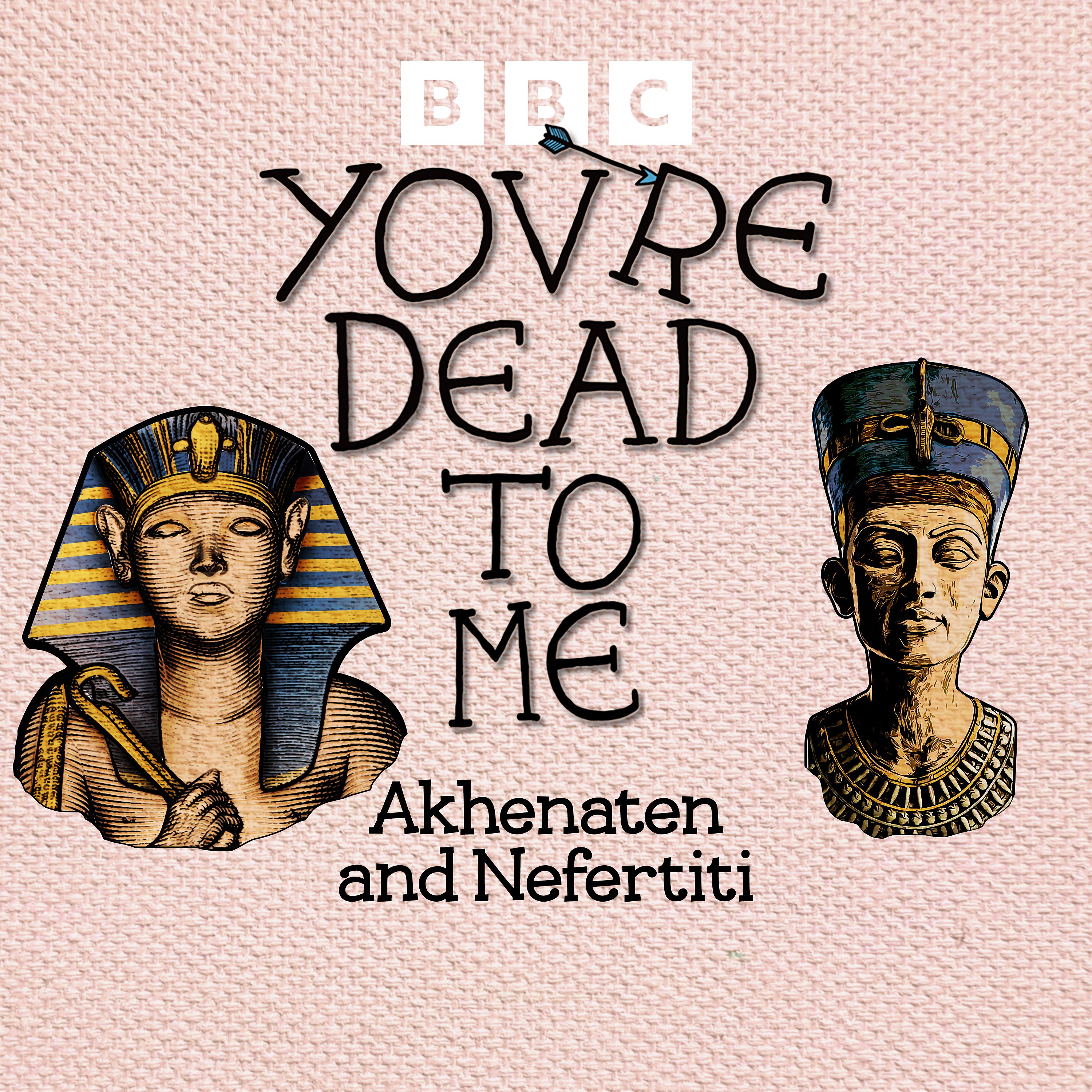
Greg Jenner is joined in ancient Egypt by historian and curator Dr Campbell Price and comedian Sikisa to learn all about Tutankhamun’s parents, Nefertiti and Akhenaten.
As well as their famous son, this ancient Egyptian power couple are best known in the modern age for two reasons. Firstly, Nefertiti’s legendary beauty – her portrait bust is instantly recognisable around the world. Secondly, Akhenaten’s religious radicalism, which saw him reorient Egyptian belief towards the sun god Aten and build an entirely new capital away from the traditional seat of power at Thebes.
This episode traces their lives as members of the 18th dynasty, often regarded as the ‘Golden Age’ of pharaonic Egypt. We look at Akhenaten’s murky childhood and Nefertiti’s even murkier origins, exploring their family life and the children they had, the religious revolution that Akhenaten drove, the unique architecture and art styles developed during their reign, and the fate of Aten worship after Akhenaten’s death. Along the way, we dig into the archaeological evidence and the many uncertainties surrounding their lives, and ask whether they really were Tutankhamun’s parents after all.
This is a radio edit of the original podcast episode. For the full-length version, please look further back in the feed.
Hosted by: Greg Jenner Research by: Siobhan-Michelle Smith Written by: Dr Emmie Rose Price-Goodfellow, Dr Emma Nagouse, and Greg Jenner Produced by: Dr Emmie Rose Price-Goodfellow and Greg Jenner Audio Producer: Steve Hankey Production Coordinator: Gill Huggett Senior Producer: Dr Emma Nagouse Executive Editor: Philip Sellars
Scan the code with your iPhone camera
Listen in the app.