 Ask ChatGPT

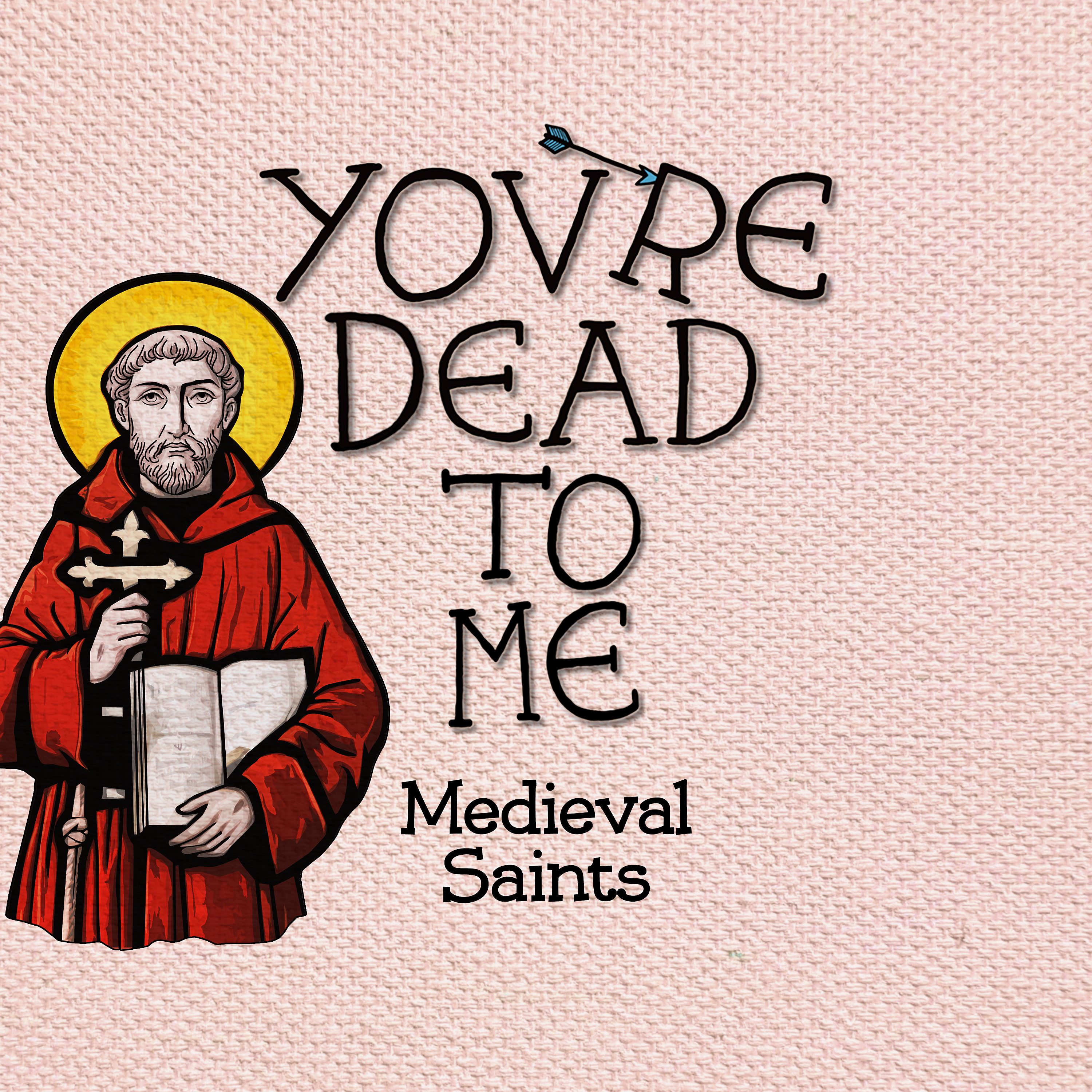
The medieval Christian cult of saints and relics—what saints are, how relics were authenticated and venerated, and how pilgrimage and miracles reinforced belief. It covers the shift from early martyrdom to ascetic saints, the rise of relic “inventio” stories, and the later bureaucratic canonization process (vita, fama sanctitatis, miracle collections, witness testimony, and proving miracles contra naturum). Notable examples include St Cuthbert’s incorrupt body, Ethel Thryth at St Ely, St Anthony of Padua’s tongue (found 1263), and a 13th-century case where Thomas of Eylesfield’s eyeballs and testicles were restored after punishment.
Dr Simon Yarrow (Senior Lecturer in Medieval History, University of Birmingham; cults of saints, relics, miracles, religious cultures; author of The Saints, A Short History) and Rachel Parris (BAFTA-nominated comedian/actor/improviser/author/musician; known from TV and from the episode on Eleanor of Aquitaine).
relics’ power depends on sustained belief; canonization became increasingly formalized in the 12th–13th centuries.
Written by AI. May contain mistakes.
Discussion on the significance of saints and relics in medieval Christianity and the guests' backgrounds.
“where he specialises in the cult of saints, relics, miracles and religious cultures in the early and central Middle Ages.”
Delving into what relics are, their significance in worship, and examples of notable relics.
“And in pop culture, saints and their relics feature heavily in books, TV shows, films, such as Cadphile, Umberto Eco's Name of the Rose, Conclave, of course, the novel and the movie.”
Exploration of the definition of saints, their characteristics, and what makes them revered figures.
“Like, all loads of poles all through him.”
Discussion on how saints were recognized and the societal implications of their status in medieval times.
“You know, that's, you know, so actually once we finish the martyrdoms, right, you get the early martyrs who stand up for their faith and are horribly killed in violent ways.”
Explore how local communities recognized and revered saints in the early church.
“That process whereby the church starts to go, okay, we need to actually like start sifting through these and authenticating them.”
Learn about the evolution of the church's saint canonization procedures over centuries.
“So this is basically a statement that Ulrich is recognised as a saint.”
Understand the rigorous processes involved in verifying miracles for sainthood.
“and reporting miracles, often miracle healings, then you need a miracle collection.”
Delve into strange miraculous stories associated with saints and their implications.
“So he then gets kind of carted off to a hospital where prayers are offered to Wolfston.”
Discover the importance and practices surrounding medieval pilgrimages to shrines.
“It wasn't an accurate miracle, but it is still a miracle.”
Explore the spiritual and social dynamics of pilgrimages in the medieval period.
“So how does a pilgrimage differ to an ordinary journey?”
Learn how historians approach the study of saints and their relics.
“This is where Rachel and I sit reverently at a holy person's tomb for two minutes while Simon takes to the pulpit to tell us something we need to know about medieval saints.”
Understand the ongoing practice of saint canonization and modern examples.
“Whether they've believed in it for 600 years or 100 years or however long, if there is faith in something, that in itself is what makes it sacred.”
A discussion about the episode's content and guest contributions.
“We're still in the era of the canonization process.”
A brief introduction to an episode of In Our Time about Megalosaurus.
“It was the first dinosaur ever to be scientifically named.”

Get the gist, explore an idea or ask about something said.
 Claude
On You're Dead to Me, what are the key points of this episode?
Searching your listeningAutomatic transcript. May contain errors.
0:00This BBC podcast is supported by ads outside the UK. Host Thanksgiving with industry-leading quality standards from Whole Foods Market. There are no antibiotics in their meat department, ever, so carve up turkey and spiral-cut ham with peace of mind. Shop organic sides like stuffing mix and cranberry sauce from 365 brand. And guess what? All their delectable pies are made with no high-fructose corn syrup. Gourmet Thanksgiving flavors with the quality you want Only at Whole Foods Market Sometimes we all need an extra helping hand Especially with a tricky business problem you've been putting off Claude is the AI for just that It's the collaborator that understands your entire workflow And thinks with you, not for you And Claude isn't just for quick questions Hand it a whole task Like turning a folder of scattered notes into a report And it does the work and hands back something finished that you can open and edit.
1:00Claude can now draft a dock or deck right in front of you, and Claude Design now lives right inside Claude. Describe the website or prototype you're picturing, attach your design system, and it comes back in your own design language, ready to edit right on the canvas. It works with your files and the tools you already use, like Gmail and Slack. And whether you're debugging code at midnight, building a financial model, or strategizing your next business move, Claude extends your thinking to tackle the problems that matter. For problems worth solving, get started with Claude at claude.ai.solve. That's claude.ai.solve.
1:37And check out Claude Pro, which includes access to all of the features mentioned in today's episode. Claude.ai.solve.
1:48Hello and welcome to You're Dead to Me, the Radio 4 comedy podcast that takes history seriously. My name is Greg Jenner. I'm a public historian, author and broadcaster. And today we are polishing our reliquaries and joining a pilgrimage to medieval Christendom to learn about the cult of saints and relics. And to help us tell our ascetics from our martyrs, we have two very special guests. In History Corner, he's Senior Lecturer in Medieval History at the University of Birmingham, where he specialises in the cult of saints, relics, miracles and religious cultures in the early and central Middle Ages.
2:20You might have read his wonderful book, The Saints, A Short History. It's Dr Simon Yarrow. Welcome, Simon. Great. Thanks for having me. Delighted to have you here and in Comedy Corner. She's a BAFTA-nominated comedian, actor, improviser, author and musician. What a CV. You'll have seen her all over the TV on The MASH Report, Late Night MASH, Mock the Week, QI, Would I Lie to You. You may have seen her improv skills in the hilarious Jane Austen improv show, Ostentatious, which I've seen many times and love. Maybe you've read her wonderful new book, Introducing Mrs Collins, a sort of Austen spin-off.
2:51And you'll definitely remember her from our past episode of You're Dead to Me about Eleanor of Aquitaine. It's Rachel Paris. Welcome back, Rachel. Hello, thanks. A delight to be back. We did medieval history together last time. Yes. Which is helpful. Yes, so I should have retained some of that information. You should have. I don't want to judge you early on. And yet, here we are. What do you know of the medieval world? Are you comfortable? Am I comfortable in the medieval world? As a woman, no. I think there's little pockets of knowledge here and there. You were a chorister, right? I was. You've sung medieval?
3:24I've sung medieval polyphony at university. Other people went out and got pissed. I sung medieval polyphony. So beautiful, beautiful music. I've had quite a lot to do with a lot of different churches. So I was raised Methodist, so obviously no saints. But then I've worked in quite a lot of different denominations of the church and I'm quite obsessed with churches, including Catholic churches and like across Europe. The first thing I do is go to a cathedral church. So I've probably seen a lot of statues and commemorations of saints, but I don't know much about them. Okay, well, that's fine because that's today's job is finding out more.
4:04And obviously, yeah, you know, today we're talking about saints and relics, which are, you know, they're hugely important to Catholics, to people in the Eastern Orthodox Church, many denominations of Christianity. so what do you know
4:19this is where i have a go at guessing what you our lovely listener hello uh might know about today's subject and when it comes to the medieval cult of saints and their relics maybe you're thinking of blood bones and brutal deaths because they do figure honestly that would be true maybe you've seen reliquaries in beautiful european churches or visited a medieval pilgrimage site like Canterbury, for example. And in pop culture, saints and their relics feature heavily in books, TV shows, films, such as Cadphile, Umberto Eco's Name of the Rose, Conclave, of course, the novel and the movie. And then, of course, there's Rosalia's acclaimed album Lux, which is chock full of tracks inspired by women saints.
4:58But what exactly are relics? Why did medieval people venerate them so? And how many forms do you have to fill in to authenticate a saint? Let's find out. Right, Dr. Simon. We'll start with some basics. We're looking at medieval Christendom. What is medieval? What is Christendom? Okay, yeah, good questions. Good place to start. Yeah, basically the Middle Ages is a long kind of intermission between classical Rome and the Renaissance period. So we're thinking around kind of 500 to 1500. Rachel, what would you define a saint as? I know obviously you didn't grow up in Catholicism, but... Me? Yeah. I'm just trying to think of the ones that I know, like, I don't know if they're medieval, but like St Francis of Assisi.
5:45Sure, yeah. Nice to animals. Okay. Oh, and there's the one who got all poles through him. Who's that one? Like, there's all the pictures. Are you thinking of Sebastian? Yeah, possibly. That's arrows, isn't it? Like, all loads of poles all through him. Yeah. I think saints have usually had a life particularly dedicated to God in some way. I feel like they've usually been a monk or something like that. Like they've already had a monastic or nun-like life and that they've done something dramatic has happened, like poles through your body, snakes, I don't know, fought a dragon, like, or with Francis of Assisi, married an animal.
6:25No, I don't know. I don't know. I just feel like something to do with animals. Is that how the medieval church defined a saint? Pretty much. I mean, I think, I suppose there are three main elements And one of them is, I think you've got this, which is basically to have lived a holy life, to have been a holy person in some way. And there are lots of ways of being that, including having poles stuck into you. And the other idea is that you're kind of known to God, that there is a kind of connection that you've established in which you're recognised as a saint and by God. And then the other element is to have a sort of public cult, public veneration of this person.
7:03During your lifetime. Usually after they're dead, yeah. The definition really kind of becomes solidified and made official with after death often and with the observation of a cult. Yeah. I don't think I'd trust a saint who had a cult during his lifetime. I feel like you should eschew that. Right. And not want it. Modesty. You think they should be... Yes. Humble. Yeah, I think it's the art of humble bragging, isn't it? Yes. It's kind of, you've got to somehow indicate to people that you're special, but without being too conspicuous about it. Yeah, don't look at the poles through me, please. Please.
7:44The thing that we probably should be talking about today is the saint's relics. Do you know what a relic is? Do you know what the official definition or how do you... I don't know the official definition, but I think it's either an accessory or a body part of a saint that is kept in a church, sometimes in a special little box. and you can come and worship it. And it's treated as though it's imbued with holiness in itself. And sometimes they're quite gross. Is that fair? Any kind of body parts, arms, hands, foreskin, eyeballs. There's an eyeball in Stonyhurst College that they keep there, the Jesuits, which is pretty special from the period of persecution in the 16th century.
8:27there is in fact a kind of a tongue of St. Anthony of Padua as well, which was found in 1263. And I think that the symbolism of the tongue is that he was good at preaching, not gossiping. He wasn't a scold, he was a preacher. It was a good tongue. Yeah, it was a good tongue. Not a bad tongue. But you keep all these things in little boxes, caskets, but also jewellery. So today we're portioning up our pilgrimage in sort of chats through a series of sort of questions, you know, the who, the what, the when, the where, the why, the how, you know, all the classic questions. I think we should start with the who.
9:04Who gets to become a saint in the medieval period? If we start our period in the 6th century, you know, the 500s, who qualifies? I would start a bit earlier and I would say, you know, to begin with, if we think of St. Paul's, St. Paul's epistles, his letters to different Christian communities, he always addresses them as holy, as saints. So to Paul, anyone who's baptized in the Christian faith is a saint, is a holy person. Sociologically, that's quite interesting because it means, you know, it's highly participatory and it's very kind of egalitarian. And of course, you don't get to choose whether you're a victim of persecution.
9:41So lots of people from varied backgrounds can end up being martyrs during the phases of persecution under the Roman Empire. But then from the 5th and 6th centuries onwards, we tend to get very much elite figures who are in the role of bishops, they're often called confessors, figures of high status. There are even cults of kind of royal dynasties where holy blood runs through royal blood as well in descent lines. Saint Louis in France. Yeah. He's sort of king of France and he's a saint, right? Yeah. You could be quite kind of middle class as well. And so, you know, part of one of the signs of being moral is that you renounce worldly goods.
10:23And if you haven't got any worldly goods to renounce in the first place, then it's not as spectacular as if you have lots of wealth. Oh, yes, you mean. So as you say, St. Francis came from a very wealthy family and he stood to inherit lots of property. He makes his name as a saint to begin with by renouncing all that. In fact, he kind of strips naked in front of the bishop and his family and renounces his inheritance. to become a saint. For me, I don't know if I'm allowed to qualify saints or not, but for me, I like the saints that are not rich. That feels like that should be necessary to be a saint.
10:56Or a saint who has surrendered being rich. Someone as a saint has gone, I don't need it, you have it, I'm going to go and hang out with the goats. Yeah. You know, that's, you know, so actually once we finish the martyrdoms, right, you get the early martyrs who stand up for their faith and are horribly killed in violent ways. But once martyrdom ends, and Christianity is now the official faith of the Roman Empire, you then get a shift in what a saint should be, right? And it's more of a kind of hermit, what we might call asceticism. Yeah, you can be an ascetic. You can be, as I mentioned, confessors.
11:27So be a kind of bishop in an administrative position. But you can also be a hermit or you can take a vow to join a monastery and observe kind of obedience and chastity and service of various sorts. You can be a teacher or a missionary. There are elements of those kinds of vocations in life that show up in Vita, which saints' lives. Are there any other types we need to mention? Any other things that a saint would do that people might go, aha, saint behavior? Yeah, there's some great ones. There's all the kind of repertoire of ascetic behavior, including kind of fasting. You have to endure extremes of temperature.
12:04So people like Cuthbert used to have lots of cold baths. Got Simon the Stylite, who set a trend. This guy, he spent almost 40 years at the top of a pillar in Aleppo, which must have been incredibly hot. So we're in Syria, incredibly hot. He sat on the top of a pillar. It's like a sort of weird David Blaine thing, isn't it? Yeah, sort of, yeah. Did he talk? Yeah. Like, did he shout down? Bring me a sandwich! Yeah, exactly. Who's feeding him, right? Yeah. One of my favourites is another Simon. Simon of Amessa, who's a holy fool. The holy fool type of saying is really fun. So he's, they're a kind of mix of this kind of classical precedent, Diogenes and Jesus speaking truth to power.
12:53So the sort of philosopher-y type. Exactly, exactly, yeah. And he's famous for dragging dead dogs around the town, for throwing nuts at women. Okay. And he also did lots of funny walks as well. Oh my word, he's Monty Buffett. Yeah, he is. So he's a good one. A lot of these saints' lives, they kind of get their core from the stories of Jesus and the apostles. So healing is an important one. Is there a name for the life of a saint? Do we have a sort of how you're meant to behave? Yeah. I mean, I guess in a way that following the Gospels is one of the key ideas. So they call it the Vita Apostolica.
13:36Ricky Martin song, no? Exactly. It's very hard to say, hard to sing actually, sorry. And I believe it says upside, inside out, live in La Vita Apostolica. Exactly, exactly. That's the word. That's inside out, presumably he's inside a cave, I don't know, or on top of a pillar. Simon, once these signs of sanctity were noticed, once someone was clearly living La Vita Apostolica, that's the saintly cult builds up around them so is this a popular thing does it you know is that the local community going we've spotted a saint we like this this guy or this woman we're going to start treating them as a saint in that early kind of moment of a massive kind of breakout of saints cults in the fourth century often it's something that they've been described as kind of impresario bishops so they you have the story of you have a story of this kind of sub-genre of hagiography which we'll talk about which is the translatio or the elevatio or the or the inventio all these latin fancy words for basically the the discovery of invention inventio means discovery of a saint's relics and some sometimes the story will tell of a of a saint who visits often a kind of a common person in a in a in a vision and tells them and nags them repeatedly you know you'll find my bones here and uh um and then this gets notified to the authorities and there's some a big kind of process of transferring them kind of ceremonial a bit like a classical kind of adventus into a new space and in the fourth century this is big business for bishops who are kind of digging around catacombs in various kind of cities mainly rome and pulling out bits of bodies and moving into the center to the cathedral the basilica of the scent in the centre of the town.
15:23That process whereby the church starts to go, okay, we need to actually like start sifting through these and authenticating them. When does that happen? When do we get a kind of top-down authentication process? The first reference to what we might call a kind of papal canonisation procedure, up to now it's been princes and bishops at the local initiatives, but is in the 10th century and the late 10th century as a bishop Ulrich of Augsburg who is canonised by the Pope. So this is basically a statement that Ulrich is recognised as a saint. The procedure itself becomes much more kind of regularised and systematic in the late 12th and into the 13th century.
16:03Okay, so this era of the Crusades and so on, that sort of thing. What had he done, Ulrich, to merit this? He'd been a confessor, I think. He'd been just a very good boy. Just been a good boy? He's a top lad. Standards were quite low at the beginning. There is this process though, right? In the 13th century, the popes start to go, all right, we need a process. So like how much form filling do you, I mean, because bureaucracy ruins everything, right? So how much actual like filling in forms, sending in paperwork do you have to do to get someone made a saint? Yeah, that really kicks in in the turn of the 12th and 13th centuries.
16:39And it's formalized legally by Innocent III, Third, who's a kind of notorious legal pope where you need to have what's called a vita, so a life that demonstrates holy conduct in life, the sorts of things we've been describing. You also need evidence of a holy reputation at death, which is what's called pharma sanctitatis, so people whispering, whispering campaigns happening. Pharma, F-A-M-A, so where we get the word fame from, right? Exactly, yeah. So that's hence the sort of celebrity overturns. So does that mean there's talk about you? Yeah. Yeah. Okay. And then, of course, if that talk can kind of extend to people actually being witnesses to miracles and reporting miracles, often miracle healings, then you need a miracle collection.
17:29You need a posthumous collection of miracles post-mortem. And the process is so bureaucratic. I mean, they used to have to sort of fly witnesses in from such and such a village in wherever into Rome to give official testimony, which is very, just like the same kind of process as the Inquisition and with heretics, it's an inquisitorial process. process um so yeah it gets very very kind of uh heavy bureaucratic and sometimes popes just die before it's done and they have to start again oh no a bit of a weird question but the lawyers who would interrogate them would they be wanting them to answer in the affirmative or would they be wanting it to be as like the strictures yeah this is where we get this idea of the devil's advocate is that they have to kind of disprove the miracle in order to prove it in a way they have to demonstrate that this thing happened and that one of the latest sort of technical terms associated with Thomas Aquinas is this notion of contra naturum so you have to be absolutely certain that this is not something that might have occurred coincidentally or accidentally or by some sort of natural process of causation yeah this is the supernatural right this has to be the intervention of god or a saint the saints the intercessor on behalf of god but it throws up some real curious puzzles for us so for example there's there's a again a notorious case from the 13th century of this guy called thomas of eldersfield who's crops up in some of the posthumous miracles of wolfston and he is a bit of a naughty boy and he gets into a fight with uh with somebody over a woman and they have this kind of trial by combat which he loses and his punishment is to have his eyeballs and his testicles removed oh oh why is it so ball based just yeah exactly all the spheres of your body take all his balls yeah yeah the story goes on as this kind of detailed little scene where you where where these balls are seen rolling down the road and little children come and pick them up and play marbles with them.
19:45So he then gets kind of carted off to a hospital where prayers are offered to Wolfston. And, surprise, surprise, he has his full set of new balls restored to him. Yeah. How do you explain that one? I really can't. And I don't want to. First, I'm just thinking, it would be a terrible game of marbles. yeah you're like well firstly there's only two I mean I don't want to say anything about the size of them but like yeah it doesn't seem practical to me but there we go you're thinking like like a lawyer you're immediately asking questions you should be a kind of lawyer what I'm doing is overimagining it and I'm not enjoying it this is what historians have to do absolutely this is a specific job of historians what about his eyeballs anything about them they were restored they were restored as well yeah did they accidentally swap him around and he had testicles for eyeballs because that would be hilarious right I've done a miracle.
20:43It wasn't an accurate miracle, but it is still a miracle. You know, if you have a medical condition, you go to a certain saint and you pray asking for healing, for health, for restoration of your wellness. You know, it's fascinating, I suppose, that each person has their, each saint has their own remit in the medical world and in the healing world. So where do people go to get these cures? You know, you don't go to the pharmacy necessarily for the miracle cure. You go to where? A monastery? A church? You usually go to a shrine and shrines can be in monasteries and they can be in local churches.
21:15And a shrine tends to be a kind of monumental structure, like a tomb with a roof, the kind of gabled roof or canopy over the top of it. And these house the relics. And sometimes if you're lucky, you've got the kind of the entire body and it's kind of incorrupt. And you can, Cuthbert's a good example of that. Ethel Thryth in St Ely is another one. and sometimes they'll be in a reliquary it's positioned on an altar or above the altar so yeah you you these are very kind of highly kind of curated spaces and the idea is to give you an experience um that is going to is going to facilitate your access to the contagious kind of power of the of the relic the kind of holy radiation this is pilgrimage right people would go on.
22:03So how does a pilgrimage differ to an ordinary journey? I mean, obviously a journey is a commute. A pilgrimage is still a commute of sorts because you're getting somewhere special, but is the journey itself also holy? You have to go in sandals. Yeah. I think that's right. Carry a stick and a shell and a purse and there is a classic look which you've got to try and reconstruct. Okay, what's the look? You have your kind of a script and a staff which is like a kind of pouch for your money and you go in sandals or sometimes you go barefoot on parts of it. and, you know, to show your commitment. And it's about devotion.
22:36It's about having a reason to go that's to do with making a vow or a promise for some sort of interaction with the saint. Sometimes people have pilgrimages kind of prescribed for them by their confessor, by priests. They say, you know, you've been naughty and the only thing that will solve it is if you go on pilgrimage to such and such a local shrine. But then you get these massive kind of international pilgrim routes which link up and Compostella is one of the kind of term in eye for this and Canterbury is another, Cologne another and Rome, of course. I mean, Canterbury we know through, you know, Geoffrey Chaucer's, you know, the Canterbury Tales, that's a pilgrimage, right?
23:15That's people are telling stories as they go to the holy site and that's where Beckett was murdered and then very quickly canonized by a sort of king. I'm so sorry, I didn't mean to murder you. So it's really interesting. and people going on pilgrimage is a sort of huge important part of spiritual life. People could misbehave on these pilgrimages, right? They could get drunk, they could have sex and be naughty. So sometimes you'd get to the final sign and be like, I'm so sorry for everything I just did on the pilgrimage. My bad. Girl's trip went a bit wild. Yeah, it's basically a stag deal. Sorry.
23:48Rachel, I think we've kind of covered quite a broad spectrum of medieval saints' lives. Yeah, I feel like I know them intimately. It's fascinating. isn't it? Because obviously saints' lives are still so important to people of faith now, but actually there is something quite medieval about some of this. Yeah, definitely. Especially the gruesome elements. I find, you know, on the other hand, there's the medieval period feels like, you know, there's a blasphemy and there's sensitivities around this sort of thing. And then on the other hand, they're there playing marbles with balls in the street and throwing nuts at women.
24:21And yeah, it's a mixed time. The nuance window!
24:31Well, it's time now for the Nuance Window. This is where Rachel and I sit reverently at a holy person's tomb for two minutes while Simon takes to the pulpit to tell us something we need to know about medieval saints. So my stopwatch is ready. Take it away, Dr Simon. Historians study the past through its written and material traces. They go to the archive and they find sources, survivals, leftovers, what you could say could call relics. As historians, we need to remind ourselves when we work with our sources that they don't just contain information, facts, evidence out of which to reconstruct as if scientifically some conclusive truth about the past.
25:11They are also a puzzle and a challenge to our sense of empathy and humanity. They dare us to conjure up the past and to ventriloquize the dead. And along with this, there are ethical responsibilities and repercussions for us all when historians attempt to do this. And this is part of the ongoing conversation of this brilliant podcast. Studying the medieval cult of saints and their relics raises the stakes further. How should historians explain miracles? Again, this is a puzzle and a challenge. Saints, relics and miracles are signs. They represent and they point to something beyond our understanding.
25:48The lives of saints have an immediate presence in our encounters with their gruesome remains. They are intriguing, disturbing, unsettling. but they also excite the imagination. They're a spur to creativity, a sense of trepidation, perhaps even awe. This is how we are made to feel in the presence of Satan's relics and this is how historians often feel when they go into the archive. So saints are a bit like influencers or celebrities except they are not trying to sell us products like social influences or looks maxing gurus. They aren't like AI serving us up, hallucinated, slop larded with flattery.
26:27They are teaching us about life and death and about our lives and our deaths. They don't provide any easy answers, but they do offer a reassurance that humans have been here before. Amazing. Thank you so much. Two minutes on the dot. Look at that. Wow. Incredible. Wow. Miracle. A miracle. Not without the paperwork. No, exactly. I think what's come out through the discussion for me is that with all the authentication and the evidence that was required to make a saint and to authenticate a relic, really a relic is holy because people believe in it. Whether they've believed in it for 600 years or 100 years or however long, if there is faith in something, that in itself is what makes it sacred.
27:19not just the paper about it. Yeah, it's not just a form filling, is it? You're right. The interesting thing actually is that we might think of the medieval world as the era of saints but more saints were canonised in the 20th century than in any medieval century. Absolutely. Oh really, who? I mean, there's a patron saint of comedy writers there's a patron saint of podcasting. What? Yeah. What? So yeah, it's... Is it Adam Buxton? I mean, he should be. He's certainly up there, isn't he? Yeah, no, actually the 20th century popes widened the scope a lot more, didn't they? One of the most recent ones, a guy called Carlo Acutis, who was a social influencer.
27:55Wow. Oh, really? So there's a patron saint of... Of social influencers, yeah. Of, you know, YouTubers and whatever. Yeah, there we go. That's fascinating, yeah. So we're still in the era of saints. We're still in the era of the canonization process. More so, perhaps, than ever. For more from Rachel, of course, check out our episode on Eleanor Akitain, one of the great queens of the medieval world. And for more medieval, well, medieval faith and culture, actually, we have episodes on medieval ghost stories. We've got episodes on Geoffrey Chaucer. We've got naughty nun, Benedetti Carlini. She was very cheeky.
28:23And we have one on medieval animals. So plenty to get into there. And don't forget, you can get your episodes 28 days early on BBC Sounds. But I'd just like to say a huge thank you to our guests in History Corner. We have the stupendous Dr. Simon Yarrow from the University of Birmingham. Thank you, Simon. Thank you. It was great fun. It was good fun. And in Comedy Corner, we have the sensational Rachel Parris. Thank you so much. Thank you. I learnt so much. I mean, you knew quite a lot, but you did learn some stuff too. So that's the best of both worlds. And to you, lovely listener, join me next time as we crack open another tomb to examine the perfectly preserved historical subject inside.
28:54But for now, I'm off to Padua to see St Anthony's tongue. Hopefully he's got some tips for podcasters as well as preaching. Bye!
29:16Could you talk about being invisible or double denim? Who knows what's next on the new series of Just a Minute? Belting out a rendition of... Whatever the topic, our panel has just a minute to speak without hesitation, deviation or repetition. Join Zoe Lyons, Desiree Birch, Paul Merton and many more for the new series of Just a Minute with me, Sue Perkins. It's funny because it's true. Listen on Radio 4 and the full box set is available now on BBC Sounds.
29:54Sometimes we all need an extra helping hand, especially with a tricky business problem you've been putting off. Claude is the AI for just that. It's the collaborator that understands your entire workflow and thinks with you, not for you. And Claude isn't just for quick questions, handed a whole task like turning a folder of scattered notes into a report and it does the work and hands back something finished that you can open and edit. Claude can now draft a dock or deck right in front of you, and Claude Design now lives right inside Claude. Describe the website or prototype you're picturing, attach your design system, and it comes back in your own design language, ready to edit right on the canvas.
30:35It works with your files and the tools you already use, like Gmail and Slack, and whether you're debugging code at midnight, building a financial model, or strategizing your next business move, Claude extends your thinking to tackle the problems that matter. For problems worth solving, get started with Claude at claude.ai.solve. That's claude.ai.solve. And check out Claude Pro, which includes access to all of the features mentioned in today's episode. claude.ai.solve. It was the first dinosaur ever to be scientifically named. And he came up with an animal that was about 40 foot long. A profound discovery that led to paleontology as we know it today.
31:17Impossible monsters, these giant, weird reptilian creatures. This was like a thunderbolt. Join me, Misha Glennie, and my three guests for In Our Time on this episode, Megalosaurus. Listen on bbc.com or wherever you get your podcasts.
Greg Jenner is joined in medieval Europe by historian Dr Simon Yarrow and comedian Rachel Parris to learn all about the cult of saints and their relics. The veneration of saints still plays an important role in the lives of Catholics all over the world, but what did the cult of saints – and especially devotion to their relics – play in medieval Europe?
This episode explores all aspects of the topic: who became a saint, and how the canonisation process changed over the centuries as the papacy tried to more tightly control it. What sorts of signs and miracles proved someone’s sanctity. What relics are, and how medieval churches acquired them, both legitimately and illegitimately. What people in the Middle Ages thought saints could do for them, and the pilgrimages they took to their tombs in search of aid. And it asks whether everyone believed in the power of saints’ relics – and the gruesome fate awaiting some sceptics.
This is a radio edit of the original podcast episode. For the full-length version, please look further back in the feed.
Hosted by: Greg Jenner Research by: Lily Tidman Written by: Dr Emmie Rose Price-Goodfellow, Dr Emma Nagouse, and Greg Jenner Produced by: Dr Emmie Rose Price-Goodfellow and Greg Jenner Audio Producer: Steve Hankey Production Coordinator: Gill Huggett Senior Producer: Dr Emma Nagouse Executive Editor: Philip Sellars