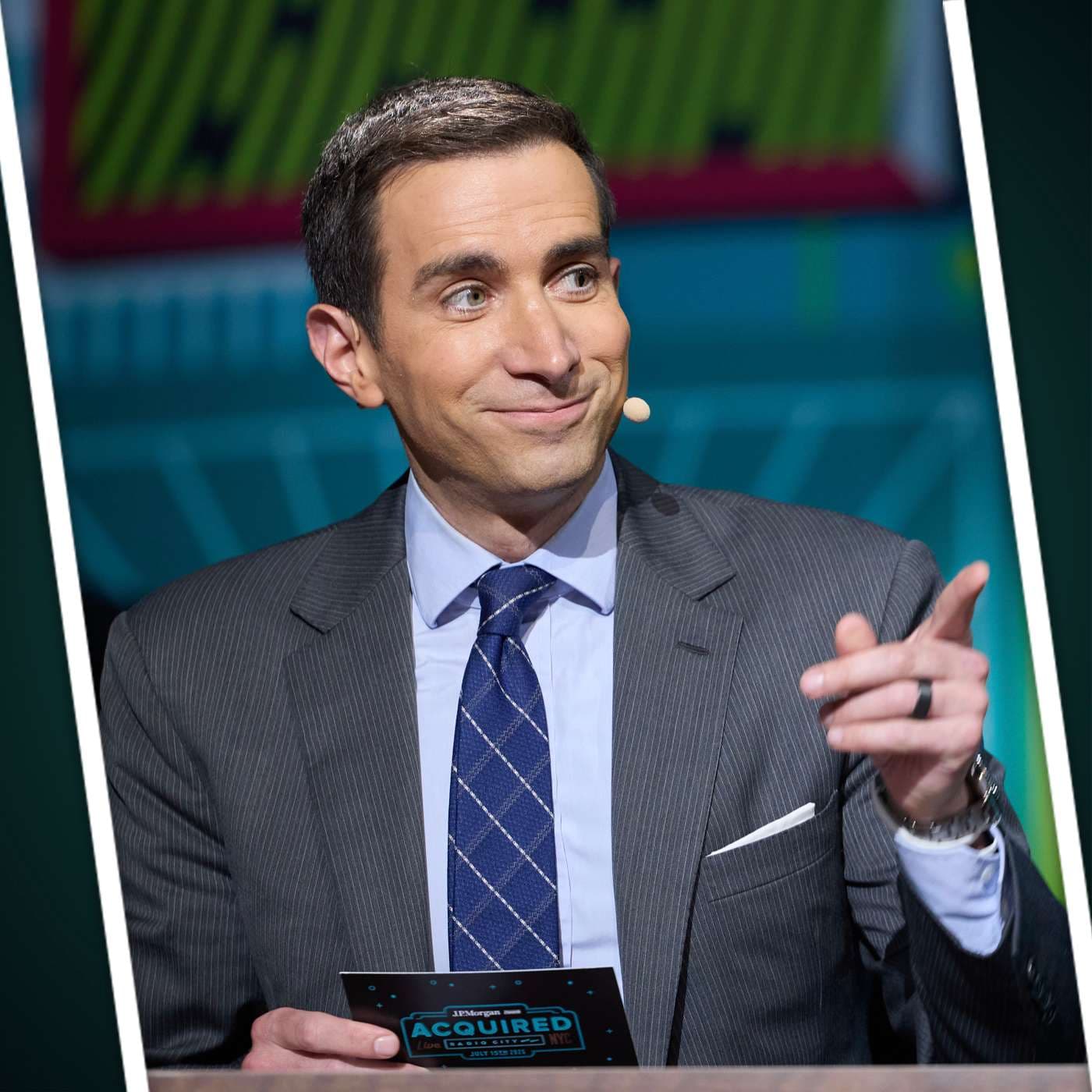
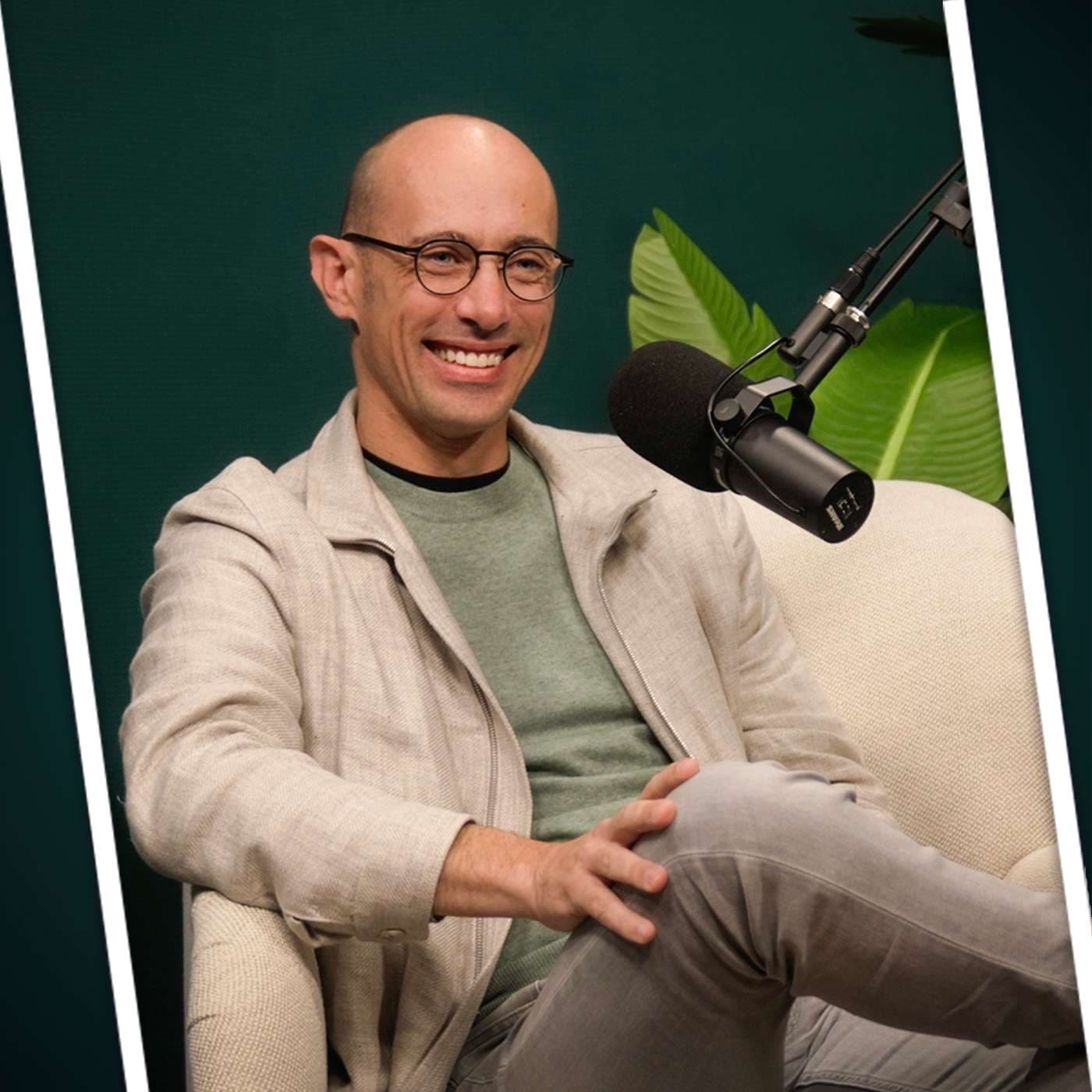
In short
ACQ2 Podcast Episode Summary: Generative AI in Video and the Future of Storytelling
Podcast Title: ACQ2 by Acquired Episode Title: Generative AI in Video and the Future of Storytelling (with Runway CEO Cristobal Valenzuela) Episode Description: This episode features Cristobal Valenzuela, CEO of RunwayML, discussing innovative tools for filmmakers, the evolution of generative AI in visual storytelling, and insights from their recent $141 million funding round.
---
Key Participants
- Cristobal Valenzuela: Co-founder and CEO of RunwayML
- Ben: Host of ACQ2
- David: Co-host of ACQ2
---
Episode Overview
Introduction to RunwayML
- RunwayML is at the forefront of generative AI for video, enabling creators to generate high-resolution videos from text prompts.
- Cristobal Valenzuela discusses the company’s journey and the generative AI space, emphasizing the blend of art and engineering.
Generative AI Models
- Gen 2 Model:
- A significant advancement in Runway's technology that allows video generation based on various inputs like text and images.
- Operates similarly to a camera, where users can manipulate settings to achieve different outputs.
- Technical Insights:
- Generative models like those at Runway use diffusion processes to create videos frame by frame, predicting subsequent frames based on initial input.
- Models are trained on diverse datasets to recognize patterns and maintain temporal consistency in video.
Differentiation of AI Domains
- AI Spectrum:
- Acknowledges that AI extends beyond language models (LLMs) and encompasses various domains, including video and image processing.
- Highlights the necessity of distinguishing between these modalities, as each requires unique approaches and solutions.
Historical Context and Future Potential
- The Evolution of AI:
- Traces back to pivotal moments like the 2015 ImageNet breakthrough that showcased neural networks' capabilities.
- Anticipates a golden era of cinema where generative AI democratizes content creation, allowing broader access to filmmaking tools.
- Creative Use Cases:
- Runway's technology is adaptable for various segments, including professional filmmakers and casual users, facilitating creativity across the board.
- Cinematic applications include experimental video creation, marketing, and more, reflecting the tool's flexibility.
Business Strategy and Market Positioning
- Funding and Partnerships:
- Recent $141 million funding round led by Google, Nvidia, and Salesforce to bolster Runway's technological capabilities and market reach.
- Emphasis on building for creators and understanding user needs as central to their development strategy.
- Business Model:
- Initial SaaS model with evolving pricing strategies as technology matures.
- Potential for personalized consumption-based models as video generation and distribution methods become more sophisticated.
User Experience and Tools Development
- Focuses on creating intuitive user interfaces that empower storytellers rather than bogging them down with complex technical details.
- The goal is to enable creators to explore and innovate without being constrained by traditional filmmaking processes.
Insights on the Future of Storytelling
- Dynamic Storytelling:
- Future films may evolve from static narratives to more interactive and personalized experiences akin to video games.
- The shift is seen as a potential revolution in how stories are told and consumed, with AI playing a role in real-time generation.
- Examples of Creativity:
- Cristobal shares inspiring examples of content created using Runway, showcasing how artists push the boundaries of creativity using generative tools.
---
Key Takeaways
- Generative AI in Video: Remarkable advancements are redefining filmmaking capabilities, allowing for unprecedented creativity and experimentation.
- Consumer Empowerment: Runway aims to democratize video creation, enabling anyone to become a creator regardless of their background in filmmaking.
- Future Potential: The intersection of AI and storytelling will lead to innovative forms of narrative, expanding the definition of what cinema can be.
- Importance of User-Centric Design: Effective tools must prioritize user experience, allowing creators to focus on storytelling rather than technology.
---
Additional Resources
- [Runway Official Website](https://runwayml.com/)
- [Cristobal Valenzuela on Twitter](https://twitter.com/c_valenzuelab)
---
Sponsorship
- Plaid: Sponsor of the episode, known for enhancing banking experiences for developers.
---
This outline captures the essence of the podcast episode, summarizing key discussions, insights, and takeaways while providing a structured overview for easy navigation.
Written by AI. May contain mistakes. Listen to the episode to check what was said.
Transcript
Automatic transcript. May contain errors.0:00Hello acquired listeners and welcome to this episode of ACQ2. Today we are talking with Chris Valenzuela, the co -founder and CEO of Runway ML, one of the most fascinating companies in the AI space right now that I've had a chance to play around with quite a bit and I'm absolutely blown away by the product. And as we are diving in to trying to understand the current state of AI and everyone is watching all this rapidly evolving real time. I looked at this as an awesome opportunity to get to spend more time with Chris, who is not only contributing to this space, but sort of like inventing it as we're going along.
0:39So without further ado, Chris, welcome to acquired. Thank you for having me. Awesome to have you here. Well David and I wanted to start peeling the onion from sort of the highest layer, which is you have created at Runway a text box where I can go and type in text and then within a minute or so, I have a high resolution video of what I typed in. And it is absolutely remarkable. And I think you just released the Gen 2 model, which is even better. I sort of wanted to just ask an open -ended question, which is, how does this work and how did it evolve to... How did we get to this? Yes. If you wanted this today.
1:19Okay, there's a few questions there, so I'll try to unpack them all. How does it work or how we got here first I guess it's been a journey of a couple of years from the runway side The company's now turning five years and so we've been working on this idea of synthetic media or generally models for some time now even before that with the founders We met at school and we've been working for now. I would say collectively for like seven eight years and this was an NYU in The art school This is that NYU, NYU Tish School of the Arts, which is an arts program that also has a bit of like engineering in it.
1:55Think about it as art school for engineers or engineering school for artists. And so we started like playing around earlier early on with early neural network research and projects and try to take some of those ideas and apply them into the fields and into the arts, specifically into filmmaking and designing and art making in general. So it's taken definitely some time and that's where we're coming from and happy to go deeper into it. Now, I guess the model you're referring to more concretely, gen 2, is a model that a research would be working on for some time now that allows you to transform input mechanisms or input conditions like text like you were referring to it to video.
2:36You can also work with images or with other videos as well. So maybe the best way to think about the model itself is to think about it in two different ways, one from the product side of things, which is how are people using this? And you know the best analogy of come to understand or explain how these things work is really to think about it as a new camera. You have a new kind of camera and this new camera allows you to create some sort of like video out of it and you can control the camera with different settings and presets and you You can control the light and the aperture of the lens, et cetera.
3:09These models work pretty much similarly. You have a model that's able to system our technology, the table to generate video, and you can condition the video generation to text, to images, to video, and a few other things as well. So depending on what you're trying to do, if you're trying to create a video out of an existing image, you might choose the image to video mode. If you're trying to maybe get some ideas out of your head, you might try the text to video mode, which is you try being text and you get video out. So it's a very flexible kind of like camera if you want to put it with that analogy.
3:41So that's I guess the first part of it. And the second I guess more technical aspects of how these models actually work, there's a research we've conducting for some time now on on diffusion model specifically applied to video, which is the kind of baseline model that we build for this. The runway fanning team you all were heavily involved of if not the primary authors of latent diffusion, right? Yeah, we've been pioneering work on journey models and foundational models for both image and video and multimodal systems. For some time now we are the co -authors of Vringport and paper called Layden diffusion that gave birth to stable diffusion, which is a collaboration between the University of Alimbi and Minichand runway.
4:20And that I was checking Hagen face other days, the most used open source model in the image of the main and so perhaps one of the most influential models I would saying the whole generative AI landscape these days was made by runway and LMU MiniG. And so we've been working it for some time for sure. And now the next frontier for us represents video. And so Gen 1 and Gen 2, which are also papers with published with our research team, have been kind of leading the way in the video site. Okay. So we could be here for a 16 week course of lectures to try to answer the question of well, how does it work?
4:52But give me the like Reddit explain it like I'm five version of how would do these models work and maybe let's start with the images to produce an image as the output and then after that I want to follow up and ask you about video. Sure. Collectively models understand patterns and features within a dataset, right? They're just probabilistic models and they're trying to predict what's going to happen next. That's like, I guess a broad definition of any AI system. With video generation, you can take that same kind of like concept that apply to frames, right? So you take one existing frame, let's say a picture you've taken in the real world or a picture you actually can generate with runway.
5:32And the model is basically trying to predict what frames will come after that initial frame. If you think about video, really, video is a magical trick. It's an optical illusion. There's no actual movement. and it's just the optical illusion we've created by stitching frames together at a speed enough that our eyes believe there's movement there, right? But they're just frames. And so the trig and how it works is really trying to build a system on a model that understands how to predict consistently and temporarily consistent, which is the key concept, every single frame and how that frame relates to the previous frame and to all the previous frames before and after.
6:10And so for that, you train a large model that's on a large enough data set to gather those patterns on data and kind of feed sites around frames. And then they go with, well, let's start now conditioning or generating new frames. And for that, you can use an existing image or a tax or other condition mechanisms as well. You said something a large model there. I want to double click on that for folks who maybe hear a large model and they think LLM see the current, what everybody thinks of with generative AI. That's a whole nother kind of branch of genealogy here, a different type of large model around language around text.
6:43Images video, this is a whole nother branch, right? Yeah, that's very important to make a distinction about. The key concept here is that AI is not just LLM7, so AI is not just language models, and it's important that we're more specific. I think part of it has been this very reductive view of seeing AI as synonymous of like chat GPD, which I think chatGPD has dominated so many of the conversations these days, that people assume that when we speak about AI, we're speaking about LLMs or chatbots or language models. And the truth is that the field of AI is way more bigger than just language models.
7:21For sure, language models have been perhaps the one that people have been particularly excited about, but there's other domains as well that just work differently or can borrow some ideas from language models, but they operate in different domains. And in many ways feels like just kind of the tip of the spear if you think about the economy and human activity. It does. It does. Text is very important, but lots of things go beyond text. It does. And so some of the perhaps questions and uses that you might come with a chatbot or language model might not actually be relevant or apply to someone working in film, right?
7:51And when being working in film is like you don't have the same constraints that are the same conditions or the same questions or the same challenges when making a film that when writing something with text. And so models, foundational models or large models can be on different domains or different modalities depending on where they're trying to solve. And they're actually, we can go different, but they're actually models that can be multi models. So you can work on different domains at the same time or with different inputs. But most of the time when you're referring to foundational models, it's always good to be specific around the domain you're working with.
8:24So they're large models for image, they're large models or foundation models for video and they're large and foundation models for tax these days. Are the explosions in all these different modalities which seem to kind of be happening at the same time or within a year or two of each other? Does it all date back to the 2017 paper on the transformer? Like why is this all happening right now? The field itself dates back to like the 40s and even perhaps before that and so definitely there's collectively being like decades and a lot of years of work into making this happen. I think for me, a bigger moment in time that helps explain perhaps the way of more recent progress we've seen is happens around 2015 when ImageNet was around a paper that was published that came around and proved that you can use convolutional neural networks and neural networks in a few things started to happen.
9:25Researchers were experimenting with using GPUs to compute in parallel neural networks, which wasn't possible before that. I think I was 2012 for 2013. Yeah, I mean, Kudo was all around for a few years at this point. PyTorch was released around 2016, I think so, 2017. TensorFlow was around the same time. So I started working on the AV of Run and we're around to like 2016 or so, where most of these things were like starting to like get momentum on. And so I wouldn't say there's one particular paper that has like explained or like help justify the wave because again, transformers are, most of these days apply mostly on the text domain on the language domain.
10:09They do have some applications on the visual domain as well, but the latent diffusion paper that we publish is there has a really important paper and a really important research that goes deeper into using some newer network techniques or deep neural networks into the image domain. And so that's a different paper for different genealogy of work. And so I wouldn't say there's one single thing. It's more of a combination of things that's been, I would say, happening more in particular for the last 12, 13 years, starting perhaps from the AlexNet and ImageNet work. Yeah, it makes sense. So on the video model in particular, does it have to train on video training data in order to understand what I mean when I say, you know, a panning shot or a dolly zoom or something like that.
10:55You can think about the training as two separate stages to get that level of control. There's the baseline foundational model training, which is let's first get a model that's able to generate frames, right? So if you think about that, that's a new task. Like the idea that you can generate video using nothing but words is relatively new. Like get into the point where you can do that consistently wasn't even like imaginable again a couple of years ago. So what you do first is you generate the model, you create the model. And then a lot of the work that comes after that is fine tuning, which is specializing the model on specific styles for specific control mechanisms that allow you to take this initial piece of research and define better ways of controlling it.
11:40which I guess to your example is like how do you make sure that you can define like the zooming and the panning and other kind of conditions that are relevant for video itself. So a lot of the work has to do with both things, creating the baseline for national research model and then fine tuning on top. All right listeners, we want to thank a new friend of the show, Plaid. The name is likely very familiar to you after our recent ACQ 2 episode. Odds are you've used Plaid before without even maybe realizing it. If you've ever linked your bank account to apps like Robin Hood, Venmo, or Chime, you're one of the millions of people, like one in every two Americans, who've already used plaid.
12:19I feel like I've grown up in the tech industry alongside plaid. There are so many modern experiences that are powered by them. And at its core, plaid isn't just about making it easier to connect to your bank. It ends up being the backbone for thousands of companies building faster, safer, and more seamless financial experiences. So whether it's reducing fraud, speeding up onboarding, or turning old school banking processes into something that feels instant and effortless, plan is making it happen. So last year, plan rolled out some powerful tools. Think cashflow data for better credit decisions, anti -fraud tech with AI, and analytics for bank payments.
12:55And this year, they've leveled up again with major updates across all three of those product lines. Yep. They're even helping businesses manage things like direct billing for your subscriptions. So the bottom line is, Plad is making it easier for companies to build smarter, safer, and more personalized financial experiences that just work. If you're building financial tools or infrastructure, Plad's data analytics can give you a serious edge, whether it's fighting fraud, underwriting smarter, or managing payments more efficiently. So if you want to learn more about how Plad created one of the biggest networks in financial services today, listen to our recent ACQ2 episode with Plad's founder and CEO, Zach Paray, and our thanks to Plad.
13:34Okay, so before you get to the fine tuning, you've created the model. How do you get the data to train models like these? So every model is different and I'd run when we have around 30 different models. And so every model can and will be probably trained on a different data set. We have internal data sets that we use to train on models, but we also actually train models either from scratch or fine tune models for our customers and mostly like enterprise users. And so think about your large media company, your large entertainment company, and you have a large volume of data sitting around, you can use that data to train a version of a video generation model that has a particular knowledge and understanding of your thing that no one else has.
14:23And I go, if I go back to the analogy of the camera, it's basically the equivalent of building your own customized version of a camera that only works in the type of environments and settings and presets that you needed to work. You can also do that with particular datasets. Well, this is amazing. We're going to get in here in a second too. Your customers in use cases for runway. But based on what you're saying, you could do something like train a runway camera on a movie. So you could have a movie with a certain visual style, train a runway model on it, and create more video with that unique movies visual style.
15:02Exactly. You can prompt or fine tune a model with a particular art direction or particular style. Right? So you can use that as a reference material. And remember, these models learn patterns. They don't copy existing data. So by learning the patterns as a creator, they will allow you to iterate on those ideas or video samples faster and quicker than ever before. And that's something we're doing a lot with filmmakers these days helping them ingest their own like films or own content or animations and using that to create this customized, very personalized system that now you can use in conjunction with other tools you're using these days.
15:41Yeah, this is a great segue to the use cases. So anyone who's thought about this for five minutes can come up with, ooh Hollywood movies and then you start thinking a little deeper and you're maybe like, ooh, what about marketing videos? People can come up with many clever use cases from there. Where do you decide where to aim your energy? And I'm curious what your sort of different customer segments look like and where you've found the most fertile ground that AI can be helpful for video. I mean, for video, really, and that's why I go back to the camera analogy. It's a very flexible system. It's the general purpose -graded tool.
16:15And so really, the field of video generation and synthetic media will encompass everything from future films to short films to series to internal HR videos that a company can make to like small creations that someone can make on their phone. And that's actually a great representation of the type of content that you see these days. If you just do the exercise of searching in like social media for runway, you'll see a combination of videos being created by people that might have never thought of themselves as filmmakers or creatives creating video. And you also have professionals who have been working on the film industry for like decades using runway as well And so it's a very flexible like system and our goal is not to try to build barriers or Constraints around the usage of it because like a camera it can be used for anything It's a very expressive tool.
17:04You know how to use it I think that one thing though. It's interesting to recognize that and it happens before with other technologies as well Which is the first thing people try to do with it is to try to replicate the past and so they try to use it as literally as a camera. And I think like if you look at the history of like the camera, the first thing people tried to do when they got the hands into a device I was able to capture light was to record theater plays because that's what was the form of art that people thought that cameras were supposed to be used for, right? That's part of like the experimentation phase of dealing with a new technology.
17:39You have to have some sort of like grounding in something you know So you go back to what you know, which in the case of the camera was like theater. But today there's a lot of things that you can do with video models that are perhaps similar to the things that you can do with a camera and there are other things that a camera would allow you to do and we're just starting to scratch the surface of those things. So future -wise and customer -wise and like focus -wise, we're really focusing on enabling those new types of like creative endeavors to flourish. And so the movie example is like someone shooting something very cinematically instead of on stage or I've heard the analogy that you know we're not just going to put full -size newspapers on the web or we're not just going to take desktop websites and put them on the smartphone.
18:19There's like a native app. What's that analogy for video with AI instead of reproducing the previous medium? I think it's part of the collective creative effort to try to uncover those. I think our role is partially just making sure that we can build those models safely and put them in the hands of creatives to figure out those new narratives and those new expression mediums. One that I feel is particularly interesting though is this idea of not thinking about film as a singular narrative or as a baked piece of content. You think about any movie you've watched recently or any series you've watched.
18:53Someone, a team, a company, director, filmmaker, an artist, made that and rendered that. And render that is you've collectively defined what the piece of content is. And then the next stage is you need to distribute that to viewers. And so you go into Netflix, into YouTube, whatever distribution format you have these days. The interesting thing is that with journey models, you are going to be able to generate those pixels. Perhaps there's no rendering moment anymore because you might be generating those pixels as they're being watched or being consumed, which means that the types of stories that you can build can be much more personalized or much more specific or much more nuance to your audience and viewer.
19:33And it also can be variable and can change. So there might be the case, and I'm not saying this is going to be the case for every single piece of like content out there, but there might be a space where like it looks way more like a video game than like a film. And it's still a story and maybe you're in that story as well or you're generating that story. Those are things that you can do today with traditional like editing techniques or traditional cinema because you're constrained technologically, but what you can do with it. I'm reminded of the Neil Stevenson book Diamond Age, not Snowcrash from VR, the other one.
20:05It was called Raktives, I think. Oh, I haven't read that. It was very different. There were actors who were kind of live playing with, but the concept was a movie or a TV show. The popular form of consumption had become like a, it's dynamic and it's like playing around you and you're a character in the Raktive, I think, a reactive, I think is what they call it. advertisers are going to love this if this becomes a possibility. Like the ability to do like one to one personalized marketing is crazy. I think we're burps somehow living through that era of like personalization, like this Spotify algorithm is like a great example of exactly that.
20:40And it combines everything we're chatting right now. AI algorithms and data and it works. It works so great that you forget that's an AI system like behind the scenes. That's what the mythical right there are two billion unique Facebook news feeds, which is extremely different than 5 million people receiving a newspaper once a day and opening it up and I'll read the same thing. And that's great. That's great. On this topic before we move on, what's your kind of most mind blown moment that you've seen so far of something somebody's created with runway? Oh, there's so many, I would say creative moments.
21:18I think overall more than one particular example is the feeling when really you've thought about very hard around every possible use case of a model or like a way of using the model. And then you put this model into the hands of a very talented artist and that person realizes and uses it in a way that you never thought of before. And I think that that's the adrenaline rush that is still makers. We always straight to like find which is you're making a guitar and you put that guitar into the hands of Jimmy Hendrix trying to predict the talent that might emerge and the type of like emotion and type of art that someone like that can make with an instrument or a tool like that.
21:57As tool makers, it's just joy. We have a few moments in time where we've seen a few Jimmy Hendrix. They're playing the guitar in ways that we never thought were possible. Speaking of your Jimmy Hendrix, this was used as one of the tools to make everything everywhere all at once, right? They use one of our many AI tools to edit a few scenes in that movie, yes. A small percentage of scenes. still pretty cool because that was very early. I remember the first time I read that that was the case. I felt like it was only in the last few weeks I had heard things like, you know, what if AI starts augmenting journalists and what if AI starts augmenting filmmakers and then you're like, oh, literally the movie that I just saw and has crazy visual effects.
22:39Like very good, very clever, very inventive visual effects. By the way, with a five person VFX team, not a 500 person VFX team, is already using AI tools as, of course, one of many tools in the workflow, but it's not future stuff, it's present. It's happening. That's a perfect example, I would say, of what's to come more. Or you're not really realizing that a lot of things are already using AI in some sort. Really, that movie, it's a beautiful movie. You haven't watched it, I definitely like stop. Recommend just like wine and watching it. It was just great, as you were saying, by a small team of like seven editors and BFX people, extremely talented artists who use many tools among those one of our tools to automate and go through the process of building such a massive visual intense movie.
23:27And I think that's again a taste of what's to come with regards to really making sure you can execute AVS really fast. I think the real promise of Jody Models and the tools that we're building on runway is to take down the cost of creation to nearly zero. It shouldn't be a constraint how expensive your ideas are in terms of communicating them. The only thing that should matter is how good they are and how many times you can iterate on those because every creative endeavor is just a feedback process of iteration. The faster you can iterate, the more things you can make. Like right now, everything is kind of waterfall where I'm going to read listeners the prompt that I put into runway over the weekend when I was playing around.
24:06with it. Lens flare from a sunset while filming a pan shot of a vintage green 1970s portion 9 -11 with Los Angeles in the background super high gloss. I'm like watching this shot and just thinking about the camera setup and the perfect short amount of time. I would have like a five minute window to do this shot with a several person film crew and very expensive equipment to rent. And here I can just keep iterating on it in runway. You also do this staged level of fidelity where first I get a still frame and I can choose, oh, sort of like this. And I think you probably use that as some sort of seed to build a shorter cut.
24:44And then from there, I can sort of do the more expensive thing, I've do a full high resolution, longer scene. It is really mind -blowing of just me sitting here literally on my free credits before I even paid for a full account. I could do this versus a several thousand dollar. You better catch this in five minutes that's film shot. Yeah, that's a great encapsulation of this overall idea of really thinking about anything great as an equals odd rule. So the more you make the better stuff you'll eventually make. And so making and having a tool that allows you to do that work that you're referring to, like shooting something or creating a video with nothing but that like a word allows you to do it at scale.
25:25You can do it multiple times. You can do it super fast. You're not constrained to actually go in and shooting that in the real world. And so the best strategy is really to produce as much work as possible because eventually from that amount of work something great would come out of it. And the best artists regardless of their medium are the artists who are always experimenting and creating a lot every single day. Picasso was painting every single day. The best filmmakers are shooting and thinking about cinema every single day. And sometimes it's hard and it's expensive because you don't have the tools and maybe you don't have the resources.
Read the full transcript
25:58But now you have. We want to talk all about beyond just, you know, movie making and all the other, you know, use cases and applications here for runway But even just staying in that like the past decade we've talked about this so much unacquired has converged all of commercial movie making into like the most monolithic non -iterative, expensive, barrier, and keeping, you know, unoriginal 25 and a 25 top -rosing films are reused IP every year. Right. Marvel was one of the best acquisitions of all time and one of the most anti -democratizing forces in Hollywood over the last 20 years. And so you're like coming up right the right time to liberate this.
26:40I think the best movies are yet to be made and the best stories are yet to be told. Like we could consider like the golden era of cinema happening in one particular decade, many years ago. I actually think that we're yet to see like the true like golden era of cinema. The moment more people are able to create what used to be only the realm of small studios or small agencies or small teams are now, it's going to be now festival to anyone. We just released it because this happened like four days ago. A new version of our video generation model that has created some sort of insane wave of creativity and filmmaking.
27:18People are using it to create all sorts of interesting fascinating short films. and I was just chatting with a producer of a major production house and I was showing him a clip. Someone made you can search for it, it's called Commuters. I think I tweeted about it. Just robots in the subway car in New York. Incredibly well crafted, very great like cinematography, well shot, 30 seconds, it's short. If you look at that and you think about how long it took and how expensive you think it was, you might guess around like a couple of weeks and a couple thousand dollars. like all of it was just made with one person really on a couple of hours just using runway and a few other tools and The results are just like astonishing.
27:58I mean, it's just so good. And so that's for me where like We're if you consider that we're stealing the Early early stages of this this technology like again think about the camera. We're in the 1910s of the camera It's a black and white camera. I can't like works, but like it's a lot of work to be done We're gonna get to like a labor resolution and quality that will enable people to this real real real wild creative stuff your six or so years in at this point has the thesis changed at all and where you'll need to play in the value chain Like I could imagine thinking at first. Oh, we want to create Models and we want researchers to use it and we want application developers to build on top of it But now you have a full -blown application and you've had to build a lot of like real user experience for novices or You know people that aren't that well versed in filmmaking.
28:45How is that evolved? There's a lot of, I would say, fundamental pieces of the technology had to be built. Again, we were discussing the origins of PyTorch and TensorFlow, which are the frameworks that nowadays every model is using. And those are just like a couple of years old. And so if you want to deploy a video generation model to the wild and two millions of users, you need to have some proper infrastructure in place. And so from the very beginning, at Run, we actually, we started building those underlying systems. And eventually I would say that you get to a point where for someone who's shooting a film or who's telling a story Models don't really matter like no one cares really No one cares beyond like their researchers themselves or the engineers themselves Or at some point like you hear our technologies and like you care about it You will like go deeper into it But if you're a storyteller like you care about tools that are expressive and controllable And that's really thing you care because that's the thing you want to use It's like Shopify, like if you don't really care how Shopify works, you just like, let me take credit cards, you know.
29:47And every piece of like major destructive technology has gone through similar stages where like the internet at the beginning everyone wanted to chat about rudders and the internet highway speed or whatever you want to call it. And you have all these terms to refer to understanding this technology. Really now, there is like no one curse, you just open the website and like it works. And if it doesn't work, you complain about it. It's somewhat similar, but like our goal is really not to upset around the technology, because when you obsess around the technology, you don't find real problems to solve.
30:18Our problems, and we state this as the company's vision, we're a research driven company, we've built some of the perhaps most important models, or we build really important models in the space. At the same time, our goal really is to move storytelling forward. We're a storytelling company. We're a company devoted to creativity. And the way to deliver that is like, well, we have to build it, we have to build everything from scratch. So we'll go back to the baseline lowest level possible to make it happen. But it's always good to obsess around people and not acknowledging. It feels like a very sort of Nvidia approach, right?
30:52Like Nvidia is, you know, my sense from the long series we did on the last year is they don't do what they do just to have the coolest technology. They do what they do. So first so that people can make the coolest video games possible. And now so that this can happen, right? Exactly. I think the best companies or companies that are obsessed around customers and users and use cases rather than technology. I think a common misconception is since we're also excited about the technology is that you have you started obsessing around that in itself and people models and data sets, all these things dominate conversations nowadays.
31:29But few people are asking themselves like for whom and what, right? And I think we've always started the conversation from the other side, which is like, yeah, filmmakers. How do you make their process and their lives easier? So let's work backwards towards that. Switching over to the business side of things, there's clearly lots of different use cases. And so how do you do sort of like pricing and packaging and go to market and customer segmentation when the tool is so versatile? It's hard. It's hard because this is a new field. And it's an evergreen field that's changing radically. And so the one thing I would say we've learned over time by building runway and building some sort of like learning and heuristics around that is that Over -optimizing for the wrong thing at the wrong time can be very costly And so making sure innovation is not the core.
32:15How you thinking about the company and the research on the product needs to be like front and center And so monetization and value capture can really depend on the type of model and the type of output that you can make And I think we're really early on that journey video and capacity and resolution will continue to improve. Efficiency is running these models will also like go down. Right now we have anywhere. Enter the efficiency stages of the technology where things are going to get cheaper, faster, leaner. I think eventually you will get to a very similar like traditional SaaS model which we already kind of like have.
32:50But all more optimized. I think there's a lot of optimization that has to be done to make these models really really effective to be used. Hopefully in a real -time basis very soon. And do you find that the way that you build user experience and controls and the application workspace and support and all these things for enterprise level customers? I don't know who your enterprise customers are. Are they like Hollywood filmmakers? Like are there different versions of the product and the experience that you need to craft for different audiences? Torey, again, I'll go back to the camera. The camera can be flexible enough to be used by a consumer, but you also have red cameras, which are like professional filmmaking cameras.
33:24as I have all these controls and systems and settings. It's interesting because those controls and ways of manipulating and having the flexibility that you want in a creative tool, specifically for genocidal models, hasn't been invented. This technology and these things that we can do were in there a couple of years ago and so you really have to think about what we call primitives or metaphors to interact with the technology. If you think about panning and zooming, those are all concepts that we've come to understand so we can make sense of how to control a camera. So you need to make the same metaphors, or similar metaphors, or distinct metaphors to try to control these models that don't work in the similar fashion, the similar way.
34:04And so a lot of the times, a lot of the research that we do is on that, that kind of like aspects of understanding, I actually agree that one of the hardest things to do these days on, I would say, the field of AI is actually product building. It's not building the models, it's not finding the models. of course that's challenging and it requires a lot of things but ultimately I'm going to go back to the people problem on the goal of what you're trying to do is trying to find the best interface and the best product to solve a need using a model. That's where the real tonages start to appear. We spoke about this a few episodes ago in our original exploration of Generative AI here on ACQ2 with Jake Saper and Emergence of the models and the technical abilities is critical.
34:51but you need the UIs and the workflows. In many ways, that's the much more scarce and harder thing to develop. It is. It's unknown territory. We haven't entered the full spectrum of what's possible with these models, and so there's so much to be explored around how to use these models. And how to, again, I'll go back to control. The control is just key. You need to have control in a creative tool. and so coming up with those metaphors is totally new. It's a whole new field of research and exploration that we haven't delve into before. If people are noodling on this and they're like, I want to get into this field, what do you think it takes on a founding team for a startup to build a successful paradigm -shifting AI company?
35:36Well, that's a big question. I can give you, guess a sense of what we think is required to work at runway and how we like decide on who we hire. And I think a few things that we tend to look a lot for and I think our key for working in the space is one humbleness, really not getting attached to your ideas and really willing being able to like learn and question everything. It's a feel that's moving fast and you have a lot of preconceptions around how things should work because they've always worked like that. You're gonna get DC very soon. Again, think about painters understanding the camera as a new paintbrush.
36:18And the thing is that it's not a new paintbrush. It's a new thing. And it requires you to think about it very differently. There's new challenges with a new ways of using it, new art forms that are emerge with a new artist, the idea for photographer, a filmmaker, might not have even like, conceivable for someone who's painting in the 1800s. It's similarly to now, if you come with a lot of preconceptions around how creative tools should work and how creatives are actually working and not really questioning us to why, a good mindset there is to have like a first principles like view of the world, just go and ask yourself why a lot.
36:52Like are people really so deep into analysts or video editing systems because they like them a lot or is it because that's the only thing they know how to use, right? I don't know if they're specific, but traits that I think we tend to look a lot for when hiring people that could also, I guess, be extrapolated to if someone wants to build in the space and again take this with a grain of salt is I would say having a first principle is kind of mindset. I would say the first thing the second is just humbleness and being able to learn a lot and Not getting attached to ideas because the space is moving really fast and I guess the last thing is just focus on people focus on customers and focus on the goals of things they want to achieve.
37:31When you and your co -founders were first starting, did you have like a perfect skill set where, hey, one of us understands the plight of the video creator, and another one of us is a pioneering researcher in foundational models or were there things that were like totally missing that you had to figure out along the way? No, totally missing. I mean, the thing that's interesting is that now you can always tell the story backwards and find all the ways of connecting the dots. There's this very inferential book that we used to give everyone at Runway, which I think has really helped us shape our understanding of how to build teams and products and research.
38:07It's a book called Why Greatness Cannot Be Plan by Canon Stanley. And it basically outlines that the best way to build great things is to start laying stepping stones. And every time you lay a stepping stone towards something, you can look around and new doors will open, new doors will be closed. take one of those, take as many as you can, clip experimenting, move to the next one. And so really, I guess to your point, like the AVL, even like foundational models, 10 years ago, wasn't even in the realm of what people thought. I mean, it wasn't a term. And so a lot of the things that we thought, you might need today, I see this idea of like, prime engineers, and prime engineers being like a job people want to hire for, those things didn't exist.
38:47Just like four months ago. And so it's not that you need those skills to assemble someone or to assemble a team or a company is more of like just have a mindset of understanding that those things are going to be possible someday. It's funny, you're saying that I was like that book and that name is ringing so many bells and I just looked up. I think this is one of Patrick's biggest episodes last year. The author Kenneth was on and best like the best last year and I remember listening to it and just being like, wow, if that is a completely orthogonal I'm not going to all the way to think about building companies, growth mindset, a new way to think about it.
39:22I just love it. With that in mind, of like, you've got to be humble, you've got to learn a lot because everything is changing daily here in this space. How are you thinking about business model right now? What is it right now? You mentioned you essentially SaaS business model, SaaS pricing. As I think back about this, every time there's been a major revolution in technology in the video filmmaking space. There's been a business model revolution, right? Like, if I think back to you know, Kodak, like the business model was, yeah, sell cameras, but you make a lot of money selling and developing film.
39:58Like that was the primary business model. And then you think about digital photography and you're like, oh, well, you know, Apple, I made all the money there. He has sell a device that includes this technology. What do you think it looks like here? I think it's through a little towel. it's final shape or form or be able to categorize it so definitely into something. I think interesting insights are customization matters a lot because again control matters a lot and so fine tuning is going to be really relevant for large customers and enterprises. At the same time I think distribution opens new possibilities for consumption and so business models based not on the creation but on the consumption side of things, I'm going to go back to thinking about film and video as a game or closely more related to the space of a video game, then you have a much more options and business models that can be built around that as well.
40:55That makes sense because in a scenario like that, the cost actually accrues at time of consumption, not at time of creation. Exactly. The creation components might be different because you might charge people differently or a value might occur different, but also the consumption might be different as well. The compute is happening at the creation time. And compute the musicians will go better over time. So right now it's going to be constrained, but over time it won't, I don't think it won't be that much. Which actually if you step back and think about it, if that is the way this space evolves, I think that's going to be a successively much better business model than apples.
41:33Because if you think about like apple monetize it, I'm using apple writ large. you put red camera in there too. Anybody selling a device makers, they monetize a fairly large amount up front. But then all of the consumption of photos and videos taken on Apple devices, that's a trillion plus dollar economy across social media, everything. Apple doesn't monetize any variable rate with that. Yeah, I mean, yeah, okay, sure. But like the monetization happens on InsticRHM, on Snapchat, on TikTok, etc. And software makers have figured it out. Adobe makes a bunch of money every month by people consuming their software.
42:17Right, but if you could monetize on a variable rate basis with consumption, that's just a way, way, way bigger opportunity. Yeah, and I think that again, we're not there yet technologically, but I think we will. And I think it's interesting to explore those. I think the most of the other thing that always has changed create their own markets and create their own like business models I think this is the case like we're new business opportunities and new business models will be born out of it I think we're already seeing initial like behaviors that will like make that the case Yeah, and obviously it's too early to tell but like I'm sure Tim Cook would in a heartbeat trade apples current business model for half a cent on every Instagram view, you know, or every TikTok view out there.
43:00Maybe. I'm not sure Tim Cook would trade Apple's business model for mod. Fair enough, but the world may go in that direction. Yeah. Chris, I'm curious. This is going to be a little bit of a finance -y question. And let's take it away from runway and talk about companies in general that make foundational models and productize them to sell them to customers. So for a company like that, comparing it against like a SaaS company, Do you think 10 years from now the income statement between 2018 SaaS company versus a 10 years from now AI company? Do they look the same or are the margins actually different because even if inference costs go to zero They're still large trading costs required on an ongoing basis Yeah, anything comparing research companies and research labs with traditional SaaS It's perhaps the most for comparison and again, first of all, I think every company is different So every company can operate differently can offer different like Strategies to try to capture or create new markets or compete and so not all companies and not all research labs might have Similar or even the same strategy I would say so I think first of all like everything in life it really depends But overall I would say that Perhaps a better comparison to think about like research labs and companies building foundational models more like a bio company where there's an intense capital that needs to be like put up front to do their research to get to where you need to go.
44:27And then there's a lot of like commercialization on top of it and product and can be built on top of it. And more importantly, I know how of how to do it the next time and the next time and the next time and also build in the infrastructure to do it multiple times and scale the margins and the ways of I would say thinking about the investment here and the long -term value kind of like captures comes more from like upfront investment that you're able to have to do to train a model like Gen 2 and Gen 1 and then starting to like commercialize that after as well. Certainly right now the amount of money being raised by AI companies is very large and my assumption has been that's largely because of training costs that it's just the compute to build these types of companies is just much more expensive at least right now in history.
45:14There really shouldn't be anything else about the company that's much more expensive, right? To go to markets the same, the talent, maybe a little bit more expensive, but not... No, the talent is definitely more expensive. I mean, there's... There are only a few people in the world that are able to do the baseline. I mean, a few. There's definitely a lot, but it's not a crowded market. And so... Right, you're not hiring iOS engineers here. Exactly. And so research really matters, and that talent is expensive. That's one thing. I wouldn't say that's the main thing, but you definitely consider that.
45:45You won't see that in other SaaS businesses where you can assemble an amazing business with great engineering full -stackered folks. Research is different and it takes a type of talent that's coming more and more, but it's still rare. So that's an expensive part of that. But for sure, Compute models a lot. And I would say long -term commitments on Compute also matter a lot. So it's a scarce resource. And so you need to make sure that you get your hands into those resources. If you want to do the kind of work that you want to do, there's an element like on our Nike episode we talked about, you know, how really Nike and, you know, Adidas and the other scale players.
46:22They lock up the world's footwear manufacturing capacity for years at a time and nobody else can produce at that scale. And Vidya and Apple with TSMC same thing. Yeah, and there's the same element happening here with Compute. There is. And so being able to just compete there, it's a requirement. If not, nothing else, my matter. That's a capital that you need to just get there. Are the hyper -scalers sort of reserving that capacity for people with deep pockets? Or if you're a startup, can you sign a big long contract, even though you haven't raised the money yet? I'm not sure. I think every cloud provider might be trying to do something different, so I can really like speak to everyone.
46:58I think these days getting compute is hard, it's really hard. And just going into AWS and asking or getting like, or other cloud providers and getting one GPU, it might be hard because there's a lot of demand. And there's a lot of different demands coming from different companies who are trying to get capacity up to speed to train and also run models in inference. Hopefully that double gets off. Yeah. I mean, I guess that kind of brings us to your capital structure and your most recent fundraise. For folks who don't know and didn't see that recently, you just raised $141 million led by Google, but also with Nvidia in the round in your VCs and plenty of others.
47:37There's a very strategic element to that, I would imagine. There is. It's an honor to be able to work with some of the best companies in the world. I think that's, first of all, one of the main takeaways of being able to partner with companies like Nvidia, Google and Salesforce is to make sure that again, we understand that this is not just about models, it's about getting into the hands and building great products that solve actual problems in the real world. So who better to partner with some of the best companies in the world to actually do that? Is the way that the financing market is playing out right now, tell me if this is directionally correct or not.
48:13Pure financial investors are just at a disadvantage because they offer commodity capital, whereas you can go raise a lot of capital from people who can provide access to the scarce resources in AI right now, I namely compute where you could get your dollars from one or the other, but if you go with a corporate investor who actually has this sort of access, it's trajectory changing for the company. It is, and I think it's the investor or less, maybe, so also being radically redrawn and reinvented. I think that Friedman has been leading a great example there, building their own cluster of GPUs and offering that to their companies.
48:48I think that's something rare to see, and perhaps and imaginable just a couple of years ago, but it tells you a lot that value comes not just from capital, specifically with like the last couple of years where interest rates were zero, perhaps capital was actually like just free and cheap. There's more value that's required to build real companies, and if you can provide that by providing or giving infrastructure or doing more than just capital, of course for companies that will be a lot of companies. So funny, all the VCs thought that AI, you know, by becoming further jobs, making investment decisions.
49:19No, it turns out the AI disruption in VC is whether you have a GPU cluster or not. It turns out the platform teams we want at all long were actually just GPUs. I love it. I love it. Totally fascinating. Well, as we start drifting toward a close here, one question I do have for you is for people whose interest is peaked by this, and the answer can be technical answers or it can be more abstract answers. What are the canonical pieces of reading that people should go do if they want to set aside a weekend or a week or an hour and just try to get deeper on a high level understanding of where we're at today?
49:57On just the overall feel of the AI or in particular? Yeah, favorite pieces you've read about it. My favorite pieces, it's a hard one. I remember like Carpathia wrote a blog posting 2015, Colé thing, the unreasonable effectiveness of of recording your networks, which is something I think not in use these days, but I think it opened my eyes into like, why would we possible? So that's a great like more historical piece that I often go to. And then for the visual domain that I can perhaps more relate to since we're building a lot of visual tools these days at Runway, there's this piece by an artist called Kyle McDonald that speaks a lot about using early computer vision models and early, early, early nearly models for video making and image making.
50:39I go back and read that a few times because it always brings me a lot of interesting ideas and concepts around Where things were just a couple of years ago and again coming back to like state of rate of change these days And then besides that you know these days there's so many things going on that's hard to keep up to I think Just Twitter is a great source of like material these days and but not really like getting attached to anything again because perhaps something you read that I'll recommend last week might become obsolete next week, so it's hard to define. We spoke a bit about your history and being at NYU Tish.
51:15How did you find yourself at this intersection? Have you always been fascinated by both engineering and filmmaking and visual arts? Or did you start in one or the other? What's your journey been here? My journey, and I think the journey of my co -founders as well, has always been I mean, very inspired by a combination of multiple things. I have a background in economics and I work as a business consultant for some time. I did art and I exhibit in major places. I've doubled as a software engineer and freelance for some time. I think we're more particularly interested in just, we're very curious people.
51:52And we've understand that the best way to have is just to be able to learn anything. and when you learn that you can learn anything, that's a superpower. And same with my co -founders, they're like engineers, researchers, turn to artists and artists turn into engineers. And that I think gives you some perspective of how to build things that would say break them old or like the systems that we might have established around what the AI world is and what the research world is and what the engineering world is. And you really start understanding that those are just arbitrary like silos and worlds that you can break apart if you know how to speak the languages of those.
52:27I feel like M .I .U .s always had that as at least the TIS program, it's always had that as kind of part of the ethos, right? Were you part of the ITP? What's that? Yeah, you're familiar with the T .P. Yeah. Is that what you were a part of? I was. Yes. It came to study at NYU at ITP and ITP is, it's a rare program, an intersection of like R -dontanology. What does it stand for? It's one of those names that was given, like, I ago and I think perfectly encapsulates that moment of time and technology at that moment in time. It stands for interactive telecommunications program. That's right. That's right.
53:03I love it. It's so old school. Nowadays you do more than telecommunications, which perhaps was the thing people were thinking about in the 40s were when Red Burns founded the program. The best way of thinking about ITP and I think the ethos also of runway that I think we've with God Inspiration from ITPs and art program for engineers and engineering school for artists. It's a frontier of the recently possible. So you can come and do things that are rare and weird and unique. And so thinking about computer vision and AI in 2015 and thinking about it in the realm of art was rare and weird. Now it's all over the place, but I think it was the fact that we were able and willing to go into that that got us where we are right now.
53:49Super cool, the Comple Circle. I remember right after I graduated from college and lived in New York, I of course read Fred Wilson's blog every day at USB. And that's how I first learned about ITP was him talking about it. Dennis Crowley was here. Yeah, Dennis Crowley from his founder, first work. I think the initial ideas came out of from a class that I think is still running called The Games, where you create live like real games in the city. And I think Dennis created like a real -sized pacamining New York. I remember reading about that. In fact, I remember hearing from a friend who was interested in that, back when I was in high school, a year before 4Square came out, that someone from NYU had done this crazy real -life pacman.
54:31I remember the story now, Dennis. It was originally called Dodgeball. And Google bought it. And then he was at Google for a few years, and then, you know, it, like many things at that time during Google, it went nowhere, and then he left and restarted it as 4Square. Exactly. It's a great place. If you want to build and explore technology, ITP is a great place. So cool. Well, Chris, I know there is one other part of runway that we haven't talked about yet, which is runway studios. And that's fun because it's just very cool art that people can go and check out. Tell us a little bit about what runway studios is and how people can view it.
55:06Runway studios is, I would say, the entertainment division within runway. And so we have runway research that pioneers, the research models and the things that we need to make sure we can keep doing to push the boundaries of the field. And Renway Studios is the creative partner of filmmakers and musicians and artists that want to take these models and push them to the next level. And so we've helped produce short films and music videos. We have an active call for grants that people can apply to get funding to make content and make videos and make short films and make even future films with Renway.
55:38The best way to think about it is think about it as a, it's Pixar, it's a new type of a department or company within Runway that it's really pushing the boundaries of storytelling from the creative side of things, not just from the technological, technical side of things. And Pixar's an amazing analogy because obviously the films were to showcase Render Man and the Pixar computer. Like Pixar was a hardware company. I'm a huge fan of, of course, of everything, Pixar -wise. But I think that the key lesson for me there is like, when you are able to merge art and science, great things happen. Yeah.
56:11Yeah, love it. Well, working people reach out to you or runway if they're interested in being customer play around the tools or working at runway or working with you guys in any way. Yeah, I mean, we're hiring across the spectrum. So if you're interested in working with us, just go to runamel .com slash careers. You can also find me on Twitter. In the office, we have a New York and Tribeca. We spend most of the time here at the TV space here. And then run research and studios. Just search run research and run your studios and you probably find the right, the right links for that. Awesome. Well Chris, thanks so much.
56:43Cool. Thank you, Rayce. Thanks Chris.
From the publisher
We sit down with RunwayML’s CEO Cristobal Valenzuela to discuss the incredible tools they’re bringing to film and video creators (including last year’s Best Picture “Everything Everywhere All at Once” from A24), and the history + current state of the “visual” branch of generative AI. We cover how they’ve gone to market with both creators and enterprises, the potential for much more radical future use cases, and the company’s recent $141m strategic raise from Google, Nvidia + Salesforce and the context of the current AI fundraising landscape. Tune in!
Links:
Sponsors:
- Plaid: https://plaid.com