Ask ChatGPT

 Airlines Confidential Podcast
4 Nov 2026 · 1h 25m · 26 chapters
Airlines Confidential election-themed episode covering (1) JetBlue and Frontier’s latest earnings and turnaround progress, (2) a potential renewed political fight over Dallas Love Field gate limits tied to the “Right Amendment,” and (3) how quarterly earnings and airline pricing dynamics are shaping the industry; it also includes a segment on Breaking Down Barriers’ Aviators Ball.
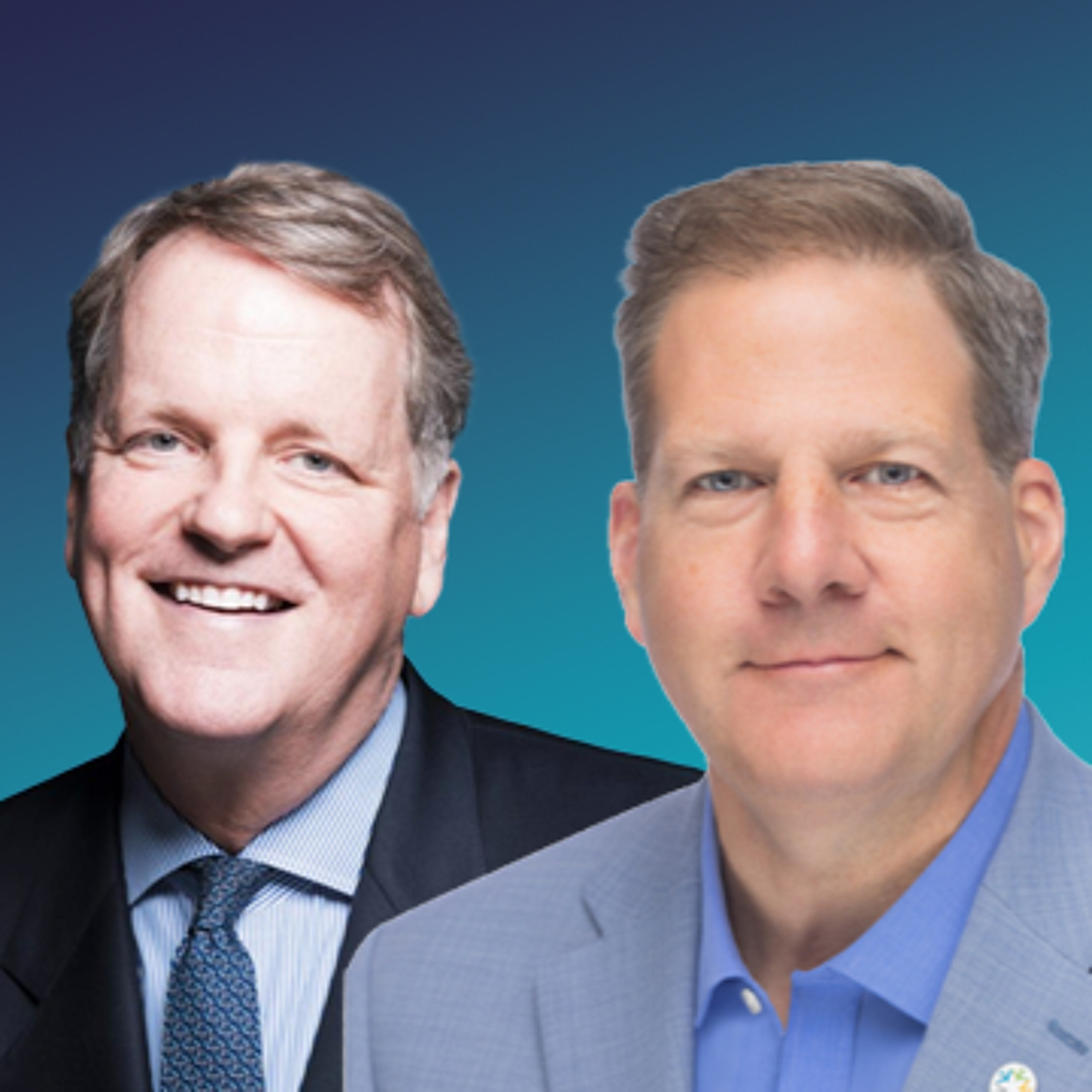
Doug Parker, former CEO of American Airlines, co-host. Chris Sununu, CEO of Airlines for America; former governor of New Hampshire; MIT civil/environmental engineering; previously advocated for air traffic control modernization and explaining airfare increases tied to jet fuel costs.
JetBlue expects to return to profitability in 2028; Fort Lauderdale expansion is driving results (about 75% more daily flights, up to ~150 departures/day). Frontier’s revenue rose 53% YoY in Q3 despite net losses; capacity up 18% after Spirit’s shutdown overlap (Spirit covered ~30% of Frontier capacity). Airlines’ RASM growth is unusually strong across network carriers, suggesting better pricing power and demand. Love Field gate limits may face renewed political pressure; city leadership hinted gates may be “necessary,” despite federal constraints.
Breaking Down Barriers scholarships (~$100k per student) and student stories (Arsh Noor, a student who lost parents at 16, and Kyra). Right Amendment compromise: 20-gate cap at Love Field; Southwest has 19.
Written by AI. May contain mistakes.
Discussion of election results affecting airlines, including humorous takes on seat armrest politics.
“I'm Scott McCartney and welcome to the election edition of the podcast.”
Co-host Doug Parker shares insights on what earnings week is like for a CEO.
“And Doug, since we focus so much on earnings results and not election results, I thought it might be very interesting for listeners later in the podcast to hear what earnings week is like for a CEO.”
Doug discusses the Aviator's Ball event and its impact on underrepresented communities in aviation.
“So I talked to Chris on election day or recording this before.”
Discussion on Dallas Love Field Airport's limitations and potential political changes regarding gate capacities.
“So look, I heard you made it to the North Dallas Chamber of Commerce's annual aviation breakfast last week where Southwest Airlines CEO Bob Jordan was on stage with the Dallas City Manager.”
The discussion explores the potential political and operational battles over gate expansions at Love Field, focusing on the implications for various stakeholders.
“Bottom line here, Doug, is I think it's time to start buckling up for the political fight again, if there even is one this time around.”
Analyzing JetBlue's recent financial performance, the discussion highlights recovery plans and future expectations amidst challenges.
“That's already going to increase the number of flights, of course.”
The segment reviews Frontier Airlines' significant revenue growth and operational changes under new leadership, highlighting impacts from industry dynamics.
“Both lost money in the third quarter, but both had some upbeat news to report as well.”
The conversation wraps up with insights on overall airline industry trends, fare pricing strategies, and the potential impacts of fluctuating oil prices.
“Well, yeah, first off, yeah, 53 % of revenue growth.”
Discussion on current fuel prices and their effect on airline operations and pricing strategies.
“consumer to pay what the consumer is willing to pay.”
Exploration of how consumer attitudes towards travel have changed post-pandemic and the implications for airlines.
“You know, the coach seat price just went up.”
Insights into the challenges and implications of quarterly earnings reports for airline CEOs and management.
“But that's because I cared what was written about American Airlines, not maybe for reasons people might think.”
Understand the implications of election day for the airline industry.
“He also has the distinct challenge of corralling airline CEOs into a unified voice on major policy issues.”
Learn about Governor Sununu's personal traditions and thoughts on election day.
“At the same time, I always start talking about election day and what an election means and what's going to happen.”
Hear about the challenges and experiences of working in the aviation sector.
“But anyway, so yeah, if there's any routine I try to encourage people to do is just settle down, have a good time, say thank you.”
Explore the pressing issues facing the airline industry, including fuel prices and regulation.
“There's virtually nothing of this industry that we don't touch in some way.”
Gain insight into the operations of airlines and the challenges they face.
“It's always seemed to me that there are a lot of politicians who see it as good politics to beat up on airlines?”
Explore the intricate processes that ensure flights operate safely and efficiently.
“How do they get the plane off the ground?”
Discuss the progress and challenges in modernizing air traffic control systems.
“No, it could have really drastic effects if you go too far with something on a system that actually fundamentally works pretty well.”
Analyze how government regulations affect the airline industry and competition.
“And I think you've talked about this a little bit on your show, the idea that you have all these nascent systems across the country, air traffic control systems that fundamentally work completely differently.”
Consider the implications of potential airline mergers and consolidations post-election.
“Well, again, we try to do everything in a bipartisan way.”
Discussion on past failures in the airline industry and their consequences.
“It was a political reason why it wasn't allowed to happen, and there were real consequences for that.”
Insights into expected trends and challenges for the airline industry in 2027.
“We're not planning on the Iran problem to be solved on January 1st, right?”
Final reflections and appreciation for Chris Sununu's contributions.
“But the cost, you know, it unfortunately comes out as a higher cost to the customer.”
Exploration of the decline in passenger no-show rates and underlying factors.
“Okay, Doug in the mailbag, Jeff from Berkeley, California had this question on overbooking.”
Discussion on market dynamics and competition among airlines in various regions.
“Am I on to something here or just assuming things?”
Learn about the complexities and challenges airlines face when competing against well-established hub carriers.
“No, it's also airports and gates and employees and everything else that goes into being the favored airline in the market or whatever.”

Get the gist, explore an idea or ask about something said.
 Claude
On Airlines Confidential Podcast, what are the key points of this episode?
Searching your listeningAutomatic transcript. May contain errors.
0:27Thank you. SoCal, so easy. FlyOntario.com. The Executive MBA in Aviation at the University of Colorado, Denver. Business.ucDenver.edu. And by Cerium, the world's most trusted source of aviation analytics. Cerium.com. We also welcome your business's support. Contact us at airlinesconfidential.com. Welcome to Airlines Confidential. I'm Scott McCartney and welcome to the election edition of the podcast. Sort of. We have tallied results for two airlines facing heavyweight challenges and we have good news to report on the comeback campaigns of JetBlue and Frontier. We have political positioning and some fancy verbal footwork to report from Dallas regarding a key airline competition issue that will face a divided Congress sometime in the future, maybe sooner than we think.
1:34And I'm told, yes, we can now report this news just in, yes, we are ready to call the most important airline election. Armrests have been won by the passenger in the middle seat. Window seat and aisle seat passengers heavily outspent middle seat voters, but affordability issues triggered a landslide of grassroots support. Even exit row polls showed anger and despair. Democracy has returned and made a bold statement. From now on, or at least until the next election in two years, the person in the middle seat gets the armrests. I'm Scott McCartney, and I approve of this message. Now, let me turn our election coverage over to co-host Doug Parker.
2:23former CEO of American Airlines. And Doug, since we focus so much on earnings results and not election results, I thought it might be very interesting for listeners later in the podcast to hear what earnings week is like for a CEO. So we're going to talk some about preparation and practice, the presentations and strategies, just what it's like to deliver the news. Welcome back, Doug. Thanks, Scott. And look, your election joking aside, you do have a very timely interview coming up, I know, with Chris Sununu, who is the head of Airlines for America. Chris replaced Nick Calio, who we've had on the podcast before.
3:04He replaced Nick about a year ago. As listeners probably know, Chris is a former governor of New Hampshire. He stepped out of politics to represent the airline industry in Washington, like I said, about a year ago. So I actually got to meet him recently at that Pogue dinner, which he was nice enough to attend. And I wanted to use this opportunity to thank you for flying in from Dallas to be at that event. It was a nice night. A lot of good friends. And again, just thanks for being there. It was very kind of you. It was a wonderful evening and a long overdue recognition. I don't know about that.
3:42Although Gary did use the opportunity to make fun of me for taking so long to get it. Yeah. Gary Kelly, that is, which was very well done. OK. Anyway, that's that's that's what we have ahead. We have Chris. It's a new name. Yeah. So I talked to Chris on election day or recording this before. So I will talk to Chris on on election day before the results were counted. But a lot of trends seem clear at the time. We may have to throw it all out the window if the election is a big surprise. But I am curious to hear what he thinks will happen if what the polls thought will happen will actually happen.
4:22none of which probably is easy to follow. But before we get into the cynical world of politics and how the future of airlines might be impacted by election returns, I want to ask you about something far more uplifting and inspiring. Last week, you hosted the first ever Aviator's Ball in a signature aviation hangar at Addison Airport near Dallas. It was all the support breaking down Barriers, the organization you and your wife Gwen launched to support students from underrepresented communities to become pilots. In just a few years, Breaking Down Barriers is having an amazing impact, I think, and really changing some lives.
5:04It's bringing new talent into the airline industry, and it's making very expensive training available to those who couldn't afford it on their own. Sadly, I was grounded by a bad head cold that night and didn't make it to the ball, but I was getting pictures sent to me by many friends of Airlines Confidential were there, including Maya Liebman and Elise Eberwine. There were folks I know there from Southwest and other carriers, as was many friends from American. So how much did you raise with the Aviators Ball? How did the evening turn out? Really curious to hear about it. Well, thanks. Sorry you couldn't make it.
5:42You would have enjoyed it. We were out at aircraft hangar at Addison Airport, and there and a lot of small aircraft on display that you would have enjoyed. Don't ask me what they were because I don't know. But you would have liked it, as did a lot of the guests. We had a great turnout, probably over a couple hundred people. A younger crowd, which I think we all enjoyed being with. We had a lot of fun there. We raised a little bit. It's the first year we did it. We weren't really doing this so much for funding as for awareness, and the awareness was great. Again, the funding we did fine. but you know this is this is what we're doing is expensive as we noted the event when when we say we're given scholarships we're given we're we're paying the entire amount of the training for these individuals because they simply couldn't get it they couldn't get it's like it's like 100 grand per individual so so we might be we might be able to fund one one one student from what we raised uh which is great um but you know we got a lot more to do so nonetheless that's it was wonderful.
6:44And the highlight of the night was just hearing from the students themselves. We had a few of them speak. I wish they all could because every story is amazing. But we had, you know, the first individual stood up, a woman named Arsh Noor said, you know, she's there. The reason she's doing this is because, you know, she's Indian. She's in the Punjabi community where she's grown up. You know, women don't do things like become airline pilots. And she's doing this for her younger sisters. Wow. Exactly. So you get that story. Then it gets followed up by a young man who's in the program who was brave enough to tell everyone there that he lost his parents on the same day when he was 16 years old and he's 19 years old now.
7:23Oh, wow. And he goes on to say, you know, people that go through what I did can end up in dark places. And I could have. But because of this organization, here I'm now doing this. And he's being there. Which is what, again, what's really nice about this and what you could have seen over there is how they all support each other. So that's not me and Gwen. You know, you put these people together and all of a sudden they're just, it's a community. And then the last individual, Kyra, got up and just spoke about how she was playing basketball for Dallas College. And our CEO, Dana Donati, just shows up at basketball games because she decided when she moved here, this is how she's going to go try and find some people.
7:57You know, she's a pilot. Wow. And she has the view that if I see a leader on the court, you know, I can maybe think that person. because the same sort of skills, you know, leadership, being able to, you know, deal with pressure, being able to, you know, do more than one thing at once and deal with certain things. Exactly. Those are all piloting skills. And that's fascinating. It's amazing. So that's what she did. So she started showing up in the community going to these games. And anyway, Kyra tells a story about how Dana, you know, Kyra was, you know, she wanted to be a pro basketball player.
8:27She wasn't going to be able to do that. She wasn't sure what she was going to do. She thought she might be a truck driver. She's an amazing individual. Anyway, she's now got her CFI. She's getting paid to teach other people to fly. She's only been doing it for like a year and a half. And she just talked about how, you know, they all thought Dana was a scam. Pilot lady is a scam. Because here she shows up and says, oh, no, I got this idea for you. I can make you a pilot and we'll pay for all your training. So anyway, it was a wonderful night. Just really, thanks for bringing it up. It's rewarding for us.
8:56And what we're learning is it works. I mean, it just, you know, there's opportunities that exist not for all of us. You know, people that, you know, as some like to say, you know, skills are spread universally, but opportunities not. And all you got to do is break down some barriers and give some people the opportunity and they can store. And that's what we're trying to do. So cool. All right. Before we leave that, for anyone interested, it's breakingdownbarriers.org? Yes, it is. We'd love the interest. So thanks, Scott. Awesome. All right. So look, I heard you made it to the North Dallas Chamber of Commerce's annual aviation breakfast last week where Southwest Airlines CEO Bob Jordan was on stage with the Dallas City Manager.
9:40Did the right amendment come up by chance? Yeah, you think? I don't know. Did it? That is the right amendment event. You know, I've talked about this before. In 2004, Gary Kelly asked me to do that event with him. It was 22 years ago when he decided, he and Herb decided that Southwest was going to challenge the right amendment and chose that breakfast to make that announcement. The right amendment was restructured. A compromise was reached that removed restrictions on where an airline could fly from Love Field. except international service still isn't allowed. And for those who don't recall, the right amendment was put in place as DFW airport opened to sort of protect it.
10:33The original idea was every airline was going to move to DFW Southwest, which was very young at the time, just starting out, decided it didn't want to move. And so this compromise, the right amendment was put in place. The compromise of the compromise, the agreement that's in place now, in addition to the international service restriction, puts a cap of 20 gates on Dallas Love Field. Southwest has 19 of those 20 gates, and now Love Field is bursting at the seams, maxed out. Even though the new terminal just opened 13 years ago, it is packed. Concourses are jam-packed with people. There's no room to grow.
11:16That airport has the highest gate utilization of any airport in the country. So Southwest is in the position of no room to grow at its headquarters home airport. Dallas, the city of Dallas, is about to embark on a$2.5 billion modernization of Love Field. There's going to be a new head house when you're going to tear down a parking garage, build a big check-in building, expanded security area. That'll have a lounge for Southwest. They're going to expand the concourse so it won't be so crowded. There's going to be a new consolidated rental car facility. Just a whole lot of changes. The airport manager told us at the breakfast that the capacity of the airport will expand to 24 million passengers a year.
12:04It currently handles about 17 million or so. So if you're building for a 40 percent capacity increase, surely you're going to add more gates. Right. But there are no new gates in the plan because of this federal restriction. They can't do it. But it is a political lightning rod. no one wants to touch. The compromise in place is called a five-party agreement. And I think it's the city of Dallas, the city of Fort Worth, it's American and Southwest. And DFW Airport. And DFW Airport, right, are the five parties. Any one of them can challenge it, is my understanding, but no one has. So reading between the lines, after listening to carefully selected words for 30 years on this issue, I detected a significant change in the discourse from the city.
13:01The city has long insisted it had no interest in adding gates at Love Field. But last week, the city manager said, first time I had heard this, that there is interest in adding more gates in Love Field. She said there's going to have to be a conversation, that was her word, about the need to add gates. She talked about the need to grow, to provide infrastructure, to keep up with the growth of Dallas, to provide the facility that the city needs. Quote, I do believe that at some point in the future, that conversation is going to be critical, Kimberly Tolbert said. I don't think we can escape the conversation, but we need to be intentional.
13:44Necessary was a word she used, and then she added, I think we're going to take it in strides. There are so many indicators out there about the need. She talked about, quote, the political lift that needs to happen and said the city needs to be strategic to tie the gates to the purpose. Bottom line here, Doug, is I think it's time to start buckling up for the political fight again, if there even is one this time around. Maybe this is not an issue, but for the first time I heard the city say essentially that more gates at Love Field are a necessity for the city of Dallas. It sounds like you're trying to start the fight.
14:24Yeah, kind of. You like this stuff. Look, I wasn't around. I wasn't an American back in, whatever this was, 04 to 06 when they did it. I was at U.S. Airways, but I watched it from afar. It was quite the fight then. And look, but it was an agreement. And it's not just an agreement between these five parties. It's federal law that was passed into law because the five parties could come to an agreement. So that is not, I don't know. I don't think we should take that lightly. And, you know, we all like competition. But, again, this was done through an agreement. And I don't know. If you're right and if the city of Dallas is fine, I think they should be ready for a big fight, not just a little fight.
15:10The other three parties, DFW, American Airlines, and the city of Fort Worth will all be opposed, primarily American, will be opposed. You know, as an aside, you know, I know people like to try and look at, you know, what drives margins at individual airlines. You know, when I was at American, we did a lot of work on that. And at the time, you know, we and United, you know, were doing okay, but had about the same margins. Delta had two or three margin points ahead of us, of the two of us. And if the analysis was quite clear, at least back then, that they got like a point of that because they had, you know, more productivity from their employees because they were non-union.
15:49And the other two points came from the Atlanta Hub because the Atlanta Hub doesn't have a Love Field or a Midway. Right. You know, think what DFW would be like for American without Love Field. Think what O 'Hare would be like for Chicago and to a lesser extent American without Midway. That's what Delta has in Atlanta. So if something like this were happening at Midway, you'd see United going crazy. If something like this does happen at Love, you're going to see an American fight it. And look, again, I'm obviously biased because of my past, but agreements are agreements. And you make investments based upon agreements and upon federal law.
16:22And these five parties came together and decided this is what it was done. Worth noting, by the way, they tore down six gates at Love Field as part of that agreement. The city tore down six perfectly good gates at Love Field, put this agreement, and Southwest agreed to it. I think Southwest wanted it, frankly, because Southwest then had 19 of the 20 gates. Well, Southwest had the monopoly, essentially. Precisely. So for them now to argue they want more gates for themselves when they tore down six gates because they didn't want competition there, seems a little tough. And the other point I make is, you know, in my retired life, I spend a good bit of time walking up and down Katy Trail, and the only thing that disrupts whatever I'm listening to in my headphones is the Southwest airplane that flies lowly overhead about every five minutes.
17:06And if they start flying over every three minutes, I think some people in Dallas might get upset. I think there will be a lot of neighborhoods in Dallas that would be upset about it. Right. And there are some real issues in Dallas. There is one entrance to Love Field and it's a surface street. It's Mockingbird Lane. And there's just a lot of traffic there already. so put 40 % more people through Love Field it could be a lot of traffic so you and I have now started the argument that hopefully it doesn't exist but if it does I think it's all happening the other point I'll make is in 2004 they had Herb and you and I tend to maybe lionize Herb more than others appreciate but that is not to be dismissed I had the privilege of walking through the halls of Congress a couple of times with Herb and it was unlike anything anyone's ever seen before.
17:58I mean, the halls of Congress are odd. You know, if you've walked through there, there are senators and congressmen walking back and forth between offices as they have to all the time. And they always have an entourage around them because they have to get to their next meeting. They don't want to get stopped. You know, even if you know them, you'll just say hi. When it's Herb, they stop. Yeah. And they talk to Herb. And they want to talk to Herb. And we're trying to get to our next meeting. It's like, Herb, we got to go. We got a meeting with, you know, Senator X. And you had Senator Y been in your ear.
18:24We got to go. But it would just happen because they all loved the guy. He had more pull in Washington, D.C. than anyone I've ever seen before. Fred Smith's close. But Herb had more. And he did it while he's running a small airline. That's the other point I'd make. Because, you know, in 2004, maybe hard to remember, but Southwest was an underdog back then. And Herb played that undercard card so well. They're not an underdog anymore, and they can't play that card. So anyway, like I said, you and I have now laid out sides on an argument that I honestly don't think is going to happen for everything I just said.
18:57I can't imagine. I don't know. I can't imagine why they want to take that on. This plan they have is going to increase capacity, I guess, by 40%. That's already going to increase the number of flights, of course. I mean, some of that's, you know, the larger, you know, Max 8's flying, but that's not 40%. They're doing some things to increase the number of turns on the gates. And that's going to be more airplanes overhead. So you do that on top of it. And then later come along and say, oh, you know, six gates we tore down. We want to build back up so we can have them. I just think it's a tough, tough argument.
19:28Yeah, the number turns on the gates. I mean, they're already doing like 10 a day or so. I'm not sure how much there is there. I just think they're, I don't know. I'm not sure you spend$2.5 billion unless you can really, if you think you're going to increase capacity somehow. No, I think that, again, if you read it, they say they're going to increase turns on the gates, like 11.6 or something. number because like anyway yeah things i don't fully understand but that's what they're that's what they say they're trying to do i don't know if they there's a federal law that says there could be 20 gates at that airport i know that yeah and federal laws are not easy to change we'll see it would be interesting there are going to be four temporary gates during the construction like things in this business sometimes there's a permanent temporary status who knows who knows All right, on to JetBlue and Frontier financial results.
20:21Both lost money in the third quarter, but both had some upbeat news to report as well. JetBlue stressed not only that it had sufficient liquidity to last it for a good long time, and it expects to start making money in 2028, even with moderately high oil prices lasting that long. How's that, you say? Well, the JetForward turnaround plan is producing results. The revenue initiatives are producing more revenue. And the Fort Lauderdale expansion is really starting to work for JetBlue. JetBlue has increased daily flights in Fort Lauderdale by something like 75%. They're going to be up to 150 departures a day by this winter.
21:01The airline seems to be going out of its way, not to call it a hub, not yet calling Fort Lauderdale a hub. But it seems like it really is. Seems like it really is JetBlue's only hub because both New York and Boston, its biggest cities there, more than 90 percent of the traffic is local. There are very few connecting passengers going through those airports for JetBlue. JetBlue CEO Joanna Garrity clearly reassured the markets. That was much needed. The company's stock rebounded some. The stock had fallen almost to$2,$2.16 actually, then rebounded above$3 by the end of the week. So not out of the woods, but also seemingly not on the precipice of a bankruptcy reorganization either.
21:49Doug, I was sorry, you sweated some difficult times like this driven by external events like high fuel prices and wars. Was there a little PTSD from what's going on with JetBlue perhaps for you? Well, I don't know. Not until you brought it up. But yeah, look, I had a couple of times as I thought about this where, you know, we had stock price around$2. One was America West back after, you know, shortly after I became CEO in 9-11. I know that I remember that America West stock fell like 75 % the day that stock markets opened to something around$2. And the other time was at U.S. Airways with the Great Recession.
22:29and the U.S. Airways stock, my recollection, got down to around$3. Those are scary times. You know, that's the market telling you they're worried. Yeah. So, look, I have no idea what that means for JetBlue. I'm hopeful JetBlue will recover as those two airlines did. Both those stocks recovered really nicely as we got things, as we got through the crises. So, hopefully JetBlue will do the same thing. But yeah, you'll have some sleepless nights in the interim. That's for sure. Yeah, no doubt. No doubt. OK, then there's Frontier. And honestly, I can't say I've ever seen a quarterly report like this one.
23:10Frontier's revenue was up 53 % from just one year ago. 53 % one quarter. Capacity was up 18%. That's huge. 18%. And the fleet was actually two aircraft smaller than a year ago. the average each passenger paid was up more than 30 percent that's how you get to a 53 percent increase in revenue a lot more people flying and all of them paid a lot more sure all that's great operating expenses were also up by almost the same amount as revenue 52 percent and so frontier still had net losses for the three-month period even though it showed some dramatic improvement in revenue management and in its operation.
23:53A big, big factor here is the Spirit Airlines shutdown. Spirit overlapped on 30 % of Frontier's capacity, so that allowed a lot of room for improvement. On the operational side, we've talked about this in the past, about Frontier's dismal aircraft utilization. Expensive assets sitting around do not make for a low-cost operation. Well, Jimmy Dempsey, who's been CEO since December and was on the podcast in September, Jimmy Dempsey's fixing that. Frontier Aircraft flew on average 10.3 hours in the third quarter. That was up 18 % from 8.7 hours a day in the same period of 2025. So there's your capacity increase.
24:39Go back and listen to the interview I had with Jimmy Dempsey a couple of weeks ago. He's doing all the things he said he was going to do, and it's producing much improved results. There's more to come. Frontier will soon be launching a premium product. I'm not sure we should call it first class, but they're calling it first class. And Frontier will be installing Starlink on its planes, which may make Frontier more desirable to travelers who might otherwise avoid something perceived as bare bones. Jet Balloon Frontier, where two airlines seen as having significant struggles from high oil prices.
25:17And let's not lose sight. They still have many challenges ahead, and they still are losing money. They've been losing money for most of the past six years. And 2027 is likely to be another year of losses. But they both are making changes that seem to be working for them, at least in the early stages. Any thoughts on that? Well, yeah, first off, yeah, 53 % of revenue growth. It's a pretty stunning number. Look, I would just, you know, as we're closing up these earnings, what I found as interesting as that number is the revenue results at the three network airlines. Uh-huh. You know, Delta, 15 % passenger revenue, RASM increase, revenue price M increase versus last year on flat capacity.
26:05United, 16 % RASM growth on 1 % capacity growth for a 17 % increase in revenue. And American, 15 % RASM growth on 4 % capacity growth. So a 20 % increase in revenue. Those are unbelievable numbers. Again, for somebody who looked at this stuff for a long time, because I had to, I can't recall ever a time when you saw that kind of RASM growth, except maybe off of a COVID year or something. But versus a profitable year, to then grow your revenues that much while you're growing the airline versus a profitable year, it's never happened. These numbers are unbelievable. And I know people are going to say, oh, yes, because of fuel price.
26:45But it's not because – well, it may be – the result of it may be due to fuel price. But the consumer is paying these fares even though they're paying higher fuel prices. Right. That's the thing. You could raise prices, but you'd wreck demand because people would come back in the past. Right. Exactly. But that's not happening. Thank you. Right. And what it says to me is what I believe for a while, which is we as an industry have not done a very good job of getting the consumer to pay what the consumer is willing to pay for our product and for all sorts of reasons. But this crisis, if you will, has gotten to where, you know, the airlines have gotten better at this and they're now seeing that.
27:22So now then what that I think that just bodes really well for the future. Right. Because what that means is once the once oil prices, you know, they don't fall. But let's say oil prices do fall, and it's all I hope they do. When they do, there's no reason that fares should fall. The consumer now has more discretionary income. They're paying less for gas. Why would the airlines lower their fares? So I think the fares should stay there, and the costs will come down. I think it's going to bode really well for the industry going forward. I think in some ways there's no blessing in here, but a blessing in disguise and somewhat is how the airlines have used this out of necessity to figure out a way to actually get the pricing structure right and to get the consumer to pay what the consumer is willing to pay.
28:04And I think that bodes well for the future. And I should also just another note on this fuel stuff. When I say fuel prices might fall, I don't know, people like me at least tend to just watch the market and the market always just promotes Brent crude prices, these jet fuel prices. And again, we talk about Brent crude in barrels and we all kind of can at least i can always relate to that it's like 120 dollars a barrel it's really high but it was 150 back in 2008 if you look at the price per gallon of fuel um and multiply it by 42 which is the number of gallons in a barrel four bucks a gallon which is what these airlines are now paying that's 170 dollars a barrel yeah the crack spread um is going from whatever the 115 that's the cost of the cost of the cost of refining a jet is so much higher than anything we ever saw in the past.
28:52So even back in 2008, when it was at, whatever, 145, my recollection is crack spreads were$10,$15 a barrel. So they always were. Now they're $50,$60 a barrel. That has to come back into line when you get to some level of normalcy, you know, war ends or whatever happens. So at any rate, I can't imagine a world where jet fuel prices stay this high. And when they come down, hopefully revenues don't come down with it. I think this is actually, I find this all very interesting. So do you subscribe? I mean, I've been saying, and I really believe that demand has fundamentally changed. It's not just that the industry's figured out pricing.
29:34It's that consumers now want travel much more than did in the past. It's more important to people's lives. I think this is sort of a post-pandemic thing um it's also a generational thing younger people want experiences they're not buying new furniture or whatever i just think demand has fundamentally changed for airline tickets absolutely i believe that'd be true um my anecdote on that is i remember being in it was in london 10 years ago and as we're leaving town we end up driving by buckingham palace and i noticed all these young people out there taking selfies yeah and it's like they have to do that for their Instagram.
30:14You can't just keep taking a picture of yourself at home. So it's that kind of mentality, you know, where you're taking pictures of your meals, you need to go to a restaurant. You want to take pictures of some place you are, you got to travel. And that, again, that's a symptom. That's not the driver. But it just shows your point, which is younger people in particular now value travel much more, I think, than we did when we were young. And it's been an absolute change in demand. But having said that, as the demand has increased, I think the bigger driver is the airlines have figured out how to price the product, going back to our pricing conversation.
30:48Yeah. You know, in the old days, you know, if demand went up, you know, maybe fares went up a little bit. You know, the coach seat price just went up. Now we can actually tier the customer and give customers that are willing to pay more a different product. And it makes a huge difference. So those two things together, whatever the case, we got RASM up 15 % year-over-year off a profitable year. And that's with some growth. And I've never seen that before or anything close to it. Many factors, but it's not a commodity product anymore. And that's a real change. Yeah. Again, I don't think it was ever a commodity product.
31:24We priced it like a commodity product. No one thought the middle seat was equal to the window seat, but we charged them the thing. It was our fault. Yeah. So we priced it like a commodity because we had to. We're now pricing it like what people want to pay for. If you want a window seat, you pay a little more. If you want a board center, you pay a little more. Those things are, that's not a commodity. It never was. Yeah. But we didn't price it. We priced it like a commodity. It's on us. Yeah. So give us an idea of what it was like earnings week. What was it like for a CEO? I'm sure there's a lot of preparation.
31:57There's a lot of practice. There's probably a ton of questions, not just from journalists and analysts, but shareholders or employees or whoever. What is it like to deliver earnings? OK, good question. And my answer may be different than some others. I know that there are people who spend a lot of time getting ready for earnings calls. I wasn't one of those people. I'll explain why in a second. You know, I know, for example, one of the things that I've learned since I left is now that whole long thing at the start, which I always hated. You know, the management team talks for like 45 minutes and 30 minutes of the CFO going through just arcane numbers that people can read themselves.
32:41But nonetheless, that's now I think almost everyone just records that in advance, which I wish I didn't know that. Oh, interesting. Exactly. So you're listening to something they recorded the day before, which means I could have showed up in the room 45 minutes later. But anyway, I had to sit there and listen to all that. So look, the reason I say I'm somewhat different, I hate quarterly earnings as a rule. I think it's bad for business. I think it's bad for commerce. I think it's something we should work to change. I think it's why private companies do better than public companies. And if you work in an airline where your earnings are this volatile, it's worse.
33:19So, you know, it leads to short-term thinking, or it can. You've got to fight it. And I just hated fighting it. You know, we'd go through these, you know, and all of a sudden I got people saying, well, gee, you know, our RASM's up, you know, whatever, 4.6%, and we're supposed to be up 4.8%. Okay. That has not changed the long-term value of American Airlines. But we're going to have to go spend a bunch of time trying to figure out what it is and explain it. And if someone else happened to be up 4.9%, why are they up more than you? It's all nonsense in terms of long-term shareholder value. And fine, it's one thing to say it's nonsense, but I've got to talk about it.
33:56That's fine. What I really don't like about it is it actually changes behavior. Within the airline, on boards, you see people that worry about it. And as much as you try and convince them otherwise, I had a number of conversations with my management team where it would be, we want to go invest so much in said thing. To which I'm told, well, wait, we gave capital spending guidance. It's lower than that. We're going to blow through it. I don't care. You know, our shareholders, they've given us this money to go invest and to get a return for them. And that's what we're supposed to do. If we happen to have not told them we were planning to do this, go tell them now.
34:33But we're going to go do what's best for our shareholders in the long term, not for what we're going to say next quarter. And then finally, I think, I have some strong thoughts on this. you might be able to tell. Finally, the people that are asking these questions don't have long-term shareholder interest in that company they're talking to, at least in my case, American Airlines, as their objective. If left to the analyst, and again, these are all, by the way, when you're on these calls, these are all the sell side. There's not one shareholder on the call. They're listening, but they're not asking questions.
35:07These are all sell side analysts asking questions. And they have, in many cases, buy recommendations on other airlines. So the last thing they want to hear is someone growing, for example, or someone's going to go compete harder or invest. If it's left to them, just for the next three months, do nothing. Just don't grow, don't spend, just stay where you are. And that'll make them really happy. I'm exaggerating, of course, but I'm telling you, that's what they would like to hear. The real shareholders don't want to hear that. But anyway, you get on these calls and that's what you get pushed back on.
35:40And then we other airlines, knowing that if we see another airline doing something we don't really like, we go tell the analysts, ask them about this. Ask them why they're doing this. So all these games are going on. It's incredibly unproductive for the management team. I think it's unproductive for the shareholders. I think we'd all be better. I think we'd better serve as a country if we did this once a year, just reported. That's really interesting. Instead of doing it quarterly, it just drives the short-term thinking in something that should be long-term focused. And it makes it really hard to keep your team focused on the long term when they're really worried about something three months ahead.
36:14So anyway, I didn't like it much. I think I was pretty decent at it because I grew up in finance. I ran investor relations at Northwest back in the day. I knew how to talk to those people. But I wasn't going to spend much time preparing, understanding why Razum was up one-tenth of a point less than they thought it was going to be. And we had the finest guys on the call who could do all that. What I did care about, what I was interested in was the media piece, which took forever to get to. But that's because I cared what was written about American Airlines, not maybe for reasons people might think.
36:50Our customers weren't going to change their behavior because of some story they read. And we have many ways to talk to our customers. And our shareholders weren't going to decide to buy or sell the airline because of something they read. What mattered is to our team. yeah um our team you know if we got you know if you at wall street journal wrote that american airlines is you know had the worst operation in the month of july you know that our team's going to feel worse about their airline that's bad you know and maybe we can go point out well wait a second you know we were at 80.1 percent there 80.3 doesn't matter you've written uh that we were you know fourth of the four so um that stuff mattered um interesting little side story I mean, Gerard Arpe told me when I was back when I was at another airline, he was running American.
37:32You know, he said American had done some work on this, which I'm certain they had, to understand what resonated with their employees in communication. And they said the one thing that came back is pilots are validators, which, you know, I think, look, he was a pilot. You know that. I mean, pilots are trained to not just accept a piece of data as a piece of data. You're going to cross-check that. You're going to make sure all these things are right. Right. So what that means in terms of communication with you care about communicating with pilots, if you just tell them we're doing great, that's they're going to go validate.
38:01Yeah, they're going to validate their own experience. So that has to be valid. But they're also going to validate what they read online. Right. Those things are really important. So we always talked about communication as every piece of communication was internal communications. That's all we cared about. So it may be the Wall Street Journal, but what I care about is what my pilots and flight attendants mechanics are going to think when they read this Wall Street Journal article, not what anybody else cares about. So that I took time with. We spent time with the comms team asking what questions do we expect.
38:31There may be something going on in Charlotte that I know less about than the Charlotte newspaper does, so things like that. So I would spend time on that, but I didn't spend a lot of time worrying about things that I already knew. If any analyst is going to ask me about something long-term, I knew it better than they did. If they want to ask something about the actual results and why they're off by a tenth of a point, I had the CFO there to answer that. Yeah. Interesting. Interesting. Do you think, as an investor, don't you want, you know, take the temperature of the company more than once a year?
39:03Don't you need kind of an update four times a year? Warren Buffett doesn't. Yeah. Again, I don't know. I'm sure some investors will say, yeah, that's a horrible idea. But those are short-term investors. And they exist. But I think we create more of those than we would otherwise by how often we report. I'm sure they'd like monthly reporting. But for whatever reason, we have quarterly reporting. It's not going to go away. But I think it's unfortunate. And I think management teams need to work really hard. And some of them do. A lot of them do. And we tried to just not let it become, to not make it change what you know is the right thing for the long term.
39:45Yeah, yeah. All right. Fascinating. Thank you. That was really interesting. All right. Before we turn to Chris Sununu, time to thank our sponsors. Thanks to the Executive MBA in Aviation at the University of Colorado, Denver for making the podcast possible. The Executive MBA in Aviation at CU Denver is the first degree of its kind in the world. taught by industry experts and designed for ambitious leaders from across the aviation ecosystem. With classes located at Denver International Airport and week-long residencies in Washington, D.C. and airports around the world, students experience a hybrid, flexible course structure that balances in-person and online classes without career interruption.
40:28Go to business.ucdenver.edu to learn more. Thanks as well to RTX. At RTX, a century of aerospace and defense innovation shapes a unique perspective. It takes more than technology alone to rapidly advance the future of flight and strengthen global security. It takes the vision to see what's next, adapting expertise and scaling manufacturing capability to deliver where and when it matters most. Perspective is everything. RTX. Visit RTX to learn more. And thanks to Infinity Flight Academy for making the podcast possible. Infinity Flight Academy is helping build the next generation of professional pilots.
41:11Airline hiring may move in cycles, but developing skilled professional pilots takes years. Infinity provides structured airline-focused training designed to develop pilots with the skills, discipline, and professionalism needed for today's flight deck. From individual career pilots to large-scale cadet and university programs, Infinity is helping build the aviation workforce of tomorrow. Learn more at infinityflight.com. Infinity Flight Academy, where future airline pilots take off. All right, let's bring in Chris Sununu, Chief Executive of Airlines for America. Chris Sununu has been president and CEO of Airlines for America for more than a year.
41:54He's been a strong voice for the industry, advocating for air traffic control modernization and explaining to media and the public the significant increases in airfare from the doubling of jet fuel prices. He also has the distinct challenge of corralling airline CEOs into a unified voice on major policy issues. Chris was on the podcast back in February, and we thought it'd be a great time to check in with him again today. We are recording this on election day, and this is an election that may bring lots of consequences for the airline industry. As listeners recall, Chris served four terms as governor of New Hampshire.
42:30He graduated from the Massachusetts Institute of Technology with a degree in civil and environmental engineering. Welcome back, Governor Sununu. Well, it is great to be back. It's kind of fortuitous in a way that it's on election day, right? Did you vote, by the way, Scott? Yes, voted early. Good. Now, did they give you a sticker? They did. Yes. I hope you're wearing the sticker today. Not only is it just on election day, it's obviously a very consequential election. You're going to see record turnout, right? In certain parts of the country, which is always exciting because it's like, okay, what's driving that?
43:07So yeah, it'll be consequential. And I say that in both a good and bad way, not just for the airline industry, but for a lot of different things. At the same time, I always start talking about election day and what an election means and what's going to happen. And as a former politician, one thing I can always promise is when you wake up tomorrow morning, it's actually going to look just like this morning. I don't mean to say nothing's going to change, but things will change. The sun still comes up? The sun still come, believe it or not. Somehow, even if your party gets destroyed in the elections today or your party wins everything, you're still going to have to get your kids off to school.
43:48And, you know, you might want to go to the town meeting to figure out, you know, whether the best buy is going to come into your town. And you still have to deal with paying your bills. And you still got to, you know, figure out how to make the mortgage. Like life, 99 % of our lives are not impacted directly by these types of elections. We make it out to be. The media makes it out to be. So one way or another, it's all going to be fine. It's all going to work out. I promise. Well, I'm curious if you have some election day habits or superstitions or routines. You know, you were governor a long time.
44:25Your father was a former governor, chief of staff. Your brother's in a tight Senate race. What does Election Day mean to you? Yeah, so a couple of things. As a governor, when I was running, I had to run every two years. So on Election Day, one thing is the votes are cast, right? Like people know what they're going to do. So Election Day, as an actual politician, I tell other politicians this. It's only about saying thank you. Your purpose is to go to the polling locations, see all the people that are holding signs for you or your party. Or as me as a Republican, I'd go over and say hi to the Democrats.
44:57Now, I bring all the coffee and the hot chocolate for the people waiting on my side. But you go out, you say thank you to them. Thank you for knocking on the doors. You go say hi to the other folks, even on the other side, because they're passionate. They're doing the work. They're trying to be part of a constructive process. And that's what the day is really about, saying thank you. So I used to like to go to tons of polling places, kind of six, seven, eight of them that I could hit over the course of the day. You shake the hands of the voters, of course, but you're really there for your team.
45:22And then to be honest, I kind of got a reputation a little bit. You know, when I woke up on election day, when I first got elected, the UNH poll said I was going to lose by 11 points that day. And so, you know, I kind of had this, well, I'm going to win or I'm going to lose. People know what they're going to do. You have a lot of politicians that will go into what they call the war room. Like, you know, they have it's a room somewhere near their ballroom where they're having a party and they're watching all the numbers come in and they're doing all this analysis. And you have these politicians that will sit there and watch these numbers come in.
45:52And I say, guys, what are you doing? Go have a drink. You're going to win and you're going to lose. Staring at the screen is not going to make it any better or worse. Go have fun and thank all your supporters and be part of the party. Enjoy the moment one way or the other. And so I guess my routine and my thing on Election Day is just to enjoy the moment and have fun and say thank you. And at some point, someone will come up and let you know whether you won or lost. I'm fortunate. I obviously won more than I lost. But anyway, so yeah, if there's any routine I try to encourage people to do is just settle down, have a good time, say thank you.
46:28And then, you know, if you're winning, you're blessed to win, you get up and go to work. All right. Let's talk Erwin. So you've been in this job about 14 months. What do you think? Any surprises? Has it been more challenging than you thought it might be? So a couple of things. I will say this in all sincerity. I love it. I mean, I really love it. I'm shocked at how much I love it. I knew, look, I wasn't really, we talked about this. I wasn't really an airline guy coming into this. I was more of an engineer and I had the political stuff and I'd been governor, but I kind of knew what they wanted me to bring to the table, which was going to be interesting.
47:06And I had a very outsider, outside of Washington type perspective and outside of the industry perspective I was trying to bring, but also knew that I had a lot to learn, right? And like they say, I really believe sincerely, to be good at anything, you've got to put your time in. You've got to put in your 10 ,000 hours, right? I've, you know, whatever it is, I've got a couple thousand hours under my belt in this first year, I suppose. But I still got a long way to go. And there's certain aspects. Every single day, I learn something new. I was dealing with Secretary Mullen yesterday in CBP because there's an Ebola thing that has been going on for months over in Africa and how we're going to make sure that we have the right protections.
47:43and what's the process to ensure that as people might come from Africa or come over to South America that could potentially be infected, yada, yada, yada. Things that you kind of hear about, but I got to get involved in those kind of nitty gritty details. Or we're dealing with some safety issues. The big software issue that they had over at Boeing, which turned out not really a safety issue at all, but okay, let's understand it. Why is it, what does it impact? How is it not a safety issue? What other pieces can we put into play to make sure the process can still go forward? Dealing with TSA on a whole bunch of their new technologies and their bills up on, it's always something new.
48:19And so for me, that's one of the biggest challenges. And that's one of the biggest opportunities that I love so much. I'm always kind of learning something. And I'll tell you this, I'm traveling a lot. So I'll be here in DC and the office is two or three days a week at least, but then I'm traveling to a travel advisors conference or an environmental sustainable aviation fuel conference, or I'm speaking to visiting Delta or I'm visiting Boeing or one of the other manufacturers or the air traffic controllers. I'm always moving around to kind of immerse myself in their worlds. I try not to say, come to my office and we'll discuss your issues.
48:59I try to get out into their worlds and meet their people as much as I can. So it's been very busy. I think if anything, the challenge is the schedule. I mean, I love it. It's kind of 24 seven, but I kind of love that aspect of it. And the travel I've logged, I want to say 180 flights this year already, maybe just worth of in the 14 months I've been here. So I'm on a plane three, four times a week at least. And it's been great though. It's been great. There's virtually nothing of this industry that we don't touch in some way. And there's also a lot of things we don't touch. Like we intentionally don't touch it.
49:32We touch it, but we don't vocalize on it because maybe it's really preferential to Delta or it's something that's really preferential to FedEx. So we have to know about that stuff, but we don't necessarily go out and advocate one way or the other because, yeah, you got it. There's competition there and we are not getting involved in the competition between any of the carriers. We're just there to make the national airspace as strong, safe, reliant as it possibly can be. So what are the issues that you've been most active on over the past 14 months? Great question. So obviously, I think the last six months is really a lot of it revolves around aviation fuel.
50:09Now, the interesting part of the aviation fuel piece is there's very little we can do about it. I mean, you know, we're really kind of beholden to what's happening over in the Middle East, which unfortunately everybody knows about. That doesn't seem like it's going away. We provide as much data and analysis as we can on the world markets, the refining capacity, maybe what a certain policy might mean. You know, it's interesting. Let's take a specific example. The White House and folks in Washington said, look, diesel prices were skyrocketing, especially on farmers. They said, we want to come out and do something to help lower those diesel prices.
50:44So they talked about, you know, minimizing the exports of diesel fuel. And, you know, so that all the diesel fuel here would kind of go to their farmers and kind of help suppress the prices. Well, that would actually have a really negative effect on our industry because we rely on refineries cranking away. The more diesel fuel they make, the more aviation fuel they make. If they're not making diesel, it's hard to convince them just to make aviation fuel, if you know what I mean. Well, in the refining process, aviation fuel is very close to diesel fuel, right? That's right. They're both dense. Yeah.
51:13That's right. So if we're somehow saying, look, we're going to stop exporting, what will that actually do to our refining capacity? And there was a question that it could actually slow down refining capacity because we'd all of a sudden have a surplus of diesel fuel. So my job is to kind of see how these dominoes will stack up against one another and make sure at the end of the day, folks know that there could be unintended consequences that directly affect the airlines. And if it's affecting the airlines, it's affecting customers. The other issue, you know, there's still I'm shocked and I'm not playing a party side here, but there are definitely folks on Capitol Hill that don't understand the industry and say things very vocally like, you know what, maybe we need to go back to regulating this industry like we were doing in the 70s.
51:58Maybe that would be best for people. That's crazy. Like that's not just kind of a bad idea. That's crazy talk. I mean, that's when that's when tickets were three or four times the price they are today. Only a fraction of the American public actually flew in airplanes. There was virtually no connectivity. I mean, planes are, you know, full of chain smokers and all that kind of nonsense. Safe. You know, the safety records weren't nearly as strong as there. Why would we go backwards? Right. So I guess part of my one thing that I'm still shocked about and I work very, very hard on is just the brand, the reputation.
52:32Everyone has had a tough flight. You know, you talk about that all the time. Everyone has seen the old Spirit Airline videos of people fighting on planes or whatever it is. But you forget every day we're moving over two and a half million people. And 98, 99 % of those customers are actually, you know, very happy. And they get from point A to point B. And we have a lot of great successes. But we don't take enough credit as an industry on our successes. And therefore, it translates to folks on Capitol Hill that don't understand the industry just saying, well, I, you know, we have to do better for the American people.
53:03and traveling public. So the government needs to control everything now. That's kooky talk. And so, yes, I kind of spent a lot of time working with folks on Capitol Hill, explaining how the system actually works, hearing their concerns and taking those to the carriers themselves or taking them to where that needs to go, all the while reminding them that we got to get the air traffic control system modernized. This investment is working. It has to keep working. We have to keep building into that. And that will make the system more efficient, better customer experience, much more streamlined, lower costs, all of it comes back in spades.
53:37So don't lose focus on such an important mission of aircraft control modernization, because you had a couple constituents have a bad day on a plane. You know what I mean? So we want to address those bad days, but those anecdotes shouldn't be defining the industry. And so I'm trying to find ways to push back on that brand and that narrative a little bit. Yeah, I'm curious in that. It's always seemed to me that there are a lot of politicians who see it as good politics to beat up on airlines? And whether it's sincere or not, I mean, do you find there are a lot of headwinds in getting those people to understand what's going on?
54:15Do they want to understand what's going on or do they just want to get on CNN saying airlines are evil? Yeah, the answer to all those questions is yes. So what I mean by that is I think they do want to know what's really happening. I think they're open to hearing the data. I do think that the winds of what I call the third political party, right? We have Republicans, we have independents, and we have the populace. And that idea of populism where, look, I'm just going to go fight somebody to show my constituents I'm fighting for them in some way. And I'm not going to let facts get in the way of a good story.
54:48And so there are those headwinds there. Now, why is that? Well, frankly, I don't think we as an industry over the past five, 10 years, or I should say coming out of COVID, we did a great job coming out of COVID. But I think we kind of took our the hard work we did as an industry to get back America moving again. I think we took that for granted. And I think we kind of rested on those laurels. And we didn't do the work we needed to do to build a stronger narrative, to build that appreciation and that love of airlines and the love of the industry and understanding all the families and individuals it takes for for it to really work.
55:24I think there's amazing stories to be told. Look, every time your flight is delayed or canceled or there's weather or whatever it is. Look, one thing I've learned by being able to go to inside the big control centers of all of these airlines is when something isn't working right, two things happen. Number one, they start losing money. So they have ultimate motivation to get you off the ground and get you where you want to go. Right. Not just because it's what they do, but, you know, there's financial motivation. There's a thousand different motivations they have. And it is like a bee's nest in these places.
55:56They are working tirelessly to move a crew, to get equipment in place, as soon as the storm arrives. How do they get the plane off the ground? How do they land it here? How do they repair this? It's amazing what happens behind the scenes to get you from point A to point B safely, on time, seamlessly. Sometimes it doesn't go great. We get that. But there really is an amazing system at place to make it happen. And I do believe there's, we haven't shown that. We haven't told that story. And so, yes, there's an obvious, therefore, lack of appreciation because the American public doesn't see it. So we have to go tell that story and show it and then take some feedback as well and say, you know, we could be doing better here.
56:35Our customer service needs to be better there, friendlier and cleanlier, you know, here. And again, I can't go to an individual airline and say, you know, you guys need to do better at this and we hear you need to do better at that. You know, I'm just trying to bring all of these issues in a consensus based way. at the very highest of levels to the CEOs, make sure that that message is going up and down. All right. These organizations are huge. I mean, there's tens of hundreds of thousands of people that work for some of these companies. And so when you're talking to the CEOs, I love working with the CEOs.
57:06They're incredibly receptive. They're very smart. They know how to run their businesses. But then it's like, hey, let's make sure that the message at the board meeting got all the way down. And so our teams are constantly working with their safety teams, with their ops teams, with their ground crews, with their weatherization team, whatever it might be. We have all these councils and committees we work with to make sure that whatever we're hearing is being delivered as an industry and we're getting their feedback as an industry and then working with regulators and folks here in DC or folks out in their communities to get the system constantly in a better place.
57:40So I love it. There's a ton of communication, a ton going on behind the scenes, but I do believe it's on us to keep telling that story. And over time, I don't want to say winning the hearts and minds, so to say, but there's a little bit of that, winning the hearts and minds and appreciation of those specifically here on Capitol Hill or those that think that just, you know, we're going to regulate the industry because people will like to hear that. No, it could have really drastic effects if you go too far with something on a system that actually fundamentally works pretty well. I can't control the weather.
58:11I mean, do you know, look, I won't, I'm not going to say names, but I've had staffers of congressmen and senators call me direct on my cell phone, complaining that their flight isn't getting off the ground. While there's a giant thunderstorm going over their head. I'm like, I can't, you don't want your plane to take off right now, man. It's dangerous. Like, trust me, we want to get that plane off the ground. Let's let the storm pass. And, you know, and if, if in the, in some cases the storm passes and then the crews time out and you have to switch out the crews, I mean, those are FAA rules. You got to stick with that.
58:48I said, but it's all done in the name of safety. But it's shocking to me that people literally see a lightning storm outside the window and go, why aren't I taking off? This is outrageous. Government needs to do better. But there are also times when, uh, the storm does pass and, air traffic control is really limited in what it can do and how quickly it can recover. I'm really curious if you're seeing real progress on air traffic control modernization and staffing, or is it, I have this fear that we're seeing a lot of press releases and some patchwork repairs, but not the major sea change we need to see.
59:31So a couple of things. The quick answer is yes. I actually very much think the FAA is doing a very good job with this infrastructure project. And I say that as someone, as a politician who has seen the political landscape strewn with failed infrastructure projects, right? Lots of promises, not just a bridge that ends up not getting built and going nowhere, or a software, a new piece of software for your constituents that never quite gets off the ground and crashes on the first day and all that kind of stuff. But no, this one is actually working. And you're right. Right now, what you're seeing is hundreds of radio systems being in the past year have been replaced.
1:00:1050 different surface awareness systems have been replaced. Thousands of miles of copper to fiber, right, have been done. Right now, that does seem patchwork, but that's kind of the low-hanging old school things, the infrastructure, the actual hardware that was so outdated and just had to be replaced. Now that that hardware is in, you'll see two or three big steps to your point that start really tying it together. One is smart. So smart is the new kind of, I don't want to use the word nationalized, but a national view of air traffic control management that helps give faster, better ideas for how to get, not just get your plane off the ground, but reroute it in flight to make sure you're hitting your connections on time.
1:00:55that literally started a month ago in just a certain part, mostly the southeast part of the U.S. It's going very well so far. They're working out the bugs. They're working on operational procedures and all that as they try this. This went from an idea in May to implementation in September. You don't see that in government. You never see that in government, but they're moving very quickly. So that's going to keep ramping up over the next 18 months. And so you won't get the full capability of what that system is envisioned to do for a while because they're going to keep working out the, I don't want to say work.
1:01:27Yeah. Kind of working out the bugs, working out the process, making sure it works right. The next big piece and why we're going after a lot of new money out of Congress, kind of the next phase of air traffic control modernization is the common automation platform. And I think you've talked about this a little bit on your show, the idea that you have all these nascent systems across the country, air traffic control systems that fundamentally work completely differently. I mean, they really do. They were kind of patchworked together over the past 50 years. Common automation now links them all together.
1:01:57And it says the system you are trained on and currently work on in Des Moines, Iowa, is effectively the same system in Newark, New Jersey, or Tampa, Florida. And it all gets tied together. And that in itself will allow, for example, all the massive block times that you see get put on each end of flights. I mean, again, I've heard you talk about this. How did my plane take off 20 minutes late, but we landed 10 minutes early? Did we fly that much faster? No. We just blocked a massive amount of inefficiency on that flight, knowing that the system can't handle the capacity and we have to ensure safety.
1:02:33Well, now with common automation, with smart, with some of these more nationalized type systems and some new training protocols and procedures and all of that, Now it starts all coming together and we can now reduce those block times, take off planes faster, more efficiently, more on time, land them ahead of time. You're hitting your connections. And that's when I think you'll start seeing, you know, some system wide benefits, if you will. But you're right. Right now, it seems patchwork because they're just trying to get in the past year. It went from maybe what, 17 months ago, they got the approval to get the first dollars in.
1:03:11They came out and said, we need to rebuild the system. They actually got approval on it. Less than 18 months later, those systems are already not just an idea phase. They're in place. A lot of them are in place. Now you got to really piece them together to make the national airspace as effective as it can be. And are you confident that the money will be there that they need? Yes, I am. So I feel pretty good about it. Are we going to get a supplemental appropriation like next month? That would be great. And we're pushing for that. I don't think it happens then. I think it happens probably sometime early in 27.
1:03:47And the reason I feel confident is it does have bipartisan support. This isn't a Democrat initiative or a Republican initiative. Everybody is for the most part on board with this. And to their credit, Congress is saying, show me what you've done. How did you spend the initial dollars? Where are these new radar systems? What towers are getting rebuilt? You know, show me where those dollars are. And Brian Bedford at the FAA, I think, has done a very good job saying, you know, he's got a dashboard that goes up that kind of shows it a little bit at 30 ,000 feet where some of these initiatives are in there, not just planning, but their implementation.
1:04:21he goes to Congress every couple of months and does like a, I think he does a monthly report and then a quarterly testimony in person where he takes questions. So they've tried to be very transparent about it. And I think that's giving them a lot of validity on Capitol Hill that yes, the next tranche of money is there. It's been earned and we need to move forward with it. If you stop now to your point, yeah, you're just going to get some upgraded equipment. That's great, but not a system, not a real incapacitated system that works for the customer end to end. No, and that's been the history all along.
1:04:55Yep. Yep. Yep. All right. All right. Fingers crossed on that one. So I said in the introduction that this election may bring lots of consequences for the airline industry. What are you anticipating? What's your post-election playbook? Well, again, we try to do everything in a bipartisan way. this administration has been very um they understand the value of airlines they understand the value of the system they want it to work they're making those investments they're you know previous administrations were very how do we regulate the industry that was their number one priority how do we kind of play into that populist idea uh airlines you know burn fuel so they there must not be good for the environment so let's not have as many planes in the air well look we all want a stronger, better, cleaner planet, just saying we're going to start pulling airplanes out of the air and keep them on the ground.
1:05:46That's not the solution, right? That has huge, dire consequences. And so, you know, I'm not saying that's one party or the other, but we have to make sure both parties have the data. They have the information. They understand what they're doing. There's no bigger investment being made in the sustainable aviation fuel and the green space around airlines than the airlines themselves. These guys are putting hundreds of millions of dollars into these funds to develop these new technologies to make the engines quieter, to make the jet fuel cleaner. And it's really moving. I mean, it's moved a lot in the past 10 years.
1:06:22I think we're just getting started. So the last thing you want to do is bring on more oppressive regulation for the sake of doing it, because guess what? It only adds cost, right? A lot of regulations have value, but every regulation has a cost, right? And that cost goes to the customer. And the key to good government is finding that balance, right? Making sure that the government's there to kind of set the rules and set the guidelines, make sure everybody plays fairly by it, adjust them when necessary, but not be, the role of government isn't to be this giant punitive hammer to show your constituents you can be tough, right?
1:06:58Because at the end of the day, it's your constituents that end up paying the price. That's, it would crush competition. The little guys, the smaller airlines wouldn't be able to, The low cost guys wouldn't be able to handle that kind of regulation. Maybe the larger ones could handle it because there's such cost to it, but the little guys can't. So do we want more competition? Absolutely. Why would we crush an industry with more regulation that would only raise prices and reduce that? So you got to walk them through it sometimes. And that's okay. Not everyone can be an airline expert like yourself.
1:07:29So that's part of our job is to constantly educate them, constantly educate them and get them where we need them to be, be able to predict where some of this could be going. So, yes, why is all this important as it pertains to elections? Because we've got to work with both sides of the aisle. We get Republicans that will kind of do this populism complaining and bashing on us as much as Democrats. Democrats want to go a little more to the heavy regulatory government. Maybe government should control this thing better. Republicans are leaning in more to the consumer protection stuff at a level I haven't seen before.
1:08:01and there's value to that, right? You want to make sure the consumers are protected. That's very important, but not to the expense of the consumer, right? What's the point of protecting the consumer if it's just costing the consumer more or limiting the number of flights or limiting the number of options for them? So you've got to constantly educate them to maintain the balance. Yeah. Assuming, play out a scenario for you, assuming Democrats take control of the House, possibly the Senate, it seems to me one immediate question is what the outlook would then be for further industry consolidation.
1:08:36There's a lot of concern out there that mounting losses, if fuel prices continue to stay high, weaker airlines are just getting their cash reserves drained. And there may be more pressure for mergers or some kind of consolidation that would help. And, you know, we've already seen one airline fail this year, right, which really changed the industry. So do deals get more difficult, financial deals between airlines? Does that get more difficult to get done in Washington after this election? I don't think so. So a couple of things. This is a really good, important question. Yes, a lot of the smaller guys especially don't have some of the financial capacity to withstand the jet fuel prices and that kind of onslaught for very long.
1:09:27They can do it for a little while, but not very long. Will that lead to potential more consolidation? I guess it could. Yeah, we don't want to see that because you want the competition there. But it could in terms of maintaining the airlines and the assets. My hope is unfortunate as the spirit story was, it is a real lesson learned. And it is still very fresh in people's minds that if consolidation has to happen, not just for the sake of consolidation and making an airline bigger, But for the sake of maintaining routes, slots, consumer access, all of those sorts of things, financial stability, maintenance of the equipment and maintenance of the flight crews and the employees, if that has to happen, then it has to happen, right?
1:10:11You don't want to see, and again, I don't want to relive the whole spirit thing, but obviously I think a lot of people appreciate the spirit collapse probably could have been avoided years ago if the venture with JetBlue had been allowed to happen. That wasn't allowed to happen. It was a silly reason. It was a political reason why it wasn't allowed to happen, and there were real consequences for that. I would hope the folks in this town, in both the administration and on Capitol Hill, would appreciate, let's not do that again, guys. When there's real financial reasons that this type of stuff has to happen because of the external pressures of the industry and financial pressures that some of these airlines have been subjected to, that's just unfortunately the business.
1:10:56And what is best for the customer? What's best for the competition? What's best for the industry as a whole in terms of how it supplies and represents and serves this country? And I think there's enough out there on both sides of the aisle to say, yeah, we don't want to relive that nightmare again. Let's make sure that we're smarter about it. So I'll just say that if and when that were to happen, I have confidence that there are some lessons learned still fresh in people's minds. And hopefully they won't make the same mistakes twice. And part of that is my job, too, right, to make sure that they understand that, to make sure that we're driving that home, whether it's on Capitol Hill, the Department of Justice, the FTC, the administration, whatever it is.
1:11:39I mean, everyone kind of has their hand in those types of situations. Yeah. So one last thing. Look into your crystal ball. What do you see for the airline industry for 2027?
1:11:52So, Greg, that's a really good question. I think it starts out rough and I think it ends strong. And so what do I mean by that? Iran is not going to be gone. We're not planning on the Iran problem to be solved on January 1st, right? So it's still a tough situation with managing fuel costs, just to be very honest about it, managing those fuel costs. I think at the same time, you have a lot of people that are applying to be part of an airline or air traffic control or a lot of the support systems needed. You have a lot of people that are looking to enter this field, and that's really exciting and a great opportunity for airlines.
1:12:32Financially, some of them will have to really tighten the purse strings because of the jet fuel. But my hope is that, and I think a lot of us anticipate, one, three, six months down the road into 27, the Iran situation gets dealt with. Prices aren't going down the next day. Jet fuel isn't necessarily going down the next day. It's going to have to be a lasting solution, and the market's going to have to see that before we yield the benefits of it. But I think 27 ends up being very strong for both travel and tourism from a consumer point of view and a cost management point of view. And hopefully, again, we don't see these situations where, you know, you have to, quote, unquote, have to consolidate or things of that nature.
1:13:14I think there's going to be some continued challenges in Europe. And we have to keep an eye on that. I, you know, we're Airlines for America, but I, you know, IATA is out there. They're kind of the international version of Airlines for America. But frankly, they're good, but we're far and away a stronger advocate at times for certain things that have to happen in Ireland, China, Russian overflight issues. We're on the front lines of all that because IATA, God bless them, they have to manage all these different countries and all these different airlines with all these different interests. And sometimes it's harder for them to find consensus on advocacy than us.
1:13:52So we take the lead on that. So we're going to be paying a lot of attention to what's going on internationally. I'll say this. Let me throw one more in there. One thing I've been focusing on is the states, not just because I'm a governor, but there's a lot of states that are taking up these kind of populistic type mentality. And again, they don't know how the industry works. It sounds good on paper. They start pushing something. And we got to go fight that stuff sometimes. We got to advocate for ourselves. We got to fight bad ideas and fight some of the things that would really hurt consumers, whether they be on the loyalty points programs and the credit card fees that, look, no one likes to pay a credit card fee, but without those, as you know, there's not 50 million people flew for free this year in some way or another, you know, with their points programs.
1:14:35That all disappears. So we got to go make sure people understand the consequences of that. So we'll be focusing a lot internationally and on the state level. I think for the industry, it's still a financially tough in the beginning. Strong demand right now, strong demand going into next year. But the cost, you know, it unfortunately comes out as a higher cost to the customer. And as those costs to the industry on the fuel side come down, I think we finished 27 very strong. Excellent. Excellent. Chris, thank you so much. Insights have been tremendous. Clearly, jet fuel has gotten into your veins.
1:15:12I love the smell of jet fuel in the morning. There you go. It is the best. But thank you for everything you're doing. And I look forward to checking back with you again in the future as issues develop. Thank you. And thanks for everything you're doing. Really appreciate it. Thank you. Doug Parker and I will be right back with more on Airlines Confidential. Promotional support provided by the ultimate avgeek website, thearchive.net. A vast collection of airline memorabilia, timetables, route maps, rare cabin and airport photos, special flights, and more. All at the airchive.net, the hub of air transport history.
1:15:48Thanks again to Chris Sanunu. What a timely, fascinating discussion. All right, before we open the mailbag, thanks to Sirium for supporting Airlines Confidential. Sirium offers the most accurate and precise data and analytics to enable airlines to optimize planning, operations, and passenger services. The right intelligence drives operational efficiencies, enables you to predict market shifts, and helps airlines respond quickly to maximize revenue, manage costs, and seize commercial opportunity. Visit sirium.com for more. And thanks to Ontario International Airport for its support. Ontario International Airport is wrapping up major upgrades in both terminals with additional TSA screening lanes welcoming exit corridors and modern family restrooms, yay, to make your journey smoother and more accessible than ever.
1:16:42Getting from parking to your gate quickly and back again at the end of the journey is part of what makes ONT SoCal so easy. Visit flyontario.com to learn how the airport is keeping wait times low and creating a better travel experience even as more passengers choose to fly through ONT. Okay, Doug in the mailbag, Jeff from Berkeley, California had this question on overbooking. Jeff says, long-time listener, first-time commenter. A few episodes ago in the context of discussing involuntary denied boardings, I heard Charles Duncan say that passenger no-show rates have dropped from 10 to 12 percent to 1 to 2 percent over the years.
1:17:28That seems like a huge decline. Did I hear that right and have no-shows fallen so much? Is it just that smartphones make it easier to cancel rebook at the last minute? And if someone is rebooking or canceling one and a half hours before a flight, that may not technically be a no-show anymore, but wouldn't it still be useful to have an extra oversold passenger available to put in that seat? Interesting question, Doug. Of course, no-shows are different from passengers denied boarding. Most passengers who don't board voluntarily give up their seats when offered vouchers good for future flights. They don't show up in bumping statistics, but Jeff is asking just about no-shows.
1:18:13What do you think? Well, they're definitely down. I don't know how much. Charles may be right. I don't know if those are the right numbers or not, but they're definitely way down. I know that. And they're down because there was a time in the past when we airlines made it fairly easy to not show up for a flight and still maintain the value of your ticket, particularly in some international leisure markets. I remember we used to have enormous no-show rates on flights in and out of Mexico, for example, because there was literally little to no penalty for doing so. So you could buy a fairly cheap ticket, and if you didn't fly it, you could get a refund, or you could get a credit for it.
1:18:57That changed over the years, first by making the change fees much more expensive over time. You know, they got up to like a couple hundred dollars before they went away. So that had a big that made a big difference. Then enter basic economy, which just makes that that fair is not refundable. So you can't buy a cheap non-refundable fare because you can't get a refund on a basic economy ticket. So that makes a huge difference on the no shows. Change fee went away, but there's no change because you can't change it at all. You can't get a refund. And then so those are the biggest changes. There also is some systems impact.
1:19:36The fact that now airlines, and have been for a while, can contact a customer in advance if they actually have a flight that looks like it's overbooked or there's been an equipment change that's going to be overbooked. You can get to individual customers the day before and say, hey, here's$100. Will you take this flight instead? And get people moved on to other flights instead of having to deal with it at the airport. So all those things have come together to get the number much, much lower. Again, I don't know exactly what it is, but that's good for customers. It's good for airlines. No-shows were really expensive because empty seats are really expensive.
1:20:09And because they are, airlines would then overbook. And then sometimes the forecast would be wrong on the overbook. You'd have a problem of overbook flight. So those are all nice developments for customers and for airlines. Yeah, yeah, absolutely. Okay, here's one more. Chris from Marin County, California, a neighbor perhaps to Jeff. Chris asks, I'm curious if there is any validity to a thought I've had recently. Do some airlines have loose, unspoken agreements to allow each other to have the majority market share in parts of the country? As in Alaska, keeping a large part of the market in the Northwest while it cedes Texas to Southwest.
1:20:51Southwest could probably take Alaska head on in cities like Bellingham and Pasco, while Alaska might be able to chip away at American and Southwest in Texas. I do know Southwest used to fly into Bellingham, but pulled out two years ago. Am I on to something here or just assuming things? Okay. Yeah, Chris, no offense, but you're just assuming things. And there's absolutely positively no way there is any sort of loose, unspoken agreements. I think everybody would go to jail. Amongst competitors, precisely. Well, he says loose, unspoken. I'm not sure how that happens. But no, it's a really competitive business.
1:21:32If any airline thinks they can make money flying a certain route, they're going to go put capacity on that route. We all have enough airplanes flying around our routes that aren't doing so well that we're always looking for something new. In these examples, he gives, you know, if Southwest was in Bellingham and now they're not, they must have not been profitable there. I am certain that if Alaska tried to put flights into Texas, they wouldn't do well because it connects to nothing for them. and the Americans connecting it to all sorts of people out of DFW. Southwest is doing connections to Love Field and Hobby, et cetera.
1:22:05So Alaska would just have a huge competitive disadvantage. So that's what happens. I don't want to make too much light of this. It's fascinating to me. Somehow people do seem to think that we airlines somehow can or might collude. I'll use this to make the point. I have friends that work for other airlines and, you know, see them from time to time. There is never once would any of us think about even suggesting something that even sounded like I was trying to send you a signal. Because we just take it so incredibly seriously. We can get in so much trouble for good reason, but also we wouldn't do it.
1:22:43So I wouldn't even talk to a competitor about their schedule or ask them how they're doing on a route or anything like that. because they might think that I'm trying to send them some signal about some other route. It just absolutely positively does not happen. And I've never seen it happen. Yeah. You know, the geographic distribution, I think, really is, goes back historically to the regulated days in the industry when airlines were assigned geography, right? So, you know, Northwest had Northwest. Alaska had, you know, the Pacific Northwest. And I think, yeah, Alaska was around in the regulated days.
1:23:26And, you know, Southwest wasn't a regulated part of the regulated regime back then, but grew up in the Southwest. Anyway, there are still, you know, Delta has Atlanta because Delta always had the South, right? It was founded there. It started there. And so there are still vestiges of that regulated history in the industry. And once you have that investment, that infrastructure, and people think, oh, it's all the frequent fire programs. No, it's also airports and gates and employees and everything else that goes into being the favored airline in the market or whatever. And then if you don't have that support, that infrastructure, that customer base and everything else, it's really hard to go in and try and just start a flight here and there in somebody else's backyard.
1:24:25Yeah, no, without a doubt. I mean, you can look at the hubs today and you can go back and draw how they got there back in the regulated era. And as I mentioned earlier, hub strength is the biggest driver of relative profitability in business, if anything. And hubs are really powerful. So trying to compete against a hub carrier in their hub markets is really, really difficult. They're filling up half the airplane with people that aren't on that nonstop route. And it's really hard to compete unless you have some sort of competitive advantage. And I think that's what's going on here, not any sort of unspoken agreement.
1:24:56Collusion, yes. All right. Thanks so much, Doug. This has been wonderful. That's all we have for this week. But appreciate you so much. Thanks to Chris Sununu as well. It's been a delight. Excellent. Thanks, Scott. I'll be back next week with Maya Lehman and a special guest. And we will look forward to that. Have a great week, everyone. This podcast is produced by Mass Media. Info at massmedia.net.
Guest Co-Host Doug Parker, Guest Chris Sununu, CEO, Airlines for America. Topics: Post election directions; Breaking Down Barriers' Aviator's Ball; Love Field expansion talks at North Dallas Chamber of Commerce Aviation Breakfast; JetBlue & Frontier results; How a CEO preps for an earnings call; Listener Q on no-show rates, Existence of unspoken agreements.