
In short
Podcast Summary: All-In with Chamath, Jason, Sacks & Friedberg
Episode Title
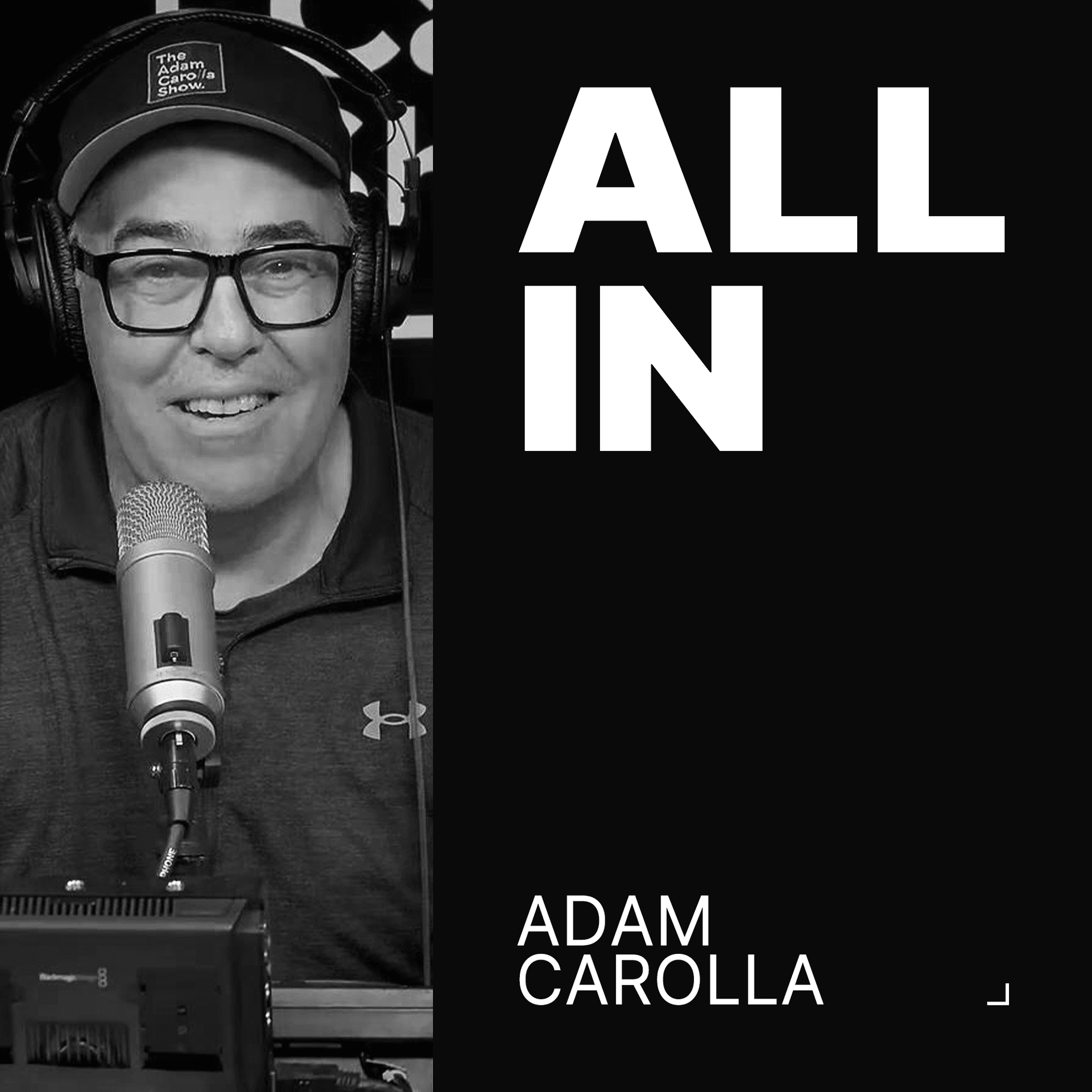
Adam Carolla on California's Collapse: Fires, Failed Leadership, and Gyno-Fascism
Episode Overview In this episode, the hosts are joined by comedian and podcaster Adam Carolla to discuss various pressing issues surrounding California, particularly focusing on the aftermath of the Palisades Fire, media bias, gender dynamics, and the socio-political landscape of America.
---
Key Discussions
Introduction
- Guest Introduction: Adam Carolla, a long-time resident of LA and a prominent voice in media.
- Context: The discussion revolves around the Palisades Fire that occurred a year prior, which saw extensive destruction and has led to a slow rebuilding process in LA.
The Aftermath of the Palisades Fire
- Impact of the Fire: The fire destroyed over 6,000 structures, yet only one home has been rebuilt as of November 2025.
- Challenges in Rebuilding:
- Bureaucratic Red Tape: Carolla shares personal experiences with construction, highlighting the cumbersome permitting process that discourages rebuilding.
- Crisis of Leadership: He criticizes local politicians for their ineffective responses post-disaster.
Gyno-Fascism and Safety Culture
- Definition of Gyno-Fascism: Carolla associates it with excessive regulatory policies driven by women in leadership focused on safety.
- Consequences: He argues that while safety measures are well-intentioned, they often lead to stagnation and hinder efficient progress.
Media Bias and Gender Dynamics
- Shift in Media Structure: Carolla discusses how the influx of women into media has influenced reporting styles, often leading to biased narratives.
- Examples of Media Dynamics: He references instances where media figures engage in arguments rather than objective reporting, particularly during politically charged moments.
Social Issues and Political Landscape
- Discussion on DEI (Diversity, Equity, Inclusion): Carolla critiques the Hollywood transformation under DEI initiatives, arguing that it often results in a decrease in quality and meritocracy in creative fields.
- Political Predictions:
- Upcoming Elections: Insight into the shifting political landscape, particularly thoughts on who might emerge as suitable candidates for California’s governance.
- Socialism vs. Capitalism: He reflects on the growing divide in America, suggesting that hard times could catalyze significant political change.
The Future of California and America
- Two Americas: Carolla postulates that a division is forming within the U.S., with some states leaning towards freedom while others opt for more restrictive measures.
- Economic Concerns: He expresses worry over California’s budget deficit and how it could exacerbate the exodus of businesses and individuals, impacting the overall economy.
The Role of Technology and AI
- Tech Sentiment: Carolla addresses the rising skepticism and fear regarding big tech and AI, emphasizing that the potential job losses in creative industries are a significant concern.
- Cultural Implications: He believes the fear surrounding technology often stems from a lack of understanding and that it will likely serve as a scapegoat in future political narratives.
---
Key Takeaways
- Permits and Red Tape: The bureaucratic hurdles in rebuilding after disasters like the Palisades Fire illustrate broader issues within California's governance, affecting housing and infrastructure development.
- Cultural Shifts: The emergence of gyno-fascism reflects a significant cultural shift in leadership and media, often prioritizing safety over practicality.
- Media Bias: Changes in media dynamics can lead to increased partisanship, impacting public discourse and perception of issues.
- Political and Economic Outlook: California’s political future may hinge on the successful management of economic issues, with the potential for a significant realignment based on governance effectiveness.
- Technology as a Scapegoat: The increasing anti-tech sentiment may lead to more regulations that could stifle innovation and job creation.
Conclusion The conversation encapsulates a critical view of contemporary Californian and American politics, highlighting the need for effective leadership and a balanced approach to governance that prioritizes both safety and progress. The episode ends with Carolla’s reflections on the challenges and opportunities that lie ahead for the state and the country as a whole.
Written by AI. May contain mistakes. Listen to the episode to check what was said.
Chapters
Tap a time to open that second in VOReflections on the Palisades Fire
0:45 to 1:04
Discussion on the one-year anniversary of the Palisades Fire and its impact.
“anniversary of the Palisades Fire, because we know that you've been an outspoken voice on the actions and the reactions to the Palisades Fire.”
The Aftermath of the Fire
1:29 to 1:46
Adam Carolla discusses the slow rebuilding process post-fire and the promises made.
“So, you know, the Palisades Fire a year ago destroyed 6 ,837 structures, including about 5 ,000 homes.”
Personal Experience and Insights
1:46 to 3:02
Carolla shares his personal experience during the fire and his background in construction.
“Can you just give us your view on what's gone on since the fire?”
Challenges in Rebuilding: Permitting and Regulation
3:02 to 4:24
Discussion on the burdens of permits and regulations hindering rebuilding efforts.
“I've lived in California my whole life and I was in construction my whole life.”
Community Impact and Decisions to Leave
4:24 to 5:41
Carolla recounts stories of friends who left Malibu due to rebuilding difficulties.
“And they're a great couple and they love Malibu.”
Critique of Political Leadership and Regulation
5:41 to 7:12
Criticism of leadership decisions regarding rebuilding and safety regulations in LA.
“I was displaced in the wee hours of the fire that night.”
The Concept of Gyno-Fascism in Regulations
7:12 to 8:12
Exploration of the term 'gyno-fascism' and its implications on safety and regulations.
“And then, by the way, all you asswipes that vote Democrat every year, when you don't get your permit, maybe you should think about a different direction politically.”
Consequences of Overregulation on Society
8:12 to 10:40
Discussing the broader consequences of overregulation on society and businesses.
“I'd love to hear your view on where this is coming from.”
Failures in Leadership During Crises
10:40 to 14:01
Highlighting the failures of leadership during COVID-19 and other crises.
“And the rules are always more and it's always safer.”
The Influence of Teachers Unions
14:01 to 14:58
Explore how teachers unions impact educational decisions and leadership.
“I mean, first off, they hire some dumb witch named Barbara Ferrer, who's not even a doctor, and she just makes the declaration to shut everything down because that's the safest thing.”
Show all 30 chapters
Media Bias and the Internet's Impact
14:59 to 16:34
Understand how the rise of the internet changed media's role and biases.
“Well, first off, teachers unions and any unions shouldn't be in charge of electing people.”
Gyno-Fascism: Gender Dynamics in Media
16:35 to 19:36
Analyze the influence of gender on media representation and narratives.
“Did they evolve, do you think, in reaction to the internet?”
Woke Ideologies in Hollywood
19:37 to 27:24
Discuss the impact of woke ideologies on Hollywood and media hiring practices.
“He was a healthy, young guy with no pre-existing conditions.”
The Complexities of Favoring One Group Over Another
28:00 to 28:59
Discover how favoritism in admissions impacts various groups in society.
“You can't just go, I love the Steelers and I have no thoughts about the Ravens.”
Hollywood's Inclusion Rules and Cultural Impact
29:00 to 30:09
Examine how Hollywood's inclusion rules might affect American culture.
“look, it could be a lifeboat on the Titanic, and then you just go women and children first.”
The Impact of Representation on Society
30:10 to 32:06
Analyze the significance of representation in media and its evolution.
“all right, the Superbowl's here and it turns out all 11 players on the defensive side of the ball are black.”
The Future of Politics and Cultural Division
32:07 to 34:08
Explore the potential political divides shaping the future of America.
“You know, we're sort of past that point.”
Safe Spaces vs. Octagons: A Cultural Shift
34:09 to 37:38
Delve into the dichotomy between safe spaces and more aggressive societal responses.
“The octagon people and the safe spaces people.”
The Exodus from California: A Regional Perspective
37:39 to 39:29
Understand the reasons behind the migration out of California to other states.
“And as somebody who's lived in California my whole life, you know, I found it.”
Fiscal Responsibility and the Two Americas
39:30 to 42:00
Investigate how fiscal responsibilities may lead to a divide between states.
“Well, it'll look good for, look, Orange County's in Los Angeles, but Orange County doesn't look like Los Angeles.”
California's Fiscal Challenges
42:00 to 45:00
Discussion on California's financial issues and the impact on migration.
“Because one side might say, hey, I want to balance my budget here in Texas.”
Government Spending and Taxation
45:00 to 48:20
Exploration of California's spending habits and the implications for taxpayers.
“I see a lot of people that are ultra high net worth moving out of California right now and considering moving their companies right now because of this new billionaire tax act.”
Political Leadership in California
48:20 to 51:20
Critique of California's political leaders and their capabilities.
“People of California, the people in the highest tax brackets are, you know, They're already at about 50 % with state and federal.”
Potential for Political Change
51:20 to 56:00
Discussion on whether California can evolve into a more balanced political state.
“So who do you think is the right candidate for California?”
Hollywood's Awakening to Local Issues
56:00 to 56:50
Discover how Hollywood's perspective is changing amid local crises.
“And there's these campers, these Winnebago's everywhere dealing fentanyl in front of their house, you know.”
Luxury Beliefs vs. Real Consequences
56:50 to 58:04
Explore the clash between luxury beliefs and their impacts on everyday life.
“This guy named Rob Henderson who writes about these things called luxury beliefs, right?”
The Boogeyman of Big Tech
58:04 to 1:00:57
Understand the rising anti-tech sentiment and its political implications.
“So I work in Silicon Valley, and a lot of what Silicon Valley is on the receiving end of at this moment is this extraordinary anti-tech, anti-AI sentiment that seems to be brewing and bubbling on both sides of the aisle.”
The Future of Work: AI and the Trades
1:00:57 to 1:03:10
Examine the relationship between AI, job loss fears, and the importance of trades.
“So it's going to be a real easy target for them.”
Political Landscape: Economic Predictions
1:03:10 to 1:06:35
Analyze predictions for the upcoming elections based on economic trends.
“And and and, you know, and it's like, well, should we keep the postal service?”
Desire for Autonomy in a Politically Charged World
1:06:35 to 1:09:20
Discuss the longing for personal autonomy amid increasing political engagement.
“If the economics kick in and the tariffs work and the gas comes down and the interest rates come down, then, yeah, I think it'll be four more years.”
Transcript
Automatic transcript. May contain errors.0:00Adam, great to meet you. Thanks for being here on the podcast. podcast. Yeah, this is awesome for me. I'm a big fan. I grew up in LA. I listened to Loveline on KROQ as a teenager, pre-internet, like before the internet really took off. So the content you and Dr. Drew put out on Loveline on drugs, sex, human psychology, this was stuff that didn't exist in our everyday lives and the discourse that you guys had. It was really kind of expansive for folks, at least in my cohort growing up in LA. We learned a lot. So I want to thank you for that. I think you've pioneered an important corner of the world of content and media for a long time.
0:38So thanks for that. Yeah. You've lived in LA for a long time, right? Yeah, a whole life. And so, you know, we thought this would be a great conversation to have on the one year anniversary of the Palisades Fire, because we know that you've been an outspoken voice on the actions and the reactions to the Palisades Fire. And while we're talking, we can also talk broadly about LA, about California, about the US and where things are headed. Every business has an ambition. PayPal Open is the platform designed to help you grow into yours. With access to business loans so you can expand and reach hundreds of millions of PayPal customers worldwide.
1:14And your customers can pay all the ways they want today with PayPal, Venmo, Pay Later, and all major cards so you can focus on the future. When you need a partner trusted by millions, there's one platform for all business. PayPal Open. Grow today at PayPalOpen.com. I'm going all in. Let's just do a quick recap. So, you know, the Palisades Fire a year ago destroyed 6 ,837 structures, including about 5 ,000 homes. And as of November 2025, only one home has been rebuilt. Can you just give us your view on what's gone on since the fire? Why has this been such a slow process? And why have all of the promises that were made in the days and weeks after the fire forgotten about?
2:00Well, I'm uniquely qualified to address this subject because I live in Malibu and I was physically there on sunset the morning the fire started. I literally walked out of the Equinox gym and I looked up Sunset Boulevard up in the mountains and I saw smoke. It was 945 in the morning. So I was like, live there, was evacuated that night, but also have a background in construction, building, permitting, the city, regulation, that kind of stuff. So it's a subject that I'm pretty passionate about. And I think it leads into a bigger conversation about Los Angeles and California and how come there's no affordable housing and how come when they build homeless units that are 400 square feet, they're$900 ,000 a unit and so on and so forth.
2:54So it would be nice to use this as sort of a stepping stone to that conversation. I've lived in California my whole life and I was in construction my whole life. Then when I got into show business later, all I did was use the show business money to fund more building projects. So I never got away from being on a job site. It just happened to be my own home versus other people's homes. And of course, as an owner builder was always having to deal with permits in the city and so forth. I always knew it was super cumbersome and super expensive and actually did more harm than good. It dissuaded a lot of people from building.
3:42A lot of people went, I don't want to deal with the city. I don't want to, you know, when you talk to fast food franchises, they'll go, I'll open a store in any city, but I'm not going to do Los Angeles. It's too much. And it becomes too much work. And so then either people bootleg things or they don't start their project at all. Because if you go through the normal channels, which is engineering and then plan check and permitting and approvals and all that, it's not only really expensive, but it's super time consuming. And it basically convinces you to scrub the project. I was friends with Suzanne Somers and her husband, Alan Hamill.
4:29And they live. I mean, I'm still friends with Alan. Obviously, Susan passed recently. And they're a great couple and they love Malibu. And they used to come out and stay at the Malibu Inn and go out to dinner with me. And they live in Palm Springs. And I said, well, you love Malibu so much. I don't get why you don't live in Malibu. And they said, oh, we lived in Malibu, but a fire came in and took the house down. That was probably 20 years ago. And then when we wanted to rebuild, the Coastal Commission was so burdensome and there was so much regulation. And, you know, these are people in their early 70s, late 60s.
5:12They don't have 11 years to rebuild a house. They're in the twilight part. They're in the retirement years. At a certain point, Alan Hamill just said, I couldn't deal with the Coastal Commission anymore. It's his property. He just wanted to rebuild a slightly different structure. Some talk about a carport and whether he needed closed parking or whatever. Eventually, they just packed up and they went to Palm Springs and they built a house there. That's essentially what it does. It dissuades a lot of people from rebuilding. I was displaced in the wee hours of the fire that night. Probably I found myself at two, probably 4 a.m.
5:57just walking into a random hotel in Burbank, California, and trying to check in at four in the morning. I always remember it because the person behind the desk wasn't there. And I asked the guy who was buffing the floor and they said, she's at lunch. I thought it's four in the morning, meaning she's in the back room eating a sandwich, but you can wait a half hour. Anyway, we got checked in and the following morning, uh, I got up to come back to the studio, but the power was out. The wind had broken the telephone poles in my Burbank studio. And so the power was all out. So I said, well, should we run a best of or something, or should I just, let's just sit down here in the hotel room.
6:43I'm going to pull, move this table and move that chair. And I'll just do an emergency broadcast from the hotel room. And in that broadcast, the following morning after the fire, I said, do not expect any rebuilding. You guys have no idea what the permitting process is. You have no idea how much red tape there is in regulation. Oh, they're going to talk some kind of story about expediting things and making things easier and faster and so on and so forth. It is not going to happen. This is Los Angeles. Karen Bass is the mayor. There will be nothing rebuilt. I guarantee you that. Good luck pulling a permit.
7:19And then, by the way, all you asswipes that vote Democrat every year, when you don't get your permit, maybe you should think about a different direction politically. And that's what I said eight hours after the fire. And it's been a year. And there's I'm in Malibu. There's nothing rebuilt in Malibu. Can you just help diagnose the source of the problem? Is it cronyism, corruption by some sort of, you know, union or labor group or contractors that are trying to up the cost of things? Is it an incompetency? Or is there a good motivation to save the planet and save the environment and slow things down?
8:01I mean, what is behind the overregulation and the red tape, which is not just inherent in LA. It's obviously a California problem. And across the United States, I've got my view on this. I'd love to hear your view on where this is coming from. What's the origin of this? I don't think any of it is connected to unions or builders or contractors or engineers or any of that. I don't think they want any of it. I live in that world. I talk to these people. They roll their eyes. They hate it. It makes their job that much harder. So I don't think it's a sort of New York mafia will handle the garbage kind of situation.
8:37This is what I'm starting to learn is basically what people are calling gyno fascism, which is way too many women in positions of power with an eye on safety. And it's safety Uber Alice. And the second thing is environment Uber Alice. And everything they do is under the umbrella of safety. And they get a lot of applause and accolades for making things safer, but they don't realize is they grind things to a halt. So, shutting schools down for COVID may be the safest thing to do, but you damage kids. You cause a lot of collateral damage. And it was never dangerous to healthy young kids in the first place.
9:24And you should have approached it much differently. But what did you do? You said shut the schools, shut the churches, shut the small businesses, mask up. You want full safety. And Barbara Ferrer, who's in charge of this, and then there was Mayor Bass, although at the time it was Mayor Pete. Oh, I'll think of his name in a second. The guy got shipped off to India. But mostly female city council who never stopped talking about safety and yeah it's garcetti garcetti yep when they they hide behind the shield of safety because it makes them sound noble but it's essentially like saying look wouldn't your car be safer if it had a full nascar style roll cage in it and you go i guess and what about a fire suppression system okay and then how about a fuel cell with a bladder in it that a ballistic material in it versus a gas tank.
10:24Don't you think that'd be safe? Yeah, but the Prius is going to be $150 ,000 and no one can afford one now. Yeah, but it'd be safe. So they hide behind this safety BS. It's mostly women who buy into it, just like we scared the moms during COVID. And then they make all the rules. And the rules are always more and it's always safer. And also people sort of go along with it. Like they go, look, if a caisson is 10 feet deep into the ground with number four rebar, wouldn't it be safer to have it be 20 feet in the ground with number six rebar? And it's like, it would be, but you just added 70 % to the cost of the caisson.
11:10And that's how they think. Because their job, the job of that individual sitting in that role, whether it's a local, state, or federal government agency, is to increase safety. Their job is not to think about the second and third order effects on the economy, on the affordability, on the ability to move quickly, on all the other factors that the individual citizen and the businesses in the community then have to deal with. that's never what they're tasked with. They have a very kind of simple uniform statement, which is, hey, make things safe. You're the regulatory body that oversees safety and oversees that we're not going to have a fire.
11:47This is sort of like, you know, I don't know if you followed this autonomous vehicle stuff in California. But you know, for every million miles, autonomous vehicles reduce fatalities by like 95%. But if there's one autonomous vehicle that crashes once, everyone shuts that entire program down and says, wait a second, we've got robots killing people. We can't let that happen. We have to stop robots from killing people versus looking at the second order and third order effects, which is significant reduction in overall fatalities, improvement in safety and so on. And that seems to be the organizational problem, right?
12:22Well, it's like when you have these fools like Bill de Blasio saying, you know, Whenever you hear that, you have to go, this person's a dope and they shouldn't be in a leadership position because you can't be in a leadership position. You can't be a general in the army and you can't be the mayor of a town and announce if one person died. By the way, eight people died of fentanyl on the street in the time it took you to make that one pompous statement. So shut up and start being practical. Totally. I saw this in San Francisco when they gave away needles and then they created this sort of safe space for people to do fentanyl and do drugs and shoot up by giving them free needles and saying you can do it here.
13:05So they could reduce the transmission of HIV and other diseases that are transmitted via needle. And it's like, well, what percentage of people do you think are now going to have a higher proclivity to do fentanyl and do these drugs that's going to create so many more fatalities than the HIV ever would have? It's just very thoughtless in the overall view. And I do remember when the COVID pandemic first began, in one of the first episodes we did of this show, I specifically talked about the lack of leadership in being able to synthesize multiple data streams, which is what a leader's job is, is to see the whole field and to make a decision on how do we win the game or how do we win the war versus listen to the one person that's the safety commissioner that says this is how you save lives.
13:46But thinking through the second and third order effects of what would happen to kids if you kept them out of school for six months, what would happen to the economy if you shut down businesses? And the lack of synthesis, the lack of true leadership in these institutions is what makes things so difficult. Well, also the corruption of being in the pockets of the school board union and the teachers union. I mean, first off, they hire some dumb witch named Barbara Ferrer, who's not even a doctor, and she just makes the declaration to shut everything down because that's the safest thing. And then the school teachers who aren't heroes and don't feel like working decide they'd rather work from home than get dressed and go into school.
14:27And then they just tell Gavin Newsom, who they funnel their money to and get elected every year, do our bidding. And he's a coward. And so he does that. And then at some point, Rochelle Walensky of the CDC announces they should open schools, but that gets shut down really quickly by the school unions. And then she announces that she was not speaking officially. That was just sort of her opinion off the record. And you have a whole bunch of people controlled by teachers unions. Yeah. Well, so is there a solution? Well, first off, teachers unions and any unions shouldn't be in charge of electing people.
15:07They should be out of it completely. They shouldn't be able to give money to candidates is what you're saying. No. But by the way, the L.A. Times shouldn't announce an endorsement every year because now I don't believe you when you write the crappy article about the guy you didn't endorse and you write the glowing article about Kamala Harris. You've made a fool of yourself by announcing what it's like. It's like an umpire at a baseball game endorsing the L.A. The Dodgers. Right. Don't make an announcement. Call balls and strikes. You know, New York Times, L.A. Times call balls and strikes. Don't announce you're for the Diamondbacks.
15:48Right. Right. Before we get back to the unions, I just want to hit on this point on media. Why has media gone this way? Because has this become this bias, a reaction to technology? You know, I've got this view that it used to be that the media, the newspapers, the radio, the television stations and networks controlled access to information because they were the aggregators of information and then disseminators of that information to the population. When the Internet came along, suddenly all of the information, pure data, just reporting became ubiquitous. You know, we see this all over the place.
16:20The weather is, you can just look it up. You don't need to go to a news station to get the weather. You don't need to go to the news station, get the sports scores. You don't need to go to the news station to get all the events and happenings in the world. So newspapers, magazines, television stations, networks had to become something else. Is that what happened? Did they evolve, do you think, in reaction to the internet? I think there's some of that. I think there's a here is the way I've sussed it out and it'll be the next sort of subject that I think people will be talking about coming up. I brought up gyno fascism earlier.
16:56So. Men and women are different and we don't seem to want to acknowledge that, but but we are. And the newsrooms were, you know, a very short period of time ago, 15, 20 years ago, it would be 12 percent female or the or the news outlets or CBS, NBC, New York Times, whatever, had a minority of women college campuses. You know, when they bring all the presidents of these colleges up in front of Congress, they're all women. It's not like they went, we need to talk to only women presidents of prestigious colleges. We just go, give me the presidents. And every time there's a presser, I think this just happened at Brown with the shooting.
17:46But it happened in Congress with Harvard and so on and so forth. It's all it's all women in these positions. Now, women aren't flawed and there's nothing wrong with them. But if you said this, if you said my son is going to play a little league game and we need an umpire and my son's going to be pitching, who do you think could call balls and strikes with less emotion, the father or the mother? And I think it's kind of understood that the mother would be protecting her son and might call a couple of balls that went into the dirt a strike. So they're just more likely to pick a side, team up and then root for.
18:35So if you have now 57 % women running the colleges or 57 % of the women at the New York Times or the LA Times, well, then they're going to sort of pick a side. And they're going to say, we like Joe Biden and we hate Donald Trump. And then what kind of articles are we going to print? Well, those are the articles we're going to get print. And when Senator Cotton wants to come up with an op-ed about bringing the National Guard in to stop Black Lives Matter rioters or whatever it is, Antifa rioters, we'll just all get together and get the editor fired. And we'll take over that way. So it's much more of an emotional process.
19:25and and by the way that's why they're better at being moms because you know you're saying to your son rub some dirt on it you'll be fine and she's oh come here oh let me you know let me take care of you that's what happened with covid by the way they got all the moms they pitch it all to the moms they get the moms heads polluted with all the nonsense and then their moms make they call the shots at the house so you come home same with vaccines same with organic food movements by the way this is an actual fact that the marketing campaigns around all of those categories are directed specifically at moms yeah because that's where you're ultimately going to drive the action my kids were i don't know 14 my son was 14 when he got vaccinated i didn't want him to get vaccinated.
20:17He was a healthy, young guy with no pre-existing conditions. My wife took him to get vaccinated because she's watching the TV. I'm out at work. That's what's happening. So if you want to know what's happening in the LA City Council or the LA Times or the New York So mainstream media got an influx of estrogen. And now there's many more women. And then you have Leslie Stahl sitting in front of Donald Trump going, sir, sir, sir, no one can prove the Hunter Biden lap. Sir, no one can prove. Well, what is she doing? She's not being a reporter at that point. A reporter would say, do you have some evidence of the authenticity of Hunter Biden's laptop?
21:01I'm all ears. What do you what do you got? They wouldn't be going, sir, sir, sir. That's a woman arguing with someone she hates. What do you think Megyn Kelly and Barry Weiss would say to your take? Oh, I, uh, oh, and I, and I'm very friendly with both of them. I just did Barry's show in Austin, uh, a couple months ago and I did Megan's show outside of, uh, Atlanta several weeks ago. And I'll, I'll, I'll go on a limb and say that they both adore me and I adore them as well. Um, now here's, here's the, the caveat. But when you cast a gender assessment like that, wide net like that, the exceptions obviously discredit the rule that you're stating, but are you saying that there are exceptions in the sense?
21:55Oh, yes. Megan Kelly has the brain of a cage fighter. She is more masculine than any dude I know in how she thinks. Of course, there's Margaret Thatcher. Margaret Thatcher. And there are many women historically and currently, you just brought up two of them, who don't have that issue. And by the way, there's Gavin Newsom who crosses his legs like he's trying to dislocate his hip. That guy thinks like a woman. So they're sort of both sides. You know what I mean? They can work both ways. There's plenty of men who have that thinking process. And then there's women who think the other way. It's basically.
22:44So it's not biological per se? Not per se, but in general, if you just said, look, if you did my thought experiment, the mom has their 10-year-old son pitching a Little League game. Could she call a game as if it was someone else's son on that mound? The answer is, I don't really think so in general. Now, Megyn Kelly could. I think she could. But I don't think I don't think most moms could. Could most dads? Yes, most dads could, but not all of them. Gavin Newsom couldn't. See what I'm saying? Barry Weiss could. So it's one of those. But when you take the newsroom and you go from 12 percent to 57 percent and every one of you hates Trump with a with a blind rage, then what kind of articles are going to come out of your publication?
23:42oh he was pissing on the grave of the unknown soldier didn't we we you know uh uh an anonymous source says you know it's going to corrupt that and then you're going to get inaccuracies and then you're going to get burned and that's what happened to them and they just they discredited themselves there was a recent article it was a long-form essay the guy that's a writer and he couldn't get a job. Yeah. And he, you know, and everyone in Hollywood wouldn't hire him. Jacob Savage. Is this part of the evolution of woke ideologies, as they're called, and that the permeation of those ideologies into media institutions seems to be a big part of the driver?
24:28Like, is that where this is coming from? A lot of it. A lot of it is, is that it's a sort of pie in the sky, sort of, you know, if you want to break down feminine versus male, you get Trump who thinks like five dudes and he's a builder, a commercial builder. And I'll circle back and answer this. And then you get Karen Bass, who's steeped in the chick tank and very into the gyno fascism world. And she's a procedural person. She never builds anything or does anything. Then you have these two come together a year ago after the fire and Trump's chomping at the bit. He's going, people should be cleaning and clearing their own parcels tonight.
25:10They should be doing it right now. Let him back in. Let him back in. And then you have her going, but safely, but safely, but safely. So she's talking about safety. He's talking about speed. He wants the project done. She wants it done safely, and she's going to regulate it to the point where it can't be done in any kind of timely manner. So her thought is process, safety, safety, process. His is damn the torpedoes. And then he leaves, and they feed him a bunch of crap about, oh, yeah, we're going to expedite everything. And a year later, there's nothing because they don't care. And it's not what they want to do, and it's not what they're interested in.
25:54They're process safety people. She wants to be in Ghana dancing is what is where she wants to be wearing ceremonial head garb. All right. So as far as your question about new, oh, about the woke, the woke world. Look, OK, here's what's happening with that in the story you referenced about the white writer who can't get onto the writing staff. And I live in Hollywood. I understand those people. I can't tell you the amount of times guys had projects and stuff and just went, well, it's not going anywhere because I'm middle aged white guy. By the way, I also know guys who run. Writer's rooms for successful sitcoms that a few years ago were forced like, hey, you don't have any young Latina women on this on your writing staff.
26:45And they go, well, no young Latina women are they've not submitted anything funny. We got old Jews here And they go, well, you better hire a couple of young Latinas And then the guys just babysit them for six months When they don't get anything on the air They just get paid And they'll tell me, they'll just go Yeah, she's not funny, she shouldn't be here I wish she did get stuff on the air But her stuff's not any good So now you take your writing staff of ten But you really only have eight Because you hired two or three people That were not qualified to be there So here's what I'm saying. In this never ending quest to help people of color and women and the LGBT community and have everyone have a seat at the table because we live in a society that's systemically racist.
27:38is how long, I know when you make the decree, you go, we're looking to help young people and women of color and the LGBT, but at a certain point, you can say you're a huge Steelers fan, but at some point, you have to hate the Ravens. You can't just go, I love the Steelers and I have no thoughts about the Ravens. You hate the Ravens. They're your arch nemeses. They could beat your Steelers. So basically, you can't just help people of color without a certain point hurting white males who are the Ravens, essentially, in this equation. It's not going to work. You have to go, well, shouldn't UCLA be open to more people of color?
28:26And you go, okay, all right. But there's not an infinite amount of space at UCLA. It's finite. So eventually we're going to have to toss a couple of Asians out who had higher test scores to make room for the people you want on campus. So, no, there is no just helping one group. There has to be a couple of funny middle-aged white guys who aren't employed because you made room for the Latina chicks. So favoring one group, just to summarize, always has discrimination against another group if you have a limited set of spots. Right. Yeah. Look, it could be. look, it could be a lifeboat on the Titanic, and then you just go women and children first.
29:09All right. Well, sorry, middle-aged white guy, you're out. So have you seen this in Hollywood? And maybe just to come back to the conversation we're having a minute ago, have you seen this in Hollywood in both the writer's rooms, but also director suites in production houses? The Academy of Motion Picture Arts and Sciences in 2021 passed their inclusion rules that in order to be eligible for an Oscar, there are now rules around the race, the ethnicity, the sexual orientation, or the disability of individuals in every role in order for you to be qualified for an Oscar for that role. As all of these rules and systems have rolled out in Hollywood, has that changed the culture of America because Hollywood creates a lot of culture.
Read the full transcript
29:58Well, it damages the product. That's for sure. Because, you know, if you're looking for a meritocracy and if you said, all right, the Superbowl's here and it turns out all 11 players on the defensive side of the ball are black. And then someone goes, there needs to be a Jew in there and there needs to be a couple of women and a few Asians, it's going to hurt. It's going to hurt the level of play. So, of course, all the DEI hires will hurt because Kamala Harris is a DEI hire. Now you go, well, Adam, what do you talk about? Look, Joe Biden said it. He said, I want a woman of color. All right. So whether it's the fire chief or whether it's the vice president of the United States, if you're going to limit your pool to women of color, there's going to be a lot.
30:58It could be fire chiefs. It could be vice presidents and it could be airline pilots. Either way, if you're going to limit that pool or guys who put on stucco, either way, you're going to if you limit your pool of roofers to women of color, you're going to have a hard time finding a qualified roofer and you're going to have to wait a while. So the product is going to suffer, number one. Number two, the part where you kind of grow up and see people who look like you being James Bond or being the president of the United States and that kind of stuff. I would say 40 years ago was a pretty noble pursuit.
31:42I don't think it's necessary today. All the race hustlers act like it's 1959. They never admit that we, you know, we had a black president for two terms and the most celebrated people in our society. I don't know if it's Oprah or LeBron James or Michelle Obama. They they love women. They love people of color. Like, you know, every white kid grows up wanting to be Michael Jordan. You know, we're sort of past that point. Do you think that this is like what is now going to be the core driver of politics in this next cycle? We're going into a pretty crazy 2026. There's this big rise in socialism. The reactionary side is that there's this insane fraud that seems to have taken place in Minnesota that a lot of people are saying is just the tip of the iceberg.
32:36Is this going to end up becoming the pivot year or two years where politics is really going to end up being where this plays out and where America decides what this next evolution is going to look like? yeah i think so i think um dr drew would always come to me and he would say you know what's coming around the corner you're the guy you're the prognosticator you're the indian with his ear down to the ground who knows which way the wagons are coming and he would say to me what's next what's what's next and so i i said to him this about eight years ago maybe 10 years ago And I said, I don't know.
33:17And he said, no, you know, think about it. And I said, all right, what's next is going to be safe spaces and octagons. And he said, what does that mean? And I said, all the people that are tired of living in a nanny state, being told we're going to get rid of your internal combustion engine and replace it with an electric car and all that kind of stuff. they're just going to they're going to self-segregate they're going to move to florida they're going to move to texas they're going to move to tennessee and then all the safe space people are going to end up in portland oregon and seattle washington and los angeles and stuff and eventually the safe space places are going to fall apart and the octagons are going to thrive it was funny because i'd been saying this to him for years and then several months ago trump announced he was putting an octagon on at the White House.
34:09And Drew started yelling. It's like literally happening. The octagon people and the safe spaces people. So now the safe spaces don't work. That's the clean needles and the no judgment injection zones. And all that pie in the sky doesn't work at all. It'd be nice if it did work, but it doesn't work. The second you start handing out free food and free money for welfare, disability, it'll all get corrupted immediately. It's human nature. You know what human nature is? Dogs at the airport. I never saw a dog at the airport ever. And then 15 years ago, I saw a dog at the airport. And I said, what's that dog doing at the airport?
35:00Well, that's a service dog. And I said, well, that's a poodle that's on a 20 foot leash. No, that's a that's a sir. And it's got to be dazzled collar. No, that's a service dog. I said, OK, what happened? Somebody said, look, we're on the honor system. You get a note from your doctor saying you need your service dog. You can travel with your dog for free. And then 10 minutes went by and the airport looked like a kennel because people are weak and they will take advantage of whatever system they can take advantage of. And if you're going to start handing out money to daycare centers, they're going to catch on real fast, especially if they come from a place that's corrupt, where this is not really frowned upon.
35:42It's sort of business. Piracy is pretty good business over there. It's like they exported pirates. Right. Right. They should have sent them to Pittsburgh. But thank you. The point is, is what do you think is going to happen when you take this culture, you put it in a place and then you announce there's sort of free money floating around and there's not going to be a lot of checks and balances? Well, then this is going to happen. It's it's it's it couldn't go any other way and it's going to happen everywhere. Okay, so is your prognostication at this point, you know, there's the old adage that hard times make hard people, hard people make easy times, easy times make soft people, and then soft people make hard times again.
36:28And is the United States going through this era where the easy times, the economic success, the growth of the economy, the extraordinary expansion of wealth in this country has now gotten to the point that it's broken? we've become call it too soft and too oriented around safety over growth around protectionism over expansionism where all of this has basically led to a moment where we're effectively eroding all of the greatness that we've built or many of the great systems that we've built or the great opportunity that existed in the united states is being now eroded away and we're going to enter hard times is that a fair kind of estimation of the cycle or do you think it's like geographic That Florida and Texas are different than California and New York and Seattle and Oregon.
37:18Where are we? Yeah, I think it's sort of all the above. Obviously, I think it's a regional thing because the people who want freedom and want to drive a Ram pickup truck will move to Florida. And so you're going to get a lot of like minded people. I mean, I can't tell you all the people that I've known in the last five to 10 years that have packed up and left. And as somebody who's lived in California my whole life, you know, I found it. It was kind of interesting. One is. Living in California, you don't experience people who leave California. You only experience people who come in from somewhere else.
38:01So, you know, it was always a novelty And also, when you work in a writer's room That guy's from Pittsburgh And that guy's from Chicago You really know it during football season Because they all come in And you go, hey, the Rams are on this Sunday You guys want to watch a Rams game? And they go, I don't give a shit about the Rams I'm a Steelers guy You know, they're all cowboys There'd be a room of 16 guys in LA I'd be the only Rams fan Because they all came from somewhere else I mean, literally Los Angeles has two or three Steelers bars. It doesn't have any Rams bars. Right. So everyone was from somewhere else.
38:39Nobody ever left. The only time I ever heard of someone leaving California in the past is, oh, their company relocated to Denver. I got to move out. Whatever. Now I talk to people and they're like, I'm leaving. And I go, your company reload. No, no, I'm leaving. I go, where are you going? And it used to be a thing where it's like, well, I'm going to retire and go to Maui or my folks died and they got a place, you know, in Montana or something. They just go, I don't know, Florida, Nashville, Texas, Austin. Anywhere but here. Yeah. Well, that I mean, someone should tell Gavin Newsom not only have people leaving, but they're leaving going, I don't care.
39:18I'll go anywhere. I'm just leaving. So you think that there's one side of America that's going to continue to go the way it's going, and then there's the other side? And is the U.S. going to find itself with two Americas? And what does that look like? Well, it'll look good for, look, Orange County's in Los Angeles, but Orange County doesn't look like Los Angeles. It's clean, it's safe, and it's normal. And when something like COVID comes around, they're like, we're not shutting our beaches. Good luck. You know what I mean? I mean, there's literally a sign about halfway to Orange County from L.A.
39:54that basically says, hey, criminals, don't try that crap here. We will prosecute you here in Orange County. And thus, Orange County is orderly, it's clean, and it's nice. What I'm saying is the safe space people are the free syringe people and the safe injection site people and the sort of open border people and the Somali daycare people. And we cannot judge and our homeless, our unhoused neighbors and so on and so forth. and their remedy for fixing school test scores is to get rid of test scores, they will fail because their system cannot work. The other side is diet and exercise. It's like, oh, you want to lose weight?
40:47Diet and exercise. What about this dietary fudge? Not going to work. But my kid likes dietetic fudge. Not going to work. Diet and exercise. But my kid doesn't like. I know. No one likes it. Now get to work. They won't do that. and their whole thing is free buses and free needles and free everything and defund the police and it'll collapse under its own weight. It already has. And then they're going to have to look to these other states and ask for help at a certain point. Well, so let me ask you this then to challenge the notion that two Americans can coexist. California is projected to have an$18 billion budget deficit in the 26 to 27 cycle.
41:25there are some estimates that say that the pension shortfall in California for public employees that have retired is$600 billion, maybe as high as a trillion dollars short of the legal obligations of payments that need to be made to those retirees coming up in the years ahead. That money has to come from somewhere. The United States is$40 trillion in debt. We're burning$1.5 trillion, maybe$2 trillion a year. Debt costs are climbing. this becomes a spiraling problem. Because all of these regions, all of these pockets that may think and act differently, share a common balance sheet, share a common government, and have to share the fiscal responsibility together.
42:03How does this resolve? Because one side might say, hey, I want to balance my budget here in Texas. The California side says, hey, I'm going to burn all this money and make all these promises I can't keep. But at some point, they can't all go separate ways. They all share the federal balance sheet, the federal balance sheet being used to bail out states left and right and bail out for states lack of preparedness and provide services when states aren't stepping in to provide services and so on and so forth. Doesn't this all come to a head because of the fiscal issues that we're facing? Yeah. And I'm speaking, you know, less.
42:37Well, first off, I'm speaking about the next 25 years versus the next 125 years. And I'm also sort of speaking more socially than I am in a, we're going to have two armies. Is Florida's army going to do battle with California's army? Like I'm not that far into it. I'm basically saying the people in Los Angeles who want a nicer place to live, just move to Orange County. They just go, I don't want to raise my kids in Los Angeles. I don't, the school system sucks. I'll go. I know plenty of people who went, I don't want to leave California, so I'll go to Orange County so my kid's going to have a good school system.
43:16So they're just going to sort of relocate. I think the people who are a little more... Businesses too, Adam. Washington's got this new payroll tax for employees making over$125K. They want to charge a 15 % payroll tax. So now Amazon, Microsoft, Costco have all spoken about leaving the state, but that obviously creates a huge, huge hole in those budgets. Yeah. And Tesla and SpaceX and all things Elon Musk going to Texas and all that kind of stuff. So there's going to be that migration. Eventually, they're going to get to, yeah, the deficit and unions and payrolls and retirement funds and things like that.
43:56And then we're going to have to have another conversation. But I'm saying the first part of this is going to be the physical relocation of businesses and of families to places that are more hospitable for them. Or, I mean, listen, Gavin Newsom can say anything he wants, but people understand what a school is and what a good school is. And they're going to move to a place that has a good school if they have young kids. And that'll be that. We can talk coastline and we can talk about mountains and skiing at noon and swimming in the ocean at four in the afternoon. We can talk all about that. But but people are are going to self-segregate and they're going to move.
44:42And it's on. And that's what's happening. So that's going to be the first part. The second part, when we start getting into weird martial law and the military and stuff like that, that will be dead by then. We'll be OK. So we got a while. Yeah, that's what I think. Yeah. I see a lot of people that are ultra high net worth moving out of California right now and considering moving their companies right now because of this new billionaire tax act. I don't know if you followed this, but there's a proposal right from this guy, Dave Regan, who's the head of the SEIU to do a one-time 5 % tax on anyone's net worth over a billion dollars.
45:20He's gathering signatures right now and he's doing it as a direct ballot measure. So you in California can propose an amendment to the Constitution as a ballot measure, and you get 800 ,000 signatures, and it ends up on the ballot. Seems like it'll be pretty popular, people will vote for it. And now there's this thing called the oligarch tax act in Congress to take 8 % of the net worth of people over 50 million. But it seems like they're already sort of coming down the ladder where they're saying, hey, the governments in order to fund all of these social programs and the expenses are going to start to take private assets.
45:52How does that affect this migration? Because it seems like as the people leave, as the money leaves, they're not going to cut spending. They're going to look for other ways to grab money. Does that just drive the migration up? Yes, it's definitely going to drive migration up. And they never really kind of understand that, which I'm always interested in. And then also, you know, in the wake of the Somali, Minnesota thing and whatever the corruption they're going to find in California, which they've already found. And God knows how it's going to dwarf the Minnesota situation when they do get to the bottom of that.
46:27It's a it's it's a tough sell to in the middle of all your fraudulent waste explaining we need more money from the workers. Basically, the people that are the builders and the creators and the workers. So obviously, look, there's two ways you can go about. you know, you can go the utility bill is too high in our house. And you could say to your wife, well, you should close the windows at night and not walk around in your underpants and not run the furnace at 90 degrees all day. And then she could look at you and go, or you could take a second job and we could just pay the bills. and you go, all right, well, and they're both true.
47:19I mean, either California could rein in some of its insane spending or they could just get more money to take care of those obligations. And they're both true. And they would actually percentages of both would work. You know, you could cut spending 10 % and you could get 10 % more tax revenue. And that would work. So it's not like Ro Khanna is mathematically wrong. He is creating a problem, which is you guys can't just keep looking at people as piggy banks, especially the ones that are creating the jobs and creating the industry. you need to start looking at ways to rein in your spending. And I think it's a fundamental flaw in general with Democrats, which is let's just look around for whoever has the most money and see how much we can get.
48:22People of California, the people in the highest tax brackets are, you know, They're already at about 50 % with state and federal. So you can look at them for more. But A, I think it's in terms of when they go, oh, Trump's a dictator and this is tyrannical and these are oligarchs and whatever. They can say whatever they want, but taking more than 50 % of your money, I would argue, is the ultimate government overreach. No one ever thinks of it that way. They think in terms of wearing masks or shutting schools or getting Jimmy Kimmel fired from his job or something. But the government putting their hand in your pocket all day, every day and, you know, wanting all the wealth tax and the estate tax and the expiration tax and all that kind of stuff that that is in.
49:25It's insane. And yes, it will drive people away from wherever entities doing that. The thing I worry about is that it's very hard to cut spending on the flip side, Adam. By my estimate, more than half of Americans rely on a government check, either directly or indirectly. So you're either employed by the federal, state, or local government, or its agencies, or one of its contractors, or you're receiving one of the retirement checks from a government agency. And so it's become very difficult because a majority of the population is receiving benefit or living from some sort of government flow of capital, which makes it very hard from a democracy perspective to say, hey, I'm going to vote to change that.
50:06Who would vote to cut their own income? Right. You take like the retirement age, you know, you go, look, Social Security is not going to be able to keep up with this. So why don't we make the retirement age 70? And then everyone goes out of their minds. And I'm like, look, people live 20 years longer than they used to. You know, you look at RFK Jr. over there. He's doing chin ups. The guy's 71 years old. I mean, 70 ain't what it used to be. And by the way, I'm 61. I have no intention of retiring at 65. I know plenty of guys that are in their 60s. They don't even, you know, I talk to Dr. Drew and attorney Mark Garagos every other day.
50:47Those guys are nowhere near retiring and they shouldn't retire. We shouldn't want them to retire. So someone's got to go, look, we're going to raise that age to 70. By the way, I don't know, Jane Fonda's 90. She's at work right now as much as I hate her work and her. But the point is, is somebody is going to have to have some balls. And I know it's not popular with all the people who are used to getting money from the government. But someone's got to be the adult in the room at some point and stop worrying about their next election and start talking fiscal sanity. So who do you think is the right candidate for California?
51:25Have you looked at the slate? Who do you like? And I guess, who do you think is probable? We cannot have business as usual. A business as usual is we are just bottoming out in some sort of slow motion train wreck here. So, you know, the Swalwells, who, by the way, is a dope. You know, a lot of these people are dopes. And I don't I don't think people really understand that, you know, like you could you can vehemently disagree with many folks on the other side of the aisle. and you could disagree with Jim Jordan or Tom Cotton or someone like that, but they're not dopes. Eric Swal is a dope. Kamala Harris is a dope.
52:12Karen Bass is a dope. These are dumb people who shouldn't be in charge of things because they don't have the intellectual capacity for it. Now, I disagree with Barack Obama. I think he's a liar and a race hustler, but he's not a dope. Eric Swallow is a dope. And so first things first, I don't really want a dope. You know, we I don't want a dope governing. And. Now, Gavin Newsom's a sociopath, but he's not a dope, but there's something wrong with him, clearly wrong. And he doesn't think clearly and he's not linear at all. And I've interviewed him for an hour and he's there's something wrong with him.
52:56But I don't lump him in the dope department. I will take and Katie Porter's an idiot and she's a dope. And by the way, her being mean to her employees is the least of my worries. I have no thoughts about that. She's a dumb cow. I heard her statements about some advertising campaign that Chase Bank came out like five years ago. And she's clearly an idiot. So we don't we don't want her. We don't want any business as usual. You know, Steve Hilton, Larry Elder, Rick Caruso. It doesn't matter. Anybody who sort of is not a dope and can think like a business person and approach California that way, I'm in on.
53:39I mean, I don't know where Rick Caruso's, you know, what his future is. I'm pretty friendly with him. I assume he's going to run. And he's great. Steve Hilton's great. Larry Elder's great. It's anybody from the right side will fix this. It cannot have a succession of more dopes and Swalwells and guys like that. Do you think the state can survive as a single party state? You know, I saw the statistic yesterday that I think 1100 bills get signed into law a year out of the state assembly because it's a uniparty state. So, you know, there's this extraordinary, some people would call it pillaging of the budget and pillaging of resources of California for personal interests that all get kind of funneled through the state senate state assembly process.
54:20and bill after bill after bill after bill just gets pumped and signed versus having a more kind of purple state where there could be a process where there's debate. Is there a path to that in California? Or is it too long lost where all the people that could make it a purple state are leaving or have left? And can we get there? Yeah. You know, I think the fire woke some people up. I think all of a sudden people are sounding a little bit different. You know, in a weird way, Hollywood is sort of a bellwether. Like they're, they can kind of take the temperature of the state by sort of where Hollywood is, you know, and they were all very far to the left and very liberal and very woke.
55:04And for the first time ever, you do hear people talking about not wanting to trans the kids, you know, in the, in the business, you know what I mean? like piping up, you know, and you have comedians and you have actors and they're talking about like, you know, why weren't those reservoirs filled? And no, I'm not voting for Karen Bass. And she should have. And what how do we let this place burn down? And by the way, what's up with all this production leaving to Atlanta and leaving to New Mexico? All of a sudden, the stuff is sort of landed on their plate a little bit. Like their house burned down and they have to go out of the country to film their next sitcom.
55:51And they're sort of like going and there's a homeless guy pissing on their front porch and their niece got stabbed by a homeless guy just walking to school. And there's these campers, these Winnebago's everywhere dealing fentanyl in front of their house, you know. And for the first time ever, they're kind of going, I don't know, maybe this isn't the direction. And it's true. A lot of them have left. But Hollywood is a little bit of a yardstick to kind of measure the temperature of the town. And for the first time ever, I am hearing those types, comedians, and speaking out loud, not whispering anymore.
56:34You just have to hide. You know, if he had something bad to say about Karen Bass, he had to say it quietly. You couldn't send a tweet out and that kind of stuff. And so there is an awakening. And it's what would logically happen if your house burned out. Right. This guy named Rob Henderson who writes about these things called luxury beliefs, right? Right. Sure. It's all it's a it's a luxury to have a belief in doing X, Y or Z until it shows up your doorstep. It's the fact that you don't have to deal with it. You don't have to live with it. but eventually if it does affect you personally then you realize wait a second maybe this is not the right decision it's it's like turning off the natural gas so that people can't have stoves now the the poorest of people can't afford to cook their food because it's so expensive to use electricity to to heat your food and you know the luxury belief is oh it's better for the planet but for the majority of people it hurts them similarly once the winnebago show up and your niece gets stabbed, you realize maybe that wasn't the best policy or set of policies.
57:31And gas is six bucks a gallon and you drive a gardening truck and it's a Ford F-250 extended cab and it's filled with 2 ,000 pounds worth of equipment and you're getting seven miles to the gallon and you're on a gardener salary. Yeah, you're going to think about cheaper gas. You're not thinking about the Coastal Commission at that point. You just want the price of gas to go down because you're driving a pickup truck filled with gardening material. So I work in Silicon Valley, and a lot of what Silicon Valley is on the receiving end of at this moment is this extraordinary anti-tech, anti-AI sentiment that seems to be brewing and bubbling on both sides of the aisle.
58:17Democrats, Republicans, for different reasons, are viewing the tech industry as kind of this evil, the oligarchs, the new kleptocrats, and so on. From where you sit, where is this headed? Is this a pronounced issue from your view? I mean, maybe we're all very sensitive to it here in Silicon Valley, but is the generally anti-tech sentiment becoming louder, becoming more significant? How does this affect, you know, the next kind of cycle in politics, do you think? Well, I mean, we always need a villain. And so it's easy when it's World War Two, we just hate Nazis, you know, and it's pretty straightforward.
58:54And then at a certain point, it gets a little more complex, you know, when it's Vietnam or something like that. And then, you know, then at some point, it's, you know, Monsanto and these big chemical companies, you know, we always sort of need somebody to protect my constituency from. So, you know, elect me and I'll protect you and your kids from this company that's dumping raw sewage into the river and so on and so forth. And now that we've sort of cycled through all that, I do think big tech is the last, not the last, but I mean the current boogeyman, because we're not really dealing with big companies polluting anymore.
59:41And we're not at war with this nation or that nation. So it's an easy target. And there's some skeletons in the closet about kids and screen time and incentives to keep the kids on the screen and the damage that it may be causing the young kids who grew up staring at the screen and access to pornography and everything else. And then AI, you know, AI, that is the ultimate sort of pay no attention to the man behind the curtain. That's that's the evil wizard. And you elect me and I'm going to rein these people in and I'm going to protect you from this potential harm that, you know, forget about you.
1:00:23What about your kids? You want them growing up, you know, in this hellscape of AI, you know, being chased down the street by by Elon Musk robots, you know. So and also anything America doesn't really fully understand makes it that much easier to pitch them and scare them, you know. So, yeah, there's going to be that. Also, with the sort of, you know, billionaires and Bernie Sanders and the war on wealth and that kind of stuff that these guys making all this money with all their cronies and all that. So it's going to be a real easy target for them. And they'll go after whatever's an easy target.
1:01:06And, you know, in the 80s, it was drug dealers, you know, pretty straightforward. And it shifts. It goes, you know, Germans, and then it goes Vietnamese, and then it goes drug dealers. And it'll just cartels, you know, it'll just move around and switch to whatever's expedient for them. But I would say Silicon Valley, AI and big tech is going to be the boogeyman of the future. Do you think that there's a real fear of job loss and a real understanding or experience to date? I know a lot of people in Hollywood talk about the creative process getting replaced and they're getting written out of the system with AI.
1:01:48Does that feel real to people in Hollywood? How much have you kind of looked at this broadly across other industries? Well, I've always been a big advocate of the trades with my background, and I've always wanted kids and felt like we needed to have them get involved with the trades. And it always drove me nuts, like in the late 90s, when they do all those campaigns about saving the music and save the music programs at school. And I'd be like, what about shop glass? Could someone save shop glass? I mean, for Christ's sake, Malibu's burnt to the ground. Palisades are burnt to the ground. Altadena's burnt to the ground.
1:02:23Do you know how many electricians and plumbers and framers and roofers and drywallers and, you know, sheet rockers and tin knockers we're going to need just here right now? You know what I mean? And by the way, these guys ain't making 14 bucks an hour. They're making 300 bucks a day on the low end. There's good money and AI is not going to replace you in the near future. So I've been a huge, you know, kind of micro let's let's bring shop back. We need it fan for a long time. You know, as far as AI goes, you know, everything technology just replaces things. You know, trucks replace wagons and it just keeps going and going and going.
1:03:11And and and, you know, and it's like, well, should we keep the postal service? We have email. Like, no. And then when your argument is, is we're going to put a bunch of people out of work. If we close the mill down that no one needs, I'd go put them out of work. We don't need it. That's life. That's the way it's going to go. You're artificially propping some industry up is not the way to go. So, yeah. And people are going to start considering this when they're looking at a profession. Yeah. This is also like an important principle that when technology creates leverage for a person in terms of how much they can create or do in an hour.
1:03:47It's not about replacing them, then suddenly more will be done per hour by 10x or 100x. You know, it's not like fewer miles are being driven today, because we got cars and replaced all the horses and wagons, we're driving far more miles by 1000x 10 ,000x. And there are all these new jobs and new industries that emerged around it. Yeah, which I think is one of the fallacies I'm thinking about replacing old stuff. Yeah. So just to wrap up, I mean, maybe looking ahead to 28, we talked a lot about kind of things are headed longer term. Maybe how do you think the presidential election is going to play out in 28?
1:04:20How do you think things are going to go for the midterms? I mean, yeah, I'm in the it's the economy, stupid camp, although I'm not a Carville fan. But I think Trump's implementing a lot of things. I think people, you know, asked him two days in, how come eggs weren't cheaper? You know, stuff takes a minute, you know, takes a minute to get the fuel prices down, takes a minute for tariff revenues and things like that. I think Trump's fiscal stuff is going to kick in in the new year. And I think people are going to start reaping the benefits of that. And I think if that happens and gas is cheap and interest rates are down and homeownership is up and employment is up, then we're going to have four more years of some J.D.
1:05:06Vance or some sort of, you know, Trump 2.0 in office. In terms of the midterms, they may kick in before we feel the full effects. of the positive economic products that Trump is implementing. So that could go, you know, that could sort of go either way. But I think for the, you know, in terms of the presidential election, I feel like if Trump's stuff works, like border closed, interest rates down, fuel cheap, foreign skirmishes either eliminated or, you know, drastically reduced. Then, yeah, someone will go, let's let's see what let's see what four more years of this is like versus whatever Kamala Harris word salad, you know, or, you know, insane kind of, you know, trans the illegal prisoners policy or whatever, whatever.
1:06:08I mean, whatever insanity Gavin Newsom wants to implement, although he'll have to walk all of it back. So that's always the fun part. But I like when people pretend like their ideas that they had in their 50s were now that, you know, that's an idea I had when I was 54 and a half. But now that I'm 57, I put my childish ways behind me and I'm a new person. It's like, no, if you're making those decisions in your 50s, it means that's what you thought. But yeah, it'll be interesting. If the economics kick in and the tariffs work and the gas comes down and the interest rates come down, then, yeah, I think it'll be four more years.
1:06:49It's crazy. I never was interested in politics. I hate talking about it. I hate getting involved in it. Because for me, I've always just been a guy like, leave me alone. Let me do my work. Let me live my life. I don't want to think about government and politics, but it's become so prevalent in our lives. It's become something that all of us almost are forced to discuss and forced to get involved in and forced to have an opinion on and a voice on and understand better because it's so prevalent. I mean, you've been I've been listening for 30 plus years. Was this ever a thing that you spend time on?
1:07:21Because we just spent the last hour talking about friggin politics. No, I'm glad we're ending on this point, which is everybody I know who, you know, gets lumped into being a right winger. All they say is, I just want to be left alone. I just want to be left alone. I want to. I have a property. It's my property. I own it. I pay taxes on it. I would like to rebuild my property. And the government says, no, you cannot. And now I have a problem. And it's getting political. But I don't want it to get political. I just want to be left alone. I got a niece and she's five years old. And I don't want a nine foot tall tranny reading her cat in the hat at the library.
1:08:04But this is avoidable. You can just leave her alone and you can leave me alone. And I'll pay my taxes and I'll be a good neighbor. I'll pick up my dog's poop and we could get on with our lives. But you won't have it. You have to get involved. and most of the people I know who are on my side of the aisle in terms of politically and just sort of emotionally are going, I just want to be left alone. I don't, if I want a gas stove, I want a gas stove. If I want a gas powered truck, I want a gas powered truck. And I would like to be able to rebuild my property using my money to rebuild my property and then pay taxes on that without you getting so involved.
1:08:43So I just like to be left alone. And I think you're almost like a bellwether for the fact that the country and the city and the state and other systems of governing have reached a breaking point. Because so many of us who have no interest in politics, never had any interest in it, never focused on it, never spent time on it, almost got wrangled into it because of all of the artifacts of what these systems have turned into. that they now touch every part of our life, disrupt our ability to live our life, to do our business, to do our things. And we're constantly being prodded and poked in a way that feels really wrong.
1:09:20And so look, Adam, I appreciate you spending the time today. This has been awesome. Great to meet. And yeah, thanks for being with us. My pleasure. We'll do it again soon. I'm going all in. All right, besties. I think that was another epic discussion. People love the interviews. I could hear him talk for hours. Absolutely. We crushed your questions in a minute. We are giving people ground truth data to underwrite your own opinion. What'd you guys say? That was fun. I'm doing all in!
From the publisher
(0:00) David Friedberg introduces Adam Carolla!
(1:32) Palisades Fire one year out: the rebuilding crisis in LA
(7:39) Gyno-fascism and safety culture
(15:49) Media bias and gender dynamics
(28:51) DEI, Hollywood's transformation, socialism, "safe spaces and octagons"
(36:14) Is America living through the "Hard times make strong men" adage? Can two Americas coexist?
(51:23) Who should be California's next governor?
(58:04) Big Tech, AI, and the 2028 Election
When you need a partner trusted by millions, there's one platform for all business - PayPal Open.
Grow today at https://www.paypal.com/us/business.
Loans subject to approval and available locations.
Follow Adam:
Follow the besties:
Follow on X:
Follow on Instagram:
https://www.instagram.com/theallinpod
Follow on TikTok:
https://www.tiktok.com/@theallinpod
Follow on LinkedIn:
https://www.linkedin.com/company/allinpod
Intro Music Credit:
Intro Video Credit: