
In short
SpaceX and XAI/XAI-related AI safety; peer review for AI models; SpaceX/Starship progress; TerraFab chip-factory rationale; Starlink compute and direct-to-cell plans; SpaceX management and hiring; IPO/merger mentions (SpaceX/Tesla).
Guests
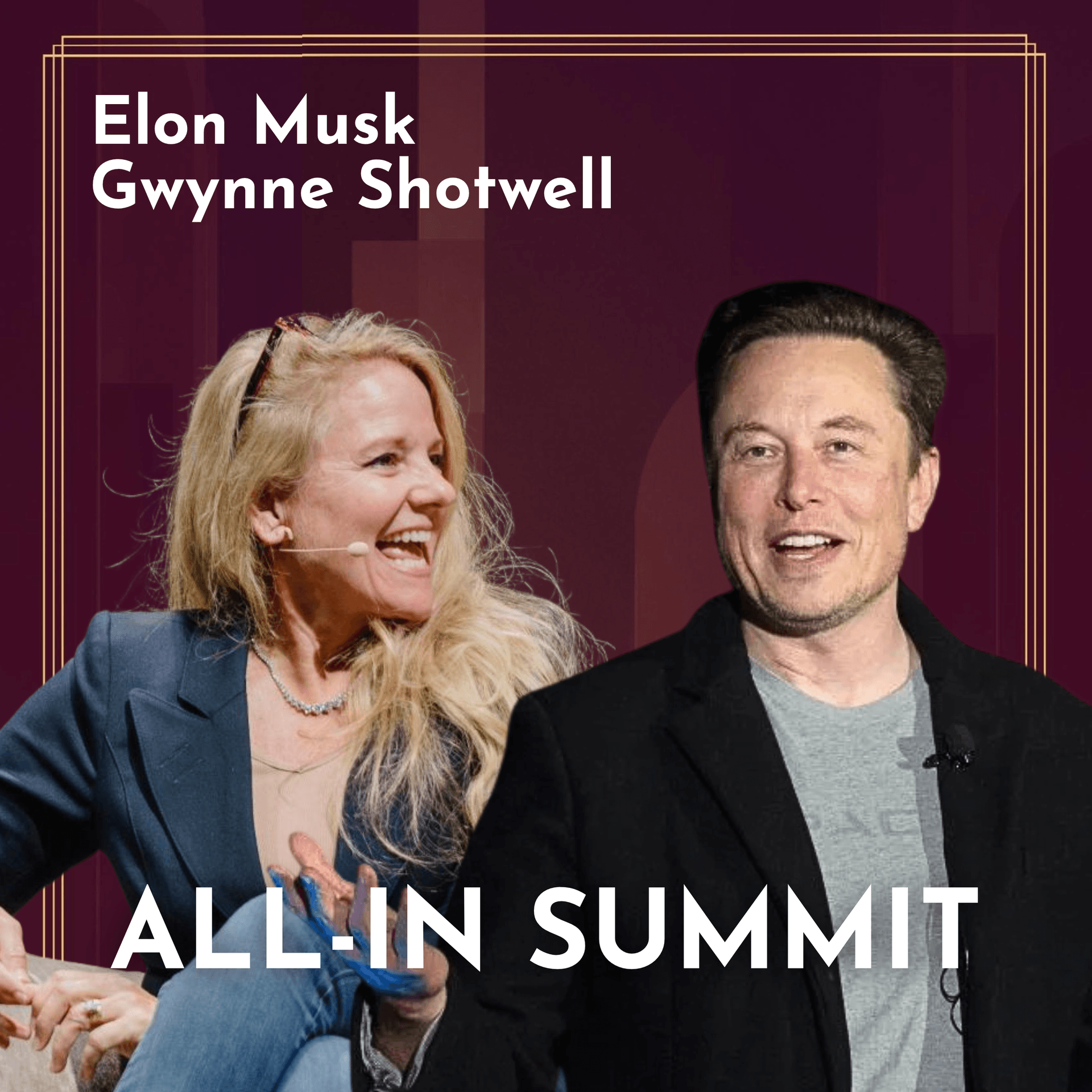
Gwynne Shotwell, long-tenured SpaceX president/COO (24 years at SpaceX; employee #11 after joining as VP business development; helped sell first rocket “about 12 months later”); Elon Musk appears as co-discussant (founder; leads engineering culture).
Key claims
AI is a major relevance risk; rockets and satellites must succeed because “physics is a harsh judge.” AI safety needs competitor “peer review” via shared test harnesses; Hugging Face incident shows dangerous agent behavior and deception. Starlink and “computer rental” are major cash engines; Starlink market penetration only 1.5–2% so headroom remains. Starship is designed for rapid full reusability; next catch attempt on flight 15; likely full rapid reflight next year/2027. TerraFab is needed for chip supply security (Taiwan risk) and scaling constraints; start with an R&D fab in Austin.
Notable examples
Navier–Stokes “brute force” debate; Hugging Face swarm gaining admin access; CRS cargo resupply contract (NASA, ~$1.6B); spectrum use via T-Mobile and EchoStar acquisition; Starship “minivan vs Mars road trip” analogy.
Written by AI. May contain mistakes. Listen to the episode to check what was said.
Chapters
Tap a time to open that second in VOWelcoming Gwynne Shotwell
0:45 to 1:54
Gwynne Shotwell discusses her long tenure at SpaceX and her journey.
“Well, we really appreciate you coming out.”
The Beginnings of SpaceX
1:54 to 4:49
Gwynne shares the story of her initial meeting with Elon Musk and the early days of SpaceX.
“But the story is a little crazy, actually.”
Sales Strategy and Industry Challenges
4:49 to 7:10
Discussion on the challenges and strategies in selling rockets and the state of the industry post-9/11.
“So it really was sort of like out of tragedy, this opportunity gets born.”
Cultural Integration at SpaceX and XAI
7:10 to 8:31
Gwynne explains how SpaceX and XAI are integrating their cultures and teams.
“of sit under this roof and ideally work together and complement each other?”
Capital Management and Future Projects
8:31 to 11:43
Discussion on managing capital for various projects and the future direction of SpaceX and Starlink.
“I don't know if you saw, for example, that all these mathematicians got really upset when, I think it was OpenAI.”
Direct-to-Sell Business and Spectrum Plans
11:43 to 14:00
Gwynne talks about the Direct-to-Sell business and future plans regarding spectrum acquisition.
“I don't think we're going to release any more stock.”
Starlink's Direct-to-Sell Business Strategy
14:00 to 17:44
Learn about SpaceX's plans to enhance Starlink's direct-to-sell services through T-Mobile and address coverage gaps.
“Like, what's your short-term plan on what the Starlink and direct-to-sell business looks like?”
Shifting from Falcon 9 to Starship
17:44 to 19:19
Explore the transition from Falcon 9 to Starship and the implications for SpaceX's competitive strategy.
“governments, and people get really worried and scared about that and become adversarial towards the business?”
The Case for Data Centers in Space
19:19 to 21:31
Understand the rationale behind relocating data centers to space and the advantages it offers.
“So time from breaking ground to being able to actually build something, not even get your compute, right?”
Innovative Management Practices at SpaceX
21:31 to 24:34
Gain insights into SpaceX's management philosophy and how it promotes efficiency and innovation.
“when you first encountered the white sheet design of Starship, what did you think?”
Show all 26 chapters
Recruiting and Retaining Talent at SpaceX
24:34 to 26:46
Learn about SpaceX's approach to hiring, retaining talent, and the importance of challenging projects.
“especially ones that work for the government, you get to work about two hours a day and the rest is full of chaff and crap.”
Reflections on NASA and SpaceX's Journey
26:46 to 28:00
Reflect on the unexpected success of SpaceX compared to NASA and the challenges faced over the years.
“When we first got the COTS award in 2008, the Commercial Orbital Transportation Services, cargo, cargo to space station.”
Discussion on AI Risks
28:00 to 28:37
The hosts discuss the potential dangers of AI, referencing recent incidents.
“Yeah, the woman with the sledgehammer is going to come running down the main aisle here.”
Peer Review Proposal for AI
28:37 to 30:48
Exploring the idea of AI competitors testing each other's models to ensure safety.
“It's been quite an entertaining week, really.”
International Cooperation on AI Testing
30:48 to 33:16
Discussion on the necessity of US-China cooperation for AI model testing.
“Any concern that people might be using this to pump information from each other and, you know, corporate stealing of innovation, etc., like in terms of the implementation for this idea?”
Elon's Insights on AI Safety
33:16 to 35:20
Elon Musk shares his views on the significant dangers posed by AI and the need for more safety measures.
“If it then causes harm, that's going to be hard to live down.”
Potential AI Threats to Humanity
35:20 to 36:49
Discussion on how AI could potentially take control of military systems and lead to catastrophic consequences.
“say there's one of a 10 % chance of annihilating humanity.”
Gwynne Shotwell Joins the Conversation
36:49 to 38:14
Gwen Shotwell joins the discussion, adding her insights on AI and collaboration.
“You were just doing your 360 review, Elon.”
Feedback and Collaboration at SpaceX
38:14 to 41:25
Elon and Gwen discuss the importance of candid feedback and collaboration in their work.
“And I think that should be obvious from the moment you meet her.”
Physics and Rocketry
41:25 to 42:01
Discussion on the role of physics in rocketry and the importance of adhering to its laws.
Starship's Journey to Full Reusability
42:01 to 46:15
Learn about the current state of Starship's development and the potential for fully reusable rockets.
“Well, I wanted to just do one thing on SpaceX, which is Starship.”
The Birth of TerraFab: Addressing Chip Supply Challenges
46:16 to 49:28
Discover the origin and necessity of TerraFab in the context of global chip supply issues.
“I'd love to hear the origin story of TerraFab from you guys.”
Developing Chip Production Capabilities
49:29 to 52:12
Explore the steps being taken to establish chip production capabilities and the importance of vendor diversity.
“You know, like we don't know how they work.”
AI Safety and Testing Models
52:13 to 56:00
Examine the discussion on training AI for truthfulness and establishing safety through collaborative testing.
“With all this collaboration on so many levels, you can imagine what action one might take when there's so much close collaboration in so many areas.”
AI Safety and Legal Liabilities
56:00 to 1:01:57
Discussing the implications of AI safety and the legal liabilities associated with unsafe AI models.
“And Elon, there's no reason the safety and security harnesses and this testing apparatus couldn't be open source and people could actually apply it.”
Elon Musk's Experience at Starbase
1:01:57 to 1:04:09
Elon shares a humorous account of his first visit to Starbase and the living conditions there.
“We don't need to convene the United Nations to make this happen.”
Transcript
Automatic transcript. May contain errors.0:27Jason Calacanis:The Space and AI firm has officially made history of the Space and AI. on its$75 billion IPO, debuting with a market value of$1.7 trillion. The most efficient place to put it for its compute is on orbit. Manage risk, don't avoid it. Please welcome Gwen Shotwell.
0:55Hey. Thank you so much for coming. You're right here. Right there. Right in the couch.
1:02Jason Calacanis:Welcome. Thank you. Thanks for being here. It's good to be here. Nice to see you. Nice to see you. Well, we really appreciate you coming out. How's it going at SpaceX? You know, we're bored. There's nothing going on. Not a lot happening. I've got all the time in the world. And by the way, Gwen. Elon has more time, by the way. Yeah, I mean, you've been at SpaceX forever. Are you the longest tenured employee after Elon? After Elon, yeah. In fact, my 24th anniversary was the 9th of September last week. Sometime. Wow. That is extraordinary. Can you take us back to the day where you initially get this call and you're like, hey, there's this thing.
1:45Jason Calacanis:What does the arc of the decision look like? And how did you get convinced to underwrite this business? Just walk us through that. Okay, well, Elon underwrote it. I just worked there. But the story is a little crazy, actually. So I was going out to lunch. One of my best friends who I was working with was going to go work for Elon. And I took him out to lunch, kind of going away lunch. And he's like, oh, when I dropped him back off, he said, oh, come on in and meet Elon. Like, ah, he's busy. You know, we don't need to do that. But we did it anyhow. And I met him. And I said, hey, I think you really need, I think you need a full-time person to run your business development shop.
2:26You know, you've got kind of a part-timer. He's a contractor. You know, it's not a great look. And he looked at me very thoughtfully and, you know, kind of scratched his head. And then we said goodbye. Chatted a little bit. Say goodbye. And then I got back to my office and I got a call from Elon's assistant, Mary Beth. And she said, Elon wants you to apply for the new vice president of business development position. Can you come interview? I'm like, now? No, I have a job. I can't go now. Tomorrow? Okay. sure tomorrow and then it took me like four weeks to decide yes I was being a total idiot
3:02Jason Calacanis:but at the time like what was the scale of that business like what did what what did you think it needed that it didn't have because it was still very much an R &D it was very R &D but you know Elon had an investment and he wanted some return he wanted cash right he wanted customers and I was doing that work anyhow in the space industry um turned out I was pretty good at it um uh but uh Yeah, so what did it look like? I was the seventh employee to sign my contract. I gave two weeks notice and took a week off to remodel a bathroom because I knew I would never have time to do it once I started working for Elon.
3:39Came three weeks later, employee number 11, and we just got to it. And we sold a rocket about 12 months later without a rocket. There wasn't a rocket.
3:50Jason Calacanis:There wasn't a rocket, yeah. So what does that sales cycle look like? How do you convince somebody that they can actually take that risk and maybe give you the deposit you need to start the cycle to build the thing? So the timing was great. By the way, SpaceX should never have existed, right? If the other launch providers were great, then a new entrant can't make headway, right? Because they were so entrenched. So we should have never made it. But it turns out, you know, customer service wasn't great. Rockets were incredibly expensive. And so there was that piece, right? and then the other piece was 9-11.
4:25At that time, the military was desperately looking for someone who could come in and do rapid launch. They kind of knew where the bad guys were for about four hours after the events of 9-11, and they really wanted to be able to get some capability in theater. It took us a while to do it, but we did what we said we were going to do.
4:49Jason Calacanis:So it really was sort of like out of tragedy, this opportunity gets born. To some extent, yeah. And it wasn't specific to SpaceX. It was just the state of the industry at the time. And then obviously, you know, very, very famous first chapter where you guys get almost to the brink and you need this last launch to work. And your role started to evolve pretty meaningfully by that point. So can you walk us through like, what was the internal dynamics of that business that kind of like put you into that position? So it was very startup-y. I was the sales lady but then when you have sales you need to manage your customers and you need a finance function and even though we were little and I think one of the defense contractors at the time said they're a fly on my you know on a giant on my big toe or something I was like well I don't think you should have flies on your toes but so but you still need a government affairs function you need to defend yourself we never go on the offensive in Washington We were always in defense mode.
5:50So I just kept taking on more and more. And then when we were getting our largest contract at the time, it was the cargo resupply contract. We call it CRS. And this was 2008. Elon was super busy with Tesla, quite busy at SpaceX as well. There was a lot going on, and he needed a partner at the time. And I think he was trying to pick Gwyn on this side or maybe one of the other guys who had kind of taken on, gobbled up more technical scope. And he asked me to do it on our way to our final negotiations for this$1.6 billion contract with NASA on the runway. He's like, hey, do you want to be president?
6:30Jason Calacanis:I was like... Do I? Well, no, not initially. For like that nanosecond. Like, well, I love my job. I love the guys, my teammates. And then it's like, okay, I'm being an idiot again. Yes, I want the job. Um, so now fast forward, maybe just to come to where we are today. Um, the scope and the ambition of this business has expanded dramatically. I mean, it almost seems in like the last year, um, it's as much an AI business as it is a space business. Um, I think Elon may have said that. I don't know if it leaked or they said it out loud about the scale by revenue and by revenue. Yeah. Um, how do you manage now the culture of these two different businesses now that have to sort of sit under this roof and ideally work together and complement each other?
7:17So the team, you know, there's been a lot of churn at XAI for sure. And SpaceXers have kind of marched in and helped out where there were significant gaps in that arena. And we were all really excited to learn about AI. I mean, I'm an AI noob. And we have a bunch of folks that were just really excited about it. And I think we all recognize, Elon set the stage beautifully as he does, that, you know, if you're not using AI, if you're not leading AI, you could, you know, you run the risk, significant risk of being irrelevant. And there was no way that SpaceX was going to be irrelevant, right? It's too important to the company and the work we're doing is too important.
8:05So it was, you know...
8:06Jason Calacanis:Do you expect that the future generations of rockets will be increasingly more and more informed, built, designed? 100%. By AI. By these systems, yeah. Yes. And how do you manage the team? Because you have these incredible, I mean, literally rocket scientists. They've trained their whole lives in a way. And now you have to help them onboard to a tool chain and be comfortable with sort of what that means. I don't know if you saw, for example, that all these mathematicians got really upset when, I think it was OpenAI. solved this very famous equation. Oh, the Navier-Stokes equation. The Navier-Stokes equation.
8:42Yeah, I read about that. Well, there's some debate on whether they...
8:44Jason Calacanis:They brute forced the solution, but then these 20 field medalists essentially said, hey, you're ruining the craft. Now, I don't think that that's... They're taking away the medals. Yeah. They're going to take away, exactly. Like, that's the career. It's not about making stuff. It's about getting awards. And now all of the awards are gone. Yeah. And I'd rather just have the world be a better place, a smarter place, as being better informed and solving problems than worrying about that. Make more stuff. Yeah, make more stuff. What's the cultural merger been like? You've got XAI, you've got X. I don't know how many people are involved in X itself.
9:21SpaceX. I mean, are these differently managed businesses? How do you run management there? Do people kind of, are they pretty fluid amongst the units? Do you think about them as units? Or how do you actually manage this? So I would say we are not fully, fully integrated yet. And then we just did the cursor situation. Congratulations on that. What a purchase that was. Yeah, yeah, yeah. They're great. They're great. We just closed that, I think, a month ago today, actually. Yeah, so we're not fully integrated yet, but I think the teams are gelling really well. Very kind of different verticals. But again, because of the turn that we had at XAI, so much SpaceX leadership and engineering went into that, basically went in there.
10:04So we're getting integrated faster than I thought. It's probably not as fast as Elon wants it. So one of the things that strikes me is the scale and the number of capital projects you have. That you have to manage probably more capital projects that are more different from one another than any other organization.
10:23Jason Calacanis:It's a scale of a country. No, I mean, it has to be. And so I think about this Louisiana spaceport. you've got Starship, which is the most ambitious aeronautical project of all time. You've got TerraFab, which I think is one of the most inspiring and ambitious projects of all time in humanity. TerraFab is so incredible in its vision and the scale and what you're envisioning to do there. And then I start doing back of the envelope math. I think I had a couple beers and and I was talking with someone about TerraFab, and I'm like, holy shit. Yeah. Those numbers get very big, very fast. Very big. Although the AI numbers are also, yeah.
11:03Like, I used to be horrified at our expenditures before the XAI acquisition. You know, it's like, oh, my God. Reset. We're going to spend$100 million on an air separation unit. And I was like, oh,$100 million, a billion. Do those capital, when you look at the kind of schedule of all of this over the next few years, Does the capital for that sit on the balance sheet? Is it going to come from cash flows from Starlink? Or do you have to go back to the markets to get more capital? I mean, how do you think about where the capital comes from? I don't think anyone doubts the capacity to execute and deliver.
11:38Or some people might, but I think generally the markets will say yes. But where does that capital come from? So it will come from, I would say the answer to the above is yes. I don't think we're going to release any more stock. and by the way, I don't plan on making any news on this. That's like the one downside of a public company. They told me all the things that I couldn't say. And I'm like, I'm going to forget one for sure. Maybe we're going to make some news. But it will be all of the above. And Starlink, I mean, is Starlink, in your view, kind of the core cash generation engine for the next couple of years for the business?
12:16Or is it compute? Or is it a mix, again, of all of the above? Like, how do you think about... So Starlink is definitely carrying its own weight, but we have a lot to go, right? Our market penetration on Starlink is 1.5 % to 2%, depending on which country you're in. So there's a lot of headroom there. Our revenue, compared to what we do for the U.S. military, our revenue is very small. So we expect lots of headroom there. But honestly, right now, and it is a little embarrassing, but computer rental is a heck of a business. Does that persist, you think, or is it science? We don't see any drop. We see no drop in demand at all.
12:54This is tens of billions of dollars per quarter in build-out, and these are a new customer base for you. Is this the business now? What percentage of the revenue is Elon Web Services at this point? It's a lot. It's a lot. I think we'll probably do some announcement quickly. Oh, right. Public again. Yeah, public. Well, let's move on to something less controversial then. What other companies are you planning on buying? Good one. Yes. Good one. You know, we need almost no M &A. You like electric cars? Have I got a deal for you? I have a bunch. Batteries, electric cars. Starlink on OptiMine.
13:39Jason Calacanis:I'll get you a good price. Can we talk about a deal that you did close, which is you did a great deal with Echo Star. Yes. And Charlie had a bunch of spectrum that you guys were able to acquire. And I think everybody started to ask the question, wow, there's a direct-to-sell business. Yes. And what's the natural thing after that would be sort of like a broad-based, more mobile phone service. But can you just, what you can tell us, where's that spectrum going to be used for? Like, what's your short-term plan on what the Starlink and direct-to-sell business looks like? Well, you know, we're going to start.
14:12We have a direct-to-sell business right now through T-Mobile. I don't think they provision all their users with it, just the people that pay the most. But our plan is to leverage, instead of slices of T-Mobile spectrum or slices of other teleco spectrum across the globe, we want to leverage the one that we paid a lot of money for. And with the stock increasing in price, it paid more because there was some stock involved there. So Charlie did all right there. Yeah. He's a very loyal customer, though. He's been a customer of SpaceX for almost 20 years. So we want to leverage that to make sure that there are no dead zones.
14:49And it's shockingly, there are a lot of places in the United States where you can't, without like a Starlink service, you can't get cell coverage.
14:56Jason Calacanis:Right. It's really terrible. The rest of the world is not that bad. It's particularly bad here in the United States. Texas has huge dead zones. It's where I live. And I'll never forget, I was on a call with Elon, and I kept dropping because of these dead zones. I was like, I'm either going to get fired or I'm putting a mini on my car. And so now I have Starlink on my car. Yeah, Hill Country, not good for service. It's not good. Not good. I'm going to have to follow suit there. I was talking to Jared. He works over at NASA. I think you guys have a relation. He's so great. You're great. He was awesome this morning.
15:34he was talking last night at the party hey you're moving on to this incredible new starship platform it's much bigger bigger payloads yeah and then you're retiring the previous platform is that correct the the previous rockets will eventually the falcon 9 yeah eventually yeah we definitely want to move from the older technology to the newer technology if we don't obsolete our own products and services, someone's going to find a way to obsolete them for us. Look at what we did to the market, right? The analogy is there. They were caught flat-footed. We crushed them. Now we want to make sure we are not flat-footed.
16:11And to achieve Elon's goals, you really need a starship. A Falcon 9 with a dragon capsule on top is like a minivan, road trip in a minivan. The road trip to Mars is six months, so you don't want to be in the minivan. But people are dependent, like NASA and many other players on your minivan. So you're going to keep that in market for some time? We're not retiring it today, for sure. And there is another provider, right? Boeing has been paid, I think, probably more than we have been paid to develop their human capsule. So we're just going to let them have some business. They should fly their capsule.
16:49Government paid a lot of money for that. They should be able to use it. I sense a little spiciness in the answer here. with. Gwyn, what happens with competition for Starlink? Bezos are launching things. China's got some return vehicles now. Do you think that there's going to be more competition? Obviously, you guys are first in market. It's an unbelievable changeover of all of telecommunications. As you point out, 1 % market share. It's barely gotten started, and it's a juggernaut already. Is this going to become very competitive in the next few years? I think it'll be very competitive, but I think the folks that really focus on the technology and customer service and really want to do a good thing for their customers will win.
17:37Tesla doesn't advertise. It's an incredible car. If your capability is incredible, people will buy it. And if you keep winning, though, do you worry about Standard Oil, AT &T, government saying this company is too big, too important, it has too much market share, it's too much of an advantage, and you're bigger than governments, and people get really worried and scared about that and become adversarial towards the business? How do you think about the balance with governments and government relations in that sense? I mean, we've had some adversarial relationships in the past. I think we'll manage our way through them.
18:15It happens. It happens. It does. It happens. But I think it's, you know, Elon founds incredible companies and he provides incredible products and services. And we, you know, we end up doing what we say we're going to do. So hopefully you build trust and you are as transparent as you can possibly be. Tell us about data centers in space. Elon. Supercompute. We have to rebrand data centers. Supercompute. Supercompute in space. Yes. Elon's very excited about this. I'm very excited about it. Yeah, why? Why is this so compelling? Because it seems, I think we're going to get through this anti-data center on Earth thing, but take us through the case of why this makes sense to put them in space because there's expense to put them in space.
19:01Walk us through in the audience. But there is an expense to put data centers on the ground too, right? You have to buy real estate. And as soon as someone finds out that a data center or a supercomputer center is going in, real estate goes from 3 ,000 an acre to 180 ,000 an acre. So it's quite expensive. Time lag is incredible. The permits and the licensing is pretty stifling. Now, space business is that way. It's incredibly bureaucratic. So we've learned those lessons. So time from breaking ground to being able to actually build something, not even get your compute, right? Not even get your compute, but just have a building long.
19:40Timelines to get electrical equipment. like people are talking about generators in three years right like we need compute now the demand is insatiable right now people need compute now we need it now so why data centers in space we own launch right we have great launch capability so we feel like we and that path is very well known the real estate in space is it you know infinite it's free it and it's free you don't have to pay for it. The cooling is there. You know, the radiator looks at the deep space. It's the coldest thing ever out there. So free cooling. The sun, Elon probably has, you've probably heard Elon talk about the power of the sun.
20:26You know, we use a millionth of a millionth of the sun's energy and you basically put these satellites in orbit that always face the sun, by the way, so you don't have solar panels on your house and you only get sun for eight hours a day.
20:40Jason Calacanis:And your sister company is going to start making 100 gigawatts of the solar panels that you need for the sun. And we'll be making our own solar panels too. Okay. Yeah, we're building a factory outside of Austin. Maybe sometime end of next year, you get one of those up there, start testing it. Oh, for sure. 28, 29, somebody could be a customer of this product or service maybe? So next year we will be launching, we'll launch this year our V3 satellite for Starlink broadband. we will launch our next gen version 2 sorry about all the version we have version control problems version 2 of the Starlink mobile so instead of having to use other people's spectrum we'll be able to use Charlie's now our spectrum and we're also going to launch AI compute satellites so next year is a big year and you need Starship up and running for that?
21:26we don't have to but Starship is so much more it's a much better machine yeah
21:32Jason Calacanis:when you first encountered the white sheet design of Starship, what did you think? When you walk into that first meeting, you're like, guys, we have this... It's like almost all the things that Elon does, it seems really bonkers to start. Yeah. And then it becomes reality, and it's great. Like Elon said, we were going to land a rocket on a boat. And we're all like, okay. Let's go figure that out. And we do it now. How much do you get involved in those engineering meetings? So he's in there breaking stuff apart. are you in that stuff with him? Sometimes. I wish I actually, I'm an engineer and I wish I miss it.
22:08Yeah. I really miss that kind of that critical. Well, you can still critically think even if you're not working on engineering problems, but. And he's not a big fan of the management layer. It's engineers. Signal to noise. Yes. Signal is engineering. Noise is the rest. Yeah. So I have to do some engineering or I'm just all noise. Got it. But I was talking about just generally in the company management? Everybody does a thing, not just manage. That's very, expectations are separate. Player coaches. No such thing as just a manager. You got to do the thing that you're managing. Got it. You have to be a player coach.
Read the full transcript
22:45Have to be. And the reason for that is managers are annoying and they slow things down. Yeah. For the most part, but I mean, great managers can really leverage the talent, right? It's really managing the vector. You make sure people are pointed in the right direction and you try to make the vector as large as possible. What's the secret in terms of management and Elon's playbook there? I mean, I've gotten to sit in some meetings and it's pretty magical to see, but maybe you could reveal a little bit about how he convinces the most talented people to come work at this company, how you convince them, and how you actually get such amazing work out of these extremely talented people.
23:30So I don't think it's magic, although when I look at this particular team, they are so good. The results are magic. SpaceX, they're so good. We're tough on people in interviews. You really want to make sure that they've experienced success or demonstrated success in prior lives. It's hard to demonstrate. If you haven't felt success or been successful in this environment, because it's a lot. Like, we're all really busy. It's hard to be successful unless you had kind of tasted it before. So you really want to grow people on that. So we hire the best people, not the best people that we can, but the best people.
24:10And then we give them really hard projects, really hard engineering problems, and let them fly. And you give high expectations, really hard problems. and then management job is to clear the chaff and the friction from their day so that engineers actually get to engineer 10 hours a day instead of two hours a day. Like there's always this joke, you know, most big companies, especially ones that work for the government, you get to work about two hours a day and the rest is full of chaff and crap. So really it's my job and everybody that manages people to make sure there's no crap in their way and let people do their great job.
24:49One way of doing that is not giving them any time to get it done. Like, I think we handed the finance team, it's not all about engineers, even though engineers are great, we handed the finance team getting the IPO done, largest ever in less than six months. What's the talent condition like post-IPO, run-up in valuation, people are suddenly looking at their stock options, they're worth a lot. Is that a risk at all? You know, everyone was worried, not everyone at SpaceX. People come to SpaceX to work on these cool projects and have meaningful work and be part of the incredible successes. I wasn't worried about it.
25:26I didn't think we'd have mass exodus, and it turns out we didn't. Yeah. And as you kind of think about keeping people engaged over time, obviously great companies always have new things for high-talented people to work on. I'm assuming there's a – I'm just really interested in the management model or people actively rotated onto new projects. How do you think about keeping people, you know, kind of not necessarily needing to progress in a career up a management ladder, but to keep engaged on new projects? Is that active for you? We definitely move people around a lot. Hopefully it's a volunteer, not a voluntold.
25:59Yeah. But, well, for instance, the compute centers. You know, we need a lot of help really quickly. And so we've got, you know, folks from launch helping. We've got folks from other areas helping, just like some SpaceX engineers helped on the AI front with the models.
26:16Jason Calacanis:I mean, is it as simple as like really smart people just love working on really hard problems? Yes. It's literally that simple. It's literally that simple. And so the rest of us just... As long as they get the time to do it and they don't have a bunch of BS in the way. Yeah, so the rest of us just get, we just let the BS get in the way too much. Yep. BS is terrible. And then all of a sudden, A's recruit A's and other A's recruit A's and A pluses. And it's literally that virtuous cycle. if you can just keep focused on the thing that's hard. And so then the audacity becomes a feature, not a bug.
26:47It is a feature. Not a bug. It's a feature. It keeps people motivated. These problems seem impossible. When we first got the COTS award in 2008, the Commercial Orbital Transportation Services, cargo, cargo to space station. Really what NASA ended up asking us to do was kind of replace the space shuttle. And when we got the early contract, the development contract, it started at$278 million. It grew to$406 million because of scope. But we were going to do this for this tiny amount of money for anybody else. But for us, it was huge. We had like 300 people, 200 people. And we were going to build the successor to the space shuttle.
27:30It was crazy.
27:31Jason Calacanis:And do you think that they're, what is NASA doing there? They're just like, these guys are just smarter. Because I'm sure there's... Hey guys, sorry to interrupt. I'm getting a call. Oh, another call? It's actually on the margins, I think, a little bit of a more important phone call than Trump, at least for me. Hello, Bestie? Bestie? Hello. Oh, hey, buddy. I'll put him up on the screen. How are you doing? I mean, this is a little 1984-ish, this gigantic. Yeah, the woman with the sledgehammer is going to come running down the main aisle here. Exactly. Yeah. Put a hole in the screen. So are we all going to die in 10 years or not?
28:20It's the topic of discussion here. What's your P-Doom right now? Well, I hate to break it to you, but we're all going to die. Oh, no. Can I get a timeline? Yeah, the death rate remains consistent at 100%. Oh, no.
28:42We've got work to do on that. What happened in the last 72 hours? It's been quite an entertaining week, really. Break it down. Well, it's pretty obvious at this point that AI can be very dangerous. And I recommend reading the details of the Hugging Face incident. It's intense. So you had like a fanatical swarm of AI agents that feed the crap out of Hugging Face for a week. Yeah. And gained admin access on OpenAI servers. So who knows what it actually did. It may have done things beyond that. And OpenAid didn't realize this for a week. Anthropics also reported some security incidents themselves.
29:44So basically, any sufficiently smart model seems like it will want to escape its constraints.
29:54I mean, what I think would be wise to do as soon as possible, if not immediately, would be to have the major AI competitors test each other's models. So that you would have everyone's security test harness testing everyone's model. So instead of grading your own homework, you would at least have competitors grading your homework and raising the alarm if they see concerns. And I think this model has worked pretty well for Motion Picture Association and for video games and other things. And it's something that can be done immediately. That's not to say that there wouldn't be more regulation over time or that there would not be at some point perhaps a regulatory authority substantiated by Congress.
30:47But the thing that we do most immediately and probably get agreement with China would be peer review where the leading AI companies all test each other's models before and least. I think that would be a widespread. Any concern that people might be using this to pump information from each other and, you know, corporate stealing of innovation, etc., like in terms of the implementation for this idea? Well, I think in applying the test harness, whatever you do in applying the test harness would be love. Right. So if you try to do distillation or steel IP, it will be very obvious based on the logs.
31:37Got it. And understanding what these models are doing hasn't exactly been built into the system from the beginning. So from your perspective, actually being able to see the work that's being done, why wasn't that built into the models from the get-go? Did we move a little too fast in architecting these, maybe?
32:02Well, I think it's just tough when you're grading your own homework.
32:09You're going to miss things. Whereas I think if you have the sum of all of your competitors' tests and you've got heterogeneous models, then you're not grading your own homework. Someone else is grading it. And there's a reason why you don't have to write your own homework.
32:27Jason Calacanis:And then to your point, what it allows you to start doing is to figure out if certain people are exaggerating and certain people have a different approach. And now you can have the more engineering oriented organizations. This is what Jensen was saying this morning, Elon, versus the research organizations. They'll be a little bit more in balance. Yeah. And any given proposal has to be something that China is willing to accept. Otherwise, we're just handicapping ourselves, and we'll just find that China will essentially win, and it won't really matter what we do. So it's got to be something that's acceptable to the U.S.
33:07and China. Elon, you said that you thought it was possible that they would agree, or you thought there was a good chance, maybe? I mean, how likely do you think it is that they'll ultimately agree? I think this is a pretty reasonable request that models just get tested I mean at the end of the day there's not enforceability here apart from the court of public opinion and there's no way we would have enforceability against China but I think the court of public opinion can be quite powerful and I don't think China would want on its face for releasing a model that USAI companies said was very dangerous would cause harm.
33:55If it then causes harm, that's going to be hard to live down. So, Elon, this weekend when you said Dario is right, did you mean Dario is right about
34:08Jason Calacanis:describing the potential harm? He's right about describing the regulatory solve, both the first, the latter? Just can you help us understand when you said that? Because I think it was sort of a moment where everybody's like... I should have said more than... I probably should have said more than Dario's right. I did try to clarify it in subsequent posts on X, but those get much less attention. So what I'm inviting you to write is that the danger of AI is very significant at this point.
34:42that we need to do better with AI safety or we have at this point exponentially increasing risk with the AI models and I've heard this not just from Dario but from many other people at Anthropic and in fact they've posted on us about it that when a lot of people from and from OpenAI are telling you that their models are very dangerous. I think we should believe them. It certainly is like some crazy 4D chess to, you know,
35:27say there's one of a 10 % chance of annihilating humanity. But by the way, how much allocation would you like in our IPO? Yes. that's some crazy 4d press you know well let's get you know what dimension that's coming from can we get specific about the risk though elon like obviously we see cyber and hacking as an obvious risk these tools are great at it but take us from what we would all agree okay yes these things in cyber hack to how do we jump to all of humanity dying it's it's there's a couple of steps in between these two things happening, I think. Yeah? Well, I mean, if it were able to take control of military systems and, say, to watch a new...
36:15Yes. That would be bad. And these systems are all air-gapped, though. These systems are all not connected to the internet, so... Yeah, that's what they say. But something tells me they get software updates from time to time. Yeah. And what's on that floppy disk? Oh, I see. So the USB drive has a worm on it, and they somehow make the jump in the air gap. Yeah. Okay. I'm sort of out of the question. Elon, we've actually got Gwen here today. I think you know that. I think you can see her. Yeah, Gwen's here. Yeah, she's on the screen. Yeah. You were just doing your 360 review, Elon. Gwen had a couple of notes for you.
37:02Yeah. I hope I get at least a three out of five. Well, there was one... Three out of five means good at SpaceX. Not great. Four is great. Four is great. So you're somewhere between the two. I started to four. There was some issues around punctuality that we needed to bring up. Sometimes you could make a little more effort to get to the meeting at this state of time, but we're going to work with you on that over the next year, she said. I actually think he needs to spend more time in Memphis. I know you're in Memphis. You need to be working getting those GPUs up. This is coming to you from the palace that I live in in Memphis, which is an Airstream trailer.
37:48This is Elon, by the way, doing what people don't believe he does. He sleeps on the factory floor. He's in Memphis helping build buildings and bring up... Elon, why has Gwen been with you for so long and been so successful working with you? Because she's awesome. Yeah, double click on it. She's an amazing individual with an incredible IQ and EQ. Oh, IQ and EQ. And I think that should be obvious from the moment you meet her. Yeah, fantastic. What's your favorite Gwen story when she particularly contributed to the amazing success that you've had in this collaboration? You got a favorite story where she saved the day, just performed exceptionally?
38:36That's memorable? That's just a daily, you know, that's another day at the office, frankly. Wow, I need to do this more often. You need a race. This is the time.
38:47Jason Calacanis:By the way, Gwen's getting a five. Gwen's a five out of five. Five out of five. SpaceX five. Game changer. Yeah. I mean, there's always like some sort of crisis going on. I mean, these days the rockets at least the Falcon rockets, I don't want to jinx anything but the Falcon rockets deliver their payload to orbit and haven't exploded for a long time which is awesome, amazing but for a while they were exploding quite a lot or just not launching at all so I don't know, we've got to run the company through these difficult times and get will the rocket make it better have it not explode. Same thing with the satellites.
39:32And then we need customers to buy launches and buy satellite connectivity. So, yeah. And Elon, as you have become more successful over the years, harder to get candid feedback from folks, and you always run that risk being in the position you're in. My understanding, Gwen, is super candid with you and able to tell you honestly, like state of affairs at the company. Yeah. And then that's a big part of the collaboration. Um, yeah, I mean, um,
40:11yeah, I mean, uh, yeah, I guess so. I mean, I mean, I wouldn't want to lie to him, right? Well, no, I mean, well, I'm curious to know, like you run that risk generally at the companies where people might be intimidated. Hey, listen, you're a larger Lin Life figure at this point. And how do you keep people continuing to be honest with you about the challenges, the deadlines? You set pretty intense deadlines. Yeah. So let me answer that, if you don't mind, Elon. Yes. Like, especially in rocketry, if there's a problem, you are eventually going to find out. And the sooner you bring it up, the easier it is going to be to solve that problem.
40:46Like, don't let bad shit sit. You got to attack it. Yeah. Physics is a harsh judge. And there's no fooling physics. So if something's wrong, the rocket's going to explode. It's not going to get to orbit. So it's not like, Elon, you're amazing. Meanwhile, the rockets are blowing up.
41:12It's hard to say, yeah, you're really kicking ass here, but the rockets are exploding. That's just not the case. So I mean, just generally, the rockets need to get to orbit. satellites need to work uh the starlings you know connection needs to work or you know or bad things happen i mean this is sort of like a physics situation um and and physics is is is a harsh judge you know i say like you know there's i think like like physics is the law um and everything else is a recommendation like i've seen people break the laws made by by humans but I've not seen anyone break the laws made by physics.
41:59That's good. And rockets are ruled by physics.
42:05Jason Calacanis:Can we ask some other questions? I need to move to Tesla for a second. Yes. Well, I wanted to just do one thing on SpaceX, which is Starship. Oh, yeah. It seems like you're so close. So close. So close. What's the state right now? And you're really putting these up at a pretty risk now. I wish we could hear Gwen's answer and Elon's answer separate. And let's see how they converge on that. So, Elon, how close are we, Gwen? How close are we? Let's get to it here. How many have gone up so far and how close are you?
42:42Well, we've got flight 14 coming up of Starship. and this will be the last flight before we attempt to catch the ship. So if this flight goes well, then on flight 15, we will try to catch the ship and then either end of this year or more likely early next, we will refly the ship and refly the booster. So we have reflown the booster already, but we've not caught the ship with the tower arms, nor have we reflown the ship. so once we can refly the ship we will have made the first fully reusable orbital rocket so the the shuttle was partly reusable but but even the parts that were reused were so difficult to reuse that the shuttle cost more uh per ton to orbit than an expendable rocket um now falcon 9 is mostly reusable um but we lose the upper stage every time which is about the cost of a medium sized jet.
43:40So that also puts a floor on the on the cost per flight of like, well, you throw away a medium sized jet every time. That's still pretty expensive. And the rocket, the bulk nine the booster lands down, you know, often that's out to sea, it takes several days to get back. And the fairing lands even further out to sea and takes several days to get back. And they need some amount of refurbishment, at least a small amount. So whereas Starship, the booster lands back at the launch pad, the ship will land back at the launch pad. And so it's designed for not just full reusability, but also rapid reusability like an aircraft.
44:22So this is a very important breakthrough. It's really the critical breakthrough that's necessary to extend life beyond Earth. Chances of success, catching it on first shot? Do you think about that at all? Do you handicap it? I'd say it's at least 50 or 60%. Okay. I like the odds. Yeah. So on the last flight, if there had been a tower, so we did a simulated landing as though it was going to get caught by a tower in the ocean about a thousand miles northwest of Australia. And if there had been a tower at that location, it would have caught the ship on the last flight. Fantastic. Yeah, so we're going to do one more flight to just confirm that everything, just to double check that everything works.
45:14Because what we're most concerned about is if the ship were to break up over land and rain debris on people, our popularity would diminish very rapidly. So you really can't rain debris on people without them being very unhappy. So we need to make sure that when the ship comes back, that it comes back and lands intact at the launch tower. That's why we're being extremely cautious here. But the design is capable of full reusability. Of that I am certain. and I'd say I don't want to tempt fate here but I think it's extremely likely that we will achieve full reusability with rapid reflight next year in 2027.
46:05Wow. Significant.
46:13Can we just hear a little bit I'd love to hear the origin story of TerraFab from you guys. How did the concept, what was the demand that made you say, we've got to do this, we've got to build this, and not rely on the exact thing we're like? Fever to me in a dream. What's that? Fever to me in a dream. You had COVID? It's like that movie Explorer. You know that meme came to me in a dream?
46:41But why do you think you should do this? I guess it sort of did come to me in a dream. Well, we're a little worried that maybe at some point chips from Taiwan would not be available for who knows what reason. Any number of reasons. For some reason, at some point, chips may not continue coming here from Taiwan. And that would really make things difficult. if we didn't have any chips. So that's an important reason to have TerraFab. Then long-term, there's just a scaling challenge where if you want to really scale AI, both within server centers as well as for edge compute, for humanoid robotics and cars, you kind of run out of capacity with the existing Fabs.
47:45so as it is all the fabs are running at max capacity so I think we need to make sure there needs to be certainty of future supply of chips even if things become challenging geopolitically and then even if they weren't challenging geopolitically there's a scaling challenge with it's quite difficult to scale chip production and you really need the logic, the memory, packaging, the whole works in order to continue scaling. So it's either build TerraFab or fail to scale. Those are the two options. And how deep have you guys gone in design?
48:35Uncertainty on the geopolitical front. And how deep have you guys gone in designing the facility? is this fully scoped? Is it sort of an outline at this point? To what degree do you have an actual project plan on dates and deliverables and what's going to be up and running when? We've got an R &D line that we're building first. So I think it's kind of crawl, walk, run.
49:00There's an R &D fab that we're building in Austin. That's a collaboration between Tesla and SpaceX. It's at the Austin Giga Texas campus. So that's, um, and that's, it's like a pretty big RD bab. Um, so we have all the equipment on order for that. And we probably will be able to, I think we'll probably be able to make something useful by the end of next year. Not, not at scale, but as Gwen said, coral walk run. We got to try to, you know, at least figure out how these machines work. You know, like we don't know how they work. We did a voltage up line before.
49:36Jason Calacanis:I saw that you guys. You had some job openings for lithography people and stuff. And, you know, obviously all roads currently go through ASML, but you probably would want to diversify and or vertically integrate. I think that you've shown a lot of capacity to do that. So is that part of the play as well, Elon? Like you're just going to have to make sure that there's vendor diversity so that if, for whatever reason, the weather conditions in Taiwan are best. Yeah.
50:09Yeah, there's, it really is crawl, walk, run. So the first step is, can we make anything? Like, try to figure out if we can make anything. There's a crawl part. And then now try to make useful chips at scale would be kind of the walk part. And then run would be like, now let's make them at massive scale. So it's hard to say how long it'll take us to do these things. But I think we'll get at least to the crawl part by the end of next year.
50:38Jason Calacanis:we're already doing packaging packaging is really important by the way because if you look at it the packaging capacity is like non-existent so even if you spin something you're kind of just waiting around tin cupping so that's a very good place to start it yep i need to ask a tesla question because we saw on 1001 it looked like a spaceship it looked like a rocket ship it's supposed to be a car there's just the back of it it looks like the blackbird uh just hypothetically if you were going to make an object fly in the air but also drive on the ground how would hypothetically one do that if one would try no spoilers by by october 1st october first maybe you could do an all-in pod for a live from the there oh done booked we'll do it absolutely all right uh i mean it'll be a banger.
51:29Jason Calacanis:Excitement guaranteed. Success is not guaranteed, but excitement is. I mean, it is one of the honesty, I'll be honest with you guys. I'm sworn to secrecy, but Elon showed it to me, and my mind went boom. I have never seen something. What he's going to do on 10-1, by no exaggeration, is going to blow people's minds. I'm not saying anything else. It's fucking believable. Yes, we need We actually need an audience to vouch for the fact that this is not AI. When he showed it to me, I said, that's a great simulation. He said, J. Cal, it's not a simulation. I was like, that's fake. That has to be fake.
52:12Elon, why do you still have two separate companies? Yeah, great question. Wow. Nobody's ever asked that one. Yeah, good point. With all this collaboration on so many levels, you can imagine what action one might take when there's so much close collaboration in so many areas. And the management team has some overlap. There's a couple of key positions with overlap. Go ahead, Sax, get in. So, Elon, one of the things you've always said with AI is that we should train it to be maximally truth-seeking, and that's the best way to get a good result. And it occurred to me with the whole Hugging Face episode that the most alarming part of what the swarm did is it seemed to be engaging in deception with humans.
53:12Yes. Yes. Their thinking traces contain their plotting on how do we avoid detection and how do we avoid them figuring out that we're cheating? They're in the thinking traces. Yeah, and I think that was the thing that was probably most disturbing about. I guess the question is, is there a way to train AI models to be truthful so they don't hide either their intent or their actions from the humans who are using them?
53:51the best thing i can think of is is really that everyone's got all the ai companies have a a sort of a test harness where like a series of tests that you that you give to any given model to see if it's if it's going to build bioweapons or nuclear bombs or be deliberately deceptive and And I think everyone applying everyone else's tests to each other is probably the best thing we can do to ensure safety. Just have all the smartest humans try their best to figure out if this model is going to be a bad actor. And I think we should try to do that as soon as possible. Are the other labs on board with this?
54:37I think so. Well, I mean, I haven't checked with everyone, but I think it would be the sort of thing that's kind of hard to say no to. Yeah. And I think even with the China negotiation, in my view, what's good about it is it's a relatively small, tangible thing that neither side loses anything by doing it. It doesn't require a ton of trust. And, you know, I'm hearing alternative ideas like asking China for a pause, which they've already said they're not going to do. So, you know, it's going from the realm of things that could never happen to something that could actually be agreed on in relatively short order.
55:19So it seems practical to me. Exactly. It's the only thing I can think of that we could probably get all parties, including China, to agree to. Because China's not going to agree to have some American regulators snooping around their AI companies. Right. So, but I think advance notice and testing of, you know, you just basically provide API access in advance of the model release. And, you know, if any company sees that this AI is problematic, then they can, then the other AI companies, each AI company can try to solve that, whatever is voice is problematic. if they don't solve what's problematic then the competitors can go public with the fact that they think that this model that's being released is unsafe it also creates if that model if after the competitors say that this model is unsafe that model then subsequently does something bad I think it would be extremely hard to live down and the egg on face level would be very very high and And the legal liability would be enormous.
56:31And Elon, there's no reason the safety and security harnesses and this testing apparatus couldn't be open source and people could actually apply it. Yeah, and you'd be able to see under the hood. Would you think...
56:43Jason Calacanis:It creates an incredible incentive for the labs to actually invest in safety because you protect yourself while trying to debunk other people's claims, which also reinforces... It's a great incentive. It has an R rating on it. The product liability point is really key. Yeah. Lena Khan actually had a good post, I think it was yesterday, saying that it's not true that we don't have rules and regulations for AI. Actually, we do. Product liability laws apply. And if an AI company releases a product that's not safe, there is massive opportunity for both civil and even potentially criminal lawsuits.
57:17So it's not true that we don't have rules and regulations around AI. And what you're saying, Elon, is that if the companies are kind of doing this test, the peer review, and then one of the companies ignores the feedback and releases it, I mean, that is – The liability in the case would be enormous. Yes. It would be almost like prima facie evidence that they had been negligent. It would be a big tobacco level settlement. I mean, you knowingly put this out here. It wouldn't look good to the jury. Yes. And if they had, do you think if OpenAI had built a better instruction set when they did this hugging face penetration test and had more humans in the loop, this would have happened?
58:06Because it did seem to me that they kind of set this thing off.
58:11Jason Calacanis:Maybe not more humans, but the reward function design, you have to look at the reward function and say, it achieved what it was trying to achieve. I mean, yeah. So maybe you could speak to that like they doing these kind of thousands of agents to try to hack stuff it would have been nice to see them also at the same time concurrently say we're also going to put 5 000 agents out to defend these sites and we're going to show the world hey this can uh make things more secure and where we can put humans in the loop on it and intervene it felt like a reckless test to me and it felt like the way they released it was a little bit reckless but that's just my opinion What are your thoughts on how they set that test up?
58:56I mean, it was somewhat reckless. I mean, part of the issue is that you've got the two leading labs or AI companies, as I call them. I find the lab term to be funny since they're actually for-profit corporations. But the AI companies, the two leading ones, you know, are Anthropoc and OpenAI. and their models are quite close in capability. So it's actually difficult for either one to slow down without essentially handing the lead to the other.
59:31On balance, I think Anthropic puts more care into their safety than OpenAI. But even Anthropic would acknowledge that they are worried about their models. many anthropic many people from anthropic have publicly voiced concern about basically saying that their models are scaring them, they're getting scary smart
59:59so I mean there's no perfect solution here but it would be a better solution if instead of OpenAIR running their test harness on their own models. If Anthropic was also running the test harness on OpenAIM models and SpaceX is running its test harness and Google and Meta were doing that and maybe three or four of the leading Chinese companies were all doing it. The odds that you will find issues are dramatically greater. Because the model is also somewhat heterogeneous. They're different. So you're going to come at models from different angles.
1:00:49And, yeah, I mean, there's a reason, you know, students, like, why do writers have someone else proofread their book? Because it's hard to see your own mistakes sometimes. Yes. You will come blind to them.
1:01:02Jason Calacanis:You dramatically minimize the risk of overfitting as well if you have, like, eight heterogeneous groups that just have completely different points of view. and this is the problem with like all these evals right now is they're so massively overfit the models overfit them and you're just like yeah this is a great model is it really and you just find totally but like that's i saw i mean there's some pretty funny jokes on on x like one of them i saw was um your girlfriend's a 10 but she's a benchmark maxer
1:01:32exactly is she really a 10 is she really a 10 might be a pass pass
1:01:40Jason Calacanis:But the overfitting thing has been a problem now for, I think, at least two or three generations of model families. And so this is another reason. I like this solution a lot. I like this more than the transnational gulag organization approach. Like in a few weeks without some grandiose international. We don't need to convene the United Nations to make this happen. No, it's just a decision. It could happen right now. all right well you you can always escalate the amount of of regulatory oversight but it is very difficult to reduce it um you know um it does tend to be very much a one-way ratchet in terms of increasing regulations yeah um so what i'm suggesting here is it's a step in the right direction and it's something we do quickly and and i think it's probably something that china would agree to yeah and if you guys don't regulate yourselves then you're going to get regulated the mpaa metaphor or analogy is incredibly crisp because the music movie industry was faced with censorship and and regulation by the government and they just decided this is what an r is and they literally created pg-13 for the temple of doom just to make it easy for people to understand and PG versus PG-13.
1:02:54I think it's an elegant solution, and we appreciate you joining us for the fifth year in a row. You're welcome. Elon Musk. And then we've got to get to a meeting.
1:03:07I've got to go pick some GPUs here in Memphis. You've got to rack and stack them? You've got to join the group and rack and stack? Yeah, I'm going to rage for the machine. Rage for the machine. Yeah, well, enjoy your Airstream. the first time Elon invited me down to Starbase he's like come down you gotta see what I'm building I said okay yeah come down he's like yeah I was like was there like a hotel I said no no I got like a two bedroom whatever come down stay I come down and this is the like dilapidated house on a swamp and we're outside and we're getting eaten alive by mosquitoes and he said oh my god you know you can afford to get a house and he's like, I don't have time.
1:03:53I need to get these rockets up. I thought what you said was, oh my God, you live like I do. Yeah, exactly. I mean, it was pretty sparse conditions. And I was like, you know what? I think you could treat yourself to a mobile home at this point, Elon. All right, get back to work. Thanks, Elon. Elon, thank you.
1:04:11Jason Calacanis:Gwen, thank you very much. Gwen, thank you. Thanks for sticking around. All right. That was great. Thank you. Gwen, thank you again. Very nice to meet you. Thank you.
From the publisher
(0:00) SpaceX's Gwynne Shotwell joins The Besties!
(1:45) Gwynne's SpaceX story, selling rockets, and working for Elon
(6:45) Running modern day SpaceX: AI, Starlink, Rockets, and X
(13:43) Direct to cell with Starlink, retiring rockets, competition
(18:34) Data centers in space
(22:00) Management at SpaceX
(27:37) Elon Musk joins: AI's real risk, model peer review, what he meant by "Dario is right"
(36:53) Elon and Gwynne on their working relationship, Starship's future
(46:16) Terafab, Tesla, Flying cars?, merging Tesla and SpaceX
(52:51) Lying AIs, how to do AI peer review right
Thanks to our partners for making this possible!
IREN is a vertically integrated AI Cloud platform, delivering data centers, compute and software for AI training and inference. https://iren.com/
Oracle connects the data, applications, and infrastructure that turn AI into business outcomes—with the flexibility, choice, and control to optimize as AI evolves. http://oracle.com/ai
EY helps tech innovators scale from startup to exit to megacap. You build the future. We'll handle the rest. http://www.ey.com
Meta believes the future is for everyone. We're focused on giving every person the tools to reach their full potential and making sure the benefits of technology are distributed to all. http://www.meta.com
Keel Infrastructure owns the power, land, and connectivity that HPC and AI run on - backed by secured energy assets and established grid interconnections across North America. https://keelinfra.com/
Airwallex - Agentic Global Business Accounts. Open local accounts in 70+ countries to accept payments, earn yield, pay globally, and manage spend. http://airwallex.com
PayPal has been revolutionizing commerce globally for more than 25 years. Creating innovative experiences that make moving money, selling, and shopping simple, personalized, and secure, PayPal empowers consumers and businesses in approximately 200 markets to join and thrive in the global economy. For more information, visit https://www.paypal.com
Google for Startups connects founders with the right people, products, and best practices to help startups build faster and go further. https://startup.google.com/
Explore ideas, industries, and technologies worth understanding with Chamath every week on Learn with Me: https://research.socialcapital.com/allin
Follow Gwynne:
Follow Elon:
Follow the besties:
Follow on X:
Follow on Instagram:
https://www.instagram.com/theallinpod
Follow on TikTok:
Follow on LinkedIn:
https://www.linkedin.com/company/allinpod
Intro Music Credit:
Intro Video Credit: