
In short
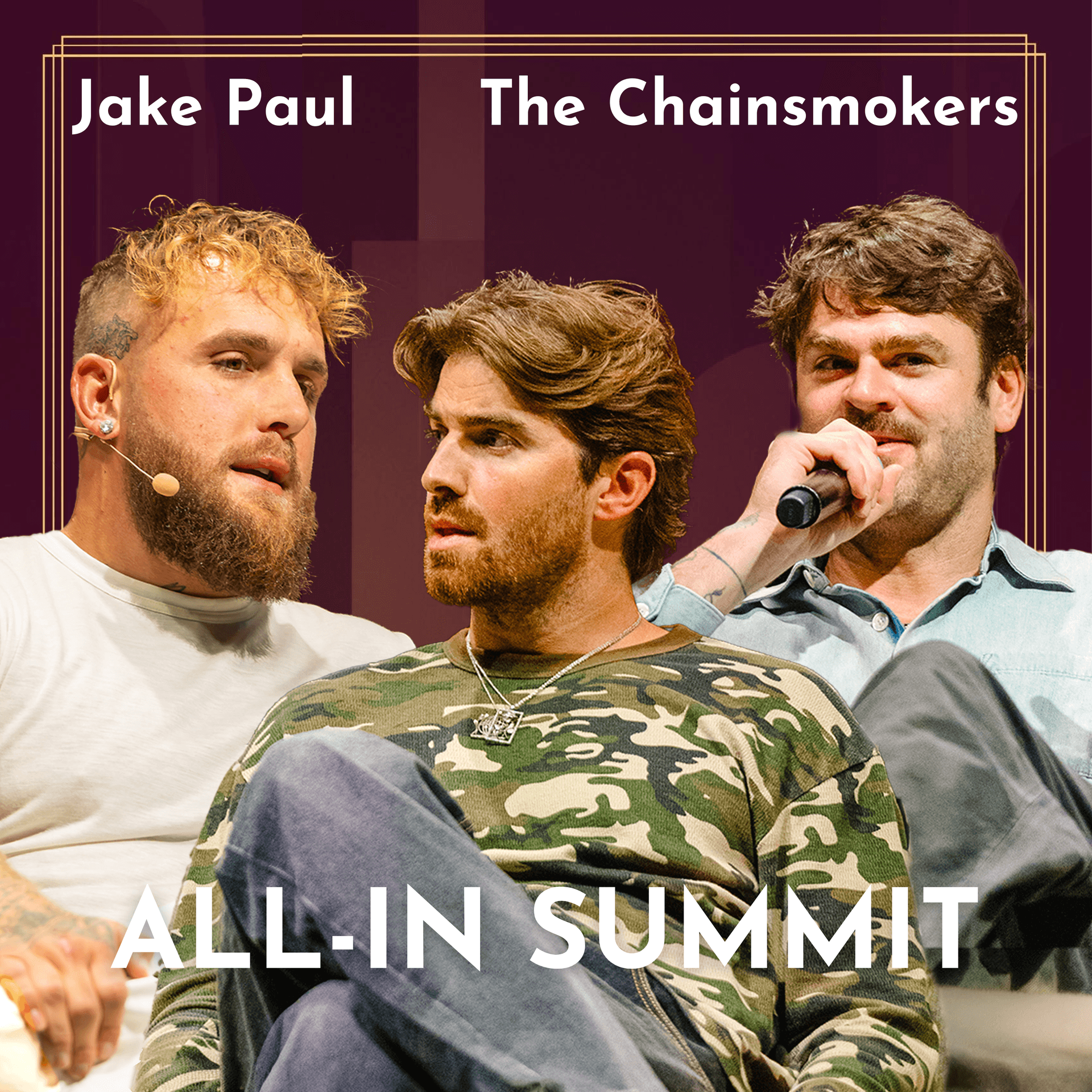
Podcast Episode Summary: Epstein Files Flop, State of the Market, Autonomous Robots, Trump's Gold Card, Friedberg on Jeopardy
Episode Overview In this episode of *All-In with Chamath, Jason, Sacks & Friedberg*, the hosts engage in a lively discussion covering various topics including the Epstein files release, advancements in autonomous robots, insights from David Friedberg’s recent appearance on Celebrity Jeopardy, and the current state of the market. They also discuss Trump’s “Gold Card” initiative and the implications of changing accreditation laws for investors.
Key Discussions
- Epstein Files Release
- Initial Reaction: The first release of documents related to Jeffrey Epstein was deemed underwhelming.
- Controversy: The discussion revolves around the FBI's discretion in withholding information and the implications regarding potential conspiracy theories surrounding the case.
- Key Question: What is the FBI's responsibility in disclosing information tied to ongoing investigations?
- David Friedberg on Celebrity Jeopardy
- Performance Recap: Friedberg shares his experience on Celebrity Jeopardy, highlighting his preparation and performance.
- Winning Moment: He recalls a pivotal moment during the game when he answered a geography question correctly, which led to his victory.
- Insight: The hosts discuss the pressures associated with competing on a high-stakes trivia game show and how it compares to poker.
- State of Autonomous Robots
- Current Landscape: The discussion emphasizes the advancements in robotic technology and their increasing integration into everyday life.
- Challenges: Despite positive strides, limitations in dexterity and AI capabilities pose challenges for broader adoption in home environments.
- Future Predictions: The hosts speculate on the timeline for when robotic assistants will become common in households.
- Comparing Stripe and Adyen Annual Reports
- Financial Performance: Insights from Stripe and Adyen’s annual reports reveal competitive growth rates and profitability.
- Ecosystem Value: Stripe's ecosystem and the potential for network effects are highlighted as a key differentiator in valuation.
- Impact of Stablecoins: Discussion on the rising significance of stablecoins in payments and the implications for financial infrastructure.
- Current Market State
- Market Performance: The episode reviews the performance of major indices (S&P 500 and NASDAQ) and assesses the health of tech stocks amidst economic uncertainty.
- Economic Indicators: Discussion includes unemployment rates, inflation data, and the impact of government policies on economic growth.
- Market Predictions: The hosts express concern over potential market corrections and the implications of Trump’s policies on tariffs and taxes.
- Trump's Gold Card
- Proposal Overview: Trump’s initiative involves selling citizenship for $5 million, which is seen as a potential revenue opportunity and a means to attract talent.
- Market Predictions: The hosts debate how many of these “Gold Cards” may be sold and the implications of citizenship sales on the economy.
- Changes in Accreditation Laws
- Sophisticated Investor Test: There are discussions surrounding changes to the accreditation laws, which dictate who can invest in certain financial products.
- Impact on Access: Potential benefits for more people to engage in investing are discussed, along with the risks of increased scams in a less regulated environment.
- USPS and Bezos’s Influence
- USPS Reformation: Plans by Trump to restructure USPS are debated, with suggestions for cutting inefficiencies and potential cost savings.
- Bezos’s Vision for WaPo: Bezos’s new direction for the Washington Post to focus more on free markets and personal liberties is discussed, with mixed opinions on the potential impact.
Key Takeaways
- The Epstein files release not only raises questions about transparency but also the FBI's role in information dissemination.
- Friedberg's Jeopardy experience illustrates public perception of intelligence and performance pressure in competitive environments.
- Robotic technology continues to evolve, but real-world application in homes is still a few years away.
- Financial reports from Stripe and Adyen underscore the competitive landscape in fintech, particularly around network effects and stablecoin adoption.
- Economic uncertainties coupled with government policy changes create a complex market environment where predictions are increasingly challenging.
- The Trump Gold Card initiative reflects a novel approach to immigration and talent acquisition, though its practical implications remain to be seen.
- Changes in investment accreditation laws could democratize access but might also lead to increased risks for less informed investors.
Conclusion The episode encapsulates a breadth of contemporary issues, from economic policies to advancements in technology, all viewed through the lens of the hosts' robust discussion style. The interplay between personal anecdotes and serious economic analysis keeps the audience engaged while delivering insights on various topics.
Written by AI. May contain mistakes. Listen to the episode to check what was said.
Transcript
Automatic transcript. May contain errors.0:00All right, everybody, welcome back to the all -in podcast R. Incredible. Comedian celebrity guest got sick at the last minute today and didn't make it. We won't say who it is, but my Lord, when he comes on this show, you are going to laugh your ass off because he's awesome. I like the comedians. I think that their takes on society and culture are pretty interesting. I think do you think it will work in our form and what's your prediction here? We've never done it. I think the quality of the show is best when it's less just people doing takes. And it's more the back and forth banter. So yeah, That's what I'm always trying to do is get the ball to go around the horn and get some real dialogue going here.
0:35But sometimes people feel passionate with me again this week on the All in Podcast, David Freyberg and Shamaaf Pollyhopatiyah. My name is Jason Callacanas. You can follow me on x .com slash Jason. He's at Shamaaf and he is. Why can't I make fun of you in the replies on Twitter anymore? Oh, because it's a very good question. No, what I did was. My replies were so many Magal lunatics and crypto scams that I had no choice but to like, I had to do something because I would have like 500 replies to every single one and I put it on subscription and I said if you wanna reply, it's $3 a month now. A 1 ,500 lunatics signed up.
1:18So I did, so I could throw it. Just so you could throw me and I thank you for the $3 every month. It's all going to chair.
1:41You want to intro the show or get some warm -up banter about Jeopardy? Or do you want to go right into Amsterdam? The letter from Pam to Cash is crazy. Dear Director Patel, before you came into office, I requested the full and complete files related to Jeffrey Epstein. In response to this request, I received approximately 200 pages of documents. Late yesterday, I learned from a source that the FBI field office in New York was in possession of thousands of of documents related to the investigation and indictment of Epstein. Despite my repeated requests, the FBI never disclosed the existence of these files.
2:22When you and I spoke yesterday, you were just as surprised as I was to learn this new information. By 8 a .m. tomorrow, February 28th, the FBI will deliver the full and complete Epstein files to my office, regardless of how such information was obtained. There will be no withholding or limitations to my or your access. My question to you guys is, do you think that this is much to do about nothing? And then that the FBI needs to have the discretion to be able to say no? Or do you think this is one of these things where you're not allowed to do what they're doing? It's above my pay rent. I don't know the law of like FBI investigations.
3:05And then what if they investigated a bunch of people, they were not guilty. and then they were in the files, maybe they need to look at them before they do a document up. Maybe there's informants in there. I'm trying to think of what happened with like the whistleblower papers from this is something different. This doesn't say let's negotiate what we should release together so that we protect people. This says we're just going to lie to you. We're going to lie to you and tell you that, you know, here's this. That's our side to the story. Maybe they have another side. Maybe the FBI has a different side, I don't have to hear from them, right?
3:39Is this just like people are intrigued by the gossip angle of it? Or is it because they want to prosecute people for hurting people? Or is it because they want to cancel people? And this is a nice opportunity to cancel like what's what's what's the this I think that's an interesting question because this thing's been going on for 20 years. I think this actually has more to do with conspiracy. There is in now the deep state like is there a deep state cover up is the question. I think the question is if the chain of command requests something, are you allowed to withhold it? Because you've decided in your own judgment that the person above you doesn't deserve to know it.
4:16I think that's an important question. Yeah, the thing about the FBI is the FBI can withhold information from the president, from other folks. If there's an ongoing investigation, sources are like secret and there would be in jeopardy and national security concerns. I'm reading here. I'm very excited to see these next two days, I told. Listen, it's a breaking news story that we'll have more to say about it next week when we get the facts. All right. It has been an amazing 24 hours for my guy, David Friedberg. I am so proud of you. If people don't know, David Friedberg was on. I'm sorry, celebrity jeopardy this week.
4:54And he had a great performance. I can't say that. I can't say it. You're right. Blip it out, blip it out. So you were on celebrity quote unquote, jeopardy. Show us how much of a bar there is. The bar was pretty low there. They're now inviting podcasters, apparently. But jeopardy's watched by like 10 million people every episode, right? Yeah, they have like a huge audience on regular jeopardy. I think it's like 9 million a night or something or 7, 7, 9 million a night. Yeah. But I think it's celebrity jeopardy because it's like later. It's got a smaller audience. but it's still like a couple million people watch this thing, which is crazy.
5:30So you were on and for the last four or five months, we've all had to like buy our tongues and you've been in a full -scale I don't want to say panic, but you've been hand -ranging about your performance and spoiler alert Freeberg won not only did he win? You fucking crushed it. I was like watching this. This was like better than watching the World Series a poker or a Nick's Warriors game for me. Here is my favorite moment, the all -in call. As I attribute, he gets the Daily Double and... I'm gonna go all in, Ken. Oh, yeah. Okay. How dare you? 12 ,800 for Dave, but you have to be correct in African geography.
6:14Known for its snows, this Tanzanian peak is both Africa's highest and the world's tallest freestanding mountain. What is Mount Kilimanjaro? That is correct. What did you think of that moment, Shema? He goes, and these people, they think that they're gonna get freeberg by giving him a question about Africa, not knowing that he's African -American.
6:39Honestly, like a six -year -old. You guys wanna hear something crazy? So the next year old should know that category. No, that category. So that category, African geography. I was at dinner the night before with our friend, Zander and his wife. Uh -huh. And we started talking about their son was taking a quiz on African geography and they started giving me all the questions. And we were actually quizzing at dinner the night before on African geography. It was like a slum dog millionaire moment. And I was like in my head, I'm like, there's no way that's real that that actually happened. We literally were just talking about African geography at dinner the night before.
7:12And I'm like, the judges had to have been listening or something. But would you were nervous? You talked about being nervous and your techniques are friend Jason Coon. But we actually are lucky enough to play with one serious professional poker player in our game. Jason Coon comes to the game and he comes to a bit. What did he, what was his advice to you? Well, I was a little wound up because I watched Jeopardy my whole, like since I was a kid, right? I mean, I don't watch it regularly, but a couple months ago, I was kind of watching the show. I kind of reached out and was like, hey, you know, Do you guys know anyone on the show and so I got like hooked up so And I'm like wait, I'm really going on.
7:52That's awesome. Okay, and they're like you're going on celebrity jeopardy So I watched the celebrity jeopardy episodes from last season and I figured I could get like 60 % of the answers but You get there and you don't realize How hard it is to buzz in in time because if you buzz before the light turns on I heard this over and over or how does it work? Because you bought, I understand, an actual buzzer to practice with. Am I correct? You did this? Well, yeah, I bought this cheap buzzer on Amazon, the presser, but it didn't do anything. So I'm watching the TV at home, watching old celebrity Jeopardy episodes from last year.
8:29And I'm like, oh, buzz in, buzz in. But the problem is when you're there, you don't have a lot of buzz until the light comes on. And if you buzz too early, you get locked out for a quarter second. And that quarter second makes a huge difference. So I was actually behind the people I was against most of the show I felt when I was buzzing in I'm like I know the answer and I kept missing I kept missing so I still did okay obviously but Wait a second let me ask you a question about that buzzing thing a like goes on when does the like go on when the question is finished When the after they show they show the question on a huge screen so the whole screen gives you the question right away So you can read ahead so you can read ahead just read the whole thing boom Yeah, then you have to wait for Ken Jennings to finish as soon as he finishes a and non -seating the last syllable of the last word, the light turns on.
9:14But here's what I found out. There is a delay of about 150 to 200 milliseconds, different between your eyes and your ears. You actually hear stuff before you see stuff, and which is really interesting, like for your brain to register it. And people have different delays. But for me, I'm like waiting for the light, and then I buzz in, and it's too late, because the people next to me have got this. So speed of sound, versus speed. Anyway, I was a little wound up going into this, I called Jason Koon, because I realized there's no upside. By the time I show up, I'm like, I'm gonna look like an absolute idiot for saying some stupid stuff, getting answers wrong, which of course everyone texted me last night, being like, how'd you miss, who's yours?
9:51How'd you miss this? All right, here we go. Since you're bringing up the big mess. Answer the question. Hey, David, have a look. Oh man, you get the daily download. 16 ,000. Crushing, crushing their soul. Crushing their soul. Not my best category. I'll go 4 ,000. Look, even 20 ,000 if you're a climactic moments in sports movies. Jimmy Chitwood buries a jumper from the top of the key to win the Hickory Huskers, the Indiana State Championship. What is Hoops? Sorry, I know. What am I doing? You were right. I'm so embarrassed of who you are watching. I can't watch. Hoop dream? Dude, I Hoosers. I know.
10:30Hoosers, I know. I mean, come on. Jean Hathman, he died today. And no one sent me a text thing like, Oh, I can't believe you got that answer. Great job. Everyone just sends the text. How did you not get? Who is yours? How did you not get cream? It's always like, oh, I knew the answer. You're needing, and I realized this. I realized it's different ones. And I realized as I'm walking a jeopardy, I'm like, you know what? There's no upside. Because what will happen is everyone will just call you an idiot for the things you've met. Which is, yeah. And let's face it, you're the Sultan of science. You went to an explanation.
10:59There's an explanation. And you were at Google. So there's an expectation. You should run these people over. You did run them over for a minute. who know who you're facing in the semi -final? We don't know until all the quarter finals are over. And that'll be in the next couple of weeks here. When you see a category come up, like the Hoosiers won, right? I think that one was about sports movies, right? Yeah, that was sports movies like big moments. So don't you, when you see sports movies in your head catalog, probable answers like Rudy and field of dreams and just, yeah. So you had all those ready to go.
11:32But dude, you don't understand that? Like look, I'm not a guy who gets very nervous. I don't get like stage fright or like wound up, but for jeopardy, it's so weird. You're up there and you can't focus or concentrate like you normally can. My brain had these like weird brain parts where I'm like, I know the answer why isn't it coming out? Or I buzzed in and I said like Beethoven instead of Debussy and I'm like, why did that come out? For Claire DeLoon, you don't have to, I mean, dude, don't get me started. So there's weird stuff that happens up there that's really hard to explain. And then you're angry about the buzzing You can't buzz in in time and you're on the set of jeopardy and it's like oh my god I'm actually on the set of jeopardy.
12:07It's also real and you're like watch Are there are there are there it's very it's very overwhelming yeah an audience yes There is an audience. Yeah, there's a lot of audience like a hundred people there about a hundred people Yeah, yeah, wow, that's nice. Yeah, before you go on the show they have you do a practice round in front of the audience Just so you get everyone gets used to it And I deliberately answered wrong and I was like acting like an idiot acting like I couldn't buzz and acting like I didn't know the level dumb I tried to be like oh he leveled I tried to be a little so Diabolically, yeah, I don't really know what I'm doing here Oh Sure, yeah, and then I came out swinging and I felt like I have to kind of get aggressive out the gate And you I've done that before in a bar fight once I was like guys guys.
12:50We don't need to get in a fight That it's a clock thing anyway. We're so proud of you You won, you trounce them. I have to say, the one for the humane society, the United States, all the money went to charity, the humane side of the US. How much did you make for them in the end? If you win the whole tournament, it's a million dollars. And then I think... A lot of top food. As the winner of your charity gets more and the loser's their charity gets less, but it's a fixed amount. It's like 30 ,000 or 50 ,000 or something like that. Nice. I think they should put the three of us on together. No more episode.
13:18That would be crazy. Oh my god. I would wreck your ass. I would wreck your ass. No, you would not. I will play you heads up, jeopardy anytime for months. Let's play poker. Yeah, I say we play poker. We'll play for all of the all in profits. I'll give you two retards, two extra chips that can let's see what happens. Oh my God, it. That sounds so compelling. Would you do it? Actually, check out would you do that? Would you do it? All the profits. All the profits. I do it for all the profits, but I would carve out 25 % of the profits for a four -way tournament that was televised live. If we could get two million and sponsors, then we'd be up no matter what Drift Drifting I'm thinking like a business the whole business man I want to do this so that I inflict pain on one of you or both what gives Chimoff happiness.
14:04It's hurting us That's exactly that's his love language He loves Love like we just hurting the people who love him I like putting you to the test and I like to see you to break okay This makes him feel good. Anyway, did you guys see Brett Atcox? No, what did you say? Friend of the pod Brett Atcox, who's a CEO and founder of FIGUR. He just announced today that he's moved his timelines up by two years. He's going to use beta testing robots in the home by the middle to end of this year. That's crazy. Crazy. Crazy. I mean, investor in his company. I don't talk about my investments. But in this case, but in this case, no, I'm not an investor.
14:49investor. So we're not talking a book here. I do think Optimus in this figure and the other, this is about a dozen of these doing it credibly. If they can make these for watch a month, 20 grand, when do you think it becomes something a middle class household, you know, dual income household would buy one of these five years from now, 10 years from now. How, how, how, how, how long could they be? Well, I think the issue is bounded by two things. One is that I'm not sure that the generalized AI is good enough yet. And what he did was he had a deal with OpenAI, which he pretty publicly canceled a few weeks ago, and he announced his own model.
15:32And I don't know the details of it to know whether he rolled it himself or this is just like taking some open source base model and iterating from it. But I think the model is not perfect yet to be general purpose. That's one. And then the second is a practical issue with the robots, which is that the actuators themselves are good, but they're not great. And you can see it in the demo where it's an incredible demo because it shows the value and the power of the model where there's sort of this master slave orientation that has to happen where one model is actually doing most of the computation and the second model and the second robot is then feeding off of it.
16:14And the demo that they do, Nick, you can probably find the video, is of them sorting a bag of groceries for the first time, totally unsupervised. It's an incredibly cool demo. It's a cool demo. The thing that you notice, though, is that the actuators are good, they're not great. And so the physical dexterity is still relatively limited. And I think that that doesn't allow these robots to be super functional in the next couple of years. But when they get that figured out, then I think it could be really useful because if you have a robot like this that could sort the groceries, make food, do the laundry, mow the lawn, so to speak, it just requires a level of dexterity that's not yet totally possible.
16:53But see in this example what you're seeing are the two robots basically figuring out how to communicate semantically between the robots. And that's incredibly powerful. And it's yet another sort of breakthrough that we need. So I don't know, we're probably like a couple years away, but see, look at the Dixterity there. He's taking the peppered farms and feels like he's crushing the peppered farms or she or whatever you call this robot. They, they, please don't misgender the robot. But it's, it's really incredible. They're figuring the coolest part of the stem, oh, by the way, which I loved was they take an apple and then the second robot figures out that it should go in the fruit bowl.
17:28Pushes the fruit bowl to the first robot and then the first one. Oh, that's cool. There it is. But that level of semantic awareness and understanding between two models working dependently is very cool. Look at that. That's very cool. They're collaborating with each other. It makes total sense. I can tell you here on the ranch, I would love to have an all -purpose robot going out there and using the weed whacker and trimming the bushes and the hedges and getting me wood and collecting chicken eggs. There's a million things they could do on a ranch and be immediately applicable for ranch work. And if they are 24 hours a day, it doesn't matter if they go slow.
18:05But I think this is the category of people who are sleeping on. And I don't know who on our prediction show said, this will be the year of robots, but it's been this is the year of robots for 30 years in the industry and does feel like this is it. free burger, you stick it with your prediction, I assume. Yeah. I am. Yeah. I think it's also, it's not just this kind of dexterous automation, but I do think drones, autonomous vehicles, I put them all in the same category, whether there's some, it's some combination of mechanical response to a machine vision system that I think has become like accelerated this year.
18:48You need a lot of rare earths to make robots. Yeah, where could we ever get those from? Does anybody owe us a little money? Is anybody behind on their payments? Maybe the VIG could be a little taste. I don't know if you guys have seen this, but there was a company in the 90s that was all the rage called Segway. They were gonna absolutely change cities and everything and they never did. But it was basically like a scooter you could walk on and it had a balancing kind of system to it, but they made robots and here they're making these lawn mowers now. And these lawn mowers are really like cheap.
19:19They're a thousand bucks and they work here in Austin. I have seen two or three of these on people's lawns. This could be like, you know, what was the one that you did in your house, Rumba? So your point free bird, there'll be purpose driven ones to deliver you a burrito, do your lawn, et cetera. And I've Rumba's like three or four hundred bucks, I think. And this thing's a thousand bucks. Man, I do think it's a lot harder to create one of these general purpose systems and automation than create vertically or kind of utility -specific automation system. So a device that just does one thing, delivers something to you in the air or drives your food to you or loads and unloads your dishes.
20:02I'm not sure if that's the whole idea of the humanoid is, it's ambitious. Yeah, it is a general purpose device and it makes a Technically very hard roadmap. I got to imagine some of the bulldozers out there are also now becoming remote controlled So you can get like a bulldozer that you have to put in a dangerous situation and their remote control And they're gonna have AI so I got pitched on a startup one time that was gonna go up into Tahoe Hills and allow Humans with remote controls to drive Jamal foothold bulldozers and make firepants So imagine some fire breaks out, you send in or helicopter in the bulldozer, no human in it.
20:42Just got a 5G connection or a star lane connection and zip, zip, zip. You're doing fire roads in the middle of the smoke dense area. It's going to be really interesting when these things get dialed in and they're getting done. I'm going to ask Brett to be a beta alpha tester of one of these robots in my house and then we'll go and do it. We'll do a segment. I would be great. Excuse me. Robot. Can I get some more morals? else? Too sweet. More else. Let's talk about Stripe. I thought the report was really good. We had the Collison brothers on last week. They crushed it, great job to them. And then here's a quick summary.
21:16So in terms of processing volume, adgen, 1 .34 trillion, Stripe at 1 .4 trillion. I mean, that's incredible that they're both in the almost the same exact space. One's growing 33 % Stripes growing 38 % valuation. Adgen 56, their public Stripe private 91 .5 I guess that's the private market premium. Employee account, very interesting here, since we've been talking about Jamie Dimon's Ramp last week. Adyen 4 .3 ,000, Stripe over 8 ,000. And both are profitable. Adyen's got a billy in EBITDA, which is extraordinary, but Stripe has a higher margin, which are taken on a tell in two cities, sir. I thought there was three takeaways.
21:57The first takeaway for me was the value of Stripe's ecosystem is probably underappreciated. I think Patrick mentioned it, but he just kind of said it as a passing fact and none of us picked up on it. But in the report, they talk about all the additional products that they're able to build around core payments. And one of them is the billing product. It's half a billion dollars a year of ARR. That's just incredible. And I think if they figure out network effects inside of the Stripe ecosystem, that's interesting. So that's first, which is the hub and spoke of payments being at the center, but all of these other incremental services.
22:31I think that that's really interesting and under -appreciated for Stripe. That probably speaks to why there's such a difference in valuation because Adyen has less of that ecosystem, or at least it's not nearly as well described, maybe as Stripes is. That's number one. Second is I go back to what I've been saying for a while now, but the rise of these stablecoins is really interesting. The stablecoin infrastructure globally, the push for a bunch of these national governments to embrace them inside of India, inside of Brazil, slowly it's happening inside of the United States. So I think that that was really interesting.
23:09And then the third takeaway, Nick, I sent you this tweet was just the nature of the AI ecosystem relative to the rest of SaaS. And what this is was from Stripes report which showed the time to get to 5 million of annualized revenue. And the average SaaS company took 37 months. And by 2024, the top 100 AI companies got there in 24 months. I mean, that's efficiency in the market, right? I mean, that's why we're all looking at AI saying we could see a lot of our economic issues come from growth and the growth is very clear. You can do more with less and you can generate more revenue with AI. So it's pretty clear the trend, yeah, Chema?
23:57I think it's really clear. I mean, I can give you a little factoid from 80, 90, you know, we got to 5 million of revenue in three months. Hmm. Really crazy. a couple of miles in area, a couple of big ones. Yeah. And so it's just a very different selling motion than I've historically seen where the ROI is just so obvious in terms of the efficiency that it creates. And the cost savings you can generate relative to traditional enterprise software. It's a more straightforward sale. The ROI is clearer. The revenue is bigger. It happens faster. Yeah. So there's also a standard of you're seeing it, but there's a sense of urgency in the market right now people feel Like they have to adopt this new technology fast because there's competition Because the gains are so clear because in a slowing economy.
24:50This is maybe a way to accelerate revenue I'll be honest with you at least with the our 80 90 customers. I haven't seen that yet. You know, we're in I don't know eight or nine segments of the economy big segments of the economy It's more still about the frustration that they have with what I would call the software industrial complex. There's a big, and you can see it with what's happening to Salesforce and other big companies is that these renewal cycles are getting harder and harder to justify. And so people are willing to take some bets and see if there are different ways in dealing with this problem.
Read the full transcript
25:26And I think that's the real opportunity is if you can find a repeatable pattern to help these companies replace that big software spend that they have, that scales really quickly. And the only way to do that really is using AI in two ways. AI inside the machinery of what you're using yourself to make the things, right? So those are things like cursor and whatnot to just fully accelerate. And then AI within some very specific products that the customers actually need that also create efficiency. So there's two different places, but the problem with using it in both of these two different places is in the first one You can manage the errors.
26:09It's very it's very straightforward at the end of the day code either compiles or it doesn't So even if you're using something like cursor, which is an incredible product There are no errors at the end of it because the thing actually works or it doesn't The problem is actually when you use these models in actual work And if you're in a regulated environment, particularly, it gets very complicated because if you generate a hallucination in a healthcare business and it causes a patient record to be incorrect, there are huge consequences there. And that we haven't solved yet. That exists in regulated finance.
26:43It exists when you're dealing with real estate and construction. It exists when you're dealing with power. It exists in aerospace, right? imagine if an LLM helps you design a plane better. But if there's a tolerance error and that's not well understood, that could have, you know, horrific consequences downstream. So we're working with all these people to try to figure it out. It's a very difficult technical challenge. But I just thought the Stripe Gator was really interesting because it validates what we're seeing, which is the growth in this industry is it's not like anything I've ever seen before.
27:15Back to the stable coins, here's a look at Tether. There are $143 billion in Tethers out there, who knows what's reality there. They've got a little bit of a shaky history. And then USDC, Jeremy O 'Lare's, is that $56 billion already? And that's only been in existence since, like, really, an earnest, like, 2021. I do think Stripes' main business could be for sitting here in five years, Tremoth. could be sitting on $300 billion in getting whatever it is, 3, 4, or 5 % on some coupon, right? They could be making $10, $20 billion in pure profit if they have a stable coin out there that gets widely adopted.
27:57Yeah, and I think the best way for Stripe to actually do this is just to build it and to actually facilitate payments between existing Stripe customers because again, it's sort of what I said last week. These are all ultimately ledger entries, and I think that the more that you can Commodityize these things to be a simple ledger entry inside of two systems of record at two companies That's a much better product feature. I think Stripe has the scale to do that now and to your point They could have an enormous stablecoin business at the same time. They're probably better off just Embracing what's already been built it may be disruptive to try to launch yet another one.
28:35I don't know They bought that other company so I got to think they'll launch their own but bridges the facilitation It's the rails, yeah, but I mean, I think, you know, this is where brand comes in. If you have a trusted brand amongst developers and there's three choices, are they going to take tether, which people go, ah, maybe it's a little sorted, it's offshore, I got some challenges there. I'm going to use USDC. Okay, I haven't heard of it, but okay, they sound interesting. Oh, I'm going to go right to stripe. It's kind of like the IBM, you know, or Microsoft of payments. Nobody gets fired for picking stripe, I would say.
29:09So not anymore, not anymore. Right, let's go through the market update here. A lot of people are trying to Figure out are we going to have a market collapse a boom? Let's just look at some of the numbers and have a first principle discussion here. S &P up almost 2 % So far this year Nasdaq 100 flat down up 3 % so pretty good start to the year in those index numbers But if you look at the max 7 some of them have some had some serious compression and Tesla down 27%. I do think that they had a big Trump Elon spike. Google down 10%, Amazon nine, Microsoft about 8 % MetaApple in video, or up to varying degrees.
29:51And then coming into our taping this week, but going down 15 % over the last month, that too got the Trump bump. And then adding to all this confusion, unemployment is still at historic woes, where we're at close to 4%, And if you look at the deportations that were promised, they've been modest to start. Obviously they're just getting started. They need some money to deport folks, but they've only been deporting 500 people to a thousand a day. And we haven't heard many numbers about the last couple of weeks as Doge has been sort of the center of attention. So they'd have to get to two or three thousand people a day to have low millions, let's say, Chimoff, two or three million people deported for it to have any impact on unemployment.
30:34Finally, Act 3, and then we'll get everybody's feedback on this. CPI, up 3 % year over year, we had to dip down to that nice 2 % handle. And now it's back a little bit. If you remember in September, it bought them data around 2 .4 % just in time for the election. Interesting how that happened. That same month, the Fed cut 50 Bips, then it cut another 25 in December. And since inflation's been growing, modestly but steadily, not insignificantly. So put it all together, Tremoth, and what do you think and then Fribart World? I tend to be sort of in the Stevie Cohen camp. It's not like the bottom is going to fall out, but there's like a lot of room for concern.
31:14I guess is the best way to put it. Nick, I don't know if you can find that clip that at FII, but he had a very precise summary of how he saw the world. And I frankly just agreed with everything that he was saying. So he probably can say it better than I. When you take a brew of tariffs on top of that we have slowing immigration and in addition now you have Doge I mean that's a stereotype we think growth is going to slow to 1 .5 % from 2 .5 % in the second half and so I'm actually pretty negative for the first time in a while and it may only last a year or so but it's definitely I think the best gains have been had and wouldn't surprise me see a and if you're correct.
31:56I think a couple of very specific thoughts. The first is that you're starting to see this compression of the Mag 7 towards everybody else. So this is the 4pe of these guys. And so what you're starting to see is everybody else starting to capture back some of the ground. People are processing what the real upside of the Mag 7 is. Now if you go to the other chart, what this starts to show you though is that Mag 7 is really priced to perfection. And so you have to believe that the world kind of stays the way that it is. Otherwise, you're going to have some amount of mean reversion. So I think the stock market on the margin is a little expensive and not particularly that attractive.
32:42Second, the bond market has basically said, okay, we are going to give you credit that doge is going to work and that tear of so going to work. So we've had some pretty meaningful compression in the 10 year, which I think is really interesting. I think it's very good for Bessent and for Trump. And I think I've mentioned this before, but we got to go in and refinance $10 trillion in the next six months. So you could see this thing maybe even get under 4 % if we get a good string of data. The real problem, I think, though, is that if you look back and say, what does this look like? The example that I would give you guys is in 2010 in the United Kingdom, the deficit as a percentage of GDP was 10%.
33:33And the UK government embarked on a multi -year austerity plan. And they said, we're going to get the deficit as a percentage of GDP back in line. And ultimately by 2016 it got to 3%, which is where we are trying to get to. And right now, we're a little bit under 7%, we're trying to get it to 3%. So it's interesting to ask what happened. And there, the bond market gave the UK government a ton of credit, so they kept rates relatively low, and they brought them back from where they were. That seems like what's happening here. The stock market, the stock market kind of went sideways to a little bit down.
34:15Let's see what happens here. But the real big thing is in the UK, all of this created tremendous dissatisfaction and you had Brexit. So I think the question that I have is if we go through a prolonged austerity program and the frustration amongst the American and populist builds, what's the release valve? There the release valve was voting to leave the EU. Here, it's not quite, it's not obvious to me what a release valve is. Well, electing Trump was step one, and I don't know if there's something even more populist than Trump. I think he is the mechanism of implementing the austerity. I think people want this austerity.
34:56Just a question is, what happens when the actual byproducts of that austerity are felt by people for six or seven years? I don't know what the answer is. Certainly, people are in favor of doge and downsizing the government. More than I think anybody anticipated, people are, the statistics are showing and the polls are showing freeberg that. It's incredibly popular. When you look at this, I don't want to say conflicting, but it's a lot of different conflicting data here as to what's going on. What do you see in the numbers here? What does your instinct tell you? because part of this, I think, is getting used to Trump again, right?
35:34Like he says a lot of stuff. Some of them are scary. Some of them are just trolling and everything in between. So what are your thoughts here? Or markets just adjusting to the new team back in town? The big question in the Trump actions is around tariffs versus the tax cuts that are being proposed versus the spending cuts. Those are kind of the three levers. And there's a very serious sensitivity to the economic outlook for growth and inflation as a function of how far each of those three levers are pulled and how they relate to each other. Is Trump actually going to pull forward the cuts that he has talked about or that Elon's talked about?
36:18How real is that? There's a whole spectrum of opinions on that right now. On one end, you're looking at the House and the Senate reconciliation process for the budget proposals that they've put forth. And you're going to scratch your head and be like, are we really cutting enough relative to what the economists and others are telling us we need to do? Meanwhile, you've got Elon and Prom saying, Hey, we're cutting, we're cutting, we're saving, we're going to get to a trillion dollars a year. But that's not showing up necessarily in the budget. Is it showing up in the actions out of DOGE, TBD? So there's a whole spectrum of opinions on the cuts on the tariff side.
36:55There's a 18 something was entirely tariff driven in our federal governments revenue. And it was a way of being kind of protectionary to the industry here. And then over time, the tariffs rates came down and down as we introduced an income tax, which started I think at 3 % right after the civil war and went to 5 % for high income earners. And then obviously in the 20th century, that's totally flipped. Now we have like no tariffs and a 50 % income tax for the highest bracket. So can we actually revert back to a tariff driven income model for the federal government? And what is the economic effect on growth for corporate America in that world where taxes get cut for the companies and for individuals?
37:37But we make all of our money from global trade. Does this the increase cost of global trade hurt companies more than the benefit of paying fewer taxes, lower taxes? That's the big economic argument that's underway right now. And it's funny. It kind of seems to follow along political lines, believe it or not, much like everything else. You know, like economists that are democratic aligned are democratic lines. I agree with that. Yeah, exactly. And so the Democrat -aligned economists will say the tariffs don't make sense. They reduce economic growth. They have a negative effect. We shouldn't be doing that.
38:15And then the Republican -aligned economists are saying the tax cuts will more than make up for the reduction from the tariffs. And that's the big, unknown right now. So I would say that the spending cuts, wide spectrum, the income tax cuts, big spectrum on what's actually going to get done here. And then the tariffs, big spectrum on how far is it going to go? And so those three things, you've got like three very wide ranges of things that all interplay, that ultimately determine inflation, economic growth, government deficits over the next decade, and we don't really have a clear picture yet of how those three things interplay.
38:52And they're all being hotly debated, and by the way, there's high variability. They're changing day to day. Every day, Trump's like, this tariff, that tariff yesterday, there's a whole bunch of confusion on tariffs. Today, there's a whole bunch of like discussion on how far the tax cut extension's gonna go in the reconciliation process and on and on and on. So, TBD. I encourage people to use my 72 hour rule and look out what happens 72 hours after Trump says something spicy because a lot of times he's just, he says a lot of things and you got to wait. It's not just Trump. I'll say like, yeah, but the House and the Senate, they both put forward their budgets, right?
39:27And now they go through this reconciliation process. And there's a lot in there that leaves a lot to be desired. If you're an absolute fiscal conservative and you're trying to get us to 3 % deficit as a percentage GDP, you're like, wait a second, does this do enough? And the tax cuts are 4 .5 trillion over 10 years. So it's approximately 450 billion a year. If you're trying to catch up, how are we doing tax cuts? But Jake, I'll remember, you can't make those statements as fact because a lot of those over 10 -year projections are projections based on someone's estimate of the economic effect of the tax cuts.
40:05So there's also a lot of debate on that, which is, hey, some people are saying, if we make these tax cuts, the economy will grow faster than this particular, the CBO economists will estimate. The CBO economists are trying to be conservative. So there's a whole lot of debate going on right now on like, how much is this really going to cost? And people are like, oh my God, Trump is talking about raising our deficit so much over the next decade. But then there's a different point of view which is wait a second if you assume that the economy will grow because of these cuts Then that's actually not true.
40:34And then there's all these wild cards around the golden visa card Yeah, we're about to get to that. Yeah. Are the tariffs gonna be a trillion a year? Are they gonna be two trillion dollars a revenue or no one really? That's just a negotiating position Which is a negotiate so no one knows. Yeah, no one knows so that's my I think the main point is this This administration is all over the place the cuts are great. Which, Bob's right, the bond market tells you a lot. The fact that the tenure was a few false back. It's peaked at 5 % two weeks before the election. And then it peaked again the second week of January at 4 .78%.
41:08Now it's down to 4 .26 % today. So it's come down by a full half a point in the last month, which tells you a lot about the expectations on inflation and growth over the next decade. And it's actually a reasonable like sign that we don't think there's going to be rampant inflation over the next decade Based on some of the policy decisions and actions that are being taken by this administration So I would say there's some indication that if if you were to kind of Try and decode the enigma of the three things that we talked about are going on You know, it's generally kind of deflationary to some extent or it's not influx Are you optimistic just net net Dave your optimistic about this next four -year period or not?
41:47I'm honestly pretty uncertain and I'm pretty unhappy with both the Senate and the House budgets personally. I don't think there's too many cuts. Yeah, I don't need enough action in there. I don't think that and it's weird because you hear Elon talking to all the members of the cabinet and he's pretty clear cut. Hey, we've got to save this government is in a debt spiral. We have to fix this problem. Yadda Yada. And then it's sort of like business as usual, which like I said, when we were in DC, that was exactly my observation for every Senator representative member of Congress that we that I talked to at a cocktail party, it was the same bullsh**.
42:19It was like, I gotta get this for my people. That's the goal. And we've turned this federated republic into a whole bunch of elected representatives showing up in DC, scrambling and grabbing money for their constituents. That's what they were hired and elected to do. And it's a really unfortunate circumstance that no one looks out for the better interests of the US dollar over time and says, you know what, we've actually got a limitation on us. And that limitation should be less than 3 % deficit to GDP. That's our budget. That's our max budget and start from there and then do a build up. Yeah.
42:49Yeah. I mean Chimath, I think collective action aside, you've been talking a little bit about this. I don't know if it's a couple weeks ago, you were tweeting about the great reset theory and there's, you know, whatever that is, the third or fourth turning people have been talking about. You want to maybe encapsulate your thoughts. I think you have to figure out what But the goal is, so one goal is you could say that the Republicans want to have consistent political power, right? That's a reasonable goal. The Democrats want that too, right? A different goal would be to do what Friedberg said. We're going to go and take the lumps because we are going to defend the dollar and the credibility of the United States.
43:38we're just going to make sure that structurally it's sound and take the pain that's necessary to reset. That could be a goal. I think the reality is something in the middle where you can't be in one camp and you can't be in the other because I don't think you can get anything done. And somewhere in the middle, I think the thing that I have been thinking a lot about is when will somebody sniff out out what the great coalition is that preserves political power. Whether that's the Democrats or the Republicans, the reality is that you will have a consistent majority if you get three cohorts of people together.
44:22Cohort number one are the people that frankly don't have many assets and are the working in middle class, meaning they don't necessarily own homes, they don't necessarily have investments in the stock market. So they don't particularly care about what's happening there. Okay. That cohort dominates. There was a clip of a discussion at Harvard just this past week about the different political coalitions that voted for Trump versus Kamala Harris. The most important takeaway that I took from it is that if you make $100 ,000 or more a year, you're a reliable Democratic voter. If you went to college, you're a reliable Democratic voter.
45:03Everything else is a reliable Republican voter. But the thing to remember is that bucket of everything else is growing faster than that first bucket. So you have this coalition of the asset light, working in middle class, and then you have other people, patriotic business people, and patriotic business owners and technology people that care about innovation, that MAGA has been able to corral into a coalition. My point is, if that is the consistent, reliable thing that cements political power multiple elections from now, and we've seen this before in the past where Republicans can go on a three -term run or a four -term run Democrats have as well in the past, it is bad news for the stock market and it is bad news for asset owners, because it doesn't reward the constituents back to free Brooks Point.
45:53So if you are going to feed your constituents and your constituents don't own stocks and your constituents don't own homes or they are so wealthy that they can be inoculated from a massive drawdown in those asset categories. What do you think the winning strategy is? That is my rough working version of what our version of Brexit is, right? So if you have many, many years of austerity, what is it really resultant? I think if you want to cement political power, I think it requires a walking down of these asset markets in a meaningful way. That's stocks and that's realistic. And I just don't see any other way around it.
46:37Fascinating. The good news is, I think, from my perspective is... But by the way, sorry, last thing I would say, that's a total theory and I could change my mind as I get more data, but I'm just saying like I'm just trying to work through the possibilities. And in the distribution of outcomes, that's sort of where my heads are right now. I think it's like a good mental model because politicians want to stay in power. How do they stay in power? The populist has to want to continue to back and they have to understand what backing strategies that that reward asset owners when asset owners are shrinking minority is not a good idea.
47:08Well, there's 60 % of the country on assets, but 80 % of those assets are in the top like 10%. So it is definitely weighted heavily. People do have some, I guess, through the 401Ks and some cases. Yeah, 60 % of people on a home, 61%. But yeah, I think it's a good framework. The good news is if you look at every time we have a great technological revolution, whether it was the iPhone or the internet, now AI, that tends to make the most impact on the economy. And so based on what I'm seeing, no streets, entrepreneurship is on fire right now. But that's not true. I think you're confusing that with how certain people, like everybody has an iPhone, that's true.
47:52But you're the one that's talked a lot about this a lot. It hasn't lifted average hourly earnings that much. In fact, we've had massive wage suppression. It has rewarded the employees and the stockholders of Apple or Google or Meta, but that's not everybody. Well, I'm talking more about, yes, you're correct. It does polarize the win in Apple shareholders, right? In the case of the iPhone or Google in the case of the internet, but it does make the entire populace more efficient. And the United States more efficient since we've led both of those revolutions. I don't think it does. I think it benefits supremely a small cohort of people.
48:30That's why the denominator goes up. But does it affect individual people in measurable ways on a broad base basis? I think that's been statistically proof it is not to be true. That's why we have the populism we have today. It's disproportionately rewarded equi -holders. That's obvious. And wage earners have not had the same escalation. But I'm talking about the United States and our place in the world and our economy when compared to other countries. So I still bank. If we lead AI, we will still have the best standard of living, the best overall economy in the world. But I love his, what do you guys think about the golden visa?
49:08I love that Google. Well, this is incredible because I literally tweeted like six months ago, you know, we should just sell citizenship for $500 ,000 a pop and he added a zero. I'll give you a prediction. I'll give you a prediction. I will predict that within the next few months after this gets announced, you are going to hear about founders taking $5 million of secondary in a round to make sure that if they are non -Americans to get their visas. Check out this prediction, Nick. We now have a polymarket trade. How many gold cards will Trump sell in 2025? Polymarket? Polymarket? Well done. I think what is the what is the bet?
49:52Well, so you either can have zero. Okay. You can have one to a hundred a hundred to a thousand Here's the the different levels one thousand two five hundred twenty five thousand So you can basically buy the level that you think there's an eight percent probability right now in polymarket that by the end of 2025 there will be zero of these golden visa sold 25 % chance of one to a hundred 17 % chance of a hundred to a thousand and so on. The most probable level is actually 2500 to 5000, which is sitting at 29 % the probability right now. I'm taking the way over. This is by the end of 25, Jake. They basically have to get the program up and running.
50:34People are really just betting when can he get the first one done? Then how many of you just get done? I know. I'm going to take the top two. I think I might take 5 ,000 and above here. Would you put real money on that? You should do that. Oh, you can't trade. It's not available to Americans. But if there was a way to do it, I might do it. Well, this is not unprecedented, by the way. There is something called the EB5, which I talked about before on this show where non -citizens can invest a bunch of money. But it's a bit of a scam. I got pitched on it. People said, oh, we can get you LPs for your fund.
51:09Here's how it works. They invest in some, you know, for Gazy, for Gazi. Real estate thing. You have to create 10 full -time jobs. Yeah, so there's a bunch of scams going on about this eating five. But I said, as your president, I'm gonna sell these citizenship, think at 100 ,000 people to do 500k each, right? And I said they would sell like tele -surf tickets. I gotta tell you, I think out of the gate, Apple, Meta, Microsoft, by, you know, one to 10 ,000 of these. So let's say you were able to buy these and you could swap them out like if somebody left and went back to their country, you could still use it, you still have the visa.
51:45These would become incredible for recruiting talent. If you got to get the CEO of a company over here and you can offer them that, you could buy their company. Is that how it's gonna work? Or is it gonna be tied to a person, do you think? We got two different issues here. One is, could you swap these between another person? We don't know. The president could make it like that if they wanted to for corporations to give them essentially what is a season pass that you could swap between users. Those things exist in the world as a concept. So he could decide to do that. The second piece is how valuable they are.
52:15Are they worth 5 million or are they worth a million? Which would sell the most? The way this is proposed by Trump and Lutnik is it's 5 million dollars for basically a green card. You get permanent residents in the United States. You get to live here permanently. Yeah. They're getting rid of the EB -5 program after this. That's the proposal. And so here's some math. Let me ask you guys a question. Shama, check out. How many people in the world? have a net worth above a hundred million. Oh a hundred Well, we know that there are like five thousand four or five thousand billionaires is the estimate I think globally so a cent a millionaire well, I think that there's a lot of 50 ,000 there's a lot of hidden billionaires, so I would That's right in Russia and China even in America.
53:04I would guess that there's at least ten or fifteen thousand billionaires in the world hundred millionaires And so then as a sense, probably 50 ,000. That's what I said. 28 ,000, 40 % of rumor in the US, which means there's 17 ,000. But who knows that? No, real. Come on. Yeah, these numbers are all made up. So I think how many Russian oligarchs have $100 million? I'm just, okay. So whatever fudge factor you want, 17 ,000 is the reported number of 100 millionaires outside the US. Do you think that that's the cutoff for people that would spend five million? And then what percent of them would buy a US green card for five million dollars?
53:42I think people with 20 million who are overseas in Venezuela or the Middle East would spend five million on it If it was a path to them becoming a US citizen you amortize that over a lifetime You could make twice as much money living here So I think the numbers like if you had 20 million dollars you would give 25 % of your current net worth to get into the US Of course, you're gonna buy a house here worth 10 million and Donald Trump said that you would not have to pay any tax on foreign assets. Right. Right. PCP's. It's a true green card. That is a real green card. No, no, no. A real green card is what I had, which is your global income is taxed.
54:17That's true. So it's worse. Meaning the green card is worse than this. This is way better. So if I had to do it again and this was available to me. I'm just pointing out, I'm not sure. I would have spent $1 million. I'm not sure there's a million buyers. I think there's probably 10 ,000 max buyers of this thing. It's my off take the over of 10. I wouldn't take the over of a million. I think you're right on the million number. Is that what he Trump said? He said there's a million people in the market. The most probable is one to 2500. I think that's probably right. But you didn't ask the total you ask in year one.
54:49And so it takes six months to get into the whole. The whole is done. The real question is how hard will they be vetted? Because I think the point is there's a lot of gray money around the world. So the question is, can you bring it into the light? Right? So how many, like, look, I know of many people in India, many who are extremely wealthy in ways that we don't understand and their wealth is literally like in cash, it's in gold. How are they supposed to kind of like, if they wanted to like raise their family in America because now it's possible? How do they do that? How do they take their assets?
55:28that's, do you go to JP Morgan and all of a sudden, like you showed them this golden visa and they say, great, we're gonna, if there's a work around to like the KYC AML laws, on a C freeberg, you could sell two million of these things. Don't take so. If you literally have to go through the existing set of frameworks on like OFAC, AML, KYC, all that stuff, it's probably in the tens of thousands. All I have to say is this is one of the greatest proposals ever. And it's great. It's fan -freak and tastic combined with Doge. Okay. If he gets this done, if he gets the job done. But I agree with you by the way.
56:12Accredited investing done. If he gets those three things done, I'm voting for his third term. We're going to redo the. Jason, just explain to you. I like your personal interest in Accredited investing. What's the GRIFFT connection? I'm not sure I'm fully track. It's not a GRIFFT connection. I feel like there's a bunch of people stealing money to Encrypto scams. And that all of that would be solved. If people could just take a test, it should become an accredited investor, which is like currently six or seven percent of the country. And then they would understand diversification and you know, how different devices were convertible debt, whatever.
56:46And if they did understand that, you could take people who are gambling in the stock market and allow them to invest in private market companies. And I believe that would create more, this issue we brought up in the last segment, about poor people not being able to become rich people, an upward mobility. Upward mobility could be very easily, hold on, let me finish by the way. Upward mobility could be so much better if a person who is an Uber driver or an HR person working at a company could put $500, $1 ,000 instead of betting on the Nix or the Jetsgov forbid, they could put that $500 into this new product or service they're using, linked in or this new product or service they're using.
57:27And then that would allow more startups to get created. There are so many people who contact me after reading my book and say, I wanna invest in service, they can't. And I will tell you, I think they would be so much better off putting $100 or $500 into a startup than just wasting it at Relative. Great. I'll take the opposite. Okay, go ahead. And I'll tell you why. I think you're right. It would be great, but they should buy the S &P. They should buy the S &P index proven, scaled, audited, profitable, well -vetted, solid fiduciary responsibility with public -board companies. Yep. If you do what you're turned from that, the problem is most of these people, most people, even smart VCs, even intelligent people, make extraordinary mistakes in the startups that they backed.
58:11I don't think that we have a shortage of startups. I think we have a shortage of good startups. And I think that if you, but if you, if you flood the market with capital, you're gonna see the same problem we've had with every venture capital cycle or every private cycle, which is you get a whole bunch of bullsh** that gets funded, that shouldn't get funded, that ends up eating a lot of people's money. And unfortunately, when people are less sophisticated and they enter the private investment markets, they're not gonna necessarily be left well off. They're gonna end up getting scammed in a different way.
58:41Someone's going to show you the crazy fancy PowerPoint to them. Yeah. Take their money and they're going to get eaten up, which won't happen if they buy the S &P. Go ahead. Okay. Yeah. So let me counter all that. They should buy the S &P. Sure. And they can do that today, right? They can get a Robin Hood account. They can buy it. 11 % a year. Perfect. And that's the protectionist paternalistic approach that we've had. What that doesn't do is it makes them nice and safe. And then their thousand dollars becomes 1000, 70 next year and 1150, then actually are great. They learned one lesson, the rule of 72 in compounding interest.
59:14That's the only lesson they learn. But when you start betting on startups, you learn how entrepreneurship works, how product market fit works. And so, sure, put 80 % into index fund and put 20 % into investing in private companies. They would learn more. And when Uber wanted to give Uber drivers access to buying shares, they're not allowed to. And so the rich can buy whatever they want. They can make whatever bets they want. They can be in private equity. They can be in all these things that have the chance to 100x to 10x. But poor people can't. All I'm saying is if they're educated and they take a course, let them do take a little bit of risk in an intelligent fashion and let them learn about entrepreneurship.
59:57I grew up blue collar. And I didn't have exposure to how private for company formation worked. I didn't understand any of this. I had to battle my way to learn all of it. If you had a course and people could go just as easily as they go to price picks, which I bet on every next game, and they could go just as easily to price picks as they could go to Coinbase, as they could go to a private market company invest, that would be better for upward mobility. So you're right. People are going to lose money, but they're going to learn. What do you think, Jamal? Several different between the two of us.
1:00:29I think that both are true. I think that we're all much better off just owning indices or at least that was true. I think the problem with these indices right now is those are not really well -balanced indices because the rules have changed. And the rules have changed because these companies have been smart enough to lobby folks like S &P and S &P has allowed these thresholds to creep up. And so now when you're buying the S &P 500 you're not doing that anymore. You're buying the S &P 7 and then the rest in the 493 is you know 60 percent. So if that's what you want, that's fine So we'd have to fix the ETF market to make sure that there was a little bit more transparency and there was more balance But these weighted indices are basically just the mag 7 that that's neither good nor bad I'm just saying that's what it is and so yeah, and I'm just saying it just creates the same problem people think they're buying diversification because you're like, hey, go here and it's diversified in terms of that.
1:01:27Not even diversification, just like that it, like mature real companies versus what I think will happen, which we've seen time and again with people that are not sophisticated or experienced, so they first enter a new market, any market is this process of adverse selection, which is you have predatory practices, predatory pitches that show up and say invest in this, it's a great deal. This is the new thing. Most people aren't able to vet that thing and they end up getting taken advantage of. and that's the problem. They're getting taken advantage of in every crypto thing right now. So all I'm arguing for is more education and a path for those people who want to do it to show five hours of education, 50 questions that they have and above average knowledge of how private companies work.
1:02:10Just so they have the choice to do that. I think the balance that we will have to strike is there are a lot of people that are on the outside looking in with no assets. and then second, there are a lot of young people who want the high alpha opportunities like crypto represents. And so free brick, it's easy for you to pull the ladder up from under you because you're already rich. But for people that are not rich and if you went back to when you were poor, the question is, how would you have reacted if somebody above you basically said, I'm going to tell you what you can invest in. And would you have said, I said, okay, that seems reasonable.
1:02:46I know you're looking out for me. And I think that's the question. I don't disagree with that. I think there's a reason we have securities regulations and securities laws that public companies have to follow but private companies are more lax on. That's where there is this distinction. So I don't disagree. That's not what I'm saying. I'm saying, now that you're rich, you want rules for everybody else. What I'm saying is, don't mischaracterize me to mop. That's not true at all. I'm obviously a free market guy. I don't give a sh**. I'm pointing out what people invest in. I'm not. I'm pointing out the consequence of what would happen.
1:03:16I'm not saying I disagree with the notion of what happened to you with anything We're not asking you what I think is gonna happen. Okay. What I'm asking you is go back to when you were poor How would you react? I? Would want to invest in everything. I'm not disagreeing with the notion. I'm pointing out what will happen Which is predatory ass will show up and they'll rip people off that's what happens and everyone is educated That's why the education commander hits here. You'll learn something just like people are learning right now to not bet on the jets That's ever what do you think the solution is?
1:03:46People can lose their ass. They just need to know they're gonna lose their ass. I'm just telling you, that's what's gonna happen. And then you know what's gonna happen next? Elizabeth Warren's gonna get on TV and be like, hey, we gotta fix this, put a bunch of f***ing regulations in place. And players will poke a hunch at such a thing. That's how this goes. I'm pointing out, this is what happens in all of these markets. Yeah, I agree with you. That is the cycle. But what I'm saying is, how do we fix it then? How do you allow people that don't have assets to have assets that work for them? How do we do that?
1:04:11As you guys know, we looked at the data, there. Even the best venture capital firms in Silicon Valley with the smartest, most sophisticated people investing in private assets, we're not able to beat the net that goes. I get it. That's true. What I'm saying is what you were saying before. This is what I'm confused. What you were saying before is people should only be allowed to invest in the SMB. I didn't say that. That is what you said. That's not what you said. That is what you said. That is exactly what you said. I said, here's what's going to happen. I said, here's the part of predicting doom.
1:04:37Got it. If you're see other possibility, what happens? eBay, Etsy, Airbnb, DoorDash, say to the people who are part of their networks, for every hundred rides you do, we're going to give you $100 in shares. For every 100 -night -you book, we're going to give you $1 ,000 in shares of Airbnb. And by the way, you can buy extra shares if you want to. And the government says you can spend up to 20 % of your yearly income, average for the the past few years on investing in startups. And then some number of people who built those networks, whether it was Google's network or eBay's network or Uber's or DoorDashes or were part of Tesla, some number of those people are gonna hit massive home runs and they're gonna move from the bottom third to the middle third.
1:05:25And then some number of those people are gonna say, you know what, I got really educated, I looked and I understood Tesla and I understood Uber. So now I'm gonna bet on this AI self -driving company and I'm going to bet on this other company that makes robots and delivers, you know, vitals. And the entire group of people in our United States is going to get more savvy about entrepreneurship and capital allocation. That's a good thing. I think what's going to happen is not much of anything. I think the rules are going to stay exactly where they are. And favor the top 10%. Because I think this argument between the two of you is exactly the reason why it can never change.
1:05:57And I think that that, now again, so then what is the alternative? maybe it comes back to what I said before, which is then the only alternative left is just the debate assets. And then if you debate assets and make them much cheaper, then there's less money theoretically to lose proquantum of investment. So maybe that's the right way to think about it. We've got to get more people owning equities in this country. That's just high out of a bit, because if you feel like you have more agency in your life and you're just smarter and savvy, that's the American dream. And we've lost the American dream to your point in the earliest second month.
1:06:28Half the country doesn't feel like they can ever get into the top half. They don't feel like they'll ever be able to buy a second home or even a first. So you have this helplessness of one group of people who are like, I need a handout. And the other group of people are like, got any stock tips? Where are you making money? What can I place a bet on? We're sitting here at a rigged game. We all get to play in one casino and then everybody else gets to work in the casino. I just want the people who work in the casino know, to be able to place some bets and maybe become owners and businesses. Hey, you know, I think talking about the US Postal Service is interesting.
1:07:02It turns out Trump is going to issue an executive order to dissolve the leadership of USPS and the Postal Service is going postal about this in some ways, not literally, but they're angry about it. And they want to observe the absorb the agency into the executive branch, just so you know, Post Office has been operating for 250 years. Trump plans to fire the governing board and place the agency under the control of? Lutnik. Commerce. And for context, you guys, Postal Services lost $10 billion last year on 80 billion in revenue. They can't figure out how to just make a simple profit margin or even break even.
1:07:42And it employs 635 ,000 workers. By the way, how were they to an interview with Fox News yesterday? where he said one of the ideas that he went back to the president with was for the postal service to do the census Which would save four billion a year Give him another idea, which is I think that non -farm payrolls and GDP That data should be collected by USPS as well because they touch every business You can actually get instead of sampling with all this error and all of this craziness that we have There has to be a way for then all of these feet on the street to get us much more accurate information so that the markets can actually function properly.
1:08:24I am surprised that we don't see even more dramatic revisions. And that probably again is like errors on top of errors. I really don't trust like, you know, you showed the GDP data or you showed the unemployment rate, isn't it? No, we all know this stuff is crazy. It's wrong. I just don't know how wrong it is. Yeah, and this is where Stripes data might come in handy. I did a tweet about this, and it's one of the most popular tweets or controversy. I got three and a half million views here without an Elon re -tweet or anything. I had a very simple concept here. Postal service goes down to one time a week.
1:08:56Easy peasy. Once a week, there's nothing coming in the US Postal Service that's that important. Two, all citizens starting next year have to opt into getting Postal mail by paying $1 a year. So you got to sign up for it. You got to give me credit card or something. I'm thinking 80 % of people don't even bother because it's all flyers in garbage anyway. And what people don't know because I was in the magazine business and I knew all about this. We had a magazine rate, a media rate and all these marketers have, they're subsidized. So this is the ultimate marketing and publishing grift. Magazine's newspapers, anybody, publications, advertisers, catalogs, they pay nothing.
1:09:35And I think they should just double or triple the rate or remove any discounts and then take all those buildings Chimoff put them into the new sovereign wealth fund redeploy the buildings get some money out of that give every postal worker two year Severance or you know whatever graduate it down full full year Severance half year Severance quarter year Severance while you retrain them and Just like the private markets handle this. What do you think? I'm not going to bother my suggestions. There was a tweet from this woman who got leaked some data from one of her friends or colleagues in the government where they broke down.
1:10:07I think seven or eight leases and real estate things that were happening inside of, I think it was veterans affairs maybe. The numbers are just astounding. Yeah. Half the office space is not being used. The other half is being underutilized. It's bonkers. Bonkers. They could be able to sell 75 % of this stuff. So anyway, don't blame me here, but I think it's like a really good opportunity. Our guy Jeff Bezos, come on the pod Jeff, sit in the sacks here one time. That'd be fun to have him on. He's making some big changes at the Washington Post. He's lost a fortune running this thing. And it seems like he's getting engaged and in founder mode dare I say he posted to his ex account and he emailed everybody that the editorial page is going to be run differently.
1:10:54He said that while newspapers once had a mandate to publish opinions from the broadest possible spectrum, the internet now mostly covers that. He said, I'm confident that free markets and personal liberties are right for America. I also believe these viewpoints are underserved in the current market of ideas and news opinions. So he's going to focus on those two pillars. Personal liberties and free markets. This seems awesome. And I can get into why it's brilliant on a publication basis. But I'm just wondering what your thoughts are with him getting more engaged with the publication that he was incredibly hands off with.
1:11:28I was a little surprised that he wrote this. I think that if you want to write about personal liberty, one of the tenants of personal liberty is free speech, but he's effectively said that certain opinions aren't allowed anymore. I don't think that that's the solution to the Washington Post. So So all I think it does is it polarizes the readership even more. I looked inside of Google Trends, the overwhelming majority of WAPO readers are in obviously Washington, DC and then Maryland and Virginia, which are the two surrounding states. So I think it's very much a beltway paper. I think he's trying to have a direct influence on the ideas that folks inside the beltway read.
1:12:07And so in as much as he's the owner, he's allowed to do it. But I wasn't a fan of that idea because I think the Elon plan is much more important better. Here's a fire hose, go at it. You have to find the people, despite all the conspiracy theories, I don't think he suppresses free speech in the least. In fact, I think it's a literal free for all inside of action. It is a free bra. We got Nazi diamond pendants coming from Kanye. The difficulty in X, which I think will be the next set of features that he'll have to figure out is how the curation happens. Yeah. Where you're curating, curating, other people are curating.
1:12:44how can then, for example, like when I go to an account that I like, there's no easy way where I can mass follow a bunch of there, the people that they follow as an example, right? I can't just copy it. I can't sort of start with a profile. Those are all these things that allow you to just take on all kinds of opinions right away and filter from there. I think that that is a really useful feature. So I don't know. I didn't think that if I was the owner of Washington Post, I would have been even more extreme on the free speech part, I would not have sanctioned speech. So it's interesting point, you know, newspapers historically always had a point of view.
1:13:20They picked aside Fox, obviously MSNBC now in cable news picked aside. This will make the publication, I think, by picking aside and saying, Hey, here's what we stand for. This is our belief system. I think we'll just make it viable in one way and you're right. He wants to have a certain influence. That's why people buy these things. That's why they've historically owned them and they have a point of view. and the idea that it didn't have a point of view previously was probably a mirage that some people felt there was like some objectivity. But I like it. I like him being more engaged in it and tightening it up.
1:13:53All right. For the Sultan of Science, Jamal Paihapatia, our sick friend, the community, and get well soon. We can't wait to have you on. It's gonna be a hilarious time. And for David Sacks, who's very busy, the Raymond in Washington DC, saving the world. I am the world's greatest moderator and we'll see you next time. Gladby guys.
1:14:39My dog can give it a wish to drive away. So sex. We're not on the internet. Oh man, my ham is a bit asher when we get to play. We should all just get a room and just have one big hug or two. Cause it's just like this sexual tension that we just need to release that house. What, you're the bee. What, you're a bee. You're a bee. Be, what? We need to get merged. I'm going, darling.
1:15:09I'm doing all the...
From the publisher
(0:00) Bestie intros
(1:41) Epstein files first release underwhelms
(4:40) Friedberg recaps his experience on Celebrity Jeopardy!
(14:22) State of autonomous robots
(21:06) Comparing annual reports from Stripe and Adyen; Stripe's network effects, stablecoin infra, and the pace of AI company building
(29:12) State of the market: stocks, tariffs, spending bill, the "great reset"
(49:07) Trump's Gold Card
(56:19) Sophisticated investor test, changing accreditation laws
(1:06:57) USPS, Bezos refocuses the WaPo's opinion page
Follow the besties:
Follow on X:
Follow on Instagram:
https://www.instagram.com/theallinpod
Follow on TikTok:
https://www.tiktok.com/@theallinpod
Follow on LinkedIn:
https://www.linkedin.com/company/allinpod
Intro Music Credit:
Intro Video Credit:
Referenced in the show:
https://x.com/bennyjohnson/status/1895195194947183047
https://x.com/adcock_brett/status/1895175400160133543
https://x.com/markjeffrey/status/1892735775550406828
https://x.com/pitdesi/status/1895117427480109238
https://x.com/jmover/status/1895129169882661100
https://coinmarketcap.com/currencies/tether
https://coinmarketcap.com/currencies/usd-coin
https://fred.stlouisfed.org/series/UNRATE
https://www.cnbc.com/2025/02/12/cpi-january-2025.html
https://x.com/StealthQE4/status/1894227465616171361
https://www.youtube.com/watch?v=7-ttACozP8s
https://www.cnbc.com/quotes/US10Y
https://x.com/chamath/status/1888371069322686895
https://x.com/Jason/status/1706067572226244789
https://www.washingtonpost.com/business/2025/02/20/trump-usps-takeover-dejoy/