
In short
Podcast Summary: "Founder Mode," DOJ Allegations, Kamala's Proposals, and Section 230 Impact
Podcast Details
- Title: All-In with Chamath, Jason, Sacks & Friedberg
- Episode Title: "Founder Mode," DOJ alleges Russian podcast op, Kamala flips proposals, Tech loses Section 230?
- Hosts: Chamath Palihapitiya, Jason Calacanis, David Sacks, David Friedberg
- Description: The hosts cover a variety of topics related to economics, technology, politics, and poker.
---
Episode Breakdown
Introduction
- (0:00) Introductory exchange between hosts.
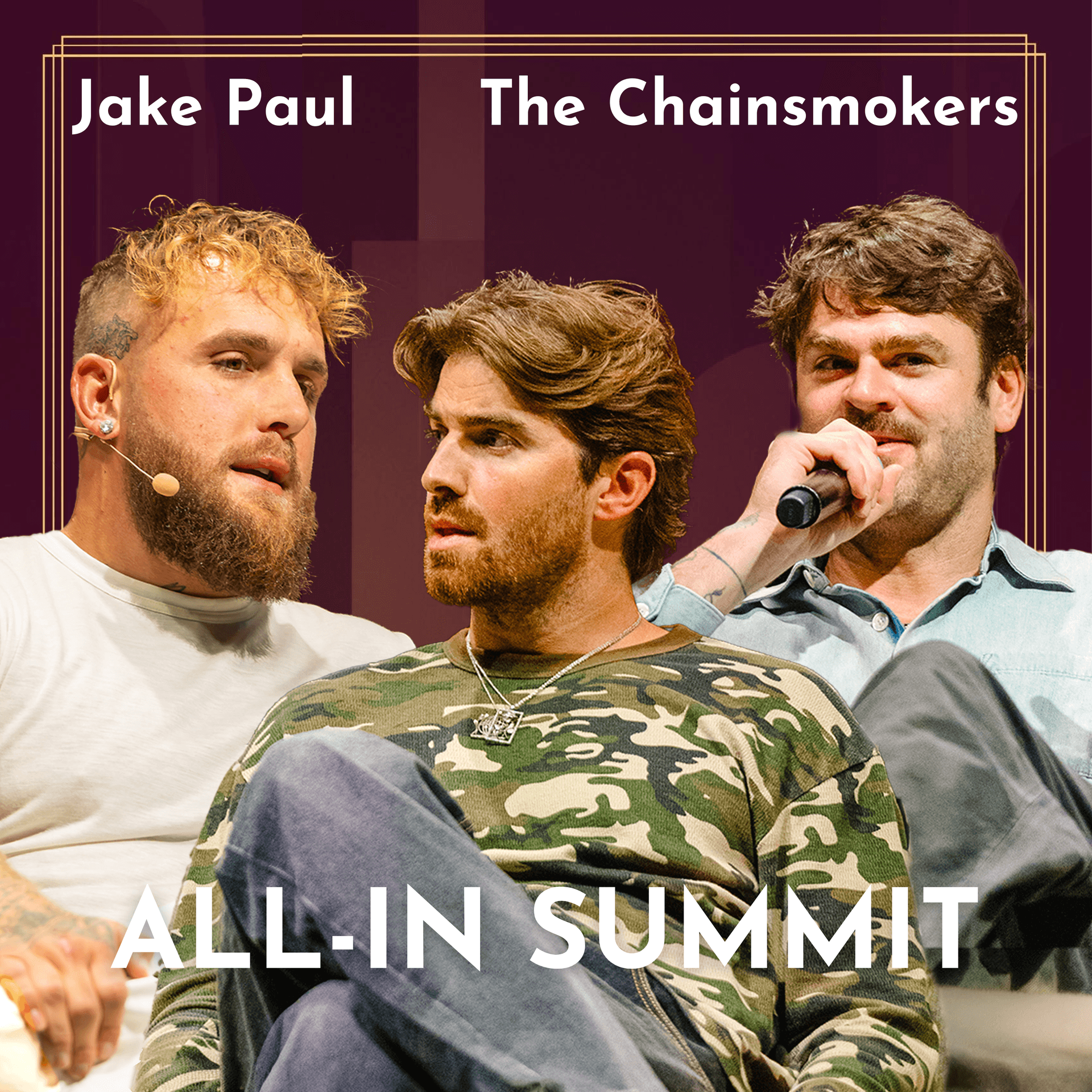
- (1:03) Announcement of the All-In Summit lineup.
Key Topics Discussed
- Understanding "Founder Mode"
- (9:01) Introduced as a concept by Paul Graham, contrasting "manager mode."
- Founder Mode: More hands-on, less delegation, skip-level meetings.
- Emphasizes a proactive approach in guiding company direction versus traditional management styles.
- Ryan Breslow and Bolt's Recent News
- (32:52) Bolt, a payment startup, back in headlines due to controversies surrounding its CEO, Ryan Breslow.
- Breslow's past criticisms of competitors and his controversial Twitter activity.
- Discussion of Bolt's struggles, including a dramatic valuation drop and allegations of misleading investors.
- Section 230 Ruling and Its Implications
- (52:28) Discussion on a recent ruling that may jeopardize Section 230 protections for tech companies.
- Case involves TikTok and the platform's responsibility for user-generated content.
- The ruling highlights an evolving legal landscape regarding platform accountability.
- Department of Justice Charges
- (1:08:45) DOJ charges two Russian operatives for influencing U.S. media through a Tennessee-based podcast company.
- Allegations of funneling money to promote pro-Kremlin views and sow division.
- Kamala Harris's Economic Policy Shift
- (1:22:42) Analysis of Kamala Harris's recent pivot towards pro-business policies, including:
- Increase of startup tax deductions.
- Deregulation proposals.
- Capital gains tax adjustments.
---
Key Takeaways
Founder Mode vs. Manager Mode
- Conceptual Framework:
- Founder Mode: Engages in more direct involvement with daily operations, encouraging innovation and rapid iteration.
- Manager Mode: Focuses on delegation and systematic management strategies often taught in business schools.
Bolt and Ryan Breslow's Controversy
- Key Issues:
- Misleading practices and overstatements about performance highlighted by regulatory scrutiny.
- Impact of Breslow's management style on the company’s stability and investor trust.
The Future of Section 230
- Critical Legal Discussion:
- Section 230 currently provides immunity for online platforms against user-generated content.
- The discussion raises concerns about how algorithmic control may affect this immunity.
Political Implications of Russian Interference
- Analysis of Influence:
- Highlighted the complexity of political influence operations and the potential for misinformation.
- Discussed the implications of foreign influence on U.S. political discourse.
Kamala Harris's Policy Adaptations
- Shifts in Strategy:
- Reflects a move to mitigate backlash from previous statements perceived as anti-business.
- Indicates possible strategic recalibrations ahead of elections to attract moderate voters.
---
Conclusion The podcast episode provides a rich discussion on the dynamics of founder leadership versus traditional management, the implications of tech regulations, and the intersection of politics and media in today's context. Each host brings unique insights, contributing to an engaging dialogue about current events in the tech and political landscape.
Written by AI. May contain mistakes. Listen to the episode to check what was said.
Transcript
Automatic transcript. May contain errors.0:00Hold on, guess I gotta get into founder mode. Oh wow, founder mode. If he found her modes, I'm gonna, I'm gonna founder mode. Shit, I gotta founder mode too. Ah, where's Jacob? Oh shit. Let's go, freeberg. Let's get this woman started, baby. He's come off, I guess. No one podcast in the world. Here we go. Okay, guys, let's start the show. You are a founder mode ain't it? Jacob, if you found her mode anymore, you're gonna get pneumonia. All right, sex is like an age is a game. Back at Stanford. This is the funniest cold up we've ever done. Sorry, I'm going to go. I got Belgium waffle mix everywhere.
0:39It's right here, Jake. You got a bunch of founder mode right there. We got no fountains both there. Let's just look it out. What your winner is, ride. Rainman David Sack. I'm going to win. And it said we open sources to the fans.
1:17I'm doing well. I turned 48 two days ago. Oh, I know the big 50s coming. I've already called dibs on chairing your 50th. So we will be certainly getting arrested in 24 months, save up your bell, many boys. Friedberg, you look like you have had a record number of panic attacks in the last 48 hours. How is summit planning going? Are you okay, buddy? You took this responsibility on, are you okay? I'm hanging in there. I'm just waiting for the shooted drop, Jake Hal, and what you're going to do to blow shit up. But I think we're almost there. So we're super We're excited. We have speaker names going out today.
1:59So we'll talk a little bit about who the speakers are. You guys know your bestie Elon will be there. Oh, third year in a row. Okay, third year in a row. He's the only repeat this year. We've got Mark Benioff joining us for a conversation about the future of enterprise. We've got Barry Weiss from the Free Press. We've got Arizona Senator Kiersten Sinema. We have John Mirschimer and Jeffrey Sachs to talk about geopolitics with David Sachs. Saxon, Saxon, Nikasherora. We're going to talk about Peter Till. My guy. Peter Till. Peter Till. Peter Till. He's amazing. We've got the legend, the legend from LA, Michael Ovid's joining us.
2:39Love that book. We're going to get into some really cool tech we have. Have you guys read Michael Ovid's book? No, yes. Yeah, for Michael Ovid's incredible. It's really incredible. It's a great book. Michael's incredible. It's a great book. What a playbook. It's a really interesting mix. We've also got some cool panels on tech and robotics. So we're doing all three of the big EV tall companies. Joe B. Archer and Whisk and their CEOs are going to be their Gecko robotics. So we've got Jake coming from Gecko to actually do a really cool product demo. We have the CEO of Waymo to Kedra Moa Kana joining us.
3:15Talk about autonomous driving, one carless Belmonti talking about age reversal from Altos Labs, probably the most funded private company in history. And also, Ingo's coming out from Europe, from adNCEO of adN, you guys may not know this, but Ingo has never done a US conference before. So this is his first public speaking event at a US conference. He may be the first, I mean, Adjian, I think is the first and really only company that's implemented AI in production at scale. It would be really interesting to understand where that's gone in the last year. Great topic to talk about. And huge shout out to my boy Woody Hoburg, US astronaut, joining us to tell us about his months aboard the ISS.
3:59His experience at Uranus. And Captain England, the crew dragon, capsule back to Earth. From Uranus. And the future of spaceflight and Uranus. Thank you to your boss. to your anus. Thank you everyone. I love how he's like my guy the astronaut as if like free burgundy and ash for not have the same life experience you know you know what you know what happened Jake I was like me and my guy Drey my you know how I met Woody he's a huge fan of the pod and then he NASA astronauts which I follow on Twitter DMed me and they're like Woody would like to meet and I'm like what and then I get this message from Woody I'm like is this real he's like I'm on the ISS I I listen to the pot every week, I love the show.
4:42And you guys, you know, keep me entertained up here in space. And I'm like, no way. So then he's like, can you do a Zoom? And I'm like, sure. So we hop on Zoom. And I, you guys saw this thing. I put it out on Twitter or something, but I did the Zoom with Woody, got to know him, hung out with him since he's been back. Great guy. So you left out the number one host on the internet in broadcast or news on YouTube. Megan Kelly will be joining us. Megan Kelly. the phenomenal Megan Kelly didn't she call you a prick shake how? Did she call me a prick? Why should she be any different? Yeah.
5:19I can't wait to this fight. What did you call beautiful intelligent women call me historically? What did I call you? They call you an ex -examine? They don't. Exactly. They're like get out of the way worse to them. They're like my car. That's what they know me. They're cheese. And then really excited to have Thomas LaFont come and give us a state of the union on public market and private market tech investing. He's got a really interesting presentation he's going to share. So a lot of the content from the summit, we're going to be co -founder of CoFounder of Co2. Oh, sorry, CoFounder of Co2, yep.
5:49And so a lot of the content we're going to be pushing out on YouTube as quickly as we can. Obviously, some of the more timely and usely stuff will get out first. And then as we did in the last two years, material will roll out in the days and weeks that follow. We do not do sponsors here on the Olin podcast, but the Olin summit does have sponsors So a huge shout out, which we would never otherwise do partners to excel events hex cloud merch .com athletic brewing the ridge the greatest law firm on earth cooling velocity black and our big enterprise software partnership sponsor Google cloud big shout out and big thanks to Google Cloud for stepping it up in a big way.
6:27They have an incredible set of AI tools that they're making available to startups startup founders that are attending the summit get 350 ,000 bucks in Google Cloud credits. Wait, what? So thanks. Yeah. Each, each founder. They start off, yeah. So I would, I would have said, oh my god, he's exactly. So they pay $75 for a ticket. You get 350 in credit. 350 grand of credit. That's incredible. For Google Cloud, it is up to 350 in Google Cloud credits for eligible AI startups, which they can use over two years. Comes with a bunch of other benefits. So yeah, it's pretty awesome. We're really glad they're doing this.
7:01And they're going to have other set up. and Lukewarm and read I've ever heard you want me to do that for you and give people a good point. Can you guys feel on it? How would you guys feel on this? Go here. And Google Cloud is giving an amazing offer to everybody who comes to the summit. Wait till you hear the sax 350 ,000 dollar Ray. I start ups credit and that's real money that you would have spent otherwise. So great. How's that Google Cloud? wait three or $50 ,000 just for startups whose founders come to our summit. Yeah, for AI startup founders. They can sign up for Google Cloud. They get three to 50 ,000 credits that they can use over two years total across all the founders.
7:42No, no, no, no, no, per business, per business. Oh my gosh, yeah. So if you're spending 10k a month, I have seven friends and family tickets left. I'm starting seven companies in the next half hour. They're All going to the summit. I'm going to clear two point three million dollars of credits and I'm going to sell them on eBay for five hundred K you can't do that to get the chair. Oh, you can't do that. Thank you to our friends at Google We did get a funny note from Jake. All this morning asking if his remaining friends and family tickets could be sold off So he could grift himself some money off of our I'm just thinking if it's sold out These are words seventy five hundred each.
8:17What's it worth if you can't get in? Yeah, I'm sure you find that out pretty quickly I do give one away for her trying to scalp their remaining tickets. I know. I'm going to give them to my brother Josh. If you want to get into assignment, pretend you can't catch Josh. Be at the loading. We're going to see a couple of Calcannus brothers on the sidewalk. Outside the conference holding a sign. You know, tickets are available. One down of the Mongolian barbecue joint. If you have ever been to Madison Square Garden, you just hold up the number one and then somebody will come talk to you. Somebody will come talk to you.
8:55All right. We've gotten through all the great housekeeping. And it's time to talk about founder mode. Founder mode. On Sunday, the Y -combinator founder, Paul Graham, published an essay titled Founder Mode. It was based on a talk that Airbnb CEO, Brian Chesky gave to a group of YC founders last week, where he said, hey, the advice I got on running a large company was to hire good people and give them room to do their jobs. He says he took that advice and the results were a disaster. So he studied how Steve Jobs ran Apple and according to PG, Paul Graham, that is a bunch of very successful founders in the audience.
9:35Kind of nodded their head and said, hey, that is similar to my experience. PG defines the world now in two ways, two philosophies for running a company manager mode versus founder mode in manager mode. That's just the conventional way of doing this, what you teach in business school, you hire good people, you give them room to do their jobs. You tell your direct reports what to do. They figure it out. You don't micromanage. P .C. says, you don't think of too many specifics about founder Modi. He kind of says, hey, we've got to figure out what this thing is. So in some ways, this blog post to Moth was a way of starting the conversation.
10:09But he said things like less delegation and more hands -on. and if you haven't heard of it skip level meetings, this is where the CEO will meet, not with their manager or direct report, but maybe a group of people who report into that manager without the manager in the room. It's notable and well -known management technique to kind of get information to the CEO a little bit faster. And what do you think? A chip office got a lot of attention on a Sunday. Did you have any takeaways from it? I was confused when I read it because everybody was breathlessly panting about how incredibly insightful it was.
10:52And when I read it, my first thought was, where's the second half that actually explains what this is so that you can have an opinion? And then the next thing I thought was, I don't really understand what any of this is all about. And I tweeted this in a quarter century now in Silicon Valley. I think I've encountered two different kinds of people. One are the groups of people that can go right to the heart of issues because they can break things down and look at it from first principles and Just ruthlessly attack what's not working with absolutely known nostalgia for people or sunk cost or tech debt and Then there's everybody else and I think that that is an archetype that actually drives successful companies It's not the case that those are only exhibited in founders I think it's a psychological makeup of a person and the people that have it tend to build good companies.
11:48You know, we'll have such a person, for example, at the all -in -submit. If you look at what Neckesheuroro was able to do at Pala Walter Networks, it's incredible. I mean, in eight years, he's created $80 billion of value. How do you do that? I think it's important to understand how that happens. If you look at a whole bunch of other people that are managers, Shantanu Narion, how has he built Adobe, Sautinadella, how did he build Microsoft? These are all just like a handful of examples of people that have just tacked on collectively trillions of dollars of market cap, way more than all founders added together in most companies but for one or two.
12:29So I think the takeaway is instead of looking for some label, I think you're going to have to do the really hard work if you want to success with business, which is when things are working have the courage to change the few things that still need changing, and when things are not working break it down to the studs. And most people don't have the courage to go through the glass eating that is required to get to the other side of that process. sacks. Did you read the piece? You've clearly saw all the memes and you know, I guess kudos for the piece on X this past weekend. What are your thoughts on it?
13:11Generally speaking, anything that you took from it that was notable or is this just some obvious stuff? Yeah, I mean my reaction to it was that this is hardly new. I mean, I remember way back in the PayPal days over 20 years ago, we had a rule that we weren't wouldn't hire MBAs. We had a no MBA hiring rule. And the reason was because we figured out pretty early on that MBAs were bringing more of a traditional management toolkit that seemed less applicable at a start -up. Subsequent to that obviously Elon has taken a very hands -on approach at his companies that Walter Isaacson described in his book as Demon Mode.
13:50And so that's been described. Ben Horowitz did a very interesting series of blog posts about management and addressed the topic of micromanagement years ago. And so he's written extensively about it and put a lot of substance behind it. Ben drew attention to a book by Andy Grove that came out 40 years ago called High Output Management that also addressed this problem in significant detail. And this to boil it down into a nutshell for you. The way that Grove defines This problem is he says that the output of a manager is the output of that person's team. And whether that manager is the CEO or a team lead or a VP or what have you, the way you again measure their output is just look at the output of their team.
14:40So therefore, you ask what's going to maximize the output of that team or that org. And obviously if the CEO tries to do everything and make every decision, probably that's not going to result in the maximum output. Conversely, if you delegate everything, I call it the problem of infinite delegation where CEO delegates to VP, VP delegates to director, director delegates to manager manager delegates to the summer intern.
15:15Yeah. So again, you're going to have to find the right balance. And again, the way that you figure out what the balance is, is to apply Gross Principle of maximizing the output of the team or the organization. And we've seen in some of the big company sacks that they've cut out middle management because so much of the work was just being playing telephone and handing it to the next person that when you took out that swap of people at Facebook or Google or Microsoft, the company seemed to work better. Yeah, great point. and you're taking out a layer of over page control. But it just took out a huge amount of management and it didn't seem to harm the performance performance, got better.
15:50And again, you can apply Gross Principle. Look at what happens to the aggregate output. So this topic has been addressed at length. And I think has been understood for decades. Maybe the only new thing here is a little bit of branding around founder mode versus manager mode. The problem with that branding is, I think It's an overly simplistic and mannequin view of the world where it kind of fits into really all of the PGSAs and the YC model, which is founders always right. And everybody else in the ecosystem, especially traditional managers, they're either liars or fakers. And that basically has been the mannequin model that Paul Graham's been pumping out for decades.
16:38Is there something wrong with that model? You're kind of looking at it and I'm kind of hearing a little bit of a tone there maybe I'm reading into it that does it match reality. Well, sure. I mean, look, the whole ecosystem at Silicon Valley exists to help make founder successful. I mean, I was a founder myself. Now I'm an investor. There's also talent who don't found companies themselves, but want to join them. The whole thing is organized to make founders successful. And the whole idea that people are out to get the founder, I mean, this is a really antiquated idea. There was some truth to it in the 1990s by 2002 or 2003 when Peter Teele created Founders Fund.
17:16He called it that to emphasize that, you know, Founders should be in charge. I'd say by the mid to late 2000s, no one really disagreed with that anymore. Yeah. So this whole idea that like people are out to get founders rather than make them successful is antiquated by at least 15 years, I would say. Kind of why commentators marketing, wouldn't you say, is like to kind of put themselves next to the founder and say, hey, we're the only ones who really care about founders. Everybody else is out to get them. Kind of. Yeah, I mean, look, there was some truth to it, you know, I'd say in the 1990s, there was a prevailing view in Silicon Valley 30 years ago that once the company got to a certain level of size, you hire a professional manager.
17:54Subsequent to that, people figured out that the best performing companies are indeed the founder led companies, means the ones that keep the founder engaged for a long period of time. They tend to build the most value. Everybody understands that. Everyone wants the founder to be successful. The question is how do you make this founder successful? And I think there is a perverse dynamic where if you teach the founder that, hey, you're always right and everybody else is a liar and a fake or then that can create a distortion effect where founders don't feel the need to level up. We all want the founder to level up.
18:25I mean, I would always rather invest in the founder who has vision over some professional manager, right? You want the visionaries to see, but you need them to level up and learn, you know, just basic management over time. And if you're teaching them that, hey, founder is always right, there's less incentive to do that. I think it's a wonderful Rorschach test for basic intelligence. I mean, if you just read something and all of a sudden, like, that's my problem. It's probably not your problem. And so it's a great way to actually weed out the people that were just meant to fail anyways and just need a way to externalize their frustration and have an excuse.
19:05I have never seen a person build a successful company unless they understood intimately the core amount of value that their company created and knew how to balance getting into the weeds with scaling through other people. I've never seen a good example of a great CEO that didn't do that well. Yeah, everyone has to figure this out. And there is no word salad that explains this. It's incredibly unique to every single company. And so there is no panacea here. I mean, sometimes the founder's job is to get in the weeds of something that's broken in a company and get down to my firm energy. And sometimes you want to step back and let the sales team cook because they're crushing it.
19:45I would say it's their job to have the strategic wearer with all to understand what it takes to win and then win at all costs. That's their job. If you cannot win and then you externalize your inability to win to an essay or something else, you're probably going to fail and your company is probably going to fail. Breberg, you're back in the founder's seat after a brief so drawn as an investor. Any of this ring true to you or obvious? Did you read the essay and he thoughts on it? The reaction to it? I mentioned this when we had our conversation in 2020 around governance and why governments seemed to not be able to synthesize different data to make decisions they were being told what to do by their subordinates.
20:34The difference for me is leading versus managing that a traditional manager, and I've seen this at a lot of companies. I even saw this a lot at Monsanto. The manager says to the people that report to them, what are you guys going to do? The people they go down to the people that report to them and they say, what are you guys going to do? And so you end up net, net developing this kind of bottoms up model for the organization, which is effectively driven with a diffusion of responsibility and as a result, a lack of vision. The leader says, here's what we are going to do and here is how we are going to do it.
21:22And then they can allocate responsibility for each of the pieces necessary. and the leader that's most successful is the one that can synthesize the input from the subordinates and take that synthesis to come up with a decision or a new direction rather than be told what's the answer by the subordinates. So leaders, I think, fundamentally are able to number one understand the different points of view of the people that report to them. Number two, set a direction or set a vision, really clearly say this is where we are going. And then number three, figure out how to allocate responsibility to the people that report to them to achieve that objective.
21:59Whereas a manager is typically being told what's going to happen in the organization, like a giant WG board with 10 ,000 employees hands on the writing thing that go around and try and write the sentences, and ultimately you just get a bunch of gobbity -goop. As companies scale and they bring in these quote professional managers, they're typically kind of looking down and saying, hey, what are we going to do? What's going to happen next? And they're not actually setting a direction. Whereas someone who's a founder typically feels the authority to be able to set the direction. But to Chimoff's point, Sachin Adela, Sundar, Nikesh, Tim Cook, a great example.
22:34There are some really great leaders that have run organizations that are already scaled and then taken them to an order of magnitude or two orders of magnitude beyond where they were when they step in. So I don't think that there's necessarily a founder. And they each did it uniquely. I don't think there's a single way in which any one of those companies is run That necessarily you could have cut and pasted it to the other companies and have it worked. So it requires a Smart individual who understands their company and their human capital intimately while on their business model By the way, what's important about what you just said to them up is that that is effectively I think the definition of of like being a successful founder, understanding from first principles.
23:18So these are leaders that can think from first principles, not necessarily from comparable. Most managers are caught in business school. Here's how a business is run. Here's how this person did it. Here's how this company did it. And then they go and they try and cookie cutter repeat that. That doesn't really work because every business, if it's going to be successful, it has to be unique. And so the ability to actually think uniquely and identify from first principles the means necessary to achieve the mission of the organization. I think it's a critical leadership trait. Maybe that leader can come from a founder or not, but the ability to ignore convention, ignore comparable and think for yourself.
23:55I don't see most founders starting a business because they've done some first principles analysis. I see most founders starting companies because they see a gap that they're pretty sure exists. But I think the biggest thing that founders have is this intersection of fearlessness and naivety. And so if they knew too much, they would never do it. That I don't think necessarily means that the entire set of all of those people are actually great first principles thinkers. The first principles is required after product market fit. What's required before product market fit is risk taking, curiosity, relentless iteration, and those are a very different set of characteristics.
24:39is a true that sub -founders can then change their toolkit? Absolutely. But is it true that, quote -unquote, because you have a title you have those things? Absolutely not. Otherwise, we would have a much higher success rate in Silicon Valley than we do. There is a reason why 95 % of these companies go to zero. It's because the ability to do the first thing is rare, and then the ability to transition is even more rare. Well, building a unique business, and I think if you look at Airbnb, and I'll give Brian Chesky incredible credit for this, You look at Uber, you look at how Steve Jobs built Apple.
25:12What every one of these businesses have in common is that they were all built in a unique way. And I think that's what makes great businesses is that they identify their own path, their own unique path for how to operate a business to scale to achieve the mission of the organization. And I think that that's what's typically lacking in trained managers who use comparable and biases from their prior experience and what they've been trained and taught to use as a cookie cutter type model, which doesn't create unique value. It makes your business look like the other, and ultimately it commoditizes some aspect of the business to the point that the value of the business goes down.
25:46But to build something unique where you're constantly finding the unique path that gives you an advantage is what all of these companies have in common, whether that unique path was made by an experienced hired person or a first -time founder, it's this ability to kind of build a unique competency that I think makes them all distinct. That's a group. I think that's a really good point. Like if you look at some technology businesses, they start off looking like technology businesses and what they really are tech -enabled consumer businesses. Other businesses are pure technology companies. And why that distinction is important in this context is that there are certain kinds of challenges you have in the former that you just don't have in the latter and vice versa.
Read the full transcript
26:25So if you're a Google or a Facebook and you run into some problem, typically the solution is you can engineer around it because ultimately your product is free and there's a different way to scale and grow and create feature value because those are also incrementally free. If you look at a company like Airbnb and if you look at the last six months in the stock, what is it telling you? It's telling you that the people that own it have realized that it's less of a technology business and it's more of a cyclical business that ebbs and flows with the ability to spend money on behalf of the consumer.
26:59So now all of a sudden you're put into a different bucket and you grow as people's belief, ebbs, and flows about the amount of spending that consumers have. That is independent of your product quality. And what that means is that there's no amount of investment in technology that you can really make to change that. People need to have excess capital in order to spend on vacations and then you can capture your fair share of that. But if we're in a recession that company will be under pressure in a way that has nothing to do with the internal product quality that they exhibit So these are just dimension out.
27:33There's just different kinds of problems that every single company faces that are totally unique To its own circumstances. So if you are trying to point to some label as The reason why your company is failing. I would just encourage you to not do that Jake, you've interviewed thousands of founders, CEOs, you've seen successful, unsuccessful. Do you have a point of view on whether this concept applies and what if you have a general kind of heuristic for the difference between success and not success? It's very different in the place where Paul Graham and I invest, year zero, year one of a company and Trimoff, you alluded to this.
28:13In that time period, going from zero to one from no customers to one customer, it's about you know, really having a team of builders, people get actually build a product and have what's called product velocity in the industry the ability to iterate and then how much time do they spend with customers understanding what those customers problems are. And so what we'll see is when the professional managers try to do that, they try to get a product to market and achieve what's called product market fit. and then eventually maybe get product or get market pull as Andy Rackliffe defines it, which is the market is seeking your product out because of word of mouth and because they need it, which Airbnb and Uber would fall into now.
28:52The difference between those two moments in time and who's good at it is pretty different to your point, Shamaaf. So to be able to win both those bets is hard. That's like a parlay in a way. Getting the product market fit requires this sort of relentless in innovation and trying things. If you have experience in that vertical, it works against you. So we were looking at a company today in our firm that has a really good idea and it's people who are from the industry, but they haven't okay, it's people from the industry, but they can't get the product built because they're senior managers who have 20 years experience in this particular vertical.
29:30You would much rather see neophytes come out the vertical. So if you look at the companies mentioned here, Airbnb, Uber, and then SpaceX and Tesla. You just look at those four companies. They had no experience, zero in space, in travel, in transportation, hospitality, or any of the success they had or electric cars. But to actually scale those companies, that does require a lot of expertise, a lot of tactics and people who can focus in a way on very narrow things. And that's sometimes founders who are in that first group, they can't have that focus on but one tiny little thing. They just get bored with it.
30:14And so they have to learn to have really great people, recruit really great people, and actually yes, delegate to them to run a department and say, hey, the goal of this organization and you saw this, Chimoff, when you were at Facebook, but I think you've told me so many stories about, you know, you're focused on one thing, the sign up flow, getting people to add that second or third friend, getting them to fill out their profile. There were like key moments you determined would equal success and then Zuckerberg yourself and those early crew were able to obsess over those. So maybe you could talk about Zuckerberg's ride to getting the first, you know, whatever, 10 million people in the product, but then 10 million to a billion.
30:55And, well, I mean, Zach, I think did an incredible thing for me, which is he let my team cook. I don't remember having skip -level meetings this, that, none of this other nonsense. But at the same time, what he did was he created air cover for us, because let's be honest, that was an immature executive at the time. So I was still learning how to be part of a fabric of a group of people. I did not know how to do that. So I was a little bit of a lone wolf operator with my team, and I operated that way. You know? know I would, hey guys, we get to 100 million people, we're all going to Vegas. And the rest of the company would be upset.
31:29And you know, Mark and Cheryl's job would be to clean up the broken glass of everybody else saying there's these haves and have knots at Facebook. And in hindsight, who cares? Because it all worked in the moment. I could see why everybody else was a little bit upset with that. So they did a wonderful job of letting this wonderful team of very curious iterators do their job. And they basically got out of the way. And I think that that's a wonderful thing. But is that repeatable? Not in any other company because that context and timing and moment was very unique. And again, my approach to the job was unique, not necessarily sustainable, not necessarily good or nor bad, different.
32:08And we adapted to those boundary conditions to maximize how we could deliver. But it doesn't mean anything to any other company in my opinion. Yeah. I think it's well said. There's another good book before we go on to our next subject, Patrick Lansione. I'm sure some of you have read the five dysfunctions of a team, but he kind of got into early this sort of ability to be unliked inside of a company. And I just, I think I really recommend the book because it really talks about this sort of fear of conflict and avoidance of accountability and inattention to results, which is kind of the underpinnings of I think what Paul was getting to with founder mode.
32:49Okay, great discussion, everybody. Let's speak of founder mode. I mean, this story keeps coming back. Ryan Breslow is back in the news. We talked about this company before. Breslow is a founder of a company called Bolt. That's a payment startup. And I have to set the story up in a couple of acts here, Saxon, I had been following it for a while. Bolt was a payment startup. They did one -click checkout products. If you don't know the one -click, Amazon had a patent for this for a while. It came out of patent protection. Everybody sort of jumped on it. They're shopped -payed by Shopify. You probably have experience.
33:28You buy something at one store and then you log into another store with your phone number. It has all your credentials. You've been cookie. And that basically takes out the friction and it allows you to make a purchase at another vendor without having to put in all your credentials and credit card and everything. So, Bolt makes that through an API for different shops online. They generate 27 million in revenue on a $300 million loss last year. they get two to three percent commission when they sell something. Anyway, we talked about Bolt back in January 2022 because they had raised at an extraordinary valuation, $355 million and an $11 billion valuation, 366 times revenue sacks.
34:12I guess we missed those. Then, Brezlo made waves on Twitter by calling Shripe and YC, the mob bosses of Silicon Valley, he alleged they were kind of acting in cohoots to keep people from using bolts. And he claimed why he was skewering rankings on hacker news, all this other stuff. Anyway, it's been two and a half years since we talked about this craziness at bolt and Bresla stepped down as CEO after posting that thread. He was accused of overstating bolts, customers and technical capabilities to investors while raising money back up progn by the SEC. They didn't take any action, and then their valuation was slash 97 % to 300 million earlier this year.
34:55That's where the story had ended until just last week when an insane story came out that BALT's interim CEO, not Brazil, had emailed investors informing them out of the blue that they were going to raise 450 million at a 14 billion dollar valuation. This came as a surprise to investors. They didn't know this was happening according to reports and that this deal would put Breslow back in charge of CEO It was confusing to all the investors and they've all started to lawyer up and try to figure this out Here's what we know so far both is on pace to generate 28 million a revenue this year roughly the same as 2021 and So a 14 billion dollar valuation would be 500 times Revenue Chimath.
35:40I'm not sure who would pay for that deal But this deal is unique in that it's called paid -a -play. If you don't know that term, it basically means if you're an existing investor, if you don't invest in this round, you are going to lose your existing shares or have them diluted massively. So some investment bank out of the seashells, which is that tiny island in Africa, that rich people go on vacation, was supposed to put in 200 million. That firm was called silver bear. The other 250 million would come from a firm called the London Farm in marketing capital and credits on a venture investing platform.
36:18So anyway, there's a ton of car vows here and other stuff. I'm going to stop there at the notes and just sacks. This is the craziest story. Sorry, it took so long to get here. What are your thoughts on what we're seeing here in this drama and this Zerp valuation? Yeah, look, Ryan has been right before he's been right in the past, but in this case, it looks like he's clearly over his skis and if the reporting is correct, it looks like he's trying to drum up interests in a financing round by representing things that aren't true or haven't happened yet saying that certain investors are important and those investors are coming out and saying that they're not.
36:57The question, I think that's relevant, and that relates back to our previous topic, is this founder mode. I mean, what makes this not founder mode? And I think that this is where it would be helpful to have a little bit more substance and not just a branding exercise. Let me give you a more mundane example. I was in a board meeting the other day, and I commented to the team on how they had gotten their burn down substantially since the last word meeting. And somebody joked one of the founders said founder mode and it was kind of a joke. Okay, great. But then it got me thinking, what if in this board meeting it had gone the opposite way and the founders had taken the position, you know what, we're not going to try and cut burn.
37:37We're going to put the pedal to the metal and accelerate the business and spend a lot more because somehow it's going to get us to the next funding round faster. Found it. Found it. Found it. No, two. Found it. Let me find out. Oh, that's fundamental baby, let's go. Let's not be part of it. So when you start branding these concepts without putting any substance behind them, and quite frankly, you've never been an operator yourself. You've never actually created a unicorn company, but you're representing yourself as a unicorn whisper, like you're a guru and something you've never really done before.
38:11Then it just allows people who want to justify bad behavior to basically get away with doing whatever they want. And that's what you're seeing with founder mode now, Jake. How the reason why that joke is funny, you're doing your turning Montana bit is because you can justify any bad behavior as founder mode. Yes. And I think that's what all the memes are about right now is that founder modes become a joke because there's no substance to it and allows you to justify anything a founder wants to do. And I think a more honest way to approach this would be to define here are the actual behaviors that make a founder successful, including when a founder is wrong.
38:51How about slightly differently? There are stupid outcomes and smart outcomes. And there are all kinds of different people that can get to stupid outcomes and smart outcomes. So you have to have the courage to say, that was stupid. Don't ever do that again. And that was smart. Do more of that. And if you can't distinguish the two or you can't get to the latter, you're going to fail. Instead of founder, Mo, why don't we call a founder responsibility? Like, what are the responsibilities? I mean, founder of the party found a responsibility. Steph Curry is not the founder of the Warriors, but he's the Linchpin.
39:20Okay. My point is teams need winning players. And then you need to put together your own game plan for winning, but the goal should be winning. If you are not winning, you are a loser. And what does winning have? Really talented, really driven people in different positions who understand their position. You gotta win. You gotta win. You gotta win. You gotta win. You gotta win. You gotta win. Frank, there's a certain kind of con man who represents themselves as a guru, even though they've never done the thing that they pretend to have done. And yeah, and in this case, frankly, you've got someone promoting concepts about operating when they've never done that before.
40:02The universe scaled a unicorn company yet they're pretending to be a unicorn whisper who's telling founders how to behave. And the question you need to ask is this at the end of the day, helpful or not? I mean, we all want to exalt and celebrate founders. I want to win. Exactly, but we all want to win. And James Madison said that men are not angels. What do you do about those cases? Rare, I think they're pretty rare. Where the founder is just wrong about something. Where they're representing that investors are going to do something that they're not going to do. Or Elizabeth Holmes represents that she's got a product that she doesn't have.
40:36Or you have a founder breaking a regulatory requirement that actually is necessary that they comply with. What do you do in all those cases? You actually need to have some objective standard of behavior. That's not just, oh, founders always write, traditional managers are always wrong. Because that's just not nuanced enough to account for what it's actually going to take to win. Well, I mean, if Adam Newman had listened to a lot of the smart people he had hired at we work, he might not have signed leases that were so high priced and gotten away from the playbook that worked when they started that business, which was fine to cheap this real estate, charge the highest price you can for it by making it a community and really nice as opposed to hiring the class A, getting the class A, space, and then charging a B price.
41:24To your point, like a senior real estate executive would have put together a forecast of cash flows and it would have been a very boring meeting, but if you didn't have the intellectual wherewithal to realize that that was a critical meeting for a realistic business, and then listen to that, and then manage your burn appropriately, that was a huge mistake. So again, it always comes down to, can you take all the labels and all of the, you know, naval gazing aside, and can you make good smart decisions when you're asked to run the play? That's your job at every level of a company and a CEO that knows how to do that tends to helm winning companies.
42:06And I don't think that that is exhibited in whether you were employees zero or employee 20. It's it's a intellectual and psychological archetype. Yeah, I mean in my experience the founders that are highly successful or the ones that are hands -on, they've got a strong vision and they pursue it and they're constantly learning and leveling up and they're going to learn wherever they can't. They are going to learn from other founders. They're going to learn from executives they may have hired who maybe do have more nutritional background. They're going to figure out what works for them and they're going to discard the parts that don't work for them and they're going to double down the parts that do and the end result is going to be a style that works for them and there's not a one size fits all to that.
42:47As we've seen. That's actually the most important thing that I've heard in this whole discussion that we don't talk enough about. The people that win are deeply intellectually promiscuous. They're learning about many, many things. They're adapting things to their own playbook. The next day they may throw that piece away and take something else because this is something they learned. We use the word reunderwrite a lot, right? But it's this idea of constantly reunderwriting what the conditions on the field are. So you know what you need to do in that moment to maximize your chances of success. I have the perfect example of this.
43:19When I was running Weblogs, think we were going to raise around to funding. Mark Cuban had given us the first 300 and Mark and Jason was going to give us 500K for our blogging company that did engage it, et cetera. And I had met Jeff Bezos. And I told him, I'm in Seattle this week. Would love to catch up with you. I wasn't in Seattle. I was going to be in Seattle next week for the whole week. Would love to catch up with you. I wasn't planning on being in Seattle. I made that story up just to make it convenient for him. And he said, sure, come by on Tuesday or whatever. I come by and Tuesday I sit with Jeff Bezos my partner Brian Alvi, and the intellectual curiosity he took on taking apart, engage it and blogging as this new medium that was very disruptive at the time.
44:00How do you pick the name of the blog? Tell me about the CMS. What is the publishing strategy? How do you hire people? And I would say, oh, you know, we hire people. The best people are the great commentator. So we look at the great comments and then we hire them. And then I watched in Amazon, They started hiring the people writing great reviews for their review team. And I was like, oh wow He really is taking notes on this into your points acts Or maybe too much you made this point In terms of hiring one of the great techniques Bayzo's had is a concept called barraisers and a barrazer in Amazon is somebody you hire for your team Who is so good that they raised the bar for the entire team?
44:40So when they would say hey, we're gonna add somebody to this team. They're gonna be the 10th person you'd say are they Better, yeah, whatever dimensions than the rest of the team and will they raise the bar for everybody here? And then you think about some managers they hire somebody who fits in the hire somebody who doesn't rock the boat and There are techniques here in very specific ways to attract talent to your startup That will become you know, do you guys remember our reason why why see and founders fund and and reason took this path was to try to corner Sequoia because Sequoia had this reputation in the 90s and early 2000s as somebody that would boot the founder But when you look at Sequoia's returns what their return say is these guys are just winners They're consummate incredible winners and so what Sequoia had the ability to do clearly looking backwards is Figure out which companies had people that were adapting themselves and scaling and people who were a little bit in a called us out and just needed to get replaced.
45:41And again, they were operating from a first principle's perspective in my opinion. And they were being pretty ruthless and acting with zero nostalgia. So again, it's just a reminder like there is no easy answer here. It is so hard. That's why 95 plus percent of our companies and our efforts end up with nothing to show that the end of it. Briberg to bring you in this discussion. There was a moment in time actually where this actually crossed over and you got to witness it, which was when Larry and Sergey were taking Google public and before that they said, you know, I don't know if the markets will let these two PhDs as smart as they are, as driven as they are with such a great product.
46:24I don't know if they're going to buy the stock. Can we get an adult in the room who's done this before and they found Eric Schmidt who had run Novel and they brought him in as this, you know, third part of the trying angle and then eventually he wound up leaving, et cetera. What were your thoughts on Silicon Valley and that transition time in Eric Schmidt's role at Google? Well, Eric Schmidt came into Google through his relationship with John Doerr. And John Doerr, as a mentor to Larry and Sergey and investor in Google, had suggested that they bring in a professional manager that can help them successfully scale the business.
47:00And John had this relationship with Eric and Larry and Sergey started to socialize with Eric. and it was a very long process and they ultimately respected Eric because of his technical capabilities and technical background, which was quite distinct from the other candidates that they had met during this process. But it was necessary. They were first time, they'd never worked anywhere. They'd never had a job. They had never had experience. I think similarly, Cheryl Sandberg as a partner to Zuck ultimately helped him level up and obviously Chimoff and others prior to that. But these first time founders that haven't had any sort of work experience and have no concept of kind of organizational dynamics and the challenges that will arise as you try and build and scale a team to execute a mission, typically need to have some degree of counseling, mentorship, and support.
47:47And so bringing in that degree of experience with someone who's ready and willing to partner with the founders, meaning not necessarily direct them, but partner with them and help them learn as Eric did and then ultimately handed the reins back to Larry. And as Cheryl did and ultimately, Zach continued to kind of lead the company, have been really powerful enabling forces. But Chimoff is right. The early days of Silicon Valley venture capital were really framed around this concept where you find some smart technical founding team and then you bring in a professional manager. But that's because so much of the origin of technology in Silicon Valley was about selling technology into an enterprise.
48:24So there was kind of a bit of a tried and through business model and business structure that made sense The new era Since the internet has been quite different every business model imaginable has been reinvented in Silicon Valley And so success I think is largely a reason in reinventing businesses reinventing industries by kind of novel independent thinking leaders not necessarily Bringing in experience managers to scale up a known business model Right. And just I think the turning point was when Peter started Founders Fund, but that was over 20 years ago. In other words, Peter realized that that old approach in the 90s of bringing in the professional management had run its course and that we needed to help Founders level up and stay in the seat for as long as possible.
49:13That was 22 years ago that he created that firm. Yeah. So we're like decades into this and that's what kind feels anachronistic about this whole discussion is it's almost like we're pretending like we're still in a world in which founders aren't celebrated and exalted. It's quite the contrary they can do almost anything and the question is how do you help them level up and at some point if you're constantly just saying that well founders know everything founders always write is that actually helping them or is it actually reinforcing a mentality that oh I don't know I don't have to learn anything Because all the great founders have been learning machines.
49:51But if they had been told throughout that, you're always right. Don't worry about it. Then they may not have learned the same way. Did you say you met with Eric Schmidt recently, Shema? Well, I had a meeting with Eric Schmidt a few weeks ago, which blew my mind. And I think I called Freeberg right afterwards. But this is just an example of like, there are just people that know how to win. He is one of those people. So as part of 8090 one of the things that we're doing is we're building a Transpilot, you know right now everybody is very much fixated on PyTorch and The problem with PyTorch and building to Nvidia is you have this thing called kuda in the middle of it Which is owned by Nvidia and I think that over time that's problematic so The long -term solution is you need a functional transpiler that can take kuda litter code But be able to compile it without losing performance to any hardware So Amazon hardware, Google TPU, etc.
50:45So Eric and I sat down. We worked together for a couple days when we were in Europe and we had like a hour and 90 minute meeting. The level of technical detail and mastery that he had blew me away. And he asked hundreds of very, very, very specific questions, some of which I knew the answers to, some of which I didn't. I was able to ask him what he thought he was able to go into the weeds in an enormous amount of detail and what I thought was where is he finding the time to know as much as he does about compilers and the specifics of AI at this level of detail. And the story of telling you this example is just more that that is a kind of person, that is just rare and unique.
51:33You can't put a label on that person and you just want that person near you because he He has the ability to help you in a way that most other people just do not. Irrespective of whatever their title is. So it just goes to say like, you got to focus on the actual meat of the problem. And in that specific case, he gave us two technical directions that my team and I are exploring now with this goal that if one of them pans out, I'll go back to Eric and say, look, we tried these things. This is working. This is not working. What do you think? And it was an incredibly helpful meeting to me. and he just offered that time to me.
52:09And so my point is, people like this exist. And I think that the whole goal, if you're trying to win, seek those people out, independent of what they're doing, what they're trying to lose, learn from them as much as you can, and hopefully you get one step closer to winning. And get them on your team if possible. Yeah. Ideally. All right. Here we go. A panel of California judges has ruled that section 230 does not protect talks algorithm in the case of the death, tragically of a 10 -year -old girl. We talked about section 230 and legislation to protect algorithms or to make algorithms more editorial.
52:45We'll get to that in a second, but let me just queue up the story and then we'll play a clip from episode 99 of All In Podcast. In late 2021, a 10 -year -old pencil v. your girl accidentally killed herself while participating in a blackout challenge she saw on TikTok. That is a challenge that encourages viewers to choke themselves with objects like belts until they pass out. According to Bloomberg, this challenge has been linked with the deaths of 15 young people. Oh my god. Yeah, it's just terrible. That's the child's mother sued TikTok arguing that their algorithm served blackout challenge videos to her child, thus making them responsible.
53:21In the past, algorithmic decisions, as we've talked about here, were protected under section 230 of the Communications Decency Act. Just break this down very simply. If you're section 230, that grants internet platforms featuring user generated content immunity from being sued over content published by those users on their platform. So YouTube, TikTok, Twitter, you know, a blogging platform, etc. So because of 230, you're technically not supposed to be able to go after something like TikTok because a random user posted crazy videos like this. But an appeal score at Schumoff has reversed that ruling with the judge arguing that TikTok's algorithm represents a unique quote -unquote expressive product which communicates to users through a curated stream of videos.
54:07The judge claims TikTok's algorithms reflect editorial judgment. So here's the interesting legal detail. The new ruling specifically cites the Supreme Court's recent decision, Moody versus Net Choice, in which the court ruled unanimously to vacate that Florida law we talked about here, that band tech companies from de -platforming political officials. So that was viewed as a big win for speech protection sacks and moderation rights in big tech. But this is all super ironic because the same ruling that affirmed big techs, first of member protections in content moderation may also have nullified the section 230 immunity.
54:45So let's play this quick clip here, Chimoff. This is a discussion you and I had about should algorithms be part of section 230 back in 2022. Let me break down an algorithm for you. Okay. Effectively, it is a mathematical equation of variables and weights. An editor 50 years ago was somebody who had that equation of variables and weights in his or her mind. And so all we did was we translated, again, this multimodal model that was in somebody's brain into a model that's mathematical that sits in code. You're talking about the front page and I think you're at times. Yeah, and I think it's a fake leaf to say that because there is not an individual person who writes point two in front of this one variable and point eight in front of the other, that all of a sudden that this isn't editorial decision making is wrong.
55:36We need to understand the current moment in which we live, which is that these computers are thinking actively for us. And that is just true. And so I I think we need to acknowledge that because I think it allows us at least to be in a position to rewrite these laws through the lens of the 21st century. There's such an easy way to do this. If you're TikTok, if you're YouTube, if you want section 230, if you want to have common carrier and not be responsible for what's there, when a user signs up, it should give them the option. Would you like to turn on an algorithm? Here are a series of algorithms which you could turn on.
56:12You could bring your own algorithm. You could write your own algorithm with a bunch of sliders or here are ones that other users and Services provide like an app store. So Shema that was your take on it and here we are. What are your thoughts on? Section 230 and algorithms today should If you use an algorithm should that nullified void your section 230 protection. I think it is a fig leave to say that we've There's a level of abstraction that should give us immunity I think that these algorithms are taught to iteratively become better and better at hooking people on whatever is trending in that moment.
56:52And I think it's probably known to these companies at any given time what's trending. So even though they're not literally going and changing something in the moment, doesn't mean that they don't support it and doesn't mean that they're not aware of it and it doesn't mean that they haven't created a net to sort of catch these light means in a bottle and spread them around. And so I think we just need to have a more intelligent discussion about how responsibility should be shared in a world where Section 230, yeah, you're right. I'll just say it again, we're not writing deterministic code anymore.
57:32It doesn't say if this then that showed them the blackout video. There is no piece of code anywhere, but it's kind of a fig leaf to say that that isn't the intention of the way that the new form of software is written. Yes, correct. Sacks your thoughts here on balancing 2 .30 with the fact that I think we all agree that these algorithms are the new modern day editors. I don't know. I have a very different opinion on this thing. Okay, here we go. I always have. Well, first of all, let me just speak to the legal precedent here. Last year, there were two Supreme Court decisions addressing this very issue of whether algorithms basically obviated 230 protection.
58:12And the court found that they didn't. There were a couple of cases involving users who basically went down a rabbit hole of like terrorist videos and got recruited by ISIS. Remember this? Yes. And they were sued by the families of victims or at least the social networks were and the argument was that they basically had been recruited into ISIS and committed to terrorism because of the algorithms and the social networks were liable for that. StreamCourt found that they weren't, which is just to say that algorithms were not treated differently than if the content had been on a regular fee, you know, a destacronological fee.
58:52And what Section 230 says is that you can only hold the user liable. we're going to treat social networks as distributors not publishers for the purpose of user -generated content. I've long held the view that if you want to make online platforms liable as publishers for every piece of user -generated content, then you're going to have very little free speech left because I just think that corporate risk aversion is going to force these guys to become even more and serious than they already are. Every piece of content that could potentially lead to a lawsuit is going to get shut down. And I think that the net effect of that will be much more negative.
59:32Now, to the argument about aren't algorithms just the new editors? I don't think so. I think there's a fundamental difference between what an editor does and what an algorithm does. If you look at an editorial page of The New York Times, The Wall Street Journal, it has a very specific point of view that is promoting. In fact, sometimes you can't tell the op -ed page from the news page because it seems like that publication is so biased in favor of one point of view or another. An algorithm isn't supposed to do that. An algorithm is supposed to give you more of what you want. And so therefore if you are pro -Trump, you'll see more pro -Trump content.
1:00:08If you're pro -Commular Harris, you'll see more Harris content. In other words, X or whatever the platform is, isn't supposed be taking an editorial position on whether it supports Trump or Harris, but rather it's giving you more of what you want. Elon recently spoke to this. He had a tweet recently where he talked about, hey, people are coming to him saying, hey, I'm seeing all these like offensive things in my feed. Why is this? Well, it turns out that they had been sharing those posts that were offensive to them. And so they were seeing more of them. And that's a really good example of how the algorithm just gives you more of what you're interacting with.
1:00:47So don't interact with Outrage porn. If you don't want to be outrage, stop interacting with Outrage porn and you'll see less of it. I just think that is fundamentally different than having an editorial point of view. X does not have an editorial point of view that it wants you to see more of that outrage. It's simply the user is making clicks and clicking a share button in a way that it interprets it to be saying, oh, this user wants more of that content. Yes. And so this is why I don't think that all of a sudden section to 30 protection should be avoided. I just think it's a fun, really different thing than what a publisher does.
1:01:23I have a third view and I'll bring you in on this discussion here, Friedberg, is that these algorithms have become so powerful they are even better than editors at catering to users needs because they're obviously one to one casting, right? And so this is a perfect opportunity not to get rid of 230 but to evolve it. And as I said in that previous clip, you know, there is a big issue as to who's making these algorithms in the case of TikTok, the Chinese government's influence. And you know, what is their intention? And are they being thoughtful about it? Because they are powerful. And what responsibility did they take?
1:02:00Is the responsibility, stopping at increasing the session, because if you want to increase a session, all you have to do is keep showing more rage and getting people more upset. And that leads to division in society and all kinds of weird things that can occur. And so empowering users and having more transparency would be a great way for the government, for individuals who are frustrated with this and the platforms to find some common ground and involve. What do you think of this possibility freedberg of maybe you come to YouTube and instead of shutting down to the early and causing chaos to your point sacks, which I agree with that it would cause chaos and more censoring.
1:02:37Just saying to people, hey, welcome to YouTube. Here are three ways you can view your content by default. You can pick our algorithm. You can pick an education, leading algorithm. You can pick a music leading algorithm or you could have no algorithm at all and you're just be faced with a directory. What do you think of that as maybe a middle ground here? I'm not sure that giving people a choice of an algorithm is going to work. Consumers just want to have stuff that incites emotion. There's a reason, you know, horror movies do well and also romantic comedies and also adventure films. Like they're all emotive.
1:03:15At the end of the day, the more emotive something is, the more emotionally inciting it is, the more likely you are to kind of want to have something like that again. And so that's simply the nature of how humans interact with the world around them. When something is emotionally inciting, you want more of it and you get more of it and that creates the dopamine and that drives the behavior. The crazy thing about social media or digital media firstly is that the cycle, the feedback cycle is much faster. It used to be that you put out a book. You wouldn't get the results on how the book sold and how many people liked it and how people read it until a year later.
1:03:52And then with movies, you get results in a weekend. But with social media, you get results instantly when a piece of content comes out online, you get an instant result. And then with the concept of a feed, where the next content is dynamically selected for you based on your reaction to the content prior to it, you kind of get this immediate feedback loop that then tunes and lines up the next thing. And now you're getting hundreds of iterations an hour. So I'm not sure that there's really this like simple solve where let me show you something that's less inciting at the end of the day if it's something that's horrific or something that's romantic or something that's inspiring.
1:04:26If it's emotionally kind of activating enough, you're going to be happy watching the next one, you're going to keep watching it. I think there's a relatively easy solve, which is you could simply open source the algorithm like X is done. So we can see, is it messing with your mind or not? Is it actually biased? Are they actually inserting editorial opinions into the algorithm? And so if you open source it, people can see what it's doing. I actually, I hear this point of view a lot that social media is only praying on negative emotions. That argument is made a lot by people who want to regulate it more and they want more censorship and that's why they're making that kind of argument.
1:05:05I don't think that the algorithm is only reacting to our agent's excitement. I think quite the contrary. what I've seen on my X -feed is that showing me more stuff that I like and I'm that's right I mean the algorithm's gotten so good. Yeah, like if you go on YouTube. I got I love watching like videos of mountain biking and I see like all these crazy mountain biking videos now and I love watching I'm like dude, this is awesome. It's like I don't think it's not making me angry I hear what you're saying, but I would just I would offer something slightly different Which is I think that these algorithms focus on momentum so meaning if freeberg spends the next 15 minutes looking at mountain biking videos the momentum shifts the mountain biking if he then goes to surfing the algorithm goes to that There's a decay function.
1:05:47That's right. Yeah, and the reason is that the way that these if you go back to the actual Models themselves the way that they're architected right like if you look inside of a transformer What is it? There's a neural network part and then there's a self -attention part? What is the self -attention thing trying to do? It's trying to figure out the momentum and the importance of a given input so So the core structure of the way that we've solved the problem today is airing towards a thing where if actors in the system wanted to create momentum in one direction versus the other, they can probably do it before they get caught because the algorithms will amplify that.
1:06:30And I think this is the whole point where these blackout videos, it's not as if somebody wanted to consume that per se as much as there was a moment in time where the momentum was towards those videos a large swap of people got it and then the unfortunate tragedy is the very small percentage of people acted on it and were killed. This can happen over and over and over again on all kinds of different things and I think that's what it needs to be addressed. Maybe ten year old shouldn't be allowed to use TikTok without any supervision maybe that's a better answer. That could be a better answer too.
1:07:04I think based on some of our discussions, you know, yeah, having kids not have these phones at school and putting them into the pouches and no social media until you're 16 or 17, because one of the other things that's happening here is these algorithms are so good that they are now causing a dopamine deficiency in children and it's causing depression because you can get desensitized and every time you swipe up, you get a dopamine hit and then your brain gets reset And you have less ability to get joy from having dinner with your family or playing cards with your friends or doing any other things.
1:07:41And that's what doom scrolling does. That's why we lost you sex to the poker game. You're too busy doom scrolling and you got to think to do it and you don't come to poker anymore. But this is what we need to do as a society. These phones are destroying everybody's lives. They're filling friendships. They're filling these or kids who are sitting there like zombies. the algorithm is just too good. We have now the snake is I will agree with that to some degree that I waste way too much time using X but I mean I just do it to stay up on current events so I can do this pod. Yes that's my issue too.
1:08:14If I didn't have this pod maybe I could just stop using it. That'd be great. I'd love to have that time back and just read more books. I'm you know what I'm gonna do it with you. We're gonna go on a little social media diet you and I from now on we're gonna go for sushi maybe some time. You have to watch your mind. You need a detox. You know what detox? No, you need a detox. You agree with you is like on Putin's payroll now. Okay, that's me, Daniel, my friend, Comrade Sachs. You're like the reincarnation of Joe McCartney. Duh, duh, duh. On X. Yes. Since you want to go into Russia, here we go. It's 50 days before the election.
1:08:50You're going to rush on the brain. And as predicted, we're 50 days before the election. and who shows up Putin? This is the greatest story ever. For those of you listening to saxists roll his eyes. It's so funny. This is just great. Okay. The do -get. There's going to be another Russia -Gate host just in time for the election. You did? Here we are. And by the way, there's breaking news. More Russian stuff is wrapped while we're on the pod. There's a lot of people who started with Trump derangement syndrome, and then they held Putin responsible for Trump getting elected. So the TDS became PDS. Let's get to this story.
1:09:27Let's get to this story. Let's get to this story here. The comment. I think this whole story is such a waste of time. We shouldn't even waste time on it. Well, we're going to do it anyway. So here we go. The DOJ just charged two Russian media operatives with infiltrating podcasts. Yes. Two push pro Kremlin talking points. This was a wild drop on Wednesday, Jamal. The DOJ charged two Russian media operatives as part of an alleged wait for it. Propaganda and this information scheme. According to the charges, these two employees of the state run Russia today, outlet RT, funneled $10 million into a Tennessee -based media company to influence public opinion and so social divisions.
1:10:07The wire transfers happened between October of last year and recently as last month. This included placing blame on Ukraine, Ukraine, Ukraine for its conflict with Russia. Interesting. Both Russians are charged with conspiracy to violate the Foreign Agency's Registration Act and conspiracy to commit money laundering. They're looking at 20 years in jail. The indictment did not mention the company by name, but people quickly figured out who it was because of their location. The company is called tenant media founded in 2023 by Lauren Chen, a conservative commentator. And their personalities included Tim Poole, Benny Johnson, Dave Rubin, and Lauren Southern.
1:10:46These are right leaning podcasters. In the last year, tenant has posted 2 ,000 videos, which collectively had 16 million YouTube views. According to the DOJ charges, looks like the Russian operatives were coordinated with the founders. Jason, let's say the quiet part out loud. We've heard this from Bobby Kennedy. We've heard this from a whole host of other people. We've now heard this from the DOJ. There is an inextricable link between the media and the people that pay for the media that want to influence what the media says. We know that to be true. Now, in this specific case, I hope the DOJ runs us the ground and gets just to serve.
1:11:30What I would say generally is, the most incredible decision we ever made is to not have ads. It has been the single biggest clarifying function for our ability to maintain our own opinions and be credible. It's allowed us to change our minds. It's allowed us to evolve. If we were sort of characters in a movie, we will have gone through different transitions, frankly, as these last four years have gone by. I think that that would have been much harder to do if we had people paying us money. So this is just yet another example of your immediate diet, the more it can come from people who don't need to make money from this.
1:12:14The better off you will be because you will get earnest opinions. And what will happen is whether it's large multinational corporations or foreign state actors, they are going to find unwitting people to take this money and blather on some set of talking points. Yep, on a whole host of topics. Okay. And just is not clear. I mean, is that do you agree with that or not? I agree. It was a great move to not have advertising. Sure. Because it is zero pressure for anybody calling us saying we're going to pull our ad spots and also makes the party seem to listen to. I mean, none of us need the money.
1:12:52These personalities, Tim Poole, Benny Johnson, Dave Rumin, Lauren Southern have, I think most of them have come out and said they didn't know. So the indictment says that they didn't know these podcasters and the indictment also says they were paid huge sums of money upwards of $100 ,000 per episode to do this and it's unclear what they were asked to do in the indictment. But there are some pressure techniques to produce feats around certain things that the Russians wanted propagated. Well pressure techniques. They said in the indictment that they wanted more traffic because they weren't hitting their traffic numbers and to please amplify different videos and tweets That were pro -Russian.
1:13:36So that's in the indictment. So I guess the question then sacks for you is totally mischaracterizing this. What was mischaracterized? I would never mischaracterize this and I literally would never have no worse than the race here. There's no reason for me to mischaracterize it. So what am I missing? What am I getting wrong? You do have a horse in the race. You believe in a Russian kid hoax for many years and you want to basically try and restart that whole thing. That's not true. You can ask me. I think Russia, I've told this to you many times. Russia's sole goal is to do is to sow division between people in this country.
1:14:09I refuse to allow it to do so on this podcast or between you and I. The Russians just want to produce chaos. They do it on all sides. They get green party people they get democratic people that's been my story From the beginning. Okay, I have said since the beginning that the KGB's technique in America is to so division That's their sole goal. They don't care who wins They just want us to not pay attention to what they're doing in Ukraine or what's happening in Russia? That's okay, so so I think the place to start is With asking the question who is Lauren Chan and what is tenant media and what has been their objective or what's the agenda.
1:14:47And their agenda now for months has been what's called division grifting inside the conservative movement. Lauren Chen has been putting out a lot of tweets explaining to people that they should vote against Trump. She's been saying that he has gone soft on issues like abortion. She's been pushing a very tough pro -life message. She's been promoting a, I'd say, strange and almost fanatical idea that we should repeal the 19th amendment which gave women the right to vote, no one in the conservative movement seriously thinks this. And because of these positions, she was already being called out by people like Ashie Sinclair and Mike Surnovitch who said something's not right here.
1:15:29This seems like an op. Like these positions don't really make any sense. It seems like she's just causing mischief. So the place to start here is to recognize that if the Russians were paying tenant media to put out content, that content was actually anti -Trump. It was trying to get people to vote against Trump. So I think the place you have to start is by asking the question, why would Vladimir Putin want to get Kamala Harris elected? In fact, Putin just came out today and announced his endorsement of Kamala Harris. So perhaps the Russians have an agenda to get Harris elected. I could see why.
1:16:09She is the much weaker candidate. She's afraid to take questions on the tarmac. Trump is strong. He's authoritative. And I could see why they might prefer to have a president Paris than a president Trump. Let me just stop there and get your reaction to that, Jake. Yeah, I mean, I think the sewing, a certain of it's just point like that they just want to sew division and cause chaos is the key point. I don't think that Putin cares who wins. I think he just wants chaos here and he wants distraction. So whether he flips he wants Kamala, he wants Hillary, you know, he wants Trump. I think he just wants to ask that.
1:16:46That's what the KGB does. That's what the KGB has always done is try to get people to not believe reality and that is their playbook for all history. They want to demoralize a population to not believe in their institutions, to not believe facts. And if it seems like there is, it's working pretty well here in the United States. I think that this is all widely overstated, but the same we're going to deal with it at all. I think it's really interesting how when the Russian operation benefits Kamala Harris, nobody accuses her of collusion or being a puppet of Russia, they just say it's about sewing division.
1:17:24But somehow... When did that happen? You just did that. I know. No, no, what op happened with come on. I'm not aware. Was there a follow up with tenant media? It's benefiting her. I just explain how. Oh, yeah. The four people are super anti -con了. There's a double standard in the coverage here and how it's interpreted when the op, when the alleged op benefits Harris, it has nothing to do with Harris. When the alleged op benefits Trump, Trump must be a Russian agent, must be a Russian and puppet, there must have been collusion. And you were among the forefront of people saying that Trump himself was compromised.
1:17:59Now I never said, no, no, I have to correct you. I never said Trump was compromised. I said that people around him were compromised because they kept taking meetings and money from the Russians. And this is the Russian label. No, I believe you never believed in a Russian label. I'm putting a words aside and claims like this and you're telling me what I think, you can ask me what I think. And I can tell you very clearly again, that I think their plan is to find and simple -minded people to give them money and to cause chaos and division in our country. I don't think that they got to Trump. I think they got to almost everybody around him.
1:18:30And if you look at those people who show up at Putin dinners and you look at who takes money, it's all around Trump. And the Russians are experts at this. And they did it to the Green Party. They just sprinkle money around people to cause this type of chaos. That's the goal, son. It's how many times do I gotta say this to you clearly? I don't have a horse in this race. I think all Americans, I'll say it again so that you can understand it and the audience can understand my position very clearly. Their goal is to get us to fight with each other so we don't look at their invasion of Ukraine or what's happening with the suffering of the Russian people and we as Americans should not be partisan on this issue.
1:19:06We as Americans should all come together, you sacks me and everybody else and say we don't want the Russians interfering in our elections or closing division and we're not going to make this political. Look, Jake, this is the third straight election in America in which we've been led to believe that there is essentially massive Russian interference in our election. But I think we should ask, what did we learn since the last two elections? In 2016, okay, we had the Steel Dossier, which hatched the whole Russia -Gate hoax. We subsequently found out that Hillary's campaign created the Steele dossier.
1:19:46And then that was taken up by the deep state. They basically did an investigation of the Trump campaign. They went to the Pfizer court. They lied to the Pfizer court. And we had a two -year independent council investigation based on a piece of opposition research that turned out to be completely phony. But we heard every day on cable news for years that the Russians that somehow interfere in that election never proven. In 2020, we heard that the Russians, again, were interfering because you had those 51 security state operatives say that 100 minds laptop was Russian disinformation. That turned out to be a total lie.
1:20:20The laptop was authentic. That was just a made up story that the Russians were involved. After that, let's not forget, there was news guard in Hamilton 68, which were two bogus media washdog groups that were deep state ops that were designed to get conservative content censored as Russian disformation. So now, after all of these ops in which it was alleged that the Russians interfered in our elections and those stories do not be completely bogus, we now have this new one about tenant media, and I don't know the truth of this story. I can't say one way or another whether it's accurate or not, but what I've learned is not to take these things at face value.
1:20:56And if we are to take it at face value, tenant media was working against Trump's interests. So apparently, the Russians don't want Trump to win the presidential election. and they want Kamala Harris. Yeah, and I agree that Trump was not compromised by the Russians, just the people around him and to recap for people since maybe they don't remember. Michael Flynn, who was the National Security Advisor, pled guilty to lying to the FBI in 2017 about his contacts with the Russians, Paul Manafort, who was the campaign chairman for Trump, had ties to pro -Russian figures in the Ukraine and shared polling data with the Russian associates during the campaign.
1:21:35He was convicted of tax and bank fraud in 2018 Later pardoned by Trump like Michael Flynn was pardoned Rick Gates who was the Decorate deputy chairman He work closely with Paul Manaford. He Plagged guilty to conspiracy and lying to investigators George pop a doppelist I won't bring up because he was kind of a joke and then Roger Stone was investigated for all his contacts with weeky leaks He was convicted of obstruction lying to Congress and witness tampering in 2019 So we have. I was literally being convicted. That's where people convicted. I don't know what the point of bringing up all these investigations are when you've said the most important thing, which is you do not believe that Trump was a Russian agent.
1:22:17You know, despite the fact, despite the fact that for years, that's what Democrats maintained. My maintaining is, once again, fourth time is that the Russians are trying to cause division in America and we shouldn't all fall for it. Hey, Friedberg. I think we shouldn't fall for Hamilton 68. I think we shouldn't have fallen for a news guard. I think we shouldn't have fallen for the steel dossier. I think we shouldn't fall for the restaurant hook, Stakehau. Stop falling for all these Russian jokes. That's why we should be united. Let's be united. Freeberg, you've got some passionate thoughts on Kamala Harris pivoting a little bit around her economic policies in the last week or two.
1:22:51Let's wrap with that. What are your thoughts? No passion of thoughts, Stakehau. Did any of you guys see that video? I sent you of Kamala's campaign speech in New Hampshire yesterday. So basically for the audience. She fundamentally pivoted from a lot of the statement she made a few weeks ago that I think caused a resounding amount of commentary about being anti -business, anti -economic prosperity. A lot of people call these comments socialist in nature. And apparently, she heard the feedback and is now pivoting the message and pivoting the policy. So, you know, I think the one question to understand is how real is the pivot and how much is this about getting elected.
1:23:31She made a couple of key announcements at this campaign speech yesterday. The first one is that she started out saying that small businesses are the lifeblood of our economy. She's proposing that we increase the startup tax deduction from $5 ,000 to $50 ,000. If you start up a new business and you're generating profitable income, you can deduct up to $50 ,000 on the year that you start the company up. She made an emphasis on getting rid of red tape and deregulating a lot of aspects that make it hard to start companies. She talked a lot about the importance of venture capital and venture dollars and that there's a goal to spur 25 million new SBA loan applications by the end of her term.
1:24:13So in the next four years, which would be a massive increase in government lending to small businesses. She also stepped back the capital gains tax proposal that was made by under the Biden administration that she previously said was her policy as well and is now proposing a 28 % capital gains tax instead of the 40 something percent that I think was the previous proposal. So a 28 % capital gains tax only applied to households with a net worth greater than a million dollars. But towards the end of her speech, she still talked a lot and got a lot of chairs around the idea that billionaires and big corporations need to pay their fair share and that there needs to be methods of increasing the taxation of billionaires and big corporations as they're kind of classified by her and some of the other Democrats.
1:25:01So I don't know, is the pivot real? Is she becoming more pro business? Is she responding to the critical feedback she's received over the last few weeks? Or is this just about getting elected? Is this going to persist? Is this a change in policy, Chimoff? I handed over to you. So I think that this is all the tactics leading to the debate on September the 10th. I think that a lot of this polling, you're seeing the sugar high fade on both sides. And I think what we can acknowledge is that the setup going into this debate is eerily reminiscent of the setup going into the first debate between Donald Trump and Hillary Clinton, which was a very profound sensation that there was a popular vote advantage to the Democratic candidate, Hillary then, Hamil and Al.
1:25:53But what everybody got wrong last time, and now what people are doing a much more refined job other than Nate Silver, this time around, is then being able to do a more nuanced look at the electoral college probability, which is in the opposite direction, favoring Donald Trump and not Kamala. So I think that the Democrats have realized that the sugar high isn't going to win the election. They need to be specific in ways that get moderates. And the only way to do that is to tack to the middle because a lot of these other try balloons were kind of nutty. And those people are not going to win them the election in the key states.
1:26:31I better. Again, you know, it's what we've said before. Five things in five states, right? That's what it's going to come down to. It's also, I think you've made this point, Shemoth, as well, which is when you're running for the primaries, and I think Dean Phillips, when he was on the program, talked about this. You've got one agenda, and that tends to be a bit extreme because you're trying to get those extreme people in primaries to come out. Then when you get to the general election, you kind of come towards the middle, and we sat on this very podcast, and I gave a couple of disclaimers as the moderator here, hey, we don't know these are common list policies because, hey, she's not talking to anybody.
1:27:05what he b, she hasn't released any. So maybe she's taking feedback. I have some inside information on this, which is there are people in our circles who are sitting with her saying, these things are crazy and maybe pointing to our podcast and other reactions online. And maybe we should really think, what do you want to do potentially Madam President? When you're president, if you do win, And I think she's starting to think from first principles, hey, what is actually good for the countries? That would be a very honest way of looking at us. She's not thinking for first principles, are you kidding?
1:27:43She's reading from a teleprompter. No, no, I'm talking about interpolisies. I know you can make whatever digs you want to her style and that's valid, you can make whatever digs you want to trump style. What I'm talking about is she got her own. You said she's thinking for first principles. Yeah, I think well, from her first principles, as to what? Her leaders are giving her new talking points. Okay, listen, can you stop with the personal attacks on people and just maybe have an intelligence She's a candidate for the presidency of the United States. He's actually answering your question. He's answering your question, Jake.
1:28:07He's saying that they're not real policy. They're not policy -wise. Let me finish my blog and then you can, and then you can, to ride her style. I'm trying to have something about substance. It's not a point, Jason. It's a substance. Okay, let me finish my point and then you can talk about substance or style. I think what happened here is she was put into the position as president and had to in a very short period of time come up with what her positions would be because everybody knows when you're the vice president, your positions are what the president thinks. We've made that point about JD Vance, that his position on wanting a national abortion ban has nothing to do with Trumps and Trump's wins in that situation.
1:28:40So here we are. I think it's a similar situation. Biden might have been captured and wanted to do this crazy well -tax and this seizure of people's assets, whereas maybe she actually is much more moderate and that's what people around her have always said is that she's more moderate and that she's coming to actually form her own platform. And she just needed time to do that. I'm giving what I'm hearing from the left. This isn't necessarily my position, Sacks. This is what I'm hearing from the people around Kamala Harris. Okay, let me tell you what's really going on here. Okay, let's all look. Okay, here we go.
1:29:15The long time Democratic pundit Roy Cheshire just had a piece out called Vince Lombardi Democrats where he quoted Vince Lombardi saying, winning isn't everything, it's the only thing. And so obviously what's happening now is that Kamala Harris will say whatever she needs in order to win But the question that voters should be asking who is this person really because obviously what she's gonna do Once you give her the keys to the government is gonna be different than whatever she's saying right now And we do have a lot of background on this person she came up through the San Francisco political machine.
1:29:50She was a product of the progressive of Pelosi machine in San Francisco. She then rose to the Senate. She was voted by GovTrack as the most literal member of the Senate. And just a few weeks ago, when she first announced her economic proposals, they were all this super far -left stuff like the unrealized gains tax and a 44 % cap gains rate. So that's where her instincts were. That was what was in the Biden -Harris budget. That was in her campaign platform. And that was in her economic policy speeches. And then what happened is there was a huge negative reaction to all of that. So now she's changing her talking points.
1:30:27But it's obvious what's going on. She's going to say whatever is necessary to win the election. But you're a fool and kidding yourself. If you think you're going to get something really different after the election, you're going to get a continuation of the Biden, Harris, Elizabeth Warren economic program that we've had for the last four years. I would you say Trump's position on abortion relates to that, you know, don't people adapt their position based on winning I mean, I think he's done a masterclass in changing his position in J .D. He's a little changes position. You don't seem to understand How that issue works.
1:31:04He was in favor of returning to the States He's been completely consistent on that and I don't know why you keep bringing it back to that always Whenever humble Harris isn't doing well. It's always about abortion for you Well, no, I think it's a great example of a politician moving to the center on the issue. He just said this week that he wants more than six weeks, right? And so he's moving towards a maybe that it's always been his position. He's always been a moderate on the issue, Jake. Yeah. He's against the national abortion ban. He's always been in favor of returning to the States. I don't even understand how this is like you're still talking about this.
1:31:37Well, the reason I talk about it is because there's so many states, including the one I'm living in where women can't get an abortion. Okay. They're going across the state line, you're right. That's an issue. So I mean, I think women feel differently about it than, you know, you brushing it aside, they feel that Trump. I'm not a person right. I'm just stating what the truth. The issue is. Yeah. No, no, I'm just saying the truth for women that I talked to you. If you want to vote on that issue, that's your right. Go for it. All I ask is that you correctly state Trump's position on that issue, which he stated on our own podcast.
1:32:03Yeah. And that's the point I'm bringing up is that people, the evangelicals are really upset said about him in their perception, changing his mind and women, their view of it is he took away there right in the States where like the one I live in, you can't get an abortion. Okay, everybody. This has been an amazing episode of the All in Podcast. We got to business upfront, great discussion, politics that got super toxic at the end. It's the moment that you love business and then political parties at the back for the Sultan of science who did an amazing job setting up all these amazing speakers and doing all the work on the all -in summit taking place next week.
1:32:39We thank you for your efforts. Sultan of Science David Freiberg. You're excited. I'm here with the team. It's a team sport. It's a team sport. That's right. For the chairman dictator, look at that. Look at that silver fox. Look at him with that great hair. When is it going to stop? You're going to cut it for the summit Twitter you just wow he's going big and the architect to 48 welcome to 48 the architect David Sacks my bestie welcome to 40 welcome see on Twitter sassy 40 welcome to 48 and you just make it for yourself on Twitter I think yeah yes and you should do another 30 tweets a day about you crane.
1:33:24We'll see you all next time everybody bye bye
1:33:55Oh man, my hamlety ass, you're a meaty ass. We should all just get a room and just have one big hug or two because they're all just just like this like sexual tension that we just need to release some of them. What, you're the beef, what, you're the beer of beef. Beef, what? We need to get买 cheese aren't we? I'm doing all of it.
1:34:21I'm doing all of it. And now the plugs that subscribe to this show on YouTube. Yes, watch all the videos. Our YouTube channel has passed 500 ,000 subscribers. Shout out to Donnie from Queens. Follow the show x .com slash the all in pod. TikTok the all in pod, Instagram the all in pod. LinkedIn search for all in podcast and to follow chamophies x .com slash chama. Sign up for his weekly email. What I read this week at chama .com. at www .thesancalkennis .com. And sign up for a developer account at www .console .grock .com and see what all the excitement is about. Follow sex at x .com slash David Sacks and sign up for glue at glue .ai.
1:35:01Follow Friedberg x .com slash Friedberg. And O 'Holo is hiring. Click on the careers page at o 'HoloGenetics .com. I am the world's greatest moderator, Jason Calcannis, if you are a founder and you want to come to my accelerators and my programs, founder .university, lunch .close .sash .apply, to apply for funding from your boy, J -Cal, for your startup. And check out AthenaWOW .com. This is the company I am most excited about at the moment, AthenaWOW .com to get a virtual assistant for about $3 ,000 a month. I have two of them. Thanks for tuning in to the world's number one podcast. You can help by telling just two friends.
1:35:37That's all I ask. Forward. This podcast, two friends and say, this is the world's greatest podcast. You got to check it out and we'll make you smarter and make you laugh, laugh while learning. We'll see you all next time. Bye -bye.
From the publisher
(0:00) Bestie intros! Jason goes "Founder Mode"
(1:03) All-In Summit lineup announcement
(9:01) Understanding "Founder Mode"
(32:52) Bolt is back in the news as Ryan Breslow goes "Founder Mode"
(52:28) Tech's Section 230 protections might be in danger after new ruling
(1:08:45) DOJ charges two Russians with infiltrating US media company
(1:22:42) Kamala's economic pivot
Follow the besties:
Follow on X:
Follow on Instagram:
https://www.instagram.com/theallinpod
Follow on TikTok:
https://www.tiktok.com/@theallinpod
Follow on LinkedIn:
https://www.linkedin.com/company/allinpod
Intro Music Credit:
Intro Video Credit:
Referenced in the show:
https://paulgraham.com/foundermode.html
https://x.com/chamath/status/1831003871344501069
https://www.google.com/finance/quote/PANW:NASDAQ
https://a16z.com/on-micromanagement
https://www.amazon.com/gp/product/0679762884
https://www.google.com/finance/quote/ABNB:NASDAQ
https://www.amazon.com/Five-Dysfunctions-Team-Leadership-Fable/dp/0787960756
https://techcrunch.com/2022/01/14/online-checkout-bolt-decacorn
https://www.paymentsdive.com/news/bolt-ceo-ryan-breslow-steps-down/618058
https://www.nytimes.com/2022/05/10/business/bolt-start-up-ryan-breslow-investors.html
https://techcrunch.com/2023/07/21/bolt-ex-ceo-ryan-breslow-subject-of-sec-probe
https://techcrunch.com/2023/10/06/bolt-ceo-discusses-moving-on-after-sec-probe
https://www.axios.com/2024/08/22/bolt-investors-baffled
https://x.com/MikeSacksEsq/status/1828795866590896599
https://www.youtube.com/watch?v=0JTcxIVlQfU
https://x.com/elonmusk/status/1830440852411326782
https://www.justice.gov/opa/media/1366266/dl
https://www.axios.com/2024/09/05/putin-harris-trump-2024-election-russia-interference
https://www.cnn.com/2020/07/30/tech/2020-election-russia-disinformation/index.html
https://www.natesilver.net/p/nate-silver-2024-president-election-polls-model
https://www.liberalpatriot.com/p/the-rise-of-vince-lombardi-democrats