
In short
Podcast Notes: All-In with Chamath, Jason, Sacks & Friedberg
Episode Title
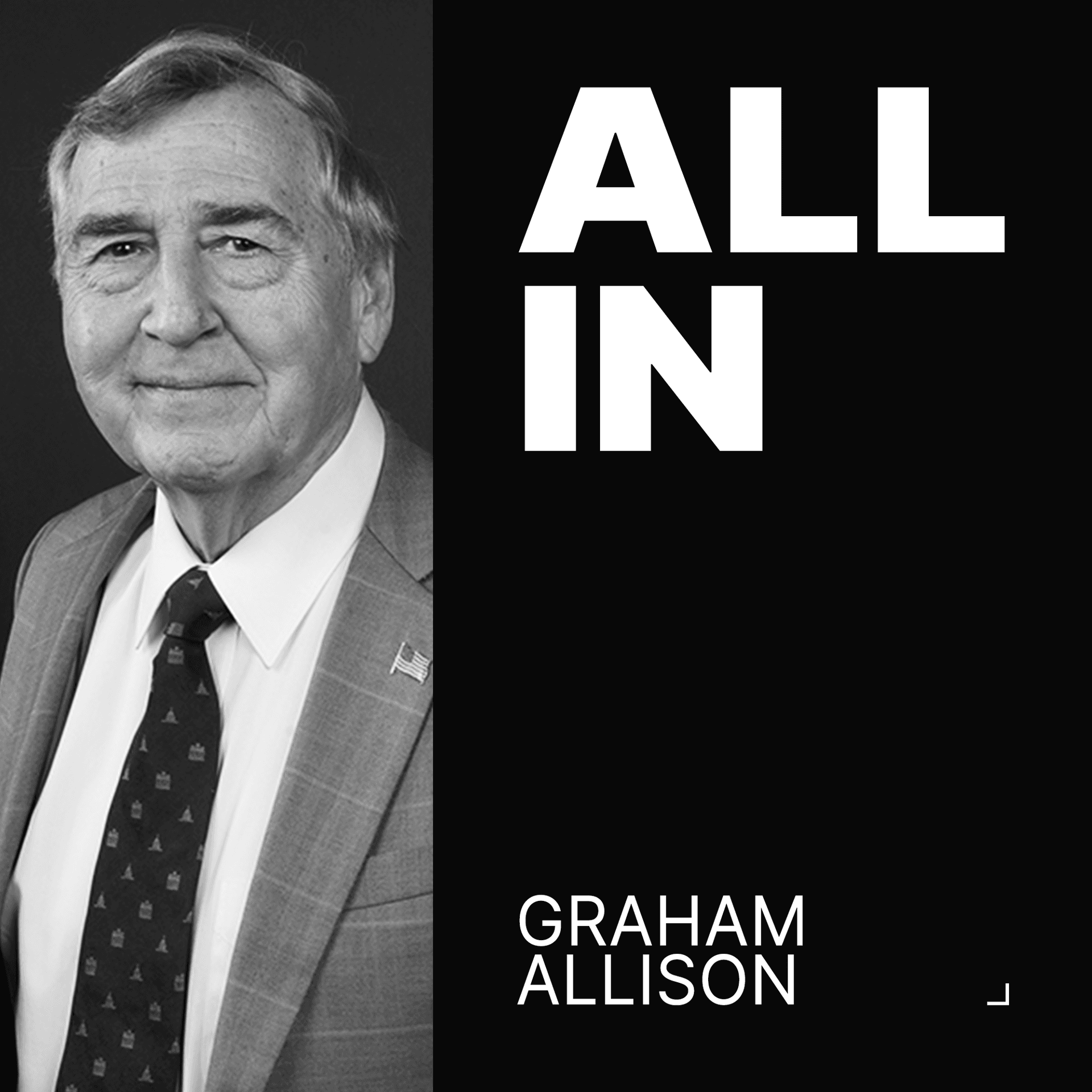
Graham Allison on the Global Realignment: Iran, China, Israel, Greenland
Guest Introduction
- Graham Allison: Renowned Harvard professor and founding dean of the Harvard Kennedy School, advisor to multiple U.S. secretaries of defense, and author of "Destined for War."
---
Episode Summary In this episode, the hosts engage Graham Allison in a detailed discussion about the current geopolitical landscape, covering critical aspects of international relations involving Iran, Israel, China, and Greenland, among others.
---
Key Topics Discussed
- Iran Conflict
- Current Situation:
- The U.S. and Israel's military actions against Iran amidst uncertainty regarding Trump's motivations.
- Multiple reasons behind Trump's decision and varying objectives from administration officials.
- Key Points:
- Uncertainty: High levels of unpredictability regarding the conflict's trajectory.
- Military Power: Recognition of the U.S. and Israeli military capabilities.
- Regime Change: Concerns about the historical failures of regime change (Iraq and Afghanistan).
- Bibi Netanyahu's Role: Allison characterizes the conflict as largely driven by Netanyahu's long-standing agenda.
- Endgame Scenarios for Iran
- Possible Outcomes:
- Shift towards democracy, emergence of extremism, or potential chaos.
- Democratic Potential: Discussion about the implications of a democratic Iran on regional stability.
- Israel’s Democracy Under Threat?
- Bibi's Leadership: Concerns that Netanyahu's actions could undermine Israeli democracy.
- National Identity: The struggle of American Jewish youth to reconcile their identity with Israel's current political climate.
- China and Taiwan
- Likelihood of Invasion: Allison assesses the risk of a Chinese takeover of Taiwan, suggesting it remains low for the near future.
- Military Purge: China’s military restructuring could delay any aggressive moves.
- Negotiation Tactics: Discussion surrounding Trump's potential leverage with China amid ongoing conflicts.
- Greenland’s Strategic Importance
- Military Perspective: Greenland as a base for missile defense and its growing geopolitical significance due to climate change and Arctic navigation routes.
- U.S.-China Dynamics: Concern over China's influence in Greenland if U.S. interests are not secured.
- Nuclear Proliferation
- 80-80-9 Framework:
- 80 years: Since the last world war.
- 80 years: Since a nuclear bomb has been detonated in war.
- 9 countries: The current number of nuclear-armed states.
- Implications of Stability: Discussion on the fragility of the current global security landscape.
- Rising Socialism in America
- Wealth Inequality: Growing concern over income disparity and its political risks.
- Populist Movements: The potential for socialism and populism to reshape political discourse and action.
- Future Risks: Speculations on what a socialist shift could mean for the U.S. by 2028.
---
Conclusion
- Graham Allison provided deep insights into the rapidly evolving geopolitical landscape, emphasizing the complex interplay of military strategy, democratic values, and global economics. The conversation highlighted the fragility of international peace and the potential for significant upheaval driven by both domestic and international factors.
---
Key Takeaways
- Geopolitical uncertainty is at an all-time high, particularly in the context of Iran, Israel, and China.
- The risks of nuclear proliferation remain a pressing concern, necessitating continued vigilance.
- Social and economic inequalities in the U.S. could lead to significant political shifts if not addressed.
---
Partners and Social Media
- Thanks to Airwallex: A global payments platform supporting businesses in managing their financial operations.
- Social Media Links:
- [Chamath](https://x.com/chamath)
- [Jason](https://x.com/Jason)
- [David Sacks](https://x.com/DavidSacks)
- [David Friedberg](https://x.com/friedberg)
- [All-In Podcast on X](https://x.com/theallinpod)
- [All-In Podcast on Instagram](https://www.instagram.com/theallinpod)
- [All-In Podcast on TikTok](https://www.tiktok.com/@theallinpod)
- [All-In Podcast on LinkedIn](https://www.linkedin.com/company/allinpod)
---
*This document serves as a comprehensive summary of key discussions and insights from the podcast episode featuring Graham Allison.*
Written by AI. May contain mistakes. Listen to the episode to check what was said.
Chapters
Tap a time to open that second in VOContext of the Conversation
0:45 to 1:11
Discussion of recent events since the last meeting with Graham Allison.
“If you were building a global financial system from first principles today, you wouldn't build it on 50-year-old legacy rails.”
Iran Conflict Analysis
1:40 to 5:56
Detailed analysis of the current conflict involving Iran and its implications.
“Let me just do four or five quick points.”
Trump's Motivations and Strategy
5:56 to 11:24
Exploration of Trump's motivations behind the military actions in Iran.
“You mentioned there's multiple reasons that the administration has messaged for doing this, multiple views on what success looks like, multiple timelines on ending it, and that this is Bibi's war.”
Potential Outcomes for Iran
11:24 to 14:07
Speculation on the future of Iran and its impact on the global chessboard.
“But if you ask the folks at the Defense Department or if you ask the people in Israel, they're thinking this is another month or beyond this award.”
The Unpredictability of War
14:07 to 14:48
Discover how wars can have unpredictable outcomes and long-term consequences.
“finding signals in the noise extremely difficult.”
The Iranian Regime and Its Challenges
14:49 to 17:40
Explore the complexities of dismantling the Iranian regime and its implications.
“oil and gas prices, predictable, so you can see, and going and going.”
The Dynamics of U.S. and Israeli Relations
17:41 to 23:00
Learn about the evolving U.S.-Israel relationship and its domestic impacts.
“Yes, I think that the uncertainties about that.”
China's View on Taiwan and Global Politics
23:01 to 28:00
Understand China's perspective on Taiwan and its military strategies.
“And the impact of that on Jewish kids in America, I mean, I say this on campus, where they want to be proud of Israel.”
Trump's Approach to Taiwan
28:00 to 29:30
Discusses Trump's views on Taiwan and the current geopolitical climate.
“Finally, in Trump, he has the most accommodating president that China is likely to see with respect to Taiwan.”
The U.S. Strategy on Taiwan
29:30 to 31:00
Explores the U.S. strategic imperatives regarding Taiwan's defense.
“So I say to the Taiwanese friends, you know, basically, don't screw it up.”
Show all 24 chapters
China's Rising Power and Challenges
31:00 to 34:10
Analyzes China's rapid growth and the challenges it faces.
“Now, on the other hand, since the opening to China and the Shanghai communique, there's been an agreement of maintaining a status quo with the U.S.”
Technological Advancements in China
34:10 to 39:00
Examines China's advancements in technology and manufacturing.
“Today, by purchasing power parity, it's 25 % larger.”
Greenland's Strategic Importance
39:00 to 41:40
Discusses the geopolitical significance of Greenland for the U.S.
“So I would say it's a little, there are more similarities there than differences.”
Trump's Greenland Initiative
41:40 to 42:06
Explores the motives behind Trump's interest in Greenland.
“So, and there the main claims are Russian and Canadian.”
Understanding Trump's Greenland Venture
42:06 to 43:03
Explore the motivations behind Trump's interest in Greenland and its geopolitical implications.
“You're going to do it with smart minds or you're going to do it simply by attacking the ships on the away.”
Socialism's Influence in Europe and Beyond
43:03 to 45:56
Discuss the rising influence of socialism in Europe and its potential impact on U.S.-China relations.
“and that that's the real reason for the big push today for Greenland.”
The Reality of Trump's Governance Style
45:56 to 48:59
Examine Trump's approach to governance as a blend of entertainment and policy-making.
“We need to have some allies with heft on our side of the seesaw to keep it from going the wrong direction.”
The Fragile Peace: Lessons from History
48:59 to 52:47
Learn about the historical context of world wars and the current state of global nuclear power.
“time listening to the talk you gave and some people's um reaction to it maybe you could share it with the audience and why it's important.”
Nuclear Proliferation Concerns and Global Stability
52:47 to 55:23
Delve into the risks of nuclear proliferation, particularly regarding North Korea and Iran.
“And we had the latest two, if I'm correct here, you'll correct me because you're the expert, Pakistan and North Korea.”
Rising Socialism in America: Implications for the Future
55:23 to 56:01
Consider the implications of rising socialist movements in the U.S. and their potential impact.
“If you ask me what to do about it, that makes me cry because Trump in the first administration focused on this problem very, very seriously and did everything that he thought he could.”
Nuclear Arsenal Concerns in East Asia
56:01 to 56:52
Exploring the potential implications of nuclear arsenals in South Korea and Japan.
“But now, when you say, well, if this keeps, if things are on the current path, well, maybe South Korea or Japan will have nuclear arsenal in their backyard.”
Populism and Inequality in America
56:53 to 59:10
Discussing the rise of populism in the U.S. and its connection to growing inequality.
“And what is the risk to the United States, do you think, in 2028, if we have a Democrat-controlled House and Senate, and a very populous Democrat candidate that looks like a DSA member.”
Radical Ideas for Addressing Economic Disparities
59:11 to 1:01:12
Examining radical proposals to manage wealth inequality and their implications.
“But I think it's an invitation for some more radical ideas.”
The Importance of Humility in Leadership
1:01:13 to 1:02:26
Reflecting on the need for thoughtful and humble leadership in current issues.
“a couple of proposals here, minimum wage, maybe some type of a wealth tax, there are things that people are talking about, we may not all agree with them.”
Transcript
Automatic transcript. May contain errors.0:00Bill Friedberg:Welcome to another episode of the All In Interview. I'm really excited to be joined by, back to All In, Harvard professor Graham Allison. Professor Allison, welcome back to All In.
0:10Chamath Palihapitiya:Thanks for having me.
0:11Bill Friedberg:We last had you at the summit in Los Angeles, so it's great to have a conversation. A lot's happened since we last got together. For the audience, Graham Allison is the founding dean of the Harvard Kennedy School. He's advised every secretary of defense since Kissinger. He's helped dismantle 12 ,000 Soviet nuclear weapons, and his book, Destined for War, remains the definitive framework for understanding the US-China relationship. I think it's worth kind of bringing forward some of the things that have happened in the world since we last met. I'm going all in.
0:51Bill Friedberg:If you were building a global financial system from first principles today, you wouldn't build it on 50-year-old legacy rails. You'd build Airwallex. It's the single platform for global accounts, cards, and payments that treats the entire world like a local market. Stop paying the legacy tax and start building the future at airwallex.com slash all in. Airwallex, build the future. Let's start with Iran. The US and Israel are in the middle of an attack on Iran, and the supreme leader is dead, but the regime is still holding on to power. Where do you think this conflict will take us? And are we sleepwalking into World War III?
1:30Chamath Palihapitiya:Well, thank you again for having me back. I will have a great podcast. I enjoyed the summit. And I'm sorry we're not there in person to catch up. But I think about Iran, how much to say? So this could be a long lecture. Let me just do four or five quick points. First point, most important point, is that there's more questions than answers. So there's a huge level of uncertainty currently about what's happening and about what's likely to happen. Part of this is Auschwitz's famous fog of war.
2:04Graham Allison:But there's a fog of war that's actually increased because we got two big fog machines adding to the confusion. Namely, Trump and the administration on the one hand and Bibi on the other. And then we got all the chattering class around this. So I would say, why did Trump decide to go to war now? There's six different reasons he and the administration have given, and each one they back around. What's the objective? There's five different objectives, backing around. And when is this war going to end? You know, a day, a week, a month, who knows?
2:43Chamath Palihapitiya:So it's very uncomfortable to recognize how uncertain things are. And most of the conversation about it tries to make it more confident. I think the place to start is there's a huge amount of uncertainty. Having said that, I'll still give you my prejudices about a few of the points. Point two, this has been an extraordinary demonstration of supreme military power and supreme intelligence power. U.S. military and the intelligence community and the Israeli counterparts have been way, way, way off the charts. And I think this should make all Americans proud of what's been built over this decade, two decades of investment, but especially the past decade.
3:29Chamath Palihapitiya:The third point, there's no tears to be shed for Khamenei and the Islamic Republic regime.
3:36Graham Allison:It's an evil leader, an evil regime. There's no bad thing that could happen to them that we shouldn't be cheering. Next point, though, breaking something is a lot easier than building something. And destroying targets is something that our military knows very well how to do. Building a new regime, regime change, is something that we know historically doesn't work very well. at least in Iraq and Afghanistan. We had every word said that's been said in this case. And we
4:12Jason Calacanis:then went in all in and spent more than a billion dollars of many, many thousands of American lives. And when we went to Afghanistan, the Taliban were ruling.
4:24Graham Allison:When we left Afghanistan, the Taliban were ruling. So I would say, unfortunately, it's against the backdrop
4:30Chamath Palihapitiya:that's hard. The next point's slightly more controversial, but I think this is Beebe's war. If your reader or your listeners don't remember Moby Dick, they should go look at it again. Ahab had this fixation, obsession with the white whale and tried to find a way to kill the white whale whenever he could. For the last two decades, that's been Beebe's number one, number two, number three agenda.
4:55Graham Allison:He's tried to sell that war to Obama, to Trump one, to Biden, and how he
5:03Jason Calacanis:succeeded in mesmerizing Trump, whom I thought had his number, I was surprised. So I'm pro-Israel,
5:09Chamath Palihapitiya:but anti-Bibi in this respect. And I think that I understand he's brilliant politically, But I don't think the arguments that were made that Trump has actually repeated that Iran was about to attack us, I see no evidence for that. That Iran was about to get a nuclear weapon, I see no evidence for that. That Iran was building an ICBM that was going to attack the U.S., I see no evidence for that. There's many, many bad things about the Iranian regime, but not most of the claims that were made. So I look at this and I hope it turns out well, but I remember that in wars very frequently, it's easy to get in and it's quite difficult to get out.
5:56Let me double click on that point.
5:59Bill Friedberg:You mentioned there's multiple reasons that the administration has messaged for doing this, multiple views on what success looks like, multiple timelines on ending it, and that this is Bibi's war. How do you think Trump was motivated to do this? what is the real motivation and i will ask this in the context of the big delegation and visit to china coming up next month is trump motivated fundamentally to create leverage with china and use this as a tool to try and maximize his negotiating leverage going into the chinese
6:32Chamath Palihapitiya:negotiations that's a great question and i wish that the answer was this was all part of a grand strategy. That would make me feel hugely better. But I try to do Trumpology, and I was actually having dinner last night with Bill O 'Reilly, a former student, who I think is one of the better Trumpologists for trying to interpret, and we were going back and forth through this. It's easy enough to see why the window, tactically, the window in which this attack occurred was chosen, because here you got 40, you got the Supreme Leader and 40 of the other leaders of Iran out in public. So that's an opportunity as a target.
7:12Chamath Palihapitiya:And the best opportunity that's come along. The question is, why would you be attacking them? And especially Trump, given his campaign and his previous views about not repeating the mistakes of the people that took us into endless, winless wars. And I think it's, I mean, I think Bibi is a magician.
7:34Graham Allison:I think his single-mindedness is impressive. I think his agility in making arguments and developing arguments is impressive.
7:46Chamath Palihapitiya:How he managed to persuade Trump this was a good idea for the U.S. now, I don't have a good idea. And I think if I listen to the reasons why even the people closest around him have given or that Trump have given, They don't seem persuasive.
8:04Jason Calacanis:Now, partly Trump is erratic.
8:08Chamath Palihapitiya:Partly he sort of acts on the basis of instincts. Somehow it came to him that this was something that could be done. I think actually maybe he painted a pretty—I mean, the upside of this picture, if it's successful,
8:27Jason Calacanis:and I hope now that we've gone into it, it would be, would be redefining security in the Middle East for a generation. So getting rid of the Iranian regime as the Bibi and company have gotten rid of the proxies of the regime earlier, which again, since October 7th, been extremely impressive, could possibly, you could say, well, there's going to be a whole new Middle East. And if the Middle East were all like the UAE, that would be fantastic. fantastic for all the human beings that live there. So I think maybe he got excited by the upside, not quite careful enough about the risks or the downside, because the number of ways in which
9:11Chamath Palihapitiya:this could go wrong, you know, if we wake up tomorrow or today, and a couple of ships have been sunk, or a couple of hundred of Americans have been killed, this is going to have a very
9:21Jason Calacanis:different, a different
9:22Chamath Palihapitiya:image.
9:23Bill Friedberg:And you think that this is independent then of the action with Maduro and independent of the big delegation headed to China for big negotiation next month?
9:36Chamath Palihapitiya:Well, I wouldn't say entirely independent. I would think with Maduro, so Trump, I think this again, this is my, whatever, armchair Trumpology, but I would say initially he thought
9:48Jason Calacanis:tariffs were a magic wand. And every leader thinks if you have a magic wand, that's fantastic. He's tried to tariff magic wand and discovered it. Didn't quite have all the effects that he imagined on Liberation Day. He then discovered the American military, which genuinely is a huge wand. And the Madero operation was just spectacular. I mean, again, it's a military and intelligence operation. Brilliant. No other country in the world could even imagine doing something like that. And that actually makes all of us stand taller. It can also provide a little, or historically encourages hubris and an imagination that this magic wand can work in many other arenas.
10:38Jason Calacanis:I don't mind at all the proposition that every other country should take account of the fact that the U.S. has the most remarkable military and intelligence community in the world. And that's not a bad backdrop for China and for a China trip. So I agree that things may not be completely disconnected. But I think in terms of the timing, I mean, right now, when is the war going to be over? If you talk about three or four weeks, he'll be in China March 29. So my inclination, again, if we were just doing prediction markets, is that he's going to find a way to declare this over before then because he needs a little time to get his mind set on that.
11:24But if you ask the folks at the Defense Department or if you ask the people in Israel, they're thinking this is another month or beyond this award.
11:34Jason Calacanis:So again, just things I don't think are quite, you know, in sync.
11:37David Sacks:Jason's joined us. Professor Allison, it's always a treat to have you here on. Nice to see you. Nice to see you. It's just amazing to have you on here and to give us this time. If things were to go extremely well and Iran went from a monarchy to a dictatorship and now in this third act here in the modern day to a democracy, and you actually had a democracy with 93 million citizens in the Middle East, What impact would that have on the region? We've seen the Gulf monarchies evolve, human rights, but they're still monarchies. You have one other, I guess, democracy in the region in Israel, but this could be extraordinary if it was a democracy.
12:15But what would that mean to the global chessboard?
12:19David Sacks:Well, it's a good question. I mean, if this could occur, it would be spectacular.
12:25Chamath Palihapitiya:Even, I think, but I would say this is way, way, way too ambitious.
12:30Graham Allison:There's a hundred things that would be wonderful outcomes, better than what's likely, that would be short of that.
12:38Chamath Palihapitiya:I remember in Iraq, after Bush failed to find nuclear weapons, which was the initial, I would say, somewhat cucked up rationale for our going into Iraq, Condi Rice, who was the secretary, gave a speech about, well, how wonderful it'll be when Iraq is a democracy and market economy, quote, radiating stability through the Middle East.
13:03Jason Calacanis:So we're pretty good at doing I Have a Dream, you know, in that version. I think that's a way, way, way stretch. I would be very happy with a regime there that simply was not about building nuclear weapons, was not about building missiles that threaten the U.S.
Read the full transcript
13:21Graham Allison:and our friends and allies in the region, and not about supporting proxies. And if it's a pretty cruel regime, unfortunately, that's unfortunate for the Iranian people. The Persian people, when I'm a student of history, I love Persia.
13:39Chamath Palihapitiya:You know, I remember Cyrus and I remember the Peloponnesian War. I remember, you know, this is a fantastic culture and history. They've been hijacked by a terrible, terrible group of people.
13:51Jason Calacanis:And if those people can be somehow ousted, you know, wonderful for Iranian people and wonderful for the world, if I were betting it, again, I'd say go back to the first point. questions, uncertainty, finding signals in the noise extremely difficult. But if I were betting it, it'll end up that the guys with the guns will in some version be the next iteration.
14:20Graham Allison:And if they're tamer and less determined to threaten our interests, will this have been worth it? Well, again, we'll have to look at you know, over the longer run.
14:37Jason Calacanis:I think the other thing that we know about wars is that they're unpredictable and that they have many unanticipated consequences. So I think as we watch what's happening now and see what impact does that have on oil and gas prices, predictable, so you can see, and going and going. Well, what impact does that have on other countries are huge so the number of countries now whose economies are being disrupted by this impact and therefore blaming us for it so i had a call from someone in taiwan uh yesterday saying wait a minute did anybody think what it's doing for us since they had about half of their their electricity comes from their natural gas that is now coming you know now not not coming.
15:28Jason Calacanis:If you ask about what is this meaning for Ukraine, all the patriots that were to hope
15:37Graham Allison:to prevent missile strikes from Russia on Ukraine are now in the Middle East. So that's
15:47Jason Calacanis:many more targets. So there's just, unfortunately, it unfolds in so many different directions. Now, I don't want to seem too pessimistic about it because, again, I think we've been shocked, fortunately, on the upside by how professional our military and intelligence folks have been and also how pathetic or hollow the Iranians have been. First day of the attack, I was at the Defense Department, and I gave them a list of 11 things that I would do and be capable of doing if I were playing the Iranian hand. And they seemed to be, I mean, I hardly even want to say out loud, but they act like a paper tiger.
16:34Do you think there's more damage that can be done by being more successful?
16:40Bill Friedberg:You know, if we think back to Iraq, Iran is twice as many people, 100 million versus 50 million, four times the land area, a much better equipped military, and arguably the military system, the regime, is embedded in every aspect of industry. So the more successful the United States is in dismantling the Iranian regime, and as was advised by Condoleezza Rice, who apparently was just in the White House today and advising the president and publicly stated, it's time to finish them off, it's time to go all the way, etc. etc. Does that not then leave a country with no infrastructure, no leadership, 100 million people in tatters?
17:28Bill Friedberg:And that's the classic breeding ground for some of these extremist groups to seize control and seize power. And we don't have the resources to go in and have another multi-decade Afghanistan-Iraq problem.
17:39Chamath Palihapitiya:I'm afraid I agree. Yes, I think that the uncertainties about that. I mean, you can do four or five different scenarios for how this might conceivably end. It could end up being an extended civil war in Iran among the various national groups, even some of them possibly seceding. So again, fairly chaotic, look like Syria plus, okay? It could look like Iran or Afghanistan.
18:07Jason Calacanis:Well, excuse me, we were there for more than a decade with unlimited resources, hardly any constraints on the number of people. And how did that work out?
18:17Graham Allison:So I say that I'm a small C conservative and kind of think history is not always,
18:27Chamath Palihapitiya:certainly not the only guide, but it's a good place to start. I would say nervous.
18:33Bill Friedberg:Is it too late to have a Venezuelan outcome where we've taken out the head of the snake and we've simply replaced it. The snake can continue operating and living without too much destructive damage and effect. But it seems like we may be a little too far gone now in Iran and that to take this all the way might be very difficult to manage.
18:51Chamath Palihapitiya:Is it too late? If I were, again, we're all in the dark and all the uncertainty, so back to point one. But after that, I would say Trump is erratic, impulsive,
19:03Jason Calacanis:but he has some coordinates. and one of them is his power. November 3rd is a big day for him. He's focused on that. The economy is a crucial element of that. That's part of the framing of the China relationship. The impact of this on the economy is already evident, okay, and could become more evident. The public opinion, again, I think I saw today in the journal that he's sent Hengspeth out to sell the war. Good luck. I'm not sure he can sell. So, public opinion of this, it's about six to four unfavorable. Because they didn't make the case for the war in advance. The impact of this on other parties, including parties that we care about, is negative.
20:02Jason Calacanis:so I could easily imagine in the next week even if you look at actually the way in which he's left himself room to declare victory at having, as you say, cut off the head of the snake destroyed their nuclear capabilities destroyed their ability to project power or in the defense department we always say destroy or degrade. Degrade has a lot of dimensions, as you would point out. And now it's up to the Iranian people to seize their own government and take advantage of the stuff. The difficulty with that will be Bibi wants to fight on until the regime is destroyed. And that'll be an interesting struggle to see how that goes.
20:52Earlier, Trump demonstrated that when he thought it was in American interest.
20:57Jason Calacanis:He was prepared to pull Bibi's chain. So we'll see.
21:01David Sacks:This is, I think, before we move out of the MENA region, a topic that's coming up. There's obviously no support for this war in America. Most Americans put foreign affairs today at one or 2 % of their concern. Economy and many other issues are high on their list. And he's been pretty clear, hey, we're not going to put boots on the ground. And then there's this anti-Semitic underpinning that's happening in America that's become pretty acute. And you had Rubio, who we mentioned earlier, say, hey, we did this because the Israelis were going in anyway, and we had no choice. And then they walked that back.
21:39David Sacks:Explain to the audience how we should look at that turn of events where there's a group of people in America, specifically people in the MAGA party, who believe Trump has betrayed them and that he's captured by the israeli um government in some way and he's doing their bidding i'm not saying that that's my perspective but that is a an undertone that we're seeing and
22:02Chamath Palihapitiya:that's something new in our lifetime i think it certainly is so this is a big topic but i'd say when i talk about it i i say i'm pro-israeli and anti-bibi so is bibi is not israel the people whom I know mostly and respect mostly in Israel are the national security barons, the people who've
22:25Graham Allison:been the chief of staff or the head of Mossad or the head of Shin Bet or the people that work in those structures.
22:33Chamath Palihapitiya:And they believe that Bibi is actually destroying the Ben-Gurion's Israeli democracy that they cared about. Or take Tom Friedman. It's pretty hard to accuse him of being
22:47Graham Allison:anti-Semitic, but he's been, I think, very clear and very courageous in pointing out that what Bibi's doing to Israel's democracy is really destroying it. And the impact of that on Jewish kids in America, I mean, I say this on campus, where they want to be proud of Israel.
23:10Chamath Palihapitiya:They deserve to be proud of the country that has been built over these years, but they look at the behavior of these crazy right-wing settlers and their activities in the occupied West Bank, or they look at some of the activities in Gaza, or they look at now the kind of unlimited
23:32Graham Allison:war without any even attempt to make arguments about proportionality and just say, wait a
23:39Jason Calacanis:minute, that's not the country I want to be proud of. I want to be proud of Rabin's Israel. I want to be proud of Ehud Barak's Israel. I want to be proud of Ben-Gurion's Israel.
23:49Graham Allison:I'm pretty much of that persuasion. I think what maybe risks in this, and risked earlier, with citing, I mean, interfering in American politics, invites pushback. so i think this could have a big long-term negative effect both in the democratic party
24:17Jason Calacanis:and the republican party especially younger under younger people if you look at the polling for the under 30s on israel it's just like shocking you know can we move to china because
24:31Bill Friedberg:i think that again this is going to be the big story over the next month you've said publicly that ousting Maduro from Venezuela could embolden China to accelerate a Taiwan takeover. The CIA, it has been reported in media, warned Tim Cook of Apple and other tech companies about a possible invasion as soon as next year. You've separately met publicly with Chinese officials. What's your view on the likelihood and the timeline of a China attempted takeover of Taiwan? and what are these kind of motivating factors that might make that happen sooner?
25:08Chamath Palihapitiya:So let me clarify. I'm not sure, or I may have been misinterpreted, but obviously the Chinese watch very carefully. They study wars and they will learn lessons from what's going on here. But I don't think the Venezuelan operation, other than making them feel envious about the capabilities, will impact their likelihood of attacking Taiwan. So Taiwan, number one, I think the likelihood of an attack on Taiwan this year or next year or even into 28, but let me just do 26 and 27, absent some major provocation by
25:48Graham Allison:Taiwan or some other third incident is very low.
25:52Chamath Palihapitiya:I'd put it at about where the prediction markets are, 5 % or something low. So I'm not counting on that. Why is that so low?
26:02Graham Allison:I'm just curious. Why 5 %? Yeah. Okay, because first, they have a theory of the case of what they call peaceful reunification, and they think things are involving in that direction. The theory of the case is that the current government, which is a DPP government, which currently is stymied by its opposition in the parliament. So they can't even buy the arms sales that we previously gave them. There's$11 billion arms sales that the Chinese have complained about, but Taiwan, the legislature probably won't buy half of that. Okay. So the current president is struggling. There's going to be an election in January 28th,
26:52Jason Calacanis:And they think it's likely that the former party, the KMT, will be elected. Somebody that will be much more sympathetic to China and to an evolving relationship. So that's number one. Number two, the Chinese have been engaged in a deep, deep purge of all of their military leadership. I mean, it's hard to believe, and you read about it in the paper from time to time, that he fired this guy, he fired this guy. He's fired the equivalent of every four-star in our whole political system and every combatant commander and every commander who would be commanding the forces to deal with Taiwan. So while they've been building up that military capability, it takes a long time to get that back into order, in my view.
27:43Jason Calacanis:So I would say that part makes me feel less likely. Third, I think he understands that if he were to do this, there's a risk, not a certainty, but a risk that the U.S. would become involved and that the impact of that either on China's economy, which he's got to worry about first, and also on its evolution, would be significant. So I'm looking for – oh, sorry. Finally, in Trump, he has the most accommodating president that China is likely to see with respect to Taiwan. So Trump has made no secrets. I mean, he talks publicly of his views about Taiwan. in, I think, a couple of the memoirs. There's this discussion where he's in the Oval and he's talking about Taiwan.
28:33Jason Calacanis:And somebody asked him about Taiwan. He picks up one of those Sharpies and goes, you know, on a spot on the Resolute desk. And he says, that's Taiwan. Then he draws his hand around the whole desk. He said, that's China. So I'd say I'm less worried about Taiwan in the current path. Now, over the longer run, the Chinese are absolutely clear, Xi and all the leadership, that Taiwan is an inseparable part of China and how that could be satisfied in a way that allow the Taiwanese the degree or substantial degree of the freedom with both their economy and their society is the challenge that we've been struggling with for a long time.
29:21Jason Calacanis:But the good news is we've been doing this for 50 years and Taiwan has never seen such circumstances. So I say to the Taiwanese friends, you know, basically, don't screw it up.
29:36Bill Friedberg:Are we taking the right course of action, do you think? I guess the big question for you is, what's the strategic imperative to keep Taiwan from falling under direct Chinese control for the United States? And are we taking the right actions to hedge our bets, if you will, against that happening? Meaning on-shoring of semiconductor manufacturing, but also maybe from a defense perspective and positioning perspective, you can share a little bit about whether we're on the right track. Sure.
30:05Chamath Palihapitiya:That's a big question. And so, first, Scott Bessent, the Secretary of the Treasury, when he's asked about this, he says the biggest threat that he's ever seen is the fact that 96 % of the advanced semiconductors come from one small island that could become cut off. So TSMC, as you all have discussed before, produces the advanced semiconductors for essentially everybody of whom we're the principal consumer, and we prevent them shipping this to China.
30:38Graham Allison:That's a pretty complicated situation to begin with. And secondly,
30:45Chamath Palihapitiya:Taiwan is halfway around the world, as President Trump says, and 90 miles off the shore of China. And we're far away and we have a lot of other things to worry about.
30:55Graham Allison:So it's a little bit like Cuba.
30:57Chamath Palihapitiya:So inherently indefensible if China were seriously determined to either destroy it or to take it. Now, on the other hand, since the opening to China and the Shanghai communique, there's been an agreement of maintaining a status quo with the U.S. commitment being what's called strategic ambiguity, in which the U.S. and China have been committed to Taiwan. internal development is left to its own device, and China doesn't use military force to prevent that. But we say Taiwan, there's one China, and the only China's capital is Beijing. And then we have a little bit of an ambiguous way to talk about the relationship between Taiwan and China, but certainly letting it evolve in any way that the parties would be prepared to live with.
31:55Chamath Palihapitiya:most people expecting that over time this relationship will work its way out. And when I talk to Chinese about it, I say to them, first, you've never seen 50 better years on either side of the straits. So this has been fantastic for both societies in terms of what they care about. And secondly, if they look at this situation, if China's core strategy is correct, which is the inexorable rise of China. And that continues. In another decade or two,
32:31Graham Allison:Taiwan will look like a flea.
32:33Chamath Palihapitiya:And therefore, we're not going to be an issue. If China's main narrative doesn't work, Taiwan is not going to be their biggest problem. So they should work on the other issues.
32:45Bill Friedberg:If you think about China projecting influence around the world, how important is it for them to continue to do that There was recently an objective, I think, of a GDP growth in the 5 % range, 4 % to 5%. Is that right for China?
32:59Chamath Palihapitiya:4.5 % to 5%, yeah.
33:01Bill Friedberg:4.5 % to 5%, which is a record low in recent history for them. Is it imperative for China to continue to extend geopolitical and economic influence around the world to grow its economy? You know, going back to the framing of the rising power, do they still need to do that to keep people happy at home? Or is China going to be able to maintain happiness at home in a multipolar world where China and perhaps the U.S. and perhaps some other countries share influence around the world?
33:38Chamath Palihapitiya:This is one you raised and we talked about the last time, which is interesting. I think we agreed. So let me, just again for people that don't remember, start. So first, China is a meteoric rising power. Never has a country risen so far so fast on so many different dimensions. If you take a snapshot of the year 2000 and the year 2025 and compare China on any metric of power, it's just dumbfounding dumbfounding so a country that I have compared it to kind of like a Formula One racing a country that we couldn't find in our rear view mirror in 2020 I'm sorry 2000 because it was so far behind we have trouble finding in our rear view mirror today because it's beside us or in many races even slightly ahead of us so that's
34:32Graham Allison:GDP it was less than 5 % of global, or it was less than a quarter, the U.S. in 2000.
34:43Chamath Palihapitiya:Today, by purchasing power parity, it's 25 % larger. In 2000, trading, it was 5 % of global.
34:52Jason Calacanis:Today, and we were 15. Today, it's 35, and we're 25. If you do advanced tech in any arena, take 5G.
35:01Chamath Palihapitiya:My goodness, take EVs, oh my goodness, take whatever. Okay, so rapidly rising power. That's essential. That's the infrastructure for their grand narrative, which is the inexorable rise of China to its natural position in the international order, which they think is at the top of the
35:23Jason Calacanis:pyramid. So they are absolutely determined to be number one in their own arena to begin with. And then after that, you know, maybe more. And they also, they have a second, the second proposition, there's the inexorable decline of the U.S. And they look at the various parts of the U.S. and the components, including getting involved in unnecessary wars as part of that story, that part of their narrative.
35:52Chamath Palihapitiya:And that dynamic, the shifting of the seesaw, is what gives you this thucidity and dynamic that we discussed before, which most often, hard as it is to believe, but most often discombobulates people so much that then some incident or accident, like something that happens over Taiwan, leads to a vicious circle of actions and reactions that drags them into a war, after which they think, my God, how did this ever happen?
36:21Jason Calacanis:So that's a long story, but I would say the economic piece is essential for this. And that economic piece means they want to be the manufacturing workshop for the world and the foundry for the world and the supplier for the world.
36:36David Sacks:there are two major challenges they have, I believe. One of them is population decline, the other is unemployment. And the AI that we've seen and what's hitting first could hit them in a major way. Manufacturing is moving to robotics at an alarming place. Then you have things like self-driving, which is a major job there for many people. So, on those two axes, when you see the youth unemployment which i think is 15 or 20 percent in some locations in china and the population decline is that she's two biggest challenges to deal with and how does that affect
37:14Chamath Palihapitiya:this you know by this uh sure relationship good question and this is more in your space than mine because i've tried to follow but elon says there's going to be more robots than people
37:26Jason Calacanis:okay yeah and if you ask them where where are the most advanced robots in the world the ones that are kicking his ass or he worries about they're china so they got a huge number of
37:37Chamath Palihapitiya:robot companies when i was there in uh less when was i last there in uh um january i went to see a factory a xiaomi xiaomi the phone company a xiaomi three years ago decided they would make cars
37:56Jason Calacanis:after watching Apple spend$10 million not able to make a car. Within three years, that factory is producing cars right now. And they have a huge demand for these cars. They have three lines. One of the lines is all robots. So they're putting a lot of robots to work. More than half of the factory worker robots in the world are in China. And so some of the people are saying, well, you know, demographics is going to be not so big a problem because if demographics is only a problem because of workers, you know, we're going to have workers. In fact, the American workers are more worried about, you know, taking our jobs.
38:39Jason Calacanis:So that's a – now the issue for the impact on education, they have a number of people that have been educated in arenas that are now no longer, you know, high-demand jobs. Unfortunately, we have a lot of that too. I mean, if you look at people, college graduates now that graduated in, I don't know, DEI subjects, they're having trouble getting jobs. So I would say it's a little, there are more similarities there than differences. The other thing is Chinese have demonstrated a much greater capacity or readiness to adopt and adapt to new technologies. So if you look at, I'm sure you have, or y 'all have probably had him on, Jensen Wang.
39:28Jason Calacanis:But when he went to China, he said, gee, I think I came to the future. You know, that people don't, you know, they don't use, not only do they not use coins, they don't use bills, they don't use checks, they don't use credit cards, they just have their face and then go through the store.
39:50Bill Friedberg:Let's shift around to what some have described as the longer term playing field, which is near the Arctic. Some have argued that much of the recent push for Greenland by the United States is driven by the military threat coming over the Arctic from Russia and from China. I'm wondering if you could just help frame for our audience, why is Greenland so strategic to the United States? And is this effectively a proxy for defense against China and Russia? And why now?
40:27Graham Allison:Another big question. So let me start with the bottom line. I think that at least from the judgments of the people whom I respect the most, we the U.S. can get everything we want from Greenland without invading it or owning it. So Greenland has been an important base for missile defenses, a dual base.
40:52Chamath Palihapitiya:We had two other bases that we closed, but we can open as many other bases as we want, and they're very amenable to that. I think President Trump's right to say, well, yeah, but I don't want a short-term lease on these bases. I would say a 99-year lease sounds like a pretty good lease to me. In 99 years, God knows what's going to be happening. But to the extent that missile defense is part of it, which it is, I would say that's a part.
41:21Graham Allison:For the naval component, yes, I think as the Arctic melts, you already now have an opening of sea lanes and the way that the territorial ownership, the abutters have their claim to the local and the regional. So, and there the main claims are Russian and Canadian.
41:48Chamath Palihapitiya:We have a chunk from Alaska, and then Greenland would be a piece of that. So, I would say that's relevant. But those sea lanes, at least for the Navy people I talk to, they're not as important as they used to be because now there's so many different ways to get it. You're not going to try to blockade a waterway with ships. You're going to do it with smart minds or you're going to do it simply by attacking the ships on the away. And if it's underwater, underwater is pretty much all the same. But it's good to have narrow places and shallow places for looking for things. So I would say I think Trump's Greenland venture was more like for fun.
42:38Jason Calacanis:Plus, I mean, I think one of the people that knows him well says, remember, he's first off a reality TV producer and star. So he just has fun starting with a drama, getting people very excited, letting the tension rise, and then finding a resolution. And I think we're on track to a resolution there.
43:02Bill Friedberg:Let me push back just on that point. What I have heard is that there's rising socialism in Western Europe, growing concern that over time, as socialism becomes more of the mainstay in the governing models in Western European nations, those nations fall more under the influence of China. And as a result, if you think about the influence that China could then have on Denmark and on Danish foreign policy, if the United States doesn't secure what it needs for the long term, and it may not know what it needs for the long term physically in Greenland today, we only know what we need today, that we're at risk of China having outsized influence over Greenland tomorrow.
43:47Bill Friedberg:and that that's the real reason for the big push today for Greenland. How does that sit with you? And does that align kind of with what some folks are concerned about?
43:57Chamath Palihapitiya:I have to think about it. I hadn't heard that argument just that way. Again, what is socialism? It's complicated. Certainly the Chinese, well, yes, they're socialists in some respect. I would say capitalism is, I mean, they're autocratic and they're party-led, But then their economy is essentially fiercely capitalist. I mean, you have one of my friends, gladiatorial conflict that makes the competition in Silicon Valley look tame as the parties fight each other.
44:39Bill Friedberg:Well, because you can't make money because the taxes are so high. That's another. And in their case, you know, they decide they're going into an arena, let's say, for example, EVs.
44:51Chamath Palihapitiya:And so they give advantages to companies getting started, even subsidies. And then they let them fight it out. And lo and behold, at the end, there'll be, you know, 10 or 5.
45:04Jason Calacanis:But it's fiercely competitive in the meantime.
45:07Chamath Palihapitiya:And a lot of guys will get, you know, trampled along the way. And then those guys are excess capacity and they'll sell things off, you know, without any concern about the CapEx, as long as they can stay ahead of the game, you know, selling items or even selling out their inventory. So I think watching the evolution of other countries, including Europe, and their relations with China as well as with us in this game is a very relevant point. And I would say that one of the things that the Trump administration has had trouble with is recognizing that if we're in a fierce rivalry with China, they got four times as many people.
45:56Jason Calacanis:We need to have some allies with heft on our side of the seesaw to keep it from going the wrong direction. And so, yes, sometimes you need to give your ally a cold bath in order to get them to shape up. But I think getting Canadians to think of us as an enemy is a pretty wild idea. I mean, any treatment that comes to that conclusion, and if you take Carney, whom I know from when he's a Harvard college kid, he's as American as anybody, or he was. But the idea if you go and threaten a politician's survival, that's a pretty good way to piss him off. And if you threaten to take territory from people, that's a pretty good way to make them feel hostile.
46:55Jason Calacanis:So this is an unusual treatment if we're trying to get guys with heft on our side of the seesaw.
47:01David Sacks:At the World Economic Forum, I wasn't sure if it was Davos or another one of their forums. Were you at the Davos one this year? Sure. So as a total aside, just bringing President Trump's impact, it was two and a half days of people wondering what he would say when he got there. The town shut down as people watched his two-hour stand-up delivery. delivery and then another two days of people sort of trying to understand and figure out what happened there so there's something it was really it was a reality tv show for sure yeah
47:33Chamath Palihapitiya:so he took over this fellow uh mooch who was his communication guy for a week or 10 days till he got fired in the first administration said on the first night i was at an event he said remember
47:48Jason Calacanis:this is going to be a reality TV show. It's going to start with the claim that we're going to invade Greenland, which, by God, invading in a lie, that's a pretty big deal. He said, then you're going to watch the drama build. When Trump had a chance to speak, he's speaking this long reign back and forth. But he then had just a paragraph in which he said he basically took the gun off the table. But before that, he was doing a mafioso act, Even some mafioso lines about, you know, you could either have it the easy way or the hard way. That's a godfather line. And so people were saying, yikes, you know, what has been loose on us?
48:27Jason Calacanis:So now you have all this drama. But then he says, I've decided we're not going to invade Greenland. He just passes that off. So now the temperature goes down. And now the third day he does some other institute or board of peace. and he says we now have a framework of an agreement so uh i think i think half of the time he's having fun yeah you know it's sort of it does get people's attention sure it does uh you um on a substantive basis shared a framework 80 89 and i think it you know i've spent a bunch of
49:06David Sacks:time listening to the talk you gave and some people's um reaction to it maybe you could share it with the audience and why it's important. Well, thank you.
49:14Jason Calacanis:I'm glad you... So I think this is a big idea. So these are three numbers, each of which is the answer to a question. And if you can remember the three numbers and you can identify the question to which each one is the answer, you have the big picture about international security in the lifetime of yourself and even your parents. That's virtually everybody who's alive today. So the first 80 is the answer to what? How long it's been since a world war. How many years since a great power war, since a world war? Yeah. Now, whoa, wait a minute. 80 years?
49:54Graham Allison:This is the longest peace in recorded history since Rome. This is not natural. This is very abnormal.
50:05Jason Calacanis:This didn't happen by accident. This was what the people who founded the international order after World War II were trying to build a new world order. Because they had just lived through a terrible World War II. Simply one generation before, they remembered, hey, there was World War I. So if we just keep doing this, we should expect World War III. It should have already happened. If it could have happened at the Cuban Civil Crisis. So, no great power war. Fantastic. But a fragile, a work in progress all the time, eroding, inevitably, for many, many different reasons. Second 80. How many years?
50:48Jason Calacanis:Since we've had a nuclear bomb go off. Fantastic. So think about that. If you had gone, if there'd been prediction markets, and you had gone in 1945 or 50, you would have got 10 ,000 to one odds against that. It's impossible. The weapon that ended World War II and you're not ever going to see any use of those weapons in war? Whoa.
51:10David Sacks:And then nine? The number of countries, nation states, that have nuclear bombs today.
51:17Jason Calacanis:Fantastic. Right. Now, how in the world could you have only nine countries having nuclear weapons? Nuclear weapons being your kind of ultimate security blanket. Again, John Kennedy in 1963 said by the 70s, there'll be 25 or 30 nuclear weapon states. Because he thought that as states acquired the capability to build nuclear weapons, they would do so. Today, 90, 95 states could have nuclear weapons in a year or two if they decided to build them. Actually, into the 70s, Sweden had a serious nuclear problem. South Korea had a nuclear problem. Taiwan had a nuclear problem. The U.S. closed those down, created the so-called non-proliferation regime.
52:02Jason Calacanis:That's accounted for this time. But I would say, again, fragile, eroding, not likely to be sustained. So when I try to do my giving thanks for, you know, things that I should be thankful for, thankful for 80 years without a great power war. If there were a great power war, you and I, we wouldn't be here. and we wouldn't be having this conversation and all the other issues we have to deal with. So I would say the 80, the 80, and 9, we should not take for granted. We should give thanks for the work that was done to build them, and then we should notice what's going to be required to sustain this.
52:43David Sacks:And we almost had a 10th nuclear power in Iran. We did. And we had the latest two, if I'm correct here, you'll correct me because you're the expert, Pakistan and North Korea. And we had that one Dr. Khan, I believe his name was, from Pakistan. who was trying to spread and sell these. Absolutely. Did we make a critical error, we being the West, even the East, humanity, the leadership of letting Pakistan and North Korea into this club?
53:11Jason Calacanis:Well, I mean, not into the club, but allowing them to get nuclear weapons, which is right. The Israelis have had a different idea.
53:19Graham Allison:And this goes back to the original attack on Iraq, Osorak. I call it affirmative non-proliferation.
53:32Jason Calacanis:So they say, we're not allowing nuclear weapons in our neighborhood. And they've destroyed the nuclear weapon project in Iraq. They destroyed the nuclear weapon activity in Syria when the North Koreans were building a plant there half dozen years ago. And now they've been the leaders in the destruction of the Iranian nuclear program, which we've participated in.
53:57Chamath Palihapitiya:However, I'm uncomfortable about the wars even in Iran. I have to cheer for this
54:04Jason Calacanis:because I fear additional nuclear weapon states. And I wish that we had managed somehow, let's take the North Korean case. I've even said this to Chinese officials. I said, you know, we and you made a terrible mistake. Maybe we made a bigger mistake to let North Korea get nuclear weapons. but what we should have said to you is hey we have an idea nuclear weapons are either good for North Korea and South Korea or they're good for neither of them your choice and that would have been hardball but I think the idea of having Kim Jong Un have now more than 100 nuclear warheads and missiles that can reach the American homeland is crazy.
54:56Jason Calacanis:I mean, here we're talking about Iran
54:58Graham Allison:and what it might be. Excuse me.
55:02Jason Calacanis:It takes 20 minutes longer from Korea to get to Boston than from Iran, or maybe 25 minutes. So I think that that's a useful perspective to remind us that we let this thing happen. It's a ticking bomb as far as I'm concerned. If you ask me what to do about it, that makes me cry because Trump in the first administration focused on this problem very, very seriously and did everything that he thought he could. And I thought it was a good effort, even though it was not successful. But the 20 other ways we've tried to deal with that problem were equally unsuccessful.
55:47David Sacks:How does China feel about nuclear proliferation and North Korea having these bombs?
55:52Jason Calacanis:Well, I think they feel a little ashamed, at least, about what happened in North Korea and kind of think, well, that wasn't really our problem. But now, when you say, well, if this keeps, if things are on the current path, well, maybe South Korea or Japan will have nuclear arsenal in their backyard. They think that's terrible. And we would be not very enthusiastic about a Venezuelan or Canadian nuclear bomb. Yeah.
56:19Bill Friedberg:So, Dr. Allison, just to kind of wrap our tour of the world here, come back to the United States. Since we last spoke, there have been a number of mayors elected in this country that are self-declared socialists or democratic socialists of America, PSA. and there's a rising populist movement in the United States that seems to be manifesting in many cases candidates that look and act like true deep socialists and want to enact socialist policies. What is the risk to the United States if this continues to go the way it's going? And what is the risk to the United States, do you think, in 2028, if we have a Democrat-controlled House and Senate, and a very populous Democrat candidate that looks like a DSA member.
57:10Bill Friedberg:Where does this take us?
57:12Graham Allison:Well, again, good for you all for thinking of uncomfortable, theoretical questions, but real. So, if you look at the numbers, I've been looking at them lately, they're hard to believe in terms of the split between wealthy and poor, or rich and poor.
57:35Chamath Palihapitiya:If you look at who's benefited for the last generation in terms of the 0.01%, the 1%, the 10%, the 20%, that's us and all the people that we know virtually.
57:49Graham Allison:And therefore, when we say the market is, you know, third year in a bull market, and my goodness, here it's up 15 % or 16 % or this 80 % or 70 % of people, this is not part of their lives.
58:04Chamath Palihapitiya:and when I look at the numbers about both what I think the facts are and then even more people's perception
58:13Graham Allison:it's just not stable in a democracy if everybody gets a vote and if the top 10 or 20 % are taking 80 % or 70 % of the pie that's not stable and sustainable I think and it's a political invitation
58:34Chamath Palihapitiya:for a populist and demagogic, I mean, you don't even have to be a demagogue to say that's not fair, that's not reasonable. So I think that it's not, I mean, this is beyond my, I mean, I can hardly deal with the problems I focus on. This one is one that I look over my shoulder and think, gee, wait a minute, first this can't be true, but then whenever I've been looking into the numbers lately, they look as bad as they appear. And then this is extremely dangerous. And I would say yes. And so I haven't heard people talking about plausible ways in which this could be addressed.
59:20Graham Allison:But I think it's an invitation for some more radical ideas.
59:30Chamath Palihapitiya:And while I like very much the Trump accounts for kids to give them some stake, I think that's a fantastic thing.
59:40Graham Allison:I could probably be persuaded that people, even at my level of income, should pay another 10 % of taxes or whatever for some more adjustment. I think the kind of adjustments that are basically putting people on the dole or support for non-productive or semi-productive activity makes me very uncomfortable.
1:00:14Jason Calacanis:I mean, unless they're lame or, you know, ill or aging.
1:00:18David Sacks:You're referring to UBI proposals, people getting a universal basic income. That takes motivation. That makes me less.
1:00:24Chamath Palihapitiya:I like incentive.
1:00:25Graham Allison:I mean, I think that the stuff of America has been the opportunity for people to be incentivized to invent, create, and create wealth that's benefits for everybody.
1:00:37Jason Calacanis:But if the jam is not getting spread to 70 % of the people, that's not a sustainable political situation. situation. And I think, I mean, I thought in the New York campaign, we got to see some preview of a bit of this. And in the primaries, you're seeing people going into this space. I haven't seen anybody with a coherent program yet. But I think for serious people thinking about what's
1:01:07Chamath Palihapitiya:good for the country, it's a good one to worry about.
1:01:12David Sacks:It does seem, Freyberg, that there's a a couple of proposals here, minimum wage, maybe some type of a wealth tax, there are things that people are talking about, we may not all agree with them. And they may be hard to execute. But one of them is for the people at the top, I think you would agree, Professor Allison, the people at the top have the most to lose here. And they should be thinking about it. And maybe there's generosity and, you know, maybe giving away wealth in a more thoughtful way, because there's so much wealth in this top 1%, 10 % that they can't possibly spend. And so this might be something that that group of people should be thinking a little bit more about.
1:01:50Jason Calacanis:In the State of the Union, Trump called out, you know, Dell and a couple of other people for having stepped up and say, okay, I'm, you know, I'm all in on this. I would say there's something quite, you know, that's certainly got my attention and made me think maybe I should be doing something different. Yeah. Yeah.
1:02:09Bill Friedberg:Right. Well, Professor Allison, you know, they say that you can measure a man's knowledge and thoughtfulness by his humility. I will say you have extraordinary depth and you've thought so deeply about so many of these issues that this world is facing right now. And yet you act with such humility and grace when you speak about them. I want to thank you for that. I want to thank you for taking the time to be with us today. Really appreciate it and look forward to doing it again in person soon.
1:02:36David Sacks:Yeah, thank you so much on behalf of the audience and just on a personal basis. This is such a delight and privilege to be able to do this with you every year or two. And I hope we can just do it every year because it's the highlight of my year when we get to talk.
1:02:50Chamath Palihapitiya:Excuse me. It's an honor for me. Thank you so much. And thank you for what you all are doing. And thanks for thinking of such hard questions. Take me home tonight to think about socialism. Yes.
1:03:01Bill Friedberg:Yeah.
1:03:02Chamath Palihapitiya:Okay. Thank you, sir. Thank you.
1:03:19David Sacks:I'm going all in
From the publisher
(0:00) The Besties welcome legendary Harvard professor Graham Allison
(1:14) Iran Conflict: Strategy, Netanyahu's influence, Trump's motivation, redefining Middle East security
(11:44) Iran endgame scenarios: Democracy, extremism, second-order effects
(21:07) Israel: Is Netanyahu destroying Israel's democracy?
(24:28) China: Taiwan invasion, trade, and Trump's April meeting
(39:50) Greenland: Importance, deal scenarios, EU socialism angle
(48:58) Nuclear proliferation: 80-80-9 framework explained
(56:20) Rising socialism in America: wealth inequality and political risk
Thanks to our partner Airwallex!
Airwallex is a leading global payments and financial platform for modern businesses,offering trusted solutions to manage everything from business accounts, payments, treasury, and spend management to embedded finance.
Follow the besties:
Follow on X:
Follow on Instagram:
https://www.instagram.com/theallinpod
Follow on TikTok:
https://www.tiktok.com/@theallinpod
Follow on LinkedIn:
https://www.linkedin.com/company/allinpod
Intro Music Credit:
Intro Video Credit: