
In short
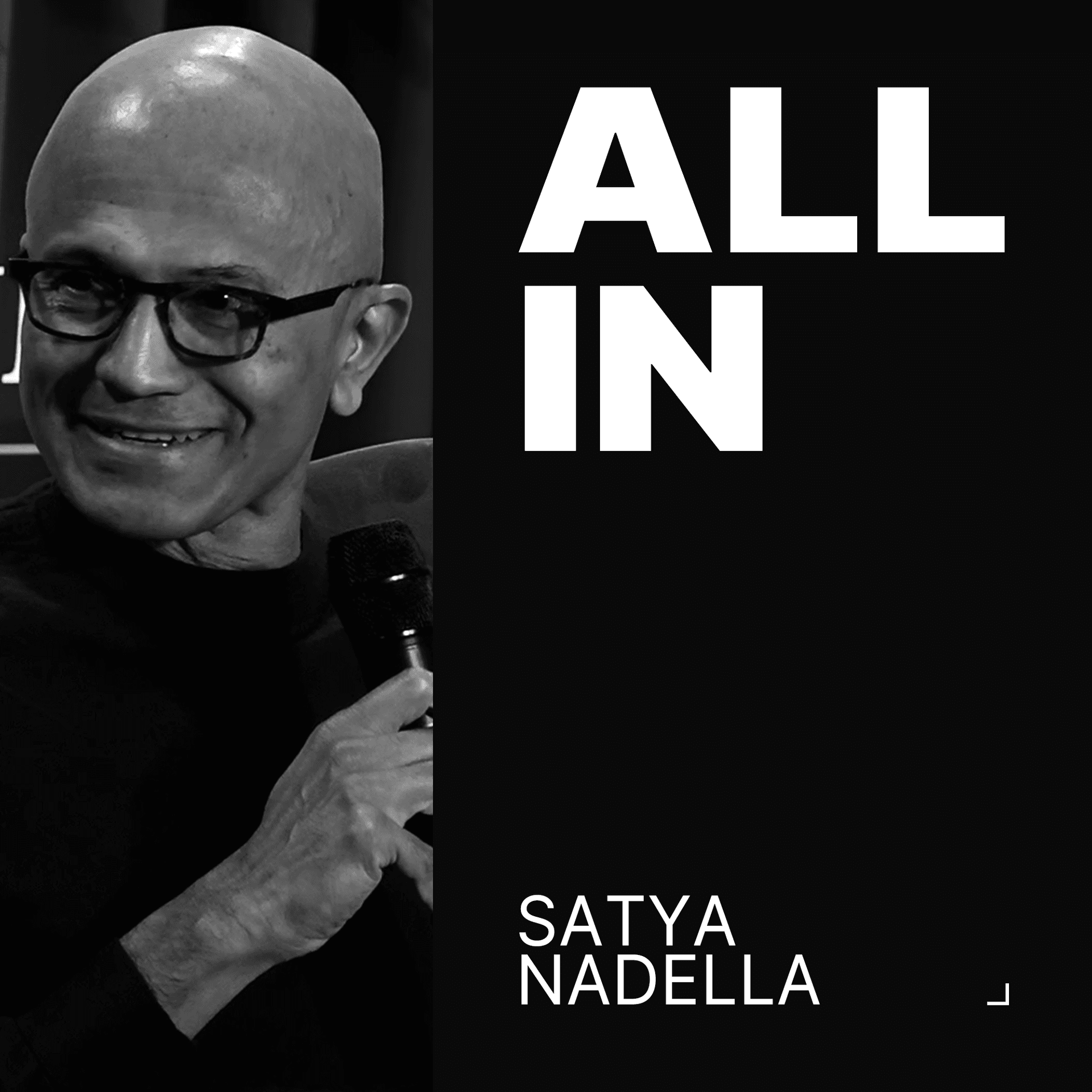
Podcast Summary: Microsoft CEO Satya Nadella on AI's Business Revolution
Podcast Information
- Title: All-In with Chamath, Jason, Sacks & Friedberg
- Episode Title: Microsoft CEO Satya Nadella on AI's Business Revolution: What Happens to SaaS, OpenAI, and Microsoft? | LIVE from Davos
- Description: A discussion featuring Microsoft CEO Satya Nadella, diving into the impact of AI on various sectors and Microsoft's strategic positioning within this evolving landscape.
Key Guests
- Satya Nadella: CEO of Microsoft
- Hosts: Chamath Palihapitiya, Jason Calacanis, David Sacks, David Friedberg
Episode Highlights
- Introduction to Satya Nadella
- Personal story of immigration and early career at Microsoft.
- Recognition of the challenges in navigating US immigration for his wife.
- Future of AI in Knowledge Work
- Discussion on AI copilots and their potential to transform white-collar jobs.
- Introduction of coding as a key area illustrating the evolution of AI tools from suggestion-based systems to autonomous agents.
- Microsoft's Business Strategy
- Microsoft’s revenue growth despite a flat headcount.
- Strong focus on automation and efficiency leading to significant income growth.
- The restructuring of roles within tech to create 'full-stack builders' for enhanced collaboration and productivity.
- Competition in AI
- Detailed examination of the competitive landscape in AI, including Microsoft, Google, OpenAI, and others.
- Emphasis on the need for constant innovation and adaptation in response to emerging competitors.
- OpenAI and Microsoft
- Insights into the partnership with OpenAI, discussing IP ownership and the implications for Microsoft's future.
- Consideration of the balance between creating competitive AI models and leveraging open-source technology.
- SaaS Adoption and AI
- Exploration of how AI is reshaping the Software as a Service (SaaS) landscape.
- The importance of delivering AI solutions that expand the capabilities of existing software ecosystems.
- Global Perspective on AI
- Discussion on the diffusion of AI technology in the Global South and the potential economic impact.
- The role of governance in ensuring that AI technologies are utilized effectively across different sectors.
- Market Share and Success Measurement
- Market share as a critical metric for evaluating the success of American tech in the global arena.
- The importance of ecosystem effects and how they contribute to the overall success of the tech industry.
Key Takeaways
- The conversation highlighted the transformative potential of AI within knowledge work, emphasizing the need for organizations to adapt their workflows and roles.
- Microsoft's strategy involves blending traditional enterprise models with innovative AI solutions to drive growth and efficiency.
- Competition within the tech industry is evolving rapidly, and staying ahead requires continuous innovation and collaboration.
- The diffusion of AI technology will have significant implications not only for developed nations but also for emerging markets, with the potential to drive economic growth.
- The dialogue reinforced the importance of understanding customer needs and leveraging existing technology to create value.
Conclusion The episode presents a compelling exploration of how AI is reshaping business landscapes and the strategic maneuvers Microsoft is employing to remain at the forefront of this revolution. Satya Nadella's insights into the collaboration between AI and traditional workflows provide a clear vision for the future of work and technology.
Written by AI. May contain mistakes. Listen to the episode to check what was said.
Chapters
Tap a time to open that second in VOSatya's Journey to Microsoft
0:45 to 2:29
Satya shares his personal immigration story and early career.
“My wife and I went to college together in India.”
The Evolution of Microsoft's Co-Pilot
2:29 to 4:26
Discussion on the development and impact of Co-Pilot at Microsoft.
“That's when NextEditService started working with some real accuracy.”
Knowledge Work and AI Integration
4:26 to 6:10
Examining the role of AI in transforming knowledge work practices.
“Now, there is a way to think about the theory of the mind evolution.”
Digital Employees and Automation
6:10 to 8:06
Satya discusses creating digital coworkers and the implications of automation.
“I want to be able to call into my work IQ, which is the co-pilot, bring that in.”
Structural Changes in Knowledge Work
8:06 to 10:30
Insight on how knowledge work is changing with AI technologies.
“Meta has started to eliminate in their organization four years ago.”
Competition and Innovation Landscape
10:30 to 12:18
Satya reflects on competition and Microsoft's position in the evolving tech landscape.
“And at the same time, a company like ours, I have to do everything.”
AI Diffusion and Industry Impact
12:18 to 14:02
Discussion on the need for AI diffusion across industries and its potential benefits.
“Sometimes we kind of overthink somehow that every customer wants the same thing from all of the competitors.”
The Diffusion of AI Technology
14:02 to 15:00
Learn about the importance of AI technology diffusion across various sectors.
“So especially with general purpose technology like AI, it needs to spread right in our own country, in the United States.”
Opportunities in the Global South
15:00 to 16:00
Explore how AI can impact public sector efficiency in Global South countries.
“One of the questions, at least in Davos, is it's one thing for the West and the developed nations.”
Assessing Global AI Market Share
16:00 to 17:40
Understand how market share can indicate the success of the U.S. in AI.
“If we look around the world in five years and we see that American companies, American technology has, say, 80 % market share, it means we did a good job.”
Show all 20 chapters
Building Ecosystem Around Tech Platforms
17:40 to 19:03
Discover the significance of ecosystem effects in tech platform success.
“tech stack, including in China, got built because others built around our tech stack.”
Revenue Beyond Microsoft: The SharePoint Ecosystem
19:03 to 20:20
Examine how SharePoint’s ecosystem generates revenue beyond Microsoft’s own.
“So this is not about American tech and revenues to the United States.”
Microsoft's Strategy for AI and Token Factories
20:20 to 21:27
Learn about Microsoft's strategy in building token factories for AI.
“And how can Microsoft, which missed Steve Ballmer's biggest regret, missing the mobile revolution, how can you not have a Gemini, an XAI, a Claude that is your own?”
The Future of AI Models and Databases
21:27 to 23:08
Understand the evolving landscape of AI models and how it relates to databases.
“And that means a heterogeneous fleet of infrastructure.”
Local AI Models on Windows Desktops
23:08 to 24:21
Explore the potential of local AI models on Windows systems.
“I mean, talk about Postgres or what has happened even with Mongo, which is open.”
Enterprise Adoption of AI: Top-Down vs Bottom-Up
24:21 to 26:08
Discover the dynamics of how AI will be adopted in enterprises.
“Like today there's a five silica model, which is completely resident using NPUs and of course using GPUs.”
The Future of Workforce Automation with AI
26:08 to 28:00
Learn how AI will transform workflows and enhance employee productivity.
“I'm wondering, as you think about enterprise adoption of AI, how do you think it's going to spread over the next year?”
The Evolution of DevOps and Automation in Business
28:00 to 29:06
Explore how digital employees and automation are transforming DevOps and employee efficiency.
“And when you sort of say DevOps, that means you literally are emailing people and saying, hey, what happened to that fiber cut?”
The Future of College Hiring and Employee Development
29:06 to 30:36
Learn about the changing landscape of college recruiting and mentorship in tech companies.
“So it feels like we're in a little bit of an indigestion moment.”
Apprenticeships and Skills Acquisition in Tech
30:36 to 31:52
Understand the innovative approaches to apprenticeship and skill-building for new hires.
“It's like I remember everybody who joined Microsoft would say, go, how did, you know, whatever, Cutler implement Malik or what have you.”
Transcript
Automatic transcript. May contain errors.0:00All right, everybody. We're thrilled to have the one and the only Satya Nadella here, third CEO of Microsoft for an impromptu fireside chat with David Sachs, our czar of AI and crypto. Satya III, CEO of Microsoft, born in India. What an incredible story. Came here right after college. And you had a little round trip to pick up your wife in your book to bring her here. Tell everybody briefly how that occurred. Well, you know, so that's a great story of the labyrinth that is the immigration policies of the United States, I think. My wife and I went to college together in India. I came here for grad school.
0:52We then got married. I got my green card, and she couldn't come join because we got married. So the story goes, basically, I had to give up my green card. So the funny thing is I went to the American embassy in Delhi, and I said, where's the line to give up my green card? And they said, there is no such line. That would be a crazy thing to do in the 90s. Sort of a strange thing to give up your green card, get an H1 so that she could join. But it all worked out. So it's a long-lost memory, but it was a way to work around it. I wanted to ask you, having launched a co-pilot first with GitHub, then having a co-pilot on the desktop, you made a very bold move for Microsoft to put that in the Windows product, which I use every day, on the desktop.
1:45But you did that before it really could recognize the file system and interact with applications. Got a little bit of a lukewarm reception, but now you've been doubling down, doubling down. and there seems to be, in my estimation, three modalities for knowledge workers. Elon's building at XAI, what they're calling a human emulator, if you saw that leak this week, yeah? Where they're just building employees and just putting them into their chat rooms and email. Then you have Claude came out with co-work this week. Incredibly powerful. People are kind of losing their minds over it. I've been playing with it for the last 40 hours.
2:21Truly impressive. what's your vision for Microsoft and how knowledge workers will actually put this to use because there seems to be a gap between you know playing around with chat tpt and getting some interesting results and getting business results yeah so I think it one of the most perhaps illustrative examples of trying to understand these various form factors is looking at coding which is obviously a form of knowledge work or probably the best example of knowledge work and if you think about the journey coding has been it started with essentially the next edit suggest right that was the first time in fact my own belief in this entire generation of tech really sort of got formulated but I started seeing I think this you know there's a codex model back in the day was pre-GPT 3.5.
3:14That's when NextEditService started working with some real accuracy. Then we went to chat. Then we went to actions. And now to full autonomous agents. And then the autonomous agents can be both foreground, background, in the cloud, or local. So that's all the form factors that exist today when you're coding. And interestingly enough, if you look at it, you use all of them. It's not like there's only one form factor. So that's, I think, probably one of the other lessons. So for example, when I'm in a CLI, I can go a foreground agent, background agent, and then just literally go edit in VS code right there, all happening in parallel.
3:53So that sort of shows how these form factors even compose. So then you bring that to knowledge work, to your point. We started with chat. Now, chat with reasoning sort of goes beyond just request response, because you now have that chain of thought where you can see it work. Now, they're actions, right, essentially either through computer use or through, you know, basically skills and agent calls, so you can do actions. So that's kind of the state of the co-pilot today. Now, there is a way to think about the theory of the mind evolution. Because you need, like if you remember Jobs had the best line I would say for PCs or computers was to say, it's a bicycle for the mind.
4:42Bill had a line which I liked as well, which was, it's information at your fingertips. We kind of need now a new concept metaphor for how we use computers in the AI age. Do you have one? And the one I like actually came from the CEO of Notion, which I like, you know, that manager of - Credible product. Yeah. You haven't bought it yet. I've not bought that. But it's both management, you know, basically a manager of infinite minds. That's a nice way to think about it, right? When you sort of really look at all the agents that you are working with, you kind of need to understand what I, in fact, the other term I like is we macro delegate and micro steal.
5:24In fact, you kind of need that. In coding, you kind of have it, right? So you do a macro delegation, and then I can in parallel give it instructions while it is doing work. So that's sort of the state even today of Copilot or what have you. You bring up a little bit of one of the form factors I'm very excited about, and you'll see us even in the next week even do things, is while I'm sitting in GitHub Copilot, it's not as if software developers sit in isolation, right? It's not like the only thing I work on is my repo. I attend meetings. I write specs or others have written specs that I'm implementing.
6:03I need to have my repo be consistent with that. So that means using either a straightforward MCP server or a skill, I want to be able to call into my work IQ, which is the co-pilot, bring that in. That's the type of composition of knowledge work that will happen. Same thing with security. Say you're a security professional. You have lots of logs. How do you sort of really analyze them? You drop them into a file system, then write code on top of it, create a dashboard, what have you. Those are the types of knowledge work that we can enable. Then I think you bring up one more thing, which is, can you create, quote, unquote, digital employees, digital co-workers, or what have you?
6:43And it's all about credentials, right? So today you could. Like, you can literally assign... Are you working on that as well? Yeah. So, in fact, we introduced something called Agent 365 as a way to give identities, in fact, extending the identities we have for humans today and the endpoint protection we have for their compute devices to agents. So you might clone me working in the HR department or working in the marketing department and have a virtual version of me inside of office. That's correct. So there are two sort of modalities there. One is you give every knowledge worker infinite minds.
7:16That's kind of one. And then you create even infinite minds independent of your identity because the identity is one of the key things you've got to get right, even for it to work, right? So for - Permissions and decision-making? Permissions, decision-making, and like one of the key things is who did what to whom is sort of the most important query in an organization, right? At the end of the day, the organization needs to understand what work got done and what's the provenance of that work and how do you trace it back, right? So therefore you kind of want either, if it's a human with a lot of agents, then it's really macro delegation, micro steering by the human whose identity was passed on.
7:58So it's delegation versus a separate identity. And that was done by a level of management, product management that you've eliminated, that Alphabet's eliminated. Meta has started to eliminate in their organization four years ago. You had the same number of employees you have at Microsoft now. But you put$90 billion onto the top line of the revenue in that time, and you doubled your income during that time. So how did that happen? Is that automation of those jobs? Is it you were a little bit overstaffed? Unpacked. I think it's actually, you're pulling on a very interesting thread, which is at some level, what's the big structural change that needs to happen?
8:38And in fact, I would say this is probably the biggest change in knowledge work since PCs. I mean, I always think about how did work happen pre-PCs, right? I mean, think about a multinational company like ours trying to do a forecast, right? Faxes went around, inter-office memos got sent, and then you kind of created a forecast. Then suddenly, PCs became standard issue. You put an Excel spreadsheet, put some numbers, sent it in email. Everybody entered numbers and you had a forecast. So the work, the work artifact, and the workflow all changed. That's what's happening. So, for example, I'll give you at LinkedIn, we used to have product managers.
9:20We had designers. We had front-end engineers. And then we had back-end engineers and so on. So what we did is we sort of took those first four roles and combined them. In fact, increased scope and said, they're all full-stack builders. So I like that because that's a structural change that allows for us to increase the change, both the work and the workflow between these functions. And I would assume the velocity because you don't have four people communicating and that throughput of ideas, which is one person and vibe coding. Exactly. And there's a new workflow. So at the same time, as you can imagine, if we build an AI product today, there is a complete new workflow, right?
9:59It starts with evals, right? So basically there's this eval to science to infrastructure. And so evals are done by these full stack builders and what have you and product managers in the new form. The infrastructure is built by the systems engineers at the back end because they support the science that supports the product. So in some sense, there's a new loop and you have to structurally change. And so a lot of what is happening inside of tech is that change, which is, I think, going to be pretty massive. And at the same time, a company like ours, I have to do everything. It's not like I can just so go live in the future.
10:37I have to make sure we're doing a fantastic job of doing hot patching on Windows is done with quality, while at the same time building the evals that are improving co-pilot quality, right? And so both of those have to be first class. I assume this is the most challenging moment of your career because... Microsoft was so dominant, duopoly in some spaces, but you really weren't up against the competition level you're up against now. I was talking to Elon, you know, and he was sort of saying, well, building cars was pretty easy because I was up against the legacy car makers and now I'm up against, just look at the set you're up against.
11:15Yeah, it's a pretty intense time. I mean, so the way I always think is it's always helpful when you have a complete new set of competitors every decade because that keeps you fit. If you think about it, I joined Microsoft in 92 when I had Novell as the big existential competitor we had. And here we are in 2026. And you're absolutely right. It's a pretty intense time. I'm glad there's the competition. It's quite honestly, at the end of the day when I look at it, right, as a percentage of GDP five years from now, where will tech be, right? It will be higher. So we are blessed to be in this industry.
11:56It's a lot of intense competition, but it's not so zero sum as some people make it out. High is getting much bigger. Much, the TAM and the, just the impact of this tech is going to be so massive. The question then of course is, what is, like I always go back to what's the brand identity Microsoft has, brand permission we have, what do customers expect from us. Sometimes we kind of overthink somehow that every customer wants the same thing from all of the competitors. And finding that out, it's kind of a different take on the Peter Thiel thing, which is you've got to avoid competition by really understanding what customers really want from you versus thinking everybody's a competitor.
12:39David? Yeah, so there are a lot of heads of state here, obviously at Davos, as well as CEOs of Fortune 500 companies. And I think you got asked a question last night at the dinner about how they should think about AI and how to be successful. And I recall they used the word diffusion. And I was wondering if you could expand on those remarks, because that really resonated with some of the policy work I've been doing. No, absolutely. In fact, what you all have been doing to make sure in this context of the American tech stack is broadly used around the world and is trusted around the world. Because I think when I look back, David, to me, at the end of the day, you create the technology, but really the benefits come only by intense use.
13:28In fact, one of my favorite studies has always been this work that an economist, I think Aradatma did, his name is Diego Coman, where he studied basically what happened during the Industrial Revolution. How did countries get ahead? And the simple sort of takeaway from that was any country that brought the latest technology into their country and then did value-add technology on top of it, right? So it's like, don't reinvent the wheel, bring the latest, and then build on top of it. That's, to me, what happens when you have diffusion. So especially with general purpose technology like AI, it needs to spread right in our own country, in the United States.
14:12We now need, we have the tech. The question is, is it being used in healthcare? Is it being used in financial services? Is it being used in every sector of the economy by large businesses, small businesses, public sector? So to me, unless and until we see that diffusion and intense use, we're not going to have the success. And so that's the phase we are in. It's diffusing faster. And so some of the work, policy work you have done, and in general, the good news here is the technology is there, the rails around cloud and mobile that were laid out make it possible for this thing to spread, It's not impossible to get the tokens.
14:54The question is, what are the use cases, and how do you manage the change in all of that? One of the questions, at least in Davos, is it's one thing for the West and the developed nations. What about the Global South? I think Global South has a huge opportunity, quite frankly, because to me, let's say 40%, 50 % of the GDP of most Global South countries is public sector. So just imagine this tech making a difference in how the governments really parlay their taxpayer money into services for citizens. And if there's efficiency gains, that's probably a couple of points of GDP growth right there. And so I'm very optimistic that there's going to be a pull and that we should, as the United States, given the technology stack we have in Europe, in Asia, in South America, in Africa, and everywhere else, get it to be broadly deployed.
15:49One of the questions I get asked a lot about the AI race is how do you know if you're winning or how do you know if the United States is ahead of its global competitors? And the answer I give is market share. If we look around the world in five years and we see that American companies, American technology has, say, 80 % market share, it means we did a good job. If we look around the world in five years and see that it's, say, Chinese chips and Chinese models that are being used all over the world, well, it means we probably lost. So, you know, ultimately usage is, the proof of the pudding is in the eating of it.
16:25I mean, in this case, the way that you know that you're succeeding is through market shares, through usage. And I would agree with that, But David, since you even worked at Microsoft for a few years, one of the things that I'm very grounded on is always that Bill Gates line of a platform. So one of the things that I always think about is it's market share, but it's also ecosystem effects. See, what the United States always has done is not just about our market share or even the revenues to U.S. companies. In fact, one of the things I learned at Microsoft is whenever I did a country visit, the data I would first study is in, let's say, in the UK or in Switzerland or what have you.
17:09What is the total employment created in Switzerland in our channel? That used to be like the number one thing in our country reports, right? And the total number of... Would that be like the number of IT workers, the number of office workers? So channel partners, ISVs, so number of ISVs who were there. So we used to have a complete marker of how did the ecosystem around the platform get built one country at a time. And that is what the United States has always done. In fact, the U.S. tech stack, including in China, got built because others built around our tech stack. The same thing is going to happen.
17:49So that's why I think the work you're doing around diffusion is about really increasing the size of the pie, the trust in the platform, so that there is true economic opportunity, quite frankly. Well, you're right. And I remember, actually, you brought back some memories from this is about a decade ago when my company Yammer was acquired by Microsoft. we were part of the SharePoint group. And I remember that the product managers there were very proud of the fact that the revenue from the SharePoint ecosystem, meaning non-Microsoft, the consulting community, the implementers who would go into companies and implement SharePoint, I think their revenue was something like seven times greater than Microsoft's own software revenue.
18:34In aggregate. In aggregate. And I think Bill had a line about, you're not an ecosystem or a platform until the revenue on top of your platform is some, you know, factor of your own revenue. And I think what's really important about this is when we talk about diffusion and obviously we want the United States to have this leading position, it doesn't mean it's bad for the rest of the world because they're able to build on top of those platforms and create even more value. 100%. In fact, that's sort of the most important point, So this is not about American tech and revenues to the United States.
19:11It's actually creating opportunity using a new platform everywhere. And in fact, I remember I worked on our database products in the 90s with SAP. In fact, the combination of SQL Server and R3 were successful on both sides. There's a lot talked about in Intel and Microsoft. But one of the other things that I grew up in, which has sort of been foundational in how I look at the world, is what we did with a European software company that is still a giant. And so who knows what the next big AI app will be and what will happen. But I sort of go in with the attitude that there will be tech companies, maybe even top five tech companies that could emerge everywhere with even the American tech stack.
19:58you have done some amazing acquisitions and you're quite a deal maker on top of being a technologist. It's probably the least reported aspect of your spectacular tenure and the massive growth you've had. But you did a deal with OpenAI and probably one of the most savvy slash controversial deal makers of all time, Sam Altman. That deal was looked at as you're set up to get a windfall in cash which you don't need as Microsoft, always nice, I'm guessing if they IPO, but did you create potentially, and this was the criticism of it, an ultimate competitor to Microsoft? And how do you think about that?
20:41And how can Microsoft, which missed Steve Ballmer's biggest regret, missing the mobile revolution, how can you not have a Gemini, an XAI, a Claude that is your own? Or in your mind, do you have that because you have the source code of OpenAI? Yeah, I think that That's right. So when people say, hey, where is your foundation model? I mean, at the end of the day, we do have the IP. But that said, I think you bring up a couple of different things, right? One is to us the most important thing. When I look at what is Microsoft's strategy today, one is we want to build token factories, right? So our biggest business today is Azure business.
21:18And the Azure business, the TAM, given what's going to happen, is so huge that we now need to be fantastic at building these token factories. And that means a heterogeneous fleet of infrastructure. And that every hyperscaler has always done, which is use software to make maximum use of it and for TCO and utilization. So that's one side of it. Then there's the app server business, right? Which is, everybody, you talked about, like if everyone's gonna be building agents, have infinite minds, have these RL gems, have evals, what have you. There's an entire, just like every platform has had an app server, this one has an app server.
21:54server. That's what we're doing with Foundry and what have you, right? So there's an app server business. In that app server, one of the things that structurally now is pretty clear is anyone building any application or any company is going to use not one model, but all the models, right? Why would I not, right? Which is, in fact, I will orchestrate for any given task, even multiple models, right? There's this one nice thing that we came out in our healthcare practice called the decision orchestrator. What it proves is that by assigning roles, right, so investigator, data analyst, domain expert, just giving even prompted roles to models and then orchestrating them gets better results than any one single frontier model.
22:38Am I right to read into that then that you're bullish on the open source models and think large language models will largely be commoditized and that's not where the value will accrue? In fact, the way I think about it is that But just like what happened in Apple thinks that too, by the way. By the way, the way you think about what happened in the database market, right? You know, I used to be like, everything is just a SQL database until it was not, right? There was, I mean, think about it. There are dark databases. There is no SQL databases. The proliferation of databases, right? Who would have thought that the database market would have such a richness to it?
23:12Or that it could ever be open source. That was mind-blowing. I mean, talk about Postgres or what has happened even with Mongo, which is open. but there are even companies that have backed it. And so to me, that's what's going to happen. To me, a model is like the database market. It's got differences, but I sort of somehow think that there are definitely going to be frontier models that are closed source. You know, there are going to be open source models that are going to be frontier class. In fact, if anything, I think in this next year, what will be probably a big part of the discussion is, what's the future of a firm?
23:46A firm should be able to take the tacit knowledge it has and embed it inside a weight in a model that they control. So when somebody asks me how many models should be there, I'll say as many models as firms in the world. That's sort of an extreme way. Because to me, that's how I think this knowledge economy becomes an AI economy. Are you secretly, and you can say it here since we're on all in, working on an LLM to exist on the Windows desktop? Because that you are. We do have it. Like today there's a five silica model, which is completely resident using NPUs and of course using GPUs. In fact, the largest installation of high power.
24:34In fact, it's one of the fascinating, the workstation is back. I'm one of the most excited. If you went to CES. That's great for Microsoft because you have a nice desktop business. Absolutely. And in fact, we think that that form factor, especially, I mean, I always say this, which is, you know, I started my career on a command line. Who knows? I may just end it in a command line. Well, you started at Sun, which was the original$5 ,000,$10 ,000 workstation. Do you see a time where you'll be meeting with your customers here and advocating a$10 ,000,$20 ,000 desktop machine that has an LLM and the hardware?
25:08I mean, you can. You can put a DGX card and you can have just a fantastic machine and the models. And by the way, we are one architecture tweak away from even having some kind of a distributed model architecture, right? Even an MOE architecture that knows how to really distribute itself, right? That's the type of breakthrough that can completely change what hybrid AI may look like. But we're absolutely committed and focused on making the PC a great place for local models, and local models that then do even a lot of the prompt processing and call into the cloud, right? So there's a whole lot of work that can happen, and that's sort of definitely something that's in that way.
25:48Yeah, I think that the Cloud co-work has kind of shown the power of tapping into the local file drive and be able to use that. That brings up another point. You got me thinking about Yammer, and for people who don't know, So Yammer's claim to fame, this is about 15 years ago, was that it pioneered a lot of, well, it used a lot of consumer growth tactics to attack enterprise software. I'm wondering, as you think about enterprise adoption of AI, how do you think it's going to spread over the next year? It feels like we're at sort of a critical point. Do you think it's going to be top down? Is it going to come from the CEO directing a team, giving them a strategic transformation project, and they're going to do an RFP?
26:27or do you think it's going to spread bottom up in the enterprise through AI native employees who are adaptable, who are using the tools in their own lives, and they start to bring these things to work and start accomplishing amazing things? Yeah, no, I think, you know, like all things, David, I think it's both the top-down, bottom-up, right? The reason I say that top-down is if I look at the ROI of applying AI in customer service or in supply chain or in HR self-service. Those are the easy projects where IT and CXOs can make calls, and that's where you're seeing the first drop of real AI adoption.
27:08But the bottom-up is what ultimately will happen, right? I mean, even with the PCs, in fact, if you think back at it, the lawyers brought Word in, and then finance bought Excel in, and then email came, and then it became standard issue. That's what's happening right now. So for example, these agents, when I sort of talk about everybody's building agents, they're figuring out a way to go create these things that are changing workflow and removing drudgery in their work, right? That's sort of the beginning of what is a bottom-up transformation. In fact, the thing that I'm most excited about is this bottom-up change.
Read the full transcript
27:48Even at Microsoft, for example, we manage something like 500-odd fiber operators around the world in Azure today. And by the way, I had not myself realized it. A lot of it, you know, it's called DevOps, but it's a physical asset. Things get cut. And when you sort of say DevOps, that means you literally are emailing people and saying, hey, what happened to that fiber cut? How do we repair it? So there's a lot of back and forth. So this network, the person who runs our global network, basically has built, to your point about these personas, they're just digital employees, essentially, that are doing all of the DevOps.
28:23And so that's, and those are completely bottoms up, where you see the tools. It's kind of like, hey, I have the new way to build agents. It's there. I'm going to use it to create levels of automation that remove drudgery, improve efficiency, improve quality. And that ultimately is a skilling thing, which is sort of the big issue, which is, and skilling is not mystical. It's just by doing, right? So it's not like I go to a class per se. It's like the diffusion of the tools and using the tools. And that, I think, is what's really going to be happening. And we're in a very interesting moment. Empowering an existing employee with these tools is so much easier than hiring and mentoring and bringing up the next generation.
29:07So it feels like we're in a little bit of an indigestion moment. At Microsoft, do you think, who's going to have my job in 30 or 40 years if the company stays the same size? Because given your technology-first approach, there's really no reason to ever add another Microsoft employee at the pace this is going. And you haven't for four years. So how, you may have swapped some in and out and changed the texture of it. So how do you think about maybe this next generation? What advice would you have for these college graduates who maybe don't have an offer from Microsoft right now? And you used to spend a lot of time on that, building that group.
29:45But maybe you don't have that luxury now. Do you think about it ever? It's a great question. There's a little bit of a debate what happens to early in career and how is college recruiting. I still am a big believer in college recruiting, because at the end of the day, this is going to change the curve by which anyone can pick up proficiency in a code base, let's just say. It takes sort of just regular CS hiring. What has changed is perhaps for someone who comes in new into a team and to be able to ramp up, thanks to all of the markdowns, the skills, the fact that I can go ask the agent. I mean, think about it, right?
30:29It's like having an unbelievable mentor who is getting you onboarded onto a code base faster. So in some sense, the productivity curve of a college hire is going to be much steeper than ever before. So I think there might be a difference. In fact, one of the things we're experimenting with is a different type of apprenticeship, right, which is you take somebody who is an IC senior dev, have like a cohort of college hires working with them, because it's a new way of working. It's like I remember everybody who joined Microsoft would say, go, how did, you know, whatever, Cutler implement Malik or what have you.
31:07He would go try to read his code to understand what great craftsmanship looks like. Nowadays, I think that great craftsmanship comes by looking at even how the 10x, 100x engineers use AI to build great quality products. And that is what these new college guys will learn and learn faster. And so that's a beneficial thing for a company like ours. Because at the end of the day, you know, until we saw longevity or something, we need people to come into the workforce, be successful at Microsoft. So we are very committed. But we are also making sure that the scopes of the jobs make sense for what the aspirations of people are going to be, both who are currently in the workforce and people who are entering the workforce.
31:52Okay. On that note, Satya Nadella. Thank you so much. Thank you.
From the publisher
(0:00) Jason and Sacks welcome Microsoft CEO Satya Nadella
(1:31) Future of AI copilots and agents, impact on white collar work
(8:01) How Microsoft has scaled revenue and profits with flat headcount
(10:50) The extreme competition in AI: Microsoft, xAI, Google, OpenAI, Anthropic
(12:39) Views on diffusion, how the US tech stack can win globally
(19:59) OpenAI deal, owning the IP, thoughts on open-source winning AI, Microsoft's AI stack, do they need a foundation model?
(26:08) What SaaS adoption looks like in the age of AI
Follow Satya:
Follow the besties:
Follow on X:
Follow on Instagram:
https://www.instagram.com/theallinpod
Follow on TikTok:
https://www.tiktok.com/@theallinpod
Follow on LinkedIn:
https://www.linkedin.com/company/allinpod
Intro Music Credit:
Intro Video Credit: