
In short
The episode argues that AI is disrupting “voice” and “law” by replacing legacy infrastructure and the billable-hour model. Guest Mati (from ElevenLabs) describes 11Labs’ AI-native voice platform: revenue ramp from releasing a human-sounding text-to-speech model in early 2023 to ~100M ARR after ~20 months, ~200M after ~10 more, ~300M after ~5 more, and ~$600M now with ~600 employees.
Key claims
enterprises are driving growth; voice agents are becoming reliable and proactive; teams embed engineers across HR/legal/go-to-market for security and adoption; no traditional PM roles.
Notable examples
enterprise voice agents for Revolut/Klarna/PagBank; “pedal”/hands-free prompting; protections against voice impersonation via trace/moderation; marketplace paying talent (>$22M paid back). The second half shifts to Legora (legal AI): a $1T legal-services market, with software still small; Legora uses precedent + jurisdiction data to deliver ~80% accurate cross-border legal guidance and compress diligence (e.g., 12 days LOI-to-close).
Guests
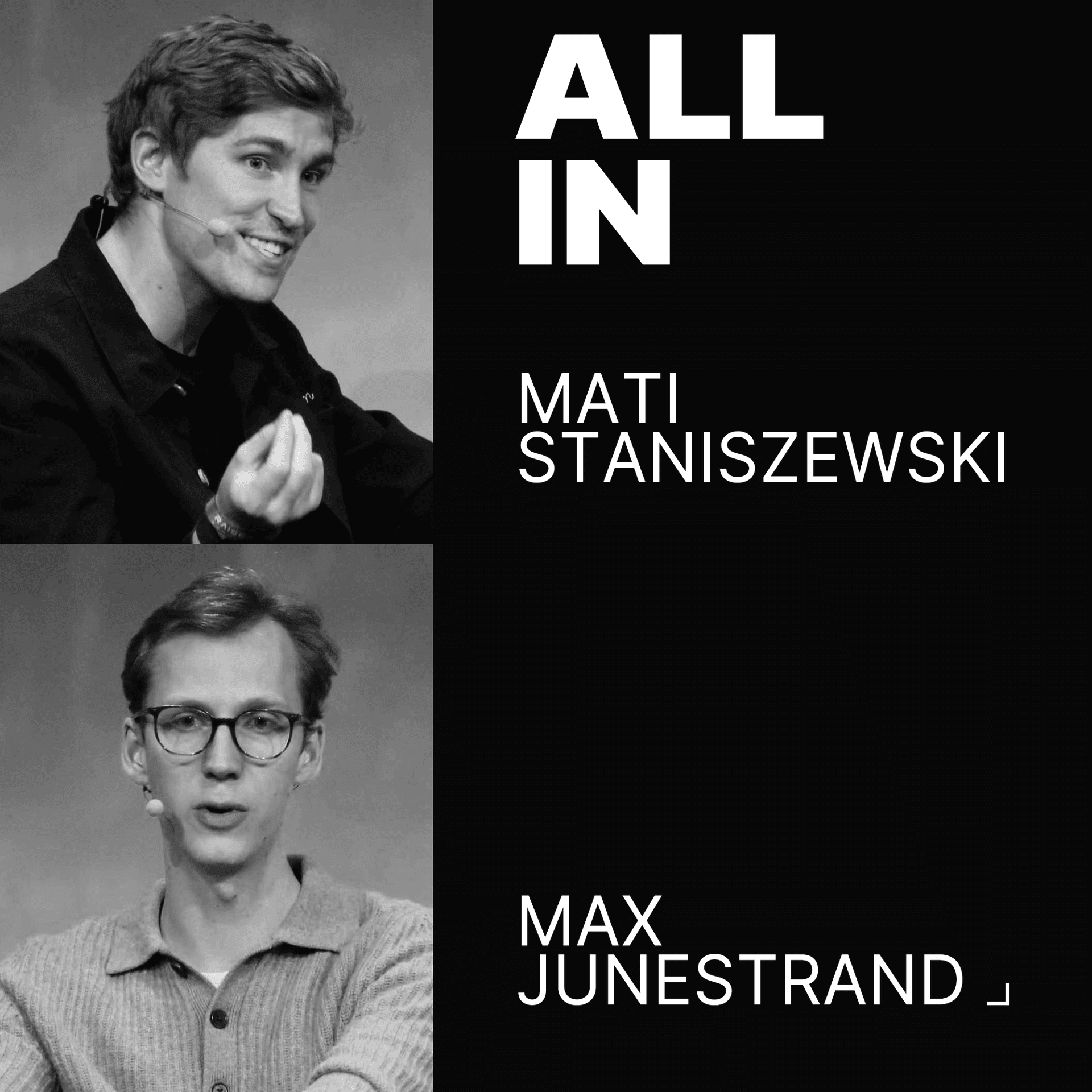
Mati (ElevenLabs) and Max (Legora).
Written by AI. May contain mistakes. Listen to the episode to check what was said.
Chapters
Tap a time to open that second in VORevenue Growth and Company Culture
0:44 to 1:51
Discussion on the rapid revenue growth of a tech company and its challenges.
“350 million in what, two or three years?”
Building a Communication Platform for AI
1:51 to 4:27
Insights into the development and integration of AI in communication tech.
“when revenue is ripping, investors are throwing money at you, showing up at your doorstep, I mean, quite literally.”
The Evolution of Software Development
4:27 to 5:56
Exploring how software development processes have shifted with AI.
“Because people are paying you this money, but they're going to demand really high quality product since they're spending so much money with you.”
Management and Team Structure in Tech
5:56 to 8:10
Insights into how management roles are evolving in response to AI advancements.
“because you maybe are not doing that in the right way.”
Transformations in Customer Interaction
8:10 to 10:40
Discussion on how AI is changing customer interactions and expectations.
“So to be able to do that, ultimately to help everybody else create voice agents, we ourselves need to create voice agents too.”
AI's Impact on Communication Tools
10:40 to 14:00
Examining the significant advancements in AI-driven communication tools.
“where you can actually open a website and call an agent and have the agent have information from your past interactions and deliver that help.”
Understanding AI Interaction Models
14:00 to 15:34
Learn how people adapt their communication styles when interacting with AI versus humans.
“you know how you have a, you want to say a thought and then you're like, okay, I actually want to change and say something else.”
Challenges of Voice Impersonation
15:34 to 18:11
Explore the implications of voice cloning and impersonation in the digital age.
“You have some celebrities who are on there.”
Opportunities in Voice Technology
18:11 to 21:55
Discover how voice technology is being used for identity preservation and emotional connection.
“And then the other side, which is the opportunity, because I think you got Jamie Foxx and some other folks actually that you paid for their voices.”
Innovations in Interactive Voice Content
21:55 to 24:26
Learn about the evolution of interactive content through voices of celebrities and AI.
“and working on bringing that voice back.”
Show all 22 chapters
Navigating Competition in AI Voice
24:26 to 25:59
Understand the competitive landscape of AI voice technology and strategic partnerships.
“But anyway, you were working with the second place.”
Future of AI and Voice Technology
25:59 to 28:01
Gain insights into the future of AI voice technology and its potential disruptions.
“Entropic, OpenAI, Open Source, Google Models.”
Data Usage and AI Development
28:01 to 29:50
Discussion on data usage, AI development, and the competitive landscape.
“They say they're not using your data, but they're kind of using your data.”
The Turing Test and AI's Progress
29:50 to 31:34
Exploration of AI's capabilities and its potential to pass the Turing test.
“So a lot of what we spoke at the beginning of how we can elevate ourselves as an organization, too, is definitely helpful.”
Transforming Legal Services with AI
31:44 to 33:58
Discussion on the impact of AI on legal services and startup operations.
“Oh, it's sustained 50 % quarter over quarter for the last seven quarters.”
The Future of Law Firms and AI
33:58 to 37:47
Exploring how law firms are adapting to AI disruptions and opportunities.
“And I'm like, okay, wow, I just turned into Unc.”
Revolutionizing Legal Practices with Data
37:47 to 42:00
Insights on the integration of AI in legal practices and its societal impacts.
“And are those law firms feeling like they're being disrupted or this is a huge opportunity?”
The Legal Data Landscape
42:00 to 43:24
Explore how AI is reshaping the legal landscape and the challenges faced by legacy players.
“an 80 % accurate response immediately that they can start working off out of.”
Challenges of Legacy Players
43:24 to 44:58
Discuss the difficulties legacy legal data companies face in adapting to AI.
“As we're starting to see in the market, that's no longer the case.”
AI's Role in Legal Strategy
44:58 to 47:18
Understand how AI tools are evolving from augmentation to active legal strategy implementation.
“But today with the AI tools, the AI tools are really good at doing what they did manually.”
Narrow Models vs. General Intelligence
47:18 to 49:10
Examine the strategy of focusing on narrow AI models for specific legal use cases.
“And your job becomes to orchestrate and to manage those agents as we're seeing in coding.”
Trust and Compliance in Legal AI
49:10 to 50:36
Delve into the importance of trust and compliance in selling legal AI solutions.
“the number of documents times the number of prompts.”
Transcript
Automatic transcript. May contain errors.0:00You're on a bit of a heater, huh? It's the best time to be building. And revenue has surged, but you face really intense competition. Let's go right at that to start. If you were building a global financial system from first principles today, you wouldn't build it on 50-year-old legacy rails. You'd build Airwallux, one AI-native platform for global accounts, cards, and payments. is designed to make the entire world feel like a local market. Others are bolting AI onto broken infrastructure, but Airwallex was built for the intelligent era from day one. Stop paying the legacy tax and start building the future at airwallex.com slash all in.
0:41Airwallex, built for the future. 350 million in what, two or three years? And I'm hearing numbers five or 600 million now. Tell us about the revenue ramp of the company from the moment you released the software to today, The product's been in market for 40 months, 50 months? You tell me. Spot on. We started company 2022. First year was all about building the research and the product to really kickstart the work. We built the first text-to-speech model that finally could sound human. Released it in 2023, beginning of 2023. Then it took us roughly 20 months to get to the first 100 million in ARR.
1:20Roughly 10 months to get to 200. Five months to get to 300. and that's how we closed end of the last year and now we are at$600. You're at$600 million in revenue. This is just extraordinary. How many employees now? Because the company has obviously hit incredible valuations but you have to fill in that valuation and you're competing at a very high level for talent. So tell us about how many employees you have now and how you maintain the culture of the company when revenue is ripping, investors are throwing money at you, showing up at your doorstep, I mean, quite literally. But you've got to run the company.
2:03You've got to build a culture. So how many employees now and how are you dealing with these competing priorities? Yeah, that's the key element of how you all, for us, the element of like how we can maintain the culture despite the quick growth is kind of critical and how we optimize both the interview cycle, how we are bringing people on board, how we onboard them. We have 600 people today. So also very quick growth on that people side. And as a company, we combine research and product. So we are building a communication platform for AI. On the research side, this includes everything across audio, generating speech, transcribing speech, orchestrating speech for interactions.
2:43on the product, this is how we can complete the entirety of the customer journey. From marketing and creating assets and localizing them internationally through customer support with voice agents to proactive enablement of how voice agents can help in operations, training, and sales. So this requires a lot of different talent. And a part of that revenue growth is actually a reflection of the functions we've grown over time. So from the original team, very research, very engineering heavy. from the first 10 people, we had zero attrition. Everybody is still at the company from those core research and engineering talent building together with us.
3:19So, so far, we've been able to outcompete. And I think that common thread, and credit to my co-founder, who is an incredible researcher himself, we've been able to assemble the team that is truly excited about solving audio, solving interaction, and building that research. And if they are looking for an opportunity out there and looking for a company to join and solve that, we are one of the leading, if not the leading place to do that. And you started before AI was so impactful at making software. Right. So when you were starting four years ago, five years ago, and working on this, building software was limited to low percentage of the population of planet Earth.
4:03You know, the number of people could write code. And now here we are, you know, went from Vibe. We had a no-code moment, then vibe coding, and now we actually have people building production code who are not developers. You have developers going 10x and token maxing. How has building software changed internally, and how do you deal with making sure that the code is really high quality? Because people are paying you this money, but they're going to demand really high quality product since they're spending so much money with you. Yeah, it's also true that 2022 was still the year where topics of the day were crypto and metaverse.
4:42So the building there was also the best time to start because we could actually take a bit of time to focus on what we thought is the future. But the way we are structured is a lot of small teams, especially across the product engineering, but also in how we think about go to market optimized for specific industries, telco, financial services, healthcare. So every unit is very tightly knit together. and we do that across the company. So it's usually five to 10 people teams that run ahead. And inside of each of those teams, the decision we took, which is slightly different than how it's usually structured, we embedded engineers in every place and even in the places which aren't engineering.
5:22So our talent team will have an engineer. Our legal team will have an engineer. Our revenue engineering or go-to-market engineering have engineers embedded all across. And those people have two roles. One is, of course, creating automations and bringing the software inside of that team. But second is actually helping everybody else do what you said, which is make sure that people are adopting AI, but also there's a security check for everything they deploy. Because ultimately, if you're not using a lot of the coding software, a lot of the co-working software, then you're probably in the wrong spot.
5:55If you're using too much of it, that is also a flag because you maybe are not doing that in the right way. and of course as you start bringing that into the sites of the organizations that never were exposed, they frequently can create but not necessarily review whether that's actually doing behind the scenes all the secure ways or whatever. So that's an essential role in the company. Yeah, it's fantastic that everyone can build software until you put it into production and you have a leak. Yeah. Or that person leaves the company and people forget they built that software and it's just deprecating on its own.
6:32The other thing that seems to have changed is management. When you had 10 developers in your pod or six, you had a UX designer, you might have a pure graphic designer, you'd have a product manager, they rolled up. And then suddenly, we watched over the past three years, oh, hey, this is pretty good at summarizing what happened on the call. Oh, it is actually creating action items and it's telling us what to do next. Oh, and it's doing all the different stories in our Kanban board. Now, how do you think about product managers and management as the CEO and as the co-founder? Yeah, we... You fired them all, right?
7:13We don't have any PMs. Right. Did you ever or did you have... Never. You never did. Never did. It's a little bit of what you mentioned also before the True AI Impact started, which was ideal person in that role, can code, can understand the customer, can understand design. Of course, that's very hard to find. There's no truly that many people that are experts in all of those fields at the same time. So we optimize for profiles that are experts in at least one of those fields, but understand at least one other field really well. To your point, what we are seeing now, if you can do a little bit of all with AI, You can maybe step change from being an amateur to being an advanced level, maybe not an expert level.
7:56So suddenly you are not bottlenecked on all the other functions to do your work. In growth, phenomenal part. With growth engineering, a person can design experiments, ship an experiment. It's working and bringing it back. We also have the privilege where we are using a lot of our product ourselves. So to be able to do that, ultimately to help everybody else create voice agents, we ourselves need to create voice agents too. So we are seeing that also in the non-traditional functions, even in go-to-market. You need to be able to create a version of that if we are offering that to the customers too.
8:29And we do. We created our inbound AI SDR agent. In addition to the form that you fill on the website, you have an agent that you can call. And people, of course, can give all the information in a much easier and quicker way. But the second thing that happened is people also leave a lot more information so you can get connected to the right problem and right person a lot quicker. So we are seeing that kind of phenomenon all the time where actually using a lot of tooling makes you yourself better in your job overall and in 11 labs in our specific tooling that we are solving for customers. Yeah, it seems like the use case of calling on the phone and talking to a computer or previously going through voice jail, and it was incredibly arduous and painful and annoying.
9:17It made you just say operator and hit the zero button like as fast as possible. But now it seems to have turned a corner where talking to a human, I almost feel bad talking to a human where I'm like, I am so sorry, I'm wasting your time with this. And the AI is just so much more precise and the fidelity is so great that when you tell them what you're looking to do and you cut them off, you don't feel bad. You don't have to make small talk. Is that what you're seeing in your customer base in terms of the ability in real time to interrupt the agent, to interrupt the conversation and just move faster has made consumers and companies basically embrace the technology?
9:58Yeah, it's slowly becoming that you will be asking for a give me an AI agent effectively on the call. like AI operator. But we are seeing a transition where suddenly, and that's the biggest fuel of the recent growth for us is enterprises, sales team just doing incredible work. But then finally the product combines the reliability that's core with the orchestration for a lot of the AI models, but also the knowledge and the integrations to provide you the right experience. And yeah, I think it was a step change in the last 12 months and especially in the last six of how good that experience became where it's like this golden era for the consumers out there, customers and other customers is coming where you can actually open a website and call an agent and have the agent have information from your past interactions and deliver that help.
10:49And I think we'll see this kind of interesting phenomena combining your previous question and this where now, of course, you are reaching frequently when you have a problem and you're asking for help, but ultimately, A, the whole interface will change and morph depending on how you are operating with that interface, with voice helping you in the background find that information. It will shift from reactive to proactive to help you get that help before you potentially ask for it. And we are seeing those examples too. Seemed to me that speech to text had a major blocker. Again, in fidelity, 10 years ago, lawyers would put on Dragon Dictate, if you remember that terrible software, they get a headset.
11:28and it seemed like the big blocker was you felt like an idiot talking to a computer in an office right and so people who did it quietly in their office you know they kind of got away with it but now we see something very different the whisper in the office people very quietly talking to their computer giving it a prompt you know and talking to their agents and now there's a ring out you can press it. And I use a really cool product called Whisperflow. I don't know if they use 11 labs on the back end. They use us and a few others as well. And they are doing phenomenal work too. Whisperflow is just a tremendous product.
12:07And then I got a pedal. Does anybody here use a pedal on their computer? Raise your hand if you're a, there's one dork, two dorks. any others raise it high oh she's half dork okay so there's about three and a half dorks here next year this is going to be do you have a pedal i don't i have you considered a pedal i i should consider a pedal i love the devices that you can wear and i have the plod it's incredible pocket phenomenal like so good and especially in events like this i feel if you pre-preempted that you are recording, of course. But how incredible would it be that all the signal and the conversations that otherwise disappear, you maybe tap a few notes here and there to try to get signal afterwards.
12:53If you can just have that automatically fill your specific notes and make sure you do your follow-ups, phenomenal. All right, so let me make the case for the pedal. Okay. I have three pedals under the desk, and I think I'm trying to figure out what the company is. But with Whisperflow, you press down, it turns on, and you talk, and then you let it go. And one of the annoying parts of working with an LLM is typing, and you're kind of like exhausted when you're giving it the prompt, so you stop prompting. But if you're a professional bulls**t artist like me and a talker, this is like incredible because when I press the pedal down, I just give a stream of consciousness now.
13:35And it turns out what these LLMs actually do really well with is taking a massive stream of consciousness where you just keep talking and talking and talking. So I'll give it a one to two minute prompt. Then I let go. And it has changed everything. Everything. It's, you know, like the whole experience is changing so much. a similar version of what we see happen is, you know how you have a, you want to say a thought and then you're like, okay, I actually want to change and say something else. Now you have those two contexts combined and the experience you get us in answer is so much better. So we already see that as an experience, but even the previous example of like people are adjusting how they speak to AI versus how they speak to human.
14:20People are - How so? Yeah. How should you speak to the LLM? We saw Sergey Brin say, threaten it with bodily harm. It's a very effective technique if you haven't tried it. But what are the things that are different when you're talking to the LLM? A specific emotional example. We work with a lot of financial services companies, Revolut, Klarna, PagBank. And some of the frequent case, not in all of them, is, of course, how you remind people about payment or that you collect that from the people that aren't answering. And frequently people would naturally feel ashamed of telling the real situation.
15:00With AI, people are much more open to share what actually happened, give the information. And suddenly this emotional block of like in front of other human, I don't want to be able to say all of that, is very different. So that's different. Usually people are more snappy with AI voice agent. It's like quick responses. Yeah, you don't mind cutting it off. Exactly. So you can kind of go through to the point you want much quicker, which you needed to change a little bit of the interaction model too, which is working. But we'll work on the pedal and whether we should do an integration there. Let's talk a little bit about celebrities on the platform.
15:37You have some celebrities who are on there. You also have an issue with impersonation. I know this because somebody was like, oh my God, I love your bulldog videos. Many people know I'm a big fan of bulldogs. I currently have three. And I said, I'm sorry, I don't know what you're talking about. And they sent me a channel where somebody had created a bunch of dogs telling jokes and they made one. And I guess they were looking for a podcaster. So they used the This Week in Startups archive and Eleven Lab to create my voice and do this huge channel. And I contacted them and I said, oh my God, it's very flattering.
16:18How did you do this? This is like a year or two ago. And they said, oh, I used 11 labs. So I think I emailed you about it. I'm like, how do you protect against this? In advertising, in the law in the United States, I'm not sure about here in France. I'm sure they have 17 laws for this. We have one. You guys are great at regulations and laws. No offense. The French guy over here is like, oh, mon dieu, je cal. And the, that's my French angry developer. I cannot smoke in the Louvre. This is crazy.
16:57And it's super like interesting with this right to privacy. And I think you've got a quick education on this because you've had a couple people, I'm sure, write you a legal letter. What it basically means is you can't take somebody's voice and use it to, you know, do commerce in the world. You can use it for parity. There is fair use. I can do a Donald Trump impersonation up here if I like. We're going to take about 5 % of 11 lab stock. Is it okay with you to put them in Trump accounts? Sounds good. Okay. And for that, you have to come to the White House. Okay, thank you. Nasty guy. Wouldn't give 5%.
17:37Loves socialism, but not America. That's the problem with the Nordics. nasty, nasty socialism. Then I noticed when my guys wanted to clone my voice so that they could fix the ads where I mispronounce something or I do the wrong promo code, use the code JCal20. They were like, it's 25, dummy. And I'm like, okay, I have dyslexia. And then they redid it. And it was like, I'm sorry, you cannot clone Jason's voice. And then it's like, I have to go in there and do it. And you put a bunch of protections in there. So explain what's happening in that regard in terms of people's, you know, concerns around this.
18:15And then the other side, which is the opportunity, because I think you got Jamie Foxx and some other folks actually that you paid for their voices. Yeah. No, the voice is identity and IP. It's like, you know, when you speak a certain way, people recognize it, can feel that emotion. And, you know, to some extent, it could be a problem, could be opportunity before. I mean, as you did impersonation of the President Trump, it's, of course, similarly something that is possible even for human, not specifically AI. But for us, on the safeguard side, over last years, we took the role as we are leading another development, we also need to lead another of the safeguards.
19:01So that's a critical element, we do three things. One, trace everything that's generated so we can take action when needed. Two, now we moderate both on the voice and text level. So if you were to input something that would be commercial in nature or would try to scam someone that gets flagged, we can block it. And now three, because over the last years we've seen the development of those models more broadly, how can we create systems for the wider world so people can upload a sample and get information, whether it's AI or not, immediately. And we do it for 11 Labs, but we also do it for other open source models.
19:34The interesting part, given that it's such a good IP and part of your element, it opens up new opportunities. So we partnered with Matthew McConaughey on creating a world cap. All right, all right, all right. And across languages. And it's the first... I haven't gotten paid a lot of money for these independent films, but, oh, 11 Labs stock is juicy. Yum, yum. Could you do it in Spanish? It's a fugazia, fugazi. But the crazy thing with AI technology open is that now the voice can be carried not only in English, but also in Spanish and Italian and Portuguese. And you can still have exactly that element of emotions coming through.
20:14So that's kind of a good example there. But we've seen that with Masterclass. What do you pay these guys? What does it cost to get Matthew McConaughey? Is this like an eight-figure deal, seven-figure deal? You give them a little equity? Always depends. So like, you know, the masterclass, for example, is a good example where they worked with talent directly. And here you have previously a static content that you would learn from. Now you have interactive content. So you have Gordon Ramsay teaching you how to cook in the kitchen. He can scream at you if you're not doing - F***ing raw! Scallops are raw!
20:45So that is definitely - So they're doing characters now, or AI instances using 11 Labs so you can interact with them as part of your subscription. Exactly. But as a company, what we now do and this from the beginning, we created the marketplace where people can create their voice. We authenticate it, you can share it and you earn money. Today we paid back over$22 million back to the community of talent. Really? So those voiceover actors now who got paid as hourly workers, sometimes they get a little back end if they were doing a commercial or something. Now they can spend an hour reading, create an 11 Labs voice and then license it out?
21:25100%. Do they get to pick their price or you pick the price? Depends on the model. We do both. So you can either give it a default that lets us distribute that slightly more optimally or you can pick yours and the use case is going to be different. And like you said, opens up a set of incredible opportunities in a dynamic context in other languages. But maybe a last one on that, like voice is such a big part of identity and probably our most important work was actually working with people that lost their voice. due to ALS, due to throat cancer, and working on bringing that voice back. So he worked with congresswoman in the US, Jennifer Wexton, who lost it and wanted to continue to inspire others that you can do incredible work despite that and was the first speech delivered in Congress.
22:11Or more recently, I think this was my, the most heartwarming story. There was this woman that wanted to get married, lost her voice before she could get married. Oh, wow. And then they decided to redo the marriage together. Do the vows again? Do the vows. And you could see the whole family just for the first time hearing the vows. It was just, you could feel the emotions that you can see in any other way because the voice is such a connecting thing. Yeah, and you've done it for some iconic voices. My understanding is the estate of James Earl Jones. I'm not sure if they, did he pass? Is James Earl Jones alive?
22:50Can somebody ask? He passed, right? Yes. But before he passed, I think he did a deal with Disney. And he said, listen, for my family, I would like to license the Darth Vader voice for all time to Disney. They gave him some incredible deal. And then they were left with, well, how do we actually do this? Do we get a voice impersonator? But instead they went to you. Talk a little bit about that deal and how it went down and is that what they used recently you know in in some of the new films with darth vader there's a new darth maul series um where they have darth vader and did you power that i don't know what i can say about the new things but definitely the big use case that that big big completely new experience uh was in the gaming space where ah yes uh fortnite so epic games game fortnite launched darth vader which people and players could interact with live in partnership with the estate in partnership with disney so every player after reaching a certain stage could have a darth vader interact and help you solve the missions and we are seeing that kind of mode coming up more and more often of how you can effectively extend extend your likeness, your, like you said, publicity into interactive use cases, bring it across the world together.
24:10So that was exactly that model. And now we are working on, one of the public ones is Headspace. So Headspace has a great meditation. Yes, this is the second greatest meditation app right behind Calm. Which you are an investor of. Oh, I am? I didn't realize. You're right. I did invest in Calm. And it was a$4 million company. But Calm is incredible. I think their team... But anyway, you were working with the second place. Exactly. Not exactly the second place, but exactly to the working part. So they localized a lot of the content. And Cal, my thing is trying some of the interactive elements. Could you have a meditation lesson that's personalized to you, which we would love to bring to Mark.
24:51That would be amazing. And imagine just so many voices. David Sachs is defending Trump. Take a deep breath in. breathe out breathe in breathe out maybe you should license the voice to come I mean that would be interesting let's talk a little bit about being up against some of the greatest entrepreneurs ever who want to take your business from you specifically Dario and a propic Sam from open AI they want your business They've been pretty clear about it. And I think you have used the frontier models in your product, but you must be thinking, my Lord, am I enabling my own demise by partnering with them?
25:39And there's all these open source models. So how do you think about your partnerships with those type of frontier models and the fact that they want to kill your company? So on the first part, given we create a platform, we try to provide all our lamps out there so our customers can pick. Entropic, OpenAI, Open Source, Google Models. And being agnostic to a specific model is actually helpful because customers can make sure that they build a harness, build their agent orchestration, create a voice element of how that agent interacts with the world, how the marketing way interacts with the world, but they are not dependent on any model.
26:20So for us, that part is actually good because we can provide that to the customers. On the kind of the second big part of like, of course, the space is overlapping. Increasingly, models are platform, platform are application. Everything is becoming a little bit more fuzzy. For us, there's still a defining piece was focusing on that one layer of like, how does interaction look like? How does communication look like? And we've been able to out-compete them on voice models. both on text to speech, speech to text, on the turn-taking, on music. And here our research team is a set of magicians that are able to continuously do it time and time again.
27:03And I think part of the reason is it's on the research side. It's the architecture that matters, not the scale. You really need to change how the model operates. Two, you need very specific data that there's, of course, There's a wide set of data out there, but it's unlabeled data and where we spend a lot of time. So we build an internal team of over 1 ,000 contractors that label all those audio assets to make them good. So that's on the research side. And then as we think about the rest of product stack, we want to create a fully verticalized solution for that communication angle. The product understanding the right workflow in financial services is very different to healthcare, very different to telcos.
Read the full transcript
27:38We spend all of our product team to figure out how that works and those companies don't. And then ultimately, last piece is the ecosystem. them? Can you build the wider set of integrations, voices that you use, templates for the agent authentication that you can benefit from instead of starting from scratch? And so far, we've been able to create a new model for that. Certainly, though, you must be concerned about, hey, the reinforcement learning, the data leakage. They say they're not using your data, but they're kind of using your data. And so do you have an open source project internally as the, like, in case of Glass, we've got to break this and when do you think you'll be able to discontinue working with them if you had to we we we we we know that some companies are continuously trying to figure out how to distill and use the data so that is that is an existing problem and we have a few mechanisms to stop it um or slow it down not stop it um but um but on the open source question or like creating our own versions.
28:47We are looking a little bit closer on how we could use our expertise of how does... We won't focus on knowledge work. We won't focus on coding. But any interaction and how you can combine all those pieces together and make sure this is great, we want to own. So we are spending more time there. But it's also just great to be in the arena and compete with those guys and every so often show that we can do it and do it better. Yeah, it's pretty clear in my estimation that that's where you will wind up. And the ability to make your own language model today, especially with all these great models out there that are now open sourced, it's going to be pretty easy for a company with your level of resources.
29:30So why wouldn't you? At least offering it as an option. And then I guess there's cost. I mean, you must be shipping tens of millions of dollars to the Frontier models every year. ship a good amount. We are good partners with them.
29:49But it's ultimately showing up in the value we can create, too. So a lot of what we spoke at the beginning of how we can elevate ourselves as an organization, too, is definitely helpful. So I think they've done tremendous work on building. It's almost crazy that each of us has a Turing... like, you know, if you were to chat with an agent now, it feels like the Turing test will be completed. It's as smart as another human. And we hope this year we'll do that same thing for voice where any conversation feels like you're speaking with another human. Yeah, I think you're there. It just depends on the application and like what question you ask, but it definitely passes.
30:31I mean, if we were to look at the tests that were created to define artificial general intelligence or just to define artificial intelligence, we passed all of those. These were tests that were created 30 or 40 years ago. We need a new set of tests right now. I think the new test is like, can this be more intelligent than every single person on the planet times 10? And if we get anything less than that, we're kind of like, oh yeah, it's not smart. I mean, these things, we're kind of there on AGI, don't you think? That we've kind of achieved it, we just haven't deployed it? There are definitely places where we did achieve it.
31:07Yeah, for sure. All right, continued success. Let's give it up for Mati from 11Lap. Well done. Thanks so much. Thanks for coming out.
31:17The AI companies building the future run on Oracle Cloud Infrastructure, training and deploying at scale on one of the world's largest AI infrastructures. The same Oracle AI platform gives enterprises access to leading models, AI grounded in their own data and the security to move from pilot to production. Learn more at oracle.com slash AI or experience it live at Oracle AI Experience Live. You're growing also at a very significant clip. Exponentially. Is it exponential? No, it's not exponential. Oh, it's sustained 50 % quarter over quarter for the last seven quarters. 50 % quarter over quarter last seven quarters.
31:58Yeah, that's pretty darn fast. So I think we actually just became, as of the close last week on Tuesday, one of the fastest enterprise companies with a direct sales motion to go from one to 150, bidding Sierra with one quarter. Amazing. And so people, I mean, there's a couple of things in life that people really hate, and paying lawyers is like way up on the top of the list. with your tools. Obviously, you got your contemporary and Harvey and people. It's just it's a small company in the States. And then you also have, I guess, Claude and other folks also want to be in your business. So this is a big prize to take, I don't know, 80 percent of what we pay lawyers for and compress it by 90 percent.
32:53What is the realistic power law here in terms of making, for startups in the audience, your legal bills dramatically drop in costs? I'm seeing it already in the startup space. I had one firm, one startup that hit a million in revenue. They had closed multiple rounds of funding, multiple, obviously a large number of employees, a decent couple dozen employees. They didn't have a corporate lawyer. No. And I said, well, you think I had a million dollars in revenue? Like somebody should review the contracts? And they're like, chat GPT, bruh. And I'm like, what about the cap table? They're like, chat GPT, bruh.
33:35And I was like, okay. And HR? And they're like, same thing, bruh. And I'm like, okay. There's got to be a fun diligence target one day. Well, that's what I said. I said, hey, you know, when you do the Series A, they're going to ask that like some of this stuff be reviewed. Like, do you guys have like IP assignments? They're like, yeah. I'm like, how did you know to do IP assignments? First time founders are like, we asked ChatGPT. And I'm like, okay, wow, I just turned into Unc. Like, I guess. Yeah. So take us through what you think is happening out there. This is not uncommon, right? What scenario I'm talking about?
34:09No, but a seed stage startup operates very differently from, you know, one of the biggest banks in the US. And so the way to think about the market, or at least the way that we like to, is you have this enormous bucket of legal services, which today is being done manually. It's a trillion dollars every year into legal services, which is very fragmented. But the software spend into legal technology is about 40 billion. So it means there's 4 % software, 96 % service, which is bananas. The software piece should be much bigger than that. And so the software piece naturally will grow into the service revenue.
34:48But also, legal is a very supply-constrained market. The demand for legal services is much larger than what there are lawyers or legal services available. And so many of the legal service providers are now using technology to serve new use cases, new market segments, and to actually package new products. And you will not make... What's an example of that? So an example of that is Cooley, actually. They started serving startup founders directly with a sort of software platform that you just log onto the platform. They pumped it full with their material and their precedent. And then you have the startup material there and they've embedded workflows that reviews the contracts.
35:37And what I think is interesting by that is it starts to break this model where you charge out associates for very high hourly rates and you have a billable hour model. And actually, if you look in law firms, the way that that business model works is you overcharge for the associates and you actually undercharge for the partners. I don't know if they're undercharged. I mean, I got a bill recently and it was 1 ,800 an hour. Right. For a senior person, I think the associates were 800 an hour. Well, you know, Kirkland, it can go up to 4 ,000 an hour. But the thing is, when a Kirkland, so let's say, you know, 30 minutes of a Kirkland partner's time when it really matters can be worth a lot more than that.
36:22Like a lot more than that. If it's bet the company litigation or you avoid a pitfall that would have costed the company tens of millions of dollars. Well worth it, yeah. Right, exactly. But the only way they know how to price that is to overcharge for the associates. But as you're saying, the enterprises are looking at this and they're going, huh, we're spending a lot of dollars on legal services. Let's take this in-house. Oh, really? Absolutely. I mean, we're doing this partly at Legora. We acquired four businesses so far this year. We did the diligence in-house with our own tool. And the fastest transaction we did was 12 days from LOI to closing.
37:01Because your motivation as the founder is to get the deal done. Right. the motivation of the lawyer is to not have you sue them if they f*** up the deal. Right. And to make as much money as possible. Which means to drag it out. Which means their incentive is to, even if they don't say it explicitly, it is to drag it out. Your incentive is to close it as quick as possible. Yeah. Yeah. And so, you know, I think a lot of law firms are also experimenting with different pricing models where you do a fixed fee for a transaction or for a fundraise. In litigation, you can take a part of the success fee when you win the deal or win the case.
37:38And so I think it's just very interesting how one of the biggest industries in the world now is being completely transformed and reshapen as a consequence of the tech. And are those law firms feeling like they're being disrupted or this is a huge opportunity? And did that switch at a certain point in time or has it switched for them? there's a lot of anxiety and a lot of fear. And these law firms are enormously profitable and big businesses. Kirkland Ellis turns around$10 billion a year. How many lawyers did it have? It's like 4 ,000 or 5 ,000. Wow. I mean, per partner, they make it between 5 and 10 million every year in profits.
38:22And so So when something like AI comes along, that poses existential threats and existential opportunity. And that's actually a big part of my job to help articulate with the leadership teams that we work with. Because we will only be as successful as our customers are. And so we actually have a very unique role at Ligora as well, which is called the legal engineer. So in the same way that Palantir has forward deployed engineers, we have forward deployed lawyers. And their job is to sit down with the Kirkland partners and help them transform their business from a pre-AI to a post-AI world. And it's sort of like document management and PCs were about 20 or 30 years ago when they were printing out and keeping drafts in a library and in a storage facility.
39:15And they had to sort of walk them through and handhold that. Absolutely. But I think the difference is... you know, mild productivity gains, this can do a lot of the work. And so it's really reshaping what it also means to be a junior lawyer going into this occupation. What does it mean? Are those jobs going to still exist? Or a lot of the lawyers who are coming out of school going, oh my God, was this a good idea or a bad idea? The job will exist. The tasks will be different, right? In order to have a partner-driven model, you need to bring people up the ranks, right? In the same way as you do with software engineers.
39:59You need to have junior engineers so that one day you can have senior engineers who know what they're doing. But the way to get there is very different. The way of getting there today will not be lock yourself in the physical data room, read through every single document, mark the errors and go fax it, right? And it's also no longer just look in the virtual data room and control F. It's orchestrating the agent that will be doing that work. And when you look at that work, you have a global backdrop. Attorneys obviously very famously localized, right? And is this going to create attorneys who can operate across borders in a way that didn't exist.
40:44And you're starting to see that. And is that something that's built into the product? So when you're doing, even in the United States, it's state-level certification, obviously. And doing a non-compete in the Northeast is very different than doing it in California. They're not very enforceable or enforceable at all in California, as people don't know, but they're quite enforceable if you're in Boston. Yeah, exactly. So talk about that, because that seems to be a place where there could be massive gains from AI. 100%. And it's really two things. I mean, the data that Legora sits on top of is on one hand side, the firms and enterprises own data, their precedent, their organizational data.
41:24And secondly, we do the hard work of gathering all the cases, all the legislation, all the regulatory updates for every jurisdiction in the world. And that is very painful. But once you start to do that at scale, it builds a real data mode. And so in the system, if you are the GC of a company in California and you just landed your first customer in South Africa, right? Legora can be adapted to the local legislation in South Africa. And we actually had a case of this where, you know, instead of having to call a lawyer who then knows a lawyer in that region who will respond to the query, they can get an 80 % accurate response immediately that they can start working off out of.
42:10And the better that gets, the more interesting things I believe you can do because this data has really never been structured before. And there are so many people who are working with setting policy and building regulation. And this is an enormous inefficiency in society. And LexisNexis has been a juggernaut and the legacy player in all the case law and regulations. They have a massive data moat. But they only make a couple of billion dollars a year. And if you put your revenue and Harvey's revenue together, you guys are probably already, just the two of you, you're both making hundreds of millions of dollars.
42:56So they must be looking in the review mirror at you like the Tyrannosaurus Rex in Jurassic Park and going, holy shit. Like, are they coming for our business? And then here you are on stage saying, hey, we're doing all the manual hard work of getting that information into our, what I assume is a proprietary language model. We'll get to that in a second. Are you going to just try and buy LexisNexis? I know it's part of a larger enterprise, or are you just going to kill it well i think that some of the existing uh providers and the sort of legacy players have a really hard time pivoting into becoming ai native businesses sure and they have a really hard time meeting and catching up to the tempo that we run at they can't get the talent they don't work our hours and they're so political in their organizations that it's just hard to move And I think at the outset of AI, many believed and made a bet that those organizations who had all the data was going to be the winners.
44:01As we're starting to see in the market, that's no longer the case. I think there's a real opportunity for us to partner with content providers. And we're already doing this in many of the smaller jurisdictions, like in Germany, in France, in Spain. I mean, the U.S. is peculiar because it's such a duopoly on legal research. Westlaw is the other one? Westlaw and LexisNexis, exactly. But yeah, if you look at how their stock is doing, I think. Oh, are they getting priced in with the AI uncertainty? Yeah, that's one way of putting it. Yeah, they're getting crushed. And I would assume there's some power law here.
44:43they might have an incredible breadth of old case law that they scanned in and went to the courthouses and did all that work on sent to India to be double blind typed in. Like they literally would - You're right. That's what you have to do. Yeah. They literally had two different people type in the cases or OCR them, then check them, look for the differences. I mean, because you can't get it wrong. Nope. But today with the AI tools, the AI tools are really good at doing what they did manually. Yes. You still have to ship the books because you have to physically scan. This is very strange in the U.S., but Westlaw basically has a monopoly with the American government to report on the cases.
45:24So they're not owned by the public in a way. They're owned by a company. You guys are very good at capitalism. Sometimes too good. Sometimes too good. I mean, Harvard has a project. There's the court law, court listener. They're trying. They're trying. It doesn't work. Or rather, put it this way. You cannot build a legal research solution that doesn't have all of the data. Because if you go to Wachtel and a litigator at Wachtel, the best law firm in the world, says, I'm going to use this to go after Elon or do a billion dollar case, you better make sure you have all the cases. So it's the opposite of the power of law.
46:08You You don't just need the top 80%, you actually need all of it. All of it. Which means you have to go to courthouses and ask them for a copy to print it out and pay them 10 cents a page? Well, there's other ways of getting it. But in practice, yes. You have to physically get the books all the way to India. You need to open them. You need to scan them because you need to get what's called page citations. I never thought in college I would get this nerdy about legal data. But here we are. And what's interesting is that these previous generation of databases were very much search in the database, find the case, and then the lawyer does their work.
46:50What's really interesting about especially the agents following the release of Opus 4.5 and 4.6 is they can now start to do really intelligent case strategy. And they can actually start to combine the witness statements, the cases, and they can really do end-to-end work, which is, I think, moving us from a world where AI is just augmenting to AI is actually really doing things. And your job becomes to orchestrate and to manage those agents as we're seeing in coding. And so you have partnerships with, I'm assuming, Anthropic and OpenAI, yes? And you spend millions or tens of millions of dollars on tokens?
47:37Absolutely. And they are also competing with you on the margins? They are not competing in our product category at all. For now? Well, from the outside, Claude has a legal offering, which is basically a bundling of Markdown skills files and a couple of integrations. And so I think what's really helpful about that is that it illustrates to everyone how applicable AI is in law. What it also does is it drives a lot of initial usage there. And then you hit the ceiling or you understand how shallow it is. And then you call us. Right. So it's actually a big pipeline generator for us. Got it. So they start experimenting.
48:23Boom. And we were just talking with the CEO of Eleven Labs about, hey, building your own models is, you know, pretty doable these days. And every six months it gets easier and easier. So are you working on your own models using open source to then fork it and make your own models? And is that the future for your firm? So I don't believe in fine tuning or building any general intelligence models. I think that's a total waste of time and money. I do believe in very narrow models for narrow use cases that you also drive a lot of scaling. So you can drive both cost and latency down. An example of this for us is we have a big feature called tabular review, which is basically the number of documents times the number of prompts.
49:16So 100 documents, 100 prompts, 10 ,000 API calls. If you make a fine-tuned model at extracting contract data, it's very applicable there. But it doesn't make sense to build a general legal intelligence model like some of our competitors are attempting. Yeah. And how do you mitigate against the data leakage issue with your customers? These are highly regulated industries with a lot at stake. So putting in this recent case you're working on in a litigation, if any of that were to seep into a language model and then come out the other end, this is disastrous. You have a higher level of responsibility.
50:04Trust and compliance is our currency. And so it's actually one of the reasons why it's really hard to sell into law. There's a lot of legal AI companies and very few are making it through. And not because it's hard to build stuff. It's actually quite easy to understand where you can build value. But getting it to the customer is very hard. But that's something we cracked pretty early on. And once you're in, it's much easier to expand. So that's also one of the driving forces behind our M &A strategy. But yeah, I mean, we're hosting national secrets, weapons manufacturers with their contracts on Legora.
50:46And we work with governments. Does that mean you have to put it on-prem as well? No, we don't do it on-prem. That's on the roadmap? No, I mean, deploying in a VPC is very time-consuming. and it creates a lot of dependencies which slow down your roadmap and the execution forward. All right, continued success. Max, thanks for taking some time for us. I'm going all in.
51:31Thank you.
From the publisher
(0:00) ElevenLabs' $600M ARR Ramp, 600 Employees & Life Without PMs
(15:34) Celebrity Voice Deals, Deepfake Impersonation & Racing OpenAI and Anthropic
(31:42) Legora's Hypergrowth, Disrupting Law Firms & the Billable Hour
(42:31) LexisNexis Decline, Legal Data Moats & Legora's Narrow AI Models
Thanks to our partners for making this possible!
Airwallex is a leading global payments and financial platform for modern businesses, offering trusted solutions to manage everything from business accounts, payments, treasury, and spend management to embedded finance. https://airwallex.com/allin
Oracle powers AI at every scale—from frontier labs to enterprise production. Your data. Leading models. No lock-in. One platform, architected for AI. Built for business. Visit https://www.oracle.com/artificial-intelligence/ai-experience/?source=:ex:sn:::::AllIn&SC=:ex:sn:::::AllIn&pcode=
Follow Mati:
Follow Max:
Follow the besties:
Follow on X:
Follow on Instagram:
https://www.instagram.com/theallinpod
Follow on TikTok:
Follow on LinkedIn:
https://www.linkedin.com/company/allinpod
Intro Music Credit: