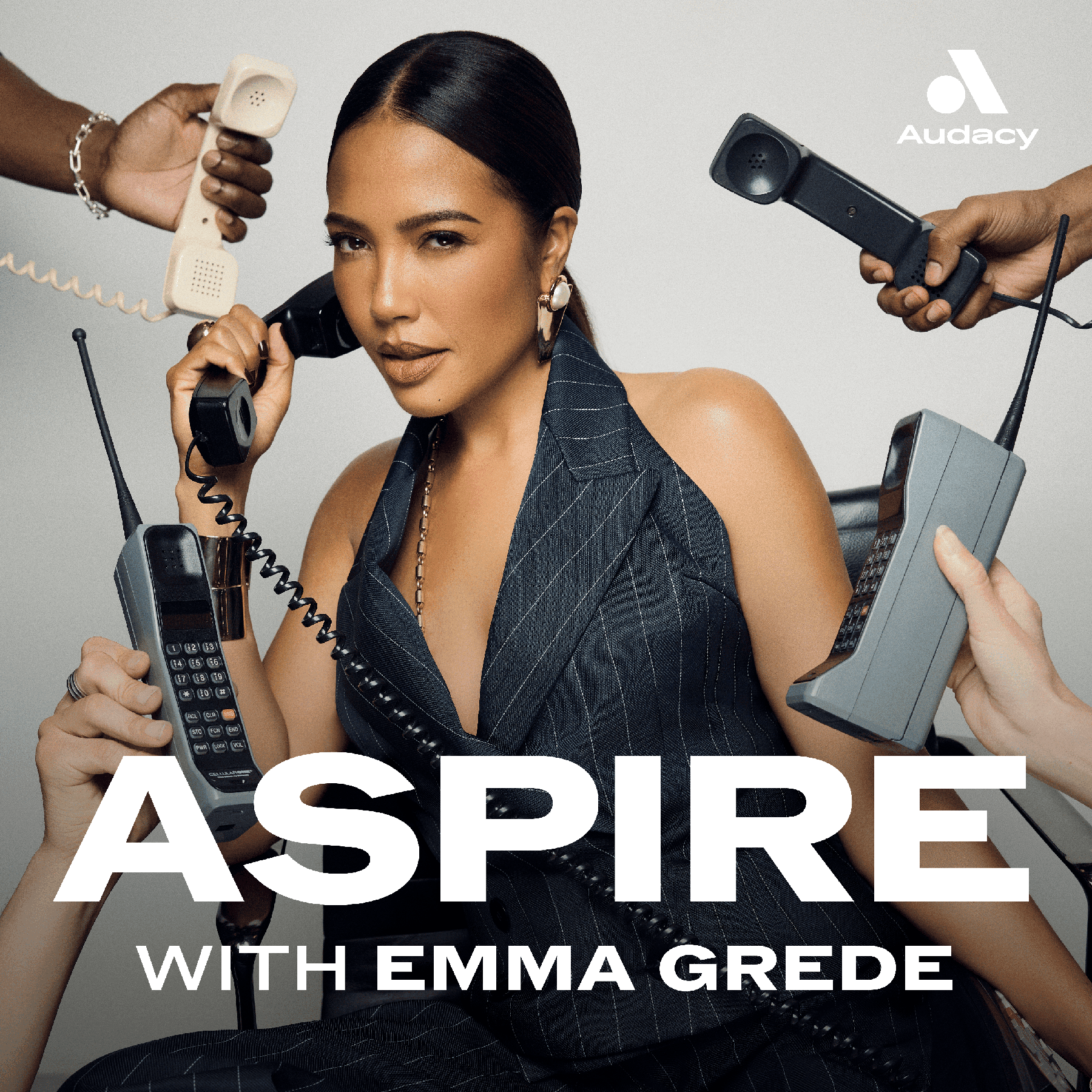
In short
Emma Chamberlain discusses building Chamberlain Coffee from her early YouTube fame, imposter syndrome, burnout from constant audience availability, and why she stepped back from YouTube/podcasting. She also explains shifting the company from “growth at all costs” toward profitability and brand integrity, including fewer retail doors/SKUs and more cafes.
Guest backgrounds
Emma Chamberlain is a creator turned founder who started posting on YouTube at 16, became a major voice of her generation, and later co-leads Chamberlain Coffee (with a co-CEO). She credits her early agency partnership (UTA) and her agent/partner for helping shape business direction.
Key claims
Celebrity-led brands have a “ceiling,” so Chamberlain Coffee must succeed without her constant face/marketing. Scaling fast misaligned with brand values and “didn’t go well,” so she returned to the original team ethos. She balances her unusual taste (e.g., preferring less sweet, more astringent flavors) with what sells by iterating based on customer research.
Notable examples
“Coffee girl” origins; opening cafes after D2C proof-of-concept; light roast not being a best seller vs her personal preference; stepping back from campaigns when they felt stale.
Written by AI. May contain mistakes. Listen to the episode to check what was said.
Chapters
Tap a time to open that second in VOIntroduction to Chamberlain's Journey
1:00 to 2:05
Emma discusses her early career, the rise of her brand, and the challenges of scaling.
“Sales teams spend about 50 % of their time on admin work, entering data, chasing updates, logging activity, instead of selling, building relationships and closing deals.”
The Transition to Co-CEO
5:06 to 8:00
Emma reflects on her evolution from content creator to co-CEO and the challenges faced.
“take that approach and 50 % are like, I'm going to let the other kid do it.”
The Role of Instinct in Business
8:00 to 9:50
Exploring how Emma's instincts and creativity shape her approach to business.
“I think I've been involved at a co-CEO capacity since the beginning.”
Chamberlain Coffee's Origin Story
9:50 to 14:00
Emma shares how her YouTube career led to the creation of Chamberlain Coffee.
“a lot of conviction to say and do because everybody else would tell you otherwise, right?”
The Journey of Starting Chamberlain Coffee
14:00 to 16:44
Learn how Emma Chamberlain's partnership with her agent led to the creation of Chamberlain Coffee.
“And actually, I think that you helped them craft and create that.”
Evolving Involvement in Business Operations
17:54 to 22:20
Emma discusses her growing involvement in the operational aspects of Chamberlain Coffee.
“When you think about the business today and actually more of the places that you would have traditionally felt uncomfortable, where are you leaning in now?”
Navigating Business Challenges
22:20 to 24:24
Understand the challenges and fears Emma faced while building her brand.
“I feel like there's a lot of fear around that because it's like, well, who's going to hear that?”
Return to Self and Brand Authenticity
24:24 to 28:00
Emma shares her journey back to a focused, authentic brand vision after scaling back.
“Obviously I'm very polite and very, you know, and I'm very, First of all, I am very professional in the way of communicating that.”
Balancing Personal Preferences with Market Demand
28:00 to 28:52
Learn how to balance personal product preferences with broader market appeal.
“But when you're in a consumer business, you can't just change those decisions you've made.”
Building Confidence in Business Decisions
28:52 to 33:02
Discover how to build confidence in your business decisions and trust your instincts.
“And so the balance that I've found is doing research on like what people are enjoying and then finding a version of it that I enjoy.”
Show all 24 chapters
Building Confidence in Business Decisions
35:04 to 35:54
Discover how to build confidence in your business decisions and trust your instincts.
“Summer tends to shift the routine you rely on on the rest of the year, whether it's a different bed, a different schedule or the healthy habits that get set aside when you're moving around.”
Building Confidence in Business Decisions
36:01 to 36:13
Discover how to build confidence in your business decisions and trust your instincts.
Creating a Sustainable Brand Beyond Personal Identity
36:13 to 39:07
Explore how to build a brand that can thrive independently of its founder.
“One of the things that I've been seeing, obviously you do so many things and you've got so much going on and you've been kind of, you know, doing lots of other things.”
Influences from Upbringing on Personal Growth
39:07 to 42:04
Understand the significant impact of upbringing on personal and professional identity.
“Well, one strategy that I've taken is, you know, really stepping back from doing campaigns where I'm at the center.”
Influence of Upbringing on Authenticity
42:04 to 43:36
Explore how Emma Chamberlain's upbringing shaped her authenticity and self-expression.
“I think if I did not have the parents that I have, I don't think I was born with this on my own.”
Navigating Expectations of Honesty
43:36 to 46:06
Discuss the pressure of maintaining honesty and the impact of expectations on content creation.
“I perhaps have in the past, maybe little moments where I'm like, I need to be myself right now, but I don't really like myself right now.”
The Decision to Step Back
46:06 to 49:19
Learn about the strategic choice behind stepping back from YouTube and podcasting.
“I think it's both incredibly brave and incredibly self-possessed and somebody that really knows what real is.”
Guilt and the Creative Process
49:19 to 51:18
Understand the feelings of guilt associated with content creation and the need for breaks.
“And I talked for so many hundreds of hours.”
Running a Creator-Led Business
51:18 to 54:04
Examine misconceptions about creator-led businesses and the complexities involved.
“like I'm taking right now where I'm not really doing much.”
Summer Fashion Inspiration
56:03 to 56:31
Emma discusses how to experiment with summer fashion.
“It's the kind of curation that gives you permission to play a little without having to overthink it.”
The Evolution of Content Creation
56:31 to 1:01:04
Emma reflects on the current state and future of content creation.
“and I wonder what you think about the creator space seeing as you've like had, you know, you've been in it, you've been at the top of it.”
The Long Game and Fulfillment
1:01:04 to 1:02:44
Emma shares her perspective on career aspirations and fulfillment.
“really know what's going to be the thing.”
Personal Growth and Wabi-Sabi
1:02:44 to 1:06:46
Emma discusses her personal growth goals and the concept of Wabi-Sabi.
“I really actually don't aspire for anything on a career level right now, which is really interesting.”
Misconceptions and Life Lessons
1:06:46 to 1:08:25
Emma addresses misconceptions about her work ethic and shares life lessons.
“It was just like a little, you know what Wabi Sabi is.”
Transcript
Automatic transcript. May contain errors.0:09Emma Chamberlain started posting videos when she was 16 years old, before most of us really understood what the creator economy was going to become. She wasn't following a playbook, she was helping write one in real time. She built a media business, became one of the most recognizable voices of her generation, launched Chamberlain Coffee, and then had to figure out what so many founders eventually face. What happens when the thing you built around yourself needs to grow beyond you. In this conversation, we talk about imposter syndrome, money, the cost of being constantly available to an audience, and why stepping back can sometimes be the most strategic thing you can do.
0:47Emma is thoughtful, self-aware, funny, and deeply instinctive about brand, taste, and what actually outlasts the algorithm. This is Emma Chamberlain.
0:59If you've ever worked in sales or run a team that does, this stat will hit a nerve. Sales teams spend about 50 % of their time on admin work, entering data, chasing updates, logging activity, instead of selling, building relationships and closing deals. If the tool you're using is creating more work than it removes, something has gone fundamentally wrong. That is where today's sponsor, Pipedrive, comes in. A simple, intelligent CRM tool loved by growing sales teams. PipeDrive was built from the ground up to strip away manual work, smart automations that handle the repetitive stuff like follow-up reminders, deal updates, and activity logging.
1:38You can customize the automations to fit your own sales process. And the AI features analyze your pipeline, flag store deals, and surface what needs your attention so your team isn't going looking for it. Switch to a CRM built by salespeople for salespeople and join the over 100 ,000 companies already using Pipe Drive. My link gets you an exclusive 30 days free instead of the usual 14-day trial. No credit card or payment needed. Just head to pipedrive.com slash aspire to get started. That's pipedrive.com slash aspire and you can be up and running in just minutes.
2:16Emma Chamberlain:Beauty has been shifting towards fewer products doing more work and toward formulas that read more like skincare than makeup. Primarily Pure has been part of that conversation. They're a female-founded clean beauty brand, and they just launched two new products that are worth a look. The first is their Sun Serum Tinted SPF. It's a daily mineral SPF 30 with a creamy serum-like tint that evens skin tone, nourishes the skin barrier, and gives a your skin but better finish without feeling like you're wearing foundation. It comes in four shades and replaces a few steps in your routine all at once. The other is the Lip and Cheek Tint, a multi-purpose tint with SPF 15 that works as both a lip color and a cream blush.
2:59It comes in five wearable shades designed to give a healthy, flushed finish that looks like the natural color you get after a walk outside. Both products fit Primely Pure's philosophy of fewer, better ingredients, formulated without synthetic dyes, petroleum, derivatives, or chemical sunscreen fillers. It's the kind of brand to have on your radar if you're rethinking what's in your everyday beauty routine. Use code ASPIRE to get 15 % off your Primally Pure purchase. That's www.P-R-I-M-A-L-L-Y-P-U-R-E.com and use code ASPIRE at checkout for 15 % off your order.
3:41Emma Chamberlain, welcome to ASPIRE. Thank you so much for having me. I'm so happy to have you. I really, really am. I'm truly honored. I have watched you for the longest time, maybe not as long as some of your like hardcore fans and community. You've been like, you know, in our lives and in our worlds for the longest time. I think you started when you were 16 years old, just blogging around when none of us actually understood even what that was or what it was going to be. But kind of somewhere along the way, at 23 years of age, you became a person that's actually running a company. And I'm really curious to understand when that kind of started growing up.
4:21Were you a kid that made things? Did you run things or were you like the type of person for, you know, that that showed up for much later in life?
4:29Emma Chamberlain:I do feel like, well, what comes to mind is, is group projects at school. You know, I'm thinking about like how I was in that sort of environment. And I do think I've always been sort of a leader in that way, mainly because I'm a control freak. And I think deep down, I was always like, well, I know that if I do it, it'll be done right. And so we can all succeed, you know? And I do think that that is interesting now in retrospect. I don't think that's necessarily like a rare quality. I feel like it's like 50-50, you know, like 50 % of kids take that approach and 50 % are like, I'm going to let the other kid do it.
5:11Emma Chamberlain:Which by the way, is kind of awesome too. Like I think there's, that's like a different strength. But I do think I've come into it much more as an adult in a way that I probably didn't anticipate. No doubt. You said that running this company is one of the hardest things that you've ever done and that you've had moments of regretting it. Where are you with that now? Oh, it's actually really a perfect time to have this conversation because I think my answer is really positive right now. Well, I think what I realized in opening cafes is how truly my heart really lies there, more so than maybe in other areas.
5:47Emma Chamberlain:Like I think the art of creating a cafe is truly my passion in the space. Interesting. And I think it was a bit tricky for a while there because, you know, we started the brand and then it wasn't optimal to open physical locations for many, many years. Because to contextualize it for people, where you started was very much in the D2C landscape, right? Yes. Which is, again, very, very different from owning and servicing in a physical space and location. Yes. Almost like a totally different business. Oh, 100%. We started as a D2C business as sort of a proof of concept just to see if the audience was there.
6:29Emma Chamberlain:You know, lower commitment. As a test, it went really well. And then, honestly, right after that, COVID started. And so that complicated things. And then it became like, okay, well, we'll just continue this as a D2C business because that is, those are the cards we've been dealt, you know, with the times. And I think because that was sort of the only option, that was all I really thought about for a long time. And then as we sort of transitioned out of that time, it was tricky because we'd sort of built this D2C business. But then I was like, wait, I don't actually, that's not really what I've dreamed of doing with this brand.
7:12Emma Chamberlain:I want to have physical locations. The world of coffee, the lived experience and curating that experience for people, I think has always been my dream. I mean, I'm so curious about you and I love that you talk about it as your dream because where you started in this business, very much in the capacity as the ideas person, as the creative person, as the marketeer. I think you were like chief creative officer. You've then done this big transition to co-CEO, which is a very, very different job. I guess what I'm asking you is, was that the right decision for you? Well, it's interesting because I think my role at Chamberlain Coffee, when it comes to my involvement, I think I've been involved at a co-CEO capacity since the beginning.
8:05Emma Chamberlain:But I think there was sort of maybe some personal fear of taking that on. Because also, I don't have the experience to do that. There's a lot of areas that I could learn, but I don't know that it makes sense to do that. Like I would rather delegate certain CEO sort of tasks to someone who maybe has strengths that I don't have. And then I can bring the other strengths to the table. We're going to dig into that a lot more because I think that that is a conversation that a lot of female founders have with themselves at the kind of, you know, in the inception of a business, understanding like who they are and what role they're going to play.
8:46And more often than not, what roles they can't play by default of what stories they're telling themselves. What do you think that you had to learn about yourself before you felt ready to be in charge?
8:56Emma Chamberlain:I think what I bring to the table is my instinct. Yeah. And my sort of like mental flexibility and also my ability to think outside of the box. I think that's what I bring to the table. Oh, and so much more. I mean, from an outside point of view, just looking in, like I hear when you speak, you talk about instinct so much, which I think is such a undervalued skill. I couldn't agree more. And beyond just your instincts, your aesthetic, your taste level, your ability to see in the future and round corners and understand what's coming next and how you've been able to deliver that for a very specific audience.
9:36I mean, when I speak about your brand, you have a room full of customers, by the way, here. You know, like just the instinct to price something correctly for your audience is huge and actually is brand defining and is something actually that you have to have a lot of conviction to say and do because everybody else would tell you otherwise, right? If you were just looking at a competitor set. So I feel like you have that in abundance. Will you just walk me through the moment that you had an inkling about Chamberlain Coffee? And also I want to really chart for people this idea or the very notion of what it means to have an idea and then understand how to turn that into a business.
10:15So if you don't mind, like rewind for me and paint the picture of how this all started.
10:19Emma Chamberlain:Well, it really started when I started my YouTube channel when I was 16. I was just filming my normal daily life as a 16-year-old, vlogging, if you will. And a big part of my life at the time was drinking a lot of coffee. I had a lot of homework and I was a very ambitious student. And so I didn't sleep much and I needed it. And it became a part of my content very naturally. Me making coffee, me drinking coffee, I became known as the coffee girl. And when YouTube ultimately became successful for me, I ended up graduating school early. Some say I dropped out. I didn't really drop out. It's whatever.
11:00Emma Chamberlain:And I actually started working every day at local coffee shops because I didn't have school anymore. And I was just working at that point on my YouTube. And the cafe environment became very important to me because I was literally spending every day there. And that became sort of like my office in a way because I could not... I love my mom. She's here in the room, probably somewhere. But I could not spend another hour in her apartment, our apartment. I was like, I have to get out. So I was spending a lot of time in cafes. Fast forward, you know, I moved to Los Angeles. I signed with UTA, my agency.
11:34You've become very successful, right? I feel like we can't skip that part because what happened, I mean, you were one of the first people. Like, I really think about you, your style, what it is that you kind of created and so much pioneered as almost like the genesis of how people began vlogging. Like what you did, and I don't say that to like just gas you up. I feel like you kind of like were 16 and doing something and that became the blueprint for how girls blocked. No? It's kind of fair to say, you know this.
12:08Emma Chamberlain:You know what's weird? It's like when it's you. Yeah. You can't tell where I was, what role I played because I honestly will gaslight myself out of it. Like if I get the second I start giving myself any sort of compliment in that area, I'm like, wait, that can't be right. And then I start thinking about it. I definitely have imposter syndrome, as we all do. And so when I think about that, I'm like, I don't even know what role I played and I don't even think about it. Weirdly, which maybe is not good. Maybe I could benefit from sort of analyzing my place. Well, you've got plenty of time. That's the good news.
12:46Emma Chamberlain:Yeah, I'll do that later. You've got time to analyze it. Like right now you're busy. So you come to LA, you're very, very successful as a vlogger, predominantly on YouTube. You get signed by UTA. Like at what point do you start thinking, wait a minute, there's a business here. There's a business outside of the business of vlogging. Well, see, the interesting thing is that wasn't necessarily a thought I had. I think that was what was really cool about having my agency as a partner to me during that time, a business partner, because I was a kid, you know? I moved to LA when I was 17. I was a kid.
13:23Emma Chamberlain:And so I couldn't even necessarily fathom what was possible. I couldn't comprehend it. So I think, you know, I really do owe it to the incredible team that I ended up, you know, working with. The good old team at UTA. The good old team at UTA, who I still work with to this day because there's no way I could have thought bigger in that moment. It was already so big. It was already so much bigger than I ever could have imagined. And it was already overwhelming. And so I think it was really wonderful to have them sort of guide me even further. Yeah. Into what was possible. You know, it's really interesting because I think that there's a duality there somehow that, you know, if you think about UTA right now, they're wildly credited among the major three agencies as having the most successful creators department.
14:14And actually, I think that you helped them craft and create that. So it's interesting to see because you were such an early signing and you became with a couple of other people, the kind of blueprint of what it meant to have a Hollywood agent as a creator. And so, you know, they helped you a lot in terms of like, here's an idea for a business and, you know, maybe how to structure it and help you finance it. But then you really helped them in a really big way because they became like the place for create is to sign. Well, it's really cool. My, my point agent who is like, that is my girl.
14:48Emma Chamberlain:You know what I mean? That is my girl. Truly my right hand in business. And I think our relationship is pretty one of one, I would argue, agent to client relationship. Like we just kind of had like a kindred union, if you will. Like a meeting of minds. Yeah. So was it their idea or your idea? It was her idea. I love you for giving credit there. Oh, absolutely. And, and, you know, And she met me and immediately spoke my language because I was really against signing with an agent. I was really against getting managers. I actually, at first I was really open to it. And then my dad was like, you need to watch out.
15:29Emma Chamberlain:You need to be careful. That's a good dad there. Great dad. And he was like, you need to take your time. When I first started in the industry, I was like, I'll get a manager, sure. And then I realized the dangers of that sort of approach and then took my time and it took a long time, you know, to find my agent who ultimately has become my partner in crime. And it was her idea to start Chamberlain Coffee because her pitch to me was sort of like, okay, you love this. You know, you're passionate about this space, this industry on a very organic level. You know, you have a lot of opinions. I was always just casually saying, this would be better if they did it like this, or that this would be better if they did it like this.
16:10She was like, I think you could really create
16:13Emma Chamberlain:a meaningful coffee brand. But I think what's interesting is what that's meant has evolved completely as I've grown with the business. And that is really normal. I think that's a great place to think about because where you start in a business is very rarely like where you end up. And I think that what's interesting about your change of position and perhaps your confidence growing within the business is that actually you've been able to take some of that imposter syndrome, which, by the way, I think is really healthy. Knowing what you don't know is an enormous entrepreneurial skill, right? And outsourcing that and figuring out who's going to come in and help you.
16:57if you live in a city where there's a major event happening this summer a concert series a tournament a festival the demand for places to stay goes up significantly hotels book out and travelers start looking everywhere else for somewhere to stay if you happen to be away during one of those windows that's exactly when your home could be working for someone else you could list your space on Airbnb while you're traveling and let it earn a little extra income during the weeks that you're not in it. It's the kind of move that fits realistically into how you already live. This is also the season where most calendars fill up regardless.
17:32Work trips, family visits, long weekends. Whether or not your city has an event, these are the moments worth thinking about. Airbnb is a smart way to make use of an asset that's otherwise just sitting there. Your home might be worth more than you think. Find out how much at airbnb.com slash host.
17:54When you think about the business today and actually more of the places that you would have traditionally felt uncomfortable, where are you leaning in now? Like where are you finding that actually you do have a voice, you do have a point of view that perhaps in the beginning you weren't so sure of?
18:10Emma Chamberlain:I think what's been interesting is, you know, going into it. I was very much sort of the big ideas gal showing up with like, here's the bird's eye view of what I think this should be like. And in the very beginning, like the original product, it was honestly just like, let's do a coffee product. The simplest thing we can find that tastes really great and is fabulous, but not put, we didn't have any money. We didn't have any, they were just like, let's just proof of concept, whatever. And then from there, once it worked and we were able to bring on investors and actually start to build out the creative, that was when I really got involved on the overall sort of vision.
18:54Emma Chamberlain:And I was the leader in that area. It was all my vision. Ultimately, as a founder, if you're actively working with the company, naturally, you will be exposed to every single nook and cranny of the business. whether you like it or not. Whether you like it or not. And let me tell you, I've seen every nook and cranny of Chamberlain Coffee and I have since pretty much day one. And I think the interesting thing that's happened is I've learned so much about business from just being in it. I wasn't necessarily planning on being involved on any sort of operational level, on any sort of like technical level.
19:42Emma Chamberlain:in that way. That wasn't really what I ever wanted to bring to the table. But now I cannot help myself. And in fact, I've actually really grown to enjoy that side of things. You know, when it comes to... I'm sure when it comes to like retail strategy, like that has been, like I look at it and it's so clear that it has your point of view all over it, right? Like every touch point, you know, the overall look and feel, the graphic intention, every piece of furniture, the service, like it feels very, very used through and through. And perhaps those weren't things that you were doing. Well, I think what's been really interesting is our sort of like grocery store relationship is something that I originally did not think I would have any sort of input about.
20:29Emma Chamberlain:But very quickly, I realized I have a very strong point of view about that. At first I was like, oh, I, you know, I trust everybody else. And then I did not. And then you're like, hang about, this is 10 ,000 points of sale. across the country. And this is where everybody's experiencing my brand. But I was also like, oh wait, I don't, yeah, this is actually not a strategic move that I would have made. I actually think this was a terrible idea. Things like that sort of happen, right? And it's no one's fault, just a misalignment, which is so normal, right? Sometimes it's like, oh no, now there are huge repercussions of that.
21:01Emma Chamberlain:That's the type of stuff that happens. But I think now I'm at a point where I'm involved in an umbrella sort of way. I can't, spend all my time on it because obviously it is a fraction of my business and it's ultimately a fraction of my business that is non-lucrative for me. Right now. Right now. Yeah. And it's never been. Like I always, I do love saying that I've never taken a penny and my God, have I given many pennies. I'm assuming that isn't your ongoing plan though. No, no. You're investing in building something so that it can be something for you one day. Yes. But it's very, you know, I mean, if we're being candid about business, it's like, I, I cannot dedicate all my time to Chamberlain Coffee because I have to nurture the other parts of my business that perhaps allow me to support myself, but also support Chamberlain Coffee as well.
21:52It's a very typical founder conundrum because often in those early days, it requires all of your time. It gives you very little back. And what you're optimizing for is something that is five years in the future. And at the end of the day, it's like you need to eat now. 100%.
22:07Emma Chamberlain:But if that, and I think there's, you know, there's been moments with Chamberlain Coffee where it's been like, I don't know. I don't know. I don't know. I don't know what's going to happen. Like it's, because by the way, that's, and I actually really enjoy talking about that. I feel like there's a lot of fear around that because it's like, well, who's going to hear that? And then who's not going to want to invest in the business? But it's like, what kind of story is that? If there is no moments of pure terror? Well, it wouldn't be real. It wouldn't be a real business story because there are moments of pure terror and it doesn't matter who you are or what you start, anything worth building is never linear.
22:45It's never, ever a straight line. I think I read somewhere that last year you made a really like clear decision that you were going to move to this idea of like this shift from pure growth to profitability, that you were going to change the shape of the business, fewer retail doors, fewer SKUs, more cafes. Walk me through that decision and almost like in your mind, like what did you have to give up to get to that place and make that decision for the company? I think that for me, it was a really easy decision.
Read the full transcript
23:18Emma Chamberlain:I kind of wanted to keep things a bit smaller, a bit tighter. Do you feel like you got pressure from your investors? Not from investors. I think there was some people on the team at the time that had a let's go big and fast. I had hesitations on a guttural level. It didn't quite feel right. But in their defense, I was like, I trust you. And I think, let's try it. And it didn't go well. And I did not like how it felt. And I didn't like what it did to the brand. I didn't like what that made me sacrifice. So actually, this scaling back to me was a return to self and the brand. I think for the first time in a long time, I finally feel like the brand is going in a direction I feel really good about.
24:04Emma Chamberlain:Because something that most people probably don't know is how truly critical I am of the brand, which I think is actually probably healthy. I am the biggest Chamberlain coffee hater ever. I'm like, I'm the first one to be like, uh-uh, no, this is horrible. Like I am the first one to be like, this is so unbelievably wrong. Now, by the way, sometimes it's decisions I made where I'm like, that was not good. Or like, that was not right. Whatever. Obviously I'm very polite and very, you know, and I'm very, First of all, I am very professional in the way of communicating that. I am nodding inside so hard because when you lose that, it's over.
24:41Like long live you as the biggest Chamberlain coffee on the planet. You have to be. Because when you don't have that distance, when you're so in it that you believe everything that you do is so great.
24:52Emma Chamberlain:Like it's like, it's game over. It's bad. It's game over. You can't. And I think like I am so deeply uncomfortable at all times with where the brand is at. I think there's so many things where I'm like, this needs to be better. When have there been moments in the brand where you have held an idea or there's been something that you wanted to do and everybody around the table has been like, no, no, no, no, that's not the case where you have just like decided I'm going to hold the line and this is what we're doing. I feel like that's really become more of a norm over the last probably two years. We've really had like a return to self as a brand.
25:30Emma Chamberlain:I've said that, But I think on a team level, where we've scaled down our team as well to pretty much like the original Chamberlain Coffee team. The co-CEO with me is one of the original investors. Original investors was our COO for a long time. Just truly understands the like ethos of the brand and what I care about. Our CMO is like truly a day one. Like we've really scaled it back to day one people. And that was important to you for what reason? Because I think what happened for a little while was that there was just, you know, we expanded the team. And I think what my approach was, was like, I want people who are going to bring a completely different perspective to me so that I can learn.
26:16And so that perhaps we can be stronger together.
26:20Emma Chamberlain:And I think what I learned from that experience was that that's not necessarily actually how that works. I was intrigued by the idea of hiring people to work at the company that had maybe more of a sharky mentality, right? Because I'm so not like that. I'm so like the creative one. And I do have a shark in me a little bit. Yeah, you are emorged by a different side of it. Yeah. I definitely like have grown into being more like, you know, like for sure. And in a way that is actually really shocking and unusual to me. But yeah, I wanted a different sort of energy to complement mine. And I thought that would be helpful.
26:56Emma Chamberlain:and I've learned it's actually not. I think because strategically, there was just huge misalignment. And what's your comfort level in making decisions when you know that that's going wrong? Like how do you deal with the fact that you wanted something, you went for it, it didn't work out? Like what does that loop look like for you? Are you able to deal with that decisively? Are you outsourcing those decisions? How do you rescale the business when it's going in a wrong direction? You know this. better than anyone. When you realize something's not working, you don't in business just get to fix it.
27:35Emma Chamberlain:It's like playing Jenga. If you pull one piece, the whole thing falls. So you have to figure out how you're going to pull out the piece you want to pull out. It's so unbelievably complicated that coming to the conclusion that something needs to change is one thing. you're lucky if it is resolved within five years because it's just tricky. It takes six months to do this. It takes six months to do that. It takes totally, totally. But when you're in a consumer business, you can't just change those decisions you've made. You're like, it's sitting in the store and I don't like it. It's like, okay, well, that's going to take a while.
28:10I'm interested in you because you are the brand and the founder. Like how you tell the difference between a decision that's good for you and a decision that's good for the business and whether or not they ever are at odds with one another.
28:22Emma Chamberlain:I do think I've actually found a really healthy balance between catering to what I would want in a product and ultimately what a larger audience would enjoy. Because I also have realized that my taste for things, like my literal taste buds, are a bit unusual. Like I like things that are a bit more astringent, for example. I don't like sweet things. And so the balance that I've found is doing research on like what people are enjoying and then finding a version of it that I enjoy. So it's like almost creating, like, for example, I wouldn't necessarily as an adult buy flavored coffee. Like my favorite is light roast.
29:12Emma Chamberlain:However, our light roast, that is not our best seller. Let me tell you, that is not our best seller. It's my favorite. It's what I drink every day. But, you know, our flavored coffees sell much better, which is not something I would normally choose at the grocery store at this point in my life. However, it's been fun to like, continue to improve the flavored blends to be something that like, I would as a non-flavored coffee drinker, perhaps, how can I make myself a fan of it? And that's a really cool challenge that I really enjoy. And that sort of allows me to create products that I enjoy that are like very personal to me, along with things that will perform for an audience.
29:48Emma Chamberlain:Yeah. I think that's interesting because I think what you have is such an operational advantage. You know, so many companies, they'll hire consultants and they'll have to bring in, you know, brand experts or, you know, people that are experts in taste and whatnot. And it's so interesting to me because you're so intrinsically attuned with your audience, your customer, this community that you've built over the longest time. but you also to your own, you know, you said it earlier in this interview, you don't have all the answers. You don't have all of the experience. So I'm interested to understand like the journey and how you've learned to both trust yourself, to sit in a board meeting, to have conviction about the decisions that you are making for the first time, perhaps.
30:30What does that even look like for you?
30:32Emma Chamberlain:I think at this point now, I have no fear. I have no fear. I don't care what I sound like to anyone. I don't care if people perhaps look at me like, she's a cute little, you know, 20 something year old, whatever. Like, what is she now? I don't care anymore for a few reasons. I think number one, because I've spent enough time doing this now to see ideas that I've had work. I've had enough time to see things that I've fought for be ultimately fruitful. I've been around long enough now to see that pay off. And I think once you have a little bit of that under your belt, you can show up with a brand new sense of confidence.
31:21Emma Chamberlain:I also think you can show up with that beforehand. But for me, that was how I got there. But also too, I think I'm at a point now where I'm very protective of my voice and my point of view because there have been moments where I have sort of, and this is my own doing and I take full responsibility for this. This is no one else's fault but my own, but I've allowed, you know, other opinions to overshadow mine. Again, not because they meant any harm, but because I was like, well, this is the person that went to Harvard. I know, yeah. You know? Yeah. This person went to Harvard, but I didn't even finish junior year.
31:59Emma Chamberlain:I think they can like, yeah, They probably know better than me. And there have been occasions where they actually did not know better than me. And then I ultimately have been left with some things that maybe I wouldn't have chosen myself. You know what I mean? And so I think that experience has given me this sense of like, I need to say exactly what I'm thinking and I need to say it with conviction and I need everyone to listen because I, and I'm not going to like, like, oh, nevermind, nevermind. because someone with more experience in another area speaks out. It doesn't matter. We all, it's all, it is really a blank slate in a lot of areas.
32:38Emma Chamberlain:Like there are obviously certain technical things that I don't know how to do, but when it comes to gut instinct about a strategy, and that can be a more technical strategy. Totally. We all have common sense. We all can, you know, actually make decisions better than we think we do. So anyway, in these sorts of complicated areas, I think we underestimate how much of it really is common sense and just honestly life experience in general. Yeah, that. Totally. Just because you can't intrinsically read and understand. Like for me, the fear was always around the numbers. And I was like, I can't read the P &L.
33:12But if you explain it to me and I understand the patterns and what's happening, I'll tell you what the decision is. It's like, oh, I know exactly what we need to do and how we're going to get there. We need to reach this, you know, this number, this bottom line, this trajectory of something. It's like, you might not have the implicit and technical understanding, but it's like, actually you can come up above that. And I think that is something that specifically for women is really important to understand. Like you don't have to know every little bit of it to have an opinion and a point of view and be able to point everybody directionally to the right choice and the right ending.
33:52Most people have one or two big recurring payments that just leave their account every month and do nothing else for them. Built looked at the biggest one, your rent or your mortgage, and built something around it. They reward you with points on every housing payment wherever you live. Those points are real. You can redeem them towards flights, hotels, lift rides, Amazon.com purchases, future housing payments, and more. The part I think is most interesting is the neighborhood concierge inside the Built app. It's an agentic AI feature, which means it doesn't just give you information, it actually executes.
34:27It's connected to your home and over 50 ,000 merchant partners. You can ask it to pay your rent, book a dinner reservation, schedule a fitness class, or call a lift. And it handles it all automatically while applying your member benefits along the way. For anyone watching how AI is starting to land in real world products, this is a really useful example. Download the Bill app and join the membership for where you live at joinbill.com slash Emma. That's J-O-I-N-B-I-L-T dot com slash Emma. Use your link so they know we sent you. Summer tends to shift the routine you rely on on the rest of the year, whether it's a different bed, a different schedule or the healthy habits that get set aside when you're moving around.
35:13The one thing that stayed consistent in my routine through all of it is my morning AG1. It's the easiest habit to keep in the summer since it's just one scoop with eight ounces of water. AG1, a daily health drink with a multivitamin, prebiotics, probiotics, superfoods and antioxidants all in one step. The NextGen formula delivers 75 plus ingredients backed by four clinical trials. It's shown to support gut health and filling common nutrient gaps. That's why AG1 works for me when I'm traveling during the summer months. It takes about 30 seconds and we're not thinking about it again for the rest of the day.
35:46And with the travel case and travel packs, it's actually easier to keep going on the road than trying to piece together the same thing from a mix of supplements at home. Visit drinkag1.com slash aspire to get a free AG1 travel case with seven free AG1 travel packs in your welcome kit with your first AG1 subscription order while supplies last. That's drinkag1.com slash aspire.
36:13One of the things that I've been seeing, obviously you do so many things and you've got so much going on and you've been kind of, you know, doing lots of other things. But I wanted to ask you for a company that is built around an individual, like, do you believe that a company can outlast the person? And are you building Chamberlain Coffee so that it can exist outside of your endorsement and your involvement with it?
36:36Emma Chamberlain:I mean, this is going to be a shocking answer considering I named it Chamberlain Coffee. It's like, okay. Well, if I could go back in time, I probably wouldn't do that. But - By the way, it's a nice name though because it doesn't feel like a name. It's not like Emma's Coffee. Totally. Right? Like, do you know what I mean? Chamberlain could be like a play. It could be anything. It could be anything. I think this brand has to exist outside of me. And that is something I fight. There's a fight. Or it's not a fight, but it's like, I think that I'm aware of the ceiling for a celebrity-led brand. I also know that like, there's a lot of hesitation when it comes to brands that have someone attached, you know?
37:25Emma Chamberlain:When you mean hesitation, like from an investment and acquisition point of view or customer point of view? Right, fair, all of, all of the above. I understand why. I think because there's a head start, because there's a personal relationship with the face of the brand, you know, you attract customers not based on merit, a product. Always. I think that's how you sustain customers. I think ultimately, people are not going to return if they don't like the product. 100%. But I also think in the marketplace, there's just far more, you know, examples of flops than there are success stories, right? Like, you know, which is also true, I think, broadly in business.
38:07Emma Chamberlain:It's like how many paper companies have failed before? So many. Whatever the big paper companies are even... I only know Dunder Mifflin from the office and that's not even a real one, so sorry. But it has become a huge, huge, huge priority for me to have Chamberlain Coffee exist and be successful without me as necessarily the obvious face of it. Now, my last name to an extent is recognizable. I'm aware of that. I am aware of that sort of like innate recognizability However, I want the brand to sustain itself without me having to market it on a personal level. How have you tried to enable that?
38:47Like, what does that actually look like for you? Because I'm sure there are so many creators or people that think about that as a way of getting into a business, but it's really hard to extrapolate yourself and not see dwindling sales or, you know, it's like you have to build something that truly has more than you, right?
39:08Emma Chamberlain:Well, one strategy that I've taken is, you know, really stepping back from doing campaigns where I'm at the center. And that has been scary for everyone because, and also, you know, it's, I really enjoyed doing those campaigns. Like I love coming up with wild ideas and working with really cool collaborators on those things. And I love, you know, that's another one of my passions is sort of creative directing shoots and assembling a team and to create the best product possible for the best possible marketing. Like I love that sort of experience and that kind of teamwork with other fabulous artists.
39:45Emma Chamberlain:But you never want to leave something when it's not working anymore. You want to step away when it's still working. Fuck yeah, you do. And that is something... Leave on the top. Yes. And so I reached that point with that sort of style of marketing for the brand. And I was like, I don't think this is sustainable. I think this is going to get stale. It's already kind of getting stale to me. It felt really exciting. And it was starting to not feel exciting. And I was like, got to think of something else. And I was like, I think this is the perfect time to really seriously get serious about removing me a little bit.
40:17Yeah, I think it's a really smart decision. And I think it's something that if you looked at the trajectory of your career, I kind of feel like you've done that over and over again. I want you to just take us back a little bit because I do feel like it's the way that you started and what you've been able to do, to me, are so inextricably linked. And so when you're a 16-year-old on YouTube, what do you think that you were accidentally doing so right that set you up for where you are now?
40:42Emma Chamberlain:When I first started, very first started, like first video I posted, probably not even up anymore. I was really trying to copy what was working in... I mean, it wasn't really quite an industry yet at that point, but you know, sort of what my peers wouldn't be in the space. Like what were they doing? Okay. I was copying that, which was like a very specific type of fashion lifestyle content that was very manicured, very, uh, you know, the girls had these beautiful rooms in the back with like very lights up. And by the way, there is an art to that. And I like, I loved those videos. I loved watching them.
41:22Emma Chamberlain:I thought they were amazing. When I tried to make videos like that, They were horrible. They were really, really bad. And I was aware of that. I was like, my personality is not coming out here. And there was nothing to grasp onto there. Like that wasn't, I was never going to succeed if I continued making videos like that. My dad said something. He's like, I had like a private account on Instagram. You know, it was like a Finsta that my friends in high school followed. And I used to make like really insane, like kind of funny videos, whatever and I'd edit them together and my dad followed the finsta of course it was like totally family-friendly finsta and my dad was like you need to make videos like that that are like funny I love this dad of yours he feels like he gives a lot of good advice how much do you think of your upbringing and especially the like the parenting that you had has influenced the type of woman that you've become and also like just this ability to just always like be yourself I mean, it is the only reason I think that I'm in the place that I'm in.
42:26Emma Chamberlain:Really? 1 ,000%. I think if I did not have the parents that I have, I don't think I was born with this on my own. Like, I think they've nurtured me to be the person I am. They gave you like a comfort level and like a lot of support. Yeah, and I think they've constantly, They've like unloaded wisdom onto me in such a way that has allowed me to, I think, move through this world, this complicated world. Interesting. In a way that has been, yeah, like I think I've been able to make less mistakes. I don't even know. I don't even know. It's such like a broad, yeah, but I think yes. It's just short answer, yes.
43:17I'm so interested in you and your brand because it's been so much built around this idea of being, you know, authentic. I hate that fucking word, but like so honest, so unfiltered. Do you ever feel boxed in by the expectation that you always have to be super hyper honest and super self depreciating?
43:37Emma Chamberlain:I perhaps have in the past, maybe little moments where I'm like, I need to be myself right now, but I don't really like myself right now. And so I don't even know what putting that out there means, what that looks like. And it ends up sort of creating content, for example, that I don't really like. Simultaneously, I'm on a hamster. It's sort of like a content hamster wheel in order to stay in the zeitgeist, if you will. I definitely felt that pressure for many, many years. I'm kind of trying to unlearn that right now so that I can reinvigorate some passion for myself. But I'm at a point now where I don't feel any box in that way at all.
44:18Emma Chamberlain:You find freedom at the other side of a painful experience in a way. And I think I've had a lot of painful experiences in this career. The beautiful thing though, is that at the other side of those painful experiences, every single time I've found a new little piece of freedom in it. You know, freedom from sort of various limiting beliefs and things of the sort. Be honest with me. Have you ever wanted to leave social media entirely? Yeah, definitely. Would you? Yeah. I think about that a lot. I think being a public figure, it really alters the way that you exist in the real world. And I think that the real world being like the tangible world versus the internet, fake matrix.
45:03Emma Chamberlain:It's not fake. Well, it's real and fake matrix of it all sort of world. It really changes and somewhat complicates the way that you exist in the real world, which is totally, sometimes actually really special and really kind of awesome, sometimes really complicated. And it's a huge priority to me that my life in the real world is good and healthy and happy. that's my number one priority. And so I think I've definitely thought about, okay, well, what if at some point this career path does make my life in the real world bad? You know, am I willing to step away from this in order to preserve what is ultimately my real life.
45:58Emma Chamberlain:And the decisions, definitely, yes. I think it's very important as somebody in the public eye to be able to look in the mirror and say, I could walk away from this. I think that's very important. I think it's both incredibly brave and incredibly self-possessed and somebody that really knows what real is. Like what makes you happy? What is, what is real? And I don't mean the difference between the internet and real life. It's like, what is real and true to you in terms of like the cost? Because all of this like costs something. Like I, again, watching your career, obviously you went from, I mean, I don't know how many videos you were vlogging on YouTube, but it felt like a lot.
46:44It felt like you were there all the time. And then you weren't. And then we have the podcast, which was wildly successful. You did like nearly 450 episodes of your podcast. And then it felt like a very personal decision that you decided that very much at the height of it, that you were going to go away. And I wonder what it actually, like the strategic decision behind deciding to step back from something that you seemingly really love? Like, what has that taken for you?
47:12Emma Chamberlain:I think it's when it does start to take from my real life a little bit. And I think both with YouTube and the podcast, both of those were really enjoyable for, you know, a period of time. Actually, not even for a period of time, for years, right? And they enhanced my life, I think. They felt inspiring to me. I felt like I had something to say or something to show or like something to provide in one way or another, whether it was like a truly heartfelt story or something kind of funny just for like the sake of comedic relief for somebody or whatever, or just like really kind of relaxed entertainment.
47:53Emma Chamberlain:Like I just, I think there have been long stretches of time where it's felt very natural for me to create, say YouTube videos or, you know, podcast episodes. But I think it's so unbelievably normal to reach a point where you're like, you know, I actually don't have anything to say here anymore. It got to a point for me where I was like, I think with YouTube, where I felt emotionally really depleted from it. And I think that was like really hard for me to admit because I had my dream job. And I think it was really hard for me to admit that the act of filming my everyday life and the complexities of that at that point in my career as a public figure, you know, it was like, oh, I can't really film my life the way I used to.
48:39Emma Chamberlain:That kind of complicates things. And also the act of filming myself alone is just like it, for whatever reason, became really challenging and kind of like upsetting for me. And then that bled into my real life outside of my work life. And then it was like, okay, I can't do this anymore and I need to step away from it. in a big way. And then, you know, I fell into the podcast in a serious way. And for a long time, that was really sort of therapeutic and fun. And it was a nice step away from YouTube. And it was, you know, like a night, it was a different medium, but it was close enough. But I did that for so many years.
49:19Emma Chamberlain:And I talked for so many hundreds of hours. And you reach a point where you're like, I can't do this anymore. And I think the reason why I'm very hard on myself about that is because I think the audience is always like, wait, there's not more, you know, which is, by the way, so nice that the audience wants more. That's like amazing. But I think my whole career, I've been sort of hearing in the back of my head, this voice from the audience, which is like, where's more? Where's more? Where's more? It's never enough. And I really struggle with that because I want people to feel satisfied. I want people to feel like they, and so that's led me to going for longer than I probably should.
49:57Emma Chamberlain:And also when it's time, like for example, recently where I'm, you know, taking a little podcast break and kind of figuring out what's, what's next for me. I've experienced a lot of guilt and shame about that. I like wake up every morning and hear the voices in the back of my head, like, where's more, where's more, where's more. And I get it. I get it because there's all, it's like, no one's in my brain. And also from the outs, from an outsider's perspective, it's like, just turn on the fucking camera and talk to it. Oh my God. It's like, how hard it didn't make. And I totally get that. And I totally get that.
50:32Emma Chamberlain:But I think on a personal level, when your career is so intrinsically you as a person, that is complicated. And when it's creative as well, it's just, you can't, it's so different. Yeah, you can't force it. You can't just squeeze it out. I'm interested that you use the word guilt though. You feel guilty to your audience? You feel guilty to your community? I do. Because you're not giving them content. I've never in my entire career felt like I've given enough. And it's tough for me. And I think it's led me to actively like working through that right now. And I think the way I'm working through it is by giving nothing and accepting it because I've been doing this for so many years and I've never taken a break like I'm taking right now where I'm not really doing much.
51:28Emma Chamberlain:You know, I'm not like creating any sort of content. I've like never done that in nine years. It's actually been nine years. so I've never done that it's like I've maybe pivoted from like YouTube to podcast or whatever but it's not like I've taken a break ever I've never had a break for the record not that my opinion matters at all I think it sounds like one of the healthiest things that you I mean obviously I'm going to say it's the healthiest thing I'm the start with yourself girl like I'm like me me me and what's right for me but you have to start with yourself like you have to be in a position where you go, what is going to be right for me?
52:09Because you're so young and you have so much to give and so much creativity that at some point when you feel like you aren't working and optimizing at the level that you should be. And when you have that feeling, like you've got to take a step back and you've got to have the confidence to know that you can, can, if you want to come back. And if you don't want to, then that's fine too. But it feels to me like that is just self-preservation of the highest order and a million percent the thing that you should do. What do you think is something about running a creator-led business that outsiders completely misunderstand?
52:46Emma Chamberlain:I think there's a lot of perhaps like wide umbrella opinions, if you will, about what that sort of means about a business, what that means about the structure of the business, the involvement of the person, how the business operates. Like there's like a lot of sort of stereotypes, I would say. I don't think that's accurate. I would argue every single one is so different. There's so many different ways to structure a brand around a person, right? And I think perhaps a perspective that like every brand started by a public figure is really just like a name being slapped onto something. And by the way, that's not necessarily wrong either.
53:33Emma Chamberlain:No, sometimes it is. I didn't necessarily do that myself. However, if a public figure is like, wait, I love this brand. I'll associate myself with you and I'll be involved in this. I don't think that's necessarily wrong. I think - Well, it's also, it's a slice of the business sometimes, right? Sometimes it's not the entirety of the thing. And for you, you have a really layered, like complex media and brand business. So it's never one thing. you might turn up to a show or appear in a campaign, but it's like when you're doing this giving of yourself, it's a very different, it's a very different piece of the business.
54:10Yes. And it takes a different level of aptitude and effort and all the rest of it.
54:21One thing I always tell founders is this, you need to understand what you own, Your storefront, your customers, your data, your ability to reach people, those things matter. And that's why Shopify is such a powerful platform for anyone building a business today. Whether you're testing a side hustle, launching your first product, or scaling a full brand, Shopify gives you the tools to do it properly from day one. You can build your store, manage your products, understand your customers, and sell whatever people are already shopping, from Google and YouTube to TikTok, Instagram, and even ChatGPT.
54:56I also love anything that removes friction, which is why Shopify is a platform we run Good American on. Shopify has ShopPay, that purple button you've definitely seen. It makes checkout fast and easy so customers can purchase in just a few clicks. Fewer abandoned carts, more completed orders, and less stress. They also have Sidekicks, Shopify's AI tool. It's really useful for the things that take up so much time, analyzing sales, creating discounts, updating your site and helping you make smarter decisions. So if you've been thinking about starting your own thing, this is your sign. Build your store, own your audience and create something that lasts.
55:33Start your free trial at shopify.com slash aspire. There's a particular kind of energy that comes with late summer. People tend to dress with a little more color, lean into the heat and take more chances with what they put on. The professional dress code loosens up. It's a season made for a wardrobe that feels expressive instead of careful. Macy's has linked into that with their late summer edit. Vibrant pre-seas that don't take themselves too seriously, statement accessories, and a strong beauty lineup if you want to refresh your routine for the back half of the year. It's the kind of curation that gives you permission to play a little without having to overthink it.
56:10You might try a bright lip you wouldn't normally reach for, or a glowy finish that suits the season or a dress in a color you don't usually wear. These are the small experiments that make the summer feel like summer. You can find all of it at Macy's in-store or at macy's.com.
56:30I do think about you as like this original creator and I wonder what you think about the creator space seeing as you've like had, you know, you've been in it, you've been at the top of it. How are you thinking about being a creator today?
56:45Emma Chamberlain:I think what's really cool about the entertainment, media space as a whole, whether it's like music, content creation, obviously now because of the internet, there is no industry gatekeeper in the same way that there used to be, which means everyone can do it. Now, I think what that's done ultimately to all these industries is two things at once. It's allowed a lot of really talented, amazing things to be created and enjoyed and consumed. I think it's allowed more niche sort of things to kind of be discovered in a way that's really cool. But I also think it's become really saturated as well in all the areas, right?
57:32Emma Chamberlain:Content creation, but also, again, it's like industry-wide everything. I've asked myself this question. if everyone is a content creator now, which is kind of true, whether you're a local mom and pop breakfast restaurant or you're me, like on Instagram or whatever, everyone's on the internet now and everyone's kind of a content creator. And everybody's thinking of how they can optimize their business through content. Everybody's thinking about how they can monetize internet content. And it's sort of, it is at this point where it's like, almost everyone sort of creates content in a way. Everybody's a content creator.
58:12Emma Chamberlain:But then it's like, okay, well then if everyone is a content creator, who is then in the category of a content creator? Because everyone's doing it, which I don't think is a bad thing at all. But I think it's very interesting. And it sort of, it makes that sort of title lose its gravity in a way. Where do you think that creator-led businesses are even headed? Is there like a feeling for What you see people doing Mistakes you see people making Like starting a business Or do you mean like The whole sort of business side of things Like even like brand deals And things of the sort Yeah I mean like Much more generally Yeah like broad strokes Creator economy overall I have this like Feeling In my gut That I could be wrong about So we shall see but it does feel like we're heading like in that industry, in this industry.
59:09Emma Chamberlain:It feels like we're heading towards like an explosion of sorts. It's almost like there's a train going towards a brick wall. Sorry, really dark, kind of a dark metaphor. Whoopsie. But it's kind of how it feels. And I, I've been feeling that way for a few years now where I'm like, this can't continue the way it is because it's not working anymore in the same way it used to. There was sort of this golden age of like influencer marketing. There was this golden age of influencer-led businesses. I've been very fortunate that I've been able to be involved in those things. And I've received criticism, I think, in the past when I've sort of expressed my concerns about, not my concerns, but my thoughts about the future of the industry because people are like, well, you got in while it was working and now you're like, you're talking badly about the future of it, but it has nothing to do with me or anyone.
1:00:03Emma Chamberlain:I'm not trying to shut the door on anyone. I'm just observing what I see, which is that the audience is becoming very keen to sort of the inner workings of the industry. They know when they're being sold to now. They don't want to be sold to. Also, we have a generation of very anxious, depressed young people that I think are all kind of like, wait, I need to put the phone down. I need to unfollow people that I don't know on a personal level. As they say, the bubble seems to be bursting, but it's not fully bursting yet. It's like it's bursting in slow motion. And it's like right now the needle is like in it all the way in the balloon right before it's about to burst.
1:00:49Emma Chamberlain:And it hasn't quite burst yet. But I do feel like we're about to experience a huge shift in the world of fame, content, marketing. Like I just feel like there's a huge shift coming and I don't really know what's going to be the thing. Yeah. I feel it though. And that's why I think I've been feeling like this inner intuition, like I need to kind of, I want to sit and watch for a second. Yeah. I mean, obviously that point of view has informed your decision about your choices to take a big step back. I mean, you're only 25 years old, which is kind of crazy. And I wonder for you, Emma Chamberlain, what does the long game even look like?
1:01:38Career-wise, I do not know.
1:01:41Emma Chamberlain:And I love that. I love that. I don't have a five-year plan. I don't have a one-year plan. I don't have a five-year plan. I don't have a 10-year plan. And again, that is something I'm very fortunate to be able to have. I have a little bit of freedom to allow that to come to me in time. I also have the freedom to take every day for what it is and invite whatever's inspiring me on that given day. And that's something that I'm truly stepping into at this point in my life in a way that I haven't been able to do for the last nine years, because I was working to get myself to this point, you know, so that I could have this sort of freedom and ultimately rediscover what I'm passionate about all over again.
1:02:29Emma Chamberlain:But I have no clue. And I think it might be in the public eye, it might not. I think the most important thing to me is that I'm as fulfilled as I can possibly be. That's it. What do you still aspire to do or become? I really actually don't aspire for anything on a career level right now, which is really interesting. I feel really proud of what I've done. And I think there's a lot of pressure to continue to level up, level up, level up. I don't feel that right now. And I do think that there are certain ideas that are exciting to me, but I wouldn't necessarily call them like aspirational. They're much more small.
1:03:17Emma Chamberlain:They're smaller. And there are things that are totally things that I could do when it comes to like what I'm aspiring to be. I'm just always trying to be a better person. It's so boring and so cringe, but I am like, I want to become the wisest, truly pure of heart person I could possibly be. That is my absolute goal in my life. And luckily for me, that is something that I, if I ever stop aspiring towards that, that means I've something, I've lost the plot because that's something that you can always improve upon. I think it actually sounds incredibly honest given where you're at. And I think that everything that you've been signaling for the last couple of years, and even just having this short time that we've been speaking, it's very, it's actually really clear.
1:04:13It really pours out of you. Because you have the choice to do many, many other things. Because it could all be, you know, like net balls and fabulous gowns and more deals and more money. And you could have taken the quick, fast, heavy road and you're choosing very differently. So I actually don't think that it feels performative. It actually feels like totally in line with everything that you're saying. So good for you, babe.
1:04:37Emma Chamberlain:Thank you. It's pretty amazing. I'm going to take you to some rapid fire because I'm over time. Let's do it. And I love to ramble. Rapid fire is good for me. I'm the worst at rapid fire. Don't even talk about it. Okay. If you had to teach a masterclass, what would it be about? Video editing. If you weren't allowed to be on camera or social at all, how would you still want to participate in culture? Okay, so much for rapid fire. That's like a tricky one. What is going on? Damn. I would say perhaps on like a creative direction level like behind the scenes creative directing things but not by the way, that sounds fabulous.
1:05:12Emma Chamberlain:I would choose that for you. That sounds great. Like 100%. What's a very unsexy habit or system that keeps your life like functional? I just thought of something so funny which is I've been really into journaling lately in a big way and every morning I journal while I'm on the toilet because otherwise if I start journaling while I'm on the toilet then I like I will really do it because I'm bored on the toilet I'm really bored on the toilet and if I bring nothing but the journal then I'll really start journaling and then I I keep the habit that's a new thing that I've been doing for the last like months so enjoy that y 'all we got it I've got the picture I can see it I'm discovering a lot of stuff it won't be the first time I'm seeing you on the toilet now.
1:05:52What's the biggest misconception about you now? I do feel like,
1:05:56Emma Chamberlain:I sometimes feel like people think I'm lazy and I'm like, no, I'm not lazy. I don't know if people think I'm lazy or not, but I have just feeling... Do people think you're lazy? I think a little bit. They're like, where's this? The room is... You haven't made this in a while. Oh, you mean because you're like, not so in it. Because I disappear from things. Oh, oh, oh, oh. And I think people are like, you're lazy. Yeah, yeah, lazy bitch, lazy bitch. I got it, I got it, I got it. But I'm not lazy. I'm just super sensitive about stuff. And I really want the quality to be good or else I'd rather make nothing.
1:06:26Emma Chamberlain:And I also, yeah. So now I'm just explaining myself. This is supposed to be that. No, no, no. You're good. You're good. I mean, literally, yes. I don't get lazy, but I understand how that could be a misconception. So thank you for busting it. Okay. Last and final question. What is a book that changed your life? You know what was an interesting book that changed my life? It's not like the book that changed my life, but I read a book about Wabi Sabi. It was just like a little, you know what Wabi Sabi is. It's kind of a complicated concept. It's about, it's basically, so it's like a natural aesthetic.
1:06:58Emma Chamberlain:It's like born from nature. It's like if you hold the same knife every day and there's your thumbprint in it, like that's wabi-sabi. Or like if you, the way that your hair is tousled in the morning is like wabi-sabi versus like having it perfectly done. Like it's like, that's sort of, and I'm going to get roasted because I don't think I explained it properly, But I read this book and it really changed the way I look at art and that in everything. And I feel like now I'm like looking for the grit in something, looking for the natural touch. And I'm like completely not interested in anything that's like perfectly symmetrical and buttoned up and perfect.
1:07:41Why was that answer so long? First of all, it was so long because it was like... That was my personal cut most of that.
1:07:48Emma Chamberlain:That was for you. I ain't cutting. No, I love it. And I don't, first of all, of course, nobody has ever mentioned that book. And I cannot tell you how people like grasp onto these things that you have just introduced a concept to an entire group of people that didn't know about it. And you were talking about, you know, wanting to be like the wisest, bestest version of yourself. And it's very clear to me that you're very much on your way. Thank you so much. We'll take the wabi-sabi. thank you very much. Thank you. Love you, Emma Chamberlain. I love you. You're so good.
1:08:24If you're loving this podcast, be sure to click follow on your favorite listening platform. While you're there, give us a review and a five-star rating and share an episode you loved with a friend. We'll be so grateful. Aspire with Emma Greed is presented by Odyssey. I'm your host, Emma Greed. Our executive producers are Ashley McShan, Derek Brown, and me. Executive producers from Odyssey are Asha Saluja and Leah Reese-Dennis. Producer, KK Sublime. Stephen Key is our Senior Producer. Sound Design and Engineering by Bill Shultz. Angela Peluso is our Booker. Original Music by Charles Black. Video Production by Phil Sweetek and Carlos Delgado.
1:09:03Social Media by Olivia Homan, Catherine Bale. Special thanks to Brittany Smith, Sydney Ford, my teams at The Lead Company and WME.
1:09:22If you have questions for me, you can DM me at Aspire with Emma Greed. Greed is spelled G-R-E-D-E. That's Aspire, A-S-P-I-R-E with Emma Greed. Or you can submit a question to me on my website, emmagreed.me.
1:09:41Thank you.
From the publisher
Emma Chamberlain started posting videos at 16, before anyone fully understood what the creator economy would become. Within a couple of years she’d become one of the most watched people on YouTube with over 12 million subscribers, ambassador deals with Louis Vuitton, Cartier and Lancôme, and a Spotify-exclusive podcast. She helped define a new kind of fame, built one of the most recognizable personal brands of her generation, and turned an authentic love of coffee into Chamberlain Coffee, now sold in over 8,000 retail doors across Walmart, Target, Costco and Sprouts.
Now, at 25, she’s asking a more complicated question: what happens when the business, and the person, need to grow beyond the identity that made them successful? Today, she’s answering why, after years of relentless momentum, she’s giving herself permission to step back and rediscover what actually fulfills her.
In this episode, Emma shares:
- Why she moved into the co-CEO seat, and the fear that came with it
- The real business story behind choosing profitability over growth
- What she’s learned about running a brand built around one person
- Why she stepped away from her podcast at the height of it
- The personal cost of giving an audience constant access to your life
- Why she believes influencer culture is approaching a major shift