In short
Podcast Notes: Aspire with Emma Grede - Episode with Donna Langley
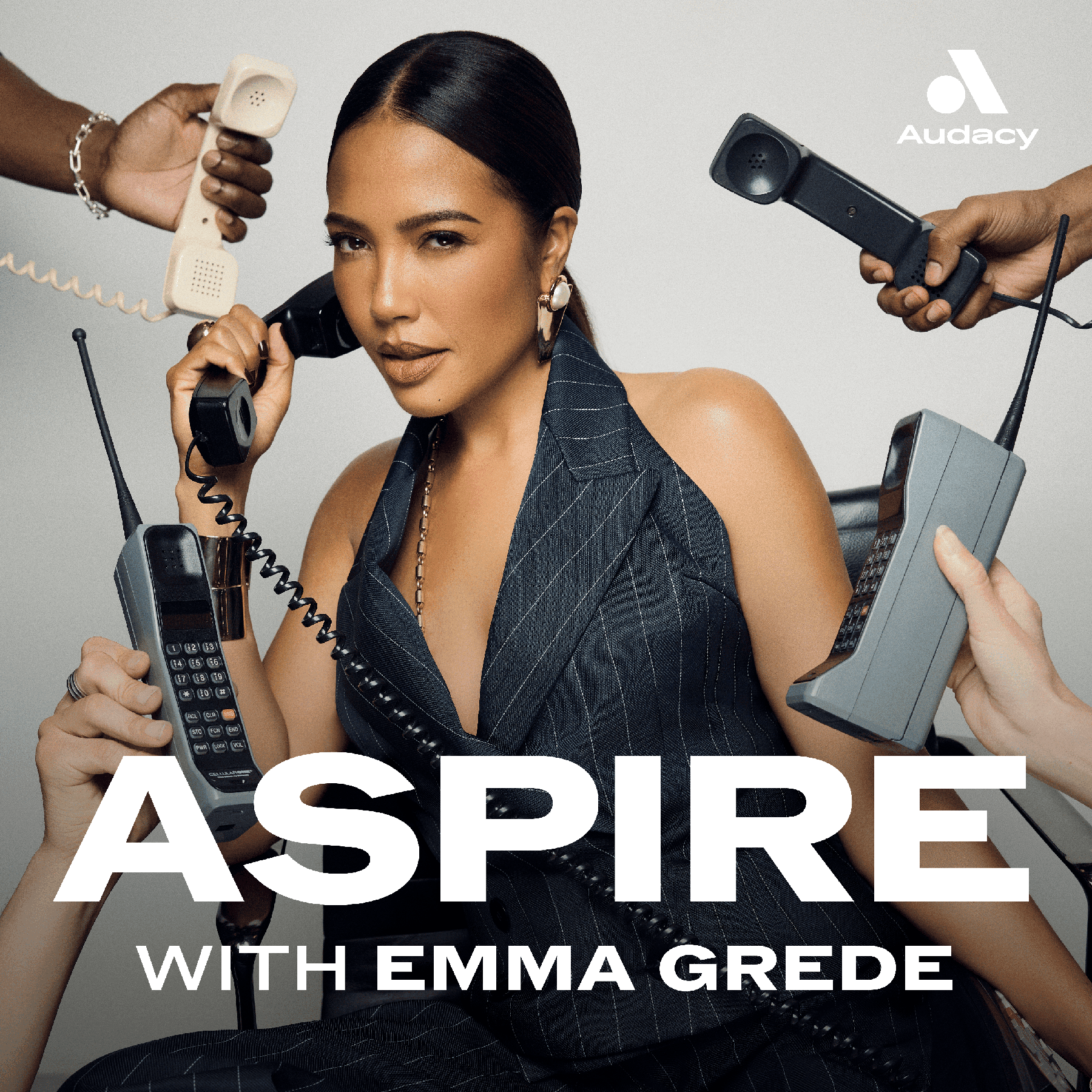
Podcast Overview Title: Aspire with Emma Grede Description: In this podcast, Emma Grede, one of America's richest self-made women, engages in thought-provoking conversations with successful individuals from various fields. The show explores their habits, philosophies, and strategies surrounding career advice, well-being, and business success.
Episode Title
Lessons from Hollywood’s Most Powerful Woman—And How They Can Help You Guest: Donna Langley, Chairman of NBC Universal Entertainment Description: This episode delves into Donna Langley's inspiring journey from the Isle of Wight to becoming a leading figure in Hollywood. She shares her insights on resilience, leadership, and the importance of trusting one's instincts in a competitive environment.
---
Key Themes and Discussions
Donna Langley's Journey
- Background:
- Grew up on the Isle of Wight, England, in a non-traditional and artistic household.
- Moved to London for college and later ventured to Los Angeles, initially with no connections in the industry.
- Career Beginnings:
- Began her career with unpaid internships and entry-level positions, emphasizing resilience and hard work.
- Notable early work with New Line Cinema, contributing to films like "Austin Powers."
Key Insights on Leadership
- Mindset Shifts:
- Trust in intuition over data when making decisions.
- Emphasizes the importance of resilience and the ability to overcome doubt.
- Mentorship:
- Acknowledges the lack of mentorship in her early career, which drives her desire to mentor others today.
- Stresses the importance of community and collaboration within the industry, particularly among women.
Challenges in the Industry
- Navigating Male-Dominated Spaces:
- Discusses experiences of being the only woman in the room and how to find one's voice and confidence.
- Advocates for empathy and decency in leadership, countering the often chaotic nature of Hollywood.
- Impact of the Pandemic:
- Shares how the pandemic affected decision-making processes, including the need to be proactive about film releases.
- Reflects on the lessons learned from navigating uncertainty in the industry.
Reflections on Personal Life
- Work-Life Balance:
- Balancing a demanding career with motherhood, emphasizing that the timing for family is highly personal.
- Encourages women to plan their families as they would their careers and emphasizes the importance of community support.
- Finding Balance:
- Enjoys hiking, Pilates, and reading scripts for relaxation and inspiration.
- Values deep friendships and connections built over time.
---
Key Takeaways
- Resilience and Trust: Donna emphasizes trusting one's instincts while also accepting the need for resilience in the face of challenges.
- Mentorship Matters: The importance of mentorship is highlighted, both from her perspective as a leader and as someone who lacked guidance in her early career.
- Community and Collaboration: Building a supportive network, especially among women in the industry, can lead to greater success and innovation.
- Embrace Change: In the face of rapid advancements like AI and shifts in content consumption, adaptability and openness to new ideas are crucial.
- Personal Reflection: Self-awareness and the ability to reflect on one's journey, including both successes and failures, are vital for continued growth.
---
Rapid Fire Questions
- First thing upon waking: Make a cup of English breakfast tea.
- Last thing before bed: Kiss my kids.
- Aspiring for in business: Continued success and a collaborative environment.
- Aspiring for personally: Staying grounded and focused on family.
- Book that changed her life: "Love in the Time of Cholera" by Gabriel Garcia Marquez.
- Value when starting out: Ego-driven recognition; now values deep relationships.
- Current value: Treasures close friendships and their impact on her life.
---
Conclusion Donna Langley's journey from a small-town girl to a powerful Hollywood figure illustrates the importance of resilience, community, and trusting one's instincts. Her insights serve as valuable lessons for aspiring professionals in any industry, particularly those navigating similar challenges in their careers.
Written by AI. May contain mistakes. Listen to the episode to check what was said.
Transcript
Automatic transcript. May contain errors.0:09Today on the Aspire podcast, in her first ever podcast interview, Dame Donna Langley, chairman of NBC Universal Entertainment, opens up about the decisions, risks, and resilience behind her unprecedented Hollywood journey. From modest roots in England to shaping blockbuster hits like Oppenheimer, Wicked, and Get Out, Donna shares the lessons behind her extraordinary rise.
0:36Running a business is hard enough. You don't need your payment system slowing you down. That's why I love Square. There's this bakery I love that makes the best sourdough, and every time I check out, it's so fast and so seamless. You tap your card, grab the loaf and off you are out the door. That's the magic of Square. Smart, easy to use tools that just work. The interface is so intuitive, you can start using it right away. No manuals, no tech headaches, and it's built to fit any business. Whether you're running a coffee cart, a clothing boutique, or a beauty salon, everything's in one place. Payments, inventories, staff schedules, invoices, you name it.
1:13And as your business grows, you can add on what you need, like loyalty programs or payroll. Square keeps up so you don't have to slow down. Get everything you need to run and grow your business without any long-term commitments. And why wait? Right now, you can get up to$200 off Square hardware at square.com forward slash go slash aspire. That's square, S-Q-U-A-R-E dot com slash G-O slash Aspire. A-S-P-I-R-E. Run your business smarter with Square. Get started today. At its core, entrepreneurship is about vision, resilience, and the courage to create something lasting, even in the face of enormous challenges.
1:54Bao, artist at war, tells the remarkable true story of Joseph Bao, whose creativity and determination became his greatest tools of survival. Imprisoned in a Nazi concentration camp, Bao was a gifted artist who risked his life to save others by forging documents. Even in the most impossible circumstances, he remained a creator, an animator, a poet, and a romantic. His story is proof that ingenuity and imagination can be acts of resistance. The film also tells of one of history's most extraordinary love stories, Joseph Bond with Rebecca, a woman whose bravery matched his own. Like the entrepreneurs who turn vision into reality, Bao shows how creativity, resourcefulness, and the will to build can endure even in the face of destruction.
2:39It opens September 26. Visit baomovie.com to watch the trailer and learn more. You can also sign your organization up for group screenings. Again, that's baumovie.com.
2:57Donna Langley, I'm so happy to have you here today. Thank you. Thank you. I'm very honored to be here. Well, I'm especially honored because I heard that this could well be your first podcast interview. It is my first podcast. Thank you for saving it for me. Yes. So thank you for bringing me into, you know, the new millennium. As if you needed to. I mean, I have to say, I have been so excited to speak to you because the whole point of this podcast is for me to speak to people that I really aspire to. And your career is, I mean, it's almost the stuff of a movie. And I really want to make sure that we cover everything.
3:33Because when I've been doing my research on you, there's kind of nothing in your past that says that you would end up being where you are today. You didn't study at film school. You don't have a family that's in entertainment. And in fact, I like to think of you as like queen of Hollywood, most powerful woman in Hollywood. But you were born in London and raised in the Isle of Wight. And so you have to take me back to the very, very beginning so we can all understand where you came from. Well, I think I am the girl least likely to succeed, for sure. Yeah, going all the way back to the beginning.
4:06So like you said, I grew up on the Isle of Wight. Which for those that don't know, I mean, the Isle of Wight is this speck at the bottom of England. It broke off from the rest of England. It broke off. It's all on its own. It's a pretty isolated place. I mean, I grew up knowing the Isle of Wight because when you get to the end of elementary school or junior school, as we say in England, the big fifth grade trip was to the Isle of Wight. We were always trying to work to get to the Isle of Wight, but we might be the only people that were working to get there. Without question. So my parents moved us to the Isle of Wight when I was seven.
4:38My dad worked in London and my mom was a little bit of a hippie, a little bit ahead of her time. And so I grew up in a fairly unconventional household. She was a vegetarian before anyone was vegetarian. We were organic and macrobiotic before anybody else was. Really? Back in those days? Back in those days, yes. Brown bread sandwiches at school. And I think I built up a lot of resilience during those years because I was teased a lot. You know, again, we sort of went against the grain. But my grandparents were artists. And so I grew up around the arts and with a real appreciation for them. I grew up reading.
5:15I was a dancer. So I grew up a little bit, not so much with my head in the clouds, but certainly with a very active imagination. And I think having the freedom of growing up in a really small environment where everything was safe, you didn't lock your doors, you could walk from one end of the island to the other, practically. Everyone knew everyone. You know, I remember one day the bus didn't come and I was crying at the bus stop and a lady stopped and I got in a car and she took me home. Those were the days. Those were the days. The good old days. The good old days. I think that environment really did foster in me this kind of love of storytelling and also resilience, I think.
5:54Because again, we were a bit odd man out, I would say, as a family. So talk to me about where did you go from the Isle of Wight? At some point you ended up in London, right? Yeah, yes, yes, yes. You did the big move. I did the big move. I had a boyfriend I met on the Isle of Wight that was working in London. Exactly, always, right? It's always that love interest involved in the story. I went to college in Kent. And after college, I went to London. It was always inevitable that I was going to leave the island. I was never a plan to stay. In fact, my whole childhood, I think, was plotting for the day that I would leave.
6:28And I left when I was 17 and I never went back. Are your parents still there? My mom passed away a year and a half ago. That's okay. But my dad is there and my sister's there. No, so you do actually go back to the IY. I do. I do. And I take my kids, which is really incredible. because so many of the things, my old stomping grounds are still there and I'm able to show my kids. It is a place that's frozen in time. It is. In the most lovely way. It is beautiful. You know, it feels, it's beautiful and it's just, you must have so many memories that come back to you when you take your kids there. I do.
7:00It is a beautiful place and it was very grounding, you know, as well. No doubt. To grow up somewhere like that. So you get to London and then what happens? Did you just doth around London and go to all the clubs? Please tell me that's what you were doing. You know, I lived in Northwest London, so I was all part of that Camden crew and, you know, going to all of those great live music venues and having a really great time. But to cut a long story short, because this could take, you know, this could be a whole series of podcasts if I told you the whole story. But met my best friend, who is still my best friend, who lives here in L.A.
7:38Is she really? She's still, yeah. We moved here together. So she had been living in Los Angeles on and off since she was 17. Right. She was the girlfriend of a very prominent music manager. One day she plopped on my bed and said, I think we should go to LA. And you said? And I said, okay, let's go. Yeah. And had you dreamed of moving to America? Not at all. You were just like, why not? I just knew that I wasn't on the right path. I was working in the health industry at that point in a health club. And I could have had a really good career doing that. I was actually being offered a junior manager job.
8:13And when I quit, my then boss was very upset with me that I wasn't continuing on that journey. I remember the speech she gave me. You have a great career path ahead of you. Why are you throwing it all away? And I kind of said, I don't know, but I have to do this. I've got to go. I've got to figure it out. I've got to go. How old are you at this point? 22. So at 22, you take yourself with just, you know, you've come out of college and you take yourself to Los Angeles and just paint the picture for me. Like, what is LA at that point in time? Oh my goodness. Well, again. The good old Wild West is what I'm imagining.
8:48The Wild West. I'd never been to America before. I'd only traveled in Europe a little bit at that point in my life. And so I got here and I couldn't believe how big everything was. The roads, the food portions. Isn't that the biggest thing for English people? You get a plate and you're like, is it four people's dinner or is it just mine? Why is a sandwich so big? Why are there four slices of bread instead of two? Yeah. And why are there five lanes on the freeway instead of three? What is happening here? Exactly. I remember driving from the airport into West Hollywood, where we were staying and driving past the donut shop that's got the big giant plastic donut on the top.
9:26And again, like, wow, okay, they like donuts here in America. And why is there a big giant plastic donut on the top of that roof. It was definitely, you know, I'm not in Kansas anymore. You're not in Kansas anymore. But I had a wonderful time and I was very fortunate in that my friend was able to introduce me to some people who were in the industry. And very quickly I caught the bug. I went home and, you know, had to go backwards and forwards a little bit until I was able to figure out how I could actually train and work here. And my first job was an unpaid internship for a producer. So where did you meet the producer?
10:03She was a friend of my, my friend. Amazing. Yes. And she offered me an unpaid internship role, but it was really great. It was one of the hardest things I've ever done. Just stepping into an industry and she was tough. She taught me so much. Again, that word resilience is going to come up a lot. Well, because people were tough in a different way back in those days, right? It was so much more room for you to just be tough and you had to take it. Exactly, exactly. But I learned as well as, you know, how to deal with that and with a personality like that. I also, she taught me the Rolodex. She taught me everybody who was somebody in town.
10:42My industry is a people industry and it is very much a who do you know? Yeah. And I learned that very, very early coming to LA. My first business failed miserably in LA. And years later, when I did the post-mortem, I realized that I completely misunderstood the idea of community in LA and that everything is done via this community that either comes like because you were born here and you, you know, you went to school and all your people are here, or you forged this community. And I was somewhat on the outskirts of it and thinking, well, why am I failing? It was like, that's what you missed, Emma.
11:16LA more than anything, the business is done all based on the community. Very much so. Yes, it is. It's a relationship. Still today. Still today. It's a relationship. Of which you are right at the epicenter of. So we'll get there. So you take this job as an intern and you're working like as a production assistant. Yeah. So what did that entail at the time? Oh, good Lord. Or I should say, what didn't that entail at the time? Yeah, exactly. Well, back then it was really funny. I mean, you know, your listeners will really laugh at this because she had a really bad word processor. It wasn't a Mac, you know, it was just that really complicated Microsoft thing with all the things.
11:53And I'd been working on typewriter up until that point. I hadn't even graduated into a word processor. So I had to learn that. What year is this roughly? This would have been 92, I think. 92 or 93. So back then people would dictate their to-do list and leave it on the voicemail. I mean, could you imagine? No, like so convoluted. Yeah, that's exactly what was happening. And so you had to get up at the crack of dawn to be able to transcribe the to-do list, which was about five miles long. Yes. And then before you had a chance to do that, she was already on the phone calling. Have you done this? Have you done that?
12:32You haven't done this yet. You haven't done that yet. get this person on the phone, get that person on the phone. So this idea of you had to be 20 steps ahead, which basically meant you had to get up at five in the morning. And you did that. But were you happily getting up at five in the morning and happily attacking these tasks? Were you like, get me out of here? Yeah, no, I wanted to, I wanted to crack the code. I really wanted to figure it out. That's incredible. I mean, it really is incredible. So how long do you stay interning and working like assistant jobs, essentially? Well, from there, I got a paid assistant job and one thing led to another.
13:05And didn't you work at a nightclub at some point? I did. You worked at the Roxbury, which is like a legendary. Legendary, back in those days. Legendary nightclub. Everybody who was anybody came to the Roxbury. I think they made a film about it called Night at the Roxbury. I was a hostess in the restaurant, which was hands down the best job because it meant, you know, it was a fairly short shift. The restaurant closed at midnight and everybody wanted a table. So everyone had to be nice. You were the keys to the kingdom. I love it. I love it. That's some power in LA, straight out the gate. It was a lot of fun.
13:36So you did that like at night, and then you would work your production job during the day. Yeah. Okay. And then like first big break, where does it all start falling into place and making sense for you? First big break is I went to work at a studio called New Line Cinema. Oh, yeah. Which still exists. It's part of Warner Brothers. But I'd actually met the guy who was, at the time, the president of production. He was the youngest president of production, I think, ever in the history of them. movie industry. So he didn't know anything. And we met at the restaurant that I was working at, and he offered me a job.
14:07What did he see in you? Like, what was it, do you think, that landed you? I think he saw in me and my friend that we were just ballsy. We were just ballsy. We had nothing to lose, really. And we were, you know, we were slightly idiotic and naive. We thought we were fabulous. Naivety is a superpower at a certain point in your career, isn't it? It is. But I think there's a lot to be said of making moves in your 20s because you don't have anything to lose and you know I remember working so hard in my 20s working ridiculous hours and my mum and certain family members would say to me Emma like why are you doing this why are you killing myself and I would say well why not like I have nothing else to do and this is the time in my life I don't have a mortgage I don't have any kids I have no responsibilities like I might as well yeah but I feel like you could separate my friends.
14:58You know, I always say this, like those that killed themselves in the twenties and those that like maybe partied a bit too much. And now that we're in our forties, like there's two very distinct groups. There's a time and a place to kill, to kill yourself and go hard. Yeah. One of the things I loved about the community that I met, I ended up sort of running around with when I moved here was that we all had the shared work ethic. We all wanted the same thing. And I'm still friends to this day with many people that I worked with back in those days. And what did that work ethic look like back then?
15:31Because I always feel like people just worked in a different way 20, 30 years. I think it was driven by the power base of the industry was, you know, the studio heads and the agents. And if you were in that periphery, you had to work hard because if you didn't, you would lose your job and somebody else would be there to take it from you. Right. So it was hyper competitive and it was a little like my first job, the unpaid internship. You were just prepared to do whatever you needed to do to get the job done. I mean, within reason, obviously. Yes, totally. But you did it. But you did it. And if it meant having to drive all over town to deliver scripts to executives at 10 o 'clock at night, that's what you did.
16:14You just did it. Yeah. You just did it. Did you have an end goal in mind? Were you like, one day I'll be? Well, it wasn't what I do now. That's for sure. I actually remember I was still working at New Line and a bunch of us were there in our twenties and we were all going around the circle. Like, what do you want to be when you grow up? And I think three out of the five of us said studio head. I think two of them became studio heads or thereabouts, you know? And then I was just the one who was like, no, I'm not sure I'm going to do that. I think I want to make independent films. I think after I do this, I might like to make a documentary.
16:49I wasn't a dreamer, but I was always looking to take the part that was the one less traveled. Yes. But that is a through line in your career. And I really want to talk about that a lot, because I think it's one of the things that has made you not just so successful, but so interesting within your success. But before I go there, so you're at New Line at this point, and you are working, like you've got your first big break. And just talk me through like what happens over the next kind of few years for you. Yeah. So, you know, the goal when you're in our industry at that time of your career, when you're very early, when you're making the transition from an assistant desk to a junior executive, the goal is to have a film picked for Greenlight to be made that you had something to do with, that you were an advocate of.
17:39and the first one I was involved with that that happened was Austin Powers. Oh, wow. And that was my first big break. And I was a junior executive on the first movie and on the second movie, I jumped up to be the senior executive and I ran that whole project. I have to say, that's a little bit shocking, Austin Powers. Why were you so passionate about Austin Powers? I know, it's hilarious. Well, I love comedy. I do love comedy. And I think my English roots helped me understand what was really funny about that. That, you know, a lot of Mike Myers is the star of the film and the producer and the real brains behind it.
18:14You know, a lot, he's Canadian English. And so a lot of his references in that were actually English. Peter Sellers, James Bond. So you just got it. I got it. You had an intrinsic understanding of the funny bits. And it was a difficult film. Every studio passed on it. And except for ours, because that's who we were at that time. We were making things that other people weren't making, which made it a lot of fun. But yeah, I think we all saw something in it that other people missed. Did you have a significant mentor or somebody that was championing in you at that time? Not really. I was having this conversation with somebody yesterday.
18:51I think one of the reasons why I'm so focused on mentorship is something I can use my platform to do is because I didn't have a mentor. There was certainly people in my life who were helpful at certain periods of time, but I didn't know that that role existed. So you didn't have that either. No, and it's so interesting because I feel very much the same as you, that now that I understand it and I know the power of it, I really, I want to be able to help as many people as possible. It was one of the reasons to start this podcast. And I said to you, you know, I want to scale mentorship. And that's why in speaking to you and understanding your career and the moves that you've made and what you do, it's so important because you can't be what you don't see.
19:32And if you don't know, you know, the path to being a studio head or how you get those jobs or what the critical points in your career are, then how would you ever figure that stuff out? Exactly. Well, it takes a lot longer, doesn't it? Because you have to learn by trial and error. And so how long do you stay at New Line? Because your career has been a series of incredible moves and incredible companies, but you've obviously, you had to move and figure out like what you were going to do next. Yeah. So I was at New Line for eight years and it ran its course. It got to a point where, you know, in the corporate world and New Line was a scrappy mini major studio.
20:12We were doing great things, but inevitably they're all part of big corporations. And the inevitability, I believe in big corporations is change. Things happen. People come, people go, leadership changes, the times change. It's very cyclical. And so New Line became a very different kind of company. And I left right before it got bought by Warner Media and AT &T. I think at that time, I can't even remember, honestly, but I was really glad that I kind of got out. I got out at the right time. I had a great time there. I learned a lot. It was really like an apprenticeship for me, but I was ready to go and work at a bigger studio and have a different experience.
20:54And that's what I did. And I went to Universal. Were you poached out of that job or did you? You were. Yeah. That's so incredible. Okay. I have to read this part because there's just, I don't want to mess it up. So you are very, very clearly one of the most influential and powerful executives in the entertainment industry. Just some of your projects, Oppenheimer, Get Out, Straight Outta Compton, Wicked. Before that, you oversaw franchises like Fast and the Furious, Despicable Me, my kid's favorite. Thank you. Jurassic World, my bigger kid's favorite. And Bourne, actually you're like my family favorite.
21:25My husband loves that. But you were also named one of Fortune's most powerful women very recently. And under your leadership, which I think is like the most incredible part, Universal has had the biggest success in its century-long history. So some people might say you have the Midas touch, but I wonder how you think about that when you hear all of that. Oh my goodness. Well, don't be too British. I won't be. I won't be. You'll make sure I'm not. Yeah, I'm going to hold you. No, look, it is really good to reflect back. And it is fun to hear all of those titles read aloud. And of course, it does take a village.
22:03There's been many people I've collaborated with and I have an incredible team. So we should talk about that too. It has been a great run. We have had a really - I mean, that's an understatement. Yeah. It's been like a run like no one else. I mean, it's incredible. Yeah, for more than a decade, which is quite unheard of. I'm just in the middle of reading Barry Diller's book and it's so great. It's so good. I highly recommend it. Wouldn't you recommend it? Honestly, I'm really, I'm a couple of chapters in, but I mean, I personally think Barry's incredible. It gets better and better. Yeah. It's a really great how to, you know, I do think looking back, reflecting to be able to understand kind of the path forward and the path ahead is sometimes a really good tool.
22:44Yes. But just listening to him talking about his run at Paramount, it actually reminds me very similarly of what we've been up to. You know, the technology changes are happening. We've gone through the pandemic. We've gone through all of this change and disruption in our industry. And we've been able to not just survive, but thrive throughout all of that. And so reflecting on how we've done that and what's made that possible, it's a good thing to do. It's a hugely good thing. I mean, what I would say to you, just to blow your trumpet a little bit for you, is that pretty much everyone else is a man and you are a British woman.
23:20Like, but, you know, to me, that is so huge. And I wonder when you look at your career now, how much of your success you can attribute to being a woman? Because I imagine that your approach, not just to leadership, but to how you run a company, run a division, how you manage a board, like all of the things that you've been through, women approach that very, very differently. And so is there any of your success that you can directly attribute to being a woman? Yeah, I think there's a couple of different ways to look at that. One is certainly the things that I've advocated for, the movies that I've wanted us to be involved with.
23:57So I think about Mamma Mia. Yeah. You know. What a hit. Right. What a hit. What a hit. And first of all, that was driven by my deep love of ABBA. I love ABBA so much. And I have loved ABBA since I was tiny. But also it was being able to look out there in the marketplace and see there was a white space. women were being underserved in the marketplace and I think I uniquely understood that because I am one same thing with Girls Trip when we made Girls Trip with Will Packer oh that was such a good one it was a good one it felt like a first of its kind female comedy because it was a first of its kind you know and people had attempted things before but not like that but it feels to me like you made a career out of the niches like you've been able to see like where these like niche audiences might be and yet exploit them in a different way because they're not niche at all.
Read the full transcript
24:48Yeah, exactly. And again, it's about seeing that white space. Where is there a gap? Where is there a need for something to be? I always say it's really fun to give the audience something that they had no idea that they were waiting for. And again, Girls Trip was a really good example of that. Same with Bridesmaids. If you asked me, Emma, do you want to go and see a female comedy? I'd be like, no. But then when I saw it, I was like, I can't get enough of this. This is amazing. Exactly. So then that goes to who you collaborate with, who you choose to go and make something like that. Because you're seen as someone who's very much like the friend or the champion of the creative.
25:26So what is it about you and your taste level or your relationships that makes you so good at what you do? Well, I love experts in the field, right? When I look at animation and you mentioned Despicable Me. So Chris Melodondre is an absolute expert in the field of animation. Now, I'm not responsible for him being at Universal. It happened before me, but we've worked together very closely for 15 years. I mean, if you think about it, 15 years ago, there was no such thing as a Minion. It didn't exist. I don't remember the time before Minions. You probably don't. If you have children, you do not remember the time before Minions existed.
26:01Every day, there's a Minion of some kind. And what he's done in the animation space, and he rivals now both Disney and Pixar, which were the two dominant brands. And we also own DreamWorks Animation, Shrek and Puss in Boots and things like that. But, you know, picking collaborators who are really good at what they do, not just really good. They're actually the best at what they do. Same with Jason Blum in the horror space. He's an incredible horror producer, filmmaker. And I don't like horror movies. I don't like watching them. And I don't even like watching the trailers. So, you know, going and finding somebody who loves all of that and excels at it and bringing them into the company to do their best work with us.
26:44Again, it's a sort of another pillar. And I think another way that we've managed to be very successful. But it is a huge part of what you do. You know, I read about Christopher Nolan coming over to Universal from another studio to do Oppenheimer. And I wonder what your secret is to making big name talent want to work with you. It's a lot to do with stability, right? If you think about making a movie or making a TV show, making anything, you want to do it with and for people who know what they're doing you can look at the organization and see real stability you can sort of look through it and and if you ask yourself the question you know is this a decent group of people are these people who work with integrity do they work well together is there sort of minimal politics that's the kind of environment that we've worked really hard to create and to foster and it's not very Hollywood is it because when I I think chaos, craziness, you know, not stable at all.
27:40And instability. Yes. Yeah. So I think we've been able to maintain our stability with a really strong management team and a good culture. And culture does come from its top down, right? Culture comes from the top. Yes. From being the leader that you are. I couldn't agree with you more. What is the skill that you've cultivated to make people comfortable and make them be able to see that? I mean, look, I think some tenets of leadership are first and foremost, that decency is a superpower. It is not a weakness. And I think in certain industries, kindness, decency, these are words that are frowned upon, right?
28:19They are viewed as weaknesses. They're not. It is much harder to make the right decision than the wrong one. It's much harder to stand in your integrity and your truths and your authenticity than not.
28:36I didn't start a business just to sell products. I started businesses to solve problems that I saw in the world. From jeans that could fit every woman to the shapewear you need when that dresslet is just a touch too high. I wanted to make products that people needed and stuff I could seriously scale into global businesses. That mission has always been at the heart of everything I've built. And when it came time to bring that mission to life, Shopify was the platform that made it real. It helped me go from idea to impact quickly, professionally, and without needing a full team. Shopify gave me the tools to launch with purpose and scale with confidence.
29:12I could customize my storefront to reflect my brand, manage sales across every channel, and track performance all in one place. And as things grew, Shopify kept evolving with me. I remember the day we launched Good American like it was yesterday, and we had so much traffic, I don't think we would have survived without the backend infrastructure that only Shopify could provide in order to handle a launch that was so much bigger than we ever imagined. That's what makes it so powerful. It's built to support you at every stage. Whether you're just starting out or scaling a business that means something to you, Shopify makes it possible.
29:47This is your sign. Start your entrepreneurial journey now with shopify.com forward slash aspire lately my social feeds are full of wellness hacks that are kind of questionable like should i really be taking olive oil shots every morning or is red light therapy the cure for everything i'll stick to an actual professional thank you and with zop doc it's easy zop doc is a free app and website where you can search and compare high quality in-network doctors and click to instantly book an appointment. Filter by insurance, location, speciality and ratings from verified patients. And then you can see their actual appointment openings, choose a time slot that works for you and click to instantly book a visit.
30:30Appointments usually happen within 24 to 72 hours and same day visits are often available. We use it here at Aspire and you should too. It makes taking care of your health so much simpler and so much less stressful. Stop putting off those doctor's appointments and go to zocdoc.com slash aspire to find and instantly book a top rated doctor today. That's z-o-c-d-o-c dot com slash aspire. zocdoc.com slash aspire.
31:06Yeah, and I feel like that's part of the reason you standing in your integrity, that you can champion creatives and that you get to kind of play in these kind of niche lanes where popular wisdom might tell you that that's not going to be a hit or it's not going to be great. Can you give me an example of when you've had like real conviction about something that everyone else has been like, this ain't a hit? Mamma Mia was that. And, you know, look, it's one of the inevitabilities of leadership. As you well know, sometimes you have to make an unpopular decision. I remember during the pandemic, do you remember when everyone was talking about it only lasting for two weeks?
31:45Oh yeah, I remember those days. Everyone left their coats. We'll see you in two weeks. Everybody left all their crap all over their workspace, you know, because, oh, we'll be back in two weeks. And I was like, no, no, no, we're not going to be back in two weeks. It might be two years. Did you understand that that was going to be the shutdown of your industry? Yeah. Did you get that? I did. I did. I understood it. Yeah, I had enough wisdom and just foresight and also just speaking to people all over the world. We had an office in China and we were just, you know, just we could see it coming. How do you even prepare for something like that?
32:19How do you get everybody? Because again, we're talking, you preside over, is it thousands of people? There's like so many people globally. So when you have to be the person that is delivering that message and yet there's such uncertainty, like what did you do? Well, one of the things that I insisted that we did that was very unpopular is I started moving our films from the release calendar. Right. So we always date our films a year or, you know, six months, years in advance. And we had, I remember it, having a conversation about Fast and Furious. Right. Fast and Furious was set to come out that summer.
32:56Right. Remember, we all went home in March. It was a summer hit. I said, we're moving it. We are going to move it to the end of the year. thinking that you could then have a theater release. That's right. And we'll see how it goes. We'll get to the summer. We'll reassess. And it was, it was unpopular. Did everyone go, boo? Oh, it was a big boo. It was a big boo. And I walked out of that meeting and I went to the bottom. I had to literally give myself the talk in the mirror. I was that cliche. So how do you get, because of course, with a film like that, you've got, you know, I'm sure all sorts of forecasts.
33:31You have an idea of how much that should generate if you were taking it to theater. So how do you balance that level of risk-taking? Like, how do you get comfortable with taking really big risks? And how, more importantly, how do you get everyone else comfortable around you? Yeah. Well, launching a film or, you know, a TV show, but a film in particular is, is like launching a new business every single time, right? You're bringing it to market. You're having to build your marketing campaign, your business model, your rationale, getting all your constituents on board with it. So there's a few different ways that you do it.
34:05I'm a big believer in building consensus along the way. If you can avoid it, not walking into the room with decisions already made, even if you already know in your head. Donna, I'm going to stop you there because I need you to explain that to people because this has been one of my biggest learnings. I remember, you know, when I was in my 20s, I'd walk into a board meeting and be like, surprise. No, people don't like that. No, they don't. Funnily enough, I was like, oh, why didn't that go down well? Building consensus along the way. Will you just talk a little bit about what that means, what that looks like in your business?
34:35But I think it's a huge lesson. Yeah, I think it's applicable, right? In a bunch of everywhere, so many industries. So in our case, there's a big myth in our industry about greenlighting a film that, you know, that's the decision to make it. How does a film get greenlit? Who has greenlight power? When does it happen? How does it happen? Well, the reality of it is, again, when you're getting ready to make a decision about a film, it's a lot of different pieces that need to come into play. And it's an iterative process. It's a creative process, first and foremost, and that you have to then build a business model around.
35:12And so in the case of a film, you need everybody from the people whose job it is to create the marketing campaign, whose job it is going to be to oversee that film and make sure it stays on budget. It stays within and the creative vision that we've all decided upon. The people who are going to get it into the theaters, get it all around the world, be in charge of the dubbing. I mean, there's so many people who touch a film, you know, inside the studio. And so having an iterative process around that so people can get used to it. If you have time, it doesn't always work out that way, but generally speaking, it does.
35:48And so it's everything from just sort of getting them on board early with the idea of the script, you know, what even is it? who's going to be in it, giving people a voice. And again, it's not at the end of the day about making decisions by committee because that's not helpful or healthy. And it's not a democracy at the end of the day. There is one leader usually who is accountable, right? For making sure that everybody's got their salary paid. It's not a democracy. But sharing in that process, in that journey to get to the outcome is, I think it's a very healthy thing to do for an organization.
36:29I think it's healthy. And I think that it really, there's something really powerful about it. And I think that anybody that's listening to this today, you know, and it can be something as big as Greenlight in a whole movie. But if you boil that down to, I don't know, you have a big presentation in the office. The idea of, you know, you presenting that on the day and getting everybody that needs to buy in, brought in in that moment is very unlikely. And so the idea of going around and bringing in the different departments or the different individuals, and I guess like preceding some of your ideas and showing people and getting feedback and building consensus, like it's so powerful.
37:08And it took me a really long time to learn that, but it's probably one of the best things that I've learned because people feel they've come along the journey, that they're not, you know, completely sidelined by what you're saying and that they've been part of that decision making. So it's a really important thing to learn. I think that's a great example as well, using that kind of presentational moment because, you know, we've all been there, right? And I think what this process really is all about is as a colleague, as an employee, as a leader or boss, really it's about empathy and compassion.
37:43You're putting yourself in somebody else's shoes for a moment to say, I'm walking in with this idea. I want that person to buy into this idea. And if you don't go to the next point, which is, what is it going to take for that person to buy in? Meaning, what does it mean to them? What is going to put their ass on the line if they sign up to my idea? And you having an understanding of that actually makes your idea better because you can solve for that issue before it's even an issue. Exactly. Well, absolutely. It might make you refine your idea a little bit, right? If you really can kind of go around the table and go, okay, what do they all need?
38:18And what are they all going to be? Because people at the end of the day, really, we all do it. Like, you know, it's my livelihood. Am I going to be okay if I put myself on the line for this one? How have you developed your leadership skills over the years? Do you like, do you have a coach or do you, has it all been trial and error? Because you have a very, I think what you're known for in your industry is that you have an extremely empathetic leadership style. You lead with creative, you're seen as a friend to the creative, but people that work with you, under you, you know, at your colleagues, you are seen as a very elegant, sympathetic and empathetic leader.
38:59Where does that come from? Because your industry is not known for those people, I'm just saying. Your industry is known for the characters that were portrayed on Entourage, for example. or the studio more recently. Yeah, I mean, I think going all the way back, my mom probably was my biggest coach. But yeah, yeah. But you know, I think a lot of it has been trial and error. And I do believe that I learned the best lessons when I made a mistake and or when something went wrong. I mean, really adversity, I think, is our greatest teacher, right? I, you know, I'm not, that's not an original sort, but there was a time in my career where I had a horrible boss.
39:45He was awful and I behaved badly. And, you know, I tried to undermine him and it impacted our output. We weren't making good creative decisions. No one was happy. You know, my colleagues were miserable because everyone was sniping and bitching and complaining. Once that situation was over, it resolved itself having nothing to do with me. I had to do some soul searching because, you know, I wasn't happy with who I was behaving that way. I was not my best self. I wasn't bringing my best self to the table. Were you just trying to do what you were seeing? Were you trying to be the same leader as you had?
40:21I was trying to survive and I thought I could beat him. And I thought the way to beat him was to undermine him. And it wasn't, you know, he, again, he, all things were revealed in the end. And even if I had prevailed, I wouldn't have felt good about it. No. And I did not. I did. That's not how I was raised. That's not how I raised my kids. It was, it really went counter to my values. And so when I was faced with a similar situation another time, I behaved very differently. You did? Yep. I did. I took the high road. You did a Michelle Obama. I did. I mean, what would Michelle do is, you know. She always goes high.
41:03Always go high. As somebody else recently said, take the high road. There's less traffic up there, which I think is a really good one, isn't it? Oh, I'm going to remember that one. That's going to come out like it was my own tomorrow. But that was a big lesson for me. It was before I had kids. It was in that moment era of my career where I was just scrappy and I didn't know what I didn't know. And yeah, but it was a hard lesson to learn. Or it was a good lesson to learn a very hard way. If I hear you right, you say that failures are completely inevitable. But how do you hold the failures without letting them eat at your confidence?
41:42A couple of different ways to do that, I think, is first of all, you have to go very deep on why did something fail. That can be hard, can't it? It can be really hard because you have to be very honest with yourself. You have to own it. Take accountability. You do. And what I've found in most times I've made a mistake, if I take that moment of reflection, however it works, whether that's in a group setting with colleagues or it's a long walk around a park, you know, or going and talking to somebody, it always comes down to, oh boy, I did something against my intuition and my instinct. Yes. It always comes back to that.
42:22Are you somebody that leads with gut instincts or are you like looking at data constantly and dissecting that? No, it's gut instinct first and then the data needs to conform to my instinct. Right, right. Do you ever go against the data? Numbers are just a different way of telling a story. Yes, yeah. But you've learned to embrace the numbers. Yeah, yeah. Have you ever got it completely wrong? Oh God, absolutely. Yeah. Not too many times, you know. It's better to be right more than you're wrong in my business. Yeah, exactly. Because they're such huge bets. Yeah, they are. They're such huge bets.
42:55When did you get comfortable in your life, like taking, because what you do, I mean, it's so big and there's so many people on the line and such a huge amount of money and credibility and all the things. So how have you managed to get to the point where you're comfortable just to make those decisions and to have the failures? I think I've never looked at them as risks. There's lots of things written about our studio, about, you know, whether it was Oppenheimer or, you know, a number of different decisions that we've made as being risky. And I think part of it is I don't see them as risks going in.
43:33And it might just be I see them differently. And I haven't been surprised too often in the wrong direction. and so it's validating, right? If you follow that gut instinct and you, again, you bet on brilliance every time, you know? And also I think the other thing is when we have failed on something, on a project, but the integrity was there, we did follow our instincts. We did everything right, but the movie gods didn't align as they sometimes don't. I can feel okay about that. I can, you know, nobody ever likes to lose money for their parent company or anything like that. But I can, I can. You can reconcile it.
44:16I can reconcile it. Yeah. Yeah. Yeah. Because not all great bets come off. Like sometimes they can still be, you know, a good idea or a great story to have told, but it's not commercially viable. Or the timing was wrong or, you know, there was some, there was some factor that you couldn't control. But you seem to have like a balance of assertiveness in your leadership style, but with the elegance as well. And that's what I keep coming back to because I just don't think that you see that so much in your industry. So you must, do you consider yourself a bit of an outlier? Very much so. Yeah. And longevity at a company is so rare today.
44:53Yeah. It really is, isn't it? Nobody seems to stay anywhere. It's like I get resumes constantly, like two years here, three years there, two years here, three years there. And how do you continue, if that's a choice that you've made, how do you make sure that you continue to grow and you continue to thrive. Yeah, well, I could get bored very easily. And so the fact I've been at my company as long as I have really is, you know, testament I am never bored. Yeah, there's always some really fun thing to do. And I thrive so much on the creative process and working with creative people. So each movie feels different.
45:28Each filmmaker is different. And it's a different set of challenges and opportunities. But my company has also been bought and sold many times over. And so it has felt like I've worked for a bunch of different companies, even though it's all within the same one. We've been owned by the same company now for a number of years. And that stability is really nice and good. And yeah, I mean, I'm sure if I was coming up today, I wouldn't have the same career path. I would bounce around a little bit more and probably go between traditional media and tech and do all those things. It would be very different.
46:02But I have enjoyed working with a management team as long as I've worked with the majority of my team because we've built up, you know, some core competencies that make it really satisfying to go to work every day. I bet. Do you think that there, or I should ask you, what are the specific traits that you have as a leader, as an executive that have helped you remain effective and resilient? I'm not fear-based, right? Because I just feel like the last few, like it's been extremely challenging circumstances in your business, right? Yeah. But you have remained who you are and you've remained very successful, but you've remained like at the core of who you are.
46:43Yeah. I have lots of cliches that I bandy around a lot, you know, and one of them is you can only control what you can control. Right. Right. And so while all of this swirl is happening around us, whether it is the pandemic or, you know, the disruption, the innovation that's happening with AI coming in. I mean, it must be crazy for your industry. Yeah. Yeah. And we don't know yet what it's going to bring us. But, you know, our job is to be kind of eyes wide open, look around all the corners, don't put your head in the sand, know that it's coming, meet it head on, but look at it as an opportunity.
47:20Right. So I think it's just, it's that. It's also, I have another fun saying where I say to my team all the time, the cavalry is not coming. We are the cavalry. So we need to just get on with it. We just need to get on with it. It's down to us. Just get on with it. It's like no one's coming to save you. Yeah, no one's coming to save you. Exactly. No, this is it. This is it. It's us. It's us. So let's get on with it. Let's get on that horse and go for a ride. It feels like a very British mentality. It is, isn't it? It's very stiff upper lip. Yeah. Keep calm, carry on. Keep calm and carry on. But it kind of works because, you know, I think if you let all the noise in, then you get off your, your sort of, your axis, you know?
48:07And I think when, as you well know, when you're working with creative people in a creative endeavor, it is really important to stay very centered. Yes. and not allow distraction into the process. You know, you've got to keep really focused on what it is. What's the vision? What are you trying to accomplish? What should this mean to the audience? What do we want to convey? You know, and how do we get there? Denial is probably pretty healthy. A little bit healthy denial.
48:41I choose Function because it's the only health platform that gives you access to the kind of data most people never see and the insights for you to actually take action. Not vague advice, but real personalized info you can build a plan around. Function lets you test over 160 biomarkers, everything from heart health and hormones to inflammation, stress, and toxins. You can even get multi-region MRI and CT scans all stored in one secure place and tracked over time. It's the most complete picture I've ever had of what is going on in my body. No wonder people like Dr. Mark Hyman and Dr. Andrew Huberman stand behind it.
49:18This week, I learned something super surprising about iron. If you're low, the answer isn't always more iron. Your body also needs ferritin to store it and copper to move it to where it needs to go. Without enough copper, iron can actually get stuck in your tissues unused. Function let me test all three, iron, ferritin, and copper, so I could finally see what was actually going on. I use function and honestly, it's changed the way I think about my health. You should try it too. Learn more and join using my link. Visit functionhealth.com forward slash aspire. Success demands stamina and I've learned the hard way that willpower alone isn't enough, especially when I'm juggling early mornings, late nights and high stakes decision making.
49:58That's why I started taking Armour Colostrum and it's been a game changer. I've noticed real improvements. My energy's more stable, no more afternoon crashes and my gut feels so much better. less bloating, better digestion, and honestly, I just feel sharper. Amra Colostrum is nature's original performance fuel, packed with over 400 plus bioactive nutrients that help fortify cellular health, ignite metabolism, and support clean energy. It's not a synthetic simulant or a trendy supplement. It's a bioactive whole food, sustainably sourced and backed by science. I've also noticed my skin looking brighter and more hydrated, which I wasn't expecting, but I'll take it.
50:37Top performers trust Armour for a reason, because when you feel your best, you perform your best. We've worked out a special offer for my audience. You can receive 30 % off your first subscription order. Go to armour.com forward slash aspire or enter aspire to get 30 % off your first subscription order. That's A-R-M-R-A dot com slash aspire.
51:06like reflecting more broadly do you think that your journey would be possible anywhere else other than in america it's such a great question and i do ask it a lot i i'm not i don't think i would have been able to do what i have done in the uk i i don't sadly no no it's true i think it is quintessentially American. Yeah. Yeah. The journey specifically, like that journey is just something that can only happen. Yeah. I know it's, it's so interesting because I think in a moment where so many people are down on this country, I think that there's so many great things about this place, but one of them is that the American dream is still alive and kicking in so many, in so many ways.
51:49I always used to say, and this is not a knock on our country, but I always used to say in the UK, you would have a big idea and the answer would be, response would be, what do you want to do that for? Why would you want to do that? Knocked down, straight away. You come here and you have that same idea. How can I help? What can I do? Let me be a part of that. But in our wonderful country, you have been recognized as a dame. Yes. You're Dame Donna Langley. I should like a curtsy or something when you come in. Does that honour mean something to you? You know, it does. It does. I remember the year I got it, which was right before the pandemic, actually.
52:26So I didn't collect it until afterwards. Oh, really? Yeah. Oh, I know. It was a dream delay. I saw the photo. That's why I'm wearing polka dots today, by the way. That's right. Because I saw the picture of you and King Charles. So you did get to go and get it in person. Yeah, I did. I'm so upset. It was fun. But I remember my son, he was nine at the time. And I was, you know, looking at the thing, the letter that I'd received. And he said, mom, is this something that you wanted since you were a little girl? And I said, God, no, absolutely not. You know, you sort of thought it was something that other people had and sort of older people.
53:01Yes. So it was an interesting one when I got it, but it was really wonderful. And I love my country and I do identify very strongly with, you know, with a lot of cultural aspects of being English. And so, yeah, to be recognized for the contributions that I've made to our industry and other things. And in such a very specific and beautiful way. It meant more to me than I thought it was going to. I have to say I'm very proud of it. I can't imagine. You should be so proud. And you are such a one of one. And again, I think it's so important for British people to see. Like the idea that you could be born in the Isle of Wight and climb the ranks and be in this position in Hollywood.
53:43I mean, it's pretty major. And one of the things that I really wanted to touch on with you is that you were such a figurehead during that moment of Me Too. And I think everybody, certainly everybody who listens to this podcast knows what that was about. But I wanted to ask you now, being reflective and in hindsight, looking back, did it work? Did it actually change your industry? So what I would say is I think it did change the industry. I think we made progress. And what I learned very early on in those days was our job was to make as much progress as we could and understand that the door would probably shut behind us at a certain point.
54:24In fact, Gloria Steinem came to speak to us and she said a version of that. You know, movements are not linear. They kind of meander around. Exactly. It's like, you know, you look at any movement and you make real progress, usually in the face of crisis. Yes. And then for whatever reason, the door gets shut behind you. And oftentimes you can go a little bit backwards before you go forward. Exactly. It's like a pendulum swing, right? Yes, exactly. We're waiting for the overcorrection. We want to go like this. Yeah. And I do think it was, you know, it's been an interesting few years. But I know in my own organization, we made a ton of progress.
55:01and I know in the industry, we made a ton of progress. One of the things that came out of it, which I really appreciate that I experienced and benefit from is a lot of women came together as a community that had not happened before. Very true. You know, I think we had all been raised up in the industry thinking, you know what, we had to be a little bit circumspect. We were put in competition with each other. There were so few opportunities for us. We were there in service of the guys and that all kind of went away. I think we broke down a lot of barriers there, which was really good. Yeah, I mean, I think I could see that at the dinner you hosted for Vital Voices the other day.
55:37Not that the two things were linked in any way, but the group of people that you put together in some, I guess, in some conversations would be considered competition. This is a bunch of very high powered women in your industry that have come together because of that. And so I think that that was a hugely beneficial. Around common goals. And that can't be taken away from us, right? No, no, no. You have. That's there now. We can shut down programs and we can do all the things we need to do to conform to what the government needs us to do. But you can't, you know, you can't undo what's been done.
56:07So what I would say is, you know, the work is not done. It's not over. There'll be another moment when, you know, we have the opportunity to really forge ahead. But in the meantime, just keep at it. And I think this is something that everyone can do. I always say it doesn't really, it doesn't have to be a big thing. It doesn't have to be a big program or a big gesture or something. small things help, small things matter. It doesn't matter if you're an assistant, it's going to be somebody else around you in your place of work, in your friend group or wherever, you kind of need that helping hand.
56:39It can make all the difference. And that is in any industry, because it doesn't matter if you're in film, if you're in fashion, if you work a more traditional corporate job. I think that that movement helped move the curtain on so many of our industries. And we all started to think about doing things differently. And we operate differently as a result of your time. Often, I guess that you are the only woman in like a very influential space. And I wonder how you find your voice and your confidence. Is there something that you call on or a ritual that you have, or have you just trained your mindset at this point?
57:13I think at this point I've trained my mindset. It's not, it's not intimidating to me anymore. Never. You never get intimidated. Well, I mean, I get intimidated by probably the silliest things, but, you know, but being in a, in a room with a lot of men or, you know, being in a minority in a room is, is I have learned to be okay with that. I think earlier on in my career, the ways that I would cope is somebody gave me really good advice once, actually, they just said, you don't need to be the loudest person in the room. You don't need to speak until you really have something to say. And I think I operate very much that way.
57:52I'm a listener. I really, you learn so much by listening. It's a fantastic skill to have. It's a really good skill to have. And not many people have it. It's true. It took me a long time to learn to listen. I'm still learning. You're a great listener. That is, don't sell yourself short. No, but it's one of those things that if you are, you know, I'm trained or I'm hardwired to fill in the gaps because it would make me feel uncomfortable to be in silence. And sometimes you just need to take that moment and take it all in and just listen. It's a really underrated skill to be a great listener. And of course, when you're coming up in your career, you can feel insecure if you don't speak up.
58:31You think if you don't, you know, if you're not heard and you're not seen. And I don't think it's the case. I think you can really hold yourself in your power and you can wait for the right moment. I always say also never go into a room unprepared. You know, So the more prepared you are, the more confidence you're going to have and the greater ability you're going to have to find your moment to speak up and say something that, you know, can be said in one sentence as opposed to an hour long conversation of people talking over each other. What other advice would you offer to anyone that feels isolated in their professional environment?
59:07You know, either because they're a woman or they're a minority. Do you have specific advice that you offer to your teams? Yeah, I mean, I think it's about finding community, you know. And again, just knowing that when you're coming up in your career as a woman, as a woman of color or, you know, and anyone who is a minority, honestly, in any way, it is inevitable that you're going to be in spaces where you are one of one, where you feel other and you are othered. It's going to happen. And so building resilience on the outside, where do you find community? And then just bringing that strength into that room with you.
59:50You are married and a mother of two. Yes. And I read somewhere that you didn't take much of a maternity leave, which neither did I, actually. And while I love that I offer very good and generous maternity policies here, it's an interesting thing that I think so many successful women at some point felt like they had to return. Do you think that you would be where you are now? A, had you had children at a different time in your life? And B, had you taken much longer time off afterward? I think to answer the second question first, it would not have mattered to my career if I'd taken more time. Oh, I love that.
1:00:28Really? If I had been strong enough to hold my boundaries and say, nope, I'm not coming back. I'm going to take another month. And you just weren't strong enough at the time. I wasn't strong enough to do it. I felt too vulnerable. I felt, yeah, too weak to do that. And I don't regret things in general. You know, I did it. I got through it. you know I found other ways you know to sort of build build back first of all I love that you say out loud that you didn't have you didn't have the strength to be able to you know say no I'm going to take a longer time um which I think is really important the first the the other part of my question so it was do you do you feel like if you'd have come back earlier that would have been any different but the next part was when you choose to have children because I feel like for so many women, you're like, it's just never a right time.
1:01:17I shouldn't do it in my 20s. That's too soon. Then I'm going to get to like my mid thirties and that's like too late. And so like, you know, I just wonder about your timing. Was it purposeful? Would you have done anything differently? Well, my journey to be a mother was a difficult one and I had an operation that went horribly wrong and it really delayed our ability to have kids. And so I had my first son when I was 41 almost and my second when I was 43. Oh my goodness. So I am, I am a geriatric mother. That is the way they say that in this country. It's the official term. It is the official term.
1:01:52It's so demeaning. They need to rebrand that. We need a rebrand for sure. We really do. Can you come up with something? I will come up with something tomorrow. Let's do it now. Make a t-shirt and you know. Yeah. Let's leave it to me. That one from the record. And so what I would say is I have loved being a slightly older mother and bringing the perspective I have to the table of, you know, being, being, you know, a mother that, that I've experienced a lot. Also, it was at a point in my career, I certainly wasn't done, not by a long shot, but I felt like I could prioritize my kids and my family and my marriage and my career and everything else was, would kind of go by the wayside.
1:02:32You know, my social life changed a lot. You know, I don't do that thing of going away with my husband on our own very often. You know, I wish I did. Something's got to give. Something's got to give, right? You can't do it all. Not all at the same time. As you correctly say. So real pros and cons. Having said all that, so it's really worked for me to have my kids at the age that I've had them. And it really keeps you young. It keeps you on your toes. I've got two boys and, you know, they are relentless. And, you know, and it helps that my husband's five years younger than me. There's that. There's that.
1:03:03That was smart. strategic. Very strategic, very strategic. And he's very sporty and does all the things with them. But I do recommend to a lot of young women I work with to, you know, if they're on that career path, take advantage of, you know, some of the health benefits that exist now. Go freeze your eggs, go do all that. Really get on your, you know, plan your, if you want to have a family, plan your family in the way that you plan your career or the way that you plan anything else. And I didn't do that. Don't you think that we just need to be like having the conversation and not like putting it under the table?
1:03:42No, no. Yeah. We do need to be having that conversation because it does get exponentially harder. The older you get, that's a very real thing. And there's no shame in it and there's no taboo to it. You know, it's our body. We can do what we want. And you know, if that's something that you really feel like you're, you know, you're going to want to do. It's just a backup system. Yeah, it's just a backup system. But I love that you say plan it like you're planning your career moves, because it is one of those things that requires thought and timing and planning. And there's no shame to you being planful around it.
1:04:14You just have to figure it out. And again, if it is something that you really, really want, then it needs to be part of a plan. Yes. It can't be an afterthought. A hundred percent. I didn't have a plan. My husband and I were having so much fun. I mean, I had a plan, but even the best plans didn't work out. So there's that too. You might have a plan and it suddenly doesn't work. You know, I had my first two children naturally and it was so easy and so great. And you, you, you have this idea that you can choose your timing. And you know, when I decided I'd like a third child, turns out I couldn't choose my timing.
1:04:49And that, you know, was a major setback to me. That was something that was so, such an upheaval and so, you know, it's like shakes you to the core because once you've had two children naturally you never imagine it's going to be any different um but I think it is it's just about being honest with yourself about what you want and when you're going to be able to do that and being really uh forthright in your decisions yeah around it yeah I agree I I think so and there isn't really enough out there I don't think we talk about it enough I'm not honest enough right it right that's what happened and you know it's so interesting because I think that I'm you know I talk about everything and you know all the sorts of things with my girlfriends and even I hid for a little while that I was having IVF yeah there was something in my you know it's like I can do it all I do anything yeah and I was like yeah why can't I do it associated with it I think in our culture yeah which there shouldn't be no there just shouldn't be because once you do tell someone I remember telling and the three women I was with at the time were like me too me too me too and I was like what am I doing here you find your community you find your community and you often find they're right next to you yeah right there yeah which is which is very very interesting
1:06:07look we get it you can hardly go anywhere or do anything these days without hearing AI this or AI that. And if you're like most people, when it comes to AI, you're impressed, but have a few concerns. But what if AI was used not as a tool to replace people, but as a way to help understand people better? AI from SurveyMonkey is designed to do just that. From crafting the perfect survey, which is harder than you might think, to analysis that digs deep, finds patterns, and surfaces trends quickly, SurveyMonkey's powerful suite of AI capabilities makes it faster and easier than ever before to get insight from real people, helping you make confident decisions for your business.
1:06:48Try it today at surveymonkey.com slash Emma. At its core, entrepreneurship is about vision, resilience, and the courage to create something lasting, even in the face of enormous challenges. Bao, artist at war, tells the remarkable true story of Joseph Bao, whose creativity and determination became his greatest tools of survival. Imprisoned in a Nazi concentration camp, Bao was a gifted artist who risked his life to save others by forging documents. Even in the most impossible circumstances, he remained a creator, an animator, a poet, and a romantic. His story is proof that ingenuity and imagination can be acts of resistance.
1:07:29The film also tells of one of history's most extraordinary love stories, Joseph Bond with Rebecca, a woman whose bravery matched his own. Like the entrepreneurs who turn vision into reality, Bao shows how creativity resourcefulness and the will to build can endure even in the face of destruction. It opens September 26. Visit bowmovie.com to watch the trailer and learn more. You can also sign your organization up for group screenings. Again, that's b-a-u-movie.com.
1:08:03What would you say to someone who aspires to a career like yours? What would be the advice that you would give? Oh my goodness. I mean, if they were just coming into the industry, I would say just, just jump in two feet first, go work anywhere, you know, just learn as much as you can, as fast as you can. Also be prepared that it could take you a couple of years. That transition, like I said earlier, from the transition from a desk, an assistant desk to a a junior executive desk is a hard one. Once you do it, you're kind of off and running. I would also say, be very fluid. You know, do you want to work for a tech company that's making content or do you want to work for a traditional media company?
1:08:49I had a great assistant, Juliet, for a number of years. And I hired her because when I said the cliched, I asked her the cliche question of where do you want to be five years from now? She said, the job I want hasn't been created. Oh, what an answer. I know. Juliet, yes. Juliet for the wind. Yes, Juliet for the wind. And she was right, by the way. Come on in. She was right. And she, and she's going to work in the future of your industry. That's right. But my follow-up question was, why do you want to come and work at a traditional media company then? Why don't you go to work for Netflix or Amazon or Apple, wherever?
1:09:24And she said, because I want to learn the systems and processes that underpin this industry because I don't think they're going to be gone in five minutes. What a winner. Where's Juliet now? She's out there. She's out and about. You should meet her. She's great. Go to Juliet. And I think she was right about that too. So I think, again, there's all sorts of, you know, early career biases. I want to do this. I want to do that. You know, just, again, learn as much as you can. I think there's a lot of young people actually leaving college and going into the agencies and doing the trainee program. Yes.
1:10:00That used to be a thing 20 years ago, 25 years ago. And I think it kind of tapered off. And now as I'm seeing a lot of that happen. Well, I can understand why. And I think the same is happening in fashion and in the creative industries, like going back into those kind of very early, I guess like the sort of like the dirty work, because at the end of the day in our businesses, it's the relationships that matter. it's again understanding those systems and processes that are the underpinning of the industry like you can't shortcut some right stuff yeah you got to go through it you've got to do it and that will help you if you're making i don't know ai generated content or whatever you're doing still need the relationship you still got to be able to pick up the phone and get you know shit done that's that's right no i think that's a really good point yeah yeah it really is i heard that you're a big rap music fan are you do you like abba and rap is that where we're going very Very eclectic.
1:10:54Very eclectic in my taste. Do you have like a hype song that you ever like as you're in the mirror? Is there something? Well, I mean, having made Straight Up Compton, I love Straight Up Compton. I love The Chronic. I love going back to the 90s. Me too. Oh, so good. You can't beat 90s rap. You can't beat it. No. I will listen to like a full Warren G album before anything that's been released in the last five years. Just so everybody can clear out where my preferences are. I did just go and see Kendrick and SZA though. That was a great show. I mean, that was so good. There you go. It was so good.
1:11:28I did go. And I also think that the reason I love Kendrick is because he feels like one of the old rappers. Oh, yeah. Like to me, it's like he has that like 90s sound. And yeah, and it just feels so like lovely and familiar. And I understand what he's saying because I'm an old cow now. I can't get any of the new rap. If you're called Lil anything, then I'm not feeling it. I'm sorry. out. I can't like that's for somebody else. I'm just like, let my kids deal with it. And how do you unwind and recharge? What are the things that you do to keep yourself energized and well and, and have some sense of balance?
1:12:07In the exercise realm category, I do Pilates. I could, I could have told you that you're a Pilates person. I do weights and I love to hike. Oh, that's, that's the privilege of living in LA. I know. Yeah. Like none of my English friends are like, where are you hiking? And I'm like, I hike like in, you know, I'll be in Beverly Hills and I can see a mountain. I'm not, I have no idea where I am, but it's the best thing ever. Oh, it's so great. It's so good for the soul. It just clears your head. Yes, it is. Yeah. We, we're fortunate enough to have a place in Ojai. Oh, it's so beautiful. We have the best hike right outside of our door.
1:12:41So I do that. And oddly, I find reading scripts really therapeutic. Really? Yeah. After all these years and I think it's because in my day-to-day job there are so many things pulling me away from that creative process that I love it I sit down and I've got the script there and I open it I might take a nap for 10 minutes just a 10 minute just a quick one and then and then I'm back to it getting connected into that process makes me it really I find it really calming well that's probably another reason why you're so successful because you've been able to somehow couple the business aspect and keep this creative part of your job, which you're clearly very, very good at.
1:13:24But the two things like go hand in hand. And I think that that's kind of quite unusual in a way that you could head a studio and still be at that point where you're like, I'm reading script. Yeah. I think if I lost that, it would be time to leave the field. Yeah. And it's nowhere near time for you to be leaving the field. So what is next for Donna Langley? I think I'm really focused on where our industry is going. We've been waiting for this seismic change to happen for, I think, almost a decade. With streaming now being so ubiquitous, it is here and it's not going anywhere. People are consuming their content, their user-generated content in such a different way.
1:14:10And then AI is going to come in and change the game completely. And I don't mean movies and TV shows are going to be made and written by AI. There's going to be checks and balances. And I'm a big believer in, you know, the human element is so important. It's our compassion and empathy that enables us to tell stories in the way that we do. And storytelling is, you know, as humanity, it's the one constant, right? I'm just excited to kind of see where it goes and look for any opportunity to continue doing the things that I really love doing and hold on to those. But don't hold on too tightly to the things that are maybe going to change and go away forever.
1:14:55That feels very, very sensible. That feels like a career that's set up for you to be doing this for the next 30, 40 years. I wish I could say, I'm going to go do this or I'm going to go do that. I really, I'm not uncertain. It just hasn't revealed itself yet. There is something there. There's something there that's going to be pretty exciting. But maybe that's part of the secret that you are so open to what's coming next and you're not scared of it. Rather, you're embracing it and you're just going to be ready for when it does come. Yeah, ready for whatever it is. Yeah. That's incredible. I love, I love that so much because it's a crazy time in all of our businesses.
1:15:30So if we can approach it with that idea of being open and being part of it, that's surely the way to go. That's the way to set yourself up for success. Yeah. Yeah, I think so too. All right, I only have some rapid fire questions for you. Oh, good Lord. These are the ones I'm really bad at. On the spot. Okay. Okay, what is the first thing you do when you wake up? Make a cup of tea. Oh, I love that. What kind of tea do you like? English breakfast tea. Of course you do, darling. With milk and sugar. You do milk and sugar. Oh, yeah. The best. What's the last thing you do before you go to bed at night?
1:16:02Kiss my kids. I kiss my boys. They are now old enough that they stay up later than me. Yeah, I'm approaching that right now. Every now and again, I'm like, if you're staying, I'm going. My younger one is now wanting to go and see movies, the midnight showing, and expect me to pick him up afterwards. So I'm in that zone. Get an Uber. Get an Uber, exactly. You'll be fine. Figure it out. So, but yes, I love, you know, they still snuggle, which is really cute. Yeah. Take the snuggles while you can. What are you currently aspiring for in your business life? Continued success. Just continuing to work with the best of the best.
1:16:44And what are you currently aspiring for in your personal life? I think it's about staying grounded. There's so much going on in our world every day, right? And, you know, having kids, you think about them more than you think about yourself, right? It's just, I want, you know, I'm focused on what do they need to be thinking about as a career path? You know, what's the world going to look like for them? So, you know, again, it goes back to what I was saying earlier. try and stay educated, stay up to speed on everything that's happening, but drown out the distractions and the noise and the hysteria as much as you can.
1:17:30So yeah, I just want to stay very, very grounded with my family. That's a perfect aspiration. What is a book that changed your life? Oh my gosh. I think it was Love in the Time of Cholera. Oh. I read it at a time where I was so open to everything. It's about unrequited love and it's the sexiest environment. And I loved it so much. I've read it so many times. You revisit? I revisit. I do with my favorite books. Yeah. And I think I also read it at a time where a lot of people were reading it at the same time. And so I met so many people and made friends by virtue of reading that book. That's so lovely.
1:18:10What's something that you valued when you were starting out your career that you no longer value? Oh, my goodness. Liz, that is a trick question. Isn't it? Yes. Everyone says that. You know, I think in my early days, I was much more ego-driven, you know, about having to get the credit for something or having to get the accolade for something. And over time, that's dissipated. Sometimes you do, sometimes you don't. Sometimes you'll get the pat on the shoulder. you have to learn to be okay with not getting the power on the shoulder. It's nice when you get it, but you don't always get it. That's some good advice right there.
1:18:53What's something that you value now that you didn't back then? I've come to really treasure my friendships and my close relationships, either professional or personal, in a way that when you're younger, people come and go, people move in and out of lives. You know, you're kind of here one minute and over there the next. And I really, I think it may be solidified after having kids and even through the pandemic, I just really treasure that people in my life who I know I can count on who are there for me. Does that include that lovely woman that moved to the US with you? Yes. Amazing. My bestie. Just how amazing that she's still your bestie.
1:19:33Yeah, yeah, yeah. So, so cool. I'm so happy for you. And I just, yeah, I'm still so like just impressed by you and all of your success. And I'm so happy that I got to sit with you today and learn even more. Thank you so much. Thank you so much. It's been so much fun.
1:19:55If you're loving this podcast, be sure to click follow on your favorite listening platform. While you're there, give us a review and a five-star rating and share an episode you loved with a friend. We'll be so grateful. Aspire with Emma Greed is presented by Odyssey. I'm your host, Emma Greed. Our executive producers are Corrine Gilead-Fisher, Derek Brown, and me. Our executive producers from Odyssey are Maddie Sprung-Kaiser, Leah Reece-Dennis, Asha Saluja, and Jenna Weiss-Berman. Our producer is Kristin Torres. Sound design and engineering by Bill Schultz. Angela Peluso is our booker. Original music by Charles Black.
1:20:31Video production by Evan Cox, Kurt Courtney, Andrew Steele, Carlos Delgado, and Arnie Agassi. Social media by Olivia Holman. Special thanks go to Brittany Smith, Sydney Ford, my teams at Jonesworks and WNE, Maura Curran, Josephina Francis, Hilary Schuff, Eric Donnelly, Kate Hutchinson-Rose, Tim Meekle, Sean Cherry, and Lauren Vieira. If you have questions for me, you can DM me at aspirewithemagreed. Greed is spelled G-R-E-D-E. That's aspire, A-S-P-I-R-E, with Emma Greed. or you can submit a question to me on my website emagreed.me. In football, value isn't just about making flashy plays. It's about consistency, durability, showing up.
1:21:22Week after week, season after season. That's Toyota, the brand built for the long game. Award-winning quality, legendary reliability, and a lineup of vehicles that hold their value against the toughest competition. every play every drive it's no wonder toyota was named the best resale value brand for 2025 according to kelly blue books kbb.com for the fifth year in a row and why toyota is proud to be the official automotive partner of the nfl because like every great team toyotas are built to go the distance for great deals and reliable vehicles you can count on visit buyatoyota.com That's buyatoyota.com Vehicle's projected resale value is specific to the 2025 model year.
1:22:09For more information, visit kellybluebookskbb.com Toyota, let's go places.
From the publisher
If you’ve ever walked into a room and felt the weight of being the only one like you, questioned whether you could take bold risks without losing yourself, or wondered how to build a career on your own terms, this is your episode. We dive into the mindset shifts that helped Donna Langley rise from a small town childhood on the isolated Isle of Wight in England with no Hollywood connections to becoming one of the most powerful women in Hollywood. She opens up about the moments of doubt, the gut instincts that overrode the data, and the unpopular decisions that ultimately paid off. She worked on billion-dollar blockbusters like Oppenheimer, Fast & Furious, and Mamma Mia and built her career on resilience, decency as a superpower, and finding your voice in rooms where you’re outnumbered. In her first-ever podcast interview, Donna shares the leadership lessons that helped her champion underdog stories, turn unlikely ideas into global hits, and lead with integrity in an industry famous for chaos. Donna Langley is proof that you can start from anywhere, trust your instincts, and build the career—and the life—you want.
To learn more about listener data and our privacy practices visit: https://www.audacyinc.com/privacy-policy
Learn more about your ad choices. Visit https://podcastchoices.com/adchoices