
 Ask ChatGPT

- Podcasts
- Awards Chatter
- Emmy Rossum - 'Furious' [LIVE]
In short
Emmy Rossum discusses her career and creative process, from childhood singing at the Metropolitan Opera to major film roles, then to TV stardom on Shameless, and finally developing and starring in Hulu’s Furious as an FBI agent investigating a serial killer.
Guest backgrounds
Emmy Rossum is a New York City–raised actress and executive producer. She was raised by a single mother (a photographer) and began singing in the Met Opera children’s chorus at age seven. She later transitioned into acting, with early film work including Songcatcher (2000), and major roles in Mystic River (2003) and The Day After Tomorrow (2004). She is best known for playing Fiona Gallagher for seven seasons on Showtime’s Shameless (starting 2009).
Key claims
She says her Met Opera training instilled strict work ethic and shaped her view that performance should be “alive” and joyful. She describes Shameless as lane-bending tragicomedy centered on poverty and family loyalty, and credits camera intimacy and director John Wells for her growth. She developed Furious from a “clean” female-FBI/serial-killer concept inspired by the cult film Black Widow (1987), aiming for morally gray women characters.
Notable examples
Met Opera audition song “Happy Birthday”; Mystic River scenes with Sean Penn and Clint Eastwood; The Day After Tomorrow’s global-warming context and a trailer fire on set; Phantom of the Opera screen tests and learning songs in days; Shameless directing episodes (“I Am a Storm,” “Frank’s Northern Shuttle Express”); Furious character Alice Black, a former cop turned FBI agent after abuse.
Written by AI. May contain mistakes.
Chapters
1:06
Emmy Rossum's Early Life and Background
Emmy discusses her upbringing in New York City and her family's influence on her career.
“This actress, who was described by the late Roger Ebert as, quote, a phenomenal talent, close quote, is only 40, but she has been doing great work on screens big and small for nearly 30 years.”
3:05
The Journey to the Metropolitan Opera
Emmy shares her experience of joining the children's chorus at the Met Opera at a young age.
“I was born on the island of Manhattan, and I've lived there most of my life.”
6:28
Transition to Acting and Early Roles
Emmy talks about transitioning from opera to acting and her early roles in film and TV.
“And I think it also left little room for me to understand anything else other than it has to be done a certain way.”
9:46
Collaboration with Powerful Women
Emmy reflects on working with notable actresses and the impact on her career.
“You, Janet McTeer, like a pretty solid cast, and you're singing very impressively.”
11:15
Life-Changing Roles in Mystic River and The Day After Tomorrow
Emmy discusses landing significant roles in two impactful films during her teenage years.
“She could really make you feel special, but also teach.”
12:25
Working with Clint Eastwood and Sean Penn
Emmy shares insights from her experiences working with Clint Eastwood and Sean Penn on set.
“And they were going to work out the schedules so I could do both.”
14:00
Creativity in a Calm Environment
Learn about the relaxed atmosphere on set and the unique processes actors use.
“But, you know, I think my biggest takeaway was watching Sean because he had his own process and it was very visible to the crew.”
15:21
The Intensity of Performance
Explore the impactful experience of filming in intense settings with Sean Penn.
“thing about mystic river for which sean penn won the second of his three oscars i don't know the first of his three because yeah then milk and then yeah he apparently was so effective that he even got to you.”
17:47
Adapting to Epic Scale Productions
Discuss how working on large-scale films like 'The Day After Tomorrow' differs from smaller projects.
19:16
The Journey to Phantom of the Opera
Understand Emmy Rossum's audition experience for the iconic role in 'Phantom of the Opera'.
“christine the the protege of the phantom this was a very highly coveted part i think there were hundreds of actresses who auditioned.”
Show all 27 chapters
23:05
Overcoming Fear in Auditions
Hear how Emmy faced her fears during the audition process for 'Phantom of the Opera'.
“And so I, you know, had my grief for a couple days and then moved on.”
24:09
The Impact of Phantom's Success
Reflect on the rapid success and recognition following the release of 'Phantom of the Opera'.
“I knew that this young girl who was haunted by the idea of a father that wasn't there, here we go.”
26:48
Navigating Career Choices Post-Phantom
Explore Emmy Rossum's decisions following her breakout role and her journey into darker roles.
“And it does seem like in those next couple of years, at least on paper, maybe there was a bit of stepping back to understandably process this, figure out what you wanted to do.”
28:01
Finding My Voice in Acting
Emmy Rossum reflects on her early acting career and the search for her identity.
“who had started working really early and at seven and never stopped that I think as I felt that the world was discovering me, I felt very, very lost.”
28:55
The Impact of 'Shameless'
Discussion on how 'Shameless' influenced long-form storytelling on television.
“And when I read that script for Shameless, it's just something in me, in my brain, just like expanded.”
30:15
Audition Challenges and Character Connection
Emmy discusses her audition experience and personal connections to her character Fiona.
“I'm the only actor out there that likes to show what I'm going to do so we know we're all on the same page.”
31:36
Embracing Boldness Through Fiona
Exploring how playing Fiona allowed Emmy to embrace parts of herself she had to quiet.
“And so this was a challenge for me to go get this part.”
33:52
The Unique Dynamics of 'Shameless'
Analysis of the show's reception and its portrayal of poverty and family dynamics.
“And so I always think the grief is in not getting to do it and the joy is in getting to do it, really.”
36:30
Learning the Art of Directing
Emmy shares her journey into directing and the influence of her experience on set.
“And I think we could do a better job of that.”
37:55
Navigating Pay Equity and Career Growth
Discussion about pay equity on 'Shameless' and Emmy's feelings about her career journey.
“I mean, the first time I believe you directed was season seven, I Am a Storm, that episode, the fourth episode, and then season eight, the eighth episode, Frank's Northern Shuttle Express.”
42:01
Reflecting on the Role of Family and Storytelling
Emmy Rossum shares her personal connection to her character and the importance of storytelling in her life.
“I felt really mostly, though, not about the rightness of the pay, which is right and great, and we shouldn't have to do these things, but sometimes we do.”
45:04
Transitioning from Shameless to New Projects
The discussion shifts to Emmy's transition from her long-running role in Shameless to new projects and challenges in her career.
“and I think it was 110 you, you did on Shameless over nine seasons, plus directing some of them, plus doing things in the, during the hiatuses, including the one on which you, the film on which you met your husband.”
48:26
Exploring Complex Female Characters
Emmy discusses the complexity of characters she seeks to portray and the themes her production company focuses on.
“And so we made like a Bible, like a physical printed out Bible of log lines that I think we scrounged from like IMDB and like Wikipedia and like we were just like doing it.”
50:59
Developing a New Show Inspired by Female Experiences
Emmy details the development of her new show inspired by female experiences and the psychology behind her character.
“And she had written a lot of movies, too, like No Strings Attached.”
55:30
Personal Connections to the Character's Struggles
Emmy reflects on her personal experiences that inform her character's struggles and the broader context of women's issues.
56:01
Exploring Complex Characters
Learn about the emotional complexities of portraying difficult characters.
“I have been Matrix-style dodging mega predators since I was seven years old.”
58:33
Career Outlook and Future Projects
Discover Emmy Rossum's reflections on her career and future endeavors.
“I guess I just wonder what the outlook is at this moment for you in terms of your career to be getting this great response to the extent that it's now been – I mean, there was no guarantee.”

Ask about this episode
Get the gist, explore an idea or ask about something said.
 Claude
On Awards Chatter, what are the key points of this episode?
Searching your listeningTranscript
Automatic transcript. May contain errors.
0:00Ugh, I hate Mondays. King's Hawaiian Cinnamon Swirl Bite? Uh, Taylor Hanson? Sure, I'll try one. Mmm. Hey, let's get back to work, please. But Taylor Hanson's making my day way better with these new soft and swirly King's Hawaiian Cinnamon Bites. Taylor Hanson? Nice! Try one. Mmm.
0:22King's Hawaiian Cinnamon Bites. There's nothing like it.
0:38Good afternoon, everyone. I'm Scott Feinberg, executive editor at The Hollywood Reporter and host of our Awards Chatter podcast, which I'm very excited to record here again in front of an audience at the Newport Beach Film Festival. Something that you may not know about the Newport Beach Film Festival is that it also honors television, which is fortunate for all of us because today we are sitting down with somebody who will be receiving at the end of this conversation the 2026 Outstanding Performance in Television Award from this festival. This actress, who was described by the late Roger Ebert as, quote, a phenomenal talent, close quote, is only 40, but she has been doing great work on screens big and small for nearly 30 years.
1:23In films like Songcatcher, Mystic River, The Phantom of the Opera, and Beautiful Creatures, TV-limited series such as Angeline and The Crowded Room, and of course, for seven seasons on the TV series Shameless. But, in my humble opinion, she has never been better than she was on the first season of the new Hulu drama series Furious, which she helped to develop as an executive producer, and on which she plays Alice Black, a former cop who left the force and became an FBI agent after being physically abused by a cop she formerly dated, and who then becomes part of an investigation into a serial killer.
2:02Furious was described by the New York Times TV critic as remarkable. Her part in it was described by the Guardian as the role of her life, and for it, she might well become the first person with the name Emmy to win one. Would you please join me in welcoming the recipient of the Newport Beach Film Festival's 2026 Outstanding Performance in Television Award, Emmy Rossum. Every minute could you make me feel so alive, alive. Love it every minute could you make me feel so alive, alive, alive. Welcome. Hi. Thank you for doing this. Congratulations. Thank you so much. Hi. Thanks. Hi, everybody, on this gorgeous day.
2:50Hi. So over the next hour, if we can, I want to cover as much of what you've packed into to a relatively short amount of time as possible, but just to lay the groundwork, the foundation. Where were you born and raised, and what did your folks do for a living? New York City. I was born on the island of Manhattan, and I've lived there most of my life. It's where we also shot the show. I was raised by my mom and a single mom who was a photographer, and my dad was missing in action. Which, it's not something that I'm sure is your first choice of things to talk about, but it kind of does factor into some of the work that you've done.
3:25So just I think I appreciate you mentioning that. Of course. We'll get to it. We'll get there. Is Emmy your birth name? It's not. It's my nickname. My real name is Emmanuel. Okay. But I've never, ever gone by Emmanuel. It has 10 letters. That is too many letters. That's getting a lot of people. I've always gone by Emmy. I guess what I would like to know, because this is such an unusual thing, how at the age of seven did you wind up in the children's chorus of the Metropolitan Opera? This is like, you know, most people, it's great if they're in their church choir or something. That is a big deal.
4:03And my understanding is you're up there with Placido Domingo and all kinds, like Pavarotti. It's pretty unbelievable. So how did that even get started? I think I always loved music, which is funny because I don't remember my mom singing or even playing a lot of music, but she said that her mother sang. My mom's mom died when she was 13, so the idea of my mom's mom being a singer was maybe in my mind, too, and she used to kind of sing the lullabies to me that her mom had sung to her, and so music, the idea of music as love or performance as love and sharing that way, and also, like, being an artist, because my mom was a photographer, and so seeing that in the world and communicating that way, and that was always just part of how I understood you were in the world, or at least how my mom did life.
4:54I was in second grade at a school that my mom spent all of the money that she made to send me to and didn't buy any new underwear for herself, which I noticed because her underwear always had holes and I wondered why. We have fixed that since then, mostly, I think. I haven't checked recently, but I should. I should give her a text after this and check. But no, she sent you me to this wonderful school that did have an arts program and the music teacher noticed that I loved singing and had a particular aptitude. They said I had perfect intonation, which sounds fancy, but it just basically means you can reproduce anything you hear.
5:30And so they sent me over to the children's chorus at the Met Opera to audition and the audition song was Happy Birthday. And they played it in like 10 keys up and down the piano and that seemed easy enough to me and I sang it and then they said welcome to the opera i believe the opera was under the direction of is it elena or elena elena doria may she rest in peace so she was i mean i guess a pretty important person in your life to the extent even later on when we get to phantom of the opera you went back to oh yeah she coached me for that so why what was she like oh she was a battle axe i mean she told me on the first day there's no such thing as traffic so never be late that was my first lesson yeah i I mean, her whole thing was like, go on stage, sing the music the way that it was written, the way Bizet wrote Carmen.
6:15That's how you're going to sing it. You're not going to do any of your flowery interpretations. No Christina Aguilera was allowed at the opera. No licks. And get out there and perform like an adult. And I think that did two things for me. I think it instilled in me an enormous work ethic. And I think it also left little room for me to understand anything else other than it has to be done a certain way. Otherwise, it's wrong. And I think there was a lot of room for me to learn that creativity and being alive within a performance is really where I find the joy. So you were a part of this for a few years, and then what led you to kind of close that chapter and go after acting, which we should say.
7:00It's not like, you know, sometimes somebody's like literally at a movie theater or a counter, the Lana Turner story or whatever, and they're like, oh, we want you, you're a star. This, you know, you made the transition, but with years of study as well at an early age. Yeah, I was thirsty. And I will say I always, even at a young age, could spot unfairness when things didn't feel fair and when the institution or the place that I was playing in didn't feel like I could really be my whole self. and so I found my way out. But very early on at the opera, I realized that the boys were always chosen for roles over girls.
7:41Like there was the magic flute and the costume was a toga. And so it was topless. And so the girls weren't allowed, the girls at eight weren't allowed to audition because the old fashioned costumes they'd had for these 30 years of these productions were topless. And I just thought that was so inane. And even at eight years old, I would protest. Why can't we just change the costume? because girls' voices haven't changed at that time and we sound the same. So why can't you just make the toga a little higher so that we can compete for the same roles? And that was just not a conversation that they were having with an eight-year-old girl.
8:15And so at the same time as loving the job and wanting to stay at the job, for which I made$7 a night happily and spent it all, I think, on the fries in the cafeteria,
8:24Emmy Rossum: I started looking for an agent and an acting coach. And I was a huge fan of Matt LeBlanc. And I read in an article about him that he had an acting coach named Flo Salant Greenberg, another one of my mentors, who's very since passed away, but was a huge part of my life. A lot of these people, a lot of these women early on in my life were at my wedding. I mean, hugely important figures in my life. And so I sought out this acting coach, and she helped me on a couple auditions. And I was still singing at the opera when there was a movie that came to cast at the opera called Song Catcher, and they were looking for kids who could sing country music.
9:00And they came to the opera because they figured that maybe the kids that could sing in different languages could also sing country music. So that was the first real film that I was in. But before then, I had done some Law and Order and some other rites of passage in New York. I was going to say, an episode of Law and Order, an episode of As the World Turns, right? Yes. We have also in that period some TV movies. Genius for the Disney Channel, the Audrey Hepburn story for ABC. But yes, the movie Songcatcher, which so you're 13 when that comes along, I believe. Yeah, I think I was 12 shooting it because I didn't even have all my adult teeth in that.
9:33Which is good for the part. Yeah, I guess so. But, I mean, you kind of came out of the gate in a pretty impressive way. You're singing in that. I watched some clips again this morning. This movie comes out in 2000. You, Janet McTeer, like a pretty solid cast, and you're singing very impressively. And also on the soundtrack with Dolly Parton, a duet. Yeah. And nominated for the Best Debut Performance Spirit Award. I guess I just wonder, though, maybe the bouncing off point of that movie, the thing I should ask you about, it seems like in your early roles, pre-even Phantom of the Opera, which might be where a lot of us first encountered you, you were working with a lot of sort of heavyweight actresses.
10:14Jenna Rollins, yeah. Diane Lane, Ellen Burstyn, Jenna McTier. Yeah. Was that important? I think it was probably subconsciously formative in that I saw powerful women who had a deep well of feeling, who could portray complexity, who knew how to command a story and not apologize for it. I saw that very early on, and so I didn't think otherwise. In fact, when I saw that it wasn't the case, I was just confused. And I guess, you know, in light of the sad recent passing of Dolly Parton, any particular memories of your work with her? I mean, the song that she wrote for us was a mother-daughter duet that was like, Love is pretty when love is new, like a blushing rose in a dazzling dew.
11:08I just loved, thank you, I loved spending time with her, even though I only got to spend like a day with her. She was so down to earth and she was a really excellent teacher because she was the perfect blend of compliment sandwich. She could, but it was felt honest. She could really make you feel special, but also teach. Not long after that, I guess, is a pretty crazy 24 hour period, right? Where a couple of big life changing thing, career changing things happen. Can you just take me? I think you know what I'm talking about. Well, I left school when I was in the fifth grade, and I never went to school ever again.
11:51That's not completely true, but kind of. I never went to a traditional school. I went to school online, and I graduated pretty fast. And then I was starting to do continuing college studies, and I was at Columbia or Barnard. I was doing a combo of classes there. And I was in my first semesters. I was walking into my first semester's finals, I think for like philosophy or art history or something like that. I was walking into the final when I got the call that I got the parts in both Mystic River and The Day After Tomorrow. And one of them was shooting in Boston and the other one was shooting in Montreal.
12:29And they were going to work out the schedules so I could do both. And I had no idea that I was going to get either of those things. One of them was a self-tape that I had just done for Clint Eastwood and sent it in. And you know, when you make a self-tape, you have no idea what's going to happen of that. And The Day After Tomorrow was a big chem read, and there were lots of actresses that read with Jake Gyllenhaal.
12:48Emmy Rossum: And then I got the part, and I was like walking into the final going like, I bet this is the last final I'm ever going to take. Probably. I was right. Yeah. Just to touch on those, because again, if not Phantom of the Opera, maybe these were things that people first saw you in, in large numbers. Mystic River, you're playing the 19-year-old daughter of Sean Penn's character who is murdered, and that is the catalyst for everything that happens after that. I mean, when you're thrown into the deep end with Sean Penn and Clint Eastwood, were there any particular takeaways from that experience? Well, with my incredibly compulsively over kind of initially academic approach to studying for things, It actually suited me quite well because I heard through the grapevine at the first fitting that he doesn't do any rehearsal and sometimes there's not even a take two.
13:44So everyone was kind of like frantically secretly rehearsing on weekends in the hotel or like the night before scenes. You would just run lines and it was a pretty amazing experience because it was the calmest set I've ever been on. Clint and his crew have all worked together for so many years that you would just they knew each other so well and there was so much like nonverbal everyone's almost like whispering. It's like a very calm environment. So you really feel relaxed and you would walk in and you know you have all these incredible actors and Clint would say like the cameras would kind of already be set up and he'd kind of like gesture through the blocking and then say okay we can begin.
14:24Emmy Rossum: and then you realize that the cameras are kind of already rolling and then you do it a couple times and he'll kind of talk to you during the take and it feels very fluid and like it feels very low stakes for something that's quite high stakes. But, you know, I think my biggest takeaway was watching Sean because he had his own process and it was very visible to the crew. He did not feel the need to hide the intensity of his preparation or the way in which he would kind of pace and talk himself into the moments. And it was really amazing for me to see that you didn't have to hide that from anyone, that performance isn't magic.
15:07You can't like turn it on and turn it off. I mean, some people perhaps can, but there is a way in which, as long as it is kind and respectful to everyone around you, you can have your process be part of the process. and it was very freeing for me to wonder what if my process is what is my process a quick last thing about mystic river for which sean penn won the second of his three oscars i don't know the first of his three because yeah then milk and then yeah he apparently was so effective that he even got to you. I heard of that. Oh, in the, yeah, we were doing a scene after my character is dead.
15:52The important thing to me about that character was that even though she's only alive for two or three scenes, she has to be so full of life that when that life is taken away, you really feel it. So it was kind of about imbuing every moment with life. But obviously after you're dead, you're just supposed to be dead. But I don't know. We were shooting in an actual mortuary, and the scent of the place was so profound that I found myself certainly on edge. And then
16:23Emmy Rossum: under the sheet, Sean kind of like takes the sheet off and like says a kind of goodbye as I remember it or, you know, I don't remember exactly what it was, but the intensity of it had me quite moved. And I suppose I didn't realize that I was both breathing and crying. And Clint came over and was like, that was, that was great, Emmy, but this time don't cry because you're dead. Now the day after tomorrow, I guess the significance there is that this is the first time on something of that massive scale, right? I think you're from New York. They're recreating New York in Montreal or something. Yeah.
17:03And then flooding it. Yeah. You know, this was a movie directed by Roland Emmerich, who does these epic disaster kinds of things. But in this case, it also, I know, had a kind of an important point. I think it was the same year as An Inconvenient Truth, and it's talking about global warming to help raise awareness. Did you feel as at home on a project of that scale? I think I loved the story at the center of it. I love this incredibly smart character who was on the debate team and kind of had a surprising love story in the middle of the end of the world. And I found Jake Gyllenhaal so terrific to act opposite against because he was just so available emotionally and just found that chemistry to be very easy.
17:46It was quite funny that for some reason the disaster was mirroring itself in real life too because in the trailer area, they will come on your day off and they'll change out the gas or they'll, you know, clean
18:02Emmy Rossum: the trailers. but for whatever reason on one of my days off there was like a fire in my trailer and it exploded and burned to the ground and almost caught the other trailers and almost burned up the entire studio had it not been but it's funny because like one of the PAs called and was like did you have anything important in the trailer and I said no not at all I think I had like a bread basket that I brought but that was it and she said turn on the news at that point you would actually turn the news on and I did and it was like aerial footage of the trailer completely having exploded and like a bunch of people hosing it down so it was definitely an eventful set but the scale of it was thrilling and again like to use your imagination when you have a bunch of green screen and you're not sure what something is actually going to look like to me the more I can use my imagination the better I love it and I guess you haven't chosen or it hasn't worked whatever it is haven't been many like that but i guess poseidon sure was another one a few years later but the big one that many of us you know as i alluded to really woke up and said oh who's this new person was the phantom of the opera which was that same year so day after tomorrow is may 28th 2004 phantom of the opera comes out december 22nd 2004 joel schumacher adapting andrew lloyd weber's musical you're christine the the protege of the phantom this was a very highly coveted part i think there were hundreds of actresses who auditioned.
19:30They did like a six-month search before they even learned about you, I think. How did you hear about it and end up landing this at just, when you were cast, I think only 16, right? I think I turned 17 right when we were starting to shoot. I didn't hear about this until the last minute. It was about a week before the final round of screen tests were going to happen. And I got a call asking if I could sing, which was just peculiar because I had, my first movie had been a musical. So I was like, yes, why? Say more about that. But I had never heard the music for Phantom of the Opera. It was just a blind spot for me, kind of culturally.
20:12And so I listened to the score and I knew I was a mezzo. I knew that singing soprano was more challenging than completely in my wheelhouse, but I knew that I knew how to play the role and could sing it well enough. And why not? Well enough. Some people probably didn't think so, but I went in and I met Joel and then he said, do you want a screen test on Tuesday? And I said something like, oh, I'm so sorry. I actually have like a family reunion I have to go to in Las Vegas,
20:41Emmy Rossum: but like maybe like another time. Like I really didn't understand the stakes or that there wasn't, I didn't understand they were at the end of the process, not the beginning. And he was like, yeah, you're not going to that family reunion. And so I thought, oh, gosh, I really better learn these songs. And so I really did just in two or three days. That was Elena again? Elena Doria, yeah. So I just went to the singing teacher who had taught me from the time I was a child the opera and was like, will you teach me this song? Think of me. And she did. I didn't know that the cadenza at the end was supposed to be legato, so I just did it staccato because that's the way my eye read it.
21:16Emmy Rossum: I guess, or the way I imagined it, because I literally hadn't heard it and didn't want to listen to the original because I thought, oh my God, Sarah Brightman is probably so good. I'll just freak out and not even want to do the audition if I know how good she is. So I just won't even listen to it. Like I'll just go in blind and do my version of it. And then I'll never hear from it again. I'll have an ice cream. I'll take a walk around the block and like, it'll be fine. I'll just like, it'll be fine. I'll move on. I'll be devastated and move on. And then I'll, then I'll see, you know, the show and listen to it and be like, oh, that makes sense.
21:41Emmy Rossum: That's why I didn't get it. All these rationalizations you have, it's like so stressful. But I went in and again, I didn't realize that the screen test would be as involved as it was. There was a set, there were live cameras, there was a pianist. Gerard Butler was standing next to Joel Schumacher, like watching, not part of the scene, but just almost like with the producers. so there was that level of performance that's also kind of like elevated for you and you were in full hair and makeup with like sewn in extensions and jewelry and I mean by the time and I could hear all of the other females singing because the walls were just thin.
22:18Emmy Rossum: I was last so I was like oh I bet I am the least desirable because you would start with I'm always like start with the fries first because that's the best part. I must be the last on the list. I didn't realize that maybe it worked in the reversed order. I have no idea. Or maybe I was just like, they were like, let's see if that 16-year-old girl can compete with all these bigger names. So I heard everyone else singing and they were good. So by the time I walked in, I was like trying to give myself the flu in my mind so I could get out of it because I was so terrified. And you can see that I have since gone back and watched this audition on YouTube and been like, wow, I am shaking like a leaf, but I think it works for the character.
22:58and so I guess I got a call that I was going to go sing for Lloyd Webber and it was me and another actress and I went after that screen test a couple days later and I sang for Lloyd Webber
23:09Emmy Rossum: in his apartment and he was lovely it couldn't have been more than a six minute meeting three minutes to say hi three minutes to sing a song and then I left and then I heard a couple days later that the other girl got the part and I was like that tracks that makes sense I knew I was never I just knew it wasn't meant to be mine. And so I, you know, had my grief for a couple days and then moved on. And then I got another call that she had had an option on another movie and couldn't do it. And I was in. And I was really, I could not believe it. Because there were so many times along the way when I was like, I'm going to be in Vegas.
23:46Emmy Rossum: I'm so sorry. I'm going to get the flu so I don't have to do. Like, I really was stepping into the shoes of something that was so iconic. And I knew how iconic it was. I was even trying to distance myself from even hearing or knowing about it or like caring too much because I knew when I heard the song that I cared for the character. And that was the kernel of it at the center. I knew that this young girl who was haunted by the idea of a father that wasn't there, here we go. I think there was something in it that spoke to me. the idea of being young and at the opera and in the chorus, the idea of even the fact that Christine isn't the one that's chosen to really sing, right?
24:28Emmy Rossum: It's Carlotta, and she only gets the part because the Phantom kicks Carlotta out. I felt like it was so meta in so many ways that by the time I stepped onto it, I really felt almost like I had lost myself. And the shoot itself, I mean, first of all, your first role of this centrality to a to a movie it looked like you were pretty uh sewn into a corset or something which yes and i was only eating meltable foods on that shoot mostly just melted ice cream because that could fit into the corset well so when you when you look back at the making of that one what would you have guessed that it would go over as well as it did at least to that point let me just mention a few things before you answer comes out when you're 18 this It came out, as I said, on December 22, 2004.
25:18So very soon after that, January 10, 2005, you're at the Critics' Choice Awards. You win Best Young Actress. That same night on the East Coast, you're honored at the National Board of Review Awards. Breakthrough Performance Actress Award. Less than a week later, January 16, you are at the Golden Globes as a nominee for Best Actress in a Musical or Comedy. February 27, you're introducing a musical number on the Oscars telecast. And the list goes on. So this was a lot pretty quickly, right? Yeah. So before we even talk about the response, just like, did you anticipate while you're making it that this could, that this was, I mean, you knew it was a big, important thing just to get to be part of it, but did you feel it was going well?
26:01Going well, maybe. I certainly felt like I loved Joel Schumacher. I loved the people that I worked with. I love the artisans behind who would sew the hair pieces in, who would design the jewelry, the set builders.
26:17Emmy Rossum: Like, I could appreciate every aspect of the craft that was the making of the movie. Like, they built an opera house and literally burned it down in the movie. Like, it was an incredible production on a back lot. So I really felt the enormity of that, and I think I really just was so focused on telling the story and singing the music and really, really wanting to get it right for Lloyd Webber. I didn't really think much more beyond that. Everything happened so quickly. I was surprised. I was surprised. And it does seem like in those next couple of years, at least on paper, maybe there was a bit of stepping back to understandably process this, figure out what you wanted to do.
27:04I mean, there was in that period, mentioned Poseidon, a couple other things like that. But basically.
27:09Emmy Rossum: You're like, oh, you don't work for a while. No, but I think it's like, I don't think. So that was in 2004, right? 2009 is when you get shameless. end of 2009 is it a coincidence that you were drawn to shameless with a character that was pretty dark in a story that was pretty dark after maybe coming off of the things you'd done early on people may have seemed to think that you were a certain type of person who should be only playing a certain type of princessy yeah glossy princessy ingenue it's certainly what i was seeing after that. And I think a couple things happened at once. I've always wanted to live in New York, so I didn't want to leave New York.
27:56I think I felt very overwhelmed as like an 18 year old girl who had started working really early and at seven and never stopped that I think as I felt that the world was discovering me, I felt very, very lost. And like, I didn't know who I was. And like, I wanted to be able to hear my voice in it. And I wanted to read scripts and study and find a new acting coach and like figure out who I was and what stories I wanted to tell. And you're right, the stories that I was seeing weren't lighting my soul on fire. And I just thought, I'm gonna wait, I'm gonna do some indies, I'm gonna try some things.
28:36And then when I got the script for
28:39Emmy Rossum: Shameless, it was kind of at like the dawn of the TV revolution when just before people were really looking at long form storytelling and TV and really understanding what it could do, especially in what we used to call the cable space. And when I read that script for Shameless, it's just something in me, in my brain, just like expanded. I had recently started working with a new coach, Terry Knickerbocker, and my process had changed and my access to myself had changed, my ability and desire to show characters in the wholeness of who I felt I was started to align with that material. And I felt that that was the key to unlock something.
29:24So I knew that that was a part that I had to get. Just for anybody who may not know, Shameless had been a British series, same title. Same general premise of... Same director. Mark Milad, yeah. Yes. Essentially, your character, Fiona, is the oldest of six siblings who is, because the mother is MIA and the father's... An addict. An addict. An alcoholic. Yeah, an con man. Screw up all around. Pagliacci type clown, yeah. She ends up essentially raising these... De facto matriarch. Now, this was brought to America by John Wells, who was known for showrunning West Wing, ER, major stuff. You've said, though, that when you heard about it, I don't know if it was like a group, again, or if they're seeing a lot of people or whatever, but you've said they didn't initially accept that you could do this.
30:18Yeah, I like auditioning. I'm the only actor out there that likes to show what I'm going to do so we know we're all on the same page. We're agreeing that this is the way we see the character. so I've never had a problem. My joy about the work is actually in the finding of the character
30:36Emmy Rossum: so preparing for an audition even if I don't get it I mean there's grief in that sure but I love the work and the figuring it out. I like the Rubik's Cube so when I heard that they thought I was too polished that I had grown up in New York and you know been in all these kind of more ingenue roles and didn't see me in this role I was like oh I love being an underdog like put me in coach, get me in there on, and I prepped with Terry Knickerbocker and came up with this, we came up with this character that acts as like some of the chaos that I had grown up with. I mean, I had a single mom. I did have to grow up too fast.
31:12Emmy Rossum: I was supporting and taking care of my family from a young age. So there were a lot of, there were a lot of through lines that connected to my gut. I mean, my dad was MIA, her mom was MIA. I was yearning for a relationship with my dad my whole life, as is Fiona, even though he's right there. And being scrappy with my mom with the holes in her underwear, like, I mean, it's not shameless, right? We could afford milk, but there were textures of it that felt like mine. And so I understood it. And I really have always loved this balance between the darkness and the pathos of a story and kind of absurd comedy and found kind of early on in my career that was something I was deft at and that was unique about me and that I'd never really gotten to do it.
31:57Emmy Rossum: And so this was a challenge for me to go get this part. It was a rainy day in New York. I walked in the rain to the casting studio and did my tape and felt good about it and then got the call that I was going to fly out to L.A. to test in person for the network executives. This is when you would go in person and sit at like a big board table of like 25 people who would watch you do the role in person, which is so strange because you would think you would want to watch it on a screen, which is how the audience is going to experience it. But no, they used to just like sit there and stare at you as you would do it.
32:27Emmy Rossum: And so I did it. And then they asked me to wait outside. And I thought, okay, good. They're going to give me some notes. I'll like get to refine the performance and, you know, come back. And then I came back in and they said, you have the part. And I was like, fuck yeah. And I remember John Wells like turned to Bob Greenblatt, who was running the network at the time and said, see, I told you, she's going to be perfect. I was thrilled. I remember sitting in my car in that parking lot and getting to call my agent to tell them I had the job. And I've never been more excited to be the one delivering the news that I got the job.
33:00And also probably realizing like this is the rebranding opportunity that it sounds like you've been sort of yearning for. Maybe not rebranding, but breaking out of whatever box people had seen. Yeah, I think for me, it's just the real joy in getting to experience the parts of yourself that you might think you need to quiet in life. Like, Fiona was so bold and so embodied in every aspect of herself, emotionally, sexually, all the ways in which I didn't feel I could be and
33:40Emmy Rossum: would have liked to be. And so when I saw that, I thought, well, maybe I can learn to be somehow more myself or accepting of more parts of myself by being her for as long as I get. And so I always think the grief is in not getting to do it and the joy is in getting to do it, really. So you got that part in December 2009. You move in 2010 to L.A. to shoot it, right? Right. It's interesting because we now look back on a lot of shows that are considered greats and classics and forget that initially they were not right out of the gate, totally embraced. I mean, Seinfeld and so many examples. And that was the case with with Shameless as well.
34:23Once they got on board, they were on board. But even then, it was sort of an interesting thing where I think for the first three seasons, it was submitted at the Emmys as a drama. and then thereafter as a comedy, which doesn't happen that often. I didn't remember that. Well, that's because they screwed up and didn't nominate you for the show, which was ridiculous. But the fact that, I mean, people didn't really know what to make of it or what it was or how to label it or whatever. For you, as you're going to work every day with a really experienced veteran like William H. Macy and then this other generation of up-and-comers, not least including now more people appreciate Jeremy Allen White and of course I mean just um and yeah Joan Cusack Joan Cusack as well in our first couple seasons what was your sense of how it was being received in the in the real world were people even just in your interactions with people out in the world I certainly felt like there was a place for it because you're right It was existing in this kind of lane-bending area of its tragicomedy, its satire.
35:31And I think the show might even be more successful if it were on now because the very real problems that people are struggling with to make ends meet to the divisions in the country are even more exposed and obvious than
35:47Emmy Rossum: they were at the time we were making the show. But, I mean, the show, I also felt that it was unique in that it was really about poverty. And it was about a family who, although they were living in a depression, were not depressed. And that was the through line for me. That no matter how bad it got, they were together. And there was that loyalty, especially, at least among the children. And so I thought the show was very special. It was not aspirational TV. It was not glamorous. It didn't look like a Nancy Meyers kitchen, right? And so I think there's not a lot, even now when you look at what's on TV, people want to be reflected.
36:23Emmy Rossum: And I don't know why more about people who are struggling is not being made, why there is not more content about people who are living without wealth, who are struggling and who are living in poverty. I think people need to be represented. And so I'm very passionate about that. And I think we could do a better job of that. But I do think that the show was lane bending, and I think that it was amazing to be on set with Macy and to watch him and to watch Cusack and to watch Jeremy, who was dynamic and arresting even from the first week of rehearsals. It was impossible not to watch their performances and feel looped into them and that you were made better by being adjacent.
37:05And the way in which the show was shot, which was so intimate with the camera operators, really made me start to realize the kind of symbiosis that happens between performer and camera. and I think the relationship between operator and actor has become one of the most crucial dynamics to me on a set and that trust and it's incredibly intimate to have somebody so close to yourself vulnerably in and around that scene and dancing with you. It's not one of those shows that was shot from way back. You could feel them breathe. It was a time when I really learned a lot and John was very shepherding of me, very encouraging of me directing and writing and learning every aspect of how to make a show.
37:54I was going to bring that up. I mean, the first time I believe you directed was season seven, I Am a Storm, that episode, the fourth episode, and then season eight, the eighth episode, Frank's Northern Shuttle Express. Did he see that you had something in you that made him think you should direct or were you, was there a director on that show that made you hungry to direct? Like, How did that come about? I think it was a combination of watching so many people direct on the show, deeply embedding into the soul and tone of the material so much that I felt I understood it in my bones, wanting to shadow and wanting to understand what that was like.
38:35And it really demystified the whole process for me. Once I understood that it's something that you can learn, it's not just a magical thing that some people know how to do, I wanted to learn it. And I went and hired a cinematography teacher in New York and had came up with my whole approach with like Legos and blocking and got very academic about it and told John that it was something I wanted to do. And he said yes. In 2016, after the seventh season, it somehow came to light in the press that there had been these conversations that Macy for those prior seasons had been getting paid quite a bit more than than you had.
39:14and obviously maybe at the beginning of the show that might have made sense, but by that point it was basically a two-hander. Once that came out in the press, it seems like it was very quickly resolved in favor of doing the right thing. Was that kind of particularly gratifying or whatever? Or on the flip side, did that have anything to do with the fact that you weren't with the show that much longer? Was it something that I could see that pissing you off that you even had to ask? Well, I loved the job and I loved the people that made the show with me. And we had initially signed for six years.
39:54And then after the third year, it went on Netflix. And that's when the show really exploded. It had been on Showtime before. And after it went to Netflix, it really felt like the show expanded its viewer base. And by the time we got into season four, they had asked for contract extensions. And at that point, I had asked to be made equal. And that was very quickly denied and shut down. And I thought, okay, well, we didn't get it. Okay, well, you know, we'll do seven seasons. And then before seven, they came and asked for nine. And at that point, I felt like Macy and I were undeniably equal. And that it just made sense and felt right.
40:36And these kind of behind-the-scenes negotiations went on for a long time. and had reached a kind of stalemate until somehow it leaked online that this was the case. And we were about two months away from shooting or something like that.
40:51Emmy Rossum: And I'm lucky that I never got to figure out what would happen had it not happened that way. And to this day, I really would love to know how that happened. And very quickly after that, I was writing and I was procrastinating. And I opened up Twitter and I saw that one of the trades had leaked that we were at a stalemate and deal negotiations. And I was panicked. I remember that moment where your heart absolutely just goes down to the ground where you're floating out of your body and you're like, this cannot be happening. This can't, my private personal business negotiations can't be a public thing.
41:31Emmy Rossum: I don't want it to taint the show. I don't want it to hurt my castmates who don't know that this is happening. I don't want this to come to a head in a way that I don't want it to come to a head. Oh, my God, how awful. What will people say that I'm asking for too much? Will I be too much? Will I be too big? Am I wrong? And then very quickly, and I had had so many people around me who had said, this is right, this is right, men and women, great men and great women, like we're going to hold out, we're going to get this. And very quickly it turned. And I felt very gratified. I felt really mostly, though, not about the rightness of the pay, which is right and great, and we shouldn't have to do these things, but sometimes we do.
42:11I felt more excited that I just got to go back and do the job that I wanted to do, that I love doing, that I still love doing and still wanted to do, and that I got to go play with really like as a person who grew up with a
42:23Emmy Rossum: single mom and as an only child who always wanted a bigger family. I asked my mom for an older brother many times as a child. And she was like, it doesn't work that way. You know, I loved this idea of having this dysfunctional family and this long form storytelling and how deeply I felt committed to that story and, and like really felt like that was my family in a way. So I was really glad that I could go back. So after, I think I had accidentally said that that was after that was before the seventh season, seventh season you do eighth season. I did nine. Do the ninth season. and then they asked for 11 and that was well by that point I thought well they can't possibly go beyond nine that's crazy and at that point I was like well let me set up now I understand production let me set up for what is my next show what can I go make and when we had been in about maybe season seven I had read online this article about Angeline the billboard queen and I thought that's a woman I've always been fascinated about.
43:25Emmy Rossum: Certainly no one is ever going to cast me as that woman. Can I just give a quick interjection? That article was in The Hollywood Reporter by colleague Gary Boehm. That's right, Gary Boehm. Who's laid in the show. That's right. Which you came and shot in our then offices. That's right. Anyway. It's very meta. Yes, yes. Yeah, and I read this article talking about Angeline, the Billboard Queen, who had been this mysterious, iconic L.A. figure who's famous for being famous, who, you know, if you don't know who she is, she drives a pink Corvette and she kind of looks like a pinup doll and she charges for pictures and autographs.
44:00Emmy Rossum: No free selfies. She's profiting. She's such an interesting person and there have been so many kind of mysteries about her past. And this article and what it revealed about her potential, I will say, true identity because she still negates that that is her true self. it was so moving and deepening to the story and fascinating to me that I became completely obsessed with the idea of turning it into something and ended up setting up that show and developing it and got it greenlit when they came and asked for two more seasons and so I felt like well I could but also I have this other thing that I want to go do that I'm committed to also as an EP and it's my responsibility to that and I've done that contract and also I feel like I have exhausted what I can tell in over 120 something episodes of television.
44:52Insane. I mean, when people stop and think about that, I mean, especially in these days, I mean, it used to be network TV was 22 or 24, but like that, that's maniacal, but still a hundred and I think it was 110 you, you did on Shameless over nine seasons, plus directing some of them, plus doing things in the, during the hiatuses, including the one on which you, the film on which you met your husband. Comet, yeah. Comet. Comet, yeah. I mean, like, I would imagine that it's probably hard not to, if not burn out, get a little bit restless with any character over that period of time. Yeah, I mean, I think also, after that amount of time, like, I feel like every permutation
45:37Emmy Rossum: and combination of the dynamics have been played. And I also felt like there were ways in which I had experienced all aspects of what I felt I was able to explore and dig into. And I felt like I wanted to start other things that were challenging to me in different ways and tell other stories. And so you mentioned your production or alluded to you'd started this production company that it was not that you would exclusively do things with your production company, but in those years after you leave shameless, there's Angeline comes out in 2022, then another limited series that was not your production company, right?
46:13The Crowded Room 2023. But meanwhile, I guess probably overlappingly your mandate to your people at your production company was like, we are maybe not going to be able to compete with some of the big dogs on like new books or things like that. So what's the alternative? How do you find new materials such as what led you to Furious? Yeah. I mean, listen, I'm still in the incoming call business. So I loved like, please hire me. I want great roles. And I think the through line and things that I've been looking for are, I like characters that are living in moral gray areas. That's something that, right.
46:56I wasn't really able to do in, in the ingenue years. And then when I got to do, I'll remember the time when an agent was like, you know, you're not an ingenue anymore. And I was like, Oh, ouch. But also maybe that's a good thing. Like, thank God. Another way of being like, you're old.
47:10Emmy Rossum: You're old now. But to me, it was kind of like liberating because then you don't have to satisfy this idea of being this thing that is about an outward perception and you get to like dig into a character and be like, what is this exposing about where we are now in womanhood, in the state of contemporary womanhood? And that was really the mandate at the company was you're like all your folks at your company. It's three people, including me. We are very scrappy. It's me, Sarah, and Sam. And we're huge nerds. We love to read. We love to imagine things. We love to kind of hive mind. And we have to be scrappy because we're not, you know, lucky chap.
47:54Emmy Rossum: We're not Hello Sunshine. We are three people with this mandate of wanting to tell complicated stories about women that talk about something in zeitgeist and culture and where we are now. and make like really entertaining, fun stuff, but that like is like a little bit of a Trojan horse. That's kind of the idea. I was like, okay, well, we're not going to land any of these hot books. So where do we go look? We have to look where other people are not looking. Let's look at all the old movies that nobody's looking at. Like they were good. Why aren't we looking there? There's got to be one that's got like a good skeleton that we can like uncover and figure it out.
48:27Emmy Rossum: And so we made like a Bible, like a physical printed out Bible of log lines that I think we scrounged from like IMDB and like Wikipedia and like we were just like doing it. We were just doing it. We were Googling. We watched a lot of movies, but we narrowed in on like three to five. And this movie Black Widow was really at the top of it, which starred Deborah Winger and Teresa Russell. 1987. Sitting around for a while. Yeah. And it's kind of like a cult movie. Some people know it. Some people don't know it. I was immediately like that title is a problem because there's an Avengers movie, and we're not going to get away with that title.
49:07Emmy Rossum: So how do we redevelop this IP without that title? So I knew that was kind of like in the back of my mind as like a next year's problem. I didn't know it would be a three years later problem because development takes a long time. But from the time we had the idea that this was like the skeleton of a show to the time we actually set it up was actually quite swift. Certainly the fastest it's ever happened for me. I had initially watched this movie and was fascinated by the setup is so clean and the elevator pitch is so clean. It's a female FBI agent played by Deborah Winger who's hunting Teresa Russell, this female serial killer.
49:45Emmy Rossum: And the first half of the movie is like this cat and mouse kind of FBI. She's very underestimated by her misogynistic male colleagues who are like, why is she so obsessed with her job? She really just needs a date. Just like, wow, okay, well, that feels like it's also still existing in culture. So that feels kind of contemporary in a way, like feels outdated, but also not at all. And I was like, I think there's something about women in law enforcement here that feels contemporary. And then the back of the half of the movie is so surprising because it's this really intimate character piece between these two women who are sitting on a beach and kind of hunting each other, but also kind of lonely in their worlds.
50:26Emmy Rossum: that are they're both around men all the time and they both don't really have connection and find it with each other and of course the poignancy of them finding that with each other knowing that they can't have that with each other because one is an FBI agent and one is a serial killer like to me there's it's so it's so obvious to me that that's the first season of a show and I got really excited and took the idea to Hulu and kind of got it sold in like a text message It was really quite magical. And then they asked if I liked the idea of Liz Merriweather. And I was like, uh-huh. Should we just say Liz Merriweather had done New Girl, The Dropout, Dying for Sex, right?
51:05No, she was about to do Dying for Sex. About to do Dying for Sex. And she had written a lot of movies, too, like No Strings Attached. And so you guys now have the, you've laid the groundwork, but now to get ready to inhabit the FBI agent who in your adaptation has, without giving everything away, I mean, has had her own personal traumas. On the one hand, you're having to prepare as a producer, but how about for the acting side? What did that kind of require of you in that period before the cameras rolled? Oh, wow. Well, getting to be part of the selection of your showrunner is so incredibly special, and I'm so grateful because Liz is so singular in her bravery and specificity with which she writes women and the deft way in which she can observe humanity
51:57Emmy Rossum: and just uncover nuance and complexity. She loves to light fires on a page and I love to run towards them. She'll always call me a bit squeamishly, apologetically almost, and I'm like, okay, spit out the pitch and then she'll tell me what it is with a caveat, you probably don't want to ever do this on screen. And it's exactly what I want to do on screen. So she really, I feel like we had a real symbiosis between us, the way we think and communicate and how far we like to look into things. So she immediately started developing the material from the perspective of all real serial killers in reality, unlike the Teresa Russell character have been victims of violence.
52:41Emmy Rossum: So our show is going to be about rage and what female killing looks like in response to being a victim of violence and how we, how can we shadow that on both sides? And my character, yes, she has very complex PTSD. She has been in a very complicated long-term relationship with someone who was at one time a childhood friend and a home and oasis and at one point a co-worker and at one point an abuser and a brutalizer and a terrifier. And she has started her life over. She has left behind this illustrious job of being a cop and started over as a grunt at the FBI, thinking that she will have safety away from him, never having wanted to file a report in her case, only to realize that the new case that she stumbles upon will mean that she has to come in contact, not just with a serial killer, but with the person from her past who was brutalizing her.
53:40And even though as, as you know, you laid out, this has its roots in a movie from 1987, it does feel super timely. There's things in here that evoke the Epstein horrors, the even stuff that's happened since you guys finished shooting. I mean, And Cornell and all that, right? I think there are a lot of women survivors everywhere who, for many, many reasons, do not feel that they can speak. And we're seeing those reasons every day. It was incredible to work on the show because there are always women in the room who know what that is. And I think it's interesting to play a character who can hold so many complexities, who can be infinitely, bottomlessly vulnerable and terrified and afraid to be weak at the same time as being incredibly manipulative and physically and emotionally powerful and dogged and smart and underestimated.
54:48And it really was the role that haunted me the most and it was a benefit that I came on so early because I really felt that I was working on the character for three years before we started shooting, thinking and talking to psychologists and mining all of the secrets that I have, of the things that I have lived through, that my mother has lived through, that friends of mine have lived through, that people I interviewed have lived through, agents that I interviewed who became agents, in response to the fact that they had been the victim of an assault. FBI agents. FBI agents, yes. Not talent agents.
55:33Although I'm sure there are. Well, and I mean, not saying to say any more about this than you want, but you have, in the course of talking about this show, said that, and it's distressing to hear this, but you started, as we've established, so early, and have yourself, even as a public person with a platform, encountered all kinds of bullshit in Hollywood. Yes. And so it just seems like... I have been Matrix-style dodging mega predators since I was seven years old. So I firsthand understand the nuance and complexity of being a young person in situations like this, of being a powerful professional woman in such situations like this.
56:21But the piece of it that was so new for me with the character, because as an actor, my job is to be emotionally available, is to be emotionally fluid and connected. This character is terribly and painfully disconnected from herself, so much so that she has to go online to find people to hurt her so that she can feel anything sexually. I think that that idea, I mean, when I read that on the page, I almost threw the script across the room because I was so scared to play that. Because we want this idea of a perfect victim, someone who doesn't have any complexity of feeling about the abuse, who doesn't have any complicated feelings about their abuser.
57:12But this is not that character. And neither is Catherine the serial killer. And I think that's why the character is so arresting, the way that Liz has written it. And when I spent so much time with former and current FBI agents, I mean, they are talking to you and seemingly present at the same time as they're noticing every single license plate and person who went to the bathroom two minutes ago, like they are both there and also
57:40Emmy Rossum: not there at all. And there's a way in which their face moves and yet their eyes are not moving. It's almost like there's a disconnect where they're processing things, but like they're almost disconnected. And they told me verbally that they have to disconnect from their emotional life in order to survive this job and that that takes them home and sometimes is very, very complicated for them and so there was a way in which I had to be very emotionally available and fluid and also very disconnected from all of the history because this character also has a lot of secrets and a lot of lies it's an incredible performance I've been lucky to see so many of the things we've been talking about and I think it raises the bar so I know you know people are still catching up it's only been out briefly but it's on Hulu and thank you hopefully people We'll catch up soon.
58:32And so last question from me, and then we'll get you some hardware for you. I guess I just wonder what the outlook is at this moment for you in terms of your career to be getting this great response to the extent that it's now been – I mean, there was no guarantee. There's never a guarantee there would be an additional season. There will now be a second season. are there things that you specifically hope to do aside from acting in that second season whether it's directing on this or other things other maybe do we get another musical i hope so i hope so so you know i'll leave it broad and you can take it how you want but like what's what's next well i'm
59:14Emmy Rossum: so gratified that we got to make that we get to make more and we'll start shooting in january so it really is just around the corner that fresh script should be hitting my inbox in a couple days. I'm pretty excited. Yeah, I'm thrilled. And it was always designed to be ongoing. But Liz said that if it didn't resonate, we would just say it was limited. So we're excited to make more. I'm excited to see where the character goes after this. I'm excited to see what things have happened in culture and society that are making Liz and I furious, to be perfectly honest, that we want to get into in this season.
59:51I'm excited to be back on set with that crew that I love so much in the greatest city in the world where I grew up, where I get to shoot just 14 minutes from my house and my kids. I'm excited to re-inhabit the strength of the character and the complexity of her because it feels like I've never read a character that is that dynamic or complicated and I'm excited for the challenge also to find others. I'd love to sing in something. I'd love something light light and fluffy not light and fluffy I'm not going to do I'm probably not going to do fluffy but I do like light yeah I'm excited to make more too and make more with awesome people yeah I'm excited well thank you can't wait and it is now my treat to bring up the I believe we have the festival director Greg Schwenk no I don't we have somebody else you've got me you've got Gerard Gerard hi who's the vice president General Manager of the Shopping Center.
1:00:46Hello. Hi. Hi. Thank you for having me. Thank you for being in beautiful Newport Beach on your Sunday afternoon. We really appreciate you being here. Where else would I want to be, honestly? As a New Yorker, I agree. I hear there's an amazing kids' toy store, and I'm really excited to go there after this as well. Thank you. Okay, so let's make it official. On behalf of the Newport Beach Film Festival, it is my honor to present you with the 2026 Outstanding Performance and Television Award. Thank you.
1:01:16Thank you so much to the Newport Beach Film Festival. Thank you all for coming. I'm so proud of the show, and I'm so grateful to Scott and to The Hollywood Reporter as well. Thank you so much for this. It really does mean so much, and I can't wait to share it with Liz, too. Thank you.
1:01:44thanks for listening to awards chatter we really appreciate it and would really appreciate you taking just a minute more to subscribe to the podcast and to leave us a rating and review on your podcast app and to follow us on twitter and instagram where our handle is at awards chatter on those platforms we announce upcoming guests and provide details about special live recordings of the podcast that you can attend. Until next time, thanks again for tuning in. Ugh, I hate Mondays. King's Hawaiian Cinnamon Swirl Bite? Taylor Hanson? Sure, I'll try one. Mmm. Hey, let's get back to work, please. But Taylor Hanson's making my day way better with these new soft and swirly King's Hawaiian Cinnamon Bites.
1:02:26Taylor Hanson? Nice. Try one. Mmm. Mmm. King's Hawaiian Cinnamon Bites. There's nothing like it.
1:02:42If your holiday shopping list is getting longer by the minute, you need to go to DeeDee's Discounts. Find gifts for your whole family, cute outfits for all those holiday parties, and even some festive decor for your home, all in one trip. And the best part? you can stay on a budget because Deedee's prices are unbelievable. So you can get everything you need and then some. Don't sleep on Deedee's. Visit a store near you today.
From the publisher
In front of an audience at the Newport Beach Film Festival, the beloved star of 'The Phantom of the Opera' and 'Shameless' reflects on becoming famous at a young age; how personal challenges have informed her performances; and why she is so proud of her acclaimed new Hulu drama series, which she stars in and produces: a drama series about an FBI agent (her character) and a vigilante (Lola Petticrew) who turn out to have a lot in common.
Learn more about your ad choices. Visit megaphone.fm/adchoices
More from Awards Chatter
All episodes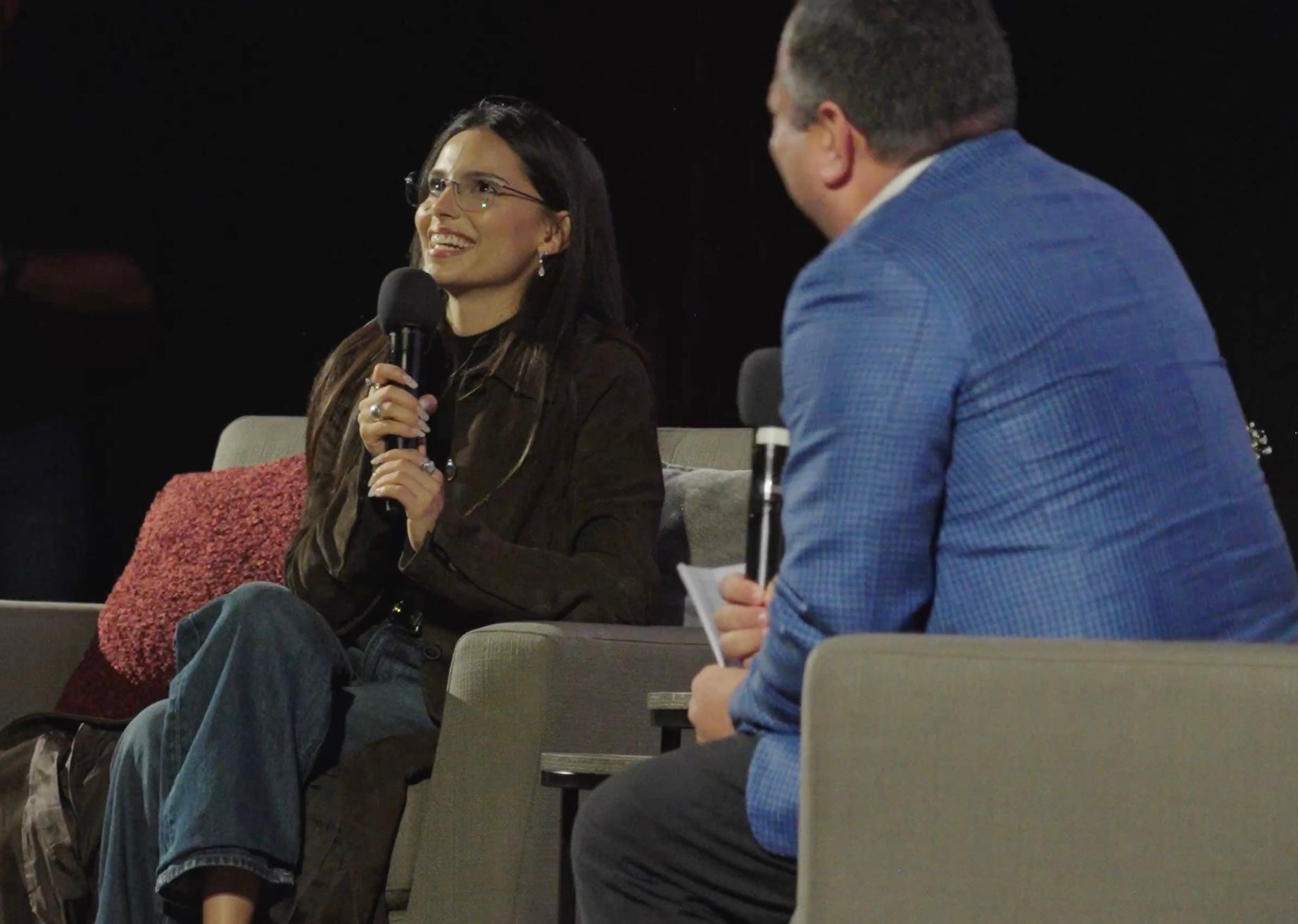
We use cookies.They keep VO running smoothly and help us improve it. Privacy policy