
 Ask ChatGPT

- Podcasts
- Awards Chatter
- Jordan Firstman - 'Club Kid' [LIVE]
In short
Jordan Firstman’s LIVE Film School Masterclass/THR Awards Chatter episode about writing, directing, and starring in his debut feature Club Kid, plus his career path, creative process, and how personal upheavals and internet fame fed his work.
Guest backgrounds
Jordan Firstman is a 35-year-old writer/director/actor from Long Island, raised by journalist parents (Newsday: mom health/science, dad sports). He studied theater/acting at the University of Cincinnati, then moved to Los Angeles. He worked in TV writers’ rooms (notably Search Party) and wrote/sold projects where he aimed to “write-star-direct” (including Call Your Father). He also appeared in shows like Big Mouth and English Teacher, and acted in Disney’s Ms. Marvel (2022).
Key claims
Club Kid’s Cannes premiere drew a seven-minute standing ovation and a bidding war; A24 bought it for $17M. Firstman says breakups repeatedly unlock his best creative work. During COVID, he posted daily impressions that exploded after Ariana Grande amplified them. He insisted on shooting Club Kid on film, in New York, in real clubs, and with non-actors, with producer Alex Coco fighting for his vision.
Notable examples
Club Kid plot (NYC club promoter who stays too long and gets a surprise 10-year-old). Berlin self-discovery (first pill, darkroom, group sex). A trauma from a nude audition for Daddy (2015). The Gay Men’s Choir of the Baccounts! project created after a public career meltdown. Courtroom scene praised as his most “earnest” rebuttal to misperception.
Written by AI. May contain mistakes.
Chapters
1:35
Jordan's Early Life and Family Background
Jordan Firstman shares his upbringing, family dynamics, and early interests.
“And so without further ado, would you please join me in welcoming Jordan Firstman.”
4:30
Finding Humor and Identity in School
Jordan discusses how he used humor and performance as a strategy in school.
“And I kind of like Lissa Strada'd the boys.”
6:30
College Experience and Early Career
Jordan recounts his college challenges and early acting experiences.
“and went to a bunch of the gay film festivals.”
8:00
Mentorship and Influences
Jordan reflects on his mentor Steven Winter and his impact on his career.
“And so, yeah, I didn't know anyone here.”
10:00
Self-Discovery in Europe
Jordan discusses a pivotal trip to Europe that influenced his personal growth.
“So I left that like wasn't in that life and then kind of rediscovered it in my late 20s.”
12:00
Career Challenges and First Roles
Jordan shares experiences from early auditions and writing for TV.
“and the filmmakers that made it had seen my first short film at a film festival and then Michael Showalter, the other co-creator, saw another one of my shorts and they just felt I was right for it.”
14:00
Early Writing Journey
Jordan discusses his early writing experiences and inspirations.
“What was motivating you to do that and how did that all?”
15:00
Development of 'Call Your Father'
Exploration of the ideas and development process for 'Call Your Father'.
“And yeah, I was, I was really proud of that one and ended up, uh, selling that one as a TV show.”
16:40
Autobiographical Elements in Writing
Jordan reflects on the autobiographical aspects of his work and relationships.
“I you know, I was doing that in my shorts.”
18:40
Challenges in the Industry
Insight into the struggles and challenges Jordan faced in the entertainment industry.
“I was like, so this was at, so yeah, like say I sold that show.”
Show all 35 chapters
21:00
Creative Breakthrough After Breakup
Jordan talks about how his breakup led to creative breakthroughs.
“And I wrote this song for the gay men's choir.”
23:00
Impact of the Pandemic on Career
Discussion on how the pandemic influenced Jordan's career path.
“Frank Ocean gives the rights to his entire song.”
25:00
Going Viral on Social Media
Jordan shares his experience of suddenly gaining fame online.
“So tell us where that idea came from and how this really kind of turned the frown upside down, right?”
26:40
Navigating Fame During Lockdown
Jordan reflects on the challenges of being famous during the pandemic.
“And yeah, I just, I like set a goal for myself.”
28:00
Navigating Internet Fame and Its Constraints
Explore the challenges of internet fame during lockdown and the expectations it creates.
“ariana grande fans i'm like can you guys leave now it's like the moment's done it's like you're not my fan.”
28:40
The Struggle with Public Perception
Jordan shares his frustrations with being perceived as a 'silly person' despite his artistic aspirations.
“So when that eased up a little bit, you were now kind of seen as an Internet sensation, which on the one hand is great, but I know you found it a little bit limiting as well, or the way people saw you.”
30:10
Finding Balance Between Authenticity and Brand Deals
Discussing the tension between authenticity and commercial success in his career.
“Well, no, the kind of funniest contrast, I guess we could say, which was kind of probably in the immediate post or as the world began opening up.”
32:30
The Journey to 'Club Kid'
Jordan reflects on his personal journey and experiences that inspired 'Club Kid'.
“you're probably the first person to work on a Disney project and have gay sex on camera in the same year.”
34:40
The Impact of 'I Love LA' and Collaborations
Discussing his role in 'I Love LA' and the collaborative process with Rachel Sennett.
“in that period also just uh i guess during the back and forth was was english teacher you're on that for two seasons.”
37:00
Developing 'Club Kid' from Concept to Reality
Jordan shares the inception of 'Club Kid' and his vision for the project.
“I won't go too much into it, but, like, it set me up to just, like, have a deeper relationship with myself and my relationship to myself.”
42:01
The Birth of 'Club Kid'
Jordan Firstman discusses the inspiration and early concepts behind 'Club Kid'.
“And so, you know, for those, all of you who haven't seen Rotting in the Sun, I met the director, he's this like crazy, brilliant man named Sebastian Silva, and I was a huge fan of his.”
46:00
Navigating the Writing Process
Firstman shares insights on the challenges of writing and developing the script for 'Club Kid'.
“And it makes sense, especially for my generation and my age group who are getting older and not having kids and all this space that's left in our lives and where we go and what we do with it.”
50:22
Production Decisions and Challenges
Discussion on the production decisions, filming challenges, and creative choices made during shooting.
“And so if people aren't understanding certain things, it's my job to make them understandable.”
54:28
Creating Authentic Party Scenes
Firstman recounts the effort and creativity behind capturing authentic party scenes in 'Club Kid'.
“Yeah, I mean, there was so, so much going on, and it was such a difficult shoot.”
56:00
The Thrill of Crafting 'Club Kid'
Explore the electric atmosphere of creating the film 'Club Kid' and its unique party scenes.
56:50
Directing Oneself: A Filmmaker's Challenge
Learn about the complexities and teamwork involved in directing oneself in a film.
“So the other question that I think for a filmmaker is really interesting is how do you direct yourself?”
58:25
The Emotional Depth of a Courtroom Monologue
Delve into the emotional journey behind a pivotal courtroom scene in 'Club Kid'.
1:00:43
The Cannes Experience: Triumph and Bidding Wars
Hear about the emotional rollercoaster of premiering at Cannes and the ensuing bidding wars.
“I don't think, unless you were there in Cannes, I don't think you can appreciate how big a thing this movie was.”
1:03:29
Navigating Post-Premiere Decisions
Understand the pressures and emotions surrounding decisions after a successful premiere.
“This was, they were after you from that night.”
1:06:43
Future Aspirations and Next Projects
Discover the filmmaker's outlook on future projects and their desire to create original work.
“Well, I mean, because at various times of your career where you've been interviewed, I've read where there have been different models.”
1:08:48
Shooting on Film: A Creative Choice
Learn why shooting on film was crucial for achieving the desired aesthetic in 'Club Kid'.
“you ate with that you really are a great interviewer very well researched thank you Thank you.”
1:10:00
The Depth of Film: A Technical Perspective
Explore the technical nuances of film versus digital and emotional expression.
“And like the mechanism of the, you know, developing film, like it's a technical, tangible process.”
1:10:40
Balancing Acting and Directing
Learn how to maintain presence in dual roles as an actor and director.
“uh, it's to me, the only difference I noticed was like, like time to load the camera.”
1:12:36
Navigating Queerness in Filmmaking
Understand the challenges of integrating queerness in cinema without it being the focal point.
“So as a queer filmmaker, I've noticed that queer films are often expected to be explicitly about queerness because if it centers something else, financiers would prefer to be straight to attract the widest audience.”
1:15:29
Advice for Aspiring Filmmakers
Gain insights on how to navigate the film industry and pursue your vision.
“My question for you is, if you could speak to your past self, what advice would you give him about navigating the film industry?”

Ask about this episode
Get the gist, explore an idea or ask about something said.
 Claude
On Awards Chatter, what are the key points of this episode?
Searching your listeningTranscript
Automatic transcript. May contain errors.
0:00Scott Feinberg: Good evening, everyone. I'm Scott Feinberg, Presidential Fellow here at Chapman University and the Executive Editor of Awards Coverage at The Hollywood Reporter. And it's my pleasure to welcome you to another installment of our Film School's Masterclass series that is also being recorded as an episode of THR's Awards Chatter podcast. Tonight, several hundred students and I, I say for our listeners, have the immense privilege of being joined by one of the most exciting young talents in Hollywood. it. This writer, director, and actor is only 35 years old, but he has already been described by Vulture as a visionary, by Variety, which I don't often like to quote, but when they get it right, they get it right, as the most recognizable gay comedian of his generation, and by IndieWire as a major filmmaking talent and a sincere storyteller with heart as much as humor.
0:47Scott Feinberg: His first major motion picture, which he wrote, directed, and stars in, is Club Kid, which centers on a New York club promoter who essentially stays too long at the party and winds up with a surprise in the form of a 10-year-old. The film had its world premiere at the Cannes Film Festival, where it received a seven-minute standing ovation and sparked a bidding war, ultimately selling to A24 for$17 million, one of the biggest sales of the fest. It has since played at the Telluride, Toronto, and last night, I believe, or two nights ago, New York Film Festivals, and it will begin a platform theatrical release on November 6th.
1:23Scott Feinberg: A Los Angeles Times reporter recently wrote, Watching Club Kid, you feel the arrival of someone major. Close quote. We agree and we are so happy that that someone is with us tonight. And so without further ado, would you please join me in welcoming Jordan Firstman.
1:46Thank you.
2:06Class, take your seats, please. It's giving that vibe. Yeah, of course. You fully were like, class, take your seat. I was like, oh, we're in school. Professor Firstman for tonight, absolutely.
2:16Scott Feinberg: Absolutely. Well, thank you so much for being here. Thank you. Congrats on everything. And let's dive in. Where were you born and raised, and what did your folks do for a living? I was born and raised on Long Island, New York, whether I liked it or not. That's what happened. And I lived there until I could not anymore. and my parents actually met it's like such a 90s rom-com story but they were both journalists at a newspaper on Long Island called Newsday my mom ran the health and science section and my dad ran the sports section and they linked up then later decided they hated each other and got divorced but in the meantime I came You and a couple siblings.
3:12Yes, two siblings, two twin sisters, both gay, three for three.
3:22Scott Feinberg: Okay, so my understanding is this all didn't come out of nowhere. You were kind of a ham as a kid even?
3:32Somewhat. I was kind of shy. like I you know when I would meet new people sometimes I would hide behind my mom or dad but then I think at at family occasions I would start I would get more comfortable and ham it up I think maybe you're referring to the infamous Kramer impression well yeah you wouldn't still have that in the repertoire would you I honestly I it's so funny because I I got asked to do it on like a tv show and I kind of couldn't it was there was a lot of like ah but I didn't quite
4:04Scott Feinberg: Seinfeld is even a... Yeah, do you guys fuck with that? Okay. Yeah. Yeah, yeah, good character. Now, class clown in middle school? Yeah, yeah. Then I started, I mean, I think it was, yeah, I have both like a cynical and not cynical take on all of that, but I think, you know, as, I think once I like realized I was gay, probably it started, I, it becomes a defense mechanism in a way. and so yeah I started I leaned into humor and you know it's like in order to not get bullied you kind of have to like find your way in other ways and so yeah I just kind of became the clown and then when the straight guys did kind of like catch on they caught a whiff of the gay then I actually I befriended all the like really hot popular sluts
5:02that were like hooking up with the boys. And I kind of like Lissa Strada'd the boys. And I was like, girls, you can't hook up with the boys if they're mean to me. And so then the girls were like, you can't be mean to Jordan, and they stopped.
5:15Scott Feinberg: It worked out. Well, very, very strategic. Slut was a positive thing, by the way. Okay, so you headed off to college, right? University of Cincinnati. What were you going to be studying there, and why did you not stick around? I went for theater and acting, and yeah, I don't know. It just did—I was never a good student. I never, like—and I always had trouble with authority figures in high school. It was like either teachers loved me or really, really didn't like me. And so I don't know, college was just hard and I felt like I was being put into a box and I didn't appreciate it and they didn't appreciate me not appreciating it.
6:09And so I don't know, there was just tension. And then I got a job acting in like a theater, an off-Broadway theater production. So I kind of just used it as an excuse to bounce. Yeah. And then, yeah. Who is Steven Winter? Oh, that's so nice. Steven Winter, I made my first short film when I was 21 and went to a bunch of the gay film festivals. And there I met Steven Winter, who had just... He made a narrative feature that was kind of like a pseudo... based on a documentary called Portrait of Jason, if anyone has seen it, amazing, beautiful documentary. And then he kind of did a recreation called Jason and Shirley.
7:01Anyway, long story short, he kind of just became my older gay mentor, and he knew everything about every movie and introduced me to 70s cinema, introduced me to every gay movie that's ever existed, and has just been, you know, I send him everything I write before I make it. He was the first person to see a cut of this movie. Yeah, I mean, that was like the moment I knew I had something was like, it was maybe even like to this day one of the more emotional moments I've had throughout the film, but like looking at him after it, and he was crying, and it was just like a year. I mean, this is like 15 years of knowing this guy, and he knew I could do it, and I just hadn't, you know, been afforded the chance yet, and so that was, that was a good moment for me, but yeah, get, get mentors, they're great.
7:56Scott Feinberg: Yeah, so we're going to talk about you moving out from the East Coast to the West Coast, but first, a year before that, I guess when you were 20, you go to Europe, and had a bit of self-discovery, it sounds like, that might have, it all, like, some of this might seem random stuff to ask you about, but I think it all kind of ends up connecting back to the story. Yeah, I kind of, I kind of had, I had a really, so yeah, I moved to New York, had a really traumatic, dramatic year in New York, and then I was like, fuck this shit, I'm moving to LA and starting a new life, and like, I'm leaving it all behind.
8:40And so, yeah, I didn't know anyone here. I didn't know how to drive. I like I got my license in two weeks, like barely passed my test and then moved to L.A. I got in three accidents in like the first two weeks.
8:59And yeah, just kind of started my life here. And then at the end of that year, I was like, I want to do my study abroad kind of. And yeah, I kind of just went and discovered my sexuality there and ended up in Berlin and ended up at Bergheim when I was 20. It was my first pill, my first darkroom, my first group sex experience. I don't know, I just felt like a kid in a candy store.
9:36Scott Feinberg: And obviously maybe began to get the seeds of some of the ideas that end up re-emerging. I know there's a lot in between, which we'll cover, but that's why I think it's relevant. Yeah, no, I think it was it was definitely like a huge self-discovery moment for me. And then and then, you know, I then I ended up in kind of like a boring relationship and like was a TV writer for four years. So I left that like wasn't in that life and then kind of rediscovered it in my late 20s. But I don't know. I think that that trip to Berlin definitely started started my life, I would say. So then you come back to L.A., right?
10:18Scott Feinberg: And there's, first of all, your first credited screen role. Let's just say I wish, I think everybody wishes this would be their first credited screen role. Listed as Hotman in Daddy 2015. I don't know what the line line of the film is. I had blocked that out of my memory. And only recently, this is going to sound like a dark story because it kind of is. but but i like i blocked out of my memory but this director like i got like an audition on like whatever a fucking actor's access or whatever and this this like older guy like made me take off all my clothes for the audition for the audition and then he was like and then he like it wasn't like only that and then he was like i think you need to like lose a couple pounds i was like i what am i and i was like does this get the part call for nudity at all and it didn't I was like, why am I naked?
11:09But it was like a trauma that I had forgotten about until like a couple weeks ago. And I was like, oh my God, I got naked at that audition once.
11:17Scott Feinberg: And this is like shortly before all the Harvey Weinstein and me too stuff really took off. Yeah. I mean, I don't know. I never even remembered, so I wouldn't have even known to say anything. Yeah, right. But yeah. Sorry to take it down. Well, so that was that. And then you're around that same time, as you mentioned, also starting to write for the show Search Party, right? You're in a writer's room for the first time at 23? Yeah. What was that like? It was great. It was such an amazing learning experience. And I felt, yeah, I was definitely the baby. and the filmmakers that made it had seen my first short film at a film festival and then Michael Showalter, the other co-creator, saw another one of my shorts and they just felt I was right for it.
12:19And it's funny, I had done, I always felt like kind of a little bit of like a slacker and I had done an ayahuasca trip. Did you read about that too? I think nine. Nine. I did nine. And then I got kicked out of ayahuasca by God. Yeah.
12:42But yeah, I had done a trip and I had like the first trip I did, I like met like female God and she was like, anything you do is OK. Like, I love you no matter what. And then I met male God the second time. He's like, you work for me, bitch. And but he like taught me he taught me like that he was like the value of like work and like work ethic. And he was like, he was like, you think you work for money? You think you work for success? Like, no, you work for me. And if like you work hard, you see what I give you. And if you don't work hard, you see what I give you. And the next day, the next two days later, I got the meeting for a search party and I stayed up for like five days straight, like mapping out the entire season.
13:19And like the 40 year old writers that are like EPs on other show came in like, well, I think it'd be cool if like they said this thing, like they just didn't come prepared. and I really had like, even if it didn't end up in the show, like I had it all mapped out. And so I credit Mail God for that job.
13:36Scott Feinberg: And you were with that show for four seasons, I think? Yeah, must have been. And in the interim through all this, again, right before that show and through it, you're making short films of your own. That means writing, directing, starring in it. What was the idea behind that? You mentioned you're like new in L.A. You don't really know people. You haven't really done much up to that point. What was motivating you to do that and how did that all? Because these are these are shorts that ended up at some pretty major film festivals. So you were doing something right. But how did that even get going?
14:12Yeah, I don't know. I guess I started writing in a real way when I was 18 and just kind of like short stories or like monologues even. Like I would write like just like funny dialogue and monologues and I felt like I was pretty good at it. And, you know, my first short was just like like only quippy dialogue. It didn't really have a plot at all. But like people liked it and laughed at it. And so, yeah, I think I think the more I did, the the better I got at it. And then, yeah, around around like like after the first season of Search Party, I made a short called Call Your Father that I felt like I really liked.
14:55locked into something. I was like, Oh, this is like, maybe what I want my voice to, to be. And yeah, I was, I was really proud of that one and ended up, uh, selling that one as a TV show. Um, developed that for four years, didn't happen, but yeah, there was, and just so people,
15:13Scott Feinberg: you know, to get a sense of where your mind was at that point. Um, that one is basically about a, a young gay guy dating a much older gay guy? Yeah. Yeah. Yeah. It's about like a 23, 24-year-old who's dating a 50-year-old. It was like a gay intergenerational West Side Story, I would call it. Now, did that just come out of nowhere, or was that sort of autobiographical? I mean, yeah. I was climbing up those old trees.
15:45No, it was... it was uh no it's based on like one yeah one one specific encounter i had with this guy in san francisco and kind of this like crazy weekend i had and we were both challenging each other in interesting ways and and so i was kind of just i was just like interested and and and through my 20s i most of my friends were 50 year old gay men and so i knew why was that why or how well both I mean I don't know I just I was I just was more interested by them and they taught me so much about culture and and films and every I would go to Palm Springs every New Year's Eve with like eight 50 year old gay guys and they showed me Bob and Carol Ted and Alice and like they you know showed me come back to the five and dime Jimmy Dean Jimmy Dean and like just they they really like they opened my world up and they were funny and uh i don't know it just i
16:46Scott Feinberg: that's where i ended up for a while so um there were other shows that you were writing on as well i guess probably right after search party um big mouth right uh the other two these are shows that are getting seen and you're clearly working a lot you did you feel like your work was being your contributions were being noticed appreciated that this might be the path for the foreseeable future or did you always have this kind of hunger to uh either act more yourself you were sometimes in those shows as well to either act on a greater level and or simultaneously write and direct and or like, was it always the plan to kind of end up where Club Kid ended up, where you're doing all these things?
17:37Yeah, I think it was. I you know, I was doing that in my shorts. I the shows that I sold were for me to write star and direct. I mean, this was the era of Phoebe Waller-Bridge and Donald Glover. And like it was a thing it was like Lena Dunham start, like started the movement and then kind of people followed suit. And I don't know, whatever blind confidence I had that was either based or not based on anything. i felt like i wanted to go for it you know and and and do the whole like auteur actor thing
18:12Scott Feinberg: so you mentioned that there was a kind of turbulent period that was in some ways the beginning of like a real turning point like low lows high highs and then a pandemic so which is also going to be important. I had a very famous public crush out. I don't know if you know. Do you know about that? Maybe, but please. I was like, so this was at, so yeah, like say I sold that show. I was just like put through the ringer on that show and it was, I didn't like know how, is this interesting? Yes, this is the Call Your Father show. But so I didn't really know how like how long deals took to get made. So I sold the show.
19:00I was like, great, let's go tomorrow. And they're like, we have to do the deal. And I was so lowly on the business affairs people. I was 18th on their list. By the way, they're always on vacation. They're never at work. But so it took six months to do the deal. And after month three, I was like, I'm just going to write this. I don't want a writer's room. I'm just going to write the whole show. So the deal got signed. And then the day the deal got signed, I sent them the whole season. And that's not how TV works at all. like you send them an outline for the pilot that takes two months it's just like not how it works but they love the scripts and so they're like okay we need to like reconfigure stuff out now so we can make it because they thought it was going to be a way lower budget thing and then the scripts needed more money then they needed like a famous person but they didn't want a gay actor so it became like this whole drama took it back from that network sold it to it was the first show that HBO Max ever bought.
19:57And I did that with, I took it to Greg Berlanti. He, we, he had the deal with them. So we went in then sold it then they had all the scripts. So it was like, okay, it's happening. Then it goes back to square one. And so, and all this time I'm like, I'm dating, I'm in like a pretty, yeah, very serious relationship that we don't need to go into here, but it wasn't the healthiest. And so like and we were also creative collaborators. We yeah, we had we were developing. We wrote a feature together that was like had just gotten financing. And so basically January 2020, I like I knew this. I knew I had to break up with this guy.
20:40So I was like, OK, I'm killing this movie and this relationship in one day, but at least I have the show. So like on Monday, I broke up with him Tuesday. day I get a call the show's dead and then and then so I like and then so I like I like freaked out because I like my and he he basically told me like you know without me like your career's over like you're nothing without me and I kind of believed it and so yeah I like I like had a I like a public meltdown I posted like like like emails from the executives at HBO saying that was their favorite show I'm like what the fuck did you do it was bad it was bad and then and then And that Saturday, I had this random job writing jokes for Aubrey Plaza at the Indie Spirit Awards.
21:23And I wrote this song for the gay men's choir.
21:28Scott Feinberg: Pause. Pause. Jim Smith in the back. Let's go. It's the slowest fade of ever. No, no, no, no, no, no, no, no, no, no, no, no, no, no. I didn't sign up for this. The other one. I can't do that. No, I actually can't. I can't. I'm being dead serious right now. No.
21:48No. Let's skip all of it, actually.
21:52Scott Feinberg: You don't want to do the Laura Dern? We can do a little Laura Dern, but we're not doing that. That's fine. Oh? LGBTQ representation in film is more important than ever. That's right. It is. Than ever. And while we do have some amazing queer films nominated tonight, we wanted to shine a spotlight on some of the gayest moments in other films that you may not have realized were gay. I give you the Gay Man's Choir of the Baccounts! . . . . Nellia Mansell in Cajamp's J-Lo Folkka sings to Fiona Ipparu have Verhaltrey Twix talking about snakes, the title of the film I am... John Deanna Spencer made a history teacher.
23:02Frank Ocean gives the rights to his entire song. The content of the cursed birds who may tell the winners restores. The women of paradise Rock down on the feet of human rejection letter The kid from marriage story Who was obsessed with how the real was his mother This shot and this shot, there is mallet taking 20 years of work, given the vacation.
24:02Laura Dern picking her feet up on the couch. Laura Dern ordering a chaos salad. Laura Dern dressed sunny in court. Just all of Laura Dern. More and air.
24:35More and air. More and air.
24:41Scott Feinberg: More and air. More and air. More and air. More and air. Oh, it's cool. But you're still alive.
24:50More and air. More and air.
25:10Okay.
25:13Scott Feinberg: It was pretty good. It was pretty good. Very good. She had no idea. So tell us where that idea came from and how this really kind of turned the frown upside down, right? Yeah, like I said, I had this really traumatic week, and then that next week I was just supposed to write jokes for Aubrey Plaza, and I just had the idea, and I was like, can I go off and just do this thing by myself, and you guys write the jokes? And so I did, and I contacted the gay men's choir, and I wrote the music with someone, and just made it happen in that moment. like you guys are too young, but for like gay millennials, it was like a thing.
25:57I was at the show.
26:00Scott Feinberg: That brought that brought the place down. Yeah. And so that was like kind of my like my signal from the universe that like I I I can do this alone. Like I I can keep going. And yeah, kind of sent me into like the next chapter of my career. Totally. So without without showing a clip, I do want to ask you to talk about we. So January is your difficult period that you talked about. February is the Spirit Awards. March is a global lockdown. So how did you experience that period and how did that sort of result in some impressions? yeah I mean I don't know I I've every every breakup I've had has led to like my greatest creative work which is so unfortunate because I know I'm like I'm only dating to break up eventually hopefully um but but no I mean I just I I felt so constricted in that relationship and so when it ended I just I felt so free and and creatively open and like you know my ideas were my own and And then I was actually alone for the first time in a long time.
27:14And yeah, I just, I like set a goal for myself. I was like, I'm going to do like one impression every day of the week on my stories. And then people were responding. And I had like probably like 10 ,000 followers just from like my shorts and stuff, very modest. And then I posted them like in like a Syria dump to my grid, like seven of them. and like from week one it just like blew up and yeah by june i had like 600 000 followers
27:43Scott Feinberg: including among others who are some of the most uh standout names to you well the the person that actually like made them blow up week one ariana grande started posting them and then she continued to do that like every week so even now to this day like a hundred thousand my followers are like ariana grande fans i'm like can you guys leave now it's like the moment's done it's like you're not my fan. Dead followers, I call them. But yeah, and then yeah, just like, like, they would kind of come in like groups like one, like the cast of Big Little Lies one week, and then like, all the like pop stars one week, it was a very surreal experience.
28:22Because yeah, as like a little gay boy, it's like all of my, my female icons were like, DMing me being like, I love you.
28:30Scott Feinberg: Well, on top of that, as you become internet famous, I guess we call it, you can't even go out and be, you know, really kind of fully experienced that because we're still in lockdown, right? So when that eased up a little bit, you were now kind of seen as an Internet sensation, which on the one hand is great, but I know you found it a little bit limiting as well, or the way people saw you. I mean, I guess the one that blew up the most was Banana Red's publicist. I'll never live it down for the rest of my life. But why do you want to? I mean, it's just cringy to me. I don't know. Why? I don't know.
29:16It just is. I can't explain it. I see that when you saw what happened, that was real. No, I'm sorry. I didn't know.
29:26Scott Feinberg: I didn't know. That was worse than the guy making me get naked at the audition. I'm sorry. Oh, God. No, no, no. No, I don't know. I don't know. I think with, like I said, my whole life, I don't know, I pushed back on things and I had trouble with authority figures. So I guess when people saw me a certain way, and I didn't feel that way, it bothered me, and I wanted to push back. The way you wanted to be seen was going back to, these guys didn't know that you were already a film festival, short filmmaker with aspirate. Is that what the frustration was, that it was sort of reduced to being like a silly person yeah i think i think it was like the the clown thing and i was like okay i know it was funny because as like as they were blowing up call your father got selected for criterion and i like posted about it and got like 11 comments and i'm like they don't they like actually don't even know what criterion is like my followers don't know what that is and like that was a big i was like oh i'm like cultivating a very different audience than than i wanted to um and so yeah i think it was it was just this weird thing but then i was like making a lot of money right because there's all these digital yeah stuff right then it was like the pandemic no one knew what to do with all their money so they just like gave it to people like on the internet what did they want like like what kind of stuff did they have you hawking at that point oh my god i did like i did like nine brain i did like target it's modifying like i just was like whatever now the other thing i guess aside from having the artistic side that you wanted to show you do also have uh you know people might have gotten a little bit of this from the vergain uh reference you know a wilder side as well that the brands are not gonna want you showing right so there's all this maybe it seems like uh just kind of uh inner conflict yeah yeah which i think has like like always always been a part of part of the shtick and i think like something even i don't know i think it i've been able to somehow make it work with still saying the stuff i want to say yeah and you know the i was already doing i did like another series where like people like submitted their secrets to me and like they were like the most depraved things ever and i was doing them yes all during these brand deals and somehow it was fine And in fact, got a record label deal out of that.
32:00That was a weird side quest.
32:03Scott Feinberg: Well, no, the kind of funniest contrast, I guess we could say, which was kind of probably in the immediate post or as the world began opening up. Another interviewer noted that referring to Ms. Marvel, which you were on in 2022. Right. Yeah. And then also shot that year. Sebastian Silva's film Rotting in the Sun, this person wrote that, quote, you're probably the first person to work on a Disney project and have gay sex on camera in the same year. Close quote. Yeah, I'm proud of that. That's part of why I did Marvel, because I knew I was about to suck dick on camera. And I was like, I want to see if I can get away with this.
32:50Scott Feinberg: A record that will not be matched soon, in all likelihood. Okay, so, and that movie, by the way, went to Sundance, right? The special, like, this was a... You guys would like it, if you haven't, you should watch it. I think you would like it. It's a good movie. Chapman University cannot endorse... No, I'm joking, I'm joking, I'm joking. No, so that movie goes to Sundance, but then you, as you kind of alluded to earlier, I think, go back to Berlin, right? Yeah, I mean, well, that happened a bit earlier. That was like 2021. Well, I know that, so this was the second time returning to the room? How do you know so much about my life?
33:31Is this all out there? I talk too much.
33:35Scott Feinberg: No, but I mean, the stuff that really in Berlin inspired Club Kid, was that the first time? That was, I basically, I met, I went in, right before the big breakup that I talked about, I went and recreated the trip I did when I was 20. I was like, I want to see if that kid is still there. Because I felt, I was like, who am I? I'm like this TV writer that lives in this, that has mid-century modern furniture. I'm like, who are you? And so I wanted to see if he was still there. And when I was there, I met this guy that ended up being my boyfriend after the one I broke up with. Kind of fell in love with him.
34:17That kind of helped me get out of the other thing. and uh so then i went you know nothing really happened but then i i went back in 2021 and then i really started dating that guy which sent me into the next like four years of kind of going back and forth between here and berlin and getting more and more inspiration for club kid yeah so
34:40Scott Feinberg: in that period also just uh i guess during the back and forth was was english teacher you're on that for two seasons. I know it was maybe shorter lived. You really liked playing that character, right? He was sort of a bit of a toxic guy, but it was fun. You got right? Yeah, I had, I mean that show was so fun to shoot. I don't know. I felt like he was like a sweetie though. I don't know. I felt like he was like a good guy and like more like normal of a character than I had played. Like he's just like a guy living in Texas, you know? and it was just like the cast was so great and it was a fun show so we talked about ayahuasca has anyone here ever done it?
35:28boring oh we got one up there period you mean female god or male god? yeah
35:37Scott Feinberg: get to work that's why he's gotten to Chapman
35:44Scott Feinberg: that's ayahuasca You want to shed a little light on on Bufo? Oh, yeah. I mean, so I mean, after I was good, did actually like kick me out. It was like, you're done. Like, don't come back. And then and then I ended up just doing doing another like form of it called Bufo. Yeah, like I guess a year and a half, almost two years ago or like right before I went into like a big year of a lot of firsts for me. and um and you don't see that as a coincidence right no I think I knew I I was really I I like I think deep down I knew Club Kid was like a major thing for me and I knew if I made it the way that I wanted to make it it would be a big shift in my life and I knew it was I don't know I also was like yeah I had just gotten I Love LA and like you know when you you get like one of the leads an HBO show, you don't know how your life is going to change in that way.
36:43And like, you know, I wanted to do well on that. I had this album that was very provocative, very out there. I knew I just had to like go for it, like complete balls to the wall for a year straight with no breaks. Like I knew I had zero days off for because I was really I was shooting English Teacher and two times a week flying back for table reads, then taking the red eye to go shoot English teacher for like three months then the day I left English teacher started shooting I Love LA the day a casting Club Kid and doing pre-production during I Love LA the day I Love LA wraps I start pre-production for Club Kid Club Kid starts I finished in January and and had a cut to can by March can't have so I really have not it hasn't I had it hasn't stopped and so So, yeah, I did this trip that kind of, I don't know.
37:38I won't go too much into it, but, like, it set me up to just, like, have a deeper relationship with myself and my relationship to myself. And I don't know. It set me up to kind of just hold my own hand through this journey and, like, realize that, you know, it's not going to be perfect every time. And, like, I'm human. I'm going to make mistakes. not everything is gonna be the way I want it to. I'm a bit of a perfectionist, so I'm very hard on myself with my work, and I don't know. The trip just kind of gave me confidence in myself to just go for it that year.
38:22Scott Feinberg: So, I'm almost that club kid, but we can't gloss over I Love LA.
38:30Scott Feinberg: Charlie Cohen. I guess to set the scene here, well, just if anyone hasn't yet ventured into that, right? L.A. stylist, sort of social climber, one of the BFFs of Maya, played by Rachel Sennett, who's also behind the show and the way that you're behind, you know, the projects that you are so often a part of. How did you and she first cross paths and how'd you wind up in this? Yeah, I mean, we actually met through IO. um i wrote i was writing with io on big mouth um a very different io than you know yes like nerdy little girl like she was like yeah and now miss chanel now um but uh no i and i were buddies and she was close to rachel and she was like i want let's let's all get dinner and we went and did karaoke and i just i was so charmed by rachel as we all are and i just thought she was adorable and so sweet and funny and neurotic and yeah i just i loved her and then and then during the pandemic she moved to la and yeah she like shiva baby and rotting in the sun kind of had like we were around the same stuff for that and i would say that's when we got really like 2022 we got like bestie bestie territory and then um she was shooting something in it like she was shooting the Saturday Night Live movie while I was shooting English Teacher.
39:59And we had dinner in Atlanta. And I knew she had sold this show to HBO, but I did not think I was going to be a part of it. And then she was like, can I send you the script? And I was like, of course. And I read it, and I was like, that character talks like me. But she didn't say, like, I wrote a part for you, because she couldn't. And so I was like, yeah, Rachel, like Charlie feels like a really fun character, wink, wink. and she was like yeah but like didn't say anything and so I don't know we just I went through the whole process I auditioned like four times this is for the network yeah I did like yeah for for casting then for the producers the network and yeah I think I mean the way it was kind of like a weird time in our friendship because we would still talk every day and I was like had this like huge thing that I was like, I was like, am I going to get this part or not that?
40:54Like, that like says lines, like I say them. Um, and she just couldn't say anything. Cause she, she also knew me and she knew if I knew I was going to get it, I would come to HBO and be like too cocky or something. And so like, I, I had to fight for it and, uh, I got it. Um, but yeah, I mean, it was then, then, then after she was like, Oh my God, it's been so hard not to tell you like I just couldn't um but yeah it's I mean it's such a dream working with her and and the whole cat I've gotten so close with all of them and uh you know we shoot in LA it's just it's such
41:28Scott Feinberg: a dream and I like you know you've kind of contextualized it that so often like there's been on TV and in movies you know the gay best friend who kind of pops in and out and it's like a throwaway character but to be one of the core four is kind of uh step in the right direction yeah for sure and i think she was definitely cognizant of like not trying not to fall into the the pitfalls of of the gay best friend territory and you know i think we we worked hard on that together of just like making him have his own own life and story um okay so the original the initial time you thought about Club Kid there that you would that you should write something that you could direct and star in that would be somewhat related to what Club Kid ended up being do you remember when that first it'll be more embarrassing if I can water is sometimes too hard a little too hard to open just like a little too hard so what's the words that's gonna happen someone's gonna spill i'd rather it spill than not not open sure sure um yeah so what when do you remember first thinking about what would become club kid yeah i i actually had the first like concept of the idea right before we went to sundance with rotting in the sun and i think it it was also, I don't know, I think every, I think it's a common thing with artists, but like all work is in conversation with other work that you do.
43:11And so, you know, for those, all of you who haven't seen Rotting in the Sun, I met the director, he's this like crazy, brilliant man named Sebastian Silva, and I was a huge fan of his. And we met in Mexico City and he hated me. Like you hated my personality, like did it like then went and like looked at my Instagram, hated what I gave online, like just didn't like me. And then called me a month later. He's like, dude, I want to like write a movie and you're going to be the lead. And I'm going to like use your real name and just like destroy you. And I was like, let's do it. And so I did that. And it was like he did.
43:51He like really went for me hard and my whole persona. But I was at a point in my life where I wanted I wanted to strip the whole Internet persona. so I was like, let's just burn it to the ground. But then in doing that, I think I thought that people were going to understand it was a performance, but because I'm playing a character named Jordan Firstman and using every part of my real life in it, people thought it was me, and the character is very different from me. And so I think already, once I saw it, I was like, okay, this might be complicated. And I'm really proud of that movie. Like, I love that movie.
44:31But it made things a little bit complicated for me for a little bit. In terms of incoming not nice stuff. Yeah, and just, like, I guess my public perception. Because people thought I was a thing that I was playing, you know? And I felt so different from that character. And so I think the initial idea was, like, I want to write something, like, a bit softer. and that was like the first thing and so you know then I then I was you know I had an experience at a friend's house where I was there I was making their kid laugh by saying inappropriate things and I was like okay there's something funny with like me and a kid here and during all of that you know I'm in in Berlin uh also rotting in the sun delved a little bit into party stuff and like you know also I yeah I was just I was partying a lot and I was like kind of stuck in a cycle of it and you know I've always been remained like ambitious and like doing it but definitely the partying like stifled it a little bit and so I wanted I don't know I knew I couldn't sustain it and I was having less fun and just noticing things in the community around me that I wanted to explore and so yeah they just kind of there was like one day I woke up and I was like oh these things can actually really mesh together there's like a lot to in and you know of course I'm thinking about all the movies in this canon i was just gonna ask you which ones are were consciously you know on your mind during this period i mean it was it was definitely like paper moon uh kramer versus kramer the kid big daddy like all of all of the like father father song actually like a big a big breakthrough i had was like from auntie mame um but yeah i think i just like i was like oh, this genre of movie actually would benefit from a queer retelling and would have something to really change what this kind of movie can say.
46:34And it makes sense, especially for my generation and my age group who are getting older and not having kids and all this space that's left in our lives and where we go and what we do with it. So, yeah, I think once that clicked, I was like, OK, like I have all of these people I can write about. I can like funnel all of these insane stories and funny moments and funny lines. I heard high at the club into this movie, but still have this very earnest, like heartfelt father son story.
47:10Scott Feinberg: So you start to, I guess, initially assemble people around you to be part of this or what's the first step? You go to get get financing? Yeah, I mean, I wrote the first draft of the script,
47:26and my agent sent it to Alex Coco, and he was the first person to ever read it, and I...
47:33Scott Feinberg: Should we just say Alex Coco, who maybe not at that point had yet had this happen, but he produced and won the Best Picture Oscar for Anora. Yeah. And so your agent sent it to him. Yeah, he had... Anora, this was like... this was like, yeah, August, August of the year, like, uh, uh, an order came out in October. So they had gone to, they had won the Palm door already. He had done an or already. And so he was looking for his next thing and just really understood what I was going for. And so we developed it for like the next eight months together and he gave me great, great notes. And, uh, and, and in that time I went through another breakup, um, with the Berlin guy who was, you know, love of my life and that person I adore and, and have, and had and have a lot of love for.
48:25And so I think that second draft after the breakup is where, yeah, shit got real. And, and like, I was, yeah, it was, it, it, that's where like all the love you feel in the movie came, came from that period because I was, yeah, I was breaking up with someone that I was still in love with. So I had all of this love and I didn't have anywhere to put it. So I just like put it in this movie.
48:51Scott Feinberg: One thing that I wondered is I don't remember when Alex Coco first started working with Sean Baker, but another in that canon of child, man, child movies is Prince of Broadway. And I wondered if that was an influence also. You know, I hadn't seen it. And Coco was like, you should watch Prince of Broadway. when I watched, I was like, this is great. But also Florida Project a little bit. Like, yeah, Coco, he knows about working with kids. Yeah, that was fortunate, yeah. Yeah. The other thing that I know I've read, you talk about sort of taking away from the writing process, which I think is valuable for young filmmakers to hear about, is sort of the idea that you have to sometimes kill your darlings, right?
49:35Scott Feinberg: Like there are things that you love, that you get a kick out of, that you came up with, and they're funny or whatever, but they don't ultimately serve the story. Was that your experience on this one? Yeah, I mean, it got to a place. I always had the hardest time doing it, and I always had a hard time taking notes because I always knew what I was talking about, but sometimes it wasn't translating. And yeah, with this movie, I just had a different approach to it, and I really tried to see, even if I didn't agree with the notes, I tried to see where everyone was coming from all the time because I'm like if I want this to be understood and I want I want what I have to say to be understood.
50:22And so if people aren't understanding certain things, it's my job to make them understandable. Yeah. And so, yeah, I think, yeah, there came a time in. But, yeah, the writing process were also like, you know, I come from comedy, so there were a lot of jokes. and once I kind of reframed it in my mind as a drama there was a moment where I was like oh this isn't a comedy it's a drama and I can there's some there's gonna be funny moments but I everything has to dramatically lead us to the next moment so yeah just went and chopped a lot out and it felt great honestly it felt great and then in the edit too like things I thought I would never part with like it was like i was like cut it like and my editor would be like no i'd be like and like it's just full scenes that like i love and i don't know it felt like liberating in a way to like just like make i don't know it felt it felt like getting strong it felt like you're like at the gym and you're shedding away all this fat and you end up with this like lean muscular figure and like that's what i feel like the movie ended up being like i it's if you had seen like the first cut it.
51:33It's a tight movie.
51:36Scott Feinberg: It's hard enough to get a first feature made, period, right? Also to get someone to let you be the star of your first film that you're going to direct and to do it with a kid as your co-star, in this case Mr. Reggie Epsilon, who was 10 at the time. How amazing is Reggie?
51:59Scott Feinberg: But even with that all stacked against you, right, my understanding is you insisted on a few things. Shooting on film, shooting in New York, shooting in real clubs, shooting with non-actors. How did you get away with all of these things? I mean, a lot of people for their first feature have to make some real compromises, but it doesn't seem like you were willing to do it. and you somehow didn't have to. Yeah, I think it was, I think one, I had a great partner in Alex Coco and he fought for me for a lot of things. And yeah, I think I was just like unmovable. And I think our financier realized that pretty early on.
52:45I think we were in a good spot because we had multiple offers to finance it. And so they kind of had to fight for it a little bit. So when they did, I was like, I'm doing this. I'm going to go with you, but I'm doing this like exactly how I want to do it. And yet there's there were a million micro battles that had to happen. But I don't know. I just think I think if you have the confidence to say it needs to be done this way and there is no other way to do it. I mean, even like they like the the second to last day was when we shot the opening Uber scene. and they're like, Jordan, you have to do an alt because there's no way we're getting Rihanna.
53:25And I was like, I'm not doing an alt. And I was like, we will get Rihanna. And we got Rihanna. But I don't know. I just feel like, yeah, I think.
53:36Scott Feinberg: But there are sacrifices here too that you had to make people should know. What was your director's fee on this? I didn't take a director's fee. I ended up putting as much as, like there's like certain minimums I had had to make but we we ended up doing like a tricky thing where we like were able to like consolidate all of my positions but yeah I was not any like anytime my agents were like trying to fight for more money for this I was like no like let's save save save this battle and use it for when I actually need something so that was like we're you got to shoot it on film, but you're not going to get paid.
54:17Yeah.
54:18Scott Feinberg: Okay, so the shoot began October 2025, 26-day shoot. What were the, I guess, the best and most unexpected things that you experienced during that time? Yeah, I mean, there was so, so much going on, and it was such a difficult shoot. And for all the very, I knew what I was getting myself into and there were days where I was like, why the fuck did I put myself through this? Like everything I chose to do was the hardest thing you could do. Like shooting in real parties? Shooting in real clubs, making real parties happen. I'm like the, and like we are low budget movies still. Like it was not, we didn't have the money to pay 400 extras six times.
55:10Like there's like eight party scenes in the movie. And so we, you know, we were calling in every favor we could. It was also really important to me that like the right people were there and it was the right aesthetic. And so just like, just like sheer diligence. But there was like a couple, like the last night, the last night of the shoot was 2016. and we I I say we we ran out of our faggot favors in New York and because like no one wanted to do anything for us any like they had like already come like four times and so I showed up to set it's like the opening of the movie the most important part of the movie and there's like like 30 like dilapidated extras sitting in the corner I'm like these are not cool people like it can't be in my movie um no shade to dilapidated extras but um but and then so we like all the like the whole me and my producers all got on Grindr and just started being like like come come come come to come to Bushwick for a hundred dollars like and it worked so that's the opening that's the opening yeah and then and then like as word kind of got out and then like Amanda Lepore that people heard Amanda Lepore was coming and like it became like this real party that had like a real party it had ebbs and flows and people coming and going and I don't know it felt like really electric but that was that was part of the the thrill of making the movie was was like the mix the mix of craft and and unexpectedness and how they came together because me and my dp were very detailed about like you know we we shot listed and storyboarded everything well even just that
56:49Scott Feinberg: opening scene is so impressive from the cinematically just from to the way it's shot and going into the grinder party. So the other question that I think for a filmmaker is really interesting is how do you direct yourself? Like, are you, did you have somebody that you're trusting and leaning on to comment on the scenes where you're in front of the camera? Like, how does that work? Yeah, I think I had a great team. Like, I feel like Adam really helped me. Coco really helped me all of our producers I had I had two friends that I brought on to help with the party stuff that were not film people but just like like party producers and you know they got the the vibe of what I was going for and um yeah I had a lot of I had a lot of support my AD was great um and then just I don't know just riding on instinct and like I knew this story inside and out I knew the script inside out I knew I knew exactly how I wanted it to feel like it was it was a lot about feeling like the looks the aesthetics changed like it was like our references ended up I'm actually proud of this because I we had so many specific references but when I watched the movie now it like looks like Club Kid to me and it doesn't look like my references um but so again that part was adaptable but I knew I knew the tone I like deeply knew the tone and I knew I knew what it needed to feel like and I knew the emotion behind what the story that I was telling and how much it meant to me and the and the sadness and the and the pain and the levity I just I I had that inside of me and so yeah I think it was a lot a lot of instinct and and and trust and I don't know when in the shoot this took place chronologically but like it seems like the people who knew you only from impressions or knew you only from rotting in the sun or whatever or the things where you know you'd been trying to you'd been seen in a way you weren't wanting to be seen right there's nothing that rebuts that more than the courtroom scene where you are bringing it as an actor as a filmmaker again cinematically it's i think it's a winner right a lot of that yeah yeah um there's a lot of winners yeah quite yeah so just i mean that is and that's also i think being vulnerable in a way that you're like that's earnest that's yeah that's there's no wink in that so anything you want to say about that because i have a feeling we're going to be seeing that in a lot of uh clips that award shows this i don't know um but yeah i i yeah there it was just the i was so raw during that shoot and you know that courtroom monologue is funny because i say in the beginning like i i wrote something and i read it on the plane and i hated it um and that is what happened i like i i flew to london and i read the courtroom scene and I hated it and I rewrote it that morning and so all of those feelings like they were they were how you know we had taken we had taken a break from we we wrapped in November and we shot London and the beginning of January so we had we had like a month and a half for me to like think about what we shot and think about Reggie and think about you know how Peter had grown and you know it's a it's a funny it's an interesting monologue to me because like it has it does it has to do two things it has to both be completely honest about where peter thinks he is but also like he he doesn't get the kid so it's like you have to know that he's also not ready in that monologue so it's like it has to he has to feel ready but he isn't um and so i had all of that and i missed Reggie's so much and like that was all in there and I had purposely like uh you know his mom wanted to get dinner when I was in London I was like I don't want to see the kid like I want I want to like have this feeling inside of me when I I do this and so yeah that was what what's on there was like the first take wow and we should only shot one more amazing yeah last uh thing or two from me before we turned over to the students.
1:01:17Scott Feinberg: I don't think, unless you were there in Cannes, I don't think you can appreciate how big a thing this movie was. So just getting accepted into Cannes is a big deal. That was the best part. I felt like it could happen, but also I'm like, is this a Sundance movie? I didn't quite know if they were going to accept, because it has a commercial kind of thing going on that can doesn't always like and i'm a first time filmmaker i'm an american filmmaker it's a comedy there was a lot of stuff but i was like i think there's a chance yeah and like we were hearing whisperings that like teary liked it and so but we didn't know and there was like one morning i like jolted up at like 4 a.m and i was like we got him we got him and i like looked at my phone it was like a bunch of french flags from like all my producers and I just burst into tears yeah I mean it's a huge feather in any filmmaker's cap and so it goes there in the uncertain regard section um you go to the premiere in the way that only you could uh I forget what what the line was but uh about the theater oh the bussy the bussy I love the bussy yeah Terry was on stage he had no idea why people were laughing all right right he had no idea um movie plays yeah you're there with your mom my mom is a couple rows behind me right yeah your whole cast whole cat no one had seen it reggie had i was next to reggie reggie was on one side and coco i mean coco was like my rock this whole thing so reggie and coco but diego had never seen a car i had never the the dolls had never seen like no one had seen it so yeah it was a very emotional well because then there's movie ends seven-minute ovation, standing ovation, and immediately before you can even fully enjoy your party, which was the party that night too, there's a bidding war, right?
1:03:22Scott Feinberg: So I think half dozen different places saw potential in here. I don't even think they had to wait for reviews and things, right? This was, they were after you from that night. what's that like as you the aftermath where i think you're you're probably feeling pretty good but you're also under the gun to like kind of decide make a huge life decision right yeah it was weird it was weird and i there was just no time to process anything and all of a sudden everyone got really crazy around me that like and that because i i kind of like stayed out of it i It was my decision. I knew where I wanted to go with it, but they were very emotional meetings.
1:04:12Everyone was crying in all the meetings, and I was also like, are they crying? So I give them the movie, or are they actually crying? But I think they were really crying. It was just like an emotional thing. This is the day after. The day after, yeah. I took all the meetings back to back, and yeah, it was crazy. Where was that? just to set the scene in like some like hotel suite yeah yeah they just kind of like come in and they see each other as they walk by and like like i don't know i mean it it obviously was it felt cool but also very out of body and and surreal i was hung over from my party like
1:04:51Scott Feinberg: yeah and there was but it was sort of not a question we're not going with streamers you wanted yeah yeah yeah we had we yeah we knew netflix wanted it and we're like you will we'll meet with you if you promise us theatrical and they're like we can't promise that and i said we're not going to take the meeting yeah and then a24 i mean i think everybody who saw the movie immediately was like this feels yeah like a24 we said i even while we were shooting like there's there's the line in the movie it always gave hotel which i love but i but we it became a little bit of a joke because they always gave a 24 yeah yeah so we we like i i had a i had a feeling that they were going to be the right home for it last two things for me there's kind of a if this is true if it's not if what i'm about to ask you is not true then it's gonna be weird but if it is true i am gay yes now you know No.
1:05:55Scott Feinberg: No. Okay. Did you also just recently become a father? I did, yeah. Not a real, like, it's not, like, my kid. It's my biological kid. But, yeah, one of the gays in my family, I gave my sperm to her wife. and so yeah i mean after i wrote the script like uh yeah it was it was a very weird coincidence and and she was born the day we wrapped now yeah october 28th yeah or like the week we wrapped yeah yeah so like in one week i was like we had the premiere of i love la so i went back for that the baby was born and i was wrapping the movie it was like my mind was like exploding it was a lot of change yeah but yeah she's she's super cute that's great um last one for me is what was that uncle daddy yeah exactly um what's next like where right now the movie obviously hasn't yet gone out to the world but it's pretty clear not just from can but from a lot of other things since then that this is being how did it play tonight was it was it were people laughing Okay, good.
1:07:13Anyone cry? Period, period.
1:07:16Scott Feinberg: A lot of tears, a lot of tears. Well, I mean, because at various times of your career where you've been interviewed, I've read where there have been different models. At one point, it was Adam Sandler. That's the guy who could be in serious stuff and comedic stuff, but he's not also generally writing or directing. So where do you see things going in the future at this moment for you? is it good is it important to you to continue to be both in front of and behind the camera and kind of the architect of the things you're in or are you willing to do things for other filmmakers separately or I mean you're still gonna you've still got I love LA I believe for indefinitely so just what's what's your outlook for the future right now yeah I think I think what's you know this this movie was was a boat of confidence in a way and and I just want to do the next like I that's that's the only thing on my mind like I I'll entertain stuff that comes my way to some degree but I'm especially when I'm sent like books or scripts I'm like I it just I'm like why would I not write when I can like I I'm able to I have ideas so why would I not make original stuff so i i really want to get into the next one as soon as i can do you know what it will be already i'm not asking you to but you have so yeah yeah all right well thanks for this part and now we're gonna bring in some student questions uh thank you great great job by the way thank you you ate with that you really are a great interviewer very well researched thank you Thank you.
1:09:01Scott Feinberg: All right. Let's bring in. Kalia Ratliff of the film and TV production slash directing emphasis. Hi, my name is Kali Ratliff. Was there a particular reason you wanted to shoot your first feature on film? And did that change how you approach directing, writing and or acting? I just knew I knew that every film that I loved Was shot on film And so I was like I don't know There's a texture about it And there's an earthiness That I really wanted in this movie And I don't know I wanted it to feel like Lived in and grand And like a New York That felt nostalgic and I just knew I couldn't get those results on digital and it just looks better.
1:09:58Like it just does. And like the mechanism of the, you know, developing film, like it's a technical, tangible process. And digital is a replica of an image. And so I find like beyond even aesthetics, I think even when we did our camera test, I was like, whoa, you can like, you can see into the soul. in film and every micro expression reads and i think that's like this movie lives in in those especially with reggie like like his face and and his eye movements and and you just you see what's what's going on and so i learned that at the camera test i was like oh wow i'm so glad i fought for this because like this is how it should feel yeah and then yeah i think i think uh uh, it's to me, the only difference I noticed was like, like time to load the camera.
1:10:55Like you just, I don't think there's so many differences. I think there's a little bit of like propaganda that like producers will tell you, Oh, it's going to like, like take so much time out of your day. It really doesn't take that much time out of your day. It's like, yeah, if you're having a great take and the film rolls out, it's annoying, but it's like, it's worth it.
1:11:14Scott Feinberg: Let's go to Seymour Nedveds. Seymour Wiener? You never heard that joke? This, I think this one, no relation, but from the screen acting track. She really liked that one. Lukewarm in the back. It's about Seymour Wiener. Hello, hello. Timur Nedved. Alright. Yes, I'm a screen acting major. Where are you? Hey. Here we are. Hello. Love your energy already. Yes, thank you. So my question is, when you're directing a scene that you're also acting in, how do you stay fully present in your performance without being distracted by what are the other actors doing? yeah it's it it is a special trick you have to learn to be like i was going to reference something but i can't but it but like i i'll say this when i when i was 10 years old i met bill clinton you guys know who that is and i remember i remember perceiving him like i like i felt like the only person in the world when he talked to me but that he was also like reading the entire like he was looking at me into my soul and also through me and to the world and that's kind of how you have to play it like you have to have two two sides of your brain on at one time and be completely present and also watching the presence and it is just a weird skill that you kind of have to develop and as far as like uh directing actors i actually found i've you know i've directed a little bit of other stuff that i'm not in and like getting to direct actors when you're face to face with them is very impactful because you actually know what's going on you feel it from inside when you're watching on a monitor there is this like layer of distance and maybe that is a better representation of what the audience will end up seeing but i think for this movie i wanted it to feel like you were inside of it and wanted it to feel like you were you were there with the characters so i felt being face to face i knew exactly like how to shift shift the intention or shift shift the energy in the right way really interesting um let's go to another person from the film and TV production track with directing emphasis.
1:13:52Scott Feinberg: That is Viren Chung. So as a queer filmmaker, I've noticed that queer films are often expected to be explicitly about queerness because if it centers something else, financiers would prefer to be straight to attract the widest audience. Were there challenges in getting a film where queerness is present and integral but not the central focus financed? What advice do you have for queer filmmakers who are trying to make queerness a part of their films but not their whole identity? yeah i think you know this is this is something i i think about a lot these days because you know you get the you get the compliment from straight people you're like it's it's this isn't even a gay movie it's like a movie for everyone and i'm like hold your breath there for a second but i'm like it is a it is it is an explicitly queer movie but i you know i i think there's a reality to the fact that I had tried to make very explicitly queer things my entire career and got held up by roadblocks because of it and so I I would be lying if I didn't say there wasn't uh a notion or an attitude going in that I wanted this to be accessible and I worked really hard to to make it both very specific but still have the core of it be accessible and at the end of the day like it is a movie about growing up and that's something that everyone can relate to and the and the bond between two people and love and and community and so i think i think actually i learned that i i learned that there's there's actually a lot more in common that that like when when you talk about the specificity of these things i'm like the community the community aspect is like anyone can relate to it even even this like you know when I say the line like you ever just like lose 10 years it's like people go into a job straight people go into straight people go to jobs but they they take a job when they're 21 and they wake up when they're 35 and they're like wait I made this kid made a decision that now I'm like paying for years later so I think I think just just finding finding the ways that because yeah it's like we should we should want our stories to be to be felt and seen by everyone and if we're making ourselves so unapproachable because we want to like prove that this is like just a queer movie i don't know it's for some people but i think the way i want to tell stories is a little bit broader to close us out we are going to max perangeli of the public relations advertising and entertainment marketing track Hey Jordan.
1:16:35Hey. My question for you is, if you could speak to your past self, what advice would you give him about navigating the film industry?
1:16:45I would say, I one time met Baz Luhrmann at a party and he was like, my Australian accent is terrible, he's like, I'll give you one piece of advice. Just smash it. smash it and i would say just smash it like and i think i mean it in like a lot of ways it's like i think just go for it go balls to the wall know what you want to say and say it and say it loud and say it specifically and always uh yeah always always know always know why you're saying what you're saying but i think yeah just just go for it and like do the thing you want to do there's like no there's no reason to like try to do a thing that's been done before like do exactly
1:17:38Scott Feinberg: what you want to do on behalf of everyone here congratulations and thank you so much for I'm here. I'm here to do this.
From the publisher
In front of an audience at Chapman University, the breakout multi-hyphenate reflects on the breakup that blew up his personal and professional life, but after which he began to find success; his mixed-feelings about his early work on social media (COVID-era publicist for banana bread) and TV ('English Teacher' and 'I Love LA'); and what inspired him to write, direct and star in a film about a party promoter who stays too long at the party (which became a sensation at and the year's biggest sale out of Cannes — $17 million).
Learn more about your ad choices. Visit megaphone.fm/adchoices
More from Awards Chatter
All episodes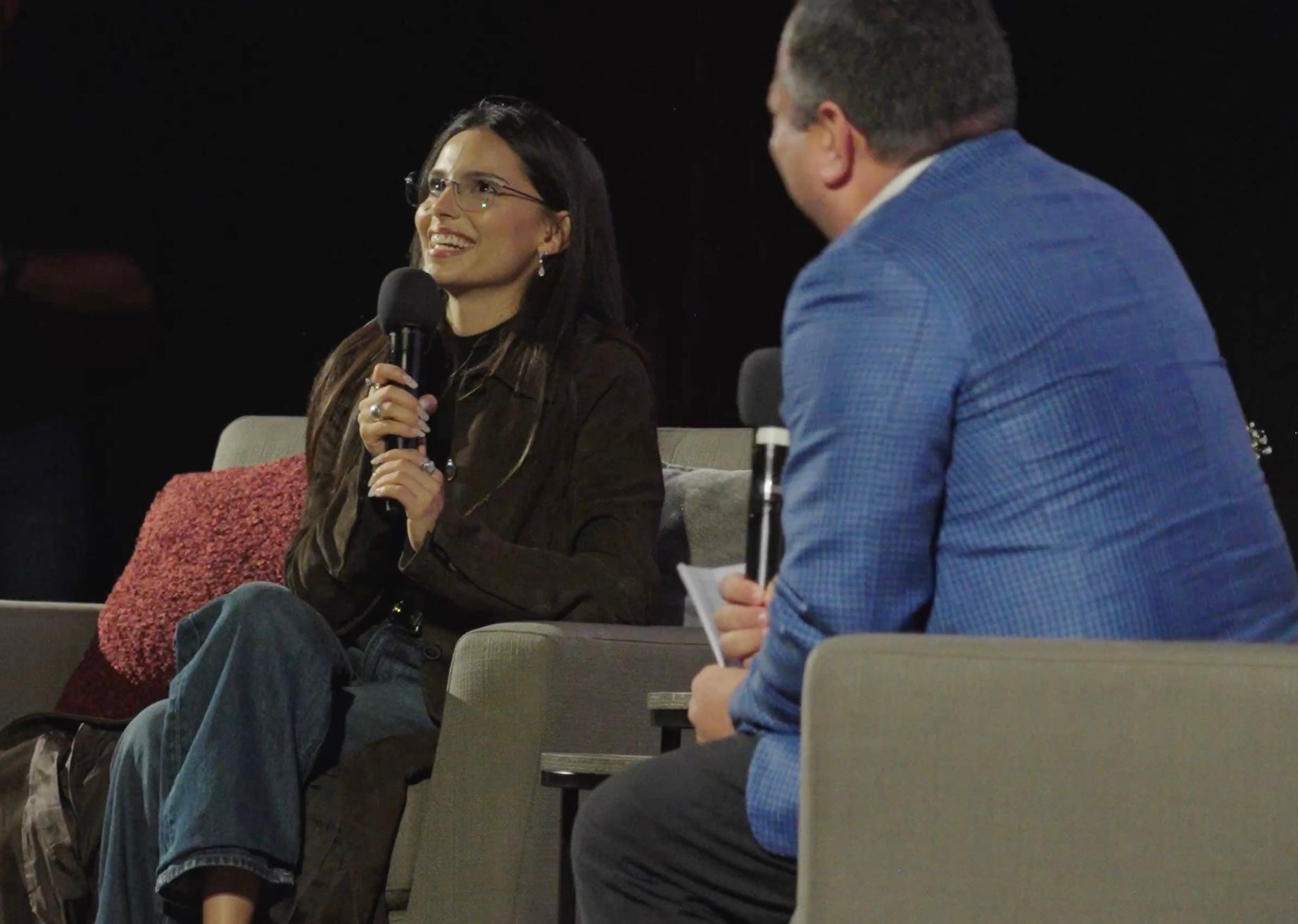
We use cookies.They keep VO running smoothly and help us improve it. Privacy policy