
 Ask ChatGPT

- Podcasts
- Awards Chatter
- Jessica Lange - 'Long Day's Journey Into Night' [LIVE]
Awards Chatter8 Nov 2026 · 1h 17m · 33 chapters
Jessica Lange - 'Long Day's Journey Into Night' [LIVE]
In short
Jessica Lange discusses her life and career in an awards-focused live interview at the Virginia Film Festival, centering on her stage-to-screen role as Mary Tyrone in the film adaptation of Long Day’s Journey Into Night.
Guest backgrounds
Jessica Lange is a Minnesota-born screen and stage actress with 50 years in performance. She has won two Oscars, three Emmys, and a Tony, and is among the very few to achieve acting’s “triple crown.” She previously played major roles in films including King Kong, Tootsie, Country, Crimes of the Heart, Music Box, Grey Gardens, and in TV including American Horror Story and Feud.
Key claims
Her childhood “outsider” feeling and imaginative reenactments helped her become fearless on camera. King Kong was dismissed critically and commercially, but it didn’t crush her; later champions (notably Bob Fosse) helped pivot her career. She says Long Day’s Journey Into Night is the most deeply meaningful role she’s played, and that getting a film version required years of financing/distribution setbacks.
Notable examples
Gone with the Wind death scenes; studying mime in Paris; first film audition for King Kong; Pauline Kael’s positive review; Time magazine featuring her; Fosse writing a part for her in All That Jazz; Francis Farmer in Francis; lip-syncing Patsy Cline’s voice in Country; Grey Gardens reigniting her enthusiasm; Ryan Murphy’s repertory approach in American Horror Story; Feud’s Hollywood-age theme; Mary Tyrone’s “old sorrows” and forgiveness.
Written by AI. May contain mistakes.
Chapters
2:19
Jessica's Early Life in Minnesota
Jessica Lange discusses her upbringing and the impact of frequent moves.
“Thank you all so much for such a wonderful reception, and thank you for coming out.”
3:20
The Impact of Constant Relocation
Lange reflects on how moving affected her identity and sense of belonging.
“Now, moving around a lot can be tough for a kid.”
5:19
The Birth of an Acting Passion
Jessica shares how her childhood and imagination sparked her interest in acting.
“Was it at one of those schools up through high school that you first sort of dabbled in acting?”
7:17
Adventures in Europe
Lange recounts her travels in Europe and experiences that shaped her path.
“scholarship, I believe, but you did not stay very long at college.”
8:12
Studying Mime in Paris
Jessica describes her time studying mime in Paris and how it influenced her acting.
“going to Paris for a few years, all over the place, end up, though, eventually back in New York.”
10:41
Returning to New York and Acting Opportunities
Lange discusses her return to New York and the start of her acting career.
“When I started thinking, hmm, perhaps there's not much future in this.”
12:37
The Casting Process for King Kong
Jessica shares her audition experience for King Kong and initial challenges faced.
“I read that you have said most of it was, quote, bullshit, close quote.”
14:00
Auditioning at MGM: A Dream Come True
Jessica Lange shares her first audition experience at MGM and the surprise of being offered a role.
“So I arrived, and they drove me to the studio to audition.”
16:40
Facing Dismissal and Public Perception
Lange discusses the initial negative reception of her performance and the impact it had on her.
“Like, how did you acclimate to having to now get your thrown in, not only into a movie, but a movie where you're not acting with anyone else, really?”
19:10
The Pressure of Fame and Recognition
She reflects on the conflicting feelings of being on the cover of Time Magazine amidst criticism.
“Pauline Kael actually did say something positive.”
Show all 33 chapters
21:40
Rebuilding Confidence: Fosse and All That Jazz
Lange explains how Bob Fosse believed in her talent, helping to revive her career.
“And Fosse was a great friend and really championed, I mean, he wrote that little part for me in All That Jazz.”
24:10
The Transformation with The Postman Always Rings Twice
Lange recounts the pivotal role in The Postman and its effect on her acting career.
“But then it didn't do well again, commercially, I should say.”
27:20
Embarking on the Journey of Frances Farmer
Lange discusses her experience portraying Frances Farmer and the influence of Kim Stanley.
“and I don't think there has ever been anyone better than Kim Stanley.”
28:07
From Frances Farmer to Tootsie: A Career Transition
Learn about Jessica Lange's transition from her intense role in Frances to the comedic Tootsie.
“to inspire me, to remind me what great acting was.”
29:16
The Impact of Tootsie on Lange's Career
Discover how Tootsie impacted Jessica Lange's career and why she considers it a pivotal film.
“can you avoid sort of elements of one bleeding into the other?”
30:41
Addressing the Farm Crisis: The Making of Country
Explore Jessica's motivation to create the film Country based on the farm crisis in America.
“But also I had the opportunity, again, of working with someone like Sidney Pollack, and it was a great, great, great experience.”
35:06
The Challenge of Playing Patsy Cline
Learn about the challenges Jessica faced while portraying Patsy Cline in Sweet Dreams.
“And it sounded like from what I read going back that, you know, it was, you were happy you were able to get that one made, but maybe not anxious to produce things you were also acting in after.”
37:19
Sisterhood in Crimes of the Heart
Jessica Lange reflects on the experience of filming Crimes of the Heart with fellow actresses.
“and I'd have them turn the volume up, blasting Patsy's voice.”
39:42
Working with Great Directors: Experiences on Set
Jessica shares her experiences working with talented directors and the thrill of filmmaking.
“we had a house next door where we were doing, that was our dressing rooms and makeup and all of that.”
42:00
The Thrill of Filmmaking in the Past
Jessica Lange discusses the unique energy and collaboration with directors during her early filmmaking days.
“And those were the days, I hate saying that because it does age me so, those were the days when we were still shooting film and there was no playback.”
43:20
Character Development and Backstory
Lange shares her approach to creating deep backstories for characters to enhance performance.
“it's not I keep saying it's not the same.”
45:31
Challenges of Broadway and Perseverance
She reflects on her early Broadway experiences and the resilience required to overcome initial failures.
“So, I mean, I think it's pretty interesting that you stuck with it.”
48:03
The Disappointment of Blue Sky's Release
Lange recounts the tumultuous journey of her Oscar-winning film Blue Sky and its delayed release.
“but, I mean, the fact that you do it and you did it first in 2000 in London, I guess reverse order there, then you do it on Broadway in 2016, and now we have the version that we're going to talk about in film.”
50:39
Revival of Passion with Grey Gardens
Lange discusses rediscovering her love for acting through her role in Grey Gardens.
“And I don't even remember how it finally came out.”
54:07
The Ryan Murphy Era and American Horror Story
Lange shares her experiences working with Ryan Murphy and the success of American Horror Story.
“Well, I guess one of the things that came out of that I don't think that was like where the person I'm about to mention fell in love with you.”
56:01
Exploring Psychological Characters
Jessica Lange discusses her initial appeal to larger-than-life characters and her experiences in a repertory company.
“sounded fascinating because it was going to be a psychological horror well that didn't actually ever...”
57:39
The Complexity of Joan Crawford
Lange reflects on portraying Joan Crawford and the complexities of her character amidst Hollywood's challenges.
“his favorite character of the four I played, the one from the first season, Constance.”
1:00:46
The Legacy of Mary Tyrone
Discussing her bond with the character Mary Tyrone and the challenges of adapting the play into a film.
“trying to hide it from her family members who are equally screwed up or similarly have issues.”
1:04:22
Challenges in Film Production
Lange shares the difficulties faced in producing the film version of 'Long Day's Journey Into Night'.
“Well, let me just preface all of this by saying, when you said difficult, I mean, we went way beyond difficult getting this film made.”
1:07:19
Family Perspectives on Fame
Lange discusses her family's understanding of her career and their reactions to her films.
“finally got everything finished, and then no distributor would take it.”
1:10:01
Jessica Lange Reflects on Her Children Understanding Her Career
Lange shares a personal anecdote about introducing her children to her work through the film 'Tootsie.'
“They weren't on the set with me all the time or anything like that.”
1:12:05
Acting Career Longevity and Challenges of Aging
Lange discusses her ongoing career and the concerns about aging out of roles in theatre.
“That was in 2024, just a couple of years ago.”
1:14:16
Closing Thoughts and Appreciation
Lange expresses gratitude for her career and reflects on a potential retirement.
“I wouldn't mind ending on Mary Tyrone, let me tell you that.”

Ask about this episode
Get the gist, explore an idea or ask about something said.
 Claude
On Awards Chatter, what are the key points of this episode?
Searching your listeningTranscript
Automatic transcript. May contain errors.
0:08Jessica Lange: Good afternoon. My name is Scott Feinberg. I'm the executive editor of awards coverage at The Hollywood Reporter and the host of our Awards Chatter podcast for which this conversation is being recorded. For those tuning in, I am coming to you from the Virginia Film Festival program of the University of Virginia in Charlottesville. And yeah, big round of applause. And I'd like to thank the Fest Artistic Director Ilya Tovis and Executive Director Jody Kilbasa for having me, having us. It's a privilege and pleasure to be back here for the second year in a row and to have the opportunity today to sit down with a legend.
0:46My guest has been a screen actress for 50 years, during which she has given unforgettable performances in projects such as The Postman Always Rings Twice, Francis, Tootsie, Country, Sweet Dreams, Crimes of the Heart, Music Box, Blue Sky, Grey Gardens, Feud, Betty and Joan, and several installments of American Horror Story. On stage, she has been equally great in productions of A Streetcar Named Desire, Mother Play, and especially Long Day's Journey into Night. Now, she has brought Mary Tyrone from the stage to the screen in a film that is playing here at the Fest and beyond, which you should not miss.
1:24One of only 24 people ever And one of only 10 living people Who have won the triple crown of acting At least one Oscar, Emmy, and Tony She has won two Oscars, three Emmys and a Tony She has been described by the Los Angeles Times As one of America's premier actresses The Chicago Tribune has said that she conjures up whiffs Of a Hollywood past Of Harlow and Stanwyck, Irene Dunn, and both Hepburns And film comment once declared of all the Soul Sisters who came into their own during the 70s and 80s, which is an interesting way, Soul Sisters, but okay. Of all of them, Winger, Spacek, Kleber, Keaton, she is the most fearless, the most physical, and a fiercely intelligent artist, one of the bravest and most naturally expressive actors who ever stepped in front of a camera, close quote.
2:16It's a great honor and privilege to speak with her today. Would you please join me in welcoming Jessica Lange?
2:33Thank you. Thank you. Thank you. Thank you. Thank you. Thank you. Thank you.
2:46Jessica Lange: Thank you all so much for such a wonderful reception, and thank you for coming out. Thank you for coming out. And I think at one time, at least, you lived in Charlottesville, right? Yes, that was already 30 years ago. But we lived here for almost 10 years. You had a farm just south of town. Fantastic. Well, over the next hour or so, I'd love to try to cover as much as I can of this incredible life and career that you've had. And so let's go back to the very beginning. Where were you born and raised, and what did your folks do for a living? I was born and raised in Minnesota. I mean, my father was a restless man.
3:31Jessica Lange: He did very many things. He was in the service. He was a schoolteacher. He ran a gas station. He had a Ford garage dealership. he was a traveling salesman so we moved on the whole every two years from one small town to another more remote smaller, bigger it was but I was in northern Minnesota so that's home for me I still go back there I have a cabin that is I still consider home even though I've lived all over the world by now, but that still is my home. Now, moving around a lot can be tough for a kid. It's interesting how many people who have become successful actors and actresses, that's been their experience.
4:31And I wonder, is that a coincidence, and how did it affect you? I read something about sort of Gone with the Wind being a comfort during all these moves.
4:41Jessica Lange: Well, I think what it does is it establishes you early on in life as being an outsider, because you're always the new girl in school, the new kid in school. You're always like never quite fitting in. You have no history with the place. And I think that has been a prevalent theme in my life. I've never felt like I belonged anywhere. And I hate to admit it, but I've moved my children time and time again. I guess what you do when you are raised that way is you're always looking for a home. You're looking for the place that finally feels, yes, this is my home. Was it at one of those schools up through high school that you first sort of dabbled in acting?
5:30When did that begin?
5:32Jessica Lange: Oof. My interest in acting came as a child. living in these remote places. The only kind of exposure I had to entertainment was watching old movies with my mother on TV at night, and I was fascinated with film, with acting, but didn't put it into those terms, really. It wasn't as though I started thinking about acting. I just knew that that life of the imagination, of the fantasy, was what got me through a lot of tough years in childhood. And I would find myself reenacting scenes that I had memorized from watching movies on TV. Like I could do Kathy's death scene with Heathcliff from Withering Heights.
6:29Jessica Lange: And I had no reservation about playing Olivier either. I could do that thing, you know, haunt me. And also, of course, my favorite probably was, I don't know why death scenes attracted me so much, but was Melanie's death scene with Scarlet from Gone with the Wind. These were like childhood fantasies. And there were other ones too, but those were the two big. And so I think what happens is you live in your imagination and somehow that lends itself in the long run to working in film or on stage being an actor. I mean, I think in some way it served me well. So when you graduated from high school, you received a scholarship to college for art scholarship, I believe, but you did not stay very long at college.
7:26Why was that?
7:27Jessica Lange: I met a really interesting group of people who were actually on their way to Europe to make a small documentary film. And they were a group of young photographers and were going to go to the south of Spain to do a documentary to film the flamenco gypsies on the, I don't know if you know, in the south of Spain there's the feria. the fairs, and it is kind of like a traveling circus in a way. And so we went down there and spent six months filming them, and I never went back to school. I think you talked about you ended up maybe, I think, with at least some of the same group, going to Paris for a few years, all over the place, end up, though, eventually back in New York.
8:22And what was your life like in New York pre a big ape entering the picture?
8:29Jessica Lange: Well, yes. I mean, we traveled around on that first tour of duty. We traveled the south of Spain, rode our motorcycles up through Spain into Paris, arrived in Paris in May of 1968, which is not unlike what is going on there now. I mean, we pulled into the city. All traffic had come to a halt because everybody just drove around the major, like Place de Concord and Arc de Triomphe and all of these places, and just parked their cars and got out. So the whole city had come to a standstill. And, you know, there were barricades on the street. All the cobblestones had been pulled up, the fires. I mean, it was, to me, I fell in love with Paris.
9:25Jessica Lange: I just, I don't know what that says about me, but chaos and revolution. But it was a thrilling, thrilling, thrilling time. So I determined that I would come back and live in Paris, which I did a couple years later. After that, we had gone back to New York City, which was, at that time, late 60s, the beginning of 1970, just wide open. It was a thrilling place to be, but I really wanted to be back in Paris. So I moved to Paris, and with the intention of studying mime. And I did, for years, studied with the old master, Etienne de Creux, who was, along with Jean-Louis Barrault, developed this extraordinary technique of what they called mime concrète.
10:22Jessica Lange: Very different from your imagination. What you imagine mime is, it's not Marcel Marceau. It was an extreme discipline, and it was thrilling to be in the presence of this man. So I studied mime with him. I was in Paris until 1974. When I started thinking, hmm, perhaps there's not much future in this. As much as I love it, I love him, and the discipline and everything else, I decided to move back to New York, which I did in 1975, not knowing what I was going to do. but the next kind of logical step from that discipline seemed to be, well, why don't I try acting classes? So I came back to New York.
11:19Jessica Lange: I was working in a pretty funky little bar down in the West Village as a waitress living in a fifth-floor walk-up and taking acting classes first with Herbert Berghoff at Berghoff Studios and then later with Warren Robertson, with Mira Rostova. And it was an exciting time. And I imagine my life would be first maybe, you know, doing like an off, off, off Broadway small part. And then just kind of gradually working my way through that circuit of New York and maybe someday, you know, being on Broadway. And then I got a call from an agent, a modeling agent, because they knew I was taking acting classes.
12:16Jessica Lange: Would I be interested in flying to Los Angeles and auditioning for a film? And I thought, well, geez, that's really a hard decision. I mean, I'm making$10 a night, you know, in tips at the lion's head. You know, a woman was stabbed outside my door. Should I go? So I said, yeah, let me go. I'll audition for this film. What is it? It happened to be King Kong.
12:56so just uh to remind folks this is Dino De Laurentiis making a uh his version of the 1933 right uh classic classic which had been I believe that was the umpire state building this was now the world trade center and it was this massive search for an actress to play the part that Faye Ray had played, there were all kinds of media hype, which was, I think, a DeLaRenta special, about how they discovered this actress. I read that you have said most of it was, quote, bullshit, close quote. So where...
13:36Jessica Lange: I don't remember what it was, but I'm sure it was bullshit. Well, supposedly he'd seen a modeling photo of you and said, that's our girl. But in fact, What was the casting process once you got to Los Angeles? Okay, so they flew me to Los Angeles, and I thought, oh, well, this is great because my sister's living on a sailboat just down by San Diego, and after I do this little turn of events, I'll go down and visit her. So I arrived, and they drove me to the studio to audition. Well, we happened to the sound stages where they were going to shoot the film and where we were doing the screen tests was MGM, which that was like a fantasy come true.
14:23Jessica Lange: MGM had always been my favorite studio from when I used to lie there on the couch with my mother watching old movies and I thought god damn, here I am at MGM I can't believe it and I went in and they basically said we're not interested in her They just took one look at me. I mean, granted, I had just moved back from Paris. I was really skinny. I had no eyebrows and, you know, the whole nine yards. They really did not see anything in me at all. And they were going to just send me back home, send me back to New York. And the agent there said, just run some film on her. You flew her out there. just run a, you know, just let her play a scene, run some film, see what you, so they said okay, and they'd left it to the second AD.
15:23Jessica Lange: I'm sure, I don't know if you all understand what that is, but it's, you know, going down the steps of the ladder. The second AD was going to run film and like, you know, do off-camera lines for me. Nobody else was interested in looking at me. So we did it and then pretty soon they said, well, why don't you just stay for a minute? And then the first AD came and then a little while later the director showed up and then a little while later Dino De Laurentiis came. And I kept doing these scenes for them, doing these scenes and then they said, okay, thanks. And I left and before I got home, they had called and offered me the part.
16:07Jessica Lange: Now, whatever bullshit Dino says about it, that was actually how it went down. I think we should also just establish, first of all, you'd seen the original version of the film? Oh, yeah, of course. Right? So, I mean, the part involved a lot of being pawed by an ape and screaming and all of that, but you had never acted before in front of cameras. It was my first audition. First audition, right. I guess green screen of some sort was... Yeah. Like, how did you acclimate to having to now get your thrown in, not only into a movie, but a movie where you're not acting with anyone else, really? Well, as my friend Chuck Grodin, who was in the film with me, said to me when we're, like, months into this, he said, you're really lucky that this is your first film because you don't know any better.
17:06Jessica Lange: He said, films aren't like this. This isn't, yeah, this isn't the experience. But that's what I did. Every day I'd show up, you know, I'd be in front of a green screen just acting by myself or in this big hydraulic hand that every once in a while we'd shut down for weeks at a time while they made necessary repairs. I guess I'm lucky in the sense that it didn't crush me to death. Right, right. Oh my gosh. But, you know, it was, again, because I didn't know any better, and I didn't realize that this was so far outside the realm of what filmmaking or acting really is, I just did it. I just did it.
17:57And I guess, you know, that harkens back to as a child living in your imagination, it served me well.
18:07Jessica Lange: Because whatever they asked, I just pretended. I didn't know any better. Well, so after this very long production and promotional period, I believe, and all of that, movie comes out. I'm sure at the time it wasn't something you could laugh about. Well, maybe now it is, but like this was not kindly received. And you and I mean, you said lucky at your first or Chuck Charles Groves said it was lucky. A lot of people thought it might be your last film. How did that affect you? Was this something that you could kind of shrug off or did it did it hit you hard? Well, it was a combination because, yeah, there were opposing forces.
18:49Jessica Lange: First of all, I was completely written off. as was the film, as being this kind of disaster. I mean, it had been a very expensive film to make, and it was, you know, just disregarded. My performance was dismissed by, like, a cross, except... Pauline Kael. Except for God bless her. Pauline Kael actually did say something positive. But that was it. Yet at the same time, there was so much press about it, and this is something that like stays in my memory. I was on my way home back to Minnesota after the filming was done and but we filmed almost right up until the release of the film right I think the film came out right around Christmas time.
19:38Jessica Lange: We were still shooting they were just piecing things in as they needed them and I got on an airplane and there was a man sitting that I walked past who was reading Time Magazine. And I looked at the cover was me sitting in this hand. That was the cover of Time Magazine. And it just about killed me. I think I actually started to cry because I thought this is like now, this is something I never bargained for. Your life is suddenly open to like the world to you know, there's no And in it so it was a double-edged sword the the idea that you were dismissed, but also you escaped any kind of fame because They were done with you the you know, you weren't going anywhere from here and you didn't for three years appear in another film I think you literally went back to acting classes how though so I don't know did you maybe you thought it was it was that part of your life was over but the the thing that it seems like started to there were a couple of like things I have to bring up because obviously in an incredible way I don't know how many people have ever been so dismissed who have then so turned it around and the you know everybody here heard the intro all that happened since King Kong but that was also 50 years right right But I mean, if you told anyone who was dismissing you and King Kong that 50 years later, you'd be sitting somewhere talking about this incredible career, I don't think most people would have taken that bet.
21:31And so I guess it started to turn around with started. I know this is not the main thing, but with Bob Fosse and all that jazz.
21:42Jessica Lange: Yeah, and I think, you know, part that was, because there were a few people, I mean, Pauline Kael won, but there were a few people who saw something in that performance who actually believed in me and that I could maybe do this. And Fosse was a great friend and really championed, I mean, he wrote that little part for me in All That Jazz. He insisted that we shoot it, even though they were trying to shut the production down because he was over schedule, over budget. And he just kept fighting. And so, I mean, I have great, I mean, whether or not this would have happened, I love Bobby. And I mean, he was a wonderful friend and an extraordinary talent.
22:32Jessica Lange: I was so fortunate to have the opportunity to know him and work with him. But Fosse, yeah. I mean, he actually believed in me in some, you know, capacity. And so that was the next. That was the next one. And then there was another Bob with Bob Rafelson with The Postman Always Rings Twice. I think 128 actresses I read went out for that one. Really? Yeah. And you were chosen. This is obviously a remake of the classic that Lana Turner had done. This time it's you and Jack Nicholson. and the way you've talked about it was that all that jazz was was great but you were only there at the very end this one is the one that kind of made you fall back in love with acting yeah well because with all that jazz I mean that was a symbolic part it wasn't you know the angel of death it says more about Fosse I think that his idea of the angel of death what's waiting for him as a young blonde.
23:38Jessica Lange: But, yeah, working with Jack and Bob on that film was what turned everything around for me. And, I mean, it was, yeah, I guess, in a way, the first showcase where you could really, it wasn't just symbolic because King Kong was screaming and all that jazz was symbolic, as you say. But here, I mean, she's mysterious and dark and in one particular sequence, extremely sexual and all of this stuff that got a lot of provoked a lot of conversation. But then it didn't do well again, commercially, I should say. And yet it's still the way you've talked about it changed everything for you in terms of what came after.
24:26Jessica Lange: Yes, and partly that was because the man who was editing King Kong, editing all that, Postman. Yeah, yeah, sure. Where are we? Okay. The man who was editing Postman was a man by the name of Graham Clifford. and he was, unbeknownst to me at the time, developing a script story that he wanted to direct based on the life of Francis Farmer. And he was, of course, watching my dailies every day and he determined that he wanted me to play that part. I didn't know that while we were shooting postman, but oddly enough, one of my acting teachers years before in New York had taken me aside one day and said, do you know, have you ever heard of Francis Farmer?
25:26Jessica Lange: And I said, no. And he said, okay, what I want you to do is get this book, her biography, autobiography, will there really be a morning? Read it and find a scene that you want to bring, because we were doing scene study, bring a scene in to play. So I did. I read the book. I mean, if you're familiar with her story, I mean, it's a great tragedy. And the relationship with the mother, of course, is the most amazing, interesting part of it. So tragic. But I found a scene with Francis and Lillian and brought it into scene study class, and we did it. And I never thought about it again. And then years later, after we finished shooting Postman, Graham approached me and asked me if I would do the film.
26:29Jessica Lange: So I said, of course, I mean, Francis Farmer, wow. And he showed me the script. Those were the days when you could get films like that made. Things have changed. But anyhow, we made the film, and it was the most extraordinary experience that I've ever had as an actor, probably to this day in a way, because it opened up a world to me that had not existed before. And the work was thrilling, and what made it most thrilling was I was in the company in the presence of the genius of Kim Stanley, who always almost brings me to tears when I talk about her because she was, to my mind, the consummate actor.
27:22Jessica Lange: and I don't think there has ever been anyone better than Kim Stanley. She too had a very troubled, tragic life and there are only a few films of hers but I have to say, if you've never seen The Goddess, oh my God, watch it because there is nothing more brilliant on screen, on film than her performance in that. I used to, even after we had worked together and everything, years, years, years later, I would watch The Goddess before I would start filming something, before I'd start shooting, just to inspire me, to remind me what great acting was. And to this day, I've never seen anything more powerful.
28:18Jessica Lange: That's amazing, yeah. Well, as Frances Farmer, you again got to do things that you had never done before. I mean, people saw this fire and passion and rage that obviously she experienced. It was also one of a number of films and parts, I guess you could argue, through Mary Tyrone, where some form of mental troubles, you know, afflicted a character you were playing. And, you know, a lot to take on. But what's kind of incredible is that Francis came out in the same year as another film that couldn't have been any more different, and that is Tootsie. And so how, I believe, while you were making Francis, did you wind up hearing about and being convinced to do Tootsie?
29:11and the fact that you essentially, I believe, went from one right into the other, can you avoid sort of elements of one bleeding into the other? Well, when, again, I mean, Sidney Pollack,
29:27Jessica Lange: who is just the most extraordinary director, person, sent me the script. I read it, and I had just finished shooting Francis and having that experience, which was life-changing for me. And I read the script of Tootsie and I thought, no, no, I don't think so. I mean, I'm not going to go from playing Francis Farmer to this kind of, I don't know, frilly comedy. But he kept after me. He kept after me and Dustin and they all kept coming, you know, trying to convince me to do this. And finally, and I don't remember what the determination was, but I said yes to it. I think maybe because they were shooting in New York and I could go back to New York home.
30:19Jessica Lange: But I decided to do Tootsie, which was probably the best career-wise decision I ever made. Because to my mind, of all the films that I've done, Tootsie is the classic film. I mean, it's on the AFI list of the 100 best films. I think that's the only one of my films that's on there. But also I had the opportunity, again, of working with someone like Sidney Pollack, and it was a great, great, great experience. And working with Dustin, who was crazy. Well, I was going to say, I think the way you've talked about it, you couldn't have had two people who work in more different ways than you and he, and yet it was obviously the results speak for themselves.
31:07Jessica Lange: Yeah, and I credit Sidney with that because he really molded that performance. I mean, I didn't know what I was doing, a comedy, but through his direction and then his editing, he made something viable. And I think it probably, the fact that you go from one of those into the other and they both come out in the same year probably really underscored to people just what range you really have and they both end up with Oscar nominations both performances which had only happened where somebody was nominated twice in one year three times prior Faye Bainter, Teresa Wright, and Barry Fitzgerald not in 38 years prior to you doing that.
31:55You won for Tootsie. Did that mean a lot to you? And does, it seems like coming off of an Oscar is when an actor or actress has the most leverage over what they want, you know, most control over what they want to do. And it seems like you did choose to use that to get something done that probably wouldn't have gotten done.
32:19Jessica Lange: Yeah. Okay, so I followed up Francis and Tootsie in this kind of like golden year with a project that, well, what can I say? I was in Los Angeles. I picked up the LA Times, and on the front page of the LA Times, there was a photograph of a farm auction in Iowa. there was a picture of like the the family of the farm that was being auctioned this is the early 80s and this is the whole farm crisis that swept across rural America and really wiped out farming as we had known it until then family farms century farms you know individual farmers that was not corporate farming yet. It was not agribusiness.
33:18And this photograph touched me so deeply because
33:24Jessica Lange: there was the mother of the farmer, there was the wife of the farmer, and the farmer, and then surrounded by all the neighbors and everybody trying to disrupt the auction, which happened a lot then. They would go and they would scream and they would shout and they'd try to... But in this photograph, the wife and the mother were screaming like at the auctioneer. The farmer, the man, was absolutely like destroyed. He was like, you know, I mean, so deeply crushed, but not enraged in that way, but just profoundly destroyed. And the photograph touched me so much that I called up my agent and said, I want to film this.
34:20Jessica Lange: I want to do a film about this, what's happening across America now. and again I hearken back to the fact that this could never happen now I went to like a I don't know it was touchstone or I can't remember and without an outline without a writer with no cast with nothing no director nothing and just said I want to make a movie about farmers losing their farms. And they said, okay.
34:57And another Oscar nomination, by the way, this is Country, which was also your first experience as a producer. Yes. And it sounded like from what I read going back that, you know, it was, you were happy you were able to get that one made, but maybe not anxious to produce things you were also acting in after.
35:17Jessica Lange: Well, I think, you know, it's, again, that was because it was so important to me to do this film. That took precedent over everything. But being a producer was not anything that I wanted to continue with. So the same producer who had made Coal Miner's Daughter, for which Sissy Spacek won an Oscar, comes, I guess, to you along with Carol Rice and says, we want to do a film about Patsy Cline, country singer, who you have described as, quote, the character most unfamiliar to me of any I've played, close quote. Just why was that and what made you decide to do it anyway? Well, this was one of those scripts that just arrived that I hadn't, you know, been prepared for anything.
36:13Jessica Lange: I read it and it was just, whoa, I want to do this. This is a great story. And the idea of working with Carol Rice, you know, thrilling. The only problem was I can't sing.
36:31Jessica Lange: but I just said from the get-go yeah I want to play this part but we're going to have to use Patsy's voice which I mean why wouldn't you use Patsy's voice if you had the choice and later when I was working rehearsing learning the songs I worked with her original producer down in Nashville Owen Bradley one of the great gentlemen I've ever come across in life, and he was really helpful to me, but he took me aside and he said, you know, Patsy had operatic range, and that right there convinced me, well, we'll be using that operatic range, because I've got the range of about three notes, So I worked with him on this, and it was so extraordinary doing this, because we would go into the rehearsal studio, and then later on the set, sometimes at the Ryman Auditorium, the old Grand Ole Opry, and all the different places where we were recording Patsy's songs.
37:41Jessica Lange: and I'd have them turn the volume up, blasting Patsy's voice. And then I could actually, because of the lip syncing, I had to learn it perfectly. I could sing at full volume, but nobody could hear me. But it would also feel as though Patsy's voice was moving through me And it was the most exhilarating, thrilling experience to have a voice like that, just like moving through your body, every nerve, every muscle. And so that's how we did it. I forgot the question. No, that's great. That was great. That was great. I mean, it's just this incredible run where you were working a lot. I mean, as we said, Tootsie and Francis are in 82.
38:3884 is Country, 85 is Sweet Dreams, and then in 86 is Crimes of the Heart, where it's just three, a movie built around three Oscar-winning actresses as sisters. Even today, unfortunately, I think it's rare that you would have a movie built around three actresses without an equally prominent male part. but in this case, you, Sissy Spacek, and Diane Keaton. Adaptation of a Pulitzer-winning play, was it kind of particularly different or enjoyable to be making a film with primarily other actresses?
39:14Jessica Lange: Oh, yeah. I mean, yeah, working with Sissy and Diane, it was great. I mean, we were on location in North Carolina. You know, we had a great supporting cast. Sam, we had just had our first child together and Hannah was only a couple months old. Sissy had a new baby. So we were just, you know, running off set. I would run over to, we had a house next door where we were doing, that was our dressing rooms and makeup and all of that. run over there and nurse Hannah for a while, run back on set. It was a wonderful, wonderful experience doing that film. It's a beautiful play. If you don't know the play and you ever get a chance to see it, you should, because Beth Henley wrote an extraordinary piece of work.
40:09Jessica Lange: Yeah. Another one which I know some people argue even more so than Francis or some others might be just as up there as great a film performance as you've given is in Music Box, which is Kostogovar's directing and you're playing the daughter slash attorney of a man who's accused of war crimes having allegedly been a Nazi decades earlier. I guess it was sort of inspired by that John Demjanik or however you pronounce it. Demjanik. Demjanik. case. In this one, I guess it's funny when you go back and read the coverage and that, I guess a concern was that you did not look very much like yourself in this one.
40:55That was very deglamorized and different hair and all of that, but just such a powerful one. And I know that you've really talked about one of the great experiences with a filmmaker. It was to have, to work with Cus Garas, who, of course, is Z and missing and so many. So what made him so special to work with?
41:19Jessica Lange: First of all, I think his intelligence, his experience. It was just a joy. And his kindness, I remember that more than anything, is how incredibly kind he was and took care of us, took care of me during that time filming that. We shot in Chicago. We traveled to Budapest for location shots. And I mean, everything, you know, you just wanted to come to the set in the morning and like do the best you possibly could to somehow please him. I don't even know how to explain it. And those were the days, I hate saying that because it does age me so, those were the days when we were still shooting film and there was no playback.
42:19Jessica Lange: Okay, so up until now, all these experiences with these great directors that I had the opportunity to work with, they are there on set with you standing next to the camera and that exchange of energy that synergy that alchemy that happens when you've got the camera here the cinematographers there someone like Sven Nyquist and then you've got your director like standing there next to the lens watching you, it's thrilling. It's thrilling. Now directors sit in a trailer. I don't even know if they're in town. Who knows? They could be somewhere else. You know, send messages through the AD. But at that time, there was an exchange of energy that was so exciting because you were doing it for them.
43:18Jessica Lange: They were willing you do it. I mean, it was it's not I keep saying it's not the same. No, it's true. That's good insight. We don't, how many people can offer that perspective? But I also think this might have been an example of where you can really put not just a performance but almost in a way write the character as well because you've said there wasn't a ton on the page for that one and yet a trick I guess that you've not a trick sounds like it's a bad thing but like something you you apparently do is sometimes you'll think of something or backstory or you know a relationship or whatever of the character that is never even addressed in the story there's nobody has any reason to know or care but you know or care and it layer so do you remember as that being one where that was sort of helpful?
44:13Jessica Lange: Yeah, oftentimes I would write an entire history, oftentimes keep a journal as though, you know, this is what, so that when I came into it, I had this sense of where I was coming from. It wasn't just being dropped into a situation. So that was a practice that I did all the time. I would write an entire notebook, a history of this character from, you know, early years all the way up until where we meet her at the moment the film starts. I just got a kick out of like, you know, in this case, it's this, I think the first kind of professional woman you'd played. And one of the things you said at the time was that you just imagined, because mostly we're just seeing her at work or with her father that you know on the side she's involved with a guy at her gym who's just a lunkhead but she was into him and but no there's no reason we don't even know anything about this in the movie but I mean it can affect little things that anyway I guess it's one of probably many secrets of how how you uh make these so interesting but I'm not gonna ask you to stop on every one of these because we would be here for four hours but i do want to just note at least you're with scorsese and cape fear and de niro um another remake that was that was interesting you go and i think this one maybe we should as a group address you you made your broadway debut in a street car named desire as blanche dubois and the initial we could i you made that face there because I think the initial response to the Broadway production was not great but it's incredible to see and I think an interesting thing to ask you about is how a lot of people might have been crushed by that and never gone near it again or whatever but you then do a film a tv movie version three years later and then go do it back on stage again four years after doing it on Broadway, now in London, and by the time you did it in London, it was like the greatest triumph there could have been.
46:27So, I mean, I think it's pretty interesting that you stuck with it.
46:33Jessica Lange: Well, as the I Ching advises, perseverance furthers, so, and I am stubborn, I know that. But there again, I've done three roles that I've reprised over, Blanche being the first one. The Broadway production, which was a disaster. The film, which was well received. And then the London production, which was well received. So, But also, when I did the Broadway production, I mean, I needed help. You know, I really needed help. I mean, I hadn't been on stage before. I don't know what the hell I was thinking. I'm going to do my first stage role, Blanche Dubois. Come on, I mean, what was I thinking? But I didn't get the help I needed, just somebody to try to teach me, to show me what's inside how you, in a theater, in a, you know, 600, 800-seat theater, wide proscenium stage, how do you project that out?
47:42Jessica Lange: You know, because up until then, it was all camera work. I didn't have that person, which would have been a director, but, you know, What do I know? Anyhow. But, I mean, in a way, also a preview of what we're coming to with Long Day's Journey, where not that there was ever a not well-received version of that with you, but, I mean, the fact that you do it and you did it first in 2000 in London, I guess reverse order there, then you do it on Broadway in 2016, and now we have the version that we're going to talk about in film. But first, a few other things. you are one of pretty small and incredible club of people who have won not one but two Oscars for acting and the other one came for a movie called Blue Sky and in the case of Blue Sky this is probably the most odds defying thing that ever happened because I'm just going to list a few things and then ask you to explain how the hell this was even possible okay so first of all This woman who you're playing is kind of a manic depressive, attention crazy, wild wife of an uptight military guy played by Tommy Lee Jones, directed by Tony Richardson.
48:59Supposed to be released in 1991. It was done and supposed to be released. The distributor, Orion, then essentially, not essentially, went into bankruptcy. And the movie was in no man's land for years. so three years later the movie escapes not forget about release escapes the director has now died you've moved on with your life everyone's moved on with their life the movie comes out and you win the best actress oscar am i did i leave anything out is isn't that is that crazy that's about it
49:37Jessica Lange: No, it was. It was a crazy, crazy, crazy situation. Again, I loved that character. I loved playing people on the edge, slightly, on the edge of madness. And that character was a great role. Working with Tommy Lee Jones, who's one of my favorite actors, was the best. I love him. and Tony Richardson, yeah, the one sad part of this story was he had died before the film ever came out to see how it was received. I mean, that was a terrible misfortune, but doing it was, it was great, and we finished, we wrapped, the film was finished, edited, all post-production done, and Orion went bankrupt and it literally sat, the reels sat in a bank vault as collateral for three years.
50:45Jessica Lange: And I don't even remember how it finally came out. I mean, did you sort of just give up? Well, I guess had you felt before all the drama that this had gone really well, that you were very happy with what you'd done? Because that would probably make it... Even harder? Yeah. Yes, of course. I mean, because again, you know, the script was great, the character was wild, and I mean, the kind of character I love to play that had no boundaries, no limits. Tommy Lee was brilliant, as always, and Tony Richardson was an extraordinary director. So yes, the fact that it just came to an absolute abrupt standstill with no future at all, it was extremely disappointing.
51:36Well, luckily.
51:37Jessica Lange: Which is going to bring us to the next one. Well, actually, which one are you alluding to? Long Day's Journey. Well, almost there, almost there. But you gave us too much good material. It's your fault. No, I just didn't know if you were going to draw parallels between. No, no, maybe I should. I'm going to have to think about that. But no, so what's interesting is the way that you've kind of described the next several years. Because I don't think anyone was standing there saying, like, what's going on with Jessica Ling? But you yourself. I was. You were, right? And there were moments over the next few years of kind of really good things.
52:24There was Rob Roy, there were Titus, Big Fish, Broken Flowers, where, you know, you might be, do excellent work or be the most interesting thing in something or whatever. But the way you've talked about it was, quote, it wasn't exciting anymore, close quote. And I guess, I wonder if you can figure out what was going on and then why it was that Grey Gardens pulled you out of that.
52:53Jessica Lange: Yeah, there seemed to be a stretch where, and some of these films that you've named, you know, were, but they just didn't live up to like the, those first 10 years or something. And I also think it had to do with, you know, the children and family and not wanting to work and just wanting to be home. So that work felt like a chore in a way. But it was a disappointing stretch of time. I didn't, I don't know. I mean, even though I'd get excited about something like playing in Titus and working with Anthony Hopkins and a great cast and all of that, somehow it just didn't. And I think I'd lost my enthusiasm for filmmaking and for acting during that stretch of time.
53:53Jessica Lange: and then Grey Gardens came my way and suddenly something came back alive and I thought, oh yeah, this is what I love about it. This is what makes it exciting and thrilling and that turned everything around really. Well, I guess one of the things that came out of that I don't think that was like where the person I'm about to mention fell in love with you. I think that goes back a long way, even further than that. But like shortly after that was the beginning of the Ryan Murphy period, right, where he was wanting you for for everything for years and years. That includes four, the first four seasons or first four installments of American Horror Story, Murder House in 2011, Asylum 2012 into 2013, Coven 2013 into 2014, and the one that I think you've said was your favorite of the lot, Freak Show, 2014 to 2015.
54:50You also had guest appearance in Apocalypse 2018. You're back now with the new one, which we can close in a bit on. But I mean, with this, it seems like he was somebody that worshipped you and built this sort of stock company that you were at the center of, but also Kathy Bates, Sarah Paulson, Evan Peters, Angela Bassett, on and on and on. you'd done sort of mini series and things before but series of this length where each installment you're playing kind of an off-the-wall character just what can you describe what what that period
55:33Jessica Lange: of your life was like well again it came out of nowhere uh i was just up at my farm upstate new York and the phone rang and you know Ryan Murphy and I'm so out of touch with anything current that I had no idea who it was even though I mean he had done Glee and but he started telling me this idea that he had and it sounded it's sounded fascinating because it was going to be a psychological horror well that didn't actually ever... I think it would move beyond psychological. But the idea of playing these bigger-than-life characters, which suddenly appealed to me, because there are no boundaries, no limits.
56:22Jessica Lange: You could just, again, rely on your imagination to create whatever you wanted. The scripts were good. We had wonderful writers, wonderful directors, and we put together a repertory company and it really was. It was like a repertory company. We just moved from one season to another playing different parts but a group of actors who knew each other well and who understood the process. So that part, those first four years were really, they were big and they were fun and they were crazy and wild and I never had to do any of the real gory stuff which was part of the deal, so that was good. Yeah, we did those four seasons, and then I thought, well, I've done it.
57:13Jessica Lange: That's enough. I came back in, I guess it was season eight for one scene reprising the role that I had first played. And then this time around, again, you know, that call from Ryan and he wants to do the final season, which I guess is already not true. The final season of American Horror Story and bring back my character, which I think was maybe his favorite character of the four I played, the one from the first season, Constance. And I said, yeah, I'll do it, but I want to bring back all four characters because I want to be able to revisit all four of them. And that's kind of how that happened.
58:00And then was he also, he was kind of centrally involved with Feud, right? Betty and Joan, which you were so great with Susan Sarandon as Crawford and Davis. I don't want to gloss over that because that was unbelievable.
58:14Jessica Lange: I still think that's the best thing he's ever done, but I don't know if he would agree with me on it. But that was a really beautifully written, constructed, directed piece of work. And acted. I mean, you two were, that's, you just, it felt like you were so deep into this character who, you know, people know, you mentioned growing up on the MGM movies and all that, but Joan Crawford was a complicated character. Yes, I researched her extensively, and believe me, there are a lot of books written about her. She had a difficult, terrible childhood in some small town in Texas, and I grew to have this great admiration and respect for her, although she was never my favorite actor of that time, but what she did with where she came from, And it was just this sheer will and bravery and, again, this perseverance and this toughness that I fell in love with her.
59:27Jessica Lange: I really just felt like, oh, my God. She came from this terrible situation, this extreme adversity, abuse, and horrible childhood, and yet forced herself to the top and was one of the great stars of that period. If you haven't seen this, I guess FX stuff is on Disney +, so make sure you do. It's really underappreciated. And it was a great theme because it really dealt with that Hollywood dilemma, especially for women. When you are of a certain age, you're dispensable. There's no, it's not like the English system, you know, where they go on to play the old queens forever. And I don't mean those kind of queens.
1:00:18I mean the real monarchy.
1:00:21Jessica Lange: They have careers that go from playing Elizabeth and, you know, whoever. But the theme that was in this feud really dealt with what happens to women of a certain age in Hollywood. Okay, so Mary Tyrone, woman just back from a sanatorium, still secretly kind of grappling with addiction to morphine, trying to hide it from her family members who are equally screwed up or similarly have issues. I should, sorry, don't, shouldn't be dismissive. 1912, this is a lot of people think the great American play, Death of a Salesman. These are up there, all in the top, top, top tier. I wonder when you first saw it, experienced it, fell in love with it.
1:01:12But we know that in terms of performing it, in 2000 in London, you did it, became the first American ever to receive an Olivier Award nomination, generally kept to the locals. That was 2016 years later. I had the great privilege of seeing you do it on Broadway. Incredible. Won a Tony. But you seem to not have ever been able to shake that part. And I think you've literally said it's the one that, of all the characters you've played on stage and screen, the one that touched you the most deeply. So just that personal history with it, if you could talk about, and why that character has haunted you so much.
1:01:57Jessica Lange: Playing Mary Tyrone is like being given this gift from the gods. It is, I think, the most extraordinary part ever written. I don't know how, without sounding kind of wildly, but first of all, Eugene O 'Neill's play is written from a place of such depth and such, as he says in his dedication to his wife Carlotta, a play of old sorrows. And he wrote it in the, I think it was the late 40s. A play of old sorrows written in tears and blood with great pity and understanding and forgiveness for all four haunted Tyrones. He was writing from such a depth, such a place of truth that it comes through in every word of that play.
1:03:10Jessica Lange: And I do think it's the greatest American play ever written. I think it touches on things that are so profound and so rooted in the human experience. and to get an opportunity to play this part. And I say this with not being glib or anything. I could play this part till the end of my life and never feel as though you've come to the end of it, that there's always something more to explore. And that's the genius of O 'Neill. That is what... He's writing about his mother in a way that's so full of, like he says, pity and forgiveness and understanding that it's endless what you can do with that part.
1:04:04Jessica Lange: And when I say I love Mary Tyrone, I truly mean it. I love her. Well, and we can tell that's true because you had to fight really hard to have this film version come to fruition. it's been years in the making you and Jonathan Kent who had directed you in the Broadway version right now directs as his film debut the film version David Lindsay a bear had to kind of trim the oh yeah material a bit to make it for the screen it's not been easy right I mean just the financing coming together and falling through and coming together and all of that why was it important to you, though, to have a film version, first, I believe, since the Katherine Hepburn one, and for you, how different was it to do it for the screen than for the stage?
1:04:59Jessica Lange: Well, let me just preface all of this by saying, when you said difficult, I mean, we went way beyond difficult getting this film made. When we finally, six years after we did the Broadway production, Jonathan called and said, we've got the money to do the film. The film was going to be done in Ireland because of cost. So we recast because the original, no one in the Broadway production was available to do. So we recast, had a great cast, Ed Harris, Ben Foster, Colin Morgan. And we all went to Ireland. We were rehearsing for a couple weeks, as though it was the play, and went for our first day of shooting at this extraordinary set that they built on the cliffs over the Irish Sea, doubling for Connecticut in 1912.
1:06:04And it was
1:06:05Jessica Lange: magical. Finally, we were going to film this. It was absolutely magical. We shot one day, came back for our second day of principal shooting. The producer walked on set and said, we're shutting down. We're not going to make this film. The financing fell out. Everybody go home. And that was how we started. Nobody went home. We were there for three weeks. Everybody, like desperate and crazed trying to find somebody who could give us money to finish filming this. Finally, through Ben Foster's people, they got in touch with a producer that I had worked with in London three times, and that was the amazing Bill Kenwright, a stage theater producer, and he agreed to give us the money, enough money, and this was not a big budget to finish filming.
1:07:08Jessica Lange: So we actually did. We got our film made, and then it sat for four more years. We ran out of money for post-production, finally got everything finished, and then no distributor would take it. This makes big sky sound easy. You know, right? Crazy. Yeah, so it was... A blue sky, I mean. Yes, yeah. So that was the story of trying to get this made. Now the film is made, but except for, like, you know, film festivals and special screenings, it's not in theaters. There's no advertising budget. There's nothing. How can we spread the word about this? is there a way can people get it VOD or any of that stuff like how do they see it well it's not streaming of course because we don't have you know a Netflix or any of these others so it it's and Ed is on stage in New York and I'm the only one like out there trying to convince people to come see this film if you get an opportunity because it's it's really I think beautifully done.
1:08:24Yeah, it is. And I guess then, you know, for all the faults of social media, one thing people can do is spread the word. So I think, you know, see it here and hopefully do that and more festivals and people will want to see it. But it's really amazing that you've stuck with it. And it is totally worth people's time and effort to see. I would like to close with just a few very quick, like, kind of big picture things. You mentioned earlier that, you know, having kids, I guess, in the 80s into the, were they all in the 80s, but then raising them in the 90s and all that, they now have kids too. And I wonder what did the children and later the grandchildren of Jessica Ling make of seeing the movies or, you know, the screen work, at least, of Jessica Ling?
1:09:18Jessica Lange: Well, the kids grew up basically on film sets. So they were aware of, because we'd go off on location and of course, you know, we were like a band of gypsies, bring the dogs, bring the, you know. So that, they were aware of what I did. The granddaughters, I have three granddaughters, two of them are in their 20s, 22 and 20. I now have a new one who's just two, so I get to start over again, which is fabulous. But when my older two granddaughters were young, they had no idea who I was or what I did. They weren't on the set with me all the time or anything like that. And when we'd be on the streets of New York or whatever and somebody would approach me.
1:10:12Jessica Lange: They'd always say, how do they know who you are? Why is he talking to you? And I never wanted to say, well, I make movies. I mean, that sounded really weird. So one time we were at home and I was channel surfing. I was with them. They were maybe four or six or five and seven, something like that. And came upon Tootsie was, yeah, on TV. And I thought, well, this is the perfect chance. Now they'll understand what I do. We'll watch the movie. So we watched and we sat there together and they were like watching and you know there were scenes with me and then there were scenes with me and Dustin and Dustin is Dorothy with that horrible wig and those big glasses you know in drag and that silly little dress and but there was one really long scene of us together and I thought okay now they're going to ask they're going to say ma 'am is that they call me ma 'am Is that you?
1:11:27Jessica Lange: And then I can explain to them. So we sat there and we watched and watched and watched and they never said anything. And finally I said, girls, girls, that's me. and there was a silence and they said which one
1:11:54i thought that's so perfect that's great last question uh that's great how do you follow that The last, you know, few years at a time where, you know, you mentioned we're talking about Joan Crawford and Betty Davis and how actresses at a certain point in Hollywood have often been cast aside and whatever. I mean, you have been doing some. It's never not been great. I mean, the great Lillian Hall. That was in 2024, just a couple of years ago. mother play on Broadway the first time I think you were working with a a living playwright in an original production another Tony nomination obviously all the long days journey stuff we're talking about and more uh back with Ryan Murphy and we could go on and on so that's obviously not been the case as far as one can see from the outside with you you are still doing great stuff.
1:12:55And yet, I've heard something that I'm very concerned about, which is that you have said you have thought about retire. Tell us it isn't so. Well, no, because,
1:13:13Jessica Lange: you know, oftentimes people will say to me, I mean, after I had that chance to do mother play, which was great because it was an original script. It was an original production. It wasn't a revival. It was brand new. And that was to originate a part on stage. I'd never done that before. That was great. So then after, you know, people would say to me, well, what do you want to do? What play would you like to do? And the truth is I can't come up with an age-appropriate play because, I mean, things that I had always wanted to do, you know, like Hannah Jelks in Night of the Iguana. She's traveling with her grandfather.
1:13:55Jessica Lange: I mean, my grandfather would have to be 130 years old or something. So you do, you outage. You age out of a lot of parts. And I think that's just, you know, that's just the nature of things. and so maybe I am coming to an end. I wouldn't mind ending on Mary Tyrone, let me tell you that. If that was a way to go out, I would embrace that because there's no greater part I'm ever going to play than that. Well, I hope it is not the last, but as you say, if it is, pretty incredible. And thank you for all the great work over so many years and thank you for coming here and doing this. Really appreciate it.
1:14:40I'll be up all of us. Thank you all for coming.
1:14:45Jessica Lange: I appreciate it. Thank you.
1:15:04Thanks for listening to Awards Chatter. We really appreciate it and would really appreciate you taking just a minute more to subscribe to the podcast and to leave us a rating and review on your podcast app and to follow us on Twitter and Instagram where our handle is at awards chatter. On those platforms, we announce upcoming guests and provide details about special live recordings of the podcast that you can attend. Until next time, thanks again for tuning in.
From the publisher
In front of an audience at the Virginia Film Festival, the legendary actress who is one of only 10 living winners of the triple crown of acting — she has won two Oscars, three Emmys and a Tony — reflects on being cast out of nowhere in 'King Kong'; turning around her career with 'The Postman Always Rings Twice,' 'Frances' and 'Tootsie'; why 'Grey Gardens' and 'American Horror Story' reinvigorated her; and why she'd be content if her latest role — as Mary Tyrone, who she'd previously played on stage — ends up being her last.
Learn more about your ad choices. Visit megaphone.fm/adchoices
More from Awards Chatter
All episodes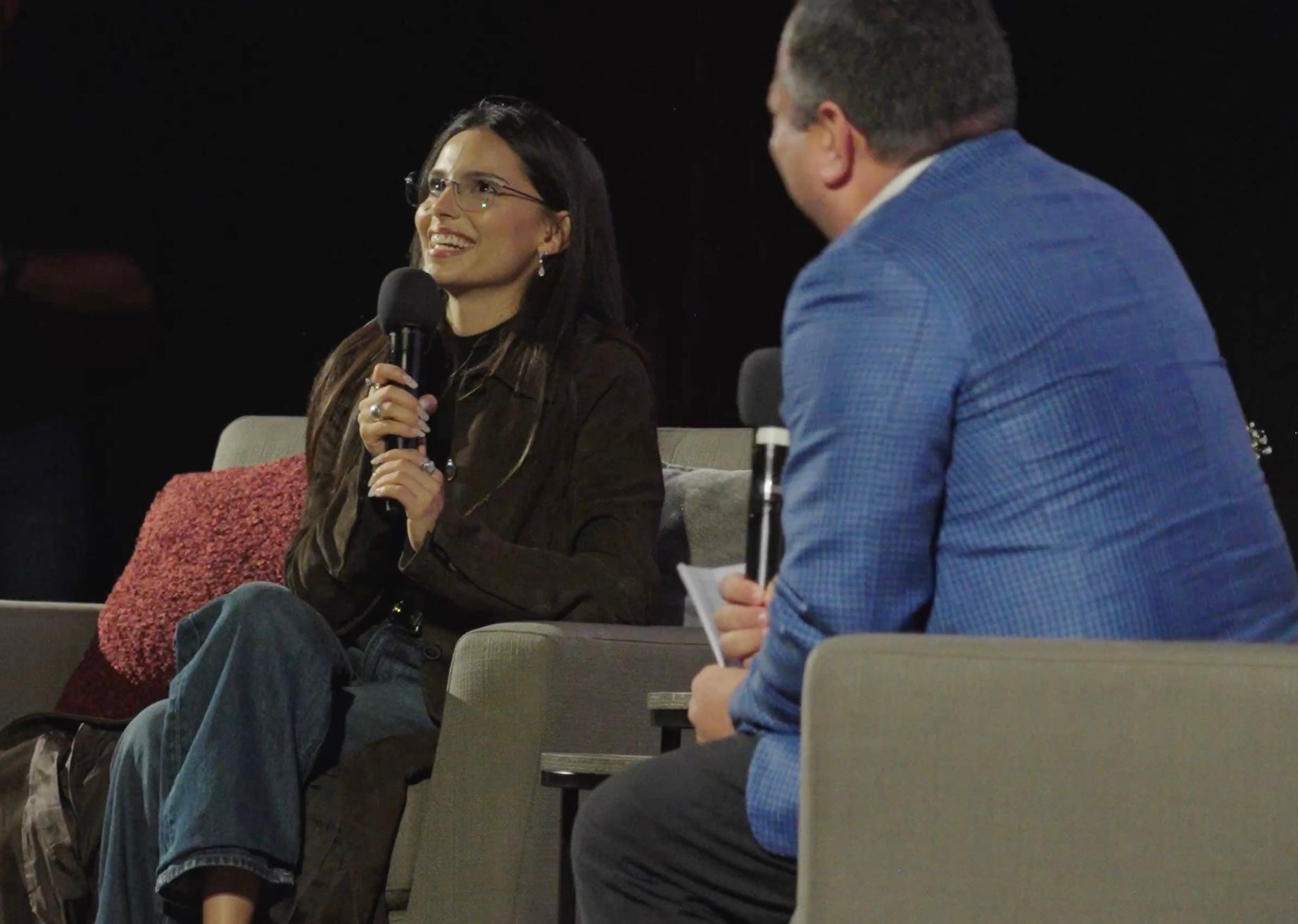
We use cookies.They keep VO running smoothly and help us improve it. Privacy policy