
 Ask ChatGPT

- Podcasts
- Awards Chatter
- Danny Boyle - 'Ink' [LIVE]
In short
Career retrospective live at SCAD Savannah Film Festival with director Danny Boyle, covering his upbringing, influences (Catholicism, punk, music, house), and how specific films were made—especially Shallow Grave, Trainspotting, A Life Less Ordinary, The Beach, 28 Days Later, Millions, Sunshine, Slumdog Millionaire, and the newly shown Ink. He also discusses editing principles (beginning/end), using practical effects (the “worst toilet” sequence), casting, working with children, and learning to collaborate with local crews.
Guests
Danny Boyle (70-year-old English director; Oscar/Emmy/Golden Globe/BAFTA winner; Maverick Director Award recipient). Host: Scott Feiber (Executive Editor at The Hollywood Reporter; host of Awards Chatter). No other guests appear as interview subjects.
Key claims
Punk “tears down” what came before and shaped his filmmaking; editors’ dictum that “only the beginning and the end matter” drove Trainspotting’s opening chase; practical trompe l’oeil beat early CGI for the toilet scene; he felt unhappy making The Beach due to cultural/production approach; he learned to “trust the streets” in Mumbai for Slumdog.
Notable examples
Shallow Grave’s flat-share money plot and casting Ewan McGregor/Chris Eccleston/Kerry Fox; Trainspotting’s Edinburgh chase and toilet dive; A Life Less Ordinary’s Belgium success despite flop elsewhere; 28 Days Later casting ex-athletes; Millions’ child performance and avoiding “thumbprints”; Sunshine’s Vomit Comet research; Slumdog’s “who wants to be a millionaire” premise rejected until Simon Beaufoy’s script and Mumbai visit.
Written by AI. May contain mistakes.
Chapters
1:26
Danny Boyle's Early Life and Family Background
Danny Boyle discusses his upbringing in Manchester and family influences.
“He's a 70-year-old Englishman who has directed 15 features over the past 32 years, including Shallow Grave, Trainspotting, 28 Days Later, Slumdog Millionaire, 127 Hours, Steve Jobs, and most recently, Inc.”
3:43
Transition from Religion to Film
Exploration of Boyle's early aspirations of becoming a priest versus a filmmaker.
“So my mother, my whole family, but especially my mother, were very Catholic and brought me up to a very strict Catholic.”
6:40
Influence of Music on Boyle's Work
Danny Boyle shares how punk music and other genres influenced his filmmaking.
“In the meantime, you go off to university, and it seems like that is where drama, theatre, all of that entered the picture for the first time.”
11:30
Theatre and Early Career Opportunities
Discussion on Boyle's theatre experiences and his transition to screen work.
“And standing backstage at the beginning, just before doing the intro to this, I was just looking at the flying system and it's fantastic.”
14:00
The Intimidation of Filmmaking
Danny Boyle discusses his early experiences with filmmaking and the lessons learned.
“The tricks of it, the mechanism of it, everything you need to know about it, you learn in an afternoon.”
18:10
Developing 'Shallow Grave'
An exploration of the development process behind Boyle's first feature film 'Shallow Grave'.
“and we got the film done in our own way and amongst ourselves really, we worked it out ourselves.”
23:11
Transformative Impact of 'Trainspotting'
Boyle reveals how the book 'Trainspotting' transformed his life and career.
“written her name was in it Carol Ann Doherty and she gave it to Andrew McDonald as a ponte said you should make this as a film.”
25:19
The Importance of Opening Sequences
A discussion on the significance of opening sequences in film and how they set the tone.
“certainly that could be recognized decades later or decade-plus later with Slumdog Millionaire, where you open and running through Mumbai.”
27:40
Memorable Toilet Scenes in Film
Boyle humorously examines the recurring theme of toilet scenes in his films.
“It's just the most wonderful place where you actually make the film, as every film editor here will know.”
28:00
Exploring Toilet Sequences in British Cinema
Danny Boyle discusses the recurring theme of toilet scenes in his films, particularly Trainspotting.
“dive and becomes this kind of Fantasia sequence.”
Show all 28 chapters
30:44
The Journey After Trainspotting: A Life Less Ordinary
Boyle reflects on his career choices post-Trainspotting, including the challenges of A Life Less Ordinary.
“We should say it really played internationally well as well.”
33:18
Lessons from The Beach: Cultural Sensitivity in Filmmaking
Danny Boyle shares insights from directing The Beach and his realizations about cultural respect.
“It was a wonderful experience making it.”
37:46
Reviving the Zombie Genre with 28 Days Later
Boyle discusses the making of 28 Days Later and its unexpected success.
“Well, I guess, though, the Alex Garland, yeah, the Alex Garland relationship, I guess, came out of that one, though, because then shortly after was 28 Days Later, right?”
41:29
Working with Children in Film
Danny Boyle explains the challenges and considerations of directing child actors in his films.
“And I guess an example of this is Millions, which was in 2004.”
42:05
The Challenges of Directing Child Actors
Learn about the unique challenges and insights of working with child actors in film.
“of wc fields is no kids and no animals and you've you've done it here with both millions and then Slumdog Millionaire and others.”
44:16
Themes of Overcoming Odds in Boyle's Films
Explore the recurring theme of overcoming obstacles in Danny Boyle's films and its personal significance.
“And then I was at this one Q &A with a bunch of journalists and this French journalist, she stood up at the back and she said, this is nonsense.”
46:36
The Complexity of Making Space Movies
Gain insights into the challenges of creating space-themed films and the role of CGI.
“that's involved in it comes from my mother.”
48:54
Cultural Immersion and Filmmaking in Mumbai
Understand the importance of cultural immersion in filmmaking through Danny Boyle's experiences in Mumbai.
“you should really love the people that have made them because they are very difficult to make.”
55:10
The Unexpected Journey of Slumdog Millionaire
Discover the unexpected journey and production challenges faced by 'Slumdog Millionaire'.
“It's a very cruel film at the beginning because all life is there, and the wonder of life is there to redeem it all at the end.”
56:00
The Journey of Slumdog Millionaire
Learn how Slumdog Millionaire nearly went straight to video and its eventual success.
“and we started working on the score together.”
58:38
Exploring 127 Hours
Discover the intense filmmaking process behind 127 Hours and its impactful scenes.
“And this was something that he wasn't amenable to doing before the Oscar.”
1:00:50
The Complexity of Steve Jobs
Delve into the challenges of adapting Aaron Sorkin's script for Steve Jobs.
“And so we drove up, the film had been playing for a while.”
1:03:26
Continuing Iconic Stories
Understand the motivations behind returning to iconic films like Trainspotting and 28 Days Later.
“Just to read a Sorkin script is just to go on a trip because it is written with a rhythm that if you don't get, you won't be able to bear watching the film.”
1:07:30
The Vision Behind Ink
Explore the unique storytelling approach taken in the film Ink and its themes.
“And the chance to work again with Ewan McGregor, you know, and the guys was extraordinary, of course.”
1:10:00
Exploring the Film's Themes of Truth
Learn about the film's perspective on truth and its historical context.
“But I kept thinking it's about the other guy, isn't it?”
1:11:32
Casting Choices and Character Depth
Discover insights into the casting of Jack O'Connell and character complexities.
“If you think about the Duffies and Sinners and 28 Days Later, the Bone Temple, he's a monster, and yet you're kind of drawn into him, and that's a weird duality he has, which not many actors do.”
1:13:12
The Film's Powerful Epilogue
Understand the significance of the film's ending and its modern-day relevance.
“Here we are in 2026 and on the brink of major elections and on both sides of the Atlantic and things that, you know, are still being shaped by the media that these guys kind of created.”
1:14:35
The Role of Journalism and Responsibility
Engage with the discussion on journalism's evolution and societal responsibility.
“There's a headline at the end which is truly, there are two low points for British journalism in the ending which is the Hillsborough headline which is a lie that was printed called The Truth.”

Ask about this episode
Get the gist, explore an idea or ask about something said.
 Claude
On Awards Chatter, what are the key points of this episode?
Searching your listeningTranscript
Automatic transcript. May contain errors.
0:00Sierra has all the best active and outdoor brands for the super athletic stuff. Like running gear for cruising up the trail. Woo! And the super athletic-ish stuff. Like fishing gear for chilling by the creek. Nice cast. Fitness apparel to push for higher reps. You got this! And golf balls priced so you can afford to lose one. Or a few. Head to Sierra or Sierra.com for the brands you want at the prices that let you do it all. From athletic to athletic-ish, Sierra's got it.
0:38good afternoon everyone i'm scott feiber executive editor at the hollywood reporter and host of our awards chatter podcast for which this uh conversation is being recorded uh for those tuning in i'm coming to you from the lucas theater on the campus of the savannah college of art and design in savannah georgia where the twey i big round of applause where the 29th SCAD Savannah Film Festival, my 14th, is currently being held. Today it's my great honor and privilege to get to sit down for a career retrospective conversation with this year's recipient of the fest Maverick Director Award, someone who I first had the opportunity to interview almost 20 years ago and have interviewed several times since, including on the very first episode of this podcast, 11 years and about 670 episodes ago.
1:26He's a 70-year-old Englishman who has directed 15 features over the past 32 years, including Shallow Grave, Trainspotting, 28 Days Later, Slumdog Millionaire, 127 Hours, Steve Jobs, and most recently, Inc. A film about the consequential relationship of businessman Rupert Murdoch and newspaperman Larry Lamb, which the audience here has just seen, and which Netflix will release in select theaters on December 11th and on its streaming platform on January 8th. the winner of an Oscar, an Emmy, a Golden Globe, and two BAFTA awards, and the recipient of a Britannia Award for Artistic Excellence in 2009, and a BFI Fellowship in 2010, he has been described by the New York Times as a cinematic hypnotist, and by The Guardian as a film director in a class of his own.
2:19In short, he's one of the greats, and we are lucky to have him here with us today. Would you please join me in welcoming Danny Boyle.
2:31Thank you for doing this and I would like to start at the very beginning if we can. Where were you born and raised and what did your folks do for a living? I was born in Manchester, just outside Manchester, which is an industrial town in the northwest of England. And my parents, my dad worked in a power station. He was a kind of stalker, boiler, engineer. And my mom was a dinner, what we called a dinner lady, who was, I don't know whether you have that, and they served dinner at the schools to the pupils. So I went to a school, and she was one of the dinner ladies there serving dinners. But she came over from Ireland to be, my family's all from Ireland originally, from the west of Ireland.
3:17And she came over to Manchester, which a lot of people did. She came over to be a hairdresser. So you have something in common, aside from being a filmmaker, with Martin Scorsese, John Woo, M. Night Shyamalan, some others, which is kind of weird, and that is that you all almost became priests instead of filmmakers. What was that about? So my mother, my whole family, but especially my mother, were very Catholic and brought me up to a very strict Catholic. I was an altar boy for many, many years. And her dream was not this world that we live in now, that she wasn't really interested in Hollywood, bless her.
4:01She was interested in me being a priest, and that's what she would have loved more than anything. And so I was meant to go to a seminary when I was 14. And another priest who was teaching me at the time, he said, I think you probably shouldn't go. and I remember saying why he said there's so much going to happen to you in the next few years and I said what do you mean he said girls and cigarettes and things like all the good stuff that's all faded away now but um anyway um and and so I didn't go and I broke my mother's heart which is something that you live with for the rest of your life really I think another thing that entered the picture that might not have been consistent with the seminary was punk, right?
4:44You were a big music guy. You said it was the greatest influence, more than, you know, other films or things that you might have been consuming. Talk about how music entered the picture for you in a big way. I'm very lucky because I, the span of my lifetime, I heard the early Beatles stuff because my parents had it. In fact, I've inherited from them the original singles, you know, that they were printed, the absolute first recordings of them that were commercially available. And so I'd heard that at the very beginning. And then, but by the time I was kind of like reached like the age of consent, as they call it, it was punk arrived in the UK.
5:29And that was an extraordinary influence on me, both musically but also spiritually in so many ways and it was wonderful I remember seeing I think Lou you can find it online Lou Reed's last recorded speech where he talks about how fundamental punk is to all art because you've got to tear down what's gone before and to some degree whether extremely so or even moderately so but you're still tearing it down it's a wonderful speech so punk was a big part of that and that was followed then house music which obviously came from here um and and arrived in britain in 86 and i was like so i was like 30 then and i was still able to go out dancing and got house music and everything that came with house music which those of you who are d4ts of uh will know what i mean um and i probably shouldn't mention it on a podcast because it's arrestable and but but it's but it's part of the joy of of house music and dancing of white guys learning to dance, actually, which you all know.
6:32I can tell the ones who laugh know, yeah, absolutely. Well, I mean, that punk spirit is clear through your films, but we'll come more to that. In the meantime, you go off to university, and it seems like that is where drama, theatre, all of that entered the picture for the first time. How did that get going? So I went to, I applied for lots of places, didn't get in them. and so for those of you who are frustrated by not getting what you want just keep going because it's just you just keep going so I applied to lots of places to do drama and I'd done some drama at school and I had a very loud voice and I'm quite energetic as you can probably tell and that helps in school dramas and so I went to college I eventually ended up at this college the University College of North Wales in Bangor, which is a world-renowned university for marine biology.
7:27But for drama, not so much so. But I had a great time. And I would say to anybody, go to college, not because of qualifications, okay, you'll get those, because of the peer group that you live with. You finally get a chance to get away from your parents and just live with people your age and find out what life's about with people your own age, your own peer group. The problem with these things, with Scott and me sitting up here, is there's sort of, you're in an elevated position as, you know, somebody has achieved something. It's interesting, but it doesn't matter. What matters is what your peer group think of you and how you create stuff together.
8:08So that was the beginning of it doing, and I discovered, I did some acting, and then I discovered I did this play Endgame, a Samuel Beckett play, and I directed it, and I much preferred the feeling, that feeling you get as a director where you're kind of just shaping it a bit, and you are dependent on actors, and I love actors, I love working with actors, but you are somehow, well it's megalomania really, you're in charge, which is the same thing as being a priest, you're just poncing around telling people what to do the whole time, and they kind of most of the time they listen which is amazing and well you graduate you go out into the real world and pretty quickly we're we're working at high high level right we've got I think a combination of like maybe the next five years David Harris theater company right and then deputy artistic director at the royal court I mean this is this is not messing around these are so did you imagine that your future, would you have been happy if your future was entirely in the theatre, or did you always have aspirations of getting into screen work as well?
9:22Well, I didn't really know anything about the theatre. The first time I went to the theatre ever in my life was, I was 16, and I went to the Bolton Octagon, which was a theatre in the round, which was revolutionary at the time, and I was an usher there, you know, I kind of like tore the tickets and just for some spare cash. But I was amazed there was these actors and they did the same thing every night. But it was slightly different. That was a wonderful kind of experience. So I always, whereas I, the first time I went to the cinema, I have a twin sister. And on our 10th birthday, my mum took my sister to see The Sound of Music, and my dad took me to see Battle of the Bulge.
10:08You know the tank movie? You know, before the Brad Pitt tank movie? There was this other tank movie, and it was directed by, you know, this is interesting. Do you have pub quizzes here? Yeah. Well, you know, this is a classic for a pub quiz. So, you know who was the director of Battle of the Bulge? was it well no I'm not gonna you probably know Ken Anakin and that's where George Lucas got the name of Anakin from it's named after him that's great there you go it's a good pub quiz anyway it was so it's also gender stereotyping right there from right there from the age of 10 so um so I'd always loved the cinema more than anything and this was a strange place to discover loved seeing it always longed to work in cinema but I wrote to lots of people who were famous in cinema and they didn't write back which they don't if you write to me I won't write back it's just but it doesn't matter like I said it's not that important it's interesting but not that important what is important is what you feel amongst your peer group those you like those you don't like who you can work with and develop stuff together and and so theatre is a wonderful space to learn to have that relationship with actors and with other people who are going to move forward in time with you in your career.
11:27So I loved working in the theatre and I still try to go back to it if I can. And standing backstage at the beginning, just before doing the intro to this, I was just looking at the flying system and it's fantastic. And I just have to tell you this, my daughter's here, she'll be shocked. I once, have you ever seen a fly system? You know, it's the big grid above the theatre. Anyway, one of the things in the theatre, it's like the Mile High Club. There you are. I don't need to say any more. So the screen act, or excuse me, screen work, it seems like I think first entered the picture, after you've done a few years in the theatre that I just mentioned, you end up at the BBC see in Northern Ireland?
12:12I mean, how did that come about? And I mean, you did some stuff there that got notice. And I know in particular, Elephant, Alan Clark's production there, about the troubles. But I mean, was again, where did you think this was going? Was the dream was too direct a feature? Well, I watched at this theater, the Royal Court Theater, where the Mile High Club thing happened. And because I'm a megalomaniac, I wanted to take over the theatre and run it. But the guy in charge who was running the theatre had different ideas. So I left. No, he was a wonderful guy, actually, who helped me enormously in my career.
12:55And there was a job advertised in Northern Ireland. And it was quite a tough time in Northern Ireland. This is the mid-'80s. There was a lot of trouble there. But I knew a friend of mine lived in Northern Ireland, and I'd been there a couple of times and it's a wonderful place. If you've ever been, it's just the most extraordinary place. Well, Ireland generally, obviously, but Northern Ireland is a very special place. So there was this job advertised as a producer for the BBC there to produce dramas, one-hour dramas for television. So I applied for it and I got David Hare, who was related to the Royal Court Theatre, to write me a reference.
13:31That was smart because I thought that'll impress them and it did. and I got the job. And when I got there, I said, oh, I'm also going to direct the films. And they said, I had no experience in directing on camera. They said, we don't split the jobs like that. I said, I'll do it, but I won't charge for the directing so that we'll get the job, we'll get two jobs for the price of one. And they sort of accepted it and I started off directing. And the truth is, it's very,
14:06intimidating, the camera and the camera rules and all that kind of stuff, but the truth is Orson Welles said, you can learn everything you need to know about a camera in an afternoon, and it's true. The tricks of it, the mechanism of it, everything you need to know about it, you learn in an afternoon. After that, it's what you want to do with it, it's how you want to use it like that. So it was wonderful to learn that on the job. You think, oh, right, you just do it like that, and you stay this side of the line, left to right, right to left, those kind of things. And then you can contradict them later when you get a bit more confidence.
14:39You know, you can break the rules, as in the punk thing of tear it down, what you're taught, tear down, and learn to challenge, and how to challenge it, yeah. So I picked up an enormous amount of experience there, and we finally, we did this film called The Venus to Milo Instead, which was written by this wonderful writer Anne Devlin and Irish writer, wonderful, and it won a prize at the San Francisco Film Festival and I can't tell you what that means to a young director. So film festivals are so important in the ecosystem, in the evolution of films. You think you're just recipients of them but you are the scaffolding, you're part of the scaffolding that supports filmmakers all the time.
15:21And put, absolutely yeah.
15:27And I think part of that is it raises your profile, creates awareness of you among others. And that was important because, correct me if any of this is wrong, but meanwhile there's a guy whose day job is as a doctor, right? And another guy, so that's John Hodge. There's a guy who also, I guess in his 20s, wants to be a producer at that point, Andrew McDonald. they have a they've come upon material that they think should be a film but they need a director and want somebody I guess new and fresh and different how does this lead them to you and we should say that the three of you then for quite a while we're we're a trio with your you know breaking through at the same time so just basically how did it get started though with Shallow Grave your first your feature directorial debut?
16:20So they developed this script and they got Channel 4, a channel in the UK, which their film arm was called Film 4. And they'd kind of earmarked a million quid for it as a film. A million pounds for it. If they could find a director. And they'd been around seeing the usual suspects and they didn't really warm to any of them. And I got the script. I managed to get the script and I read it and I loved it. And I said, I went in for the interview with them. I said, it's a complete ripoff of Blood Simple. And they kind of like, first of all, they were like that. And then they said, yeah, that's true, actually.
17:01And so we kind of got on with a bit of brutal honesty about where our, whose shoulders we were on, really, which is the polite way of always putting it. But it's stealing, obviously. It's kind of borrowing, stealing, whatever you want to call it. And we did that, and we started to develop the script. We developed the script again, and then we had a million quid to spend. And this is what I mean about working amongst your peers. You kind of, like Channel 4 inserted this guy into the process who was meant to keep an eye on us so that we didn't get crazy. And he was from a different generation and a different mentality.
17:37And we were developing a shot for the film, and it had taken all morning, and we hadn't finished it. and he said, right, this is trouble now. You've got to, you're going to get, unless this is done now, I'm going to ask for Channel 4 to replace you on the film. And we got together and we decided to say to Channel 4, we wanted to replace this other guy instead. We wanted to replace him. And we rang Channel 4 and said this to them. And they said, okay, but if you go over budget, we'll replace all three of you. We'll take all three of you off the film, which is fair enough, they put up a million quid.
18:09So then we stayed on budget and we got the film done in our own way and amongst ourselves really, we worked it out ourselves. And obviously it's a very lucky set of circumstances that always surrounds these events, but it also proves the truth in the fact that you stick together with your peer group rather than listening to your elders, really. And it wasn't, yeah, it wasn't just you and John and Andrew starting off together. This, to just kind of briefly summarize, of Chattelgrave, three people who live, share a flat together are auditioning for a fourth, and very harshly as it opens up, you know, for the privilege of sharing their flat, and then the person they take turns up dead, and there's a bag of money there which comes between them.
19:02And so one of those three was Ewan McGregor. And this was a big figure in your life and big collaborator for a long time after. Did you cast, I mean, I assume you cast them. How did you guys cross paths? Well, so there was Ewan McGregor and this other guy, Chris Eccleston. And they were, yeah, fantastic actors. They didn't mean anything. Right, right. The only person Channel 4 was interested in was Kerry Fox. who played the woman in it. And she had just been in Jane Campion's Angel at My Table, which is her wonderful study of Janet Frame. And so she was the star. She was the star. And the guys didn't really matter.
19:47It was weird. It's such an odd sensation, considering what Ewan McGregor especially went on to become. But that was the pillar that the finance was satisfied about being released around her. And yes, and then we cast Ewan McGregor. And I remember we did screen tests of Ewan McGregor and Chris Huggleston. We didn't do screen tests of Kerry Fox. She was a given and the others had to fight for their place. And we were very lucky that they did. I mean, you often get this with actors. You think, wow. But they're just waiting for you just to give them the chance, really. And they have talent, you know.
20:25And I've always benefited from that. I've been very lucky. I was lived with. and my daughter who's here I mentioned earlier she's the daughter of my casting director and so living with a casting director and having three children is a piece of advice I would give you in terms of making sure because you get superb actors as a result of this. It's really true though I mean if we go through and we're going to touch on these but I mean yeah Dev Patel had been on Skins but not nearly as high profile as he became through Slumdog and and we could go on and on with the examples of this but um we should just note that Shallow Grave this first film as you say it cost a million made 27 uh was just a landmark thing for for British cinema uh Cannes in 94 Sundance in 95 wins the best British film BAFTA award suddenly you and your your your the trio of collaborators were big players.
21:28You guys, what did you call yourself? It was Figment? Was that the company? Or what was the... That was Andrew's company. Andrew's company was called Figment Films. But the three of you guys were... The idea was that I guess in the way that Andrew, who was his grandfather, was Emmerich Pressburger, who had always worked with... It was Powell and Pressburger. And they worked together, right, for years and years. That was sort of the idea for you guys, that let's stick together? Very much so. Especially in those days, is you felt like a loyalty to that idea. And also to the principal, I mean, obviously, if the film succeeds, then you obviously, you feel a loyalty to that most of all.
22:08And so we, yeah, we had lots of famous people ringing us up and all that kind of thing, but we decided to stick together and move on to the next film. And I think the next film maybe had been even on your radar before Shallow Grave. But anyway, this is the, I guess I'm curious how who first presented the idea that maybe we should take this debut novel of a recovering heroin addict and try to do something with this and that of course is Trainspotting which totally changed the game just to note I mean in years since it's been included in the top 10 British Film Institute's greatest film British films of all time just there are people that I know in high levels in the film industry today who say they got into it because that film made them fall in love with what cinema could be so just though it started with a with a book that and I wonder if you can take it from there so this this book I should mention there's this woman called Carol Ann Doherty and it was her copy of the book it was written her name was in it Carol Ann Doherty and she gave it to Andrew McDonald as a ponte said you should make this as a film.
23:22And he gave it to me and John, and we both fell deeply, deeply in love with it. If you ever get the chance, it's a hard book to read at first because it's written in the Scottish vernacular, but it is rewarding in a way that few books are. It's an extraordinary book. It's a way better book than the film that we finally ended up with because there's just so much in it that we weren't able to touch on. It's an extraordinary experience reading it, and it was something that transformed all of us, really, and ended up transforming our lives as well. Again, drug movies at the time, the context is very important.
23:59They were not thought of as being a good idea. Nobody went to see films about drugs. But then this book transformed you. It's honesty about both the pleasure and the reason why people take drugs, and it's honesty about what can happen to certain others was extraordinary. And I always remember Irving talking about heroin. And he'd say, there are certain people who can, you know, use it and that's it. That's just they use it and then they just forget about it and it's just gone. But there are other people who once they touch it, it is within them for the rest of their lives. They will never, ever escape it.
24:42and he said those people are closet romantics that's what he called them and that always struck me his insight into people from these extreme hinterland that drugs drug abuse which he lived amongst and yet his insight that he brought back from there was amazing I thought that film I think has one of your hallmarks of things you do so well, which is an incredible opening sequence. There's just this high-energy, music-infused chase through Edinburgh and something not totally dissimilar, certainly that could be recognized decades later or decade-plus later with Slumdog Millionaire, where you open and running through Mumbai.
25:32And I mean, your energy, it translates onto the screen in a rare way. And I wonder if you can, you know, let's just say in the case of Trainspotting, he's being pursued by the authorities, Renton, right? And this is where the famous Choose Life monologue is over that, back with Ewan. I wonder if you can just talk about, I mean, well, let's talk about opening sequences. or scenes for a moment, because that really is, I think somewhere, I wonder if somebody said something to you or you saw something that made you believe in how crucial those can be in obviously setting the tone for everything that comes after.
26:18So this is an editor thing really. So there's a famous dictum amongst editors. Are there any editors here? Yeah. Editing, by the way, is the most glorious part of any film. It really is. Anyway, yeah, it is. I mean, and if you ever do it, you'll know what I mean. Anyway, there's a dictum amongst editors that there are only two things matter in a film. The beginning and the end. And the beginning, not so much. And that, I remember being told that and being fascinated. And our editor on that film was this Japanese guy, Masahiro Rakabu. and that sequence that you're talking about Scott at the beginning which has become that was originally in the middle of the film and he moved it, Masahiro moved it to the beginning of the film probably because of the dictum and you benefit from that editors you benefit I mean you benefit from camera you benefit from everybody that you're working together on a film but when you finally arrive after the chaos of raising money finding actors fighting the elements or whatever it is, permissions, whatever all the different dangers and dilemmas that you go through in the making of the film, and you arrive in the piece of the editing room, and there's suddenly just you and a couple of people.
27:40It's just the most wonderful place where you actually make the film, as every film editor here will know. That's where the film gets made. Got to ask you about one other scene there, which when you say train spotting, I think comes to mind immediately for people, and this involves what I believe is described as the worst toilet in Scotland where Ewan McGregor or Renton ends up doing a dive and becomes this kind of Fantasia sequence. Now you, I guess, I didn't think about it until I was prepping this, you have another great toilet sequence in Slumdog so I don't know where this, what this, if we psychoanalyze this, but tell Tell me about the train spotting, that scene, because that is an all-time classic.
28:27So pretty much all, this is, I think it's being British, because it's only in British films. British films spend an awful lot of time in toilets. I mean, you can look at them, they really are, and certainly in my films, there's always scenes in toilets. In Ink, the film you've just seen, there's a kind of completely unnecessary scene in a toilet. But it's absolutely, you fight for these scenes in toilets to be in your films. and I think that's not just because of train spotting I think there's a scene in Shallow Grave in a toilet as well so it's there the whole time and it's just he mentions it in the book he calls it the worst toilet in Scotland and I remember thinking we'll put that on the notice outside the toilet and the toilet is this is a tribute to the camera the cinematographer was a cameraman called Brian Stefano who's sadly passed away now but he was wonderful because he embraced the fact that he clearly saw that we wanted to do everything live.
29:23CG was just beginning, just beginning to emerge in cinemas. In fact, there was a Christmas film out at the time, which I can't remember what the name of it is, and Tim Allen was playing Santa Claus, and they squeezed him into a chimney pot. That's one of the very first uses of CG in film, and it looked terrible, I thought, and I thought we're not going to do it like that, because somebody said you could use CG, as it was, at the time. We wanted to do it live, so we used a theatre trick, which is the trompe l 'oeil, which is you cut the toilet in half and film it from the side. So obviously it isn't a toilet on this side, it's a slide that Ewan McGregor goes down.
30:03And then Brian would say, Brian said, twist his feet round at the end. He told Ewan to twist his feet round at the end because then people will think it's the U-bend that you're going round, which curiously people do. and it's just that illusion that we all which we buy into if you believe the actors you'll believe anything almost in a way so people believed it was the worst toilet in scotland even though it was smelt of chocolate and because all the shit was chocolate and it was delicious and all and and all the kind of prop girls had candles burning so that everybody felt good about being there all day you know well obviously this movie was a game changer for uh the british film industry for you guys.
30:45We should say it really played internationally well as well. And you could have kind of probably done anything you wanted at that moment and it's interesting that what you chose to do, the same trio and actually plus Yuen who had done that and the prior Shallow Grave, was a screwball comedy in America that cost$12 million called A Life Less Ordinary. I'm not, I'm just curious, why was that, again, you could have probably done anything, why was that what you wanted to do next? No, I remember I got offered an Alien movie because of Trainspotting, Alien 4, and it was fantastic script by the guy who did Buffy, Josh Whedon?
31:33Yeah, yeah. Josh Whedon. Yeah, it was a script by him. It was a fantastic movie. And I got very... I love the alien movies, as I'm sure so many of us do. And I was very, very... You know, that was incredibly flattering to think that you could go and do that. And then I realised it's an incredibly stupid thing to believe I could do. because you had to have a level of sophistication to be able to create the aliens, especially in this world where CG was just beginning to arrive. I didn't really understand CG, didn't understand green screen, not really. And I thought it would be foolish. And then John turned up with a script, A Lifeless Ordinary.
32:09And this allows me to, and especially because you featured it at the beginning, which I was shocked that it was featured because it doesn't often get featured in Lifeless Ordinary because it's, well, after so it was a massive flop, which you were very kind enough not to mention, Scott, in your figures. I mean, it lost, it just was, it was a big flop, but it proved one of these other maxims that they say whenever you have a hit, they say there's always one place in the world, one territory in the world where it doesn't work. and conversely when you have a massive flop there's always one place in the world where it's a hit and in Belgium like Life Less Ordinary was number one for three weeks and I recently had the great pleasure of telling that story to a Belgium audience and they were wonderful and a couple of guys stood up with laser disc copies of Life Less Ordinary which they wanted me to sign and I did and I'm forever grateful for that.
33:18It was a wonderful experience making it. It was wonderful to work in the American system. That was a very interesting process to do that and we obviously had Ewan McGregor with us and we worked with some amazing American actors as well. And I guess you don't know if you're cut out for a certain type of thing until you try it and I think that applies in some ways based on things you've said to the next one which was the beach, right? Where in this case it's your first time casting a kind of Hollywood leading man or star. I mean, Ewan was huge because of your collaborations, but now this time you worked with Leo coming off of Titanic.
33:58This is your first time, I guess, with material that traces back to Alex Garland, who would write a number of things that you made after. But this is a book that he wrote, right, that is then adapted by John. But just this idea of kind of working within the, with a huge budget and kind of the Hollywood, more Hollywood influence than you'd had before, you know, it was not another, another that was not a success commercially, but are there things that you take away from that about yourself, about what you do and don't want to do? Just anyway, lessons from the beach. Well, weirdly, it did all right, actually.
34:43It took about 150 million, I think. But the perception of it was that it was a flop. And I think it was to do with the fact that we had moved so far away from, or what people perceive we'd moved so far away from the model that we were previously loyal to. And to a certain extent, that's true. We were also caught up in the early stages of an environmental protest about the presence of this movie. But the lesson I really took from it, more than anything, is I felt very unhappy making the movie. In my bones, I felt, I'm not doing this right. And I think there was nothing to do with Leo, who is an amazing actor.
35:26And, you know, he is, to the profession, he is a credit to the profession. And to a director, he'll do anything for the director. He's like a European kind of actor. He'll say, if you want to do the whole thing again, I'll tell them they've got to pay for it all again. Stuff like that is amazing. So it was nothing to do with that. It was to do with the fact that we arrived in Thailand, and I learned this later when we did Slumdog. We arrived in Thailand with a huge crew, which was the way you did things then. So we took like 200 kind of crew who arrived in Thailand with per diems, like, you know, daily payments, which their money stayed at home, and we lived this lifestyle in Thailand that was like of the rich and famous, making a movie.
36:15And we did no real, there was a surface respect for Thai culture in the film and in the way we operated, but there wasn't really, not deep down. We should have been training people from Thailand how to make these films so that they could make their own films. And I learned that it was a lot easier to learn it in Slumdog because Mumbai has a very confident Bollywood industry already. But for instance, so we took 200 people to Thailand, and I was very unhappy. And we took eight, ten people to Mumbai and India for Slumdog, and I was really happy because I thought they were doing this the right way around.
36:52And it's an easy thing to say now, and it wasn't so easy to spot then. and I really would have been a maverick director and worthy of your award if I'd spotted it at the time of the beach, but I didn't. So you have to be honest and hold your hand up about that. Sure. Where does every success story begin? At SCAD, it starts with exclusive access to resources, expertise, and connections that prepare you for a career in entertainment. Through the School of Film and Acting, SCAD students study the art of storytelling in Hollywood-rivaling production environments, gaining hands-on experience while learning from working professionals.
37:28From a dedicated casting office and an expansive backlot to innovative LED volume technology and the internationally recognized SCAD Savannah Film Festival, SCAD empowers you to turn creative ambition into industry opportunity. Learn more at scad.edu. Well, I guess, though, the Alex Garland, yeah, the Alex Garland relationship, I guess, came out of that one, though, because then shortly after was 28 Days Later, right? And this is written by him, spawned. We're still having sequels to this day. Kind of revived the zombie genre. You don't call it, I think, a zombie film from what I understand. You see it as more other things.
38:14But this idea of a global pandemic, essentially, who would have, you know, why would you come up with such a, could never happen. but there it was in 2002 and a very big success and I think to some degree you didn't expect that from what I read out you know in America for it to do as well as it did and and all of that I guess I just wonder also it was made I think you guys were in the process of making it when September 11th 2001 happened and you can't help but look at it and see most famously the empty streets of London or posters of missing people or things like that, it feels like it might have been in some ways influenced by what was going on in the real world.
39:03It was, I mean, Alex has an amazing imagination. And so it felt like he has a very truthful imagination. So he writes quite extreme science fiction-y type scripts, but they always feel true. They always feel truthful. And the characters feel truthful the way they behave in it so it was an no-brainer to do it and then we then then we didn't argue but he he's a zombie expert he knows all the zombie films and he knows he's a meticulous knowledge of them and I didn't and we decided to keep it like that we thought that was healthier if we stayed like that so we and we wanted to make an impact with them because I remember thinking all the all the extras who were going to turn up who were going to play the zombies they'll just walk around like everybody does in George Romero films because that's the received understanding of so the extras would be oh yeah you want me to do this and I thought that's not going to be very good so the casting director who I mentioned earlier Gail Stevens she said go and see these people at these athletes retirement club and athletes retire at about 35 depending on yeah I mean it's just because you can imagine why you know serious Olympic athletes they retire and One of the things they do in their retirement is they have an agency which hires them to go and turn somersaults and open a supermarket in Dubai by cutting a tape.
40:25Things like that, you know. She said, why don't you go and see those people? So I got a bunch of them together in a room, about 10 of them ex-athletes. And for any of you who lived with an athlete or a dancer, same thing applies. Their bodies are different from ours. There's just a power in them that's really scary. and I got them to run at me across this room with the intent of killing me, of tearing me to pieces, which they could have done. They had the power in them to do that, but to stop at the last minute just technically, and they did that, and when they ran at me, I knew that was it. We'll have them like that, and that's what we did.
41:03We hired a lot of ex-athletes who rather than go to Dubai, they could come to London and chase Killian Murphy and Naomi Harris around the deserted streets of London. That's great, that's great. You don't make the same film twice. It seems like you're almost reacting with one film to doing something as far in the opposite direction as you'd just done before. And I guess an example of this is Millions, which was in 2004. Little kid grieving the loss of his mother finds a ton of British pounds right before the transfer to the euro and what do you do he and his brother have to sort this out roger ebert had it as one of his 10 best films of that year um you know it's it's just tonally i think different than anything else you'd you'd done um but one thing that it kind of makes me want to ask you about is uh working with with children which is not you know the golden rule of wc fields is no kids and no animals and you've you've done it here with both millions and then Slumdog Millionaire and others.
42:14So in this case, I guess, why was that a story you wanted to tell? But also, you're taking a big bet when you're working with kids, right? You do in the sense that you, because you probably get the finance committed before you find the kid. And in fact, you shouldn't do that. You should find the kid first, ideally. The business doesn't really work like that. Although you do hear stories of films not going ahead because a very powerful director couldn't find the right child. And it's true because you cannot, I mean, you don't do much directing of actors anyway, is the truth. You find, like I said earlier, you find great actors.
42:50You're lucky enough to find great actors. And you create the conditions in which they can work. But children, it's especially true because they are so, you can, if you try and influence them too much, you can see your thumbprints on them. It's ugly. It's really ugly. You can see them being told to behave like things. and I think you can sometimes spot that in films where they've been over-directed or over-manipulated. We expect, you know, I've got a grandson at the moment who's two and a half, and he comes out with stuff, and it's just Lee, he's called, and he comes out with stuff, it's just beautiful.
43:25And that's what we expect. We expect to hear ourselves, we were once like that, you think, and you come out with stuff, there's no barriers, there's no, in terms of safety or imagination or anything, they just say things that appear to be true to them. and we found this kid, Alex Hettle, and he was incredible. And if you haven't seen it and you want to watch one more of my films ever, if you ever want to watch one more of my films, please watch Millions. It's beautiful. And it's written by this guy, Frank Cotter-Aboise. It's very Catholic. It's really a self-portrait of me and Frank as a kid or what we wished we were like as a kid.
44:00And it's lovely. But I have to say, it's also true. Scott was saying, you know, you seem to be changing a lot. I always used to think that And I used to say in Q &As like this, I always try and trace genres, you know, I always try and follow a zombie movie with a kids movie or whatever, you know, like that. And then I was at this one Q &A with a bunch of journalists and this French journalist, she stood up at the back and she said, this is nonsense. All your films are exactly the same. And I said, oh, pardon me.
44:35And she said, yes, they're always, usually, she said, usually, they're about a man, and he faces insurmountable odds, and he overcomes them. And with that, she walked out. And I have to say, I think it's probably true what she said, yeah. So you have to face that and accept that. Well if we want to get really psychoanalytical, I mean you've I think maybe even to some degree undersold, your childhood was very humble, right? I mean very very humble and the idea that you've reached the heights of a very competitive crazy industry is a big deal and kind of a remarkable thing when you stop and think about it.
45:19I also, so I wonder if that's maybe a subconscious thing just kind of the, when you talk about these overcoming insurmountable odds, but also that money seems, I mean, seems to pop up in a lot of these, the, the, right? So we've got Shallow Grave, we've got where they're, where they're arguing over the money, the found money. You've got Slumdog, literally, with Who Wants to Be a Millionaire. We've got millions. And even to some degree, I guess, you know, what Inc. is kind of about is how far will you go to keep making money, right? So just any reaction to that? Yeah. It's a big factor in all our lives.
46:02And you kind of... I am very lucky that the first couple of films we made were hits and therefore you are liberated from the need to make money and so I've never had to direct adverts not that there's anything wrong with directing adverts but I've never had to do that or promos or anything like that I've always been able just to hang on and to try and make films but that's luck and chance that that that comes about my kind of energy comes I think from my my drive comes from my father I think and more importantly actually than that in any grace that's involved in it comes from my mother. Yeah. Yeah.
46:44Sunshine was the one after millions. This is 2007. Some scientists are tasked with trying to revive the sun by nuking it essentially. Back with Alex Garland, pretty sizable budget, working with CGI, right? That was the big thing here, where you'd kind of avoided it, right? We talked about previous opportunities where you could have done something with CGI, with Alien, whatever, 4, or things like that. Was it, now that you did it, was it kind of more or less daunting than you expected it to be? It's baffling, really. I mean, it is an art form, which we clearly know now. This was kind of still kind of early stages of it, really.
47:30But we had to create the sun, something that we couldn't really film, not in the way that you, not in the conventional way. It's interesting, the daughter I told you about earlier, we'd just been on a trip. It was my birthday last week, and my two daughters took me on a trip around the Grand Canyon. We swam in Lake Powell, and we ended up at James, I probably shouldn't mention this because it's still not open, but we ended up at James Turrell's radon crater, and where he's creating a kind of crater, volcanic crater-sized installation about light and space. I mean, it is, when you get the chance to go to it, go, it's absolutely astonishing.
48:16And one of the things he's doing is he's going to be able to create images of the sun that you can watch. It's the aurora around it. You know, in the eclipse, I was very lucky, I saw the eclipse this year in Spain and when it locks the total eclipse and you can see the detail of what's coming off the sun all the time, you're going to be able to see that in his installation. So it was a way of achieving that sense of wonder and any tool that you could use to help you create that wonder was great. The physical side of making a space movie is in itself, anybody, if you like space movies, you should really love the people that have made them because they are very difficult to make.
48:59To make us float, to defy gravity, the thing that dictates everything in our lives, just to defy that, you'd think a film should be able to do that easily. It's so difficult to do that. It's really tough. Incidentally, as part of the research, we went on the Vomit Comet. We didn't have enough money to film on the Vomit Comet. You know, this is the one that does the parabolas up and down. And when it's dropping the plane, you float in it. and it cost, at the time, it was$3 ,000 the trip for each person. And if you've ever got, it's probably$5 ,000 now, it'll be the best$5 ,000 you've ever spent.
49:39It's extraordinary. So initially they tell you, if you'd be very careful of eye injuries, you think, what? And then they said, because when you float, you'll think you're falling or you're drowning and your arms will go like this and you'll poke somebody else in the eye. So that was the eye injury. So they warn you about that. And then after you've done a few, you start to get confident and you start to stand, because initially they tell you, lie down, lie down, as the plane bottoms out and you lie down so there's no big shock. But then you get more confident and you stand up and you can feel the blood as the plane bottoms out and gravity returns.
50:21You can feel the blood pushing down in your body like this. yeah no it's really nice it's a bit like the mile high club at the Royal Court here that's all I'm saying so when you know and everybody knew that everybody was looking at each other feeling the same not saying anything but looking at each other when you when to this day I mean you've done so much great work but I think when people hear the name Danny Boyle the first movie that comes to mind for most people is Slumdog Millionaire right and it's so great I can't believe it's already been almost 20 years. But I want to ask you about this because the way I've read you talk about it was that Sunshine was so controlled.
51:05You're dealing with small spaces and they can only do so many things physically and whatever. And then in some ways, Slumdog is a reaction, again, to that where it's just uncontrollable. You go into Mumbai and if you want to make a movie there, you've got to work with what you've got because you can only control it so much, right? So this story, kind of a modern fairy tale, Dickensian thing, how did it come to your attention and what was the big appeal to you here? I mean, a logline probably wouldn't capture it. It's hard to imagine how it would have been just summarized to you. So how did it get on your radar?
51:48so they initially sent this script and the agent said it's a film about who wants to be a millionaire and I thought I don't really want to make a film about who wants to be a millionaire but it was written by this guy Simon Balfoy who I knew had written the full Monty and I'd never met Simon but I thought out of respect I should read a bit of it and as soon as I started reading it and knew this is not rational but it's true I promise you I knew I was going to make the film after 10 pages. So I'd never read. It's crazy. Anything could have happened in the rest of it, but I knew then. And there was something about the way that he'd captured Mumbai.
52:29My dad was there during the war. He was training to invade Japan up the islands. And then the atomic bomb stopped it. So it was interesting. My father had a very different opinion about the atomic bomb because they were facing almost certain death as they went up the islands to try and conquer Japan, to try and defeat Japan at the time. Anyway, but he'd always described Mumbai, Bombay as it was then, in an extraordinary way, which was tantalizing. And so we went to visit, and it's just, if you've never been, it's just another thing to make sure you do in your life. It is a completely extraordinary place.
53:08And you mentioned the word control. Control doesn't even come into it. I think as a Westerner, you go there and you think about control as a concept, whereas I think in India it's very different. There are very different forces at play, and you have to learn to trust those forces. And fortunately, because as I said earlier, I'd learned from the beach to work with as much as possible the local crew. They taught me how to trust the streets, not to build the slums in studios, but to go into the real slums, which people were very fearful of going into, which are wonderful places full of incredible people living very tough lives in a way that you just kind of have to genuflect in front of.
53:51So the films, honestly a tribute to them, and the story, Simon's story from this book, became a tribute to them really, of a guy facing insurmountable odds and overcoming them, really, and finding this girl. and it was, it's very difficult to describe but the feel, I hope that if you watch the film and like the film, you'll get the feeling of India and the feeling of Mumbai and New York must have been like it, I think you do think that when you, you think this is what New York must have been like at the end of the 19th century going into the 20th century this sense of just energy and force and things that you don't understand and can't comprehend but as a filmmaker it's a gift or you can't take it and you go home I remember one of the first things I ever saw arriving there.
54:43We got in the airport. We got in the car to drive into the city. And the car stopped. And I remember seeing this guy taking a shit in the street, which sounds awful. And it was awful. But then you thought, then somebody said to me, yeah, they said a lot of that dries and then blows in the wind all day. You think, okay. So you either go home at that point or you don't. All life is there, all of it. And the film early on captures that. It's a very cruel film at the beginning because all life is there, and the wonder of life is there to redeem it all at the end. And that's a bit like what Mumbai is like.
55:22Well, there's also a beautiful aspect of it, sort of paying tribute to Bollywood and the music of Indian cinema and society. And, I mean, the thing that blew my mind to learn was that A.R. Rahman, right, who is, I think, won two Oscars, I believe, for your film, the score and the song, Jai Ho, he wasn't even a part of it until it was almost over, and we wouldn't have even had Jai Ho at all. Like, what was the deal there? It was just some freak thing, right? So one of the line producers was Pravesh, who says, you've got to meet A.R. Rahman. This is what I mean about trusting your local crew. And I met A.R.
55:59Rahman. He's a beautiful man, and we started working on the score together. But we'd done the dance at the end to this other song. There's a dance at the end. We'd done it to this completely other song, which I probably shouldn't mention what it is. And he said, oh, I've got a song that'll fit there. And I said, yeah, he said, I've got a song called Jai Ho that'll fit to that. And I thought, how can he tell that? And he put it on, and it worked. So they weren't even dancing. It's one of those things, isn't it? They weren't even dancing to Jai Ho, but they are now forevermore. Yes, exactly. Beautiful.
56:32Now, one last thing to put a button on Slumdog. Okay, this is the movie we now will forever remember as winning the Best Picture Oscar and a bunch of other things and all that. It very nearly went straight to video. What happened that before, I guess, Fox Searchlight came in and kind of rescued it, but this just shows you how crazy, how close things can go to being totally different. It would have been different for the film. It might have been very different for your career over the last two decades since. But what happened that it almost got lost? There was a change of regime at Warner Brothers, I think, and there was a change of emphasis, certainly.
57:16They decided that films that they put a bit of money up for, because there wasn't a huge amount of money that we had, would not be worth the cost of releasing. So they decided to put them straight out on video. And it wasn't just my film. There was a Guy Ritchie film as well. Revolution, I think, and there was a couple of others like that as well. Fortunately, Peter Rice, who's just taken over Netflix, actually,
57:44he picked it up and bought it off Warners, which normally doesn't happen. He bought it off Warners and then started to release it. And he sensed that an audience... I said at the beginning, you know what I was saying at the beginning about try and make your films if you want to be a filmmaker, for houses like this, he knew somehow that when you played it with an audience, it would prove itself. It would find its home, its spiritual home. And I've seen that a few times. I remember seeing Full Monty with a full house of audience. And the film expands like a hot air balloon. You know, it just, it's going up, it's very tiny, and yet suddenly it becomes much larger and greater than the sum of its parts.
58:26And it's a communion with a theatre audience, I think. And it's so important that we keep that that those these spaces in order for people to share the work together it's yeah it's a big question always how do you follow an oscar because suddenly you have more maybe uh leverage or choice than you would have in almost any other scenario and what you did it's interesting to me is you went back to something that you couldn't get made i guess before the Oscar, which now you did get made, and that's 127 hours with James Franco as this guy, Aaron Ralston, who got his arm caught in a boulder in the remote area and had to make some big decisions about, you know, what to do.
59:12And this was something that he wasn't amenable to doing before the Oscar. I don't know if the Oscar was the deciding factor there, but just the idea also that you would want to do 127 hours is interesting because again you're so your work is so in a way defined by energy and action and that's that's a big part of what you do and here the guy is stuck and you can't it's apparently it was even shot in such a confined area that it's only the cameraman and and james it feels like you were almost trying to box yourself into a corner and see what you could do. I love boxes. I, obviously I loved, have you seen back rooms?
59:57Yeah. That's full of boxes. I love boxes. No, seriously, it's the liberation of limitation. It really does drive you into what will you do with it. And what we got out of it was Franco's performance. And I think his performance when he takes his arm off in the moment where he actually takes his arm off which people have been very difficult to watch um is one of the greatest bits of screen acting either i've ever been party to or witnessed or seen in any way when he steps back having done it um it was incredible and worth it for for for that alone really we did we did have people fainting i remember we were doing the awards circuit thing and you go up to Pixar and show them the film.
1:00:45And I remember, I was very excited arriving at Pixar, you know, because I was going to get a look round as well. And so we drove up, the film had been playing for a while. I drove up for the Q &A at the end and then they were going to show me round afterwards. And there were two ambulances parked outside the theatre. And I thought, oh dear, this has not gone very well. But this woman, this woman, no, it wasn't that screaming, this was this other screaming. And this woman was carried out of the theatre. I was at the back waiting to come in and do the Q &A. And this woman was carried out in the theater, and she was unconscious.
1:01:15And I went round her like a number of people did, and she opened her eyes, and she saw me, and she recognized me. She said, oh, hello. Seriously, this is God's truth. And she said, good film. And she went back in, and she went back in. So she just kind of avoided that moment in her own way, and then was going to go back in for the rest of it. God bless her. I really think, maybe I'm off on this, but it was not the visual that was so, that freaked people out so much. It was the buzzing or the humming of the sound when he severs the tendon. That's like, oh, you're just imagining what that might.
1:01:54That's in Aaron's book. He talks about, it's the angel hair, the nerve that he touches with the pen knife. And he talks about, he describes, he's not a writer, Aaron, in the traditional sense, but it is extraordinarily described what that was like for him because of the first-hand experience of it himself as he makes his decisions like you say shortly after that which I'm just gonna zoom through a few things here as we make our way to this great latest one but I mean you did the opening ceremony of the 2012 Summer Olympics in London which was pretty incredible and Queen Elizabeth and James Bond and all kinds of things.
1:02:33I mean, The Guardian wrote, quote, Boyle's ceremony was hailed from almost all sides, not only for getting London 2012 off to the perfect start, but for providing a nation that had grown used to mocking its myriad flaws with a new unfamiliarly positive view of itself, close quote. It really is pretty incredible to watch, and I think people can go back and check it out on YouTube. You did a movie Trance in 2013 that had been something that was on your radar since even before Shallow Grave and then there was Steve Jobs which is from the Aaron Sorkin script which at the time you described I don't know if things have surpassed this since but as the most challenging film you'd ever made up to that point I have the reasons that you gave at that time but I wonder do you still think about it like that?
1:03:25What was it that made it so challenging? Just the literature of it. Just to read a Sorkin script is just to go on a trip because it is written with a rhythm that if you don't get, you won't be able to bear watching the film. But if you get it, you kind of are just carried along it really. I've loved writing all my life really and admiration and love for writers and when this arrived so Scott Rudin the producer sent it I imagine because David Fincher turned it down that's almost for sure and so it happened to land with me and I just thought I got to do this really and it was it's very difficult because it is just words it is literally just words and ideas compressed into characters and he writes in that way and is truly one of the most remarkable and distinctive individual unique writers um that cinema has he really does do that yeah we had him a week ago on the podcast he's got his own new film out and he was talking about you know it it was very different for him too for a film because it's essentially more like a play with the three uh present built around these three presentations that Fassbender, as Steve Jobs is giving, but really, really good stuff.
1:04:46A couple of quick questions. I know that between 2016 and 2018, you went pretty far down the road towards directing the movie that ended up being No Time to Die, the Bond film. You ended up not doing that. Just what was that experience like? Why did you start and why did you stop? both the same reason really John Hodge and I the guy you mentioned right first off we came up with this idea and we wrote this script well John wrote the script and I was deeply involved with it like that and we got so far and then I think they just got cold feet about it and so we decided to withdraw about where we were going with the script it just wasn't the kind of script that they wanted which is fair play and they, so we thought it's best to withdraw rather than make a mess of things really and it's better to hand it over to other people.
1:05:43You then, and again in these most recent years, did something that I think people had been after you to do but that you had not, for various reasons I guess, done which was to kind of continue stories that you'd previously told. So we got in 2017 T2, Trainspotting, continuing the story there 20 or so years later and then also of course with 28 years later in 2025 there had been another in between that you did not direct but you came back so I guess what made you decide after that amount of time between those projects to go back to those and and what was that like to do this is where you play a huge part in this because it's weird the way because obviously you promote films it's part of the job to promote films and you go around and you do Q &As and there would be Q &As where people would often say what about another Trainspotting film and what about another 28 Days and they literally help it's what I talked earlier about why film festivals are part of the ecosystem of filmmaking they actually become a seed ground for ideas because you suddenly I report back to it I go back to Alex and say you know people keep talking about 28 Days Later you know I mean you know I'll be out there promoting millions or sunshine or something and and so you begin to ideas begin to gestate because of the the interest and it's not just that there's an appetite which is how the studio would describe it it's literally like a seed grown you think it's the you can set the audience sense that there's further to go or further that they want to go not just to see a sequel so you try and make something that's different that isn't just a a fodder sequel but there's something that has got some interesting ideas in it.
1:07:31And the chance to work again with Ewan McGregor, you know, and the guys was extraordinary, of course. They'd had incredible careers. And then Cillian Murphy, even though he hasn't really reappeared yet, he only reappeared right at the end of the second one of the Bone Temple. He does play a huge part in the third one. And just on a personal level to kind of reunite with Ewan, that was a special thing for you guys both? It's very special because I owe him a great deal. You know, you're very kind, giving me the Maverick Award and everything like that. But most audiences we know go to cinemas to watch actors.
1:08:10That relationship with actors is something that is fundamental to all our experiences of cinema, more than a relationship with a director. And I owe him so much for the beginning of my career, for sure. I'm just going to mention but very quickly because we've got to give Inc the time it deserves that there's a movie in 2019 that I don't think gets the love it deserves and that is called Yesterday which is about a guy who wakes up one day and it seems to be the only guy who knows anything about the Beatles and their songs and it's really really good and I still to this day don't understand how Lily James isn't the biggest movie star in the world but that was a great platform for her as well as Hamish Patel but um so just mentioning that but now here we are uh with a movie that premiered at Venice and internationally and then domestically at Telluride a few months I guess a month ago um and that is Inc the story of kind of the origin story of Murdoch through this guy lesser known Larry Lamb um it had previously been on Broadway and I think the West End.
1:09:20You saw it there? Or you saw it along the line? It's very different than the play. So what was it about the play that appealed to you but also made you want to come at it differently? It was a kind of celebration of theatre because people were drawn to the Murdoch figure so much partly because of his reputation and partly because they were seeing a slightly different manifestation of him early in his career. And they really focused on that. And especially there was a live performance by this actor, Bertie Carvel, who's actually in ink playing a different character, which was tremendous. But I kept thinking it's about the other guy, isn't it?
1:10:02Isn't the other guy the guy who came up with these ideas which have such significance for us now, which created a template for the way we might, many of us, have decided to look at truth? So the film's really about truth. So you have to tell the truth about Murdoch, what Murdoch was like, even though people would prefer you to paint him as a villain. He was, in fact, he had many reservations about what was going on. But he didn't act on them, which is as much condemnation as you need, I think, in a way, rather than just portray him as a villain. And it's the other guy and what he came up to, what he came up with.
1:10:41And I could see that in a film, you would see the progress of that very differently because you would see the kidnapping and then you would also see that that is followed. The horrific consequences of the kidnapping is followed then by the page three girl. These things accumulate in our mind in a different way than when you saw them in the theatre where they were sort of reported from off stage. So I knew and hoped it would have a power that would be very different and leave you with a very different impression and also help you understand why make this film now, set in 1969, why is it significant now?
1:11:16And I think it is because I think decades before clickbait, before Fox News, before OnlyFans, before Truth Social, before Google, before Facebook, before any of it, something started there that we're still living with the consequences of. And you had worked with Jack O 'Connell previously on 28 years later. You saw him as this guy, even though he's younger than Larry Lamb, I believe was and there were reasons to to doubt but he just is perfect for this part and to the extent that you've made I think a pretty interesting comp to Michael Corleone in The Godfather 2. Yeah I mean Godfather 2 is obviously a masterpiece and and Pacino's performance but it's quite interesting it helped me understand Jack and how he is the kind of actor like Pacino who can take you to an impossibly dark place, like in Pacino's case, the ordering of the execution of his brother, and yet you still lean into the character, and Jack has that.
1:12:21If you think about the Duffies and Sinners and 28 Days Later, the Bone Temple, he's a monster, and yet you're kind of drawn into him, and that's a weird duality he has, which not many actors do. So he's a wonderful, wonderful actor, I'm sure they won't cast him as Bond, but he would have made an amazing Bond, I think. That'd be cool. Finally, just the way you end this film, I think, is so powerful because in a way, not unlike what we saw with Black Klansman, which was set in the past, but it connects it to the present with this kind of montage of events that were made possible by the events in the film.
1:13:01And Larry Lamb's been dead for a while, but Rupert Murdoch is still shaping the world all these years later. And I guess I just wonder if you can talk about that. I think you call it an epilogue and also just what maybe you hope people take away from this film. Here we are in 2026 and on the brink of major elections and on both sides of the Atlantic and things that, you know, are still being shaped by the media that these guys kind of created. Well, I think we've also been part of that. I think you can't absolve our own involvement in that. I really believe that. People didn't buy this newspaper because it was a bad newspaper.
1:13:47They bought it because it was a good one, and it delivered something that they wanted. And we also, our own relationship now with the news, we are also responsible for it. And if we want to improve it, part of that is accepting that responsibility as well, rather than just picking on hate figures, you know, blame figures, figures to blame, which I think is why it's important to see Murdoch at the beginning of his career because he's turned into what he turned into and Fox News wouldn't give us permission to use their footage, which we sort of knew. But if you're going to try and make a film about our relationship with the truth and how it is changing and evolving, then you have to accept that you're going to paint him truthfully, according to facts as far as you can ever know and you have to carry that through.
1:14:36There's a headline at the end which is truly, there are two low points for British journalism in the ending which is the Hillsborough headline which is a lie that was printed called The Truth. That was the headline, The Truth. They wouldn't let us use the actual newspaper about the Hillsborough disaster in Britain and the tone of Liverpool, you still can't buy the Sun newspaper anywhere in Liverpool, nor will you ever be able to, I think, as long as it remains printing because of that terrible lie that was told by them. And then the phone hacking, which is also the Millie Dowler case, which is another stain on journalism, on a profession that there is an enormous amount to admire in and has been sucked along in this tidal wave of change.
1:15:28And now I get to talk to a lot of journalists, and you can see there is a fear about what is happening to one of these things. These are the pillars that hold up our roof. Teaching's one, obviously. The medical profession's another. The arts is another. Security, the military, the army is another. These are the pillars that hold up a roof under which we bring up our children. And one of those pillars is journalism and free speech and being able to speak truth to people. Finished your essay a day early? That deserves a... Finally folded that laundry? That deserves a... Parallel parked on the first try?
1:16:09That deserves a... No matter what you accomplish today, celebrate with an ice-cold Coca-Cola. Because even the little wins deserve a big... Enjoy Coca-Cola.
1:16:25Danny Boyle: All new holiday drinks are now at McDonald's Like the Frosted Cranberry Splash with Sprite The Red Bull Frosted Cranberry Energizer And Cookie Butter Coffee Tis the season for seasonal drinks at McDonald's And if we start losing that as part of this process That roof will become less and less stable And there's many, many threats to it at the moment And I hope in some tangential way this touches on that Well, thank you for this walk down, run down memory lane. You've given us a lot of material to cover, and it's been thank you for being so open and honest and interesting about all of it, and for all this incredible work.
1:17:08So, everybody, thank you to Danny Boyle. Thank you. Thanks very much.
From the publisher
In front of an audience at the SCAD Savannah Film Festival, the 'Slumdog Millionaire' Oscar winner reflects on how punk, religion and theater shaped him as a filmmaker; how 'Trainspotting' put him — and British indie cinema — on the map; and what inspired him to make his latest film, about the fateful teaming of businessman Rupert Murdoch and newspaperman Larry Lamb.
Learn more about your ad choices. Visit megaphone.fm/adchoices
More from Awards Chatter
All episodes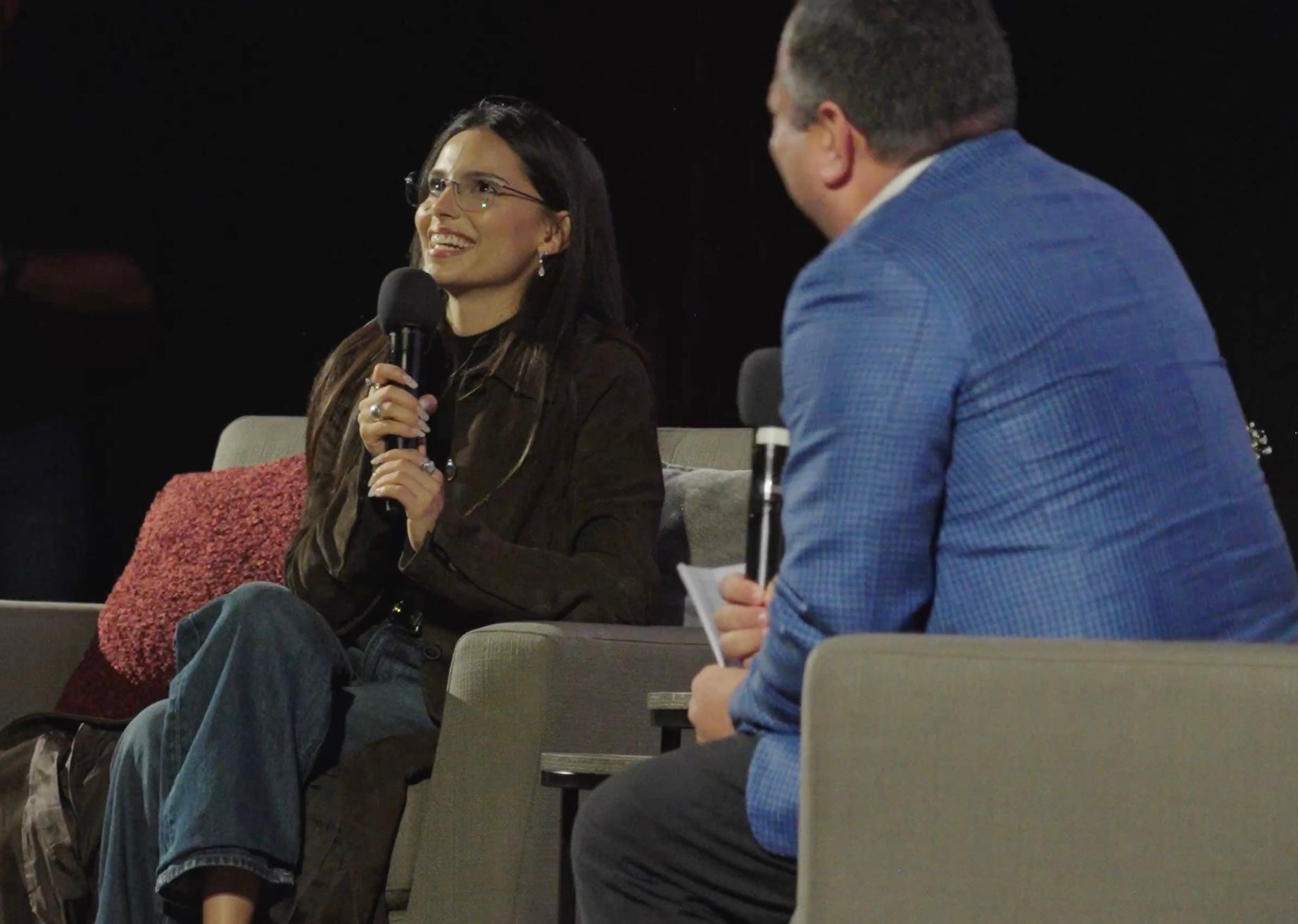
We use cookies.They keep VO running smoothly and help us improve it. Privacy policy