
 Ask ChatGPT


- Podcasts
- Beer Branding Trends
- 121 - Where Does Craft Beer Go From Here? (with Dave Infante of Fingers)
Beer Branding Trends15 Sep 2026 · 1h 2m · 31 chapters
121 - Where Does Craft Beer Go From Here? (with Dave Infante of Fingers)
In short
Where “craft beer” goes next—whether the term still means anything, how the beer market may shrink by 2030, who holds power in the beer-alcohol supply chain, how mainstream media misreads beer trends, and how generative AI affects design and journalism.
Guest
Dave Infante, “world famous” from Fingers (a design firm; discussed alongside Isaac’s company Codo Design). He’s a long-time beer-industry journalist/observer perspective via VinePair/Fingers coverage and design work; Isaac frames himself as a journalist covering beer, not a brewer.
Key claims
“Craft” has faded as a consumer-facing definition; the Brewers Association’s Seal of Independence strained the concept because ownership didn’t map cleanly to “craft” quality. By 2030, craft-style share likely won’t grow much and the beer shelf becomes an “everything shelf,” squeezing beer via spirits/cocktail placement arbitrage. Power has shifted: distributors scaled (e.g., Reyes), but suppliers (e.g., Anheuser-Busch InBev) are reasserting influence over the “red network.” Mainstream media often misses the three-tier system and runs tidy, deadline-driven narratives (e.g., Bud Light/Modelo). AI: established designers aren’t seeing major losses yet, but AI may undercut low-end branding; journalism faces “garbage flooding” and ethical/copyright concerns.
Notable examples
Brewers Association Seal of Independence (2017); Goose Island/Blue Moon/“New Belgians” confusion; Bud Light vs Modelo coverage; Reyes distributor consolidation; Southern Glazers seeking “total beverage” status; Bud Light Peach “freshness” dispute; White Claw’s beer placement; “Gen Z isn’t drinking” narrative; AI label/mockup use and “AI slop” aversion.
Written by AI. May contain mistakes.
Chapters
0:45
Setting the Stage for Discussion
Isaac and Dave discuss their backgrounds and the craft beer industry.
“The off chance that there's a kid in the backseat that's being punished by listening to our show, we bleep it out.”
1:55
The Meaning of 'Craft Beer'
Dave discusses the evolving definition of craft beer and its impact on consumers.
“Let me start with maybe a campfire question, which is craft beer.”
2:28
Craft Beer’s Historical Context
The conversation shifts to the historical significance and changes in the craft beer market.
“Going back certainly last decade, I would say maybe towards 2018, 2019 and into the pandemic, it had started to fade.”
5:02
Consumer Confusion Around Craft Beer
Dave explains the confusion consumers face regarding what defines craft beer today.
“Guzzler is that he does not, he's not going to come very far along on anything that's not right in front of his face.”
6:04
Nostalgia for the Craft Beer Boom
Isaac and Dave reflect on the craft beer boom and what has changed since then.
“So the waters get very muddy and I think that's where the consumer gets a little lost.”
7:28
Expectations for Craft Beer by 2030
A discussion on future trends and potential changes in the craft beer industry by 2030.
“Yeah, I think heady is a really good way to put it.”
10:53
The Beer Shelf Dynamics
Dave talks about the changing landscape of product placement on beer shelves in stores.
“And I'll just pick 2030 because it's a round number, but where does the industry go?”
14:00
The Dynamics of Craft Beer Distribution
Explore the current state of craft beer distribution and influences on market share.
“It is a zero sum game, just like it's a zero sum game on the tap tower.”
15:11
Power Shifts in the Beer Industry
Discuss the shifting power dynamics among distributors and breweries.
“I'm curious from a wholesaler perspective, retailers protecting margins, breweries chasing their hype cycles.”
16:44
Consolidation in Beer Distribution
Examine the consolidation trends in the beer distribution market.
“which is like the sixth biggest privately held company in the country.”
Show all 31 chapters
19:08
Anheuser-Busch's Strategic Moves
Analyze Anheuser-Busch's strategies for realigning its distribution network.
“and into today, more really recently, like the last 18 months or so, you start to see that, that shift start to maybe move the other way in, in a few cases, but really significant cases.”
21:02
The Craft Beer Media Narrative
Critique the mainstream media's portrayal of the craft beer industry.
“Like there's no peach in there, excuse me, Bush Light Peach.”
23:25
Challenges in Beer Industry Coverage
Discuss challenges faced by mainstream media when covering the beer industry.
“The craft beer industry is certainly changing, but you've criticized the kind of craft beer is dying media coverage, which is just like kind of black and white, super black and white.”
26:04
Understanding Market Trends
Learn how understanding the three-tier system is crucial for analyzing market trends.
“Which is taxed as spirits until now there, again, there's a lot of lobbying around that.”
27:25
The Complexity of Beer Market Narratives
Delve into the complexities of beer market narratives and their implications.
“And we saw this a ton in the Bud Light fiasco where like Modelo overtook Bud Light on off-premise dollars, if I recall correctly.”
28:00
Decline of Bud Light: Trends and Mismanagement
Explore the reasons behind Bud Light's declining market position and media narratives.
“this requires, it's just complicated, but it's like, look, Bud Light has been losing volume since 2008.”
28:50
Media's Responsibility in Beer Reporting
Discuss the ethical duty of media in covering the beer industry and the challenges faced.
“And so that's, I think a good example of the general level of inquisitiveness that the mainstream media brings to bear when writing about the beer industry.”
29:50
Headlines and Audience Expectations
Analyze the relationship between sensational headlines and audience engagement.
“And like, that's why like craft beers failing is because like Miller Lite's simple and simple people demand simple beer, just like surface level slop.”
31:20
The Role of Editors in Journalism
Understand how editorial decisions can impact the accuracy of reporting and its presentation.
“I think there's, I think there's, that certainly happens.”
34:00
Gen Z Drinking Trends: A Media Narrative
Explore the narrative surrounding Gen Z's drinking habits and its implications on the industry.
“I think that's a small number of cases, but I think it certainly happens.”
36:10
AI's Impact on the Beer Industry
Discuss the potential influence of AI on design and branding in the beer industry.
“of bad faith, but I do think that it is product of, you know, just the kind of the more benign version of a busted process that I just described where like the editor maybe kind of thinks it to be true.”
38:30
Designers' Perspectives on AI Tools
Hear from designers on how AI tools might enhance or challenge their work in branding.
“No, but yeah, no, I actually feel, I feel identical to that.”
42:01
The Evolution of Branding in Craft Beer
Discussing the changes in branding practices within the craft beer industry and the implications of AI.
“had been working in as you, as Kodo has, I mean, how long are you guys going at this point?”
44:01
Ethical Concerns with AI in Journalism
Exploring the moral and ethical ramifications of AI in journalism and creative work.
“I mean, I'm again, synthesizing six or eight interviews here.”
47:19
The Future of Craft Beer and AI
Examining the potential future landscape of craft beer in the context of AI and corporate challenges.
“And it just is harder and harder to let the, to cut through the noise with a signal for quality, you know, of quality.”
55:10
The Last Sip: Personal Reflections
A brief personal anecdote about the last beer tasted, closing the discussion.
“I think it's interesting and it's very messy.”
56:05
The Ship of Theseus: Defining Craft Beer
Exploring the challenges of defining craft beer in an evolving market.
“like so you kind of it's like the ship of theseus thing where it's like as soon as you put a definition out there you're just pulling away planks at it until what he left with is you know like barely a ship at all.”
56:47
Rapid Fire Questions on Beer Trends
Engaging in rapid-fire questions about beer preferences and industry phrases.
“We're going to adhere to the rule, which is just rapid fire.”
58:05
Investment Decisions in Brewing
Discussing the pros and cons of investing in brewing companies versus whiskey.
“But you will still sometimes hear people refer to share of throat.”
59:18
Learning More About Fingers Newsletter
Dave Infante shares where to find his writings and newsletters about beer.
“your principal there but you can't shelf beer i mean unless you're uh dealing in bush light peach allegedly, but you can't shelf beer.”
1:00:28
Closing Thoughts and Future Shows
Wrapping up the conversation with gratitude and future show plans.
“So fingers.email is where you find that.”

Ask about this episode
Get the gist, explore an idea or ask about something said.
 Claude
On Beer Branding Trends, what are the key points of this episode?
Searching your listeningTranscript
Automatic transcript. May contain errors.
0:00Dave Infante: When you say it's clickbait, what do you mean by that, right? And oftentimes people don't mean anything by it. They just, what they mean by clickbait is I just don't like this, right? And it upsets me, right? And I lack the vocabulary or the maturity to express myself.
0:27Hello.
0:28Dave Infante: Isaac, hi. Hi. The world famous Dave Infante from Fingers is here. Dave, what's up? World famous, man. They know me all over. How exciting. Yeah, that's right. We're Mr. Worldwide. F*** you, Pitbull. Oh, are we allowed to curse? You should give me some ground rules. This is a family friendly. No, say whatever you want. We bleep it out. I don't know why we bleep it out. The off chance that there's a kid in the backseat that's being punished by listening to our show, we bleep it out. All right. I'm going to try to keep it kosher. Good deal. Dave, friends and fans for a long time now, overdue to have you on the show.
1:03We have a rough list of questions just because stuff I wanted to pick your brain about. No real overarching theming. There's your setup. How's that?
1:13Dave Infante: That sounds real good, man. Isaac, I'm a big fan of the work that you guys do at Codo Design. It's a pleasure to be on the show today. I have had the pleasure of seeing your new digs. Well, they were new-ish when Craft Beer Conference, Craft Brewers Conference, excuse me, was in Indy in, what was that, 2024? 2025. 2025. 2025, yeah. Yeah, which was pretty sweet. And so this is, I feel like, the next step on what I expect to be a lifelong friendship and colleagueship. Hell yeah. But yeah, man, I'm good. I'm glad to be here. And rough questions sound good. Smooth questions sound good. Whatever you want, man.
1:53Dave Infante: Let's do it. Rough ones will come at the end. Yeah, right, right. Let me start with maybe a campfire question, which is craft beer. Do you think this term means anything to consumers anymore, or is it just noise? Yeah, that's like the nice easy one up front, and then they're getting worse from here, you're saying? Yeah. The questions are going to be, okay, cool. Yeah. All right, I need to put my f***ing helmet on before I step into the fast-pitch batting cage. No, I think the term craft has, I believe, outlived its usefulness, at least as it faces the consumer. I think there's evidence that it did have a powerful meaning to a cohort of consumers.
2:35Dave Infante: Going back certainly last decade, I would say maybe towards 2018, 2019 and into the pandemic, it had started to fade. But I don't want to say it was always marketing artifice and sort of a meaningless cipher or an empty vessel. I don't believe that to be true. I think that that term did have significant meaning to consumers when signifying full flavored beer when that was still less ubiquitous, right? It signified certain details about its provenance. There was an expectation that the beer was being brewed by a non-corporate-owned brewer, that it was being brewed with more creativity and more fidelity to artisanal techniques and genuine non-LinkedIn-style innovation, but like real, you know, sort of brew, technical brewing innovation.
3:37Dave Infante: Those things were true. I mean, they sound like caricatures now. And to some extent they've become caricatures through, partially through the industry's own sort of fault on it, right? Like the industry is partly to blame for maybe backing itself into a little bit of a corner on some of those things. But it is certainly true that it did mean things to customers. I think you see in 2017, the Brewers Association, which is, as many of your listeners will know, the largest trade group for the craft beer industry, introduces the Seal of Independence, which is a badge that can be put on brewers' beers' labels.
4:20Dave Infante: and on the, they had like door clings and they had, and this was an attempt to redefine or recontextualize the idea of craft beer as something, um, explicitly, uh, tied to a brewer's ownership structure or brewery's ownership structure, right? Like it was going to be, it had to be independently owned. And that I think is really where things began to strain for the consumer. I mean, we, I joke a lot about the American drinking public and there is no one American drinking public. It's certainly not a monolith, but I think in general, my instinct on the, the average drinker, you know, John Q. Guzzler is that he does not, he's not going to come very far along on anything that's not right in front of his face.
5:12And the bridge too far
5:15Dave Infante: was, or I think in hindsight, certainly we can see that the seal of independence was a bridge too far when asking, uh, consumers to, you know, make the leap that all independently owned brewers were somehow more craft quote unquote, then, um, you know, like the goose islands of the world or the, uh, the, even the new Belgians of the world or the blue moons of the world, which was a confusing one from the very jump because it was actually, uh, brewed and, you know, launched by Coors Brewing Company. Um, when, uh, Keith Villa was working for them on their pilot brewery in, uh, in Denver. So like, that's where you start to see the waters get very muddy.
6:03Dave Infante: And it's, again, it's partly the trade's fault, but I think it's also a function of shifting consumer expectations, a shifting media environment, certainly a tremendous amount of M &A that the strategic macro brewers and to some extent outsiders to the industry entirely do to buy up a high level or high prominence craft breweries over the course of that decade as well. So the waters get very muddy and I think that's where the consumer gets a little lost. We're talking in 2026. I'm not persuaded that craft beer has a cohesive and like substantive definition to the average drinker. And I think that's a real and ongoing challenge for the segment.
6:50We discuss it all the time with our clients and it comes up regularly in projects. Are you a craft brewery or are you just beer? And it's an interesting question. There's something kind of sad about it, but you need to have the conversation. How old are you?
7:04Dave Infante: I'm 37. I'm about to turn 38, actually. So I'm 40. So we came up in the same era. And it was heady and fun. And it's really sad thinking about kind of what was lost. Like a 22-year-old, I don't know. They're not going to have the same experience of going to a shitty little – I mean, there are plenty of shitty little tap rooms. But going to a thing and seeing the whole industry be built before you, and it's just sad. I don't know. Yeah, I think heady is a really good way to put it. I mean, obviously it's a beer pun, but I mean it in the more, and I think you did too, in sort of the more like emotive sense where there was this sense that, you know, I'm, my relationship to the industry is a little different than yours.
7:48Dave Infante: It's certainly different than a brewer has to the craft brewing industry. I always try to make the distinction to people that I am not of the beer industry, right? Like I'm a journalist who covers the beer industry. My incentives are different. My perspective is different. And partly, I believe that that's a very important distance to have for being able to do the type of coverage I do, which is often critical or adversarial about the industry and other industries, anything in beverage, alcohol, because I cover it all. But there is no doubt that it was very exciting and inspiring and invigorating to watch, as you say, the craft brewing industry get built right in front of your face.
8:31And there was this sense and, you know, it, it did not pan out this way and maybe it never
8:39Dave Infante: could have, but there was this sense that craft brewing was going to change the world, right? Like not just the beer industry, but the way we think about food systems and the way we think about, uh, community relations. And, um, it was sort of in parallel to the slow food movement, right? There's all this connective tissue between these different sort of vaguely progressive food and consumer-oriented movements, quote-unquote. And there was this vision that never was fully realized but was certainly on the horizon that there was kind of a parallel economy that was being built and could subsist without the support of mainstream media, without the support of public capital markets, without the support of the mighty Anheuser-Busch aligned distributing network.
9:44Dave Infante: Like all of, there was just this huge potential, right? And I think it excited a lot of people and thrilled a lot of people. And when I first started writing critically about the craft beer industry, this would have been in like 2015 or 2016, I received a lot of pushback along the lines of like, yo man, like you're like, this is not good for the movement, right? Like, what are you doing? Like, we're building it. We're doing it. Be a booster. Be a booster. Right. Right. And like, that's never been my role. And, and I've had those conversations with, with sources and, and with, you know, readers and whatever, like that is not the work that I do, but the fact that the, the segment like expected that and, and to some extent felt like everyone was building together, I think speaks to that moment of, it was like a perceived like tectonic shift.
10:43Dave Infante: And it wasn't all fake either, but it never quite bore the fruit that I think its biggest acolytes hoped that it might. Where do you think we go? And I'll just pick 2030 because it's a round number, but where does the industry go? What does it look like by that point? I mean, does it look fundamentally different from today? Are we still having the same conversations? I mean, I think the easiest guess here is that it looks smaller, right? I think that there's a pretty clear trend line, both in terms of the number of firms in the country, um, that are brewing beer, uh, will continue to decline. And I think the overall share of craft style beer will maybe slightly decline by 2030, right?
11:31Dave Infante: Like there's the share is kind of a trickier thing. Cause like there's a moving target because all the overall beer is, is, you know, scaling back. And obviously it also depends on how exactly you draw the line around craft versus other types of beer. But I think it's reasonable to expect that there's not going to be massive share gains in that time. I think also important to think about is what the beer shelf will look like in 2030. And there's 50 different states and 50 different three-tier systems. Everyone always says it in the trade, but it is generally true, I think directionally true, that the beer shelf will continue to become the everything shelf in most states.
12:24Dave Infante: Right. We're going to see more loosening of restrictions on placement for spirits based canned cocktails. We've already, to some extent, that's kind of fait accompli on wine based like riot punches, like the beat boxes and the buzz balls of the world. Right. Like the Sazerac company has done a very good job of blurring that line by spinning off fireball cinnamon, which is a malt based product that's made to taste like a whiskey flavored product. That's not even really whiskey either. Right. But like that's so they can sell fireball cinnamon nips in gas stations, which traditionally and legally are only allowed to sell beer.
13:08Dave Infante: So I call this placement arbitrage. I've written about this before, and firms are doing this very effectively in terms of their go-to-market strategy with their product mix. But also lobbyists in state houses across the country are working very aggressively at the political level and the regulatory level to redraw the lines to allow more things to be available to more consumers and more retail places, regardless of the alcohol base that they contain. I think that I don't see any major reversal in that trend between now and 2030. I think it's a fair expectation that there will be more stuff on the shelf that is not beer and the shelf doesn't get bigger.
13:52Dave Infante: Right. So that space has to come from. I mean, sometimes it does. But the hypothetical shelf does not get bigger. Right. Like it is for the most part at meaningful scale. It is a zero sum game, just like it's a zero sum game on the tap tower. If your keg goes on, that means someone's keg has to come off for speaking generally. And so I think that it's fair to assume that share will come from beer generally. And unfortunately, I think it will come from what retailers think of as craft beer more specifically, like whether that is BA defined craft beer. That's harder to say. I tend to think it probably will be because retailers are looking for more simplification and the opportunity to deal with fewer suppliers and fewer distributors.
14:45Dave Infante: There is a big conciliatory impulse through the second and third tier, the distributor tier and the retail tier. And again, longer term, past 2030, you know, 2040, 2050, I don't think that that necessarily holds forever, but that is certainly the way the pendulum is swinging right now. Yeah, I agree. You mentioned incentives a bit ago. I'm curious from a wholesaler perspective, retailers protecting margins, breweries chasing their hype cycles. Who do you think – who has the most power in BevAlk right now? I think that until really recently, it was distributors. As everything, this stuff is fluid, right?
15:38Dave Infante: In the 90s and into the early 2000s, it was very clear that macro brewers, specifically Anheuser-Busch and to some extent Miller Coors, which is now Molson Coors, had the upper hand, right? And you saw that in the way the pitched battles happened between the first wave craft brewers and Anheuser-Busch for the most part, where they were fighting, not the distributor, but they were fighting like August Bush III because like he had such an iron fisted control over the red network, right? Which is what the trade calls the Anheuser-Busch distribution network. Um, so that changes a little bit last decade and into this one, you start to see, um, the rise of, uh, specifically of, of Reyes, I think is probably not probably, it certainly is the best example of this where, uh, what is now known as Reyes beverage group.
16:42Dave Infante: It's a division of Reyes holdings, which is like the sixth biggest privately held company in the country. They own like a Coca-Cola bottling division and a food services. They like service fast food companies or whatever. I don't know what the rest of their business is, but it's all in the, like the general, like consuming consumer, consumable space. Reyes beverage group goes on a massive buying spree and really becomes the first meaningfully nationally scaled beer distributorship. They do a lot of this from California, but where, you know, they, they consolidate an enormous amount of case volume under their golden brands subsidiary, but they are also doing it in other parts of the country as well.
17:34Dave Infante: And they wind up, you know, with just this huge footprint that was never really the way the middle tier was conceived of. If you go back and read, you know, like the, and I've done this because I'm a loser. Uh, you go back and go back and read the dork, not a loser. Yeah. There you go. Thank you. Thank you. Oh, that's very kind of you. Uh, you go back and read the way the middle tier sort of takes shape in the post prohibitionary, you know, ether. And it's really conceived of as this local and non-scalable bulwark against control from consolidated suppliers, the Anheuser Bushes of the world. Reyes and a few others really start to break this model.
18:25Dave Infante: And again, they're not the only ones. You see Meritage come in, which is a private equity company, and acquire a piece of Columbia. You have Southern Eagle that starts you know, like consolidating a bunch of Texas. You have the Sheehan companies in the Northeast that are doing an enormous amount of consolidation via acquisition and buying new markets. But everyone kind of gets the sense that there's opportunity and, you know, scale in the middle tier. And that's, uh, it's not totally new, but it, it becomes realized, uh, in a big way in like, you know, over the course of last decade and the aughts into the 2010s or whatever, and into today, more really recently, like the last 18 months or so, you start to see that, that shift start to maybe move the other way in, in a few cases, but really significant cases.
19:26Dave Infante: The biggest one being Anheuser-Busch InBev starts to realign its middle tier footprint towards Southern Glazers Wine and Spirits. And to do that, and Southern Glazers is the biggest wine and spirits distributor in the country. They are racing to become a quote unquote total beverage distributor, you know, to take really in no small part to be able to compete with Reyes because that's kind of where consumer demand is. is the single serve, you know, uh, whether it's spirits based stuff, malt based or whatever flavored alcohol beverage, um, type products, right? Like it's much less about full bottle wine and spirits these days and much more about, you know, like the cut water tall boys and the high noon tall boys and the extreme twisted tea tall boys, right?
20:19Dave Infante: Like all of those products are different bases or, you know, spirits and malt or the beatbox tetra pack, right? Which is a wine-based one, but like they all, that's where the demand is and distributors want to be able to service that because that's, that's the money, right? That's where the pull is. But to do that, they've got to do their own acquiring, right? And so Southern Glazers has been looking for ways to get closer to Anheuser-Busch and Anheuser-Busch coming off of the Bud Light fiasco of 2023 is kind of like got its footing again. It's feeling itself, I would say, a little bit more. It feels like it's got the upper hand and has started to put the screws to smaller independent distributor ships that it wants either to reassign to someone or wants to reassign to southern glazers in particular and so you start to see agita about 18 months ago in the red network over anheuser-busch you know muscling up on these nominally independent distributorships there was like a lot of like friction over like the idea they were accusing people of like distributing like bud light peach out of code for example like bud light peach was like one of their like spinoffs and it's like first of all like is anyone gonna notice man like you know you do are we really concerned about like freshness on Bud Light Peach?
21:47Dave Infante: Like there's no peach in there, excuse me, Bush Light Peach. I misspoke, but like, there's no peach in there, man. People who drink Bush Light are not too worried about like when it came off the line. Like to some extent, that's the beauty of a product like that is that like, it's, you know, seasonally agnostic because it's kind of a simulacrum. But, um, so this was always kind of perceived in the middle tier is this like trumped up, you know, pretense in order to start to reshape the red network the way Anheuser-Busch saw fit. And that's the first time I would say in the, in the 10 years ish that this has, this, that era has been, you know, the consolidation of the military has been going on that we started to see a supplier really kind of like make such an explain.
22:34Dave Infante: It never was quite explicit. They would never come right out and say it, but like, that was the first time we really saw a supplier put its thumb on the scale in that way. And that suggests that, and as goes Ian Heuzer-Busch, so goes the industry to no small extent, but that suggests that the bigger suppliers are starting to feel like they have more hand there. And I didn't even mention Constellation's whole s*** in California where they were reassigning the Modelo, and they were realigning Modelo stuff. That's another example of that as well. I don't know if you've heard, but the beer industry has gone flat.
23:12Dave Infante: What? That doesn't sound right. It's lost its buzz. Yeah, that's right. Trying to think of other ones. We were talking about mainstream media briefly before, kind of in your background before we started recording here. The craft beer industry is certainly changing, but you've criticized the kind of craft beer is dying media coverage, which is just like kind of black and white, super black and white. But what does mainstream media take? What do they still get wrong about beer in 2026? Is there anything that they get wrong or right? Yeah, they get a lot wrong, right? Like, and obviously it is, I'm biased here because I'm not in mainstream media, quote unquote, and I'm independent to, you know, I'm a contributing editor at Vinepair and I publish fingers, but like, I'm, if not a full blown media outsider, I am certainly not in like the rarefied halls of, of, uh, of corporate media, right?
24:06Dave Infante: Like, uh, so take it with a grain of salt that I have, I have no love lost for mainstream media as an institution. I do think that a big challenge for mainstream media when covering the beverage alcohol space, beer in particular, but wine and spirits to, to some extent as well is like, they just have no experience with the concept of a three-tier system, right? Like it is, it's a really unique and unusual beast. And that's true. Like it's an anachronism and people within the industry rail against it as, as, you know, uh, monopolistic or, or insist on the other side of the argument that it's, it's an essential, you know, sort of secret sauce to keeping the industry, uh, afloat or whatever the case may be.
25:00Dave Infante: But regardless of your moral evaluation on it or your logistical gripes with the middle tier and the three tier system, it is just really odd. So what often happens with mainstream media, there's just no other comp to it in American commerce, basically. I mean, car dealerships to some extent, but those are also covered poorly because the average business reporter at the Wall Street Journal or the New York Times or CNN, CNBC, whatever the rest of the business sheets are, they are not apprised of all of the idiosyncrasy of this market. And yet, as we just discussed, the three-tier system is enormously influential over the shape of the market itself, right?
26:04Dave Infante: You can't understand why White Claw blows up in 2018 without understanding that it's sold as beer, which means it gets placement next to beer, and it's taxed as beer, which means it's dramatically more attractive margin-wise to make than a vodka soda, right? Which is taxed as spirits until now there, again, there's a lot of lobbying around that. And depending on the state, it can be different. But the point is like, you can't understand that without understanding the three tier system. Right. And so what, that's just one example, but what you, what it produces for a journalist who, you know, I don't think that, I think a journal, a business journalist at the wall street journal.
26:51Dave Infante: In fact, I know some of them and some of them do great work. And this is, I'm just speaking sort of generally here, not trying to single out the Wall Street Journal specifically, but like, if you get like a, a business reporter, who's like, I need 800 words on Anheuser-Busch's, you know, earnings report from last quarter. and I need it like two days, you know, a day from now, there is no room for that journalist to apprise themselves of all the factors that have gone into, you know, it's into producing the outcomes of that earnings report. And we saw this a ton in the Bud Light fiasco where like Modelo overtook Bud Light on off-premise dollars, if I recall correctly.
27:38Dave Infante: And you see this explosion of headlines being like, like Bud Light, like went broke and went broke. And now Modelo's the best beer in the world. Right. And it's like - Happened overnight. Yeah. Right. Exactly. And it's like, dude, I did a couple of press hits about that where they would be like, so like what happened here? And I'm like, you know, people's eyes glaze over because this requires, it's just complicated, but it's like, look, Bud Light has been losing volume since 2008. Right. Like this was always going to happen. Like if you zoom out, the trend lines are like very clear, right. They're all, they're, they're converging on one another.
28:14Dave Infante: It is possible, even likely that Bud Light's, uh, that Anheuser-Busch's colossal mismanagement of the right-wing backlash against Bud Light in 2023 hastened the fall of Bud Light as the, you know, unalloyed leader of the beer charts, right? Which a position it had held for f***ing 25 years, right? But there is not much evidence for the idea that, like, this was solely due to that that mismanagement. That's a very tidy, in fact, way too tidy story to tell, but it's one that's very appealing to a mainstream business journalist on a deadline who has virtually no context on the industry and is asked to produce a story on the quick about what went down here.
29:09Dave Infante: And so that's, I think a good example of the general level of inquisitiveness that the mainstream media brings to bear when writing about the beer industry. And to some extent is their fault. Like, I don't want to let, you know, individual reporters off the hook or publications off the hook. They have a responsibility, an ethical duty to get the story right. And they also, that is the job, right? But it's also - Ostensibly, yeah. ostensibly right i mean i'm talking about journalists who are working in good faith we can talk i mean there's not i don't see like a ton of bad faith in terms of straight news reporting about the beer industry there's an enormous amount of bad faith in opinion writing about the beer industry that makes it to the pages of the new york uh times opinion section or the atlantic just did an absolutely dog take about how like miller live wrote about it and fingers, but like there was this like really like lazy, like Miller Lite is like the beer of the Volk.
30:09Dave Infante: And like, that's why like craft beers failing is because like Miller Lite's simple and simple people demand simple beer, just like surface level slop. Right. So like, I do think that that a lot of that is bad faith. But in terms of the straight news reporting, I'm mostly, my perception of the overall quality of coverage and where it's lacking is mostly, I mostly draw that back to a lack of experience, a lack of, it's like a, you don't know what you don't know type of thing. Like a lot of business reporters are there to report on the beer industry one day and then the like flat screen TV market the next day.
30:45Dave Infante: Like they are not specialists and this is a specialized industry and a lot of nuance gets lost. That's really critical to, to actually understand what's going on. Is there an, so you talked about the, the kind of quick turn there's no time for nuance there's no time for expertise you're just cranking out an article in a day or two is there another incentive in there where the the more juicy the headline you know like gen z's not drinking like like that like that that gets more i mean is is there another part there where just especially maybe not the writer but like the editor i don't know about the apparatus of this stuff but they just choose the most salacious headline and that kind of becomes the story anyway i mean is that is that part of it too.
31:24Yeah. I think there's, I think there's, that certainly happens.
31:28Dave Infante: Like, and I've been in conversations with editors where over 15 years of doing this, I've had bad experiences where I've had to fight headlines that I thought were inappropriate or reductive or just not accurate. The, the, the general mechanics of producing journalism, and this is different across every newsroom. And it's way different now because of how much independent journalism is produced where it's a one man band and it's just someone writing on Substack or on Beehive or whatever the case may be and then publishing it on their own. But the general arrangement is that the reporter goes out, talks to the sources, does the research, writes the draft.
32:13Dave Infante: The editor will come in, edit for structure, edit for phrasing, edit demand more substantiation on specific facts or claims, excuse me, that need to be substantiated as fact. And then the editor's response will take once the piece is edited to satisfaction, the editor will take the piece, put a headline on it that they think will perform properly and best reflects the publication's tone and style and whatever and and puts it forth into the world. So many times, I don't want to say all the time, but often the writer of the article, the reporter who actually went out and did the reporting, is not the one who drafts or who files the headline and the deck, you know, the subtitle.
32:58Dave Infante: And you see this chatter a lot and we're used to on Twitter and now on Blue Sky, which is where I post these days. But you see like friction around that where like maybe like people who aren't necessarily aware of this kind of inside baseball relationship will yell at a journalist for a headline that they don't like that they think is misleading or whatever. When in reality, like that journalist had nothing to do with that headline and may not like it themselves. So that is just a basic dynamic that happens across all journalism. It's not specific to beverage alcohol journalism. It's just kind of the nature of the business.
33:35Dave Infante: And it is a real, it can produce real bad outcomes. Like there are certainly instances where like editors are either behaving in genuine bad faith, you know, and are putting their thumb on the scale to frame and package reporting a certain way to a casual audience that's not going to read the article in order to give an impression that an article says something it doesn't. That definitely happens. I think that's a small number of cases, but I think it certainly happens. I think even more often, a much broader or bigger pool of bad outcomes here is generated by an editor who simply doesn't have subject matter expertise and is overworked and has a big traffic number on their head that they're expected to hit every month.
34:23Dave Infante: It knows what will perform with an audience because editors get a good feel for what's going to drive traffic and what isn't. Their responsibility is to always try to balance the traffic demands against the ethical demands of telling a good story. But that is not a precise science, right? And so when you brought up like Gen Z isn't drinking, that narrative, right? There's an enormous appetite for like intergenerational like punching down, right? You know that that coverage performs well. You're 40. I'm about to turn 38. You lived through the era. Sort of the archetypical version of this is millennials can't afford to buy houses because they're spending too much money on avocado toast.
35:12Dave Infante: and they're not saving, right? Like that article was everywhere in 2012 because it worked, because it performed really well, because people, whatever, like contrary to whatever they claim about wanting to read, like I just want objective straight news reporting. No, what people want is like coverage that reaffirms their priors. And like, that's unfortunate, but that's true. And editors are human and they are, first of all, they have priors of their own, right? And that they like me, that just is like, well, that must be what's going on because that's what I think is going on. Right. And second of all, they are obligated to package the story in a way that performs the best.
35:52Dave Infante: And those are negotiated intellectual and editorial conversations. And the negotiation doesn't always produce the best packaging. Like their editors are fallible. Publications are fallible. I don't, I'm not persuaded that the Gen Z isn't drinking narrative is a product purely of bad faith, but I do think that it is product of, you know, just the kind of the more benign version of a busted process that I just described where like the editor maybe kind of thinks it to be true. The editor knows that's going to play well. Every other publication is writing that story. You're going to be the one that's not going to like, you know.
36:31Dave Infante: So like, I do think that those things gain momentum that way. Like people will deride it as clickbait. Oh, this is, you know, like, which is like, look, man, I remember deadspin when it was still doing good work before it kind of got gutted, but like, they had a story about like this, like criticism of like clickbait is just like completely at odds with the way the media business has always worked. And to show this, they, they went back and like pulled a bunch of headlines from like newspaper archives where like newspapers always have published like the most sensational version of the headline, right?
37:07Dave Infante: Like that's, that's the business you're in. You want people to read it. That's not clickbait that existed before clicking was even a thing, right? Like that's just, that's getting someone into the story and grabbing someone's attention. Like that's, you know, people will, will throw out clickbait as though that's sort of like a, you know, it's this like thought terminating cliche where it's like, well, this is just clickbait. Someone some dipshit on LinkedIn, like was in my comments the other day because I'd published something about RNDC not paying its bills. And he's like, this sounds like just clickbait, you know, whatever.
37:39Dave Infante: And it was like, so I responded to him and I was like, is your contention here that like I made up the six suppliers I interviewed for this and the two former employees I interviewed for this and the documents that I obtained that like show this, like what, when you say it's clickbait, what do you mean by that? Right. And oftentimes people don't mean anything by it. They just, what they mean by clickbait is I just don't like this. Right. And it upsets me. Right. And I, I lack the vocabulary or the maturity to express myself. Right. But like, but no, I do think that like the, the, you know, zoomers not drinking narrative is one that the media has been complicit in advancing to the detriment of the industry.
38:21Dave Infante: And certainly, uh, uh, you know, as a poor reflection on the media itself. Should we talk about AI? Is that boring? Or like, are you interested in talking about that at all? Yeah. With you? Yes. With most people? No, but yeah, no, I actually feel, I feel identical to that. I would, I would be interested to talk. Okay. So, uh, the last time we spoke, you reached out to me, uh, just to talk shop for an article you're writing. Yes. So I have you, that was maybe a month ago. Have you learned anything? I mean, uh, about it, like, has your, I don't know if you even had a formal stance, but like, what do you think?
38:56Like, what do you think about this? And maybe we should frame it on its impact on the beer industry, but I mean, I don't know, like in your writing and design and the way we conduct our work, uh, this is the most messy goddamn question I can ask, but how do you think about AI and its impact on what we do every day here? Yeah.
39:16Dave Infante: So I filed this column at VinePair, I think in early May. And to put it together, the thrust of the column was just to understand where designers who have worked in the beer category with clients or in-house or both, what the impact on their business was from the generative AI boom. So that was the scope of that coverage. And I spoke with you, Isaac. I spoke with Matt Tanaka at Stout Collective. I spoke with like three or four, M. Sauter at Pines and Panels, a couple other folks as well. So, and the upshot of that column was that established designers who had been working in the space for a while were not seeing an enormous detriment to their business or really any detriment at all right now, right?
40:12Dave Infante: We're writing in May, 2026. The consensus to the extent that one existed was that this is a tool that a lot of brewery owners seem interested in using? I know you mentioned, and I think Matt mentioned that like there is some, or there seems to be at least some utility, whether it's transitory or, you know, permanent in having brewery owners be able to use a generative AI program to kind of like help with their mock, you know, like to describe what they want you to ultimately do at like a greater scale and greater depth for their brand. But like, if you lack the basic semiotics of design, it is difficult to be like, Hey, I want it to look like, you know, eighties Miami vice style label.
41:08Dave Infante: And I want it to, you know, feel very electric and whatever. And maybe there's some utility to having a chat GPT or a Claude, uh, kind of like whip things up for that person on the fly that they can kind of just continually iterate on until they're satisfied that it represents enough of their vision that they can then turn around and call up Kodo Design and be like, hey, I want a brand strategy oriented around this image, right? Like, so there was some consensus around that as like a potential utility to some extent in this specific context. What I think everyone expressed concern around, um, is that like all the designers I talked to were not just starting out, right?
42:00Like those designers
42:01Dave Infante: had been working in as you, as Kodo has, I mean, how long are you guys going at this point? 10 years longer? Uh, 17 or 18, 17 or 18 years. Right. Like, so, so you have worked very hard and, And, you know, I'm on your podcast, so I'm flattering you more than you should in front of your audience. But like Kodo's worked very hard to get to the point that it is. You guys have done a tremendous amount of free work to establish yourself in the space, you know, and you've done great paid work to build really good brands that have a distinctive look and feel and also like just a clear uh cohesive visual and uh i don't know emotional uh core to them so what designers that i spoke with were more concerned about is like yeah maybe i'll be fine for the foreseeable future because no one is going to swoop in and like stand up a bunch of Claude agents to be like a branding house, right?
43:07Dave Infante: Like that's not really what's going to happen here, but they might, you know, a bunch of breweries that are like scraping by and don't have enough, not shitty, but like low level breweries that are scraping by and like, don't have the money to, you know, to do that type of project and are really kind of living label to label and release to release. they may just offload all of those smaller jobs onto generative AI. And that work was what you might've gotten starting out. Right. And like, so who's going to start out in this business if you can't get the$200 label jobs or you can't get the, you know,$500 package job or whatever, because it doesn't exist anymore.
43:50Dave Infante: There's this, like, we see like a cliff or like a, like the, the ladder's getting pulled up a little bit. Um, it seems, is that a fair characterization of your perspective? I mean, I'm again, synthesizing six or eight interviews here. So like you obviously are just, you have your own perspective on it. What's your take? It's shifting every day. I will say that on the, the, the last point you made, I don't feel, uh, entitled to, to those projects or never felt entitled. So when I, when I, I kind of bristle, this is a personal thing. This is, I know I am Codo, but I'm not speaking as Codo. But when people talk about like, well, if you just give it to AI, then you don't give that to me.
44:31It's like, well, no, Codo is not entitled to any of your work ever. Like we got to earn it and we got to do great work and do it. So, uh, that, that's just like a quick gut reaction, but, but I don't know. I mean, I think that I don't want to begrudge a small, like AI work looks like it. Like there's a thing there. I don't know that it will always look like it. I think that I have, I know we talked about this as well. Last time we spoke, I have a personal aversion to it when I see it out in the wild.
45:03There's a basic utility in graphic design or investing in branding where if a thing looks good, you assume the product is good. It elevates the product. That's one of the 101 reasons why you would invest in this. Today, this may change by 2030, but if I see something with AI, I'm never going to give you my money ever. I'm not going to buy it. I'm not going to even talk about it or think about it because I just assume it's yeah I don't know I mean my I could tell you that our team despises it uh including Cody I mean like morally ethically uh he he he uh speak for Cody for a moment he hates it in a way that I've not seen him despise anything uh to include to include me Cody despises me uh we've been like an old married couple uh and he he gets because I'll you like it's it's a great I know I know we discussed it like you don't use it at all right You don't use any, no tool at all.
45:55It's great for just, you know, bullshit tasks that, you know, you could just like, hey, synthesize this data or something like it's great for that. And Cody just like despises it. So our whole, I don't know, our team hates it. I'm not even making any cogent points.
46:09Dave Infante: No, I think that it speaks to how difficult it is to find solid ground here. I will say that all of what I, my previous response where I was summing up my reporting was downstream of moral and ethical considerations. Like from my personal perspective, as someone who's worked in journalism for 15 years, and I mean, it's not for the f***ing money, man. It's not like I do this because I'm like, you know, raking in the riches. I work in journalism because I believe that journalism is important, and I think telling the truth is important. I believe strongly in the mission of journalism as conceived by Upton Sinclair of afflicting the powerful and comforting the afflicted.
46:54Dave Infante: Those are things that I do not – I'm not worried that generative artificial intelligence is ever going to replace that work. What I do worry about is that it is making it harder and harder for a journalist to make a living doing that work because it's generative AI programs have made it so much easier to flood the zone with just garbage and anyone can do it. And it just is harder and harder to let the, to cut through the noise with a signal for quality, you know, of quality. That's a concern for me. There's also the basic concern of like, I think that it is theft at an industrial scale. And I have yet to be, you know, I'm not a copyright lawyer.
47:42Dave Infante: Right. And I don't think that copyright is a, oh, I'm not any kind of lawyer, but like my understanding is that copyright law is a really blunt instrument. And even copyright lawyers who I've read on this matter will argue that like, this is just not well suited to like how we understand copyright law and what that body of case law says. So, uh, uh, you know, that this is a fallback position that you hear a lot where it's like, well, it's like, it's not illegal. It's like a fair, you know, it's fair use. It's just like, if, you know, someone read your work and then wrote an essay responding to that work or incorporating your ideas, right.
48:23Dave Infante: But they cited you or whatever. How is that different? Well, one, there is a meaningful difference in the scale, right? Like one person or even a group of people reading my body of work and then responding to it or producing their own work on top of it is what we understand the academic process to be. There are rules around it and there are norms enforced around it with regards to plagiarism and to some extent copyright laws. But that's different than the entire population of the world being able to press a button and have a for-profit corporation do that synthesis across not just my body of work, but all bodies of work and sometimes make up quotes that are attributed to me or pull without citing or whatever.
49:14Dave Infante: There's less accountability and there's massive exponential orders of magnitude more scale. And I think that that is a difference, right? I think that there is a real difference between one person making a fair use argument and open AI building a trillion dollar plagiarism machine on a fair use argument. I'm not persuaded by the, you know, I do think that there's a line to be drawn somewhere in between. And I don't think that there's a lot of good faith argument to the contrary, or I've yet to encounter it. So that's an ethical consideration. And I am I am on the losing end of that ethical consideration.
49:54Dave Infante: So I have some motivated reasoning there. I'll acknowledge that. And then the other thing that I would say, and this is not really related to the beer industry, although it does kind of relate back to what we were talking about earlier with regards to craft beer. I was talking about this with Kate Burnett the other day, who's a great journalist in the beverage alcohol space as well. She writes for Feel Good Insights. She's the lead analyst there. but the nature of the AI industry right now, such as it is, is that there are like pioneer models or like bleeding edge models, whatever the f**k they call them.
50:32Dave Infante: These are like the open AI chat GPT new models that they introduced, Claude, Fable, I forget what the newest one is, Gemini, if anyone uses Gemini, I don't know. But those are models that are controlled by corporations, right? OpenAI, Anthropic, Google. And the incentives for those businesses are, I think, pretty demonstrably based on all the available reporting, completely out of whack, right? They're scaling with new data centers that cost billions of dollars. To do that, they're borrowing from NVIDIA, which is the manufacturer of one of the big chip companies. They're borrowing from private equity firms that are in between.
51:17Dave Infante: There are really savvy business and tech reporters that have done a lot of very good journalism to try to draw out the relationships between all of these businesses. And what we see is that it's kind of not – it's a circular economy in a bad way, right? Like these are big corporations that are kind of all investing in one another, and it has the contours of a bubble. There are also businesses that are controlled by billionaires and by people who do not have the same values about the world and about communities and about products as the rest of us. They have shown that in many different ways, that they have a different vision for the world than many of us do.
52:08Dave Infante: And it's one that comes at many of our detriments, our collective detriments. And this is where I think the craft brewing industry has an opportunity or a stance that it has not taken. And I'm not sure that it will, but it does seem to me that there's an alignment or a potential alignment with, you know, craft brewers saying we don't like what, whether we like the imagery that ChatGPT spits out, you know, or not, you know, maybe I can live with the slop, right? And maybe I even like the slop because I just have bad taste. Right. But I mean, you know, like never bet against the taste level of the, you know, like, but see Bush light Pete.
52:53Right.
52:54Dave Infante: Exactly. Exactly. But like, you know, maybe I, I don't mind drafting my emails with Claude. Right. And that is, there's minor utility to me and I don't have, you know, an ethical concern around it, but I do have a concern about like these these companies gaining more power over our information ecosystem and more power over our political system than they already have. And that's a reason that I don't want to be aligned with these businesses or I don't want to participate in these businesses. And that ethos, I would argue, has a pretty tight parallel with how we understand the craft brewing industry or We understood the craft brewing industry as a, a corporate and, uh, community oriented and, and locally oriented, you know, quote unquote movement that was trying to envision a different way of doing business and a different way of, of, uh, of, of creating, you know, meaningful products that, that people enjoy in the world.
54:01Dave Infante: And that brings it kind of full circle to what we were talking about at the beginning, which is like, there was a version of that where like, you know, like, I don't think that those two things are far apart. Now, whether the craft brewing industry of 2026 has, you know, like that time may have passed for that, for the industry to make a meaningful stance around it. And it's not a monolith either. There's always going to be sort of, you know, debate within these, uh, these groups, uh, whether it's brewers or it's consumers or whatever. You can't bank on one opinion coming out of the craft brewing industry writ large.
54:36But the values that were once so closely espoused and so closely held by
54:44Dave Infante: many craft brewers do seem to align quite nicely with an AI-skeptical and anti-corporate posture. Agree. I think back to the idea of 2030, you're just kind of, you pick your horizon. There is some redefinition that's required. And I think that, I don't know that that's necessarily led by the BA. I think that just we, the royal we as an industry need to figure out what those values are and where we stand. And I don't have an answer there. I think it's interesting and it's very messy. yeah and i think you're right that the ba cannot be looked to or even if it was looked to is not capable of doing that redefinition like yeah defining craft beer in the first place was a grassroots like bottom-up project right and like the ba interceded to try to put some definition around it but as soon as they try to put definition around it they got into the quagmire of being like well we have to like redefine it because like boston beer company is like now making twisted of tea and it's not making angry orchard whatever so then they like kind of redefine it that way and then like oh uh was it kieran yeah kieran bought 25 percent of uh brooklyn brewery but like oh well 25 isn't that's not a majority and like let's like well so now we're gonna say the majority you know like so you kind of it's like the ship of theseus thing where it's like as soon as you put a definition out there you're just pulling away planks at it until what he left with is you know like barely a ship at all.
56:15Dave Infante: And it's, I think that's the, the, the peril of a top-down definition is that it, it just like, can't, it can't function to cohere a, uh, an organically sort of like redeveloping, constantly redeveloping, um, like group of independent firms. That's something that has to happen from the grassroots of those firms and negotiated space between them and the consumers in the marketplace. Rapid fire. We're going to adhere to the rule, which is just rapid fire. Yeah. What is the last beer you drank? I had a light lager from Vossen Brewing Company, which is here in Richmond, on Sunday. watching whatever World Cup game was on.
57:09Dave Infante: I kind of forget. It was very good, though. Good. Excellent. What Beyond Beer or fourth category segment do you think most breweries should explore right now? Selfishly, hop water. I love hop water. I know that there's not a huge opportunity in it, but I do think there's some opportunity, and selfishly, I would very much like to drink more hop water. Good answer. Agree there. If you could permanently delete one phrase from the beer industry's vocabulary or the reporting thereof, what would it be? That's a good question. There's so many. White space innovation. That's a good one. I'll give you mine, which is anytime anyone describes beer as liquid or they just call it liquid.
57:51Dave Infante: It's a tough sell. It happens in every one of our conversations. I get it. Drives me crazy. Wait, wait. Can I revise? White space innovation, I think, is probably the most well-known one because this other one is kind of deleting itself or has kind of deleted itself. But you will still sometimes hear people refer to share of throat. Oh, God. That's the only answer here. You're right. Oh, yeah. But I think people have kind of stopped saying that because it feels so weird that they're deleting it from their own vocabulary. Cody and I, I think we first heard that from a distributor back in like 2014.
58:27And Cody and I were, I mean, we still are kids, but we were children. And we looked at each other like, this guy's with us, right? That's not a real phrase. Share a throat. That's the answer. Yeah. I actually haven't heard that in a minute. That's good.
58:40Dave Infante: I'm telling you, it really is. It's faded out. That's why we need to bring them back. The kids must know. That's what the beer industry needs today. Okay. Better investment. You got a hundred grand to sink into something right now. Second best brewing company equity or uncle nearest? Oh my God. uh it's tough right it's very tough um
59:11Dave Infante: i'm gonna go uncle nearest because the shelf life so the product can sit for as long as possible obviously there are rickhouse fees and there's not insignificant amount of like drag on your cat on your principal there but you can't shelf beer i mean unless you're uh dealing in bush light peach allegedly, but you can't shelf beer. It's actually a good answer. Okay, good. Sorry to second best brewing. Final question. Where can people go to learn more about you and subscribe to the fingers newsletter? Yeah. So I file a column every week about the beer industry. It's called hop take. It's at vine pair that comes out on Fridays and then excellent listener.
59:54Go, go there. If you haven't.
59:56Dave Infante: Thank you, Isaac. And that's free every week. So there's no paywall on vine pear stuff. So it's a good way to get familiar with my work. Um, and for the real sickos, the true heads, um, I publish an independent newsletter about drinking in America called fingers. Uh, it's going on entering now it's seventh year of publication. Um, it is at fingers.email. Um, and that is, uh, typically a Wednesday column and then a Sunday, uh, a weekend or a digest as well. And, um, and some original reporting from time to time and some other fun stuff. So fingers.email is where you find that. And I'm on blue sky at, uh, dinfante.com.
1:00:35He's also over on truth social. I will say that I love your, your, your Sunday, uh, newsletter is something that they're, they're I've subscribed to maybe four or five newsletters. I love your newsletter. It's exciting. I know I mean it. I mean, that's why you're on the show. I love reading it. I trust you. I trust your take. I don't always agree with what you say, but I enjoy your perspective and I love it. And I'm glad you're here. Thank you for your time today.
1:01:02Dave Infante: Thank you, Isaac. That's so kind. And I'd come back next time you'll have me if ever, but thanks so much for having me, man. We'll have you back. We'll get Cody in the mix next time. He can bitch about me to you. I was going to say, we get on you for your AI, for your AI curiosity. Yeah. When we, when Codo finally divorces, it will be because I used AI for some benign thing and Cody just, he's like, this, we're done. All right. Well, if, if, and when the split happens, I'm claiming you in the divorce. No, nothing against Cody though, but I don't know him. And I, you know, you'll be my large adult son, you know, you're a beautiful baby boy.
1:01:35Dave Infante: Thank you, Dave. All right. Take care, man. Thanks for listening to beer branding trends. If you like what we're doing here, if you find this valuable, please rate and review us over on iTunes and head over to beerbrandingtrends.com to join more than 5 ,000 subscribers who receive our monthly email newsletter covering strategy, currents, and actionable advice from Kodo Design, a branding firm on the front lines of beer and beverage branding. Take care. We'll catch back up with you soon.
From the publisher
Points of discussion:
-
Learn more at: www.craftbeerrebranded.com / http://www.beyondbeerbook.com
-
Have a topic or question you’d like us to field on the show? Shoot it our way: [email protected]
-
Join 9,500+ food and bev industry pros who are subscribed to the Beer Branding Trends Newsletter (and access all past issues) at: www.beerbrandingtrends.com
More from Beer Branding Trends
All episodes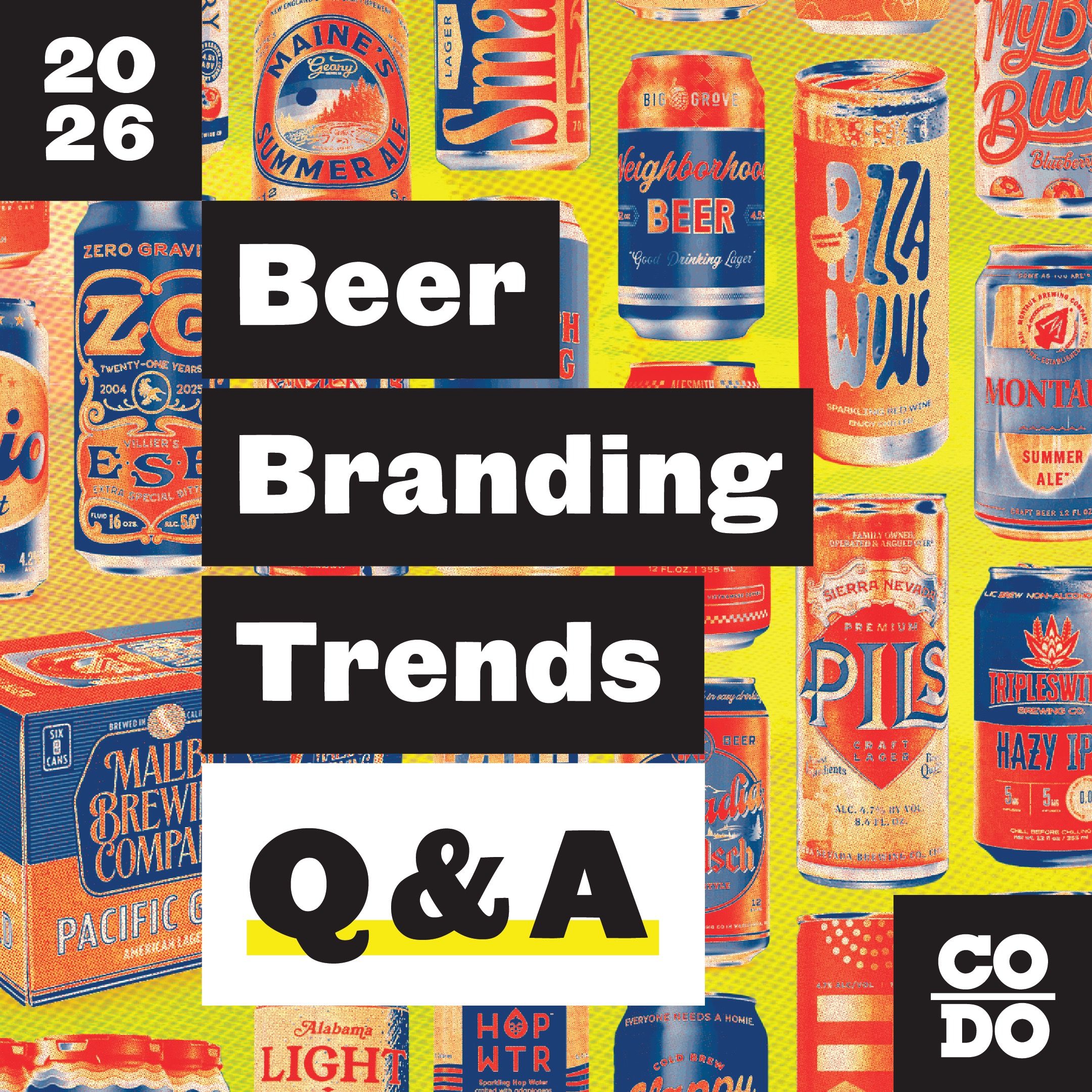
We use cookies.They keep VO running smoothly and help us improve it. Privacy policy