
 Ask ChatGPT


- Podcasts
- Beer Branding Trends
- 124 - How to build a House of Brands
In short
Whether breweries should adopt a “house of brands” portfolio architecture (multiple largely independent brands under one corporate umbrella) and when it’s worth fully embracing.
Guests
Cody and Isaac, hosts of Beer Brand Interns/Beer Branding Trends. They run Kodo Design, a branding firm focused on beer and beverage branding; they’ve worked with 100+ breweries (200+ across beverage) and discuss distributor/retailer capacity constraints.
Key claims
House of brands helps target niche audiences and seize new market opportunities with agility, without needing parent-brand credibility. But it’s expensive and capacity-heavy: you must build each brand from scratch (identity, websites, social, support) and convince distributors/sales teams to push a new standalone product. It doesn’t fully insulate you from blowback; PR/quality/positioning issues can still affect the parent/ownership.
Notable examples
Large conglomerates (Molson Coors, Boston Beer, Diageo, ABI); craft examples like light beer, RTD cocktails, cannabis/spirit brands; Bud Light fallout as a cautionary case.
Written by AI. May contain mistakes.
Chapters
0:45
Understanding House of Brands
Discussion on the concept of a house of brands in the brewery industry.
“And that question is, is a house of brands right for our brewery or when do we kind of fully embrace that model?”
3:25
Defining House of Brands
Cody explains what a house of brands is and how it's structured.
“So – I want you to stay away from our listeners' ears just in general.”
6:15
Advantages of House of Brands
Exploration of the benefits and use cases of adopting a house of brands model.
“I am eyeing that first beer probably at 11.15.”
9:48
Challenges of House of Brands
Discussion on the challenges and considerations when implementing a house of brands.
“But I think there are things to be wary of and think about this if you're considering this model.”
12:20
Conclusion on House of Brands
Summary of the demands and expectations associated with a house of brands approach.
“Not just to bring the thing to market now.”
14:00
Understanding the Work Required for a House of Brands
Learn about the significant effort and budget necessary to establish a house of brands successfully.
“We beg you not to underestimate how much work and budget and time and blood and sweat it takes to pull that off correctly.”
14:33
The Risks of Brand Association
Explore how a PR disaster in one brand can impact the entire portfolio and the importance of brand perception.
“No, I think we've made our point pretty well.”
15:47
Maintaining Corporate Values in Branding
Discuss the importance of aligning brand offerings with personal and corporate values to avoid backlash.
“A quick search will instantly pull up who owns what brand.”

Ask about this episode
Get the gist, explore an idea or ask about something said.
 Claude
On Beer Branding Trends, what are the key points of this episode?
Searching your listeningTranscript
Automatic transcript. May contain errors.
0:00I want you to stay away from our listeners ears just in general.
0:06gross yeah you know how disgusting that'd be to hear that in your airpods or whatever yeah i would be really angry actually i'm uh listener i'm sorry that that was unacceptable i shouldn't have done that
0:31hey Cody what's up not a whole lot Isaac how are you doing today Cody I'm swell hey today we're going to unpack a portfolio architecture question that comes up very often but regularly enough in our work, especially as breweries are launching new formats and new segments and new product lines. And that question is, is a house of brands right for our brewery or when do we kind of fully embrace that model? So a house of brands, just to kind of set us up here, this is a common architecture model, brand architecture model amongst larger beer and in-depth outglomerates. So your Molson Coors, Boston Beer, Diageo, ABI, where a diverse line of products that span multiple categories, price points, distro territory.
1:18It's kind of the name of the game at that scale. You build a robust portfolio that kind of spans the whole market. Over the last few years in particular, we have seen more of our smaller, I mean, like genuinely small, like folks that are making a thousand barrels or less. Craft clients lean into this model as well by launching targeted standalone brands. So, you know, a light beer brand, an R2D cocktail, a cannabis thing, a spirit brand, whatever. Yeah. And because we mentioned kind of some heavy hitting large corporate conglomerates at the top, it's maybe worth mentioning that the idea of a smaller brewery in this case can be anywhere from that 1000 barrel range that you mentioned up to 20 ,000 or even 50.
2:02We call them smaller relative to like an ABI, you know, so basically everybody. And this is probably just, I won't call it myopia or being myopic on our own part, but I think a lot of it's just, you know, we wrote the Beyond Beer handbook and then two years, I mean, like we write a book and then two years later, it's like, oh, we could rewrite that. So we wrote that in 20 and published in 21, I think maybe, or 22, I don't remember. But when we wrote it, we were not helping a lot of folks create brand new brands. You know, they were doing a lot more endorsed brands and sub-brands. Even if it's like a different segment, a lot of folks were doing that.
2:44And over the last few years, it's completely blown up to where, I guess to make my point more clearly, five or six years ago, a house of brands was almost entirely exclusive to that kind of the Diageos of the world, like big-ass mega companies. And now it's not the case at all. You know, small brands are using this regularly. So I get – that's a very long-winded way of kind of getting us into this. But I think that the listener here, if I can speak directly to you for a minute and pour some sugar in your ear, I think that this is probably a more applicable thing for you today than it has been in the past.
3:21And we want to kind of set you up for success should you decide to lean into this. So – I want you to stay away from our listeners' ears just in general. Gross. Yeah, you know how disgusting that would be to hear that in your AirPods or whatever? Yeah, I would be really angry, actually. Listener, I'm sorry. That was unacceptable. I shouldn't have done that. Cody, can you define a house of brands? We should probably try to provide some value here. Yeah, sure. I'll just shut the fuck up. Sure, whatever. Yeah, I mean, okay. House of brands, architecture. It's a collection of usually, mostly. I mean, I ask you to define it and then interrupt.
4:02you. I think people have heard this term. I think there's like the kind of faux dichotomy of you're either a branded house or a house of brands. Yeah. And it's certainly gotten a lot more complicated than that. We're usually talking about a family of disparate independent brands with little or no tie between one another or to the sort of overarching parent corporate brand. In this approach, each brand, each product, each sort of division has its own value prop, its own messages, its position in a unique way. And for all intents and purposes, completely independent, at least as far as, you know, I'm going to the store to shop for something, as far as I'm concerned in that context.
4:46A quick note, we say corporate in this case, because parent actually denotes some manner of a relationship with an extension, right? So corporate is probably a more accurate designation, just because in a house of brands, there is little to no relationship, you know, back to some sort of larger idea. And things are so different that. It's semantic, but I do like the delineation there. I think it makes it clear. You also have to wear like a blazer and a really nice power tie when you're talking about corporate matters. Have we, I'm trying to think. So once upon a time before we got into Food & Bev, we had clients that wore ties.
5:27Have we ever worked with a... Not in a really long time. And we've worked with 100 breweries, but I mean, if you blow it out to all beverage, it's probably more than 200. Have we ever worked with anyone that wore a tie? I mean, back to when we worked with local nonprofits and you'd had to go to a fundraising event. That's the only thing I can think of. So, yeah. You know what? I have built my entire life around not having to wear a tie. My daughter's wedding and then not even my funeral. I want to go out nude, but I'm just not going to. Boy, you're on one today. It's been a hell of a week. It's been a hell of a week, Cody.
6:13It has. It has. It's Friday now. It's 9.13 in the morning. I am eyeing that first beer probably at 11.15. We'll see if I can make it. Please stop talking about ears and nudity and... Frye. Frye. Stir Friday. I hope everyone's Windsor knot is nice and tight. Windsor. All right. Nice. Dude, more of a... We got to bleep that out. Yeah. Or not. Or? What the fuck are we talking about? Is anybody listening? Should we be able to talk about or not? Eh, probably not. All right. In the comments below. Okay, here. I don't know if we even define it. We'll just, we'll power right through. Let's get into some benefits and use cases of the house of brands, especially for kind of smaller producers.
7:06So the first is that a house of brands approach allows you to offer products to extremely targeted niche audiences with that. I mean, you kind of bypass having to figure out, can our parent brand credibly go here? Cody, if you're cool with it, you just keep rolling. We've got the loosest outline we've ever put together here, but please just kind of run through the list. You mentioned the ability to target extremely specific segments of consumers with brands and products that fit their needs. I'm putting out a hard T. We've never done that. Our beer brand is not that kind of thing. We're targeting younger consumers, different gender, different XYZ, whatever.
7:47So you can just bypass all this by creating a new brand. Now, back in the day, you didn't really have to think about craft beer like this. Like it was just flowing out of the walls and everybody wanted to, you know, throw their wallets at you. Because the world's not really like that any longer, we are having to turn to kind of these more business school concepts that like a Unilever or a Procter & Gamble developed in the 60s or whatever. can be a valuable concept for craft breweries, just depending on your product mix, volume, and sales to help you organize how you approach that and make sure you're not undercutting yourself with any of the products that you make.
8:25Anything else to say there? No, I don't think so. Our next point is that you can quickly seize market opportunities because you bypass all the work. We kind of hinted around this, but we'll just kind of spell it out clearly. You can bypass all the work and worry and heavy lifting and making sure your parent brand can work in this new segment or context. Correct. The house of brands approach lets you just be more agile in general. You know, if you have a cool idea, a new opportunity drops in your lap, you're able to really quickly react to that. And you don't have to necessarily hem and haw over what that means for an overarching parent brand.
9:01In that context, you're free to move to an appropriate idea that gets to kind of be its own beautiful thing. And you don't have to carry over any existing equity or customer expectations or baggage that you might have with some of the other stuff you're doing. So, you know, agility in this day and age can be just as important as having a great product. It helps you position and market it correctly. And in a lot of cases, being first to market or at least early to market in a particular category can go a long way toward making sure that you entrench yourself and see success. Assuming you can kind of achieve the scale that you need to really feel that out.
9:39But yeah, I think that that is good there. Let's discuss some caveats because it's like, oh, just launch a new brand. It's all easy, right? But I think there are things to be wary of and think about this if you're considering this model. So the first is that building a house of brands can be challenging for the very folks that we are talking to. So for smaller and newer breweries or folks that don't have, you know, endless buckets of cash and capacity, this isn't really easy, even though we have kind of outlined how it can be easier. So, I don't know, duality here on the Beer Brand Interns podcast.
10:17Cody, tell me about that. It's like some sort of sword with two or more edges to the sword. Huh. You know, think about it, though. If the biggest benefit of building a house of brands model or building a brand under that model is the speed and ease with which you can bring new products to market, not necessarily because it's easy to execute that, but because you don't have to worry about its connection to a bunch of other stuff. Now, think about the main drawback. You don't have any of that DNA placed down. You're maybe developing this, you know, whatever it is, brand, brand name, logo, identity, product, whatever it is from scratch.
10:53and a risk there is how inefficient and expensive that can be. But also offer that we've run into this for years now in our work where we and our clients, our brewery clients, determine that this is the right approach. And then you do that. We spend months building it. They bring it to their wholesaler and they go, hey, can you put your name on this? I don't want to have to sell this product. And we say that jokingly, but it is true. I mean, your distributor is – it just takes capacity across the board. And we're not poo-pooing on distributors because they have an important opinion in all this and retailers, obviously.
11:31Yeah, I mean, we talk about capacity all the time. Or all the time, rather. Constantly. It's a constraint that, you know, small breweries, even up to surprisingly not necessarily small breweries. we worked with folks who make upwards of 50 ,000 barrels a year and they still have capacity issues in-house because so much is asked of everyone in this industry on a regular basis. You know, it might have a team of two or three creatives doing the work of seven or eight people. And that is just the norm of things because of how the world is. It's, I mean, I guess technically it would be second to budget, but I mean, capacity really is just the most immediate governor for how effectively you can launch a new standalone brand.
12:20So if you are doing a house of brands approach and you want to bring a new thing to market, do you have time? Not just to bring the thing to market now. Do you have time to build a separate brand? That's what it comes down to. So Cody, what are some other challenges here? Obviously, money is an issue. I think it probably goes without saying, but I guess we can say it very quickly. Sure. And this is all relative to you and your specific situation, dear listener, but this approach is more expensive than building a dedicated branded house because you are actually making multiple brands. The thing that we say a lot to help this make sense is think of it more as like you're starting a new company.
13:01And I think that's more realistic in terms of, okay, not only do you have to make this stuff from scratch, you have to go out there and push the hell out of it and execute and help grow it. And all of a sudden, you're basically running another business. It's something that can start lean. You know, over time as it grows, you are going to have to develop and maintain all of that stuff. You know, names, brand identities, websites, dedicated corporate structure, behind the scenes, perhaps, social media profiles, customer support, you know, all of that stuff. Just jump in and go right back to it. I mean, getting your distributors on board.
13:36Yeah. I mean, just making sure that your salespeople have what they need on the street to push this thing that's brand new and looks completely, potentially completely different than all the other stuff that they're doing currently. So to put this, kind of put a bow on this, you know, out of all the brand architecture models you can use at your brewery, at your beverage company, House of Brands requires the most work, investment, follow through on a per project basis, pretty much across the board. You know, to give everything a fair shake, you're basically setting up structures within your organization, your business that have the capacity, which is funny, we keep going back to that, that to dedicate bespoke effort to each single individual offering.
14:21We beg you not to underestimate how much work and budget and time and blood and sweat it takes to pull that off correctly. Anything to add there? No, I think we've made our point pretty well. We can probably actually wrap up. This will be a shorty, quick episode. I think the final thing I want folks to think about is that people aren't stupid. And I think this is kind of a dumb caveat, but let's talk about it for a minute. Do you want to explain that or do you want me to? Why don't you take that one? Okay. So you're building a house of brands. We can put out all disparate brands. It's cool. No one will know.
15:07Building a house of brands doesn't fully insulate your larger business from blowback. As an example, the Bud Light fallout, which has come and gone now. But when Bud Light kind of hit the rails and exploded, a lot of their other ABI brands saw losses and bad comps as well. We can debate whether or not that was related to that or it was just the overall economy during that time. But I think the bigger point is that regular non-beer industry folks walking around don't know – like a twisted tea drinker doesn't know who Boston Beer Co. is. They don't know that there's any connection there. But this sort of knowledge for anyone that is interested in finding it is not hidden anymore.
15:47A quick search will instantly pull up who owns what brand. So if you have a big blow up, a PR disaster, a QC issue, and the reason I'm talking about all this is we've talked about how you can put out disparate brands and there's insulation from your corporate or parent brand. That is a very fine, thin wall between you. This idea probably is not applicable to most listeners because people aren't going to put out that they find abhorrent or that they don't like or that doesn't align with their values. But if they put out something that has a quality issue or maybe a positioning issue, that can still kind of blow back on the parent brand, you, your ownership at the corporate level.
16:28I don't know if I said that clearly, but I think that anything that you put out into the world needs to adhere to your personal and corporate values. Obviously, quality and all that stuff are table stakes, but otherwise, you need to be careful with what you're building. Is that clear? I think that's clear. Yeah, well said. I think we're good well thank you Corey appreciate your time today my pleasure
16:52thanks for listening to Beer Branding Trends if you like what we're doing here if you find this valuable please rate and review us over on iTunes and head over to BeerBrandingTrends.com to join more than 5 ,000 subscribers who receive our monthly email newsletter covering strategy, currents and actionable advice from Kodo Design a branding firm on the front lines of beer and beverage branding take care we'll catch back up with you soon Thank you.
From the publisher
Learn more at: www.craftbeerrebranded.com / http://www.beyondbeerbook.com
-
Have a topic or question you’d like us to field on the show? Shoot it our way: [email protected]
-
Join 9,500+ food and bev industry pros who are subscribed to the Beer Branding Trends Newsletter (and access all past issues) at: www.beerbrandingtrends.com
More from Beer Branding Trends
All episodes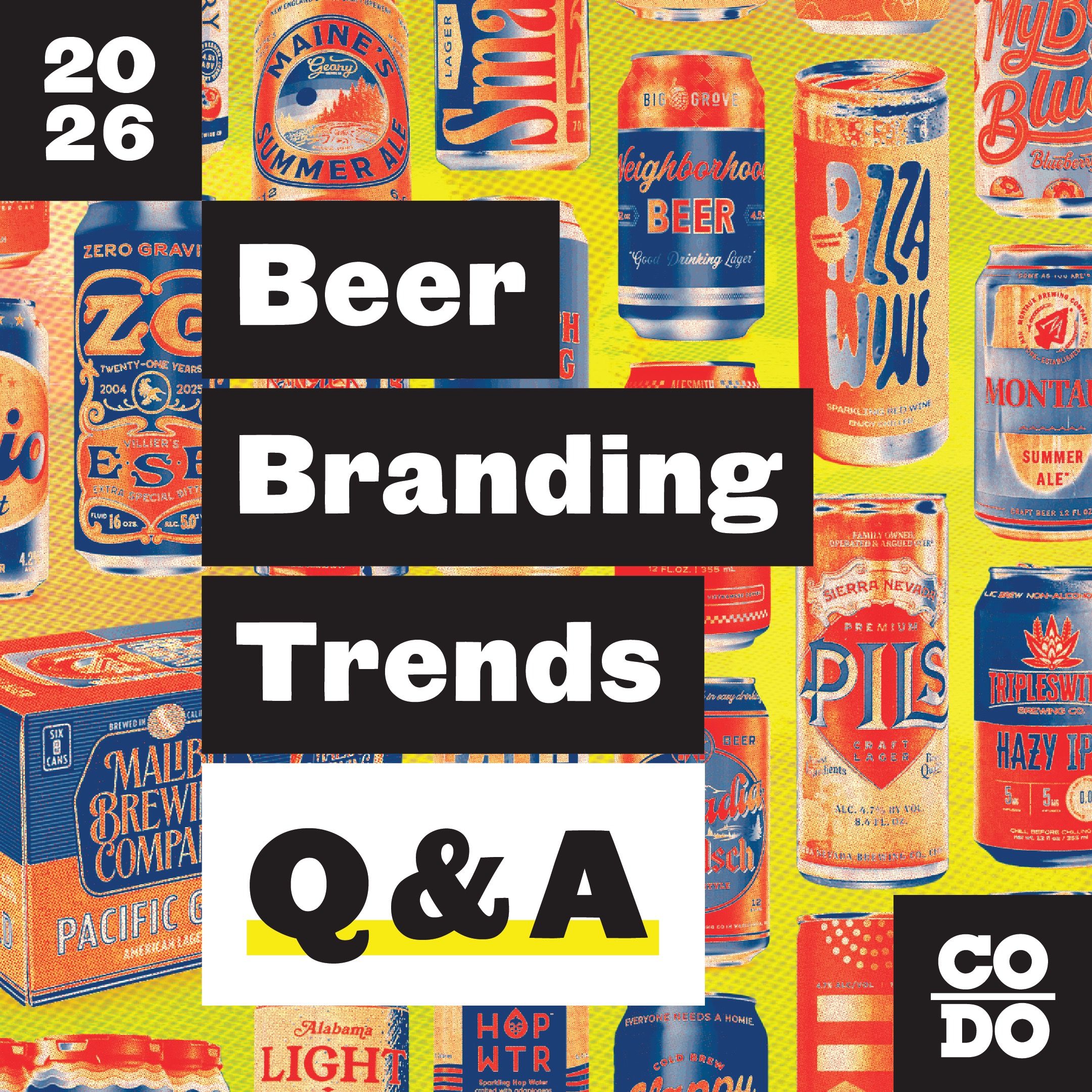
We use cookies.They keep VO running smoothly and help us improve it. Privacy policy