 Ask ChatGPT
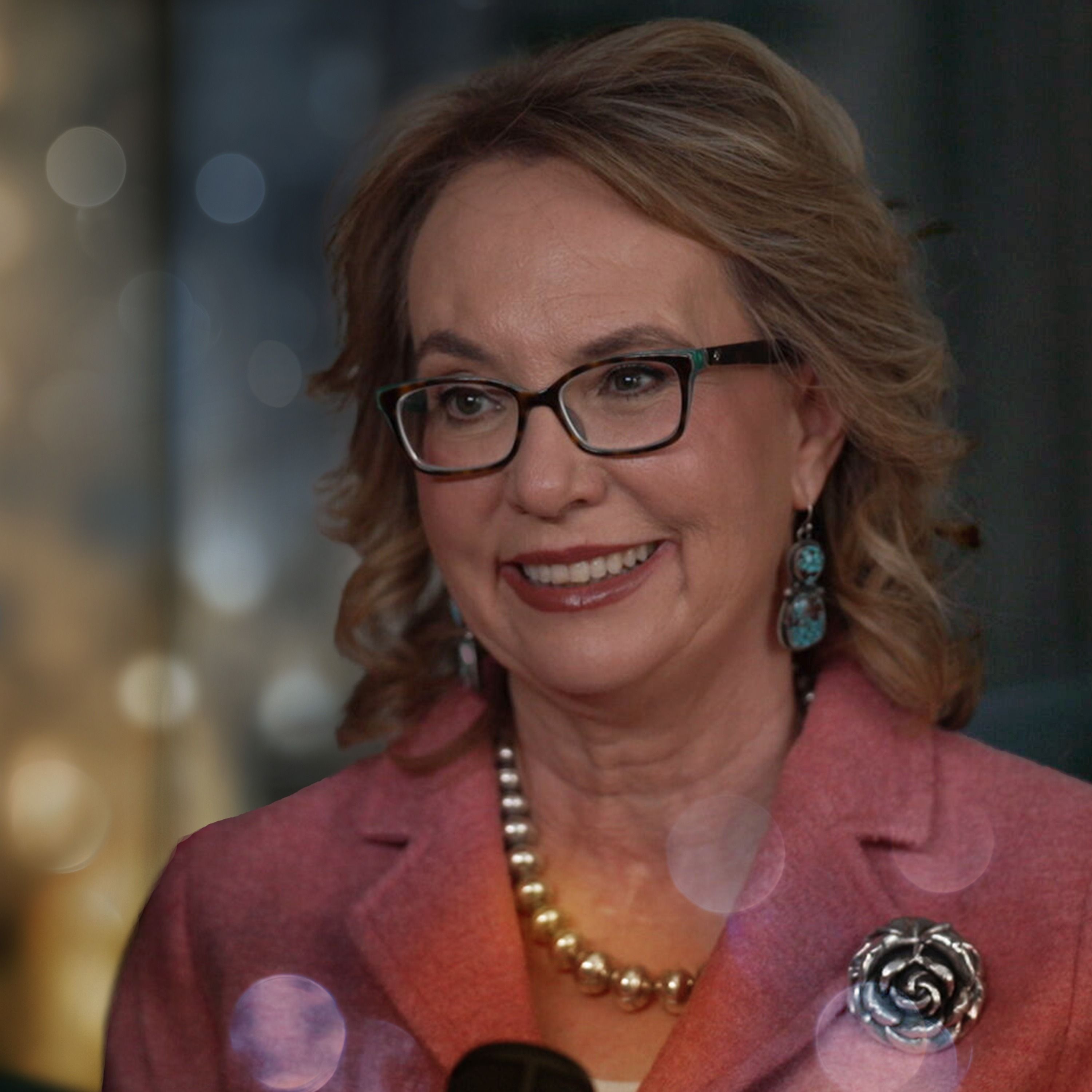

Adrienne Haslet recounts surviving the April 15, 2013 Boston Marathon bombings (two pressure-cooker bombs filled with screws/nails/shrapnel) and how she rebuilt her life as a motivational speaker and dancer after losing most of her left leg.
Adrienne Haslet was a 32-year-old professional ballroom dancer. She later became a motivational speaker and ran the Boston Marathon again starting in 2016 using a running prosthetic.
She was two feet from the blast, initially thought she might die, and was told in the ER she likely wouldn’t survive. She underwent three major leg surgeries and extensive rehab before prosthetics. She kept a long-held secret about her birth mother—Tina Marie Thompson—killed by the Green River Killer, and says telling the story feels like a “love letter” and helps her identity.
her “battle crawl” to escape; blood donation stories from “Boston Strong”; her birth-mother research via an internet cafe; and her first post-surgery marathon as gratitude.
Written by AI. May contain mistakes.
Adrienne discusses her identity as a ballroom dancer and her connection to dance.
“Here is my conversation with Adrienne Haslett about her before and after.”
Adrienne recounts her experience during the Boston Marathon bombing.
“And I made coffee, and I decided I wanted to take a walk and go out to lunch on a rare day off.”
Hear about Adrienne's struggle to survive after the explosion.
“And if I recall, the pressure cooker had been filled with shrapnel.”
Adrienne shares her experience in the hospital following the bombing and her surgeries.
“New customer offer for initial plan term only greater than 50 gigabytes may slow when network is busy.”
Learn about Adrianne's experience of trauma and resilience after the bombing.
“Some people said, you know, we may be able to save you.”
Explore Adrianne's connection to her birth mother and the impact of her past.
“Upfront payment of$45 for three months,$90 for six months, or$180 for a 12-month plan required.”
Adrianne shares her complex family history and how it shapes her identity.
“I mean, it was happening literally in my backyard.”
Adrianne discusses her journey of personal growth and motivation.
“I mean, have you freed your mind to think about what she would think about you right now?”
Adrianne emphasizes the importance of vulnerability and sharing one's story.
“And I've dedicated my life to doing motivational speaking and traveling the globe and sharing my story in hopes that I can make people feel less alone.”
A preview of the next episode featuring Rebecca Schofield's story.
“I want to make sure that people know that where they come from, that if they have a disability or they feel like they have something holding them back, that they shouldn't be ashamed of that.”

Get the gist, explore an idea or ask about something said.
 Claude
On Before & After with Lester Holt, what are the key points of this episode?
Searching your listeningAutomatic transcript. May contain errors.
0:01This podcast is supported by Nertek ODT. Remedipant. We know you didn't ask for an interruption, but migraine doesn't wait for the right moment to interrupt either. It just barges in, takes your time, and throws everything off. So when migraine takes your time, take Nertek. It's for the acute treatment of migraine with or without aura in adults. Nertek can provide pain relief in two hours, which can last up to two days. Ask your healthcare provider if Nertek is right for you because your time is for you. not migraine. Don't take if allergic to NERTEK ODT. Allergic reactions can occur even days after use.
0:35Get help right away for trouble breathing, rash, swelling of face, mouth, tongue, or throat. High blood pressure and Raynon syndrome can occur. Get help for high blood pressure, numbness, coolness, pain, or color changes in fingers and toes. Common side effect is nausea. For full prescribing information, call 1-833-4-NERTEK or visit nertek.com. All right, back to your podcast, playlist, or whatever's keeping you going today.
1:32I saw nothing but gray smoke. And I couldn't feel anything. I couldn't hear anything. It was like my senses were all gone. Were you aware of how messed up you were? Yeah, I was. I didn't think I was going to live.
1:49There are moments that divide a life into before and after. For Adrienne Haslett, that moment came on April 15, 2013 at the Boston Marathon. Adrienne was 32 years old, a professional ballroom dancer who had built her life around movement. She'd been watching marathon runners cross the finish line when two homemade bombs exploded, pressure cookers full of shrapnel.
2:21Adrian was just feet away. She lost half her leg and she nearly died. I called home and I said goodbye to my parents. It was the hardest, most awful goodbye I ever had. In the years since, Adrian has told her story. But there was one part she always left out. I can admit now that I white-lied, not because I was trying to be deceitful, but because I wasn't ready. It's a secret Adrienne has kept for more than two decades. As she lay on that sidewalk, she thought of one person, someone who would inspire her fight to survive. Now, Adrienne is finally ready to tell that story. Here is my conversation with Adrienne Haslett about her before and after.
3:12I have a service dog, Fred Astaire. Oh, do you? Yeah, and he's here, but he's with a friend of mine. So I thought Fred would be too noisy. He'd be sniffing. What kind of dog? He's an Australian Labradoodle. Oh, that's right. I have one of those. No way. Oh, Lester, see? You're the best. I knew you were a great guy. She gives me hugs every day for her work. Oh, what's her name? Lucy. Oh, I could do an eight-hour podcast about how much I love Fred, but no one would listen. We're going to do the Fred podcast.
3:38Adrienne, thank you for being here. Thank you, Lester, for having me. It's an honor to sit down with you. Oh, man, what a story you've got. But I want to start in the present, if I can. Yeah. You are still a ballroom dancer? I still do ballroom dancing in my kitchen and still with friends, definitely. But I'm no longer a professional ballroom dancer. Was it part of your identity? I mean, did you identify as, well, I'm a ballroom dancer? Oh, without question. I said it all the time. I mean, my gosh, as soon as the bomb went off and I was on the sidewalk, I was saying I was a ballroom dancer. That was one of, not the first thing out of my mouth.
4:11You're saying that in terms of, oh my God, I've lost, potentially lost my ability. Yeah. That's a great question, actually. I don't know how much I've thought about that. I think I wanted them to know so that they knew how important my feet are. And I wanted people to know that so if there was a chance they could save me, they could. I mean, if you think about your voice, you know, and you being able to do what you do, you know, to have someone take away your foot is my pen, my paintbrush, you know. For decades, I traveled the globe and competed and danced and taught. And when you're a high achiever, you tend to put everything in that basket.
4:48This is what I do. Absolutely. I mean, I missed weddings and funerals and births of loved ones and family members and missed, you know, all of that. Thanksgivings. And I was, for the most part of what I did, I was living in Boston, but my entire family and most of my support system lived in Seattle area. And so I wouldn't fly home because if I had time to take time off, then my competition would be doing better. You got me hooked now. What did it feel like when you were ballroom dancing? Oh my gosh. We have this term that says I could make corner to corner in four or three. And that basically means I could make it from this corner into the listeners.
5:23I'm pointing to the corner of the room, to the opposite corner of the room in three steps or four steps. And that just showed how strong your feet were. so the muscles in your feet that you could glide on your heel or your toe and push off in a way that you could really move. It felt like you were flying. There is nothing in the world like walking into a room and grabbing another professional dancer and turning on your favorite song and within 30 seconds, maybe 15 even, you could feel better about anything that's happening in the world. There are rare things that can do that rather than dance.
5:54So you know where we're going to go here. I want to talk about the bombing. But tell me about that day. You started out, you got up, and tell me about the day. Yeah, got up. I took a day off. It was a rare day off for me. And I made coffee, and I decided I wanted to take a walk and go out to lunch on a rare day off. Wait a minute. Were you not aware that there was a marathon going on? I didn't remember, and I didn't know. That's not where you went for a walk. Gosh, no. People who take four hours getting ready with bronzer and nails and lashes and hair and the Oompa Loompa Tan and all of that don't, you know, spend time with runners who sweat in public.
6:32Like, it's just not what we do. Our paths don't cross very often. I'd been in Boston for years, but didn't even know it was a thing. And I went to lunch and it was a beautiful spring day after the long Boston winter and got done with lunch and walked outside. And I heard all this screaming and cheering from one street over and I thought it was a parade. And I walked over and And I saw a lot of people running and they had these paper, these paper sort of things pinned to their chest and their stomach. Their numbers. Yeah. I now know that's called a bib, a racing bib. And I tapped a guy on the shoulder and he turned around and he looked at me.
7:10And Lester, I had like this, my signature look for competing then was this like curly faux hawk that was like on top of maybe three or four inches on top of my head. And he looked at me up and down and I had like three and a half inch heels on. And this guy's looking at me like, who is this? Because everybody else was in kicks. And I said, what is this? Is this a parade? And he said, it's the Boston Marathon. And he said, how could you visit here and not know that it's the Boston Marathon? And I said, oh, no, no, I just live like five or six blocks that way. And he must have thought I was crazy.
7:45This guy's incredulous. Yeah, yeah. He just thinks I'm crazy and he turns back around like, I'm not going to talk to this woman anymore. But I decided to stay. and watched a little bit. And I was watching at the finish line and I saw people puking and passing out and things that happened at the end of a race. And so I decided to walk away from the finish line and walk about two or three blocks down the street. And I had my back to the finish line and I heard a giant, enormous boom and blast.
8:17And the ground shook and I looked behind me and it was just, it was nothing but black smoke everywhere. And then I saw police with their guns drawn and some runners were down and everyone was down. And I remember yelling, the next one's going to hit, which is wild because I certainly didn't know what was happening. I said, the next one's going to hit and I put my fingers in my ear. It went off almost immediately after I put my fingers in my ears.
8:47And then I was on the ground. And I remember it was, I saw nothing but gray smoke. And I couldn't feel anything. I couldn't hear anything. It was like my senses were all gone. I didn't know if I was alive or dead. You were really close to the... I was two feet away from the blast. Yeah. And if I recall, the pressure cooker had been filled with shrapnel. Yeah, yeah, it was. Do I recall that correctly? Yeah, it was filled with screws and nails and things that would— Meant to kill and maim. Yeah, kill and maim. Yeah, yeah, it was. It was filled with things that would fly through the air and hurt people and maim people.
9:32And it did. I smelled that all-too-familiar smell of when you leave your hair under the dryer or the curling iron for too long, and it smells like burnt hair, and that must have jolted me into movement because I lifted my right arm and I put out a fire on my eyebrow and the right side of my head, I lost inches of hair that had been on fire. And I saw other people on the sidewalk and I heard them. I heard the screams. And I saw bodies and body parts and shoes and pieces of bloody clothing everywhere. And it smelled like blood. I mean, I don't know how else to say it. It smelled like a battle. It was awful.
10:13Was there an immediate sense of pain? No, not immediate, but it sure came. Did you try to get up? I didn't try and get up at that point. I felt like I couldn't move, like I didn't have a body. Like my mind existed, but that was it. And I also didn't really know where I was. Nothing looked the same. And then I started to move and then I felt pain, immediate pain. And I looked down and I lifted my right leg in the air and I saw a giant gash in my upper right thigh above my knee. And it was bad. I mean, it was spewing. I don't know if I have too many warnings I need to give on this for listeners, but it was spewing.
10:53And I tried to lift my left leg and I couldn't. And then I realized I did, but most of my foot was gone. When we come back, Adrienne Haslett was on the ground. Her left leg shattered beyond repair. What happened next, she says, became all about survival.
11:17The Disney Plus Hulu HBO Max Bundle. The best in entertainment in one bundle. This is going to be a good time. With new seasons of your favorites, like Percy Jackson and the Olympians on Disney Plus. Do you ever get used to all this? Nope. The scandalous Alls Fair on Hulu. Let's give these girls a show. And the high society drama of the HBO original, The Gilded Age on HBO Max. What have I gotten myself into? Streaming this month. Plans starting at$21.99 a month. Terms apply. I can visit DisneyPlusHuluMaxFundle.com for details. Hey, what's up, guys? It's Haley Bailey. Okay, I need to tell you about something.
11:50I just got YouTube Premium. It's got tons of awesome features like offline downloads, so I can download my favorite videos before I travel and watch them whenever I don't have Wi-Fi. Because we all know airplane Wi-Fi is the worst. I get ad-free, I get backroom play, and there's like a ton more in there. You should try it. If you like YouTube, you'll love YouTube Premium. Try it now for two months free at YouTube.com slash premium. them. Trial eligibility varies. Terms apply. Cancel anytime. That's a mouthful.
12:41is in piece extra. New customer offer for initial plan term only greater than 50 gigabytes may slow when network is busy. See terms.
12:53Adrienne Haslett was surrounded by chaos and quickly losing blood. She saw the bottom half of her left leg was gone. And as she lay on that sidewalk, she knew she was running out of time. It was just so much blood that was coming out. And I just immediately put my foot back down and then laid there for what felt like forever. And then I rolled over onto my stomach just in, in survival mode. Um, and I, I sort of, what is that crawl? Is that a battle crawl when you crawl on your, I'm moving my forearms like in front of me, like sort of a battle crawl of trying to get away because by then you knew we were under attack.
13:38We didn't know when the next one was going to hit. It turns out that there wasn't a third, but I definitely thought that I needed to get away. And people were starting to move and the medical people were rushing up. Were you aware of how messed up you were? Yeah, I was. I didn't think I was going to live. What was your prognosis when you arrived at the ER? I was told I wasn't going to make it. That was the main thing. Some people said, you know, we may be able to save you. We might be able to save you. But there was nothing that was, you know, steadfast. When I got to the hospital, they were very clear in saying, we don't know if you're going to make it.
14:16Wow. I called home and I said goodbye to my parents. It was the hardest, most awful goodbye I ever had. And I don't know if I will ever recover from being told that I'm going to die. Were you ever unconscious? I don't think I was. At the hospital, I was wide awake until they told me to count back from 10. And that was for surgery, obviously. Yeah, yeah, yeah. How many surgeries have you undergone? Oh, my gosh. Let's see. Three major surgeries for my leg. The first surgery, they weren't sure if there was radioactive material in those pressure cookers. And I rarely say this, but that's where they ended up finding the label of the pressure cooker was in that wound.
15:00A crucial piece of evidence was embedded in you. Yeah. We were all evidence for a long time. What was recovery like? It was tough. I'd say mentally it was harder than physically, which you wouldn't, I think you would first think, gosh, you can't walk. You know, you don't have a leg. But mentally, to look down and see your body missing, you know, therapists and psychologists have said countless times that losing a body part, losing a limb is the closest you'll ever get to mourning your own death. And I believe that in my bones, to be true. But I mourn the death of my leg in that life that I lived before.
15:38And it was horrific. So recovery, you were in the hospital for a certain amount of time. Then were you an outpatient? Yeah, I was in the hospital for a number of weeks. And then I was an outpatient at Spalding, which is a rehabilitation center in Boston. And I lived there for a number of weeks. What was the transition like into the prosthetic? It was tough. Really? It was so tough, yeah. And it is a hard process because you don't get your leg right away. Below knee on my leg, I have a tiny bit of my calf left, but that tiny bit was blown up to the size of a basketball. So it has to go down in size.
16:16And in order to go down in size, they put you in a really tight shrinker sock. and then they finally put a leg on you and you have to walk on it with all that swelling and all those stitches. And then you get another leg that's smaller and then you wear it for five minutes a day. Then you take a half hour break and then you wear it for two minutes. Then you get a half hour break. And it's such an emotional process because you get this thing that is so heavy and it is the weight that your other leg is. But when you're holding it in your hands, it feels really heavy and it isn't your leg. I remember thinking that like, this is not what I want.
16:50It's a hunk of metal. I'm a ballroom dancer. My legs, I had no problem showing leg before. And I don't have a problem showing leg now, but it took a long time. And I sometimes still see a woman with two great legs. And I think, oh, then I think, come on, Adrian. You're a girl's girl. Don't be that. Don't be mean. I don't want to stare, but you've got high heels on. You've got high heels on and that works for you? Yeah, it does. It does work for me. I got a little dressed up because I was coming to 30 Rock. today. And of course, I'm sitting here in khakis. No, it's all right. I felt like today was a heels day.
17:22I'm in New York. But I really wanted a foot that could wear a high heel because you can take the girl out of the ballroom, but you can't take the ballroom out of the girl, I guess. We started off how you got up that morning, what you were going to do that morning. Do you ever think, this is something I'm obsessed with, so forgive me if you don't. No, I love obsessing about things. Do you ever think that about the little choices we make every day that when I walk out that door, I'm probably going to go left, but I might go right. Do you ever think about what happened to you in those terms of the little decisions of the day that puts you on that corner at the moment those bombs blew up?
17:58Yeah, I do. But for who knows what reason, I think about those things too, Lester, I do. When I meet someone wonderful, I think, oh, I'm so glad I took this turn, right? But when something bad happens, I don't think that. And And I don't know what it is about my makeup or my upbringing or my genetic makeup or what that is. But I didn't spend time thinking, why me? That's not true. I bet I did for a little while. But what I thought more about is my obsession of why would someone do this? Like why the monster did this? I don't ever say their names. But, and I was, man, I was racking my brain trying to figure this out for so long.
18:33And then finally my therapist looked at me and he said, Adrian, if you can't figure out why terrible people do terrible things, it's good. It just means you're not one of those terrible people. Yeah, I went up there after the bombing. You know, you're talking about Boston Strong. It was amazing, the outpouring for the victims. It was incredible. It was unbelievable. And people, there are still stories that I hear about that are coming out that I hadn't heard about people where runners, all they thought was, oh my gosh, they're going to need blood, and they just ran to the local hospitals to donate blood.
19:05They wouldn't have been able to do anything for me if people hadn't given blood. I think that's the counterweight to, you know, all that good we saw is the counterweight to this incredibly evil act. Yeah. Strangers. Yeah. You're not even going to the race. You're just enjoying the day. Yeah. It's evil at its core. I mean, I speak about this for a living as a motivational speaker, and sometimes I'll be on stage and I'm describing it, Lester, and I think, holy, like, I can't believe that this happened. I was blown up. Like that, someone tried to kill me. They looked around, you know, the surveillance shows that I was walking almost shoulder to shoulder with a terrorist down the street before stopping.
19:44And him dropping the backpack and looking around at everyone around him. All of those people dropping the backpack and then detonating it. I mean, that is the purest kind of evil. And I racked my brain for years trying to figure out why someone would do that. Still haunts you? Yeah, it haunts me. When does it pop back into your brain? Is it random? You know, it is random. Occasionally, I'll think, like my PTSD will have me thinking like, wow, this is really a crowded place. Oh, this is the result of that. And I'll get the visual. If I'm in a crowd, I'll get the visual of like, oh, this could happen.
20:19I know what that scene looks like. Like it's almost like a before and then my brain plays the after. But I'm lucky. I'm so lucky that I don't dream about it. And I didn't dream about it. There's a theory, and psychologists have studied this for years. From what I've read, and I like to believe this, that a lot of the time if we have nightmares and these dreams, it's our brain trying to make sense of something before it files away into a memory. And because I was awake through the entire thing and I know exactly what happened, I didn't need to figure it out. And I know exactly what happened. It's not something I'm still trying to figure out.
20:57It's very sort of factual. You've been through a lot, lady. Yeah. Just a little, I know. But losing your leg and having your body be blown up certainly takes, you have to take a good long look at your life and your body and get to know it again. And I had to learn how to walk. I had to learn how to navigate a New England winter. I had to learn how to walk on tile floors. I still cry about it all. But again, I think people ask me why I'm positive, and it's because I was told I wasn't going to make it. I still wake up and I think, oh, another day. I just recently turned 46, and I was like, I made it.
21:37As we prepared to do this, I'll let you tell the story, but you sent an email. Yeah, I did. And there was something else you wanted to talk about. Yeah, definitely. Your wonderful, wonderful team, who are incredible, we were preparing for this. And throughout, well, gosh, since 2013, I did quite a few interviews. And every so often during the interviews, someone would ask, you know, what did you first think about when this happened? What was the first thing that crossed your mind? And I can admit now that I white-lied, not because I was trying to be deceitful, but because I wasn't ready. And I white-lied and said, you know, I just thought about survival.
22:13We have such strong survival instincts, which is true. That is certainly true. But I wrote your team and said, you know, there's so much more to that story that I've been wanting to tell throughout some of those interviews. The first thing that I thought of when the blast went off and I opened my eyes and I was laying on the sidewalk is I'm not going to go like my birth mom did. When we come back, why thinking of her birth mother's death inspired Adrienne's fight to live, a story she will share for the first time.
22:49If you like YouTube, you'll love YouTube Premium. Hi, I'm Sean Evans from Hot Ones, and I want to tell you about YouTube Premium. It has offline downloads, so you can watch without Wi-Fi. Background play, so you can lock your phone, and it still plays, baby. Oh, and it is completely ad-free. Yes, I said it, ad-free. Try YouTube Premium for two months free at youtube.com slash premium. Trial eligibility varies. Terms apply. Cancel any time. Your sausage McMuffin with egg didn't change. Your receipt did. The sausage McMuffin with egg extra value meal includes a hash brown and a small coffee for just$5.
23:30Only at McDonald's for a limited time. Price and participation may vary. Promotion pricing may be lower than meal pricing. This holiday, all plans, even unlimited, are just$15 a month. A holiday deal this good obviously deserves an enormously expensive holiday song, like All I Want. Right. Okay, we can afford that. You know what? Forget the music budget. We're going to stick with whatever's in the public domain. Give it a try at mintmobile.com slash switch. Upfront payment of$45 for three months,$90 for six months, or$180 for a 12-month plan required. $15 per month equivalent. Taxes and fees extra.
24:00New customer offer for initial plan term only. Greater than 50 gigabytes may slow when network is busy. See terms.
24:12Adrienne Haslett's first thought after the blast was about a woman she had never known. For the first time, she shares a secret about her birth mom that she's been carrying for years and why it gave her a reason to keep fighting. I was adopted, and I have two older brothers. They're twins. They're certainly related to each other, but not to me, and they were adopted as well. We were so fortunate to grow up with parents that said, if you were ever able to find your birth parents, we'd want to meet them and say thank you. How wonderful that you were adopted. You're such a gift. But where were you in a position to legally get the birth record?
24:49Yeah, yeah. Great question. I was born in 1980. If open adoption was a thing, it was certainly not done very often. So when you were given a kid for adoption, they redid the birth certificate and put your wonderful new parents' names on there as their mom and dad as they should. My mom and dad will are and will forever be my mom and dad. But then they close off the closed records forever and ever. And there was a group of birth moms in the state of Oregon where I was put up for adoption that felt like they were forced into it by their parents or grandparents. And so those birth moms went to court and then to the Supreme Court, and they were found that they were coerced into giving those kids up for adoption.
25:30And they won that case. And so you could send a check into the Oregon State records and you got your birth certificate in the mail. I think it was either$14 or$18. It was some sort of small little number. What was it like to get that information and hold it in your hand? Wild. It was wild. And so when I got my birth certificate and held it in my hand, I thought, my gosh, this is my origin story. This is where I came from. So you found out about your birth mother long before the bombing. Long before the bomb made. I think I was 18, 19. So tell me what happened to your birth mom and how you learned it all.
26:07Yeah. So I got my birth certificate. I just put it in the back of my underwear drawer and was like, that's a safe place to keep it. That seems fine. I was a teenager. And then years and years later, my brothers decided to do a search and find their family. And I thought it was time to find mine. So I went to an internet cafe in Seattle, Washington. There was a guy behind the counter. I would love to find him now and see what his recollection is of this. But he had this giant like two foot high mohawk. And I went up to him with my little birth certificate. And I said, I heard there's a thing called Google search.
26:37And I was adopted. I got my birth mother's name. Can you help me find her? And he looked shocked. And he and I scrolled online. And we kept scrolling and came across a picture that was my face. Like it was my face. It was no, we both stopped talking. It was my birth mom, Tina Marie Thompson. And then we kept scrolling. And we saw a picture of a few men with detective labels, detective badges around their neck, and a green tarp, a picture of a green tarp. And you could barely make out like a skull and a couple of bones. And the caption underneath that photograph said, Green River Killer, victim number 33, found near the I-90 and Highway 18 interchange.
27:22Your mother was killed by the Green River Killer. Yeah. That's an infamous case. Yeah, absolutely. And Gary Ridgeway, the serial killer, he killed a lot of women. He did. A lot. Over 30. Yeah, and they're still finding bodies. Still, now. The Green River Task Force is still a thing. You held on to that information. Why? I did. I, well, first, I can admit now that I was ashamed. I was ashamed at first, and then I was ashamed to say that I was ashamed. And my gosh, I grew up in the Seattle area where the Green River Killer and Ted Bundy was living one neighborhood over from where I grew up at Lake Sammamish State Park.
28:04I mean, it was happening literally in my backyard. I grew up at my parents' house where they still live on that lake. And Ted Bundy was at the neighborhood meetings and the Green River Killer was killing people. And every night, every night on the local news, they would say, I remember, and this is where the shame comes from, this woman was walking late at night. She shouldn't have been. I don't blame the victim. Always, this woman was wearing this. This woman was doing this. This woman was this way. If these victims were a middle-class housewife, the suburban neighbor, it would be a wholly different type of case.
28:38Their lifestyle, their personalities, the people they associate with are in two illegal activities or on the fringe of illegal activities. It was the police assumption that all these were sex workers. Yeah, it was. I've failed to say that, but not out of purpose. But yes, a lot of the women were sex workers. I don't know if that was my birth mom. I'm not ashamed if it was. Did you know details of what happened to her? Yeah, I do know. Because I learned her name, I did some searches later on, and I found my birth grandmother and my birth uncles. That family, quite a few of them didn't graduate from middle school or elementary school or just didn't have the tools, I think, to really look out for each other in the way that some other family members might.
29:22And it turns out that Tina was dating someone who was black, and they didn't like that, and they kicked her out. Which is, I want to be crystal clear here, that that is not the family that I was raised in, and not at all what I was raised to believe. And she came back, and she was pregnant. She wrote on the birth certificate, actually, that my dad was African American. And then when I got my birth certificate, it was whited out. Because obviously I'm not, but she thought that that would be the dad. and she had me and then give up for adoption. And then she was so sad about it that they kicked her out again.
29:58They were like, you're too sad. Like, you can't be crying all day. She was 17, 18. I mean, at one point, my birth grandmother told me she was 14. Another time she told me she graduated from high school. Another time she told me she didn't graduate from high school. So the information that I have about the family is a little uncertain, but I do know that from the Green River Task Force that she was never reported missing. I was furious with my birth grandmother and birth grandfather. So much time had elapsed, but still the anger sounds fresh. Yeah, you can hear it. Yeah, oh yeah. I held onto it for a long time.
30:31When they found her remains, and her remains were fingernails and dental work, they found his DNA under her fingernails, and I'd like to think she's the one who scarred him across his face. And she didn't go down without a fight. I wanted to give credit to her story and who she was as a human. Not just a sex worker, not just another one of Gary Ridgway's victims or another person on the nightly news of another woman who was killed and then moved on and blamed. And I got so much of my tenacity and grit from my mom and my birth mom. So yeah, I'm proud of who I turned out and proud of where I came from.
31:09And I think about her a lot. I wanted to honor her in the way that I wanted to. Well, now that you're putting it out there. Yeah. Deep breath, Adrian. No, I applaud you. And that's an incredible story. Do you think about her now? I mean, have you freed your mind to think about what she would think about you right now? Sitting here and bravely and, you know. Thank you. With a great articulation, what would have occurred? Yeah, I think about that a lot. I think about what, if she'd be proud of me, you know. I think about, you know, making sure that I am using my voice to the best of my ability, that I stand in who I am.
31:52Do you feel different or better getting the story out now publicly about your mom? TBD? Well, I feel better. I do feel better. I think as I sit at dinner tonight, I'll start to digest it. But I, you know what? Yeah, I do feel better. I'm glad it was with you. I think you honor stories really well and your team honors stories really well, which is why I felt comfortable sharing it after this long. You know, I certainly could have done it a lot sooner. But I also, you know, I want to share her story. I'm not ashamed of it. I think it's more of a love letter to her. As you should. Thank you. We started our conversation talking about your career as a ballroom dancer and how your identity was wrapped up in it.
32:33Yeah. What's your identity today? I think the Adrian that's sitting here now is pretty solid in my beliefs about myself. I think my identity is someone who has a belief that none of us should suffer alone. Even though I was in that hospital with so many other survivors that were so supportive, and doctors and nurses and family and friends, I felt so alone. I can imagine how alone a little girl, pregnant little girl was running around Seattle, looking for something, anything to save our life. I think of people being alone and suffering and feeling, I don't think there's anything worse than that.
33:12And I've dedicated my life to doing motivational speaking and traveling the globe and sharing my story in hopes that I can make people feel less alone. So I think my identity is wrapped up in something a little bit more stable and more giving now than it used to be. You ran a marathon. I did. I was fresh out of surgery. And I somehow, someway said, I think I want to run the Boston Marathon as a thank you to everyone. Everyone was pouring this Boston strong energy into the city. So I decided to run the marathon as a thank you. And I did. I ran my first one in 2016. I've run a couple since. In the same prosthetic?
33:50It wasn't this prosthetic. It's a running prosthetic. So it has that, what you see sort of in the Paralympics and such, it has that curve at the bottom. I'm joined by Adrian Hazlett. And Adrienne, I'm not convinced you ran because you look too good to have just run a marathon. Thanks. I feel shockingly good right now. I've never felt more support and more love from the city. I think every runner can say that, but I'm just, I just can't believe that just happened. What do you hope that regular folks will take from you, from your story, from hopefully some from our conversation? I hope that they find my vulnerability and my ability to talk about my hard times as a sign and an invitation for them to do the same.
34:34I want to make sure that people know that where they come from, that if they have a disability or they feel like they have something holding them back, that they shouldn't be ashamed of that. And similarly, if someone feels like they came from a place that they've been led to believe is shameful, I don't think they should hold shame in that. Well, you did a great job. Thank you. Well, you were so easy to talk to. I was a little starstruck. Oh, don't be. I know. I hesitate saying that to people because it sounds cheesy, but I'm very rarely starstruck. So I just felt it was awesome. It's an honor to talk to you.
35:10Well, thank you.
35:15Next time on Before and After. It is so hard to feel like you are being unmade in front of a public spotlight. What happens when a lie overtakes your life? Rebecca Schofield, the one who merged the four Idaho college students. Four years ago, Rebecca Schofield was the victim of a stranger on TikTok. talk. She's the one who ordered the execution. Posts that went viral, accusing her of murdering four students. Rebecca Schofield is going to prison whether you like it or not. To have something this salacious, this disgusting and horrific, it is humiliating beyond words. The more I read your story, the more I feel that everyone around us should feel vulnerable.
36:09That's next time.
36:14Before and After is a production of Dateline and NBC News. Dan Slepian and Liz Brown-Kurloff are the producers. Annalise Peterson is the associate producer. Brian Drew and Billy Ray They are editors. Original music by John Estes. Jessica Fenton is head of audio production. Alexa Danner is head of audio. Paul Ryan is the executive producer. And Liz Cole is senior executive producer.
36:54If your workday happens in two languages, this one's for you. Whisperflow is a voice-to-text app. You talk, it types in any app in more than 100 languages. The email in English, the text to your mom in Spanish, the client note in Portuguese, and it switches languages as you do with the ums and typos gone four times faster than typing. Whisperflow is free. Get it at whisperflow.ai. That's W-I-S-P-R-flow.ai.
The ballroom dancer who lost her leg after a bomb exploded at the Boston Marathon talks about losing her identity and, for the first time, reveals a secret that helped her survive.
Hosted by Simplecast, an AdsWizz company. See pcm.adswizz.com for information about our collection and use of personal data for advertising.