
In short
Big Shot Podcast Episode Notes
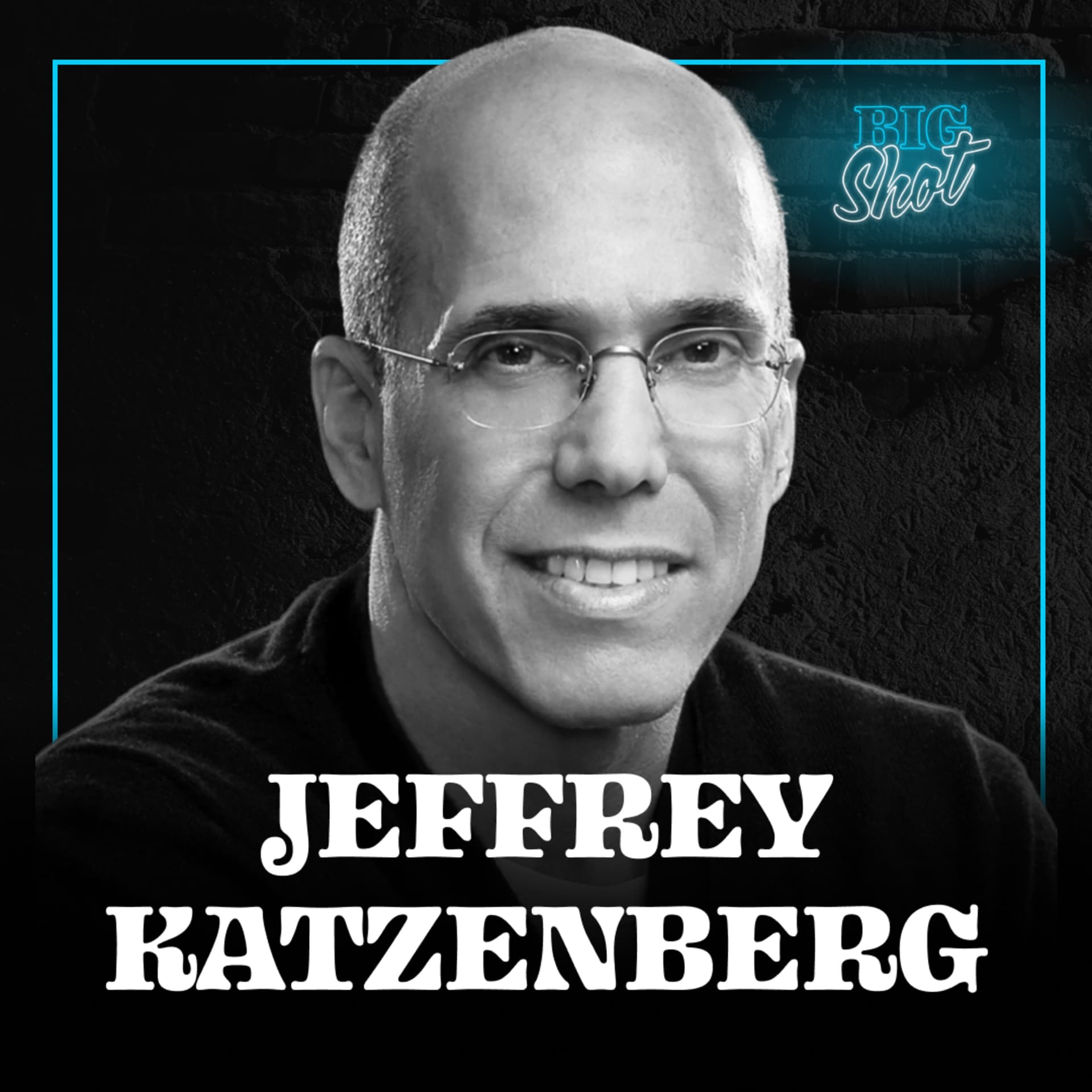
Episode Summary In this episode titled "Disney Fired Him. He Built DreamWorks, Shrek, and a $3.8B Empire", Harley Finkelstein and David Segal interview Jeffrey Katzenberg, a prominent figure in Hollywood known for his role in shaping modern animation and co-founding DreamWorks. Throughout the discussion, Katzenberg shares his insights on success, failure, and the importance of giving back, alongside recounting his remarkable journey from being fired at Disney to becoming a powerhouse in the film industry.
Key Themes and Topics Covered
- Lessons from Family
- Father's Impact: Katzenberg describes how his father's generosity influenced his own approach to giving. He recalls how his father would tip generously, instilling in him the value of taking care of others.
- Kirk Douglas' Wisdom: He shares a profound lesson from Kirk Douglas about the importance of learning to give in order to truly live.
- Career Journey
- Hollywood Beginnings: Katzenberg reflects on his early career, including his time at Paramount Pictures and Disney, where he played a significant role in revitalizing animation.
- Firing from Disney: His firing from Disney served as a pivotal moment that propelled him to co-found DreamWorks with Steven Spielberg and David Geffen.
- Philosophy of Leadership
- Exceeding Expectations: Katzenberg emphasizes the importance of exceeding the expectations of those you work with, for, and those you serve, as a crucial aspect of his leadership style.
- Work Ethic: He shares his early work ethic, which was shaped by a commitment to working hard and giving everything to his projects.
- Creative Process and Storytelling
- Building DreamWorks: Katzenberg discusses how DreamWorks aimed to carve out its identity distinct from Disney, focusing on more mature themes while maintaining high-quality storytelling.
- Animation Philosophy: He shares insights from Walt Disney about storytelling, emphasizing the importance of villains and the significance of a great ending.
- The Economics of Filmmaking
- Challenges: Katzenberg provides a candid look at the financial struggles faced by DreamWorks, highlighting the cost of ambition within the film industry.
- Risk and Failure: He discusses how embracing risk is essential in creative ventures and how failures can be stepping stones to success.
- Cultural Influences
- Jewish Identity: The conversation touches on the unique cultural contributions of Jewish individuals in Hollywood, exploring themes of shared heritage and community support.
- Advice on Ambition and Success
- Never Settling: Katzenberg stresses the importance of continual ambition and forward-thinking, encapsulated in his mantra: "Never let your memories be greater than your dreams."
- Fearlessness: He expresses a philosophy of being without fear, akin to high-performing athletes, driven by the need to focus on the current moment rather than past successes.
Key Quotes
- "You haven't learned how to live until you learn how to give."
- "Failure cannot be fatal."
- "Never let your memories be greater than your dreams."
Conclusion This episode of Big Shot provides invaluable insights into the mind of Jeffrey Katzenberg, illustrating how his experiences shaped his understanding of success, leadership, and the creative process. His perspective on giving back and maintaining an ambitious outlook serves as a source of inspiration for aspiring entrepreneurs and creatives alike.
Additional Resources
- Jeffrey Katzenberg's Links: [LinkedIn](https://www.linkedin.com/in/jeffrey-katzenberg-4b3b47123) | [Facebook](https://www.facebook.com/jeffrey.katzenberg) | [Website](https://www.wndrco.com)
- Big Shot Podcast Links: [Website](https://bigshot.show/) | [YouTube](https://www.youtube.com/@bigshotpodcast) | [TikTok](https://www.tiktok.com/@bigshotshow) | [Instagram](https://www.instagram.com/bigshotshow/)
This episode serves as an enriching listen, revealing profound truths about creativity, resilience, and the entrepreneurial spirit.
Written by AI. May contain mistakes. Listen to the episode to check what was said.
Chapters
Tap a time to open that second in VOThe Legacy of Jeffrey Katzenberg
0:45 to 2:15
Discussion about Katzenberg's impact on movies and lessons learned.
“but you have to kind of have it measured.”
Overcoming Failure
2:15 to 3:40
Katzenberg shares insights on failure and the importance of resilience.
“Jeffrey Katzenberg Started from the bottom, now my whole team, man.”
Lessons in Generosity
3:40 to 6:20
Katzenberg reflects on lessons from his father about giving and generosity.
“And then everywhere he went in the course of the day, anybody that did anything for him, he would give them a tip, but he would fold it and they wouldn't know how much money.”
The Influence of Kirk Douglas
6:20 to 10:00
Katzenberg recounts a significant moment with Kirk Douglas that shaped his philosophy.
“A busker, a doorman, I mean, that is wild.”
Early Influences and Dyslexia
10:00 to 13:40
Discussion on Katzenberg's childhood experiences, dyslexia, and determination.
“In order to give, you've got to get, you have to make.”
Cultural Background and Identity
13:40 to 14:04
Katzenberg discusses his Jewish upbringing and its impact on his life.
“So you not having more men's it wasn't that big of a deal for you at the time?”
Dyslexia and Confidence: Finding Strength
14:04 to 16:40
Learn how Jeffrey Katzenberg navigated dyslexia and maintained confidence throughout his life.
“I mean, you know, I heard you read about your mom talking about the story of like you asking for a rope and her saying, well, he always knew what he wanted.”
Exceeding Expectations: A Life Philosophy
16:40 to 22:20
Discover Katzenberg’s philosophy of exceeding expectations in all aspects of life and work.
“Like, is it something you're like, like, is it something you thought, hey I can do this longer term?”
The Importance of Marriage and Relationships
22:20 to 24:20
Explore how exceeding expectations applies to personal relationships, particularly marriage.
“Because if you do that, you have extraordinary success.”
Entering Disney: The Challenge of Animation
24:20 to 28:00
Learn about Katzenberg's first day at Disney and the pressure to revitalize animation.
“I mean, going back to that quote, you know, if you're coming in Saturdays, don't come in Saturdays.”
Show all 29 chapters
The Low Point at Disney and Turning It Around
28:00 to 28:40
Learn about the struggles Jeffrey Katzenberg faced during his time at Disney.
“called the black cauldron and if you go look at sort of the filmology of the walt disney studio and you just say, I'm going to pick the, what is it?”
Building a Mission-Driven Culture
28:40 to 29:40
Discover how Katzenberg fostered a dedicated work culture at Disney.
Embracing Change and Innovation
29:40 to 31:30
Hear how Katzenberg adapted his approach to work over the years.
“wanted people to go to the moon with me we were on a mission I had twins that were two years old at the time.”
Walt Disney's Lasting Influence
31:30 to 32:50
Explore the impact Walt Disney's principles had on Katzenberg's philosophy.
“And so, yeah, when I did Quibi and hired all these 25 to 30-year-olds, we hired almost 300 of them.”
Key Principles of Storytelling
32:50 to 35:20
Learn about the storytelling principles that drive successful animated films.
“Now Walt Disney had been dead 20 years when I got to the studio.”
Establishing DreamWorks Animation
35:20 to 38:10
Understand the motivations behind starting DreamWorks and its first projects.
“He said, if you can see it instead of say it, then do it.”
The Edginess of Shrek
38:10 to 42:00
Delve into the bold decisions made during the production of Shrek.
“Well, and it was like, because remember, our customer's mom.”
Transitioning from Disney to DreamWorks
42:00 to 43:32
Learn about Jeffrey Katzenberg's transition from Disney to founding DreamWorks and the dynamics at play.
“And you know it's like the nicest meeting I've had with him in four months or whatever.”
Fired and Inspired: The Birth of DreamWorks
43:32 to 45:56
Discover the circumstances surrounding Katzenberg's firing and how it inspired the creation of DreamWorks.
“And that like we know what we're here to do.”
Crafting Partnerships: The Founders of DreamWorks
45:56 to 48:29
Explore how Katzenberg, Spielberg, and Geffen came together to form DreamWorks and their unique roles.
“He's the one that put the idea and I said, great, thanks very much.”
Superpowers and Dynamics: The DreamWorks Team
48:29 to 52:45
Unpack the unique contributions of each founder and how their strengths complemented each other.
“There must have been a moment where you, Geffen and Spielberg look at each other like, well it was a risk for you.”
The Economics of DreamWorks: Successes and Struggles
52:45 to 56:00
Examine the financial aspects of DreamWorks, including successes and challenges faced by the founders.
Challenges of Building a Studio
56:00 to 57:10
Learn about the ups and downs Jeffrey faced while building his studio and the implications of financial support.
Connecting with Creatives
57:10 to 58:50
Discover how Jeffrey motivates and connects with creative individuals, drawing from his experiences and mentors.
“Because it was not just that we had to mortgage the homes, but the reason we had to mortgage the homes is because Michael wouldn't pay me what he owed me, which ultimately, as you know, years later, he did.”
The Art of Storytelling
58:50 to 1:02:10
Explore the emotional depth of storytelling and the unique skills required to evoke emotions in audiences.
“They found great people and backed them and helped them and showed them.”
The Role of Jewish Identity in Success
1:02:10 to 1:05:10
Understand the cultural significance of Jewish identity in entrepreneurship and storytelling success.
“You have to have the confidence of pursuing things that interest you.”
Embracing Failure and Risk
1:05:10 to 1:10:03
Learn how Jeffrey contextualizes failure as a necessary part of taking risks and achieving success.
“You know, for my parents, I think it was the IPO.”
Living Without Fear: Insights from Lewis and Laird
1:10:03 to 1:11:27
Learn how extreme athletes manage fear and risk in their pursuits.
“like Lewis Hamilton, or you're going to get on a 50-foot wave like Laird Hamilton.”
The Drive for Ambition and Success
1:11:29 to 1:13:25
Explore the motivations behind ambition and the pursuit of success.
“one of the things that we think a lot about is as you have success in your life and you've had incredible success do you ever feel like you've finally made it?”
Transcript
Automatic transcript. May contain errors.0:00David Kirsch:That was legendary. That was legendary. So, you know this well, but the audience doesn't. I've been trying to get this next guest on Big Shot pretty much since day one, and it finally happened, and I will say it was well worth it. It did not disappoint. I mean, first of all, I mean, this guy is not only a legend in the movie business, but he was part of the greatest partnership in the history of movies. I mean, you know, DreamWorks was, we all kind of know their movies. is obviously he talks about the making of Shrek. We talk about the lessons from Walt Disney. Imagine working for Michael Eisner and Barry Diller.
0:38David Kirsch:Imagine getting fired. I mean, the whole thing is just incredible. He talks about failure can be fatal, and the idea that some failure is important, but you have to kind of have it measured. And don't let your memories be greater than your dreams. Well, that was so interesting. We kept asking him, like, what about this thing and that thing? and he keeps kind of going to the future. And this is someone who, you know, his past is full of incredible success and yet all he wants to talk about is the future. One of the crazy stories that we heard is that he got very publicly fired from one of the most iconic CEOs at one of the most iconic companies.
1:16David Kirsch:Rather than licking his wounds or feeling bad for himself, within two weeks, he goes to create one of the greatest partnerships of all times with two of the most unbelievable people in the world, Steven Spielberg and David Geffen. I mean, this man curated most of our childhoods. I mean, Beauty and the Beast, Aladdin, Lion King, Shrek. I mean, the list of hits just goes on and on and on. And the lessons and how self-reflective he is, I mean, it was just incredible. And it wasn't just about necessarily Hollywood or about movie making. He talks about his father and watching his father as a kid, the way he used to tip everyone and make everyone feel special.
1:53David Kirsch:He talks about that you cannot live if until you actually learn how to give He talks about the difference between an entrepreneur and a builder which seems subtle, but so fascinating We go through everything from parents Jewish culture getting fired creativity Hollywood Silicon Valley Finance empathy you can tell her jazzed up about this one. We are jazzed up about this ladies and gentlemen the one the only the legendary Jeffrey Katzenberg
2:24Harley Pasternak:Started from the bottom, now my whole team, man. Started from the bottom, now we're here. Started from the bottom, now the whole team, yeah. I done kept it real from the jump. Living at my mama house.
2:37David Kirsch:We had read in our research that you sort of credit your dad for your hustle and your mom for your creativity. Talking about your dad for a sec, growing up, that hustle, is that entrepreneurship? Or was that a different type of hustle that you remember?
2:53Harley Pasternak:Have you ever thought about the thing that you like most about yourself? No. Okay.
3:00Jeffrey Katzenberg:Well, I have to start by also just telling you for purposes of this is that you probably heard this. I don't reminisce. I'm not nostalgic and I sort of have as my mantra or philosophy a very simple thing that I live every day which is never let your memories and be greater than your dreams. Now I can tell you if you can find that place for yourself in your life, particularly if you have lucky enough to have success along the way and to always be living for what's next and tomorrow and the next challenge, next opportunity and not to live in the past is like literally maybe one of the greatest blessings in life and so because of that I'm not that good about reminiscing and you guys are now going to ask me to reminisce like crazy and I'll do my best
3:53Harley Pasternak:sure but because I was asked this you know maybe a month or so ago um I thought about the things that I like most about myself and uh rather than tell you what they are I'm going to tell you the two people who taught me that about those things that I adapted for myself so one was my dad
4:18Jeffrey Katzenberg:so he's a very successful stockbroker in new york we grew up on upper east side and went to private school you know basic gold spoon did you feel rich as a kid yes okay oh yeah i mean i because he was a almost like gaspiest character three-piece suit the watch the yeah and when he
4:36Harley Pasternak:went to restaurants they knew him well that's where the story is going to go and so when i was about seven or eight years old i noticed that every time in the morning when he would get dressed
4:46Jeffrey Katzenberg:he would put a lot of$100 bills in his pocket, brand new$100 bills in his front pocket.
4:54Harley Pasternak:And then everywhere he went in the course of the day, anybody that did anything for him, he would give them a tip, but he would fold it and they wouldn't know how much money. A$100 tip. Right. So I watched this, and I finally, as I said, when I was about seven or eight years old, it was that my curiosity got the better of me, and I said I don't see other people doing this. Explain it to me. And he said to me have you ever looked behind us? And I went no. He said well tomorrow when we go out I want you to look behind us and I want you to tell me what you see. So the next day we
5:27Jeffrey Katzenberg:go out and every time I look behind us and whether it's a kid playing a guitar on a street corner, a busboy clearing a table, like you name it.
5:38Harley Pasternak:Somebody opens a door for him they all get this folded into a quarter a tip and I see and I remember the word because it's not the word that I think one might necessarily think which is I said I see happiness not that I see a smile because it was a smile but I saw more than a smile I saw joy right and he said that's right and he said so let me just tell you I believe in taking care of those that take care of me and those that cannot take care of themselves. Now, the punchline of that is$100 in 1958 is$1 ,100 today. So you think about this, and by the way... A busker, a doorman, I mean, that is wild.
6:24Harley Pasternak:And by the way, 10 or 12 times a year, I mean, a day, 10 or 12 times, but you take that over a year, is millions of dollars in tips. That was his way of giving. we go stay in a hotel and we'd be in a hotel room for four nights they'd be 400 right it's not like it's like every night was a you know where you and I would whatever and so that's the first one first lesson for me which was about um that I like about myself because I have found my version of that today um the specifics are not important other than I take care of those that take care
6:59David Kirsch:of me and those that cannot take care of them do you do it in a similar fashion to your father
7:03Jeffrey Katzenberg:yes and others okay because today cash doesn't do it and so if you ever walk into a restaurant with me of any place in this town or any place that i go to with any kind of regularity bills never arrive so it's all done behind the scenes quietly and they all know it now right so it's just like you know when i come in the you know waiting staff from the maitre they all light up
7:26Harley Pasternak:they're happy to see me in this which is part of what he liked right which is is that it made him feel great wherever he wherever he went and i do you have the same sense of uh instant gratification
7:37David Kirsch:that the the hundred dollar bill provided because that is a very you know that's a little bit of like the marshmallow test like you're getting it right away yeah i don't care i guess i know i'm
7:46Jeffrey Katzenberg:giving happiness and joy to somebody in a material way that literally is going to make a difference
7:52Harley Pasternak:to them and it makes me happy so just to answer the finish the sentence is kirk douglas so again right around the same time I don't know 1958 1959 something like that he makes a movie called Spartacus you guys are familiar with it but when it came out that was the equivalent of Batman Superman Spider-Man all rolled into one this was the hero's journey and you know it was it was an epic movie and I went to see it on Broadway in a big theater and so the whole experience was epic and he was like the hero of that moment in that time 30 years later I'm at Disney and I'm making a movie called tough guys which is the last movie that Kirk Douglas and Burt Lancaster did together
8:34Jeffrey Katzenberg:with one another and because they were in their late 70s mid to late 70s at the time in order to get insurance they had to agree that every day on their lunch break for 90 minutes they would we had to provide a trailer there for them and they would go lay down right right and nap yeah right so one day i say to kirk i'll come over and i'll grab a quick sandwich with you before you do it okay so i go over to his trailer and i knock on the door and as i'm coming in like this army of
9:04Harley Pasternak:uh engineers and blueprints and got hard hats and vests are coming out of there i mean literally like 10 of them so they're all piling out i'm going oh i'm just curious what was that about And he said, oh, you know, I've been doing this program. My wife and I, over the years, every year we rebuild a bunch of playgrounds at public schools here in the city of Los Angeles. And I said, really? He said, yeah, yeah. He said, you know, they never have enough money in their budget. That's always the first thing that gets caught. And I think that's such an important thing. I said, well, I actually have never heard anything about it.
9:39Harley Pasternak:And he said, no, we're very, very quiet about it. And they were doing like, you know, I don't know, 10, 15 of these things every year. like you know 25 ,000 50 ,000 like every year and they've been doing it for 10 or 20 years I mean a long time so I say to him okay well can you explain to me why and he said to me the most important words any person has ever said to me in my life he said you haven't learned how to live
10:03Jeffrey Katzenberg:until you learn how to give and when those words come from Spartacus you don't forget them and so So if you ask me what are the things that I like most about myself, there are these two people in my life who gave me generosity, taught me about giving.
10:24David Kirsch:In order to give, you've got to get, you have to make. So when you saw your father going back to that moment where he's handing out the$100 bills, did your ambition kick in? Were you like, I'm going to be somebody who has enough means to give back at that moment?
10:37Harley Pasternak:Too young. No. But I was always industrialist and I was always doing the lemonade stand. Again, acorn doesn't fall far from the tree. My father was an extraordinary gambler in everything, anything. What do you want to bet? He was a polymarket and calci before they existed. He'd bet on everything, anything.
11:03David Kirsch:And that was his enjoyment or that was sort of his craft? Both. Okay, he loved it. Yeah, he was a gambler.
11:09Harley Pasternak:And he had a seat on the New York Stock Exchange. What is that? Gambling. You're betting on your...
11:14David Kirsch:At scale, I guess.
11:15Harley Pasternak:Yes, literally. Right. So it's just... And therefore, it was in my life and in my... So, you know, I kind of did the same thing.
11:24David Kirsch:But you were 14 years old. You end up in politics working for...
11:28Harley Pasternak:Well, that's because... So I'm at summer camp and I'm gambling, which you're not allowed to do, because I hurt my knee and I couldn't go out and everybody was in. It was a rain day and this. Long story short, you know, they come up with a stupid punishment for me, go stand by a flagpole. They go, excuse me, I have a dislocated knee. I'm not standing by a flagpole. Well, if you don't do that, then we're going to have to put you in isolation. I go, you know what?
11:52Jeffrey Katzenberg:I'm done.
11:52Harley Pasternak:I'm done.
11:54Jeffrey Katzenberg:And by the way, my father wouldn't talk to me for weeks after that because he was so embarrassed that I got thrown out of summer camp, literally. Come home and I go volunteer to work for John Lindsay who was running for mayor in 1965 and I'm 15 years old.
12:07David Kirsch:That wasn't necessarily a normal thing to do as a 15-year-old.
12:09Jeffrey Katzenberg:No, but I just heard that's where people were going and hanging out. Interesting. And so it was not a happy accident as opposed to like I was interested in politics. He was the congressman for my district where I lived, and so I was aware of who he was and that he was running for mayor. But I just heard all that's where the kids were all hanging out during December.
12:33David Kirsch:Before we go there, just go back. You said you're at 15 now. Go back to your 13-years-old. You didn't have a bar mitzvah. No. Which, you know, is... Well, that's because I have a...
Read the full transcript
12:43Harley Pasternak:I have fairly extreme dyslexia. And so learning is really, really hard for me, particularly reading. Math, I'm actually... Was always very, very proficient at. But reading was always very hard for me. And a second language was impossible for me. And so I was always terrible in French. You know... Hebrew was out of the question. Yeah, it was just not... Like, it was just not... And nobody knew what dyslexia was at the time. So what was it?
13:11David Kirsch:It was you're not smart. Slow.
13:14Harley Pasternak:And so I struggled. I struggled in school and I realized, okay, well this is just another place for me to struggle and like…
13:21David Kirsch:No way. I can't do it. Did you feel… I know you were religious but was the Jewish culture in your home like was there Shabbat stuff like that at the house?
13:30Harley Pasternak:From time to time. Not with the sort of regularity to it. But I think they were casual. For the holy days and all that we would go to shul and stuff like that but it was not a part of the fabric of our daily life.
13:50David Kirsch:So you not having more men's it wasn't that big of a deal for you at the time? It wasn't for me and my parents seemed okay.
13:57Jeffrey Katzenberg:I mean I don't know. I think part of the blessing is my parents got me really early.
14:03Harley Pasternak:And they just understood that, you know, I, you know, very headstrong, overly confident.
14:17David Kirsch:Which is unique. I mean, you know, I heard you read about your mom talking about the story of like you asking for a rope and her saying, well, he always knew what he wanted. Like the fact that you wanted a rope and you don't care about the end of their gifts. where it's like, you wanted this thing, that's all that really mattered. Kids are that way. Some kids are. Not all kids are. You have severe dyslexia. It's, I'm surprised you were that confident, right? Like you would have thought as a young kid that actually stripped some confidence away.
14:44Jeffrey Katzenberg:Yeah, I'm a research primate in that. The things that you would think are more often than not,
14:50Harley Pasternak:I think we're sort of counterintuitive in this because I I just always have had this boundless curiosity and ambition to just do things to you know and determination and perseverance and you know I always make this joke of about dyslexia because dyslexia is where you interpose words and and sentences and even letters and so I always by the way so I even today
15:39Jeffrey Katzenberg:like I can't read off a teleprompter like if I do it's just garbled like it's like I have to have a piece of paper and I have to have color coding and
15:47Harley Pasternak:underline and words can't go more than four across a page like I've learned how
15:52Jeffrey Katzenberg:to you know you always take whatever that thing is is that you know is your greatest liability and you figure it out right and we see it with other types of disabilities so dyslexia is a type of disability but I'm always amazed and you know I see it in like the Paralympics we're about to go into these people blow my mind about how they are able to just like we conceive life with these disabilities that they have. It's pretty inspiring. My disability was around language. So I always joke that for my whole life, every time you have read N-O, I've read O-N. So I actually don't know what no means.
16:29David Kirsch:No to me is on. Very valuable. Yeah. It's very valuable. So you, you know, this whole, when I come back to politics, so you're, you're working in, at City Hall. Do you, do you love it? Like, is it something you're like, like, is it something you thought, hey I can do this longer term?
16:44Harley Pasternak:I'm like Pavlov's dog. Give me something to go do. A challenge. Any challenge.
16:50David Kirsch:So you were agnostic to politics. You loved the challenge.
16:54Harley Pasternak:And that there were things that seemed difficult if not improbable if maybe even impossible. I live there. That's my home address. Somewhere between improbable and impossible is like where I most love to be and so I what I learned very quickly and I only I became I became aware of it and the ability to express it much later in my life than I wished I had but the characteristic has been there from day one it's it's actually very and it's become my again if if one philosophy is about, you know, living in the future and the dreams. The other is tactical. And the tactical thing in terms of me that I have tried to pursue in every facet of my life, two words, exceed expectations.
17:47And so how does that translate?
17:51Harley Pasternak:Well, it translates virtually every part. So if you go back to those early days, whether it was volunteering in the campaign and suddenly, you know I managed to get 300 other preppy cool school kids to come in and I figured out well free pizza and sodas on a Friday night and put on great music and the Beatles everybody's coming in to stuff envelopes and then go out the next day and it became a party right but the ingenuity around that was the thing that you know some I don't know where that when where and how the
18:29Jeffrey Katzenberg:light bulb went off for me but when it did is I know how to do it right I know what to do
18:33Harley Pasternak:and so that idea of exceeding expectations is that whatever my bosses have ever asked of me any challenge they've ever put in me my goal always is to do a little bit better than they thought and throw that in there it's faster or more efficiently or less expensively or
18:57Jeffrey Katzenberg:you know more theatrically you know the pizza how are you going to go distribute a million pieces of
19:02Harley Pasternak:literature well I'm going to get an army together and this and and to do it so it you know it was a creativity around all that but what I realized is when I did things that it's like Barry Diller I I exceeded his expectations in different ways in different times over the course of 11 years
19:22Jeffrey Katzenberg:and every time I would do that he would say okay well let me throw something else at you and here's another curveball for you in this and you know I would say Barry probably had more confidence in me than I had him myself which then put more confidence in me so that's a it's a flywheel but then I went on to realize
19:41Harley Pasternak:later which is okay well exceeding the expectations your boss is one thing and And the next thing I thought about is, okay, well, how do I exceed the expectations of people that I work with, right?
19:55Jeffrey Katzenberg:And then how do I exceed the expectations of people who work for me? So those are three very different things, right? Somebody you work for, people that you work with, and then people that work for you.
20:06David Kirsch:Most people start with the former only, like the boss.
20:09Harley Pasternak:No, mine was, well, you'll see, this is it. And so I started getting actually quite tactical about it. And you know, early on I used to wear my watch on my right hand.
20:18David Kirsch:Why is that?
20:20Jeffrey Katzenberg:Well, I don't know. That was just the place I wore my watch. I used to wear my dad wore his watch, whatever. I don't know. I'm a lefty, so don't you usually wear it on your hand? Okay, well, decades ago I put my watch on my left hand. Why is that?
20:35Harley Pasternak:Because every day, every time, pretty much anywhere I am, I have this thing on my left wrist which doesn't feel like it actually fits there. And that's my tell.
20:44Jeffrey Katzenberg:That's my reminder of like, okay, here's your next thing. You're going to walk through this door here and let's try and exceed expectations. Wow.
20:52David Kirsch:You're almost like exceeding expectations of yourself and putting your watch on.
20:56Jeffrey Katzenberg:Well, it's just reminding me like, don't forget that. It's like a part of every single day. I want to be reminded in everything I do. Yeah. See if you can do a little bit better than is expected of you. So that then went on to, I started to think about it in terms of my kids. Yeah. When I got to a great place with them was it wasn't the quantity of time. it was the quality of time when I was with them in this and so I actually started to think of things to exceed their expectations and so one of the things from the time they were one and they're twins one and a half or two years old where I could actually hold both of them at once I had this ritual which is every Sunday I take them to breakfast somewhere here right and I always would take them to someplace different so it was always we get in the
21:38Harley Pasternak:car where are we going well you know we're gonna go I hop yeah you know okay Okay, well, that's good. We do that, right? Okay, well, then we're gonna go to where like there's a little horsey thing in this. And oh, let's go to the Bel Air Hotel who has the ducks. So you're going to the duck, you know, the swans. So it was just this thing where I kept always, that was - Sunday was an adventure. When you go -
22:02David Kirsch:Let's talk about work ethic though, for a second. Because you have a famous saying, which I love, if you don't come in on Saturdays, don't bother coming in on Sundays. How has that evolved for you?
22:10Harley Pasternak:yeah i'll come back to that one in one one second here just to to i want to finish the exceed
22:16Jeffrey Katzenberg:expectations and so the next thing is is that i realize what you really want to do is you want to exceed the expectation of your customers if you do that then and i used to then say to everybody
22:30Harley Pasternak:every time we would set out to make anything any movie or animated or tv show or broadway show or merchandise or a promotional deal with McDonald's, how do we exceed the expectations? Because if you do that, you have extraordinary success.
22:49Jeffrey Katzenberg:They will reward you. And frankly, that's how ultimately over years, you know, rebuilt the Disney brand and then built the DreamWorks brand. It was about exceeding people's expectations. And with that, they give you brand. Brand isn't something you get to declare for yourself. What do you mean by that? Your customer chooses? customer says oh that's what it means to go to a dreamworks movie like they tell you what they perceive now you can create to get to that to lead them to that but ultimately they're the ones that anoint you knight you yeah you know gift you with that in it and it's a high bar to get there
23:27David Kirsch:well it's interesting because you actually like david and i both have young kids you actually we actually like i can think about a dreamworks movie like shrek is obviously a dreamworks movie just There's something about the connection like, I don't know, what is the characters, the character development. I'll tell you in a minute.
23:39Jeffrey Katzenberg:So I started to realize, okay, exceed the expectations of your customers and everything comes your way. Every recognition, reward, financial, Oscars, you name it, it all comes with exceeding expectations. And then finally what I came to is, so I've been married for 51 years. The highest bar is if I can exceed the expectation of my wife. That's a really, that's a high, high, high bar to get to. How'd you figure that out? It's pretty simple, actually.
24:11Harley Pasternak:Again, you know, it's interesting. Exceed expectations, two words, but underneath those two words, it's just a mountain of, For sure. You know, stuff to do and same thing.
24:20David Kirsch:Well, exceed expectations. I mean, going back to that quote, you know, if you're coming in Saturdays, don't come in Saturdays. I mean, it comes with trade-offs. If you want to exceed expectations, something else, it requires an immense amount of hard work and something else probably comes at the expense of something else how do you how do you
24:34Jeffrey Katzenberg:so i'll tell you that but i want to just again i only because i want to jump right out so but just a marriage yeah marriage pretty simple yes dear and you have to actually mean it mean you can't it can't be uh yes dear yeah it needs it's like she's the boss okay in your lanes in your world you were going to run the show here and this and i'm good with that in 51 years she's been part of
25:00David Kirsch:the ride right she knows she knows that you're working on Saturdays she knows it all okay so I
25:05Jeffrey Katzenberg:arrive at Disney in 1984 with Michael Eisner it's my first day of work I go in there and I have my little list of the things that are sort of the priorities that but he and I had been talking
25:16David Kirsch:about it for you know some time so how'd you meet Michael in the first place Barry hired him at
25:23Jeffrey Katzenberg:Paramount and I was there at Paramount and so he came in as Barry's number two I was down in the studio so like look they were over the all of Paramount movies television or you know every everything and I was in the movie part of the company I moved it I was in a bunch of different things but as I say over the years but then I was in the movie part of it and Michael ran that directly
25:48David Kirsch:so he was my boss and he left he took you or you yeah well we partnered we actually went sort of as a
25:55Harley Pasternak:we sort of had a little cabal partnership that we would like we're going to go do whatever next together we were really really good together i mean maybe like a you know a great marriage that
26:09Jeffrey Katzenberg:at some point you outgrow one another and they go off the track in this and it while we were married we were phenomenal he he he made me better smarter I learned incredible things with Frank Wells too right well Frank was the marriage counselor between us so as we got older we needed somebody to broker stuff between us so many many brilliant things about Michael also many broken things about him and this but we we had a really really great partnership anyway so I get to work on the first day I go in my little buck sheet and here's my things to do and he goes you know we go through it and say okay these are the sort of priorities here I go and he went great go get them and I get up to leave his office and I'm at the door I'm literally at the door and he says hey Jeffrey one last thing before you for you go I want I wanted to talk to you about one okay what's that he said well come over here I want to show you something so he's in Walt Disney's office third floor of the sort of main building they're overlooking the studio and we go to the corner window and he says you see that that building over there I went yeah he said well do you know what they do there I went no I have no idea what do they do there he says well that's where they make the animated movies I went oh that's good he said yeah and it's your problem so that was my introduction to animation I've never made an animated movie before I probably
27:32Harley Pasternak:seen one or two of them as a kid but I didn't know nothing whatsoever and you know he was very uh explicit about we have to go figure that out the heart and soul of this company
27:47Jeffrey Katzenberg:and the business is we got to refire up the animation like like like that's not what was
27:52David Kirsch:the reputation of that oh it was the animation it was terrible it was a disaster yeah they had
27:55Jeffrey Katzenberg:they had just been going downhill and in fact the movie that was there when we arrived was this movie called the black cauldron and if you go look at sort of the filmology of the walt disney studio and you just say, I'm going to pick the, what is it? There's Nader and what's the opposite? I don't know. Anyway, so it's literally the lowest moment of both performance, but most importantly, if you actually just watch the movie, it's horrible. That's the movie that's, you know, nine-tenths finished in production. So we have inherited that. We have inherited that and have to go figure that out. in any event they said well we we have to make animated movies here and they got to be great and so what do you say to this i went okay i you know that's what i do yeah i've seen expectations
28:42Harley Pasternak:yeah okay fine i'll go figure it out um and so sort of two parts to that which is i can tell you
28:51Jeffrey Katzenberg:how i figured it out but i also can now go to your question here which is we're at a studio the the the part of the company that I had which was movies and television animation Disney Channel they were all like hanging on for life so the that part of the company did about 200 million dollars in revenue and lost four million dollars it was four million in the red that year that we arrived right so it was broke and broke in and broke and the big money machine was the theme parks were still doing great licensing and merchandising still doing great but the these businesses were a bust a lot of change had to come pretty much across the board and back then I wanted people to go to the moon with me we were on a mission I had twins that were two years old at the time.
29:50Jeffrey Katzenberg:So I understood what it meant to have a family and my family's always been important to me and I've always managed, you know, not in the quantity but in the quality of time there. It wasn't a trade-off. And so for me when, you know, I was hiring people to come to work there, I one day said, you know, if you don't come to work tomorrow don't bother coming on sunday i meant it like i wasn't kidding and if that's not
30:19Harley Pasternak:right for you that's great but not don't don't come here yeah like it wasn't a it wasn't a
30:25David Kirsch:wasn't a bad thing although you showed up before prior to you showing up no one had that philosophy
30:31Harley Pasternak:no one had that hustle there okay no but that was my work ethic you're coming my work has to go back
30:35Jeffrey Katzenberg:to 14 years old is like let's go four seven and what improbable impossible we're going to build
30:42Harley Pasternak:this last place studio losing money we're going to turn it into the number one studio and re you know imagine the disney brand or reignite the disney whatever those things are we were going to like go to the moon and i wanted people that wanted to be on that mission and was very clear that you you you had to be willing to give yourself 24 7 to it and at 30 years old the result like that's the time you do that totally not always do you still feel that way i I mean, is that simply what it takes? No, I got wiser. How so? Well, because just work smarter and better, you know, is part of that, right?
31:23Harley Pasternak:It doesn't necessarily.
31:24Jeffrey Katzenberg:But it depends on the circumstances and depends on the thing that, you know, we're in pursuit of. And so, yeah, when I did Quibi and hired all these 25 to 30-year-olds, we hired almost 300 of them. At that point, it was clear that if we were going to have a culture, which is really a Silicon Valley culture in Los Angeles and Hollywood, you had to be like a flashing red light sirens going off saying this is what it's going. We are on a mission. We are a startup.
31:53Harley Pasternak:We're going to doing something that is a high, high bar and we have a limited time to do it in.
31:59Jeffrey Katzenberg:So it very much was a Silicon Valley venture startup mentality, which was not what Hollywood has, certainly not the creative storytelling filmmaking part of Hollywood that was not in the culture of it. So I had to…
32:19David Kirsch:You had hired a Silicon Valley CEO with Meg.
32:21Jeffrey Katzenberg:Yeah, but I had to select or the process had to select people that were as mission driven and ready to give themselves at that moment in time and we did I mean you know we had an amazing group of people and you know they got a lot of great stuff done ultimately didn't work but if I stood on the shoulders of my father and Kirk Douglas on the storytelling side of my career I stood on the shoulders of Walt Disney and Steven Spielberg and they were the two greatest influences for me. Now Walt Disney had been dead 20 years when I got to the studio. You said, well, okay, how'd that happen? Well, it was amazing is that he had this extraordinary archive of his work product, how he actually conceived and made, in particular Snow White was one where he had literally documented every step along the way, copious notes,
33:20Harley Pasternak:memos typed, photography of him in his day-to-day process. So, we're walking through. Why did he do that?
33:28David Kirsch:He wanted the archive? I don't know. He was dead. So, you went deep on this archive.
33:34Jeffrey Katzenberg:Yeah. There was this guy, Dave Smith, who was his archivist and was there for years afterwards who knocked on my door one day and said, you may want to come take a look at some of this. You may find some ideas here that would help you. And the thing that was extraordinary about it is that he really left breadcrumbs the size of Volkswagens. like you can't you just literally couldn't miss it if you wanted to i'm so it was almost as if he
34:00David Kirsch:knew you were coming like well somebody was coming for sure right well you know i was coming but
34:05Jeffrey Katzenberg:someday somebody was coming and so he left all these things and you know um when i say them to you you go okay well geez they they really are pretty obvious and they're going to come to come
34:17Harley Pasternak:circle back to you to shrek so the first one um that uh he said i make movies for children and the child that exists in all of us okay bang boom drop the mic North Star if you actually think about what he is saying then you go deep into that it's literally there's your pathway and there's your goal line I'll come back to that a minute he said my movies are only as good as their villains okay I'm I'm going to say Ursula, Scar, Jafar, Farquaad, Tai Lung. Like I can go through every animated movie I've ever been involved with.
35:03Jeffrey Katzenberg:And the better the antagonist, the greater the challenge for the protagonist in it. And so but he said it, my movies are only as good as their villains. And so it's not an afterthought. Another wonderful thing that he said, again, seems so obvious and so simple, but maybe not to deliver on he said there's no no such thing as a great story without a great ending so don't go try and figure it out later you better figure that out before you get going
35:30David Kirsch:right almost like a reverse engineer from the ending well you better know what that is and it
35:35Jeffrey Katzenberg:better be satisfying you know when you you need to know where your goal line is yeah there are many of these little pearls there's another one so remember animation is very much as a visual it's not a verbal style of storytelling, it's animated. You're animating the visual, physical. He had a very simple line. He said, if you can see it instead of say it, then do it.
36:01Harley Pasternak:The fewer words, the better. So if you can say things by watching action and reactions and all of that without actually,
36:09Jeffrey Katzenberg:the fewer the words you have, the better, the more successful you'll be. particularly remember because these movies being made for kids so when we started dreamworks and particularly dreamworks animation i was very conscious of not wanting to tread on what was obvious disney territory and i'm confident that it was as much about ego as it was about ambition. Meaning you wanted to have your own thing? Yeah, I'm not Walt Disney, and I wanted to. And that's theirs.
36:48Harley Pasternak:It was already there for 75 years.
36:50David Kirsch:Wow, but that must have been really hard.
36:51Harley Pasternak:I mean, those principles are sheer genius,
36:54David Kirsch:and they're what led you to create the greatest run of animation in the history of the world.
36:59Jeffrey Katzenberg:So when we start the company, the very first movie we make is a movie called Prince of Egypt. is a 0.000 chance that that is a movie that the Walt Disney Company would make that Walt Disney would make that would be under the Walt Disney label because it's a it's religious it's political it's controversial controversial and it's adult I mean not but still has a great villain
37:24Harley Pasternak:still thought about the ending first
37:26Jeffrey Katzenberg:those things don't change those principles I'm trying to get to the philosophy more or the brand how do you become a different differentiated so you guys are too young but going back many many years ago there was these two car rental companies in america that were like the top two companies and one was hertz which was the number one car rental company and the other one was avis and avis had this campaign it was one of the great madison avenue campaigns all i said uh we try harder right that was a shot to hertz that's avis we try harder so I want to be Avis to Hertz right I want to go find something that could be our own so we we make a religious movie we make a very sophisticated comedy called Ants that's got Woody Allen in it it's his comedy his humor it's very dry sarcastic sarcastic oh that by the way homage to Spartacus in there if you actually remember the end of the movie and then
38:29Harley Pasternak:we make this movie Shrek and And once the, so we had to make this really, really sort of, I think, cross the Rubicon,
38:41Jeffrey Katzenberg:pass the red line decision in making that movie, which is, there's a scene in the film, so it's pretty edgy and by choice, but it actually came down to literally one word, one sentence one scene in the movie which is Shrek goes and rescues the princess out of the castle burning castle from the fire breathing dragon and he's running out and he gets to the exit and he stops and she grabs him and says come on we gotta go and he says I have to save my ass. So...
39:26David Kirsch:And he's referring to the donkey. Yes. Yeah. I'm going to go back and save donkey. Yeah. By the way, we both have kids. We've seen it a thousand times. It's amazing. It's incredible. But that is still not a Disney thing. It's like the antithesis.
39:37Harley Pasternak:Right. Well, and it was like, because remember, our customer's mom. Like, there's never, ever been a doubt in mind. She's the gatekeeper. She's the decision maker. and if you are not, if she doesn't think this is safe or appropriate, you're dead. Well, that's super interesting, though. Are you building it for the inner child and mom or for mom today?
40:00Jeffrey Katzenberg:So therein lies the sort of fun thing of this. So we make Shrek, and I made the decision we're not going to drop the ass out of it. And I know we're going to, because we've done previews of all of that. And people were asking you to drop it? Oh, trust me, it's a giant debate. On and on and on and on and on. It was like one of the last decisions. and you know half the camp is that's this is the nature of this storytelling these characters that it is a fractured fairy tale like everything in its DNA was the opposite of of of Disney and a fairy tale by by its design and I didn't William Stagg the authors who created Shrek is the one that you know did that that laid it out that was a little book that you know illustrated book that became the foundation of that movie and it was it was in that like we didn't invent it we just built on it and made a movie out of it but the decision to do that to leave that word in right which was a you know so now you went from being a g-rated movie to a pg-rated movie to try and explain it in a way that felt at least okay for us, whether we would have to see because ultimately mom would decide, is I would talk about this as an homage.
41:24I would say at Disney,
41:27Jeffrey Katzenberg:as he actually set out, we made movies for children and the child that exists in every one of us at dreamworks we don't do that at dreamworks we make movies for adults and the adult that exists in every child totally and somewhere along the line they'll be okay they
41:49Harley Pasternak:hear the word ass yeah in reference to a donkey it's an ass yeah but but it is it is obviously
41:57David Kirsch:like you're categorically different in that simple that was that was that was it's it's it's so obvious disney could never have made a movie like that and never would no and that was the that was
42:08Harley Pasternak:that was okay we found our north star so were you having more fun than a dreamworks because
42:12David Kirsch:you could draw outside the lines i had fun at disney i was i was there for 10 years stories are fun too well i mean but dreamworks i mean you got the dream team i mean talk to us a little bit about that how does that come yeah to happen i mean it's like it's like the golden state warriors with the splash brothers and kevin durant i mean it's it's unbelievable so how did you three
42:32Harley Pasternak:get together uh so uh i get fired i'm in michael leisner's office where finally because this is
42:42Jeffrey Katzenberg:like this has been going since frank wells went down in his helicopter in april this was we were
42:46David Kirsch:on our way to it so it's now like because you no longer had the marriage counselor if frank was
42:51Jeffrey Katzenberg:there do you think it would have been different 100 wow that that's the impact of frank wells he was that essential yeah he he kept michael and i i love in a good way did he know he was a marriage
43:03Harley Pasternak:counselor yes okay yeah we all all three of us knew okay and honestly within 24 hours we were not
43:09Jeffrey Katzenberg:able to communicate with each other the way we were when frank was around like it's happened that fast it was like oh geez this is not working anymore these guys are you could see it i mean i
43:20David Kirsch:So you're in his office, organizer's office.
43:23Jeffrey Katzenberg:So he calls me in. I know why I'm being called in. And you know it's like the nicest meeting I've had with him in four months or whatever. And that like we know what we're here to do. And now it's just like say it. And I'm I am so at ease with this. For many people a blank slate, you know whiteboard is a scary thing. and for others it's the world. Like whatever you can imagine.
43:55Harley Pasternak:And at that point for me, as it has been almost every single chapter of my life, it's like, okay, this ran its course. It was great. It was 10 years. I loved every single day of it. And I'm ready to go out and climb a new mountain, find another range, another Everest or whatever it is.
44:10David Kirsch:How did you know that was the end? How did you know he was going to be a good day? Oh, we had been, yeah. Okay, so it was clear.
44:13Jeffrey Katzenberg:It was everything but actually saying it. And you wanted him to say it? you wanted well i was ready for it i you know i could have changed his mind and actually delivered on the promise that he made to me because that's the that's why we got sideways he promised me something and then ignored it and and then denied it and i just was like okay well if and by the way
44:37David Kirsch:you could just tell me i changed my mind yeah i mean what made it nasty is is that he just denied
44:42Jeffrey Katzenberg:that he ever done it and there were witnesses and trust battery just got so low yeah and so it's
44:46Harley Pasternak:like okay like let's just go our way and I'm okay with that Michael says okay you know and then we sit we talk for an hour I walk out of his office and I walk back to my office and my secretary's there and she's crying they go what are you crying about she said well you're fired I went yeah and I said well how did you know and she said well it's all over the news so while I was in Michael's office like the moment I walked into his office his PR team put the story out right so talk about an ambush yeah I mean and no Maccavillian okay and that was the beginning of World War three which became but so but anyway it was like oh my god really okay so he put it out and so when I walk into my office she's crying and I said how did you know I said well it's been out all over the news and by the way you've gotten a phone call from Bill Gates Tom Murphy who was at Cap Cities ABC and Steven Spielberg and Bob Zemeckis are on the phone holding on waiting to for you to come back to the office as well what do you mean I said how long have been waiting they've been on the holding here for 20 minutes oh
45:55Jeffrey Katzenberg:my god so I go into my office and they have me on the speakerphone the two of them are in Jamaica together we've made this movie Roger Rabbit together the three of us and you know had quite a quite a journey together and and they were vacationing together and I pick up the phone I go hi and they went god this is the greatest thing ever
46:14Harley Pasternak:they're like no I'm not still yeah you're still processing yeah processing is a good word Harvey anyway so they think oh my god this is the greatest thing ever you know it's time for you to move on." And Bob Zemeckis says, Jeffrey, you should just start your own studio. He's the one that put the idea and I said, great, thanks very much. I hung up the phone and went, hmm, that's an idea. I want to continue to make animated movies. The only way you could do that is actually start another studio.
46:49Jeffrey Katzenberg:And so if I list the four most important mentors in my life, Barry Diller, Michael Eisner, David Geff and Steven Spielberg right those are the four so David who had been kind of like the older brother everybody in life would wish for and hope for you know I went to him first and I said what do you think of this idea and and he said well what do you think and I said well the home run of all time would be which is you know you're the entrepreneur and I'm the builder the greatest story of our storyteller of our lifetime is Steven Spielberg let's go see if we can wrangle him in. He said, well, you go talk to him and see if he's got any interest in it.
47:30Jeffrey Katzenberg:And that was sort of the genesis of it. And then it sort of built out from there. But, you know, we were...
47:34David Kirsch:Why do you call Geffen the entrepreneur? The builder. Which is interesting. He is the entrepreneur. He's the entrepreneur. And you're the builder. Exactly. That's fascinating because you're also incredibly entrepreneurial. We all are.
47:44Harley Pasternak:But all three of us have all three attributes. Right, right.
47:47David Kirsch:But this is more like superpower kind of thing.
47:49Harley Pasternak:But what is the difference between a builder and an entrepreneur in your mind? An entrepreneur is someone who understands structure, finance, fundraising, strategic.
48:02Jeffrey Katzenberg:David's a real master thinker.
48:05Harley Pasternak:Where the rest of us were more employees, Stephen and I were employees, David owned his own businesses.
48:13Jeffrey Katzenberg:He started his businesses. He built his businesses. We didn't. We always worked for somebody else, Stephen and I. And so the idea that we could actually do what he had done, you know, writ large, he was essential in that. And so, and that was the strength of us at the outset is that it was very, very easy for me to ultimately defer to David on those kind of business things and to Stephen on the storytelling. And they would defer to me.
48:42Harley Pasternak:and so you know I actually look back and I just think well this was beyond miraculous that for me I had just been fired in as public and unceremonious way as you can
48:57Jeffrey Katzenberg:because Michael didn't want me to just leave and he didn't want me just not to compete he wanted to actually embarrass you kill me yeah it was actually worse i mean like he literally wanted me
49:12David Kirsch:off the planet which is paradoxical because what he did was he created the worst competitor
49:18Harley Pasternak:possible in that one simple act of firing you yes he did and but you know again that's shakespeare and you can yeah we can go discover the makings of all of that but he you know whatever it is whatever those reasons for and he you know he keeps reconceiving them i actually he did some radio interview which i saw like a week or two ago i listened to a podcast or something on it and he has like a whole new version of the story and that's what he but that was always always
49:47Jeffrey Katzenberg:in a way kind of his brilliance is is that he sees things through his lens only and and in many respects that was his superpower but it also was a you know blinders um when do you know that
50:01David Kirsch:DreamWorks like made it? When do you know that DreamWorks was? Was it like couldn't just been Shrek? There must have been a moment where you, Geffen and Spielberg look at each other like, well it was a risk for you. I mean you had to put in
50:13Jeffrey Katzenberg:$33 million? Yeah we all put up money although yeah mine was the only one where I actually had to mortgage my homes. Right. Put up my share of the money. Because you know at that point you know what they had? Yeah. So what I go back to is is that so So in 1994, I get fired.
50:26Harley Pasternak:Steven Spielberg wins the Oscar for Schindler's List in February and then puts out Jurassic Park in June. He's on a roll. Yeah, he wins both the Academy Award and the Bank of America Award in the same year, which is like, I don't, you know. It doesn't happen. Yeah, it hasn't happened. And by the way, I had obviously all the other things that had come before it, but it was just like it was a capping moment for him. And David had just sold his record company for like the fifth time for another billion dollars. Like somehow or another he could keep repackaging this into a different, you know, wrapping paper and serve it up and sell it again.
51:10Harley Pasternak:No, I know. He called me entrepreneur.
51:11David Kirsch:Right.
51:12Harley Pasternak:So you have these two guys who were like at that moment, those were pinnacles of success for both of them.
51:20Jeffrey Katzenberg:and I'm at once again the nadir yes if nadir is the right word yeah the bottom right in this and so you know for me I always look back and I go well the fact that that could work out and that
51:33Harley Pasternak:we would be partners and equal partners in this just you couldn't go you know you couldn't bet that on Kelsey or Polymarket or Vegas no one would take the odds on that you know on that bet and so you know that was that was sort of the magic of that of that moment of the three of us you know coming together and we all recognized each other's superpower and that's people believe there was
52:02Jeffrey Katzenberg:zero chance that the three of us each of us with our neediness our egos our ambitions you know the fact that we had all reached a point in which we never heard anything other than yes. Yeah, and no marriage counselor in this relationship. No marriage counselor in this. And that the three of us, everybody just thought, well, that'll last about a minute. And the fact is, it lasted 20 years.
52:24David Kirsch:Well, Jeffrey, you talked about not being able to take compliments. You talked about the things that you love about in yourself. But you haven't talked about, and this may be hard for you, but your superpower. I mean, you started to talk about David as the entrepreneur and you as the builder. what did you bring to the table that these two complete titans like the goats frankly
52:43Harley Pasternak:saw in you what is your superpower well i i am i am a builder like i could actually say okay how do you put a team of people together how do you execute on a strategy how do you and then i did this little thing over here called animation which stephen was extremely deferential
53:04Jeffrey Katzenberg:about because he had made animated movies but they weren't at the level of what we were doing
53:10David Kirsch:and and he had an appetite for more animation did he yes he had a few he was doing a lot of tv he was
53:18Harley Pasternak:wildly successful in tv animation but not in feature animation in one movie which did well but not like blockbuster time in this and so again we did he and i just collaborated very very well over the years you know there was a great synchronicity with with us we we
53:38Jeffrey Katzenberg:like many of the same things we like many of the same filmmakers he always found me a good sounding board which was a you know huge I took that as a incredible vote of confidence you know that he'd actually care what I had to
53:53Harley Pasternak:say and you know would want to hear what I thought of a script with the success that he was having you'd already had it beyond belief by the time we got into partnership in it you know he really was a sovereign state if you will yeah but still hungry clearly yeah and the fact that you know he was uh not just generous in bringing me into it but also valuing me as a partner in it today we still refer to each other as partners we haven't been partners in you know
54:23David Kirsch:more than a decade how was that 20 year stint i mean was it all like up and to the right did it feel no okay talk a bit about that it's just you know there was you know like there's different
54:35Jeffrey Katzenberg:parts of it there's really takes place in a 10 year period of time and then a 15 year period 10 years is the three of us together we always managed to find enough common ground steven and david and i and i would say i was the marriage counselor in that because i always considered myself to be their junior yeah they never treated me that way but I always always always felt like they were the superstars in this I was lucky enough to be along and on the ride and accepted me as a partner and an equal in it I thought it was okay so my job is to keep everybody happy and so I always put my wants and my needs back of the back of the bus here to to to be in service
55:19Harley Pasternak:of the two of them. And, you know, in any 10 year relationship, we had many, many things we agreed on. Mostly we had things we disagreed on and I was usually the broker between them and we always were able to get to a good place.
55:33David Kirsch:What were the economics of DreamWorks like? I mean, I read somewhere that, I mean, of course we all see the finished products and American Beauty and the incredible movies that you guys, Gladiator, you guys all created. But, you know, was the economics of the business trying at times for you?
55:47Harley Pasternak:and i didn't realize yeah we we we had you know we struggled the first bunch of years in this and which is the cost of the business the cost of the movies overhead um our ambition the fact that steven and i both have eyes bigger than our stomach david was always the one pulling the reins in on this you know we wanted to build our own studio physical you know we were going to build over and play this so we had all these you know we were in 20 different businesses and so you know we had our ups and downs Paul Allen was an amazing amazing
56:19Jeffrey Katzenberg:investor and basically said I'll give you this money for 10 years at the end of 10 years you guys got a get ever left give it back to me and so he really was an incredible patron we were we recognized how lucky we were to have him not not not many would ride along the way as he did and be as supportive as he did he never lost faith in it and you know ultimately we had to actually great outcome out of it but you know it was a long journey and there there there were very much ups and downs and every time we'd have a big success you know people would be generous but every time we would have a miss oh it's the end of dream business yeah but you said you mortgage your house I mean obviously that is uh how was that conversation with your wife at that point she's
57:09Harley Pasternak:been right or down well she's never forgiven michael asner for that that's it like everything else she could like no problem but the fact that she no longer owned the roof over her children's
57:23Jeffrey Katzenberg:head was something that she literally never ever to this day would not still yeah yeah it was just how long did that take before you got him four years five years to like i had to sue him for to get paid the money that they owed me. Because it was not just that we had to mortgage the homes, but the reason we had to mortgage the homes is because Michael wouldn't pay me what he owed me, which ultimately, as you know, years later, he did.
57:50David Kirsch:And why? He was just bitter? I mean, there's no reason for that. Shakespeare. Right, yeah, yeah, yeah, okay.
57:56Harley Pasternak:I can't explain it, but Shakespeare could.
57:58David Kirsch:Jeff, I want to ask you about one of the things in our research came across is that you're particularly good at connecting with and motivating creatives. Tell us a bit about how you did that. Well, I love people.
58:12Harley Pasternak:I love storytellers. I love great musicians, artists. It's just, you know, I have great appreciation for them and had good mentors that taught me how to talk to them. you know and I always considered what I did then my reference point as I said I'm a truffle hunter my guys are called me a golden retriever I think when he said it it was derogatory but that is what I would do I would see somebody with talent by the way it's what I do today I mean now I've spent a decade you
58:57Jeffrey Katzenberg:know in investing and honestly the parallels in these things is shocking because the characteristics of a great storyteller producer director and a great entrepreneur you'd be shocked at the how similar they they are and that that I think that was part of what attracted me to venture capital in
59:22Harley Pasternak:Silicon Valley is that you go back to the sort of early, early days of that and Don Valentine and Sequoia and John Doerr, they were truffle hunters. That's what they did. They found great people and backed them and helped them and showed them. It wasn't just like writing checks. They got in there and helped them realize their ambition and their vision. And that's what I did with filmmakers over the years.
59:48David Kirsch:How do you, you mentioned you knew how to talk to them. What's different about talking to them than perhaps others?
59:54Harley Pasternak:I find that artists, all artists, their emotions are much more front and center.
1:00:02Jeffrey Katzenberg:It's what allows them to be creative is that they are more in touch with their emotional side than most others. And through that are able to actually make themselves vulnerable. because when any actor or actress gets in front of a camera, there's a vulnerability about them in that they're acting. Well, how is it that Julia Roberts,
1:00:31Harley Pasternak:you can see her running down the street
1:00:36Jeffrey Katzenberg:and somebody is chasing her with a pickaxe or whatever it is, and you see this look on her face of terror.
1:00:49Harley Pasternak:And it's like real. She makes you believe it. Well, how is she able to do that?
1:00:54Jeffrey Katzenberg:Well, she's able to pull up her emotions and emote in a way that makes her one among one. Right? You know, or pretty woman walking down the street. You know, like she, and I can go on and on and on, Matt, and go to Steven Spielberg. You know, again, I don't even think it's an argument. He's the greatest storyteller of our lifetime. He is a mix of all kinds of amazing emotions, many of which are super positive and imagination and all that. But at the same time, in order to see the child in us, which he's, you know, you go back to E.T. and these movies, he did as well or better than anybody.
1:01:38Harley Pasternak:It's he can get back in touch with himself and see the world through the eyes of Elliot. be able to be evocative or to evoke those out of an actor. It's just, it's magic. It's magic. Can you teach that?
1:01:54Jeffrey Katzenberg:No.
1:01:55Harley Pasternak:I don't think so. I mean, you can learn aspects of it.
1:01:58David Kirsch:Or skills, aspects of the skills, I think.
1:02:00Harley Pasternak:Yeah, just like I was taught aspects of it by, you know, Barry and Michael and Don Simpson and all of these people I work with over the years. I have many, many, many, many people that I have learned from.
1:02:12Jeffrey Katzenberg:But then you get down to a place of, you know, Barry always said, you know, your job, when I worked for him, your job is to get up every day and find things that you love, that you want to see, and
1:02:28Harley Pasternak:pursue the best version of them or set out to make the best version of them that you can.
1:02:35Jeffrey Katzenberg:and then when it's all said and done you just have to pray that other people have the same interest that you have because you're not a school teacher in the bronx you're not a college kid at ucla you're you know i could go on and on and on you know you're not you are none of
1:02:55Harley Pasternak:those people you are you yeah and you you if you think your job is to imagine what they want
1:03:03Jeffrey Katzenberg:you will fail. You have to have the confidence of pursuing things that interest you.
1:03:10David Kirsch:It's a little bit like in tech startups as well. I think the best founders, certainly the story for Toby and I at Shopify has been that we've always built a product that we wanted ourselves and assuming that other people may find value in it. You don't necessarily build it for any particular, you know, if I would ask the people what they want, they'd say a faster horse. I want to ask about, Gramech, sort of as we wrap up here, did your dad get a chance to see who you who you become yeah yes
1:03:36Harley Pasternak:and I'll also give you one absolutely one of my more favorite stories so as you know for our parents you guys are I'm you know there are these moments where generationally they they grow outside of sort of the the world it's just it's just happens yeah it happens all of them all of us every generation has it and so one of my favorite things stories of my dad is is that so I had made a movie called color of money with Paul Newman and Tom Cruise and my father was in a restaurant in New York City and Paul Newman was having dinner with Joanne Woodward that two of them
1:04:19Jeffrey Katzenberg:were having dinner together in there and my father couldn't help himself as he knew we just made this movie and he went over and he said hi my name Walter katzenberg and i i just want to introduce myself i believe you're working for my son
1:04:36Harley Pasternak:paul was the biggest star two biggest stars in the world right now and paul newman says and he's a really great boss wow that's amazing classy move by paul newman of course actually
1:04:48David Kirsch:that's you know i do that all the time also where i meet someone you know uh the jewish parents are all the same totally right they all want that and they all and there are always these moments you
1:04:58Harley Pasternak:You get a little bit embarrassed. Totally.
1:04:59David Kirsch:You're like, oh, come on, mom. Like, you don't say that. I mean, yeah. For a long time, I think my mother actually thought that we were like, you know, we were building like eBay or something like that. And she'd go around and enter, you know, Spotify. And actually, but there are these moments. You know, for my parents, I think it was the IPO. I don't know if it was. Yeah, my parents. We're at the IPO. They're like, oh, it's a real thing. You know, it's real. Can I ask you a little bit about that, like the Jewish parent thing? Because if you sort of look on a global scale, 8 billion Jews, 15, sorry, 8 billion people, 15 million Jews, is we are a tiny percentage.
1:05:27David Kirsch:And yet, especially when it comes to entrepreneurship, we've been so disproportionately effective. We're impactful. We always sort of joke like we think it's actually like the Jewish moms or something. There's something about it. You have, you're a couple years older than we are, so maybe you have more experience. What's your take on that?
1:05:47Harley Pasternak:I didn't really grow up around the dysphoria of it. so it's not like I was I my mom always said for me as long as I can remember as a teenager as
1:06:00Jeffrey Katzenberg:young adult that I was like a you know a wild Mustang stallion and that you cannot corral him you cannot put a saddle on his back you cannot put a bit in his mouth all you can do is leave a light on in the barn and a lot of hay there and just hope that from time to time he wanders back
1:06:27Harley Pasternak:in to hang out and it's kind of true I always came back not because they made me or you know like there were rituals around that and just a very very young age she just said you're not going
1:06:45Jeffrey Katzenberg:to corral this one you just you know just we're on for the ride let's see where it goes although
1:06:50David Kirsch:when you look at the people you sort of spent your time with you know for better for worse like eisner barry all like steven they're all first of all they're all jewish yeah um david and i interviewed someone i forget oh it was michael milken who told us a story that if you look at the founders of all the major studios in Hollywood.
1:07:06Harley Pasternak:Yeah, they were all Jewish.
1:07:06David Kirsch:Not just that, they all grew up within 30 kilometers of each other outside of Poland. Yeah, same stater in Poland. 30 kilometers outside of Warsaw. And they all, on their own, individually, independently, all started studios. It's, I'm not a religious person, but culturally, I do obviously, I'm very proud to be Jewish. Well, I think it's connected to, there's something interesting about it. I'm dying to ask you this. You've taken these big swings. you've reinvented yourselves multiple times. How do you contextualize failure?
1:07:35Harley Pasternak:Another great lesson from Barry Diller. It's really about failure. So this is both Barry Diller and Michael Eisner. So Barry Diller version of this was your job is to do things that are unique and original.
1:07:52Jeffrey Katzenberg:So you go back into the movie business in the 70s and 80s. It wasn't about franchises. It wasn't about, you know, repurposing things that were, looking for Mr. Gribar hadn't been published yet, right? It wasn't about, you know, Stephen May Jaws. You know, he bought it before it had been published in this, right?
1:08:13Harley Pasternak:So Barry's saying is your job is to find things that are unique and original,
1:08:21Jeffrey Katzenberg:which means they haven't been done before, or you're going to find a new way to do them that makes them unique and original. He said, if you do things that are unique and original, that equals risky.
1:08:34Harley Pasternak:There's risk involved in doing things that have not been done before. And if you're going to do things that are risky, equals, there's going to be some failure. And in order for you to be successful at doing your job, failure cannot be fatal. It's okay that it's not pleasant. It's not that it has no consequences to it, but there needs to be room for failure in
1:09:05Jeffrey Katzenberg:order to take risk, in order to do things that are unique and original. I don't think Barry ever expressed it quite that succinctly, but that is exactly what Beautiful way to look at failure. Yeah, beautiful. Now, the other side of that is, what I learned from Michael Eisner, not that that was what he intended is getting fired isn't fatal because within weeks of getting fired DreamWorks started DreamWorks with Stephen and David and two billion dollars in the bank and off we went so it's a dark time you know for people when they are fired but they need to
1:09:40Harley Pasternak:to know that there's you know one door closes and another one opens and so I've always been I'm not, it's actually the wrong word. It's not that I am fearless, it's that I am actually without fear. There's a difference. Fearless is you know what you're going to face. You're going to get in a car and drive 220 miles an hour like Lewis Hamilton, or you're going to get on a 50-foot wave like Laird Hamilton.
1:10:12Jeffrey Katzenberg:Interestingly, because I've talked with both of them and I've interviewed both of them over the years, and what I'm so fascinated about both of them
1:10:20Harley Pasternak:because I feel the same thing about myself, it's not that they are fearless. It's that they are without fear. And the reason they are without fear is both of them, each in their own sport, will articulate to you like, no, I know where I am. I know where I'm at. I know what the risk is involved in. And I can do it again if I needed to. Yeah, I know what the math is on this in it. And like Lewis Hammond will tell you, there's absolutely nothing about driving a car 220 miles an hour in this other than the mistake somebody else makes.
1:10:48Jeffrey Katzenberg:He says, that's what I have to be on alert for. It's not that I'm going to do something. It's that somebody else is going to do something here. And that's why I have to have eyes, ears, instinct, everything around me. You see it in those car races when they're all packed up with one another. It's somebody else's error. He knows what that car is going to do. He knows what his body needs to do and that he can deliver on that, blah, blah, blah, blah.
1:11:16David Kirsch:The what fear thing is a beautiful way to put it. Maybe it's sort of a final question before I let you go here. Dave and I think a lot about ambition. We've been ambitious our whole lives. Some of it is driven by insecurity. Some of it is driven by sheer will to build and sort of core and enthusiasm and excitement about what we get to do every single day. one of the things that we think a lot about is as you have success in your life and you've had incredible success do you ever feel like you've finally made it? Do you ever feel like alright, like I'm enough, I have enough?
1:11:56Harley Pasternak:We'll end this where we started it. The answer is never let your memories be greater than your dreams. That actually answers your question which is there's not a day that I wake up, not a day ever, and that I am thinking about when I wake up, Shrek or Spielberg or Schindler's List or Beautiful Mind or Gladiator, all of these, they're not on my mind. Like I don't, it's, I have a whole bunch of things that I had on my, to do today including being here with you guys which I you know when I said yes to it I was excited and looking forward to doing it like I haven't done this I haven't spent time on this and I thought okay you know what that'll be fun we'll have a good time with this in it and I came here excited to do it and with the ambition
1:12:56Jeffrey Katzenberg:to at least attempt to exceed expectations you don't one does not succeed at it all the time even though my watch is on my left hand and I try
1:13:03Harley Pasternak:in this i i go for it in it and so for me i just i i have this incredible gift that somehow or another uh i don't know where it came from and i don't know who gave it to me but that i am in lewis hamilton's car driving 220 miles an hour i have no rear view mirror i have no side mirrors
1:13:30Jeffrey Katzenberg:and at 220 miles an hour, if you don't keep your eye on the road what's in front of you, you're in trouble. And so I'm... Beautiful way to put it.
1:13:38David Kirsch:Jeffrey, you've not only exceeded expectations, but you've inspired Harley and I. You've inspired every listener, I'm sure, who has been hearing your stories, which are nothing short of remarkable. Thank you so much for doing this. Thanks.
1:13:49Harley Pasternak:Fun doing it. Very grateful. And I've now noticed we all wore the exact same uniform. It's the standard Big Shot uniform. That's right.
1:13:54David Kirsch:White sneakers and black, yeah.
1:13:59Harley Pasternak:team here started from the bottom now we started from the bottom now my
From the publisher
Jeffrey Katzenberg was one of the youngest studio heads in Hollywood when he was named president of Paramount Pictures at just 31. Over the decades that followed, he would help shape modern animation and co-found DreamWorks alongside Steven Spielberg and David Geffen.
In this episode of Big Shot, Harley and David sit down with Jeffrey to explore the experiences that shaped his career and leadership approach. He reflects on lessons from his father, whose generosity left a lasting impression, and on a moment with Kirk Douglas that reinforced the idea that you have not truly learned how to live until you have learned how to give.
Jeffrey traces his path through Hollywood, from working with Barry Diller to helping lead Disney during a pivotal era for animation, and how being fired from Disney led him to build DreamWorks.
Along the way, Jeffrey reflects on failure, success, and the mindset that has guided him through decades in Hollywood, and shares why he never rests on past success, keeping his eyes on what’s next.
—
In This Episode We Cover:
(00:00) Intro
(02:40) Lessons from his father and Kirk Douglas
(12:01) Volunteering for NYC mayor John Lindsay
(12:40) Growing up with dyslexia
(16:44) The philosophy of exceeding expectations
(25:24) Jeffrey’s role in revitalizing Disney animation
(33:32) Storytelling lessons from Walt Disney
(37:16) Building DreamWorks as its own brand
(43:29) Getting fired from Disney and forming the Dreamworks team
(57:04) Movie studio economics
(59:32) Venture capital vs. filmmaking
(1:05:26) A story about Jeffrey’s father and the drive of Jewish parents
(1:09:29) Dealing with failure
—
Where To Find Jeffrey Katzenberg:
• LinkedIn: https://www.linkedin.com/in/jeffrey-katzenberg-4b3b47123
• Facebook: https://www.facebook.com/jeffrey.katzenberg
• Website: https://www.wndrco.com
Where To Find Big Shot:
• Website: https://www.bigshot.show/
• YouTube: https://www.youtube.com/@bigshotpodcast
• TikTok: https://www.tiktok.com/@bigshotshow
• Instagram: https://www.instagram.com/bigshotshow/
• Harley Finkelstein: https://twitter.com/harleyf
• David Segal: https://twitter.com/tea_maverick
• Production and Marketing: https://penname.co