
In short
Irwin Winkler’s rise from Coney Island hustler to Hollywood “invisible architect,” detailing how he helped greenlight and produce major films (Rocky, Goodfellas, Raging Bull, The Wolf of Wall Street) and how he navigated studios, dealmaking, and changing tech (including AI). He argues that “producing is making things happen” by managing luck and protecting creatives.
Guest/host
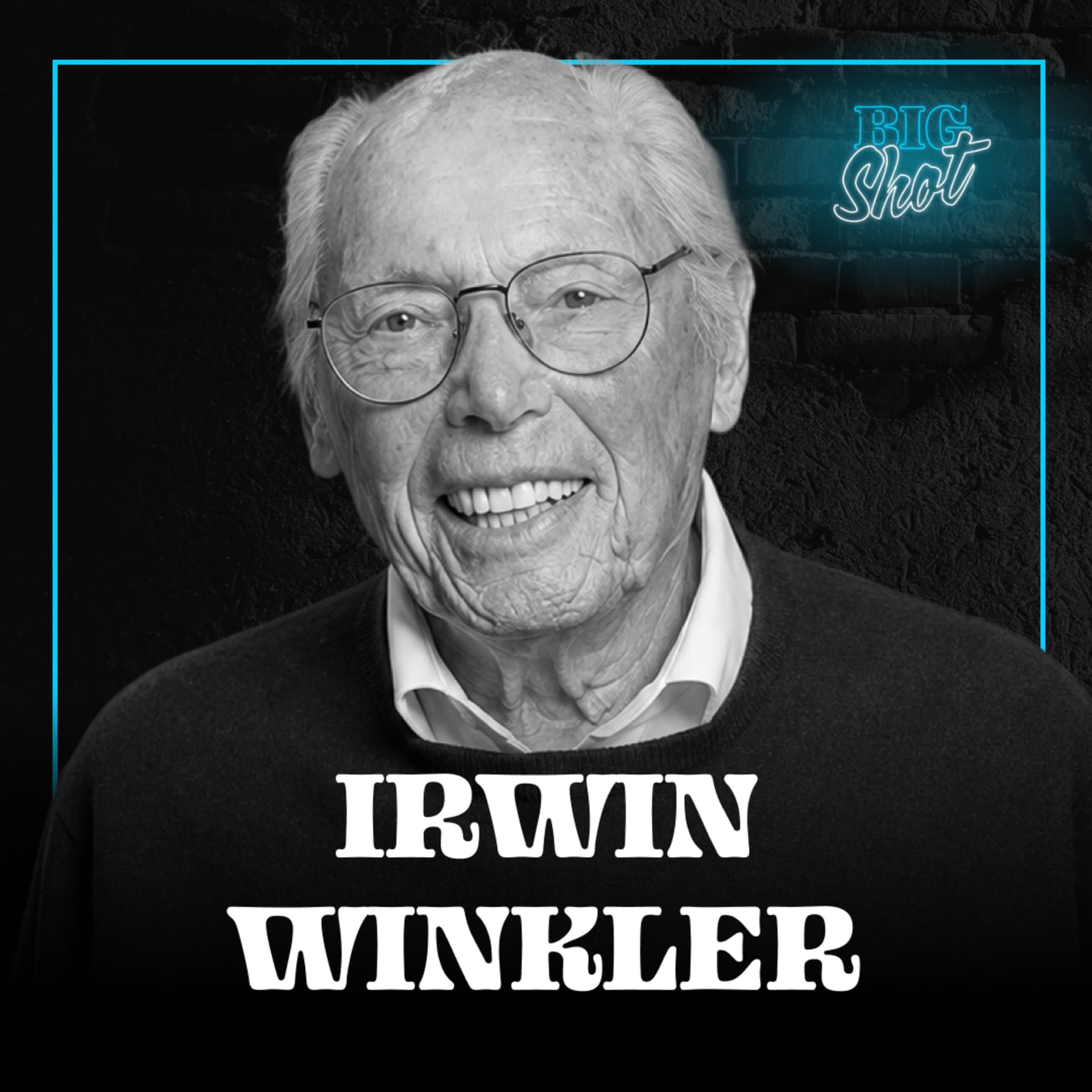
The episode centers on Irwin Winkler (95). The interviewer/host is not clearly identified in the transcript excerpt.
Guest backgrounds (Irwin Winkler)
Grew up in a Jewish Brooklyn neighborhood (Seagate/Coney Island area), sold knishes on the boardwalk as a teenager, studied American literature at NYU, served in the Korean War-era Army, then entered talent agencies (MCA, William Morris). Married Margot for 67 years; later partnered with Bob Chartoff (1965–1980).
Key claims
Winkler says Rocky “should never have happened,” crediting his early bet on Stallone and a “put picture” deal structure that forced United Artists to finance within budget. He also claims he protected filmmakers from studio interference, including during 1970s set chaos.
Notable examples
Selling/contract hustle at William Morris involving Billy Eckstein; getting Julie Christie cast via loan-outs and MGM’s Dr. Zhivago/Darling scheduling; meeting Martin Scorsese through Mean Streets and later producing The Last Temptation of Christ; reshooting Rocky’s ending after initial downbeat test screenings.
Written by AI. May contain mistakes. Listen to the episode to check what was said.
Chapters
Tap a time to open that second in VOFrom Coney Island to Hollywood
3:04 to 3:35
Irwin discusses his upbringing in Coney Island and early ambitions.
“We're gonna talk about the mailroom because something is up in those mailrooms.”
Family Background and Jewish Heritage
3:35 to 4:26
Irwin shares insights about his family background and Jewish immigrant experience.
“I mean, basically when I was selling conditions was in the summer when the school was out.”
Growing Up in Williamsburg
4:26 to 5:50
Irwin reflects on his experiences growing up in Williamsburg and neighborhood dynamics.
“My daughter-in-law went to Yellows Island where it's actually listed.”
Facing Anti-Semitism
5:50 to 7:03
Irwin recounts a personal experience with anti-Semitism during his youth.
“But anyhow, I grew up two blocks away from Peter Lugers.”
Transitioning to a New Community
7:03 to 8:16
Irwin describes moving to Seagate and the unique community he grew up in.
“But it wasn't that common because there were so many Jews in the neighborhood.”
Early Work Experiences
8:16 to 8:30
Irwin talks about his brief experience selling knishes and lessons learned.
“I don't recommend selling conditions as a career.”
Education and the Path to Filmmaking
8:30 to 11:10
Irwin shares his educational journey and the influences that shaped his career.
“I went to Abraham Lincoln High School, which is in Brighton Beach, actually.”
Finding a Career in Hollywood
11:10 to 14:00
Irwin discusses his first steps into Hollywood and the mailroom experience.
“And one of the minor courses I took, because I didn't know what I wanted to study, One of the minor courses was a course in American literature.”
William Morris Mailroom Experience
14:00 to 17:33
Learn about the challenges and experiences in the mailroom at William Morris.
“The head was named Wasserman, by the way.”
The Lucky Break with Billy Eckstein
17:33 to 18:56
Discover how a lucky subway ride led to a pivotal moment in the early career.
“30 years later, maybe 40 years later, I have a friend whose name was Jerry Parencio.”
Show all 37 chapters
Early Career Struggles and Marriage
18:56 to 21:09
Explore the ups and downs of the early career and personal life.
“I was a terrible, what happened, I ultimately got promoted.”
The Transition from Agent to Manager
21:09 to 22:48
Understand the transition from being an agent to pursuing independent management.
“And the process they had was they paid you really a minimum amount of money.”
The Formation of a Partnership with Bob Chardoff
22:48 to 28:00
Learn about the partnership with Bob Chardoff and the early days of their careers.
“The priority on every agent is to get clients.”
Jackie Mason and the Agent Business
28:00 to 29:12
Learn about Irwin Winkler's early experiences managing comedians and navigating the entertainment industry.
“So the office, William Morris got Jackie Mason three shots on the Ed Sullivan show at$5 ,000 a shot, which today is like$25 ,000.”
The Rise of Julie Christie
29:12 to 31:12
Discover how Winkler started working with the talented Julie Christie and the significance of her loan outs.
“One of the people I represented at William Morris that nobody cared about came with me as a manager.”
Getting Julie into Dr. Zhivago
31:12 to 34:08
Explore the journey of getting Julie Christie cast in the iconic film Dr. Zhivago and the challenges faced.
“And I called one guy, his name was Marv Menoff, who passed away a couple of years ago, and I said, Marv, is there any movies that are looking for an act?”
Crisis at MGM
34:08 to 37:40
Learn about the crisis Winkler faced with Julie Christie's scheduling conflict and how he resolved it.
“He came from the Securities and Exchange Commission, and how he ended up running MGM, I don't know, but he was a lovely man.”
A Call to Hollywood
37:40 to 39:34
Hear about how Winkler transitioned from agent to producer and his first opportunity in Hollywood.
“He said, you know, find a script and I'll make you a producer.”
Developing Scripts and Selling Movies
39:34 to 42:00
Understand the risks of script development and how Winkler navigated successful sales in Hollywood.
“There's opportunity knocked twice for you.”
The Auction and a Key Meeting
42:00 to 43:32
Learn about the auction of a film project and a pivotal lunch meeting with Arthur Krim.
“and one of the people that we sent it to was a man by the name of Arthur Krim who ran United Artists, which doesn't exist in Indiana right now.”
Meeting Sylvester Stallone
43:32 to 45:31
Discover how a chance meeting led to the script that would become Rocky.
“A put picture is a picture where, in our case, you give them a script, you give them a budget.”
Rocky's Development Challenges
45:31 to 48:49
Explore the challenges faced in getting Rocky produced and the changes made along the way.
“And he sent us a script, and we read it, and we didn't want to make the movie, but we thought the writing was really, really good.”
The Release and Impact of Rocky
48:49 to 51:19
Understand the unexpected success of Rocky and how it changed the lives of those involved.
“Do you know right away this is going to be huge?”
Collaboration with Martin Scorsese
51:19 to 54:15
Learn about the beginnings of the partnership between Irwin Winkler and Martin Scorsese.
“No, it obviously made, you know, it gave us great United Arabes makeup.”
Navigating the Chaos of Film Production
54:15 to 56:00
Discover how Irwin Winkler managed the creative chaos on Scorsese's sets during the 70s.
“And I was running the set, which was chaos, because that was...”
The Evolution of Direction
56:00 to 57:25
Learn about the early directing experiences that shaped Irwin Winkler's career.
“I said, yeah, I wish I had started directing 15 years earlier.”
The Struggle for Raging Bull
57:25 to 59:20
Discover the behind-the-scenes challenges in getting Raging Bull produced.
“What happened was because there was a lot of turmoil at United Artists at the time.”
Financing Films in Hollywood
59:20 to 1:02:26
Explore how films were financed in Hollywood and the evolution of funding sources.
“Klim, his attitude was, if I'm going to give you$2 million,$10 million,$20 million to make a movie, I got to trust you.”
Navigating Chaos in Film Production
1:02:26 to 1:05:21
Understand how Irwin Winkler prioritized tasks while dealing with production chaos.
“but we want three empty seats here and then another two because we don't want everybody too close together because of COVID.”
Stories from Old Hollywood
1:05:21 to 1:10:02
Hear Irwin Winkler's personal anecdotes about his experiences in Hollywood.
“But yet you've been, Erwin, you've been kind of in this stable thing in this very unstable industry.”
The Value of Realism in Filmmaking
1:10:02 to 1:10:21
Explore the importance of authenticity in filmmaking and storytelling.
“But it was great because you could have tried to be a real big shot instead of$100 ,000, which you didn't have.”
Cultural Influence of Eastern European Jews
1:10:21 to 1:11:11
Discuss the significant contributions of Eastern European Jews to Hollywood.
“But this kid that didn't have a pot to piss in it.”
The Journey of Immigrant Entrepreneurs
1:11:11 to 1:12:09
Learn how immigrant experiences shaped the American film industry.
“who has a permanent exhibition about the Jews that built Hollywood.”
Recognizing and Creating Luck in Film
1:12:09 to 1:13:21
Understand the balance between luck and skill in achieving success in film.
“Why were they so much better than a group of Protestants?”
Navigating Creative Challenges with Feedback
1:13:21 to 1:14:25
Discover the role of feedback in improving film projects and creative work.
“and if I have one quality, I always found that other people's opinion, especially in the creative aspect, are worth considering.”
The Importance of Audience Testing
1:14:25 to 1:16:11
Examine the role of audience testing in shaping film endings and outcomes.
“And I don't know if it was very down, but it was questionable.”
Parental Influence and Personal Success
1:16:11 to 1:16:56
Reflect on familial relationships and their impact on personal achievement.
“In other words, it made sense because they saw the previous, but we were willing always to at least listen to the other.”
Transcript
Automatic transcript. May contain errors.0:00That man's not just a big shot, that man's a legend. Well, he is, I wrote this down, he is the invisible architect behind visible culture. And that visible culture is Hollywood. He is, everyone talks about Scorsese and De Niro and Stallone and Jackie Mason. Well, this guy is the person behind Jackie Mason, Scorsese, De Niro. The way he talks about how he made Rocky happen, I mean, Rocky should never have happened. No, and Stallone should not have happened. He's the one that actually met Stallone before he was anything. And took a bet on it. And actually took a bet on a different film and then eventually got Rocky.
0:35Right. The way that he got here is so unlikely. He is old Hollywood. He is new Hollywood. He is everything in between. And the industry has changed dramatically. But Irwin hasn't. He's still there. He's still doing it now. Yeah, he was innovating in the 50s and 60s on how films were made. He's now, he's still innovating today. It is unbelievable if you think about Hollywood over the last 60 years. 60 years. He's 95. This guy is behind all of it as a producer, as a director, as also just like the deal maker. He's made some of the movies that you and I love the most. Goodfellas, Wolf of Wall Street, Rocky, Raging Bull.
1:13I mean the list just goes on and on. The art of business is what I keep coming back to. He's so creative in the way he goes about producing. Producing is making things happen. He makes the most out of his luck and we talk about how to think about luck and what to do with it I mean, this is 60 years of hard-fought wisdom that we've run out of this. Well, he also, you know, he was a mediocre agent. He says he was a mediocre agent. He didn't really want to be an agent in the first place. Right. He just sort of found his way there and then he found his way to Hollywood, then he found his way to Scorsese, and he found his way to De Niro, and he found his way to Goodfellas.
1:45He also has this great way of protecting the creatives in Hollywood. And he's still doing it. And still doing it. He's talking about AI. and how it's impacting the movies he's making now at 95. Well even how he's working on things like The Irishman with Netflix and he's working on a film right now with Amazon and how this all kind of fits together. But you're right, he's thinking about what is AI going to do and how is it going to help him. He is this incredible story of going from the mailroom to the epicenter of power in Hollywood. And he talks about his family and his wife and he talks about his parents.
2:17and he started selling knishes on the boardwalk in Coney Island. Yeah, and this is a walkthrough of the history of American filmmaking. And culture, American culture. Totally. If you love Raging Bull, if you love Goodfellas, if you understand the way the things are made. You don't know Erwin Winkler, but this episode is incredible. You don't know Erwin Winkler, but you will know him soon, and you will see his fingerprints on everything. Boardwalk Hustler to Oscar Architect. Ladies and gentlemen, Erwin Winkler, let's go.
3:03So Erwin, we're gonna talk a lot about your life, your incredible career. We're gonna talk about the mailroom because something is up in those mailrooms. It feels like so many of our guests come out of the mailroom in William Morris, which is fascinating. That was the place for mail rooms. It's unbelievable. We'll get there. I want to talk about Saul and Anna, your parents. But I want to start, you grew up in Coney Island, and I want to talk about you selling knishes on the boardwalk in Coney Island and what that taught you about entrepreneurship. It's an interesting question, but the answer is really based on my own ambition when I was a kid.
3:43I mean, basically when I was selling conditions was in the summer when the school was out. And I was like 14 years old. And I wanted a job. I didn't want to just sit around. Where'd you get that admission from? I have no idea. Was your father or your mom an entrepreneur? No. My father was a middle class Jewish entrepreneur. But his and my mother's goal really was to own a small house that they lived in. And to send my sister and I to college. That was their goal. And I think that's not uncommon with basically second generation Jewish immigrant families from Eastern Europe. My grandfather came to America in 1903.
4:31My daughter-in-law went to Yellows Island where it's actually listed. Somebody came from Trieste. Interesting. So how he got to Italy from wherever it was, all those countries, by the way, have been renamed. Of course. Merged in... Austria-Hungary at the time. Anyhow, and he apparently then brought over his son. And then some of the kids were born here. So that was the process. and they were really hard-working Jews and lived in a version of the shtetl but in Brooklyn. Which I think still exists actually to jump ahead a couple of years ago I shot a movie called The Irishman. Incredible Scorsese movie.
5:26Yeah, and we shot it in Brooklyn, in Williamsburg, which is not far from where I grew up, but it was such a religious Jewish neighborhood that literally if you walked down the street and you asked a woman, well, if you couldn't ask a woman, they wouldn't look at you. But if you asked a man walking down the street and say, how do I get from here, they just wouldn't talk to you. Nothing. They wouldn't talk to you at all. So I think now actually it's a lot more populated by very religious Jews in certain sections of Brooklyn than when I grew up. But anyhow, I grew up two blocks away from Peter Lugers.
6:02Yeah, I know well. As a matter of fact, as a kid during the war, I was like seven years old, six years old, seven years old. When I walked around the corner and I got to Peter Lugers, I walked on the other side of the street because the German name, I forget, it was very dangerous for a young Jewish boy to walk past Peter Luger. Little did I know it was owned by Jews, by the way. Did you feel that when you were a kid? Did you feel anti-Semitism around you? I felt it only once. When I was walking down the street and there were two or three, I think they were Italian, I'm not sure, they might have been Irish.
6:43I was walking by myself and these other guys were walking towards me. I must have been 14 or 15. And they said, are you Jewish? And I said, yeah. And they started to beat me up. But that was in all my years, that was the only really anti-Semitic that I consciously saw and happened to me. But it wasn't that common because there were so many Jews in the neighborhood. It was basically a Jewish neighborhood. That's right. So we moved from there. That was Williamsburg. when I was I think 13 or 14 to, you know I say Coney Island, it wasn't really Coney Island. At the end of Coney Island, 37th Street, there's a private community called Seagate.
7:25You may never have heard of it. And beyond, in those gates lived a whole community of people, almost all Jewish. And Seagate had its own local police force, their own sanitation. and one or two shops, a small grocery store and a cafeteria, and almost a cafeteria place where you can eat. And that's where I grew up. So Coney Island was more recognizable than Seagate. When you mention Seagate, nobody knew who was Irma. So that was the part of Coney Island that we grew up in. So you spent your summers selling knishes on the boardwalk. Did you, I mean, you wanted some - Only once summer, though. I don't want to.
8:10But did you learn about hustle, salesmanship, Mark? Like, what did you learn from that experience? Nothing. Nothing. Okay. I don't recommend selling conditions as a career. That's right. It's not a career starter. When did you go from Erwin the kid, you know, having a great time on the boardwalks to Erwin, I'm going to make something to myself in LA. Well, I'll tell you what happened. I went to Abraham Lincoln High School, which is in Brighton Beach, actually. We took a trolley there. there and I skipped a term. In those days you could skip a term when the teachers thought you were really too progressive education wise for the class.
8:49So I graduated when I was very young. I think I was 17 when I graduated high school. I was considered the usual close to 18. And I didn't know what I wanted to do, but I knew I had to go to college. That That was the requirement. You know, it was just built into my DNA. You graduate high school, you go to college. Maybe become a doctor. Huh? Maybe become a doctor. Or a lawyer. It's a Jewish story. So I registered for NYU and I got in. My fellow classmates, I immediately recognized, were from a different place in the world. They were mostly GIs that were on the GI Bill. So now you're a 17-year-old kid.
9:33You take the train from Coney Island into 4th Street or 8th Street, where NYU was. And your classmates are guys that were in the Battle of the Bulge. They were on Iwo Jima. So they were a whole different. They might have been only four or five years older than me. It seemed like they were 30 years older. Yeah, they had gone through a war. Right. You were a Jewish kid. Yeah, so I was very, and what happened was I got in a lot of trouble. How so? I had a friend, and we just never went to school. We were wild. We did a lot of things that at the time I didn't realize were pretty stupid, but we did a lot of things.
10:15But it came to me in my second year in college that this is not good. Something is wrong with what I'm doing, and I've got to do something. So I enlisted in the Army. And it was during the Korean War. And I just instinctively, I needed some regimentation. And my parents were very free about it. My sister and I, they were really hands-off in the best way. They didn't say, what are you doing tomorrow? Don't go there. They were very free. So while I was in the Army, I grew up, obviously. We spent two years in the Army. And when I got out, I got a job. and I went back to college. I went back to NYU.
11:00I went four nights a week, four nights a week carrying four credits each night. I carried 16 credits at night. So I worked during the day until five o 'clock. I went down to wherever I was working. I went down to NYU. And one of the minor courses I took, because I didn't know what I wanted to study, One of the minor courses was a course in American literature. And I fell in love with Hemingway and John Dos Passos and Steinbeck and Faulkner and all the great American writers from the 20s and 30s and 40s. And suddenly I found something I loved in education. I couldn't care less about math or anything.
11:46I just loved to read. I found great solace in it. and I investigated, investigated, investigated. And when I finally graduated from college, I still didn't know what I wanted to do. There was a guy that lived in Seagate. I even remember his name. It was Danny Welks. And Danny Welks was an agent at MCA. And MCA at the time was this great, big, big agency. It was kind of like what CIA stated, but they were the first agents that were very buttoned down. Every agent wore a black suit, a white shirt, and a black tie. That was the uniform. And Danny works with him. I said, wow, that guy looks okay. And somebody said to me, you know, Danny works at MCA.
12:37And then I read a book. It was called The Stone for Danny Fisher. You know, just a pulp, you know, paperback book. But in it, there was a description of an agent. And he was very well-dressed and seemed very nice. Maybe I'll try that. That was it? That was the entire motivation? Yeah. A stone for Danny Fisher. I found out about MCA. I found out this was a big agency. So I went up, and somebody I knew, somebody by showing, you'll never get an interview even. But somehow the receptionist sent me back to meet an agent or a supervisor. And I never forget walking through the office space, not unlike what's out here, big office space, there's a guy on the phone, and he says, Bert, I'll take care of Tony Curtis.
13:29Don't you worry about that. I'll take care of it. And I realize he's talking to Bert Lancaster, and they're talking about Tony Curtis, and they must be making a movie. I said, well, this is kind of okay. This is pretty cool. This is better than selling knishes on the boardroom.
13:46So the guy interviews me, and he asked me a whole bunch of questions. I had no idea what he was talking about. And I think to get rid of me, he said, you know, there's another agency called William Morris. You should check them out, too. And he didn't hire me. Which is a competitor. Yeah, he just wanted to get rid of me. That's where all the Jews are. You should go there. They were, too, by the way. The head was named Wasserman, by the way. It's Casey Wasserman's father. Grandfather. Anyhow, so I went to William Morris. I got an interview, and they asked me the exact same questions. So now I knew what not to say, and I guessed right.
14:23And they said, okay, we have an opening in the summer. You could be a temporary mailroom employee for 8 to 10 weeks until people come back from the summer vacation. Because I had graduated from NYU in June, so it was the perfect fit. I said, okay, yeah, fine. By the way, let's talk about this mailroom, because like you, Barry Diller, David Geffen, Michael Ovitz, I mean, it doesn't sound like you guys were doing a lot of mailing in the mailroom. We've done 30 episodes approximately of Big Shot so far, and the amount of times we hear about the William Morris mailroom, what's the story with this mailroom?
14:59First of all, one of the stories which I always presented was they paid us$40 a week for a 12-hour day. They weren't generally. What does that mean when you work in the mailroom? Maybe explain that a bit. It means you take a letter or a contract. Oh, I'll tell you what happened. I'll tell you how I ended up staying in the mailroom or staying at William R. After eight weeks or nine weeks, he called me and a guy that was in charge of the mailroom, he says, you know you're going to leave in a week when the summer's over. I said, okay, fine. But I kind of like the edge of show business, you know, because everybody was talking about this deal and that deal.
15:41And the guy calls me in and he said, take this contract. I need it signed right now. It's for a club day tonight. And it's at Billy Eckstein. You won't know the name of Billy Eckstein. He was a really great black singer, nightclub performer, in the 50s and 60s. He was a great big, big star. He said, here's$4, take a taxi. Well, when you're making$40 a week, you don't take a taxi for$4. You look for the subway. And pocket the$4. Yeah. So the William R.S. agency was on 55th Street on Broadway, and there was a subway on 59th Street. And I walked in Billy X and lived on 125th Street. And sure enough, as I walk down, the express train comes in at one stop, 125th G.
16:35I go up. Mr. Eckstein signs the contract. I go down. The train is going the other way, right down to 57th Street or 59th Street. So now this whole trip takes like seven minutes. I mean, just really like as fast as it possibly could be. And I bring the contract back there. His name was Sid Feinberg. I'll never forget him. So he says to me, you know, I've seen a lot of hustles in my job, but this is really one. You obviously didn't go to see Billy Eckstein. You forged his signature and put the four bucks in your pocket. Well, he was half right, anyhow. So I said, no, no, no. I said, call Billy Eckstein.
17:19He calls up Billy Eckstein. He said, yeah, the kid was here. He was so embarrassed by accusing me of falsifying a name and all that forgery, he kept me on. That's how I stayed in the middle. Wait a minute. 30 years later, maybe 40 years later, I have a friend whose name was Jerry Parencio. He was a very, very multi-billionaire. He has a birthday party and he has Billy Eckstein as the singer. really and as fate would have it after he performed as he did a set he came and sat down and he's sitting next to me at my table just by and i tell him the story he looks at me like what are you but which you know some things could be world changing for you but for another person on the other side of the desk it means that you're like a food delivery guy just to kind of set the On the stage, though, I mean, what really happened here is you got lucky that the subway happened to be going the right time, the right place, that Billy lived in the right location for the subway, that you were so efficient to come back that he thought you were lying.
18:29It turns out you weren't lying. He felt bad for accusing you of lying. So he gives you a job. Yeah. Yeah. And that started the career. Yeah. Yeah. How do you attribute, like, how do you, you know, when you give someone advice about their own careers. Well, you know, they always say, you know, luck takes a big part of it. But then also is how do you manage the luck? Yeah. My luck was they kept me at William Morris. Now I had to make something of it myself. I had the opportunity through fortunate circumstances, but then you got to go out and do it. So what do you do? What did you do at William Morris?
19:01What happened was I was a failure. I was a terrible, what happened, I ultimately got promoted. The process that William Morris says, you get out of the mailroom, you become a secretary, which meant you had to go to school at night that you had to pay for to learn dictation. In those days, it was dictation and typing. That you paid for at night. When you finished your 7 o 'clock, you then went to a stenography school. And I was the only guy. We were all women in those days. Anyhow, which wasn't too bad. Anyhow, I became an assistant. I ran the projection room for a while. And I took care of the auditions.
19:55And then I became an assistant to an agent. And I didn't like the job. Why didn't I like it? I was in the syndication department. And you talk about Isidore. Sure. Sure. I remember they sent me up to Canada, to Toronto, and I stayed at the Four Seasons Motel, Yeah. Which was how Mr. Isidore started. Of Jersey. And I'm talking about 1959. Amazing. And he had this very handsome, when you went to Toronto and you had a couple of bucks, that's you stayed at Isidore's Motel. Amazing. Yeah. I'm sorry you didn't get a chance to tell him that story. Yeah, it's a great story. Anyhow, and I didn't like it.
20:42I wasn't happy. And then as things went along, I met my wife when I was in the mail. Margot and I are married 67 years, and we met when I was a mail boy.
21:00And she made more money than I did. She was a bookkeeper. So we were okay. We lived in Manhattan in a small apartment and all that. And I started to do well, making a couple of big deals. At William Morris. At William Morris. And the process they had was they paid you really a minimum amount of money. As an assistant agent, as an agent that wasn't particularly successful, they gave you what they call a living. and every Christmas you'd go in and the head of the New York office was a man by the name of Nat Lefkowitz and Mr. Lefkowitz would sit at his desk and he would review your year and give you a bonus that would really make up for all the lack of funds you were getting all year long and so one year one Christmas and I ran and now we're starting to do a little better and he gave me a very, you know, and I said, Mr.
21:59Liffkowitz, I made this deal. And then, oh, yeah, you made that deal? I didn't know. Go down to see Sid Foneman. Tell him to give you another$1 ,000. This is like, I said, this, you know, now I'm growing up and I'm saying, this don't sound right to me. I don't like, the next year I got married. Oh, no, Margot got pregnant, okay? So I go in and he gives me a minor amount of, again, a bad bonus. I said, Mr. Lefkowitz, my wife is pregnant. I don't even have money to buy a maternity dress. Oh, we don't know. Absolutely. Go down, tell Sid Farmer to give you$5 ,000. And I said, I've got to get out of here.
22:37This is not what I want. I don't need a father. And they had that kind of hold on you. Of course, they didn't pay you a lot, but you knew you'd get a big bonus. So you had to stay. Yeah. Did you know you weren't good at this? Did you not enjoy it? You say I wasn't a good agent. What made you realize that? Because I didn't like it. I mean, I didn't sign many clients. The priority on every agent is to get clients. So yeah, if I had signed Frank Sinatra, I would have been happy and I would have done better. But you didn't enjoy it, so you probably weren't that into it. Well, yeah, I just didn't like it.
23:16I didn't like the process. and then I met a man by my name, Bob Chardoff, who was a personal manager. And you and Bob created this incredible partnership. For how long, how many years? We were partners from 1965 until 1980. Wow. Tell us about Bob. Tell us about Bob. Well, he was a great guy. We really loved each other, but what happened is by 1980, when we were really starting to do well, Rocky had been, we were making Raging Bull and all that stuff. He went to India on a trip. And while he was in some small town that he ended up in, a man came over to him, tried to sell him his two sons, sell them into slavery.
24:08So Bob took it very much to heart. And that was not uncommon in those days. It may be still going on in areas of India or Pakistan where civilization is still a far reach. So Bob decided he wanted to spend more time in philanthropy. So the only thing we stayed together was on the Rockies and the right stuff and a couple of movies that we had owned together. But let's back up because the Rocky thing is so interesting. So you leave William Morris, you and Bob Chardoff start this partnership. What was the first, first of all, where'd you get the money? Like, how did that all happen? Well, we decided, because I had two kids, I think he didn't have it.
24:50He had a couple of dollars more than I did. I called when I decided to leave. Well, two things happened. I decided to leave, and I went in to see Mr. Lefkowitz, and I said, Mr. Lefkowitz, I really am not happy, and I'm leaving. and he said, fine. He said, fine, Bert. He said, fine. And usually they would say, leave your office now or we'll escort you out. Right. And when do you plan on leaving? I said, well, pretty soon. He said, whenever you're ready. I realized that I was so unworthy of anything. They didn't need you to go. They didn't care. They couldn't care. I would have been feeling better.
25:30He said, oh, leave right now and be angry. We couldn't care. So I left him, Bob and I. I drew$100 a week. And Margot was pregnant at the time. And Bob took nothing. And we opened a little office on 57th Street in Manhattan. And Bob had a relationship. His uncle, I mean, I don't know, this is really old Chauvin's history. Bob's uncle was a man by, Bob Chardiff's father was, I think he was a flutist with the New York Philharmonic. But he passed away when Bob was very young. So his uncle was a man by the name of Charlie Rapp. And Charlie Rapp was known as the King of the Mountains. What does that mean?
26:20He booked all the acts into the Catskills. By that I mean most of these hotels, especially the small ones, they had a dance act. Usually it was two Jewish dancers with Latin names, a Jewish comedian, a Jackie Mason. I love Jackie Mason. And a singer. And Charlie Rapp would book them. But you didn't book them for one date. you booked them for a Friday night, two Saturdays, and a Sunday afternoon. So the guy that had the car drove the other two people around. And that guy worked a lot, the guy with the car. So when Bob graduated from Columbia Law School, he didn't want to be a lawyer. So his uncle Charlie said, I'll give you an act, a couple of acts, that depend on Charlie Rapp for a living.
27:19One of them was Jackie Mason. Wow. So Bob said to me, we have one client to start with. And I had... And Jackie Mason was your one client? At the time, yeah. Wow. But is he a famous comedian at this point? He's working. Okay. What happened is, actually, this is what convinced me. This is before I left Morris. office. He said to me, why don't you sign Jackie Mason to the Morris office, which I did. But between you and I, I couldn't stand Jackie Mason. We like his comedy. I'm not sure his personality would. So the office, William Morris got Jackie Mason three shots on the Ed Sullivan show at$5 ,000 a shot, which today is like$25 ,000.
28:14So I called Bob and I said, isn't that great? He's the manager. I said, well, you got Jackie three shots and that's all. He said, how much are you going to get out of it? I said, what do you mean? He said, I'm getting 15%. How much are you getting? Nothing. So I realized that it was a better business than what I was in. Anyhow, so So we, and Bob had Jackie Mason, and then he got another guy, a stand-up comedian. Okay. And he said to me, you know, let's start. And I had a couple - But what were you starting? Was you really managing, you were doing booking? Yeah, you didn't want to be an agent, right?
Read the full transcript
28:53I know, but I - You were kind of being an agent again. Yeah, but I wasn't, I was now independent. And by the way, I have never worked for anybody since. Since William Morris. Yeah. Okay. Never worked for anybody since 1964. How do you guys go from agents to producer? Well, that's another story. All right, let's continue with it.
29:16One of the people I represented at William Morris that nobody cared about came with me as a manager. And he was an English film and television producer. His name was Nat Cohen, another Jew. Yeah. So and we hit it off and he called me up and he said, you know, I just made a movie that I financed in Lincoln, a little independent movie. It was called, it's called Billy Liar. There's a girl in that movie that I signed. And in order for her to get the part, she had to give me six loan outs. So I could loan her out, which means if we get her a job or she gets a job, she's under contract to him, so she gets paid from him, and he can sell her for twice as much money.
30:11As a matter of fact, historically, David Selznick did that with Ingrid Bergman and Alfred Hitchcock. You sign them to a contract and then you basically have the right to sell them. So he said, find a, he said, see this movie, Billy Lyre. I said, where do I find it? He says, it's going to play in a New York someplace. I don't know. So he found that it was playing on a small theater out in Long Island, somewhere we drove out. And as, about a third of the way through, we're still waiting for this girl. And down the street, this beautiful blonde girl, her name is Julie Christie. who ultimately won an Academy Award for Best Actress, goes bopping down the street and she represented London in the heyday of the 60s.
30:58And I lifted up and I said, Bob, this is going to make us, this girl. So what happened is I handled her loan outs, but I didn't know anything about the motion picture business. So there were guys at William Morris that I had known from when I worked there. And I called one guy, his name was Marv Menoff, who passed away a couple of years ago, and I said, Marv, is there any movies that are looking for an act? He said, well, David Lean is doing this movie, Dr. Zhivago. That's a big, big movie. They're looking for a girl to star in the... I said, okay. I said, but how do I get a hold of David Lean, the director, Carlo Ponte?
31:40He said, oh, the lawyer's named Lee Steiner. So I said, okay, I call up Mr. Steiner. And I say, you know, I represent Julie Christie's loan outs, and I wonder if there's any way for her to meet David Lean and test for the lead. He said, send me a letter. I sent him a letter, and a couple of weeks later he calls. He said, David Lean wants a tester, and we'll fly her over from London to wherever they're testing. Maybe it was, I don't remember. and she gets the part. Wow. And it's the lead role in Dr. Zhivago. Meanwhile... And it's a big film. A big film. One Academy Award for Best Movie. But even then, even before it won, it was going to be a big thing.
32:24Oh, yeah. Okay. David Lee had done Lawrence of Arabia. Okay. I mean, he was the great, great English director. He then said, okay, and I'm also financing a movie that she's starring in. It's called Darling, that I want to sell in America. So could you come over to London, and I'll show you it's about half finished. I'll see you. And you can see it, and you can sell it. I said, great, but we don't have any money. So we get on a gambling junket. From New York to London, they fly you over, a group of men, old men. They put you up at the Victoria Sporting Club, and all the food you ate and for your hotel room is all paid for.
33:13Because they want you to gamble. They want you to gamble. But you're not a gamble. And they don't have any money. But what we did, we knew enough, we took$500 in cash and what happened, we'd go to the cage at the Victoria's Oracle, buy$300 worth of chips and put it in our pocket, hang out a little bit at the table, come back and say to the, give me another$200 worth of chips. It looked like he had lost the$300. Now we had$500 worth of chips. And we'd come back and smile and say, hey, we just won$500. And we kept doing this, so they thought we were gambling. And you got a free trip to London. And a hotel room and free meal.
33:58Oh, that's a classic Big Shot story. Victoria's Spurgeon. So we saw the movie, and we thought it was really, really good. And we came back, and I met with the head of MGM. His name was Robert O 'Brien. He came from the Securities and Exchange Commission, and how he ended up running MGM, I don't know, but he was a lovely man. Part of the detail of Julie Christie's deal, she finished darling, and the next day she had to go to Spain for Dr. Zhivago, and her contract was for 106 weeks. Yeah, 104 weeks. Two years. Two years to do that one movie. So she had no time to do any post-production work, music, dubbing, all the stuff that's required.
34:47So I made a deal that she can leave Dr. Zhivago for three weeks in March so that she can go to London and do her post-production work on Darling, which, by the way, she won an Academy Award on Darling for Best Actress. next year. So the time for her to go to London is coming up, and I send a telegram, in those days a telegram, to the lawyers at MGM, and I say, I just want to remind you that Julie Christie is leaving for three weeks. No response. So on a Friday afternoon, I get a call from the head of business affairs, big lawyer at MGM. He said, could you come right up to Mr. O 'Brien's office?
35:34we got a real crisis. And I kind of knew what the crisis was. They didn't want her to leave. So I get there, and Mr. O 'Brien is on the phone with the production manager in Madrid. I think it was in Madrid. It could have been Barcelona. I don't remember. And he's saying, okay, okay, Julie Christie is leaving tomorrow? And the guy says, yeah. And he says, what are we shooting tomorrow? He said, we have 5 ,000 extras in costume and Julie Christie, but she's not going to be here. So he said, what did David Lean say? He says, I'm not going to tell him. I'm afraid to tell him. So he hanged up and he said to me, this is terrible.
36:17So I said, you know, let me call Nat Cohen, my guy in London. And this is what the luck is. The secretary comes in and says, all the lines between New York and London are down. Those were days when it was coaxial cable. It wasn't digital. And very often you get, you know, you can't get through. And now Mr. O 'Brien is sweating and this is the end. David Lena is going to walk off the picture. I'll get sued. You know, everybody is playing out the worst possible scenario. I said, you know what? Call that guy back in Madrid and have him call Mr. Cohen in London and have Mr. Cohen call us here. and they're looking at me like, what is this kid?
37:03And sure enough, in five minutes, Mr. Cohen is on the phone. I said, Nat, instead of Julie Christie flying to London to do the post-production, how about doing it in Madrid at night and MGM will pay for it? And he says, great, yeah. And then Julie Christie can work in Dr. Zhivago during the day and at night. And they will look at me like... You're a genius. Yeah. And O 'Brien says to me, you know, I got a bunch of old producers out in Hollywood. They don't know what they're doing. Nobody could do what you just did, calling Madrid to call. He said, you think on your feet. I need somebody like you out in Hollywood.
37:40He said, you know, find a script and I'll make you a producer. Wow. So you weren't such a bad, I mean, you were helping your client as an agent, but ultimately you were doing the work of the producer. Did you want to be a producer? I hadn't even thought of him. Well, let me finish the story, however. You want to know how I got to Hollywood. So a couple of days later, I got a call from his head of the story department in New York. And he calls me and he says, look, we have a script here that we think would be really great for Julie Christie. And we can't get Mr. O 'Brien to read everything. It just sits on his desk and he's got other things.
38:19But he wants to be in business with you. So if you like the script, you give it to him. And who read it if it comes from you? He won't read it if it comes from us because we give him all that other stuff. So I read the script. It's okay. Not great. Not bad. But I call Mr. O 'Brien. I said, we have a script here and we think Julie Christie might be interested. And now she's starring in their big movie in Dr. Zhilago. So it's a natural for them to want to be in business with her. So he says, send it over. Sure enough, a couple of days later, he calls me up. He said, you know, I read that script.
38:51He said, I don't think I want to do it with Julie Christie. I said, oh, that's too bad. He said, but, he said, I have another idea. I said, what is that? He said, instead of Julie Christie, I'd like to do it with Elvis Presley. So I said, the script I sent you starring Julie Christie, you want to do it with Elvis Presley? He said, yeah, what do you think about that? I said, that's the best idea I ever heard. And he said, how quick can you get out to Hollywood? And that's how I got to Hollywood. Amazing. Did you agree that Elvis would be good for that or you thought it was ridiculous? I couldn't care less.
39:26All I knew is I went downstairs, called Margo, and I said, you better start thinking about renting the apartment. We're on our way to Hollywood. And you got to Hollywood. What year did you get to Hollywood? What year did you get here? 66. 60 years ago. There's opportunity knocked twice for you. Once when you're running the subway. Once saying it's a great idea. Right. I mean, did you, where did you get that sort of open mind? I mean, most people wouldn't at the drop of the hat. It's actually chutzpah in some ways. I mean, this is real, like, very positive, constructive chutzpah. You know, you got to have a little chutzpah to be going through 60 years of making movies with, you know, from Elvis Presley to Viola Davis.
40:08Stallone, I mean, yeah. Can you talk to us a little bit about Stallone and that chapter? Because It's a fascinating chapter how that happened. Well, what happened was also a matter of some crazy luck. We were producing and making quite a few movies probably. And from 1966, when we ran our first movie, to 1976, we probably did 12, 14 movies. And some very good ones. In 1970, we had three films at the Cannes Film Festival. one was the closing out attraction the other two won one best jury award best director so we were making some good movies and some not so good movies but we were working and we were making two movies a year and you're making money at this point making money on fees yeah but you're starting to live a better life yeah we're okay yeah we rented a house in the flats Margot had a convertible you know we let's get it yeah Yeah.
41:08And we're making fees, but not back-end, nothing like that. And we had a script.
41:19We didn't want to spend our own money developing a script, in other words, paying a writer$100 ,000 to write a script that you don't know how it's going to come out and whether you're going to lose all your money. So we made a deal with a writer and said, look, we'll give you an idea for a movie. You write the script. We'll work with you on the screenplay, They give you our input creatively. And if we sell it, you'll get$200 ,000 or$300 ,000. If we don't sell it in six months, you own it. You have all the rights, all the work that we did, and it's yours. And you can do anything you want with it without us.
41:54So I did it with this guy, W.D. Richter. And he wrote a really terrific script that we end up selling for a lot of money over a weekend. And we put it up for auction. and one of the people that we sent it to was a man by the name of Arthur Krim who ran United Artists, which doesn't exist in Indiana right now. And he was a very close friend to Lyndon Johnson when Lyndon Johnson was president of the United States. So what happened was we sold over the weekend to Columbia Pictures, now Sony, with Columbia Pictures, and the head of United Artists in L.A. called me and said, you know, Mr. Krim is really very angry at you.
42:40I said, why? He said, well, you sold it without giving him a chance to bid. I said, well, we gave it to you and all that. He said, yeah, but he was on the ranch, Lyndon Johnson's ranch, and he couldn't use the phone there and start calling you. So he said, but Mr. Krim would like to meet you. I said, wait a minute, he's mad at me, but he wants me to meet you. He said, yeah. He said, next time in New York, he'll take you to lunch. Next time we're in New York, we made lunch. And I said to him, I thought you were angry at me. Why do you want to take me to lunch? He said, look, you always have good material.
43:15And rather than being angry at you, I'd rather be in business with you. So he said, we'd like to have an exclusive contract. Together you would make pictures. I said, no, I don't want to. The minute you're exclusive, you don't have any more power. You control me. And you like being independent. Exactly. Right, you said that. So after a lot of pressure, we came up with a formula that if we don't make a movie for them in the first nine months of our contract, and they're paying us a good fee, we have the opportunity, which nobody does anymore, of put a picture. A put picture is a picture where, in our case, you give them a script, you give them a budget.
43:58if the script is a million and a half dollars, which today would be probably$10 million, if it was a million and a half dollars or less, they have to finance the movie. They don't have to release it, but they have to finance it. But it can't be an X-rated movie. It has to... That was the deal. So we had that power. If we don't make a movie, we find a small script and make them do it. And what happened... So then we hadn't made a movie, and then one day a guy that was working for us, his name was Jim Kirkwood, came in and said, do me a favor, would you meet this guy Sylvester Stallone? I said, I don't think I want to meet anybody by the name of Sylvester Stallone.
44:42He said, oh, do me a favor, meet with him. I said, what has he done? He said, really, Lord's a Flapper, some little movie, but just meet him for casting. I said, but we're not casting anything. So, okay, I'll meet him. And he comes in, it's one of those meetings where you, you know, how long this is going to take. And he comes in and we're very nice and we talk, we talk. As he's leaving, and we see we're just not casting right now. As he's leaving, he said, by the way, I'm a writer. And I wrote a script and if I send it to you, would you read it? He didn't look like a writer, he didn't sound like a writer, but what does a writer look like?
45:21I don't know. What did he look like at the time? He looked like he didn't have the kind of muscles he has today. He was big and heavy, and he still talked the way he did. And he sent us a script, and we read it, and we didn't want to make the movie, but we thought the writing was really, really good. So we called him up and said, look, thank you for sending it over. We think you're a really good writer, and the script is very, very well done, but it's not something that we're interested in producing. He said, I don't know the level of desperation, but he said, look, I have an idea for another movie.
46:01If you like my writing, would you listen to that idea?
46:08Cichua, and he came in and he pitched the idea of Rocky. And he'd already written Rocky at that point? No. Okay, just an idea. Just an idea. And he said, look, and if you like the script when it's finished, you don't have to pay me not that we were going to but he said you don't have to pay me but if you like it and you want to make the movie I have to star in it that's the only demand I have so we said you know what we're not costing anything yeah why not so then he sent us some of the pages and we kind of liked it and then he finished it and we really said okay that's great we gave it to United Artists They looked and said, why would we want to do a picture where a guy by the name of Sylvester Stallone?
46:53It's about two ugly people having an affair. Who cares? For fights, nobody's watching fights anymore on television. And Philadelphia, who would want his movie? Who cares about Philadelphia? They just didn't want to do it. So we said, okay, well, it's a put picture. It's a million five. You got to do it. They had no choice. They had to do it. Yeah, except they did something that is not surprising. They budgeted themselves. So they said it's over$1.5 million. Yeah, it's$2 million. Well, it's over the put. Yeah, so you don't have a put. So I said, you know what? We'll make it for$1 million and we'll guarantee, Charterf and I will guarantee anything over$1 million.
47:35So now it's back to a put picture because it's within that. You're not committed for more than$1 million. You're really$1.5 million. Yeah, you're giving them a$500 ,000 break. Yeah, getting a bargain anyhow. So after a lot of back and forth, they were stuck. And they said, okay. But then they went to Stallone. They realized they had a good script. They went to Stallone. And I don't know how he tells the story now, but they offered him, I think,$250 ,000 to sell them the script so they can make the movie with Ryan O 'Neill or Burt Reynolds, one of the big stars at that time. But not Sylvester Stallone.
48:10But not Sylvester Stallone. And he said, no. So he said, I don't know if he admits to this now, but he said, Charterford Winkler promised me that if I wrote the script, they would star me in the movie, and I think they'll do it. What did you see that no one else did at first? I saw somebody trying to screw us. We had a deal that they had to make a picture at a million and a half, and by doing a budget of$2 million, they were screwing us. I didn't know that it was a kind of cockamamie little movie. cost a million dollars. I didn't have any idea it would be what it was. Well, that's so interesting.
48:45So it wasn't, you were, this movie needs to be made. I was just angry. You were just angry. It was a spite movie. Yeah, it was a spite movie. Rocky was a spite movie. So Rocky then gets made. It comes out. Do you know right away this is going to be huge? Yeah, well, I know how huge, but what happened is we had screenings after it was finished, and Bill Conti wrote this great story and called it Fly Now and on. And we screened it for friends and all that. And everyone said, really? It's great. But at the end, it all went down. I mean, basically, the poster is, the camera is on the back, and you see the back of Stallone and Talia Shia walking away, very sad.
49:25That was the ending that we shot. So we all said, you know, something wrong here, because the people are cheering during the fight, and then afterwards, they're just, it's very Vietnam-syncing. 70s. Everything in America at the time was downbeat and everybody was depressed. And we finally three months later, four months later we reshot the ending where she comes in the ring and they hug and all that stuff. That's a reshoot after three months. And they wouldn't pay for it. We paid for it ourselves. There's a story behind that and how you managed to do it without spending too much. Oh yeah. Well what happened is because it was our own money.
50:08So instead of hiring a whole bunch of extras to fill up the screen from where she comes from the doorway to the ring itself, we hired, I think, 25 extras. We said, bring your hats and coats. And we said, okay, you take off your coat. You stand in the front. You go in the back, put on your hat. You know, we just, we moved it around with the wardrobe and all that. So 25 people became like 100 people. Yeah, it became 125. That's an amazing thing. So the movie comes out. But does this change your life? By the way, you know how we got the crowds in the stands? We couldn't afford to hire, you know, 200 extras because the picture was a million dollars and our money.
50:47So we went to an assisted living home, and we took the old folks, and we bused them to the set, and every hour we would auction off a television set so that we'd keep them there. And at 4 o 'clock, when they had to get their meds, we would drive them back to the… Oh, man. Yeah. That's incredible. So movie comes out. It's a big hit. Does that change things for you and Chartoff? Well, you know, I say I read a book. It's for me right away. When the picture was finished, I was taking, Margo and I were taking our three boys to Hawaii for a vacation. And they upgraded us to first class. That's what it did for me.
51:27Okay. No, it obviously made, you know, it gave us great United Arabes makeup. lot of money and it was the thought of the whole franchise. And then let's talk about sort of the next kind of phase of that which you know gets into Goodfellas and some of those other iconic films. Well how did you meet Marty Scorsese? Let's talk about Scorsese and your relationship to Marty. Well what happened was this was before Rocky and for some reason I was in New York and somebody asked me to go see Mean Streets I think was at the New York film festival someplace. And I went to see it and I thought it was really terrific and that same person said, would you like to meet Scorsese?
52:10And I said, sure, absolutely. So we had drinks and I was very impressed that there's a scene in Mean Streets where before Bob De Niro gets shot, if you remember he gets shot and killed in Mean Streets, there's a scene in the office right before he gets in a car where there's a poster and there was a gun pointing at his head and Scorsese had put in. That poster was from a movie I had done before called Point Blank which was a big favorite to Marty. So I said, you know, thank you, you used that poster and all that. So we kind of, you know, we liked each other and then I had the guy, the same, a friend, no a guy who was very friendly with the guy that wrote Nickelodeon, the one that Arthur Krim couldn't bid on, wrote another script called New York, New York.
53:08That was also a script, but we made a deal right away with that. By then, we made a deal with United Artists because we were under contract to them. And I was going to do it with, I was talking to Gene Kelly and Liza Minnelli about starring in it. But Gene Kelly was a great dancer and directed Singing in the Rain and some other movies. But it was kind of old fashioned. So I got a call from Marty Scorsese's manager and saying Marty had read in the trades that I was doing a big band musical called New York, New York. And he loves that era and we love to read the script. So we sent of them and marty said i love it and i want to do it so that's how marty got involved in it and your relationship to marty was effectively what did he see in you like he needed you to what to sort of ensure over the years that he was able to make the movies you wanted financially or that he was able to navigate hollywood what was the what was your role in all this well some of it was material that i had developed myself okay and then some of the other of it was while we're doing in And I was running the set, which was chaos, because that was...
54:22Were they always chaos? Sets were always chaos? No. But mid-70s, frankly, there was a lot of snuff coming around. Yeah, drugs. It was the 70s and a lot of drugs around. And I managed it, you know, and I kept the studio away from the production. And what was your secret to managing all that? How did you do so well? I don't know. I would get up in the morning and early and get on the set and make sure we got our shots in. And was your reputation, were you strict? Were you organized? What was it that... I was always very, very anxious to keep the creative side running. Got it. And I think that was where Marty and Bob found me attractive to them.
55:10Because I was always on the side of the creator. and found a way to deal with the studio and keep them from destroying the creation. But the creatives liked you, but in their eyes, you were kind of the business side of these? No, I think it was protecting the creative side of it. Well, Erwin, that brings a great question up. I mean, do you consider yourself an artist or a businessman? And how would you describe the difference? I don't know. You know, an artist, a businessman, I guess part of everything. I mean, I directed seven movies, I wrote movies, and so I do both. Which is uncommon. Yeah, very few producers have ever become directors.
55:56And I spent 15 years directing movies. And somebody asked me, was there anything you wish you had done? I said, yeah, I wish I had started directing 15 years earlier. and I wish I had continued another five years when I stopped. But anyhow, so we hit it off. And then while we were shooting, and there was trouble on the set because of the drug, and Marty came to me and said, I have a book that I want to make into a movie called The Last Temptation of Christ. Would you be interested in producing it for me? So I read it and I said yes. And then Bob came to me and he had this book called Raging Bull and he said to me, I want to make this book very badly.
56:47I want to make this movie very badly. Would you produce it? And I said yes. So they, I guess, recognized, I can't answer for them, but they recognized something that they wanted to be in business with me. I didn't know anything about either one. But original, back to sort of you protecting the creatives. Raging Bull, one of the stories that Dave and I read about in our research was that you had to, like, this idea of a black and white film in that era. And at least the data or the stories we heard was that you had to really push for that black and white film to be made. Can you talk a bit about that story?
57:27It's not particularly true. Oh, it's not true. What happened was because there was a lot of turmoil at United Artists at the time. There was a movie called Heaven's Gate, which was very over budget and a lot of people were unhappy. And we were heroes because of Rocky. We made this incredibly successful film. For very little money. For very little money. They made a great deal of money. They saw the future of the franchise in it.
57:57And what happened was, when they, when, and that's just to go off to the side for a minute, they didn't want to make Raging Bull in a worse way. In fact, we had a meeting at Marty's apartment with Bob De Niro, myself, and two of the United Art executives, where they came to tell us that they weren't going to make the movie. One of them said to De Niro, why do you want to play this cockroach? I thought De Niro was going to throw him out of the window. But what I knew that they didn't know is that they wanted to do Rocky II desperately. Because they had a big financial trouble because they lost so much money on the Heaven's Gate movie.
58:37So I said to them basically, yeah, I'll do Rocky II, but you've got to do Raging Ball. Quit pro quo. Yeah, and that was the quit pro quo. They reluctantly agreed to do Raging Ball. and Rocky was great because we ended up with Rocky 3, 4, 5, 6, all those, Creed, everything came along afterwards. Amazing. A raging bull though. You know, that idea, how did it go? Oh, you asked creatively? Yeah, creatively. Why was black and white? Yeah. They didn't, we just did it. We didn't discuss it with them. But I mean, that wasn't, it's so strange. They had a success with Woody Allen with black and white at the time.
59:15So we just did it. They were, United States had a very interesting concept, which doesn't exist today, was Mr. Klim, his attitude was, if I'm going to give you$2 million,$10 million,$20 million to make a movie, I got to trust you. If I don't trust you, I'm not going to give you the money. So if I give you the money, I trust you and you do it. That's why they made all the James Bond movies in that area. All that stuff all came out of that attitude. That trust relationship. Can you talk a bit about the business model of that era of Hollywood? I mean, who was funding? Where was the money coming from for all this?
59:52Well, United Artists was funded by banks. It was banks. Yeah, they would get loans from banks. As a matter of fact, they would actually, when you said, okay, we're going to make the mechanic, the big cheese would cost a million five, they'd go to a bank, take out a bank loan for the million five. But how is the margin sufficient even for all these people to make money? I mean, it doesn't seem like it was a great money-making business. It wasn't. Is it still? Especially in that period. Now. Yeah. Is it different now? Yeah, well, now, by the way. Now you have sort of James Cameron doing these crazy...
1:00:27But they do well. They do well. I can't help it. I mean, the job of the producer is to bring together the financing, the screenplay, the actors. You did all of that with one of the greatest directors ever, one of the greatest actors ever. You did it over an extended period of time. Tell us about the art of business. What is it that made you such a great producer that all these incredible talents wanted to work with you again and again and again? Well, number one, I hope you don't refer to me as one of the great producers because I'm just dropped the grade. Producer. Yeah. I don't know. I can't answer that.
1:01:08As far as I know, I just do what I have to do. Before I came here, we were dealing with my next movie, which starts shooting April 6th, with how much AI we're going to use, how much visual effects we're going to use, how much we're not going to use, how does the AI look. Have we ever seen where an oil rig is hit by a hurricane? And are we going to shoot the plates of an oil rig? Are we going to build an oil rig in miniature and have that put in a tank and do all that? or are we going to just do it with AI? And the AI people are giving all kinds of tests. So I do that too. How do you feel about the whole AI?
1:01:49I think it's going to be incredible in many ways. Amazing to hear that. As far as films are concerned, it's going to make a lot of things cheaper, more innovative, because they could do so much stuff that you can't even think of. Is that how you felt about CGI as well? Well, CGI is there. But basically, when we shot Creed III, it was during the pandemic. We were down in Atlanta, Georgia. And they said, okay, we'll have two people here in the stands, but we want three empty seats here and then another two because we don't want everybody too close together because of COVID. it. So we had to fill in with the visual effects the other people in the seats.
1:02:39So that wasn't AI and that's been done since movies started. Now to do that with AI, but then you got the unions which are saying wait a minute when they're right, what are we going to do about you're going to remake people because you can remake the actors too. So we're all in very, very vague, as far as seeing a hurricane that we can do. You seem to focus on the immediate problem in front of you all the time. I mean, imagine when you're making these films, and I mean, I know you don't want us to say you're a great producer, but you do have three of the greatest 100 movies of all time, you know, ever in that list.
1:03:21Which one? I believe it's Rocky, Raging Bull, and... The Right Stuff? Goodfellas? The Right Stuff. The Right Stuff. I mean, the list goes on and on. But when you're in that moment, you're dealing with a lot of chaos. A lot of different problems are coming at you. How do you prioritize? You know, it's day by day. There's no plan how to get it better. The best way to do Goodfellas is have a great director like Marty do it and then cast it with all these great people. You know, when we were preparing Goodfellas, Marty wanted Ray Liotta to play Henry Hill. I said to Marty, and I really was very reluctant, and I said, let's keep looking.
1:04:02I think we can get somebody more interesting. I didn't think he was that interesting. And I kept putting him off, putting him off, and he lets me do it, you know, and he... And then my wife and I were having dinner with friends out in Venice,
1:04:24and Henry Hill's personification, Ray Liotta, came over to me at the restaurant. And he said, could I talk to you a few minutes outside? It sounded like about to be a fight. It was whacked. So we went outside and he said, look, I know you don't think I'm the perfect guy to play Henry Hill. And then we had a 10 to 15 minute conversation. and I saw Marty was absolutely right. He got the right guy. And I called Marty. I said, you're right. Let's go. So that's how some of those things happened. I mean, it just happened to be at the same restaurant in Venice. Yes, again. You just happened to be on the subway.
1:04:59You just happened to figure out this London to Spain phone call. You just, I mean, you know, I wrote this down here, but in many ways, you know, you're like, you're the invisible architect behind visible culture. That's right. You kind of work behind the scenes. But the other thing I find so fascinating is like, Like, this industry that you are in is so incredibly volatile and for many is quite short-lived. But yet you've been, Erwin, you've been kind of in this stable thing in this very unstable industry. Yeah. How? Don't ask me. I have no idea. You know what? If I knew, I probably wouldn't do it.
1:05:40Yeah. So again, I think it's a matter of luck and then utilizing the luck to produce something or create something. But you don't know what's going to happen. Do you love it? Do you love Hollywood? I still love it. You still love it? It's a movie business? It's been great for me. Either way, you're 95. You look great. Two of my three sons are with me in the business. And my grandson is right down in Louisiana right now on location, really helping produce the new film that we're doing. Amazing. Yeah. Your grandson. When I hear a lot about old Hollywood, new Hollywood, how would you describe the difference?
1:06:15You know, I guess because I'm old, I'm old Hollywood and I've been doing it for 60 years, that's as old as you can be. I don't think there's been anybody, anybody that I can know offhand that's been making movies for that amount of time. I really don't think so. So I've been very lucky to have survived in a crazy world of movie making that went and changed dramatically over the years. And it's changing right now. But having said that, The Irishman we made for Netflix. And they were great partners. Ali Clark, which is a film we're preparing now with by Ola Davis, we're doing for Amazon. And they're great partners.
1:06:59You're not tied to an old model. It's wonderful. So anyhow, I think you've got to go and really be part of the atmosphere that exists in the industry itself. Last Christmas, we went to a Christmas party at Jeff Bezos' house, which was formerly Jack Warner's house, formerly David Geffen's house. This is 1968. This is the last story I'm going to tell you, okay? Because I'm getting tired. But it's 1968, and I get an invitation to come to have cocktails at Jack Warner's house. Jack Warner. That was a big deal for you. It was a big deal for anybody. Jack Warner. And I say to Margot, boy, why would they pick me?
1:07:44But I'm gone, you know. I get all dressed up in an arm. I drive up. They take your car, and the estate is so big, you take a golf cart up to the house itself. I go in the house, and it's a big, big reception room, and it's all in a Spanish motif, and they bring around wine and hors d 'oeuvres, and there's a lot of dressed up men around, and I recognize some of them as important guys, but by myself, nobody knows me, I don't know anybody. And Jack Warner comes out. He says, gentlemen, the Israelis have been attacked. It's the Six-Day War by Jordan, Egypt, et cetera, et cetera. So we're here to raise money for Israel.
1:08:34Now I'm saying, oh, my God. And he says, I'm going to go around the room, and I'm going to have every one of you give me a pledge. And tomorrow we're going to make sure you give us a check. And he says, okay. Abe Lasfogel. Abe Lasfogel was the founder of William Morris and running William Morris. hey what are you going to give 250 000. lou lou wasterman ronnie who ran mc lou 250 i'm going to give two he says zanuck zanuck how much are you going to give me sir i'm going to get 500 000. he says you see this guy he's not even jewish zanuck is not even jewish and he's giving 500 you guys are all going to raise your you're going to match that and he goes around and says another the guy, what are you going to give?
1:09:23And the guy says, I'm going to give it anonymously. He said, no, you're not. You're going to tell us how much you're going to give, and then we're going to collect it tomorrow. And he's really tough. And he goes, and now it's me. He says, you, what are you going to give? I take a buck off. I said,$1 ,500. He said, see this kid, he don't have a pot to piss in, and he's giving$1 ,500. You lost your W. That's a great story. That's my job. I love it. I love that. All right. Last question before we let you go here. By the way, I never figured out. Margo claims he said to his secretary, find the schnurr somewhere.
1:10:01He probably said, find an up-and-comer that I can use as an example. He must have done something. But it was great because you could have tried to be a real big shot instead of$100 ,000, which you didn't have. But$1 ,500 was probably real for you. Oh, yeah. It was very real. And that's what he wanted. He wanted it to feel real. So someone else, Wasserman saying 250 doesn't feel so generous. His 250 is actually... But this kid that didn't have a pot to piss in it. Yeah, it's brilliant. One of the things we want to talk about as we sort of close up here is there are 8 billion people on the planet.
1:10:32There are 15 million Jews. We're a tiny percentage of the world. One of the stories that Mike Milken told us is that if you look at all the founders of all the Hollywood studios, they all grew up within like 40, 50 kilometers of Warsaw. I don't know about that, but they all come from Eastern Europe. That's right. Well, actually, he had mapped it out. I mean, if you know, Milken, like brilliant guy. He like actually mapped it out. He's like, this is where they all come from, this circle here. It's a remarkable thing. What's the connection for you between Jews and entrepreneurship? How did this all kind of, why do you think this has happened?
1:11:07Well, by the way, I contributed to the Academy Museum, who has a permanent exhibition about the Jews that built Hollywood. It's the Sam Goldwyn and the Louis Mayors and the Warners. I think what happened is, and it's hard to really be theoretical about it, but why does seven men, all from Eastern Europe, all poor, poorly educated as well, come and create the greatest art industry in the modern world. I know that once they did it, they saw America in a very different way than America really was. They idolized America because they came over with nothing, and then all of a sudden they were wealthy and had a lot of contributions to make, and it's luck and fate.
1:12:08I don't know why. Why were they so much better than a group of Protestants? By the way, I don't know, how many Jews have won Nobel Prizes? A ton. Disproportionate amount. Yeah. Yeah. Unfortunately, on the sports side, we haven't done as well, but, you know, as athletes. There was Hank Greenberg when I got here. Sandy Koufax. You could name a few of them. Yeah, Sandy Koufax. Although, you know, I think we own the sports teams now. Yeah, that's true. Which is good. But we're fascinated by this because we, You know, it's a great question. I don't know how to answer it because it's almost mystical that, you know, Sam Golden was selling gloves.
1:12:45Yeah, Louis Mayer was a junkie. By a junkie, he would steal or find pieces of metal. And his father, he had a peddler. He was a scrap business. Yeah, but not a scrap. He was a peddler. Yeah, peddler. Yeah. And how do they create all this? It's amazing. Do you create your own luck? I don't know. I don't. Do you? How you guys are doing okay? I don't know. We're just watching. We're just trying to follow people like you. Or do you have to be smart enough to know when you're getting lucky? Yeah, I think that's important. I think you have to recognize that you've found something very special. and if I have one quality, I always found that other people's opinion, especially in the creative aspect, are worth considering.
1:13:40I know that when we had trouble with Goodfellas, because we had screenings where people were running out of the theater like it was on fire, especially in that opening scene when Joe Pesci takes that big knife and he's stabbing the guy in the back of the trunk of the car. People were running out of theater. You have to believe in what you do. We believed in what Marty did. And we sat, and they had a lot of suggestions. Some were actually good, and some weren't, but we tried them. They would say, try to take out that scene and see how it looks, and we tried it. It didn't work. It didn't work, and we said it didn't work, and they were okay.
1:14:23I remember I directed a movie with Sandra Bullock called The Net. And I had a very down ending. And I don't know if it was very down, but it was questionable. What happens next? Because in 1995, nobody knew what was going to happen next as far as the Internet is concerned. The head of the studio at the time was Governor Mark Kent, a lovely guy. And he said, I think you should have a more upbeat ending. I said, I don't think it's right. He said, but I'll tell you what. He said, shoot another ending. We'll pay for it, of course. And you choose. If you don't like it, go back to your ending. So I thought that was fine.
1:15:08But there were a lot of directors who would say, no, that's the ending I want no matter what. And you ended up going with? I didn't like the one. And he said, OK, you didn't like it. Then we had actually very similar when we had Creed. The studio wanted him, the Michael B. Jordan character, to win at the end. And Ryan Coogler and ourselves said, no, no, don't forget Rocky lost the fight, but he won his self-respect and he won the girl. So they said, okay, let's have, we shot two endings and let's preview both of them. and we went to Las Vegas, we went to a multiplex and we had one with him winning, one with him winning.
1:15:52We started the one where he wins 15 minutes before the other one and basically the same audience so that we can watch both endings. And both of them, both endings were through the roof. It was no different. And Ryan said in that case we used the one that I like and Erwin likes and all that. And the studio said, okay. In other words, it made sense because they saw the previous, but we were willing always to at least listen to the other. And I think that's one of the reasons I think I've survived in so many years over the changes in studios and owners. A lot of it I've been with MGM, and boy, I saw it going from Elvis Presley to, as I said, Viola Davis.
1:16:46Did Saul and Anna, your parents, get to see your success? My mother and father came out when I was a producer here, yeah. I don't think they really knew what the hell I was doing, you know. But my parents were very hands-off. My father never sat me down and said, you know, you should do this or that. Didn't have this kind of experience. I'm sure he'd be very proud of you. Thank you for this, Erwin. That was fun, yeah. That was amazing. Yeah, I mean you've produced some of the best movies, at least the ones we love the most between Wolf of Wall Street, Goodfellas, I mean it's just incredible. I mean you've come a long way from Jackie Mason that's for sure.
1:17:22In the Catskills. Thank you, everyone. Thank you. I'll help you up here.
From the publisher
Irwin Winkler has spent more than six decades in Hollywood, producing films that have earned 52 Academy Award nominations and helped define generations of moviegoers. His credits include Rocky, Raging Bull, Goodfellas, The Right Stuff, and The Irishman, but the path that led to those films was anything but predictable.
In this episode of Big Shot, hosts Harley Finkelstein and David Segal sit down with Irwin to look back on the twists, turns, relationships, and moments of good fortune that shaped his remarkable career. From the William Morris mailroom to launching an agency with Robert Chartoff, from representing Julie Christie to hearing Sylvester Stallone pitch Rocky, Irwin shares the stories behind a life spent at the center of the movie business.
Along the way, he reflects on the people who changed his life, the opportunities he almost missed, and the unexpected chain of events that led from a kid growing up in Brooklyn to one of the most successful producers in Hollywood history.
—
In This Episode We Cover:
(00:00) Intro
(03:13) Growing up in Williamsburg, Brooklyn
(07:11) Moving to the Sea Gate in Coney Island
(08:26) Irwin's first attempt at NYU
(10:22) Why he enlisted in the Army
(10:55) Back to NYU after the Army
(12:00) How he got interested in working for a talent agency
(14:20) From summer mailroom gig at William Morris to full-time job
(18:45) Climbing the ranks at William Morris
(23:18) Leaving William Morris to work with Bob Chartoff
(29:14) How Julie Christie helped launch his producing career
(39:47) Meeting Sylvester Stallone and hearing the Rocky pitch
(48:53) Rocky's reception and the reshoot that saved the film
(51:48) How he started working with Martin Scorsese
(53:54) Managing productions and safeguarding creatives
(57:01) How Rocky II helped get Raging Bull made
(59:45) Funding movies then vs. now
(1:01:47) Irwin’s thoughts on AI and CGI
(1:03:14) The role of luck, hard work, and partnerships in his success
(1:07:12) The story of meeting Jack Warner and the Six-Day War
(1:10:21) Irwin's perspective on Jewish success in business and entertainment
—
Where To Find Irwin Winkler:
• Website: https://winklerfilms.com
Where To Find Big Shot:
• Website: https://www.bigshot.show/
• YouTube: https://www.youtube.com/@bigshotpodcast
• TikTok: https://www.tiktok.com/@bigshotshow
• Instagram: https://www.instagram.com/bigshotshow/
• Harley Finkelstein: https://twitter.com/harleyf
• David Segal: https://twitter.com/tea_maverick
• Production and Marketing: https://penname.co