In short
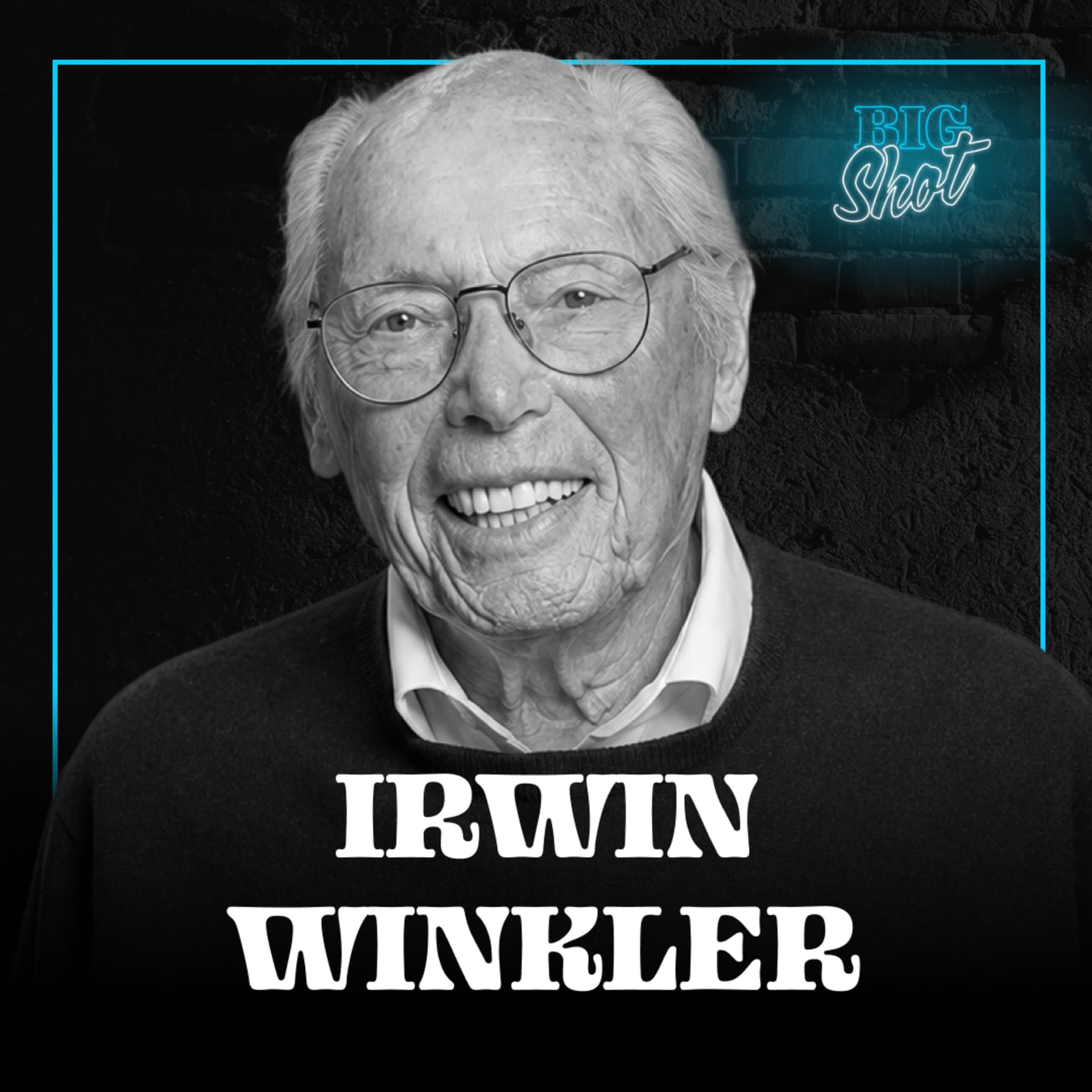
Joseph Schaffer, a 104-year-old Montreal garment-industry entrepreneur, recounts building Chabanel’s “shmatta” ecosystem, starting with $1,800 and turning it into massive wealth, while arguing for honesty, long-term partnerships, and trust with banks.
Guest backgrounds
Joseph Schaffer (born 1921 in Poland; immigrated to Montreal in the 1930s; garment district entrepreneur). Interviewer(s) are not fully identified in the transcript (mentions Bill Moyers and “David,” “David and I”).
Key claims
He says success came from innate business sense and product taste (“born with it”), not salesmanship alone; he never took money from others and kept partners long-term; banks backed him because he was honest and always delivered; modern scale (e.g., Costco/Kirkland) makes competing harder today.
Notable examples
Starting a low-end dress business after working in a dress company; using sewing machines (initially non-electric) and hiring a pattern maker to copy a “cute, eh?” dress; building on Chabanel and partnering by giving equity to people who lacked capital; a story of losing a downtown building due to a partner’s actions; referencing Costco’s huge shirt purchases and direct-to-store overseas supply chains.
Written by AI. May contain mistakes. Listen to the episode to check what was said.
Chapters
Tap a time to open that second in VOJoe's Early Life and First Jobs
0:45 to 3:07
Joe shares his childhood experiences and early jobs in Montreal.
“Started from the bottom, now the whole team Yeah, I done kept it real from the jump Let's start at the beginning.”
Transition to Entrepreneurship
3:07 to 5:11
Joe describes his journey into entrepreneurship and the early challenges.
“To build your own business, to go out on your own.”
Starting His Business
5:11 to 7:12
Joe discusses how he started his own business with a loan from his father.
“But that wasn't enough, or maybe there was enough.”
Building the Business
7:12 to 9:46
Joe details how he managed to build his business and the people who helped him.
“I went into the bank and I told them word for word, truth, no gifts.”
The Importance of Quality and Sales
9:46 to 11:28
Joe emphasizes the significance of quality products and sales strategies.
“As you talk about this, Joe, do you think your success came from work ethic or was it more about your eye for what would sell?”
Chabanel's Entrepreneurial Spirit
11:28 to 13:44
Discussion on Chabanel's history and its entrepreneurial environment.
“And we've actually had a chance to learn about the history of Chabanel.”
Growing Financial Capital
13:44 to 14:03
Joe explains the importance of financial capital and banking relationships.
“and we were amongst the first and went out west.”
Building Capital in the Shmatta Industry
14:03 to 15:12
Learn about the importance of capital in starting and running a business.
“Your first job was to build money before even building fabric or making product, you needed capital.”
Partner Dynamics and Equity Sharing
15:13 to 16:00
Discover the model of giving equity to partners and its impact.
“Not a big pay-paid job, because I didn't have a big pay job.”
Building Trust with Banks
16:01 to 18:35
Understand how to establish trust with financial institutions for business growth.
“I'll build a connection for you with all the big chains.”
Show all 20 chapters
Handling Partners and Business Challenges
18:36 to 20:41
Explore how to manage partners and navigate business difficulties.
“First of all, I was very friendly with them.”
Shemata Industry Outlook
20:42 to 22:38
Evaluate the future of the shmatta business and its competitive landscape.
“My brother always felt, my brother never made money for me.”
Adapting to Modern Business Practices
22:39 to 25:19
Learn how modern supply chains and big companies have changed the industry.
“So you're saying that there's no way to compete today with that type of scale and that type of manufacturing supply chain?”
Philosophy of Long-Term Partnerships
25:20 to 28:00
Discover the benefits of fostering long-term partnerships in business.
“First of all, there was a lot of small stores.”
The Importance of Partnership
28:00 to 28:50
Learn about the significance of partnerships in business and the wealth created for all involved.
“I just told you that this, but when I saw the guy was making for me 15 ,000, a million and a half a year, and if he stole it, I expected less than a million and a half.”
Driving Ambition in the Garment District
28:50 to 30:08
Discover how Joe Schaefer's presence and success inspired ambition in the garment industry.
“But second, that the people that worked for you all became incredibly wealthy.”
Legacy and Community Impact
30:08 to 31:41
Explore the legacy Joe Schaefer wishes to leave behind and how he values community contributions.
“I wanted to get a bank in Canada to build.”
Advice for Young Entrepreneurs
31:41 to 32:50
Hear Joe's wisdom for aspiring entrepreneurs on honesty and integrity in business.
“For you, it's the community that is your legacy, that is your most proud of.”
Remembering Sam Bronfman
32:50 to 34:28
Reflect on the influence of Sam Bronfman on the community and Joe's personal experiences with him.
“Joe, before Harley closes, you mentioned Sam Bronfman's funeral.”
Secrets to a Joyful Longevity
34:28 to 35:38
Discover Joe's thoughts on living a long, joyful life and the role of faith.
“I just moved to Montreal two years ago, so I'm slowly moving to the front.”
Transcript
Automatic transcript. May contain errors.0:00Joe Schaffer. This man's from another time. First of all, he's about to turn 105 years old. I don't think we've ever done anyone that's been over 100, right? Yeah, he's born in 1921. First guest over 100 years old. I heard the story that when we were doing our research that in the heyday, Chabanel, which is the Montreal Garment District, which for a long time was the Garment District in like North America. Joe Schaffer in the heyday, this is like 70s and 80s, used to drive up and down in a Rolls-Royce. Yeah. And everyone would watch this. not with envy and not with any type of, you know, jealousy, but rather it inspired an entire generation of incredible entrepreneurs that built some of the greatest companies on the planet in the apparel industry.
0:42It inspired them to think bigger. All right, all right. All right. The king of Chabanel, everyone. Joe Schaefer. Let's go. Let's go.
1:00Started from the bottom, now the whole team Yeah, I done kept it real from the jump Let's start at the beginning. You were born in 1921 in Poland. You came to Montreal in the 1930s. Did you have any entrepreneur role models growing up? Did you know people that were starting businesses when you were a kid? No. We came to this country. My father worked for Bromwich. Yeah. Nightworker. He was a night worker? He got$18 a week. Okay. Wow. He worked for Seagram's or worked for the family? Seagram's. He worked for Seagram's, okay. Worked for them a number of years, but he got$28 a week. He went and peddled.
1:46He was a peddler. A lot of Jews in those days were peddlers. Yep. Was your father able to make a decent living peddling? No. Yes, what we call living then, not good living, no. But my father saved dollar by dollar and this. When it came, mine turned, and I got a job. Where? Yeah. In Montreal, in a dress company, a low-end dress company. And when I came in, for some reason or other, I had that feeling of fashion and this and that. And they recognized it. They were big, but big money they didn't make. Right. They made, they sold cheap. What did they recognize in you? What did you have that immediately made you good at what you do?
2:42Was it Kutzpah? I was just a little brighter or something than the other guys that were. Yeah. Did you have chutzpah? Was that it? I had nothing. I never worked in anything like this before. I was young. I went to school. I was a very good student. At what point do you decide then, as you're working, to go out on your own? Tell us about that. To go? To build your own business, to go out on your own. And I became a shipper and a salesman. And I took stock and ran. There was a demand for goods. And I went into one of the chain stores. And so you went to a chain store. You sell 2 ,000 units, which is a big deal.
3:31But my guy that I worked for never saw 2 ,000. Some people go in business to know what they're doing. Other people go more than others. And that was you. You were able to figure out business quickly. It came naturally to you. It's something that was in me. I recognized a good store. I recognized a good style. And where to sell this style and all that. That was my strength. Where I got it from, I don't. Joe, is that something you can teach? Or do you have to be born with it? Born with it. You can teach and you can make it too, but they haven't got the disc that they have to know. Like something that you guys have in you that you can buy it.
4:26You can teach it. It's in you. The reason that David was asking about the idea of a peddler is because what you call peddler, we call entrepreneur. It's the same thing. You guys were hawking schmuttas. He's hawking tea and I'm hawking software. It's the same thing. We're just doing it in a different way. How do you get at that time? How does Algo get started? My father put together dollar by dollar. When I told him I'm going to business, he says, I've got$1 ,800. Wow. They're yours. Wow. He believed in you. I don't know why, he gave me$1 ,800. But that wasn't enough, or maybe there was enough.
5:17Where I worked, there was a fellow who sold peace goods as his own. He had a connection with one of the big Piscuits suppliers and other people who made the work saw me there and the way I worked talked to them and they wanted to put in the money, they should go build it. BILL MOYERS And I agreed. But the fellow that sold biscuits, he said, Joe, where do you go? You're not like them. Don't get it. Come with me. You go in the business. I got fabric. I'll give you fabric. Sounds reasonable. And he had a name. I couldn't get a name because the government closed that. For a while, you couldn't open a new business.
6:15You couldn't open a new business? No. Wow. Really? Couldn't get it. You got it. You got it. You got it. You got it. You got it. A permit. Okay. And he already had this. This guy had it. Yeah. So I took him and he was supposed to bring it$1 ,800. I brought it in. My father gave it to me. I went to the bank. I became friends with the bank. I like to drink, but they like better than the drink. So I used to invite him. He became the head of the bank in this area, and he was on my board when I went public. Wow. He was the finest guy you ever met. Amazing. Let me go back. Yeah. I saw the opportunity.
7:02He couldn't make it, so I said, I'm sorry. I shook hands with him. I went and took it on my own. I went into the bank and I told them word for word, truth, no gifts. And that's how I, all my life. Wow. I never took a dollar from anybody. And I never took, put anybody in jail who didn't pay. I lost, take a loss. Before you had customers, your father gives you$1 ,800. Right. The bank is willing to loan you on finished goods that are pre-sold to customers. You still got to buy the equipment, right? You still have to be able to make clothing. Do you know how to make clothing at this point? No, no.
7:56Right. So how did you figure out how to make it? My sister. Yeah. My sister was an operator. She sold it. She knew how to operate. But it wasn't probable. You know, you were able to get people to come to work. I put in 12 machines that I got credit on. Sewing machines. Sewing machines. And they weren't electric. They became electric. And my sister made samples for me. I hired a so-called designer. He was one time a pattern maker, But he became a little designer because I brought the clothes for him to make. One day, mixing the stories, but I didn't have a car. I came by, not bus, but those days.
8:57Street car. Street car. Apparently, you went by street car. I get off the streetcar, and he said, jump over, take a look in the window. There's a picture with a woman on it that says, cute, eh? So I said, yeah. I went back. I figured I'll make it. And I tell this guy, he says, I made a pattern for this. He worked for the company. but it was a bit of a me. So I said, yeah. Make it for me. Knock it off, yeah. Make it for me. Go and make it. Yeah. Get back and made it. I sold that. I sold over a couple of years, a few thousand. Wow. It was simple, beautiful shape. Your first runner. Let me ask you something, though.
9:56As you talk about this, Joe, do you think your success came from work ethic or was it more about your eye for what would sell? Sales comes after you got the goods. Sales comes after you got the goods. I didn't hire salesmen for the West. I didn't hire sales for the other. I bought the boys to work in and they went. I wanted them to give them 100%. You buy a salesman, you're a schmutz. They see you're lucky. They have ten lines. And they had a good job. And I had somebody who went out and had nothing else but himself to sell. And it worked. It worked. And I made very nice goods. You made good product.
10:50Very good product. Made quality-wise and fashion-wise. And you allowed your customers to make money. But this was a small country. When I went into business, there were 11 million people. A quarter the size of Canada today. 6 ,000 miles.
11:15But nobody did a million dollars. The guys who had high price, but when you sold, I sold a dress for$10. Can we talk a bit about, we're going to jump around a little bit and that's okay. We think Chabanel is so interesting. And we've actually had a chance to learn about the history of Chabanel. My first business was a t-shirt business on Chabanel. I sold t-shirts to universities. We're fascinated by the concentration of entrepreneurship in Chabanel. Most people say you are the founder of Chabanel. They call you the king of shape. And I owned it. I know you did. You built it. I owned it, but I was smart enough not to build it myself.
12:04I took in a guy, a partner who built the building of the thorns, and I gave him 20 % money he didn't have. I already had money. I built the first building I built was near the Toronto Dominion Bank on St. Catherine and Peel. I built with my partner and a competitor. The competitor had more points than I had. But I needed space. Yes. So I decided, I saw Chabonel was coming up, and one of the big, popular, very popular maker bought a place in there. So I went and I bought a piece of land. You bought a piece of land in Chabanel? On Chabanel. Yeah, on Chabanel. And I looked for a partner and I found a religious boy, partner, and they gave him, he had built a couple of buildings on St.
13:14Catherine Street. But money he didn't have. I had money already. When I built on Chabanel, I was a rich man. I was in business for many years. But other than the dress business, I went into the... For my brother-in-law, into fabric business. And he went out west. and we were amongst the first and went out west. We bought fabrics and clean and sold it. Listen to me. I never was over, had short of money. I was always short of money, but I made it. Yeah. My first job was to build money. I didn't need everything. Your first job was to build money before even building fabric or making product, you needed capital.
14:19Tell us more about that. Yeah, tell us about that. And I had, besides capital, I had, the banks loved me, because they were small too. Yeah. In the 9-11, Brompton came here with$25 million. That was a lot of money. What was$25 million? But it's a good start. Yeah. I had the banks behind me. They pushed me to buy and do and this, so they could give me money. They could lend my money. My own money, they lent. Every partner I took, and many partners, not one, not one put in one cent. Wow. No partner of mine. First, they didn't have it. They didn't have it, yeah. You were finding young partners. But I gave them a job.
15:12Yeah. Not a big pay-paid job, because I didn't have a big pay job. I gave them a living, what, as they made, when they made money, and we decided because of them, I split it. So, Toc, why did you do that? Why did you give out equity to so many partners? That was a model that today is very popular. But in those days, the idea of bringing in these, you know, you had the big company, and you bring in these partners in each division, but you would give them ownership in the business. How did that even come up? How did you think about that? It's by the ownership that they left their job and came to me.
15:52They left their other job to come to you because they were not owners there, but they would be owners there. There were nothing there. Right. I told them, I'll build a connection for you with all the big chains. They're all my friends and they need my goods. That's what I did for them. But they made their own. They worked their own. Some came two. When two came, I gave them a little more than the one, but they got the money. And I'm not going to check you. My brother once told me, he came along and said, Joe, some of these guys go to the Orient and look after themselves. Maybe they'll, yeah. Says, Benny, if you want more than one store, you've got to close your eyes to this.
16:55If you want to be, nobody should steal from you. Like your own store. Yeah. So just, I want to repeat that because I want to make sure I'm clear. When you were told that some of these partners might be having side deals when they were going to the factories in Asia, you didn't care because you felt like you were all making more money anyway. If they were skimming a little bit, it didn't matter. I know what you mean, side deals. A little bit taken. I found out after I closed a couple of guys that I liked. How did I know? I put the American guy with my guy in the department. The American guy, I still go, and I still...
17:45One day, he sits here from Chicago. He says to me, did you ever get any money from this man? He said, no, I didn't. I didn't know there was money from that. I found out, but he gave me enough. When I told my brother, if he's losing, but if you're all making money, then it's okay. All that money. I want to go back to one thing that you said that was so interesting. You said, my job is to get the money, first and foremost. And then you clarified and said the capital. How did you, in those days, it was about winning over the banks. The banks had the capital. How did you win over the banks? Why did you get the capital?
18:38First of all, I was very friendly with them. They would come to my office after five, and I would open up. And a lot of them were, one in particular, He died and I went away. I never said something to them that I didn't deliver. I didn't tell them that I'm going to do this. I first had it. When I had it, I told them. I was honest with them. One didn't there. Never a bad line was put in. They always got paid with you and you always did what you said you're going to do. So you built a trust relationship with them. I still do. Yeah. And some people, I lost a 22 building downtown. Yeah. Because they jerked around with me.
19:34I had 22 % and I lost the building. Wow. They stole it. Who, in the bank? No, my partner who had the rest. My partner really died. His son was left. And the son and the other, they were losing money. And they got paid from the... They took pay. Never gave me. You'll get it tomorrow. You'll get it this. How did you handle when the deal went sour and you had bad partners? I never had bad partners. They made them for themselves. You can call it bad, you can call it what you want. As long as he left, as long as they made what I thought I should have made. Right. That means after that, I closed my eyes.
20:34Yeah, so that's back to the whole sort of skimming thing. Right. Like, look, if you expect you're going to make a certain amount, you get that amount. Whatever happens beyond that, you're okay with. My brother always felt, my brother never made money for me. I never bought anything. Everything that I bought, that I made big money on, my brother never knew about it. I got, you know, I'm selling a piece of property, not yet. 12 acres outside of Toronto. Okay. For a half a billion dollars. Wow. But he didn't know that he owned it. And for 50-odd, I got so much money. I started with 9.5%. Wow. That's how I got into it.
21:21Incredible. After that, every five years, raise, raise, raise. And you always participated? And my partner, the partner, he raised, not terrible, but he raised. By the time I got it, and after 50 odd years, figure out what rate I got. Couldn't believe it. That's a billion dollars. A million. Amazing. By sheer luck, nobody came to buy it. I had two, three more. I bought, when I say I bought, my partner bought. A total of$6 million for all I did. We had to pay$3 million, and$3 million got mortgaged. Wow. That's what it was. There was no buyers, and$3 million was a lot of money. Why did you keep the faith?
22:19I mean, a lot of people would have thrown in the towel and said, I'm not continuing to put more money into this. Going back to Shabanel and the garment industry, the Shemata business, what do you think? Is the Shemata business still going to be a good business industry long term? Do you think it's always going to be good? What do you think? You're the godfather of Shabanel. What do you think? The Orient ripped that apart. How so? First of all, these buyers who are today, hundreds, hundreds, hundred thousand dollars, it's nothing, you know, and they sell, they go out, the big companies today in their business, This is like, I got to name a few of them.
23:11They buy big. Take the guy that I case. I always go to Florida. What's the name of that? The big chain. Costco? Costco. You know how much he buys a shirt? How many pieces he buys? Hundreds of millions, yeah. Millions! Yeah. And his make is phenomenal. Kirkland. Quality is excellent. And he sells his dress. How do I know? My daughters buy me this. I go there too. Amazing. I'm ashamed to buy. So she buys it for you? So you're saying that there's no way to compete today with that type of scale and that type of manufacturing supply chain? No, he starts to sell Costco. Costco not. But my friend, who you know, Eddie Wiltshire, his son and this...
24:15Jack lit in Mark. I thought I knew. It's a different world. I know. He don't see it. He don't make it. All he gets is a check. He just gets a check. Well, look, at that scale, in modern business, he has to make everything overseas. It goes directly from the factories, directly to the distribution centers, right to the stores. Yeah, they don't see it. They're not making it anymore. You should go in business. I'm thinking about it. You know exactly how it works. I do. It's unbelievable. So do you think that Joe Schaefer today, if you were, if today in 2025 you were a 30-year-old entrepreneur, business owner, could you have done what you did building Chabanel the way you built it and building Algo?
25:09I don't know if there's room, if there's room for a startup. It's easy. There is room. Always room for everything. But then there was easy then. First of all, there was a lot of small stores. They would buy. Some of them didn't pay so well, but they got shipments and all that. Today, today is a tough market because the big, big guys own it. We heard a story where one of your partners came to see you. Eddie came to see you and said, Joe, I lost$50 ,000 on a deal. And you said, Eddie, don't worry. I lost more today than you did. And you let it go. There's a certain way that you've done business that invites people to hitch their wagon to you, but also just to be your partner for a very long time.
26:10I always, I never got rid of a partner. Never? Never. Wow. Never. I treated them right and they, did they take a little extra? I, I, I, as long as they, as long as they delivered. But wait a sec, Joe, Joe, I mean, never got rid of a partner. You had dozens and dozens of partners. What did you do with an underperforming partner? I didn't, I didn't look for not performing. me. I had good people in the office. Jack Wilzer, Saul Drankowski, they were top people. They, when they found out something is this, they sort of got rid of it. It never came into my eye. Good. So your partners were, you hired, you brought in partners that when there was a problem, they would fix it.
27:10They would take it. Yeah. But I didn't have any problem. But you got very lucky then to have partners like that, Joe. Right. But I gave the partners extras. One came to Bonus Barter, and if he owned 22%, I gave him 30%. Wow. So you gave up equity when they deserved it. I know you, they need money. I didn't need money. When I got that money, where did I put it? to the bank, in the stock market, and land. Joe, you make it sound so easy. Why didn't everyone have this partnership philosophy? They didn't give them properly, properly data as bosses. I didn't act as a boss. You acted as a partner. A partner.
28:05He's a partner. He's entitled to this. And I had all kinds. I just told you that this, but when I saw the guy was making for me 15 ,000, a million and a half a year, and if he stole it, I expected less than a million and a half. And he made, he gave me, especially in the Orient. You know one of the Orient people that I put in, I had a billion dollars. I know. We heard all about him. Alan, I think his name is, right? Right. Yeah. No, I mean, that's one of the stories. We did a lot of research for this interview. And one of the stories that keeps coming up is one about partnership, long-term partnership.
28:50But second, that the people that worked for you all became incredibly wealthy. Huh? All made a lot of money. Yep. They all made a lot of money. I want to ask you something. How old are you now? A hundred and... Who? You. You're a hundred and three? I'm four. 104. You're closer to five. You're almost 105 years old. We heard a story that in the heyday of Chabanel, like the glory days, that Joe Schaefer in his beautiful suit would drive up and down Chabanel in his Rolls Royce. And that visual, that symbol of you driving down Chabanel and your Rolls Royce inspired everybody to work harder, to become more successful, to grow their business.
29:42You created ambition there. Maybe. And so, well, that's what we were told. And I believe that. When you look back on the legacy that you've created, forget Algo, but just Chabanel, the Garment District, the Canadian entrepreneur business world, what is the legacy you think you leave here? I wanted, I'll tell you, never told anybody that. I wanted to get a bank in Canada to build. The Order of Canada. The Order of Canada. The Order of Canada. Wow. And they, somebody came to see me. I don't know if that's true or not, or I'm better. I figured that, but why did he come to see me? I was finished 10 years for combined.
30:43I worked, I made more money for combined than any one person. BILL MOYERS This is Combined Jewish Appeal, CJA. GARCIA I, when I, Charles Bronfman opened the first night, it always opened the first night. I saw every big giver myself, and I saw people that were old from the big giver that I made sure they come, and I told people who they were, and they liked it. I think we owe them something. They paid for years. people gave money. Those that had gave maybe not enough, but nobody ever gives enough. You know, the oldest story in the world. Yeah. So that's it. It's for you, it's charity. For you, it's the community that is your legacy, that is your most proud of.
31:48That's right. Joe, you know, there is a young Joe Schaefer listening to this right now, who you described this innate God-given ability to just get it. You understood business. You understood how to sell, how to buy, how to sell. What do you tell young Joe Schaefer? What do you say to this person? This person listening may not have any money. What do you tell them to do? What's your wisdom for that? The first thing I tell them, be honest. Be honest. That will get you somewhere. When you're honest, They'll listen to you. Don't be a fancy guy. Don't do this. Don't take, stay as your honesty is the best possible.
32:40That's what helped me. It helped me with the banks. It helped me with the people. When I did something. Joe, before Harley closes, you mentioned Sam Bronfman's funeral. Tell us about Sam Bronfman. What did he mean to Montreal and the community? Sam was a tough hombre. Yeah. Everyone said he was tough. He was tough and he wasn't nice. Yeah. But his brother, his son. Charles. Charles. He came two years ago. He came. I can't go to synagogue in the mornings because I'm too tired. But when I come in, I sit right in front. Because the woman who was in charge many years ago, when I looked at her seat, I was very good in combined.
33:39I don't think anybody had what I had. Now I know why I don't have the good seats. It's a direct correlation with you. When she heard that I came, she went there and there was a seat, three seats, men's seats, were vacant. There was an argument amongst them. One of the big guys, he said to everybody, that seat goes to Joel Schaefer. Wow. And I got it. At that time, you couldn't get a seat. Today... It's still hard. It's a different world. They put me in row Z. I'm in the back. He's working his way. I'm working my way to the front. One donation at a time. I just moved to Montreal two years ago, so I'm slowly moving to the front.
34:36Good, good. It's beautiful. It's my favorite city in the whole world. I love it so much. I grew up in South Florida, in Boca Raton. Are you a Shremer Shabbos? No. My grandparents went to the Shahr Shemayin for 60 years. My grandmother laid one of the first stones when we were building it. What was your name? My grandfather's name was Hai Siegel. He was one of the brothers who built Peerless Clothing, Philip, Moe, and Hai. And my grandmother's name was Avi Bloomer. I know both names. Sure. Yeah, I figured you would. I was there a long time. Yeah, yeah. My grandfather was 10 years older than you.
Read the full transcript
35:14He's still around? No, Joey died a long time ago. He made it to 90. Okay, all right. Last question before we let you go, we gotta go. Last question. How do we live to 105 years old with as much joy that you have? If I knew that, if I knew that. What's your secret? My secret is I believe in God. every day or at night when I feel good I keep I say thank you sir every day Wow and on top of that you got have a little look yeah it has luck you do Joe thank you for sitting down with us David and I are very grateful thank you it's We are young entrepreneurs. We grew up hearing stories of Sam Brofman, Aldo Bensadun, and Joe Schaefer.
36:14We did. And the fact that we're finally meeting is a great honor for us. Thank you. I mean that. One day, I'd like you to come to lunch. I'd love to be lunch. I live in Westmount now. Wait, not now. March, February, no, May. May? Good. But now it's empty. Okay. May? Everybody's in Florida. New people came up. Yesterday I was there. It was a bad day, but I went anyway. First of all, I like a walk. That's part of maybe my... There was nobody there. Yeah. There are two, three people there still. One is leaving. They're all in Florida. Yeah. So I'll come in May. You got it. But I'm going to buy. It's an honor to meet you.
37:05It's an honor to meet you.
From the publisher
Joseph Schaefer arrived in Canada from Poland in the 1930s and built his career in Montreal’s garment district at a time when the industry ran on instinct, relationships, and trust. He had an eye for fashion, a gift for reading people, and a way of doing business that set him apart early.
In this episode of Big Shot, Joseph joins hosts Harley and David to reflect on how he found his way into the garment trade and helped shape what Chabanel would become. He shares how he built partnerships that lasted decades, why he never lost a partner, and how he gave others ownership long before equity was common practice.
This is a story about a different era of entrepreneurship—one where deals were built on reputation, capital came through relationships, and success depended on understanding both the product and the people behind it. Joseph also reflects on what’s changed, why that kind of success is harder to replicate today, and the role his values and faith played in how he built his life and business.
—
In This Episode We Cover:
(00:00) Intro
(01:06) Early days after immigrating to Canada
(03:10) How Joseph got his start in entrepreneurship
(07:38) Learning the craft with help from his sister
(09:55) When he brought on salespeople
(11:27) How he built Chabanel
(14:20) Joseph’s approach to capital and equity
(18:16) How Joseph won over banks
(22:24) Why Joseph’s success wouldn’t be repeatable in today’s market
(25:45) How Joseph managed partnerships
(29:00) Joseph’s legacy
(31:52) Joseph’s advice for young entrepreneurs
(32:50) His relationship with the Bronfmans
(35:20) The role of faith in his life
—
Where To Find Big Shot:
• Website: https://www.bigshot.show/
• YouTube: https://www.youtube.com/@bigshotpodcast
• TikTok: https://www.tiktok.com/@bigshotshow
• Instagram: https://www.instagram.com/bigshotshow/
• Harley Finkelstein: https://twitter.com/harleyf
• David Segal: https://twitter.com/tea_maverick
• Production and Marketing: https://penname.co